India and Pakistan: A Conversation That Refused To End

DISARMAMENT AND SECURITY .

Special to CPN from Nawal Amjad

On Thursday, 2 July 2026, people from two countries with one of the greatest global flashpoints came together — India and Pakistan. These countries fought a war last year, but here is thing about the need to pursue peace: it is not a permanent end goal but a continuous process — and every worthwhile process has to be revived like it did not exist, but also like it never stopped.

The event was hosted in collaboration by civil society organizations like, Socialist Yuvjan Sabha (India), Socialist Students’ Union (India) with Centre for Peace and Secular Studies (Pakistan), including luminaries like Dr. Sandeep Pandey, Ms. Lalita Ramdas and Ms. Diep Saeeda, who enabled the space for a discussion between people of the two countries.

The event was moderated by Rumaan Mecci (India) and Ahmad Raza (Pakistan), who navigated the event with all their light whether there was no electricity or internet (quite literally), or there were other bleak moments from some trolls in the audience that the moderators’ fellow, Rishi Anand helped keep away seamlessly.
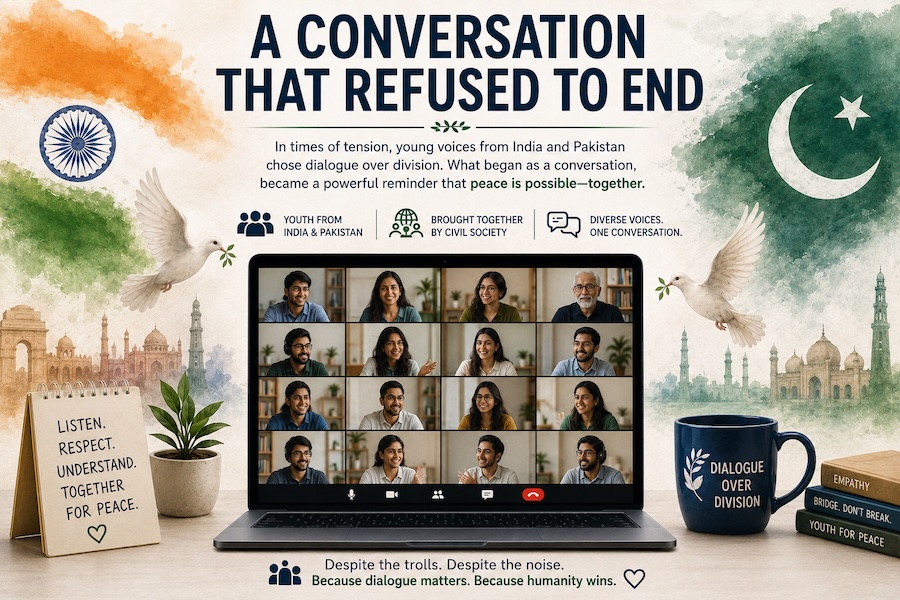
If I have to begin with introducing this event, so it was a virtual dialogue themed on, ‘How can young people lead a new chapter of peace-building, democratic engagement and people-to-people diplomacy between Pakistan and India and create a shared future?’ Young changemakers along with individuals that have dedicated a substantial part of their lives to a Culture of Peace were there. And what is particularly special about this event is how it had enthusiastic participation from citizens from both countries, even expats who have spent years nurturing their and their polities’ identities abroad.

I was also honored to have been invited there because of my background with helping nourish a Culture of Peace in the last few years, and more recently, through my affiliation with Peace Manifesto 2025 and the Culture of Peace Corporation since last year.

When I had attended this dialogue, I did not maintain notes (something that I seldom forget when attending every webinar till date, even if I am a passive part of it), but in hindsight, I realized that perhaps making notes would have been a good way to document every noteworthy sentence that I heard in the discussion, however, some things need to be experienced — and so having chosen to be my usual geeky self would not have been this helpful.

What I in turn realized was that this event was indeed a watershed moment. Not because in the most academically fancy terms, changemakers, particularly young changemakers from two ‘archrivals’ came together one evening, but because an originally envisioned two-hour-long event went on for about almost four hours. If that surprised you, I’m not surprised, because that was the exact reaction of my mentor-boss, Professor David Adams, who has been one of the pioneers at UNESCO to have conceived the idea of a Culture of Peace for the whole world, decades ago and since then, he has not looked back from working for it despite what his friend-colleague described to him to be an increasingly apocaloptimistic world.

The need for a shared future

Monica Wahi, a prominent child film specialist from India opened the discussion by her reflections emphasizing upon the need for a ‘shared future’ — to this, I both responded and opened my address by saying that we would only need to have a shared future, if we had been divided — we were never really divided. I began by speaking about our ‘shared challenges’ as two struggling domestic polities: India, whom we clearly looked up to before the world’s greatest democracy increasingly began to deconsolidate, and our own democracy in Pakistan, having struggled to consolidate since forever.

Take the recent student protests in India for example. The National Eligibility cum Entrance Test (NEET)’s leak in India is the same as the Medical and Dental College Test (MDCAT)’s leaks in Pakistan; besides, the unfair grading replete with discrepancies that led to reconduct of the former in Pakistan only speaks volumes of how ‘we are always in this together’ is an apt phrase to describe most of what we both suffer. In fact, when I saw the police dragging protesters and even India’s seasoned politician Rahul Gandhi upon the country’s streets, I asked my own audience on my private Instagram the other day that, ‘Can I also say that our democracies are Sanjhi? Sanjhi is a Punjabi language word used commonly by people of both sides of the border which translates to as, ‘shared’.

Now back to the dialogue. I spoke of our many commonalities using very distinct set of things, but each weaving into why or how we are not that divided, if only we admit to realize. For instance, I spoke of my childhood familiarization with the word, ‘actor’ through watching Shah Rukh Khan, Indian superstar whom I referred to as, ‘Sharo Khan’ for the longest time — my first vivid TV memory of childhood.

Similarly, when women in India and Pakistan, both have to constantly register their existence through apparently needing to ‘break a glass ceiling’ rather than realizing that the latter only concretizes it, and when the news of women’s abuse of any nature circulates in the media or otherwise, the reasons and ramifications on both sides of the border are not different. In fact, even when a 150-year-old tree in Lahore is cut and so is a 100-year-old tree in Nashik, India — the hue of cry in the civilized people of both sides of the border is the same — and the vested interests of the powers that be responsible and or complicit in these cases are also the same.

During the dialogue, I also drew attention to my belief in the power of SDG 4.7: the seventh target of the fourth Sustainable Development Goal, Education, which is about working for and embodying values and practices of Global Citizenship Education and Sustainability; the non-exceptionalist nature of climate change sparing no one; my love for what all India has done and continues to do for entrepreneurship — thanks to me marveling at (Shark Tank India) as one of the many emblems of what we got to learn from them; a need for a Joint Pakistan-India Parliament where the youth could discuss the day-to-day issues of ‘shared interest’; a Public Diplomacy Centre to deepen people-to-people connectivity between both nations and some form of a Public Interest Promotion Centre/ Declaration, that enables us to teach each other best practices on governance, foreign policy, education, public health-care, technology, entrepreneurship, media and of course, art, culture and entertainment — no matter our piercing differences continue to stare into our faces.

If I begin to describe everything said by everyone, the article would never end, but I still deem it necessary to share brief takeaways from my fellow youth panelists from within my country and across the border.

Opportunities for dialogue

Tiya Mhatre, a student based in AliBaugh near Mumbai, who is about to join UWC Pearson University and is passionate about UN simulation conferences (just like I used to be) said something really helpful, Tiya pointed out that while student diasporas are one of those key scarce spaces remaining for youth of both countries to connect to each other, there are more opportunities through universities and student communities that ought to be explored; may it be collaborating through dialogues like these; joint projects; cultural exchanges on areas like, climate change, public health-care, sustainability and innovation — because in Tiya’s eyes, lasting peace begins with trust and trust begins with conversation, and while the former cannot resolve complex regional issues, it can indeed preserve something essential, the willingness to ‘keep talking’.

(Article continued in right column)

Questions for this article:

Can peace be established between India and Pakistan?

Solidarity across national borders, What are some good examples?

(Article continued from left column)

Another fellow panelist, Kabir Rao, who is a student of philosophy and Arabic at the University of St Andrews from India, and besides his interests in politics and military affairs for the Middle East, he is also attempting to learn Urdu and Farsi — yes, you heard that right. A Hindu in India studying philosophy and Arabic. Learning Urdu and Farsi. Kabir emphasized on his turn about the organic link between our shared struggles for a non-militaristic, non-violent and democratic outlook and better relations with neighbors at home. He also highlighted the similarities between India and Pakistan’s ‘connected histories’ and our present-day struggles. He further argued that the working class in both countries, especially the young people within it ought to understand these similarities and base their struggles on them.

A poem than transcends national boundaries

Kabir ended his points by reciting a verse from a poem, ‘Black Out’ by Faiz Ahmed Faiz, a poet with ‘Pakistani origins’ and whose services for the country were oxygen for the progressive and democratic lungs of the country. The verse reads as,

ایک پل ٹھہرو کہ دریا کا کہیں پاٹ لگے
اور نیا دل میرا
زہر میں دھل کے، فنا ہو کے
کسی گھاٹ لگے
پھر پئے نذر نئے دیدہ و دل لے کے چلوں
حسن کی مدح کروں شوق کا مضمون لکھوں

Which translates to English as, ‘Wait a moment, so the river may somewhere find its shore, and my tender heart, washed in poison and dissolved, may reach a landing place.
Then I shall walk on, offering the lit lamps of my heart’s anguish, singing praises to beauty, and penning the treatise of longing.’

Such is our ‘shared’, or dare I say, inseparable history and legacy of our people, that is only telling of how profoundly we need a deliberate and a very consistent cultivation of a Culture of Peace.

Science and health transcend national boundaries

Another panelist, Iqra Preet, who is a PhD Biochemistry scholar and a researcher in nanotechnology-based treatment for multiple diseases based in Lahore, Pakistan said something that every other participant from (even within the audience) kept echoing till the end: how shared scientific research and investment in public health-care does not need to see who belongs to which nation. In my understanding, how a sample on a microscope, a DNA or a virus should override our very fragile fixation with our yet-to-understand fantasies of our so-called perfected nation-states.

Culture transcends national boundaries

Then it was Ritu Das, who is a queer feminist activist from Uttar Pradesh, based in Lucknow, India and is also a poet and has been active in the movement spaces for almost a decade. She utilized her turn by recalling her stay experience in a hotel in London. Among her hotel staff were two individuals — one, a Hindu Indian from Rajasthan — the other who was a Muslim from Bangladesh. To Ritu’s surprise, the connection felt and built more deeply and meaningfully with the Muslim from Bangladesh than her own fellow citizen.

According to Ritu, it was because of the cultural and linguistic boundaries that transcended the political border separating the region. It helped Ritu reinforce an important sociological insight: it is often our shared cultural and historical inheritances that sustain solidarities. In fact, Ritu’s grandmother’s narration of the violence events during partition taught Ritu something very poignant: she recounted violence with extreme ethical sensitivity and the latter was quoted by Ritu to have told them, ‘People of every community were killed and people of every community were forced to leave their homes, foregrounding human suffering rather than communal identity.’ As a member of a marginalized community, Ritu has witnessed Bangladeshi transgender communities drawing parallels between India’s Transgender Card Framework and Bangladesh’s Hijra Identity recognition, despite different political and legal systems — proving in the words of Ritu that, ‘struggles for dignity, recognition and justice frequently transcend national borders, producing what may be understood as transnational communities of care and resistance.’

The webinar was also attended by celebrated practitioners like, Sachendra Pratap Yadav, President of the Socialist Students’ Union and a PhD scholar at the BITS Pilani, Hyderabad Campus, India; Sanjay Gadhalay, an engineer, entrepreneur and Climate activist from Hyderabad India; Mazher Hussain, who runs Confederation of Voluntary Agencies (COVA) from Hyderabad, India and is a long-time peace activist; Shivi Upadhyay, recent PhD scholar in social work from Delhi University and a development activist who works in Goa at present; Razi Raziuddin, who can be uniquely distinguished because he studied at both Aligarh University and Banaras Hindu University and now works as a scientist in the United States of America and runs a diaspora forum; Cedric Prakash, a Catholic priest and a prominent human rights activist from Ahmedabad, India; Father Anand, Catholic activist, priest and playwright from Varanasi, India; Sheema Kermani, prominent classical dancer, actor and social activist from Pakistan among others.

The conversation refuses to end

This convergence was not easy owing to trolls constantly trying to keep the moderators on their toes, and even us attendees wondering if it would go on smoothly? There was, of course, a shared anxiousness around letting the audiences also participate by risking giving them a mic. Some of them were trolls, but most of them were also equally or even more elated than us to have been there, and it is these same people, the common people, with whom the discussion went on for almost four hours. Some of these people contributed by narrating tales of being constantly anxiety-ridden because of growing up in a military background — and the very solid and legitimate fear of losing their loved ones. But there were also those that wanted to call a spade a spade, and hence demanded us to not pretend like everything was hunky dory, but to both acknowledge and embrace the discomfort — talk out loud about the elephant in the room, issues like cross-border terrorism and Kashmir to name a few. Others simply encouraged and looked forward to more honest and uncomfortable conversations regularly in the future.

Before the article’s title starts to influence me (and it literally never ends), I am thinking of concluding this piece just when I have heard about the education minister in India resigning — if this is true victory for people of India is premature to say because systemic changes have a long way to go before they bear fruits. Notwithstanding that the ‘cockroaches’ in India were heard, and a seed has to be planted somewhere for it to appear to be bearing fruits later — and that gives me: a cockroach in Pakistan — a glimmer of relief for the justice of the dozens of those innocent students, who lost their lives just because their system failed them. But whether it is the cockroaches in India or in Pakistan, the conversation hopefully refuses to end.

– – – – – –

If you wish to make a comment on this article, you may write to coordinator@cpnn-world.org with the title “Comment on (name of article)” and we will put your comment on line. Because of the flood of spam, we have discontinued the direct application of comments.
African Youth Advancing the Sustainable Development Goals and AU Agenda 2063: From Dialogue to Action

. . SUSTAINABLE DEVELOPMENT . .

Special to CPNN from Winner Ogogo

“Beyond the borders that separate us lies a shared purpose, to build an Africa that is peaceful, inclusive, innovative, and driven by the potential of its young people.”

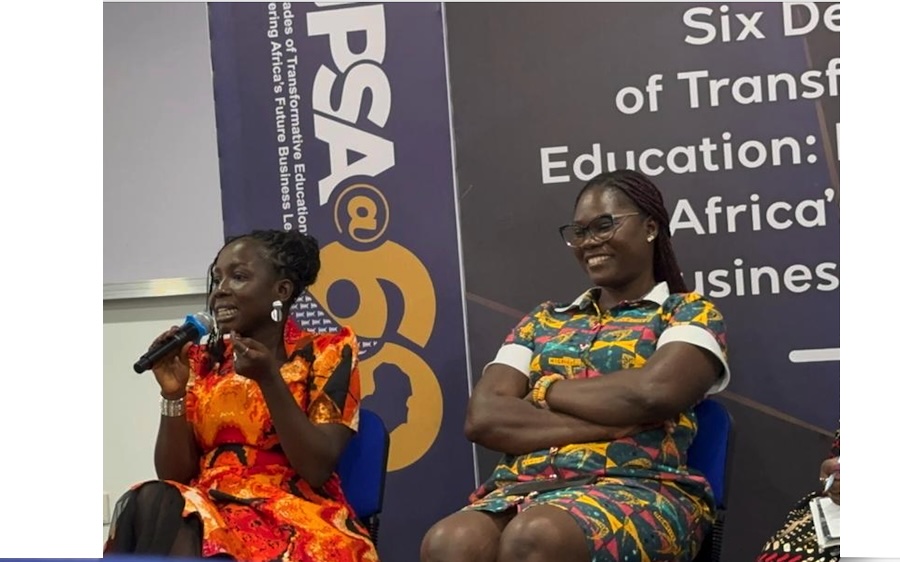
This vision came alive at the 6th African Youth SDGs Summit, held in Accra, Ghana, from 23–25 July 2026, where young leaders, policymakers, innovators, and development practitioners from across the continent gathered to advance conversations on sustainable development and the aspirations of the African Union’s Agenda 2063.

The summit reinforced an important reality: Africa’s youth are not merely beneficiaries of development, they are active contributors, innovators, and leaders driving solutions within their communities.

Among the voices contributing to these continental conversations was Winner Ogogo, a Nigerian peacebuilder, communication specialist, and Founder of the Humanitarian Advocacy Peace and Education Initiative (HAPEI). As a panel speaker, she joined fellow leaders in the session, “Breaking Barriers: Unlocking the Full Potential of Women and Marginalized Voices,” where discussions centered on creating inclusive systems that enable women and marginalized communities to fully participate in Africa’s development.

Drawing from her experience in grassroots peacebuilding and youth empowerment, Winner emphasized that sustainable development cannot be achieved without intentional inclusion.

Every voice counts

“When every voice counts, every solution becomes stronger. True inclusion goes beyond representation, it requires creating opportunities for meaningful participation and shared leadership.”

(article continued in right column)

(Click here for an article on this subject in French.)

Question for this article:

Can the African Union help bring a culture of peace to Africa?

(article continued from left column)

She further stressed that if Africa is truly committed to the promise of leaving no one behind, then governments, institutions, civil society organizations, and development partners must move beyond symbolic participation. Young people, women, persons with disabilities, indigenous communities, rural populations, and other underrepresented groups must be recognized as partners in shaping policies, designing programmes, and making decisions that directly affect their lives.

The panel highlighted that empowering women and marginalized communities is not solely a matter of social justice; it is a strategic investment in Africa’s peace, economic growth, innovation, and sustainable development. Inclusive societies are more resilient, more prosperous, and better positioned to address the complex challenges facing the continent.

For lasting change

Reflecting on the discussions, Winner concluded:

“Lasting change happens when we move beyond consultation to genuine collaboration, where communities are not merely beneficiaries of development but co-creators of the future we seek to build.”

Beyond the formal sessions, the summit fostered collaboration among delegates from across Africa, creating opportunities for cross-border partnerships, cultural exchange, and shared learning. These interactions reflected the spirit of Pan-Africanism envisioned in Agenda 2063 – an Africa driven by its people, where collaboration, innovation, and unity become the foundation for sustainable progress.

As Africa accelerates efforts toward achieving the Sustainable Development Goals and realizing the aspirations of Agenda 2063, one message emerged clearly from the summit: the continent’s greatest resource is its people, particularly its young people. Investing in youth leadership, promoting gender equality, and ensuring inclusive participation are no longer optional, they are essential for building the peaceful, prosperous, and inclusive Africa we all envision.

The future of Africa will not be shaped by aspirations alone. It will be shaped by young people who are willing to lead, collaborate, and transform ideas into action, one community, one partnership, and one solution at a time.

– – – – – –

If you wish to make a comment on this article, you may write to coordinator@cpnn-world.org with the title “Comment on (name of article)” and we will put your comment on line. Because of the flood of spam, we have discontinued the direct application of comments.
La Alpujarra, Granada, Spain: Manifest Pueblos por la Paz

.. DEMOCRATIC PARTICIPATION ..

Special to CPNN from Pepe Jesús García Aragón

La Taha Town Council has declared the seven villages of La Taha as ‘Villages for Peace’.

We present here the declaration and manifesto, unanimously approved by the full council on June 17, 2025.

From La Taha Town Council, we encourage everyone to create, TOGETHER, the opportunity to transform the culture of war and violence into a culture of peace and non-violence.


MANIFEST LA TAHA TOWN COUNCIL ‘PUEBLOS POR LA PAZ’

A single stream of water comes down from Mount Mulhacén and, when it touches our irrigation ditches, it becomes life. Likewise, a single idea – peace – descends today into our hearts and makes them beat together.

From the chestnut trees of Pitres to the terraces of Atalbéitar; from the viewpoints of Capilerilla to the alleys of Ferreirola, and the tinaos of Mecina-Fondales, our land knows about hospitality and effort.

In each stone nests the memory of those who knew how to care and be cared for.

Today, in the face of the pain that devastates so many corners of the planet, we raise our voices.

PEACE AS A LIVING HERITAGE

The Alpujarra has been, over the centuries, a crossroads of cultures. Moors, settlers and travelers brought diverse customs that took root without erasing each other: that coexistence is our best legacy.

Every agricultural terrace that shapes the mountain, every tinao (porch) that protects from the midday sun, testifies to cooperation as a form of survival.

Defending peace is, therefore, defending our own history and projecting it towards tomorrow.

(Article continued in right column)

(Click here for the Manifesto in Spanish)

Questions for this article:

How important is community development for a culture of peace?

(Article continued from left column)

PROCLAMATION

Gathered in the heart of the Alpujarra region of Granada, we solemnly declare that the seven villages that make up our municipality—Pitres, Capilerilla, Mecina, Mecinilla, Fondales, Ferreirola, and Atalbéitar—recognize and name themselves: “Pueblos por la Paz” (Villages for Peace).

This declaration is not an empty symbol: it is a profound commitment, a daily task, a seed that we must water with the clean water of justice, freedom, and dignity.

OUR VISION

• A community where differences are celebrated as a shared asset.
• A territory that offers dignified opportunities to young people so they do not have to leave.
• Town squares that are agoras of dialogue, music, and poetry, never trenches of verbal violence.
• A municipality that participates in building peace beyond its borders, supporting those who suffer from war and exclusion.

WHY WE DO IT

• Because the world needs lighthouses that remind us that violence is not destiny.
• Because we believe that every girl and boy deserves to grow up without fear.
• Because the nature that sustains us only flourishes where there is respect.
• Because our ancestors bequeathed us the value of a given word and an extended hand.
• Because peace is not stillness, but a path that is walked together.
• Because the singing of the ditches is only possible if the channel is free of fear.

OUR COMMITMENTS

• Reject all forms of violence and actively work for non-violence in our streets, homes and schools.
• Defend the life and dignity of each person, without distinction of sex, origin, culture or faith.
• Take care of our natural environment with sustainable practices that guarantee water, air and land for future generations.
• Promote education in values ​​of empathy, dialogue and cooperation, strengthening the voice of our young people.
• Make visible and celebrate the good actions that sow peace among us, so that they inspire other people.
• Create alliances with institutions and communities around the world that share this desire, learning and sharing paths.
• Allocate our resources, creativity and effort to projects that reduce inequality and promote inclusion.
• Commemorate each year the International Day of Peace, the Day of Non-violence and any dates that remind us that peace needs to be celebrated and renewed.

– – – – – –

If you wish to make a comment on this article, you may write to coordinator@cpnn-world.org with the title “Comment on (name of article)” and we will put your comment on line. Because of the flood of spam, we have discontinued the direct application of comments.

English bulletin July 1, 2026

SLOW NEWS VERSUS FAST NEWS .

The commercial media emphasize “fast news” or what they often call “breaking news.” This tends to ignore or mask the fundamental processes that make for deep historical change by accumulating slowly over time. Their fast news is filled with stories about wars and the threat of wars around the world. They are not reporting what we can call the “slow news for peace.” See my blog for an analysis.

But we can find much slow news for peace in CPNN this month.

Writing in the website of Foreign Policy in Focus, the American historian Lawrence Wittner provides abundant evidence from various surveys that public support for international solidarity and cooperation is very substantial, and growing in many countries, including the United States. This includes public trust for the United Nations and the World Health Organization.

The World Peace Foundation, affiliated with the Fletcher School of Global Affairs at Tufts University in Boston has published a global mapping of contemporary peace-focused work in which they mention in particular the following organizations in the various regions:

North America and Europe: Oxford Network of Peace Studies; Stockholm International Peace Research Institute; the Peace Research Institute Oslo

Latin America: FLACSO Ecuador’s Acción No Violenta program; CALAS Visions of Peace research program; University for Peace in Costa Rica

Africa: West Africa Network for Peacebuilding;  African Centre for the Constructive Resolution of Disputes 

Oceania: University of Otago’s National Centre for Peace and Conflict Studies; Transcend Oceania 

Middle East: Arab Forum for Alternatives  in Lebanon

Asia:  Toda Peace Institute in Japan;  Mindanao Peacebuilding Institute  in the Philippines

The initiatives listed in CPNN this month go beyond the list of the World Peace Foundation.

North America and Europe:

° In London, over 3,000 delegates from across Europe gathered for the second International Conference Against War

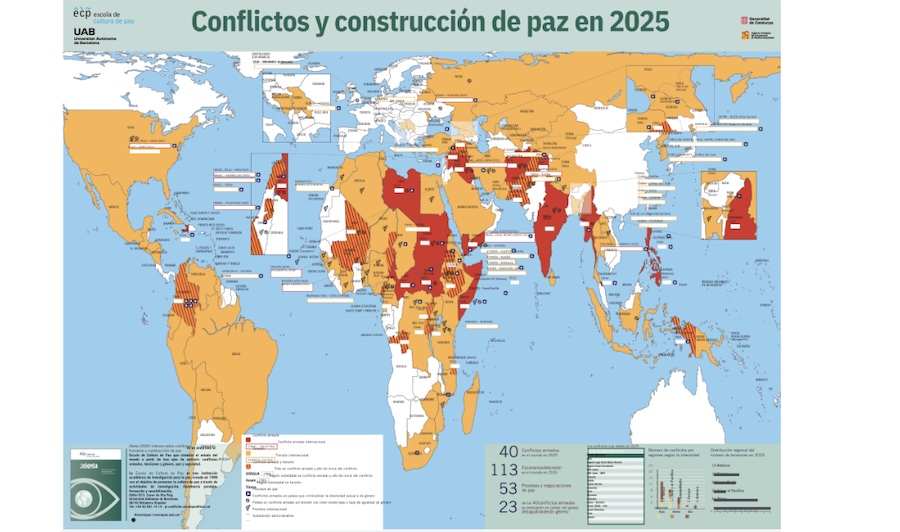
° The School for a Culture of Peace at the Autonomous Universiy of Barcelona has released its annual report on the world’s armed conflicts

° The Catholic Institute for Nonviolence in Rome has added a new co-director, coming from the American peace organization Pace é Bene

Latin America:

°,At the National Autonomous University of Mexico, a commission has been established to develop content on a culture of peace

° In the Dominican Republic a program of violence reduction and peace culture promotion has been established in schools

° In Honduras, the sixth edition of the World Peace Congress will take place in August

Africa:

° In Benin, the seventeenth edition of the World Social Forum will take place in August

Oceania:

° Leaders from the Pacific Islands are considering how to turn the Blue Pacific Ocean of Peace Declaration into a regional treaty.

Asia:

° Youth leaders from 33 countries took part in the 12th Youth Leadership Workshop on GCED in Seoul, Republic of Korea with the theme “Translating Peace into Action.”

In the long run, which is more important for human history, the fast news or the slow news?

If the fast news leads to a Nuclear World War III it may be the end of human history. Otherwise, we may hope that the slow news will enable us to survive this dangerous period of history and help us to cultivate a culture of peace.

DISARMAMENT & SECURITY


London: International Conference Against War

SUSTAINABLE DEVELOPMENT


The China–Gulf axis is reshaping renewable energy in the Global South

DEMOCRATIC PARTICIPATION


World Peace Congress: An International Network Uniting Cultures, Committed to Dialogue

WOMEN’S EQUALITY


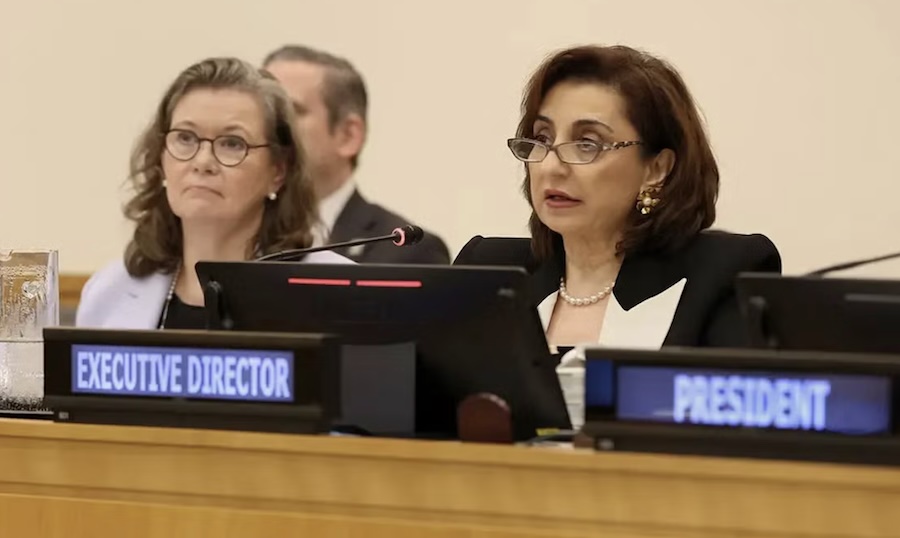
Report on Strategic Plan by UN Women Executive Director Sima Bahous


TOLERANCE & SOLIDARITY


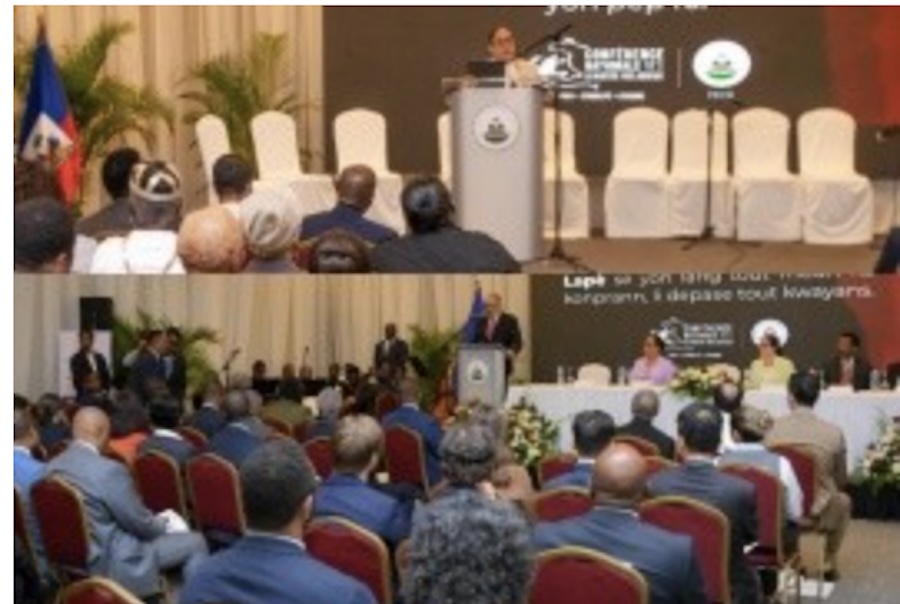
Haiti: National Conference : Commitments of religious leaders, joint declaration

EDUCATION FOR PEACE


Dominican Republic: Violence Reduction and Peace Culture Promotion Program in Schools

FREE FLOW OF INFORMATION


UAB School for a Culture of Peace annual report: highest number of armed conflicts in the world in the past decade

HUMAN RIGHTS


US: UN High Commissioner for Human Rights alarmed at deaths in ICE custody, calls for urgent preventive action

UNESCO Korean workshop: Translating Peace into Action

… TOLERANCE AND SOLIDARITY …

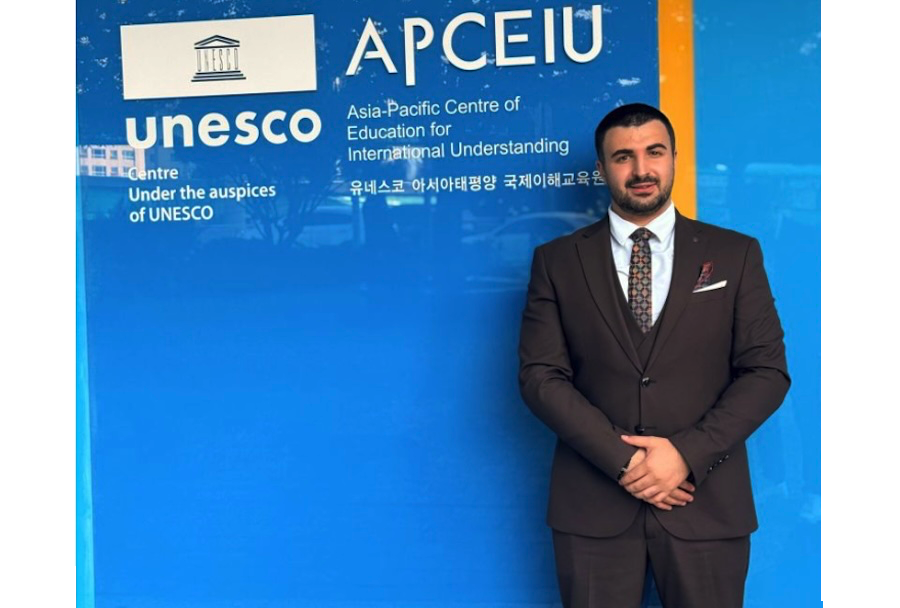
A page from Linked-in of Edvard Grigoryan

From declarations to action — translating peace into something you can actually feel.

This June, I had the honor of being one of 42 youth leaders from 33 countries selected to take part in the 12th Youth Leadership Workshop on GCED in Seoul, Republic of Korea.

The theme couldn’t have spoken more directly to my work in Peace and Conflict Resolution: “Translating Peace into Action: Leveraging Media and the Arts for Youth Advocacy.”

We kept returning to one question that has stayed with me since:
“Do we have the courage to face the realities of our time, and allow ourselves to feel deeply enough that it transforms us and our future?”

Over five intensive days, we moved beyond theory and into practice. A few moments that marked me:

→ A keynote on whether youth can truly promote peace in an era of global crisis

(Continued in right column)

Question for this article:

Youth initiatives for a culture of peace, How can we ensure they get the attention and funding they deserve?

(Continued from left column)

→ A powerful session on the Art of Peacebuilding through Theatre of the Oppressed, turning conflict into embodied understanding

→ Hands-on labs on Media and Information Literacy and countering hate speech — essential skills for anyone working in conflict-sensitive spaces

→ Confronting ethics and empathy in the age of AI

→ A deeply moving visit to the War & Women’s Human Rights Museum, a reminder of why this work matters

→ And throughout it all, designing real, community-based action plans we’ll carry home

What made this experience extraordinary was the people — peacemakers, artists, journalists, and changemakers from every corner of the world, all proving that peace is not a policy text. It’s something we build, practice, and live every day.

This workshop was made possible by UNESCO Asia-Pacific Centre of Education for International Understanding (APCEIU) and the UNESCO MGIEP Mahatma Gandhi Institute of Education for Peace and Sustainable Development, in partnership with the GCED Youth Network — a remarkable demonstration of UNESCO’s commitment to equipping young people to lead transformative change.

For someone whose path is rooted in peace and conflict resolution, this was more than a workshop. It was a reminder that the most durable peace begins with empathy — and that media and the arts may be among our most underused tools for advocacy.

Grateful, energized, and ready to translate this into action.

– – – – – –

If you wish to make a comment on this article, you may write to coordinator@cpnn-world.org with the title “Comment on (name of article)” and we will put your comment on line. Because of the flood of spam, we have discontinued the direct application of comments.
Pacific Islands: New paper proposes turning the Ocean of Peace Declaration into a regional treaty

DISARMAMENT AND SECURITY .

An article from the Pacific Security College

Evolving the Blue Pacific Ocean of Peace Declaration into a regional peace and security treaty could provide predictability in a period of increasing geostrategic competition, a new policy paper published by the Pacific Security College suggests.


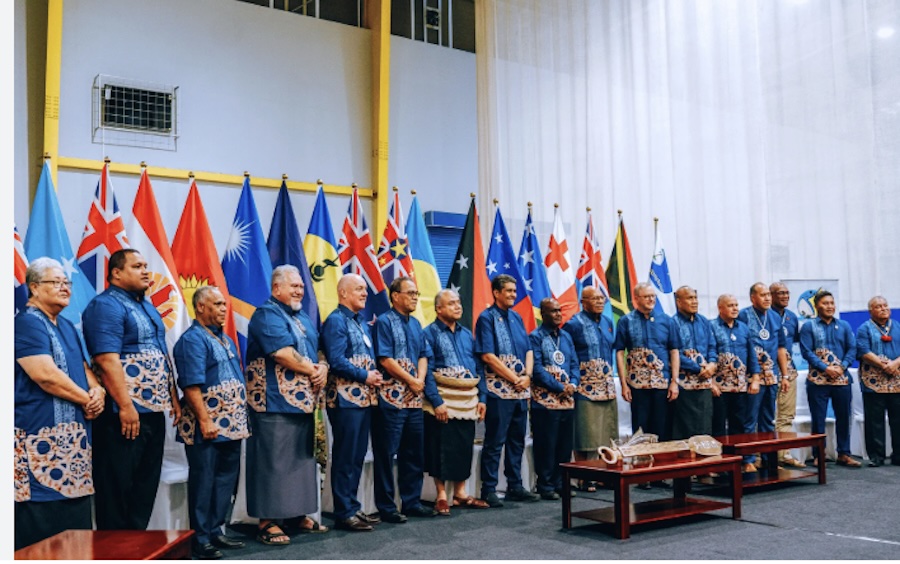
Leaders at the Ocean of Peace Commemorative Ceremony at the 54th Pacific Islands Forum Leaders’ Meeting in Honiara, Solomon Islands. Photo: Pacific Security College

The Ocean of Peace: Vision to Treaty  weighs the benefits and risks of turning the Ocean of Peace Declaration, endorsed by Pacific leaders in 2025, into a legally binding agreement. The paper proposes negotiating a new regional peace and security treaty as a Protocol to the Treaty of Rarotonga.

Author Ben Burdon said that, amid growing geopolitical tensions, it was useful to reflect on how the Pacific could maximise its agency and authority in its own interests.

“The Pacific’s strategic vision is made clear in the Blue Pacific Ocean of Peace Declaration,” Mr Burdon said.

[Editor’s note: Click here for a copy of the Blue Pacific Ocean of Peace Declaration. Note that it commits to cultivating a culture of peace grounded in the Pacific Way.]

“Embedding the Ocean of Peace and Pacific values and norms into international law and practice, as has been done with nuclear weapons, fishing and climate change, is a potential next step.

“Negotiating a new treaty as a protocol to Rarotonga would turn a respected nuclear-free zone into a legally binding regional peace and security system – one built and owned by the Pacific.”

The protocol proposed in the paper – dubbed ‘Rarotonga II’ – includes principles such as establishing the Pacific as a Zone of Peace, recognising climate security as a peace obligation, and providing a mechanism for external partners to formally commit to Pacific peace and security law and practice.

“Rarotonga II would introduce prior consultation, transparency and collective discussion. It would reduce surprise and mistrust between Pacific countries and external powers, while strengthening regionalism,” Mr Burdon said.

In 2027, China is expected to acquire the capability to retake Taiwan militarily. While capacity does not equate intent, Mr Burdon’s paper notes that the Pacific’s strategic geography would be critical for military access and denial.

“While a regional peace and security treaty is not without risk, the strategic guardrails set out in such an agreement could help the Pacific manage the difficult geopolitical environment ahead,” Mr Burdon said.

Professor Dave Peebles, Director of the Pacific Security College, said the paper’s publication comes at a time of growing uncertainty across the region.

“The Pacific’s capacity to come together in pursuit of common goals remains one of its greatest strengths – and one that carries particular weight in an increasingly contested strategic environment,” Professor Peebles said.

(Article continued in right column)

Question for this article:

Where in the world are zones of peace?

(Article continued from left column)

“The proposal will undoubtedly generate both support and critique. That’s its value, when the topic is so important and the stakes are so high.

“Policy papers published by the College are designed to prompt careful reflection and constructive debate, and to create space for diverse perspectives on the region’s most pressing issues.”

The Ocean of Peace: Vision to Treaty includes insights from four regional experts with backgrounds spanning international law, diplomacy, politics, academia and governance: Tuiloma Neroni Slade, Dr Sandra Tarte, Dr Anna Naupa and Sione Tekiteki.

Tuiloma, former Secretary General of the Pacific Islands Forum, observed that Mr Burdon’s account of the sensitivities involved in developing a new protocol to the Treaty of Rarotonga was both realistic and perceptive.

“I broadly agree with his assessment of both the possible benefits and the attendant risks, particularly the danger of destabilising existing security relationships, fragmenting Pacific unity, and inviting geopolitical backlash,” he said.

Tuiloma acknowledged the challenges of making and revising treaties and suggested that rather than reopening the Treaty of Rarotonga, it could be more practical to strengthen implementation of the existing text.

“The Pacific is strongest when it acts collectively. Whatever form the next steps for the Ocean of Peace may take, they will need to be guided by unity and deepened regionalism.”

Dr Tarte, from the University of the South Pacific, recognised the clear pathway set out by the paper for codifying key principles of the Ocean of Peace, while bolstering the key role the Treaty of Rarotonga plays in the Pacific’s security architecture.

“It significantly advances thinking around how to manage inter-state tensions and external engagement, thereby promoting greater transparency in security matters and reaffirming the rules-based order,” Dr Tarte said.

Dr Tarte acknowledged that the Ocean of Peace Declaration has provided a pivotal platform for advocating Pacific priorities on the global stage.

“It is time to take the next step and, as this discussion paper explores, to ‘turn vision into law’,” Dr Tarte said.

Dr Naupa, from the Pacific Security College, welcomed Mr Burdon’s pragmatism in leveraging the 40-year-old Treaty of Rarotonga and his consideration of what Pacific deterrence options look like in today’s world.

She emphasised the importance of inclusive consultation and grassroots-driven processes in any future regional peace and security decisions.

“State-led security strategies must be Pacific peoples-centred and address historical legacies,” Dr Naupa said.

“Designing a regional deterrence model needs to consider how these long-standing elements of Pacific regional policy would be integrated into the preventative diplomacy model proposed by Burdon.”

Mr Tekiteki, from the Auckland University of Technology Law School, said an Ocean of Peace protocol would be an attempt to institutionalise and safeguard Pacific agency.

“The idea of an Ocean of Peace treaty framed as a protocol to the Treaty of Rarotonga is compelling, particularly in its attempt to move the Pacific beyond the largely normative framing of the Blue Pacific Continent towards something more concrete and grounded in legal order,” he said.

“Deeper regional security coordination may strengthen solidarity and collectively position the region against intensifying geopolitical competition.”

The Pacific Security College’s policy paper series  aims to contribute a diversity of views and ideas to regional conversations about the journey to 2050.

– – – – – –

If you wish to make a comment on this article, you may write to coordinator@cpnn-world.org with the title “Comment on (name of article)” and we will put your comment on line. Because of the flood of spam, we have discontinued the direct application of comments.
The China–Gulf axis is reshaping renewable energy in the Global South

.. SUSTAINABLE DEVELOPMENT ..

An article by Safa Joudeh in the East Asia Forum (reprinted according to Creative Commons Attribution-NonCommercial-NoDerivs 4.0 International

The United Arab Emirates and China are jointly delivering utility-scale wind and solar projects, with the former providing diplomatic access and financial firepower and the latter delivering the technology and construction.

In late 2025, the UAE-based company Global South Utilities launched 50-megawatt solar projects in the Central African Republic and Madagascar with Chinese firms supplying core technology. In early 2026, UAE state-owned renewable energy giant Masdar signed an agreement to build and operate the 300-megawatt Guzar Solar and Battery Energy Storage Project in Uzbekistan, again using Chinese photovoltaic modules and battery storage systems.


From Argentina to Costa Rica and Chile, Masdar is looking to replicate this model through partnerships with Latin American state-run energy projects, with China serving as the critical enabler anchoring supply chains, co-financing deals and deploying infrastructure at scale.

This pattern of China–UAE cooperation is likely to accelerate as global energy markets remain volatile following the US–Israeli war on Iran. Governments across the Global South are seeking to diversify into renewable energy sources, creating new market opportunities for emerging players. While this pattern first emerged due to energy disruptions in the wake of the pandemic, increased volatility in global energy markets in the wake of the US–Israeli war on Iran promises to further accelerate this trend

The China–UAE renewable energy axis is more than a commercial partnership. It is a convergence of state-capitalist models that is reshaping energy transitions in the Global South. By jointly expanding their global energy engagements, China and the UAE are systematically extending their strategic and commercial footprints in global energy markets, and in doing so ushering in an increasingly multipolar global energy order.

Fossil fuels still supply nearly 60 per cent of global electricity generation, with nuclear accounting for 9 per cent and renewables around one third. But the balance is beginning to shift, as renewables now drive nearly three-quarters of the year-on-year growth in electricity generation — even as fossil-fuel output continues to rise.

The drivers are largely economic. Hybrid solar and wind systems combined with battery storage can now deliver electricity at costs competitive with coal and gas. With financing and infrastructure support, green transitions are not only viable but financially rational.

Geopolitical shocks have strengthened this shift, beginning with the disruption to global oil and gas markets following international sanctions on Russia after its invasion of Ukraine in 2022. The closure of the Strait of Hormuz, which supplies 80 per cent of crude oil and 90 per cent of liquefied natural gas bound for Asian markets, has triggered a severe oil supply shock.

(Continued in right column)

Question for this article:

Are we making progress in renewable energy?

(Continued from left column)

Policy responses have been contradictory. Some governments have sought to ensure fossil fuel accessibility by ramping up coal output and reinstating energy subsidies. But the crisis has also accelerated a longer-term reorientation. India is fast-tracking its wind and solar pipelines alongside emergency coal measures, while Indonesia has ordered 100 gigawatts of solar capacity and is targeting full vehicle electrification. The Philippines has also fast-tracked 1.5 gigawatts of renewable projects to secure domestic power delivery.

Against this backdrop, Chinese and Gulf companies, primarily from Saudi Arabia and the UAE, are positioned to supply renewable energy infrastructure. As the world’s largest green technology producer, China already holds a structural advantage. It controls 80–90 per cent of global solar photovoltaic manufacturing capacity while Chinese firms account for 78 per cent of the global wind turbine market. Chinese firms are also dominant in lithium-ion battery production and the processing of rare earth elements and critical minerals.

A decade of state-backed investment has driven solar photovoltaic and battery production costs down by 90 per cent, eroding the market share of Western companies like Vestas and Siemens and making Chinese firms dominant global suppliers of reliable, low-cost energy technologies.

But rising trade barriers in the West and parts of Asia, along with geopolitical tensions, have curtailed Chinese firms’ role as developers. China is responding by pivoting from developer to enabler, partnering with Gulf entities like Masdar, AMEA Power and Saudi Arabia’s Acwa to finance and develop projects that deploy Chinese technology.

The logic of the alliance is straightforward. Gulf sovereign wealth-backed developers collaborate with Chinese suppliers and contractors to construct renewable energy facilities. Gulf companies originate, design and manage projects, using diplomatic relationships to win concessions and secure financing. Chinese entities remain involved as suppliers and engineering, procurement and construction contractors. As structural demand surges in markets where the China–Gulf axis is active, these actors are positioned as the most competitive bidders for tenders across Asia, Africa and Latin America.

Masdar’s state backing gives it an exceptionally low cost of capital, enabling it to bid the lowest electricity tariffs seen in any emerging market and win government tenders across Asia, including in Uzbekistan and Indonesia. It has also set a record low solar tariff in Africa through a joint venture in Cote d’Ivoire.

Masdar relies on Chinese suppliers and contractors to win competitive tenders while bypassing Western manufacturers. The result is deeper entrenchment of Chinese technology and supply chains across Global South energy infrastructure.

The China–Gulf axis is reshaping who builds and finances renewable energy in the Global South. More importantly, it is also influencing where projects are built, on what political terms and within whose geostrategic orbit countries access and govern their energy future.

The International Energy Agency projects global renewable electricity capacity will expand by thousands of gigawatts by 2030, with global state-backed utilities positioned to dominate this landscape. The emerging risk is that the energy transition, conceived as an ecological project, is being consolidated into a new model of capital accumulation and infrastructure dependency, with a new set of state-backed green utility managers at its centre.

US: UN High Commissioner for Human Rights alarmed at deaths in ICE custody, calls for urgent preventive action

…. HUMAN RIGHTS ….

An press release from the United Nations Office of the Commissioner for Human Rights

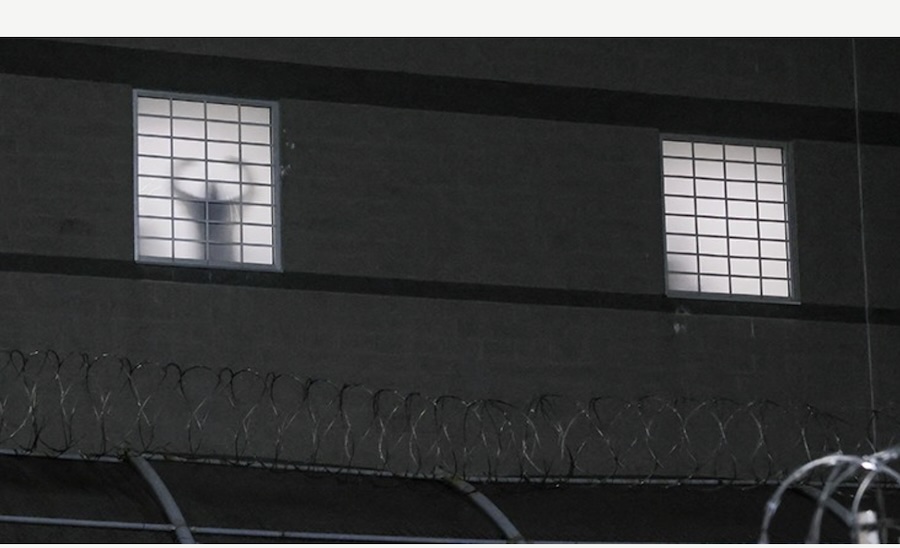
UN High Commissioner for Human Rights Volker Türk on Friday [June 26] urged prompt action to prevent further loss of life in U.S. Immigration and Customs Enforcement (ICE) custody and called for independent investigations into all deaths under ICE custody.

Türk said that it is alarming that, according to US Government official data, in the first five months of this year, 18 people had died in ICE detention. A further case of death in ICE custody has been reported this month. In 2025, a total of 33 deaths were registered, compared with 11 in 2024.

The lack of transparency and clarity surrounding the circumstances of these deaths in custody undermines accountability for them, the High Commissioner added.


ICE detention centre in Newark, New Jersey on June 6, 2026 © RYAN MURPHY / AFP

“I call for prompt, independent, impartial and effective investigations into all deaths in ICE custody. Those responsible for violations of the law must be held to account, and the rights of the victims’ families to truth, justice and reparation and guarantees of non-recurrence must be upheld,” said Türk.

These deaths occurred in a context of broad expansion of the US immigration detention system, with ICE currently holding over 60,000 individuals compared to approximately 40,000 in early 2025, according to the latest official data. There are plans to further increase the detention capacity up to 90,000 people by the end of 2026.

Detainees, who include entire families with children, and medically vulnerable people, are frequently reported to face inhuman conditions of detention and treatment, including inadequate healthcare and food, and exposure to disease outbreaks in overcrowded facilities. There have been concerning allegations regarding the use of force. Additionally, five of the officially reported deaths in 2026 were classified as suicides.

A lack of information regarding the whereabouts of detainees during transfers has been reported, causing significant distress among families, while prolonged uncertainty surrounding legal status and processes contributes to psychological distress among detainees.

(Article continued in the right column)

Question related to this article:

What is the state of human rights in the world today?

(Article continued from the left column)

Türk also expressed alarm over the reported use of solitary confinement, which should be an exceptional measure, and, particularly when prolonged or indefinite, could amount to cruel, inhuman or degrading treatment.

“All these factors exacerbate vulnerability and raise serious concerns as to whether some of these deaths in ICE custody could have been prevented,” said the High Commissioner.

He stressed that alternatives to detention should be prioritized. Immigration detention should be an exceptional measure of last resort and should generally be avoided for people with significant medical or mental health conditions, as well as pregnant women. Regardless of their immigration status or that of their parents, children should not be subjected to immigration detention.

US immigration authorities must ensure that their detention facilities comply with international human rights norms and standards. This includes upholding dignity, avoiding overcrowding, providing timely access to healthcare, including mental health services, family notification, consular assistance, legal representation, and necessary interpretation services for all individuals in immigration detention.

The High Commissioner urged the full restoration and strengthening of independent oversight mechanisms for immigration detention, highlighting their importance as a key safeguard against abuse. He also stressed the crucial role of Congressional bodies in overseeing immigration enforcement practices and associated public funding, to ensure better compliance with international human rights law.

Türk strongly denounced the continued dehumanisation and criminalisation of migrants and refugees. He expressed support for all those who continue to advocate for dignity, fairness, and the protection of their human rights, including lawyers, journalists, faith-based organisations, and civil society groups.

He emphasised that no one should be sent back to a place where they could face serious human rights violations or other irreversible harm.

For more information and media requests, please contact:
In Geneva
: Ravina Shamdasani – ravina.shamdasani@un.org
    
Marta Hurtado – marta.hurtadogomez@un.org

In New York
: Laura Gelbert – gelbert@un.org
WhatsApp
X: @UNHumanRights

Facebook: unitednationshumanrights
Instagram: @unitednationshumanrights

– – – – – –

If you wish to make a comment on this article, you may write to coordinator@cpnn-world.org with the title “Comment on (name of article)” and we will put your comment on line. Because of the flood of spam, we have discontinued the direct application of comments.
Report on Strategic Plan by UN Women Executive Director Sima Bahous

. . WOMEN’S EQUALITY . .

Excerpts from Report by UN Women Executive Director Sima Bahous

The following are excerpts from remarks by UN Women Executive Director Sima Bahous at the Executive Board Annual Session, at the UN Headquarters, on 23 June 2026:

I am honoured to present at this session my fourth and final report on the implementation of our 2022–2025 Strategic Plan. It lays out results of which we should be proud, reflecting our powerful triple mandate. They are the baseline we strive to exceed under our current Strategic Plan.


UN Women Executive Director Sima Bahous addresses the Annual Session of the UN Women Executive Board held in CR3 at UN Headquarters on 23 June 2026. Photo: UN Women/Radhika Chalasani.

Allow me to summarize:

° Over the 2022–2025 Strategic Plan period, UN Women invested nearly USD 2.35 billion across 135 countries in protecting and advancing norms, translating global commitments into programmes on the ground, and leading and supporting the UN system to deliver better for women and girls.

° In 110 countries, home to 3.1 billion women and girls, UN Women helped strengthen legal and policy environments for gender equality, contributing to stronger protections, expanded rights and greater opportunities for women and girls through 394 laws adopted, revised or repealed in line with international standards.

° Across 78 countries, 732 gender-responsive national and local policies, strategies and plans helped advance equal pay, the care economy, efforts to end violence against women, and strengthen resilience to conflict and climate change.

° In 50 countries, reforms supported by UN Women expanded women’s access to decent work, income generation, climate-resilient agriculture and care systems, while 1.6 million women directly accessed services, goods, resources, or information essential to their economic autonomy.

° We also helped make the promise of freedom from violence more real for women and girls. Through support to 180 laws and 213 strategies, policies, and action plans, nearly 1.7 billion women and girls benefited from stronger frameworks to prevent and respond to violence.

° In conflict and crisis, UN Women advanced women’s leadership, participation, and protection across 83 countries.

° Support for the Women, Peace and Security agenda contributed to 59 new National Action Plans, bringing total coverage to 117 countries and territories, while more than 2.5 million women and girls accessed protection services, cash assistance, and livelihood support in humanitarian and refugee response settings.

° Despite significant funding pressures, we lived up to our promise to women’s organizations, with more than USD 285 million channeled to civil society organizations, local women-led organizations and networks, helping sustain women’s leadership and frontline responses in communities and crises.

° Across 128 countries, more than 10,300 organizations strengthened their capacities and leadership, while more than 11,400 mechanisms enabled women’s meaningful and safe participation in decision-making.

Through the United Nations Trust Fund to End Violence against Women and the Women’s Peace and Humanitarian Fund, which UN Women hosts on behalf of the UN system, we continued to expand direct support to women’s rights organizations and advance locally led solutions where they are most needed.

Through these funds, despite scarcer resources, you are helping sustain women’s leadership across the humanitarian-development-peace nexus and ensuring that local women’s organizations remain at the forefront of response and recovery efforts.

These results are not just numbers. They show impact, they show lives changed. They do not just create an immediate effect for the women and girls we serve, but also an enabling environment for gender equality, for women’s rights, for normalizing women’s leadership, for changing laws, policies, and norms.

Allow me to share a few examples:

° In Ecuador, women gained stronger protections against violence in politics and greater opportunities to participate equally in public life through electoral reforms.

° In Afghanistan, over 350,000 women and girls accessed life-saving services in one of the world’s most restrictive environments for women’s rights, while 191 women-led organizations strengthened their capacity to support communities and sustain women’s leadership.

(Article continued in right column)

Question related to this article:

Protecting women and girls against violence, Is progress being made?

Does the UN advance equality for women?

(Article continued from left column)

° In Palestine, more than 323,000 people, the majority of whom are women and girls, received protection, cash, and livelihood support amid a devastating humanitarian crisis.

° In the Great Lakes region, women’s leadership in peace processes expanded, with women representing up to 40 per cent of the African Union mediation team for Eastern DRC.

° In Egypt, 330,000 women gained financial and digital literacy support, enhancing their economic opportunities and resilience.

° Across the Pacific Islands, more than 50,000 market vendors benefited from safer, more resilient livelihoods.

° In Ukraine, more inclusive humanitarian strategies advanced women’s rights and expanded the role of civil society in humanitarian response and recovery.

° In Viet Nam, a landmark population law strengthened the recognition of reproductive rights and unpaid care work, helping lay the foundation for stronger, gender-responsive care systems.

Our coordination efforts have shown impressive results. UNCT-SWAP [UN Country Team System Wide Action Plan] reporting increased by 105 per cent, from 61 UN country teams in 2021 to 125 in 2025. This growth is helping embed gender equality more consistently in UN country team planning, coordination, financing, and results.

We also continued to engage system-wide through the Gender Equality Acceleration Plan  (GEAP), which raises the ambition of collective work on gender equality, seeking to deliver transformative change across the three pillars of peace and security, development and human rights, and supporting UNCTs and RCs [UN Resident Coordinators] in their work to prioritize gender equality as the linchpin for all the UN’s work in country.

My report also describes how we have built a stronger entity, better equipped to deliver for women and girls with the resources you entrust to us. Over the Strategic Plan period, we strengthened our internal governance mechanisms, advanced business transformation, and modernized corporate systems.

We also enhanced oversight, accountability, and transparency, including by further strengthening our Transparency Portal, recognized as a good practice in public accountability for results and resources.

We consistently exceeded corporate targets on follow-up to internal and external audit recommendations, and maintained five consecutive years with no long-outstanding audit recommendations from the UN Board of Auditors.

We embedded enterprise risk management into planning, performance, and oversight cycles while institutionalizing the Quarterly Business Review as a forward-looking, evidence-based performance management tool that connects strategic priorities, risks, and resources.

These reforms have made UN Women even more agile, transparent and results focused. They deliver stronger alignment from country to global level and a clearer line of sight between our strategic objectives, the resources we invest, and the results we deliver.

Our strengthened communications and partnership functions have further enhanced our visibility, stakeholder engagement, and resource mobilization effectiveness, helping sustain the trust and support of partners during a period of increasing financial pressure and change across the multilateral system.

Allow me to remind you that we do all this with the most modest of resources. We have weathered the current, uniquely difficult funding environment for the multilateral system better than most, but we are not unaffected.

Like many, we are asked to do more with less. So once more, I ask you to take back to capitals a call to resource this crucial mandate fully, to advocate for our agenda, and for investment in gender equality and women’s empowerment as the greatest multiplier for the SDGs [Sustainable Development Goals]. An investment in UN Women is your vehicle for their achievement.

We will speak more extensively on UN80 this afternoon, but I will reiterate now our full support for the Secretary-General’s UN80 reform efforts, as the United Nations’ youngest entity, born and raised through the reform process.

We continue to ensure that our three priorities permeate all aspects of the process:

1. A stronger gender architecture that delivers for all women and girls.

2. Gender mainstreaming in all work packages.

3. The inclusion of voices of civil society and women-led organizations and movements.

– – – – – –

If you wish to make a comment on this article, you may write to coordinator@cpnn-world.org with the title “Comment on (name of article)” and we will put your comment on line. Because of the flood of spam, we have discontinued the direct application of comments.
UNAM, Mexico: Establishment of Commission to Develop Content on a Culture of Peace

FREE FLOW OF INFORMATION

An article from Gaceta UNAM

An Academic Working Commission has been established at the National Autonomous University of Mexico (UNAM) with the aim of contributing to and supporting high school education through the development of educational courses on a culture of peace for students and faculty,

This commission is comprised of the University Program on a Culture of Peace and the Eradication of Violence (PUCPAZ), the general directorates of the National Preparatory School and the National School of Sciences and Humanities, the High School Academic Council, the General Directorate of Incorporation and Revalidation of Studies (DGIRE), and the Institute of Legal Research.

Leticia Cano Soriano, head of PUCPAZ, led a ceremony held at the Program’s offices in the Engineering Tower. She explained that the design, development, and integration of an elective course and a training course are part of the University’s strategy to disseminate a culture of peace across all levels of education, beginning in secondary school and later being integrated into higher education.

The Master of Social Work commented that it is important to develop this elective course and training program to offer students and faculty tools that allow them to incorporate a culture of peace and violence prevention into academic activities, with an emphasis on human rights, interculturality, and community social fabric. She also emphasized integrating these themes with other subjects in the high school curriculum.

Sergio Abraham Reyes Pantoja, Academic Secretary of PUCPAZ, explained that, based on the University Program’s Founding Agreement, one of the program’s objectives is the development of its own educational content on a culture of peace. In addition to advising institutions on mainstreaming these topics into their curricula, the commission also promotes the development of human resources for teaching. The aim is to establish plans and strategies at the high school level for disseminating a culture of peace and implementing specific actions to eradicate violence in university environments.

(Continued in right column)

(Click here for a Spanish version of this article)

Question related to this article:

How can we develop the institutional framework for a culture of peace?

Is there progress towards a culture of peace in Mexico?

(Continued from left column)

During the meeting, Consuelo Arce Ortiz, secretary of the Academic Council of the UNAM High School, stated that it is essential to begin with an understanding of the regulations, specifically the General Regulations for the Presentation and Approval of Study Plans and Programs. This will provide greater academic validation, and the need to address a culture of peace has already been raised, calling the University to action.

Arce Ortiz added that the commission’s intention is to place the dignity of individuals at the center of education, fostering positive attitudes and positively impacting the lives of the school and teaching community.

Restorative Approach

Mara Hernández Estrada, from the Institute of Legal Research, mentioned that collaborative work is crucial to ensure the classroom becomes a suitable pedagogical environment for fostering a culture of peace, especially in conflict management, and with a restorative approach.

She emphasized the importance of addressing students’ needs to prevent negative impacts in the classroom, aligning with the ethics of care, and raising awareness about violence.

Speaking next, Alejandro Benítez Jiménez, Continuing Education Coordinator at the DGIRE (General Directorate of Educational Research), shared that the affiliated system serves more than 17,000 students in 28 states across Mexico, who follow 263 different curricula, and that they will now be able to incorporate these courses to promote a culture of peace.

In developing new courses, she noted, it is essential to consider the needs of affiliated schools both in Mexico City and throughout the country. She added that the new courses for students and faculty will be an important opportunity to convey not only the message of fostering a culture of peace, but also the teaching strategies to achieve it.

Finally, Jacqueline Leyva Chávez, coordinator of the Institutional Tutoring Program at the General Directorate of the College of Sciences and Humanities, emphasized that the course topics are particularly relevant because students face diverse challenges, and the training must include specific strategies to effectively support and guide them.

– – – – – –

If you wish to make a comment on this article, you may write to coordinator@cpnn-world.org with the title “Comment on (name of article)” and we will put your comment on line. Because of the flood of spam, we have discontinued the direct application of comments.