Category Archives: United Nations

Indigenous Leaders Call for Global Recognition of Peacebuilding Role as UN Forum Echoes Summit Outcomes

. . SUSTAINABLE DEVELOPMENT . .

An article from the Women Survivors Network

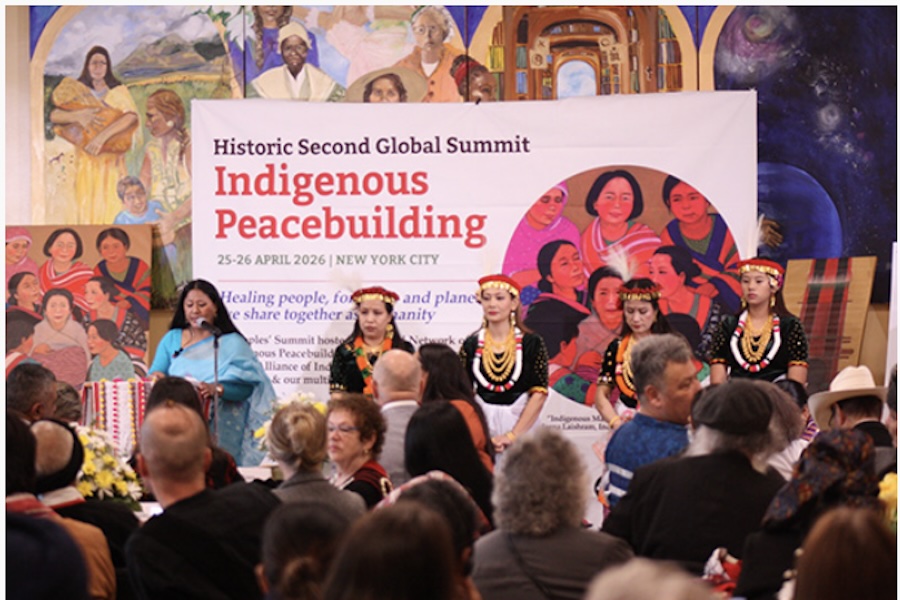
 Indigenous leaders, diplomats and United Nations officials convened in New York for the Second Global Summit on Indigenous Peacebuilding, issuing a call to reframe global peace and security efforts by placing Indigenous Peoples at the center of conflict prevention and resolution.

Held in New York City on April 25–26, 2026, the two-day summit gathered 300 representatives from 80 countries and seven socio-cultural regions of the world amid growing concern that a majority of the world’s conflicts occur in biodiversity-rich areas inhabited by Indigenous Peoples.

Organizers said the summit has already influenced international policy discussions. The United Nations Permanent Forum on Indigenous Issues referenced the event and its recommendations in its 2026 outcome document, including a proposal to declare 2027–2037 an International Decade of Indigenous Peacebuilding.

Opening the Summit, Binalakshmi Nepram, Founder-Director of Manipur Women Gun Survivors Network and President of the Global Alliance of Indigenous Peoples, Gender Justice and Peace, called for a fundamental shift: “It is time to move from seeing Indigenous Peoples as victims of conflict to recognizing them as experts, mediators, and negotiators of peace.”

The Summit built on the outcomes of the first global gathering, which led to the first-ever declaration on Indigenous Peacebuilding and the creation of a Global Network of Indigenous Peacebuilders, Mediators and Negotiators to help resolve some of the world’s most entrenched conflicts.

A series of global initiatives were launched at the gathering, including the Global Indigenous Mothers March for Peace, Healing and Unity, the recognition of an innovative and much-needed Indigenous Humanitarian Peacebuilding (IHP) Model to respond directly to survivors in war and conflict zones,  a forthcoming book on Indigenous Peacebuilding, and the rollout of online and in-person curriculum programs to train Indigenous peacebuilders worldwide.

A central feature of the summit was the Weaving for Peace exhibition, which brought together traditional textiles from Indigenous communities across Manipur, Guatemala, Papua New Guinea, Bolivia, the Haudenosaunee, the Sámi region, Maasai Regions, Amazon and the Sahel, highlighting cultural resilience as a foundation for peace.

(article continued in right column)

Question related to this article:

Indigenous peoples, Are they the true guardians of nature?

(article continued from left column)

Speakers pointed to rising global displacement—estimated at around 200 million people—with many conflicts linked to resource extraction, environmental degradation and transnational organized crime affecting Indigenous territories with huge humanitarian consequence.  Aluki Kotierk, Chair of the United Nations Permanent Forum on Indigenous Issues, underscored the role of Indigenous knowledge systems rooted in balance and reciprocity. “Indigenous Peoples must be recognized not as security threats, but as part of the security infrastructure,” said Dr Albert Barume, United Nations Special Rapporteur on Indigenous Issues, framing Indigenous peacebuilding as a matter of international peace and security.

Justin Mohammad, Ambassador for First Nations People, Australia, said Indigenous diplomacy has long shaped relations across regions and should be integrated into modern peace processes.

“When multilateral institutions are being questioned, we need governance—but we must humanize it,” said Laura Gil, Assistant Secretary General of the Organization of American States. Omar Hilale, Permanent Representative of Morocco to the United Nations and Chair of the United Nations Peacebuilding Commission, emphasized the need for inclusive peacebuilding approaches that incorporate Indigenous knowledge and local leadership.

Laura Flores Director of Americas Division of the United Nations Department of Political and Peacebuilding Affairs also joined and stated, “member states are increasingly recognizing Indigenous Peoples’ role in peacebuilding, including through a landmark resolution on Indigenous Peoples’ rights and their role in peacebuilding, negotiations, and transitional justice.”

Ana Pérez Conguache, representing the Guatemala Presidential Commission, highlighted the importance of addressing land rights, inequality and historical injustices as part of sustainable peace.Ambassador David Lametti, Permanent Representative of Canada to the United Nations also spoke at the Summit pledging support for Indigenous Peacebuilding.

Many scholars and leaders from conflict affected regions such as Dr Noni Arambam, Maisnam Arnapal, Adam Kuleit Ole Mwarabu, Daniel Mastaki from DRC, Nuba Mountain and many others also spoke. Participants concluded with a shared message: that the world’s Indigenous Peoples are the world’s peacemakers; that wars and conflicts currently engineered in Indigenous territories must end immediately; and that Indigenous Peoples who are displaced must be protected.

That justice, inclusion, and the leadership of Indigenous Peoples—their peacemaking and their wisdom—hold the key for healing people, for peace and the planet, and it’s time UN member states and the world realize and ensure this in policy, planning, action, and resourcing.

– – – – – –

If you wish to make a comment on this article, you may write to coordinator@cpnn-world.org with the title “Comment on (name of article)” and we will put your comment on line. Because of the flood of spam, we have discontinued the direct application of comments.
UNESCO International Forum of NGOs: Advancing a Culture of Peace in Africa

FREE FLOW OF INFORMATION

An announcement from UNESCO

UNESCO Headquarters, Paris | 19, 21 and 22 May 2026
Held in the framework of Africa Week 2026, the International Forum of NGOs will bring together representatives of Member States, the African Union, civil society, youth and UNESCO partners to advance dialogue and cooperation on building a Culture of Peace in Africa. The Forum will feature a high-level opening panel, thematic discussions and exchanges highlighting the role of civil society in advancing inclusive, peaceful and resilient societies, including through youth engagement, education, water cooperation, culture, inclusion and community-based approaches to social cohesion across the continent.

Excerpts from the Forum programme

Day 1 Tuesday, 19 May 2026

Official Opening

Remarks by Ms Åsa Regnér, Deputy Director-General of UNESCO

Remarks by Ms Svetlomira Stoyanova, Chairperson NGO-UNESCO Liaison Committee

Master of Ceremony: Mr Davide Grosso, NGO-UNESCO Liaison Committee

High-Level Panel: “Building a Culture of Peace in Africa – Lessons from the Past, Realities of the Present, Visions for the Future”

Moderator: Mr Julien Pellaux, Director of UNESCO’s Division for Partnerships

(Participants from UNESCO headquarters)

Question related to this article:

Will UNESCO once again play a role in the culture of peace?

Day 2 Thursday, 21 May 2026 (

Building Blocks of Peace: Water, Education and Youth

Introduction of the Forum by the NGO Forum co-chairs:

Session 1: “Water as a Catalyst for Cooperation: From Scarcity to Shared Security”

Moderator: Ms Svetlomira Stoyanova, Chairperson NGO-UNESCO Liaison Committee

(Videos presentations from South Africa and Algeria)

(Panel with participants from UNESCO headquarters and Zimbabwe)

Session 2: “Reimagining Education Systems as Engines of Peace”

Moderator: Ms Nisrine Ibn Abdeljalil (Morocco), Executive Director of the Moroccan Fondation for PreSchool (FMPS)

(Panel with participants from UNESCO headquarters, Togo, Kenya, Burundi and Senegal)

Session 3: “Youth as Co-Architects of Peace and Stability”

Moderator: Ms Melissa Mejía Flórez (Colombia), New Humanity, Communications Coordinator and Strategic Advisor

(Panel with participants from Brazil, Italy, DR Congo, Cameroon, Tanzania, France, Colombia and USA)

Day 3 Friday, 22 May 2026

Culture, Inclusion & Community-Based Peacebuilding

Session 4: “Fostering a Culture of Peace within Communities”

Moderator: Mr Davide Grosso, International Music Council, NGO-UNESCO Liaison Committee

(Panel with participants from Zimbabwe, African Union, Nigeria, Zimbabwe, Cameroon, South Africa and Togo.

Closing session

– – – – – –

If you wish to make a comment on this article, you may write to coordinator@cpnn-world.org with the title “Comment on (name of article)” and we will put your comment on line. Because of the flood of spam, we have discontinued the direct application of comments.
UN General Assembly resolution: Interreligious Dialogue as Soft Power Peace Tool

FREE FLOW OF INFORMATION

Excerpt from an article of United Nations News Service

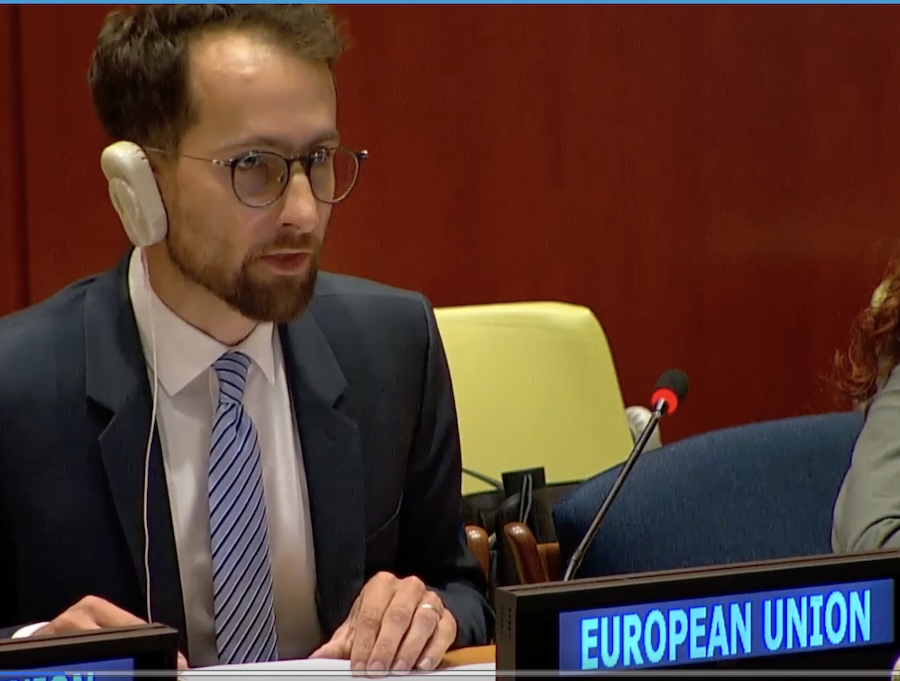
The Assembly adopted by consensus [on May 20] the draft resolution titled “Promotion of interreligious and intercultural dialogue, understanding and cooperation for peace” (document A/80/L.43) aimed at advancing interreligious and intercultural dialogue as a practical tool for peace, inclusion and sustainable development, supported by education, policy, partnerships and global cooperation.

Introducing the biennial text, the representative of Pakistan, also speaking on behalf of the Philippines and all co-sponsors, stressed that it is essential to promote a culture of peace — one that embraces diversity and inclusivity, safeguards fundamental rights and freedoms and rejects social structures and stereotypes that create divisions among individuals, societies, communities and nation States.

Question(s) related to this article:

What is the United Nations doing for a culture of peace?

Despite progress achieved over the years, he noted, much more remains to be done to fully realize these shared ideals.  In this regard, he recalled the Constitution of United Nations Educational, Scientific and Cultural Organization (UNESCO), which affirms that “since wars begin in the minds of men, it is in the minds of men that the defences of peace must be constructed”.  He explained that “a technical rollover” would retain the key messages reaffirmed through the consensus adoption of the resolution during the seventy‑eighth session.

Despite the unanimous adoption, several delegations raised some concerns. Among them was the representative of the United States, who said that the Assembly “spends countless hours negotiating symbolic, repetitive text with little to show in tangible results for the common citizen”.  Washington, D.C., she added, “is finished with performative exercises and bloated ideological multilateralism that fails to advance the core mission of the United Nations”.

(Editor’s note: The resolution was proposed by Indonesia, Pakistan, Philippines and Turkmenistan. Its operative paragraphs include the following:)

Calls upon Member States, which have the primary responsibility to counter discrimination and hate speech, and all relevant actors, including political and religious leaders, to promote inclusion and unity to combat racism, xenophobia, hate speech, violence and discrimination.

– – – – – –

If you wish to make a comment on this article, you may write to coordinator@cpnn-world.org with the title “Comment on (name of article)” and we will put your comment on line. Because of the flood of spam, we have discontinued the direct application of comments.
United Nations: International Women’s Day and Commission on Status of Women

. . WOMEN’S EQUALITY . .

A media advisory from UN Women

International Women’s Day 2026 comes at a defining moment: Women and girls have never been closer to equality, and never closer to losing it. Legal protection against domestic violence has expanded in many countries. Yet, the rights of women and girls are being rolled back in plain sight, and across the world, women still do not enjoy the same legal rights as men.

On 4 March, ahead of the 70th session of the Commission on the Status of Women (CSW70), UN Women will launch a report warning that the systems meant to protect women and girls are failing, leaving millions exposed to discrimination, violence and impunity as backlash against gender equality intensifies and violations of fundamental rights rise worldwide.

From 9–19 March, the world will gather at United Nations Headquarters in New York for CSW70 – the United Nations’ largest annual forum dedicated to gender equality and women’s rights. What happens at CSW influences laws, policies, funding and accountability across countries and generations.

This year’s focus is clear: rights, justice and action for all women and girls.

CSW70 is a defining test: whether the world choses to act together and deliver equality before the law for all women and girls or allow injustice to persist with impunity. UN Women calls on governments, partners, institutions and communities everywhere to stand up, show up and speak up for rights, justice and action – so all women and girls can live safely, speak freely and exist equally.

Follow the global conversation: #ForAllWomenAndGirls #IWD2026.

(Editor’s note: Details about the following events have been removed here but they may be accessed via the link above. The events may be followed via UN Web TV except in one case as indicated).

Rights. Justice. Action. For ALL Women and Girls. United Nations Observance of International Women’s Day

The United Nations Observance of International Women’s Day 2026, under the theme “Rights. Justice. Action. For ALL Women and Girls,” will be held on 9 March 2026 at the UN General Assembly Hall, immediately preceding the opening of CSW70. Aligned with CSW70, the observance is conceived as a single, continuous political moment that will elevate global attention to justice as the critical bridge between rights on paper and rights in practice, reaffirming collective resolve to confront persistent setbacks, violence and the denial of rights. Bringing together Member State delegations, global leaders, advocates, Goodwill Ambassadors and global voices, the observance will serve as a high-visibility platform to galvanize leadership, media engagement and concrete action towards ensuring equal access to justice for all women and girls.

Opening of the Seventieth Session of the Commission on the Status of Women (CSW70)

The CSW70 Opening marks the start of the seventieth session of the Commission on the Status of Women. The Commission will hear opening remarks by the CSW Chair, the Presidents of ECOSOC and the General Assembly and the Secretary-General, as well as a civil society representative and a young person. It will also hear introductory statements by the UN Women Executive Director, the Chairperson of the CEDAW Committee, the Chairperson of the Working Group on Discrimination against women and girls and the Special Rapporteur on violence against women, its causes and consequences. The ceremonial opening will be followed immediately by the adoption of the agreed conclusions, and the start of the general discussion which will focus mainly on the priority theme: ensuring and strengthening access to justice for all women and girls, including promoting inclusive legal systems, eliminating discriminatory laws and practices, and addressing structural barriers to equality.

G77 and Emerging Partners Ministerial Roundtable: Pathways for Accelerating Sustainable Financing for Gender Equality for All Women and Girls

Ministers, financial leaders, Ambassadors and development partners convene at CSW70 to advance practical pathways for scaling sustainable finance for gender equality. Co-hosted by Brazil, Kazakhstan, Maldives, Timor-Leste, Uruguay and UN Women, the Roundtable will focus on mobilizing public and private capital, strengthening financial systems and investing in priorities such as care infrastructure, digital inclusion and women’s economic empowerment. As the SDG deadline approaches and financing gaps widen, the event highlights concrete national actions and partnerships needed to accelerate investment in gender equality and drive inclusive, resilient economic growth.

Rights, Justice, Action for All Women and Girls: Celebrating 45 years of CEDAW

The Convention on the Elimination of All Forms of Discrimination against Women (CEDAW), often described as the international bill of rights for women, was adopted by the General Assembly in 1979 and entered into force in 1981. The CEDAW Committee held its inaugural session in 1982. As we convene for CSW70 in March 2026, we celebrate 45 years of the Committee’s work in monitoring the implementation of the Convention. As a quasi-judicial body, the CEDAW Committee has been the global vanguard for legal reform, the repeal of discriminatory laws, and the establishment of gender-responsive legal frameworks, and its General Recommendation No. 33 specifically provides guidance and recommendations to States on access to justice. In this regard, the CEDAW Committee, UN Women, OHCHR, the UN Foundation and the Ford Foundation are pleased to cohost a reception in commemoration of this important milestone.

Achieving Gender Equality in Nationality Laws

UN Women, in partnership with the Global Campaign for Equal Nationality Rights, UNHCR, UNICEF, the Global Alliance to End Statelessness, and champion States will convene a high-level event on Achieving Gender Equality in Nationality Laws on 10 March at United Nations Headquarters in New York. Despite global progress, more than 45 countries still retain gender‑discriminatory nationality laws that deny women equal rights to confer nationality, causing statelessness and lifelong barriers for millions of families. The event will spotlight testimony from people directly affected, share lessons from recent reforms, and underscore why gender‑equal nationality rights are essential to achieving justice and the SDGs. It will also launch a new Legal Atlas on Discriminatory Nationality Laws, providing the first comprehensive global mapping of these legal gaps. Impacted States are expected to announce concrete reform commitments.

(Article continued in right column)

Question related to this article:

Protecting women and girls against violence, Is progress being made?

Does the UN advance equality for women?

(Article continued from left column)

Townhall Meeting with the United Nations Secretary-General and Civil Society in the Margins of the 70th Session of the Commission on the Status of Women

The townhall provides an opportunity for the UN Secretary-General to meet with the largest gathering of civil society at the UN, and to have a frank discussion on issues related to the advancement of gender equality and women and girls’ rights around the world. It offers intersectional and intergenerational civil society a space to directly engage with the highest leadership of the United Nations and to ask questions, share recommendations and strengthen collaboration. This will be the last townhall with the current Secretary-General whose term ends this year.

Achieving Gender Equality and the Empowerment of All Older Women

As part of the CSW70, this Ministerial Round Table will focus on Achieving gender equality and the empowerment of all older women, an emerging focus area identified by the Commission. The discussion, led by high-level ministers and UN leaders will address how rapid population ageing – with women comprising the majority of persons aged 60 and above – reshapes the conditions for gender equality across the life course. Ministers will exchange experiences, lessons learned and good practices to advance income security and economic independence of older women, and to transform social and cultural norms to counter ageism and sexism, prevent elder abuse, and more.

The Role of Parliaments in Achieving Parity in Decision-Making and Ensuring Gender-Responsive Access to Justice for Women and Girls

The Meeting will provide an opportunity to bring a parliamentary perspective into the CSW70 discussions on the priority and review themes. Members of Parliament from around the world will share perspectives and practices on legislative, oversight and budgetary actions to achieve parity representation in decision-making, eliminate discriminatory laws, address gaps between legal frameworks and their implementation, combat impunity for violence against women, and strengthen accountability and enforcement across justice systems. The event will also serve as the launch of the latest Women in Politics Map, presenting new data for women in executive positions and national parliaments as of 1 January 2026.

Advancing Women’s Access to Justice: Building Justice Systems that Deliver for All Including in Fragile Contexts

Amid intersecting crises, uncertainty, and deepening inequality, there is an urgent need to reimagine justice systems that respond to the realities of a rapidly changing world. At CSW70, UNDP and UN Women – in partnership with the Governments of Brazil, Kingdom of the Netherlands, and Ukraine – are hosting a high-level event to spotlight country experiences, civil society innovations and emerging legal reforms. The discussion will identify recommendations that can be taken forward now and explore how governments, civil society and international partners can work together to co-create and sustain reforms for humans everywhere, including in fragile and crisis-affected contexts.

Women Leaders Paving the Way: Access to Justice for All Women and Girls

No Virtual access

Hosted by the UN Women Leaders Network, in partnership with the Government of Iceland and the UN Foundation, this CSW70 side event will feature a panel discussion with distinguished speakers from the UN Women Leaders Network about ensuring and strengthening access to justice for all women and girls, examined through a women’s leadership lens. The panel will highlight that meaningful access to justice depends on inclusive governance, accountable leadership, innovative policymaking, and cross-sectoral collaboration. The event will end with closing remarks from UN Women Executive Director Sima Bahous.

CSW High-level Meeting on Violence Against Women and Girls

On 12 March 2026, Member States will convene at UN Headquarters for the CSW High-level Meeting on Violence against Women and Girls – the first annual High-level Meeting held during CSW under a new mandate to elevate critical cross-cutting priorities aimed at accelerating implementation of the Beijing Declaration and Platform for Action. The meeting will highlight what works to prevent violence and strengthen survivor-centred responses – both online and offline – at a moment when progress remains too slow and technology is accelerating new harms. Across two sessions, ministers and leading experts, including from women’s rights organizations and survivors from all five UN regional groups will share evidence, good practices with potential for scale-up, and practical actions to close implementation gaps and accelerate commitments to end violence against women and girls.

Ensuring and Strengthening Access to Justice for All Women and Girls

The Interactive Dialogue with Youth Representatives at CSW70 is a global platform that elevates the leadership, vision, and lived experiences of young people advancing access to justice for women and girls. It highlights the need for inclusive and equitable legal systems, the elimination of discriminatory laws, policies and practices, and action to address the structural barriers that deny women and girls justice.

Closing of the Seventieth Session of the Commission on the Status of Women (CSW70)

The CSW70 Closing Session brings the seventieth session of the Commission on the Status of Women to an official end. Delegates will review progress made during discussions on the priority theme of ensuring and strengthening access to justice for all women and girls, consider outstanding agenda items, adopt the session’s report and agreed conclusions, and look ahead to the work of CSW71.

– – – – – –

If you wish to make a comment on this article, you may write to coordinator@cpnn-world.org with the title “Comment on (name of article)” and we will put your comment on line. Because of the flood of spam, we have discontinued the direct application of comments.
UN General Assembly Calls Upon Warring Parties of Current Armed Conflicts to Boldly Agree to ‘True Mutual Ceasefires’ during Upcoming Olympic Winter Games

.. DEMOCRATIC PARTICIPATION ..

An article from the United Nations

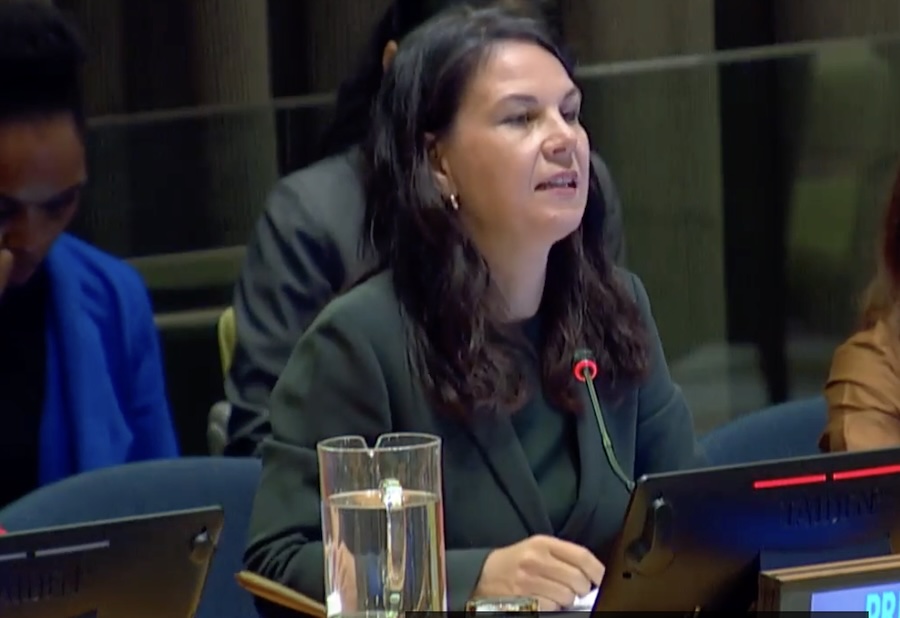
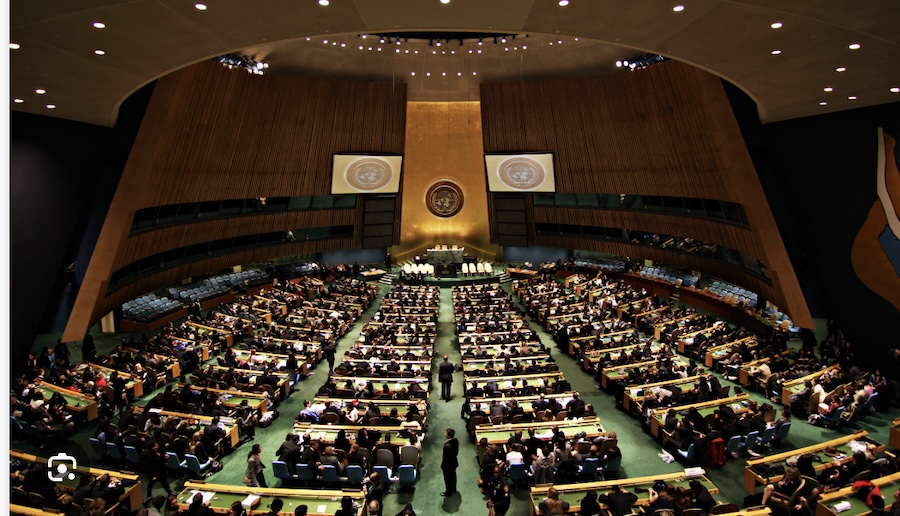
Ahead of the upcoming 2026 Olympic Winter Games, the General Assembly today took note of a Solemn Appeal by the President of its eightieth session, who urged all warring parties to agree to “true mutual ceasefires” during the Games in line with the ancient principle of the Olympic Truce.

“The Olympic Truce proves that, even in times of division, humanity can still find common ground through sport,” said Annalena Baerbach (Germany), reading her Appeal (document A/80/598) into the Assembly’s official record.  “I call upon all warring parties of current armed conflicts around the world to boldly agree to true mutual ceasefires for the duration of the Olympic Truce, thus providing an opportunity to settle disputes peacefully.”

(click on image to enlarge)

Today’s Appeal recalls the ancient Greek tradition of the ekecheiria, translated as “Olympic Truce”, which serves as a hallowed principle of the Olympic Games, she said.  In modern times, the Assembly has taken up the related agenda item “Building a peaceful and better world through sport and the Olympic ideal” every two years, in advance of each summer and winter Olympic Games, adopting a resolution by the same name.

(Article continued in right column)

Question for this article:

How can sports promote peace?

(Article continued from left column) 

Noting that the XXV Olympic Winter Games will begin shortly in Milano-Cortina, Italy, Ms. Baerbach cited the Assembly’s most recent resolution, which urged Member States to observe the truce individually and collectively from the seventh day before the Games’ start until the seventh day following the end of the XIV Paralympic Winter Games.  (See Press Release GA/13732  of 19 November 2025.)

“Through friendly competition, we can rise above our divisions and reaffirm our common humanity,” she said.  “The Games will bring together athletes from all parts of the world in the greatest of international sports events as a means to promote peace, mutual understanding, the rule of law and goodwill among nations and peoples — goals that are also part of the founding values of the United Nations.”

Pointing out that the Milano-Cortina 2026 Winter Games are on track to be the most gender-balanced in history, she added that the International Olympic Committee has decided to fly the UN flag in the Olympic stadium and the Olympic villages as a symbol of peace. 

“I welcome the leadership of Olympic and Paralympic athletes in promoting peace and human understanding through sport and the Olympic ideal,” she said, urging all Member States to demonstrate their commitment to the Olympic Truce and take concrete actions to promote and strengthen a culture of peace and harmony.

“May the implementation [of the Olympic Truce] reaffirm our shared conviction that, even in a divided world, unity remains possible and respect for our common rules means that we all win,” she said.

– – – – – –

If you wish to make a comment on this article, you may write to coordinator@cpnn-world.org with the title “Comment on (name of article)” and we will put your comment on line. Because of the flood of spam, we have discontinued the direct application of comments.
International Women’s Day 2026: Rights. Justice. Action. For ALL Women and Girls.

. . WOMEN’S EQUALITY . .

An article from UN Women

On 8 March 2026, rally with women and girls around the world to demand equal rights – and equal justice to enforce, exercise, and enjoy those rights.

As we begin the second quarter of the 21st century, no nation has closed the legal gaps between men and women. Right now, in 2026, women have only 64 per cent of the legal rights that men hold worldwide. In fundamental areas of life, including work, money, safety, family, property, mobility, business, and retirement – the law systematically disadvantages women. From harmful social norms to discriminatory laws, women and girls continue to face entrenched obstacles – even pushback – to equal justice. If progress continues at its current pace, it will take 286 years to close legal protection gaps. That is not a timeline, it’s surrender.


Activists, social leaders, organizations, women and men chant slogans against gender violence during the “Vivas nos Queremos” march in Quito, Ecuador. Photo: UN Women/Johis Alarcón

Without justice systems that work for women, rights become a promise that never arrives.

International Women’s Day 2026 (IWD 2026), under the theme, “Rights. Justice. Action. For ALL Women and Girls”, marks a moment to amplify our collective determination. No matter how deeply rooted the sexism or how discouraging the politics, we refuse to step back or abandon our mandate. Instead, we climb together – for the rights and empowerment of all women and girls.

(Click here for the article in French or here in Spanish.)

(Article continued in right column)

Question related to this article:

Protecting women and girls against violence, Is progress being made?

Does the UN advance equality for women?

(Article continued from left column)

This year, IWD 2026 calls for action to dismantle the structural barriers to equal justice: discriminatory laws, weak legal protections, and harmful practices and social norms that erode the rights of women and girls.

What does equal justice look like? Simply put, your rights are protected and defended, and laws don’t just stay on the books – they get enforced, so that people can experience equal rights and justice. It means legally protected access to education for girls and an end to child marriage. Women’s freedom to choose to work, participate, and lead in society, including in political and justice systems. Strengthened protection and prevention to end gender-based violence in all its forms. Family, labour, and healthcare laws that do not discriminate against women. Justice systems that are free of bias, centred on survivors, and backed by zero tolerance for abuse and impunity. Legal aid that is affordable and accessible. Just to name a few.

This year’s United Nations observance of International Women’s Day will take place on 9 March and focus on equal justice, purposefully aligning with the 70th session of the Commission on the Status of Women (CSW70) (from 9 to 19 March). At CSW70, an intergovernmental forum, representatives of Member States, United Nations entities, and civil society will gather to negotiate conclusions on the theme, “Ensuring and strengthening access to justice for all women and girls, including by promoting inclusive and equitable legal systems, eliminating discriminatory laws, policies, and practices, and addressing structural barriers.”

This International Women’s Day, join UN Women, the United Nations family, civil society, youth, media, businesses, and more, to demand “Rights. Justice. Action. For ALL women and girls.” Share International Women’s Day stories and messages online with the hashtag #ForAllWomenAndGirls and follow UN Women for more information on forthcoming events.

– – – – – –

If you wish to make a comment on this article, you may write to coordinator@cpnn-world.org with the title “Comment on (name of article)” and we will put your comment on line. Because of the flood of spam, we have discontinued the direct application of comments.
Book review: When the World Sleeps

. TOLERANCE & SOLIDARITY .

A review from Penguin Random House

The first woman to serve as United Nations Special Rapporteur for the Occupied Palestinian Territory conveys the spirit of a people through 10 unforgettable stories of resilience and humanity.

(continued in right column)

Question related to this article:
 
How can we best express solidarity with the people of Gaza?

(continued from left column)

Francesca Albanese is the most lucid voice against Israel’s apartheid policies in Gaza and the West Bank, a voice that has been heard around the world when it comes to speaking the truth about the Palestinian genocide. In the wake of October 7, 2023, and Israel’s retaliatory war, the renowned Italian jurist has become a lightning rod for her staunch defense of human rights. 

Reflecting on her years living in Jerusalem and her personal and professional journey toward understanding the Palestinian struggle, Albanese pays tribute to 10 people whose profoundly affecting stories opened her eyes, from Hind Rajab, a young Palestinian girl killed by Israeli forces, to the remarkable Jewish scholars who acted as Albanese’s mentors: forensic architect Eyal Weizman, trauma expert Gabor Maté, and Holocaust historian Alon Confino.

When the World Sleeps is a courageous testimony of the harsh reality that Palestinians face. It raises critical questions about the past, present, and future of Palestine: What are the consequences of the occupation? Where is a refugee’s home? In what conditions do Palestinians live? And now that the end of the war seems to be getting closer, will there be a Palestinian state? Will Palestinians have the right to self-determination, and will they be able to live in peace, free at last from the coercion of Israel?

– – – – – –

If you wish to make a comment on this article, you may write to coordinator@cpnn-world.org with the title “Comment on (name of article)” and we will put your comment on line. Because of the flood of spam, we have discontinued the direct application of comments.
2025 United Nations High-Level Forum on the Culture of Peace

FREE FLOW OF INFORMATION

Letter of 8 August to all Permanent Missions and Permanent Observers to the United Nations, New York from President of UN General Assembly

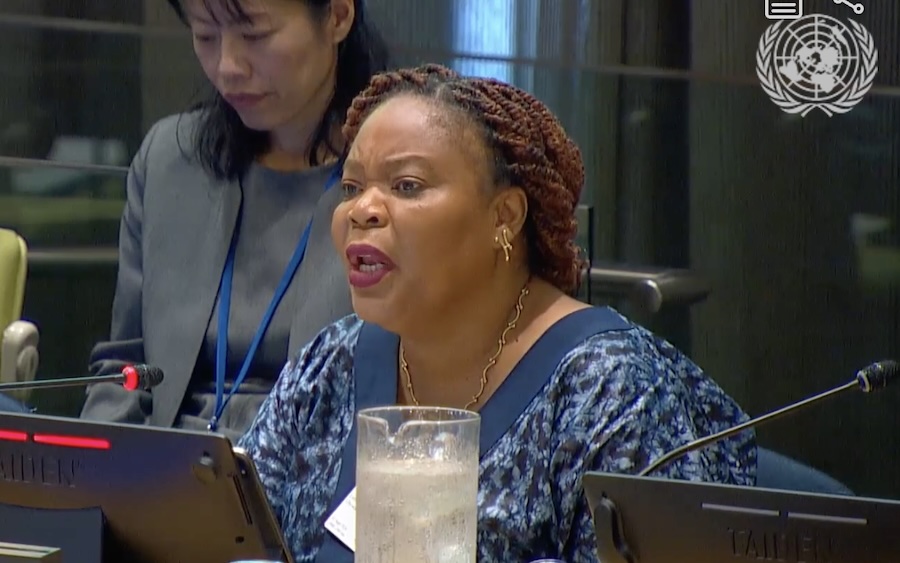
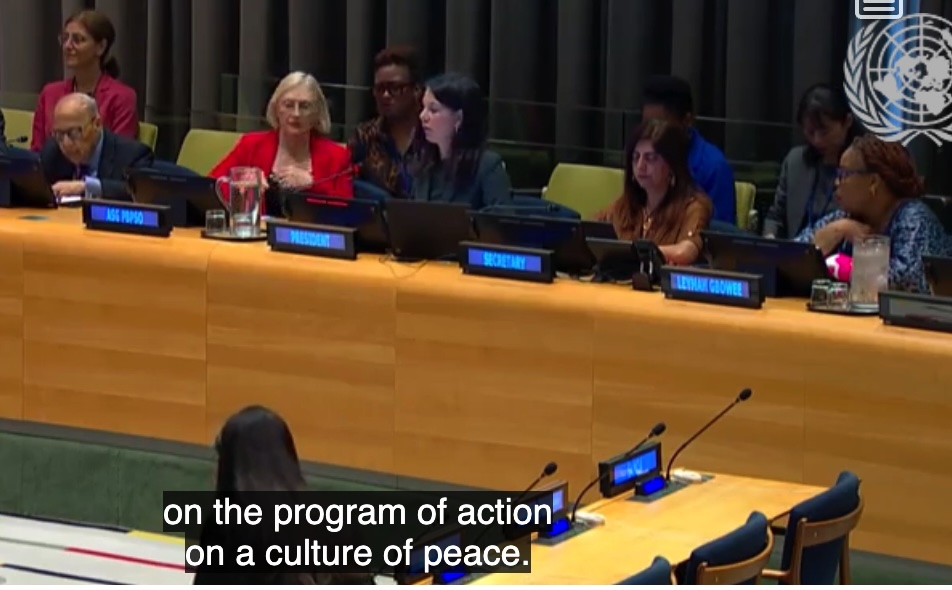
I have the honour to inform you that, in accordance with paragraph 20 of General Assembly resolution 79/321 of 25 July 2025, entitled ‘Follow-up to the Declaration and Programme of Action on a Culture of Peace’, I will convene a high-level forum on the implementation of the Programme of Action on a Culture of Peace on Tuesday, 2 September 2025 at 3 p.m. in the Trusteeship Council Chamber.

Question(s) related to this article:

What is the United Nations doing for a culture of peace?

The meeting will consist of an opening segment and a plenary segment. The theme of the meeting will be “Empowering Youth for a Culture of Peace”. Additional information, including the programme of the high-level forum, will be circulated in due course.

Delegations wishing to deliver statements are invited to inscribe in the list of speakers for the plenary segment of the meeting through e-deleGATE. The time limit for statements will be three minutes for individual delegations and five minutes for statements made on behalf of a group of states. In view of the limited time available for the meeting, statements not delivered by the end of the meeting will be posted on “eStatements” in the United Nations Journal. In this regard, delegations are encouraged to send their statements to estatements@un.org to facilitate interpretation and for posting on “eStatements”.

For any additional information, your office may contact Ms. Coretta Penn Achu, Adviser in my Office, by email at coretta.achu@un.org.

Please accept Excellency, the assurances of my highest consideration.

Philemon Yang
– – – – – –

If you wish to make a comment on this article, you may write to coordinator@cpnn-world.org with the title “Comment on (name of article)” and we will put your comment on line. Because of the flood of spam, we have discontinued the direct application of comments.
UN General Assembly adopts annual culture of peace resolution with US and Israel opposed

FREE FLOW OF INFORMATION

Excerpt from United Nations press release

Turning to a draft resolution titled “Follow-up to the Declaration and Programme of Action on a Culture of Peace” (document A/79/L.111), introduced by Bangladesh’s delegate, the Assembly adopted it by a recorded vote of 149 in favour to 2 against (Israel, United States), with 1 abstention (Grenada).  The text stresses the importance of addressing the underlying drivers of violence and conflict to promote a culture of peace, urging the appropriate authorities to provide age-appropriate education in children’s schools that builds a culture of peace and non-violence. 

The representative of the United States, in explanation of vote, expressed strong support for conflict prevention and peacebuilding but opposed resolution “L.111”, calling it excessively lengthy.  He stated that the United States would “no longer reaffirm the 2030 Agenda as a matter of course”.  He objected to the use of the term “gender”, affirming his Government’s policy of recognizing only two sexes.  He also cited its withdrawal from the Paris Agreement on climate change and non-participation in the Sevilla Commitment.  

– – – – Actions proposed in the text of the resolution– – – –

Follow-up to the Declaration and Programme of Action on a Culture of Peace

sponsored by Bahrain, Bangladesh, Nepal, Qatar, Russian Federation, Sri Lanka, Turkmenistan and Viet Nam:

1. Programme of Action on a Culture of Peace is to strengthen further the global movement for a culture of peace, and calls upon all concerned to renew their attention to this objective;

2. Invites Member States to continue to place greater emphasis on and expand their activities promoting a culture of peace at the national, regional and international levels and to ensure that peace and non-violence are fostered at all levels;

3. Invites the entities of the United Nations system, within their existing mandates, to integrate, as appropriate, the eight action areas of the Programme of Action into their programmes of activities, focusing on promoting a culture of peace and non-violence at the national, regional and international levels;

4. Commends the United Nations Educational, Scientific and Cultural Organization for strengthening efforts to mobilize all relevant stakeholders within and outside the United Nations system in support of a culture of peace, and invites the Organization to continue to enhance communication and outreach, including through the culture of peace website;

5. Commends the practical initiatives and actions by relevant United Nations bodies, including the United Nations Children’s Fund, the United Nations Entity for Gender Equality and the Empowerment of Women (UN-Women) and the University for Peace, as well as their activities in further promoting a culture of peace and non-violence, in particular the promotion of peace education and activities related to specific areas identified in the Programme of Action, and encourages them to continue and further strengthen and expand their efforts;

6. Stresses the importance of addressing the underlying drivers of violence and conflict to promote a culture of peace;

7. Encourages Member States, United Nations entities and other relevant actors to adopt a holistic approach to the cross-cutting dimensions of peace, development, humanitarian action and human rights in order to prevent the recurrence of conflict and violence and build lasting peace;

8. Underlines that early childhood development contributes to the development of more peaceful societies through advancing equality, tolerance, human development and promoting human rights, and calls for investment in early childhood education, including through effective policies and practices, towards promoting a culture of peace;

9. Encourages Member States, United Nations entities, regional and subregional organizations and relevant actors to consider instituting mechanisms to involve youth in the promotion of a culture of peace, tolerance and intercultural and interreligious dialogue and develop, as appropriate, an understanding of respect for human dignity, pluralism and diversity, including, as appropriate, through education programmes, that could discourage their participation in acts of terrorism, violent extremism as and when conducive to terrorism, violence, xenophobia and all forms of discrimination;

(continued in right column)

Question(s) related to this article:

What is the United Nations doing for a culture of peace?

(continued from left column)

10. Encourages the United Nations Alliance of Civilizations to increase its activities that focus on peace education and global citizenship education in order to enhance an understanding among young people of values such as peace, tolerance, openness, inclusion and mutual respect, which are essential in developing a culture of peace;

11. Encourages the United Nations peacebuilding architecture to continue to promote peacebuilding and sustaining peace activities, as outlined in its resolutions 72/276 and 75/201, and to advance a culture of peace and non-violence in postconflict peacebuilding efforts at the country level, and recognizes the important role of the Peacebuilding Commission in this regard;

12. Emphasizes the critical importance of an inclusive, resilient and sustainable recovery from the COVID-19 pandemic, and in this regard calls upon States to promote the values of a culture of peace, inter alia, in countering rising inequalities, discrimination, exclusion, hate crimes and violence;

13. Urges the appropriate authorities to provide age-appropriate education in children’s schools that builds a culture of peace and non-violence, including lessons in mutual understanding, respect, tolerance, active and global citizenship and human rights;

14. Encourages the involvement of media, especially the mass media, in promoting a culture of peace and non-violence, with particular regard to children and young people; A/79/L.111 25-11852 7/7

15. Commends civil society, non-governmental organizations and young people for their activities in further promoting a culture of peace and non-violence, including through their campaign to raise awareness of a culture of peace and the peaceful settlement of disputes;

16. Encourages civil society and non-governmental organizations to further strengthen their efforts to promote a culture of peace, inter alia, by adopting their own programme of activities to complement the initiatives of Member States, the United Nations system and other international and regional organizations, in line with the Declaration and Programme of Action;

17. Invites Member States, all entities of the United Nations system and civil society organizations to accord increasing attention to their observance of the International Day of Peace on 21 September each year as a day of global ceasefire and non-violence, in accordance with its resolution 55/282 of 7 September 2001, and of the International Day of Non-Violence on 2 October, in accordance with its resolution 61/271 of 15 June 2007;

18. Acknowledges that 2024 marked the twenty-fifth anniversary of the adoption of the Declaration on a Culture of Peace by the United Nations at the fifty – third session of the General Assembly in 1999;

19. Encourages Member States, United Nations entities, civil society and other stakeholders to follow up on the discussions held during the High-level Forum, convened by the General Assembly on 2 August 2024 to commemorate the twenty – fifth anniversary, on the theme “Cultivating and nurturing the culture of peace for present and future generations”, by reflecting on the enduring significance of the Declaration and Programme of Action on a Culture of Peace;

20. Requests the President of the General Assembly to consider convening a high-level forum, as appropriate, and within existing resources, devoted to the implementation of the Programme of Action on the occasion of the anniversary of its adoption, during the seventy-ninth session, and requests the Secretariat to provide the required logistical support for its effective organization within their respective mandates and existing resources;

21. Invites the Secretary-General, within existing resources, in consultation with the Member States and taking into account the observations of civil society organizations, to explore mechanisms and strategies, in particular strategies in the sphere of information and communications technology, for the implementation of the Declaration and Programme of Action and to initiate outreach efforts to increase global awareness of the Programme of Action and its eight areas of action aimed at their implementation, including through public information activities by the Department of Global Communications of the Secretariat;

22. Requests the Secretary-General to submit to the General Assembly at its eighty-first session a report, within existing resources, on actions taken by Member States, on the basis of information provided by them, and those taken system-wide by all concerned entities of the United Nations to implement the present resolution;

23. Decides to include in the provisional agenda of its eightieth session the item entitled “Culture of peace”.

– – – – – –

If you wish to make a comment on this article, you may write to coordinator@cpnn-world.org with the title “Comment on (name of article)” and we will put your comment on line. Because of the flood of spam, we have discontinued the direct application of comments.

On the ground at UN women’s conference in New York City

. . WOMEN’S EQUALITY . .

An article from the Catholic Register

Every March thousands of government officials, activists and policy makers descend on the United Nations (UN) headquarters in New York City for two weeks of both high-level meetings and side-events at the Commission on the Status of Women (CSW).


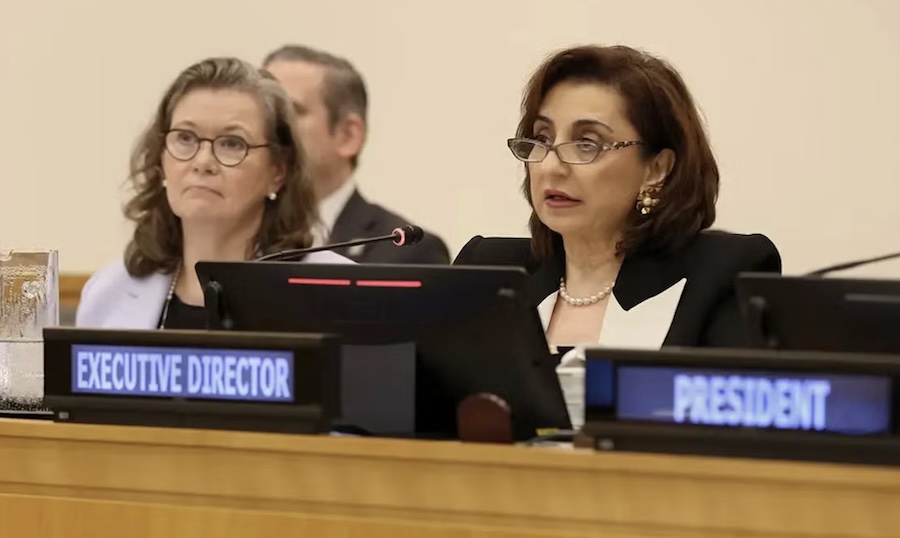
UN Women Executive Director Sima Bahous delivers remarks at the opening of the 69th session of the Commission on the Status of Women, 10 March 2025, UN headquarters. Photo: UN Women/Ryan Brown.

The CSW began in 1946 as one of the original sub-commissions of the UN’s Economic and Social Affairs Commission (ECOSOC). Its purpose, according to the UN website, is to promote “gender equality, the rights and the empowerment of girls.” 

Since March 10 when the 69th CSW session began, the streets around UN headquarters on East 45th have been filled with men and women from every corner of the world. African women, wearing traditional dress underneath hastily purchased sweaters as protection against the East River wind, walk alongside young female urbanites carrying tote-bags that proclaim, “Women belong in all places where decisions are being made,” that a quote of the late U.S. Supreme Court Justice Ruth Bader Ginsburg.

(Article continues in right column.)

Questions related to this article:

Does the UN advance equality for women?

(Article continued from left column.)

In the line-up in front of the UN Pass and ID office, waiting to receive my press pass, I was sandwiched between a woman who was a director of “Gender Equality and Social Inclusion” at a UK-based think tank and a tiny, red-lipsticked New Yorker who works for NGO Girls Not Brides. The two women were quite excited when they heard I was a journalist but went completely silent when I told them I worked for The Catholic Register.

According to the CSW website, the commission is a “one-of-a-kind platform for feminists from around the world to advocate, learn and share experiences.” 

This year is a particularly important one for the CSW as it marks 30 years since the fourth World Conference on Women at which the Beijing Declaration and Platform for Action was adopted. Signed by 189 countries, the 1995 global policy document outlines 12 focus points which includes women and the economy, human rights and the environment. Since the adoption of the declaration, subsequent commissions have been engaged with member countries monitoring and reporting on progress in those 12 areas.

Sima Bahous, executive director of UN Women, introduced the 69th CSW with the note, “while we have not yet known a world of full equality for all women and girls, the global community collectively imagined it in the 1995 Beijing Declaration and Platform for Action.” [Click here for her speech.]

Every year, much of the work of the commission takes place in the hundreds of side events both on the grounds of the UN headquarters and offsite in nearby hotels. Organized by non-governmental organizations in conjunction with member state delegations, the topics range from the realities of sex-selective practices to the role AI might play in combating human trafficking. 

The Canadian delegation co-hosted several side events in the first week, including one co-hosted with Sierra Leone, Plan International, UNICEF and CHOICE for Youth & Sexuality, entitled, “Stories from the future: Charting a path towards the future girls want.”

This year, Minister for Women and Gender Equality and Youth of Canada Marci Ien leads the Canadian delegation. Ien has stated that the primary focus of Canada’s advocacy at the commission will be “Women’s empowerment and the advancement of 2SLGBTQI+ rights.”

– – – – – –

If you wish to make a comment on this article, you may write to coordinator@cpnn-world.org with the title “Comment on (name of article)” and we will put your comment on line. Because of the flood of spam, we have discontinued the direct application of comments.