Tag Archives: english bulletin

English bulletin May 1, 2026

. PEACE IN WESTERN MEDITERRANEAN .

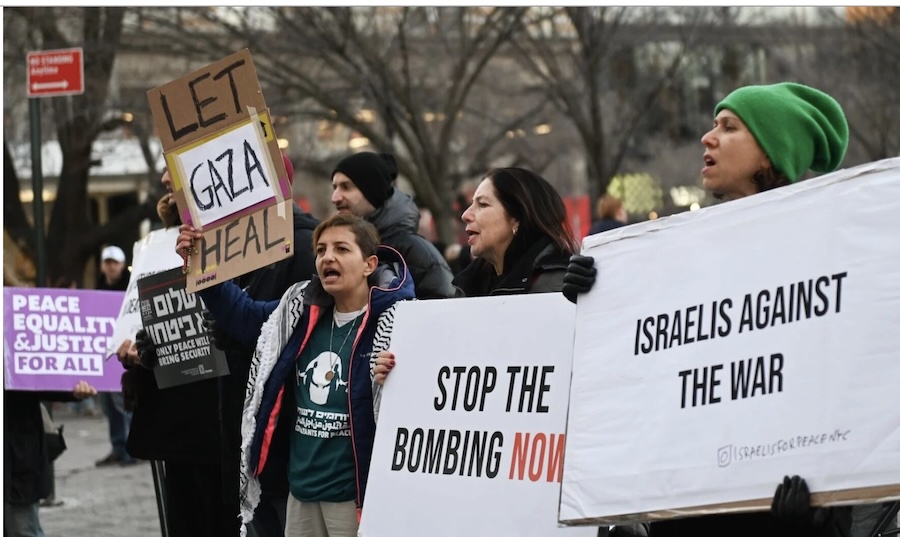
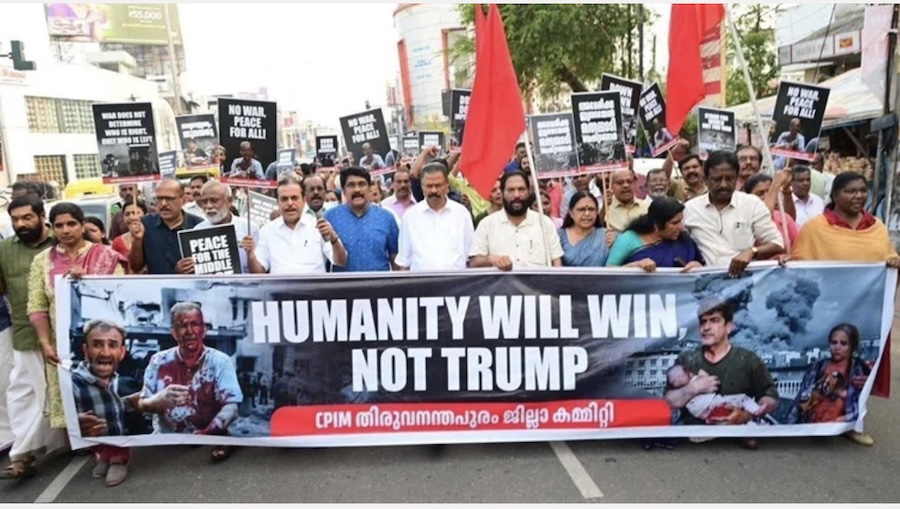
While the Eastern Mediterranean (Lebanon, Palestine, Israel) is torn apart by the war launched by Netanyahou and Trump, the Western Mediterranean (Spain, Morocoo, Algeria, Italy, etc.) has embarked on peace initiatives to ensure that they do not get caught up in a new World War.

Italy and Spain have announced that their air space cannot be used by the Americans for their attacks in the Middle East.

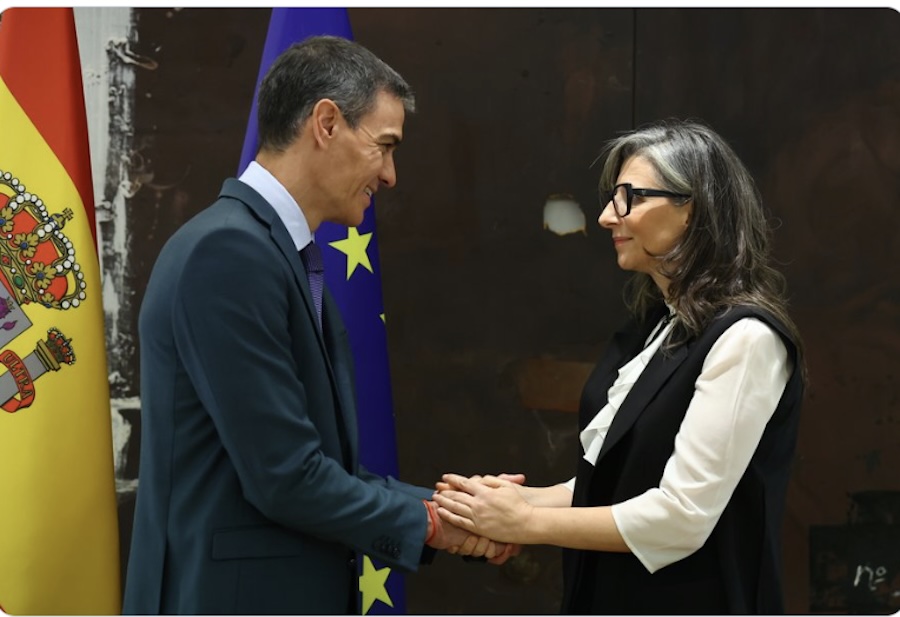
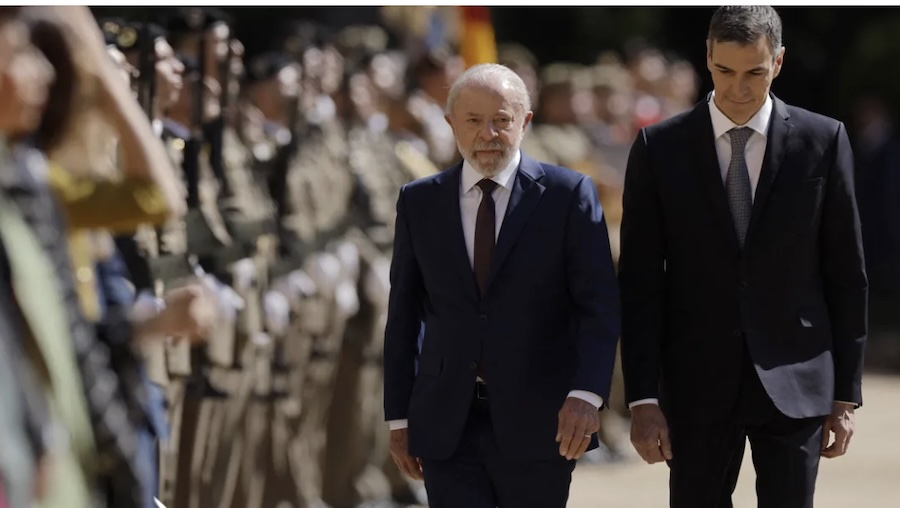
Spanish President Pedro Sánchez hosted two international meetings dedicated to peace and economic justice. Among those takiing part were Brazilian President Luiz Inácio Lula da Silva, South African President Cyril Ramaphosa, Colombian President Gustavo Petro, and leading progressive elected officials from the United States. “We want to double our efforts to work for peace and for a reinforced multilateral order. While others open wounds, we want to mend them and cure them,” said Sánchez. Colombian President Gustavo Petro said that “by firmly opposing the war waged by the United States and Israel against Iran , “it seems to me that Spain’s position is at the forefront in Europe.”


Italy and Algeria are united in peace by the mission of Pope Leo to Algers. The President of the High Islamic Council pointed to its “prominent diplomatic dimension, which is poised to achieve harmony between two states of great religious and historical weight, establishing Algeria as a beacon of radiance for global peace”. The Pope continued on to Angola, Cameroon and Equaterial Guinea where he continued to speak for peace and dialogue. He called explicitly for “a new culture of peace“. As for Italy, it seems that the Pope’s criticism of Trump’s militarism, has led to the country’s opposition to it as well.

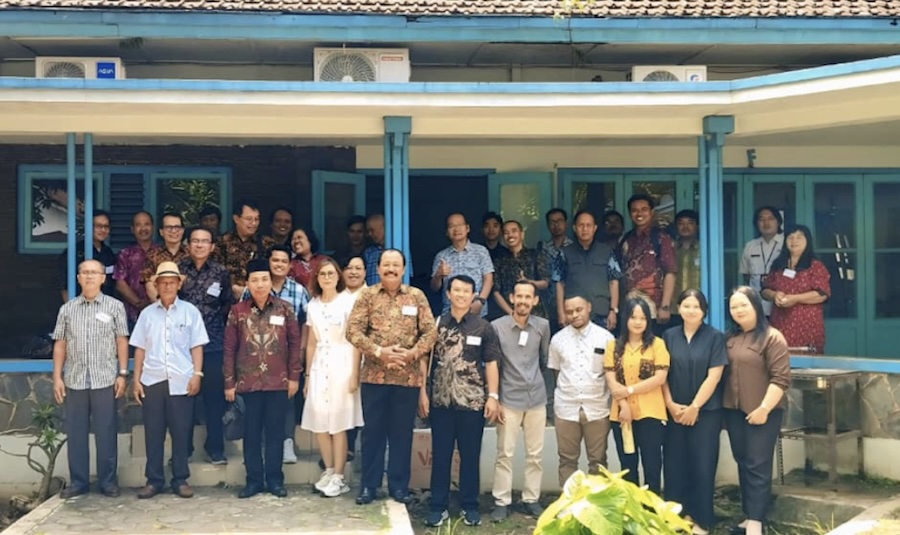
Algeria hosted an Arab Forum for Youth, Peace and Security. The UNDP Resident Representative in Algeria, Natasha Van Rijn, highlighted the essential role of young people in consolidating peace. The Yemeni Minister of Youth and Sports underscored the crucial role of young people in spreading a culture of peace and building a more stable future.

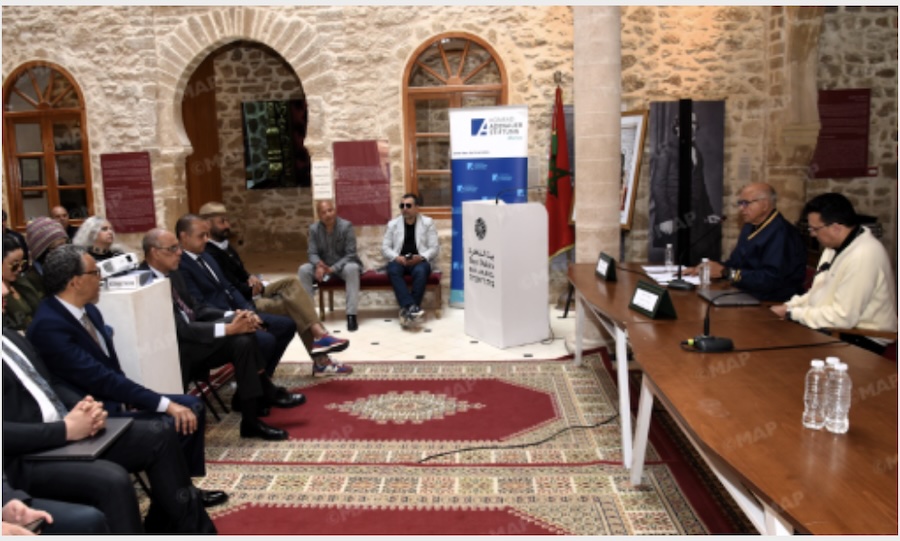
In Moroco, the launch of the “Nawal Ouzitane – Youth Voices for Peace” Prize was one of the highlights of an international meeting dedicated to peace and tolerance. This national prize aims to promote the creative expression of young people in various fields, reflecting their awareness of the values of peace and their responsibility in strengthening them, with a particular emphasis on raising awareness among younger generations about the importance of dialogue, openness, and cultural diversity.

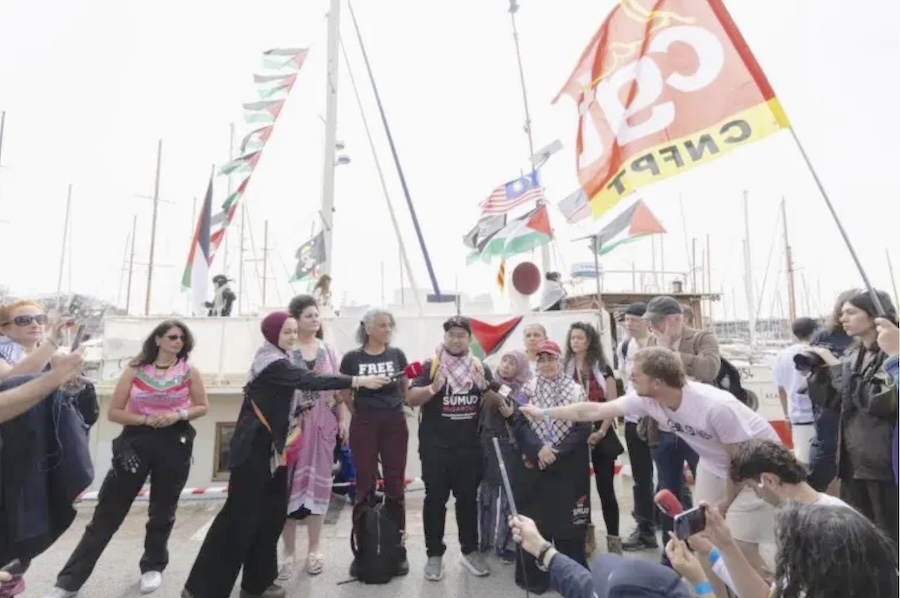
Barcelona is the center for peace initiatives. In addition to the meetings hosted by the Spanish President mentioned above, Barcelona is the scene for the mobilization of the Sumud Flotilla, bound for Gaza in an attempt to break the Israeli blockade. The flotilla has gathered 70 boats, many of them coming from other Mediterranean ports. The fleet carries medical supplies, food, and reconstruction materials while featuring doctors, engineers, legal experts, and activists ready to establish an unarmed protective presence if permitted. Participants include parliamentarians, journalists, and civil society leaders from every continent.

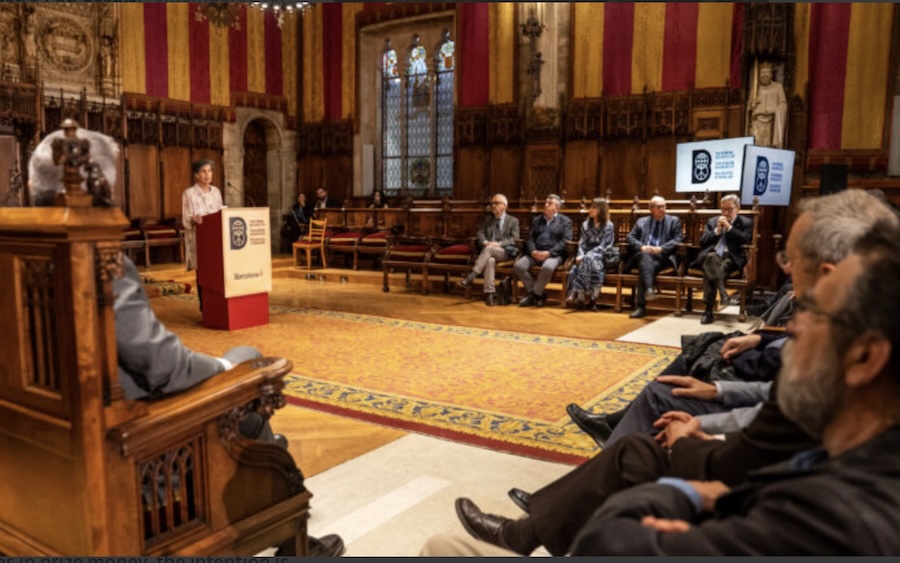
The city of Barcelona, along with the Pablo Casals Foundation has announced a new prize for peace. The Barcelona for Peace International Award  recognises the trajectory, action or project of a person, organisation or institution at an international level which has helped, in a relevant, transformational and verifiable way, to promote peace, coexistence, human rights and the peaceful resolution of conflicts. The biennial award carries 300,000 euros in prize money and is geared towards strengthening the media impact and transformational characters of the winning project or organisation.

The rest of Europe is lagging behind Spain and Italy with regard to the wars of Trump and Netanyahou, but hopefully they, too, will eventually join the opposition.

HUMAN RIGHTS


70+ Boats Launch Historic Global Sumud Flotilla to Gaza in Bold Solidarity Stand

SUSTAINABLE DEVELOPMENT


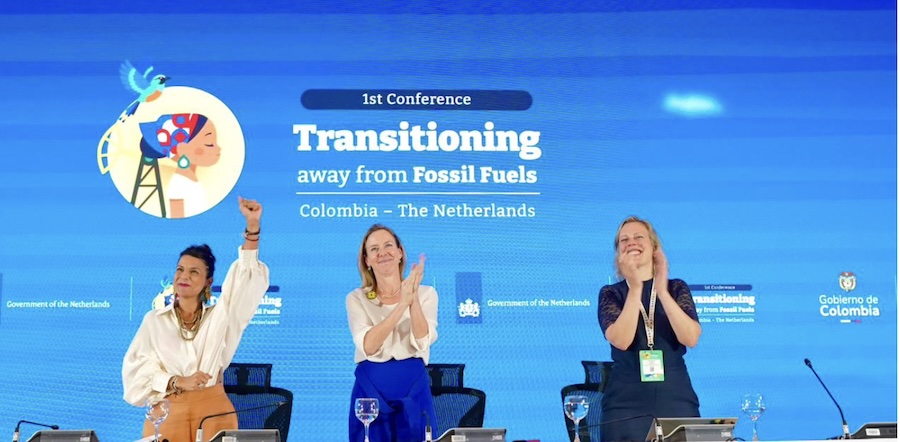
Colombia: Conference on the Transition Beyond Fossil Fuels concludes with five key outcomes

DEMOCRATIC PARTICIPATION


New Barcelona for Peace International Award

WOMEN’S EQUALITY


Lifetime premieres Peace Peace Now Now, a documentary series about women’s resistance in Latin America


TOLERANCE & SOLIDARITY


Essaouira, Morocco: Launch of the Prize for “Youth Voices for Peace”

EDUCATION FOR PEACE
<
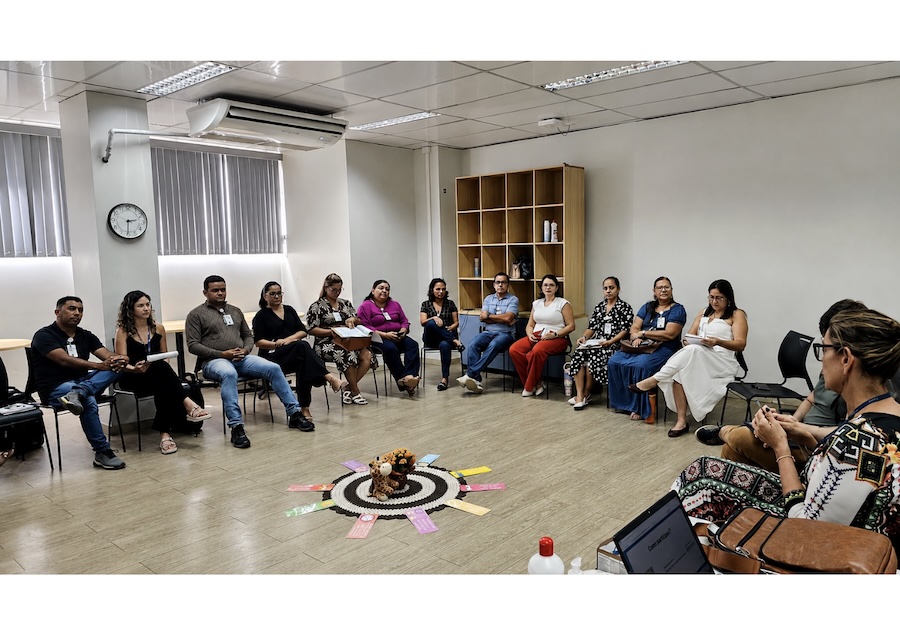
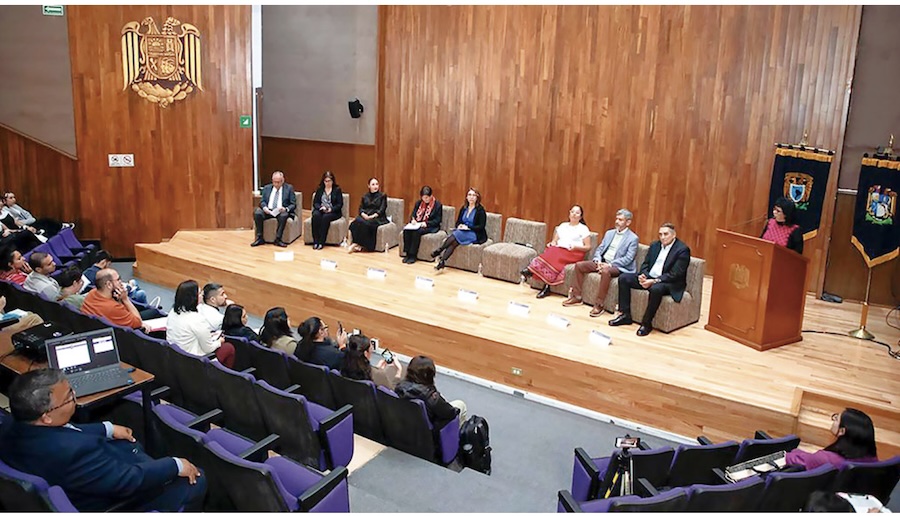
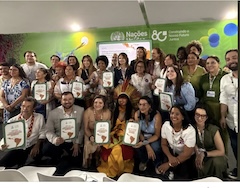
National Autonomous University of Mexico: Encounters and Networks for Peace. Why Talk About a Culture of Peace?

FREE FLOW OF INFORMATION


Sánchez, Lula Lead ‘Work for Peace’ and Equality at Gathering of Global Progressive Leaders in Spain

DISARMAMENT & SECURITY


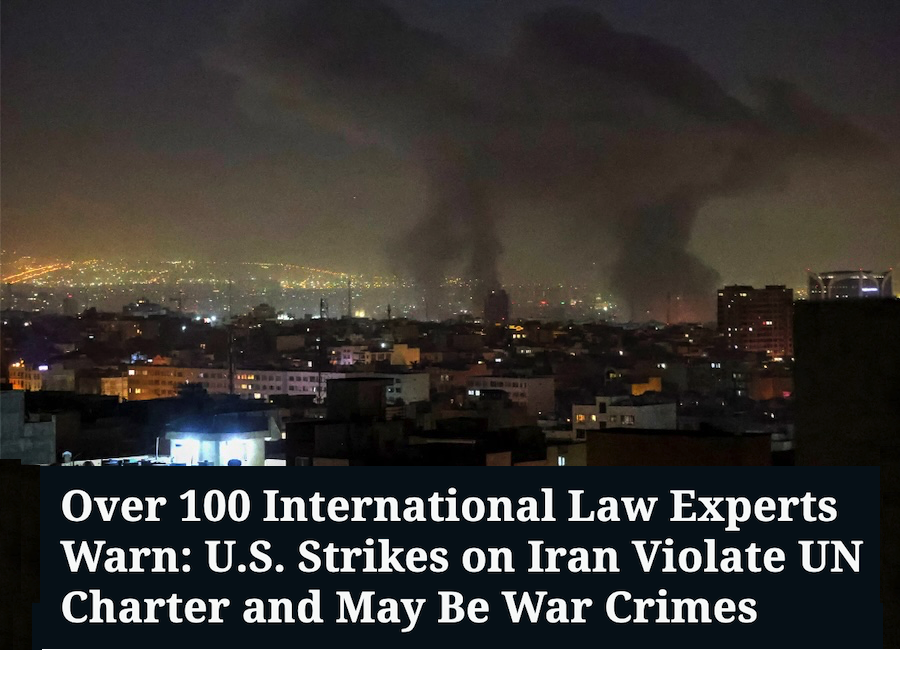
Over 100 International Law Experts Warn: U.S. Strikes on Iran Violate UN Charter and May Be War Crimes

English bulletin April 1, 2026

. THE MOVEMENT KEEPS GROWING .

In this dark period of history, as we said in this bulletin last July, “Fed up with the wars and militarism of their countries, the people of Europe, North America and the Middle East have taken to the streets in protest.” As we headlined in November, the movement keeps growing. And we see this month, it continues to grow.

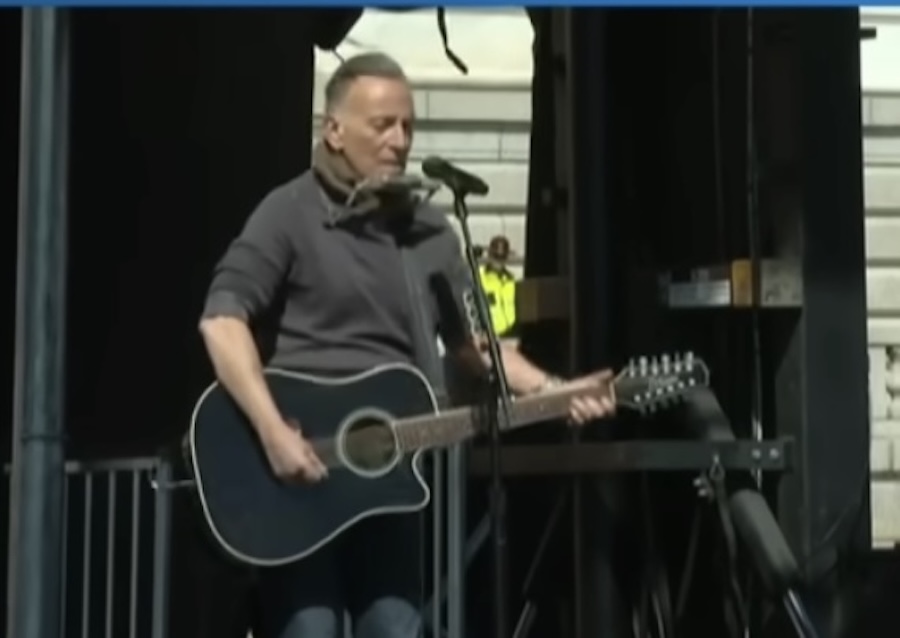
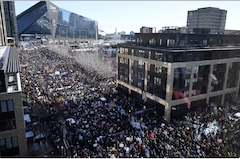
In the United States, over 8 million people took to the streets on March 28 in the latest No Kings rally against Trump. It was the largest single-day protest in American history. As reported in the CPNN articles this March and last October and June, the No Kings rallies take place in all 50 states, and continue to increase in the number of communities, from 1,800 in June, 2025 to 2,700 in October, 2025, and to 3,300 this month. The flagship rally this month took place in Minneapolis and was addressed by Bernie Sanders and by Bruce Springsteen.

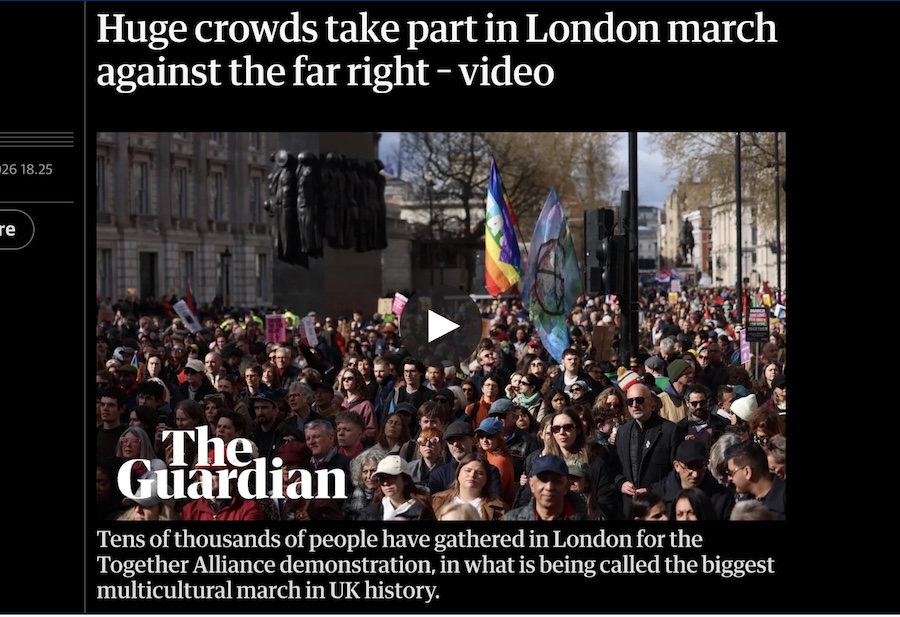
In the UK on March 28, the biggest ever multicultural protest took place in London with organizers claiming half a million participants.

In France, around 150,000 people took to the streets in many cities and towns on March 14th, to protest against racism, fascism, and war.

Throughout the Global South, demonstrators took to the squares and streets to condemn the war of imperialist aggression waged against Iran by US President Donald Trump and Israeli Prime Minister Benjamin Netanyahu.

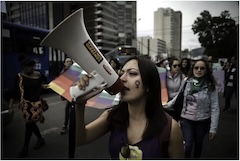
And as we see on March 8 every year, women took to the streets for the International Women’s Day. The themes of their celebration differ from country to country, as we have documented this month in CPNN, but most of them join the protest against violence and militarism.

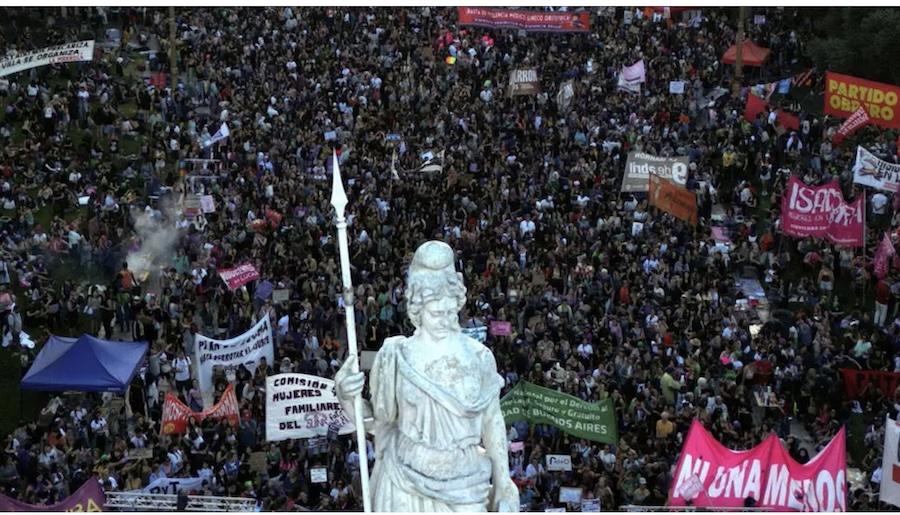
The most dominant theme throughout Latin America was to condemn femicide and other violence against women and to call for protection and equality. In Mexico city, demonstrators called for an end to the femicidal violence that claims the lives of eight women every day in their country. The slogan “Not one less” was displayed in Buenos Aires, Argentina. Photos of women victims or their attackers were displayed in La Paz, Bolivia. The banner “our cry comes from of a heart tired of living with pain and fear” was displayed in Bogota, Colombia. Women demanded shelters for victims of gender-based violence in Caracas, Venezuela. Freedom from gender violence was similarly the theme of demonstrations in Montevideo, Uruguay, Lima, Peru and Quito, Ecuador.

In Argentina, Belarus, Chile and Indonesia, women protested against their right-wing governments that attack women’s rights. The US demonstrations in Chicago, New York and San Francisco specifically denounced the policies of Trump.

In addition to protesting physical violence, demonstrators protested the violence of workplace discrimination and lower wages for women and called for economic equality. This was a dominant theme in the demonstrations in Helsinki, Finland, in Athens, Greece and in Vancouver, Canada.

In Europe, there was protest against the American/Israeli attack on Iran and other wars in general. This was the case in Brussels, Belgium, Barcelona, Madrid, Merida, Toledo and Valencia in Spain, as well as Milan and Rome in Italy. In Ljubljana, Slovenia, their banner read “We will not work for your wars.” In many of these cities, as well as Helsinki, Bordeaux, Valletta (Malt, London and Amsterdam the theme was the demand for equality and freedom from violence.

Banners denouncing fascism and patriarchy were displayed at the demonstrations in Budapest, Istanbul and Berlin and Erfurt in Germany.

In some countries, government leadership used the occasion to rally women to their support. This was the case in Russia, Serbia, Ukraine and several countries of Africa, including Benin and Senegal, and the three countries where military governments are trying to free their countries from neo-colonial domination: Burkina Faso, Mali and Niger.

In other countries, especially those with a socialist history, the day was a celebration of progress towards women’s equality. This was the case in China, North Korea, Cambodia and Vietnam. In Russia, there was at least one traditional event of this nature that took place in Dagestan. In Bangladesh, also, the day was one of celebration of women’s empowerment, rights and social contributions. Rwanda, home to the world’s highest share of women in parliament, celebrated with a walk and run. In Mozambique, the event was addressed by Graça Machel, who was the organizer of the women’s organizations of that country prior to going to South Africa to marry Nelson Mandela.

Popular musicians and celebrities took to the radio and television to promote women’s rights in the Ukraine and in Kenya. In Los Angeles and Hollywood, the Alliance of Women Directors held a salon to support women directors across the entertainment industry.

The African Union held a celebration to highlight the vital roles women play in sustaining the Union’s work and the United Nations Secretary-General published a message proclaiming “It is time to make justice a reality for women and girls, everywhere.”

Perhaps the most unique celebration was that of Ethiopian Airlines that announced all-women crews for all of their flights on March 8.

As discussed in this month’s blog, the demands of women correspond to the demands for a culture of peace.

HUMAN RIGHTS


‘No Kings!’ 8 Million Rally Against Trump in Largest Single-Day Protest in US History

SUSTAINABLE DEVELOPMENT


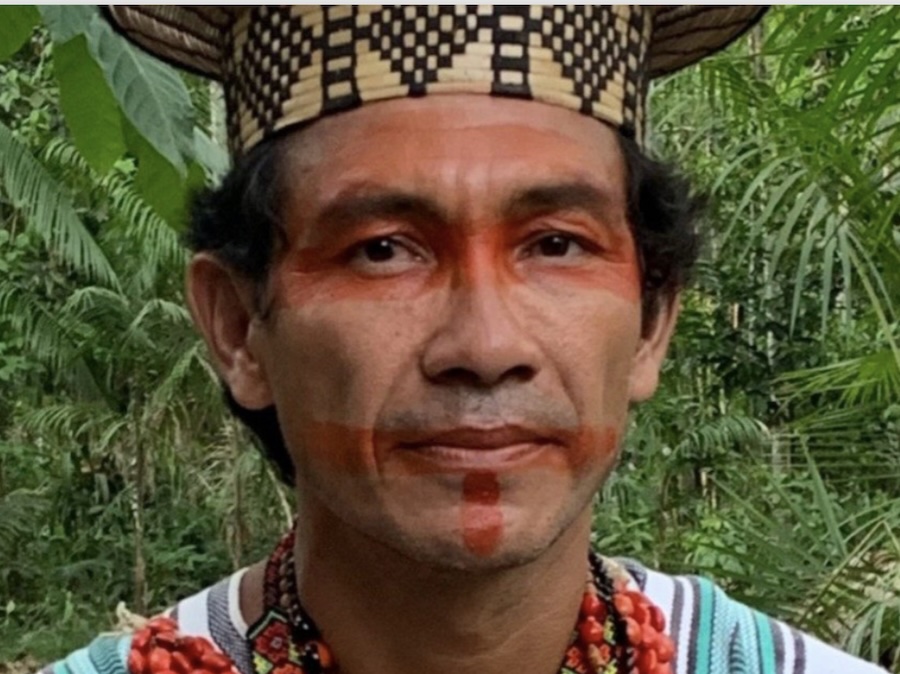
Benki Piyãko, Brazilian indigenous spiritual leader awarded Niwano Peace Prize

DEMOCRATIC PARTICIPATION


Mayors for Peace Joint Appeal March 16, 2026

WOMEN’S EQUALITY


International Women’s Day: Latin America


TOLERANCE & SOLIDARITY


Nonviolence International: What Cuba Taught Us

EDUCATION FOR PEACE


Bruce Springsteen at Minneapolis NoKings Rally

FREE FLOW OF INFORMATION


Thousands march against far right in London in biggest ever multicultural protest

DISARMAMENT & SECURITY


People Across Global South Condemn ‘Imperialist’ US-Israeli War on Iran

English bulletin March 1, 2026

. LATIN AMERICA LEADS THE WAY

Once again this month we see on CPNN that Latin America leads the way towards a culture of peace.

Articles this month come from Mexico (6), Brazil (4), Colombia (2) and Peru (1) along with two articles mentioning Cuba.

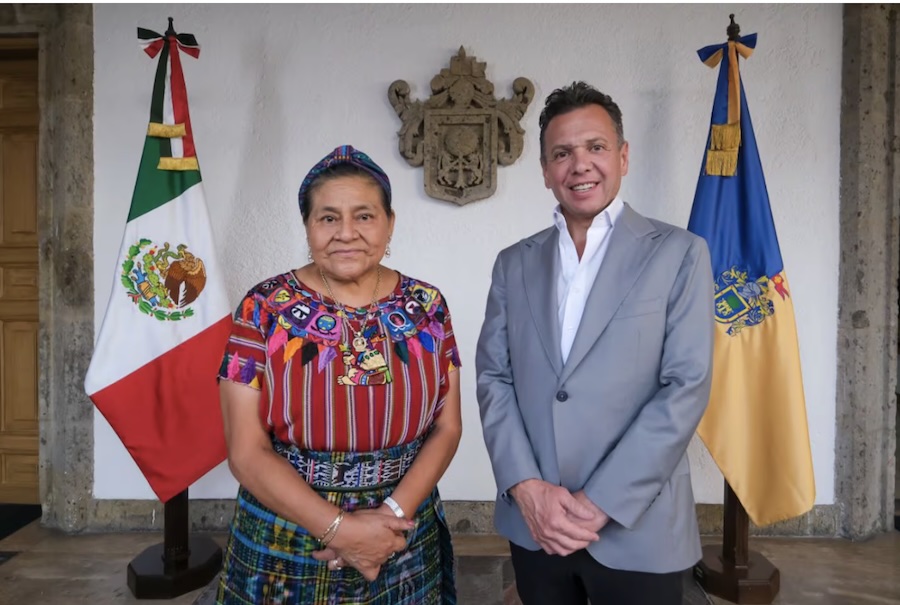
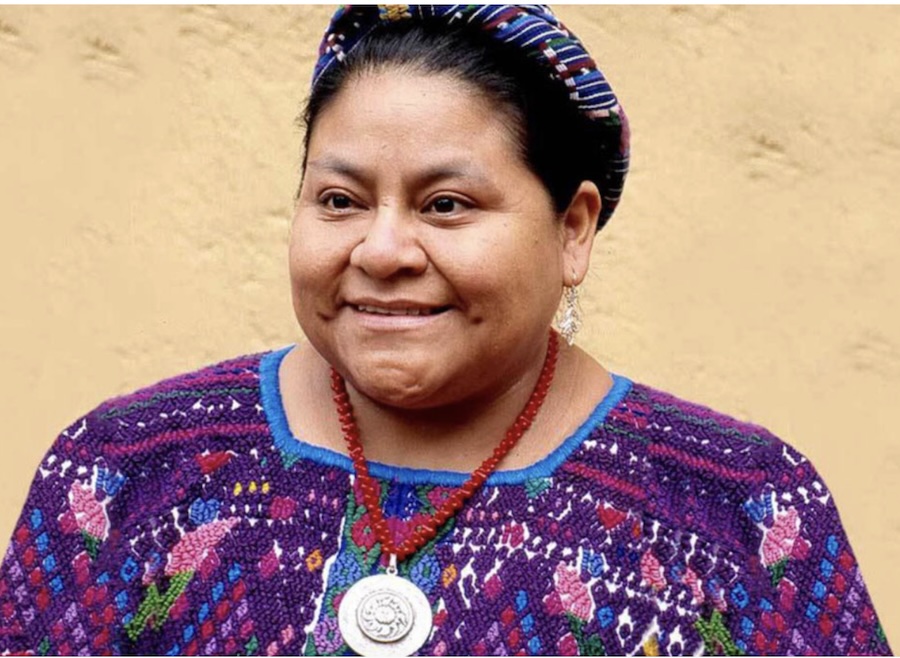
Nobel Peace Laureate Rigoberto Menchu is promoting the culture of peace in Mexico. She was the featured speaker at an international peace conference in Mérida from February 4-7. And she has signed an agreement to strengthen the construction of a new culture of peace in Jalisco. “I believe in peace as a culture, as education, and as dialogue. I believe in peace as the transmission of experiences and knowledge to our youth, to our communities who must become the next generation of our society,” she stated in signing the Jalisco agreement.

Mexican universities in Morelos , Colima and Mochicahui are engaged in programs for the culture of peace. According the the representative of the Autonomous University of the State of Morelos, educating for peace in higher education institutions is a shared need for all universities in the country, as these are spaces where professionals and citizens with social responsibility are trained. Also, in Querétero, the Basic Education Services Unit has trained 5,000 teachers to foster a culture of peace.

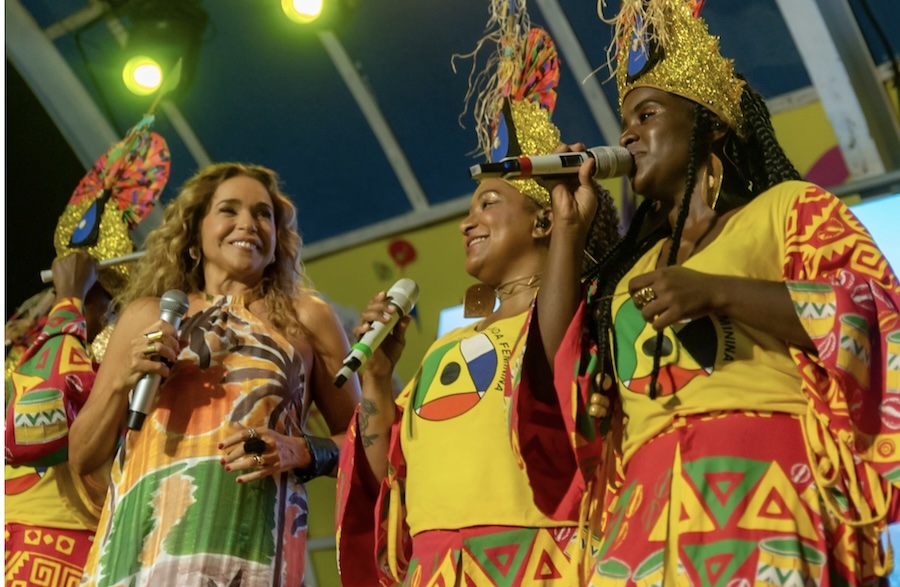
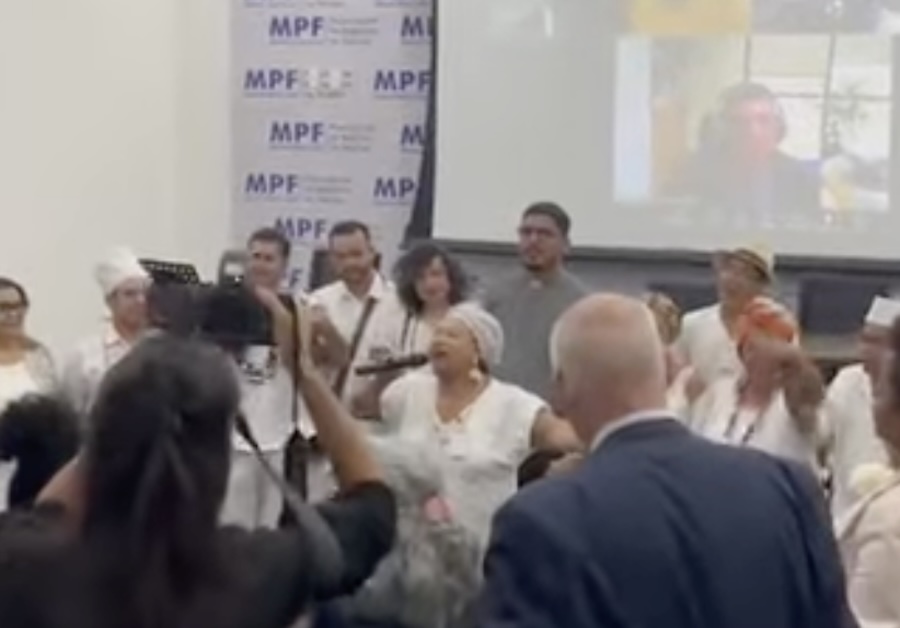
Music for peace is a theme in Brazil. Singer and songwriter Nando Borges has released the song “Culture of Peace” as a call for social awareness, valuing dialogue, empathy, and non-violence as paths to build a more just society. The festival Summer in Bahia featured many popular music groups uniting people and promoting peace and tranquility. And the successful process against racism in religious practice by the prosecutor’s office in Paraiba culminated in song with the Umbanda Hymn led by singer Mãe Renilda.

Also in Brazil the Center for Conflict Prevention and Resolution, mandated by the Legislative Assembly of the State of Ceará, promotes  a culture of peace, the prevention of violence, and the promotion of dialogue as a legitimate and necessary path to conflict resolution.

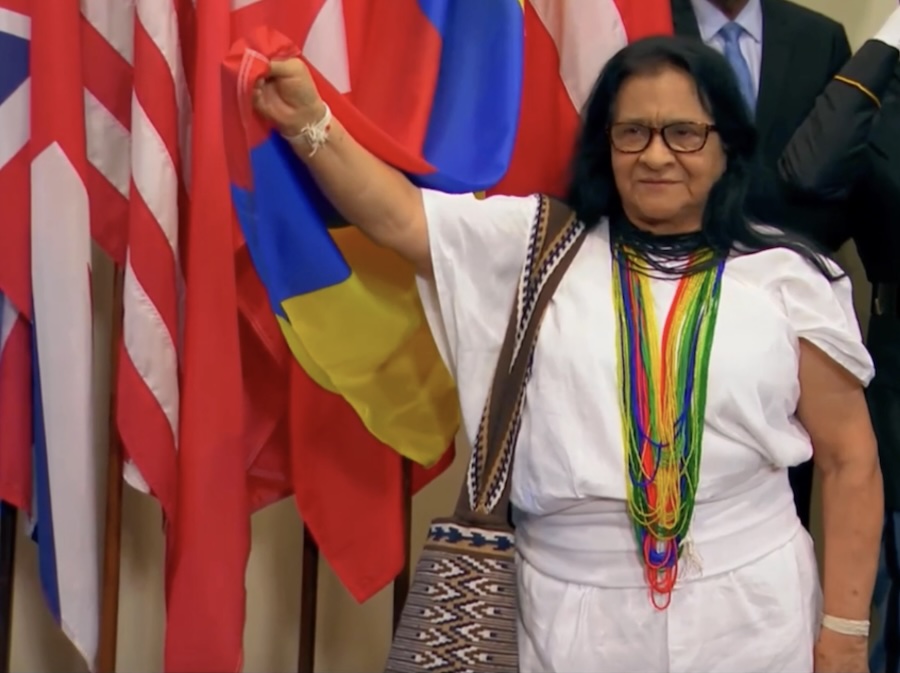
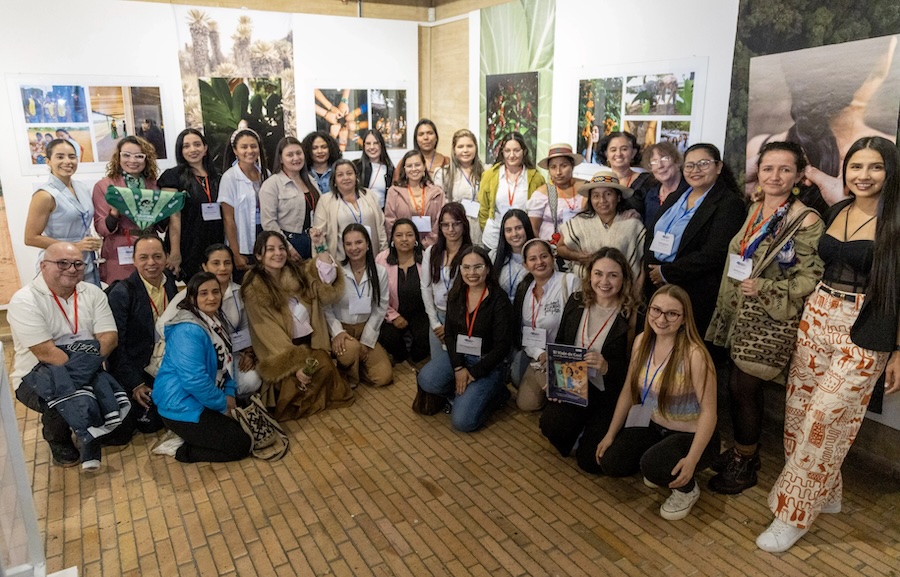
The peace process in Colombia is strengthened by the participation of women and indigenous people, as described this month by the photographic exhibition in Bogotá, ‘Equal Women: Transforming Territories,” and by an interview with indigenous leader Leonor Zalabata Torres. Torres explains that peace requires the recognition that water, air and land are the “common building blocks of collective life” and must not be subordinated to an idea of development that measures everything in terms of production or profitability.

The School Day of Non-Violence and Peace, celebrated primarily in Spain, was also celebrated this year in Zocalo Monclova and Yucatan, Mexico, and Holguín, Cuba. This day has been celebrated in Spain on January 30 since 1964 to commemorate the great prophet of non-violence and peace, Mahatma Gandhi who was assassinated on this day in 1948.

Opposing the North American blockade of Cuba, leaders from Caribbean states have called for humanitarian aid and a flotilla , sponsored by Progressive International, CodePink and other direct action and advocacy groups in the United States, is planning to bring aid.

In Peru the Ministry of Women and Vulnerable Populations is training peace promotors to spread a culture of peace in their neighborhoods, communities, and workplaces.

Latin American leadership for a culture of peace is not new. As documented in my newly updated History of the Culture of Peace, they have taken the lead since this beginning of this history. .

SUSTAINABLE DEVELOPMENT


Colombia: Peace as a living system: Indigenous perspectives from the voice of Leonor Zalabata Torres

HUMAN RIGHTS


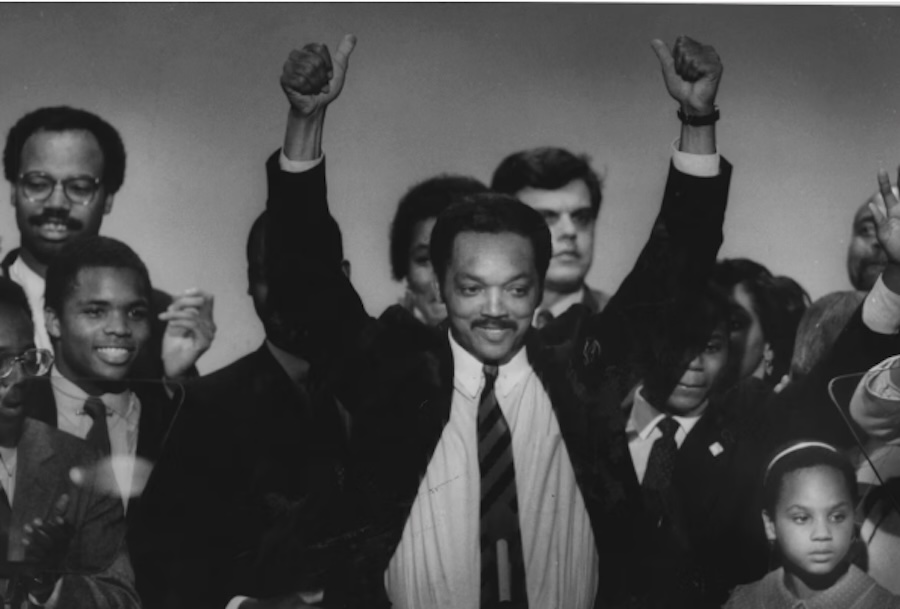
Jesse Jackson, Civil Rights Leader Who Fought for Economic Justice, Dies at 84

DEMOCRATIC PARTICIPATION


Brazil: Pelourinho celebrates culture of peace and diversity, in a Sunday of free programming during Bahia Summer

WOMEN’S EQUALITY


‘Equal Women: Transforming Territories,’ a photographic exhibition that pays tribute to the organizations working for women’s rights in Colombia


TOLERANCE & SOLIDARITY


Brazil: Interfaith event held at the Federal Public Prosecutor’s Office celebrates a culture of peace in Paraíba.

EDUCATION FOR PEACE


Brazil: “Culture of Peace” Reinforces Message of Unity and Social Awareness in Music

FREE FLOW OF INFORMATION


Mexico: Pablo Lemus and Rigoberta Menchú Agree on Actions to Build a New Culture of Peace in Jalisco

DISARMAMENT & SECURITY


Mexico: Al Sharpton and Rigoberta Menchú to Join Mérida Peace Conference

English bulletin February 1, 2026

. THE PEOPLE KEEP RESISTING .

Again this month, as the menace of the culture of war continues to grow, the people’s resistance continues to grow as well, as they take to the streets in massive numbers.

The culture of war axis is led by Trump in the United States and Netanyahou in Israel.

The culture of peace is led this month by mass demonstrations in the United State, Colombia, Cuba, Venezuela and Turkey.

In a city with a population of 500,000, more than 50,000 took to the streets in Minneapolis, despite sub-zero temperatures, to protest the war launched by Trump against their city.

Other protest demonstrations against Trump’s war on the cities took place in all 50 states of the United States.

In Colombia, in Venezuela and in Cuba, people took to the streets to protest Trump’s kidnapping of the President of Venezuela by an attack that killed perhaps 100 people, including many Cubans.

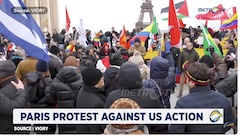
There were many other demonstrations against the American intervention around the world, such as this one in France.

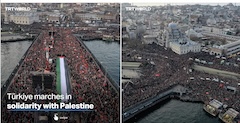
And in Turkey, people took to streets in massive numbers to protest Netanyahou’s continued genocide against Palestine.

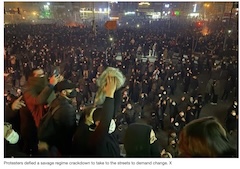
Mention must also be made of the mass demonstrations in Iran. While they were directed against the policies of the state of Iran, they were also infiltrated and manipulated by the United States and Israel as part of their menace of war against Iran.

As we are more than ever threatened with a World War III that could destroy our world, we must hope that the people’s resistance will not only continue but will eventually prevail.

A people united can never be defeated.

The culture of war is not invincible. Empires do crash.

The same species that invented war is capable of inventing peace.

HUMAN RIGHTS


USA: Undeterred by Freezing Temps, Statewide Minnesota Strikes Demand ‘ICE Out Now’

SUSTAINABLE DEVELOPMENT


African Union: Our Aspirations for the Africa We Want

DEMOCRATIC PARTICIPATION


IPU Statement on the International Day of Peaceful Coexistence

WOMEN’S EQUALITY


International Women’s Day 2026: Rights. Justice. Action. For ALL Women and Girls.


TOLERANCE & SOLIDARITY


Mass rally in Istanbul on New Year’s Day shows solidarity with Gaza

EDUCATION FOR PEACE


Mexico: USEBEQ Trains 5,000 Teachers to Foster a Culture of Peace

FREE FLOW OF INFORMATION


Iran protests 2026: our surveys show Iranians agree more on regime change than what might come next

DISARMAMENT & SECURITY


Protests in France agains US attack on Venezuela

English bulletin January 1, 2026

. MOVING FROM 2025 T0 2026 .

Looking back over the past year, here are the themes of the CPNN bulletins in 2025 and their updates

The people take to the streets in protest against the support of their governments for the Israeli genocide in Gaza and in protest against the growing authoritarianism of the government of Trump in the United States. This was the theme in February, March, July, September and November including major manifestations for peace and human rights in the United States, United Kingdom, Australia, Iran, Israel, Netherlands, Spain, Italy and Belgium.

This month we publish an update of the movement against Trump, an interview with three of the major organizers of the demonstrations in the United States who see a growing unity between the anti-Trump forces and traditional socialist organizations.

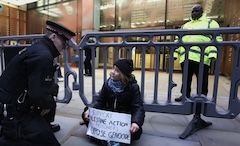
The latest article about the protests of Israeli genocide highlights the >arrest of Greta Thunberg in London for having shown in public a placard that supports the banned organization Palestine Action. Over 2,000 people have been arrested by the UK government for such actions, an extraordinary attack on freedom of speech and support by the government for the Israeli genocide.

While the countries of Europe and North America continue their move towards authoritarianism and their support for Israeli genocide, more progressive actions took place in Africa and Latin America. This was the theme in January, August and December with articles from South Africa, Brazil, Colombia, Mexico, Burkina Faso, Cameroon, Ecuador, Chile, Cote D’Ivoire and Niger.

This month we carried articles from Mexico, Tunisia and Burkina Faso.

In Mexico, the Sinaloa State Congress held an event entitled “Culture of Peace for Sustainable Development: 2030 Agenda in Action,” with young people from different parts of the state.

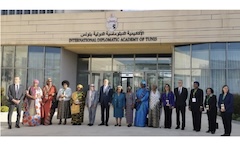
In Tunisia, the African Union successfully convened the 6th High-Level Africa Forum on Women, Peace and Security. Mahmoud Ali Youssouf, Chairperson of the African Union Commission, paid tribute to the women of Sudan, standing firm amid conflict; the women of the Great Lakes region, persevering in protracted crises; and the women of the Sahel, who sustain communities despite insecurity and displacement. He concluded by asserting: “Their resilience reminds us that women are central pillars of peace and stability.”

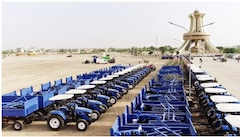
In Burkina Faso, the government headed by Ibrahim Traore has increased food sovereignty by providing credit and distributing agricultural machinery to small farmers. This can provide a model for other countries in Africa who import their food.

Continuing a CPNN tradition, the bulletins of April and October were devoted to the global mobilizations for International Women’s Day and the International Day of Peace.

Finally, a new theme was added in the CPNN bulletins of May and June, 2025. They announced the Peace Manifesto 2025, saying that CPNN cannot be content to report the news for a culture of peace. We must create it. This month we publish an update on the Manifesto with a new strategy based on the development of Activating Teams.

Let us hope that more and more people will take to the streets in 2026 for peace and human rights, that Africa and Latin America will continue to provide leadership, and that the Peace Manifesto can become viral on social media.

FREE FLOW OF INFORMATION


Julian Assange says peace prize has become “instrument of war” and sues Nobel

SUSTAINABLE DEVELOPMENT


Agricultural offensive: how Burkina Faso is moving towards self-sufficiency in food production

DEMOCRATIC PARTICIPATION


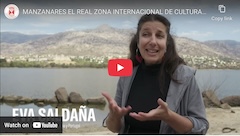
Spain: Documentary “International Zone of Culture of Peace” in Manzanares El Real

WOMEN’S EQUALITY


Tunis, Birth Place of the Name, ‘Africa’ hosts 6th Forum of Women, Peace and Security (WPS)


TOLERANCE & SOLIDARITY


Greta Thunberg Arrested in UK for Supporting Palestine Action and Opposing Gaza Genocide

EDUCATION FOR PEACE


International Institute for Peace Education 2026 Spain

HUMAN RIGHTS


United States: The Resistance Moves Left

DISARMAMENT & SECURITY


International stability, human security and the nuclear challenge: Yearbook of the Stockholm International Peace Research Institute

English bulletin December 1, 2025

WHERE CULTURE OF PEACE IS ADVANCING

This month we found news of the culture of peace advancing in Africa, Latin America and the United States.

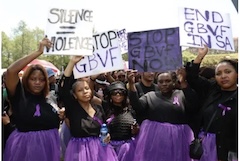
South African women brought their country to a standstill with a powerful message: declare gender-based violence and femicide a national disaster. At the Union Buildings lawns in Pretoria, the seat of government, thousands of protesters dressed in black with touches of purple began gathering in the morning of 21 November. Their voices rose in traditional songs of struggle – “Senzeni na?” (What have we done to deserve this?) and “Zizaw’ujik’izinto” (Things will change) – before culminating in a powerful moment at midday, when protesters lay on the ground in silence, honouring the memory of women that are killed every day in South Africa.

Responding to the outcry amplified by over one million petition signatures, the South African Government declared gender-based violence and femicide a national disaster – a move that will unlock additional resources and policy focus, ensuring the issue receives urgent attention it demands. And speaking at the G20 Social Summit, President Cyril Ramaphosa said, “We have agreed, among all social partners, that we need to take extraordinary and concerted action – using every means at our disposal – to end this crisis”.

As G20 Ministers gathered in Johannesburg, they recognized that addressing gender-based violence requires confronting its root causes. Central to the G20’s recommendations was engaging men and boys as active agents of change in promoting positive masculinities. Ministers also emphasized that transforming harmful gender norms requires strengthening accountability mechanisms across all sectors, from religious institutions to judicial systems.

In Brazil, An estimated 50,000 people took to the streets of Belém do Pará, to demonstrate outside the halls of the United Nations annual climate summit, holding a “Great People’s March” and makeshift “Funeral for Fossil Fuels” as they demanded a just transition toward a more renewable energy system and egalitarian economy.

Organized by civil society organizations and Indigenous Peoples groups from Brazil and beyond, the tens of thousands who marched outside the thirtieth Conference of the Parties (COP30) summit called for an end to the rapacious greed of the oil, gas, and coal companies as they advocated for big polluters to pay for the large-scale damage their businesses have caused worldwide over the last century.

Although the conclusions of the COP30 were disappointing, the activists who took part promise to make progress at the level of the city. As explained by activist Herbert Santo de Lima : “COP30 didn’t deliver everything needed. But it delivered enough for us not to give up. The fighting continues — and it’s starting in the cities. The future can’t wait. And neither are we.”

Also in the United States, the fight continues, and it is starting in the cities.

The victory of Zohran Mamdani in the election for the mayor of New York City has inspired activists throughout the United States in the struggle for human rights in their country. Here is an excerpt from his victory speech: ““Tonight we have spoken in a clear voice. Hope is alive. . . We won because New Yorkers allowed themselves to hope that the impossible could be made possible.”

Similarly, we have received the following message from an activist in New Haven (a city in Connecticut) : “there’s a start of the swing back here.  We are still hopeful that we will see, eventually, that sanity, compassion and peace outweigh the current dissolution of our society.”

DISARMAMENT & SECURITY


The Challenge of Making a Culture of Peace an Official Heritage in Africa

SUSTAINABLE DEVELOPMENT


Report from COP30

DEMOCRATIC PARTICIPATION


New York: Mamdani’s Win Proves That Hope Is Power

WOMEN’S EQUALITY


South Africa’s G20 Women’s Shutdown – a turning point for ending gender-based violence and femicide


TOLERANCE & SOLIDARITY


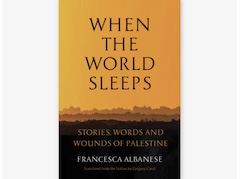
Book review: When the World Sleeps

EDUCATION FOR PEACE


Nonviolence International is growing!

HUMAN RIGHTS


Starting the swing back in Connecticut

FREE FLOW OF INFORMATION


France: Coop-médias Invests in 5 Independent Media Outlets

English bulletin November 1, 2025

. THE MOVEMENT KEEPS GROWING .

The menace of the culture of war continues to grow, but, in response, the peoples’ movements for peace and justice also keeps growing.

In one of the largest single-day nationwide demonstrations in U.S. history, nearly seven million Americans took to the streets on October 8, 2 million more than June, in over 2,700 cities and towns for the No Kings Day of Peaceful Action.

In response to this historic day of action, the No Kings Coalition issued the following statement: “Today, millions of Americans stood together to reject authoritarianism and remind the world that our democracy belongs to the people, not to one man’s ambition,” said Ezra Levin and Leah Greenberg, Co-Founders, Indivisible. “Authoritarians want us to believe resistance is futile, but every person who turned out today proved the opposite. This movement isn’t about a single protest; it’s about a growing chorus of Americans who refuse to be ruled. Trump may want a crown, but in this country, there are no kings.”

At CPNN we carried photos of demonstrations in all 50 of the United States, including those in small towns where a high percentage of the population turned out. In many cases, these were towns where the majority had voted for Trump.

Among the speakers was Senator Bernie Sanders. In a recent article, he said “History has always taught us that real change never takes place from the top on down. It always occurs from the bottom on up. It occurs when ordinary people get sick and tired of oppression and injustice—and fight back. That is the history of the founding of our nation, the abolitionist movement, the labor movement, the civil rights movement, the women’s movement and more.”

What will come next? There is even talk of a general strike in the United States.

In Europe there were massive demonstrations in solidarity with the Palestinian people who are being massacred in the Israeli genocide.

In London, the Palestine Solidarity Campaign, organised demonstrations against Israel’s genocide in Gaza, along with the Muslim Association of Britain, Friends of Al Aqsa and Palestinian Forum in Britain among others. More than 600,000 people joined the march on October 11. Protestors carried Palestinian flags, banners calling for an end to UK arms sales to Israel and placards demanding accountability.

In Spain, tens of thousands of students walked out of classrooms in cities and towns across Spain on Thursday, October 2, to protest Israel’s ongoing US-backed genocide in Gaza and abduction of Global Sumud Flotilla members, dozens of whom are Spanish. Demonstrations took part in at least 39 cities and towns, varied in size from small groups to thousands who turned out in Barcelona and the capital Madrid, where students held banners with messages like “Stop Everything to Stop the Genocide,” “All Eyes on the Global Sumud Flotilla,” and “Free Palestine!”

In Italy, on September 22, approximately one million people across Italy staged a general strike in support of Palestine and the Global Sumud Flotilla, offering a vision of solidarity sharply at odds with the one displayed by European leaders at the United Nations . Ports, train stations, and major junctions were shut down as workers, many of whom members of the grassroots union Unione Sindacale di Base (USB), brought the country to a halt.

In Paris, an international mass meeting against war and genocide took place on Sunday, October 5. Four thousand people, including delegations from nineteen countries, filled out the Dome de Paris. The arena was a sea of Palestine flags and flags of socialist and anti-war organisations.

As Palestinian activist Mazin Qumsiyeh explains,”this global uprising (intifada) will not stop until freedom, justice, and equality are attained.” because the temporary ceasefire in Gaza and the release of some Palestinians in a prisoner exchange is not a “peace agreement”. Instead, it is a fake “peace agreement” and what needs to be done is to apply boycotts, divestments, sanctions (BDS) on this rogue state that violates the International conventions (Geneva convention, Conventions against Apartheid and Genocide). BDS was used against apartheid South Africa and needs to be applied here also. (see bdsmovement.net.

HUMAN RIGHTS

Again in the USA: No Kings Rallies in all 50 States

SUSTAINABLE DEVELOPMENT

Global Campaign to Demand Climate Justice (DCJ)

DEMOCRATIC PARTICIPATION
<
Mayors for Peace Action Plan (2025–2029)
WOMEN’S EQUALITY

The Struggle for Peace of Syrian Women, ICIP Peace in Progress Award 2025

TOLERANCE & SOLIDARITY

More than half a million march in London to demand lasting peace in Gaza

EDUCATION FOR PEACE

Mexico: Equality and Inclusion Secretariat and Viral Network Launch Call for Participation in the “Hip Hop for Peace” Project

DISARMAMENT & SECURITY

When Maria Corina Machado Wins the Nobel Peace Prize, “Peace” Has Lost Its Meaning

FREE FLOW OF INFORMATION

Spain: Four Days of Activities for Peace


English bulletin October 1, 2025

INTERNATIONAL DAY OF PEACE – 2025

Over the course of the last eight years at CPNN we have published a survey of events around the world to celebrate the International Day of Peace (IDP). The number of events we could find grew from 562 in 2017 to 942 in 2023.

Unfortunately, due to technical problems, it has not been possible for us to make such a survey in 2025, and instead we have published a few articles from every region of the world.

North America: Campaign Nonviolence, organized by the NGO Pace e Bene, listed many thousands of actions for weeks between the IDP and the Interntional Day of Nonviolence. The list included actions that took place in 137 localities, including events in 32 of the 50 United States. The goal of the Campaign is to ‘build a culture of peace and active nonviolence, free from war, poverty, racism, and environmental destruction’.

Latin America. As usual there were many celebrations of the IDP in Argentina and Mexico. The article we chose to print in CPNN was from the Raúl Corales Fornos School in Ciego de Ávila, Cuba. The event began with a moving musical performance, a reading of a poem about peace by students from different grades, who presented plays, dances, and songs. The students then delivered messages full of hope and optimism, shared their reflections on peace and the need to build a better future for all.

Western Europe: Once again this year the Belgian Coalition Against Nuclear Weapons invited cities and municipalities in Belgium to participate in the International Day of Peace by hoisting the peace flag on their municipal building(s). The initiative grew from 189 municipalities in 2024 to nearly 200 this year. There were also many events in France sponsored by Mouvement de la Paix and the CGT trade unions but their website shows only those that took place in 2024.

Eastern Europe: In previous years, we have been impressed by the large number of IDP celebrations in the schools, libraries and cities of both the Ukraine and the Russian Federation, despite the devastation of their war and the forbidding of mentioning the word “war” or criticizing the war. This year the number of celebrations was reduced, but we republished examples from the Yeisk Polytechnical College in Russia and from the Humanitarian Hub of the Donetsk Region of the Ukraine. The Hub houses Ukrainian refugees who fled from the city of Donetsk when it was captured by Russia. Meanwhile, the widespread celebration of the IDP in Belarus continued and we republished an article from a school in Baranvichi.

Middle East and North Africa. In this region, Israel’s genocide of the Palestinian people was the subject of the IDP. In their statement marking the International Day of Peace, the Muslim Council of Elders said that peace is the essence of the message of Islam. They added that celebrating the International Day of Peace while the Gaza Strip is witnessing a horrific humanitarian tragedy puts the human conscience to a real test. This requires the international community to shoulder its legal and moral responsibilities and act urgently to save innocent civilians in the Gaza Strip, halt the killing, starvation, and forced displacement policies, work to deliver humanitarian and relief aid, find a just and comprehensive solution to the Palestinian issue, and recognize the legitimate right of the Palestinian people to establish their independent state with Jerusalem as its capital.

South Asia. Many celebrations took place in India. An inspiring and heart-touching program was organized at the Baha’i House in Indore, in which the Baha’i community brought people of all religions and faiths on one platform and spread the message of peace. The highlight of the event was the collective Peace Pledge, in which all the participants pledged to cultivate inner peace, promote dialogue, and protect nature and all living creatures.

East Asia. It has become a tradition in Japan to celebrate the IDP with calligraphy. These events are held annually by the Wa Project TAISHI at shrines across the country. On the 21st, at Gokoku Shrine in Kagoshima City, calligraphers Matsuda Yoshinobu and Ueno Hiroko, both natives of the prefecture, and students from the calligraphy club at Shonan High School wrote messages of peace.

Sub-Saharan Africa. IDP celebrations were the occasion to call for peace and nonviolence in the electoral process. In Tanzania, the 3-day Youth, Peace and Security Forum in Dar es Salaam drew young people from across the country, alongside religious leaders, diplomats, civil society groups, and government officials. The forum addressed four priorities: youth participation in decision-making, the role of young people in digital spaces, economic empowerment as a safeguard against crime, and youth-led climate action.

United Nations: UN Secretary-General Antonio Guterres called on the international community to “silence the guns, end the suffering, build bridges, and create stability and prosperity.” Peace cannot wait,” as the warring world is crying out for peace, said the UN chief. “This year’s International Day of Peace urges each of us to give voice to that call.”

NORTH AMERICA


Campaign Nonviolence Action Days Sept 21 – Oct 2, 2025

WEST EUROPE


Belgium: 200 cities and towns will raise the flag of peace during eight days

EAST EUROPE

Baranvichi, Belarus: Peace Day: The first school is a territory of kindness and unity!

MIDDLE EAST AND NORTH AFRICA


On the International Day of Peace, Muslim Elders: The Gaza Tragedy Is a Test of the Global Conscience


LATIN AMERICA


Cuba: International Day of Peace commemorated in schools in Ciego de Ávila

EAST ASIA


Japan: September 21st is International Peace Day: Calligraphers and high school students pray for peace through calligraphy in Kagoshima City

SOUTH ASIA


India: The call for peace resonated at the Baha’i House Indore as the International Peace Day was celebrated with enthusiasm

SUB-SAHARAN AFRICA


Tanzania marks peace day amid election calls for calm

English bulletin September 1, 2025

THE PEOPLE RETURN TO THE STREETS

The Israeli genocide continues, and people around the world return to the streets to protest and to try to end it.

In Australia on August 3, hundreds of thousands of people came out in the rain and shut down the Sydney Harbour Bridge. Since October 7, 2023, there have been weekly rallies in Sydney and across Australia. Yet August 3 saw broadener sections of the population mobilize in support of Palestine. Historic numbers of community groups, trade unions and political organizations endorsed the action while a number of NSW politicians – including from the Minns government – backed the historic “March for Humanity”.

Again, on August 24, pro-Palestinian rallies took place across Australia with large turnouts in state capitals Sydney, Brisbane and Melbourne. The Palestine Action Group said around 350,000 attended the rallies nationwide, including around 50,000 in Brisbane.

In London on August 9, an estimated 300,000 people marched through the center of the city for the 28th national demonstration for Palestine since October 2023. Along with the usual array of placards taking aim at Prime Minister Starmer and calling for action, there were noticeably more signs relating to the clampdown on democratic rights and civil liberties. The huge number of banners of local groups from across the country showed the truly national character of the march.

The London march took place despite efforts of the government to stop it, forbidding support for Palestine Action. Over 800 people gathered in Parliament Square to defy the proscription of Palestine Action, and the Met Police arrested 466 people – including a blind man in a wheelchair and a 90-year-old woman.

Thanks to the public pressure, the Australian government has announced it will recognize a Palestinian state. Many other governments are doing the same, including the UK despite its opposition to the pro-Palestinian demonstrations.

In Israel on August 17, The largest Israeli protest to date took place. About 500,000 people marched in Tel Aviv to demand an end to the war in Gaza and organizers say 1 million took part in demonstrations across the entire country. Most of the Israelis who were out on the streets “blame Netanyahu” for prioritizing his political survival over an end to the war. As one demonstrator told Democracy Now, “Last week, we decided to call to everyone in Israel, to all the citizens, to stop, take a day and stop all the country, in one saying: Please release the hostages, bring them home, and stop the war.”

Again on August 26, Tens of thousands of people took part in demonstrations across Israel, blocking highways on a “day of disruption” that aimed to push Benjamin Netanyahu into agreeing a deal to end the war and calling off plans to attack Gaza City. Relatives of hostages led the biggest march and rally in Tel Aviv, while in Jerusalem hundreds of people gathered outside the prime minister’s office as the security cabinet met to discuss the war. There were dozens of other protests around the country, including on the main highway to the northern city of Haifa and inside Ben Gurion airport.

One country is refusing to recognize a Palestinian state. The Israeli genocide cannot continue without the support of Donald Trump and the US government. For that reason, it is important that the Trump policies are coming under increasing opposition in the United States.

Hundreds of organizations are joining forces this fall to confront Trump & billionaire allies nationwide in the US, marking an historic collaboration of movements. Make Billionaires Pay is being convened by Desis Rising Up and Moving (DRUM), Women’s March, Climate Defenders, and 350.org, with over 100 endorsing organizations. It is part of a global week of action for climate justice, called “Draw the Line” (convened by 350.org, Demand Climate Justice, Climate Action Network and War on Want).

Also, unions and progressive organizations are planning nearly 1,000 “Workers Over Billionaires” demonstrations across the United States this Labor Day to protest President Donald Trump’s assault on workers’ rights. The day of national action has been organized by the May Day Strong coalition, which includes labor organizations like the AFL-CIO, American Federation of Teachers, and National Union of Healthcare Workers, as well as advocacy groups like Americans for Tax Fairness, Indivisible, Our Revolution, and Public Citizen.

At CPNN we believe that we must do all we can to express our solidarity with the people of Gaza and to stop and prevent the war crimes and genocide.

HUMAN RIGHTS


In Largest Israeli Protest to Date, 1 Million Israelis Demand Gaza Ceasefire to Free Hostages

SUSTAINABLE DEVELOPMENT


Zhijiang, China To Host 6th International Peace Culture Festival: Here’s What You Need To Know

DEMOCRATIC PARTICIPATION

Mexico: Cuernavaca City Council Holds the First University Conference on a Culture of Peace in the State of Morelos

WOMEN’S EQUALITY


Niger: Maradi’s Traditional Leaders Equipped to Promote Women’s and Children’s Rights


TOLERANCE & SOLIDARITY


Australia: Pro-Palestine demonstration shuts down Sydney Harbour Bridge

EDUCATION FOR PEACE


Mexico: UATx Seeks to Consolidate a Culture of Peace Within Its Community

DISARMAMENT & SECURITY


Hiroshima Peace Declaration on 80th anniversary of atomic bombing

FREE FLOW OF INFORMATION


Changing the Narrative: Why West African Media Is Embracing Peace Journalism

English bulletin August 1, 2025

THE GLOBAL SOUTH AS AN ALTERNATIVE TO THE CULTURE OF WAR

Last month, it was the people of Europe, North America and the Middle East who took to the streets in protest against the wars and militarism of their countries.

This month, it is the countries of the Global South who provide an alternative to the culture of war of the North.

President Lula da Silva of Brazil opened the summit of the BRICS countries by urging countries to shift spending away from military efforts and toward the implementation of the United Nations’ 2030 Agenda—not toward war.

He criticized explicitly the decision of NATO to increase military spending.

“We are before an unprecedented number of conflicts since World War II. NATO’s recent decision feeds the arms race. It is easier to designate 5% of the GDP to military spending than to allocate the 0.7% that has been promised for Official Development Assistance. This demonstrates that the resources for the implementation of the 2030 Agenda do exist; however, they are not available due to a lack of political priority. It is always easier to invest in war than in peace.

Lula called for a deep transformation of the UN Security Council: “To overcome the trust crisis we are immersed in, we must promote deep transformations in the Security Council. Increase its legitimacy, representativeness, effectiveness, and democratic character. Include new permanent members from Asia, Africa, Latin America, and the Caribbean.

The final declaration of the BRICS summit reflected the same approach: “The leaders express concern over the current trend of sharply rising global military expenditures at the expense of adequate financing for the development of emerging countries. . . . The document also calls for the increased participation of developing countries, particularly those in Africa, Latin America and the Caribbean, in global decision-making processes and structures.”

Another important summit meeting took place in Bogota, Colombia, on July 15, bringing together ministerial delegates from more than 30 nations to end Israel’s U.S.-backed genocide in Gaza. The final declaration, calling for the prevention of the transfer of arms to Israel, was signed by 12 countries from the Global South, including Colombia, Indonesia, and South Africa.

Leadership of the Global South was also evident last month in the new coalition to tax the super-rich launched by Brazil and South Africa, along with Spain. The announcement was welcomed by Oxfam, who said “Taxation of the super-rich is a vital tool to secure sustainable development and fight inequalities. The wealth of the richest 1% has surged $33.9 trillion since 2015, enough to end annual poverty 22 times, yet billionaires only pay around 0.3% in real taxes.”

Brazil, Colombia and South Africa come from regions that have declared themselves to be nuclear-free zones, and South Africa is the only country in history to have made nuclear weapons and then renounced them. If they were to become permanent members of the UN Security Council, as suggested above, it would provide some balance to its domination by the nuclear powers with their culture of war.

FREE FLOW OF INFORMATION


Lula opens BRICS Summit with call for investment in peace and security

SUSTAINABLE DEVELOPMENT


BRICS Summit signs historic commitment in Rio for more inclusive and sustainable governance

DEMOCRATIC PARTICIPATION

Niger: Agadez Mobilizes Its Traditional Chiefs for Peace

WOMEN’S EQUALITY


Violence Against Women: West Africa at a Time of Decisive Choices


TOLERANCE & SOLIDARITY


United States: Indivisible, the team that organized the No Kings demonstrations

EDUCATION FOR PEACE


Mexico: Civil Society in Juárez Promotes Law on a Culture of Peace and Reconciliation in the Country

DISARMAMENT & SECURITY


CPNN in the Peace Wave 2025

HUMAN RIGHTS


Colombia: At Hague Group Emergency Summit, 30+ Nations Seek to ‘Halt the Genocide in Gaza’