… EDUCATION FOR PEACE …
An article by Erasmo Lara Peña in Acento
Promoting a culture of peace in schools is a strategic priority for the Dominican education system. Within this framework, schools are recognized as a privileged space for the formation of citizens capable of living together respectfully, valuing diversity, and managing conflicts constructively.
After retiring from the United Nations in 2005 and subsequently serving as the Dominican Republic’s ambassador to the United Nations in 2009, I have dedicated myself to projects related to promoting a culture of peace, community mediation, conflict resolution, and international negotiations, primarily within public institutions and civil society organizations in our country.
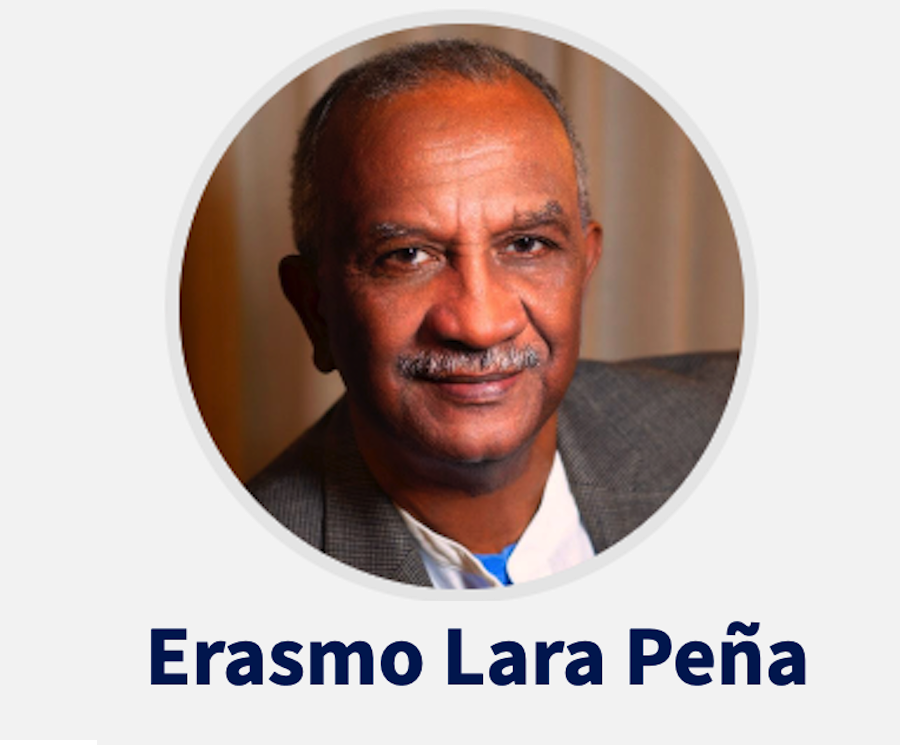
I have carried out much of this work through the Dominican Center for Peace, a private, public-service institution that I founded in 2006. One of the most significant projects has been the establishment of peace clubs in schools throughout the Dominican Republic through the Violence Reduction and Peace Culture Promotion Program in Schools.
I would like to document the process of creating, developing, consolidating, and institutionalizing the Peace Clubs program in the Dominican Republic, highlighting the main achievements, the partnerships forged, and the impact generated within the educational community during the years of implementation.
The program originally emerged in 2017 as a pilot initiative. Subsequently, during the 2022-2023 school year, it became part of the activities of the Vice Ministry of Preventive Security in Provincial Governments of the Ministry of the Interior and Police, in collaboration with the Directorate of Guidance and Psychology (DOP) of the Ministry of Education.
By the end of the 2025-2026 school year, the main achievements included the implementation of the program in 500 schools, the training of more than 12,000 student peace promoters, the training of 700 counselors and psychologists, as well as 48 regional and district technicians. The program also has a presence in seven regional education offices and forty-one school districts.
It is important to mention that the standardization of teaching practices was also achieved through the production of printed, audiovisual, and digital materials to support the various training activities. Starting in the 2025-2026 school year, the program became an integral part of Presidential Goal 21 on a Culture of Peace, incorporated into the action plan of the Directorate of Guidance and Psychology until 2028. The objective is to incorporate approximately 800 new schools.
Among the main challenges faced during the program’s implementation were inter-institutional coordination, territorial expansion, and the sustainability of the training activities. However, the commitment of the regional and district technical teams, counselors, psychologists, and students allowed for the consolidation of a high-impact experience for school coexistence.
The Peace Clubs operate in schools identified by the Ministry of Education and located in priority areas within the Comprehensive Citizen Security Strategy, “My Safe Country.” Currently, the program operates in all school districts of San Cristóbal, Santo Domingo Este, the National District, Santiago, La Vega, San Francisco de Macorís, Moca, Bonao, and Piedra Blanca.
Promoting a culture of peace in schools is a strategic priority for the Dominican education system. Within this framework, schools are recognized as a privileged space for developing citizens capable of living together respectfully, valuing diversity, and managing conflicts constructively. Presidential Goal 21 on a Culture of Peace reinforces this commitment by promoting safe, participatory, and violence-free school environments.
(Continued in right column)
Where is peace education taking place?
(Continued from left column)
Peace Clubs are organized spaces within schools, led by and for students, with the support of counselors and school psychologists.
Their main objectives are:
• To contribute to the development of a culture of peace in schools.
• To prevent and reduce violence in schools.
• To empower students to act as peace promoters.
To strengthen students’ civic education.
Through these clubs, students develop key social-emotional skills, such as empathy, assertive communication, conflict resolution, and teamwork.
The program is implemented through three fundamental actions:
1. Training of counselors, psychologists, and students.
2. Organization of the club within the school.
3. Awareness-raising activities aimed at the entire school community.
These actions ensure that a culture of peace is not just content, but a daily practice.
To support the program, a series of printed and audiovisual materials have been designed that frame the facilitation of standardized educational content and practices on topics such as conflict, youth violence, coexistence, communication and active listening, peer mediation, and restorative practices, among others.
The Peace Club is a space run by and for students. In it, young people become agents of positive change, learning and promoting social skills such as empathy, assertive communication, peaceful conflict resolution, and teamwork.
We seek to improve the school climate and develop students committed to social peace, fostering a sense of responsibility toward their environment and contributing to the strengthening of peaceful coexistence and safety in schools.
One of the program’s main focuses has been empowering students with strategies for promoting peace and the constructive resolution of conflicts. Likewise, spaces have been created for them to construct their own knowledge and actively contribute to promoting peaceful coexistence from their own perspectives.
The enthusiastic work of counselors and psychologists involved in the program, along with the commitment and empowerment of the students, has significantly contributed to the acceptance and legitimacy it enjoys today. This 2025-2026 school year has marked a transition for the program, transferring it from the Ministry of the Interior and Police to the Ministry of Education, for implementation by the Directorate of Guidance and Psychology (DOP), which is taking the necessary steps to ensure its consolidation as a national program. These include its integration into Presidential Goal 21 on a Culture of Peace, the appointment of a national specialist to oversee it, its incorporation into the Annual Operating Plan (AOP), and the necessary budget allocation.
I feel that my seven years of work have yielded the expected results, as this effort has become a national program under the responsibility of the Ministry of Education.
I wish to express my gratitude to Engineer Ángela Jáquez, Vice Minister of the Interior and Police; to Dr. Ancell Scheker, Vice Minister of Education; to Mario Frías and Esther Custodio, two extraordinary facilitators of the hundreds of workshops given to counselors, psychologists, and thousands of student members of the club network; and, in a very special way, to Divina García, Director of Guidance and Psychology, on whose shoulders now rests the continuity and strengthening of this initiative.
Beyond the figures and the results achieved, the greatest achievement of the Peace Clubs Program has been to demonstrate that students can become active agents of social transformation when they are given the right tools to promote coexistence, dialogue and the peaceful resolution of conflicts.
– – – – – –
If you wish to make a comment on this article, you may write to coordinator@cpnn-world.org with the title “Comment on (name of article)” and we will put your comment on line. Because of the flood of spam, we have discontinued the direct application of comments.