The commercial media emphasize “fast news” or what they often call “breaking news.” This tends to ignore or mask the fundamental processes that make for deep historical change by accumulating slowly over time. Their fast news is filled with stories about wars and the threat of wars around the world. They are not reporting what we can call the “slow news for peace.” See my blog for an analysis.
But we can find much slow news for peace in CPNN this month.
Writing in the website of Foreign Policy in Focus, the American historian Lawrence Wittner provides abundant evidence from various surveys that public support for international solidarity and cooperation is very substantial, and growing in many countries, including the United States. This includes public trust for the United Nations and the World Health Organization.
The World Peace Foundation, affiliated with the Fletcher School of Global Affairs at Tufts University in Boston has published a global mapping of contemporary peace-focused work in which they mention in particular the following organizations in the various regions:
North America and Europe: Oxford Network of Peace Studies; Stockholm International Peace Research Institute; the Peace Research Institute Oslo
Latin America: FLACSO Ecuador’s Acción No Violenta program; CALAS Visions of Peace research program; University for Peace in Costa Rica
Africa: West Africa Network for Peacebuilding; African Centre for the Constructive Resolution of Disputes
Oceania: University of Otago’s National Centre for Peace and Conflict Studies; Transcend Oceania
Middle East: Arab Forum for Alternatives in Lebanon
Asia: Toda Peace Institute in Japan; Mindanao Peacebuilding Institute in the Philippines
The initiatives listed in CPNN this month go beyond the list of the World Peace Foundation.
North America and Europe:
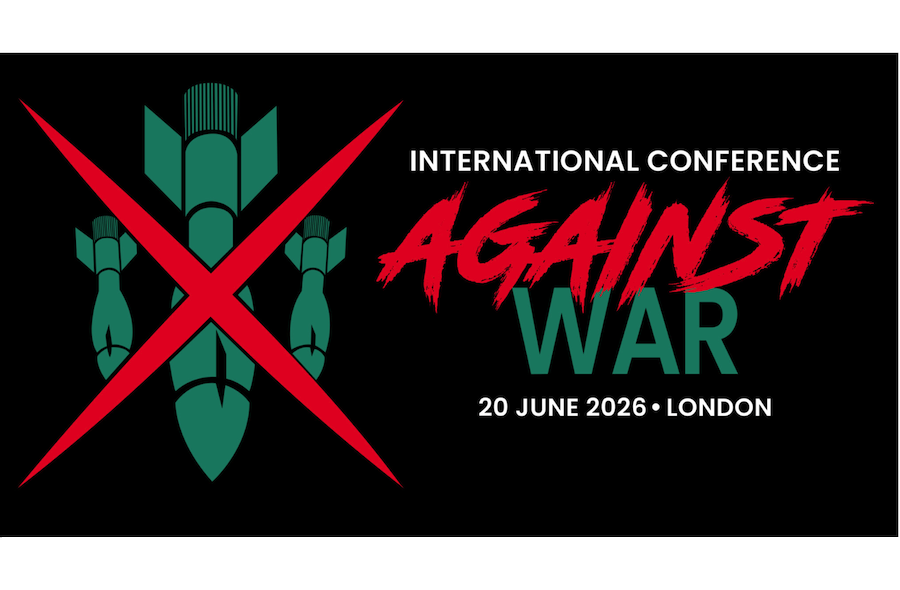
° In London, over 3,000 delegates from across Europe gathered for the second International Conference Against War
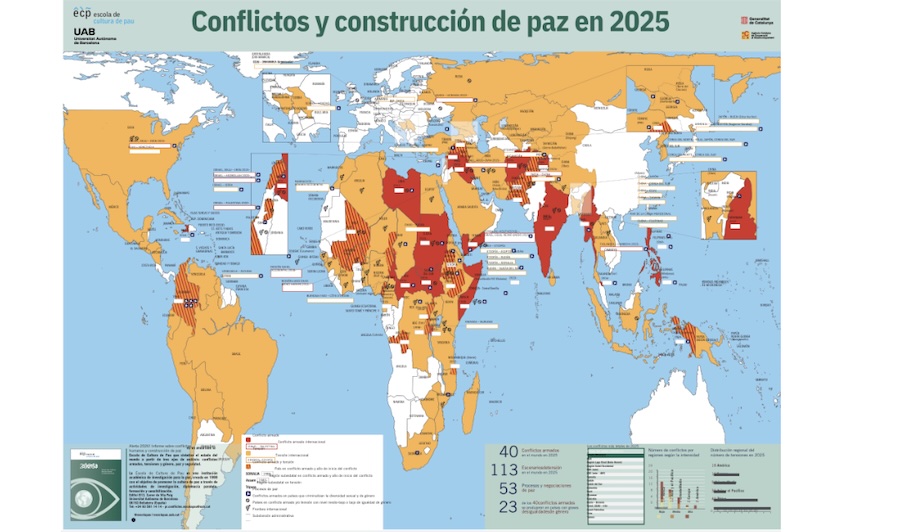
° The School for a Culture of Peace at the Autonomous Universiy of Barcelona has released its annual report on the world’s armed conflicts
° The Catholic Institute for Nonviolence in Rome has added a new co-director, coming from the American peace organization Pace é Bene
Latin America:
°,At the National Autonomous University of Mexico, a commission has been established to develop content on a culture of peace
° In the Dominican Republic a program of violence reduction and peace culture promotion has been established in schools
° In Honduras, the sixth edition of the World Peace Congress will take place in August
Africa:
° In Benin, the seventeenth edition of the World Social Forum will take place in August
Oceania:
° Leaders from the Pacific Islands are considering how to turn the Blue Pacific Ocean of Peace Declaration into a regional treaty.
Asia:
° Youth leaders from 33 countries took part in the 12th Youth Leadership Workshop on GCED in Seoul, Republic of Korea with the theme “Translating Peace into Action.”
In the long run, which is more important for human history, the fast news or the slow news?
If the fast news leads to a Nuclear World War III it may be the end of human history. Otherwise, we may hope that the slow news will enable us to survive this dangerous period of history and help us to cultivate a culture of peace.
|
DISARMAMENT & SECURITY |
SUSTAINABLE DEVELOPMENT |
DEMOCRATIC PARTICIPATION |
WOMEN’S EQUALITY |