Tag Archives: Europe

Speech about Peace by Jean-Luc Mélenchon in La Souterraine

FREE FLOW OF INFORMATION .

Excerpt from the video (transcribed by CPNN)

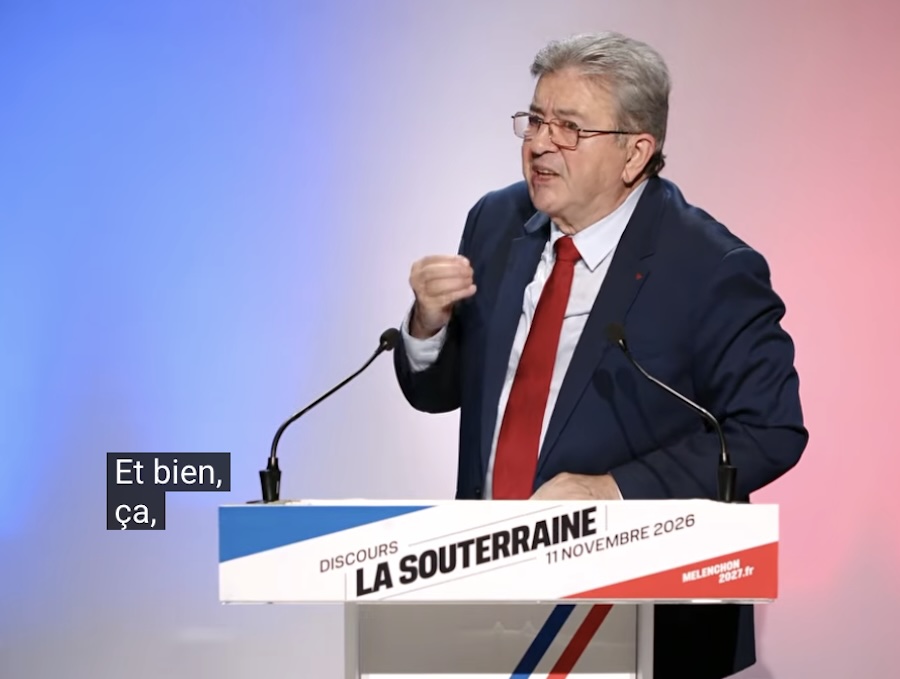
(Jean-Luc Melechon, the presidential candidate of the Insoumise Party gave this speech on Armistice Day in the French village of La Souterraine. Here is an excerpt with added sub-titles.)

. . . . This is where we stand. We shall be non-aligned. I am telling you all this on November 11th—Armistice Day. Like many of you, I am a peace-loving person. Perhaps not a “pacifist” in the strict sense—as some have the capacity to be—but certainly peace-loving; yet, I am not naive. I am prepared to do whatever is necessary for our people.
And to the younger generation: I ask you to make an effort—to read, to seek to understand, and to inform yourselves about how things unfolded in the past. Do not believe the simplistic notion that a world war was triggered merely because an archduke was assassinated. That war was the result of a long, downward slope—a path that led inexorably to conflict—and we are currently on that same slope.

Right now, nations everywhere have decided to shift toward a “war economy”—continuously manufacturing weapons. This is done because it jump-starts the capitalist economy; states make purchases in the billions. And as for bombs—well, once you drop them on a neighbor, you have to buy more. They have effectively become a mass-consumption product.

War is, first and foremost, the outcome of a systemic dead end—a system that finds its fulfillment in the creation of a war economy and its associated markets. That is the path we are currently on.

We will withdraw from NATO

This is why I want to issue a warning—and I want everyone to hear this clearly: we will withdraw from the NATO command structure, because we have no business participating in American wars. We will leave NATO because we intend to decide for ourselves what we do and how we act.

And we will remain committed to the agreements that have been signed within Europe—agreements to which we are a party. France’s word is good—provided that I know what is in the agreement.

Can you tell me what Macron agreed to this summer—since it seems he did make an agreement—with Saudi Arabia, regarding the protection of the area the Pope is traveling through? You know, that peninsula—the one between the coast where Iran lies and the Suez Canal? What is this about? He said we were going to install equipment there—who decided that? And equipment doesn’t operate on its own; you have to send military personnel along with it. We already have troops in Romania, and we have them in Estonia. Now we’re going to put them there, too—but for what purpose?

This means that, overnight, we could become a co-belligerent. Why? Because all it would take is for an adversary of Saudi Arabia—namely, Iran—to act.

There is a desire to see the regime in Iran fall. Personally, I have a very low opinion of that regime—and I, unlike other politicians, am willing to speak up for those sentenced to death there, as are all the deputies from the La France Insoumise party. We, at least, do that.

But this country [Iran] has been subjected to aggression. What do you expect? We can’t just go to war against anyone the United States—or Mr. Netanyahu—happens to dislike.

Don’t get involved in the start of a war

Well, if this country that has been attacked decides to defend itself by striking pipelines in other nations, we suddenly become co-belligerents. So, what do we do then? I ask you: what do we do? Do we just stand there with our arms crossed, waiting to be fired upon?

The last time something like this happened to us was in Lebanon. We had a building housing our military personnel—this was a long time ago—and someone blew it up. Fifty-four French soldiers were killed. What happened behind the scenes? Well, the French army struck in the Bekaa Valley.

There is no such thing as a conflict where you don’t retaliate; you can’t just deploy equipment capable of killing everyone while expecting that no one will be allowed to touch you. You shouldn’t get involved in the start of a war—or, if you do, you had better be absolutely certain about what you’re going to do next. I’d like to ask Macron this: if we come under fire, what will you do, Mr. President? What are you going to do? You have no idea. That’s unfortunate, because in a situation like this, things are irreversible. Once you’ve gotten yourself involved, you have to see it through to the end—because by then, it’s too late to back out.

And it is the same with Russia. I know the situation is precarious—walking a razor’s edge, as it were. But who could possibly agree to engage, in any way, in an armed conflict with the Russians—a nation spanning 11 time zones, possessing one of the world’s most capable militaries?

(Article continued in the column on the right)

(Click here for the original version in French)

Questions related to this article:

Where in the world can we find good leadership today?

(Article continued from the column on the left)

This isn’t a video game, Mr. Jadot. Who are you to so boldly advocate for war here or there? I, for one, want no part of it; and if you are listening, know that I will do everything in my power to ensure we are not dragged into any war. We do not want war—we want an orderly world.

We are prepared to waive our veto

France will never surrender its seat on the UN Security Council to anyone—not even to other Europeans. We hold that seat, and we shall keep it until the UN is reorganized. In the meantime, however—joining more than 100 other nations, including Mexico—we have stated our willingness to waive our veto power in instances involving mass atrocities: specifically, war crimes or acts of genocide. It is simply intolerable that five nations, through their veto power, can block any response intended to protect innocent people being massacred by the thousands. That is the concession we are prepared to make.

And we will resume negotiations. You may not be aware of this, but in 1993, our country achieved a major diplomatic success by securing the signing of an international convention against chemical weapons here in Paris.

Do you understand what I am talking about? Chemical weapons—means of asphyxiating everyone, of deploying gases to kill. And what about when the Syrians used them? Or when Saddam Hussein used them? We all cried out, “What on earth is this horror?” Well, you should know that neither Russia, nor the United States of America, nor a number of other countries have signed these agreements. This means that they still haven’t destroyed their stockpiles, and we have no idea what they are doing with them.

That concerns chemical and biological weapons. You all understand what I mean by biological weapons, right? These are weapons—using bacteria, microbes, or viruses—that are cultivated specifically to be unleashed upon people, making them all sick and causing them to die. Such weapons exist. In 1993, they refused to sign the agreement we proposed, and the subject hasn’t been discussed since.

We will resume negotiations to abolish weapons of mass destruction

If you elect an Insoumis government, we will resume this work. I am certain that dozens of countries around the world will say, “Let’s join the French—we want no more of this horror that is the biological weapon.”

And then? You will see. In a single day, we will erase the shame we have had to endure—like when the President of our Republic mistreated African heads of state, or behaved with such flippancy, patting the Pope or touching goodness knows who else.

Suddenly, the French will once again become a great nation—a nation with a political agenda for the rest of the world, one that defends the common human interest: the abolition of weapons of mass destruction.

We will start from scratch in our discussions on the destruction of nuclear weapons, beginning with those who possess the most—namely, the Americans, the Russians, and so on.

Do not be taken in today. The United States of America holds the largest military budget—accounting for 80% of global military spending. It is the NATO countries [that dominate]; it is simply not true that other nations are armed to the teeth against us—that is not the truth. What is true is that we belong to a coalition that threatens everyone, and in the meantime, everyone has gone mad.

I mentioned this earlier: the Germans are set to double their troop numbers and, by 2030, will have increased their defense budget two- or threefold. Meanwhile, we in France—at the mere whistle of Mr. Trump—have agreed to raise our military spending to 5% of our GDP. That is a colossal, enormous sum—but for what purpose, pray tell? Is there any coherence in our strategic vision? Do you truly believe that the concept of nuclear deterrence is such a sound idea? Certainly, it offers protection—provided the adversary is sufficiently afraid of us. But are we capable of grasping that we, too, ought to fear an adversary who knows exactly where we stand?

The danger of civil nuclear plants

Do you all fully understand? The issue of civil nuclear energy is inextricably linked to military nuclear capabilities. Consider this: we build power plants—without any clear plan for how to fund the next ones—while claiming we will proceed regardless. We already have 59 reactors, including an entire plant—Nogent-sur-Seine—situated just upstream from the capital. There are many more throughout the Rhône Valley, an area that also houses our chemical industry. Does everyone realize that a single strike could effectively mean the end of France? In this sense, the way we utilize nuclear energy has, first and foremost, placed us in grave danger; in a world at war, no rules are respected. There are no limits to war—it immediately becomes total war.

And just look at how fortunate we have been—recall when I insisted that the nuclear power plants in Ukraine must be protected? Let’s start from that end—let’s at least protect that much, and it will be a beginning of peace. Because if there’s a problem at even one power plant, we’ll all suffer the consequences; after all, the radioactive cloud from Chernobyl didn’t stop at the border. And remember, thousands of Russians died to contain the Chernobyl disaster—they gave their lives to stop it. They could have just said, “We don’t care; let them deal with it themselves.”

Well, the current situation means that we—along with all the countries around the Mediterranean—are once again in danger . . . . .

– – – – – –

If you wish to make a comment on this article, you may write to coordinator@cpnn-world.org with the title “Comment on (name of article)” and we will put your comment on line. Because of the flood of spam, we have discontinued the direct application of comments.
Humanity at work: the Mondragon cooperatives

. . DEMOCRATIC PARTICIPATION . .

An article from the substack of Marilyn Langlois

The 70 year-old integrated network of worker-owned cooperatives based in Mondragon, Spain, are a refreshing island of positive peace in a swamp otherwise plagued by greed-fueled discord, fragmentation and stinging inequality. In 2010 I attended a seminar in Mondragon organized by Praxis Peace Institute, and another one this past October, 2026, to get updates. It was gratifying to see that the Mondragon cooperatives are still going strong and a beacon for the future.

Currently comprising 92 worker cooperatives, 62 of them industrial plus a major supermarket chain, a bank, a social services provider, research and development centers, consultancies, a few agricultural operations, schools and a university, the Mondragon cooperative corporation has close to 60,000 voting worker-owners with annual sales of over 11 billion euros.

As Ander Etxeberria, Director of Dissemination at Mondragon cooperatives headquarters, explained to us key social values that undergird the cooperatives, including:

· Auzolan (Basque concept meaning the community can do it! or joining forces to accomplish a difficult task for the common good)

· Sacrifice and generosity

· Self-responsibility

· Democracy and participation

· Learning by doing

The Mondragon cooperatives defy alleged gravitational forces the dominators would have us believe are immutable. To those who claim we’d see little progress or innovation without dangling the possibility of entrepreneurial risk takers making a killing in personal wealth from their efforts, Mondragon’s top managers, engineers and researchers prove otherwise.

Inspiration along with ethical and practical guidance came from the Catholic priest Jose Maria Arizmendiarrieta who got to know the needs of the post-war economically depressed community of Mondragon in the Basque region in the 1940’s and ‘50’. To most effectively meet those needs, he instilled values of creativity, collaboration and social cohesion, with a view of work not as punishment but rather as a service to the community and a path towards personal development.

At the time there were scattered small agricultural and crafts cooperatives among traditional top-down enterprises. The hilly and mountainous region had long been home to various industries in its narrow river valleys, including manufacture of swords in past centuries and a firearm factory that switched to making sewing machines in the 1920’s. The blossoming of the Mondragon cooperative network, emphasizing the manufacture of useful products geared towards peaceful co-existence, demonstrates a fulfillment of the biblical admonishment of turning swords into plowshares.

In 1956, five former students of the vocational school Arizmendiarrieta had founded launched Ulgor, a company making kerosene heaters, based on cooperative principles including worker ownership and democratic decision making. As the business grew, new products and additional worker-owners were brought on board. Soon new cooperatives were established to produce needed parts and components.

At present Mondragon’s industrial cooperatives manufacture a wide array of practical high-tech products, including commercial appliances, automotive systems, industrial components, high-precision machine tools, robotics, sports equipment, medical and hospitality furnishings, assembly process automation, gas technology, solar energy systems and much more. High standards of environmental protection and sustainability are maintained. Neither weaponry nor ravenous financial derivatives are on their product palette.

Success would not have been possible in the face of stiff competition and periodic economic downturns without a commitment to constant re-evaluation and innovation, supported by 12 research and development centers, business incubators, a university with schools of engineering, business, pedagogy and gastronomy and a cooperative bank to provide financing.

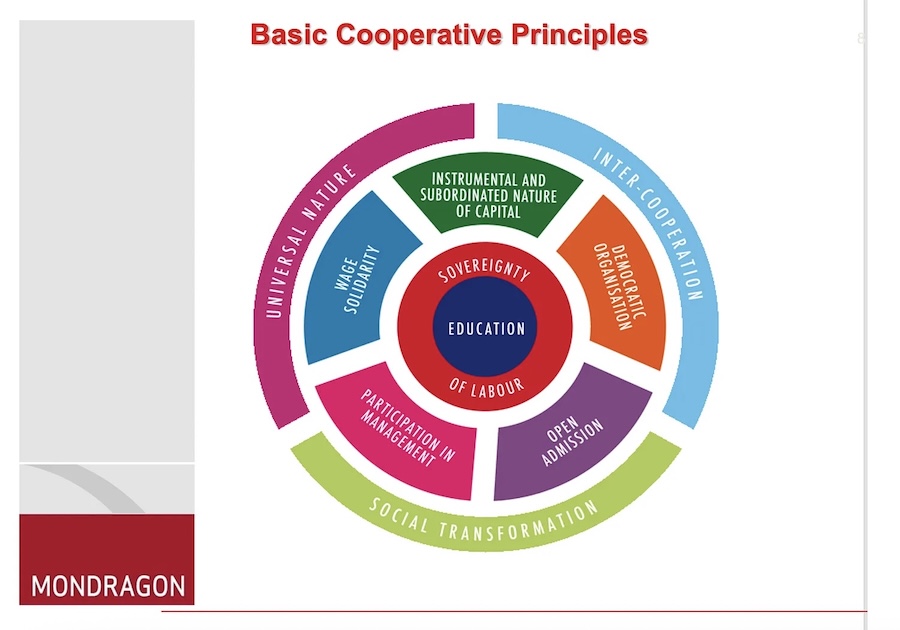
Yet all of that innovation has come without any need for a few individuals to receive exhorbitant compensation. Among the 10 core cooperative principles, wage solidarity is a crucial one that we could all learn from. Recognizing the different levels of skills and responsibilities for various jobs, but still wanting to avoid excessive income disparities, the Mondragon cooperatives initially established a 1:3 ratio between the lowest and highest paid workers. In the 1990’s that ratio was adjusted to 1:6, where it still stands today. In other words, top managers and engineers all receive a good salary (technically called an advance on future profits) that allows for very comfortable living, but none receive the kind of stratospheric remuneration that is common among Fortune 500 corporations. And yet they stay (with rare exceptions) and clearly find the rewards of knowing they participate in stimulating activities that are good for all the workers and the broader community to be ample motivation.

(Article continued in right column)

Question related to this article:

How can we develop the institutional framework for a culture of peace?

(Article continued from left column)

Make no mistake, the Mondragon cooperatives are not non-profit social enterprises. They are for-profit businesses. Maintaining profitability is essential to survival of their mission to create and maintain high quality jobs. It’s what they do with their profits and the relationship between workers and capital that are key.

Around 30% of profits are placed in the workers’ individual capital accounts (which are paid out upon retirement); another 60% are re-invested in the company or used to spin off new cooperatives and 10% are contributed to the broader community (schools, culture, sports etc.)

The difference to business as usual in capitalist societies in a nutshell: In traditional corporations, power rests with capital (top shareholders and executives) while workers are used as tools (and often discarded). In the Mondragon cooperatives, power rests with the workers, and capital is used as a tool.

Each Mondragon cooperative holds an annual general assembly where all workers to vote on key decisions like budgets and strategic plans. Because some of the companies are quite large with several hundred or over a thousand workers, general oversight and day to day decisions are handled by a governing council of elected worker representatives, which also appoints and supervises management who are tasked with implementing overarching goals. The governing councils serve the interests of workers as co-owners to keep the business financially healthy and sustainable.

Each cooperative also has an elected social council that serves the interests of workers as workers, addressing issues of working conditions, workplace safety and conflict resolution. Personnel departments are staffed with psychologists and sociologists, not lawyers. Conflicts are addressed in with a problem solving, non-adversarial approach focusing on dialog.

A key feature of the Mondragon cooperatives is the concept of intercooperation, which is key to the resilience and ongoing vitality of the whole network. While each cooperative is autonomous in its governance and functioning, they can choose to participate in and contribute to the larger umbrella of the Mondragon cooperative corporation. When companies don’t have to focus on maximizing profits for share-holders and top executives, they can afford to put some funds into the supporting pillars of intercooperation.

One pillar is Lagun Aro, which provides social services to cooperative members, including health, pension and unemployment benefits to supplement Spanish government benefits. Cooperatives can communally source raw materials and energy under more favorable conditions than if they did so individually. They offer diverse and often complementary products and services, always avoiding direct competition with each other. And when times are tough and a cooperative has to reduce the workforce, every effort is made to place workers in other cooperatives. During severe economic downturns, workers throughout the network may agree to a temporary small cut in pay, take a somewhat early retirement or go on 1-2 years receiving unemployment benefits while re-training. The ultimate goal is always to maintain and grow jobs while avoiding lay-offs.

Big challenges remain in today’s ever changing and uncertain world. The overall number of worker-members of the Mondragon cooperatives has gone down somewhat in the past 16 years due to a number of factors, including increased automation and AI (although new avenues for job creation in the automation sector are constantly being pursued), reduced hiring of new workers as others retire, and the decision by a few cooperatives to leave the Mondragon cooperative corporation and operate independently.

The Mondragon network of cooperatives, while sizable, is but one example among many smaller worker owned cooperative businesses that exist and thrive in the Basque region, all over Spain, and in many countries throughout the world.

It’s noteworthy that the Mondragon cooperatives got their start during the fascist Franco dictatorship, likely staying under the radar of the regime by being seen as merely another Catholic church activity. Otherwise, if scrutinized, Franco would surely have outlawed them for being communist.

Even uber-capitalist, individualistic US with its pockets of grinding poverty and immense wealth disparities–where dreams of rags to riches are exceedingly rarely realized–is home to many worker cooperatives and support organizations like the US Federation of Worker Cooperatives and Seed Commons that persist valiantly in promoting workplace democracy and wage solidarity.

Cooperatives can also thrive in socialist or communist settings. A decade ago, following much discussion among the population, Cuba instituted a new economic law that among other things offers support to workers who wish to convert certain state-owned enterprises into worker cooperatives. It’s been slow going, hampered by the crippling economic embargo the US has inflicted, but is seen as a step for worker empowerment and energizing the economy.

Worker cooperatives clearly offer a model that transcends both capitalist and socialist ideologies while embodying hands-on democracy in daily life. As long as cooperatives remain the exception to the rule, one wonders how we can nurture truly democratic processes in our political life, when experiencing meaningful participatory decision-making at work is so rare. If the social, economic and organizational model of worker-owned cooperatives in an integrated ecosystem of voluntary intercooperation were more widely embraced, the human family could experience much greater vibrancy, harmony and peace.

Seven years ago I penned these thoughts on the future of work. What would work look like in your ideal world?

– – – – – –

If you wish to make a comment on this article, you may write to coordinator@cpnn-world.org with the title “Comment on (name of article)” and we will put your comment on line. Because of the flood of spam, we have discontinued the direct application of comments.
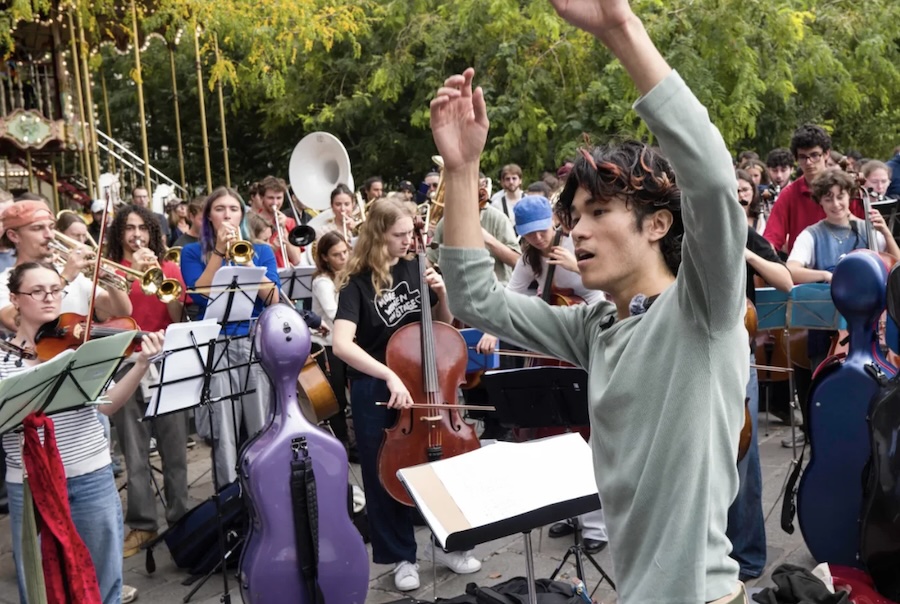
“Overturning the system with its own weapons”: how the *Orchestre du Nouveau Monde* (New World Orchestra) became one of the faces of social movements

… EDUCATION FOR PEACE …

An article from BFM TV

Founded five years ago, this association of young musicians campaigns for social and climate justice. In this same spirit, the *Orchestre du Nouveau Monde* supports the high school student movement and is participating in the strike on November 5.


Étienne Jarrier, conductor of the *Orchestre du Nouveau Monde*, leads the hundred or so musicians gathered at the Place de l’Hôtel-de-Ville in Paris, France, on October 13, 2026. Midday, the *Orchestre du Nouveau Monde* performed at the Place de l’Hôtel-de-Ville in solidarity with the high school student movement. – Eric Broncard / Hans Lucas / Hans Lucas via AFP

(Article continued in right column)

(Click here for the French version of this article)


Question related to this article:

What place does music have in the peace movement?

(Article continued from left column)

October 17, Place de la République, Paris. The *Orchestre du Nouveau Monde* set up there a good two hours before the demonstration against the high cost of living and austerity began. Bringing classical music into social struggles and politicizing it—this is the mantra of these young musicians, whose average age is around 24, who turned out in force to support the social movement.

Several pieces were performed that day. The “soundtrack of the revolution” included music from “Hunger Games”, “Star Wars” ou encore “Avengers”., among others. Surrounding the musicians were enthusiastic protesters—some there to listen, others to participate—following the cues of the conductor, Étienne Jarrier, who also serves as the public face of the association.

Like other protesters present that day, the “Orchestre du Nouveau Monde” (New World Orchestra) was targeted with tear gas. With reddened eyes and tears welling up, they valiantly continued their performance—until, eventually, the tear gas proved too much. The image made headlines around the world.

– – – – – –

If you wish to make a comment on this article, you may write to coordinator@cpnn-world.org with the title “Comment on (name of article)” and we will put your comment on line. Because of the flood of spam, we have discontinued the direct application of comments.

How the “Hunger Games” saga became a symbol of revolt in France

. . DEMOCRATIC PARTICIPATION . .

An article from France Info

From Paris to Marseille, orchestras play the film’s epic song before protesters who raise three fingers in the air as a rallying sign—symbols that have become universal for uniting struggles against authoritarianism.

Video of the rally in Paris
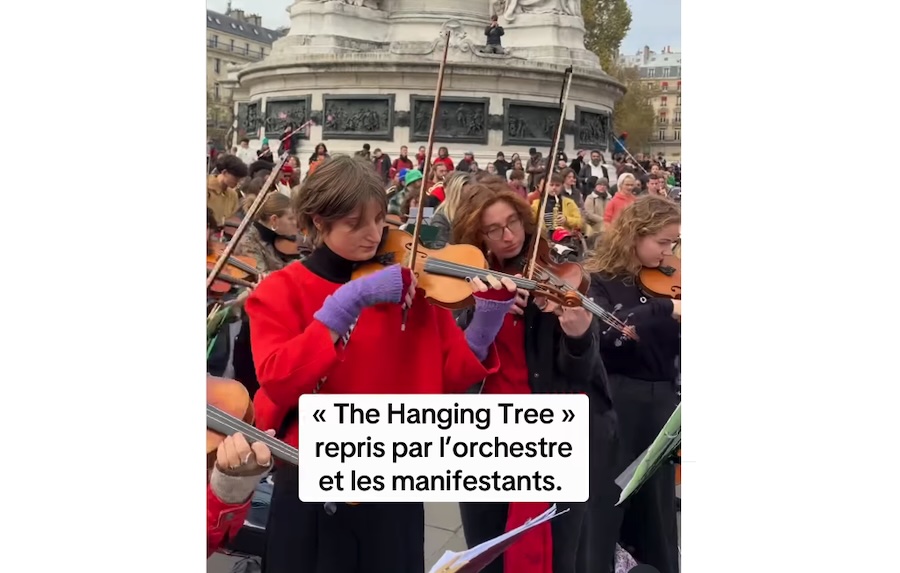
The song is frequently chosen to accompany social media footage of the crowds of high school students who have been demonstrating for several weeks. “The Hanging Tree” is also played and sung during these protests; it has been performed by the “Orchestre du Nouveau Monde” at the Place de la République in Paris, as well as by other orchestras—such as in Marseille on Thursday, November 5 —during the major day of mobilization against the high cost of living.

Surrounding the musicians, protesters hold up three fingers—the index, middle, and ring fingers. Both this music and this gesture are symbols drawn from the *Hunger Games* saga, a new installment of which is set to be released in theaters on November 18th. Originally a literary series by Suzanne Collins, first published in 2008, it went on to achieve immense international success.

To understand why protesters draw references from it, one must delve into the dystopian world of *The Hunger Games*. Suzanne Collins depicts an imaginary, post-apocalyptic society built upon the ruins of North America. It is ruled by President Snow, who maintains the Capitol’s power through fear and the repression of the workers living in the 12 districts that make up Panem. Each year, he organizes a series of brutally cruel televised games in which 24 teenagers—two selected from each district, one boy and one girl—are forced to kill one another until only one survivor remains. A young woman named Katniss, played by Jennifer Lawrence, becomes the symbol of the rebellion by convincing the youths to unite—rather than kill each other—in order to overthrow the regime.

(article continued in right column)

Question related to this article:
 
Is there a renewed movement of solidarity by the new generation?

(article continued from left column)

 
The gesture of solidarity from the film—three fingers raised—is being widely adopted at protests. A phrase also appears on placards: “If we burn, you burn with us”—a sentiment now directed at the French government.

The dystopian story, which explores themes such as class struggle, repression, media manipulation, and rebellion, has crossed over into reality through these symbols displayed on the streets. “The fact that this song resonates with people—the way it fits into these stories—and that people can take it and imbue it with even greater meaning, is very moving. But it’s also truly surreal,” director Francis Lawrence recently admitted, reflecting on this appropriation in France.

“The Hunger Games” also made an appearance during the midterms.

Fiction recently bled into American reality as well. Amidst the coverage of the midterm election results on Tuesday, November 3, a promotional spot for the upcoming sixth installment of the saga aired on both CNN and Fox News. It was interpreted by some as an implicit call from the studios to vote for the Democratic side. In the clip, the President of Panem begins a propaganda speech before the image is scrambled, interrupted by a call to rebellion: “Break the machine.” A few hours earlier, the series’ iconic star, Jennifer Lawrence, had posted a photo of herself on social media with three fingers raised, urging people to go out and vote.

This gesture, which has become a universal call to rebellion against authoritarianism, has been adopted in numerous protests around the world—from the Umbrella Movement in Hong Kong to the Black Lives Matter movement. As early as 2014, students in Thailand raised three fingers to protest against a military coup, as did protesters in Myanmar in 2021. In both of these countries, the gesture is considered illegal and can even lead to imprisonment.

(Click here for the original French version of this article.)

– – – – – –

If you wish to make a comment on this article, you may write to coordinator@cpnn-world.org with the title “Comment on (name of article)” and we will put your comment on line. Because of the flood of spam, we have discontinued the direct application of comments.

View from the UK: The international anti-war movement is growing.

. TOLERANCE & SOLIDARITY .

Latest newsletter of the Stop the War Coalition,

The international anti-war movement is growing. People across the world are beginning to connect their crumbling standards of living with wars and militarism and are increasingly joining the dots between oppression at home and war overseas.

War and its domestic impact cost Trump the midterm elections. Palestine was also on the ballot, hence Trump’s announcement over military aid to Israel moments before the polls opened.

The mass protests across Europe, whether initially sparked by dilapidated schools or a housing crisis, are drawing links between rearmament and austerity. Anti-war placards and Palestine flags are everywhere. The international youth and student day of action called at the London anti-war conference in June is looking to be huge across the continent.

Question related to this article:
 
Youth initiatives for a culture of peace, How can we ensure they get the attention and funding they deserve?

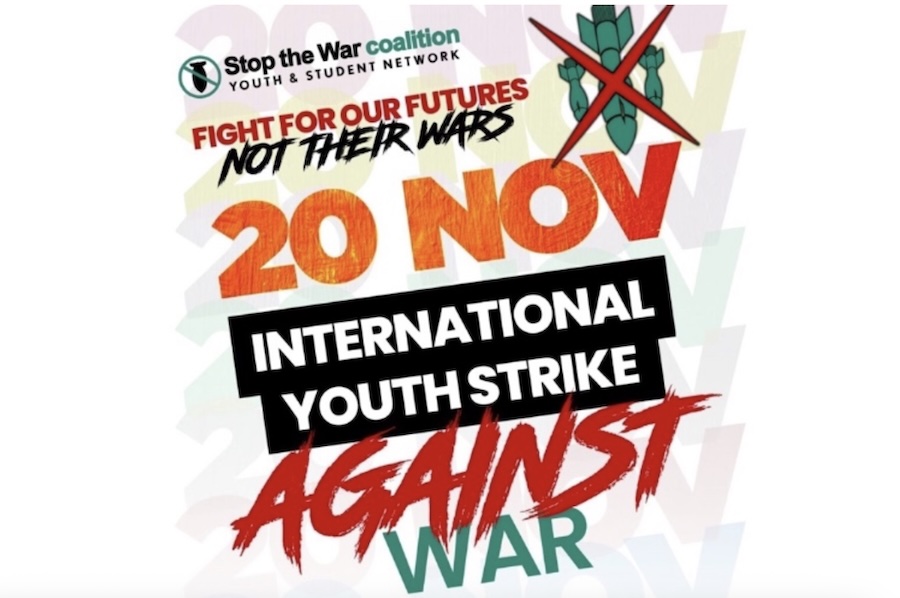
International Youth Strike against War

On November 20, thousands of students across the UK and internationally will walk out of their schools, colleges and universities against the drive to war, the militarisation of education and the austerity that comes with it.

Here the education unions are supporting the student action. The UCU has called a day of action to coincide with the students and the NEU is backing the protests.

From Brighton to Edinburgh students are saying no to war and militarism. In London there will be a rally in Trafalgar Square where students from across the capital will come together at 1pm following uni and college walk-outs.

International Day of Action against War

On the following day, Saturday, November 21, there will be protests in towns and cities across the country. Similar protests are expected to take place around Europe.

Andy Burnham may have called for de-escalation in the Middle East but he is still sending fighter jets to Saudi Arabia to aid in the assault on Yemen and giving his full support to the war in Ukraine.

In London there will be a protest outside Downing Street at midday. A peace conference is being held in Preston. In Manchester, StW is supporting the Lucas Plan 50 years anniversary conference. Other protests and actions are taking place in Liverpool, Brighton, Bristol, Cardiff, Newcastle, Birmingham, Glasgow.

– – – – – –

If you wish to make a comment on this article, you may write to coordinator@cpnn-world.org with the title “Comment on United Nations Alliance of Civilizations” and we will put your comment on line. Because of the flood of spam, we have discontinued the direct application of comments.

How Social Media “Pumped Up” the Protests in Serbia

. DEMOCRATIC PARTICIPATION .

An article by Igor Išpanović in the website of Heinrich Böll Stiftung published
28 October 2025

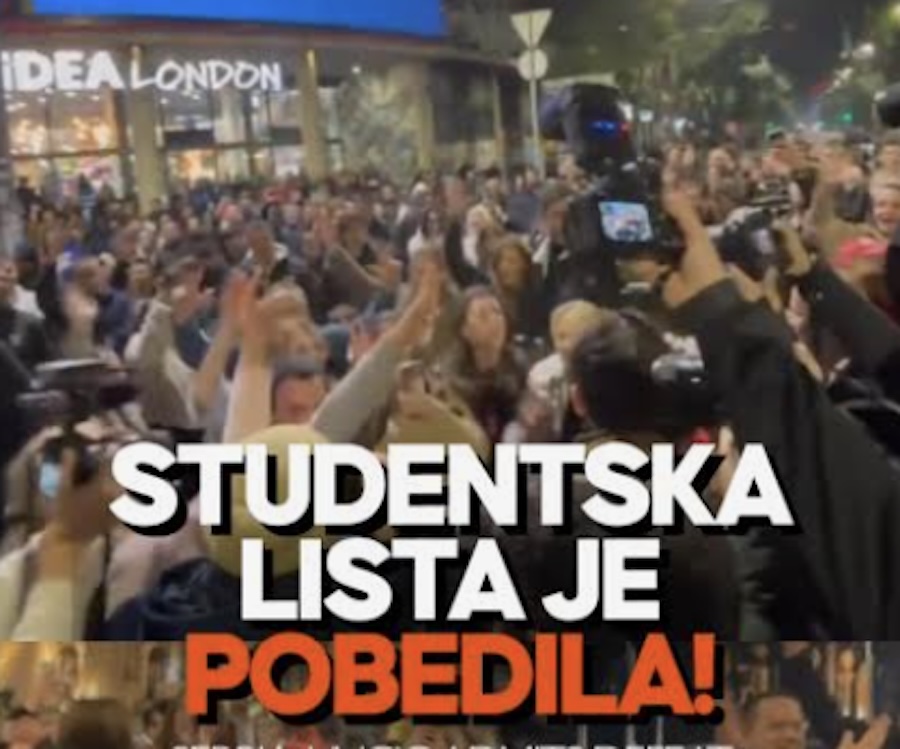
(Editor’s note: The recent victory of the student list in the presidential election of Serbia was an important surprise and inspired us to seek out this article about how their movement was developed)

The wave of anti-corruption protests that began at the end of 2024 is unprecedented in its scope in Serbia’s democratic history. The ways students used popular digital platforms deserve credit for this.


A video of the student list electoral victory published on facebook.

Only a few months after people in Serbia took to the streets to protest government corruption, fears emerged that the protests would fizzle out. Cold weather and the approaching winter holiday period did not inspire hope that the momentum that students had previously contributed to by blocking major university centers in the country could be maintained. However, it was precisely in that uncertain moment that the expression “pump it up!” started to be heard more and more loudly among those present at the protests. It would soon become one of the rallying cries of the demonstrations. Reddit users played a key role in spreading this protest slang, which signals that the protestors’ efforts must be redoubled and that giving up is not an option.

According to comments on this online forum, the phrase was first used by user Pharaoh01414, reacting to events in the country during the holiday season, urging people, in all caps lock, to “go harder” and “just pump” until all the demands are fulfilled. The expression went viral, and the frenzied spread of this form of digital chanting was aided by a video clip from several years ago, which users dug up, featuring popular turbo-folk singer Darko Lazić shouting this very slogan at a wedding. On YouTube alone, that video currently has nearly one and a half million views.

Virality is becoming an increasingly important resource for social movements and activists. It allows for an incredibly rapid spread of information, which is why some scientists compare this phenomenon to contagion. Popular digital platforms are fertile ground for this, especially because they encourage or “reward” with visibility content that features emotions, from laughter to disgust and anger. Finally, amenable to so many different interpretations and adaptations, viral material becomes an unavoidable part of online discussions and spills over into the offline world.

The students have skillfully used the infrastructure of digital platforms and created a network that enabled them to instantly circulate and highlight the information they wanted. “Pump it up!” thus immediately appeared in many humorous posts, video montages, and memes. At the same time, it became the main chant and rallying cry at protests, inspired banners and performances (such as when citizens of Kragujevac used their bodies to form the shape of a pump to support the students who were cycling to Strasbourg), and entered other aspects of everyday life. This (un)seriousness served as living proof and a constant reminder that protest energy must not and will not subside.

Digital Natives Against Protest Fatigue

Demonstrations have become part of everyday life for Serbia’s residents, especially since Aleksandar Vučić, leader of the Serbian Progressive Party, who had been serving as Prime Minister, took over as President in 2017. From protests “Against Dictatorship,” through revolts against the planned Rio Tinto lithium mining project, to “Serbia Against Violence” and outpourings of collective grief and anger over two mass shootings, citizens have had countless reasons to take to the streets in recent years. However, in the previous decade, few such rebellions have resulted in the desired political outcome. This has led to disappointment and exhaustion among participants. Such accumulated negative feelings would spill over into the next protest cycle, causing the initial enthusiasm to fade faster and faster.

Scientists have called this phenomenon protest fatigue, and it manifests both physically and psychologically. It is not only a consequence of long-term emotional commitment to the goals of a certain movement and the physical effort exerted to achieve them, but is also caused by activists’ and protestors’ experiences of being threatened, subjected to police brutality and arrests, especially in undemocratic regimes. However, during the current wave of protests, students stood out as leaders of an all-encompassing social discontent. Many of them belong to “Generation Z,” and for most of them, this is their first serious political engagement. Their more direct involvement in protests, as well as the use of social media for broader mobilization, breathed essential energy into maintaining protest momentum in the fight against the authoritarian government of the Serbian Progressive Party.

Shortly after the students blocked their faculties, more than fifty Instagram accounts were created for various faculties. Moreover, they established a central account @studenti_u_blokadi (students_in_blockade) for communication and coordination of joint activities on this platform. According to research conducted by Radio Free Europe, this account has more followers than President Vučić, the Serbian Progressive Party, and the Serbian Socialist Party combined.

(Article continued in the right column)

Questions related to this article:

Is there a renewed movement of solidarity by the new generation?

(Article continued from the left column)

These numbers are not surprising given the differences in media use in Serbia between people who favor the parties in power versus those closer to opposition actors. According to Reuters’ Digital News Report from 2022, TV is the main source of news for people with who favor the ruling coalition, while those who favor opposition parties, it is social media and online portals. Regardless, Serbia’s citizens are increasingly migrating to digital platforms in search of information, and in this regard, they have held the leading spot in Europe for several years.

On one hand, the blockading students’ Instagram profiles primarily serve as alternative media outlets, featuring news about events related to the blockades, calls for protests, appeals for donations. On the other hand, on X or TikTok, the students take a much more casual approach, posting humorous content, snippets from everyday life during blockades, and emotionally colored viewpoints. All of these accounts are managed by so-called working groups for media or public relations. They are registered for each faculty and function as smaller, relatively autonomous units within the broader organizational infrastructure of the faculty. Their task is to come up with content for the respective platforms, write statements, communicate with citizens, and mediate between journalists and students.

Protest “Hype,” or How Students Gave Citizens the ‘Green Light’

If each of the fifty identified Instagram accounts of the students’ blockade has a counterpart on just one more platform, such as X or TikTok, this would mean their online network comprises over a hundred accounts. Such a massive digital presence enables them to instantly make information or an event go viral, making it the first post citizens see when they open their applications. They achieve this through additional networking via various options offered by these platforms — sharing Instagram stories or tweets, as well as posting joint content, which is crucial for smaller faculties that are not sufficiently visible on their own.

This visibility is especially important when it comes to calls for protests and street actions, where the goal of the posts is not only to inform but also to mobilize citizens to take to the streets. In these cases, the students have particularly harnessed the logic of digital platforms to their advantage by gradually building “hype,” creating an atmosphere of excitement and anticipation before each major protest. Each of them having been given a memorable and catchy name, they become the main topic of conversation, weeks in advance.

Among these campaigns, the one preceding the “See You on Vidovdan” protest on June 28 particularly stands out. The high level of anticipation was also in part due to the fact that it was the first major protest announced after a months-long pause following the largest protest gathering in Serbia’s democratic history, that had taken place in mid-March. The announcement of this protest was accompanied by a short video of a traffic collapse featuring footage of a traffic light changing color from red to green. The motif of the ‘green light’ then frequently appeared in posts from various students’ blockade accounts, as did the cryptic message “you will have the green light.” The students did not offer an explanation of this ‘green light’ at the time, which completely captured the citizens’ attention, and the topic kept coming up in their conversations and speculations.

Then, a few days before the protest, the students posted two demands to the authorities as an ultimatum to be fulfilled by 9 p.m. on the day of the protest. More than one hundred thousand people gathered at that protest, and the mystery of the ‘green light’ was solved just before it ended. That was when the students’ social media accounts began counting down the time that remained until the deadline they had set for the authorities — the first post was red, the second yellow, and the third green. This was also a signal to Serbia’s residents to engage in civil disobedience in response to the authorities’ failure to fulfill the demands, and that call resulted in a transition to a new phase of struggle and massive traffic blockades that followed in the coming days and months.

On the Reach of Virality, and Other Concluding Considerations

With the help of popular digital platforms and new technologies, the students have creatively and thoughtfully created an atmosphere of long-term protest readiness. However, on social media, attention is a precious resource, and it is very easy to fall into the trap of being overwhelmed and oversaturated with information. This is an especially thin line when it comes to viral content that often activates intense emotional responses with, in the context of the protests, a constant sense of urgency and the importance of every event. In this sense, the point at which the momentum of the protests was most threatened was precisely after June 28. That is when other social groups started to mobilize, gathered primarily around local assemblies. Suddenly, calls for action began to come more frequently and from multiple sides, and citizens were put in a position to weigh which struggle was more important to prevent burnout in the long run. Therefore, it is essential that this additional decentralization of protests be supported by better coordination between different actors to prevent the fragmentation of engagement and dwindling numbers on the streets.

Moreover, virality can also work in the opposite direction. One consequence of prolonged struggle is the adaptation of undemocratic regimes to the tactics of social movements, especially on digital platforms. Fake news and disinformation are the perfect viral content whose circulation aims to, among other things, cast doubt on facts and stifle space for discussion. Furthermore, the example of the phrase “ćaci” shows that the authorities have also become skilled in using social media logic. This word, which appeared at roughly the same time as “pump it up!”, refers to ignorant and corrupt people who support the current regime for personal gain. However, high-ranking officials and party members soon began identifying themselves as ‘ćaci,’ and President Aleksandar Vučić marked Students’ Day on April 4 by posting on Instagram a photo of himself in a T-shirt with the inscription “I’m a ćaci too.” Then, before the Vidovdan protest, a banner appeared saying “Better ćaci than Nazi” on the fenced section in front of the National Assembly. The latest in a series of viral iterations is the song “Better to Be a Ćaci” created using artificial intelligence. Although it has only about one hundred fifty thousand views on YouTube, it has become a popular musical background on TikTok and Instagram.

Finally, research is divided on the form of engagement encouraged by using digital platforms. On one hand, some speak of so-called “clicktivism,” the idea that liking, commenting, and sharing posts rarely translates into more serious social action. On the other hand, one of the most comprehensive studies on social media and engagement claims that access to these online forums affects a higher degree of political participation. One thing is certain — there are more and more protests worldwide, especially those originating from digital space. The next step is to use protest momentum in the social media era to create stronger and more consolidated movements fighting for social change, and students in Serbia have laid excellent foundations for this.

– – – – – –

If you wish to make a comment on this article, you may write to coordinator@cpnn-world.org with the title “Comment on (name of article)” and we will put your comment on line. Because of the flood of spam, we have discontinued the direct application of comments.

Petition: We Demand the Return of UNAC’s YouTube Channel!!

. . HUMAN RIGHTS . .

A petition from the United National Antiwar Coalition

We, the undersigned, protest YouTube’s undemocratic action of taking down the channel and content of the United National Antiwar Coalition (UNAC).  The webinars and interviews that UNAC posted are part of the rich history of the peace movement since UNAC was founded in 2010. 

UNAC is a national antiwar coalition that is recognized for its work by organizations and activists across the United States and throughout the world. This is not only a breach of the United National Antiwar Coalition’s democratic rights but those of all who want to view our content and all who subscribe to the channel.

Sign here

We, the undersigned, protest YouTube’s undemocratic action of taking down the channel and content of the United National Antiwar Coalition (UNAC).  The webinars and interviews that UNAC posted are part of the rich history of the peace movement since UNAC was founded in 2010.  UNAC is a national antiwar coalition that is recognized for its work by organizations and activists across the United States and throughout the world. This is not only a breach of the United National Antiwar Coalition’s democratic rights but those of all who want to view our content and all who subscribe to the channel.

YouTube claims  that our channel was taken down because it supports  “violent and criminal organizations”, but you did not tell us what content on our site does this. Instead, you took down the entire site.  We do not support violent criminal organizations.   Rather we believe you have taken down our channel because we oppose the U.S. and Israeli wars of aggression and in particular Israel’s genocide against the Palestinian people.  It should be noted that YouTube has not taken down Israel’s channels that show extreme violence against Palestinians and other west Asian peoples.

We demand the United National Antiwar Coalition’s YouTube content be returned along with the emails of all subscribers.  The UNAC channel reflects years of work and a perspective that we believe is shared by most people in the country, especially our perspective on the Israeli genocide.

We call for freedom of speech and democratic rights!

Return UNAC’s YouTube content!

(continued in right column)

Question related to this article:

Is Internet freedom a basic human right?

(continued from left column)

Initial Endorsers:

Americas Without Sanctions,
Amnesty International,
Anti War Action Network, 
Ban Killer Drones,
Black Alliance for Peace,
Black Agenda Report,
Canada-Wide Peace and Justice Network,
Chicago Anti-War Coalition,
CodePink,
Columbus Institute for Contemporary Journalism,
Finnish Peace Committee, 
Freedom Road Socialist Organization,
Global Network Against Weapons & Nuclear Power in Space,
Greek IPPNW (International Physicians for Prevention of Nuclear War),
GWUAN (Global Women United Against NATO),
Hands off UHURU Hands Off Africa Fightback Coalition,
International Action Center (IAC),
International League of Peoples Struggles,
International Peace Bureau,
Popular Resistance,
Resist U.S, Led War,
Scottish CND,
Show Up America,
Socialist Action,
Sovereignty Support Movement,
Struggle La Lucha,
U.S. Peace Council,
Virginia Defenders for Freedom Justice and Equality,
VOW (Voice of Women for Peace Canada),
Women WILPF (Women’s International League for Peace and Freedom),
Women Against Military Madness,
Women for Peace Finland,
Women in Black, 
Workers World Party, 

Some more recent organizational additions:

Culture of Peace News Network
Jewish Voice for Peace
Veterans for Peace
Poor People’s Campaign
CISPES
Mass Peace Action
Jobs with Justice
Americans for Democratic Action
Regina Peace Council
Democratic Socialists of America

– – – – – –

If you wish to make a comment on this article, you may write to coordinator@cpnn-world.org with the title “Comment on (name of article)” and we will put your comment on line. Because of the flood of spam, we have discontinued the direct application of comments.

France: The Struggle for Freedom of Assembly

. HUMAN RIGHTS .

A press release from the CGT (Confédération générale du travail) (translation by CPNN)

Emmanuel Macron stated, “it is not recommended to demonstrate”—800,000 people responded!

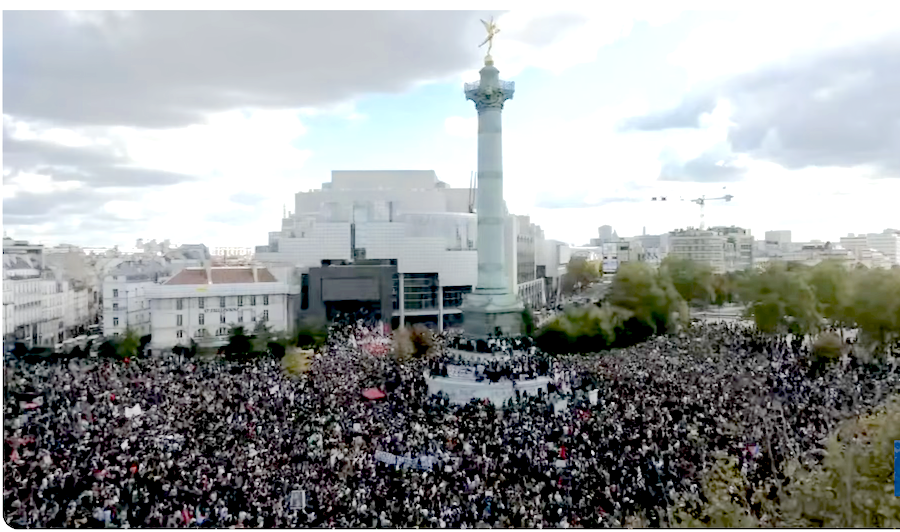
On October 24, according to our count as of 5:30 PM, nearly 800,000 young people, workers, and retirees mobilized against the high cost of living and to demand dignified conditions for study.

Yet, Emmanuel Macron had taken the liberty of declaring that “what is recommended is not to demonstrate,” and—along with his government—orchestrated an unprecedented repressive apparatus.


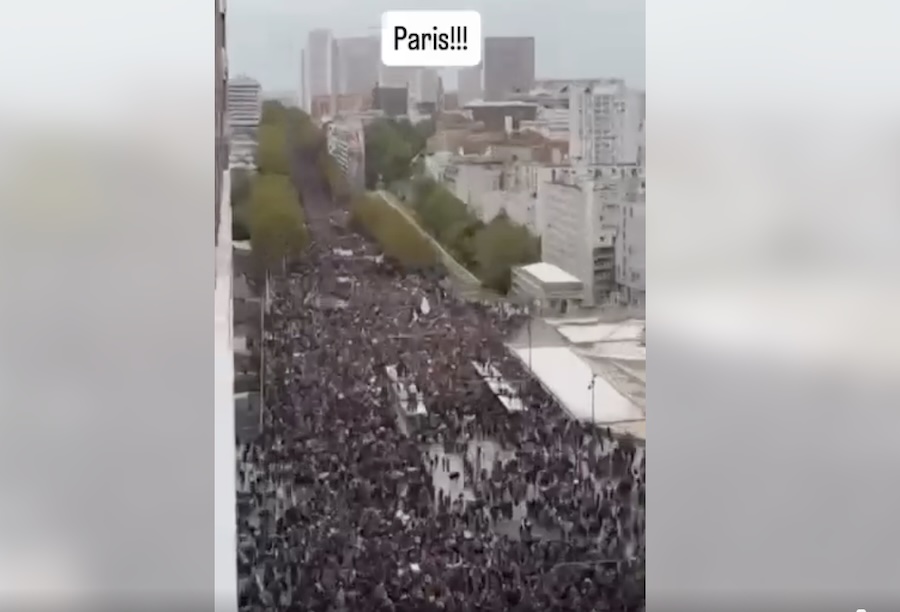
Click on the image to see a video of the Paris demonstration take from facebook

Dozens of demonstrations were banned, including in locations where the CGT and various trade union organizations had already submitted planned routes. In other cities, such as Paris, routes that had been approved were altered repeatedly—often at the very last minute—making it impossible to organize the demonstrations effectively.

Once again, protesters were detained, tear-gassed, obstructed, and taken into police custody. Despite this strategy of chaos, the government’s numerous provocations, and rhetoric painting protesters as thugs, the mobilizations remained peaceful, festive, and determined.

(Click here for the original article in French.)

(Article continued in the right column)

Questions related to this article:

How can freedom of assembly be defended?

(Article continued from the left column)

Today’s message is clear: no amount of repression or bans on demonstrations will stop this mobilization. The anger is immense, and the determination even greater. The government and the employers must urgently address social demands.

The CGT once again commends the exemplary commitment of its activists—particularly those in its departmental unions—who worked to plan routes, ensure the safety of the marches, and uphold the right to protest. While Emmanuel Macron may have decided that trade unions belong to the past, current events confirm just how essential it is for workers to join a union. It is precisely because the CGT and other trade union organizations exist that the government was forced to back down and respect the freedom to demonstrate.

Now, the strike must take the lead. Let us not give the employers a moment’s peace! They are the ones responsible for the high cost of living and austerity! Together with the inter-union coalition, the CGT is calling for a major day of strikes and demonstrations on November 5th. The CGT urges all workers to hold general assemblies in their workplaces to define their demands and organize the strike.

In Orléans, nearly 30,000 people took to the streets to remind everyone that the *Rassemblement National* (National Rally) will never be a party like any other. It poses a mortal danger to our democracy, our Republic, and all workers.

Far-right ideologies, racism, and antisemitism kill. Yesterday, a racist attack brought sorrow to our country. The CGT extends its deepest condolences and solidarity to the victims, their families, and the residents of Trappes and La Verrière. The sense of shock and grief is profound. It only strengthens our determination to fight against the far right and its ideas.

The CGT calls for the social mobilization to continue growing until our demands are met.

(Editor’s note: This continues the wave of demonstrations sweeping Europe, as described last week in CPNN.

– – – – – –

If you wish to make a comment on this article, you may write to coordinator@cpnn-world.org with the title “Comment on (name of article)” and we will put your comment on line. Because of the flood of spam, we have discontinued the direct application of comments.

Education protests in Europe

. EDUCATION FOR PEACE .

A press survey by CPNN

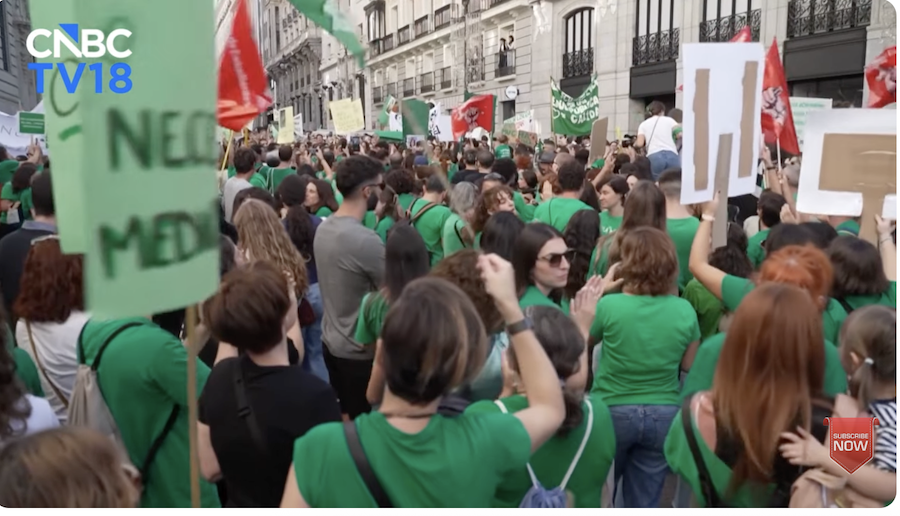
Students and teachers have been joined by trade unions and other organizations to demand support for education in Western Europe, beginning in France and spreading to other neighboring countries. Here are photos of their demonstrations.


Belgium


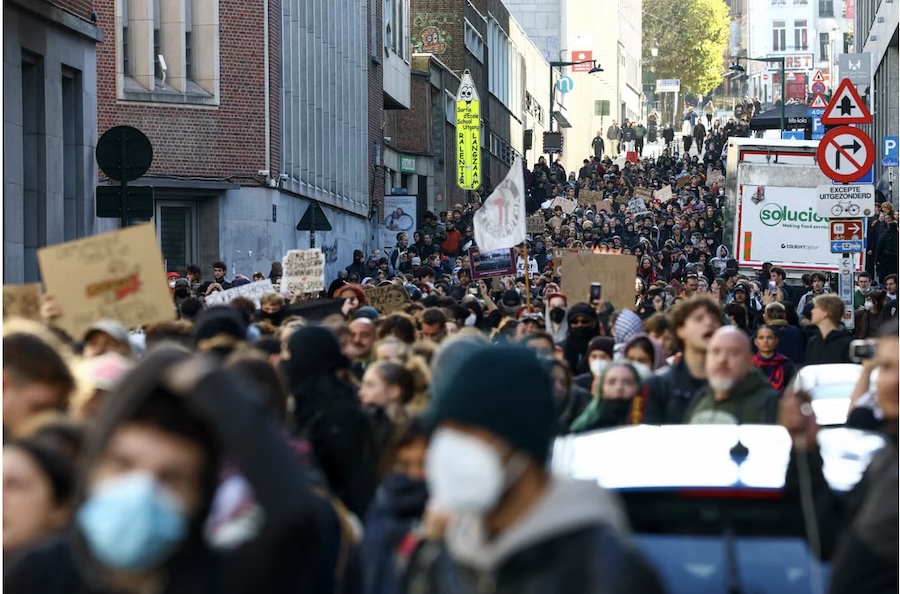
Demonstrators take part in a students’ protest in Brussels, Belgium, on October 17, 2026. YVES HERMAN / REUTERS High school students have staged protests in recent weeks against higher university registration fees, but Interior Minister Bernard Quintin blamed the troubles on “organized violence.”

France, Marseilles


October 8, 2026. Massive demonstration by high school students in the streets of Marseille (France).

France, Nantes


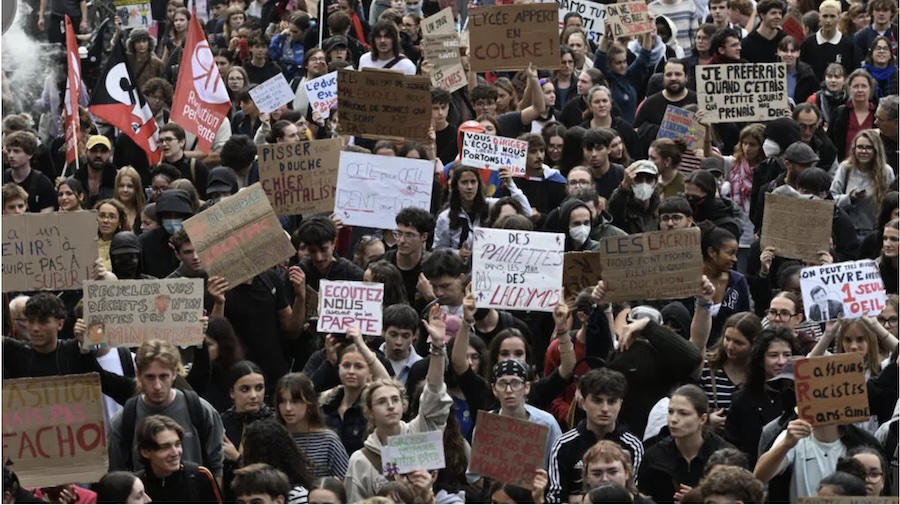
High-school students march in Nantes, western France, amid nationwide protests on October 13, 2026. © Sébastien Salom-Gomis, AFP. French students staged another day of nationwide protests on Tuesday (October 13) over poor school conditions, including teacher shortages and dilapidated buildings, vowing to keep up the pressure ahead of half-term holidays. Around 480,000 protesters joined in on the demonstrations

France, Paris


French Students Rally at Bastille Square in Paris. Demand Education Reforms. Streamed live on 8 Oct 2026. More than 250,000 people took to the streets across France to demand increased funding for schools, as a growing student-led protest movement puts pressure on the government. Police fired tear gas in Paris and other cities after some demonstrations turned confrontational. The protests began with high school students demanding better facilities, more staff, and improved resources but have now grown into a nationwide movement.

France, Rennes


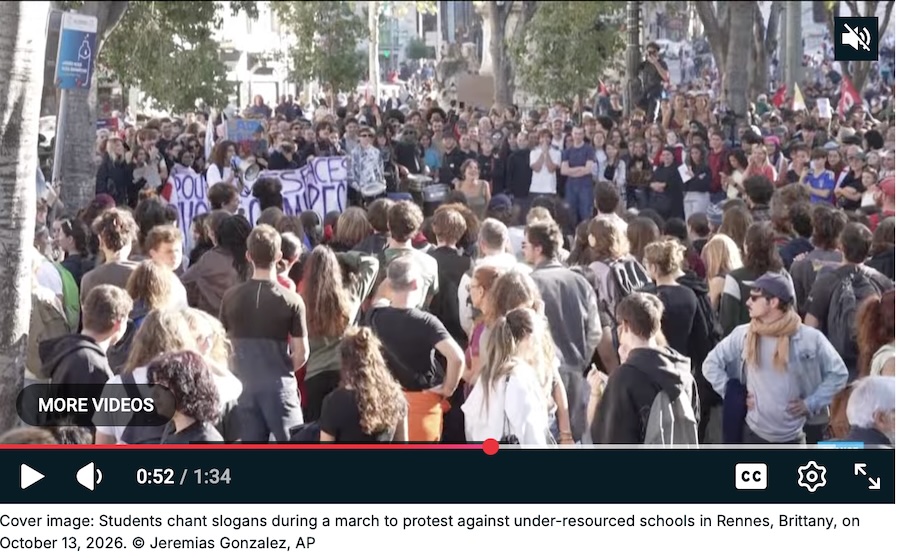
Students chant slogans during a march to protest against under-resourced schools in Rennes, Brittany, on October 13, 2026. © Jeremias Gonzalez, AP. Tens of thousands of people joined rallies across France on Tuesday to support protesting high school students, boosting a movement that poses a major challenge to President Emmanuel Macron as his term in office winds down. Unions helping organise Tuesday’s rallies put the countrywide turnout at 480,000.


(Article continued in right column)
Questions related to this article:

How effective are mass protest marches?

Is there a renewed movement of solidarity by the new generation?

(Article continued from left column)


France, Strasbourg


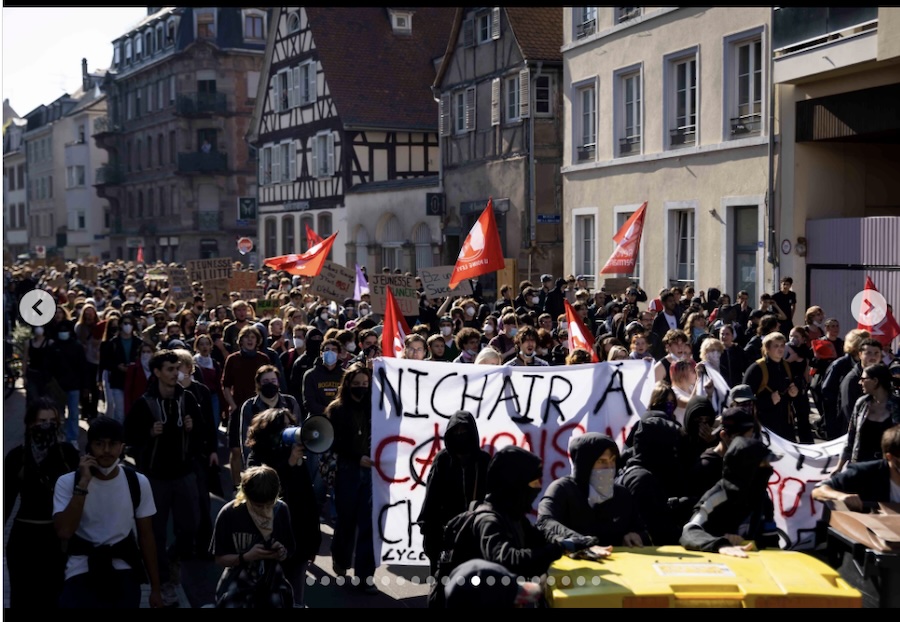
A student demonstration in Strasbourg, eastern France, on October 6, 2026. University students and high school pupils took part in protests in the city amid growing tensions over government policies and education-related measures. The demonstration later escalated into clashes between protesters and police in central Strasbourg.

Germany


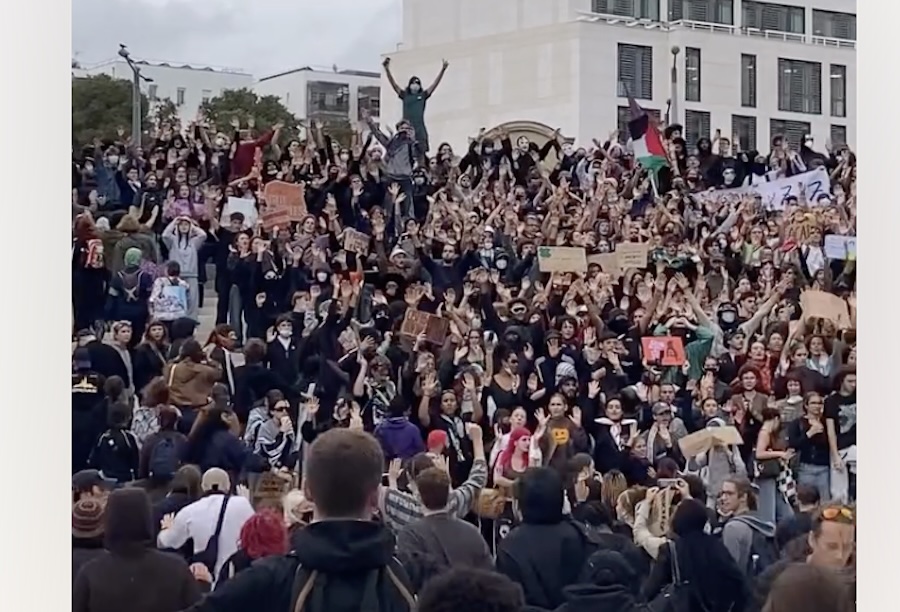
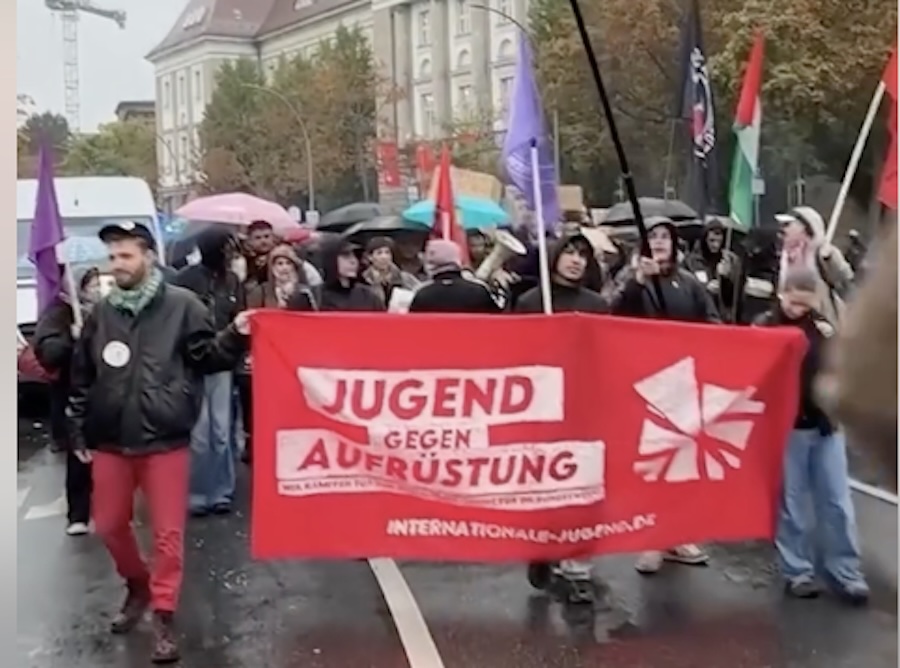
October 18, Around 300 students march through Berlin, Germany, in solidarity with French students demanding better education conditions. Demonstrators also protest education cuts in Germany and compulsory military service, with some chanting in support of Palestine

Italy


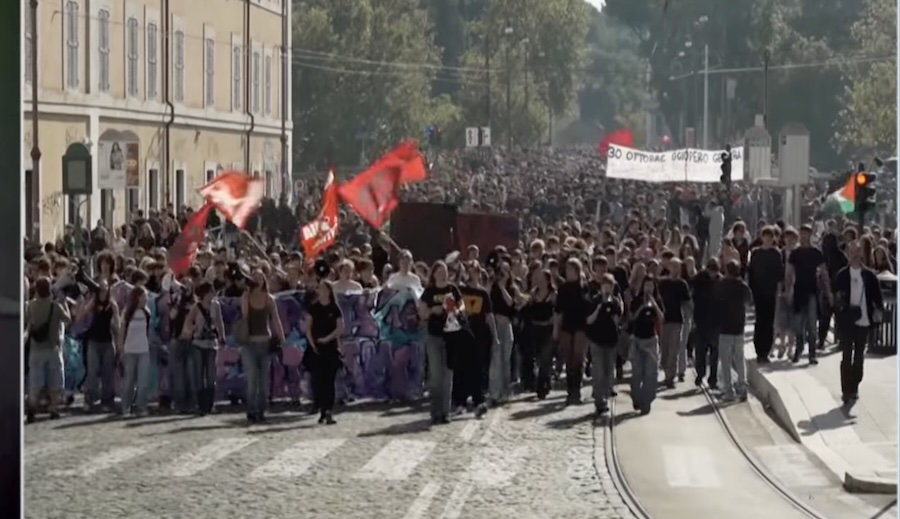
16 Oct 2026. Europe’s student protests reach Italy. Hundreds of students march to the Education Ministry building in Rome. Italian riot police have surrounded the Education Ministry. The unrest is part of the larger wave of student demonstrations erupting across Europe.

Portugal


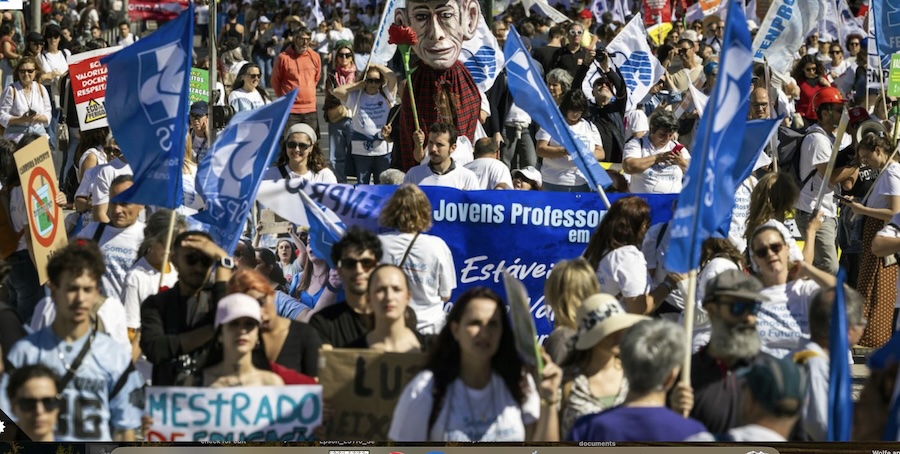
Across Portugal, thousands of teachers, parents, and community members joined a national mobilisation to defend public education and demand urgent action to address the growing teacher shortage. Under the banner of Education International’s Go Public! Fund Education campaign, the National Federation of Teachers FENPROF organised a nationwide caravan that brought the debate directly into schools, towns and cities, reinforcing the call for greater investment in public education and the teaching profession. Travelling more than 2,500 kilometres through all 18 districts of mainland Portugal and the autonomous regions of the Azores and Madeira, the caravan underlined: “We are teachers, we shape the future! Value us — now!”

Spain


Teachers in Spain’s Madrid region have launched an indefinite strike, demanding better pay, fewer teaching hours and improved working conditions. The protests took place in central Madrid on October 14, 2026, as police clashed with student protesters at Complutense University. Teachers are seeking an additional €600 per month, fewer classroom hours and smaller class sizes. Primary school teacher Isabel Sanz said educators in Madrid are among the lowest-paid in Spain despite the region being one of the country’s most expensive places to live. The regional government said 44.6% of Madrid’s 65,000 teachers joined the strike, while the Comisiones Obreras trade union put first-day participation at 70%. Protesters also raised concerns about underfunding at public universities and the expansion of private education.

– – – – – –

If you wish to make a comment on this article, you may write to coordinator@cpnn-world.org with the title “Comment on (name of article)” and we will put your comment on line. Because of the flood of spam, we have discontinued the direct application of comments.

The Rivas International Peace Forum Approves a Roadmap to Fight Escalating Militarism and Defend Peace, Multilateralism, and Peaceful Coexistence

FREE FLOW OF INFORMATION .

An article from the International Peace Bureau

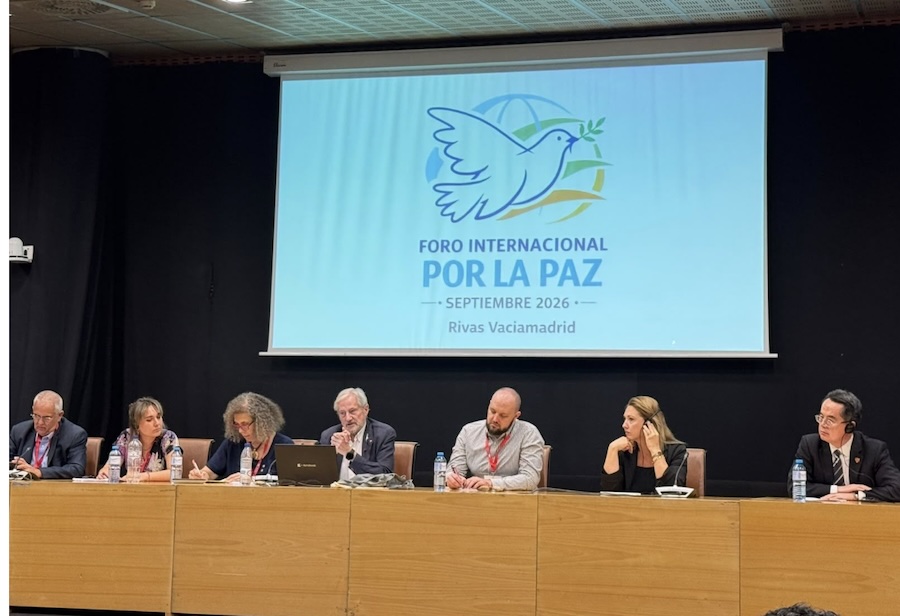
Against an international backdrop marked by growing instability and global rearmament, the International Peace Forum concluded this Friday (September 25), in Rivas-Vaciamadrid. It brought together 63 organizations from 32 countries with the aim of mapping out diplomatic alternatives to what they describe as one of the most dangerous periods since World War II.

Video of Forum on facebook

The forum’s panels centered the debate on the need to transition away from a unipolar international order—sustained by record increases in global military spending, which reached $2.718 trillion in 2024—toward a multilateral framework of peaceful coexistence.

Speakers at the forum denounced the financial priorities of global powers, noting that they continue to divert essential funds that should instead go toward healthcare, housing, and the fight against hunger. Similarly, during the working sessions and five thematic panels held at the gathering, delegations analyzed key conflict hotspots:

° Middle East and North Africa: The forum condemns the crisis in Palestine and Lebanon, as well as the recent aggression against Iran that threatens energy security in the Strait of Hormuz.

° Latin America: It demands the immediate removal of the economic blockade and energy siege imposed by the United States on Cuba, while also rejecting coercive measures and aggression against Venezuela.

° Eastern Europe and Sub-Saharan Africa: The forum urged negotiated solutions to end the war in Ukraine and the dynamics of conflict in Sudan, the Democratic Republic of the Congo, and Western Sahara.

The forum also made an urgent appeal for the signing of an international treaty guaranteeing the prohibition and ecologically safe dismantlement of nuclear arsenals, which currently exceed 12,000 warheads globally. Furthermore, peace was linked to climate justice following the commitments of COP30 in Belém, and special focus was placed on protecting women and migrants affected by wars and human trafficking networks.

Unlike other international gatherings, the Rivas Forum aims not to end merely with a statement of principles and intentions. To ensure the continuity of its work and follow up on agreements, the participating organizations have established a roadmap with commitments to create:

° International Coordination Mechanism: Concrete proposals to formalize a permanent communication and cooperation network will be presented before the end of 2026, operating continuously through 2027.

° New Monitoring Institutions: Approval was granted to propose an International Observatory on Conflict Resolution and Militarism to prepare periodic reports, alongside the structure of a Parliamentary Network connecting lawmakers from Latin America, the Caribbean, and Europe.

° Mobilization Calendar: Endorsing the Stop Rearm Europe campaign and actively joining the days of pacifist mobilization scheduled for November 20 and 21, 2026, was also agreed upon.

Finally, the forum proposed promoting the submission of peace resolutions to the UN, UNESCO, WHO, and IMO, as well as seeking strategic diplomatic alliances with global integration platforms such as BRICS+, CELAC, the African Union, and ASEAN.

Question related to this article:

Where in the world can we find good leadership today?

(article continued from left column)

Political and social organizations and embassies

1- Partido Comunista de España 
2- Izquierda Unida
3- Ayuntamiento de Rivas Vaciamadrid 
4- Partido Comunista de Cuba
5- Partido Comunista de Portugal
6- Partido Comunista de Francia
7- Foro Europeo 
8- Partido Comunista de Uruguay
9- Frente Amplio de Uruguay:
10- PTB
11- Refundación Comunista 
12- Stop Rearm Europe
13- Intal Bélgica / RedFox
14- FPLP
15- Revolución Ciudadana de Ecuador
16- Unión de Juventudes Comunistas de España (UJCE) 
17- Asociación Patrice Lumumba
18- Transform Europe 
19- Foro de São Paulo
20- Celac Social 
21- Partido Comunista Colombiano y Pacto Histórico
22- International Peace Bureau (IPB)
23- Socialistas Democráticos de América (DSA) 
24- Federaciob Democrática Internacional de Mujeres 
25- Moviniento Democratico de Mujeres
26- Pax Christi 
27- Justicia y Paz España 
28- Morena
29- Partido de la Izquierda Europea (PIE) 
30- World Beyond War
31- Alianza Negra por la Paz
32- Al -Haq 
33- Partido Comunista de Chile
35- CCOO
36- UGT
37- Mundubat
38- Unadikum
39- Movimiento Pacifista de Castilla-La Mancha Mujeres de Negro
40- Bloque de Resistencia y Rebeldía Popular de El Salvador, Madrid:
41- Argentina Soberana, Madrid
42- Solidaridad con Cuba, Madrid
43- Asociación Guinea Bissau Amilcal Cabral
44- Asociación Mujeres Africanas en España
45- AKEL Chipre
46- Gabon
47- Senegal:
48- Embajada China
49- Embajada Cuba 
50- Embajada Polisario
51- Movimiento Pan-africano 
52- Embajada Palestina
53- Embajada Vietnam
54- Partido Comunista de China
55- Centro Estudios y Trabajos Nueva Ruta de la Seda
56- Fundacion Mwhana Glenn
57- Guinea Ecuatorial
58- Iniciativa por el Retorno a Palestina 
59- Asociación Violeta Parra Chile
60- Partido Comunista Peru
61- Partido Comunista Bolivia 
62- Catedra China 
63- Asociación Embajadores/as por la Paz 

– – – – – –

If you wish to make a comment on this article, you may write to coordinator@cpnn-world.org with the title “Comment on (name of article)” and we will put your comment on line. Because of the flood of spam, we have discontinued the direct application of comments.