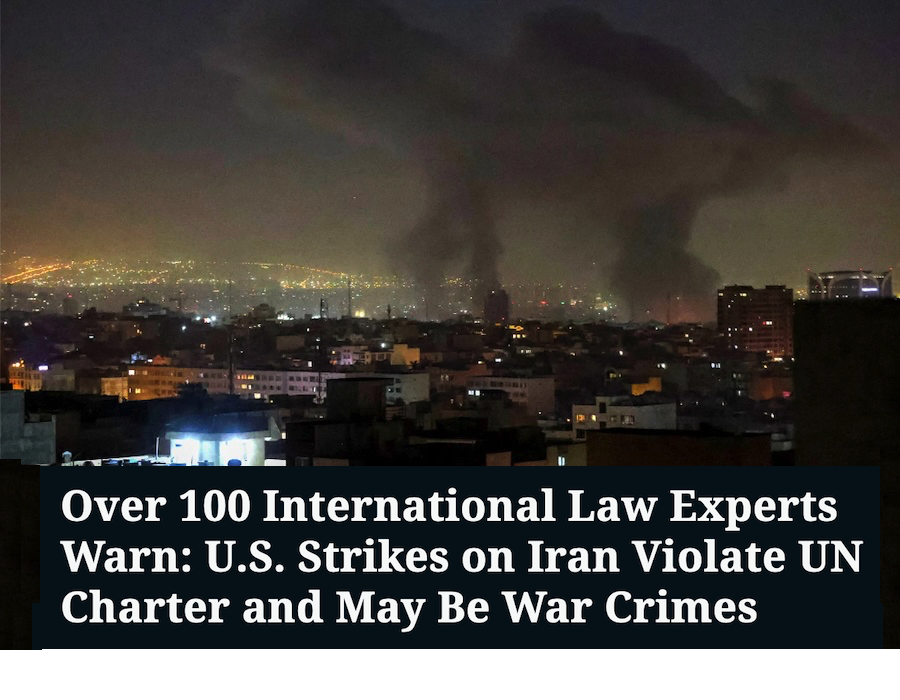
Over 100 International Law Experts Warn: U.S. Strikes on Iran Violate UN Charter and May Be War Crimes

DISARMAMENT & SECURITY .

An article from Just Security

The United States and Israel initiated strikes on Iran over one month ago, on February 28, 2026. The attack was a clear violation of the United Nations Charter. The conduct of the war, and statements of U.S. officials, also raise serious concerns about violations of international humanitarian law, including potential war crimes. We have written the below statement together with over 100 U.S.-based international law experts, to detail our profound concerns about the war. The letter is signed by international law experts across the United States, including senior professors; leaders of prominent international law associations, non-governmental organizations, and legal clinics; former government legal advisors; and military law experts and former Judge Advocates General (JAGs).

Letter of over 100 international law experts on Iran war
 
We, the undersigned U.S.-based international law experts, professors, and practitioners write to express profound concern about serious violations of international law and alarming rhetoric by the United States, Israel, and Iran in the present armed conflict in the Middle East.

Due to our connection to the United States, our focus here is on the conduct of the U.S. government, but we remain concerned about the risk of atrocities across the region including the continuing risks posed by the Iranian government to Iranians through violent crackdowns on dissent, and to civilians across the Middle East through Iran’s ongoing unlawful strikes on civilian infrastructure using explosive weapons in densely populated areas.

One month has passed since the United States and Israel launched strikes across Iran. The initiation of the campaign was a clear violation of the United Nations Charter, and the conduct of United States forces since, as well as statements made by senior government officials, raise serious concerns about violations of international human rights law and international humanitarian law, including potential war crimes.  

We collectively affirm the importance of equal application of international law to all, including countries that hold themselves out as global leaders. Recent statements from senior U.S. government officials describing the rules governing military engagement as “stupid” and prioritizing “lethality” over “legality” are profoundly alarming and dangerously short-sighted. These claims, particularly in combination with the observable conduct of U.S. forces, are harming the international legal order and the system of international law that we have devoted our lives to promoting. 

The war, which is costing U.S. taxpayers between $1-2 billion each day, is imposing significant harm to civilians in the region, has resulted in the loss of hundreds of civilian lives across the Middle East, and is causing serious environmental  and economic harms.

We write to express our concern about 1) jus ad bellum, or the decision to go to war, 2) jus in bello, or the conduct of hostilities, 3) rhetoric and threats from senior U.S. officials and their allies, which portend further abuses, and 4) the decimation of civilian harm mitigation structures within the U.S. government as a part of U.S. Secretary of Defense Pete Hegseth’s “gloves off” approach to warfare. 

1. Jus ad bellum concerns: The strikes launched by the United States and Israel on February 28, 2026 clearly violated the United Nations Charter prohibition on the use of force. Force against another state is only permitted in self-defense against an actual or imminent armed attack or where authorized by the UN Security Council. The Security Council did not authorize the attack. Iran did not attack Israel or the United States. Despite the Trump administration’s varied and sometimes conflicting claims to the contrary, there is no evidence that Iran posed an imminent threat that could ground a self-defense claim. Many international law experts have concluded that Israel and the United States’ actions violate the UN Charter, including the President and President-elect of the American Society of International Law, and the President of the American Branch of the International Law Association; UN Secretary-General António Guterres also condemned the attacks as undermining international peace and security.

2. Concerns about violations of international humanitarian law: The laws of armed conflict constrain the conduct of hostilities of all parties to the ongoing conflict. We are concerned that these fundamental rules may have been violated, including in the context of reported strikes on civilians and civilian objects such as political leaders who have no military role, oil and gas infrastructure, including South Pars, and water desalination plants. On March 19, UN High Commissioner for Human Rights Volker Türk condemned strikes on energy infrastructure, noting their “disastrous” impacts for civilians. 

We are seriously concerned about strikes that have hit schools, health facilities, and homes. The Iranian Red Crescent reports that “67,414 civilian sites have been struck, of which 498 are schools and 236 health facilities.” A report by leading civil society organizations found that at least 1,443 Iranian civilians, including 217 children, were killed by U.S. and Israeli forces between February 28 and March 23. 

The strike on Minab primary school is particularly concerning. On February 28, Shajareh Tayyebeh Primary School in Minab, Iran, was struck, resulting in the deaths of at least 175 people, many of them children, according to Iranian officials. Based on easily accessible online information and commercially available satellite imagery, it appears the building had been used as a school for a decade. President Trump denied U.S. responsibility, falsely stating that “It was done by Iran.” However, a preliminary investigation by the Department of Defense reportedly determined that the U.S. conducted the strike, and the targeting had been based on outdated intelligence. The strike likely violates international humanitarian law, and if evidence is found that those responsible were reckless, it could also be a war crime. The strike is among the deadliest single attacks by the U.S. military on civilians in recent decades. 

3. Concerns about rhetoric and threats from senior officials. We are deeply concerned about the dangerous rhetoric government officials have engaged in during the war, including: 

a. Threatened denial of quarter: On March 13, Secretary of Defense Pete Hegseth stated “We will keep pushing, keep advancing, no quarter, no mercy for our enemies.” In international law, it is “especially forbidden” to “declare that no quarter will be given,” a prohibition also set out in the Department of Defense’s own law of war manual. Hegseth’s statement likely violates international humanitarian law as well as the U.S. War Crimes statute 18 U.S.C. 2441. Ordering or threatening no quarter is a war crime. 
 
b. Dismissal of rules of engagement and international law: Secretary of Defense Hegseth’s “no quarter” statement followed similarly alarming statements by the Secretary, including on September 25, 2025 and March 2, 2026 that the U.S. does not fight with “stupid rules of engagement.” On January 8, 2026 President Trump had made the disturbing comment that “I don’t need international law.” On March 13, he stated that the U.S. may conduct strikes on Iran “just for fun.”

c. Threats on energy infrastructure: President Trump threatened on March 13, 2026: “I could take out things within the next hour, power plants that create the electricity, that create the water… We could do things that would be so bad they could literally never rebuild as a nation again.” International law protects from attack objects indispensable to the survival of civilians, and the attacks threatened by Trump, if implemented, could entail war crimes. On March 21, President Trump further threatened to “obliterate” power plants in Iran. U.S. Ambassador to the United Nations, Mike Waltz, defended power plant attacks the next day, and also said that striking nuclear power plants was not off the table. It is prohibited to attack civilian energy infrastructure. If a power plant has both civilian and military purposes (“dual-use”), it may be considered a military objective where it makes “an effective contribution to military action” and the attack “offers a definite military advantage.” However, any strike must respect the principles of proportionality and precautions in attack. The proportionality principle prohibits attacks expected to cause incidental civilian harm that would be excessive in relation to the military advantage. The civilian harm to be considered includes foreseeable reverberating or indirect harm. In any attack, “all feasible precautions” must be taken to avoid civilian harm. 

Attacks on nuclear power plants, even if they have a military purpose, require particular care because of the high risk of releasing radiation and radioactive material and consequent severe harm to the civilian population. Such a strike could harm the health and safety of millions of civilians.  On March 23, 2026, the ICRC President Mirjana Spoljaric Egger expressed her deep concern, noting that “War on essential infrastructure is war on civilians” and described threats to nuclear power plants as “Most alarming.”

4. Concerns about institutional safeguards against further violations: Since the start of the second Trump administration, the Defense Department under Secretary Hegseth has deliberately and systematically weakened the protections meant to ensure compliance with international humanitarian law. This includes removing senior military lawyers without publicly citing misconduct, and replacing the Army, Navy, and Air Force judge advocates general, directly undermining legal oversight of combat operations. It has also abolished “civilian environment teams” and other mechanisms specifically designed to limit harm to civilians during operations. The 2026 National Defense Strategy omits references to civilian protection and international law entirely. These changes are especially concerning in light of Defense Secretary Pete Hegseth’s comments that rules of engagement interfere with “fighting to win.”  

We are gravely concerned that the conduct and threats outlined here are causing serious harm to civilians in the Middle East, and that they also contribute to escalating the conflict, damaging the environment and the global economy, and that they risk degrading the rule of law and fundamental norms that protect every nation’s civilians. Public statements by senior officials indicate an alarming disrespect for the rules of international humanitarian law accepted by states, and which protect both civilians and members of the armed forces. 
  
We urge U.S. government officials to uphold the UN Charter, international humanitarian law, and human rights law at all times, and to publicly make clear U.S. commitment to and respect for norms of international law. 

We remind all states of their legal obligations not to aid or assist the United States, Israel, or Iran in the commission of internationally wrongful acts, as well as to cooperate to bring to an end through lawful means serious breaches of peremptory norms of general international law (jus cogens) including the prohibition of aggression and the basic rules of international humanitarian law. 

We also urge the U.S. governments’ allies and cooperating partners to take steps to respect and ensure respect for international humanitarian law, in line with Common Article 1 of the Geneva Conventions and associated customary international law. The United States has itself acknowledged that states should seek to promote adherence by others to international humanitarian law. The International Committee of the Red Cross 2016 Commentary on the First Geneva Convention of 1949 provides that a state is “in a unique position to influence the behavior” of partner states where the state “participates in the financing, equipping, arming or training of the armed forces of a Party to a conflict, even plans, carries out and debriefs operations jointly with such forces.”  

Signed,*

William J. Aceves

Chief Justice Roger Traynor Professor of Law

California Western School of Law

E. Tendayi Achiume

Professor of Law

Stanford Law School

Rabiat Akande

Wilson H. Elkins Chair and Associate Professor

University of Maryland School of Law

Susan Akram

Clinical Professor of Law

Director, International Human Rights Clinic

Boston University School of Law

Philip Alston

John Norton Pomeroy Professor of Law

NYU School of Law

José E. Alvarez

Herbert and Rose Rubin Professor of International Law

NYU School of Law

Faculty Director, US-Asia Law Institute

Diane Marie Amann

Visiting Professor, LSE Law School

Special Adviser to the International Criminal Court Prosecutor on Children in & affected by Armed Conflict (2012-2021)

Baher Azmy

Legal Director

Center for Constitutional Rights

Sandra L. Babcock

Clinical Professor of Law

Director, International Human Rights Clinic

Cornell Law School

Aslı Ü. Bâli

Howard M. Holtzmann Professor of Law

Yale Law School

Carolyn P. Blum

Clinical Professor of Law, Emerita

Berkeley Law, University of California

Christine Bustany

Senior Lecturer in International Law

Fletcher School of Law and Diplomacy

Charli Carpenter

Professor of Political Science

University of Massachusetts Department of Political Science

Christina M. Cerna

Adjunct Professor of Law (ret.)

Georgetown University Law Centre

Inter-American Commission on Human Rights (ret.), OAS

Sandra Coliver

Former Executive Director

Center for Justice and Accountability

Jorge Contesse

Professor of Law

Rutgers Law School

Cody Corliss

Associate Professor of Law

West Virginia University College of Law

Avidan Y. Cover

Professor of Law

Case Western Reserve University School of Law

Rebecca Crootof

Nancy Litchfield Hicks Professor of Law

University of Richmond School of Law

Jamil Dakwar

Director, ACLU Human Rights Program

Adjunct Professor, New York University and Hunter College

Tom Dannenbaum

Professor of Law, Stanford Law School

Frank Stanton Professor of Nuclear Security

Senior Fellow, Freeman Spogli Institute for International Studies, Stanford University

Frederick T. Davis

Lecturer in Law, Columbia Law School
Principal,
Fred Davis Law Office

Christian M. De Vos

Visiting Assistant Professor

City University of New York School of Law

Laura Dickinson

Lyle T. Alverson Professor of Law

The George Washington University Law School

Stephanie Farrior

Professor of Law (ret.)

Eugene R. Fidell

Visiting Lecturer in Law

Senior Research Scholar

Yale Law School

Martin S. Flaherty

Charles and Marie Robertson Visiting Professor

School of Public and International Affairs,
Princeton University

Laurel Fletcher

Chancellor’s Clinical Professor of Law

UC Berkeley, School of Law

Claudia Flores

Clinical Professor of Law

Director, Allard K. Lowenstein International Human Rights Clinic

Faculty Co-Director, Orville H. Schell Jr. Center for International Human Rights

Yale Law School

Idriss Fofana

Assistant Professor of Law

Harvard Law School

Barbara Frey

Director Emerita, Human Rights Program

University of Minnesota

Hannah R. Garry

Clinical Professor of Law

Founding Faculty Director, Donna and Spencer Gilbert Global Justice & Human Rights Center

Founding Director, International Human Rights Clinic

University of Southern California (USC) Gould School of Law

James A. Goldston

Executive Director

Open Society Justice Initiative

Jonathan Hafetz

Professor of Law

Seton Hall Law School

Lisa Hajjar

Professor of Sociology

University of California – Santa Barbara

Rebecca Hamilton

Professor of Law

American University, Washington College of Law

Hurst Hannum

Professor Emeritus of International Law

Fletcher School of Law and Diplomacy

Tufts University

Oona A. Hathaway

Gerard C. and Bernice Latrobe Smith Professor of International Law, Yale Law School

Professor, Yale University Department of Political Science

Faculty, Jackson School of Global Affairs, Yale University

Director, Center for Global Legal Challenges, Yale Law School

President-elect, American Society of International Law

Adil Haque

Distinguished Professor of Law and Judge Jon O. Newman Scholar

Rutgers Law School

(Continued in right column)

Question related to this article:
 
How can war crimes be documented, stopped, punished and prevented?

(Continued from left column)

Hadar Harris

Founder and Principal

Rights and Justice Consulting

Lindsay M. Harris

Professor of Law

Director, International Human Rights Clinic

University of San Francisco School of Law

Sarah Harrison

Former Associate General Counsel

Department of Defense

J. Benton Heath

Associate Professor of Law

Temple University School of Law

Paul Hoffman

Director, Defending Democracy Clinic

University of California at Irvine School of Law

Partner, Schonbrun DeSimone Seplow Harris & Hoffman, LLP

David B. Hunter

Professor Emeritus

American University Washington College of Law

Deena R. Hurwitz, Esq.
Founder of the International Human Rights Clinic at the University of Virginia

Rebecca Ingber

Professor of Law

Cardozo Law

Co-Director, Floersheimer Center for Constitutional Democracy
Senior Fellow, Reiss Center on Law and Security,
NYU School of Law

Former Counselor, Office of the Legal Advisor, U.S Department of State

Tejal Jesrani

Human Rights Clinical Instructor

Director, TrialWatch Project

Columbia Law School

Brett Jones

Charles E. Scheidt Human Rights Visiting Assistant Clinical Professor

Benjamin N. Cardozo School of Law

Dr Ioannis Kalpouzos

Visiting Professor

Harvard Law School

Jeffrey Kahn

Professor of Law

Director, Program on Law and Government

American University Washington College of Law

David Kaye

Clinical Professor of Law

UC Irvine School of Law

UN Special Rapporteur on freedom of opinion and expression (2014 – 2020)

U.S. Member, European Commission for Democracy through Law (“Venice Commission”)

Pardiss Kebriaei

Senior Staff Attorney

Center for Constitutional Rights

Michael J. Kelly

Professor of Law

Senator Allen A. Sekt Endowed Chair in Law

Director, Kaiman Center for International Criminal Justice & Holocaust Studies

Creighton University

Jocelyn Getgen Kestenbaum

Professor of Law

Benjamin N. Cardozo School of Law

John H. Knox

Henry C. Lauerman Professor of International Law

Wake Forest University School of Law

Former UN Special Rapporteur on human rights and the environment

Harold Hongju Koh

Sterling Professor of International Law

Yale Law School

Steven Arrigg Koh

R. Gordon Butler Scholar in International Law

Boston University School of Law

Jeremy Konyndyk

President, Refugees International

David A. Koplow

Scott K. Ginsburg Professor of Law

Georgetown University Law Center

Christopher Kutz

C. William Maxeiner Distinguished Professor of Law

Philosophy and Political Science (by courtesy)

Berkeley Law School, UC Berkeley

Beatrice Lindstrom

Senior Clinical Instructor and Lecturer on Law

Harvard Law School

Katerina Linos

I. Michael Heyman Professor of Law

Co-Faculty Director, Miller Institute for Global Challenges and the Law

UC Berkeley, School of Law

Bert Lockwood

Distinguished Service Professor

Director of the Urban Morgan Institute for Human Rights
University of Cincinnati College of Law

Editor-in-Chief, Human Rights Quarterly

David Luban

Distinguished University Professor

Georgetown University Law Center

Kate Mackintosh

Executive Director, Professor from Practice

UCLA’s The Promise Institute for Human Rights (Europe)

David G. Mandel-Anthony

Faculty Instructor, Binghamton University Institute for Genocide and Mass Atrocity Prevention (I-GMAP)

Former Deputy to the Ambassador-at-Large for Global Criminal Justice, U.S. Department of State

Sarah Margon

Founder and Principal, Windsong Advisory

Former Director of US Foreign Policy at Open Society Foundations

Joseph Margulies

Professor of the Practice of Government

Cornell University

Craig Martin

Professor of Law

Co-Director, International and Comparative Law Center

Washburn University School of Law

Elisa Massimino

Visiting Professor of Law
Executive
Director, Human Rights Institute

Georgetown University Law Center

Daniel Maurer

Associate Professor of Law, Ohio Northern University Pettit College of Law

Advisor, Center for Military Law & Policy, Texas Tech University School of Law

Board of Directors, National Institute of Military Justice
Lieutenant Colonel, U.S. Army (ret.)

Juan E. Mendez

Professor of International Law (ret.)

Former UN Special Rapporteur on Torture (2010-2016)

Washington College of Law, American University

Gay J. McDougall

Former Vice Chair and 3-term Member, UN Committee on the Elimination of Racial Discrimination

Former UN Special Rapporteur on Minorities (2005-2011)
MacArthur Award Fellow, 1999

Senior Fellow and Distinguished Scholar-in-Residence

Leitner Center for International Law and Justice / Center for Race, Law and Justice

Fordham University School of Law

Margaret E. McGuinness

Professor of Law

Co-Director, Center for International and Comparative Law

St. John’s University School of Law

Chi Adanna Mgbako

Clinical Professor of Law

Director, Walter Leitner International Human Rights Clinic
Fordham Law School

Zinaida Miller

Professor of Law & International Affairs

Northeastern University

Saira Mohamed

Agnes Roddy Robb Chair in Jurisprudence, Ethics, and Social Responsibility

Professor of Law

UC Berkeley, School of Law

Bridget Moix

General Secretary, Friends Committee on National Legislation

Priyanka Motaparthy

Director, Center for International Human Rights

Clinical Professor

Northwestern Pritzker School of Law

Karen Musalo

Bank of America Foundation Chair in International Law

Professor & Director, Center for Gender & Refugee Studies

U.C. Law, San Francisco

Aryeh Neier

President Emeritus, Open Society Foundations

Former Executive Director, Human Rights Watch

Former Executive Director, American Civil Liberties Union

Mary Ellen O’Connell

Robert and Marion Short Professor of Law

Concurrent Professor of International Peace Studies

University of Notre Dame

Diane Orentlicher

Professor Emerita

American University Washington College of Law

Arzoo Osanloo

Professor of Anthropology

Co-Director of the Human Rights Initiative

Princeton University

Jessica Peake

Director, International & Comparative Law Program

UCLA School of Law

Stephen J. Rapp

Senior Fellow, Center for National Security Law, Georgetown Law School

Former US Ambassador-at-Large for Global Criminal Justice (2009-2015)

Paul Rink

Associate Professor of Law

Seton Hall Law School

Francisco J. Rivera Juaristi

Clinical Professor of Law

Santa Clara Law

Scott Roehm

Adjunct Professor of Law

Georgetown Law School

Dr. Cesare P.R. Romano

Professor of Law

W. Joseph Ford Fellow

Loyola Law School, Los Angeles

Gabor Rona

Professor of Practice

Cardozo Law School

Naomi Roht-Arriaza

Distinguished Professor of Law Emerita

UC Law San Francisco

Brad R. Roth

Professor of Political Science and Law

Wayne State University

Kenneth Roth

Charles and Marie Robertson Visiting Professor

Princeton School of Public and International Affairs

Former Executive Director, Human Rights Watch

Susana SáCouto

Professorial Lecturer-in-Residence

Director, War Crimes Research Office

Director, Summer Law Program in The Hague

American University Washington College of Law

Leila Nadya Sadat

James Carr Professor of International Criminal Law

Washington University School of Law

Director, Crimes Against Humanity Initiative

Chair, International Law Association (American Branch)

Former Special Advisor on Crimes Against Humanity to the ICC Prosecutor (2013-2023)

Margaret L. Satterthwaite

Professor of Law
, NYU School of Law

Beth Van Schaack

Former Ambassador-at-Large for Global Criminal Justice, U.S. State Department

Visiting Fellow (Feb. 2026 – June 2026)

European University Institute

Distinguished Fellow

Center for Human Rights & International Justice,
Stanford University

Michael P. Scharf

President of the American Branch of the International Law Association

Joseph C. Hostetler – BakerHostetler Professor of Law

Case Western Reserve University School of Law

Michael N. Schmitt

Professor of International Law, University of Reading

Professor Emeritus, US Naval War College

Former G. Norman Lieber Distinguished Scholar, West Point

Steven M. Schneebaum

Adjunct Professor
Johns Hopkins School of Advanced International Studies

Visiting Professor, Tashkent State University of Law, Uzbekistan

Eric Schwartz

Professor of Public Affairs

Chair, Global Policy

University of Minnesota

Elizabeth Shackelford

Distinguished Lecturer

Dartmouth College

Gregory Shaffer

Scott K. Ginsburg Professor of International Law

Georgetown University Law Center

Dinah Shelton

Manatt/Ahn Professor of Law (Emeritus)
The George Washington University Law School

Rebecca Shoot

Co-Convener, Washington Working Group for the International Criminal Court
Co-Convener, ImPact Coalition on Strengthening International Judicial Institutions

James Silk

Binger Clinical Professor Emeritus of Human Rights

Yale Law School

Matiangai Sirleaf

Nathan Patz Professor of Law

University of Maryland Francis King Carey School of Law
Professor, Department of Epidemiology and Public Health
University of Maryland School of Medicine

David Sloss

John A. and Elizabeth H. Sutro Professor of Law

Santa Clara University School of Law

Stephan Sonnenberg

Associate Professor of Practice

Wesleyan University

Milena Sterio

James A. Thomas Distinguished Professor of Law & LLM Programs Director

Cleveland State University College of Law

Jonathan Tracy

Former Judge Advocate, U.S. Army

Jennifer Trahan

Clinical Professor and Director of the Concentration in International Law and Human Rights

NYU Center for Global Affairs

Convenor, The Global Institute for the Prevention of Aggression

Rachel E. VanLandingham

Lieutenant Colonel (USAF) (ret.)
Professor of Law & Associate Dean for Research, Southwestern Law School

President Emerita & Director, National Institute of Military Justice

* Signatories are signing in their individual capacities and affiliations are for identification purposes only.

– – – – – –

If you wish to make a comment on this article, you may write to coordinator@cpnn-world.org with the title “Comment on (name of article)” and we will put your comment on line. Because of the flood of spam, we have discontinued the direct application of comments.


English bulletin April 1, 2026

. THE MOVEMENT KEEPS GROWING .

In this dark period of history, as we said in this bulletin last July, “Fed up with the wars and militarism of their countries, the people of Europe, North America and the Middle East have taken to the streets in protest.” As we headlined in November, the movement keeps growing. And we see this month, it continues to grow.

In the United States, over 8 million people took to the streets on March 28 in the latest No Kings rally against Trump. It was the largest single-day protest in American history. As reported in the CPNN articles this March and last October and June, the No Kings rallies take place in all 50 states, and continue to increase in the number of communities, from 1,800 in June, 2025 to 2,700 in October, 2025, and to 3,300 this month. The flagship rally this month took place in Minneapolis and was addressed by Bernie Sanders and by Bruce Springsteen.

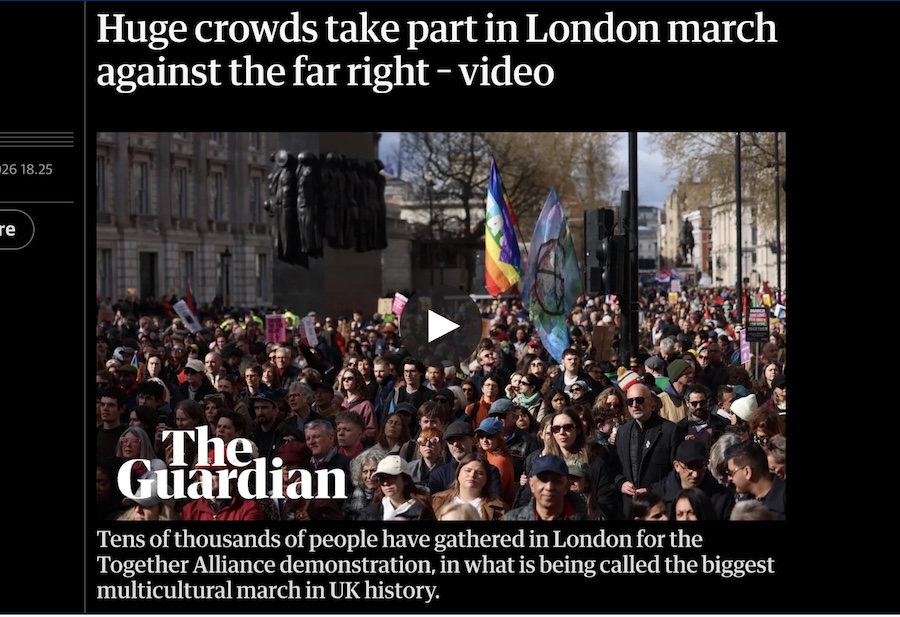
In the UK on March 28, the biggest ever multicultural protest took place in London with organizers claiming half a million participants.

In France, around 150,000 people took to the streets in many cities and towns on March 14th, to protest against racism, fascism, and war.

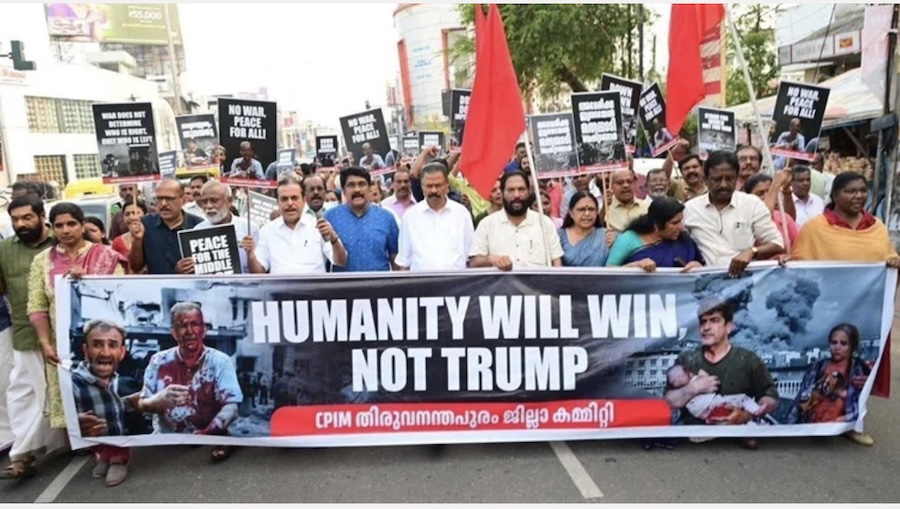
Throughout the Global South, demonstrators took to the squares and streets to condemn the war of imperialist aggression waged against Iran by US President Donald Trump and Israeli Prime Minister Benjamin Netanyahu.

And as we see on March 8 every year, women took to the streets for the International Women’s Day. The themes of their celebration differ from country to country, as we have documented this month in CPNN, but most of them join the protest against violence and militarism.

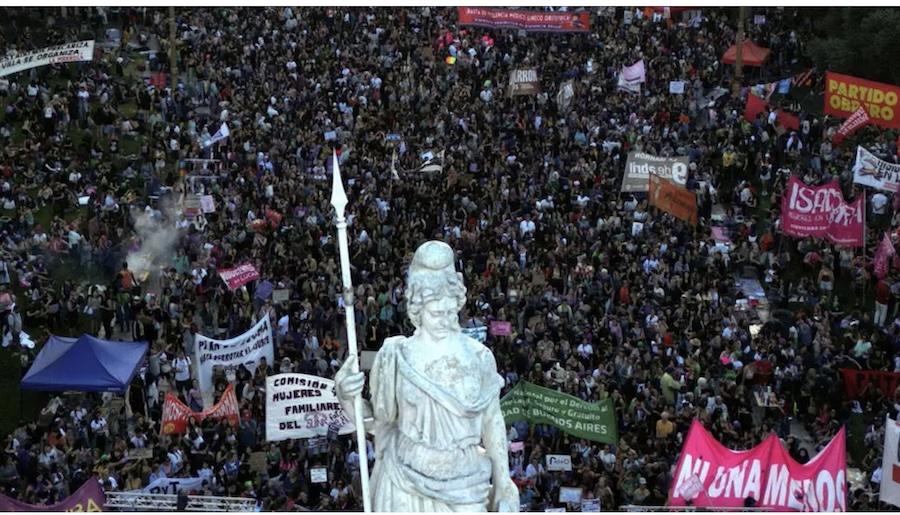
The most dominant theme throughout Latin America was to condemn femicide and other violence against women and to call for protection and equality. In Mexico city, demonstrators called for an end to the femicidal violence that claims the lives of eight women every day in their country. The slogan “Not one less” was displayed in Buenos Aires, Argentina. Photos of women victims or their attackers were displayed in La Paz, Bolivia. The banner “our cry comes from of a heart tired of living with pain and fear” was displayed in Bogota, Colombia. Women demanded shelters for victims of gender-based violence in Caracas, Venezuela. Freedom from gender violence was similarly the theme of demonstrations in Montevideo, Uruguay, Lima, Peru and Quito, Ecuador.

In Argentina, Belarus, Chile and Indonesia, women protested against their right-wing governments that attack women’s rights. The US demonstrations in Chicago, New York and San Francisco specifically denounced the policies of Trump.

In addition to protesting physical violence, demonstrators protested the violence of workplace discrimination and lower wages for women and called for economic equality. This was a dominant theme in the demonstrations in Helsinki, Finland, in Athens, Greece and in Vancouver, Canada.

In Europe, there was protest against the American/Israeli attack on Iran and other wars in general. This was the case in Brussels, Belgium, Barcelona, Madrid, Merida, Toledo and Valencia in Spain, as well as Milan and Rome in Italy. In Ljubljana, Slovenia, their banner read “We will not work for your wars.” In many of these cities, as well as Helsinki, Bordeaux, Valletta (Malt, London and Amsterdam the theme was the demand for equality and freedom from violence.

Banners denouncing fascism and patriarchy were displayed at the demonstrations in Budapest, Istanbul and Berlin and Erfurt in Germany.

In some countries, government leadership used the occasion to rally women to their support. This was the case in Russia, Serbia, Ukraine and several countries of Africa, including Benin and Senegal, and the three countries where military governments are trying to free their countries from neo-colonial domination: Burkina Faso, Mali and Niger.

In other countries, especially those with a socialist history, the day was a celebration of progress towards women’s equality. This was the case in China, North Korea, Cambodia and Vietnam. In Russia, there was at least one traditional event of this nature that took place in Dagestan. In Bangladesh, also, the day was one of celebration of women’s empowerment, rights and social contributions. Rwanda, home to the world’s highest share of women in parliament, celebrated with a walk and run. In Mozambique, the event was addressed by Graça Machel, who was the organizer of the women’s organizations of that country prior to going to South Africa to marry Nelson Mandela.

Popular musicians and celebrities took to the radio and television to promote women’s rights in the Ukraine and in Kenya. In Los Angeles and Hollywood, the Alliance of Women Directors held a salon to support women directors across the entertainment industry.

The African Union held a celebration to highlight the vital roles women play in sustaining the Union’s work and the United Nations Secretary-General published a message proclaiming “It is time to make justice a reality for women and girls, everywhere.”

Perhaps the most unique celebration was that of Ethiopian Airlines that announced all-women crews for all of their flights on March 8.

As discussed in this month’s blog, the demands of women correspond to the demands for a culture of peace.

HUMAN RIGHTS


‘No Kings!’ 8 Million Rally Against Trump in Largest Single-Day Protest in US History

SUSTAINABLE DEVELOPMENT


Benki Piyãko, Brazilian indigenous spiritual leader awarded Niwano Peace Prize

DEMOCRATIC PARTICIPATION


Mayors for Peace Joint Appeal March 16, 2026

WOMEN’S EQUALITY


International Women’s Day: Latin America


TOLERANCE & SOLIDARITY


Nonviolence International: What Cuba Taught Us

EDUCATION FOR PEACE


Bruce Springsteen at Minneapolis NoKings Rally

FREE FLOW OF INFORMATION


Thousands march against far right in London in biggest ever multicultural protest

DISARMAMENT & SECURITY


People Across Global South Condemn ‘Imperialist’ US-Israeli War on Iran

No Kings Rally: What Difference Does It Make?

FREE FLOW OF INFORMATION .

An analysis received by email at CPNN from Pace e Bene

Today [March 28] millions of us will pour into the streets to respond with nonviolent action to the nation’s deepening emergency. From coast to coast, we’ll join hands with our neighbors to confront the conflagration of hate, fear and violence that threatens to keep burning out of control, with its blaze currently spreading across the Middle East and throughout the United States. 

Rather than fighting fire with fire, we’ll be a national bucket brigade bringing the waters of compassion and determination and nonviolence to contribute to dousing the flames. Stopping this destruction emanating from the White House will take many steps, but this nationwide mobilization will play an important role in generating and accelerating the people-power needed for durable change.

Sometimes, though, we might wonder, “What difference does this action make?”


Some of the people who converged on Washington, DC for The Mobilization in November of 1969 to protest the Vietnam War wondered this, too. As the second of two large demonstrations that autumn comprising what the anti-war movement called The Moratorium, some 500,000 people marched past the White House – yet  the war continued.  On the surface it didn’t seem to make one bit of difference. 

What the protesters didn’t know was that President Nixon watched the march from his office and, when the last protester got on the last bus to go home, he turned to his aide and said he couldn’t do what he had threatened to do–use nuclear weapons on North Vietnam.  “Why?” his aide asked.  “The American people just told me,” the president answered.  

Question related to this article:

Where in the world can we find good leadership today?

(article continued from left column)

As Ken Butigan explains in Waging Nonviolence:

“Historian and journalist Garrett M. Graff has recounted the intricate details of how the Nixon administration signaled how it was preparing to wreak nuclear destruction on the North. It gave its adversary a deadline of Nov. 1, 1969. … On Oct. 26, bombers armed with nuclear weapons were launched and ordered to orbit over Alaska. “For three days, nuclear-armed B-52s tested the Soviet defenses, dancing around the edges of the country with their deadly arsenals in a display more provocative than perhaps any since the Cuban Missile Crisis…And then the whole thing stopped — as seemingly abruptly as it had started,” Graff writes. 

What Graff does not report is why this threat was lifted. As anti-Vietnam War organizer and author Robert Levering has noted, Nixon’s Nov. 1 ultimatum fell between the two major antiwar demonstrations. “When Nixon learned from CIA infiltrators that the Moratorium was ‘shaping up to be the most widely-supported public action in American history,’ he saw trouble ahead,” Levering explained. “As Nixon later wrote, he saw that ‘the only chance for my ultimatum to succeed was to convince the Communists that I could depend on solid support at home if they decided to call my bluff.’”

That support did not materialize. With more than two million taking part in the Moratorium, and over half-million flooding the nation’s capital a month later for the Mobilization, “the size and breadth of both the October and November protests surpassed the organizers’ most grandiose expectations,” Levering continued. The evidence suggests that the president jettisoned his threat to use nuclear weapons because of this immense outpouring of nonviolent dissent.

We don’t know what the impacts of today’s nationwide mobilization will be.  We know that concerted nonviolent action five decades ago apparently prevented an incalculably horrific escalation of an already gruesome war.  We also know that most of the protesters at the time did not realize that they had made this possible, since most of this story did not come out until 15 years later.

We take nonviolent action because it is necessary.  But we also know that, thanks to the growing study of movements—like the one that was built during the Vietnam war—we have more power, and more impacts, than we think.  May this be the case today.

Onward!

Stacie, Rivera, Layal, Shaina, Rosie, Mili, Erin, Ken, and the entire Pace e Bene community

– – – – – –

If you wish to make a comment on this article, you may write to coordinator@cpnn-world.org with the title “Comment on (name of article)” and we will put your comment on line. Because of the flood of spam, we have discontinued the direct application of comments.

Pope Leo Delivers ‘Rebuke’ of Pete Hegseth With Anti-War Palm Sunday Sermon

FREE FLOW OF INFORMATION .

An article by Brad Reed in Common Dreams (reprinted according to Creative Commons CC BY-NC-ND 3.0)

Pope Leo XIV used his Palm Sunday sermon to take what appears to be a shot at US Defense Secretary Pete Hegseth.

In his sermon, excerpts of which he published on social media, the pope emphasized Christian teachings against violence while criticizing anyone who would invoke Jesus Christ to justify a war.

“This is our God: Jesus, King of Peace, who rejects war, whom no one can use to justify war,” Pope Leo said. “He does not listen to the prayers of those who wage war, but rejects them.”

The pope also encouraged followers to “raise our prayers to the Prince of Peace so that he may support people wounded by war and open concrete paths of reconciliation and peace.”

Question related to this article:

Where in the world can we find good leadership today?

(article continued from left column)

While speaking at the Pentagon last week, Hegseth directly invoked Jesus when discussing the Trump administration’s unprovoked and unconstitutional war with Iran.

Specifically, Hegseth offered up a prayer in which he asked God to give US soldiers “wisdom in every decision, endurance for the trial ahead, unbreakable unity, and overwhelming violence of action against those who deserve no mercy,” adding that “we ask these things with bold confidence in the mighty and powerful name of Jesus Christ.”

Mother Jones contributing writer Alex Nguyen described  the pope’s sermon as a “rebuke” of Hegseth, whom he noted “has been open about his support for a Christian crusade” in the Middle East.

Pope Leo is not the only Catholic leader speaking against using Christian faith to justify wars of aggression. Two weeks ago, Cardinal Pierbattista Pizzaballa, the Latin patriarch of Jerusalem, said “the abuse and manipulation of God’s name to justify this and any other war is the gravest sin we can commit at this time.”

“War is first and foremost political and has very material interests, like most wars,” Cardinal Pizzaballa added.

– – – – – –

If you wish to make a comment on this article, you may write to coordinator@cpnn-world.org with the title “Comment on (name of article)” and we will put your comment on line. Because of the flood of spam, we have discontinued the direct application of comments.
Thousands march against far right in London in biggest ever multicultural protest

FREE FLOW OF INFORMATION . .

Information from articles in The Guardian and Al Jazeera

Tens of thousands of people have marched through central London in what organisers are calling the largest ever demonstration against the far right in British history. The Together Alliance march was backed by about 500 groups including trade unions, antiracism campaigners and Muslim representative bodies.


Video of the March

Amnesty UK hailed the “historic demonstration”, saying marchers were “calling for a different vision of society – one which places dignity, compassion and human rights at its heart”.

The event was supported by a wide range of celebrities, including the actors Christopher Eccleston, David Harewood, Lenny Henry, Steve Coogan, Toby Jones, Lolly Adefope and Maxine Peake, the musicians Paloma Faith, Charlotte Church, Brian Eno and Beverley Knight, and the comedian James Acaster.

Independent MP Jeremy Corbyn posted on X that the “problems we face are not caused by migrants or refugees”, arguing they were rooted instead in “an economic system rigged in favour of corporations and billionaires”.

MP Zarah Sultana said on X, “There’s one minority we should be angry at: the billionaires funding division while working class people can’t make ends meet.”

(continued on right column)

Questions related to this article:

How can we be sure to get news about peace demonstrations?

(continued from left column)

Green Party leader Zack Polanski, Dianne Abbott and Greater Manchester mayor Andy Burnham were also among the crowds.

A separate march organised by the Palestine Solidarity Campaign, which assembled at Exhibition Road near Hyde Park, converged with the main demonstration during the afternoon.

Eighteen people were arrested outside New Scotland Yard on Saturday after staging a protest in support of Palestine Action, the protest group which remains proscribed under the Terrorism Act despite a High Court ruling in February that the government’s decision to ban it was unlawful.

– – –

Analysis of the march by the Stop the War Coalition (received at CPNN by email from them)

Yesterday’s ‘Together Against the Far Right’ march was a powerful reminder of what solidarity and collective action looks like. Half a million people came together in central London, united in rejecting division and standing for solidarity.

It wasn’t just the size, but the diversity of the march – reflecting the broad coalition needed to defeat the far right.

The Palestine Coalition’s feeder march was also large and energetic, demonstrating that opposition to war and occupation in the Middle East is deeply connected to the wider struggle against racism, division and Islamophobia at home.

This weekend was inspiring, but it was just the start of a longer road, one that requires us to keep building both the anti-racist and anti-war movements side by side. 

– – –

If you wish to make a comment on this article, you may write to coordinator@cpnn-world.org with the title “Comment on (name of article)” and we will put your comment on line. Because of the flood of spam, we have discontinued the direct application of comments.
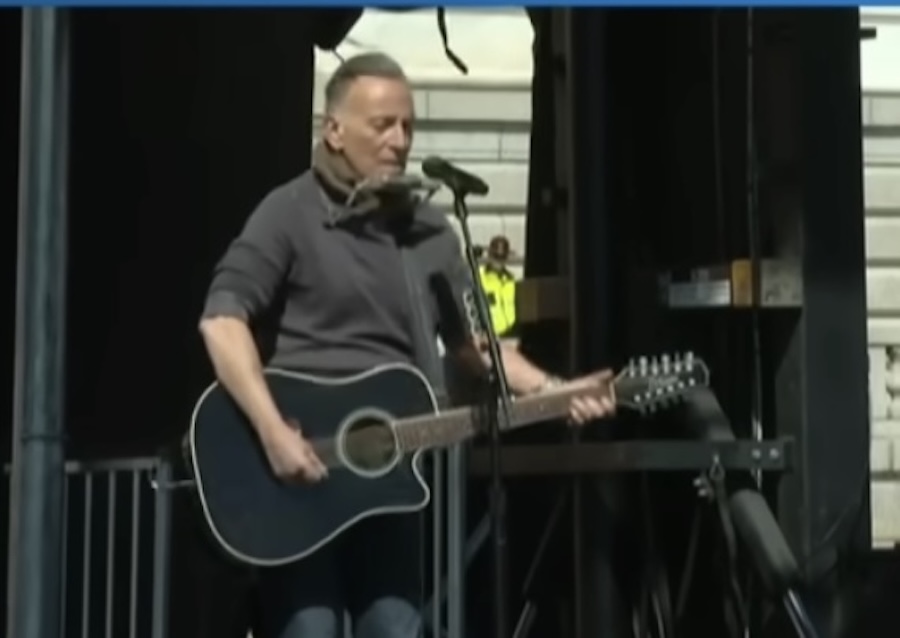
Bruce Springsteen at Minneapolis NoKings Rally

… EDUCATION FOR PEACE …

Text of remarks and song that he composed and sang

Hello, Minnesota!

It’s turning into a beautiful day!

This past winter, federal troops brought death and terror to the streets of Minneapolis.

Well, they picked the wrong city!

The power and the solidarity of the people of Minneapolis and of Minnesota was an inspiration to the entire country.

Your strength and your commitment told us that this is still America!


Video of Springsteen at NoKings Rally of Minneapolis

And this reactionary nightmare and these invasions of America’s cities will not stand.

You gave us hope! You gave us courage!

And for those who gave their lives, Renee Good, mother of three, brutally murdered, Alec Pretti, VA nurse, executed by ICE, shot in the back and left to die in the street without even the decency of our lawless government investigating their deaths.

Their bravery, their sacrifice, and their names will not be forgotten.

MUSIC: STREETS OF MINNEAPOLIS

Through the winter’s ice and cold
Down Nicollet Avenue
A city aflame fought fire and ice
‘Neath an occupier’s boots
King Trump’s private army from the DHS
Guns belted to their coats
Came to Minneapolis to enforce the law
Or so their story goes
Against smoke and rubber bullets
By the dawn’s early light
Citizens stood for justice
Their voices ringing through the night
And there were bloody footprints
Where mercy should have stood
And two dead left to die on snow-filled streets
Alex Pretti and Renee Good.

(music continued in right column)

Question for this article:

What place does music have in the peace movement?

(music continued from left column)

Oh Minneapolis, I hear your voice
Singing through the bloody mist
We’ll take our stand for this land
And the stranger in our midst
Here in our home they killed and roamed
In the winter of ’26
We’ll remember the names of those who died
On the streets of Minneapolis

Trump’s federal thugs beat up on
His face and his chest
Then we heard the gunshots
And Alex Pretti lay in the snow, dead
Their claim was self defense, sir
Just don’t believe your eyes
It’s our blood and bones
And these whistles and phones
Against Miller and Noem’s dirty lies

Oh Minneapolis, I hear your voice
Crying through the bloody mist
We’ll remember the names of those who died
On the streets of Minneapolis

Now they say they’re here to uphold the law
But they trample on our rights
If your skin is black or brown my friend
You can be questioned or deported on sight
In our chants of ICE out now

Let me hear ya! ICE OUT NOW!

Our city’s heart and soul persists
Through broken glass and bloody tears
On the streets of Minneapolis

Oh Minneapolis, I hear your voice
Singing through the bloody mist
Here in our home they killed and roamed
In the winter of ’26
We’ll take our stand for this land
And the stranger in our midst
We’ll remember the names of those who died
On the streets of Minneapolis

We’ll remember the names of those who died
On the streets of Minneapolis!

– – – – – –

If you wish to make a comment on this article, you may write to coordinator@cpnn-world.org with the title “Comment on (name of article)” and we will put your comment on line. Because of the flood of spam, we have discontinued the direct application of comments.
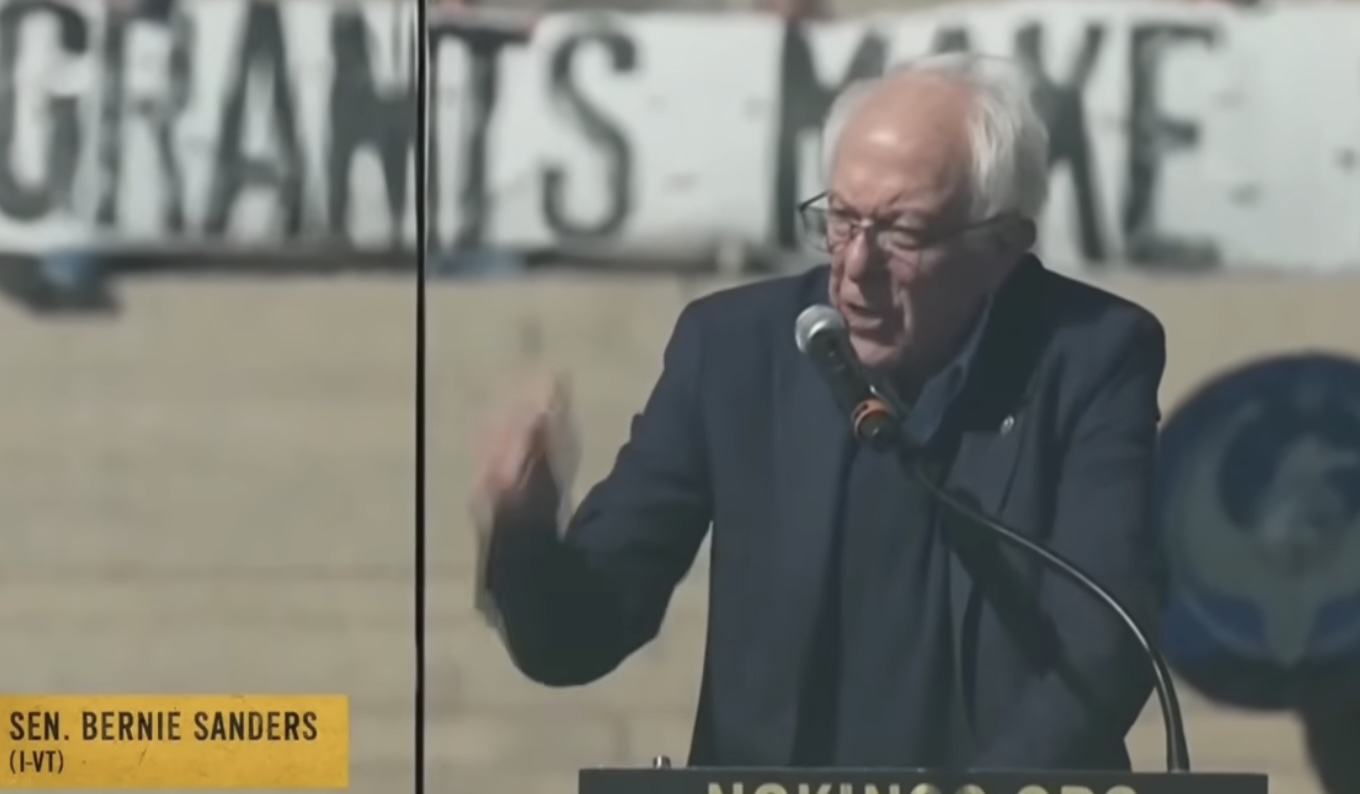
Speech of Bernie Sanders to NoKings Rally in Minneapolis

FREE FLOW OF INFORMATION .

Text of speech from Facebook post

Thank you, Minnesota.

And let me thank Indivisible, MoveOn, 50501 and all of the organizations who have made this event possible.

And thank you to the millions of Americans, from our smallest towns to our largest cities, in every state in our country, who are gathering today at thousands of rallies.

It is absolutely appropriate that we hold a major “No Kings Rally” right here in the St. Paul/Minneapolis area.

When historians write about this dangerous moment in American history, when they write about courage and sacrifice, the people of Minnesota will deserve a special chapter for themselves.

video of Sanders speech

In the face of the unprecedented occupation of this city by ICE, Trump’s domestic army, this community stood up and, with extraordinary solidarity, fought back. Minnesota showed the American people and the world what democracy is about, what grassroots activism is about, and what standing up for the American ideals of freedom and justice is about.

And I want to thank my colleagues, Amy Klobuchar and Tina Smith, for their leadership in the Senate on this issue.

And today, we remember and honor the two brave Americans, Renee Good and Alex Pretti – who lost their lives in the struggle — and we promise their family and friends that these two heroes will not have died in vain. Their sacrifice has inspired, and will continue to inspire, the American people in the never-ending fight for justice.

As all of you know, we are living in an unprecedented and dangerous moment in American history. In many ways the future of our country and the entire world is hanging in the balance – and the actions that we take now will determine what that future looks like.

The choices that we face are clear. In the wealthiest country in the history of the world, and at a time of massive breakthroughs in technology, we now have the opportunity to create a nation in which ALL people can enjoy a dignified standard of living, where we wipe out bigotry and hatred, and where all of us can live in peace and participate in a vibrant democracy. Where the foundation of our nation is built on love, compassion, human solidarity and an understanding, as former Minnesota Senator Paul Wellstone said, that we all do better when we all do better. That is one vision for the future — a vision that the vast majority of Americans share.

But there is another vision out there as well – a darker vision. It is a vision which says that we must give up on democracy, that we are too stupid and inept to govern ourselves, and that we must put more and more power into the hands of one man. It is a vision that says we should accept an economy in which a handful of Oligarchs have unbelievable wealth, while the vast majority struggle to put food on the table. It is a vision that says that the only thing that matters in life is the accumulation of money and power – and that it is okay if we lie, cheat and steal to achieve those goals. It is a vision which says that we must hate each other because of where we were born, the language we speak, the color of our skin, our religion or our sexual orientation. It is a vision that foments hatred and hatred. Division, division and division.

It is an Orwellian vision which says that we must live in a constant state of fear, that we must always have an enemy and that we must always be at war. It is a vision which says that we have unlimited amounts of money for bombs and guns and for killing, but never enough money to feed our children, provide affordable housing or enable our parents to retire with dignity.

Today, here in Minnesota, in Vermont and in every state in the country we say loudly and proudly that as Americans we will never forsake our heritage. We will never accept authoritarianism, we will never accept oligarchy, and we will never accept a president who is a pathological liar, a kleptocrat, and a narcissist who is undermining the Constitution of the United States and the rule of law every day.

We will never accept government policy that gives massive tax breaks to the billionaires, throws 15 million Americans off the healthcare they have, breaks unions, denies women the right to control their own bodies, and is pushing the planet closer and closer to a climate crisis.

In the last year, I must confess, I have been thinking a lot about American history: about the men and women in 1776 who, with unbelievable courage, announced to the world that they would no longer be ruled by the king of England, who had absolute power over their lives. These patriots demanded freedom, and they fought a bloody revolutionary war against the most powerful military in the world to achieve that freedom. And they won.

And after their military victory, they established the first democratic form of government in modern history. In 1789, they said loudly and boldly to the entire world: here in America we don’t want kings.

And let’s never forget the extraordinary words they left us: “We hold these truths to be self-evident, that all men are created equal, that they are endowed by their Creator with certain unalienable Rights, that among these are Life, Liberty and the pursuit of Happiness.”

And today, in 2026, our message is exactly the same: No more kings.

We will not allow this country to descend into authoritarianism or oligarchy. In America, We the People will rule.

But let’s be clear: This moment is not just about one man’s greed, one man’s corruption or one man’s contempt for our Constitution. This is about a handful of the wealthiest people on Earth, who, in their insatiable greed, have taken over our economy, have taken over our political system, have taken over our media in order to enrich themselves at the expense of the working families of our country.

Never before in American history have so few had so much wealth and power.

Never before in American history has there been such extreme levels of income and wealth inequality, with the top 1% now owning more wealth than the bottom 93%.

Never before in American history have we seen the super-rich expand their wealth so rapidly. Last year alone, after receiving the largest tax break in history, 938 billionaires in America became $1.5 trillion richer. Trump, himself, became over a billion dollars richer.

Never before in American history have we seen a ruling class, within a corrupt campaign finance system, spend so much money to buy politicians. In the coming mid-term elections, the billionaires will spend many, many hundreds of millions of dollars to make sure that government continues to work for them, and not working families.

Meanwhile, while the richest people become much richer, 60% of our people are living paycheck to paycheck, struggling to put food on the table, struggling to pay their rent and mortgage, struggling to pay for child care and education, and struggling to put a few bucks aside for a decent retirement. Tens of thousands of Americans die unnecessarily every year because they can’t afford to go to a doctor.

Question related to this article:

Where in the world can we find good leadership today?

(article continued from left column)

And, unless we change how our economy works, our younger generation, for the first time in modern history, will have a lower standard of living than their parents.

So today, we not only say NO to Trump’s authoritarianism, we say NO to Mr. Musk, Mr. Bezos, Mr. Zuckerberg, Mr. Ellison and all the other multibillionaires. You cannot have it all. We WILL create an economy that works for ALL Americans, not just the 1%.

My friends. It’s not just the authoritarianism of the Trump administration that we must combat.

It’s not just the Oligarchs and their insatiable greed that we must combat.

Now, as the news of today reminds us, we have got to stop the out-of-control militarism of the Trump administration – here at home, in cities like Minneapolis-St. Paul – and abroad.

Let’s be honest. The American people were lied to about the war in Vietnam. We were lied to about the war in Iraq. And we are being lied to today about the war in Iran. This war must end immediately.

In the last election Donald Trump pointed out, correctly, the huge amounts of money that had been wasted in wars that should have been spent rebuilding America. He campaigned as a “peace candidate,” and he promised no more “forever wars.” Well, he lied.

One month ago Trump and his partner, Israeli Prime Minister Benjamin Netanyahu, started a war with Iran. This war is unconstitutional. Trump did not seek or receive authorization from Congress. This war is in violation of international law. One sovereign nation cannot simply go about attacking another sovereign nation for any reason it chooses.

Since this war began 13 American soldiers have been killed and hundreds have been wounded — including another 12 yesterday. In Iran, nearly 2,000 civilians have been killed and many more wounded, and 498 schools have been attacked by American and Israeli missiles.

In Lebanon, more than 1,000 people are dead and more than one million Lebanese people — 15% of their population — have been displaced from their homes. In Israel, 20 people have been killed and over 5,000 have been wounded.

In the West Bank, Israeli vigilantes are burning down homes and killing Palestinians.

At a time when gas prices are soaring, when many Americans cannot afford the basic necessities of life, it is estimated that this war has already cost us a trillion dollars.

At a time when the American people are politically divided, there is one issue that is bringing us together. Conservatives, moderates and progressives are speaking out in unison: NO MORE WAR.

And as a U.S. Senator, I want to say a few words to you about what I intend to do about that.

First, we’ve got to make sure that Congress does not send another $200 billion to fight this war. That supplemental appropriation for the war in Iran must be defeated.

Secondly, I will be forcing a vote on legislation to block the sale of nearly a billion dollars in weapons to the Israeli military for bombs and bulldozers.

A nation that has committed genocide in Gaza does not need more military support from American taxpayers.

We must block the bombs and block the bulldozers.

My fellow Americans: We are all proud to live in a country which, throughout our history, has inspired people around the world to struggle for freedom, democracy and justice. And we understand that when we stand together, and don’t let demagogues divide us up, we can continue to inspire the world to believe in a brighter future.

Yes, we can create a vibrant democracy by ending Citizens United and not allowing billionaires to buy elections.

Yes, we can create an economy that works for every man, woman and child in our country and not just a handful of billionaires.

Yes, we can make certain that the revolutionary technologies of artificial intelligence and robotics are used to improve life for all of us, not just the wealthy owners of that technology.

Yes, we join the rest of the industrialized world and guarantee health care to all people as a human right.

Yes, instead of spending a trillion dollars a year on the military, we can wipe out homelessness and build millions of units of low-income and affordable housing.

Yes, in the richest country on Earth, we can have the best public educational system in the world, with tuition-free schooling, from child care through higher education.

Yes, we can expand Social Security and radically improve our pension system so that every senior in this country can retire with dignity.

Yes, we can raise the minimum wage to a living wage and guarantee every worker the right to join a union.

Yes, we can guarantee that every woman in this country has the right to control her own body.

Yes, at a time when billionaires are paying an effective tax rate lower than a truck driver or nurse, we can make certain that the top 1% and large profitable corporations start paying their fair share in taxes.

My fellow Americans: The establishment, including the corporate media and many of my colleagues in Congress, want you to believe that you are powerless. They want you to believe that you cannot change the status quo. But that’s a lie.

Throughout the history of our country, when Americans have stood up and fought for justice, they have prevailed.

The founders did it when they stood up to King George.

The abolitionists did it when they ended slavery.

The working class did it when they stood up to their bosses and formed unions.

The suffragettes did it when they demanded that women have the right to vote.

The LGBT community did it when they demanded basic human rights.

Time and time again, in difficult moments in American history, our people stood up, fought back and won.

They did it then. We can do it now.

Today, March 28, 2026, millions of Americans are out on the streets demanding freedom, democracy and justice. But we must make certain:

Today is not the end of our struggle. It is just the beginning.

Together, when we stand united, we will create the kind of nation that you and I know we can become.”

– – – – – –

If you wish to make a comment on this article, you may write to coordinator@cpnn-world.org with the title “Comment on (name of article)” and we will put your comment on line. Because of the flood of spam, we have discontinued the direct application of comments.
‘No Kings!’ 8 Million Rally Against Trump in Largest Single-Day Protest in US History

. HUMAN RIGHTS .

An article by Brad Reed in Common Dreams (reprinted according to Creative Commons CC BY-NC-ND 3.0)

Millions of American across all 50 states on Saturday rallied against President Donald Trump and his authoritarian agenda during nationwide No Kings protests.

The flagship No Kings rally in Minneapolis, which organizers Indivisible estimated drew over 200,000 demonstrators, featured speeches from Minnesota Gov. Tim Walz and US Sen. Bernie Sanders (I-Vt.), Rep. Ilhan Omar (D-Minn.), and actress Jane Fonda, as well as a special performance from rock icon Bruce Springsteen, who performed “Streets of Minneapolis,” a song he wrote in tribute of slain protesters Renee Good and Alex Pretti.

Organizers called it “the largest single-day nationwide demonstrations in US history,” with an estimate 8 million people coming out for events in communities and cities nationwide.


Video of rallies

(Article continued in the right column)

Questions related to this article:

The struggle for human rights, is it gathering force in the USA?

How can we be sure to get news about peace demonstrations?

(Article continued from the left column)

From major cities to rural towns that have never seen mobilizations like this before, protesters made clear that in America, we don’t do kings,“ the No Kings coalition said in a statement.

“This is what it looks like when a movement grows—not just in size, but in reach, in courage, and in more people who see themselves as part of this movement,” the organizers said. “The American people are fed up with this administration’s power grabs, an illegal war that Congress and the public haven’t approved, and the continued attempts to stifle our freedoms. We’re not waiting for change; we’re making it.”

The rally in Minneapolis was one of more than 3,300 No Kings events across the US and internationally, and aerial video footage showed massive crowds gathered for demonstrations in cities including Washington, DC, New York City, Boston, Philadelphia, Chicago, and San Diego.

In San Francisco, thousands of anti-Trump activists gathered on a local beach to form a human sign that read, “Trump must go now! No ICE, no wars, no lies, no kings.”

However, No Kings rallies weren’t just held in major US cities. In a series of social media posts, Indivisible co-founder Leah Greenberg collected photos and videos of No Kings events in communities including Arvada, Colorado, Madison, New Jersey, and St. Augustine, Florida, as well as international No Kings events held in London and Madrid.

Attendance estimates for Saturday’s No Kings protests were not available as of this writing. Polling analyst G. Elliott Morris estimated that the previous No Kings event, held in October, drew at least 5 million people nationwide, making it likely “the largest single-day political protest ever.”

– – – – – –

If you wish to make a comment on this article, you may write to coordinator@cpnn-world.org with the title “Comment on (name of article)” and we will put your comment on line. Because of the flood of spam, we have discontinued the direct application of comments.
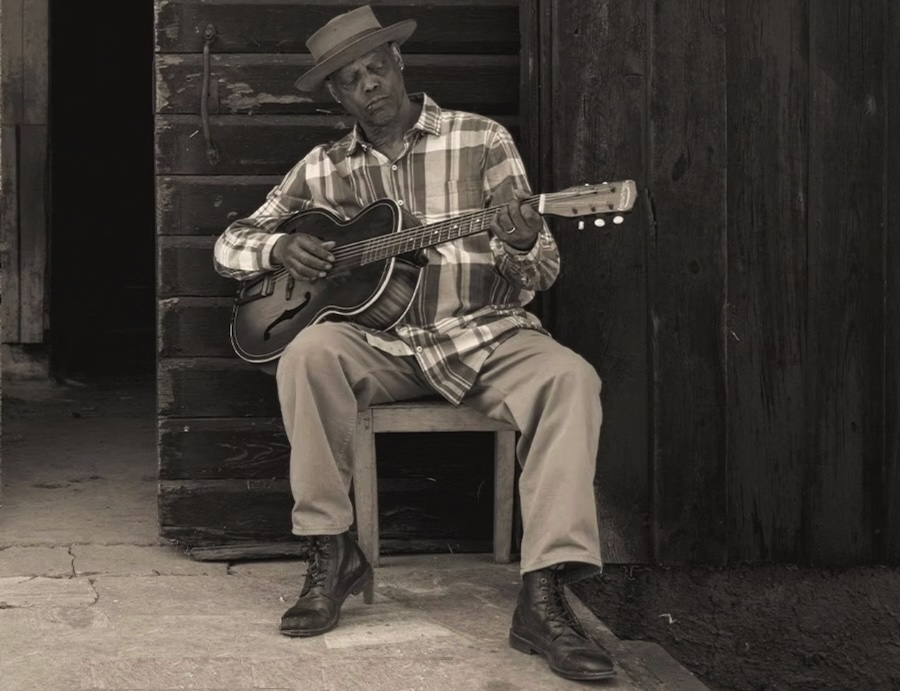
“We’ve got to live in peace” – Eric Bibb

… EDUCATION FOR PEACE …

A video from Eric Bibb’s Album One Mississippi

If you want to hear authentic American jazz and blues, it is best to live in France or Australia. Here in France where I live, there is continuous jazz and blues on the TSF Jazz and Jazz Radio channels that are accessible everywhere and that attract large numbers of listeners.

Last night, listening to TSF jazz, I heard this new song by Eric Bibb that captures the spirit of the culture of peace that we need in these difficult times.


(article continued in right column)

Question for this article:

What place does music have in the peace movement?

(article continued from left column)

Here are the lyrics.

We got to live in peace someday. Got to live in peace. Study war no more.

We got to find a way somehow. We got to find a way. We got to find it now.

We got to face the past. It’s true. We got to face the past. Heal our hearts at last.

We got to make amends today. We got to make amends. Wash our sins away.

We got to come back home, my friends. We got to come back home.

We’ve been gone too long. We’ve been gone so long. We got to find a way somehow. We got to find a way. We got to find it now.

This is the final song in the new album of Eric Bibb that is called One Mississippi. Click here for the full album.

– – – – – –

If you wish to make a comment on this article, you may write to coordinator@cpnn-world.org with the title “Comment on (name of article)” and we will put your comment on line. Because of the flood of spam, we have discontinued the direct application of comments.
Nonviolence International: What Cuba Taught Us

TOLERANCE & SOLIDARITY .

An email received at CPNN from Nonviolence International

Dear Friend,

From March 20 to 23, NVI Co-Directors, Michael Beer, Sami Awad, and board member Mohammed Abunimer, joined the Nuestra América Delegation to Cuba as part of a much larger international convoy of more than 600 people from around the world. We came as activists, artists, influencers, faith leaders, and community organizers, united by a simple conviction: the Cuban people should not be left alone under an embargo that continues to punish ordinary life.

The delegation was supported by CODEPINK, Progressive International, Global Health Partners, and Busboys and Poets, alongside a wider network that included The People’s Forum, Cuban Americans for Cuba, and Global Exchange.

It was our first time in Cuba! What we witnessed was not theoretical, was not news reports, was not propaganda. 

Havana looks like a movie set from the 1950s! The cars and buildings are stunning — but so run down. During our time there, Cuba continued to experience major electrical outages, part of a broader energy crisis that has left entire neighborhoods in darkness and placed immense strain on daily life. The blackouts are tied to the suffocating impact of the U.S. embargo, including restrictions on oil and essential resources.

In Cuba, this is not an abstract policy debate. It means hospitals under pressure, food and medicine at risk, transportation disrupted, garbage piled in streets, markets shut, restaurants closed, and families forced to survive with less and less.

And yet what we encountered was not defeatism. It was resilience. Generosity. Dignity.

People gathered in the dark. They shared what they had. They played music and sang in the streets. We played spirited mixed-gender ultimate with them (with donated frisbees that Michael brought). That spirit stays with us.

For those of us Palestinians, this was deeply personal. We met with and were inspired by Cuban students and others from around the world including Palestinians. We know what it means to live under systems designed to isolate, weaken, and break a people. We know what it feels like when your suffering is discussed from a distance while you are still living inside it. In Cuba, we recognized something painfully familiar: a people being made to pay the price for refusing to submit.

(Click here for another article about the convoy to Cuba. )

(Continued in right column)

Question related to this article:

Solidarity across national borders, What are some good examples?

(Continued from left column)

That is why this trip was not only a solidarity visit with medical relief and aid but also an act of nonviolent defiance.

This said, the convoy defied the embargo and carried real material support.

Around 20 tons of aid were delivered, including food, medicine, solar panels, and bicycles. The delegation we were part of brought thousands of pounds of medical supplies and over a hundred suitcases and boxes of humanitarian aid, all going directly to hospitals and health workers facing severe shortages.

After we returned, the delegation faced attacks and accusations meant to discredit the trip and turn solidarity into suspicion. We reject that.

People can debate politics from afar, but we know what we saw. The US has no problem engaging and trading with the communist parties of Vietnam, China, Nepal, and Laos. We saw a country under enormous pressure. We saw communities enduring blackouts and shortages. We saw doctors, families, churches, and neighbors doing their best to hold life together. And we saw hundreds of people from across the world choosing not to look away.

The embargo is not just policy, it is collective punishment.

What we carried back from Cuba was more than memory, it was clarity.

The Palestine and Cuba siege are connected, and so must be our response.
What can you do?

° Learn. Stay informed. Support organizations like the ones mentioned above.

° Refuse the narratives that justify collective punishment and oppose US unilateral sanctions on Palestine, Cuba and many other countries.

° Use your voice—in your communities, your platforms, your spaces.

° And find ways—big or small—to stand in real solidarity, including joining future delegations. Visit CUBA!

With Nonviolent Defiance,


Mohammed Abunimer, Michael Beer & Sami Awad

P.S. Please remember to attend our round table Field Testing Israeli Occupation Tech: The Palestine Lab on Sunday, April 19, 2026 3pm ET and see films in advance. This Round Table centers the human impact of this experimentation, examining how Palestinian lives are used as testing grounds for weapons, AI platforms, and policing tactics later exported worldwide. Join the Q&A discussion with: Omar Zahzah, Jeff Halper, Antony Loewenstein, Hassan El-Tayyab

You must register to join the discussion & receive access to the films .

Nonviolence International :
https://www.nonviolenceinternational.net/

– – – – – –

If you wish to make a comment on this article, you may write to coordinator@cpnn-world.org with the title “Comment on (name of article)” and we will put your comment on