Cuba Is Not a Failed State – It Is a Besieged State. We Need to Build a Unified Resistance

. TOLERANCE & SOLIDARITY .

A email message received at CPNN from the United National Antiwar Coalition

The statement below is a response to the ongoing blockade against Cuba and the propaganda derived from it.   We hope you will endorse this statement, but we also hope you will commit to emergency actions if the Trump Administration follows through with their threats to invade Cuba.


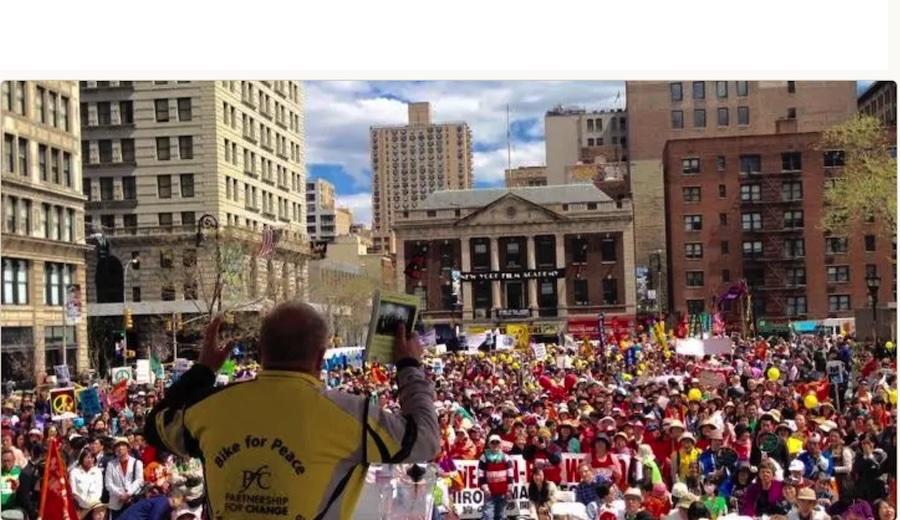
Cuban President Miguel Diaz-Canel lead mass march against US blockade

Sign On  to  “Cuba is Not a Failed State – It Is a Besieged State”
Register  your Emergency  Actions

At this critical junction in world history when the Cuban Revolution is being threatened by US hegemon, it is essential to come to its defense. Cuba is the hope of humanity.

We defend Cuba by combating the intentionally negative stereotyping of a failed state. The problems Cuba faces under blockade conditions should not be portrayed in such alarmist ways that it reinforces Washington’s propaganda. We need to combat this defeatist approach.
Cuba is being sanctioned for the crime of being a good example.

That Washington continues to intensify its six-decade campaign against the Cuban Revolution testifies to the island’s resilience and strength.

Washington’s regime-change campaign has taken a heavy toll. Responsible Statecraft describes US policy as “bent on breaking the island.” The Guardian reports “an epidemic of flies, rats, waste and foul odors.”

These accounts portray Cuban hardship but intentionally overlook Cuban social achievements. Even statements from Congressional leaders advocating for an end to the blockade by focusing on the crisis it has created, can feed into Washington’s self-serving narrative that Cuba is a “failed nation.”

When descriptions of the humanitarian crisis caused by the escalated blockade do not question the ideological assumption that accepts capitalism as the natural state of humanity, they can be used to depict socialism as an abortive failed experiment.

This is why solidarity activists must take special care to highlight the incredible achievements of Cuba, even under blockade conditions, all while waging an active campaign against the sanctions and gathering supplies to take to the island in solidarity.

Doing so much with so little

The Center for Economic and Policy Research documents a dramatic increase in infant mortality from 4.9, now rising to 9.9 per 1,000 live births, attributable to deteriorating living conditions caused by the US economic war.

Yet, even under this intentional strangulation, Cuba’s infant mortality rate remains among the lowest in the region. Cuba has free public, personalized healthcare for every Cuban from birth and throughout life.

Surrounding countries that are not facing any U.S. sanctions but are forced to survive under capitalist relations have consistently higher infant mortality rates. Panama (11), Dominican Republic (16), El Salvador (12), Honduras (15), Guatemala (20), Jamaica (12), Haiti (45-50).

Most stunning is that Cuba’s infant mortality figures under a ruthless blockade are still lower than for African Americans in the U.S. (10.9).

This reflects the demonstrated success of Cuba’s social medicine model, even under the most challenging of circumstances.

(continued in right column)

Question related to this article:
 
How can we best express solidarity with Cuba?

How can war crimes be documented, stopped, punished and prevented?

(continued from left column)

Using Cuba’s example of people-centered healthcare, Nicaragua dramatically reduced their infant mortality from 29 deaths per thousand in 2005 under a right-wing, pro U.S. government to 9 under the Sandinistas and with the assistance of Cuban doctors.

This is why the Trump administration is determined to block Cuban medical staff from providing medical care in the Caribbean. A dozen countries have acquiesced to demands from the U.S. to end medical agreements with Cuba.

Cuba’s medical staff focuses heavily on underserved areas in Latin America, the Caribbean, and Africa. They provide more doctors and medical staff than the World Health Organization and most western nations combined. The United States calls Cuba’s medical internationalism “human trafficking” – but it’s really an internationalist lifeline for the Global South.

Cuba is not alone, as it receives significant solidarity aid from allied states. China, for example, is helping address Cuba’s fossil fuel dependency by supplying 49 solar farms (20% of all its energy needs) and fleets of electric buses, cars, and scooters. Our solidarity movement should highlight and encourage such international cooperation.

Among Cuba’s public health achievements are its international medical brigades, excellence in advanced research, response to the pandemic, service to underserved populations, south-south cooperation initiatives, and the world’s highest doctor-to-patient ratios.

The Cuban socialist model has also produced notable successes in sports and public education.

Writing from Cuba, Carlos Fernandez de Cossio defended the country’s accomplishments over the past decade despite the “intense economic war,” including:

° sustaining the national electrical system while expanding renewable energy

° strengthening telecommunications and expanding internet access

° supporting vulnerable populations through food cultivation

° improving water infrastructure in underserved communities

° developing COVID vaccines and other medicines
expanding domestic industry including the assembly of electric vehicles

For a small, natural resource-poor island, Cuba has achieved so much with so little and under such extraordinarily adverse conditions. The nation asks only that the jackboot of imperialism be lifted so that it may truly flourish.

International people’s solidarity must not allow these incredible achievements to be overlooked as we advocate for relief from the cruel blockade. We should describe this crisis the same way that the Cuban leadership describes it – acknowledging the harms of US imperialism, but always stressing the achievements of the Cuban revolution and the power of solidarity and cooperation.

¡Venceremos!

Leading Organizers from the Following Organizations support this Cuba statement and the Call to Action.

United National Antiwar Coalition, Cuba Si NY/NJ, International US-Cuba Normalization Conference, Venezuela Solidarity Network, US Peace Council, Alliance for Global Justice, SanctionsKill! Campaign, Resist U.S. Led War Movement, Black Alliance for Peace, International League of Peoples Struggles, Americas Without Sanctions, Chicago ALBA Solidarity, Nicaragua Solidarity Coalition, Task Force on the Americas, International Action Center, Veterans For Peace, Code Pink NY, National Lawyers Guild, Anti War Action Network, Freedom Road Socialist Organization, Socialist Action, Bronx Antiwar, Compas de la Diaspora, Struggle for Socialism Party, Alberto Lovera Bolivarian Circle, Diaspora Pa’lante Collective, Workers World Party,

(This statement was initiated by the SanctionsKill Campaign.)

Add your support and help to circulate this statement.

– – – – – –

If you wish to make a comment on this article, you may write to coordinator@cpnn-world.org with the title “Comment on (name of article)” and we will put your comment on line. Because of the flood of spam, we have discontinued the direct application of comments.
UNESCO International Forum of NGOs: Advancing a Culture of Peace in Africa

FREE FLOW OF INFORMATION

An announcement from UNESCO

UNESCO Headquarters, Paris | 19, 21 and 22 May 2026
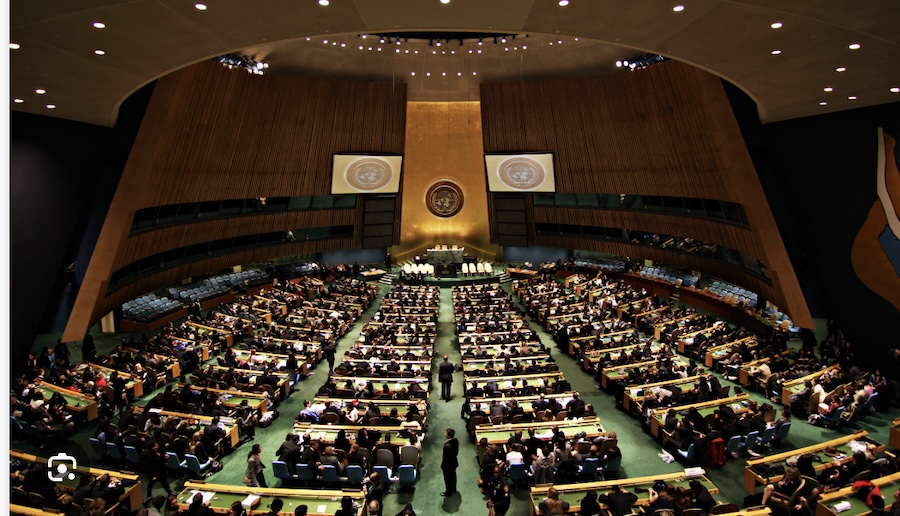
Held in the framework of Africa Week 2026, the International Forum of NGOs will bring together representatives of Member States, the African Union, civil society, youth and UNESCO partners to advance dialogue and cooperation on building a Culture of Peace in Africa. The Forum will feature a high-level opening panel, thematic discussions and exchanges highlighting the role of civil society in advancing inclusive, peaceful and resilient societies, including through youth engagement, education, water cooperation, culture, inclusion and community-based approaches to social cohesion across the continent.

Excerpts from the Forum programme

Day 1 Tuesday, 19 May 2026

Official Opening

Remarks by Ms Åsa Regnér, Deputy Director-General of UNESCO

Remarks by Ms Svetlomira Stoyanova, Chairperson NGO-UNESCO Liaison Committee

Master of Ceremony: Mr Davide Grosso, NGO-UNESCO Liaison Committee

High-Level Panel: “Building a Culture of Peace in Africa – Lessons from the Past, Realities of the Present, Visions for the Future”

Moderator: Mr Julien Pellaux, Director of UNESCO’s Division for Partnerships

(Participants from UNESCO headquarters)

Question related to this article:

Will UNESCO once again play a role in the culture of peace?

Day 2 Thursday, 21 May 2026 (

Building Blocks of Peace: Water, Education and Youth

Introduction of the Forum by the NGO Forum co-chairs:

Session 1: “Water as a Catalyst for Cooperation: From Scarcity to Shared Security”

Moderator: Ms Svetlomira Stoyanova, Chairperson NGO-UNESCO Liaison Committee

(Videos presentations from South Africa and Algeria)

(Panel with participants from UNESCO headquarters and Zimbabwe)

Session 2: “Reimagining Education Systems as Engines of Peace”

Moderator: Ms Nisrine Ibn Abdeljalil (Morocco), Executive Director of the Moroccan Fondation for PreSchool (FMPS)

(Panel with participants from UNESCO headquarters, Togo, Kenya, Burundi and Senegal)

Session 3: “Youth as Co-Architects of Peace and Stability”

Moderator: Ms Melissa Mejía Flórez (Colombia), New Humanity, Communications Coordinator and Strategic Advisor

(Panel with participants from Brazil, Italy, DR Congo, Cameroon, Tanzania, France, Colombia and USA)

Day 3 Friday, 22 May 2026

Culture, Inclusion & Community-Based Peacebuilding

Session 4: “Fostering a Culture of Peace within Communities”

Moderator: Mr Davide Grosso, International Music Council, NGO-UNESCO Liaison Committee

(Panel with participants from Zimbabwe, African Union, Nigeria, Zimbabwe, Cameroon, South Africa and Togo.

Closing session

– – – – – –

If you wish to make a comment on this article, you may write to coordinator@cpnn-world.org with the title “Comment on (name of article)” and we will put your comment on line. Because of the flood of spam, we have discontinued the direct application of comments.
UN General Assembly resolution: Interreligious Dialogue as Soft Power Peace Tool

FREE FLOW OF INFORMATION

Excerpt from an article of United Nations News Service

The Assembly adopted by consensus [on May 20] the draft resolution titled “Promotion of interreligious and intercultural dialogue, understanding and cooperation for peace” (document A/80/L.43) aimed at advancing interreligious and intercultural dialogue as a practical tool for peace, inclusion and sustainable development, supported by education, policy, partnerships and global cooperation.

Introducing the biennial text, the representative of Pakistan, also speaking on behalf of the Philippines and all co-sponsors, stressed that it is essential to promote a culture of peace — one that embraces diversity and inclusivity, safeguards fundamental rights and freedoms and rejects social structures and stereotypes that create divisions among individuals, societies, communities and nation States.

Question(s) related to this article:

What is the United Nations doing for a culture of peace?

Despite progress achieved over the years, he noted, much more remains to be done to fully realize these shared ideals.  In this regard, he recalled the Constitution of United Nations Educational, Scientific and Cultural Organization (UNESCO), which affirms that “since wars begin in the minds of men, it is in the minds of men that the defences of peace must be constructed”.  He explained that “a technical rollover” would retain the key messages reaffirmed through the consensus adoption of the resolution during the seventy‑eighth session.

Despite the unanimous adoption, several delegations raised some concerns. Among them was the representative of the United States, who said that the Assembly “spends countless hours negotiating symbolic, repetitive text with little to show in tangible results for the common citizen”.  Washington, D.C., she added, “is finished with performative exercises and bloated ideological multilateralism that fails to advance the core mission of the United Nations”.

(Editor’s note: The resolution was proposed by Indonesia, Pakistan, Philippines and Turkmenistan. Its operative paragraphs include the following:)

Calls upon Member States, which have the primary responsibility to counter discrimination and hate speech, and all relevant actors, including political and religious leaders, to promote inclusion and unity to combat racism, xenophobia, hate speech, violence and discrimination.

– – – – – –

If you wish to make a comment on this article, you may write to coordinator@cpnn-world.org with the title “Comment on (name of article)” and we will put your comment on line. Because of the flood of spam, we have discontinued the direct application of comments.
Nepal Peace Walk: A Journey towards Loving Kindness through Mindful Moments

FREE FLOW OF INFORMATION .

An article by Biswo Ulak

In 2015, the Global Peace Index highlighted a decline in global peace, marked by rising terrorism, growing refugee crises, and increasing inequality. At the same time, Nepal was recovering from a decade-long armed conflict while continuing to face political instability, economic challenges, and social uncertainty despite the adoption of the 2015 Constitution. In response to these challenges, the Nepal Peace Walk emerged as a cultural journey that welcomes people of all religions, races, nationalities, and backgrounds to celebrate diversity, heritage, and human connection. Through mindful walking, cultural exchange, and community engagement, the initiative promotes healing, dialogue, tolerance, reconciliation, and unity by connecting participants with heritage sites, local communities, and shared human values.

Origin of Peace Walk

An informal group of cultural activists and peace advocates, including Biswo Ulak, spiritual leader Naresh Prasad Manandhar, and campaigners such as Deva Sainju, Palden Lama, Anil Raj Bajracharya, Subarna Shrestha, Chandra Badan Bijukchhe, Rajaram Karmacharya, Sunita Shahi, and Hem Kumar Shrestha, along with many like-minded individuals, came together to launch a symbolic Peace Walk promoting peace and coexistence. The journey begins at Swayambhunath, which has a history spanning over 3,000 years and continues to Namo Buddha Temple, a site with more than 6,000 years of history associated with compassion and selfless sacrifice through the story of Prince Mahasattva.

Inspired by Nepal’s cultural heritage, the route passes through historic settlements and sacred sites including Pashupatinath Temple, Boudhanath Stupa, Bhaktapur, and Panauti, symbolizing cultural continuity, dialogue, reconciliation, and peace.

Focus of the Journey

The Nepal Peace Walk and Peace Festival aims to celebrate cultural diversity, promote social engagement, and strengthen the tourism industry, contributing peace and harmony in society through:

Sharing the inspiring, often untold history of Avayadan—the spirit of selfless compassion—with the world, to help promote the value of saving lives, supporting ecological balance in nature, and raising awareness about organ donation as a modern reflection of this noble tradition.

Promoting the value of peace, unity, harmony and healing to help ease internal conflicts and foster awareness of the vital need to preserve our shared human civilization.

This walk is not a search for peace, but a gentle reminder that peace has always been with us. Through times of challenge, loss, and solitude, it has remained present, patiently awaiting our awareness. As we walk together in shared purpose, our steps offer an invitation to pause, reflect, and reconnect with the peace that lives within each person. May this collective journey unfold like the sunrise after a long night, bringing renewed understanding, quiet strength, and hope for a more harmonious and compassionate world.

Commencing the Movement

The movement began on Nepal New Year, 16 April 2017, with a bicycle rally organized in collaboration with World Cycle Tour. The journey connected the historic Swayambhunath Stupa and Namo Buddha Temple, promoting peace, compassion, and cultural harmony. What started with an expectation of 80 participants grew into a powerful gathering of more than 160 cyclists from diverse backgrounds, united through shared movement and human connection. This experience inspired a deeper vision — transforming fast-paced rallies into mindful cultural journeys focused on reflection, community bonding, cultural exchange, and the spread of peace through meaningful shared experiences.

Nepal Peace Walk

The first Walk with the Cultural Peace Lamp was held from 21–23 September 2017 to celebrate the International Day of Peace. The three-day journey connected Swayambhu Stupa and Namo Buddha Temple, promoting peace, compassion, and cultural harmony. Along the route, participants stayed at the historic Muni Vihar in Bhaktapur and Dhyanakuti Vihar in Banepa, experiencing local traditions, spiritual reflection, and meaningful cultural exchange that strengthened unity among communities.

The event was successfully organized by the GCPW team, inspired by the momentum of the April 2017 Bicycle Rally. In 2018, Tergar Monastery helped expand the peace movement with support from Education Foundation on Buddhism (EFoB), Namo Buddha International Cities of Peace (NBCP), and World Forum for Buddhists (WFfB). Together, these organizations strengthened the initiative into an ongoing platform promoting peace, compassion, cultural preservation, and global solidarity, which continued in the following years.

Question related to this article:

How can we be sure to get news about peace demonstrations?

(article continued from left column)

Resilience in the Time of Pandemic

During the COVID-19 pandemic in 2020 and 2021, large public peace talks were paused due to health restrictions. Despite these challenges, local communities, heritage sites, and peace organizations continued organizing small-scale and symbolic programs under the message “Peace Energy to Fight Aagainst COVID-19.” Through community support, reflection, and peace activities at sacred and cultural sites, these initiatives spread hope, compassion, healing, and solidarity, proving that human connection and the spirit of peace can endure even in difficult times.

Restoration of the Campaign

In 2022, after two years of pandemic restrictions, Education Foundation on Buddhism (EFoB) successfully revived the Walk with the Cultural Peace Lamp, reconnecting communities through peace, culture, and compassion. The return of the journey was warmly welcomed by local communities and symbolized resilience, healing, and renewed social harmony.

In 2023, the campaign reached a major milestone under the leadership of Kavre Sewa Samaj, in collaboration with World Forum for Buddhists (WFfB) and Namo Buddha International Cities of Peace (NBICP). What began with only five walkers from Boudhanath gradually grew into a powerful movement, with more than 1,500 participants joining the final walk from Panauti to Namo Buddha Temple, reflecting growing public support for peace, cultural unity, and community connection.

For more about Nepal’s cultural peace initiatives and destinations, visit https://peacetourist.com/nepal/. The community participation and highlights of the 2023 walk can also be viewed through Facebook Reel @GCPW Nepal.

International Recognition and Expansion

Nepal, a beautiful Himalayan nation between India and China, is renowned for its rich biodiversity, ancient cultural heritage, and breathtaking landscapes. In 2024, the Nepal Peace Walk programme, led by World Forum for Buddhists with support from partner organizations, was officially launched through an international webinar, generating strong global engagement among peace advocates, cultural communities, and international participants. The programme was officially launched on June 2024 through an international webinar, which created significant momentum and engagement among peace advocates, cultural organizations, and global participants.

The 2024 Nepal Peace Walk brought together 120 participants from 8 countries across Asia, Europe, and the United States, making it one of the most internationally diverse gatherings in the programme’s history. Beyond a physical journey, the walk became a platform for intercultural dialogue, friendship, peacebuilding, and community connection, while digital outreach and documentary coverage expanded its global visibility and impact.

In 2025, the Nepal Peace Walk programme was organized in two phases due to the Dashain festival in Nepal. The first phase, the Peace Festival, was held on 21 September 2025 at Patan Durbar Square, bringing together cultural performers and peace advocates for the International Day of Peace. The second phase, held from 3–5 November 2025, covered nearly 70 kilometers from Swayambhu Mahachaitya to Namo Buddha Temple and attracted over 100 participants, reflecting growing support for peacebuilding, cultural exchange, and community connection.

Looking Ahead: 2026 and Beyond

The success of the 2024 and 2025 Nepal Peace Walk programmes highlighted the growing importance of deeper connections between international participants and local communities through cultural exchange, shared learning, and meaningful human interaction. In a world facing conflict, division, and uncertainty, the Nepal Peace Walk promotes peacebuilding through mindful walking, cultural understanding, and compassionate community engagement.

Building on this momentum, the 2026 programme will feature a Peace Festival at Patan Durbar Square on 21 September, followed by a five-day Cultural Peace Walk from 21–25 November, connecting sacred and cultural heritage sites including Swayambhu Mahachaitya and Namo Buddha Temple. Open to people from all backgrounds, the initiative encourages peace, dialogue, compassion, and global solidarity through shared cultural experiences and mindful journeys.

Together, We Walk for Peace

The Nepal Peace Walk is a living expression of peace, compassion, and cultural harmony that brings together people from different cultures, communities, and nations in a shared journey toward understanding and unity. Inspired by the timeless values of empathy, selflessness, and mutual respect, the walk promotes dialogue, cultural preservation, and humanitarian awareness. The spirit of modern organ transplantation in health science reflects the ancient compassion demonstrated by Avayadan Prince Mahasattva over 6000 years ago, symbolizing the profound act of giving life to others. In a world increasingly affected by conflict, division, and social challenges, the Nepal Peace Walk serves as a powerful reminder that lasting peace begins with mindful steps, compassionate hearts, and the willingness of humanity to walk together toward a shared and harmonious future.

For more information about the Nepal Peace Walk, participation opportunities, partnerships, or event details, please contact GCPW.Nepal@gmail.com

– – – – – –

If you wish to make a comment on this article, you may write to coordinator@cpnn-world.org with the title “Comment on (name of article)” and we will put your comment on line. Because of the flood of spam, we have discontinued the direct application of comments.
36,000 protesters rally in Tokyo against Japanese PM Takaichi’s push to revise constitution

DISARMAMENT & SECURITY .

An article from Xinhua China News

Tens of thousands of Japanese people gathered around the parliament building in Tokyo on Sunday [April 19] to protest attempts of the government of Japanese Prime Minister Sanae Takaichi to revise the country’s pacifist constitution and to call for the protection of Article 9.

About 36,000 people attended the rally, organizers said, the second protest to draw about 30,000 people near the National Diet Building against constitutional revision since April 8.


Frame from You Tube video of an additional protest on May 4

Protesters held placards reading “No to war,” “Do not undermine Article 9” and “Takaichi step down,” calling for the protection of Japan’s pacifist constitution.

“The fact that so many people have gathered here to protest the Takaichi administration’s push for constitutional revision shows that the Japanese people do not want war,” a protester surnamed Hara told Xinhua. It was her fourth time attending such a rally.

(Article continued in right column)

Question related to this article:

How can the peace movement become stronger and more effective?

(Article continued from left column)

Hara accused Takaichi, backed by her ruling Liberal Democratic Party’s (LDP) supermajority in the lower house, of pressing ahead with constitutional amendment in defiance of public opposition, intending to turn Japan into a country “capable of waging war,” which she said she strongly opposes.

“I hope (the Takaichi government) can listen to the voice of the people,” she added.

Another protester, identified as Takahashi, said Japan had inflicted profound suffering across Asia during wartime and that its pacifist constitution was drafted in reflection on that history. She opposes any move to revise it.

“I have nephews and nieces, and I absolutely do not want them to be sent to war someday,” said Izumi, a first-time participant. “I oppose war. Article 9 must be protected at all costs.”

Another male protester said he feared war and was alarmed by the ruling LDP’s push to revise Article 9. He expressed hope that Takaichi would step down and be replaced by leadership capable of advancing genuine democracy and that Japan would maintain friendly relations with China and countries around the world.

Japan’s Constitution, which took effect in 1947, is often referred to as the pacifist constitution because its Article 9 renounces war as a sovereign right and prohibits Japan from possessing “war potential” such as military forces.

However, both Takaichi and right-wing forces in Japan have long sought to revise Article 9. At an LDP convention on April 12, Takaichi declared that “the time has come” to reform the Constitution, saying that “we would like to hold next year’s convention with a proposal for a constitutional amendment in sight,” signalling a renewed determination that has triggered widespread concern and criticism across Japanese society. 

– – – – – –

If you wish to make a comment on this article, you may write to coordinator@cpnn-world.org with the title “Comment on (name of article)” and we will put your comment on line. Because of the flood of spam, we have discontinued the direct application of comments.
‘A Voice That Upholds the Conscience of the World’: Spain Honors Francesca Albanese for Efforts to Stop Gaza Genocide

. HUMAN RIGHTS . .

An article by Stephen Prager in Common Dreams (licensed under Creative Commons CC BY-NC-ND 3.0)

Spanish Prime Minister Pedro Sánchez honored  Francesca Albanese, the United Nations special rapporteur on Palestine, on Thursday, in a display of solidarity as she faces sanctions from the United States over her outspoken advocacy against Israel’s genocide in Gaza.

Citing her work to document human rights violations over more than two years of conflict, Sánchez awarded Albanese the Order of Civil Merit, a knighthood granted to Spanish and foreign citizens for extraordinary services benefiting the state or society.

“Public responsibility… entails the moral obligation not to look the other way,” Sánchez said in a social media post. “It is an honor to award the Order of Civil Merit to a voice that upholds the conscience of the world: Francesca Albanese.”

Earlier this week, Sánchez petitioned  the European Commission to intervene to stop compliance with the Trump administration’s efforts to punish Albanese, as well as members of the International Criminal Court who have brought arrest warrants  against Israeli Prime Minister Benjamin Netanyahu and former Defense Minister Yoav Gallant.

(continued in right column)

Question related to this article:
 
How can we best express solidarity with the people of Gaza?

Where in the world can we find good leadership today?

(continued from left column)

Albanese, an Italian legal scholar, has held the role of special rapporteur since 2022, a year before Israel launched a war in Gaza in response to a Hamas-led attack on October 7, 2023. Human rights organizations  and UN experts  have described Israel’s assault as a genocide.

In March 2024, Albanese released  the UN’s first major public report, making the legal case that there are “reasonable grounds” to believe a genocide was being committed, referring to a litany of statements by Israeli officials establishing intent to destroy the Palestinian population.

In addition to documenting Israel’s actions, she has published  research demonstrating the “complicity” of nations that supply weapons and other support to Israel in what she has called a “collective crime” that they should also face responsibility for.

According to official estimates, at least 72,000 Palestinians have been killed  since October 2023, many of them women and children, while independent analyses suggest the death toll is much higher, in part due to the near-total destruction of health and other public infrastructure.

Many of the buildings in Gaza have been destroyed by over two years of relentless bombings, leaving most of its 2.1 million people displaced  and living in tent cities.

Albanese told  a Spanish broadcaster that the US and other nations attempting to punish her and other international authorities for speaking out against atrocities in Gaza were “like an international mafia.”

“They want to silence everyone who demands an end to genocide, an end to the crimes,” she said.

– – – – – –

If you wish to make a comment on this article, you may write to coordinator@cpnn-world.org with the title “Comment on (name of article)” and we will put your comment on line. Because of the flood of spam, we have discontinued the direct application of comments.

May Day Demonstrations Worldwide Condemn US-Israeli War on Iran, Champion Workers

. . DEMOCRATIC PARTICIPATION . .

An article by Brad Reed from Common Dreams (licensed under Creative Commons CC BY-NC-ND 3.0)

May Day demonstrations across the world on Friday denounced the US-Israeli war against Iran, which has caused a global energy crisis that is disproportionately harming working-class people.

Among the earliest May Day demonstrations took place in the Philippines, and a video published  by The Associated Press shows protesters clashing with police near the US Embassy in the capital city of Manila.


Workers in the Philippines clash with police

While many demonstrators held signs that referenced local issues, American foreign policy was also a major focus of the protesters, as marchers in Manila carried a large banner that read, “Down With US Imperialism.”

Josua Mata, leader of the SENTRO umbrella group of labor federations, told  The Associated Press that the war with Iran was a central focus of protests because of the impact it’s had on energy costs.

“Every Filipino worker now is aware that the situation here is deeply connected to the global crisis,” Mata explained.

Indonesian President Prabowo Subianto attended a May Day rally held in the capital of Jakarta, where Jakarta Globe reported  that he announced a host of worker-friendly policies including plans “to build daycare facilities for workers’ children and accelerate the construction of at least 1 million homes.”


Workers’ demonstration in Jakarta, Indonesia

Question related to this article:
 
What is the contribution of trade unions to the culture of peace?

(article continued from left column)

France 24 reported  that hundreds of demonstrators in Istanbul, Turkey were arrested after attempting to march to the city’s iconic Taksim Square, which police had sealed off.

The Turkish Contemporary Lawyers’ Association (ÇHD) said  on Friday afternoon that at least 350 demonstrators in Istanbul have been detained as a result of the protests, with hundreds more potentially in custody.


May Day protests in Istanbul

May Day demonstrations are also taking place across Europe, with many demonstrators blaming US President Donald Trump’s war for the deterioration of workers’ living standards.

The European Trade Union Confederation, which represents 93 trade union organizations in 41 European countries, released a statement declaring that “working people refuse to pay the price for Donald Trump’s war in the Middle East,” adding that “today’s rallies show working people will not stand by and see their jobs and living standards destroyed.”


May Day demonstration in Madrid (Photo by Fernando Sanchez/Europa Press via Getty Images)

Trump is also facing protests at home, with more than 4,000 “May Day Strong” events planned across the United States.

Daniel Bertossa, general secretary for Public Services International, said  this year’s May Day demonstrations are providing a desperately needed backlash to power grabs being made by the global billionaire class.

Bertossa pointed to the US-Israel attack on Iran, as well as Trump’s repeated threats to invade Greenland, as key turning points that have pushed workers to organize and fight back.

“Rising living costs caused by the war are now driving anger among working-class people and producing a rare and powerful moment to connect and educate,” said Bertossa. “Fascists don’t have the answers to the economic pain they exploited to get elected—international affairs impact us all—and international working-class solidarity matters
.”
Bertossa added that “May Day is a vivid reminder that working-class politics is not a spectator sport,” and “we have never won by watching, waiting, or relying on great power leaders to gift us our future.”

– – – – – –

If you wish to make a comment on this article, you may write to coordinator@cpnn-world.org with the title “Comment on (name of article)” and we will put your comment on line. Because of the flood of spam, we have discontinued the direct application of comments.
‘A Moment of Reckoning’: 4,000+ May Day Demonstrations Across US

. . DEMOCRATIC PARTICIPATION . .

An article by Stephen Prager from Common Dreams (licensed under Creative Commons CC BY-NC-ND 3.0)

In thousands of locations across the United States, workers and students are taking off from work and school and swearing off shopping on Friday as part of a national May Day protest.

May Day Strong, a coalition of activist groups and unions organizing the events, said more than 4,000 actions, from marches to pickets to displays of peaceful civil disobedience, were underway.

It is yet another nationwide display of coordinated resistance to the Trump administration’s agenda, including its war in Iran and its use of US Immigration and Customs Enforcement (ICE) to attack immigrant communities, issues that were at the forefront of March’s “No Kings” protests.

Six young protesters with the Sunrise Movement were taken into custody  after blocking a bridge in Minneapolis in what they said was an act of “nonviolent noncooperation” to “stand up to the war in Iran and against ICE terrorizing our neighbors and our cities.”

Dozens more Sunrise protesters in Portland held a sit-in in the lobby of a Hilton hotel that was housing top officials with the Department of Homeland Security, leading to eight arrests.

“It’s May 1st, it’s workers’ day,” one of the protesters was recorded saying while being led away by police. “Don’t forget that you have power.”

In New York, over 100 activists lined up  outside every entrance  to the New York Stock Exchange in downtown Manhattan, banging drums and chanting “No ICE, no war!” where they were met by a flood of cops.

In the spirit of May Day, a global day of solidarity among workers, Sulma Arias, the executive director of the social justice organization People’s Action, said Friday’s “Workers Over Billionaires” protests are just as much about confronting injustices as about building an alternative.

“During the ‘No Kings’ demonstrations, we showed what we’re against. May Day is the day we’re making clear what we are fighting for,” Arias said. “We are for affordable housing for low-income people. We are for free healthcare for all. We are for utility laws that ensure every home stays warm in the winter and cool in the summer at costs that a person on a fixed income can afford. We are for the right to a fair and equal vote for Americans from every race and in every state. May Day is our day to assert and defend our rights.”

“They want us afraid. They want us divided. But on May 1, we refuse.”

Despite claims by President Donald Trump that the US is entering an economic “golden age” under his leadership, a Gallup poll  released this week found that 55% of Americans said their finances were getting worse, the highest number ever recorded in more than 20 years of polling, and even higher than in the doldrums of the Great Recession.

Question related to this article:
 
What is the contribution of trade unions to the culture of peace?

(article continued from left column)

A coalition of labor unions across several major cities, including Philadelphia, Chicago, and Los Angeles, has coordinated  what has been called an “economic blackout,” which includes avoiding buying from private sector retailers.

“When we say ‘workers over billionaires,’ ‘billionaires’ is not just this amorphous figure, right? They’re real people,” said Jana Korn, the chief of staff for the Philadelphia Council AFL-CIO, in an interview  with The Real News Network. “In Philadelphia, we’re kind of a poor city. We don’t have that many billionaires, but we have one. The CEO of Comcast is the only billionaire that lives in the city.”

“So why should we, as a city, accept that they take and take from us? And then with that money, what do they do? They donate  to Trump’s ballroom project,” she continued. “People in Philadelphia are struggling… Our transportation system barely works. We’re at risk of having 17 schools close down  this year.”

Some labor organizers have described economic boycotts, undertaken  as part of prior mass protest movements against the second Trump administration, as an act of building strength for something larger, such as a future general strike.

“I think really for us in the labor movement,” Korn said, “[the boycott is] about how do we build the capacity to really disrupt, to strike when necessary, to shut things down when we have to. And that’s something that we have not been called to do as a labor movement in a very long time.”

Other unions have used May Day to confront their own employers directly. In New Orleans, hundreds of nurses at University Medical Center announced that they were beginning a five-day strike  after attempting to negotiate a contract for more than two years.

In New York City, Amazon workers unionized with the Teamsters assembled on the steps of the public library before marching to Amazon’s corporate offices to demand the company cut its contracts with ICE, which has used its cloud computing services to target immigrants, including some Amazon workers and contractors.

Matt Multari, who has worked as an Amazon driver for a year and a half, told Mother Jones  that he joined the protest to “demand the one thing that’s worth fighting for in this life: respect.”

Masih Fouladi, executive director of the California Immigrant Policy Center, said, “May Day is a moment of reckoning.”

“Immigrant communities—from farmworkers in our fields to nurses in our hospitals, from refugees fleeing war to families who have built their lives here for generations—are under siege,” she said. “They want us afraid. They want us divided. But on May 1, we refuse.”

“Workers and immigrants—documented and undocumented, native-born and newly arrived,” she said, “will stand together in the streets because we know the truth: there is no workers’ rights without immigrant rights, and there is no justice for working people here while our tax dollars fund devastation abroad.”

– – – – – –

If you wish to make a comment on this article, you may write to coordinator@cpnn-world.org with the title “Comment on (name of article)” and we will put your comment on line. Because of the flood of spam, we have discontinued the direct application of comments.
English bulletin May 1, 2026

. PEACE IN WESTERN MEDITERRANEAN .

While the Eastern Mediterranean (Lebanon, Palestine, Israel) is torn apart by the war launched by Netanyahou and Trump, the Western Mediterranean (Spain, Morocoo, Algeria, Italy, etc.) has embarked on peace initiatives to ensure that they do not get caught up in a new World War.

Italy and Spain have announced that their air space cannot be used by the Americans for their attacks in the Middle East.

Spanish President Pedro Sánchez hosted two international meetings dedicated to peace and economic justice. Among those takiing part were Brazilian President Luiz Inácio Lula da Silva, South African President Cyril Ramaphosa, Colombian President Gustavo Petro, and leading progressive elected officials from the United States. “We want to double our efforts to work for peace and for a reinforced multilateral order. While others open wounds, we want to mend them and cure them,” said Sánchez. Colombian President Gustavo Petro said that “by firmly opposing the war waged by the United States and Israel against Iran , “it seems to me that Spain’s position is at the forefront in Europe.”


Italy and Algeria are united in peace by the mission of Pope Leo to Algers. The President of the High Islamic Council pointed to its “prominent diplomatic dimension, which is poised to achieve harmony between two states of great religious and historical weight, establishing Algeria as a beacon of radiance for global peace”. The Pope continued on to Angola, Cameroon and Equaterial Guinea where he continued to speak for peace and dialogue. He called explicitly for “a new culture of peace“. As for Italy, it seems that the Pope’s criticism of Trump’s militarism, has led to the country’s opposition to it as well.

Algeria hosted an Arab Forum for Youth, Peace and Security. The UNDP Resident Representative in Algeria, Natasha Van Rijn, highlighted the essential role of young people in consolidating peace. The Yemeni Minister of Youth and Sports underscored the crucial role of young people in spreading a culture of peace and building a more stable future.

In Moroco, the launch of the “Nawal Ouzitane – Youth Voices for Peace” Prize was one of the highlights of an international meeting dedicated to peace and tolerance. This national prize aims to promote the creative expression of young people in various fields, reflecting their awareness of the values of peace and their responsibility in strengthening them, with a particular emphasis on raising awareness among younger generations about the importance of dialogue, openness, and cultural diversity.

Barcelona is the center for peace initiatives. In addition to the meetings hosted by the Spanish President mentioned above, Barcelona is the scene for the mobilization of the Sumud Flotilla, bound for Gaza in an attempt to break the Israeli blockade. The flotilla has gathered 70 boats, many of them coming from other Mediterranean ports. The fleet carries medical supplies, food, and reconstruction materials while featuring doctors, engineers, legal experts, and activists ready to establish an unarmed protective presence if permitted. Participants include parliamentarians, journalists, and civil society leaders from every continent.

The city of Barcelona, along with the Pablo Casals Foundation has announced a new prize for peace. The Barcelona for Peace International Award  recognises the trajectory, action or project of a person, organisation or institution at an international level which has helped, in a relevant, transformational and verifiable way, to promote peace, coexistence, human rights and the peaceful resolution of conflicts. The biennial award carries 300,000 euros in prize money and is geared towards strengthening the media impact and transformational characters of the winning project or organisation.

The rest of Europe is lagging behind Spain and Italy with regard to the wars of Trump and Netanyahou, but hopefully they, too, will eventually join the opposition.

HUMAN RIGHTS


70+ Boats Launch Historic Global Sumud Flotilla to Gaza in Bold Solidarity Stand

SUSTAINABLE DEVELOPMENT


Colombia: Conference on the Transition Beyond Fossil Fuels concludes with five key outcomes

DEMOCRATIC PARTICIPATION


New Barcelona for Peace International Award

WOMEN’S EQUALITY


Lifetime premieres Peace Peace Now Now, a documentary series about women’s resistance in Latin America


TOLERANCE & SOLIDARITY


Essaouira, Morocco: Launch of the Prize for “Youth Voices for Peace”

EDUCATION FOR PEACE
<
National Autonomous University of Mexico: Encounters and Networks for Peace. Why Talk About a Culture of Peace?

FREE FLOW OF INFORMATION


Sánchez, Lula Lead ‘Work for Peace’ and Equality at Gathering of Global Progressive Leaders in Spain

DISARMAMENT & SECURITY


Over 100 International Law Experts Warn: U.S. Strikes on Iran Violate UN Charter and May Be War Crimes

Colombia: Conference on the Transition Beyond Fossil Fuels concludes with five key outcomes

. . SUSTAINABLE DEVELOPMENT . .

An article from Minambiente, Colombia (translation by CPNN)

– April 29: In Santa Marta, Colombia, 57 countries met with 13 stakeholder groups, totaling more than 1,500 participants. The discussions focused on three key themes: reducing economic dependence on fossil fuels, transforming supply and demand, and advancing international cooperation.

The main conclusion of the conference is clear: this momentum must be sustained and efforts must be organized on a larger scale. This conference delivers five key outcomes that create a practical platform for working together and supporting one another to accelerate the transition away from fossil fuels:

1. The second conference on transitioning beyond fossil fuels was announced, to be held in early 2027. It will be co-chaired by Ireland and Vanuatu.

2. A coordination group will be established to ensure continuity to the second and future conferences, strengthen links between initiatives, and avoid duplication. This group will bring together countries leading key transition efforts—such as the United Kingdom, Denmark, Brazil, France, and the Marshall Islands—along with the co-host countries Colombia, the Netherlands, Tuvalu, and Ireland, and will be advised by the COP30 Activation Group.

3. The results will be shared with the COP30 Presidency to inform its roadmap. They will also be aligned with the COP31 roadmap and Action Agenda, and will contribute to the second Global Stocktake.

4. Three lines of work have been established to identify concrete ways to reduce dependence on fossil fuels and strengthen cooperation. Their structure will be defined between the first and second conferences. They will remain open and flexible, allowing countries to join or lead, with the support of existing initiatives and experts from the Santa Marta process.

5. The Scientific Panel on the Global Energy Transition (SPGET) was launched to support countries in moving beyond fossil fuels. This panel will contribute to the development of roadmaps aligned with the 1.5°C target and will address legal, financial, and policy barriers.

(Click here for the original article in Spanish)

(article continued in right column)

Question for this article:

Despite the vested interests of companies and governments, Can we make progress toward sustainable development?

Sustainable Development Summits of States, What are the results?

(Article continued from the left column)

“We succeeded in bringing the world together. We decided not to resign ourselves to an economy built on the destruction of life; we decided that the transition beyond fossil fuels can no longer remain a slogan, but must become a concrete, political, and collective effort. When people look back in the future, they will not only remember this conference. They will remember whether or not we rose to the challenge of our time,” stated the acting Minister of Environment and Sustainable Development of Colombia, Irene Vélez Torres.

For her part, the Netherlands’ Minister for Climate and Green Growth, Stientje van Veldhoven, stated: “I can confidently say that, in recent days, we have laid the groundwork for concrete action to move away from fossil fuels. With such a broad coalition of countries and representatives from the private sector, civil society, and beyond, this is a group capable of making a significant impact. The countries convened in Colombia represent approximately 30% of global energy demand and nearly 20% of global energy supply. Together, we have begun to organize on a large scale to meet this challenge, committing ourselves to sustained, long-term participation. This transition will require navigating a complex set of economic, social, and technical challenges. The message for addressing these was clear: let’s get to work and support each other throughout the process.”

Final list of participating countries: Angola, Antigua and Barbuda, Australia, Austria, Bangladesh, Belgium, Brazil, Cameroon, Canada, Chile, Costa Rica, Denmark, Dominican Republic, European Union, Finland, France, Germany, Ghana, Guatemala, Iceland, Ireland, Italy, Jamaica, Kenya, Kiribati, Luxembourg, Malawi, Maldives, Marshall Islands, Mexico, Micronesia, Mongolia, Nepal, New Zealand, Nigeria, Norway, Pakistan, Palau, Panama, Portugal, Saint Kitts and Nevis, Saint Lucia, Senegal, Singapore, Slovenia, Solomon Islands, Spain, Sri Lanka, Sweden, Switzerland, Turkey, Tuvalu, Uganda, United Kingdom of Great Britain and Northern Ireland, United Republic of Tanzania, Uruguay, Vanuatu, Vatican City – Holy See.

– – – – –

(Editor’s note: According to Greenpeace, “The landmark Santa Marta conference for the transition away from fossil fuels represents an important milestone on the road to long-term climate and energy stability.” According to the World Wildlife Fund, “Santa Marta tackled the toughest climate hurdle – turning ambition into action, while bringing all stakeholders into the conversation”. And according to Bill Mckibben, founder of 350.org, “Santa Marta Leads the World Into the Energy Future, while the US Clings to the Past.”

(Editor’s note 2: At last year’s COP30 in Belém, a group of 80 countries called for the design of a global roadmap to phase out coal, oil and gas, but it was blocked by large oil producers and consumers like Saudi Arabia, Russia, India and China.

– – – – – –

If you wish to make a comment on this article, you may write to coordinator@cpnn-world.org with the title “Comment on (name of article)” and we will put your comment on line. Because of the flood of spam, we have discontinued the direct application of comments.