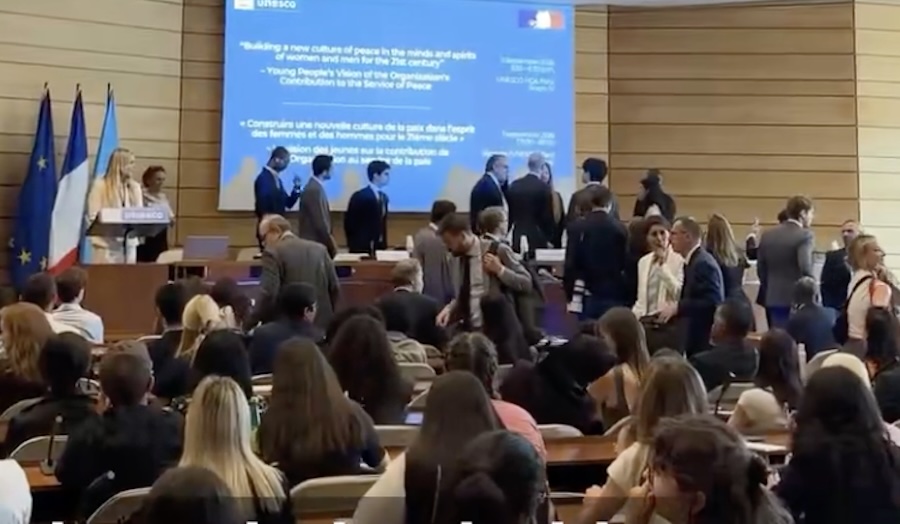
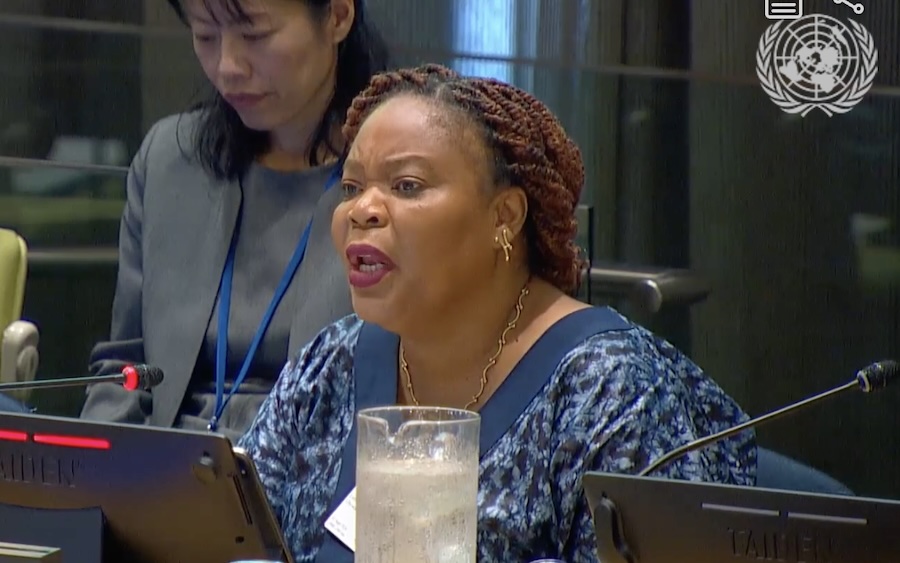
36,000 protesters rally in Tokyo against Japanese PM Takaichi’s push to revise constitution

DISARMAMENT & SECURITY .

An article from Xinhua China News

Tens of thousands of Japanese people gathered around the parliament building in Tokyo on Sunday [April 19] to protest attempts of the government of Japanese Prime Minister Sanae Takaichi to revise the country’s pacifist constitution and to call for the protection of Article 9.

About 36,000 people attended the rally, organizers said, the second protest to draw about 30,000 people near the National Diet Building against constitutional revision since April 8.


Frame from You Tube video of an additional protest on May 4

Protesters held placards reading “No to war,” “Do not undermine Article 9” and “Takaichi step down,” calling for the protection of Japan’s pacifist constitution.

“The fact that so many people have gathered here to protest the Takaichi administration’s push for constitutional revision shows that the Japanese people do not want war,” a protester surnamed Hara told Xinhua. It was her fourth time attending such a rally.

(Article continued in right column)

Question related to this article:

How can the peace movement become stronger and more effective?

(Article continued from left column)

Hara accused Takaichi, backed by her ruling Liberal Democratic Party’s (LDP) supermajority in the lower house, of pressing ahead with constitutional amendment in defiance of public opposition, intending to turn Japan into a country “capable of waging war,” which she said she strongly opposes.

“I hope (the Takaichi government) can listen to the voice of the people,” she added.

Another protester, identified as Takahashi, said Japan had inflicted profound suffering across Asia during wartime and that its pacifist constitution was drafted in reflection on that history. She opposes any move to revise it.

“I have nephews and nieces, and I absolutely do not want them to be sent to war someday,” said Izumi, a first-time participant. “I oppose war. Article 9 must be protected at all costs.”

Another male protester said he feared war and was alarmed by the ruling LDP’s push to revise Article 9. He expressed hope that Takaichi would step down and be replaced by leadership capable of advancing genuine democracy and that Japan would maintain friendly relations with China and countries around the world.

Japan’s Constitution, which took effect in 1947, is often referred to as the pacifist constitution because its Article 9 renounces war as a sovereign right and prohibits Japan from possessing “war potential” such as military forces.

However, both Takaichi and right-wing forces in Japan have long sought to revise Article 9. At an LDP convention on April 12, Takaichi declared that “the time has come” to reform the Constitution, saying that “we would like to hold next year’s convention with a proposal for a constitutional amendment in sight,” signalling a renewed determination that has triggered widespread concern and criticism across Japanese society. 

– – – – – –

If you wish to make a comment on this article, you may write to coordinator@cpnn-world.org with the title “Comment on (name of article)” and we will put your comment on line. Because of the flood of spam, we have discontinued the direct application of comments.
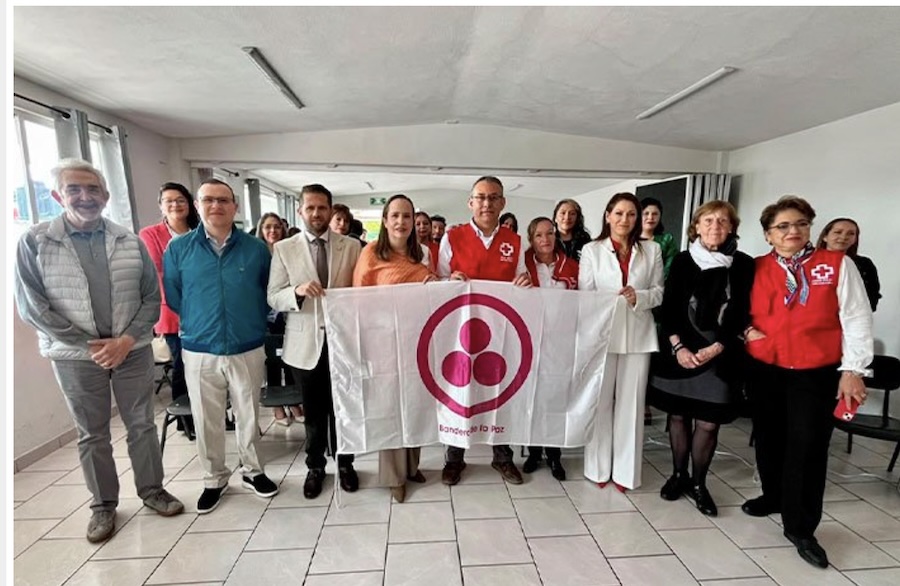
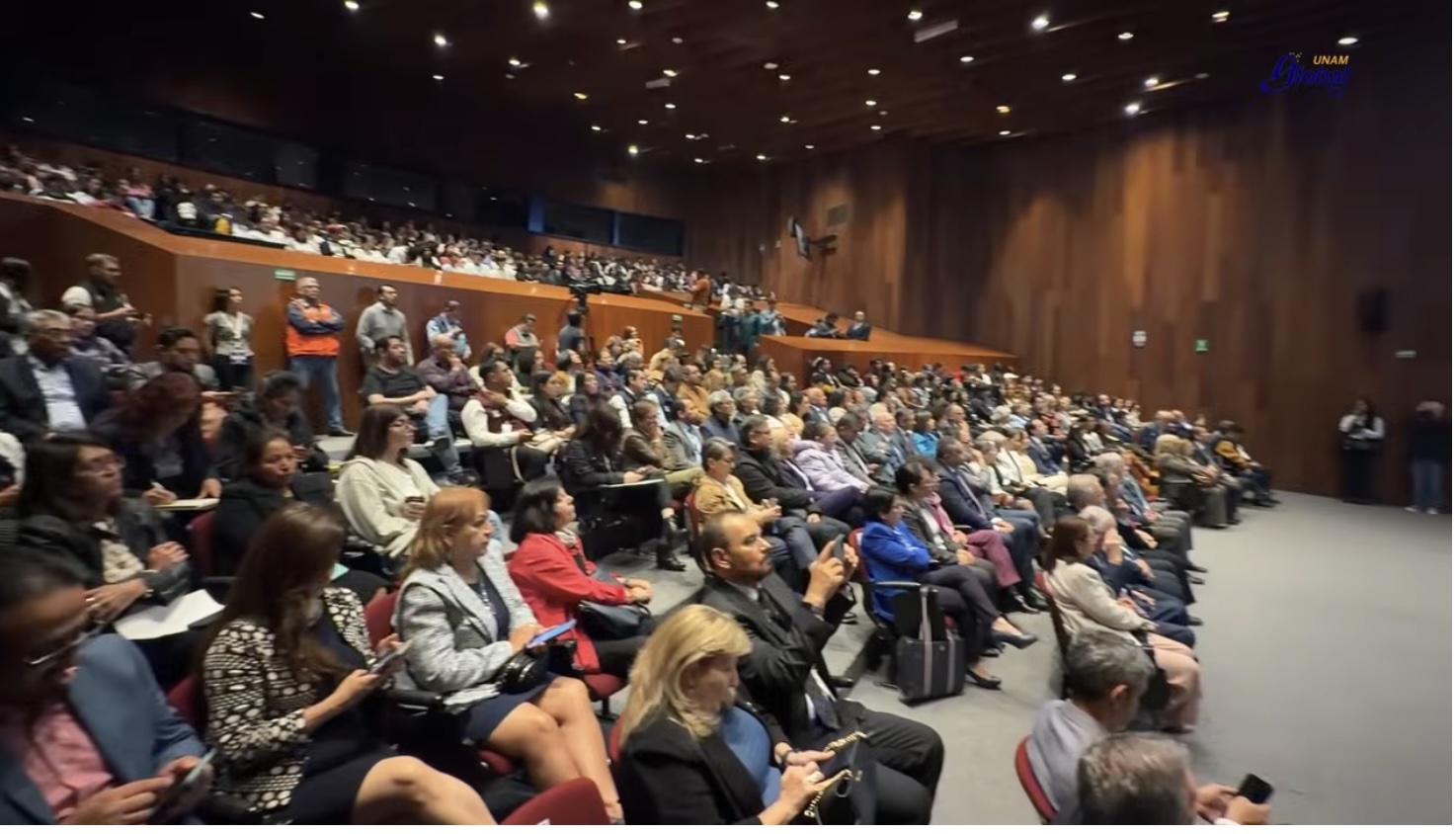
‘A Voice That Upholds the Conscience of the World’: Spain Honors Francesca Albanese for Efforts to Stop Gaza Genocide

. TOLERANCE & SOLIDARITY .

An article by Stephen Prager in Common Dreams (licensed under Creative Commons CC BY-NC-ND 3.0)

Spanish Prime Minister Pedro Sánchez honored  Francesca Albanese, the United Nations special rapporteur on Palestine, on Thursday, in a display of solidarity as she faces sanctions from the United States over her outspoken advocacy against Israel’s genocide in Gaza.

Citing her work to document human rights violations over more than two years of conflict, Sánchez awarded Albanese the Order of Civil Merit, a knighthood granted to Spanish and foreign citizens for extraordinary services benefiting the state or society.

“Public responsibility… entails the moral obligation not to look the other way,” Sánchez said in a social media post. “It is an honor to award the Order of Civil Merit to a voice that upholds the conscience of the world: Francesca Albanese.”

Earlier this week, Sánchez petitioned  the European Commission to intervene to stop compliance with the Trump administration’s efforts to punish Albanese, as well as members of the International Criminal Court who have brought arrest warrants  against Israeli Prime Minister Benjamin Netanyahu and former Defense Minister Yoav Gallant.

(continued in right column)

Question related to this article:
 
How can we best express solidarity with the people of Gaza?

Where in the world can we find good leadership today?

(continued from left column)

Albanese, an Italian legal scholar, has held the role of special rapporteur since 2022, a year before Israel launched a war in Gaza in response to a Hamas-led attack on October 7, 2023. Human rights organizations  and UN experts  have described Israel’s assault as a genocide.

In March 2024, Albanese released  the UN’s first major public report, making the legal case that there are “reasonable grounds” to believe a genocide was being committed, referring to a litany of statements by Israeli officials establishing intent to destroy the Palestinian population.

In addition to documenting Israel’s actions, she has published  research demonstrating the “complicity” of nations that supply weapons and other support to Israel in what she has called a “collective crime” that they should also face responsibility for.

According to official estimates, at least 72,000 Palestinians have been killed  since October 2023, many of them women and children, while independent analyses suggest the death toll is much higher, in part due to the near-total destruction of health and other public infrastructure.

Many of the buildings in Gaza have been destroyed by over two years of relentless bombings, leaving most of its 2.1 million people displaced  and living in tent cities.

Albanese told  a Spanish broadcaster that the US and other nations attempting to punish her and other international authorities for speaking out against atrocities in Gaza were “like an international mafia.”

“They want to silence everyone who demands an end to genocide, an end to the crimes,” she said.

– – – – – –

If you wish to make a comment on this article, you may write to coordinator@cpnn-world.org with the title “Comment on (name of article)” and we will put your comment on line. Because of the flood of spam, we have discontinued the direct application of comments.

May Day Demonstrations Worldwide Condemn US-Israeli War on Iran, Champion Workers

. . DEMOCRATIC PARTICIPATION . .

An article by Brad Reed from Common Dreams (licensed under Creative Commons CC BY-NC-ND 3.0)

May Day demonstrations across the world on Friday denounced the US-Israeli war against Iran, which has caused a global energy crisis that is disproportionately harming working-class people.

Among the earliest May Day demonstrations took place in the Philippines, and a video published  by The Associated Press shows protesters clashing with police near the US Embassy in the capital city of Manila.


Workers in the Philippines clash with police

While many demonstrators held signs that referenced local issues, American foreign policy was also a major focus of the protesters, as marchers in Manila carried a large banner that read, “Down With US Imperialism.”

Josua Mata, leader of the SENTRO umbrella group of labor federations, told  The Associated Press that the war with Iran was a central focus of protests because of the impact it’s had on energy costs.

“Every Filipino worker now is aware that the situation here is deeply connected to the global crisis,” Mata explained.

Indonesian President Prabowo Subianto attended a May Day rally held in the capital of Jakarta, where Jakarta Globe reported  that he announced a host of worker-friendly policies including plans “to build daycare facilities for workers’ children and accelerate the construction of at least 1 million homes.”


Workers’ demonstration in Jakarta, Indonesia

Question related to this article:
 
What is the contribution of trade unions to the culture of peace?

(article continued from left column)

France 24 reported  that hundreds of demonstrators in Istanbul, Turkey were arrested after attempting to march to the city’s iconic Taksim Square, which police had sealed off.

The Turkish Contemporary Lawyers’ Association (ÇHD) said  on Friday afternoon that at least 350 demonstrators in Istanbul have been detained as a result of the protests, with hundreds more potentially in custody.


May Day protests in Istanbul

May Day demonstrations are also taking place across Europe, with many demonstrators blaming US President Donald Trump’s war for the deterioration of workers’ living standards.

The European Trade Union Confederation, which represents 93 trade union organizations in 41 European countries, released a statement declaring that “working people refuse to pay the price for Donald Trump’s war in the Middle East,” adding that “today’s rallies show working people will not stand by and see their jobs and living standards destroyed.”


May Day demonstration in Madrid (Photo by Fernando Sanchez/Europa Press via Getty Images)

Trump is also facing protests at home, with more than 4,000 “May Day Strong” events planned across the United States.

Daniel Bertossa, general secretary for Public Services International, said  this year’s May Day demonstrations are providing a desperately needed backlash to power grabs being made by the global billionaire class.

Bertossa pointed to the US-Israel attack on Iran, as well as Trump’s repeated threats to invade Greenland, as key turning points that have pushed workers to organize and fight back.

“Rising living costs caused by the war are now driving anger among working-class people and producing a rare and powerful moment to connect and educate,” said Bertossa. “Fascists don’t have the answers to the economic pain they exploited to get elected—international affairs impact us all—and international working-class solidarity matters
.”
Bertossa added that “May Day is a vivid reminder that working-class politics is not a spectator sport,” and “we have never won by watching, waiting, or relying on great power leaders to gift us our future.”

– – – – – –

If you wish to make a comment on this article, you may write to coordinator@cpnn-world.org with the title “Comment on (name of article)” and we will put your comment on line. Because of the flood of spam, we have discontinued the direct application of comments.

‘A Moment of Reckoning’: 4,000+ May Day Demonstrations Across US

. . DEMOCRATIC PARTICIPATION . .

An article by Stephen Prager from Common Dreams (licensed under Creative Commons CC BY-NC-ND 3.0)

In thousands of locations across the United States, workers and students are taking off from work and school and swearing off shopping on Friday as part of a national May Day protest.

May Day Strong, a coalition of activist groups and unions organizing the events, said more than 4,000 actions, from marches to pickets to displays of peaceful civil disobedience, were underway.

It is yet another nationwide display of coordinated resistance to the Trump administration’s agenda, including its war in Iran and its use of US Immigration and Customs Enforcement (ICE) to attack immigrant communities, issues that were at the forefront of March’s “No Kings” protests.

Six young protesters with the Sunrise Movement were taken into custody  after blocking a bridge in Minneapolis in what they said was an act of “nonviolent noncooperation” to “stand up to the war in Iran and against ICE terrorizing our neighbors and our cities.”

Dozens more Sunrise protesters in Portland held a sit-in in the lobby of a Hilton hotel that was housing top officials with the Department of Homeland Security, leading to eight arrests.

“It’s May 1st, it’s workers’ day,” one of the protesters was recorded saying while being led away by police. “Don’t forget that you have power.”

In New York, over 100 activists lined up  outside every entrance  to the New York Stock Exchange in downtown Manhattan, banging drums and chanting “No ICE, no war!” where they were met by a flood of cops.

In the spirit of May Day, a global day of solidarity among workers, Sulma Arias, the executive director of the social justice organization People’s Action, said Friday’s “Workers Over Billionaires” protests are just as much about confronting injustices as about building an alternative.

“During the ‘No Kings’ demonstrations, we showed what we’re against. May Day is the day we’re making clear what we are fighting for,” Arias said. “We are for affordable housing for low-income people. We are for free healthcare for all. We are for utility laws that ensure every home stays warm in the winter and cool in the summer at costs that a person on a fixed income can afford. We are for the right to a fair and equal vote for Americans from every race and in every state. May Day is our day to assert and defend our rights.”

“They want us afraid. They want us divided. But on May 1, we refuse.”

Despite claims by President Donald Trump that the US is entering an economic “golden age” under his leadership, a Gallup poll  released this week found that 55% of Americans said their finances were getting worse, the highest number ever recorded in more than 20 years of polling, and even higher than in the doldrums of the Great Recession.

Question related to this article:
 
What is the contribution of trade unions to the culture of peace?

(article continued from left column)

A coalition of labor unions across several major cities, including Philadelphia, Chicago, and Los Angeles, has coordinated  what has been called an “economic blackout,” which includes avoiding buying from private sector retailers.

“When we say ‘workers over billionaires,’ ‘billionaires’ is not just this amorphous figure, right? They’re real people,” said Jana Korn, the chief of staff for the Philadelphia Council AFL-CIO, in an interview  with The Real News Network. “In Philadelphia, we’re kind of a poor city. We don’t have that many billionaires, but we have one. The CEO of Comcast is the only billionaire that lives in the city.”

“So why should we, as a city, accept that they take and take from us? And then with that money, what do they do? They donate  to Trump’s ballroom project,” she continued. “People in Philadelphia are struggling… Our transportation system barely works. We’re at risk of having 17 schools close down  this year.”

Some labor organizers have described economic boycotts, undertaken  as part of prior mass protest movements against the second Trump administration, as an act of building strength for something larger, such as a future general strike.

“I think really for us in the labor movement,” Korn said, “[the boycott is] about how do we build the capacity to really disrupt, to strike when necessary, to shut things down when we have to. And that’s something that we have not been called to do as a labor movement in a very long time.”

Other unions have used May Day to confront their own employers directly. In New Orleans, hundreds of nurses at University Medical Center announced that they were beginning a five-day strike  after attempting to negotiate a contract for more than two years.

In New York City, Amazon workers unionized with the Teamsters assembled on the steps of the public library before marching to Amazon’s corporate offices to demand the company cut its contracts with ICE, which has used its cloud computing services to target immigrants, including some Amazon workers and contractors.

Matt Multari, who has worked as an Amazon driver for a year and a half, told Mother Jones  that he joined the protest to “demand the one thing that’s worth fighting for in this life: respect.”

Masih Fouladi, executive director of the California Immigrant Policy Center, said, “May Day is a moment of reckoning.”

“Immigrant communities—from farmworkers in our fields to nurses in our hospitals, from refugees fleeing war to families who have built their lives here for generations—are under siege,” she said. “They want us afraid. They want us divided. But on May 1, we refuse.”

“Workers and immigrants—documented and undocumented, native-born and newly arrived,” she said, “will stand together in the streets because we know the truth: there is no workers’ rights without immigrant rights, and there is no justice for working people here while our tax dollars fund devastation abroad.”

– – – – – –

If you wish to make a comment on this article, you may write to coordinator@cpnn-world.org with the title “Comment on (name of article)” and we will put your comment on line. Because of the flood of spam, we have discontinued the direct application of comments.
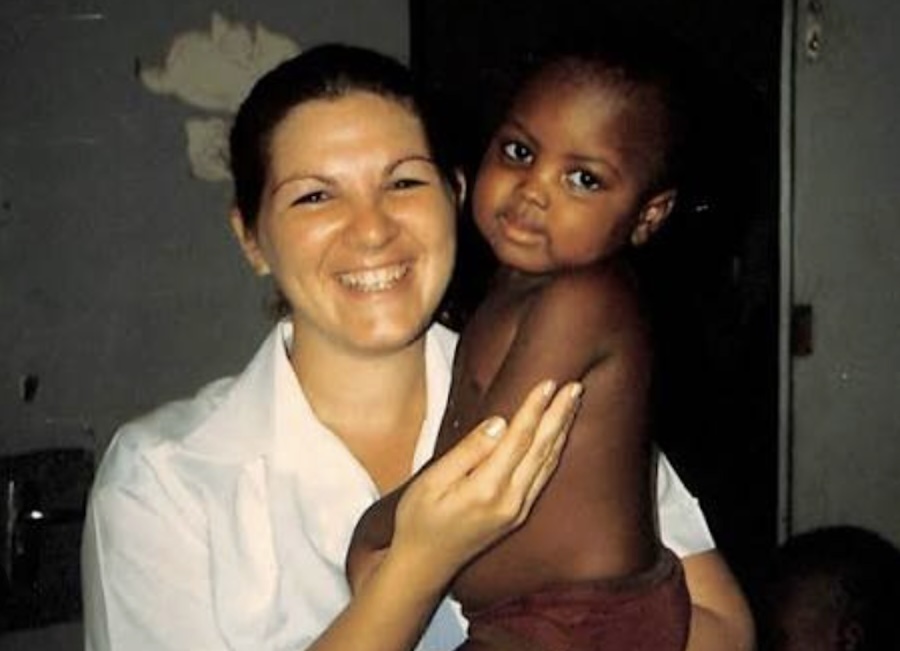
English bulletin May 1, 2026

. PEACE IN WESTERN MEDITERRANEAN .

While the Eastern Mediterranean (Lebanon, Palestine, Israel) is torn apart by the war launched by Netanyahou and Trump, the Western Mediterranean (Spain, Morocoo, Algeria, Italy, etc.) has embarked on peace initiatives to ensure that they do not get caught up in a new World War.

Italy and Spain have announced that their air space cannot be used by the Americans for their attacks in the Middle East.

Spanish President Pedro Sánchez hosted two international meetings dedicated to peace and economic justice. Among those takiing part were Brazilian President Luiz Inácio Lula da Silva, South African President Cyril Ramaphosa, Colombian President Gustavo Petro, and leading progressive elected officials from the United States. “We want to double our efforts to work for peace and for a reinforced multilateral order. While others open wounds, we want to mend them and cure them,” said Sánchez. Colombian President Gustavo Petro said that “by firmly opposing the war waged by the United States and Israel against Iran , “it seems to me that Spain’s position is at the forefront in Europe.”


Italy and Algeria are united in peace by the mission of Pope Leo to Algers. The President of the High Islamic Council pointed to its “prominent diplomatic dimension, which is poised to achieve harmony between two states of great religious and historical weight, establishing Algeria as a beacon of radiance for global peace”. The Pope continued on to Angola, Cameroon and Equaterial Guinea where he continued to speak for peace and dialogue. He called explicitly for “a new culture of peace“. As for Italy, it seems that the Pope’s criticism of Trump’s militarism, has led to the country’s opposition to it as well.

Algeria hosted an Arab Forum for Youth, Peace and Security. The UNDP Resident Representative in Algeria, Natasha Van Rijn, highlighted the essential role of young people in consolidating peace. The Yemeni Minister of Youth and Sports underscored the crucial role of young people in spreading a culture of peace and building a more stable future.

In Moroco, the launch of the “Nawal Ouzitane – Youth Voices for Peace” Prize was one of the highlights of an international meeting dedicated to peace and tolerance. This national prize aims to promote the creative expression of young people in various fields, reflecting their awareness of the values of peace and their responsibility in strengthening them, with a particular emphasis on raising awareness among younger generations about the importance of dialogue, openness, and cultural diversity.

Barcelona is the center for peace initiatives. In addition to the meetings hosted by the Spanish President mentioned above, Barcelona is the scene for the mobilization of the Sumud Flotilla, bound for Gaza in an attempt to break the Israeli blockade. The flotilla has gathered 70 boats, many of them coming from other Mediterranean ports. The fleet carries medical supplies, food, and reconstruction materials while featuring doctors, engineers, legal experts, and activists ready to establish an unarmed protective presence if permitted. Participants include parliamentarians, journalists, and civil society leaders from every continent.

The city of Barcelona, along with the Pablo Casals Foundation has announced a new prize for peace. The Barcelona for Peace International Award  recognises the trajectory, action or project of a person, organisation or institution at an international level which has helped, in a relevant, transformational and verifiable way, to promote peace, coexistence, human rights and the peaceful resolution of conflicts. The biennial award carries 300,000 euros in prize money and is geared towards strengthening the media impact and transformational characters of the winning project or organisation.

The rest of Europe is lagging behind Spain and Italy with regard to the wars of Trump and Netanyahou, but hopefully they, too, will eventually join the opposition.

HUMAN RIGHTS


70+ Boats Launch Historic Global Sumud Flotilla to Gaza in Bold Solidarity Stand

SUSTAINABLE DEVELOPMENT


Colombia: Conference on the Transition Beyond Fossil Fuels concludes with five key outcomes

DEMOCRATIC PARTICIPATION


New Barcelona for Peace International Award

WOMEN’S EQUALITY


Lifetime premieres Peace Peace Now Now, a documentary series about women’s resistance in Latin America


TOLERANCE & SOLIDARITY


Essaouira, Morocco: Launch of the Prize for “Youth Voices for Peace”

EDUCATION FOR PEACE
<
National Autonomous University of Mexico: Encounters and Networks for Peace. Why Talk About a Culture of Peace?

FREE FLOW OF INFORMATION


Sánchez, Lula Lead ‘Work for Peace’ and Equality at Gathering of Global Progressive Leaders in Spain

DISARMAMENT & SECURITY


Over 100 International Law Experts Warn: U.S. Strikes on Iran Violate UN Charter and May Be War Crimes

Colombia: Conference on the Transition Beyond Fossil Fuels concludes with five key outcomes

. . SUSTAINABLE DEVELOPMENT . .

An article from Minambiente, Colombia (translation by CPNN)

– April 29: In Santa Marta, Colombia, 57 countries met with 13 stakeholder groups, totaling more than 1,500 participants. The discussions focused on three key themes: reducing economic dependence on fossil fuels, transforming supply and demand, and advancing international cooperation.

The main conclusion of the conference is clear: this momentum must be sustained and efforts must be organized on a larger scale. This conference delivers five key outcomes that create a practical platform for working together and supporting one another to accelerate the transition away from fossil fuels:

1. The second conference on transitioning beyond fossil fuels was announced, to be held in early 2027. It will be co-chaired by Ireland and Vanuatu.

2. A coordination group will be established to ensure continuity to the second and future conferences, strengthen links between initiatives, and avoid duplication. This group will bring together countries leading key transition efforts—such as the United Kingdom, Denmark, Brazil, France, and the Marshall Islands—along with the co-host countries Colombia, the Netherlands, Tuvalu, and Ireland, and will be advised by the COP30 Activation Group.

3. The results will be shared with the COP30 Presidency to inform its roadmap. They will also be aligned with the COP31 roadmap and Action Agenda, and will contribute to the second Global Stocktake.

4. Three lines of work have been established to identify concrete ways to reduce dependence on fossil fuels and strengthen cooperation. Their structure will be defined between the first and second conferences. They will remain open and flexible, allowing countries to join or lead, with the support of existing initiatives and experts from the Santa Marta process.

5. The Scientific Panel on the Global Energy Transition (SPGET) was launched to support countries in moving beyond fossil fuels. This panel will contribute to the development of roadmaps aligned with the 1.5°C target and will address legal, financial, and policy barriers.

(Click here for the original article in Spanish)

(article continued in right column)

Question for this article:

Despite the vested interests of companies and governments, Can we make progress toward sustainable development?

Sustainable Development Summits of States, What are the results?

(Article continued from the left column)

“We succeeded in bringing the world together. We decided not to resign ourselves to an economy built on the destruction of life; we decided that the transition beyond fossil fuels can no longer remain a slogan, but must become a concrete, political, and collective effort. When people look back in the future, they will not only remember this conference. They will remember whether or not we rose to the challenge of our time,” stated the acting Minister of Environment and Sustainable Development of Colombia, Irene Vélez Torres.

For her part, the Netherlands’ Minister for Climate and Green Growth, Stientje van Veldhoven, stated: “I can confidently say that, in recent days, we have laid the groundwork for concrete action to move away from fossil fuels. With such a broad coalition of countries and representatives from the private sector, civil society, and beyond, this is a group capable of making a significant impact. The countries convened in Colombia represent approximately 30% of global energy demand and nearly 20% of global energy supply. Together, we have begun to organize on a large scale to meet this challenge, committing ourselves to sustained, long-term participation. This transition will require navigating a complex set of economic, social, and technical challenges. The message for addressing these was clear: let’s get to work and support each other throughout the process.”

Final list of participating countries: Angola, Antigua and Barbuda, Australia, Austria, Bangladesh, Belgium, Brazil, Cameroon, Canada, Chile, Costa Rica, Denmark, Dominican Republic, European Union, Finland, France, Germany, Ghana, Guatemala, Iceland, Ireland, Italy, Jamaica, Kenya, Kiribati, Luxembourg, Malawi, Maldives, Marshall Islands, Mexico, Micronesia, Mongolia, Nepal, New Zealand, Nigeria, Norway, Pakistan, Palau, Panama, Portugal, Saint Kitts and Nevis, Saint Lucia, Senegal, Singapore, Slovenia, Solomon Islands, Spain, Sri Lanka, Sweden, Switzerland, Turkey, Tuvalu, Uganda, United Kingdom of Great Britain and Northern Ireland, United Republic of Tanzania, Uruguay, Vanuatu, Vatican City – Holy See.

– – – – –

(Editor’s note: According to Greenpeace, “The landmark Santa Marta conference for the transition away from fossil fuels represents an important milestone on the road to long-term climate and energy stability.” According to the World Wildlife Fund, “Santa Marta tackled the toughest climate hurdle – turning ambition into action, while bringing all stakeholders into the conversation”. And according to Bill Mckibben, founder of 350.org, “Santa Marta Leads the World Into the Energy Future, while the US Clings to the Past.”

(Editor’s note 2: At last year’s COP30 in Belém, a group of 80 countries called for the design of a global roadmap to phase out coal, oil and gas, but it was blocked by large oil producers and consumers like Saudi Arabia, Russia, India and China.

– – – – – –

If you wish to make a comment on this article, you may write to coordinator@cpnn-world.org with the title “Comment on (name of article)” and we will put your comment on line. Because of the flood of spam, we have discontinued the direct application of comments.
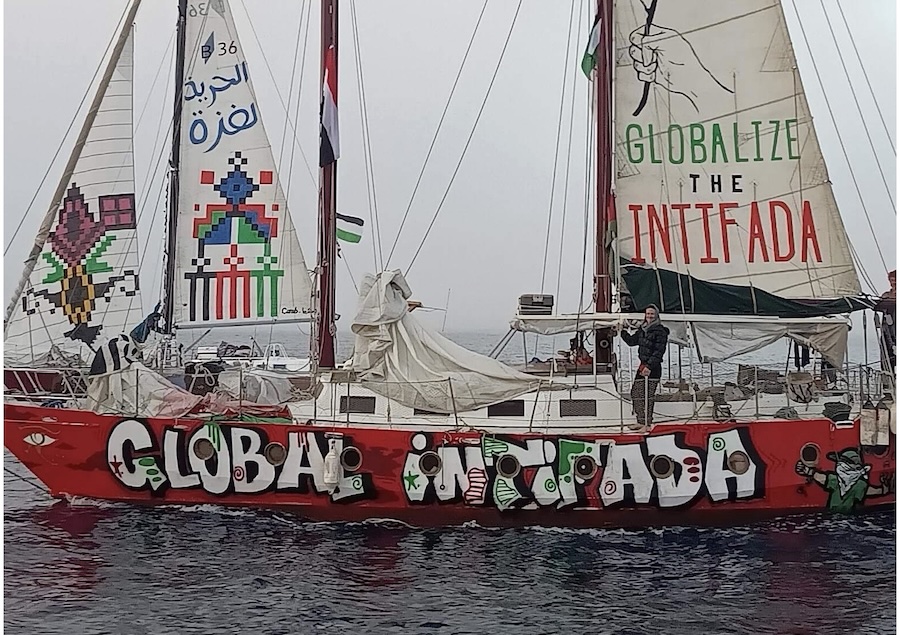
State of Mexico: more than a thousand School Mediators strengthen a culture of peace

… EDUCATION FOR PEACE …

An article from Edomex Quadratin (translated by CPNN)

In the State of Mexico (EMX), 1,114 primary, secondary and upper secondary level teachers have been certified as School Mediators by the Judicial Branch of the State of Mexico, a strategy that has allowed to strengthen the culture of peace and improve coexistence within educational institutions.

Mario Alberto Montaño Delgado , Toluca regional director of the Public Center for Alternative Dispute Resolution Mechanisms (MASC), explained that this figure allows schools to have trained personnel to detect, address and channel conflicts before they escalate to more serious situations.

He explained that School Mediators have tools to intervene in problems involving students, teaching staff and mothers or fathers, promoting dialogue and the peaceful resolution of differences.

They address school conflicts

“The greatest achievement is that today they have the largest and broadest structure, institutionally speaking, of certified facilitators,” Montaño Delgado noted, highlighting the growth of this support network in the educational field.

(Continued in right column)

(Click here for the Spanish original of this article)

Question for this article:

Mediation as a tool for nonviolence and culture of peace

Is there progress towards a culture of peace in Mexico?

(Continued from left column)

He indicated that each certified teacher acquires a different vision about conflicts and becomes a promoter of a philosophy focused on building peace within school communities.

He added that this strategy is being developed in a coordinated manner with institutions such as the Ministry of Education, Science, Technology and Innovation of the State of Mexico, the State Human Rights Commission and the Autonomous University of the State of Mexico (UAEMéx).

Bullying, the main problem

The official explained that School Mediators represent the first filter to prevent conflicts from reaching jurisdictional instances , with bullying being one of the main problems they face within schools.

He explained that when cases exceed the capacity for mediation, the Judicial Branch intervenes , through the Public Center for Alternative Dispute Resolution Mechanisms , headed by Magistrate Blanca Colmenares Sánchez.

In these cases, situations related to physical or material damages are addressed , as well as legal obligations arising from school conflicts.

Montaño Delgado explained that to obtain certification as a School Mediator , teachers must complete 120 hours of training, pass theoretical and practical evaluations, and subsequently renew their accreditation every five years before the Judicial Power of the State of Mexico (PJEdomex) .

– – – – – –

If you wish to make a comment on this article, you may write to coordinator@cpnn-world.org with the title “Comment on (name of article)” and we will put your comment on line. Because of the flood of spam, we have discontinued the direct application of comments.
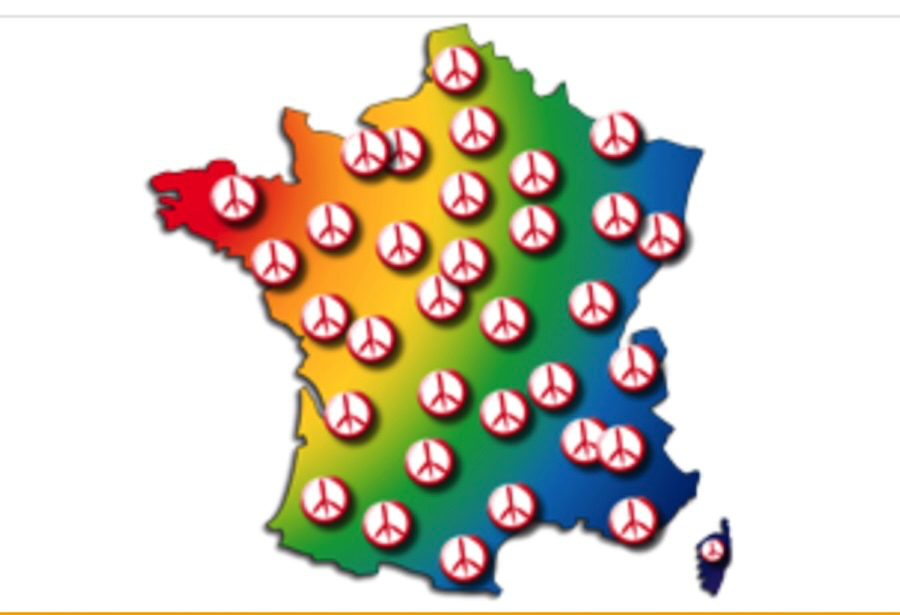
National Autonomous University of Mexico: Academics suggest intensifying the construction of a culture of peace

… EDUCATION FOR PEACE …

An article from Impulso Informativo (translation by CPNN)

Peace requires a perspective that transcends geographical, symbolic, linguistic, and material borders, since they have often been spaces of exclusion and violation of human rights, said Fiorella Mancini, Academic Secretary of the Humanities Coordination at UNAM.

“In light of this, we are challenged us to rethink these limits and to analyze the possibilities of common forces,” he said at the opening of the International Seminar “Transnationalization of the Culture of Peace in North America.” The seminar took place In the Mónica Verea room of the Center for Research on North America (CISAN).

The academic meeting promotes dialogue between specialists from diverse contexts, for example, from the University of Notre Dame – which has developed models applied in more than 100 countries to promote programs in this field in higher education institutions – as well as the analysis of universal principles and local realities.

The meeting proposes a different and complementary perspective on the current geopolitical reality where democracy is backsliding and we are losing rights that were thought to have been won. We want to consider what is possible: resolutions, dialogue, and the challenges of integrating differences, Fiorella Mancini pointed out.

(Continued in right column)

(Click here for the Spanish original of this article)

Question for this article:

Where is peace education taking place?

University campus peace centers, What is happening on your campus?

(Continued from left column)

New dimension

According to Juan Carlos Barrón Pastor, director of CISAN, this university entity works in conjunction with UNAM’s campuses in the United States (Chicago, San Antonio, Los Angeles, Tucson, Boston, and Seattle). This serves as the initial point of contact for addressing all types of violence and conflict experienced on both sides of the border. He said that the lines of research we develop take on a new dimension when viewed in light of building a culture of peace, since this is a way to reverse the growing violence in Mexico.

According to Leticia Cano Soriano, head of the University Program on Culture of Peace and Eradication of Violence (PUCPAZ), university efforts to achieve this way of life involve creating community, interweaving actions, knowledge and commitments, in order to propose alternatives for the formation of a culture of peace. (See CPNN article from April 12)

According to Anel Pérez Martínez, director of the Center for Foreign Studies at the National University, we must combat hate speech which is a powerful form of aggression. We cannot imagine a culture of peace without inclusive language, which contributes to critical thinking, she emphasized.

George Lopez, professor emeritus at the University of Notre Dame and founder of the Krok Institute for International Peace Studies at this institution, contributes to this academic activity a model that consists of exchanges of American students with those from war zones or conflict zones.

He explained that his focus is on building a strategic peace where there is training in mediation, social resolution and community work.

The Seminar was organized by the Humanities Coordination; CISAN; Institute of Social Research; Faculty of Psychology; National School of Social Work; Center for Mexican Studies of the UNAM in Chicago and the University of Notre Dame (based in Indiana, United States).

– – – – – –

If you wish to make a comment on this article, you may write to coordinator@cpnn-world.org with the title “Comment on (name of article)” and we will put your comment on line. Because of the flood of spam, we have discontinued the direct application of comments.
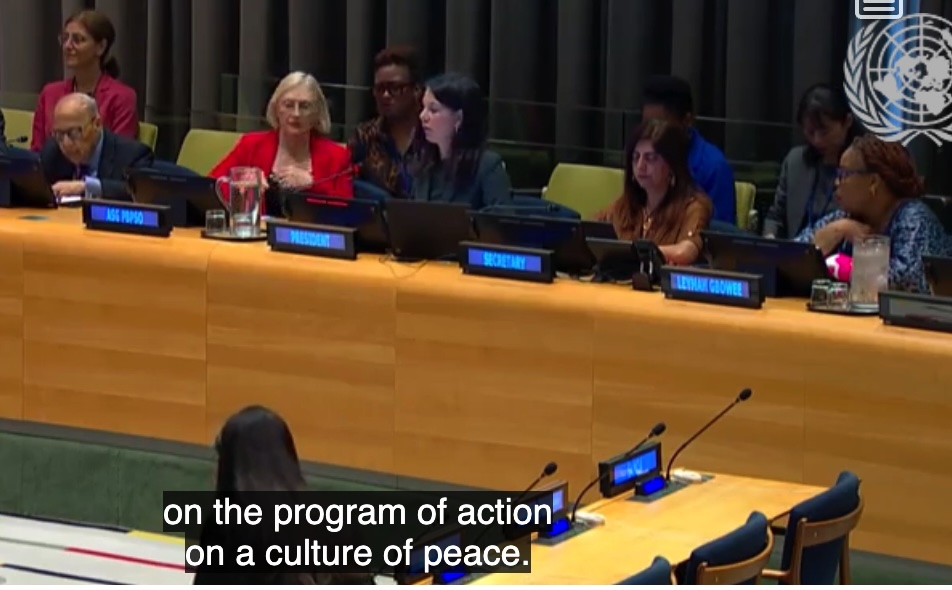
Caruaru, Brazil: The Conflict Mediation Program: Promoting a Culture of Peace

. EDUCATION FOR PEACE .

An article from Blog of Alberto Alves (translation by CPNN)

In Caruaru, the Government of the State of Pernambuco, in partnership with the company Coonsult and under the coordination of the Secretariat of Justice and Human Rights and Violence Prevention, is pleased to present the Itinerant Conflict Mediation Program, a revolutionary initiative aimed at promoting a culture of peace.

The Conflict Mediation Program is available to the public, completely free of charge. If you are facing problems with neighbors, disagreements at home or with your family, at work, at school, or even in consumer situations, know that we are here to help you find solutions.

(article continued in right column)

(Click here for the original article in Portuguese)

Discussion question

Mediation as a tool for nonviolence and culture of peace

(article continued from left column)

Our team of specialized mediators is ready to listen to all parties involved, and to facilitate a constructive dialogue that can resolve these conflicts peacefully, fairly, and out of court. Our goal is to promote peace in your community through mutual understanding and the building of more harmonious relationships.

Remember: dialogue is the key to conflict resolution. Don’t hesitate to contact us. We are here for you. Together, we can build a more peaceful and welcoming environment for everyone.

The Conflict Mediation Program is on your side.

Contact us today and take the first step towards a more peaceful and happy future. We are located at Avenida Amazonas N° 168, Caruaru-PE. Contact numbers: 81 9 9306-6418 / 81 9 9477-9425

– – – – – –

If you wish to make a comment on this article, you may write to coordinator@cpnn-world.org with the title “Comment on (name of article)” and we will put your comment on line. Because of the flood of spam, we have discontinued the direct application of comments.
Burkina Faso: An inter-institutional cultural day to celebrate social cohesion 

. TOLERANCE & SOLIDARITY .

An article from the News Agency of Burkina Faso

The youth of the commune of Kokologho celebrated, on Saturday, April 25, an inter-institutional cultural day under the banner of social cohesion. 
 
Organised around the theme “Responsible Youth, a Better Future”, this cultural immersion mobilized local, customary and school authorities in the town’s conference room.

The initiative, led by local educational stakeholders, has a clear objective: to strengthen resilience and cohesion among the people of Kokologho, the teaching staff, and the students. Beyond simply fostering interaction, it aims to stimulate civic engagement and solidarity among young people to build a peaceful future.

(Click here for the article in French.)

(continued in right column)

Question related to this article:
 
Youth initiatives for a culture of peace, How can we ensure they get the attention and funding they deserve?

(continued from left column)

The President of the Special Delegation (PDS) of Kokologho, guest of honor at the ceremony, expressed his satisfaction with the turnout. He commended the students’ creativity and the relevance of this initiative, which promotes community spirit in a context where unity is paramount.

For the event’s patron, His Majesty Naaba Sigri, this day is a lever for safeguarding local identity.

“This is a great joy for me. I commend the leaders who took this initiative to bring together students and the entire population for the preservation of culture. I ask the authorities to support these young people in their mission to promote academic excellence and solidarity,” he pleaded.
 
Echoing this sentiment, co-sponsor Cheick Abdoul Karim Sawadogo expressed his admiration for the youth’s enthusiasm. He stated that this strong mobilization for culture sends a powerful message in favor of tolerance and a culture of peace within the community.
 
The day was marked by various artistic performances, illustrating the richness of the cultural heritage of the Boulkiemdé province, under the benevolent gaze of religious and traditional leaders.

– – – – – –

If you wish to make a comment on this article, you may write to coordinator@cpnn-world.org with the title “Comment on United Nations Alliance of Civilizations” and we will put your comment on line. Because of the flood of spam, we have discontinued the direct application of comments.