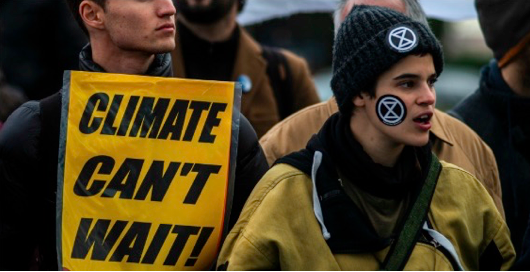
The failures of COP26 and COP28, the United Nations Climate Change Summits, are nothing new. For 25 years now these summits have failed to deal with the enormous problem of global warming.
An exception is the UN Ocean Treaty finally adopted in 2023 after 20 years of negotiations.
Here in the right column are articles about the summits published by CPNN from since the landmark Rio+20 conference in 2012.
CPNN has published several bulletins critiquing the summits. One was published in January 2020. Another was published following COP21 at the end of 2015 which produced the so-called “Paris Agreement.”
At that time we said:
There are many contradictory opinions about the results of the Paris Climate Agreement, so CPNN turned to two of the most independent and scientific authorities, James Hanson, the former Nasa scientist, who first alerted the world to climate change in 1988, and Naomi Klein, Canadian author, social activist, and filmmaker known for her political analyses and criticism of corporate globalization (see CPNN review of her most recent book, This Changes Everything).
According to James Hanson the agreement is a complete fraud, diverting us from the real cause of global warming. which is the continued reliance on oil and coal. According to his most recent research, if we do not radically cut this reliance, “the sea level could soon be up to five meters higher than it is today by the latter part of this century [which] would inundate many of the world’s cities, including London, New York, Miami and Shanghai.
According to Naomi Klein, the Paris agreement takes us backwards. At least the Kyoto Accord of 1997 included binding language, while the Paris Accord does not. And Klein makes the link between the reliance on oil and the disastrous wars of recent years: “Do we think Iraq would have been invaded if their major export had been asparagus [as journalist Robert Fisk once asked]? Probably not. We wanted that prize in the west, Iraq’s oil. . . This destabilized the whole region, which was not particularly stable to begin with because of earlier oil wars and coups and support for dictatorships.”
In our bulletin following Rio+20 in 2012, we wrote:
“The events surrounding the Rio + 20 summit of States from around the world have exposed a turning point in history. The states have been unable to advance in the face of the world’s environmental crisis. Instead, it is the civil society, including cities, youth and indigenous peoples who have taken the leadership in preparing for the next stage of human history.”
Colombia: Conference on the Transition Beyond Fossil Fuels concludes with five key outcomes
50,000 March in Brazil to Celebrate Death of Fossil Fuel Industry at COP30
COP28 Fails to Deliver a Fossil Fuel Phaseout
Amazon Rainforest Nations Gather to Forge a Shared Policy
G77 Statement to High-level Political Forum on Sustainable Development
Historic UN Ocean Treaty agreed – Greenpeace statement
Greenpeace on COP15: A bandage for biodiversity protection
Amid rain and wind, Catholics join 100,000 demonstrators at COP26 climate march
COP26: Thousands of young people take over Glasgow streets demanding climate action
At Major March in Madrid, Indigenous & Youth Activists Slam Global Leaders for Climate Inaction
The U.S. is trying to get out of paying climate damages to poor countries
Naomi Klein: We are going backwards, COP21 is the opposite of progress
ICLEI Declaration to the Ministers at COP21, Paris, France
Bolivia, Ecuador, Venezuela Agree to Defend Mother Earth at COP21
– – – – Links for the following articles published prior to 2015 do not work because they were made by a version of PERL programming that is no longer supported. With three easy steps, you can find the article by its number. First, click on it before returning to this page. Your browser will say that the article is not available but in the address listed you can see that it was located at ViewArticle=xxxx where xxxx is the number of the article. Returning to this page, then click here for the listing of all years. Then click on the year that contains the number for the article you seek. It will send you to the page where you can easily search for the article by its title. – – – –
ICLEI’s evaluation of the outcomes of Rio+20