Philippines: Theater, a tool for international understanding

… EDUCATION FOR PEACE …

An article from the Manila Buletin

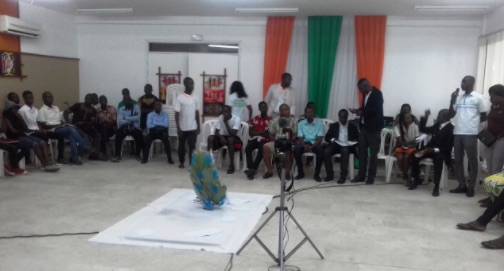
World Theater Day, instituted by the International Theater Institute (ITI) on March 27, 1962, to mark the opening of the Theater of Nations in Paris, France, has since been annually celebrated on March 27 to focus on the importance of theater as a diverse and complex art form that taps the creative work of the playwright, director, actors, artists, and composers. In musical theater, acting is combined with music, song, and dance.2

ITI, the world’s largest organization for the performing arts established in 1948 by UNESCO during the first world congress in Prague, Czech Republic, has a network of 100 national centers worldwide, including the Philippines, that promotes international exchange of knowledge and practice in theater arts, aiming to consolidate peace and friendship among peoples, deepen mutual understanding, and increase creative cooperation among people in the theater arts. An ITI center is made up of professionals active in the theater life of a country and representative of all branches of the performing arts.

The Philippines celebrates UNESCO-ITI World Theater Week every year on March 21-27, pursuant to Proclamation 1262 in 2007. The National Commission for Culture and Arts leads the weeklong celebration, in coordination with ITI-affiliated Philippine Center of the International Theater Institute. Events in Metro Manila and in the regions include the presentation of short plays, dance troupe performances, puppet shows, art exhibits and singing. NCCA encourages artists and culture enthusiasts to partner with the government towards the full flowering of theater arts among Filipinos.

On World Theater Day, events are held by theater communities all over the world, the most important of which is spreading an international message by a renowned personality on the theme of theater and a culture of peace. The first international message was written by French poet-novelist Jean Cocteau in 1962. For 2017, French theater and cinema actress Isabelle Huppert will deliver the World Theater Day message at a special show at the UNESCO in Paris.

Each year, the message is translated into more than 20 languages, read for tens of thousands of spectators before performances in theaters worldwide, released throughout the ITI network, and printed in newspapers.

(For an article on World Theater Day in Mexico, click here)

Question for this article:

The theatre, How can it contribute to the culture of peace?

Here is a response to the question submitted to CPNN by Kiki Chauvin.

The actor lives between two worlds, one of which is his proper existence and the other, the world of fiction where he takes on the role of his character. He seems to have one foot on each of them while his head collects, combines, mixes, synthesizes and puts together the emotions that are translated and expressed by body and voice.

We get it directly, it is “in our face” with no escape possible!  The richness of this mixture “reality/fiction” allows the artist to enter into us through hidden doors.

Using texts with humor and irony, the actor passes messages to which our minds would otherwise be deaf!  He affects us, challenges us, plays with us,  provokes us, making our attention an accomplice of what he has to say.

The direct contact and proximity, sometimes intimate, between stage and audience send us messages that we hear, questions that provoke us to transferring images to our daily experience, our reality, to “real life”!

Thus we are pushed and shaken from calm to storm, from injustice to anger, from hatred to solidarity,  from indifference to empathy in the face of violence.

Actors are in the public service. They are “Public Friends Number One!” They are chroniclers, “troublemakers,”  breakers of habit, forcing us to think things through.

The culture of peace needs the oxygen of this youthful spirit! ,  I believe that art in general, with its playfulness, has the power to awaken us. It is an excellent support to the promotion of the Culture of Peace.

I love the theater, it is a space of freedom where actors can transmit an energy drawn from the conviction of what they say.

We hear, receive, understand  for a digestion that may be immediate and /or delayed. Some part is absorbed immediately, but the rest we take home with us.  . . .  and that is where the seeds of consciousness begin to germinate into the Culture of Peace.

Here are CPNN articles pertaining to this question:

World Theatre Day March 27

Philippines: Theater, a tool for international understanding

Mexico, Los Cabos, Baja California Sur: Theater show celebrated on Theater Day

México, Los Cabos, Baja California Sur: Con muestra de trabajo escénico se celebró el Día del Teatro

From the “jungle” to the theater, refugees replay their exile to Europe

De la “jungle” au théâtre, des réfugiés rejouent leur exil vers l’Europe

– – – – Links for the following articles do not work because they were made by a version of PERL programming that is no longer supported. With three easy steps, you can find the article by its number. First, click on it before returning to this page. Your browser will say that the article is not available but in the address listed you can see that it was located at ViewArticle=xxxx where xxxx is the number of the article. Returning to this page, then click here for the listing of all years. Then click on the year that contains the number for the article you seek. It will send you to the page where you can easily search for the article by its title. – – – –

Interview with Ms. Cecile Guidote-Alvarez Director, UNESCO DREAM Center, Philippines

Shades, an Anti-war Play, Opens to Rave Reviews in Los Angeles

The Inside Story on Our UN Report Calling Israel an Apartheid State

. .DISARMAMENT & SECURITY. ,

An article by Richard Falk reprinted by Transcend Media Service

Six months ago, the UN’s Economic and Social Commission for West Asia (ESCWA) asked Virginia Tilley and me to write a study examining the applicability of the international criminal law concept of apartheid to Israel’s policies and practices toward the Palestinian people. We were glad to accept the assignment, and conceived of our role as engaging in an academic undertaking. ESCWA, one of several UN regional commissions, requested the study as a result of an uncontested motion adopted by its 18 Arab member governments.


A Palestinian woman argues with Israeli soldiers at a West Bank checkpoint south of Hebron on August 16, 2016. (Reuters / Mussa Qawasma)

Almost within hours of its release on March 15, our report was greeted by what can only be described as hysteria. The US ambassador to the UN, Nikki Haley, denounced it and demanded that the UN repudiate it. The newly elected secretary general, António Guterres, quickly and publicly called for ESCWA to withdraw the report from its website, and when Rima Khalaf, the head of the commission, resisted, Guterres insisted. Rather than comply, Khalaf resigned. Soon thereafter, the report was withdrawn from the commission’s website, despite its having been published with a disclaimer noting that it represents the views of its authors and not necessarily that of ESCWA or the UN.

What is striking about this response, which resembles in many respects the US government response to the Goldstone Report (the UN Fact-Finding Mission on the Gaza Conflict of 2008-9), is the degree to which Israel’s supporters, in response to criticism, have sought to discredit the messenger rather than address the message.

We had hoped that our analysis would prompt debate, dialogue, and consideration of our recommendations.

Tilley, a professor of political science at Southern Illinois University Carbondale, and I, as well as ESCWA, would welcome substantive discussion of and critical feedback on our report, and we had hoped that our analysis and conclusions would provide the basis for dialogue and further consideration of the recommendations appended at the end. ESCWA, for its part, took steps to ensure that the report lived up to scholarly standards, submitting the draft text to three prominent international jurists, who anonymously submitted strong positive appraisals along with some suggestions for revision, which we gratefully incorporated before the final text was released. For government officials and others to dismiss our report as a biased polemic is irresponsible, with respect both to the authority of the UN and to international law.

During my tenure as the UN’s Special Rapporteur on human rights in the occupied Palestinian territories (2008-14), I saw how defenders of Israel attempt to discredit critics. My reports in that post often contained sharp criticisms of Israel and other actors, ranging from defiance of international law, unlawful expansion of settlements, excessive use of force, and complicity of international corporations and banks that do business for profit with the settlements. To my surprise, I never received substantive pushback regarding my allegations, but I did have the unpleasant experience of having my words on unrelated issues torn out of context. Among my harshest critics were not only the usual ultra-Zionist NGOs, but also Barack Obama’s diplomats at the UN, including Susan Rice and Samantha Power, as well as then-Secretary General Ban Ki-moon. I mention this personal experience only to note that it falls into a longstanding pattern of rebuttal that prefers to smear rather than engage in reasoned debate about important issues of law and justice.

The international crime of apartheid was set forth in the 1973 Convention on the Suppression and Punishment of the Crime of Apartheid. The main elements of the crime consist in deliberate and systematic acts of racial discrimination with the purpose of maintaining unlawful structures of domination by one race over another. Our report also considered whether, in the context of inquiring into the presence of apartheid, it was appropriate to consider Jews and Palestinians as distinct races; we found that there was abundant grounding to do so. As our report shows, “race” in this context is treated as a socially and politically constructed category defining a distinct people. It has no necessary correlation with biogenetic realities, which in this case show an overlap between Jews and Palestinians.

Even Palestinian citizens of Israel, who can vote and form political parties, are subject to many discriminatory laws.

The report also proceeds from the proposition that whether apartheid exists or not depends on the overall treatment of the Palestinian people as a whole. Adopting what we believed to be innovative methodology, we approached this challenge by dividing the Palestinians into four domains that correspond to the manner in which Israel has exercised its authority over the course of many decades, although specific tactics of control have varied through time. In the past, a thorough study by international law scholars found that Israel’s practices in the occupied Palestinian territories are consistent with apartheid. It called attention to the discriminatory treatment of Palestinians, who are subject to military administration as compared to the Jewish settler population, which enjoys the full benefit of the rule of law as it is observed in Israel in relation to Jewish nationals. That study found that such features as “settler-only roads,” dual legal systems, and the draconian separation of the two populations into regions on the basis of race are the hallmark of apartheid. Repressive practices that have made the lives of ordinary Palestinians a daily ordeal are part of this system, as international law establishes that penalizing resistance to apartheid is itself a crime of apartheid.

(article continued in right column)

Question related to this article:

Presenting the Palestinian side of the Middle East, Is it important for a culture of peace?

How can a culture of peace be established in the Middle East?

(article continued from left column)

A second domain investigated in the report involves Palestinians who are residents of Jerusalem. Here the apartheid character of Israeli rule is exhibited in the way the government undermines the security of those Palestinians, manipulating their rights of residence as well as imposing a variety of discriminatory practices, ranging from fiscal measures to the issuance of building permits.

The third domain concerns the Palestinian minority living in Israel, perhaps the most problematic component in terms of establishing a definition of apartheid that encompasses the entire Palestinian population. In this category are some 1.7 million citizens of Israel, who are allowed to form political parties and vote in elections. But this minority, which makes up about 20 percent of the overall Israeli population, is prohibited by law from challenging the proclaimed Jewish character of the state and is subject to a wide range of discriminatory nationality laws as well as administrative practices that severely restrict their rights, with effects on land acquisition, property, immigration, family reunification, and marital freedom.

International law has detached apartheid from its South African origins; it’s now a stand-alone crime against humanity.

A fourth domain, and the one affecting the largest demographic segment, is made up of Palestinians registered as refugees by UN procedures or living under conditions of involuntary exile. In the background is the non-implementation of UN General Assembly Resolution 194 (1948), which confirms the right of return enjoyed by Palestinians dispossessed or displaced by Israel in 1948. This right of return is declared in General Assembly Resolution 3236 to be an “inalienable right,” which thus presumably incorporates those additional several hundred thousand Palestinians displaced by the 1967 war. As far as is known, no Palestinian displaced since the establishment of Israel in 1948 has been granted the right of return to resume residence.

From the perspective of international law, the crime of apartheid has been detached from its historical origins in South Africa. Neither the 1973 Convention nor the 1998 Rome Statute underlying the International Criminal Court ties apartheid to South Africa, but rather treats its practice as a stand-alone crime against humanity. Thus, there are important differences between the way apartheid operated in South Africa and the way it is currently being imposed on the Palestinians, but these differences are not relevant to the question of whether it fairly and accurately applies to Israel. One notable difference is that in South Africa the Afrikaner leadership forthrightly proclaimed apartheid as a reflection of its ideological belief in the separation of races, whereas for Israel such a structure of separation on the basis of race is denied and repudiated. There are other differences as well, relating to degrees of labor dependence and the demographic ratio.

This quasi-permanent structure of domination cannot be justified convincingly by reference to Israeli security needs.

Our report concludes that Israel has deliberately fragmented the Palestinian people in relation to these four demographic domains, relying on systematic discrimination, including “inhuman acts,” to maintain its control, while continuing to expand territorially at the expense of the Palestinian people. On the basis of these findings—backed up by detailed presentations of empirical data, including reliance on Israeli official sources—we conclude that the allegation of apartheid as applied to the Palestinian people is well founded.

We realize that our report is the work of academic investigators and is not an authoritative finding by a formal judicial or governmental institution. At this point it has not—contrary to media reports and diplomatic denunciations—even been endorsed or accepted by the UN, or even ESCWA. We do recommend such an endorsement, and we urge the UN, national governments, and civil society to take measures designed to encourage Israel to dismantle its apartheid regime and treat the Palestinian people in accord with the dictates of international law and human rights, as well as elementary morality.

The broader setting associated with our contention that Israel has become an apartheid state draws on the reality that there is no peaceful resolution to the conflict on the diplomatic horizon, and thus no foreseeable prospect for ending the discriminatory regime. This quasi-permanent structure of domination cannot be justified convincingly by reference to Israeli security needs. A people cannot be permanently repressed in these various ways without viewing the structure that has emerged as an apartheid regime. Indeed, part of the reason for not awaiting a more formal assessment of these charges is our sense of urgency in ending a set of arrangements that have for so long been responsible for so much suffering and denial of basic rights, above all the right of self-determination.

It remains our central hope, one shared by ESCWA, that the widespread availability of the report will lead to a clearer understanding of the Palestinian plight and encourage more effective responses by the UN, by governments, and by civil society. Beyond this, it is our continuing wish that people of good will throughout the world, especially within Israel, will work toward a political solution that will finally allow Jews and Palestinians to live together in peace, with justice.

Mexico: UAT teaches university students “Mediation for a Culture of Peace”

… EDUCATION FOR PEACE …

An article from Gaceta (translated by CPNN)

The Autonomous University of Tamaulipas (UAT) is offering its students the conference “Mediation for a culture of peace”, in which young people are introduced to a broader perspective of the subject, as well as tools essential for conflict resolution.

The lecture was given by the Master Jose Ives Soberón Mejía, in the auditorium of the Academic Unit of Social Work and Sciences for the Human Development (UATSCDH) of the Victoria Campus.

“Sometimes we think it is a subject foreign to us but there are many conflicts to solve in our university, in our community, and in all social spheres,” said the speaker, who has a Master’s Degree in Conflictology with Specialty in Family and Educational Mediation by The Universitat Oberta de Catalunya.

The UAT professor also stressed the importance of addressing the issue of mediation in the University, which allows the dissemination of tools and peaceful ways to resolve conflicts among young people.

“Throughout our life if there is something that we can not escape, it is the issue of conflicts. And when there comes a conflict in our life we ​​tend to solve it as it occurs, without benefiting by gaining a general scheme for conflict resolution, “he said.

He stressed that this is why the effort made by the University is praiseworthy, in order to instill in young people the tools to resolve conflicts in a systematic way.

“We have to learn to negotiate to solve our problems, which is the point of mediation, so that each problem will be solved in an appropriate way.”

“That is why mediation gives us the tools to solve conflicts and this in turn contributes to the culture of peace,” he concluded.

(click here for the Spanish version)

Question for this article:

Paraná, Brazil: Draft Law for Culture of Peace as public policy

. . DEMOCRATIC PARTICIPATION . .

An article from a Rede

Initiative for the implementation of Restorative Practices as State policy by the Parliamentary Council for the Culture of Peace – Conpaz

Draft Law No. 115/2017 was filed in the Legislative Assembly (Alep) this week (week of March 30) to create the “State Program of Implementation of Restorative Practices, Conflict Mediation and Culture of Peace in Paraná.” The plan for the system includes a Management Council, an Executive Committee and nuclei with conflict mediators scattered throughout the State.


Pericles de Holleben Mello, image: divulgação

According to the justification of the project, “the nuclei (…) can be installed in Schools, Resident Associations, Social Assistance Networks, Guardianship Councils, Parents and Teachers Associations, or any other institution, or entity, with nature Public or private law, whether or not bound to the State, as long as authorized by the Management Board. ”

According to the secretary general of Conpaz, state deputy Péricles de Holleben Mello, the concept of a Culture of Peace can help people from all social classes, from any ethnic group or religion, embrace the idea of ​​overcoming violence. “In this way it will be possible to contribute to the transformation of schools and communities that experience situations of violence into spaces of dialogue and peaceful resolution of conflicts.”

Restorative justice is a new model of justice recommended by the United Nations – Resolution 12/2002 – in view of the need for a more adequate response to the resolution of conflicts in society.

For Pericles, “… the dehumanized society in which we live privileges a sterile rationality. In this sense, Restorative Justice proves to be valuable, because it confronts situations of conflict, or its prevention, from the incorporation of the emotions and feelings inherent in the human condition. ” The program will include representatives of the Executive, Legislative and Judiciary, Brazilian Bar Association, Public Defender’s Office, Public Prosecutor’s Office and institutions of organized civil society.

In the justification for the project, the authors argue that “the restorative model seeks to raise awareness and accountability of the parties involved in the conflict relationship, insofar as it proposes the rapprochement between victim, aggressor, family members and the community to which they belong. Since crime represents a rupture of the social fabric, reparation for damages can be achieved. through dialogue that addresses the needs and potentials of all those involved,

The project is an initiative of the Conpaz Secretary General, Deputy Péricles, with 10 more members of the Council, Cristina Silvestri, Rasca Rodrigues, Pastor Edson Prackzik, Tercilio Turini, Marcio Pauliki, Paulo Litro, Evandro Araújo, Chico Brasileiro, Claudio Palozzi and Guto Silva.

(Click here for the original article in Portuguese)

Discussion question

Sanctuary city leaders vow to remain firm, despite threats from U.S. attorney general

…. HUMAN RIGHTS ….

An article by Ruben Vives and Cindy Carcamo for the Los Angeles Times

Leaders from so-called sanctuary cities across Southern California struck a defiant tone Monday, stating that they would continue to protect people who are in the country illegally despite threats by U.S. Atty. Gen. Jeff Sessions to cut off and even claw back grant funding from the Justice Department.


California Senate leader Kevin de León called U.S. Atty. Gen. Jeff Sessions’ move to cut federal funding from so-called sanctuary cities “nothing short of blackmail.”

“We will fight this vigorously and still continue to maintain services to provide for our high quality of life in Santa Ana,” Sal Tinajero, a city councilman in Santa Ana, which voted unanimously to become a sanctuary city shortly after Donald Trump was elected president.

During a brief appearance at the White House briefing room, Sessions repeated previous statements that the Trump administration would seek to deny sanctuary cities some Department of Justice grant funds, but offered no new policies.

Still, officials in sanctuary cities scrambled to touch base with attorneys and explore their legal options.

“We are going to look into every single legal action that we can take to protect ourselves from the Department of Justice’s plan,” Tinajero said.

He said city leaders had already prepared for possible funding cuts, adding that Santa Ana has more than $50 million in reserve, just in case.

Maywood Councilman Eduardo De La Riva said the issue will likely be settled by the courts.

“I am confident that when this latest move is challenged in the courts, this too will prove to be yet another loss for this administration,” De La Riva said.

Maywood declared itself a sanctuary 11 years ago, enacting a law that said local police could not enforce federal immigration law.

Monday evening, Pasadena city officials are expected to take up a resolution on whether to declare itself a sanctuary for people who are in the country without legal status.

For most cities, the move is largely a message of political support for immigrants in the country illegally. But some cities have specific policies tied to them, notably San Francisco, which has come under criticism from Trump and during Session’s briefing on Monday.

(Article continued in the right column)

Questions related to this article:

The post-election fightback for human rights, is it gathering force in the USA?

(Article continued from the left column)

Sessions cited a high-profile case in San Francisco where a 32-year-old woman was killed by man who had been previously deported multiple times despite a request by immigration authorities to continue his detention.

“Countless Americans would be alive today and countless loved ones would not be grieving today if these policies of sanctuary cities were ended,” Sessions said.

San Francisco Mayor Ed Lee could not be reached for comment, but he sent a tweet soon after Sessions’ announcement.

“#SF knows that #SanctuaryCities are safer, more productive, healthier places to live. We work for all our residents. #SFStandsAsOne,” he stated.

In a statement, a spokesperson for Lee said:

“San Francisco’s sanctuary city laws are in compliance with this federal law. If the federal government believes there is a need to detain a serious criminal they can obtain a criminal warrant, which we will honor, as we always have… As we have always asserted, sanctuary cities are safer cities. When immigrants can enroll their children in school, access healthcare for vaccinations, and report crimes, our City and County is safer.”

The statement added: “It is shocking that the U.S. Attorney General, the nation’s top law enforcement official, does not agree with this basic principle of public safety.”

Some state leaders denounced Sessions’ move.

“Instead of making us safer, the Trump administration is spreading fear and promoting race-based scapegoating,” California Senate leader Kevin de León said in a statement. “Their gun-to-the-head method to force resistant cities and counties to participate in Trump’s inhumane and counterproductive mass-deportation is unconstitutional and will fail.”

There is no neat definition of “sanctuary city,” but in general, cities that adopt the designation seek to offer political support or practical protections to people who are in the country illegally. For some cities, the sanctuary movement consists simply of encouraging people without legal status to get more involved in government. Other places, such as San Francisco, adopt far-reaching policies, such as taking steps to cut ties with federal immigration officials and refusing to fully cooperate with them.

Cudahy Councilman Cristian Markovich also said he will stick to his guns and support the city’s sanctuary policy. He called it a “safety issue.”

“We pay our taxes and I feel that the federal funding is rightfully ours regardless of the fact that we are a sanctuary city or not,” he said.

[Editor’s note: CNN published similar remarks from mayors and city officials in Madison (Wisconsin), Chicago, Boston, Cambridge, Newton and Somerville (Massachusetts), New York City, Philadelphia, San Francisco, Seattle, and Los Angeles.]

France: Pierre Rabhi decorated with the Legion of Honor

. . SUSTAINABLE DEVELOPMENT . .

An article by Auguste Bergot for La Relève et la Peste (translated by CPNN)

Ségolène Royal, Minister of the Envirornment, has presented Pierre Rabhi with the insignia of Chevalier in the National Order of the Legion of Honor, rewarding the unusual journey of a true humanist who has devoted his life to the development of ecological agriculture and dissemination of an ethic of life advocating “happy sobriety”. Here is the course of this French peasant, writer and thinker of Algerian origin.


The course of his life

Pierre Rabhi was born in 1938 in Kenadsa, Algeria. After spending his youth in Oran with his adopted family, he left for Paris at the time when the Algerian War broke out. With his wife Michèle he then realized the dream of emerging from urban life to adopt a rural lifestyle and turn to agriculture. They therefore went to the Ardèche before the great wave of the neo-rural movement of the late 1960s. Pierre Rabhi enrolled in a rural family house to be trained. He embarked on goat farming by refusing the productivist model to prefer an experimental method of biodynamic farming, a method consisting of considering any agricultural domain as the most autonomous and diversified living organism linking the lunar and planetary rhythms to agricultural activity. In 1985, he founded a training center for agroecology in Gorom-Gorom, Burkina Faso, and then extended consciousness-raising and training programs throughout the African continent, particularly where the land is most difficult to farm.

In 1994 he created the association “Les Amis de Pierre Rabhi”, which was later renamed “Terre & Humanisme” and “Mouvement Colibri” whose mission is “to inspire, connect and support all those involved in building a new project of society “. He has also published some twenty books, among them Towards Happy Sobriety, Agroecology, an ethics of life and The power of moderation. They call for an “insurrection of consciences” to humanize globalization, to unite humanity around the return to earth and to emerge from the myth of indefinite growth.
(Article continued on the right column)

(Click here for a version of this article in French)

Question for this article:

What is the relation between movements for food sovereignty and the global movement for a culture of peace?

(Article continued from the left column)

“fertilize consciences”

After dedicating his life to spreading an alternative model and proposing new paths of thought, Pierre Rabhi was decorated on Thursday 23 March with the highest honorary decoration of France that rewards citizens who have rendered “eminent merits” to the Nation. Ségolène Royal, Minister of the Environment, Energy and the Sea, emphasized in a complimentary speech his “refusal of voluntary servitude” which led him to invent, produce and above all “fertilize consciences”. It also recalls the terms that Pierre Rabhi himself used to speak of his profession and which summarize well the path that followed and teach it: “the farmer installs a concord between the land and himself, He shapes life, he enslaves nothing, he is free in conforming to the laws of nature. ”

Pierre Rabhi the humanist

Faithful to his will to fertilize consciences, Pierre Rabhi insisted in his discourse on the crucial role of education. Regretting the aesthetics of wars and conquests, as well as the “duality and competitiveness” that govern our school system, he pleads for an education that is done “in solidarity”. In the words of a “humanity in disarray in relation to the continuation of history”, he militates that “humanity should recognize itself as such”, one with solidarity, committed together on its original ark. The wisdom of his speech is, as always, a source of meditation, but also of hope.

(Thank you to Kiki Chauvin, the reporter for this article.)

English bulletin April 1, 2017

WOMEN ARE ON THE MOVE .

Since women’s equality is an essential part of the culture of peace, we must appreciate the great mobilization around Women’s Day, March 8, and the annual meeting of the United Nations Commission on the Status of Women.

On International Women’s Day, women around the world celebrated by marching in more than 50 countries. The photo essay republished by CPNN includes images from Ukraine, Bangladesh, Australia, Nigeria, Georgia, Palestine, Spain and USA. Especially impressive was the mobilization in the United States where millions of women took part in a “Day without a woman.” It was organized by means of social media in the same way as the women’s demonstrations January 21 in which over 2 million protested the policies of the newly inaugurated President Trump. We have not found any way to measure how many women participated by staying away from work or to what extent their refusal to shop led to decreased sales on March 8, but we provide links to many descriptions of the day in the mass media.

Women activists were featured by various international NGOs in March. The Coalition for the International Criminal Court presented women leading the fight for global justice from Colombia, Mexico, Philippines, Lebanon, Ukraine and Mali. Amnesty International celebrated the US mobilization of “Day without a woman” by publishing “eight women who are battling on the frontline to claim their rights, refusing to wait in the face of injustice.” They came from South Africa, Canada, El Salvador, China, Afghanistan, Norway, Saudi Arabia and Iran. And Nonviolent Peaceforce presented a tribute to Joan Bernstein: “Joan was the heart and soul of the U.S. and Canadian chapters of NP for many years. She helped organize the founding conference for NP, and later the annual conference of North American chapters. She provided us with vision, inspiration, resources, skills — and the endless belief that we could rise to any challenge.”

Women activists from around the world gathered at the United Nations for this year’s meetings of the Commission on the Status of Women (CSW). The meetings featured :

– The priority theme: Women’s economic empowerment in the changing world of work
– Review theme: Challenges and achievements in the implementation of the Millennium Development Goals for women and girls (agreed conclusions of the fifty-eighth session)
– Emerging issue/Focus area:The empowerment of indigenous women

They received a report from the UN Secretary-General’s High-Level Panel (HLP) on Women’s Economic Empowerment which identified seven main drivers of transformation:

1) tackling adverse norms and promoting positive role models;
2) ensuring legal protections and reforming discriminatory laws and regulations;
3) recognizing, reducing and redistributing unpaid work and care;
4) building digital, financial and property assets;
5) changing corporate culture and practice,
6) improving public sector practices in employment and procurement; and
7) strengthening visibility, collective voice and representation.

Many of these points were addressed in the opening statement of the CSW by the Executive Director of UN Women, Phumzile Mlambo-Ngcuka.

In one of the many side events of the CSW, the International Institute on Peace Education and the Pasos Peace Museum urged women to use important existing UN resolutions as tools for achieving equality:

UNSCR 1325 on Women, Peace and Security
the Convention on the Elimination of All Forms of Racial Discrimination
the Declaration on the Rights of Indigenous Peoples

Several speakers and reports pointed to Iceland as an example of a country where women’s equality is being achieved. To mark International Women’s Day, the government of Iceland announced that they will become the first country in the world to require companies to prove they pay all employees the same, regardless of gender, ethnicity, sexuality and nationality.

We conclude with the words of Phumzile Mlambo-Ngcuka, in her speech to the CSW: “The much-needed positive developments are not happening fast enough. . . . let us agree to constructive impatience.”


WOMEN’S EQUALITY


Opening statement by Phumzile Mlambo-Ngcuka, UN Under-Secretary-General and Executive Director of UN Women for the 61st session of the Commission on the Status of Women

TOLERANCE AND SOLIDARITY


Burkina Faso: Dialogue of religions and cultures: prospects for the Ouagadougou symposium

DEMOCRATIC PARTICIPATION


USA: Video about the Ashland Culture of Peace Commission

SUSTAINABLE DEVELOPMENT


France: The farmers who bought an old Lidl supermarket

FREE FLOW OF INFORMATION


Colombia: Santos Welcomes Approval of Special Jurisdiction for Peace

HUMAN RIGHTS

Amnesty: 8 women show us why International Women’s Day is the day to declare: We won’t wait for our rights!

DISARMAMENT AND SECURITY


UN commences nuclear abolition negotiations

EDUCATION FOR PEACE


Peru: Art in the streets to promote the culture of peace

UN Commission on the Status of Women: Participant Voices

. WOMEN’S EQUALITY .

An article from UN Women

Every year thousands of activists from civil society organizations around the world come to New York to take part in the Commission on the Status of Women, the global intergovernmental body exclusively dedicated to the promotion of gender equality and the empowerment of women. More than 3,900 non-governmental representatives from 138 countries participated in 2017. See some of their messages and perspectives on women in the changing world of work below.


Click on image to enlarge

How has the world of work changed for women?

[1] Hazel Brown Executive Director of Network of NGOs for the Advancement of Women, Trinidad and Tobago

“I got married in 1962 and was told that married women who had jobs were required to give their earnings to their husbands. In 1962, the income tax law in Trinidad and Tobago considered an employed married woman in the same category of persons as children, imbeciles and people with insane mind. Eventually, we successfully advocated to change that law. But there remain other discriminatory laws that need to be amended. For example, domestic workers are not legally considered as workers and denied the benefits and the rights of all other workers, by law.”

[2] Diane Elsen, “Leontief Prize winner for Advancing the Frontiers of Economic Thought”, author, researcher and professor, United Kingdom

“Until recently, there was a rise in female labour force participation. Now that has levelled off and in some countries, it’s going down. But women’s share in unpaid and care work is not going down. In some countries there is a narrowing of the gender pay gap, and in others the progress on this has stalled. But gender pay gap only accounts for wages from formal employment; it does not factor in the earnings of millions of women who work in the informal sector or without proper contracts. When we looked at the gender earnings gap in UK, for example, it’s bigger than the gender wage gap.”

[3] Shirley Pryce, Former domestic worker, current Chair of the Caribbean Domestic Workers Network, Jamaica

“Before, only men used to sit on company boards, have the top jobs in Jamaica. Now that’s changing. More women are taking on management jobs. For domestic workers too, things have changed. We are more respected that we used to be; we are better aware of our rights and employers are more educated about our rights. But for domestic workers to be truly empowered, we need laws to protect their rights. Jamaica has ratified the ILO Convention on Domestic Workers, but now we are need to develop a national law. As the head of the Caribbean Domestic Workers Network, I am also advocating with other Caribbean countries to ratify the ILO Convention and then implement it through national laws.”

[4] Christian Mendoza Galàn, Coordinator on Economic, Social and Cultural Rights, Mexico

“In Mexico, we have social security linked with formal [waged] work, so that makes it harder for women who are not in formal labour force. We have more work, less money, and less labour rights for women. Adding women’s unpaid work to their paid work, women have more amount of work. This limits our opportunities to develop. The unpaid care work also is related to women’s sexual and reproductive rights, because if we have more children, we have more work at home. And, we need to engage in paid work too because we don’t have enough money to sustain the family.”

[5] Mariyam Mohamed Representative of Uthema, Maldives

“There are more women joining the workforce now, but 47 per cent of women are employed in informal sectors, in jobs where they don’t get pensions or other benefits. We have a new gender equality law but it doesn’t address the care work that women do. Since 1980s, we’ve been talking about state funded daycare but it has not happened. It does not endorse affirmative action or gender-responsive budgeting. We have laws, but no one knows about them. There is not enough budget allocated for the implementation of the laws.”

What will it take to bring women on equal footing with men in the world of work?

[6] Dr. Archana Integrator with Prada, India

“I am working with rural women and women farmers in India. For them, the pace of progress [in economic empowerment] is slower still. For women to have equal economic opportunities, men’s participation in the household chores and care work is essential. At the same time, women’s participation in the economic and political spheres must be promoted. There are many pro-women laws and policies in different countries, but they are not enforced.”

[7] Emma Kaliya Chairperson of FEMNET, Programme Manager of the Malawi Human Rights Resource Centre, and Equal Pay Champion, Malawi

“When it comes to bringing women equal to men, we have to make sure that the existing laws are enforced. The employment act in Malawi, for example, doesn’t allow for discrimination against women. It provides for maternity leave and other provisions. But when it comes to practice, employers may give only one week of maternity to women. Enforcement is important because if employers do not comply with the law, they can be punished and that would serve as a deterrence to others. As an Equal Pay Champion, I want to engage the minister of labour and other stakeholders in the private sector, and partner with trade unions to improve the situation of women in the informal sector. We also have to remove the barriers, such as sexual harassment at the workplace.”

(article continued in right column)

Question for this article

Prospects for progress in women’s equality, what are the short and long term prospects?

(article continued from left column)

[8] Marie Andrea Anick Jasmin, Young filmmaker, Haiti

“The biggest challenge for women in Haiti is to see themselves in decision-making positions, and in what they perceive as “male occupations’. In Haiti, girls don’t see themselves as presidents, engineers or leaders. We must change the mentality and change will come with education at primary, secondary and university levels, sexual and reproductive education, and education that improves women’s self-esteem.”

Our issues

[9] Roki Kumar Breakthrough, India

“It is not enough to say that women are working, so they are economically empowered. For a woman to be empowered, she should also be able to earn at the same level as a man. She should also have the right to spend her own money the way she wants. The biggest problem in my country is patriarchy. We cannot achieve gender equality without men playing a part.”

[10] Maria Eugenia Romero, Executive Director of Equidad de Género, Ciudadanía, Trabajo y Familia A.C., México

“In Mexico, we have free public health care. But when women try to see a doctor, there are no appointments available, or the clinic is too far away from them…or the medicines and contraceptives they need are missing. Providing healthcare to women is not seen as a right but as a luxury. We have found that generally women do not receive the contraceptive methods they want, but the one that is available.”

[11] Sandra Letio Youth entrepreneur, Uganda

“I was 23 years old and unemployed, looking for jobs, but finding none. I had USD 15 to invest and a basic recipe for making soaps. Today, my business is valued at USD 700,000. When I first started, many people refused to take me seriously, or give me contracts, because I was young. Some men even harassed me; said they would give me business if I married them. I am the ambassador for youth entrepreneurs in Uganda. We may be young, but we should be given equal opportunities.”

[12] Janneth Lozano Bustos Director of Community Support Corporation (Codacop), Colombia

“Most [indigenous] women work is in agriculture…Some of what they produce, they can sell. We work with women so that they learn to value that work as actual work. Before, they did not even recognize it as such. We are trying for women to have autonomy over their own resources. If she is the one who is raising the hen, and she is going to sell it, then she has the right to lead the negotiation and receive the money! Often it is her [male] partner who does that. If someone wants to buy something, [women] say, “I don’t know anything about that, talk to him”, and then it is the partner who would take the money, and she would never see a dime.”

[13] Patricia Munabi Executive Director of Forum for Women in Democracy, Uganda

“We need to first raise awareness about why it is important to look at a budget with a gender lens. When we began to work with citizens at grassroots levels on gender-responsive budgeting, we asked them what their actual needs were, and then taught them to track where the money is going. Because local women spoke out and said, ‘we need more funding for family planning,’ the government created specific budget lines for family planning. We’ve seen more girls going and staying in schools because communities demanded for separate toilets for boys and girls. Prior to the last election, the government promised to provide sanitary towels for girls, but then the Ministry of Education said there was no money in the budget for sanitary towels.”

[14] Dhitipriya Ghosh Head of Human Resource Management of Breakthrough, India

“Garment factories are the second largest employer for women in India. Women in garment factories are experiencing multiple tiers of violence. On the factory floor, they face rampant sexual harassment. We not only worked with the women, but also worked with the factory management, bringing the Human Resources Management team into the discussion. Once they realized that by making it a safe workspace for women, the productivity goes up, they enforced measures to make their factories safe workplaces. Within 3 years, we had a marked improvement in women’s safety in the workspace.”

[15] Lucia Makamure
Alliance and Partnerships Officer, Gender Links, South Africa

“In our part of the world, the biggest impact of climate change is access to water. Climate change has a woman’s face. It is mostly women, and young girls, who are affected. It’s girls and women who have to sacrifice the time they could use for studying and school, to go out to fetch water. They have to walk longer to find water. When it floods, it’s the women who have to now go out to look for food for the family. Gender must be at the heart of any climate change policy.”

UN report lays out concrete actions for accelerating progress towards women’s full and equal economic participation

. WOMEN’S EQUALITY .

An article from UN Women

The UN Secretary-General’s High-Level Panel (HLP) on Women’s Economic Empowerment has presented its second report with final recommendations to the UN Secretary-General António Guterres. In its report, the Panel lays out concrete actions for accelerating progress towards women’s full and equal economic participation. The report also acknowledges that gender inequalities remain stubborn across the world, but they can be overcome if systematic barriers are removed.


Click on the image to enlarge

The HLP follows up on the seven main drivers of transformation, introduced in its first report, that was published in September 2016. These are: tackling adverse norms and promoting positive role models; ensuring legal protections and reforming discriminatory laws and regulations; recognizing, reducing and redistributing unpaid work and care; building digital, financial and property assets; changing corporate culture and practice, improving public sector practices in employment and procurement; and strengthening visibility, collective voice and representation.

The second report, reflecting the work by expert groups including Panel members, identifies practical actions for taking the agenda forward. It elaborates on how economic policies, legal reforms and investments make up an enabling environment that can bring transformational change in the world of work and ensure that one billion women become economically empowered. As UN Secretary-General António Guterres has highlighted: “Women’s economic empowerment is at the heart of the 2030 Agenda. We will not achieve the Sustainable Development Goals if there is no accelerated action to empower women economically. We know that women’s participation in all spheres of life, including in the economy, is essential to sustainable and durable peace and to the realization of human rights.”

The High-Level Panel emphasizes the powerful role of public, private and civil society partnerships and encourages new collaborations, promoting new commitments that will carry this work forward. “With the second report we are also taking another step in building momentum within governments all over the world. We are about to launch a group of Champions with support from more than 20 governments who take the actions and recommendations from the panel further,” explains co-Chair Luis Guillermo Solis, President of Costa Rica.

(continued in right column)

Question for this article

Does the UN advance equality for women?

(continued from left column)

“Now is the time to act”, continues co-Chair Simona Scarpaleggia, CEO of IKEA Switzerland, and stresses the importance of demonstrating accountability. “The report is out and it shows how all sectors—public, private and civil society—can contribute to overcome systemic barriers for women’s economic empowerment,”, she says. “In IKEA Group, we are committed to doing our part by reaching gender equality in all leadership positions providing equal opportunities and equal pay by 2020.”

Individual Panel members and the many institutions they are associated with have already made significant commitments to take the agenda forward and more commitments were shared during the release of the second report, such as:

– MET Community’s commitment to promote the use of technology through [their] online platform to connect, train and provide visibility to female entrepreneurs in particular Latino rural women, Afro-American and indigenous women who want to start businesses;

– The OECD’s plans to support the G20 commitment to reduce the gender gap in labour force participation by 25 percent ahead of 2025 by setting normative standards through its gender equality recommendations on education, employment, and entrepreneurship, and public life;

– The Caribbean Domestic Workers Network’s continued advocacy across the region for the ratification of ILO Convention 189 setting labour standards for home workers and domestic workers;

– The Government of Finland’s continued support of daycare and early childhood education as essential parts of development programmes and a prerequisite for women’s economic and political empowerment and their ability to get decent work; and

Care International’s commitment to ensure that 30 million women will have greater access and control over their economic resources by 2020 through technological solutions and scaling of the its model of Village Savings and Loan Associations and the development of a new global partnership for ensuring access to financial services for the world’s poorest women.

About the UN Secretary-General’s High-Level Panel on Women’s Economic Empowerment

The HLP was established by the UN Secretary-General in January 2016 with the aim to place women’s economic empowerment at the top of the global agenda to accelerate progress of the 2030 Agenda for Sustainable Development. The HLP is supported by the Government of the United Kingdom. Its two reports will be supported by tool kits to guide the implementation of its recommendations, which are forthcoming. Link to download the report