This month we found news of the culture of peace advancing in Africa, Latin America and the United States.
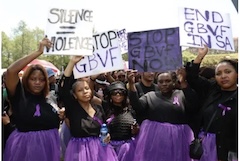
South African women brought their country to a standstill with a powerful message: declare gender-based violence and femicide a national disaster. At the Union Buildings lawns in Pretoria, the seat of government, thousands of protesters dressed in black with touches of purple began gathering in the morning of 21 November. Their voices rose in traditional songs of struggle – “Senzeni na?” (What have we done to deserve this?) and “Zizaw’ujik’izinto” (Things will change) – before culminating in a powerful moment at midday, when protesters lay on the ground in silence, honouring the memory of women that are killed every day in South Africa.
Responding to the outcry amplified by over one million petition signatures, the South African Government declared gender-based violence and femicide a national disaster – a move that will unlock additional resources and policy focus, ensuring the issue receives urgent attention it demands. And speaking at the G20 Social Summit, President Cyril Ramaphosa said, “We have agreed, among all social partners, that we need to take extraordinary and concerted action – using every means at our disposal – to end this crisis”.
As G20 Ministers gathered in Johannesburg, they recognized that addressing gender-based violence requires confronting its root causes. Central to the G20’s recommendations was engaging men and boys as active agents of change in promoting positive masculinities. Ministers also emphasized that transforming harmful gender norms requires strengthening accountability mechanisms across all sectors, from religious institutions to judicial systems.
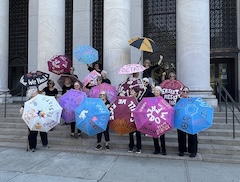
In Brazil, An estimated 50,000 people took to the streets of Belém do Pará, to demonstrate outside the halls of the United Nations annual climate summit, holding a “Great People’s March” and makeshift “Funeral for Fossil Fuels” as they demanded a just transition toward a more renewable energy system and egalitarian economy.
Organized by civil society organizations and Indigenous Peoples groups from Brazil and beyond, the tens of thousands who marched outside the thirtieth Conference of the Parties (COP30) summit called for an end to the rapacious greed of the oil, gas, and coal companies as they advocated for big polluters to pay for the large-scale damage their businesses have caused worldwide over the last century.
Although the conclusions of the COP30 were disappointing, the activists who took part promise to make progress at the level of the city. As explained by activist Herbert Santo de Lima : “COP30 didn’t deliver everything needed. But it delivered enough for us not to give up. The fighting continues — and it’s starting in the cities. The future can’t wait. And neither are we.”
Also in the United States, the fight continues, and it is starting in the cities.
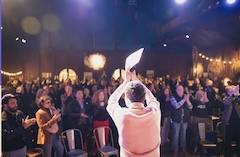
The victory of Zohran Mamdani in the election for the mayor of New York City has inspired activists throughout the United States in the struggle for human rights in their country. Here is an excerpt from his victory speech: ““Tonight we have spoken in a clear voice. Hope is alive. . . We won because New Yorkers allowed themselves to hope that the impossible could be made possible.”
Similarly, we have received the following message from an activist in New Haven (a city in Connecticut) : “there’s a start of the swing back here. We are still hopeful that we will see, eventually, that sanity, compassion and peace outweigh the current dissolution of our society.”
|
DISARMAMENT & SECURITY |
SUSTAINABLE DEVELOPMENT |
DEMOCRATIC PARTICIPATION |
WOMEN’S EQUALITY |


|
TOLERANCE & SOLIDARITY |
EDUCATION FOR PEACE |
HUMAN RIGHTS |
FREE FLOW OF INFORMATION |