United States: The Resistance Moves Left

. HUMAN RIGHTS .

An article from Jacobin (abridged to half of the original which, as you can see by clicking here, is over 10,000 words)

Interview with Eric Blanc , Waleed Shahid , Leah Greenberg.

How the socialist left and the anti-Trump Resistance are slowly but surely learning to work together.

“Welcome to the Resistance.” During the first Trump administration, socialists loved to invoke this as a joke. The liberal resistance, socialists charged, was interested only in performative displays of opposition, blaming Russia for everything, and naively hoping Democratic Party adults in the room would take charge and turn back the clock to pre-2016 business as usual. Everything though has changed pretty dramatically since Donald Trump took office for a second time.

Again, much of the liberal base is in open revolt against a leadership that has so clearly failed to stop the inexorable march of far-right politics. But this time, liberals are voting for Zohran Mamdani, shifting left on Palestine, and becoming increasingly favorable to socialism as the solution to the problem of MAGA.

Daniel Denvir, host of the Jacobin Radio podcast The Dig, spoke to organizer and New York City Democratic Socialists of America (NYC-DSA) activist Eric Blanc, progressive political strategist Waleed Shahid, and co–executive director of the Indivisible Project Leah Greenberg about how and why liberals and “the Resistance” have radicalized. This transcript has been edited for length and clarity.

DANIEL DENVIR

A big part of what the socialist left has been trying to do is to make the case to the liberal Democratic base that the only way to address the root causes of MAGA and of Trump is by confronting neoliberalism and the forever wars, and by overthrowing the Democratic establishment.

And what seems really significant right now is that these left-populist, democratic socialist politics — the kind we see in Zohran Mamdani’s coalition as well as in Bernie’s Fighting Oligarchy Tour — are breaking through in a really powerful way. How did the liberal base, which had placed their faith in the Democratic establishment to protect them from Trump, become so radicalized over the last twelve months?

LEAH GREENBERG

I don’t think you can separate the reaction that the liberal base has had in this moment from the broader societal dynamics that we have been seeing unfold. In Trump 1.0, there was at least a pretty solid pretense by corporate actors, by a lot of different institutions across society, that they were attempting to hold some set of things around the norms of liberal democracy, protect some set of vulnerable populations, and so on.

We can all be really clear that was not out of the goodness of their hearts. But it did create a pretty significant contrast. And what we’ve seen this time around is just a total elite institutional collapse in the face of Trumpism starting, basically, immediately after he was elected.

So I think for folks who believed what the Democratic leadership was telling them — that this was an “oncoming fascism,” that it was going to be a direct personal threat to them and their communities and their neighbors — to watch this combination of Democratic leadership fecklessness going quiet to the extent that they were having really internal circular arguments about blaming the groups instead of any kind of meaningful accounting about what had happened, and then simultaneously watching a bunch of other institutions across society — everybody from Jeff Bezos and Mark Zuckerberg to Target and basically every corporation you could name — immediately rush to bend the knee, created a much more clear illustration that the project to consolidate MAGA political power and the project to consolidate corporate power were one and the same. That set the stage for a lot of what has unfolded since.

WALEED SHAHID

If you look at universities, law firms, the federal government, media, and employees of organizations affected by Big Tech consolidation, there’s a tangible difference between 2017 and 2025 in terms of the kinds of upper-middle-class or middle-class white-collar workers that are probably ideologically or effectively liberal — but are really being squeezed by this administration, being attacked by this administration. Not just in terms of rhetoric but also in terms of policy.

J. D. Vance, Donald Trump, and Elon Musk really hate this liberal class. They have fan fiction about replacing the liberal class with robots and artificial intelligence. And I just think that there’s a way in which that class is being squeezed, and the party and the elected representatives who are supposed to represent that class not really having the fight in them to represent that in a big way.

ERIC BLANC

I agree with Leah that the main thing is that not only is Trump way worse this time, but also institutions are fighting way less. That contradiction is a deeply radicalizing dynamic.

It does, I think, predate the election though. For instance, the inability of the Democratic Party establishment to push out Joe Biden and the whole age debacle, which we’ve sort of forgotten all about, really did expose to a lot of the liberal base that, contrary to the rhetoric, the motivations of the people on top seem to be much more about ego and career than about fighting fascism. That really was a very eye-opening experience.

Then there’s just a general dynamic where, because the authoritarian drive of this new administration is so deep, liberals for positive and maybe limited reasons really feel the attack on democracy as core to their politics in a way that maybe other segments of the population don’t to the same extent.

So there’s a radicalizing in response to events, in a way that if you don’t actually think that the system was working as well, as many leftists or maybe like non-college-educated workers do, maybe even attacks on democracy aren’t as at the forefront in your mind. But if you really do believe, and I think liberals are right to believe, in the importance of defending liberal democracy, then it just seems like an all-hands-on-deck moment to them more than any other part of the population.

DANIEL DENVIR

Joshua Cohen had an interesting post recently where he described the liberal revolt against the Democratic Party establishment as a relatively autonomous revolt that the organized socialist left is in a good position to channel, organize, and help lead — but does not, and maybe cannot, actually control. What do you make of this argument, and what are its implications for how the socialist left should think about building bridges with this liberal insurgency?

WALEED SHAHID

Two of the main mass mobilizations that have been successful in the past year have been the Tesla takedown protests and No Kings, which to me are two different iterations of what maybe is called “the autonomous liberal revolt.” I think that these efforts show that people are looking to express their anger and frustration and want to be able to do it in a way that feels not necessarily ideological or even socialist, but as a part of a fight against Donald Trump and fascism.

I think that the third most successful mobilization that had national impact was Zohran’s election. Where the rubber meets the road is obviously in elections because there are very few places where people who are socialists or even social democrats can win an election with just people who identify with those terms. You have to build a coalition across ideology and across demographics. Often the people — some of the younger populist socialist candidates — embody that fight against authoritarianism much better than the Democratic establishment.

LEAH GREENBERG

Pulling from that argument, around why there’s this crisis of faith right now, the fundamental proposition of Biden 2020 was that Trumpism was a temporary insanity that could be fixed by electing the most run-of-the-mill, most persuasive candidate. You’d get him in, the adults would be back in charge, things would be okay, and this fever would break. That was the promise. And a lot of people went for it or even grudgingly went for it. And so I think the basic issue that is happening right now is that there is no follow-on proposition or no follow-on promise from Democratic elected leadership that explains this moment.

It’s clearly not a temporary fever. MAGA is a force in American politics, and it is going to be a force for an extended period of time. How do you actually fundamentally get out of this situation where every four years, every election is a referendum on democracy and is a threat of authoritarian consolidation? I don’t think Democratic leadership has offered a meaningful theory that replaces the “this is a temporary fever” framing. Someone being able to successfully make a convincing proposition about this is actually how we shift our politics in a direction that doesn’t involve constant confrontations with the worst 30 percent of American society — I think that’s going to be the way that you break through.

ERIC BLANC

What I’d add to that is that this is in many ways a surprising dynamic for the Left, which is to say that the liberal vote is in many ways a surprising development for the socialist left. I don’t think that people were exactly prepared to see not just a repeat of Resistance 1.0, and it’s part of the reason we’re having this conversation today. There has been a shift toward trying to make sense of it, but I think we probably have to go further to be really concrete. For instance, DSA only just recently joined the No Kings coalition and I think that’s a good sign that people are trying to figure out how we work with this sort of broader liberal resistance movement.

But there was also a tendency sometimes to be a little bit condescending toward the No Kings protest, for instance. So when we’re thinking about how we relate to the liberal resistance, I think this is a good thing to keep in mind. Our major task right now isn’t only to differentiate ourselves from liberals — especially liberals who are out there fighting — but to engage with them and to be the best builders for No Kings rallies.

WALEED SHAHID

One other thing I’d add to the trajectory of Democratic Party liberalism: the Democratic Party establishment warning liberals about the threat of fascism is where immigration becomes a huge issue in the story, where, contrary to popular belief, white liberals tend to be a very big demographic in favor of immigrant rights in this country.

Just this past week from the right and left wing of Democratic Party liberalism, both David Brooks and Michelle Goldberg in the New York Times had columns about immigrant rights. Goldberg’s column was about immigrant rights groups that you should donate to for the holidays. David Brooks had a column about a church in Connecticut that’s helping undocumented immigrants and people seeking asylum from combating ICE [Immigration and Customs Enforcement].

I think that now, because the elected officials aren’t leading the fight on immigration as much, that creates such a huge opening for this class of people who really care about inclusion and pluralism and protecting the vulnerable to have autonomous ways of engaging that are filling a vacuum that isn’t being provided by the leadership class of their party.

LEAH GREENBERG

If I may offer the reverse, mirror image of that, I think the two early signs of the disjuncture between the base and elected leadership were H. R. 9495, the nonprofit-killer bill, which they tried to move in a bipartisan fashion immediately after the election, and then the Laken Riley Act in January. A very firm memory I have is trying to communicate to Democratic electeds that our base was genuinely alarmed and upset and did not understand why we would be offering Donald Trump more power around enforcement, on nonprofits, more power to go after immigrants and consolidate a secret police force — and getting somewhere between dismissal and contempt in reaction. And people saying, you know, not only do we disagree, but we disagree and this is why we lost the election.

Then by mid-February, when the calls and the volume and the anger was boiling over, having a lot of those people be like, “Why is everyone so mad?” Our reaction was, “We’ve been telling you this has been building. There’s actually just a consistent gap between the communications you’ve made to people about what you care about and the things you’re doing. And that’s coming back to attack you.” . . . .

DANIEL DENVIR

One really remarkable thing is that for the recent No Kings protest, there was a breakthrough agreement to have a Palestinian speaker and have a whole Palestinian liberation contingent in the No Kings protest. I think this was debated and decided among a group of grassroots liberal Resistance organizers in Rhode Island, and there was some dissension. But they ultimately came to a solid decision to coalesce with specifically Jewish Voice for Peace. That represents not just this breakthrough between the socialist left and left-liberal Resistance, but it was also a fundamentally intergenerational coalition because it was much more gray-haired people sitting on one side and much more millennial and Zoomer on the other.

(Article continued in the right column)

Questions related to this article:

The struggle for human rights, is it gathering force in the USA?

(Article continued from the left column)

LEAH GREENBERG

I think that mirrors a lot of where we’ve ended up in terms of the national framing. In the first No Kings march in June, I marched next to Ruwa Romman of Georgia who was one of the speakers. And we have tried to be really intentional about balancing the fact that No Kings is not an entity that has a platform — it doesn’t have a set of policy ideas that it’s advancing; it is a broad front against authoritarianism — and also being really clear about inclusion of voices that recognize the Palestine movement.

So there is a continued negotiation, and there’s a continued process of building together at the local level that has been ongoing, and it’s in different places, in different contexts. I do really think that that knitting together of the intergenerational context and the broad front is really important.

There are so many different threads that I want to respond to here. First, in terms of the 2020 cycle, we had a really extended conversation with our leaders in 2020 around whether we were we going to endorse in a presidential cycle. Should we endorse? Who are we for?

We have some data out of that that suggests that the top candidate among our folks was Warren, very strong. There was a strong but smaller Bernie faction. There were some folks who were kind of scattered around the different moderate candidates. Things shaped up in the later stages pretty quickly in a way that limits our ability to say who went where as different candidates came in and dropped out. But the bigger dominant feeling for folks was that they didn’t really think that a presidential endorsement was the top priority for locally based organizing hubs that often had a very strong foot in a local race or a congressional race or a broader suite of activism that they couldn’t disrupt in order to have some effect on the presidential race.

That was where people ended pretty consistently. We respected that very much on a national level after having that conversation. And so we have some sense of where people’s optimal politics are.

Also, people had a really different take on primaries overall during the first Trump term than they do this time around. That’s where people were, just practically speaking, on abundance. I think this has been one of the places where there is just a huge gap, as you put it, between the conversation that is preoccupying elite commentators and the conversation that is happening among grassroots activists and rank-and-file folks.

Because immediately after the election, I think there’s this very confusing moment where Abundance, which is a book that was intended for a Kamala Harris term or a second Biden term, gets kind of rebranded as an answer to why we lost and gets sucked into this super toxic discourse around the recriminations post-2024 and this extended set of arguments and discussions around remaking the party.

I can’t stress enough how much none of that was of interest to people who were freaking out about fascism — which is actually unfortunate in a lot of ways. As somebody who has a lot of enthusiasm for abundance politics myself, I think that conflation set the stage for a number of things that were not super healthy. And while I think you’ve done a lot of work trying to untangle those currents and appreciate that, the functional impact was that I think a lot of people who might well have been open to various parts of that argument mostly perceived it as kind of irrelevant to the questions of the day, which were, “What are we actually going to do to protect fundamental rights, to fight back against this massive onslaught?”

ERIC BLANC

The depth of youth radicalization that’s continued really puts a lie to one of the major talking points that happened after Trump’s reelection in 2024, which you might remember when there was this move from the establishment to fight against the groups and to say, “We need to pivot to the center, drop fighting for immigrants and trans people.” Part of the argument was, young people are making this dramatic shift to the center — if we don’t meet them — . . . . .

DANIEL DENVIR

One big shift that I’ve noticed between the first and second Trump administrations in terms of ordinary members of the liberal Resistance is a stronger emphasis on fighting the Trump regime, rather than derogatorily speaking about or demonizing ordinary Trump voters.

Notably, Zohran launched his campaign by standing on a street corner and asking people why they’d given up on Democrats and why they voted for Trump. And he went on about a year later to win those neighborhoods back.

Leah, you’ve touched on this, but we’re seeing this really powerfully right now through the anti-oligarchy framing, which was first put forward by Bernie and then AOC and these rallies and has become the dominant left and liberal way to interpret what’s happening right now. What it’s doing, I think very powerfully, is connecting the dots between economic and political authoritarianism.

But that really wasn’t part of the mainstream discussion or liberal Resistance discourse during Trump 1.0. What is it about the conditions of Trump’s second administration that have allowed for this anti-oligarchy framework to become perhaps the dominant one? And what sort of political work does that framing do?

LEAH GREENBERG

There are two pieces. First, the mask is fully off. You have a bunch of corporations that had a frame around corporate social responsibility, a frame around, for example, doing meaningful work to protect the 2020 election from sabotage. If you go and you look at the list of corporations that tried to donate to protect that election compared to who has donated to the Trump ballroom, I think the degree to which corporations have been very visibly avid and enthusiastic collaborators with the Trump and MAGA agenda — how even the corporations that people ostensibly think of as “good corporate citizens” have behaved, have gotten rid of their DEI policies, have trashed their climate policies, have donated to the Trump ballroom or to the inauguration — there is no meaningful, credible argument that delinks the consolidation of corporate power in this country from the consolidation of right-wing white Christian nationalist power. I think that is a revealing reaction.

The other thing is that there was no meaningful Democratic leadership interpretation of what was happening in the first four months. There was this powerful Fighting Oligarchy tour with Bernie and AOC making a really clear connection between what was happening on the corporate power side and what was happening in Washington. I think the fact that the act of stepping into that leadership vacuum was very important for linking those two things together.

Now, there’s sometimes a framing that suggests that there’s a lot of daylight between a No Kings and a “No Oligarchs” frame. I think that that’s not particularly valid on the ground. What we’ve experienced is that there’s a lot of openness to an overarching story about corporate power. Bernie spoke at our most recent No Kings in Washington; he was the headliner. We do see people really making those connections. We see a lot of enthusiasm among our own folks for corporate campaigns, for theories of how you actually dissuade this kind of corporate collaboration and enablement. . . .

DANIEL DENVIR

Just look at Zohran — a huge victory — and at the way, generally speaking, NYC-DSA has been able to effectively build out their organization as a party-like formation with power and political independence, which is the gold standard for what the socialist left has been trying to do for a decade.

On the other hand, this proliferation of left insurgent campaigns is, by necessity, larger and broader than DSA and thus beyond its full control. Eric, how can DSA simultaneously stick to its focus and also help lead this broader set of currents? How does DSA help guide this broader front without liquidating its own identity and independence, which has been really important for the revival of left politics in this country?

ERIC BLANC

It was an overall huge step forward that after Bernie 2016, DSA started moving toward a new type of left politics electorally, which was different than really what was the dominant trend before then, which was just to support any progressive and sort of anything goes.
The reason that that was limited was not just about the politics, although that’s part of it, but it also just didn’t build your organization. It didn’t build an independent identity. It didn’t build power from below. You couldn’t get volunteers to be excited time and time again afterward. So New York City DSA in particular, but also [chapters] elsewhere throughout the country, were right to build a socialist wing and to develop a huge amount of volunteer infrastructure out of that.

I would flag that it’s still quite uneven across the country. There are a lot of DSA chapters that still just do progressive endorsements.

DANIEL DENVIR

Katie Wilson — who is a more than sufficiently left-wing challenger, she’s a socialist as far as I can tell — did not get Seattle DSA’s endorsement for reasons I don’t know about.

ERIC BLANC

I think there’s a difficulty in DSA now in how you respond to new terrain, where there are genuine left fighters who certainly aren’t DSA cadre, maybe they call themselves socialists or don’t, but they’re not necessarily sharing our politics.

There are also a lot of good and hard debates that need to be happening right now to figure out how we relate to someone like Graham Platner in Maine. How could you not want to go all in in Maine around someone like Graham Platner? My response in the internal debates in DSA on this stuff is — keep in mind, DSA arose out of, and we’re still basically in, the Bernie moment, right? Bernie was not a DSA cadre member. Our growth came largely out of, and in response to, Trump’s election but then also the Bernie moment, which was much bigger than DSA.

I think that there’s a possibility and necessity to walk and chew gum at the same time. What I mean by that is it makes sense for an organization like DSA to primarily focus on running socialist candidates. But particularly when there’s high-profile, very important battles in which you have essentially a Berniecrat running, I do think you need to be more flexible.

WALEED SHAHID

I was someone who worked hard to get DSA to endorse Cynthia Nixon and also, on the other side, to get Cynthia Nixon to be open to the DSA endorsement. Same with AOC; same with Jamaal Bowman. Endorsements go both ways.

I think it’s a genuinely difficult problem in the American political system because elected officials in this country are much bigger than any organization or even party. We have a uniquely individually driven political system where every elected official ultimately ends up becoming their own small business owner and running their own brand.

DANIEL DENVIR

Following up on some points that Waleed made earlier, why is the Democratic establishment the way that it is? Why do it and its favorite media mouthpieces so stubbornly cling to convention even as conditions become so clearly entirely unconventional? Why are they so resolutely in denial of or hostile to their base? Why do they insist on concepts like “popularism” when they just mean moderation and triangulation?

WALEED SHAHID

I was recently on a panel with someone from the WelcomePAC, which is one of these PACs that are political outfits attempting to elect “heterodox Democrats.” So what they mean by heterodox is anti-trans, often pro-life Democrats, anti-choice Democrats, pro-fossil-fuel Democrats, people who are a little bit more right-wing on immigration.

The moderator asked me and this other person, “Do either of you feel welcome in the Democratic Party?” Both of us said no. Then she asked, who is the Democratic Party for then? It was a challenging question where I’m like, I think that who the Democratic Party is for is embodied in the politics of the leadership of the party, which is, how do you create the math equations that will get you to 50 percent? How do I manage the coalition in a way and manage the groups and manage the message in such a polished way so that adds up to 50 percent — rather than just being a person a leader in the world and trying to mold a consensus?

It reminds me of the Whig Party in the nineteenth century where it doesn’t really add up. . . . The politics of the leadership and the politics of the establishment class is vote for me, because what else are you gonna do?

ERIC BLANC

I would add that I think Trump winning is not an existential threat to them, but the left insurgents taking over the Democratic Party is an existential threat to that establishment class. That explains a lot of their behavior, because the reality is if we can both defeat Trump and do that in a way that is closer to Bernie politics than to fifty years of neoliberalism, all of them just lose their jobs. But it also proves them wrong about saying that the way you win is pivoting to the center.

LEAH GREENBERG

The vast majority of Democratic elected are lawyers with degrees from Ivy League institutions or business owners. They are not themselves in any meaningful way credible representatives of the working class. The fact that that was often not even part of the conversation suggests some of the deeper problems.

CONTRIBUTORS

Eric Blanc is an assistant professor of labor studies at Rutgers University. He blogs at the Substack Labor Politics and is the author of We Are the Union: How Worker-to-Worker Organizing is Revitalizing Labor and Winning Big.

Waleed Shahid is the director of the Bloc and the former spokesperson for Justice Democrats. He has served as a senior adviser for the uncommitted campaign, Alexandria Ocasio-Cortez, and Jamaal Bowman.

Leah Greenberg is co–executive director of the Indivisible Project.

Daniel Denvir is the author of All-American Nativism and the host of The Dig on Jacobin Radio.

– – – – – –

If you wish to make a comment on this article, you may write to coordinator@cpnn-world.org with the title “Comment on (name of article)” and we will put your comment on line. Because of the flood of spam, we have discontinued the direct application of comments.
Julian Assange says peace prize has become “instrument of war” and sues Nobel

FREE FLOW OF INFORMATION

An article from the Peoples Dispatch (reprinted according to Creative Commons  Attribution-ShareAlike 4.0 (CC BY-SA) license)

WikiLeaks founder Julian Assange filed a criminal complaint on Tuesday, December 17, against the Nobel Foundation, accusing 30 members of the organization, including its chairwoman and executive director, of involvement in serious crimes under Swedish law. The action challenges the Norwegian Nobel Peace Committee’s decision to award this year’s prize  to far-right Venezuelan politician María Corina Machado.

Assange is requesting the immediate freezing of 11 million Swedish kronor (approximately USD 1.18 million) scheduled to be transferred to Machado, arguing that awarding the prize completely distorts the principles expressed in Alfred Nobel’s will, which stipulated that the prize should go to whoever worked for fraternity among nations and the reduction of standing armies.

In the complaint submitted to Sweden’s Economic Crimes Authority and War Crimes Unit, Assange maintains that the selection of María Corina  “converted an instrument of peace into an instrument of war.” The legal filing mentions possible crimes including misappropriation of funds, facilitation of war crimes and crimes against humanity, as well as financing the crime of aggression. Assange argues that “Machado’s incitement of the largest US military buildup since the Iraq war makes her categorically ineligible.”

Read more: Machado’s Nobel Peace Prize “stained with blood,” social movements warn

The document lists recent public statements by the Venezuelan politician, such as explicit support for the United States’ military strategy in the Caribbean, her advocacy for military intervention in the South American country, and alignment with the offensive by Donald Trump, the US president reelected in 2024. “Alfred Nobel’s endowment for peace cannot be spent on the promotion of war,” Assange stated in the filing.

(Article continued in the column on the right)

Question related to this article:
 
Julian Assange, Is he a hero for the culture of peace?

The Nobel Peace Prize: Does it go to the right people?

(Article continued from the column on the left)

Beyond challenging the selection of María Corina, the WikiLeaks founder questions why the Nobel Foundation did not exercise the same oversight it had in 2018, when it suspended the transfer of the Literature prize. Assange notes that the administrators have a legal obligation to ensure compliance with Alfred Nobel’s will, and that any disbursement contrary to its purpose may constitute a crime.

Between war and oil: Nobel deepens international crisis

The complaint comes amid a major US military escalation in the Caribbean region. Just two days after the Nobel Peace ceremony on December 10, Trump announced that military attacks on Venezuela “would begin by land.” The deployment of more than 15,000 soldiers, including the aircraft carrier USS Gerald R. Ford, is considered by analysts to be the largest US military deployment in the Caribbean since the Missile Crisis in 1962.

María Corina, who has been in exile since July 2024 following coup attempts against Nicolás Maduro’s reelection, welcomed the mobilization. In an interview with CBS, she declared unconditional support for Trump’s strategy and said she aspires to the Venezuelan presidency following a possible foreign intervention.

Assange

Assange’s own trajectory is also directly shaped by conflicts like those now involving Venezuela. Persecuted for more than a decade for revealing war crimes committed by the US in Afghanistan and Iraq, he spent seven years in asylum at the Ecuadorian embassy in London and five years imprisoned under maximum security  in the United Kingdom. Released in June 2024 following a judicial agreement with the US, he now lives in Australia, his home country.

Assange’s criminal complaint against the Nobel Foundation requests, among other measures, that the money be frozen, the medal returned, the foundation members investigated, and that the case potentially be referred to the International Criminal Court. For the activist, the 2025 prize marks a dangerous turning point: “María Corina Machado may have tipped the scales in favor of war, facilitated by the named suspects.”

First published in Portuguese at Brasil de Fato.

– – – – – –

If you wish to make a comment on this article, you may write to coordinator@cpnn-world.org with the title “Comment on (name of article)” and we will put your comment on line. Because of the flood of spam, we have discontinued the direct application of comments.

The Elders: Gaza “ceasefire” rings hollow as all Palestinians face security catastrophe

. . HUMAN RIGHTS . .

A statement by The Elders

The Elders condemn Israel’s continued military attacks and obstruction of aid in Gaza, two months after the ceasefire agreed with Hamas and the release of Israeli hostages. Palestinians’ daily reality on the ground is still one of death, hunger and displacement.

Israel is using the diplomatic cover provided by the ceasefire to continue ethnic cleansing in Gaza and annexation in the West Bank. If President Trump and other leaders allow this to go unchecked, it will jeopardise prospects for a just peace and destroy any hopes of overcoming the genocide and famine in Gaza.

Over 350 Palestinians, including many children, have been killed by Israeli forces in Gaza since the ceasefire came into effect on 10 October. Gaza’s 320,000 children under five are still at risk of acute malnutrition.

At the same time, Palestinians in the West Bank and East Jerusalem face ever-more violent displacement, as Jewish settlements expand and Israel’s government openly accelerates its annexation. This year, more than 220 Palestinians have been killed there and settlers have perpetrated more than 1,600 attacks.

The United States of America, and Arab and European powers with influence, now face a crucial test. UN Security Council Resolution 2803 – the legality of which is under question – must be interpreted in line with the Palestinian people’s inalienable right to self-determination. It does not over-ride states’ existing legal obligation to bring an end to Israel’s unlawful occupation.

Any international presence in Gaza must support the revival of Palestinian governance structures that pave the way for statehood, not replace them. The proposed ‘Board of Peace’ in its current form does not present a credible or legitimate way forward.

The Palestinian people have the right to choose their own leaders. We reiterate our call for the release of the release of Marwan Barghouti  from Israeli imprisonment, given the vital role he can play as a unifying Palestinian figure in support of a two-state solution.

(continued in right column)

Question related to this article:

How can a culture of peace be established in the Middle East?

(continued from left column)

President Trump’s plan stipulates there should be “no occupation or annexation of Gaza”. But the so-called “yellow line” within the Strip risks partitioning Gaza indefinitely. Reports that settlers have set up camp close to the Israel/Gaza border in preparation for settlement inside Gaza are alarming.

The offer by Hamas to consider freezing and storing its weapons opens up a crucial opportunity to pursue the demilitarisation of Gaza. This will require the full withdrawal of the Israel Defense Forces alongside the decommissioning of weapons by Hamas and other Palestinian armed groups.

Constructive dialogue must be pursued. Palestinians in Gaza have little sense that the ceasefire is working. Their suffering risks increasing even further if the current process fails. Without targeted measures against extremists on both sides, progress towards a just and lasting peace will remain out of reach.  

Juan Manuel Santos, former President of Colombia, Nobel Peace Laureate and Chair of The Elders 

Graça Machel, Founder of the Graça Machel Trust, Co-founder and Deputy Chair of The Elders  

Gro Harlem Brundtland, former Prime Minister of Norway and former Director-General of the WHO 

Helen Clark, former Prime Minister of New Zealand and former head of the UN Development Programme 

Elbegdorj Tsakhia, former President and Prime Minister of Mongolia 

Zeid Ra’ad Al Hussein, former UN High Commissioner for Human Rights 

Hina Jilani, Advocate of the Supreme Court of Pakistan and co-chair of the Taskforce on Justice 

Ellen Johnson Sirleaf, former President of Liberia and Nobel Peace Laureate 

Denis Mukwege, physician and human rights advocate, Nobel Peace Laureate 

Mary Robinson, former President of Ireland and former UN High Commissioner for Human Rights 

Ernesto Zedillo, former President of Mexico 

– – – – – –

If you wish to make a comment on this article, you may write to coordinator@cpnn-world.org with the title “Comment on (name of article)” and we will put your comment on line. Because of the flood of spam, we have discontinued the direct application of comments.
International stability, human security and the nuclear challenge: Yearbook of the Stockholm International Peace Research Institute

DISARMAMENT & SECURITY .

Introduction to the Yearbook of the Stockholm International Peace Research Institute (abridged)

In 2025 the world marks the 80th anniversary of the only times that nuclear weapons have been used in war—the bombings of Hiroshima on 6 August 1945 and Nagasaki three days later. In those eight decades, a great deal of death and destruction has been meted out in war but the taboo against using nuclear weapons has survived and grown stronger. This is, as the Nobel Peace Prize Committee noted when awarding the 2024 Peace Prize to the movement of Japanese nuclear survivors (hibakusha), Nihon Hidankyo, ‘an encouraging fact’. Nonetheless, new risks mean it is worth reviewing today’s nuclear challenge.

Nuclear weapons pose existential risk for the world population, as does ecological disruption, the impact of which on peace and stability is starting to be felt in a context in which insecurity is already on the rise for other reasons. The 2020s have so far seen more numerous armed conflicts compared to the previous three decades, with higher war fatalities and increased displacement of people. Great power confrontation has returned to levels of intensity not experienced since the end of the cold war in 1989–91, including the articulation of nuclear threats.

It can therefore be no surprise that, in 2024, global security showed no overall improvement and some deterioration compared to the previous year. Several armed conflicts—not least in Ethiopia, Gaza, Myanmar and Sudan— continued to escalate. Though the overthrow of the Assad regime in Syria in December 2024 offered the prospect of an end to the country’s civil wars, a sustainably peaceful outcome was far from certain. Overall, the international capacity for peaceful conflict management continued to seem not quite up to its extraordinarily challenging tasks. Russia’s war of aggression against Ukraine continued, confrontation over Taiwan deepened, tensions on the Korean peninsula sharpened, and global politics were marked by increasing divisiveness and polarization sown by, among other causes of disputation, Israel’s devastating offensive in Gaza. . .

(Continued in right column)

Question related to this article:
 
Can we abolish all nuclear weapons?

(Continued from left column)

New uncertainties originated in the November 2024 election of Donald J. Trump as President of the United States. These played out in the first quarter of 2025 once he had taken office and quickly came to occupy the foreground in discussion of world affairs . . .

The president made explicit territorial claims for Greenland, for Canada (though the degree of seriousness of this was hard to gauge), for control of the Panama Canal, and for Gaza, as a US-owned holiday resort after expelling all Palestinians. He evinced apparent acceptance of Russia retaining territory it controlled due to its illegal invasion of Ukraine, while demanding access to Ukraine’s mineral resources, and refused to back two United Nations resolutions condemning Russia’s invasion. . . .

The second Trump administration rolled back US policy on climate change, encouraging the fossil fuel companies to turn away from any plan for an energy transition. Financial oversight came under attack with the firing of more than 12 inspectors-general responsible for fiscal propriety in federal government agencies and departments. This was part of a broader attack on the federal bureaucracy .

In the first quarter of 2025, therefore, both allies and adversaries of the USA and all those in between found themselves navigating uncharted geopolitical and economic waters. The policies and stances of the Trump administration in its first weeks may not all endure for its full four years. But some will likely persist and embed themselves deep enough in American policy that the next administration, even if it is not cut from Trumpian cloth, will find it hard to do away with them entirely. This is the complex background to discussing the nuclear challenge in the coming years. This chapter first looks at the current state of arms control (section II), then at the prospects of a new nuclear arms race (section III), before returning to the context of a world order in crisis (section IV), in order to discuss how the nuclear challenge might be addressed (section V).

– – – – – –

If you wish to make a comment on this article, you may write to coordinator@cpnn-world.org with the title “Comment on (name of article)” and we will put your comment on line. Because of the flood of spam, we have discontinued the direct application of comments.
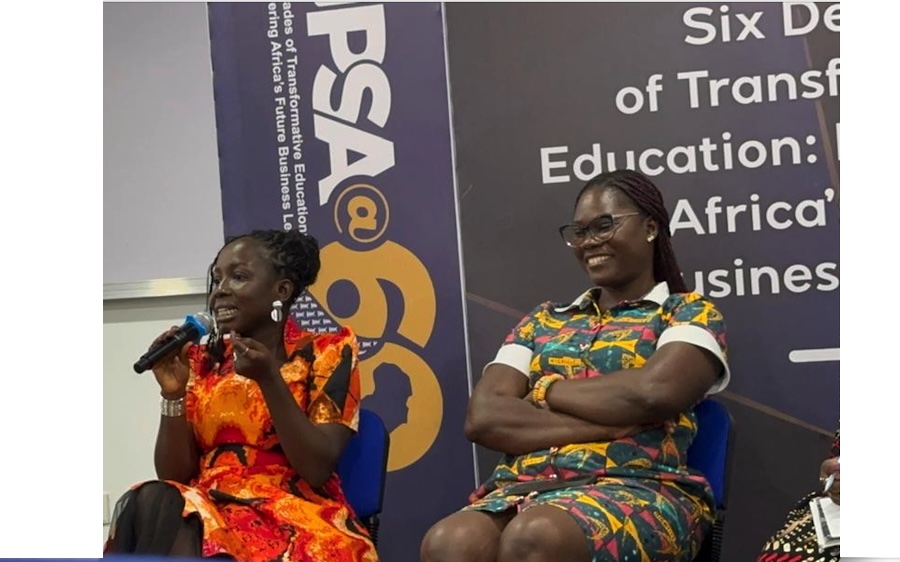
Tunis, Birth Place of the Name, ‘Africa’ hosts 6th Forum of Women, Peace and Security (WPS)

. WOMEN’S EQUALITY .

An article from the African Union

The African Union (AU) successfully convened the 6th High-Level Africa Forum on Women, Peace and Security (WPS) in Tunis, Tunisia. The Forum was held under the theme: “25 Years of UNSCR 1325: Leveraging Multilateral Diplomacy to Reinforce Africa’s Women, Peace and Security Agenda in a Shifting Global Order.”

In his opening remarks, delivered via video message, H.E. Mahmoud Ali Youssouf, Chairperson of the African Union Commission, paid tribute to the women of Sudan, standing firm amid conflict; the women of the Great Lakes region, persevering in protracted crises; and the women of the Sahel, who sustain communities despite insecurity and displacement. He concluded by asserting: “Their resilience reminds us that women are central pillars of peace and stability.”

Chairperson Youssouf reaffirmed the Commission’s unwavering commitment to the progress of this agenda, pledging to work in close collaboration with Member States, Regional Economic Communities, civil society, and partners to ensure that “our collective commitments deliver meaningful and measurable impact for women and girls”. He underlined.

Looking ahead, the Chairperson of the Commission stressed that the collective focus must shift to accountability, financing, and women’s leadership. He noted that the confluence of the 16 Days of Activism, the G20 declaration, and the adoption of the AU Convention on Ending Violence Against Women and Girls (CEVAWG) provides powerful momentum. This momentum, he urged, must be translated into concrete action that strengthens protection systems, deepens women’s participation in decision-making, and ensures that peace and security processes across Africa are truly inclusive.

The AUC Chairperson’s Special Envoy on Women, Peace and Security, H.E. Amb. Liberata Mulamula, asserted that Africa’s strength is rooted in solidarity, multilateralism, and collective action. She called for a renewed commitment to operationalizing WPS obligations, cautioning against backsliding, and emphasizing the necessity of ensuring that women’s voices—from grassroots communities to national leadership—shape policy and drive implementation.

Ambassador Mulamula highlighted the urgent need for accelerated ratification of the AU Convention on Ending Violence Against Women and Girls (CEVAWG), noting that only seven countries have signed to date and stressing that rapid ratification remains essential. Ultimately, she conveyed the expectation that the Forum will produce transformative, forward-looking outcomes to guide the next decade of the WPS agenda (2025–2035), building on past achievements while decisively tackling emerging challenges.

H.E. Mohamed Ali Nafti, Minister of Foreign Affairs and Immigration of Tunisians Abroad, reaffirmed Tunisia’s strong commitment to solidarity and multilateral cooperation, rooted in the nation’s historic role in supporting peace and stability across the continent. He emphasized that since its independence, Tunisia has been a distinguished regional model in advancing women’s rights, notably through the pioneering 1956 Personal Status Code.

(Article continued in right column)

Questions for this article

Can the women of Africa lead the continent to peace?

(Article continued from left column)

This progress has been continually strengthened, culminating in the 2022 Constitution, which enshrined equality and led to the appointment of the first female Head of Government in the country and the region. Minister Nafti concluded by stressing the urgent need to ensure women’s full and active participation in peace processes, recognizing them not just as victims of conflict, but as essential partners in shaping and sustaining peace.

In her address, H.E Sahle-Work Zewde, Former President of the Federal Democratic Republic of Ethiopia, stated that conflict continues to disproportionately impact women, who bear the primary burden of displacement and insecurity. She called on Member States and partners to expose and dismantle the economic systems that fuel instability, urging them to redirect political and financial resources toward achieving sustainable peace and human security. She concluded by stressing the importance of amplifying the often-overlooked contributions of women who serve as “silent architects of peace.”

H.E. Joyce Banda, Former President of the Republic of Malawi, and Chair of the SADC Panel of the Wise AWLN Champion reminded the Forum that UNSCR 1325 was a milestone in bringing women into global peace processes. African women have never shied away from leadership, their voices remain essential.

Hon. Justice Emeritus Effie Owuor noted that patterns of conflict are evolving, marked by new pressures and the increasing use of digital spaces to perpetrate harm. She emphasized that despite challenges such as shrinking resources and narrowing democratic space, African women continue to play vital roles as community leaders, mediators, and defenders of human dignity.

She underscored that sustainable peace hinges on strong prevention mechanisms, effective early mediation support, and the meaningful participation of women in all peace processes. She called for an immediate end to decision-making about women but without women, stressing that policies disconnected from everyday realities cannot lead to lasting peace.

H.E. Ms. Nyaradzayi called for the full inclusion of women in peacebuilding, governance, and security negotiations across Africa, highlighting Tunisia’s leadership in the WPS agenda. She urged the protection and dedicated resourcing of women peacebuilders and emphasized the importance of training the next generation of African women leaders. UN Women reaffirmed its full support for the African Union and its Member States in implementing and monitoring all Women, Peace and Security commitments.

Ms. Grace Kabayo highlighted Tunisia’s historic role in supporting the Pan-African Women’s Organization (PAWO) and called for the revitalization of the women’s movement across the continent. She expressed solidarity with African nations facing crises (including Tanzania, South Sudan, Burundi, and the DRC) and urged early intervention to prevent further destabilization. Drawing on her own experience, Kabayo stressed the necessity of strong, inclusive leadership and warned against complacency in defending women leaders. She ultimately called for African women to unite, strengthen PAWO’s legacy, and advocate collectively for peace, human rights, and democratic governance.

H.E. Ms. Asma Jebri, Minister of Family, Women, Childhood, and Seniors of Tunisia, officially declared the 6th High-Level Forum open. As the host nation’s representative for these critical issues, she underscored that strengthening the leadership of women must be a central and non-negotiable continental priority. By formally inaugurating the event, the Minister emphasized Tunisia’s commitment to setting the tone for a decade of accelerated action and reinforced the nation’s dedication to the Women, Peace and Security agenda.

– – – – – –

If you wish to make a comment on this article, you may write to coordinator@cpnn-world.org with the title “Comment on (name of article)” and we will put your comment on line. Because of the flood of spam, we have discontinued the direct application of comments.
Sinaloa, Mexico: State Congress Holds Youth Meeting “Culture of Peace for Sustainable Development: 2030 Agenda in Action”

. TOLERANCE & SOLIDARITY .

An article from the Sinaloa Congress

November 12, 2025 – The Sinaloa State Congress held an event entitled “Culture of Peace for Sustainable Development: 2030 Agenda in Action,” which consisted of workshops on various topics impacting society, with the participation of young people from different parts of the state.

The event was inaugurated by Representative Tere Guerra, president of the Political Coordination Board of the State Congress, who announced that this activity, organized by the Legislative Branch’s Culture and Arts Commission, seeks to build a path toward sustainable development and peace through culture.

Guerra Ochoa emphasized that culture is not merely an embellishment to development but rather its foundation and essential driving force for achieving its goals, as it fosters identity, facilitates dialogue amidst diversity, and offers tools for resolving conflicts peacefully and with humanism.

The legislator acknowledged that Sinaloa is experiencing complex times and enormous challenges such as climate change, inequality, the economic and social crisis, and violence; however, she also noted the opportunity to rebuild the social fabric through art, education, culture, and collaboration. In this regard, the congresswoman emphasized that this meeting represents a unique opportunity for the youth of Sinaloa to design an action plan that links the Sustainable Development Goals with the local reality, not to meet international targets, but to build a model of coexistence that reflects Sinaloan identity.

(Click here for the original article in Spanish.)

(Article continued in the right column)

Question for this article:

Youth initiatives for a culture of peace, How can we ensure they get the attention and funding they deserve?

Is there progress towards a culture of peace in Mexico?

(Article continued from the left column)

For her part, Congresswoman Sthefany Rea Reátiga, president of the Culture and Arts Committee of the State Congress, reiterated that the 2030 Agenda presents great challenges, including eradicating poverty, guaranteeing equality, and protecting the environment, but beyond the goals and indicators, it offers an ethical vision of the world we want to build.

That is why the legislator invited the young people participating in this meeting to transform these working groups into a laboratory of hope where every voice and every proposal contributes to ensuring that culture inspires transformation and peace guides the sustainable development of Sinaloa.

During the event, Francisco Fajardo Durán, an ambassador for the 2030 Agenda with Acción Universitaria, also participated. He acknowledged the work being done by the State Congress in opening these kinds of spaces, where culture is considered a tool for development and peace.

Fajardo Durán mentioned that in recent years, culture has ceased to be merely an embellishment of development and has become its very heart. He further explained that the topics analyzed in each working group were: social development and well-being, environment and sustainability, economy and labor, cities, communities and governance, as well as cooperation and alliances. These topics were discussed from the perspective of the current situation in Sinaloa, in order to then propose possible solutions.

The meeting included the participation of young mediators who coordinated the working groups and also assisted in the design of the state action plan. They shared the belief that only by uniting voices and efforts can Sinaloa become a benchmark for sustainable development and a true culture of peace.

It is worth mentioning that, in addition to young people, members of parliament and staff from the Legislative Branch were present at the event’s opening.

– – – – – –

If you wish to make a comment on this article, you may write to coordinator@cpnn-world.org with the title “Comment on (name of article)” and we will put your comment on line. Because of the flood of spam, we have discontinued the direct application of comments.

Spain: Documentary “International Zone of Culture of Peace” in Manzanares El Real

.. DEMOCRATIC PARTICIPATION ..

An article from Manzanares El Real

This documentary explains how Manzanares El Real became the first municipality in the world to declare itself an “International Zone of Culture of Peace,” given the series of requirements it met.


Video

“I came to live in Manzanares El Real and realized that Manzanares El Real truly meets all the requirements for the creation of the first International Zone of Culture of Peace,” states Valentín Oliveros Sanz, a human rights and peace activist.

“It offered us the possibility of bringing it to the plenary session, to the ordinances, to make it a reality, so that it would have a political impact on the residents of our town,” says Patricia Ibáñez, Councilor for Social Welfare.

It was then that the legal and juridical foundations were developed, and finally, on September 18th, it materialized when part of the governing group approved the declaration of Manzanares el Real as an International Zone of Culture of Peace. “I think this aspect of politics is very important because we are a mirror for society, and if the culture of peace doesn’t emerge from the political sphere, how can we expect peace in society?” states Patricia Ibáñez.

On September 21st, 70% of the citizens of our municipality gathered to celebrate the International Day of Peace. “I brought together a number of activists and artists, poets, renowned speakers, and, above all, children,” adds Valentín Oliveros.

Eva Saldaña, Executive Director of Greenpeace in Spain and Portugal, explains that “the culture of peace is participatory democracy, sustainable mobility, and generating another possible energy system based on clean energy that reaches all citizens.” A culture of peace means using public funds for things that promote the common good, creating pedestrian-friendly spaces, sustainable mobility, and accessible public transportation. It also means curbing violence and generating healthy spaces for interaction, leisure, and free time for everyone.”

Marisa García de Aguinaga, spokesperson for Amnesty International, adds that “civil and political rights, such as the right to freedom of expression, fair trials, equality of opportunity, housing, healthcare, and education, are rights that require states to uphold in order to be realized. Peace is not just the absence of armed conflict: for a more compassionate and just world, where everyone is treated equally, other rights must be fulfilled to achieve that peace.”

A culture of peace is “how we all build human relationships with each other and with the environment in which we live, and even with ourselves; “How do we relate to all of this and build an environment, a space, and a world where we can all feel that we live dignified lives and are free from violence and oppression?” adds Eva Saldaña.

(Click here for the Spanish original of this article)

Questions for this article:

How can culture of peace be developed at the municipal level?

(continued from left column)

“A culture of peace is a set of values ​​that includes the first and most fundamental: the right to life, to human dignity, education in human rights, and the democratic participation of society, so that people understand that they must not only attend to their individual affairs, but also to the affairs of the community as a whole,” says Valentín Oliveros.

Furthermore, Marisa García de Aguinaga adds that “it is essential that municipalities, citizens, and all authorities work together to ensure that all these rights, achieved over years and generations, are not lost.” Patricia Ibáñez comments, “I am absolutely certain that this can be contagious. I believe that today’s society needs these kinds of messages; it needs tools from institutions.”

“The fact that even a small town council has the will to show itself and allow its citizens to express their opinions and begin to generate this is already an important step,” says Eva Saldaña.

Marisa García de Aguinaga expresses that “peace, if we don’t build it together, is impossible.”

Finally, Valentín Oliveros concludes the documentary by saying, “We give that enthusiasm, that hope of understanding or believing that another world is possible, a better world, of course.”

Contributors:
– Asociación Cultural El Real de Manzanares.

– Asociación de Mayores +60.

– Asociación Radar.

– Asociación de Sentido Social.

– Asociación ARBA
– Pedriza Refugia.

– La Sierra con Palestina

– JAFRA Dabke Palestino

– Coral de Manzanares El Real.

– Compañía de Teatro de Yoana González.

– Cia La Fábrica de Sueños / El Duende del Globo.

– Escuela de Música Peña Sirio.

– Federación Madrileña de Asociaciones Solidarias con el Sáhara (FEMAS)

– Proyecto Indomitas

– Móstoles sin Fronteras.

– CAUM (Club de Amigos de la UNESCO de Madrid)

– Greenpeace.
– Amnistía Internacional.

– Colectivo Alternativas no Violentas.

– Grupo Mujer, Vida y Libertad de Madrid.

– Asociación Memoria Histórica Los Barracones.

– Isidro Jara Hernández.
– Coordinación técnica, Rafa Rubio y David Elorriaga.

– Coordinacion general, dirección artística, y contenidos,

– Marisa Tejada, Comunicación medios y redes Carlos.

– Rivas y Pilar Bobadilla.

– Valentin Oliveros. Coordinación general.

– Thamatatto Graffitero

– Merian Zidan Lamaadi

– AFA Peña Sacra

– AMPA Los Abetos

– – – – – –

If you wish to make a comment on this article, you may write to coordinator@cpnn-world.org with the title “Comment on (name of article)” and we will put your comment on line. Because of the flood of spam, we have discontinued the direct application of comments.
International Institute for Peace Education 2026 Spain

… EDUCATION FOR PEACE …

An announcement from the International Institute for Peace Education

We invite all formal and non-formal peace educators, academics, activists, NGO actors, and education-focused peacebuilders to apply to join the 2026 International Institute on Peace Education from July 19-26 in Granada, Spain.

IIPE 2026 Spain will convene 60 educators from around the world for a week-long, residential, learning community experience in peace education. A rich exchange of peacebuilding research, academic theory, best practices, and actions will be shared through IIPE’s evolving dialogical, cooperative, and intersubjective modes of reflective inquiry and experiential learning.

IIPE 2026 Spain is organized by the IIPE Secretariat in partnership with a network of former IIPE participants in Spain in partnership with national, regional, and local NGOs and universities. The Institute will take place at the Colegio Mayor Jesús María of the University of Granada.

Granada: A Tapestry for Peacelearning

Granada, Spain, is a global crossroads, a historic melting pot of civilizations. Located in the Spanish region of Andalucía (part of ancient Al-Andalus), it has been the center of coexistence for multiple cultures. At various periods, the rich cultures of Europe, Africa, and the Americas have coexisted in dialogue with each other, forming a dynamic intellectual and artistic flowering that can still be seen today in the extraordinary architecture and gardens. Spain, in turn, is a European country marked by interconnectedness as its hallmark. Due to its history over the years, it has been a dynamic social and political actor in relation to the problems of the Mediterranean region, Europe, and Latin America. Today, it is an essential and fertile space where perspectives converge to understand the negotiations, dilemmas, and challenges of global peace. 

IIPE 2026 Spain at the University of Granada aims to draw out the parallel challenges of deep ecological thinking and intercultural relations. We aim to channel the spirit of Granada as a historical center of tolerance, dialogue, and intercultural symbiosis. Andalucia’s Medieval intellectual, artistic, and architectural achievements reflect a “vision of a culture of tolerance [which] recognized that incongruity in shaping individuals as well as their cultures was enriching and productive” (Menocal, 2002, p. 11).

(Continued in right column)

(Click here for a version in Spanish)

Question for this article:

Where is peace education taking place?

(Continued from left column)

Today, we recognize our interdependence and the interrelatedness of perversely complex challenges: climate crises; militarization, arms proliferation, and the use of lethal violence; and structural violence, such as discrimination, exclusion, colonialization, and domination in all its forms. These dangers are evident today in unbearable conditions of displacement and migration, climate catastrophes, and endless wars. All of these beg for vision, dialogue, and pedagogy that reaches across borders.

Pedagogy, research, and evaluation in peace education have undergone remarkable development over the past 25 years. IIPE 2026 Spain will constitute a learning community, a mini-ecosystem, in which the implications for peacelearning will be considered. Together, we hope to deepen our understanding and connect with each other through these initial questions: How has this professionalization changed peace education? Can the intersubjectivity and warmth of learning together continue with greater instrumentalization? Can we engage rational thinking and interrelate it with sentipensar, feeling-thinking that validates emotions and sentience? How does the concept of Gaia shift the ecological relational paradigm for peace? How can educational policies preserve indigenous learning and incorporate popular culture as the field advances?

In addition, the question of human relations with the more-than-human world will be raised. How might human relations evolve again so that we can reclaim the understanding that our survival depends on the health of the Earth, air, water, soil, and other living systems? New questions, new options, and new perspectives will be encouraged.

Reference: Menocal, M.R. (2002). The ornament of the world: How Muslims, Jews, and Christians created a culture of tolerance in Medieval Spain. Little, Brown.

How to Apply

Applications are invited from peace educators who are teachers and/or academics, as well as activists, NGO actors, and others involved in civil society and governance. Our goal is to bring diversity and plurality of experience to shed light on these pressing peace issues.

APPLY NOW

About the IIPE

The International Institute on Peace Education is a weeklong residential experience for educators and scholars hosted in a different country every other summer. The Institute facilitates exchanges of theory and practical experiences in teaching peace education and serves to grow the field. In serving the field, the IIPE operates as an applied peace education laboratory that provides a space for pedagogical experimentation; cooperative, deep inquiry into shared issues; and advancing theoretical, practical, and pedagogical applications. Since its inauguration at Teachers College, Columbia University in 1982, the IIPE has been hosted in 18 different countries, bringing together thousands of experienced and aspiring educators, academics, professional workers, and activists in the field of peace education from around the world to exchange knowledge and experiences and learn with and from each other in its intensive residentially based learning community.  The objectives of each particular institute are rooted in the needs and transformational concerns of the co-sponsoring host partner(s), their local community, and the surrounding region. (Click here for more information.)

– – – – – –

If you wish to make a comment on this article, you may write to coordinator@cpnn-world.org with the title “Comment on (name of article)” and we will put your comment on line. Because of the flood of spam, we have discontinued the direct application of comments.
Agricultural offensive: how Burkina Faso is moving towards self-sufficiency in food production

. . SUSTAINABLE DEVELOPMENT . .

An article from the People’s Dispatch Republished according to a Creative Commons Attribution-ShareAlike 4.0 (CC BY-SA) license.

Dependence on foreign aid, political instability, chronic poverty, and the effects of climate change are among the obstacles preventing Burkina Faso from achieving its longed-for food sovereignty. Currently, about 80% of the population of the Sahelian nation is involved in agricultural activity, which accounts for a third of the GDP. Even so, the country still imports more than 200,000 tons of rice per year.

In response to this challenge, President Ibrahim Traoré’s government  launched the so-called Agricultural Offensive in 2023, which has been revolutionizing the rural environment and serving as a model for the continent. The central objective is to end dependence on imports of widely consumed food products.


The distribution of agricultural machinery to farmers has been one of the cornerstones of the Agricultural Offensive of the Traoré Government. Photo: Presidency of Burkina Faso

According to Mark Gansonré, a farmer and representative of farmers’ associations in the National Transitional Assembly, in implementing the program, the new government sought to listen to the country’s farmers. “I believe he [Traoré] took the time to understand the cry from the hearts of Burkina Faso’s farmers.”

Read More: In the fight against desertification, Burkina Faso mobilizes to plant 5 million trees in one hour

“Since 2002, we have undertaken a series of actions, beginning with the demand for recognition of agriculture as a full and legitimate profession. We obtained an agricultural guidance law to structure this recognition. We also worked to facilitate access to credit for small producers. Today, we have reached a point of true gratitude. Thank God, last year this government allocated 78 billion CFA francs for the purchase of agricultural equipment, making it available to farmers,” celebrates Gansonré.

The numbers of the Agricultural Offensive

The offensive has already yielded results in food self-sufficiency. Yields per hectare in the country have increased dramatically since the start of the offensive, with improvements of around 35% to 40%.

Most notably, the country achieved grain surpluses for two consecutive years, a stark contrast to the historical pattern of deficits prior to the current administration. In 2024, six million tons of grain were harvested in Burkina Faso.

This occurred despite the presence of fundamentalist jihadist groups around the country. By the end of this year, the agricultural program aims to create 100,000 jobs for the population displaced by terrorism. About 54% of the budget is funded by the private sector and 46% from the state.

“If there are more than a million displaced people, the majority of this population is in rural areas. Many of these farmers abandoned lands that could not be cultivated. But this does not prevent us from producing today. Despite the abandonment of several agricultural areas that could not be cultivated, there has been significant support so that in regions where there is still productive capacity, farmers could intensify production in order to feed the Burkinabé people,” Gansonré points out.

Luc Damiba, special advisor to the Prime Minister of Burkina Faso, believes that even in a context of low rainfall, the country has good land and abundant water, which, according to him, makes it possible to reorganize production to supply the citizens. He emphasizes that guaranteeing sufficient food for the population is the basis of any national project.

“We need to work with the peasants, work with them well. If we don’t do that, they will be occupied by the terrorists. That’s the first gain. The second gain is that they will produce enough to achieve food self-sufficiency. The third gain is that we will have well-prepared political actors committed to advancing the revolution,” he analyzes.

“If we don’t have the peasant world to carry out the revolution, we will fail. We can only count on the peasant world to accomplish it. And Traoré started well by adopting this offensive agricultural policy, capable of mobilizing this group, which became a fundamental political actor,” adds Damiba.

Relationship with Sankara

The quest for food sovereignty in the region has deep historical roots, dating back to Thomas Sankara’s revolution in the 1980s. The agrarian reform implemented by Sankara, in addition to distributing land to those who actually produced it, aimed to politically engage this large mass of small farmers. In 1987, after four years in power in Burkina Faso, the UN recognized the country for the first time as self-sufficient in food production.

Read More: Sankara’s revolution rises again

Following the assassination of the former president and leader of the historic Burkinabé revolution, however, decades of policies that prioritized export crops at the expense of family farming led the Sahel country to once again depend on external inputs.

The colonial model, dictated by global agribusiness multinationals, such as Monsanto, gained ground in the country during the regime of Blaise Compaoré, the mastermind behind the Sankara massacre, who governed the country from 1987 to 2014, with the support of the French government.

For Mark Gansonré, the implementation of the Agricultural Offensive is a symbol of Traoré’s alignment with Sankara’s ideas.

“It’s as if we have a Sankara. Sankara has awakened. It’s true that in his time most of the population didn’t quite understand his vision. He was a mobilizer… But today, after his passing, there has been an awakening, and this current government has effectively stimulated that awakening,” he said.

Mechanization

The current government’s offensive has been marked by strong direct support for rural producers and unprecedented investments in mechanization. The strategy focuses on substantially increasing production in eight priority areas: rice, corn, potatoes, wheat, fish, livestock, poultry, and mangoes.

(Article continued in right column)

Question for this article:

What is the relation between movements for food sovereignty and the global movement for a culture of peace?

(Article continued from left column)

Financing for the purchase of machinery in the country, much of it from China, relies on two main sources: the nationalization of gold and the creation of a patriotic fund financed by the population itself.

Since Traoré took control of two mines that previously belonged to a London-listed company and began construction of a state-owned refinery, the government has already allocated USD 179 million for the purchase of agricultural machinery.

Sawadogo Pasmamde, or Oceán, a multi-artist and member of the Thomas Sankara Center for Freedom and African Union, details the transformation.

“For the first time, tractors are being distributed throughout the country. Agricultural inputs are being delivered to farmers, giving them everything they need to produce. In addition, all the agricultural engineers who worked in the cities have been transferred to the countryside to directly monitor and support the farmers. And now, we see that the results are beginning to appear as a reward for this effort,” Oceán celebrates.

The two types of agriculture

According to the government’s announcement, the differentiated mechanization includes draft animals for small producers, and, on the other hand, tillers and tractors for large enterprises. Initially, more than 400 tractors were distributed, in addition to subsidized fertilizers. For the 2025-2026 campaign, the package should include the delivery of 608 tractors and 1,102 tillers.

According to Marc Gansonré, this is a long-standing demand from the country’s farmers that has never been fully met. He recalls that there was an initial attempt during the revolution led by Sankara, but the process was interrupted after his death.

During the Compaoré administration, he adds that a program even distributed carts to farmers, but without the necessary draft animals for their use. The initiative was stalled for years until, after demands from the farmers, subsidies were introduced for plows and for animals such as donkeys and oxen.

Even so, the reach of the policies remained limited. According to the parliamentarian, at the time there were about 1.4 million farming families in the country, but less than half were served by the programs: “coverage reached only 27%, then 32%”.

“And, thank God, we had the arrival of this current president, who understood from the beginning the signs of this need to support mechanization,” he emphasizes.

According to Marc, mechanization in the country today is carried out in a differentiated way, respecting the spatial dimensions of each cultivable area and the financial capabilities of the producing families.

He explains that in Burkina Faso, there are two types of agriculture: family-run farms and large-scale agricultural enterprises that require heavy equipment.

“Giving a rototiller or tractor to someone who doesn’t have the means to properly maintain that equipment is like doing nothing. That’s why we work to ensure that small producers continue to be supported with plows and draft animals, while those who have progressed a bit more can work with rototillers,” explains Gansonré.

“When rainfall doesn’t exceed 5 millimeters and you need to sow, it’s necessary to cultivate as much of the area as possible within the following 24 to 48 hours. And doing this manually is very difficult. That’s why seeders and tillers were introduced to improve soil preparation,” he adds.

Creation of industries

In addition to production, the Burkinabé government’s focus with its Agricultural Offensive is on industrialization and adding value to locally grown products. In the country, the creation of processing units has generated jobs and even allowed farmers to become shareholders in some of the factories that have been opened.

Read More: Forging a new Pan-African path: Burkina Faso, Ibrahim Traoré, and the Land of the Upright People

The country’s first tomato processing plant, inaugurated in 2024 in Bobo Dioulasso, has 20% state participation and 80% community capital, organized by APEC, the Agency for the Promotion of Community Entrepreneurship. The organization, founded in 2022, is primarily supported by the small and medium-sized national bourgeoisie.

Souleymane Yougbare, director of the National Council for Organic Agriculture of Burkina Faso (CNABio), believes that the initiative has reduced dependence on imports and developed the local economy.

“If we have, for example, 100% Burkinabé tomato puree, this allows us to protect our markets, it allows us to be autonomous in relation to the consumption of tomato puree and also avoid cases of poisoning. We don’t know how anything we import is produced,” says Yougbare.
He also highlights how the factory has added value to the farmers’ production, who previously lost a large part of their harvest due to a lack of alternative distribution channels.

“Before, tomato production in Burkina Faso was very high, but unfortunately, producers lost a good portion because the tomatoes rotted in the fields or had to be sold at very low prices. That’s sad. There were even exporters, or rather, importers and exporters, who came to buy at ridiculously low prices and resold in other countries. All of this destroys our economy,” he assesses.

On the other hand, Yougbare argues that the advancement of industrialization in the country must be accompanied by reflection on its impacts. “When we think about industrialization, and the name says it all, we need to be careful that it doesn’t bring other problems, as we see in developed countries: pollution of the ozone layer, the impact on the climate … Therefore, it is necessary that the solutions be truly local, adapted to our context and our needs,” he explains.

Member of Parliament Marc Gansonré believes that the country is currently experiencing a shift in consciousness, “a spirit of patriotism” that leads the population to say: “If we want to be autonomous, it’s good to receive help, but it’s better that we ourselves work to find solutions to our internal problems. And what we cannot do, we can seek outside.”

He concludes: “I recognize that these are truly new elements that we are observing today, thanks to the vision of the Head of State and his government. This gives us great hope that, soon, West Africa will be an example for other countries.”

– – – – – –

If you wish to make a comment on this article, you may write to coordinator@cpnn-world.org with the title “Comment on (name of article)” and we will put your comment on line. Because of the flood of spam, we have discontinued the direct application of comments.
English bulletin December 1, 2025

WHERE CULTURE OF PEACE IS ADVANCING

This month we found news of the culture of peace advancing in Africa, Latin America and the United States.

South African women brought their country to a standstill with a powerful message: declare gender-based violence and femicide a national disaster. At the Union Buildings lawns in Pretoria, the seat of government, thousands of protesters dressed in black with touches of purple began gathering in the morning of 21 November. Their voices rose in traditional songs of struggle – “Senzeni na?” (What have we done to deserve this?) and “Zizaw’ujik’izinto” (Things will change) – before culminating in a powerful moment at midday, when protesters lay on the ground in silence, honouring the memory of women that are killed every day in South Africa.

Responding to the outcry amplified by over one million petition signatures, the South African Government declared gender-based violence and femicide a national disaster – a move that will unlock additional resources and policy focus, ensuring the issue receives urgent attention it demands. And speaking at the G20 Social Summit, President Cyril Ramaphosa said, “We have agreed, among all social partners, that we need to take extraordinary and concerted action – using every means at our disposal – to end this crisis”.

As G20 Ministers gathered in Johannesburg, they recognized that addressing gender-based violence requires confronting its root causes. Central to the G20’s recommendations was engaging men and boys as active agents of change in promoting positive masculinities. Ministers also emphasized that transforming harmful gender norms requires strengthening accountability mechanisms across all sectors, from religious institutions to judicial systems.

In Brazil, An estimated 50,000 people took to the streets of Belém do Pará, to demonstrate outside the halls of the United Nations annual climate summit, holding a “Great People’s March” and makeshift “Funeral for Fossil Fuels” as they demanded a just transition toward a more renewable energy system and egalitarian economy.

Organized by civil society organizations and Indigenous Peoples groups from Brazil and beyond, the tens of thousands who marched outside the thirtieth Conference of the Parties (COP30) summit called for an end to the rapacious greed of the oil, gas, and coal companies as they advocated for big polluters to pay for the large-scale damage their businesses have caused worldwide over the last century.

Although the conclusions of the COP30 were disappointing, the activists who took part promise to make progress at the level of the city. As explained by activist Herbert Santo de Lima : “COP30 didn’t deliver everything needed. But it delivered enough for us not to give up. The fighting continues — and it’s starting in the cities. The future can’t wait. And neither are we.”

Also in the United States, the fight continues, and it is starting in the cities.

The victory of Zohran Mamdani in the election for the mayor of New York City has inspired activists throughout the United States in the struggle for human rights in their country. Here is an excerpt from his victory speech: ““Tonight we have spoken in a clear voice. Hope is alive. . . We won because New Yorkers allowed themselves to hope that the impossible could be made possible.”

Similarly, we have received the following message from an activist in New Haven (a city in Connecticut) : “there’s a start of the swing back here.  We are still hopeful that we will see, eventually, that sanity, compassion and peace outweigh the current dissolution of our society.”

DISARMAMENT & SECURITY


The Challenge of Making a Culture of Peace an Official Heritage in Africa

SUSTAINABLE DEVELOPMENT


Report from COP30

DEMOCRATIC PARTICIPATION


New York: Mamdani’s Win Proves That Hope Is Power

WOMEN’S EQUALITY


South Africa’s G20 Women’s Shutdown – a turning point for ending gender-based violence and femicide


TOLERANCE & SOLIDARITY


Book review: When the World Sleeps

EDUCATION FOR PEACE


Nonviolence International is growing!

HUMAN RIGHTS


Starting the swing back in Connecticut

FREE FLOW OF INFORMATION


France: Coop-médias Invests in 5 Independent Media Outlets