.. DEMOCRATIC PARTICIPATION ..
An article from Manzanares El Real
This documentary explains how Manzanares El Real became the first municipality in the world to declare itself an “International Zone of Culture of Peace,” given the series of requirements it met.
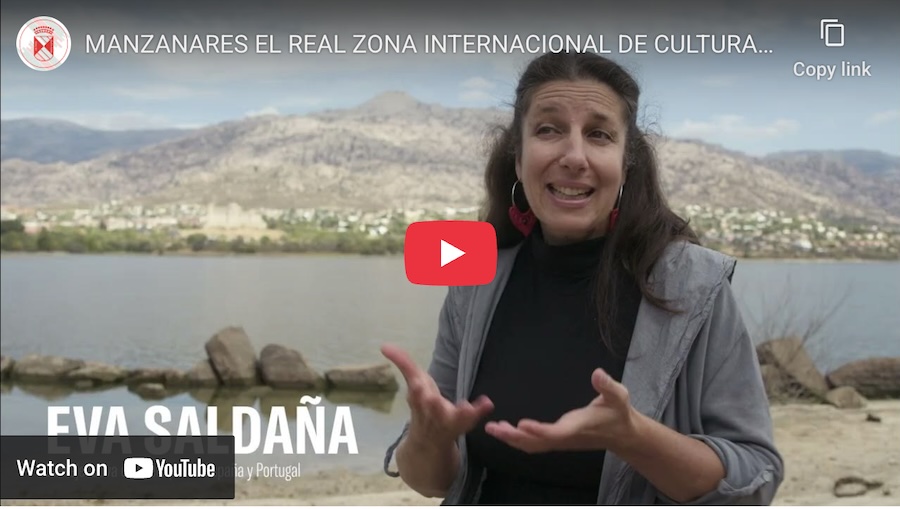
Video
“I came to live in Manzanares El Real and realized that Manzanares El Real truly meets all the requirements for the creation of the first International Zone of Culture of Peace,” states Valentín Oliveros Sanz, a human rights and peace activist.
“It offered us the possibility of bringing it to the plenary session, to the ordinances, to make it a reality, so that it would have a political impact on the residents of our town,” says Patricia Ibáñez, Councilor for Social Welfare.
It was then that the legal and juridical foundations were developed, and finally, on September 18th, it materialized when part of the governing group approved the declaration of Manzanares el Real as an International Zone of Culture of Peace. “I think this aspect of politics is very important because we are a mirror for society, and if the culture of peace doesn’t emerge from the political sphere, how can we expect peace in society?” states Patricia Ibáñez.
On September 21st, 70% of the citizens of our municipality gathered to celebrate the International Day of Peace. “I brought together a number of activists and artists, poets, renowned speakers, and, above all, children,” adds Valentín Oliveros.
Eva Saldaña, Executive Director of Greenpeace in Spain and Portugal, explains that “the culture of peace is participatory democracy, sustainable mobility, and generating another possible energy system based on clean energy that reaches all citizens.” A culture of peace means using public funds for things that promote the common good, creating pedestrian-friendly spaces, sustainable mobility, and accessible public transportation. It also means curbing violence and generating healthy spaces for interaction, leisure, and free time for everyone.”
Marisa García de Aguinaga, spokesperson for Amnesty International, adds that “civil and political rights, such as the right to freedom of expression, fair trials, equality of opportunity, housing, healthcare, and education, are rights that require states to uphold in order to be realized. Peace is not just the absence of armed conflict: for a more compassionate and just world, where everyone is treated equally, other rights must be fulfilled to achieve that peace.”
A culture of peace is “how we all build human relationships with each other and with the environment in which we live, and even with ourselves; “How do we relate to all of this and build an environment, a space, and a world where we can all feel that we live dignified lives and are free from violence and oppression?” adds Eva Saldaña.
(Click here for the Spanish original of this article)
How can culture of peace be developed at the municipal level?
(continued from left column)
“A culture of peace is a set of values that includes the first and most fundamental: the right to life, to human dignity, education in human rights, and the democratic participation of society, so that people understand that they must not only attend to their individual affairs, but also to the affairs of the community as a whole,” says Valentín Oliveros.
Furthermore, Marisa García de Aguinaga adds that “it is essential that municipalities, citizens, and all authorities work together to ensure that all these rights, achieved over years and generations, are not lost.” Patricia Ibáñez comments, “I am absolutely certain that this can be contagious. I believe that today’s society needs these kinds of messages; it needs tools from institutions.”
“The fact that even a small town council has the will to show itself and allow its citizens to express their opinions and begin to generate this is already an important step,” says Eva Saldaña.
Marisa García de Aguinaga expresses that “peace, if we don’t build it together, is impossible.”
Finally, Valentín Oliveros concludes the documentary by saying, “We give that enthusiasm, that hope of understanding or believing that another world is possible, a better world, of course.”
Contributors:
– Asociación Cultural El Real de Manzanares.
– Asociación de Mayores +60.
– Asociación Radar.
– Asociación de Sentido Social.
– Asociación ARBA
– Pedriza Refugia.
– La Sierra con Palestina
– JAFRA Dabke Palestino
– Coral de Manzanares El Real.
– Compañía de Teatro de Yoana González.
– Cia La Fábrica de Sueños / El Duende del Globo.
– Escuela de Música Peña Sirio.
– Federación Madrileña de Asociaciones Solidarias con el Sáhara (FEMAS)
– Proyecto Indomitas
– Móstoles sin Fronteras.
– CAUM (Club de Amigos de la UNESCO de Madrid)
– Greenpeace.
– Amnistía Internacional.
– Colectivo Alternativas no Violentas.
– Grupo Mujer, Vida y Libertad de Madrid.
– Asociación Memoria Histórica Los Barracones.
– Isidro Jara Hernández.
– Coordinación técnica, Rafa Rubio y David Elorriaga.
– Coordinacion general, dirección artística, y contenidos,
– Marisa Tejada, Comunicación medios y redes Carlos.
– Rivas y Pilar Bobadilla.
– Valentin Oliveros. Coordinación general.
– Thamatatto Graffitero
– Merian Zidan Lamaadi
– AFA Peña Sacra
– AMPA Los Abetos
– – – – – –
If you wish to make a comment on this article, you may write to coordinator@cpnn-world.org with the title “Comment on (name of article)” and we will put your comment on line. Because of the flood of spam, we have discontinued the direct application of comments.