State of Mexico: more than a thousand School Mediators strengthen a culture of peace

… EDUCATION FOR PEACE …

An article from Edomex Quadratin (translated by CPNN)

In the State of Mexico (EMX), 1,114 primary, secondary and upper secondary level teachers have been certified as School Mediators by the Judicial Branch of the State of Mexico, a strategy that has allowed to strengthen the culture of peace and improve coexistence within educational institutions.

Mario Alberto Montaño Delgado , Toluca regional director of the Public Center for Alternative Dispute Resolution Mechanisms (MASC), explained that this figure allows schools to have trained personnel to detect, address and channel conflicts before they escalate to more serious situations.

He explained that School Mediators have tools to intervene in problems involving students, teaching staff and mothers or fathers, promoting dialogue and the peaceful resolution of differences.

They address school conflicts

“The greatest achievement is that today they have the largest and broadest structure, institutionally speaking, of certified facilitators,” Montaño Delgado noted, highlighting the growth of this support network in the educational field.

(Continued in right column)

(Click here for the Spanish original of this article)

Question for this article:

Mediation as a tool for nonviolence and culture of peace

Is there progress towards a culture of peace in Mexico?

(Continued from left column)

He indicated that each certified teacher acquires a different vision about conflicts and becomes a promoter of a philosophy focused on building peace within school communities.

He added that this strategy is being developed in a coordinated manner with institutions such as the Ministry of Education, Science, Technology and Innovation of the State of Mexico, the State Human Rights Commission and the Autonomous University of the State of Mexico (UAEMéx).

Bullying, the main problem

The official explained that School Mediators represent the first filter to prevent conflicts from reaching jurisdictional instances , with bullying being one of the main problems they face within schools.

He explained that when cases exceed the capacity for mediation, the Judicial Branch intervenes , through the Public Center for Alternative Dispute Resolution Mechanisms , headed by Magistrate Blanca Colmenares Sánchez.

In these cases, situations related to physical or material damages are addressed , as well as legal obligations arising from school conflicts.

Montaño Delgado explained that to obtain certification as a School Mediator , teachers must complete 120 hours of training, pass theoretical and practical evaluations, and subsequently renew their accreditation every five years before the Judicial Power of the State of Mexico (PJEdomex) .

– – – – – –

If you wish to make a comment on this article, you may write to coordinator@cpnn-world.org with the title “Comment on (name of article)” and we will put your comment on line. Because of the flood of spam, we have discontinued the direct application of comments.
National Autonomous University of Mexico: Academics suggest intensifying the construction of a culture of peace

… EDUCATION FOR PEACE …

An article from Impulso Informativo (translation by CPNN)

Peace requires a perspective that transcends geographical, symbolic, linguistic, and material borders, since they have often been spaces of exclusion and violation of human rights, said Fiorella Mancini, Academic Secretary of the Humanities Coordination at UNAM.

“In light of this, we are challenged us to rethink these limits and to analyze the possibilities of common forces,” he said at the opening of the International Seminar “Transnationalization of the Culture of Peace in North America.” The seminar took place In the Mónica Verea room of the Center for Research on North America (CISAN).

The academic meeting promotes dialogue between specialists from diverse contexts, for example, from the University of Notre Dame – which has developed models applied in more than 100 countries to promote programs in this field in higher education institutions – as well as the analysis of universal principles and local realities.

The meeting proposes a different and complementary perspective on the current geopolitical reality where democracy is backsliding and we are losing rights that were thought to have been won. We want to consider what is possible: resolutions, dialogue, and the challenges of integrating differences, Fiorella Mancini pointed out.

(Continued in right column)

(Click here for the Spanish original of this article)

Question for this article:

Where is peace education taking place?

University campus peace centers, What is happening on your campus?

(Continued from left column)

New dimension

According to Juan Carlos Barrón Pastor, director of CISAN, this university entity works in conjunction with UNAM’s campuses in the United States (Chicago, San Antonio, Los Angeles, Tucson, Boston, and Seattle). This serves as the initial point of contact for addressing all types of violence and conflict experienced on both sides of the border. He said that the lines of research we develop take on a new dimension when viewed in light of building a culture of peace, since this is a way to reverse the growing violence in Mexico.

According to Leticia Cano Soriano, head of the University Program on Culture of Peace and Eradication of Violence (PUCPAZ), university efforts to achieve this way of life involve creating community, interweaving actions, knowledge and commitments, in order to propose alternatives for the formation of a culture of peace. (See CPNN article from April 12)

According to Anel Pérez Martínez, director of the Center for Foreign Studies at the National University, we must combat hate speech which is a powerful form of aggression. We cannot imagine a culture of peace without inclusive language, which contributes to critical thinking, she emphasized.

George Lopez, professor emeritus at the University of Notre Dame and founder of the Krok Institute for International Peace Studies at this institution, contributes to this academic activity a model that consists of exchanges of American students with those from war zones or conflict zones.

He explained that his focus is on building a strategic peace where there is training in mediation, social resolution and community work.

The Seminar was organized by the Humanities Coordination; CISAN; Institute of Social Research; Faculty of Psychology; National School of Social Work; Center for Mexican Studies of the UNAM in Chicago and the University of Notre Dame (based in Indiana, United States).

– – – – – –

If you wish to make a comment on this article, you may write to coordinator@cpnn-world.org with the title “Comment on (name of article)” and we will put your comment on line. Because of the flood of spam, we have discontinued the direct application of comments.

Caruaru, Brazil: The Conflict Mediation Program: Promoting a Culture of Peace

. EDUCATION FOR PEACE .

An article from Blog of Alberto Alves (translation by CPNN)

In Caruaru, the Government of the State of Pernambuco, in partnership with the company Coonsult and under the coordination of the Secretariat of Justice and Human Rights and Violence Prevention, is pleased to present the Itinerant Conflict Mediation Program, a revolutionary initiative aimed at promoting a culture of peace.

The Conflict Mediation Program is available to the public, completely free of charge. If you are facing problems with neighbors, disagreements at home or with your family, at work, at school, or even in consumer situations, know that we are here to help you find solutions.

(article continued in right column)

(Click here for the original article in Portuguese)

Discussion question

Mediation as a tool for nonviolence and culture of peace

(article continued from left column)

Our team of specialized mediators is ready to listen to all parties involved, and to facilitate a constructive dialogue that can resolve these conflicts peacefully, fairly, and out of court. Our goal is to promote peace in your community through mutual understanding and the building of more harmonious relationships.

Remember: dialogue is the key to conflict resolution. Don’t hesitate to contact us. We are here for you. Together, we can build a more peaceful and welcoming environment for everyone.

The Conflict Mediation Program is on your side.

Contact us today and take the first step towards a more peaceful and happy future. We are located at Avenida Amazonas N° 168, Caruaru-PE. Contact numbers: 81 9 9306-6418 / 81 9 9477-9425

– – – – – –

If you wish to make a comment on this article, you may write to coordinator@cpnn-world.org with the title “Comment on (name of article)” and we will put your comment on line. Because of the flood of spam, we have discontinued the direct application of comments.
Burkina Faso: An inter-institutional cultural day to celebrate social cohesion 

. TOLERANCE & SOLIDARITY .

An article from the News Agency of Burkina Faso

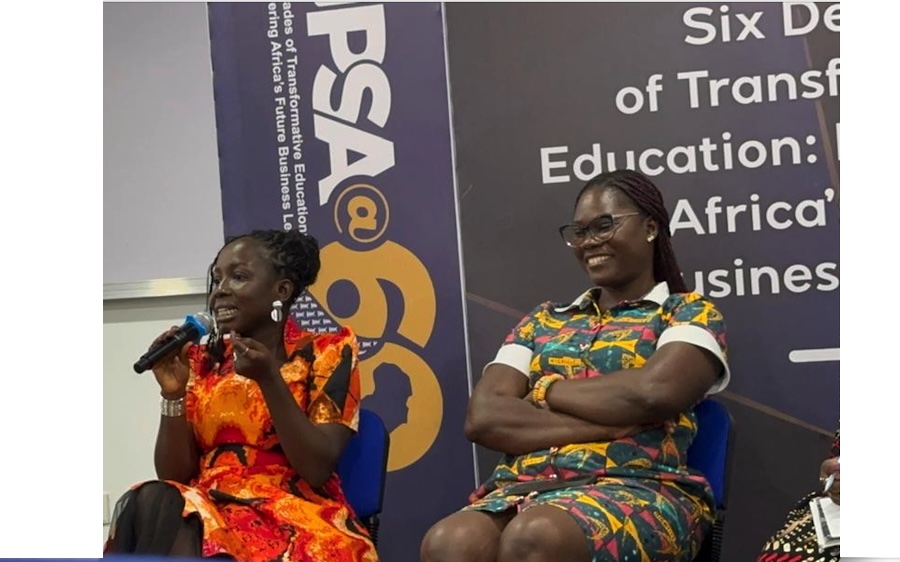
The youth of the commune of Kokologho celebrated, on Saturday, April 25, an inter-institutional cultural day under the banner of social cohesion. 
 
Organised around the theme “Responsible Youth, a Better Future”, this cultural immersion mobilized local, customary and school authorities in the town’s conference room.

The initiative, led by local educational stakeholders, has a clear objective: to strengthen resilience and cohesion among the people of Kokologho, the teaching staff, and the students. Beyond simply fostering interaction, it aims to stimulate civic engagement and solidarity among young people to build a peaceful future.

(Click here for the article in French.)

(continued in right column)

Question related to this article:
 
Youth initiatives for a culture of peace, How can we ensure they get the attention and funding they deserve?

(continued from left column)

The President of the Special Delegation (PDS) of Kokologho, guest of honor at the ceremony, expressed his satisfaction with the turnout. He commended the students’ creativity and the relevance of this initiative, which promotes community spirit in a context where unity is paramount.

For the event’s patron, His Majesty Naaba Sigri, this day is a lever for safeguarding local identity.

“This is a great joy for me. I commend the leaders who took this initiative to bring together students and the entire population for the preservation of culture. I ask the authorities to support these young people in their mission to promote academic excellence and solidarity,” he pleaded.
 
Echoing this sentiment, co-sponsor Cheick Abdoul Karim Sawadogo expressed his admiration for the youth’s enthusiasm. He stated that this strong mobilization for culture sends a powerful message in favor of tolerance and a culture of peace within the community.
 
The day was marked by various artistic performances, illustrating the richness of the cultural heritage of the Boulkiemdé province, under the benevolent gaze of religious and traditional leaders.

– – – – – –

If you wish to make a comment on this article, you may write to coordinator@cpnn-world.org with the title “Comment on United Nations Alliance of Civilizations” and we will put your comment on line. Because of the flood of spam, we have discontinued the direct application of comments.
Sowing the seeds of a culture of peace: Why we founded the New Brunswick Peace Council

. . DEMOCRATIC PARTICIPATION . .

An article by Denis Boulet for NB Media Coop

For as long as I can remember, I have felt that our corner of the world – this small part of the planet we call New Brunswick – exists in a state of constant tension. Whether it be our language debates, the climate crisis, social alienation, or the relentless struggle between capital and labour, conflict seems to be our backdrop.

In 2022, it became clear to us that these local tensions are not disconnected from global turmoil. In a context where powers clash, where the spectre of nuclear armageddon resurfaces, and where millions of people are displaced by conflict, we can no longer remain mere spectators. It was in this spirit that the NB Peace Council was born on May 13, 2022.


Demonstrators rally in a blizzard at Fredericton City Hall on March 14, 2026 to protest Canada’s support for US aggression. Photo: Robiin Purcell

Our work is rooted here, on the unceded lands of Wabanaki, people of the Dawnland. We refuse to accept that the territory be used to fuel violence, whether ecological or human. For us, peace is not simply the absence of war, it is an active refusal to accept the destruction of our ecosystems or to allow the Canadian state, or its major commercial interests, to be complicit in the oppression of peoples, whether in Iran, Lebanon, Palestine, Yemen, or elsewhere.

(Article continued in right column)

(Click here for the original French version of this article.)

Question related to this article:


How can we develop the institutional framework for a culture of peace?

(Article continued from left column)

It was to refuse Canada’s support for the Israeli-American war against Iran that we held our very first rally on March 14, braving the stormy weather.

My father has often told me that I couldn’t change the world on my own. He’s probably right. But I refuse to believe that we are powerless. While we cannot transform everything at once, we can certainly organize ourselves to improve our provincial reality, protect our waterways, and cultivate genuine solidarity among citizens.

How can we organize this struggle? We do not have all the answers, but we must start asking the right questions. The Peace Council does not seek to replace what already exists, but to join a large community of consciousness. That is why we stand in solidarity with the Wolastoqiyik grandmothers and the Coalition to Stop the Sisson Mine. Peace also means defending our territory from greed, extractivism, and environmental harm.

Voices for peace are rare in the mainstream media, where the roles of NATO and the military-industrial complex are either obscured or glorified. This is why we believe that a true culture of peace must emerge from the bottom up, through building alliances, by mobilizing all spheres of New Brunswick civil society.

We are a young organization, made up of citizens from various regions and linguistic communities. We know that the road ahead is long and that we sometimes seem very small in the face of global challenges. But we are confident: the more of us who share our ideas and energy, the greater the momentum of our movement.

For those who, like us, refuse to remain silent and wish to participate in this movement of peace, dialogue and disarmament, the doors of our council are wide open. Together, we can make a loud and clear call for peace.

Denis Boulet is a teacher and francophone co-chair of the NB Peace Council. Anyone wishing to get in touch with us can write to paixnbpeace@gmail.com.

– – – – – –

If you wish to make a comment on this article, you may write to coordinator@cpnn-world.org with the title “Comment on (name of article)” and we will put your comment on line. Because of the flood of spam, we have discontinued the direct application of comments.
Pope Leo calls for new ‘cul­ture of peace’

FREE FLOW OF INFORMATION .

An article by Nova Kruijning from Jurist

Pope Leo XIV on Thursday urged  the US and Iran to return to peace negotiations amid rising tensions in the ongoing war, calling for a new “culture of peace” to replace the default recourse to violence whenever conflicts arise. The remarks come on the heels of a very public back-and-forth  between the Pope and US President Donald Trump over the war, marked by Trump’s repeated threats of escalation, which the Pope criticized as undermining diplomatic efforts and risking further instability in the region.

En route home from his trip to Africa, Pope Leo emphasized  the need to collectively reject the use of force in international relations and instead rely on consistent, diplomatic mechanisms to resolve international disputes of this scale. Characterizing the current geopolitical situation as “chaotic,” Pope Leo noted the lack of consistency in diplomatic signals and attributed the escalating severity of the situation in the Middle East thereto. “One day Iran says yes, the United States says no, and vice versa,” the pontiff stated. “We don’t know where it will go.”

Question related to this article:

Where in the world can we find good leadership today?

(article continued from left column)

The tension between Pope Leo XIV and Donald Trump has become an unusually prominent element of the crisis. While disagreements between the Vatican and world leaders are not uncommon, the directness of this exchange particularly stands out. Trump’s emphasis on strength and escalation has contrasted sharply with the Pope’s calls for restraint and dialogue, turning what might have been a quiet disagreement into a public divide. 

Observers note that Pope Leo’s tone marks a deviation from his typically mild, more tempered approach. Rather than offering broad moral guidance, he has taken a firmer stance, openly criticizing rhetoric he views as destabilizing. This suggests a belief that the gravity of the situation – particularly involving Iran and the United States – requires clearer, more urgent intervention to prevent further destabilization. This shift was also pointed out during his recent trip to Africa, where his remarks took on a more urgent and pointed character, taking aim at a “handful of tyrants” and “masters of war” who have “ravaged” the world. 

“The perceived change in tone is due to the escalation of events … which have forced his words to become more explicit,” said the Rev. Antonio Spadaro, undersecretary of the Vatican’s Dicastery for Culture and Education. “But the vision was already right there, right beneath the surface.”

The exchange reflects a broader pattern of volatility in the conflict itself, where inconsistent signals and increasingly irrational rhetoric have made (sustained) diplomacy increasingly difficult, if not seemingly impossible. As tensions between the United States and Iran fluctuate, each escalation appears to narrow the leeway for negotiation and increases the chance that even a minor incident or misunderstanding could trigger a wider confrontation to topple an already exceedingly fragile region.

– – – – – –

If you wish to make a comment on this article, you may write to coordinator@cpnn-world.org with the title “Comment on (name of article)” and we will put your comment on line. Because of the flood of spam, we have discontinued the direct application of comments.
‘Workers Over Billionaires’: Over 3,000 Events Planned for May Day Across US

. HUMAN RIGHTS .

An article by Brad Reed from Common Dreams (reprinted according to Creative Commons CC BY-NC-ND 3.0).

A broad coalition of organizations is banding together to stage thousands of planned May Day events across the US based around the theme of building an economy for “workers over billionaires.”

May Day Strong, an initiative anchored by 500 labor and community organizations, is set to host more than 3,000 events throughout the country to demand higher taxes on the wealthiest Americans, an end to US Immigration Customs Enforcement (ICE) and the war with Iran, and an expansion of democracy over corporate rule.

Organizers of the events are asking participants to refrain from engaging in any economic activity on May 1, which means “no work, no school, no shopping.” This particular action was inspired by the one-day general strike that residents of Minneapolis waged in January to protest against the occupy of their city by federal immigration enforcement officers.

Photo from Labor Day mobilization last year

Flagship demonstrations will be held in major US cities from coast to coast, with thousands of smaller events scheduled to take place in all 50 states.

Neidi Dominguez, executive director of Organized Power in Numbers, said the rallies are being organized to ensure “our tax dollars going to good jobs, schools, and housing, not to sending federal agents into our cities to attack our neighbors.”

Rebecca Winter, executive director of Mass 50501, framed the events as a way for Americans to exert economic leverage to protest injustice.

“The American people are done grinding to get by while our tax dollars fund wars abroad and concentration camps at home,” said Winter. “We pay more for everything while those in power cash in. On May 1, we hit back with our wallets—no work, no school, no shopping. We the people are the economy, and we decide when it stops.”

Greg Nammacher, president of Minnesota-based Service Employees International Union Local 26, drew on the Minneapolis experience to explain what the May Day protests are trying to achieve.

“In January in Minnesota this year we experienced the power when community and workers act together to defend our rights and shared values,” Nammacher said. “This May Day is a chance for us locally, and nationally, to build on those lessons: We are ready to fight to protect our families and our cities from the billionaire agenda of division and hate.”

Angelica Salas, executive director of the Coalition for Humane Immigrant Rights (CHIRLA), said the protests would also highlight inhumane US immigration policies and demand a pathway to citizenship for undocumented immigrants.

“On May Day, we rise because worker justice is immigrant justice,” Salas said. “It’s been 40 years since the last time this nation recognized the contributions of immigrants by approving a pathway to citizenship. And it’s been 20 years since La Gran Marcha—when millions of people took to the streets to reject exclusion, racism, and criminalization of immigrant communities—and we are still facing the same forces, especially under the Trump administration.”

(Article continued in the right column)

Questions related to this article:

The struggle for human rights, is it gathering force in the USA?

How can we be sure to get news about peace demonstrations?

(Article continued from the left column)

Braxton Winston, president of the North Carolina State AFL-CIO, described the demonstrations as a good way to bring new people into the movement and strengthen future actions.

“Now is the time to build coalitions between unorganized workers, unions, and community members for mass actions to disrupt the well-organized, joint efforts of corporations and the White House to exploit American workers,” Winston said. “The actions we take on International Workers Day are about building the political, social, community, and labor coalitions needed to disrupt the status quo. The power we flex this May Day will fuel our unwavering commitment to building a bigger, more effective, unified labor movement to win victories for working families.”

. . . . COALITION . . . .

The coalition for May Day Strong lists many hundreds of sponsors.

These include the two leading sponsors of the NoKings demonstrations that have drawn huge crowds in the past two years:

Indivisible
MoveOn

As should be expected from the fact that Mayday is the traditional celebration of workers, there are many sponsors from the labor movement, led by the national associations of teachers and professors :

AAUP, American Association of University Professors
AFT, American Federation of Teachers
APWU, American Postal Workers Union
Jobs with Justice
National Nurses United
NEA, National Education Association
Starbucks Workers United
United Steelworkers of America
USSW, Union of Southern Service Workers
VSEA, Vermont State Employees Association

Other major American trade unions are not represented nationally, but by a few locals:

AFSCME, American Federation of State, City and Municipal Employees
CWA, Communication Workers of America
IBEW, International Brotherhood of Electrical Workers
IBT, International Brotherhood of Teamsters
SEIU, Service Employees International Union
UAW, United Auto Workers
UFCW, United Food and Commercial Workers
UNITE HERE

Other important sponsors include:

50501
CODEPINK
Common Cause
Democratic Socialists of America
Fridays for Future, USA
Greenpeace USA
United States Student Association

– – – – – –

If you wish to make a comment on this article, you may write to coordinator@cpnn-world.org with the title “Comment on (name of article)” and we will put your comment on line. Because of the flood of spam, we have discontinued the direct application of comments.
Lifetime premieres Peace Peace Now Now, a documentary series about women’s resistance in Latin America

. . WOMEN’S EQUALITY . .

An article from Prensario (translated by CPNN)

The production, which consists of four episodes filmed in Chile, Colombia, Guatemala, and Mexico with Daniela Vega, Yalitza Aparicio, Shirley Manson, and Ester Expósito. The premiere is scheduled for Sunday, March 8, coinciding with International Women’s Day.


Interview with protagonists of Peace Peace Now Now

The pay television channel Lifetime presented the documentary miniseries Peace Peace Now Now, a work that compiles testimonies from women who survived armed conflicts and situations of structural violence in Latin America. The production uses a narrative format where figures from film and music introduce stories of resistance and processes of seeking justice in the region.

The series is divided into four episodes, each focused on a country and a specific social issue:

Chile: Hosted by singer Shirley Manson, the episode addresses the story of La Cueca Sola. The story describes the organization of women who, after the disappearance of their relatives during the military dictatorship, transformed the national dance into a tool for public denunciation and remembrance.

(Click here for the original article in Spanish)

Questions related to this article:
 
Do women have a special role to play in the peace movement?

(article continued from left column)

Colombia: Actress Daniela Vega, who also serves as executive producer, presents the story of La Ciudad de las Mujeres (The City of Women) in Turbaco. This segment details the founding of a community built by women displaced by the conflict between guerrillas and paramilitary groups.

Guatemala: Guided by Yalitza Aparicio, the episode focuses on the Grandmothers of Sepur Zarco. The content documents the journey of Indigenous women survivors of slavery and sexual violence during the civil war, who initiated legal processes to obtain historical reparations.

Mexico: Actress Ester Expósito accompanies journalist Lydia Cacho. The episode explores the consequences of her investigations into child trafficking networks and the persecution that led to her exile.

The episodes were directed by an all-female team comprised of Javiera García Huidobro (Chile), Ignacia Matus (Colombia), Pepa San Martín (Guatemala), and Isabel Coixet (Mexico). The production was a global success, handled by BlackStar and Alto Andes Films. Regarding distribution on content platforms, the network confirmed the following schedule:

Episodes 1 and 2 are available on VOD systems starting March 1.

Episodes 3 and 4 will be available on the same platform starting March 8.

The series will remain in On Demand catalogs until April 30.

Following its linear broadcast, the production will be added to History’s official YouTube channel.

This technical and editorial initiative by Lifetime seeks to document collective responses to contexts of oppression and inequality, using television as a record of human rights in the Americas.

– – – – – –

If you wish to make a comment on this article, you may write to coordinator@cpnn-world.org with the title “Comment on (name of article)” and we will put your comment on line. Because of the flood of spam, we have discontinued the direct application of comments.
‘This Is a Fight for Humanity’: Meet the 2026 Winners of the Goldman Environmental Prize

. . SUSTAINABLE DEVELOPMENT . .

An article by Olivia Rosane from Common Dreams (reprinted according to  Creative Commons CC BY-NC-ND 3.0)

The Goldman Environmental Foundation announced  the six winners of the 2026 Goldman Environmental Prize on Monday, honoring an all-female slate of advocates who protected wildlife, took on extractive industries, and won important legal victories in the movement to halt the climate crisis.

Videos available on Goldman Prize website

The announcement comes as world leaders have failed  to make progress in addressing environmental challenges, and President Donald Trump, leader of the world’s largest historical climate polluter, has withdrawn  the US from the Paris Agreement, rolled back  climate and environmental regulations domestically, and made efforts to supercharge  the extraction and use of fossil fuels.

“While we continue to fight uphill to protect the environment and implement lifesaving climate policies—in the US and globally—it is clear that true leaders can be found all around us,” John Goldman, vice president of the Goldman Environmental Foundation, said in a statement. “The 2026 prize winners are proof positive that courage, hard work, and hope go a long way toward creating meaningful progress.”

The 2026 prize is notable because it marks the first time that all of the winners—Iroro Tanshi of Nigeria, Borim Kim of South Korea, Sarah Finch of the United Kingdom, Theonila Roka Matbob of Papau New Guinea, Alannah Acaq Hurley of the US, and Yuvelis Morales Blanco of Colombia—are women.

‘There’s lots of people doing really good things and, together, we are going to make the world a better place than it would otherwise have been.’

“I am especially thrilled to honor our first-ever cohort of six women, as this is a powerful reflection of the absolutely central role that women play in the environmental community globally,” Goldman said.

The winners also exemplify the prize’s 2026 theme “Change Starts Where You Stand,” as each of them began with a fight to protect a local community or ecosystem that has global implications for the climate, biodiversity, and environmental justice.

As US-based winner Alannah Acaq Hurley said, “At the end of the day, this is a fight for humanity, and, honestly, our ability to continue as humans on this planet.”

Here is how six remarkable women waged this fight and won.

Iroro Tanshi

Iroro Tanshi is a Nigerian conservation ecologist who has worked successfully with local communities to protect endangered bats and their rainforest habitat from wildfires.

Tanshi was elated in 2016 when she discovered the short-tailed roundleaf bat, previously believed to be extinct in the area, living in Nigeria’s Afi Mountain Wildlife Sanctuary. However, two weeks later, a devastating wildfire ignited, forcing Tanshi to evacuate and ultimately impacting around half of the park.

Tanshi then turned her attention to preventing wildfires, which are sparked by traditional farming practices rubbing against the climate crisis.

“The way people manage these farms is they use fire to clean the farms every year, but climate change has completely toppled the pattern of rainfall and people can no longer predict when to burn safely,” she explained in a video.

Tanshi and her team worked with local communities on a Zero Wildfire Campaign, which includes educating farmers on when it is safe to burn and forming a team of “forest guardians” to patrol and fight fires on high-risk days. Due to her efforts, these guardians put out 74 fires between 2022 and 2025, preventing any of them from becoming major blazes.

“My hope for the future is that people would take these small-scale projects as signals for what the future should look like,” she said. “Let’s stay nimble. Let’s try to work in our small communities and solve those problems there on the ground.”

Borim Kim

Borim Kim helped win Asia’s first successful youth climate lawsuit, inspiring people across the region to demand government action on climate.

Kim was first motivated to take collective action when a heatwave baked Seoul in 2018, killing 48 people including a woman near her mother’s age, who died in her home.

“I realized that even home wasn’t safe from the climate crisis,” she said in a video. “I started looking for what I could do.”

Inspired by the international youth climate movement, she founded Youth 4 Climate Action (Y4CA) and helped organize school strikes and walkouts. After her activism led to meetings with policymakers, she realized that national leaders had no real plans to address the climate crisis. In 2020, she and Y4CA mobilized 19 young people to sue  the South Korean government for violating  the constitutional rights of future generations. Once the case was launched, she also continued to build a social movement for climate action.

In August 2024, the country’s Constitutional Court ruled in favor of the young people, mandating that South Korea reduce its emissions in line with the scientific consensus, a decision the environmental minister accepted. The ruling is projected to prevent between 1.6-2.1 billion tons of carbon dioxide from reaching the atmosphere.

“Youth may be seen as having a lower position in society, but now this decision has affirmed our right to live safely and the state’s duty to protect us,” Kim said.

Sara Finch

On the other side of the world, Sarah Finch also secured a precedent-setting legal climate victory.

Finch lives in a part of southeastern England called the Weald. While it is currently a rural area, it hosts oil and gas reserves that were eyed for exploitation during the fracking boom of the 2010s. Finch helped form the Weald Action Group to push back against many potential wells, but they were not able to stop the Surrey County Council from approving the operation and expansion of a drilling site called Horse Hill in 2018.

In gearing up to challenge the decision, Finch discovered that the council’s environmental impact statement had only considered emissions from direct drilling at the site, but not the emissions generated from the burning of the fuel once it was extracted, also known as Scope 3 emissions, which make up around 90% of oil and gas’ contribution to the climate emergency.

(article continued in right column)

Question for this article:

Local resistance actions: can they save sustainable development?

(Article continued from the left column)

“It became apparent that it was actually the norm that Scope 3 emissions were being emitted from these kinds of decisions, and we realized that actually it was happening everywhere and in much bigger developments than Horse Hill,” Finch said in a video.

She and her team challenged the environmental impact statement over its failure to consider Scope 3 emissions, losing multiple times before finally securing  a groundbreaking victory from the UK Supreme Court in 2024, which has come to be known as “the Finch ruling.”

The UK government cited the “Finch ruling” when it revoked  ts backing of two North Sea oil developments. Overall, the projects canceled or delayed in 2024 due to the ruling would have generated enough Scope 3 emissions to equal the UK’s domestic greenhouse gas emissions that year.

“It wasn’t just a win on Horse Hill,” Finch said. “It wasn’t even just a win on a handful of sites. It was a win on the whole future of the UK oil and gas industry. And I feel like, there’s lots of people doing really good things and, together, we are going to make the world a better place than it would otherwise have been.”

Theonila Roka Matbob

Theonila Roka Matbob was born into an environmental disaster. Rio Tinto’s Panguna Mine had devastated the ecosystem of Bougainville in Papua New Guinea’s (PNG) Autonomous Region of Bougainville (ARB), destabilized its society, and led to a civil war that killed 15,000-20,000 Bougainvilleans, including her father.

“Our environment was tortured, and then the land was tortured, and the third party that was tortured were my people,” Roka Matbob said in a video.

Rio Tinto closed its copper, silver, and gold mine in 1989 due to the war, but had done nothing to clean up the 150,000 tons of tailings it had dumped into local rivers or take responsibility for the havoc the mine had caused. As an adult, Roka Matbob began to wonder why justice had not been done and to gather testimony from people impacted by the mine.

This led to a successful campaign that persuaded Rio Tinto first to fund an assessment of the mine’s impacts and then to sign a memorandum of understanding in 2024 to act on the assessment’s findings and develop a plan with local communities to remediate the area.

“It doesn’t mean we will restore everything as it was, but at least the story that my grandchildren and my great-grandchildren can remember [is] that our grandparents fought,” she said.

Alannah Acaq Hurley

As Theonila Roka Matbob secured justice for the impacts of one major mine, Alannah Acaq Hurley helped prevent another one from being dug in the first place.

Hurley grew up as a member of the Yup’ik Indigenous group in Alaska’s Bristol Bay, a haven of biodiversity that also hosts the world’s largest wild sockeye salmon run. But in 2001 a new danger emerged: Canadian company Northern Dynasty Minerals announced plans to construct the Pebble Mine, the largest open-pit mine in North America.

“The pit would be so big, you could literally see it from the moon,” Hurley said in a video. “It didn’t take long for us to understand the level of threat that this mine posed—acid mine drainage, toxic tailings left in perpetuity. It was not a matter of if something goes wrong, it was a matter of when.”

Chosen to lead the United Tribes of Bristol Bay in 2013, Hurley built a coalition to oppose the mine, uniting tribes, commercial fishers, and environmentalists to make their cause to the US Environmental Protection Agency and push back against the company’s multiple attempts to move forward with the copper-and-gold mining project. Finally, in 2023, the EPA canceled  the project via its rarely used veto power.

“It’s just really a testament to the power of the people,” she said. “We just never stopped until we were heard.”

Yuvelis Morales Blanco

Yuvelis Morales Blanco also defended her community from an extractive industry.

Blanco was born to subsistence fishers on Colombia’s Magdalena River in the Afro-Colombian community of Puerto Wilches.

“We had nothing but the river—she was like a mother who took care of me,” she said in a statement.

However, even as a child she saw the river was threatened by oil spills from Ecopetrol, Colombia’s leading oil company headquartered nearby. The potential threat level was raised even further when she learned while attending college in 2019 that Ecopetrol planned to build two pilot fracking projects near Puerto Wilches.

“Man, I’m like, ‘They’re going to do that in Wilches?’ No sir!’” she recalled in a video.

Blanco joined the Colombia Free from Fracking Alliance and began to raise awareness in her community about the plans. As the campaign’s momentum grew, so did her reputation as a spokesperson. This ultimately led to threats of violence against her that forced her to seek asylum in France in 2022, yet she continued to mobilize against the fracking plans from abroad.

She and the alliance saw success in 2022, as a local court halted the permitting process, newly elected President Gustavo Petro pledged there would be no fracking during his administration, and Ecopetrol suspended its contracts. In 2024, the Colombian Constitutional Court further ruled that the fracking projects had violated the Afro-Colombian community of Puerto Wilches’ right to free, prior, and informed consent.

Blanco continues to fight for a ban on fracking and for legal protections for environmental defenders—over 140 of whom were reported missing or killed in 2024, the most recent year for which Global Witness has a full tally. Colombia was also the most dangerous countries for defenders that year, with 48 deaths.

“I am very hopeful because I have a river that always accompanies me, and I know we’re going to win,” she said.

The Goldman Environmental Prize was founded in 1989 by Rhoda and Richard Goldman, and has since honored 239 winners in 37 years. The 2026 awards will be presented live in San Francisco on Monday evening at 8:30 pm ET. Watch it on YouTube here.

– – – – – –

If you wish to make a comment on this article, you may write to coordinator@cpnn-world.org with the title “Comment on (name of article)” and we will put your comment on line. Because of the flood of spam, we have discontinued the direct application of comments.
Sánchez, Lula Lead ‘Work for Peace’ and Equality at Gathering of Global Progressive Leaders in Spain

FREE FLOW OF INFORMATION .

An article by Julia Conley from Common Dreams (reprinted according to Creative Commons CC BY-NC-ND 3.0)

Arriving in Spain on Friday for a two-day visit that will center on a gathering of progressive leaders from more than 100 political parties across five continents, Brazilian President Luiz Inácio Lula da Silva emphasized that the summit was not “an anti-Trump meeting.”

But the contrast between US President Donald Trump’s violent foreign and domestic policies and the international meeting, which will focus on wage inequality and electoral strategy for progressives, was unmistakable as Spanish President Pedro Sánchez opened  the gathering at a press conference in Barcelona on Friday.

“We want to double our efforts to work for peace and for a reinforced multilateral order. While others open wounds, we want to mend them and cure them,” said Sánchez.

Da Silva—who is commonly called Lula—and Sánchez, as well as other leaders who will be attending the weekend event, have spoken out forcefully against Trump’s policies and the rise of the far right in the US, Germany, Italy, and other European countries.

Sánchez has refused  to allow US fighter planes to use Spanish military bases for missions in the US-Israeli war on Iran and  closed  the country’s airspace to American military aircraft—plus doubled down on his condemnation of Trump and Israeli Prime Minister Benjamin Netanyahu’s war even after the US president threatened  Spain with a trade embargo.

Lula expressed solidarity with Pope Leo this week after the pontiff denounced  the Iran war, and Mexican President Claudia Sheinbaum, who will also attend the meeting, took aim  last month at Trump’s claim that her country is the “epicenter of cartel violence”—blaming the US for the flow of illegal weapons into Mexico.

Lula emphasized that the 3,000 attendees of the summit, which will include the IV Meeting in Defense of Democracy as well as a gathering called the Global Progressive Mobilization on Saturday, will “discuss the state of democracy, to see what went wrong and what we have to do to repair it.”

The Brazilian president added that “Brazil and Spain are side by side in the trenches together.”

“We are an example that it is possible to find solutions to problems without giving into the empty promises of extremism,” said Lula. “Democracy must go beyond just voting and bring real benefits to people’s lives.”

Sánchez added that “in a world that doubts and fragments, Spain and Brazil open a new chapter convinced that our countries have something the world needs: the strength to build bridges where others raise walls.”

The Global Progressive Mobilization meeting will include roundtables dedicated to discussing economic inequality and other issues at a time when, as one report showed  earlier this month, the richest 0.1% of people on the planet are stashing more than $2.8 trillion in tax havens—more than the wealth owned by the entire bottom 50% of humanity.

The economic hardships of working people have only been exacerbated by the war on Iran, which has sent global energy prices soaring.

US Sen. Chris Murphy (D-Conn.) is the only federal US official planning to attend the gathering, while New York City Mayor Zohran Mamdani—who has swiftly taken steps toward enacting  a universal childcare program and announced  a plan to tax second homes valued at over $5 million since taking office in January, is scheduled to participate virtually.

Also on Saturday, Lula and Sánchez will host the IV Meeting in Defense of Democracy, a summit first held in 2024 with the aim of combating “extremism, polarization, and misinformation.”

Question related to this article:

Where in the world can we find good leadership today?

(article continued from left column)

European Council President António Costa, South African President Cyril Ramaphosa, Colombian President Gustavo Petro, and leaders from Albania, Ghana, and Lithuania are among those attending the meeting on democracy.

Lula said the large number of attendees is evidence that progressive governments are winning more influence around the world despite the rise of authoritarian political parties.

“Our flock is growing. We must give hope to the world,” said Lula. “Otherwise, what happened with [Nazi leader Adolf] Hitler is going to happen.”

Economist Gabriel Zucman, who joined  Mamdani this week in publishing an op-ed calling for an end to regressive tax systems and highlighting a proposal for a 2% tax on the wealth of those with more than €100 million, or $117 million, expressed hope that the global left is amassing power by building a cooperative international movement.

“The good news is that, from Zohran Mamdani and [Congresswoman] Alexandria Ocasio-Cortez in New York to Pedro Sánchez in Spain, from Lula in Brazil to [Green Party Leader] Zack Polanski in the UK, we may be seeing the early signs of a new cross-border alliance taking shape against global oligarchy,” said Zucman. “And I have no doubt that in this fight—the defining battle of the 21st century—democracy will prevail. See you in Barcelona this weekend to press ahead!”

. . . .

(Editor’s note: It seems that there was no official press release with the results of the meetings in Barcelona on April 17 and 28, but here is some additional information about the meetings, drawn from other sources:

The summit is intended to become a regular event, aiming to “unite progressive forces from around the world.” 

The presence of Mexican President Claudia Sheinbaum at the meeting has a symbolic character, just a few weeks after King Felipe VI acknowledged, for the first time, “numerous abuses” during the Spanish conquest of America in the 16th century, a subject of tension between Madrid and Mexico for many months. Sheinbaum declared at the opening of the meeting, “”I come from a people who recognize their origin in the great indigenous cultures, those that were silenced, enslaved and plundered, but that were never defeated, because there are memories that cannot be conquered and roots that can never be uprooted,”

Colombian President Gustavo Petro told the press on Friday that “by firmly opposing the war waged by the United States and Israel against Iran , “it seems to me that Spain’s position is at the forefront in Europe.”

Minnesota Governor Tim Walz, who campaigned alongside Kamala Harris in her aborted presidential bid against Donald Trump, addressed a large crowd Saturday at the first Global Progressive Mobilization, describing Trump as a “warmonger” with no real plan. Walz denounced an apparent authoritarian drift under Trump, stating that “it has to be called by its name. It’s fascism. Or at least, it’s becoming fascist, as they would say.”

 Giacomo Filibeck , Secretary-General of the Party of European Socialists (PES)., said Left-wing parties needed to show voters there was an alternative to what organisers called the “right-wing international”. No sitting prime minister of a large western European country took the stage.

A Eouropean delegation included German Vice-Chancellor Lars Klingbeil, British Foreign Secretary David Lammy, Italian opposition leader Elly Schlein, and Belgian politician Paul Magnette. The President of the European Council, António Costa, cancelled his visit at the last minute.

Alexander Soros, son of financier George Soros and now chair of the Open Society Foundations (OSF) acted in practice as a third host alongside Sánchez and Lula. Writing on X at the close of the meeting, he said it had been “an honor to welcome so many incredible leaders” to Barcelona, and posted photographs of himself with the Spanish Prime Minister. Pedro Abramovay, a senior OSF programme official, appeared on the speaker list, and the Bill and Melinda Gates Foundation also took part.

– – – – – –

If you wish to make a comment on this article, you may write to coordinator@cpnn-world.org with the title “Comment on (name of article)” and we will put your comment on line. Because of the flood of spam, we have discontinued the direct application of comments.