New Barcelona for Peace International Award

. . DEMOCRATIC PARTICIPATION . .

An article from the Ajuntimiento de Barcelona

The Barcelona for Peace International Award recognises the trajectory, action or project of a person, organisation or institution at an international level which has helped, in a relevant, transformational and verifiable way, to promote peace, coexistence, human rights and the peaceful resolution of conflicts.

Launched by Barcelona City Council, Barcelona Provincial Council and the Fundació Pau Casals as part of the 150th anniversary of the artist’s birth, the biennial award carries 300,000 euros in prize money and is geared towards strengthening the media impact and transformational characters of the winning project or organisation. The first award will be held at L’Auditori de Barcelona in February 2027 and comes with a parallel cycle of dialogues for peace in other cities such as New York, Tangiers and Medellín.

The award is inspired by the universal values that define Barcelona as an open, diverse and inclusive city, committed to the defence of human rights, as well as the legacy of the maestro Pau Casals, remembered for his extraordinary musical talent and for his firm commitment to the values of freedom, democracy and peace.

The intention is for the award to be a catalyst for change, inspiring and recognising the work of people and institutions committed to the culture of peace at local and global levels. In this respect, the goals of the Barcelona for Peace International Award are to:

° Identify and recognise real and specific solutions for the main global goals, with peace and coexistence as the central threads.

° Increase visibility and support for transformational initiatives in fostering the culture of peace and coexistence.

° Foster institutional collaboration and the exchange of knowledge.

° Generate an inspirational and multiplying effect.

° International projection of the validity of the great legacy of the maestro Pau Casals.

Money to generate an impact

The Barcelona for Peace Award aspires to be one of the most important in the field of peace. With 300,000 euros in prize money, the intention is to reinforce the symbolic, mediatic and transformational impact of the project or organisation that receives the recognition.

The money should be devoted to guaranteeing the continuity, scaling up and consolidation of the winning project. Its execution will be assessed by the organising institutions through a social impact report, to be presented during the award ceremony.

(Article continued in right column)

(Click here for a version of the article in Spanish.)

Question related to this article:

How can we develop the institutional framework for a culture of peace?

(Article continued from left column)

Candidacies

The Barcelona for Peace International Award is open to natural and legal persons of any nationality, international organisations, foundations, NGOs, public institutions or collective initiatives propose by them, specialist organisations, international networks and members of the award’s advisory council.

For this first edition, the call will be opened through a public announcement in April. The directing committee will adopt their decision by majority in November, in accordance with the terms and conditions established by promoting organisations and in consultation with the advisory committee, to ensure the award reflects excellence, commitment and a real impact in the construction of peace.

Directing committee and advisory council

The directing committee will be tasked with deciding who receives the award according to the following criteria:

° Significant contribution to peace and coexistence.

° Sustainability and continuity of the project.

° Innovative, creative and exemplary character of the initiative in addressing conflicts.

° Social, political, cultural and humanitarian impact. Community roots and citizen participation.

° Inspirational capacity and multiplying effect.

° Cross-cutting nature in terms of gender, diversity, interculturality and/or community perspective.

° Ethical coherence and commitment to human rights, equity and inclusion.
International projection and relevance.

The advisory council, an independent and plural body, will be made up of figures with recognised trajectories in fields such a peace, human rights, diplomacy, culture, journalism, social innovation and activism. The advisory council will be coordinated by the Fundació Pau Casals.

This body is under construction and new members will be added. The first recognised figures on the advisory council are the Chilean senator Isabel Allende, daughter of the former president of Chile, Salvador Allende, plus princess Rym Ali of Jordan.

International cycle of dialogues for peace

A cycle of dialogues for peace will be promoted with the goal of giving global visibility to the award as an initiative that promotes the culture of peace around the world, at the same time consolidating Barcelona’s international projection as a leading city in the construction of peace from the urban sphere.

The idea is for these dialogues to take place as part of the next Global Congress by United Cities and Local Governments (UCLG), which is being held in Tangiers from 22 to 25 June. During the High Level Political Forum, from 6 to 15 July, there will be a debate at the Instituto Cervantes in New York about the role of cities in the construction of global peace. In addition, there will be a dialogue with European experts in peace, democracy and human rights in Brussels on municipal cooperation for peace, within the context of the District 11 initiative, and on policies for global justice in Medellín and Hiroshima.

– – – – – –

If you wish to make a comment on this article, you may write to coordinator@cpnn-world.org with the title “Comment on (name of article)” and we will put your comment on line. Because of the flood of spam, we have discontinued the direct application of comments.
Zaid El-Kheir: Pope Leo XIV’s Visit to Algeria is Distinguished and Serves as a Positive Message for a More Harmonious and Stable World

. TOLERANCE & SOLIDARITY .

An article from Radio Algerie

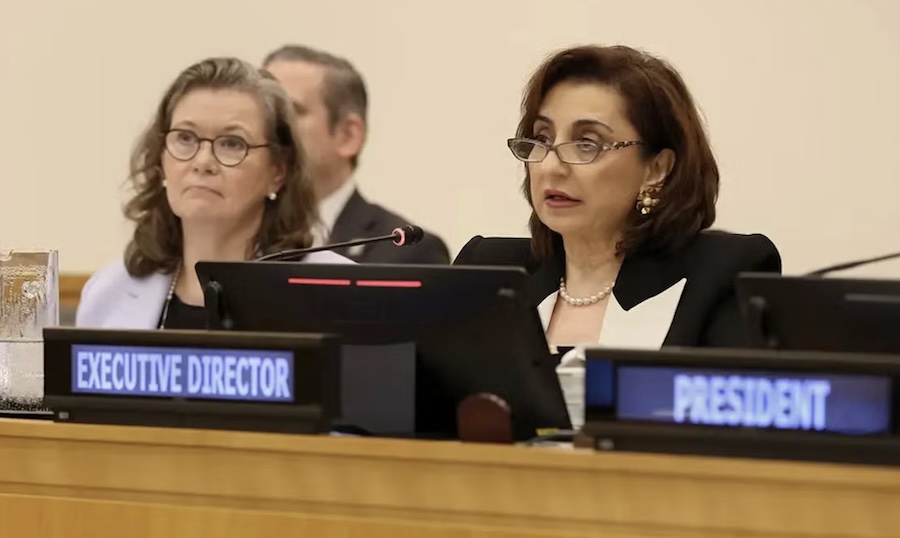
The President of the High Islamic Council, Mr. Mabrouk Zaid El-Kheir, emphasized that the visit of His Holiness Pope Leo XIV to Algeria is of utmost importance, describing it as “highly significant,” especially as it comes in response to an official invitation from the President of the Republic, Mr. Abdelmadjid Tebboune. He expressed his hope that this visit would contribute to fostering a culture of peace and love, serving as a positive message to the entire world toward a more stable and harmonious future.

During his appearance this Monday [April 13] on the “L’invité du jour” on Algerian Radio’s Channel 1, Zaid El-Kheir explained that the high-level meeting between Algeria and the Vatican pursues noble goals worthy of this distinguished visit. He highlighted the religious and diplomatic dimensions of the visit, noting the significant influence of His Holiness the Pope as a major symbol for Christians worldwide. He further emphasized the Pope’s prestigious standing, earned through his efforts in promoting peace, advocating for harmony, and his initiatives regarding various complex international issues.

He further stated: “Algeria is a land of peace, tolerance, and respect for all religions. Therefore, I anticipate that this visit will be a significant milestone, given its ancient history and civilizational value. It will undoubtedly highlight this standing and strengthen the rapprochement between both parties”. He also pointed to its “prominent diplomatic dimension, which is poised to achieve harmony between two states of great religious and historical weight, establishing Algeria as a beacon of radiance for global peace”.

(continued in right column)

(Click here for a French article on this subject.)

Question related to this article:
 
How can different faiths work together for understanding and harmony?

(continued from left column)

A visit in a sensitive international context to renew relations

Speaking on the timing of the visit, Zaid El-Kheir considered it to be taking place in a precise international context marked by increasing unrest. He emphasized that Algeria and the Vatican are capable of contributing to de-escalating the situation and opening avenues for dialogue between religions, cultures, and cultures, thereby enhancing global security and stability.

He further explained that among the goals of the visit is the strengthening of bilateral relations, whose roots date back to the 1970s, and renewing them in a way that enshrines the values of mutual respect and affection. He emphasized the hope that this visit would result in outcomes that unify visions and send a message to the world that Algeria is a land of security and stability.

The President of the High Islamic Council emphasized that Algeria occupies a significant strategic position, serving as a gateway to Africa and being in close proximity to Europe. This grants it a pivotal role in fostering dialogue and communication among peoples.

Religion is a common denominator for rapprochement and coexistence between cultures

In a related context, the same speaker emphasized that this visit represents an opportunity to highlight the true role of religion as a common factor calling for coexistence and tolerance. He recalled that divine messages brought sublime values to foster harmony among humanity, noting that history bears witness to successful models of coexistence between Muslims and others in various regions, as was the case in ancient Egypt, Andalusia, and parts of Asia.

He also addressed the importance of contemporary religious discourse, which must be rational and derived from original texts, contributing to the achievement of harmony as well as spiritual and human stability.

Zaid El-Kheir pointed to the shared historical heritage, invoking the figure of Saint Augustine, one of the most prominent symbols of Christian thought. He emphasized that this visit also carries a symbolic dimension to revive this spiritual legacy spanning centuries, noting that Algeria has been and will remain a center for interfaith dialogue.

He concluded by saying: “Throughout its history, Algeria has remained a land of tolerance and coexistence, and has been keen on enshrining these values in its institutions, laws, and practices”.

– – – – – –

If you wish to make a comment on this article, you may write to coordinator@cpnn-world.org with the title “Comment on (name of article)” and we will put your comment on line. Because of the flood of spam, we have discontinued the direct application of comments.
70+ Boats Launch Historic Global Sumud Flotilla to Gaza in Bold Solidarity Stand

. HUMAN RIGHTS .

An article from Telesur English

The Global Sumud Flotilla is departing today [April 14] from the Port of Barcelona in what organizers describe as the largest civilian-led maritime initiative in history aimed at breaking Israel’s long-standing blockade of the Gaza Strip.

Comprising more than 70 boats and over 3,000 participants from more than 100 countries, the fleet includes a dedicated medical contingent of 1,000 healthcare professionals carrying essential supplies for Gaza’s devastated health system.

Saif Abukeshek, the Palestinian activist based in Barcelona and spokesperson for the Global Sumud Flotilla, has emphasized that this is a peaceful civilian action responding to ongoing aggressions against Palestinian and Lebanese populations.

Over 70 vessels and thousands of international volunteers are sailing to pressure governments worldwide.

The mission combines sea and land components, including solidarity convoys from Asia and North Africa.

Greenpeace’s Arctic Sunrise and Open Arms vessels are joining the effort from Barcelona.

This Spring 2026 mission builds directly on previous attempts, including the 2025 Global Sumud Flotilla that was intercepted by Israeli forces.

The Global Sumud Flotilla Mission: Scale and Objectives

The Global Sumud Flotilla represents a coordinated alliance of four major coalitions: the Global Sumud Flotilla itself, the Global Freedom and Sumud Flotilla, Thousand Madleens to Gaza, and the Freedom Flotilla Coalition.

Organizers state the goal is to deliver humanitarian aid, assert the right of navigation in international waters, and highlight the dire conditions in Gaza more than six months after a fragile ceasefire took effect in October 2025.

Saif Abukeshek has described the flotilla as “civilian boats” in response to what he calls systematic human rights violations in the Middle East, including continued strikes in Lebanon and restrictions in Gaza despite the truce.

The fleet carries medical supplies, food, and reconstruction materials while featuring doctors, engineers, legal experts, and activists ready to establish an unarmed protective presence if permitted.

Medical fleet of 1,000 professionals targets Gaza’s collapsed healthcare infrastructure.

Participants include parliamentarians, journalists, and civil society leaders from every continent.

The mission seeks to open a humanitarian sea corridor and challenge the 19-year blockade.

→ External link: Amnesty International: States must ensure safe passage for Global Sumud Flotilla

→ External link: Freedom Flotilla Coalition joint statement on largest flotilla yet

Historical Context of Efforts to Break the Gaza Blockade

Maritime activism to challenge Israel’s blockade of Gaza dates back to 2008 with the Free Gaza Movement, which successfully delivered aid in several voyages before 2010.

The 2010 Freedom Flotilla, including the MV Mavi Marmara, ended in tragedy when Israeli forces raided the vessels in international waters, resulting in nine activist deaths and widespread international condemnation.

Subsequent attempts — Freedom Flotilla II in 2011, III in 2015, the Women’s Boat in 2016, and multiple missions through 2018 — were all intercepted, with activists detained and deported.

In 2025, smaller missions like the Madleen and Handala faced drone attacks and boarding in international waters. The first large-scale Global Sumud Flotilla in September-October 2025 involved over 40 vessels and 500 participants but was fully intercepted, with hundreds detained.

(continued in right column)

Question related to this article:
 
How can we best express solidarity with the people of Gaza?

(continued from left column)

No flotilla has reached Gaza since 2010 despite repeated non-violent efforts.

The 2025 Global Sumud Flotilla marked the largest attempt until this 2026 spring mission.
Patterns show consistent Israeli interceptions, even in international waters, drawing UN and human rights criticism.

These actions have consistently raised global awareness about the blockade’s humanitarian impact, even when physically prevented from docking.

Current Situation in Gaza Six Months into the Fragile Ceasefire

The October 10, 2025 ceasefire, brokered with international involvement, promised a halt to major hostilities, hostage-prisoner exchanges, and increased aid flows. Yet Gaza remains in a state of “neither war nor peace.”

Official Palestinian sources report more than 2,073 Israeli violations between October 2025 and March 2026, including airstrikes and incursions, resulting in over 700 Palestinian deaths — the majority civilians.

Aid deliveries have fallen far short of commitments, with only about 21% of planned trucks entering. Reconstruction has barely begun, and restrictions on “dual-use” materials continue to hinder recovery.

Over 60% of children under two face food poverty amid persistent malnutrition.

Nearly 60% of the Gaza Strip remains a no-go zone under Israeli military control.

Thousands of pregnant women and breastfeeding mothers suffer from acute malnutrition.

The health system lies in ruins, with limited medical evacuations and ongoing shortages of medicine and equipment.

Geopolitical Context and Broader Regional Implications

The launch of the Global Sumud Flotilla occurs against a backdrop of fragile truces across the Middle East. A short-lived US-Iran ceasefire announced in early April 2026 followed intense strikes that disrupted regional stability, affecting aid routes and energy supplies.

Continued Israeli operations in Lebanon, even during truce periods, and tensions involving Iran have compounded the crisis. These dynamics underscore how the Gaza blockade fits into wider patterns of conflict and external intervention.

Civilian initiatives like the flotilla highlight growing frustration with governmental inaction.

By asserting rights under international law, participants aim to pressure states to fulfill obligations regarding humanitarian access and accountability.

The blockade, now in its 19th year, is widely viewed as unlawful by human rights organizations.

International Court of Justice provisional measures remain unheeded.

Grassroots movements fill the vacuum left by stalled diplomacy.

This mission tests the commitment of the international community to protect non-violent activists and enforce humanitarian principles amid shifting alliances.

Challenges Ahead and Potential Impact of the Global Sumud Flotilla

Organizers have prepared for possible interceptions, framing the effort as a legal and moral challenge rather than confrontation. Past experiences show risks of detention, equipment seizure, and physical harm.

Yet the unprecedented scale — uniting diverse coalitions and drawing support from figures across civil society — amplifies its potential to influence public opinion and policy debates in Europe, the Americas, and beyond.

Success or high-visibility failure could bolster calls for lifting the blockade entirely.

Medical and reconstruction teams signal a focus on long-term solidarity.

The flotilla exposes the gap between international rhetoric and action on Palestine.
Amnesty International has urged states to guarantee safe passage, warning against repeats of 2025 abuses.

In a region marked by unresolved conflicts, the Global Sumud Flotilla keeps the humanitarian cost of the blockade in sharp focus. It demands justice, dignity, and an end to collective punishment for Gaza’s two million residents.

As vessels leave Barcelona today, the world watches whether this bold civilian stand will mark a turning point or another chapter in the long struggle for Palestinian rights.

– – – – – –

If you wish to make a comment on this article, you may write to coordinator@cpnn-world.org with the title “Comment on (name of article)” and we will put your comment on line. Because of the flood of spam, we have discontinued the direct application of comments.
National Autonomous University of Mexico: Encounters and Networks for Peace. Why Talk About a Culture of Peace?

… EDUCATION FOR PEACE …

An article from Gaceta UNAM

On March 25, the National School of Social Work (ENTS) at UNAM hosted the inauguration of the comprehensive project between Civil Society, Academia, and Government: Encounters and Networks for Peace. Why Talk About a Culture of Peace?


Photo: PUCPAZ

The event was organized by the University Program on Culture of Peace and Eradication of Violence (PUCPAZ), in coordination with ENTS; the University Program on Human Rights (PUDH); the Metropolitan Autonomous University (UAM) Iztapalapa Campus; the Rosario Castellanos National University (UNRC); and the Undersecretariat for Peacebuilding, Social Participation, and Religious Affairs of the Ministry of the Interior. Services and Consulting for Peace AC (Serapaz) and the Don Bosco Foundation.

This university initiative seeks to build a shared, analytical, forward-looking, and critical action agenda, aimed at fostering dialogue, identifying best practices, and contributing proposals that inclusively promote progress toward an active society that weaves together knowledge and participates in building a culture of peace.

An Act of Resistance

At the opening ceremony, Leticia Cano, director of PUCPAZ, noted that this gathering is an act of living, everyday resistance, accompanied by dialogues and conversations about experiences, best practices, interventions, and significant contributions, stemming from the challenges faced daily.

“We neither start nor arrive from a vacuum; we reconnect with others in their own territories where the struggle for peace takes place every day, from within the communities, not to talk about them, but with them and from within them, because they are the ones who experience firsthand the contradictions of our time.” Carmen Casas Ratia, director of the ENTS (National School of Social Work), emphasized that it was no coincidence that the meetings began at this academic institution, given the close relationship between social work and a culture of peace.

She also underscored the importance of promoting a positive peace, based on justice, equity, and the satisfaction of needs, as well as addressing the structural causes of violence.

(Continued in right column)

(Click here for the Spanish original of this article)

Question for this article:

Where is peace education taking place?

Is there progress towards a culture of peace in Mexico?

(Continued from left column)

For his part, Alfredo Sánchez Castañeda, coordinator of the PUDH (Program for the Development of Human Rights), warned that violence has surpassed the limits of imagination and disproportionately affects the most vulnerable sectors. “It is linked to multiple crises: economic, social, health, migration, and security, which poses the challenge of rethinking the role of educational institutions in peacebuilding.”

Carlos C. Contreras Ibáñez, from the Social Psychology for Peace Project at the UAM (Autonomous Metropolitan University), Iztapalapa Campus, emphasized the need to maintain a constant dialogue between academia, government, and civil society. The latter, in particular, has direct contact with communities and their problems, and maintained that peace must be understood as a collective process.

In turn, Diana Lepe Sánchez, director of Serapaz, shared a community experience that sparked reflection on the type of peace that is being sought. Peace, she said, does not imply silence, but rather the possibility of expressing and addressing the problems of individuals and communities.

José Antonio Sandoval, general director of the Don Bosco Foundation, agreed on the importance of strengthening ties with civil society organizations, whose experiences on the ground allow for a rethinking of peacebuilding strategies. He also highlighted the role of academia in deepening the analysis of community work.

Laura Angélica Cordero, general director of Social Prevention and the Reconstruction of the Social Fabric, representing Rocío Bárcena Molina, Undersecretary of Peacebuilding, Social Participation, and Religious Affairs of the Ministry of the Interior, celebrated the inter-institutional collaboration and noted that peacebuilding is not a recent trend, but a sustained effort. In that regard, she quoted Eleanor Roosevelt: “It is not enough to talk about peace; one must believe in it and work to achieve it.”

Ana María Rosas, general counsel of the UNRC, representing its rector, Alma Herrera Márquez, noted that education plays an essential role in peacebuilding, as it is a means to transform both those who receive it and those who provide it.

Human Rights and Violence

María Dolores González Saravia Calderón, president of the Mexico City Human Rights Commission, gave the opening address, in which she spoke about the challenges to peacebuilding and the guarantee of human rights. She distinguished between positive peace, which is lasting and based on justice, and negative peace, which is imposed and focused on security.

She also defined violence as the use of force to dominate or impose, and emphasized the need to build solutions.

– – – – – –

If you wish to make a comment on this article, you may write to coordinator@cpnn-world.org with the title “Comment on (name of article)” and we will put your comment on line. Because of the flood of spam, we have discontinued the direct application of comments.
Ouagadougou, Burkina Faso: Muslims and Christians United in a Collective Iftar for Peace

. TOLERANCE & SOLIDARITY .

An article from Burkina24 (translation by CPNN)

In Ouagadougou, interfaith fraternity was expressed around a shared table. On Friday, March 13, 2026, the Movement for a Culture of Peace and Love of the Homeland (MPAP), in collaboration with the Cheick Moaze Foundation for Social Cohesion, Peace, and Charity, organized a collective iftar bringing together Muslims, Christians, and members of other faiths.

This collective breaking of the fast of Ramadan is part of the “Stop Xtrem” project, a civic initiative aimed at preventing religious extremism and the violence that stems from it. Through this initiative, the organizers also hope to encourage dialogue between different faiths and promote a culture of tolerance and mutual respect.

According to them, fostering such opportunities for interaction helps to strengthen social cohesion and reinforce bonds of solidarity among the various segments of Burkinabè society.

The president of the Movement for a Culture of Peace and Love of the Homeland (MPAP), Paul Marie Zoma, expressed his satisfaction with the turnout during this spiritual period marked by both Ramadan for Muslims and Lent for Christians.

He stated that these two periods remind us of shared values ​​such as self-control, humility, forgiveness, generosity, and love of one’s neighbor.

(continued in right column)

(Click here for a French version of this article.)

Question related to this article:
 
How can different faiths work together for understanding and harmony?

(continued from left column)

“Our country has always been recognized for the quality of its interfaith coexistence.” This wealth must be preserved and strengthened. By sharing this moment, we send a message of hope, that of a united Burkina Faso, in solidarity and resolutely committed to the path of peace,” he affirmed.

Present at the ceremony, religious leader Cheikh Moaze also praised the initiative, which he considers a powerful symbol of fraternity. According to him, every believer must learn to accept others with respect and fairness. He reminded everyone that the Quran teaches Muslims to be just and benevolent towards all, including non-Muslims.

“We must learn to accept one another and respect our differences. We must break down the barriers between the children of Adam and Eve, for only God can judge His children,” he declared. From the Catholic Church, Paul Tiendrébeogo, president of the parish committee for interreligious dialogue, also welcomed this initiative, which promotes fraternity among believers. According to him, Ramadan and Lent are periods of purification and drawing closer to God.

“By sharing this moment of breaking the fast, we affirm together that peace begins with simple gestures: meeting, talking, sharing, and respecting one another. This is how we build a society founded on solidarity, fraternity, and love of country,” he declared.
Representing the Presidency of Burkina Faso, Dr. Samuel Kalkumdo, Minister-Advisor to the President, emphasized the fundamental unity of the Burkinabè people. According to him, beyond religious or ethnic affiliations, all must consider themselves members of the same nation.

“We are all sons and daughters of Burkina Faso,” he affirmed, praising the foresight of Captain Ibrahim Traoré and calling on the Burkinabè people to remain united behind him to build a strong and cohesive nation in the face of current challenges. The meeting was also attended by several traditional and religious leaders as well as civil authorities.

– – – – – –

If you wish to make a comment on this article, you may write to coordinator@cpnn-world.org with the title “Comment on (name of article)” and we will put your comment on line. Because of the flood of spam, we have discontinued the direct application of comments.
Essaouira, Morocco: Launch of the Prize for “Youth Voices for Peace”

. TOLERANCE & SOLIDARITY .

An article by Maghreb Arab Press Agency (translation by CPNN)

The announcement, on Sunday [March 29] at Bayt Dakira in Essaouira, of the launch of the “Nawal Ouzitane – Youth Voices for Peace” Prize was one of the highlights of an international meeting dedicated to peace and tolerance. It is meant to encourage youth engagement in promoting the values ​​of coexistence and living together.

This national prize aims to promote the creative expression of young people in various fields, reflecting their awareness of the values ​​of peace and their responsibility in strengthening them, with a particular emphasis on raising awareness among younger generations about the importance of dialogue, openness, and cultural diversity.

This initiative is also part of a national movement to make young people central actors in peace-related issues, through the provision of spaces for expression and participation, as well as the strengthening of educational and cultural roles in the fight against violence and extremism.

In a statement to MAP, Farid El Bacha, the founding president of the Moroccan House for Peace and Tolerance, indicated that this meeting was marked by two key moments. The first focused on the foundations of peace as defined by the Royal Directives, particularly regarding the role of religion as a value based on Light and Reason, the importance of dialogue between generations and continents, and the central role of education.

(Click here for the original article in French.)

(continued in right column)

Question related to this article:
 
Youth initiatives for a culture of peace, How can we ensure they get the attention and funding they deserve?

(continued from left column)

The second highlight was the announcement of the launch of the “Youth Voices for Peace” Prize, aimed at encouraging young people, from an early age, to embrace the values ​​of peaceful coexistence. This initiative, unique at the national level, reflects the conviction that young people play a crucial role in promoting a culture of peace through various forms of artistic expression.

Professor Anas Al Yemlahi of Abdelmalek Essaâdi University in Tetouan stated that Morocco’s selection within international bodies reflects several strategic advantages, notably its geographical position as a crossroads of continents and a gateway to Africa, the Atlantic, and the Mediterranean.

He praised the vision of His Majesty King Mohammed VI, as well as the roles assumed by the Kingdom in strengthening international stability and contributing to conflict resolution, consolidate Morocco’s position as an international actor in promoting peace, adding that this dynamic places the Kingdom among the world’s influential nations.

This meeting was part of the first session of the Board of Directors of the University of Cultural Sciences and Heritage of Tetouan-Essaouira, providing an opportunity for discussion on issues of peace, development, and international academic cooperation.

The meeting’s program included several themes, notably the Atlantic Partnership and multilateral cooperation, the international system and the dynamics of conflict, the challenges of building inclusive peace, and the role of the dialogue of civilizations in royal speeches.

– – – – – –

If you wish to make a comment on this article, you may write to coordinator@cpnn-world.org with the title “Comment on United Nations Alliance of Civilizations” and we will put your comment on line. Because of the flood of spam, we have discontinued the direct application of comments.
Algeria Hosts the Arab Forum for Youth, Peace and Security

. TOLERANCE & SOLIDARITY .

An article from the United Nations Development Programme, translated by CPNN

On March 28 and 29, 2026, the Sheraton Hotel in Algiers hosted a unique Arab dialogue bringing together young people, experts, and policymakers to discuss peace, security, and sustainable development.

This forum was organized by the Ministry of Youth in collaboration with the United Nations Development Programme (UNDP) in Algeria, under the auspices of the Arab League and with the support of Japan, within the framework of the Arab Strategy for Youth, Peace and Security.

(Click here for the original article in French.)

(continued in right column)

Question related to this article:
 
Youth initiatives for a culture of peace, How can we ensure they get the attention and funding they deserve?

(continued from left column)

At the opening ceremony, the Minister of Youth emphasized the central role of young people in regional transformations and Algeria’s commitment to placing youth at the heart of national public policies. The UNDP Resident Representative in Algeria, Natasha Van Rijn, highlighted the essential role of young people in consolidating peace, while stressing the importance of expanding partnerships at the Arab and African levels.

The Tunisian Minister of Youth and Sports reiterated the strategic importance of investing in youth to build stable and secure societies, commending the cooperation between Algeria and Tunisia in this area. The Yemeni Minister of Youth and Sports, for his part, underscored the crucial role of young people in spreading a culture of peace and building a more stable future.

Under the slogan “Partners for the people: a youth who construct the future,” the forum organized workshops to identify the main challenges to youth participation and formulate concrete recommendations to strengthen their role in decision-making and peacebuilding.

The forum concluded on March 29, 2026, reaffirming the importance of valuing the contributions of young people and translating recommendations into concrete actions at the national and regional levels.
– – – – – –

If you wish to make a comment on this article, you may write to coordinator@cpnn-world.org with the title “Comment on United Nations Alliance of Civilizations” and we will put your comment on line. Because of the flood of spam, we have discontinued the direct application of comments.
Possible Pathways to Nuclear Abolition

DISARMAMENT & SECURITY .

Special to CPNN from Timmon Wallis

How the world can achieve verifiable, irreversible global nuclear disarmament before it’s too late.

We are at the moment facing a very backwards trend in pretty much everything to do with international relations. The last remaining treaty in nuclear arms control has recently expired. And the response from Trump was, “if it expires, it expires” . . .

Trump is surrounded by people who have a vested interest in keeping the nuclear weapons business going for as long as they can.

So this is where the Treaty on the Prohibition of Nuclear Weapons (TPNW) comes in. But what is the use of this treaty if the US and the other nuclear powers have not joined it? In fact, all the countries that are in the TPNW are already in the NPT, where they promised not to develop nuclear weapons. So what is the point of another treaty that just makes that same commitment?

Article 1e of the TPNW bans assisting, encouraging, or inducing anyone, in any way, to engage in any of the activities prohibited to a States Party of the treaty.

Treaties, as you know, are agreements between governments. The governments must not develop, manufacture or stockpile nuclear weapons. But this clause refers to anyone, not just governments. In other words, people, corporations, banks, insurance companies – the parties to the treaty must not assist anyone involved in the development, manufacture or stockpiling of nuclear weapons. And the people and corporations that are involved do not just have to be in or based in that country. The TPNW says “anyone.”

So, theoretically at least, the 74 countries that have so far joined the TPNW are forbidden under this treaty from having anything to do with the corporations that develop, manufacture or stockpile nuclear weapons.

Now here’s the thing. The two dozen major nuclear weapons companies don’t just operate in the US or the UK or France. These are multinational corporations. They have operations all over the world, including in many of the countries that have already joined the TPNW.

They also have offices in other countries, they have contracts and projects, they sell their products and services to those countries. They also have suppliers – a whole supply chain – involving many other countries, to obtain the resources and the parts they need. And crucially, they have investors in those countries.

So far, only Ireland has fully divested its sovereign funds and major banks from the nuclear weapons companies (along with Switzerland, which is not even in the treaty) but others should follow – including countries like Austria, South Africa, New Zealand, Philippines, Indonesia, Mexico… These are not insignificant countries and the impact on these companies could be huge.

Another clause in the TPNW that is crucially important for putting pressure on these companies is Article 5, which obliges all parties to the treaty to adopt national legislation that applies the prohibitions of the treaty to persons, including “legal” persons in the country, and defines legal penalties for violations of those prohibitions. As I pointed out, treaties apply to countries, but by passing laws in each country which make it illegal for anyone in that country to have anything to do with nuclear weapons, the TPNW is once again tightening the noose on these companies and the people who work for them – especially CEOs, members of the board of directors and other high level vice presidents and so on.

In Ireland, once again our test case for this, the Prohibition of Nuclear Weapons Act was passed in 2019, making it offense, punishable by up to life in prison, for anybody in Ireland having anything to do with nuclear weapons, including assisting anybody else having anything to do with nuclear weapons. So now it’s not just the sovereign fund that belongs to the state and is therefore required to divest from these companies, but also the banks and anybody else with investments in Ireland.

(Continued in right column)

Question related to this article:
 
Can we abolish all nuclear weapons?

(Continued from left column)

Clearly if more and more countries take on these responsibilities of the TPNW, the companies will find themselves under more and more pressure from governments as well as from investors, suppliers, customers and even workers working for those companies.

My book, Nuclear Abolition: A Scenariois imagines a scenario where more and more of the states parties to the TPNW are moving on to these next steps, as more countries are also signing and ratifying the treaty.

Currently we have 74 countries who have ratified the TPNW.

We have another 25 countries who have signed the treaty but not yet ratified it. That makes 99 so far, a majority of the 197 countries in the world able to sign international treaties.

We then have another 40 countries who have been consistently voting for the treaty but have not yet signed it themselves.

We have another 12 countries who have been abstaining…
Including, for instance, Switzerland, where campaigners just succeeded in collecting over 100,000 signatures to put it on the ballot; including Australia, whose Prime Minister is personally committed to the TPNW, whose party has voted to join the TPNW, and just won a re-election with a strong mandate.

Then we have at least 20 countries who are under enormous pressure to join the treaty, including countries in NATO that have government ministers committed to joining the treaty, including the former Prime Minister of Iceland, as well as opinion polls showing overwhelming support from the general public…

I already mentioned the ruling party in Australia is committed to signing the TPNW. So is the ruling party in Norway, and the coalition government in Spain. The previous coalition in Germany was also committed to joining the TPNW, although clearly the current government is not.

Who knows what it will take for one of these countries to join the TPNW, and then another, and another and another. Sooner or later, it will happen. I offer some possible scenarios that could lead to this in my book . . .

Sooner or later, we’re either going to get these countries on board for the elimination of nuclear weapons or we’re going to have a nuclear war. I certainly hope it’s the former.

But it’s also not just these European countries that ultimately have to get on board with this. My book then looks at the situation within the US. The peace and anti-nuclear movement in the US is certainly much weaker than it is or has been in Europe. But there are important steps being taken, and I will highlight just a few:

I hope you all heard a few years ago that the city council of New York voted to divest from the nuclear weapons companies? A few other large cities have already done so, including Oakland, CA. Most recently Philadelphia also voted to divest from nuclear weapons.

My own small city of Northampton, MA has not only divested from these companies, but announced that it will not do business with any of these companies. It has notified these companies that they are not eligible to bid for city contracts.

And there is currently legislation pending in the MA state legislature to do both of these things. It is unlikely to pass in this current session, but there is a growing movement in support of this…

Altogether, these steps being taken across the US and around the world may or may not be enough to pressure the nuclear weapons corporations into seeking other ways to make a profit. After all, these corporations don’t exist in order to make nuclear weapons. They exist in order to make a profit for their shareholders.

Once it starts to become unprofitable for them to be involved in the nuclear weapons business, they will move on to other things – as many of them did in the 1980s when faced with divestment, boycotts and public opprobrium. And while there were many factors at play which led to the fall of the Berlin Wall and the end of the Cold War, the pressure on nuclear weapons corporations at that time was certainly one of them.

Those corporations, like General Electric and Ford Motor Company, not only pulled out of their involvement with nuclear weapons. They demanded that Congress and the Reagan Administration take steps to restore public confidence in those corporations, by cutting back on the nuclear arms race and signing agreements with the Soviet Union.

Pressure on the corporations “worked” then, and it can work again! And with Trump and Putin at the helm, we can only hope it works before it’s too late.

– – – – – –

If you wish to make a comment on this article, you may write to coordinator@cpnn-world.org with the title “Comment on (name of article)” and we will put your comment on line. Because of the flood of spam, we have discontinued the direct application of comments.

Over 100 International Law Experts Warn: U.S. Strikes on Iran Violate UN Charter and May Be War Crimes

DISARMAMENT & SECURITY .

An article from Just Security

The United States and Israel initiated strikes on Iran over one month ago, on February 28, 2026. The attack was a clear violation of the United Nations Charter. The conduct of the war, and statements of U.S. officials, also raise serious concerns about violations of international humanitarian law, including potential war crimes. We have written the below statement together with over 100 U.S.-based international law experts, to detail our profound concerns about the war. The letter is signed by international law experts across the United States, including senior professors; leaders of prominent international law associations, non-governmental organizations, and legal clinics; former government legal advisors; and military law experts and former Judge Advocates General (JAGs).


Letter of over 100 international law experts on Iran war
 
We, the undersigned U.S.-based international law experts, professors, and practitioners write to express profound concern about serious violations of international law and alarming rhetoric by the United States, Israel, and Iran in the present armed conflict in the Middle East.

Due to our connection to the United States, our focus here is on the conduct of the U.S. government, but we remain concerned about the risk of atrocities across the region including the continuing risks posed by the Iranian government to Iranians through violent crackdowns on dissent, and to civilians across the Middle East through Iran’s ongoing unlawful strikes on civilian infrastructure using explosive weapons in densely populated areas.

One month has passed since the United States and Israel launched strikes across Iran. The initiation of the campaign was a clear violation of the United Nations Charter, and the conduct of United States forces since, as well as statements made by senior government officials, raise serious concerns about violations of international human rights law and international humanitarian law, including potential war crimes.  

We collectively affirm the importance of equal application of international law to all, including countries that hold themselves out as global leaders. Recent statements from senior U.S. government officials describing the rules governing military engagement as “stupid” and prioritizing “lethality” over “legality” are profoundly alarming and dangerously short-sighted. These claims, particularly in combination with the observable conduct of U.S. forces, are harming the international legal order and the system of international law that we have devoted our lives to promoting. 

The war, which is costing U.S. taxpayers between $1-2 billion each day, is imposing significant harm to civilians in the region, has resulted in the loss of hundreds of civilian lives across the Middle East, and is causing serious environmental  and economic harms.

We write to express our concern about 1) jus ad bellum, or the decision to go to war, 2) jus in bello, or the conduct of hostilities, 3) rhetoric and threats from senior U.S. officials and their allies, which portend further abuses, and 4) the decimation of civilian harm mitigation structures within the U.S. government as a part of U.S. Secretary of Defense Pete Hegseth’s “gloves off” approach to warfare. 

1. Jus ad bellum concerns: The strikes launched by the United States and Israel on February 28, 2026 clearly violated the United Nations Charter prohibition on the use of force. Force against another state is only permitted in self-defense against an actual or imminent armed attack or where authorized by the UN Security Council. The Security Council did not authorize the attack. Iran did not attack Israel or the United States. Despite the Trump administration’s varied and sometimes conflicting claims to the contrary, there is no evidence that Iran posed an imminent threat that could ground a self-defense claim. Many international law experts have concluded that Israel and the United States’ actions violate the UN Charter, including the President and President-elect of the American Society of International Law, and the President of the American Branch of the International Law Association; UN Secretary-General António Guterres also condemned the attacks as undermining international peace and security.

2. Concerns about violations of international humanitarian law: The laws of armed conflict constrain the conduct of hostilities of all parties to the ongoing conflict. We are concerned that these fundamental rules may have been violated, including in the context of reported strikes on civilians and civilian objects such as political leaders who have no military role, oil and gas infrastructure, including South Pars, and water desalination plants. On March 19, UN High Commissioner for Human Rights Volker Türk condemned strikes on energy infrastructure, noting their “disastrous” impacts for civilians. 

We are seriously concerned about strikes that have hit schools, health facilities, and homes. The Iranian Red Crescent reports that “67,414 civilian sites have been struck, of which 498 are schools and 236 health facilities.” A report by leading civil society organizations found that at least 1,443 Iranian civilians, including 217 children, were killed by U.S. and Israeli forces between February 28 and March 23. 

The strike on Minab primary school is particularly concerning. On February 28, Shajareh Tayyebeh Primary School in Minab, Iran, was struck, resulting in the deaths of at least 175 people, many of them children, according to Iranian officials. Based on easily accessible online information and commercially available satellite imagery, it appears the building had been used as a school for a decade. President Trump denied U.S. responsibility, falsely stating that “It was done by Iran.” However, a preliminary investigation by the Department of Defense reportedly determined that the U.S. conducted the strike, and the targeting had been based on outdated intelligence. The strike likely violates international humanitarian law, and if evidence is found that those responsible were reckless, it could also be a war crime. The strike is among the deadliest single attacks by the U.S. military on civilians in recent decades. 

3. Concerns about rhetoric and threats from senior officials. We are deeply concerned about the dangerous rhetoric government officials have engaged in during the war, including: 

a. Threatened denial of quarter: On March 13, Secretary of Defense Pete Hegseth stated “We will keep pushing, keep advancing, no quarter, no mercy for our enemies.” In international law, it is “especially forbidden” to “declare that no quarter will be given,” a prohibition also set out in the Department of Defense’s own law of war manual. Hegseth’s statement likely violates international humanitarian law as well as the U.S. War Crimes statute 18 U.S.C. 2441. Ordering or threatening no quarter is a war crime. 
 
b. Dismissal of rules of engagement and international law: Secretary of Defense Hegseth’s “no quarter” statement followed similarly alarming statements by the Secretary, including on September 25, 2025 and March 2, 2026 that the U.S. does not fight with “stupid rules of engagement.” On January 8, 2026 President Trump had made the disturbing comment that “I don’t need international law.” On March 13, he stated that the U.S. may conduct strikes on Iran “just for fun.”

c. Threats on energy infrastructure: President Trump threatened on March 13, 2026: “I could take out things within the next hour, power plants that create the electricity, that create the water… We could do things that would be so bad they could literally never rebuild as a nation again.” International law protects from attack objects indispensable to the survival of civilians, and the attacks threatened by Trump, if implemented, could entail war crimes. On March 21, President Trump further threatened to “obliterate” power plants in Iran. U.S. Ambassador to the United Nations, Mike Waltz, defended power plant attacks the next day, and also said that striking nuclear power plants was not off the table. It is prohibited to attack civilian energy infrastructure. If a power plant has both civilian and military purposes (“dual-use”), it may be considered a military objective where it makes “an effective contribution to military action” and the attack “offers a definite military advantage.” However, any strike must respect the principles of proportionality and precautions in attack. The proportionality principle prohibits attacks expected to cause incidental civilian harm that would be excessive in relation to the military advantage. The civilian harm to be considered includes foreseeable reverberating or indirect harm. In any attack, “all feasible precautions” must be taken to avoid civilian harm. 

Attacks on nuclear power plants, even if they have a military purpose, require particular care because of the high risk of releasing radiation and radioactive material and consequent severe harm to the civilian population. Such a strike could harm the health and safety of millions of civilians.  On March 23, 2026, the ICRC President Mirjana Spoljaric Egger expressed her deep concern, noting that “War on essential infrastructure is war on civilians” and described threats to nuclear power plants as “Most alarming.”

4. Concerns about institutional safeguards against further violations: Since the start of the second Trump administration, the Defense Department under Secretary Hegseth has deliberately and systematically weakened the protections meant to ensure compliance with international humanitarian law. This includes removing senior military lawyers without publicly citing misconduct, and replacing the Army, Navy, and Air Force judge advocates general, directly undermining legal oversight of combat operations. It has also abolished “civilian environment teams” and other mechanisms specifically designed to limit harm to civilians during operations. The 2026 National Defense Strategy omits references to civilian protection and international law entirely. These changes are especially concerning in light of Defense Secretary Pete Hegseth’s comments that rules of engagement interfere with “fighting to win.”  

We are gravely concerned that the conduct and threats outlined here are causing serious harm to civilians in the Middle East, and that they also contribute to escalating the conflict, damaging the environment and the global economy, and that they risk degrading the rule of law and fundamental norms that protect every nation’s civilians. Public statements by senior officials indicate an alarming disrespect for the rules of international humanitarian law accepted by states, and which protect both civilians and members of the armed forces. 
  
We urge U.S. government officials to uphold the UN Charter, international humanitarian law, and human rights law at all times, and to publicly make clear U.S. commitment to and respect for norms of international law. 

We remind all states of their legal obligations not to aid or assist the United States, Israel, or Iran in the commission of internationally wrongful acts, as well as to cooperate to bring to an end through lawful means serious breaches of peremptory norms of general international law (jus cogens) including the prohibition of aggression and the basic rules of international humanitarian law. 

We also urge the U.S. governments’ allies and cooperating partners to take steps to respect and ensure respect for international humanitarian law, in line with Common Article 1 of the Geneva Conventions and associated customary international law. The United States has itself acknowledged that states should seek to promote adherence by others to international humanitarian law. The International Committee of the Red Cross 2016 Commentary on the First Geneva Convention of 1949 provides that a state is “in a unique position to influence the behavior” of partner states where the state “participates in the financing, equipping, arming or training of the armed forces of a Party to a conflict, even plans, carries out and debriefs operations jointly with such forces.”  

Signed,*

William J. Aceves

Chief Justice Roger Traynor Professor of Law

California Western School of Law

E. Tendayi Achiume

Professor of Law

Stanford Law School

Rabiat Akande

Wilson H. Elkins Chair and Associate Professor

University of Maryland School of Law

Susan Akram

Clinical Professor of Law

Director, International Human Rights Clinic

Boston University School of Law

Philip Alston

John Norton Pomeroy Professor of Law

NYU School of Law

José E. Alvarez

Herbert and Rose Rubin Professor of International Law

NYU School of Law

Faculty Director, US-Asia Law Institute

Diane Marie Amann

Visiting Professor, LSE Law School

Special Adviser to the International Criminal Court Prosecutor on Children in & affected by Armed Conflict (2012-2021)

Baher Azmy

Legal Director

Center for Constitutional Rights

Sandra L. Babcock

Clinical Professor of Law

Director, International Human Rights Clinic

Cornell Law School

Aslı Ü. Bâli

Howard M. Holtzmann Professor of Law

Yale Law School

Carolyn P. Blum

Clinical Professor of Law, Emerita

Berkeley Law, University of California

Christine Bustany

Senior Lecturer in International Law

Fletcher School of Law and Diplomacy

Charli Carpenter

Professor of Political Science

University of Massachusetts Department of Political Science

Christina M. Cerna

Adjunct Professor of Law (ret.)

Georgetown University Law Centre

Inter-American Commission on Human Rights (ret.), OAS

Sandra Coliver

Former Executive Director

Center for Justice and Accountability

Jorge Contesse

Professor of Law

Rutgers Law School

Cody Corliss

Associate Professor of Law

West Virginia University College of Law

Avidan Y. Cover

Professor of Law

Case Western Reserve University School of Law

Rebecca Crootof

Nancy Litchfield Hicks Professor of Law

University of Richmond School of Law

Jamil Dakwar

Director, ACLU Human Rights Program

Adjunct Professor, New York University and Hunter College

Tom Dannenbaum

Professor of Law, Stanford Law School

Frank Stanton Professor of Nuclear Security

Senior Fellow, Freeman Spogli Institute for International Studies, Stanford University

Frederick T. Davis

Lecturer in Law, Columbia Law School
Principal,
Fred Davis Law Office

Christian M. De Vos

Visiting Assistant Professor

City University of New York School of Law

Laura Dickinson

Lyle T. Alverson Professor of Law

The George Washington University Law School

Stephanie Farrior

Professor of Law (ret.)

Eugene R. Fidell

Visiting Lecturer in Law

Senior Research Scholar

Yale Law School

Martin S. Flaherty

Charles and Marie Robertson Visiting Professor

School of Public and International Affairs,
Princeton University

Laurel Fletcher

Chancellor’s Clinical Professor of Law

UC Berkeley, School of Law

Claudia Flores

Clinical Professor of Law

Director, Allard K. Lowenstein International Human Rights Clinic

Faculty Co-Director, Orville H. Schell Jr. Center for International Human Rights

Yale Law School

Idriss Fofana

Assistant Professor of Law

Harvard Law School

Barbara Frey

Director Emerita, Human Rights Program

University of Minnesota

Hannah R. Garry

Clinical Professor of Law

Founding Faculty Director, Donna and Spencer Gilbert Global Justice & Human Rights Center

Founding Director, International Human Rights Clinic

University of Southern California (USC) Gould School of Law

James A. Goldston

Executive Director

Open Society Justice Initiative

Jonathan Hafetz

Professor of Law

Seton Hall Law School

Lisa Hajjar

Professor of Sociology

University of California – Santa Barbara

Rebecca Hamilton

Professor of Law

American University, Washington College of Law

Hurst Hannum

Professor Emeritus of International Law

Fletcher School of Law and Diplomacy

Tufts University

Oona A. Hathaway

Gerard C. and Bernice Latrobe Smith Professor of International Law, Yale Law School

Professor, Yale University Department of Political Science

Faculty, Jackson School of Global Affairs, Yale University

Director, Center for Global Legal Challenges, Yale Law School

President-elect, American Society of International Law

Adil Haque

Distinguished Professor of Law and Judge Jon O. Newman Scholar

Rutgers Law School

(Continued in right column)

Question related to this article:
 
How can war crimes be documented, stopped, punished and prevented?

(Continued from left column)

Hadar Harris

Founder and Principal

Rights and Justice Consulting

Lindsay M. Harris

Professor of Law

Director, International Human Rights Clinic

University of San Francisco School of Law

Sarah Harrison

Former Associate General Counsel

Department of Defense

J. Benton Heath

Associate Professor of Law

Temple University School of Law

Paul Hoffman

Director, Defending Democracy Clinic

University of California at Irvine School of Law

Partner, Schonbrun DeSimone Seplow Harris & Hoffman, LLP

David B. Hunter

Professor Emeritus

American University Washington College of Law

Deena R. Hurwitz, Esq.
Founder of the International Human Rights Clinic at the University of Virginia

Rebecca Ingber

Professor of Law

Cardozo Law

Co-Director, Floersheimer Center for Constitutional Democracy
Senior Fellow, Reiss Center on Law and Security,
NYU School of Law

Former Counselor, Office of the Legal Advisor, U.S Department of State

Tejal Jesrani

Human Rights Clinical Instructor

Director, TrialWatch Project

Columbia Law School

Brett Jones

Charles E. Scheidt Human Rights Visiting Assistant Clinical Professor

Benjamin N. Cardozo School of Law

Dr Ioannis Kalpouzos

Visiting Professor

Harvard Law School

Jeffrey Kahn

Professor of Law

Director, Program on Law and Government

American University Washington College of Law

David Kaye

Clinical Professor of Law

UC Irvine School of Law

UN Special Rapporteur on freedom of opinion and expression (2014 – 2020)

U.S. Member, European Commission for Democracy through Law (“Venice Commission”)

Pardiss Kebriaei

Senior Staff Attorney

Center for Constitutional Rights

Michael J. Kelly

Professor of Law

Senator Allen A. Sekt Endowed Chair in Law

Director, Kaiman Center for International Criminal Justice & Holocaust Studies

Creighton University

Jocelyn Getgen Kestenbaum

Professor of Law

Benjamin N. Cardozo School of Law

John H. Knox

Henry C. Lauerman Professor of International Law

Wake Forest University School of Law

Former UN Special Rapporteur on human rights and the environment

Harold Hongju Koh

Sterling Professor of International Law

Yale Law School

Steven Arrigg Koh

R. Gordon Butler Scholar in International Law

Boston University School of Law

Jeremy Konyndyk

President, Refugees International

David A. Koplow

Scott K. Ginsburg Professor of Law

Georgetown University Law Center

Christopher Kutz

C. William Maxeiner Distinguished Professor of Law

Philosophy and Political Science (by courtesy)

Berkeley Law School, UC Berkeley

Beatrice Lindstrom

Senior Clinical Instructor and Lecturer on Law

Harvard Law School

Katerina Linos

I. Michael Heyman Professor of Law

Co-Faculty Director, Miller Institute for Global Challenges and the Law

UC Berkeley, School of Law

Bert Lockwood

Distinguished Service Professor

Director of the Urban Morgan Institute for Human Rights
University of Cincinnati College of Law

Editor-in-Chief, Human Rights Quarterly

David Luban

Distinguished University Professor

Georgetown University Law Center

Kate Mackintosh

Executive Director, Professor from Practice

UCLA’s The Promise Institute for Human Rights (Europe)

David G. Mandel-Anthony

Faculty Instructor, Binghamton University Institute for Genocide and Mass Atrocity Prevention (I-GMAP)

Former Deputy to the Ambassador-at-Large for Global Criminal Justice, U.S. Department of State

Sarah Margon

Founder and Principal, Windsong Advisory

Former Director of US Foreign Policy at Open Society Foundations

Joseph Margulies

Professor of the Practice of Government

Cornell University

Craig Martin

Professor of Law

Co-Director, International and Comparative Law Center

Washburn University School of Law

Elisa Massimino

Visiting Professor of Law
Executive
Director, Human Rights Institute

Georgetown University Law Center

Daniel Maurer

Associate Professor of Law, Ohio Northern University Pettit College of Law

Advisor, Center for Military Law & Policy, Texas Tech University School of Law

Board of Directors, National Institute of Military Justice
Lieutenant Colonel, U.S. Army (ret.)

Juan E. Mendez

Professor of International Law (ret.)

Former UN Special Rapporteur on Torture (2010-2016)

Washington College of Law, American University

Gay J. McDougall

Former Vice Chair and 3-term Member, UN Committee on the Elimination of Racial Discrimination

Former UN Special Rapporteur on Minorities (2005-2011)
MacArthur Award Fellow, 1999

Senior Fellow and Distinguished Scholar-in-Residence

Leitner Center for International Law and Justice / Center for Race, Law and Justice

Fordham University School of Law

Margaret E. McGuinness

Professor of Law

Co-Director, Center for International and Comparative Law

St. John’s University School of Law

Chi Adanna Mgbako

Clinical Professor of Law

Director, Walter Leitner International Human Rights Clinic
Fordham Law School

Zinaida Miller

Professor of Law & International Affairs

Northeastern University

Saira Mohamed

Agnes Roddy Robb Chair in Jurisprudence, Ethics, and Social Responsibility

Professor of Law

UC Berkeley, School of Law

Bridget Moix

General Secretary, Friends Committee on National Legislation

Priyanka Motaparthy

Director, Center for International Human Rights

Clinical Professor

Northwestern Pritzker School of Law

Karen Musalo

Bank of America Foundation Chair in International Law

Professor & Director, Center for Gender & Refugee Studies

U.C. Law, San Francisco

Aryeh Neier

President Emeritus, Open Society Foundations

Former Executive Director, Human Rights Watch

Former Executive Director, American Civil Liberties Union

Mary Ellen O’Connell

Robert and Marion Short Professor of Law

Concurrent Professor of International Peace Studies

University of Notre Dame

Diane Orentlicher

Professor Emerita

American University Washington College of Law

Arzoo Osanloo

Professor of Anthropology

Co-Director of the Human Rights Initiative

Princeton University

Jessica Peake

Director, International & Comparative Law Program

UCLA School of Law

Stephen J. Rapp

Senior Fellow, Center for National Security Law, Georgetown Law School

Former US Ambassador-at-Large for Global Criminal Justice (2009-2015)

Paul Rink

Associate Professor of Law

Seton Hall Law School

Francisco J. Rivera Juaristi

Clinical Professor of Law

Santa Clara Law

Scott Roehm

Adjunct Professor of Law

Georgetown Law School

Dr. Cesare P.R. Romano

Professor of Law

W. Joseph Ford Fellow

Loyola Law School, Los Angeles

Gabor Rona

Professor of Practice

Cardozo Law School

Naomi Roht-Arriaza

Distinguished Professor of Law Emerita

UC Law San Francisco

Brad R. Roth

Professor of Political Science and Law

Wayne State University

Kenneth Roth

Charles and Marie Robertson Visiting Professor

Princeton School of Public and International Affairs

Former Executive Director, Human Rights Watch

Susana SáCouto

Professorial Lecturer-in-Residence

Director, War Crimes Research Office

Director, Summer Law Program in The Hague

American University Washington College of Law

Leila Nadya Sadat

James Carr Professor of International Criminal Law

Washington University School of Law

Director, Crimes Against Humanity Initiative

Chair, International Law Association (American Branch)

Former Special Advisor on Crimes Against Humanity to the ICC Prosecutor (2013-2023)

Margaret L. Satterthwaite

Professor of Law
, NYU School of Law

Beth Van Schaack

Former Ambassador-at-Large for Global Criminal Justice, U.S. State Department

Visiting Fellow (Feb. 2026 – June 2026)

European University Institute

Distinguished Fellow

Center for Human Rights & International Justice,
Stanford University

Michael P. Scharf

President of the American Branch of the International Law Association

Joseph C. Hostetler – BakerHostetler Professor of Law

Case Western Reserve University School of Law

Michael N. Schmitt

Professor of International Law, University of Reading

Professor Emeritus, US Naval War College

Former G. Norman Lieber Distinguished Scholar, West Point

Steven M. Schneebaum

Adjunct Professor
Johns Hopkins School of Advanced International Studies

Visiting Professor, Tashkent State University of Law, Uzbekistan

Eric Schwartz

Professor of Public Affairs

Chair, Global Policy

University of Minnesota

Elizabeth Shackelford

Distinguished Lecturer

Dartmouth College

Gregory Shaffer

Scott K. Ginsburg Professor of International Law

Georgetown University Law Center

Dinah Shelton

Manatt/Ahn Professor of Law (Emeritus)
The George Washington University Law School

Rebecca Shoot

Co-Convener, Washington Working Group for the International Criminal Court
Co-Convener, ImPact Coalition on Strengthening International Judicial Institutions

James Silk

Binger Clinical Professor Emeritus of Human Rights

Yale Law School

Matiangai Sirleaf

Nathan Patz Professor of Law

University of Maryland Francis King Carey School of Law
Professor, Department of Epidemiology and Public Health
University of Maryland School of Medicine

David Sloss

John A. and Elizabeth H. Sutro Professor of Law

Santa Clara University School of Law

Stephan Sonnenberg

Associate Professor of Practice

Wesleyan University

Milena Sterio

James A. Thomas Distinguished Professor of Law & LLM Programs Director

Cleveland State University College of Law

Jonathan Tracy

Former Judge Advocate, U.S. Army

Jennifer Trahan

Clinical Professor and Director of the Concentration in International Law and Human Rights

NYU Center for Global Affairs

Convenor, The Global Institute for the Prevention of Aggression

Rachel E. VanLandingham

Lieutenant Colonel (USAF) (ret.)
Professor of Law & Associate Dean for Research, Southwestern Law School

President Emerita & Director, National Institute of Military Justice

* Signatories are signing in their individual capacities and affiliations are for identification purposes only.

– – – – – –

If you wish to make a comment on this article, you may write to coordinator@cpnn-world.org with the title “Comment on (name of article)” and we will put your comment on line. Because of the flood of spam, we have discontinued the direct application of comments.

English bulletin April 1, 2026

. THE MOVEMENT KEEPS GROWING .

In this dark period of history, as we said in this bulletin last July, “Fed up with the wars and militarism of their countries, the people of Europe, North America and the Middle East have taken to the streets in protest.” As we headlined in November, the movement keeps growing. And we see this month, it continues to grow.

In the United States, over 8 million people took to the streets on March 28 in the latest No Kings rally against Trump. It was the largest single-day protest in American history. As reported in the CPNN articles this March and last October and June, the No Kings rallies take place in all 50 states, and continue to increase in the number of communities, from 1,800 in June, 2025 to 2,700 in October, 2025, and to 3,300 this month. The flagship rally this month took place in Minneapolis and was addressed by Bernie Sanders and by Bruce Springsteen.

In the UK on March 28, the biggest ever multicultural protest took place in London with organizers claiming half a million participants.

In France, around 150,000 people took to the streets in many cities and towns on March 14th, to protest against racism, fascism, and war.

Throughout the Global South, demonstrators took to the squares and streets to condemn the war of imperialist aggression waged against Iran by US President Donald Trump and Israeli Prime Minister Benjamin Netanyahu.

And as we see on March 8 every year, women took to the streets for the International Women’s Day. The themes of their celebration differ from country to country, as we have documented this month in CPNN, but most of them join the protest against violence and militarism.

The most dominant theme throughout Latin America was to condemn femicide and other violence against women and to call for protection and equality. In Mexico city, demonstrators called for an end to the femicidal violence that claims the lives of eight women every day in their country. The slogan “Not one less” was displayed in Buenos Aires, Argentina. Photos of women victims or their attackers were displayed in La Paz, Bolivia. The banner “our cry comes from of a heart tired of living with pain and fear” was displayed in Bogota, Colombia. Women demanded shelters for victims of gender-based violence in Caracas, Venezuela. Freedom from gender violence was similarly the theme of demonstrations in Montevideo, Uruguay, Lima, Peru and Quito, Ecuador.

In Argentina, Belarus, Chile and Indonesia, women protested against their right-wing governments that attack women’s rights. The US demonstrations in Chicago, New York and San Francisco specifically denounced the policies of Trump.

In addition to protesting physical violence, demonstrators protested the violence of workplace discrimination and lower wages for women and called for economic equality. This was a dominant theme in the demonstrations in Helsinki, Finland, in Athens, Greece and in Vancouver, Canada.

In Europe, there was protest against the American/Israeli attack on Iran and other wars in general. This was the case in Brussels, Belgium, Barcelona, Madrid, Merida, Toledo and Valencia in Spain, as well as Milan and Rome in Italy. In Ljubljana, Slovenia, their banner read “We will not work for your wars.” In many of these cities, as well as Helsinki, Bordeaux, Valletta (Malt, London and Amsterdam the theme was the demand for equality and freedom from violence.

Banners denouncing fascism and patriarchy were displayed at the demonstrations in Budapest, Istanbul and Berlin and Erfurt in Germany.

In some countries, government leadership used the occasion to rally women to their support. This was the case in Russia, Serbia, Ukraine and several countries of Africa, including Benin and Senegal, and the three countries where military governments are trying to free their countries from neo-colonial domination: Burkina Faso, Mali and Niger.

In other countries, especially those with a socialist history, the day was a celebration of progress towards women’s equality. This was the case in China, North Korea, Cambodia and Vietnam. In Russia, there was at least one traditional event of this nature that took place in Dagestan. In Bangladesh, also, the day was one of celebration of women’s empowerment, rights and social contributions. Rwanda, home to the world’s highest share of women in parliament, celebrated with a walk and run. In Mozambique, the event was addressed by Graça Machel, who was the organizer of the women’s organizations of that country prior to going to South Africa to marry Nelson Mandela.

Popular musicians and celebrities took to the radio and television to promote women’s rights in the Ukraine and in Kenya. In Los Angeles and Hollywood, the Alliance of Women Directors held a salon to support women directors across the entertainment industry.

The African Union held a celebration to highlight the vital roles women play in sustaining the Union’s work and the United Nations Secretary-General published a message proclaiming “It is time to make justice a reality for women and girls, everywhere.”

Perhaps the most unique celebration was that of Ethiopian Airlines that announced all-women crews for all of their flights on March 8.

As discussed in this month’s blog, the demands of women correspond to the demands for a culture of peace.

HUMAN RIGHTS


‘No Kings!’ 8 Million Rally Against Trump in Largest Single-Day Protest in US History

SUSTAINABLE DEVELOPMENT


Benki Piyãko, Brazilian indigenous spiritual leader awarded Niwano Peace Prize

DEMOCRATIC PARTICIPATION


Mayors for Peace Joint Appeal March 16, 2026

WOMEN’S EQUALITY


International Women’s Day: Latin America


TOLERANCE & SOLIDARITY


Nonviolence International: What Cuba Taught Us

EDUCATION FOR PEACE


Bruce Springsteen at Minneapolis NoKings Rally

FREE FLOW OF INFORMATION


Thousands march against far right in London in biggest ever multicultural protest

DISARMAMENT & SECURITY


People Across Global South Condemn ‘Imperialist’ US-Israeli War on Iran