Mazin Qumsiyeh: keep the hope alive

FREE FLOW OF INFORMATION .

An article from the blog of Mazin Qumsiyeh

There are now credible reports from many sources that the levels of extermination and ethnic cleansing of Palestinians in the Gaza strip is higher than officially released and in 19 months could be over 250,000 [1]. The evidence is so compelling that all human rights organizations and the UN documented GENOCIDE and ETHNIC CLEANSING [2].

Meanwhile ‘business’ goes on as usual: billions milked from corrupt Arab dictators, Israeli embassies function around the world (no sanctions), the Zionist lobby infiltrated more organizations and governments globally, blackmailing/extorting weak politicians like Trump and Bin Salman with scandalous videos and information gathered by Mossad agents like Epstein, “Israel” is competing in Eurovision, Arab “leaders” (not one of them elected fairly by people) met in Baghdad to issue yet another useless declaration that their masters feel happy about, famine spreading, expenditure on arms expand to trillions, the climate and environmental global catastrophe deepens, education and healthcare globally get worse.
The tiny 0.5% (in numbers) continue to reap money and get richer from their positions and now own 50% of the world’s money by thievery from the poor [3]. US taxpayers are saddled with trillions in debt thanks to wars fought on behalf of Zionism [4].

The bad news may lead some to despair and tell us we are entering a new dark age [5]. Yet, candles in this darkness are far too many to snuff out by the Zionist/imperial/colonial juggernaut [6]. Actually hundreds of millions of good people acting positively for sustainability, peace and justice.

Look around you for these positive initiatives and support them and create more. Organize. Afterall, every social positive movement came from such people action: there are thousands of examples from women right to vote to civil rights to Zapatista empowerment to Rohingya to Algeria and Vietnam independence.

Even in the heart of the empire today, the movement is tremendous. Look at student movements at universities or even common people in Palestine and how they resist. These are the true heroes. The profiteers (oppressors) will be swept to the dustbin of history. They are the few, we the oppressed are the many and must organize better (it is an existential threat). Action based on knowledge is the best antidote for despair.

For us at the Palestine Institute for Biodiversity and Sustainability (palestinenature.org), we do this daily and thus balance our lives by doing positive work/building on the ground and educating globally [6]. This is how we keep our sanity and how we keep the hope alive. We urge you to join us (email PIBS@bethlehem.edu to learn more

(article continued in right column)

Question related to this article:

Presenting the Palestinian side of the Middle East, Is it important for a culture of peace?

Where in the world can we find good leadership today?

(article continued from left column)

[1]
Lancet article (till July 2024) and life expectancy losses Lancet abstract

[2]
HRW article, Amnesty article, document

[3] There was increased sales and valuation of arms companies like Elbit,
Rafael, Raytheon, General Dynamics, Lockhead Martins. Companies like
Microsoft and Google help Israeli genocide (e.g. look up Nimbus project).
The Zionist billionaires  (article) with some of the being Israeli (article)
while subservience enriches some goyim/gentiles: Gulf monarchs, Trump,
Mahmoud Abbas’ family and their circle, Elon Musk and this character (article) among hundreds of war/oppression profiteers.

[4]
Sachs article, NY Times article

[5] https://chrishedges.substack.com/p/the-new-dark-age – very good analysis based on things like what Bisan explains (video) illustrated in Hamas Says Witkoff Personally Promised to Lift Gaza Blockadein Exchange for Edan Alexander (article).

[6] Few examples from thousands just last week:
– Ben Cohen from Ben & Jerry’s confronts RFK Jr. and Congress: “you’re killing poor kids in Gaza and paying for it by cutting medicaid for kids here.” video
– Taxpayers against genocide file historic case in US document
– Cannes Selects Film on Gaza Photographer Fatma Hassona (she was killed by
Israel a day later) video
– Students and faculty at Stanford University announce they are joining the nationwide campus hunger strike movement to protest attacks on academic freedom and complicity in the Gaza genocide. Mondoweiss
– Conservative MP Pritchard does a 90 degree change on Israel.(video)
– 15 May Joint Nakba day event held in Beit Jala (Palestine) (video)
– Medea Benjamin deserves a Nobel Prize for her daily, relentless efforts. Examples: video, video

[7] Check out our facebook page for daily posts about activities
and our short video
Also the evolving plans for the new museum video.
I stand beside the mountain gazelle video.
Example talk given 23 April University of Notre Dame “Conflict, War and Ecology” (video)
(in Arabic) Hima magazine from Lebanon includes an article (page 26-27) about us learning from regional experiences
article.

– – – – –

If you wish to make a comment on this article, you may write to coordinator@cpnn-world.org with the title “Comment on (name of article)” and we will put your comment on line. Because of the flood of spam, we have discontinued the direct application of comments.
Joint Statement on Palestine by Seven European Countries

FREE FLOW OF INFORMATION .

A press release from the Ireland central website for government services and information

May 16: We will not be silent in front of the man-made humanitarian catastrophe that is taking place before our eyes in Gaza. More than 50.000 men, women, and children have lost their lives. Many more could starve to death in the coming days and weeks unless immediate action is taken.

Photo by © Abood Abo Salama / SIPA

We call upon the government of Israel to immediately reverse its current policy, refrain from further military operations and fully lift the blockade, ensuring safe, rapid and unimpeded humanitarian aid to be distributed throughout the Gaza strip by international humanitarian actors and according to humanitarian principles. United Nations and humanitarian organizations, including UNRWA, must be supported and granted safe and unimpeded access.

We call upon all parties to immediately engage with renewed urgency and good faith in negotiations on a ceasefire and the release of all hostages, and acknowledge the important role played by the United States, Egypt and Qatar in this regard.

(article continued in right column)

Question related to this article:

Presenting the Palestinian side of the Middle East, Is it important for a culture of peace?

Where in the world can we find good leadership today?

(article continued from left column)

This is the basis upon which we can build a sustainable, just and comprehensive peace, based on the implementation of the two-State solution. We will continue to support the Palestinian people’s right to self-determination, and work in the framework of the United Nations and with other actors, like the Arab League and Arab and Islamic States, to move forward to achieve a peaceful and sustainable solution. Only peace can bring security for Palestinians, Israelis and the region, and only respect for international law can secure lasting peace.

We also condemn the further escalation in the West Bank, including East Jerusalem, with increased settler violence, the expansion of illegal settlements and intensified Israel military operations. Forced displacement or the expulsion of the Palestinian people, by any means, is unacceptable and would constitute a breach of international law. We reject any such plans or attempts at demographic change.

We must assume the responsibility to stop this devastation.

Kristrún Frostadóttir, Prime Minister of Iceland; Micheál Martin, Taoiseach, Ireland; Luc FRIEDEN, Prime Minister of the Grand Duchy of Luxembourg; Robert Abela, Prime Minister of the Republic of Malta; Jonas Gahr STØRE, Prime Minister of the Kingdom of Norway; Robert Golob, Prime Minister of the Republic of Slovenia; Pedro Sánchez, President of the Government of Spain

– – – – – –

If you wish to make a comment on this article, you may write to coordinator@cpnn-world.org with the title “Comment on (name of article)” and we will put your comment on line. Because of the flood of spam, we have discontinued the direct application of comments.
Spain: Signature Collection for Peace, “No to War and No to the Rearmament of Europe”

DISARMAMENT & SECURITY .

An article from Tribuna Avila

The Movimiento por la Paz has launched a signature collection to challenge the Spanish government on its European rearmament strategy.

At last Monday’s peace rally, held as usual in the San Roque Garden, next to the Statue dedicated to Human Rights, the Movimiento por la Paz announced a new initiative underway, collecting citizen signatures to request the Spanish government intervene with Europe in response to the rearmament strategy that has been implemented in recent weeks. The signature collection will be carried out using the traditional method of sheets distributed in different locations throughout the city, through digital means that will be shared on social media, using the following link or QR code: https://docs.google.com/forms/d/e/1FAIpQLSe-CNczPhyWm_Ad4FwVDEUPqNiK_hJxKJOWit5VKAr4Wyy5Uw/viewform

The intention of the Movimiento por la Paz of Ávila is to collect as many signatures as possible over the coming weeks, with the aim of raising awareness among the people of Ávila of the need to contribute with their signatures to changing the rearmament dynamic that Europe is embarking on and the risk this poses to living conditions and well-being, as well as the increased risk of further armed conflicts.
The manifesto justifying the signature collection, which is reported, is made public:
“For Peace, No to War, and No to the Rearmament of Europe.”

Peace is a universal human aspiration, and war is a tragedy that causes suffering, death, and destruction. Respect for the territorial integrity and sovereignty of states must be guaranteed through commitment to international law and the peaceful resolution of disputes through dialogue, negotiation, and mediation.

(Click here for a version in Spanish.)

(Continued in right column)

Question related to this article:
 
Is there resistance to the rearmament of Europe?

(Continued from left column)

Promoting a culture of peace based on respect, tolerance, justice, and cooperation means supporting the efforts of diplomacy, conflict prevention, and peacebuilding through international organizations and civil society.

Demanding peace and diplomatic alternatives is an exercise of responsibility for all individuals and democratic institutions to build a more just and secure world.

The rearmament strategy in Europe poses a danger to the political, social, and economic project of the European Union because it jeopardizes well-being and the fight against climate change. Increased military spending does not guarantee security and only fuels distrust and the escalation of conflicts. tensions, jeopardizing public and universal policies such as healthcare and education.

A cessation of hostilities in ongoing conflicts and a reduction in international tension are necessary. Democratic states must intervene in international institutions to promote disarmament at the regional and global levels and encourage investment in peace education, intercultural dialogue, and nonviolent conflict resolution.

The Movimiento por la Paz of Ávila invites citizens to sign this manifesto with the aim of demanding that the Government of Spain:

Guarantee the Welfare State and public policies in the face of Europe’s and Spain’s rearmament strategy.

2. Promote a diplomatic strategy within the European Union to achieve a definitive ceasefire in Ukraine and Palestine that guarantees a definitive peace process.

3. Develop a program of social, cultural, and educational initiatives aimed at promoting peace education and education in democratic values ​​and human rights, integrated into the education system and in collaboration with regional and local governments.

– – – – – –

If you wish to make a comment on this article, you may write to coordinator@cpnn-world.org with the title “Comment on (name of article)” and we will put your comment on line. Because of the flood of spam, we have discontinued the direct application of comments.
78% of Russian students consider climate change to be a problem

. . SUSTAINABLE DEVELOPMENT . .

Special to CPNN

In a study conducted as part of the annual international youth festival “VuzEkoFest”, 78% of students expressed concern about climate change and noted that global warming is a problem. The festival is organized by the Autonomous Non-Governmental Organization Territory of Sustainable Development with the information support of the Ministry of Science and Higher Education and the Ministry of Natural Resources and Ecology of the Russian Federation.

1,669 Russian university students took part in the survey. The study was conducted from March 12 to April 25. 40% of respondents noted that they are worried about climate change processes, however, 35% of respondents believe that everything is solvable and the right approach to risk management, mitigation and adaptation to climate change will allow future generations to get out of a difficult situation.

The respondents noted the following climate change adaptation measures that they have recently observed in their region. The most common of these is monitoring compliance with fire safety regulations (26.6%), in second place is clearing riverbeds and shorelines (12.4%) and in third place is the improvement of forest roads and reservoirs (11.6%). 

“As part of the “VuzEkoFest-2025″, it was important for us to address issues of adaptation to climate change, including at the level of the regions where universities operate. It is worthwhile not only to know the existing concepts of the triple planetary crisis (environmental pollution, climate change and loss of biodiversity), planetary borders and others, but also to understand what is happening in your country, in the regions and what the cost of damage may be in the event of extreme weather events, what solutions can be proposed the scientific community and business in the context of adaptation. The festival helped to increase the interest of young people in the topic and strengthen the desire to share their ideas and scientific developments,” said Anastasia Okorochkova, Director of the Autonomous Non–Profit Organization Territory of Sustainable Development.

“The study clearly highlights the measures to adapt to climate change that have been implemented in the regions. Their analysis shows that they are aimed at solving those problems to which it is already impossible not to react. But it is equally important to provide solutions to the problems that may arise on the horizon of 20-50 years, taking into account possible climate changes. This applies to industry, cities, transport and energy infrastructure, agriculture and forestry.

(article continued in right column)

Question for this article:

Despite the vested interests of companies and governments, Can we make progress toward sustainable development?

(Article continued from the left column)

And, of course, the scale of the problems arising from the increasing climate change raises the question of how to accumulate financial resources – public and private – to solve them,” noticed Sergey Sementsov, Scientific Director of the Center for Sustainable Development at the VEB Institute.

According to respondents, it is possible to solve problems related to climate change with the help of international organizations (21.3%), federal (17.9%) and regional (13.8%) authorities. Many also noted that responsibility lies with each individual (20.7%). At the same time, some of the respondents believe that business is responsible for eliminating the consequences of climate change, including for finding solutions (8.4%).

In order to reduce their carbon footprint, students monitor electricity consumption (19.6%), reduce plastic consumption (17.9%), use water efficiently (17.6%), use public transport, bike or carsharing (17.4%) and participate in tree planting campaigns (7.6%).

​​”The climate changes taking place on the planet are becoming more and more obvious, even at the household level, so it is not surprising that young people, on whose shoulders the main burden of the consequences of climate change will fall, see this as a problem. An important prerequisite for solving this problem is environmental education and scientific refutation of established myths,” commented Alexander Chernokulsky, PhD, Deputy Director of the Obukhov Institute of Atmospheric Physics of the Russian Academy of Sciences.

“Climate change is our reality and our future. Therefore, it is very valuable that the most important global topic is not perceived by students as something apocalyptic or abstract. In general, I believe that there is a big flaw in the wording “combating climate change”. It is necessary to deal not with climate change, but with negative decisions, processes and consequences of human activity that have a detrimental impact on the environment. And in this sense, a future specialist in any field can bring tangible benefits – to develop any product based on the principles of a closed-loop economy. I really believe in the generation of the “Territory of Sustainable Development” – young people already understand the scale of the problem today, and their inclusion and motivation will certainly benefit the climate, the region, the country, and humanity as a whole,” reported Svetlana Bik, author of the telegram channel 100% Green, head of the INFRAGRIN platform.

– – – – – –

If you wish to make a comment on this article, you may write to coordinator@cpnn-world.org with the title “Comment on (name of article)” and we will put your comment on line. Because of the flood of spam, we have discontinued the direct application of comments.
The People’s Peace Summit in Jerusalem, final day. Israelis and Palestinians together to say ‘Peace now’

DISARMAMENT & SECURITY .

An article from Pressenza

(Editor’s note1: Is there a zionist censorship in the main-line English media? Why wasn’t this event reported by them?)

Thousands of people filled every available space at the International Convention Centre in Jerusalem yesterday for the People Peace Summit – and it was a great success, with a full house, enthusiastic applauses from the audience for all the speakers, and a clear and unanimous declaration against war and for a political solution.

Organised by the It’s Time Coalition (an alliance of over 60 organisations for peace, reconciliation and coexistence), it was the largest civil gathering against the war since October 7th: a two-day event that began on Thursday 8 May with a programme packed with cultural events throughout the city, film screenings, concerts, art exhibitions by Jewish and Arab artists, and of course debates and meetings (list of events here: https://www.timeisnow.co.il/thursday-english).

And yesterday, Friday, there was the main event at the Jerusalem International Convention Centre, with 12 simultaneous sessions following the plenary in the morning and more than 5,000 participants, including several Israeli military personnel opposed to the ongoing war, families of hostages, survivors of terrorist attacks, relatives mourning their dear ones who have been victims of the war, residents of the Gaza border region, legal experts, artists, diplomats, opinion leaders, Jews and Arabs, all united in a strong collective appeal: ‘It is time to end the war’.

“We are here to rebuild a strong peace camp” said Israeli actor and presenter Yossi Marshek as he opened the morning session. He was followed by the testimony of the pilots who, a few weeks ago, promoted a much-discussed letter (widely reported in the international press) signed by hundreds of Israeli military personnel currently (or no longer) in service, denouncing the unacceptability of war operations against civilian targets and calling for an immediate ceasefire.

Many ideas emerged during the opening session entitled ‘There are partners and there is a way’: too many to be summarised in a single article. But undoubtedly the main focus of the morning session was the debate on the various solutions on the table, for a political and stable solution to the conflict. A point that in particular was addressed by former Israeli Prime Minister Ehud Olmert and former Palestinian Foreign Minister Nasser al-Qidwa, who presented their long-standing ‘peace plan’.

“Peace is essential, but we must offer the international community and our two peoples a plan that can be feasible” said Olmert “and the only option is the two-state solution. There are other ideas, such as the ‘one-state solution’, which we do not agree with because we believe it would lead to endless conflict between the two peoples. We are in favour of a solution that can bring about real change between the two peoples, and that solution is to guarantee the Palestinians the right to self-determination and freedom of movement and voting in their own state, alongside the State of Israel, with complete equality for all its citizens. Our plan therefore envisages a two-state solution based on Israel’s pre-1967 borders: when the Likud party first came to power, no one believed that Menachem Begin would make peace with Egypt and that Israel would withdraw from the Sinai, but it happened!”

“This conference is undoubtedly important” added Nasser al-Qidwa in a video message from the West Bank. “But since the Israeli establishment will do everything in its power to boycott this solution, it is up to us to believe in coexistence and the redistribution of territories as the only guarantee of a common future. And there is no doubt that settlement colonialism must be brought to an end. A choice must be made: either we believe that this land already belongs entirely to Israel, which therefore has the right to colonise it and expel the people who live there from the West Bank and Gaza; or we must create the conditions for coexistence between the two states, believing in the division of the territories without excluding forms of cooperation. (…) The first thing to resolve, however, is Gaza. It is urgent to reach an agreement on the release of hostages in parallel with the release of Palestinian prisoners. Clearly, the governing structure will have to be linked to the Palestinian National Authority, which will be responsible for the reconstruction of Gaza.

(…) Of course, many things will need to be negotiated: settlements, refugees, security measures on both sides. But nothing will be possible unless we create a new culture between Israelis and Palestinians. Today we are here to say that we must move forward and build a possible future together.”

(Editor’s note2: It’s not war, it’s genocide! writes a Palestinian critic.)

(Click here for the article in French or here for the article in Spanish.

(Continued in right column)

Question related to this article:
 
How can a culture of peace be established in the Middle East?

(Continued from left column)

Just a few minutes earlier, Palestinian journalist Mohammed Daraghmeh had described a situation in the West Bank as almost completely ‘Israelised’: “Going from Ramallah to Nablus, there is a whole geography and infrastructure – bridges, roads, signage, farms, solar energy plants – that makes you feel like you are in Israel. Israel has used the war in Gaza as a cover to effectively annex the West Bank. Sixty per cent is now subject to settlement schemes under Smotrich’s plan, which has created a department to facilitate the expansion of the settlers, while the Palestinian communities have become cantons. (…) If Israel and Palestine are left to their own devices, there is no hope. They have been negotiating unsuccessfully for 30 years, with Israel continuing to eat the cake put on the negotiating table. Without sufficient external pressure to stop the settlements, there is no future for a Palestinian state. But I would like to say to the Israelis that the expansion of settlements would be also counterproductive for them, because in the end we will inevitably have to talk about a single state, with all the problems that we can foresee. (…) It is therefore important that the international community get involved in this issue, with sanctions in order to discourage settlements and curb this expansion, which in fact makes a two-state solution increasingly difficult.”

Rula Hardal, co-director (together with Israeli May Pundak) of the organisation A Land for All, also spoke on the issue: “There is talk of two states, but the reality that has developed on the ground over decades is not one of separation. We are interconnected in so many ways and we must understand that another plan is needed to respond to this situation of interdependence. This is why we propose a confederal solution, with shared institutions and solutions, for example in the areas of health, environment, education, in other words… we need to work on coexistence. Then there are difficult issues that the two sides have never really addressed, such as the right of return. What happened on October 7th and the genocidal war that followed have been points of no return, both for the Palestinians and for the Israelis…”

May Pundak echoed this sentiment: “We must consider the issue of climate change, or related to water… we must understand that segregation does not guarantee a secure future for either side. Israeli-Palestinian interdependence is an important point.”

From Ramallah, Palestinian President Mahmoud Abbas sent a video statement: ‘Through justice, we can guarantee security and a future for all the peoples of the region: peace is possible and it will be up to all of us to make it possible.’

Representing the much-evoked ‘international community’, French President Emmanuel Macron intervened in a video message 5 min long: ‘Our hearts are with both Israeli and Palestinian families. We support with the utmost conviction this peace process that has made these two days in Jerusalem possible, coinciding with the celebrations of the end of the war 80 years ago in Europe. We promise to stand by your side for any future initiative.” He also mentioned a meeting that is expected to take place in Saudi Arabia in June. (link to the message on You Tube here: https://www.youtube.com/watch?v=zkkDBUfo7gc)

Among the many speeches, there were also those from the people who have been personally affected by the war: Maoz Inon (one of the main organisers of this event), who lost both his parents on October 7th; Liat Atzili, whose husband Aviv was killed in the Nir Oz Kibbutz; Sigalit Hilel, mother of Ori, who was killed at the Nova Music Festival; Elana Kaminka, mother of Yannai, who was also killed on October 7th. “We have been victims of this cycle of violence for over a century” said Elana. ’It is time to use all our resources of humanity and creativity to resolve this conflict. We owe it to our children.”

Words echoed by the Palestinian Soumaya Bashir, from the organisation Women Wage Peace, while the smiling portrait Vivien Silver (founder of the same organization and victim of the Octeber 7th massacre as well) was projected on the main screen: “As women, we affirm life against those who only want death and destruction. We must not take refuge in silence and pain, it is time for everyone to unite in action.”

And from Makbula Nassar, journalist and activist, came the appeal: “Let us listen to the cries of the hungry children of Gaza. Let us put an end to the cruelty and crimes we have witnessed for too long, because there will be no ‘day after’ for our consciences. We all deserve to be freed from this endless oppression and we can do it only choosing peace.”
Both days were broadcast live to dozens of solidarity rallies in more than 20 cities around the world, including London, Berlin, Sydney, New York and Boston.

List of articles previously published on Pressenza on the People’s Peace Summit in Jerusalem:

Interview with Maoz Inon: https://www.pressenza.com/2025/04/towards-the-peoples-peace-summit-in-jerusalem-8th-and-9th-may-interview-with-one-of-the-organisers-maoz-inon/

Interview with Aziz Abu Sarah: https://www.pressenza.com/2025/04/towards-the-peoples-peace-summit-in-jerusalem-may-8-9-interview-with-aziz-abu-sarah/

Interview with Nivine Sandouka: https://www.pressenza.com/2025/04/towards-the-peoples-peace-summit-in-jerusalem-may-8-9-our-full-support-to-the-civil-society-says-the-palestinian-activist-nivine-sandouka/

Interview with Mika Almog, May Pundak and Maya Savir: https://www.pressenza.com/2025/05/towards-the-peoples-peace-summit-in-jerusalem-8-9-may-women-can-make-the-difference/

Event program: https://www.pressenza.com/2025/05/peoples-peace-summit-in-jerusalem-may-8-and-9-what-kind-of-peace-are-we-talking-about/

– – – – – –

If you wish to make a comment on this article, you may write to coordinator@cpnn-world.org with the title “Comment on (name of article)” and we will put your comment on line. Because of the flood of spam, we have discontinued the direct application of comments.
Pope Leo XIV appeals for ‘no more war’ in first Sunday message

TOLERANCE AND SOLIDARITY .

An article by Joshua McElwee, Philip Pullella and Keith Weir in Reuters (reprinted by permission)

Pope Leo XIV appealed to the world’s major powers for “no more war” in his first Sunday message [May 11] to crowds in St. Peter’s Square since his election as pontiff.

The new pope, elected on May 8, called for an “authentic and lasting peace” in Ukraine, a ceasefire in Gaza, and the release of all Israeli hostages held by militant group Hamas.


Video of Pope’s message.

Speaking in fluent Italian, Leo also welcomed the recent fragile ceasefire between India and Pakistan, negotiated overnight, and said he was praying to God to grant the world the “miracle of peace.”

“No more war!” the pope said, repeating a frequent call of the late Pope Francis and noting the recent 80th anniversary of the end of World War Two, in which some 60 million people were killed.

Leo said today’s world was living through “the dramatic scenario of a Third World War being fought piecemeal,” again repeating a phrase coined by Francis.

Tens of thousands of people in St. Peter’s Square and on the Via della Conciliazione leading to the Vatican broke into applause at the call for peace on what was a joyous occasion despite Leo’s solemn message.

The new pope said he carries in his heart the “suffering of the beloved people of Ukraine.”

Hours after Russian President Vladimir Putin proposed direct talks with Ukraine aimed at ending the bloody three-year war, Leo appealed for negotiations to reach an “authentic, just and lasting peace”.

(Continued in right column)

Questions related to this article:
 
Religion: a barrier or a way to peace?, What makes it one or the other?

(Continued from left column).

The pope also said he was “profoundly saddened” by the war in Gaza, calling for an immediate ceasefire, humanitarian aid and release of the remaining hostages held by Hamas.

Leo said he was glad to hear of the recent India-Pakistan ceasefire and hoped negotiations would lead to a lasting accord between the nuclear-armed neighbors.

Leo, the former Cardinal Robert Prevost, is the first U.S.-born pontiff and was a relative unknown on the world stage before his election.

He previously served for decades as a missionary in Peru before first becoming a cardinal to take up a senior Vatican role two years ago.

Leo’s first Sunday address coincided with a previously planned pilgrimage to Rome by marching bands from around the world.

Minutes before the pope addressed the crowd, bands marched up the broad boulevard leading to the Vatican playing songs such as Y.M.C.A. by the Village People, the theme from the film Rocky, and music by John Philip Sousa, who composed the marching classic “Stars and Stripes Forever”.

Peruvian Gladys Ruiz, who lives in Rome, was among the crowd in the square, estimated at more than 100,000 by Italian authorities. Calling Leo a “Peruvian pope” Ruiz said his election is “a great honour for us”. Leo has dual citizenship, having gained Peruvian citizenship in 2015.

Also present were Dennis Gilligan and wife Maureen from Boston, Massachusetts, visiting Rome for their anniversary. He said he had passed up an opportunity to see Pope John Paul II when he visited Boston in 1979.

“I regretted it all my life,” he said. “This was very moving.”

The crowd was also entertained by bands from Italy, Mexico and other parts of Latin America who came to Rome for the ongoing Catholic Holy Year.

In all of his appearances since his election, Leo has not made any mention of the country of his birth, angering some U.S. conservative commentators.

– – – – – –

If you wish to make a comment on this article, you may write to coordinator@cpnn-world.org with the title “Comment on (name of article)” and we will put your comment on line. Because of the flood of spam, we have discontinued the direct application of comments.
Articles from 2024

Now displaying CPNN news in English during 2024.
Click on the numbered pages below to see all.
For articles from other years, click 2025 or 2023 or 2022 or 2021 or 2020 or 2019 or 2018 or 2017 or 2016 or 2015 or prior to 2015.
For English articles by category or region, click Read on the menu above.

National Coalition in the US: The Detention Watch Network

. HUMAN RIGHTS .

Information from the The Detention Watch Network

Detention Watch Network (DWN) members are working at the international, national, regional and local levels to fight against detention and deportation, while advocating for humane and just immigration policies.

According to the Network, as of March 14, 2025, the US immigration authorities are holding 46,269 people in detention.


DWN video

Network members include formerly detained people and their families, community and faith-based groups, legal service providers, lawyers, national and regional advocates and organizers, and law school clinics.

Learn more about our diverse organizational membership.

International Organizations


National Organizations


Regional Organizations


State and Local Organizations

Alabama

Arizona

California

Colorado

Connecticut

Florida

(Article continued in the right column)

Questions related to this article:

The struggle for human rights, is it gathering force in the USA?

(Article continued from the left column)

Georgia

Illinois

Indiana

Louisiana

Maine

Massachusetts

Michigan

Minnesota

Missouri

New Jersey

Nevada

New Mexico

New York

North Carolina

Oregon

Pennsylvania

Rhode Island

Tennessee

Texas

Virginia

Washington

– – – – – –

If you wish to make a comment on this article, you may write to coordinator@cpnn-world.org with the title “Comment on (name of article)” and we will put your comment on line. Because of the flood of spam, we have discontinued the direct application of comments.
Mairead Corrigan Maguire: The moral imagination and Gaza

. TOLERANCE & SOLIDARITY .

Special to CPNN from Dianne Kirby

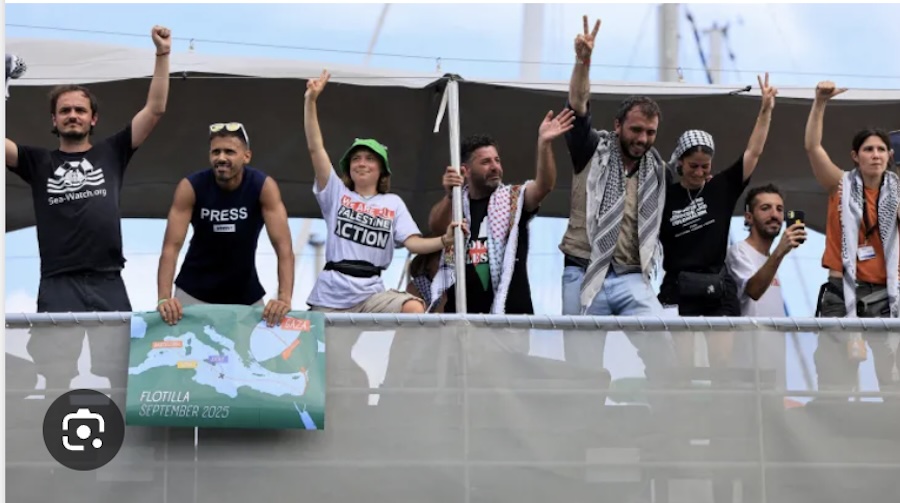
When Israel, without warning, unilaterally ended the Gaza ceasefire, the world once more became witness to genocide and ethnic cleansing perpetrated on an unarmed and defenceless civilian population by one of the world’s strongest military establishments, driven by an extreme Zionist influenced government supported by the world’s major powers, including the USA, Britain and the European Union. The unrelenting slaughter of a people already enduring unimaginable suffering moved Nobel Peace Laureate Mairead Corrigan Maguire to an act of imaginative solidarity, 40 days of fasting and prayer.


Mairead Maguire speaking to Democracy Now

A form of creative nonviolent resistance infused with love, a cry from the heart that children should never more suffer war, hers is a sacrificial act of prophetic moral witness. Maguire made her mind and body sites for a penetrating public yet profoundly personal statement that resonates with spiritual protest, civil disobedience and a deep concern for human dignity. It is an expression of compassion and camaraderie that embraces the sorrow and pain of Gaza’s most vulnerable, its children.

Undertaken quietly from the privacy of her home, Maguire’s action was known only to a small circle of friends who advised of her undertaking to previous beneficiaries of her antiwar activism and nonviolent campaigns. The response was overwhelming. Tremendous support came from the international Catholic peace movement Pax Christi. Many Pax Christi members elected to join a rolling fast alongside that of Maguire, with individuals committing to one or more days during Maguire’s forty days. Hunger for Justice Ireland volunteers elected to join Maguire for the final day.

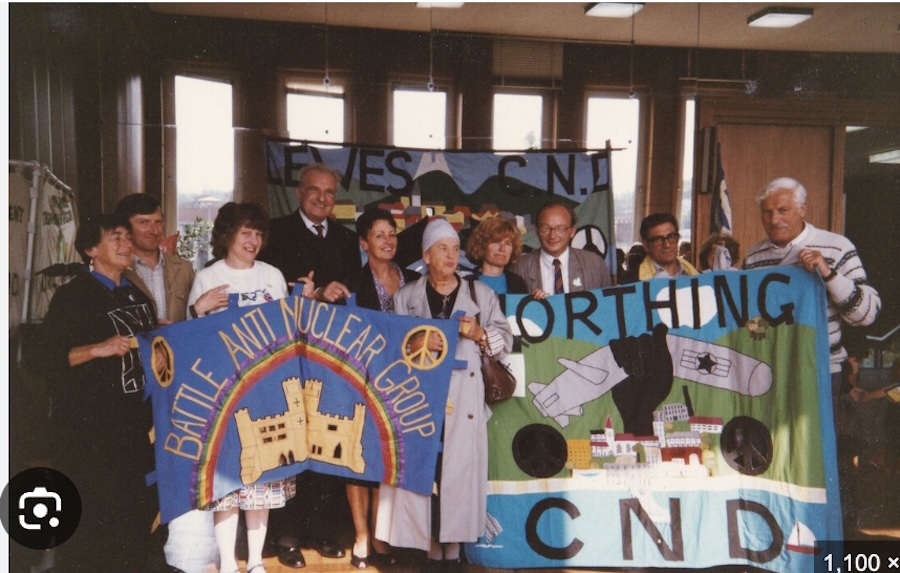
Significant Christian individuals, such a CND vice president Paul Oestreicher, sent moving messages of support, as did Christian organisations such as the Association of Leaders of Missionaries and Religious of Ireland (AMRI), Kairos Ireland, and the Sabeel Ecumenical Liberation Theology Centre. Important endorsements came from Belfast’s Muslim community during Ramadan, empathetic to the spiritual significance of Maguire’s undertaking. Substantial support was forthcoming from individual trade unionists in Ireland, Britain, Holland and of course Palestine, conscious that the 1st May end date mattered to the world’s workers.

As the volume of messages exceeded the capacity of Maguire’s friends to record and respond, they shifted to an online system that made the process more manageable and the action better known (https://my.uplift.ie/petitions/support-mairead-corrigan-s-40-day-fast-for-palestinian-children-and-world-peace?share=dd9f24bf-0ad3-4ca2-8696-1a3341e4e593&source=email-share-button&utm_medium=myuplift&utm_source=email-share)

Maguire’s activism derives from a compassion and concern for others that was evident from an early age. A youthful volunteer with the Legion of Mary, she was inspired by Catholic peace and social activists such as Dorothy Day and the Berrigan brothers, Daniel and Philip. Her commitment to a life of activism was precipitated by the tragic 1976 deaths of her niece, Joanne, eight years old, and two nephews, John, two years old, and Andrew, six weeks old. Victims of Northern Ireland’s euphemistically termed ‘Troubles’, in reality a dirty, vicious war, their deaths led to the emergence of what came to be known as the ‘Peace People’.

With co-founders Betty Williams and Ciaran McKeown, the Peace People brought up to 35,000 persons onto the streets of Belfast demanding an end to the conflict. There were also massive rallies in London and Dublin demonstrating resounding opposition to the then escalating violence. Within six months there was a 70 per cent drop in the levels of death and destruction. Although more than two more decades of fighting between the warring parties continued, there was no return to the degree of murder and mayhem witnessed in 1976 when it appeared the country was headed toward civil war.

(continued in right column)

Question related to this article:
 
How can we best express solidarity with the people of Gaza?

(continued from left column)

In 1977, Maguire and Williams were awarded the 1976 Nobel Peace Prize. The youngest ever recipient at the time, it marked the beginning of a journey that would take Maguire to conflict zones the world over deploying her Nobel Peace Laureate status to address an array of social and political issues, conflict resolution above all. Influenced by Mahatma Gandhi, Maguire advocates nonviolence as an active way of life that is ‘daring, creative and courageous.’

A devout Catholic, she believes the forces of love and truth can resolve conflict. She advocates for dialogue and reconciliation, for replacing militarism with listening to opponents, and for allowing God’s spirit to transform man socially and politically. She is committed to human rights and International Law arguing their protection is a moral and legal responsibility for all governments and peoples. Silence is not an option ‘when injustice is being done to anyone, anywhere.’ Not simply speaking ‘truth to power’ but very often becoming involved in direct action against it, brought Maguire into confrontation with the forces of imperialism, colonialism, authoritarianism and oppression. A critic of US foreign policy, Maguire was twice arrested protesting the Iraq War in 2003, once in front of UN headquarters in New York and once in front of the White House in Washington.

Maguire’s inclinations and activism made confrontation with Israel inevitable. She regarded what Israel calls a ‘separation wall’ as a monument to fear and failed politics that made Palestinian life so precarious as to make simple survival an act of resistance. Protesting the construction of the so-called separation barrier in the vicinity of the Palestinian village of Bil’in in April 2007, Maguire came under attack from Israeli military forces using tear gas grenades and rubber-coated bullets. Shot in the leg and debilitated from inhaling tear gas, Maguire required hospitalization. In 2010 Maguire was refused entry to Israel despite being part of a delegation of the Nobel Women’s Initiative. She chose to fight the subsequent deportation order. During the hearing she criticized Israel’s apartheid policy and the siege of Gaza. She was deported the following morning.

In addition to visiting various war zones defending the rights of the oppressed, in 2018 she visited Rohingya camps, Maguire has long been outspoken against nuclear weapons. The recipient of numerous awards and honours, in 1992, Maguire was presented with the Distinguished Peace Leadership Award ‘for her moral leadership and steadfast commitment to social justice and nonviolence.’ Unafraid to adopt controversial causes, Maguire championed fellow speakers of truth to power, Chelsea Manning and Julian Assange. Fearless in her support of the downtrodden and dispossessed, Maguire has predictably been subjected to unwarranted smears and vilification. Yet she remains undeterred in pursuit of a better world for all, undaunted in promoting nonviolence as a concept that individuals must accept into their hearts and minds to bring forth new and imaginative life-enhancing structures.

Believing that change is possible, Maguire was cheered to learn that her example had inspired others to follow suit. Notably, the 81-year-old cautioned that fasting is not for everyone and advised:

People should do what they feel they can as not everyone can fast, but they can pray. I once asked Mother Theresa what to do and she said: ‘’Oh pray, pray, never cease to pray – say the Cardinal Newman prayer. That’s a good one!’

Many of those supporting the inspirational Maguire will be neither praying nor fasting. They do, however, share her vision of a better world that rejects endless war and instead promotes equality, justice, peace, prosperity and love for all its children. Responding to the outpouring of support, Maguire expressed gratitude on behalf of children to all that worked ‘to make their precious lives joyful and happy.’

– – – – – –

If you wish to make a comment on this article, you may write to coordinator@cpnn-world.org with the title “Comment on (name of article)” and we will put your comment on line. Because of the flood of spam, we have discontinued the direct application of comments.
English bulletin May 1, 2025

. THE PEACE MANIFESTO 2025 .

In recent months, we have published signs of a fightback, some light in this time of darkness in Gaza, Ukraine, Sudan and now in the US against Trump and Musk.

This month we are making the fightback and we are shining a light ourselves. CPNN is proud to have been involved from the beginning in the Peace Manifesto 2025 that is being launched today, May 1.

Here is the press release that has been sent to media around the world.

SICK AND TIRED OF THE CULTURE OF WAR? SHARE THE PEACE MANIFESTO 2025

Saying they are “sick and tired of the culture of war,” Nobel Peace Laureates and other peace organizations and peace activists hope to repeat the success of the Manifesto 2000 that was signed by 75 million people during the UN International Year for the Culture of Peace. They announce that the Peace Manifesto 2025 will be launched on May 1.

Its text is simple; “I’m sick and tired of the culture of war, so I give my support to the culture of peace, and I will keep spreading the word on social media until we win. I live in [your City, Country].”

One of the organizers of the new manifesto, David Adams, was in charge of the mobilization of the Manifesto 2000. He says that the success in the year 2000 struck fear in the heart of the military-industrial complex to such an extent that the initiative was shut down. “This time,” he says, “we are not relying on any organization run by states, but we are simply asking the youth of the world to disseminate the Manifesto 2025 on social media. We believe that the current state of the world demands it.”

The Manifesto 2025 is supported by Nobel Peace laureates Mairead Maguire and the International Peace Bureau. Maguire, who is now on a hunger strike to support the people of Gaza (see article below), says “I am very delighted that you are relaunching the culture of peace and wholeheartedly give my support to your efforts.” And Jay Ngoma, the granddaughter of Bishop Desmond Tutu and representative of Desmond Tutu Peace Foundation, says “This manifesto couldn’t come at a more important time, and I wholeheartedly stand with the movement to amplify the voices of youth and civil society in building a just and peaceful world.”

“Our world and Mother Earth continue to be deeply fractured by crises, conflicts and the suffering of wars, injustices, human rights violations, discriminations, and ecological destruction. The Peace Manifesto 2025 urgently appeals to all humanity to embrace personal and social action to build a peaceful, nonviolent, just, compassionate, inclusive and sustainable web of life”, says another of the organizers, Toh Swee-Hin, former professor at the United Nations University for Peace and laureate of the 2000 UNESCO Prize for Peace Education.

The many partners of the initiative include Mouvement de la Paix, World Without War, the Global Campaign for Peace Education, Pathways to Peace and the Asia-Pacific Centre of Education for International Understanding. Other partners include organizations in Philippines, Colombia and Palestine.

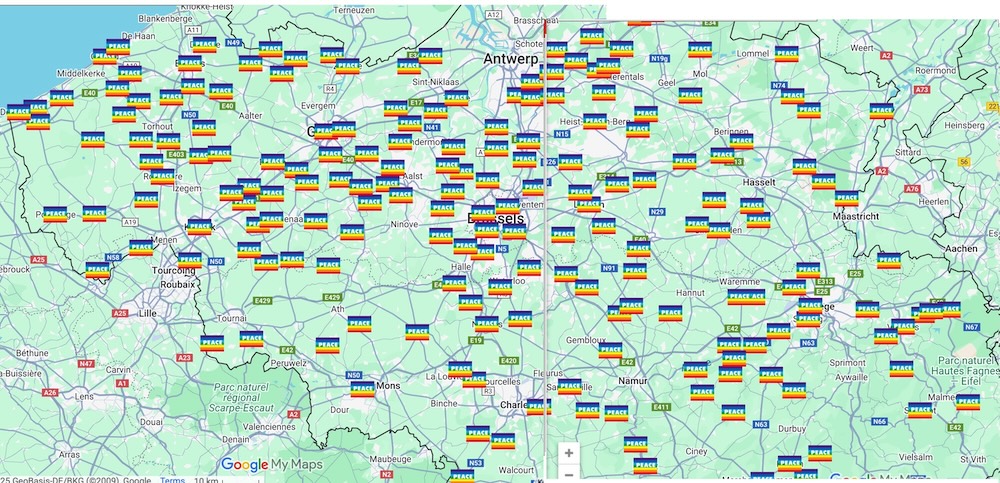
People are encouraged to compose their messages for social media on the website for the Peace Manifesto 2025: https://activatingpeace.org A map on the website shows participation coming from all corners of the world.

The Manifesto Team

David Adams, CPNN Coordinator, coordinator@cpnn-world.org, France

David Wick, Ashland Culture of Peace Commission and Pathways to Peace, USA

Myrian Castello, culture of peace and right to dream activist and educator, Brazil

Nawal Amjad, SDG Changemaker, Pakistan

Munira Beisenbayeva, Teacher, Kazakhstan

Alicia Cabezudo, Education Expert, Colombia

Virginia Cawagas, Peace Educator, Philippines/Canada

Toh Swee-Hin (S.H.Toh), Laureate, UNESCO Prize for Peace Education (2000), Canada/Australia

DEMOCRATIC PARTICIPATION


‘This Is Not Trump’s Country’: 255,000 Have Rallied With Sanders and AOC on Nationwide Tour

SUSTAINABLE DEVELOPMENT


Ministers approve BRICS Environment declaration

FREE FLOW OF INFORMATION


Eulogy for Pope Francis

WOMEN’S EQUALITY


Pope Francis tried to change the Catholic Church for women, with mixed success


TOLERANCE & SOLIDARITY


Mairead Corrigan Maguire: The moral imagination and Gaza

EDUCATION FOR PEACE


Teaching Peace: Nurturing Young Peacemakers in Ghana through Education

DISARMAMENT & SECURITY


Germany’s Easter peace marches lament war-filled world

HUMAN RIGHTS


US: Millions March Against Trump-Musk in Nationwide ‘Hands Off’ Protests