France: The farmers who bought an old Lidl supermarket

. . SUSTAINABLE DEVELOPMENT . .

An article from Jeunes Agriculteurs

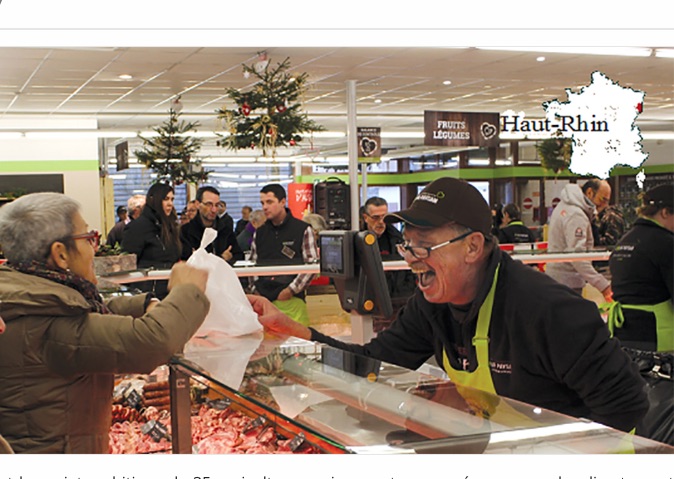
Coeur paysan (literally farmer’s heart) is the name of an ambitious project of 35 farmers who have joined toegher to sell their products directly. Their store is in Colmar, in an old Lidl supermarket. A real symbol.


Colmar, December 6, 2016. The persistent mist accentuates the cold of winter that is already biting. But the occupants of the 82-84 Neuf-Brisach Road are not cold. In this former Lidl, supermarket, closed more than two years ago ,people are busy and in good humor. We cut meat, we place cheeses in the showcases, we stick on the last labels … These are the 35 producers who have invested in these walls to market their products directly. The opening preview is scheduled for 3:00.

The old Lidl is transformed to Coeur Paysan. A rea; symbol! Colmar, wotj ots 70,000 inhabitants, finally has its market of local producers. The locals can buy fruits and vegetables, cheeses, dairy products, meat, bread, etc. The farmers themselves sell the product, working in the store half day per week. A classic operation for a grocery store. What is less important is the size of the project, which required 1.5 M € of investment. This was necessary to renovate the premises, to buy equipment (showcases, boxes, etc.), to invest in communication. As soon as it opened, the store employed six people.

Better valuation. With 35 farms, Coeur Paysan offers a range of products ranging from wild game to teas, snails and smoked trout. These are an asset to achieve the ambitious objective set by the group: to achieve a turnover of 2.5 M € per year. “The hard core of the group is a team of entrepreneurs,” says Nicolas Guibert, tasting his organic goat cheese produced in Linthal, 35km away. “The hardest part is finding a team,” he says jovially. The group met and worked very quickly: the project was completed in eight months, compared to the usual two years preparation for this type of store.

Thirty of the suppliers are now shareholders of SAS Cœur Paysan, which manages the point of sale. The investment – financial and time (sales) – varies according to the turnover expected by each producer. Six of the shareholders bought the building, via an SCI. “We wanted to be independent,” says Denis Digel, President of SAS Cœur Paysan. It is up to us to take our destiny in hand. “As initiator of the project, he is also president of the cooperative of market gardeners of Sélestat. It was “the desire for proximity with consumers” that guided this union leader. A rapprochement synonymous with better valorisation, because “we, the producers, do not draw our chestnuts from the fire!”, he insists.

(Article continued on the right column)

(Click here for a version of this article in French)

Question for this article:

What is the relation between movements for food sovereignty and the global movement for a culture of peace?

(Article continued from the left column)

Battle of the image. Between the riesling of the Domaine Rieflé and the beer of the brewery Saint-Alphonse, a poster proclaims: “Behind every product, there is a producer.” For, beyond the valorization of products, there is a battle of images. In this struggle, farmers have the key cards: “Consumers want to see and touch the producer,” says Denis Digel. Distributors like Intermarché, have understood this, as they claim to be a “producer-trader”. With Cœur Paysan, the farmers have responded in their own way. Modern and rustic, the visual identity of Cœur Paysan, developed by a communication agency, is widely available in the store, on the clothes of sellers and on the Internet. Upon entering the store, customers come across a large sign presenting all the producers.

Inevitably, some people are disturbed. To those who accuse him of overshadowing supermarkets, Denis Digel replies: “We are responding to a new demand that retailers are unable to satisfy.” We fill a need in Alsace. “The proof with Fabien Barre. This young farmer, newly installed in 2014, was looking for a new and secure outlet for his organic goat cheeses. For this farmer, the store has the advantage of “not competing with the goat farmers already on the market”. And it corresponded to his wish to “offer local products directly to the consumers at a correct price.”

Installed in the village of Soultzeren, Fabien transforms into cheeses the whole milk produced by his 60 goats, which allows him to fix his own prices. His goal ? “10 to 20% of my turnover to Cœur Paysan would not be bad. The shop could thus take over from one of the three markets where I am now selling. “Between the cheese-making and its sale,” I have less time with my goats,” he regrets. This is why he is considering to hire someone to help “A project like this comes only once in a lifetime; I don’t want to waste the opportunity.

(Thank you to Kiki Chauvin, the CPNN reporter for this article.)O

Nuevo León, Mexico: The State Commission on Human Rights seeks to foster peace in schools through workshops

EDUCATION FOR PEACE .

An article from Hora Cero Web

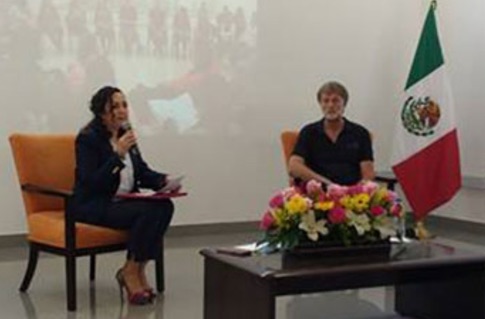
The State Commission on Human Rights (ECHR) seeks through a series of workshops to promote a culture of peace in schools at all levels of education. It consists of the Seminar on Education for Peace and Human Rights, which began last February 20 and concludes this Tuesday [February 28], which seeks to promote a culture of peace through activities that combat school violence.


Click on photo to enlarge

About 56 teachers from all levels of education, mainly primary, participated in this activity and were taught by activist Frans Limpens.

According to Limpens, this workshop is based on coexistence and conflict resolution without the need for violence, so that teachers can transmit these behaviors to students through the dynamics that involve them. “With these games we build a series of skills and potentialities to work.”

For her part, Sofía Velasco, president of the Commission, expressed her desire that this activity be implemented in all schools of the State. “It depends on the decision of the Ministry of Education, if we are able to continue to give this workshop course,” she said.

(Click here for the original version of this article in Spanish)

Question for this article:

Burkina Faso: Dialogue of religions and cultures: prospects for the Ouagadougou symposium

, TOLERANCE & SOLIDARITY .

An article from Fasozine

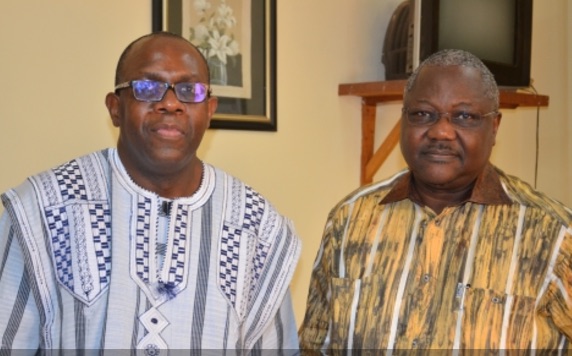
On the eve of the opening of the international symposium on the dialogue of religions and cultures in Ouagadougou, Burkina Faso, the two main initiators of the meeting, Filippe Sawadogo* and Lazare Ki-Zerbo*, discuss in this interview the substance and the highlights of this important meeting on education for the culture of peace.
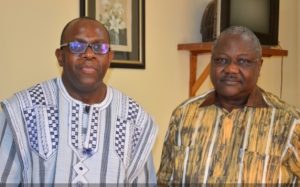

Lazare Ki-Zerbo* and Filippe Savadogo*

Fasozine.com: Ouagadougou is hosting an international symposium on the dialogue between religions and cultures from 3 to 7 March. Does this mean that the dialogue does not yet exist?

Lazare Ki-Zerbo: It is simply that the situation today invites us to remobilize the mechanisms of dialogue that exist and that have always existed. The Burkinabe people like to stand up to fight against injustices, andviolations. But there are times when we must also know how to fight for peace and for national cohesion. In the light of current events, you will agree that we must really mobilize to preserve and anticipate. We can not sit idly by while our neighboring countries deteriorate and disintegrate.

The initiative aims to strengthen the culture of peace in Burkina Faso and in Africa. What do you think are the ingredients of this culture of peace?

Filippe Savadogo: First of all, peaceful coexistence, which we express through living together. And this is reflected in several mechanisms and sources. By considering our traditional endogenous values, we observe, for example, that joking alliances – which we call “sinagouya” or “rakire” – have been able to temper many concerns during certain crises. Moreover, Africa has always been a continent where the culture of dialogue is a constant part of the education of young people from early childhood: respect for others, initiation to values, etc., and we must revisit all these questions in a world where challenges are only multiplying.

Finally, we also have external supports, such as democracy, good governance, human relations … which we can cultivate by adding new dimensions to build the African man of the new century, a century in which culture becomes engagement and contribution on several horizons towards a better future.

In the face of growing incivility, what place do you give to civic education in this process?

Lazare Ki-Zerbo: The growing incivility reflects the fact that there is a break in the intergenerational bond. In response, our initiative promotes education for peace, a process that should begin at school from a very young age. This is where the mechanisms of living together are learned. The roots of incivility, intolerance and violence must therefore be attacked by an intensive dissemination of the principles of peaceful cohabitation and acceptance of the other. These are the real mechanisms. The problem can not be solved by coercion and brutality.

How would you describe the level of coexistence among different religions in Burkina Faso at the present time?

Filippe Savadogo: In Burkina Faso, the recognition of religious pluralism is a reality. There are also consultations between religious leaders. A good example is the association “faitiere” which is presided by his majesty the Mogho Naaba and which initiates searches of endogenous solutions when there is crisis or misunderstanding.

However, we can also say that nothing should be taken for granted. We must therefore continue to cultivate respect and to understand that the acceptance of difference is an added value. Burkina Faso, a country in the heart of West Africa, has always been a crossroads for dialogue, peaceful cohesion, welcoming and learning about the positive values ​​of other peoples.

Faced with the extremist and terrorist threats, what answers does the Ouagadougou symposium intend to bring?

Lazare Ki-Zerbo: Burkina Faso, is, in effect, at the head of the great old Sahel – the Niger loop, the great empires. To the south we are in relation with the coastal countries, to the west we have this long Border with the Mandingo world … I think that’s what makes us rich. A bit like Cameroon, Burkina is also an Africa in miniature and that is our strength. The fact that we have been at the center of all these great influences has allowed us to take advantage of their contributions and to become stronger.

The message of the symposium is thus: consolidate this capital, which is at the same time social, cultural, historical. A capital that is our wealth and can be a bulwark against the forces of division and separation.

(continued in right column)

(Click here for the original French version of this article)

Question related to this article:
 
How can different faiths work together for understanding and harmony?

(continued from left column)

Several well-known personalities take part in this meeting. What do you expect from their participation?

Filippe Savadogo: I believe that the presence of those who gained experience in the generation of independence, as well as scholars and scholars from several disciplines, reflects the fact that we want to put at the center of this symposium a framework of reflections that can lay the foundation for an action plan for the years to come. That is why we are thinking first of all of the major groups in our region, including personalities from ECOWAS countries (Sahelian countries) and the ECOWAS (Economic Community of West African States) West African Economic and Monetary Union. We will have many high-ranking personalities from these countries who will share their experiences.

The symposium welcomes, among others, a professor who comes from Central Africa, a country emerging from a crisis, which is now better, and who should share his experience with the participants. We can also mention the presence of the former President of the Transition in Burkina Faso, Michel Kafando, a great witness of his time, who will explain, from the first day of the symposium, the sources and resources that allowed the transition to overcome its obstacles.

Finally, the presence of the Secretary General of the International Organization of the Francophonie, Michaëlle Jean – who is staying in Burkina Faso as part of a visit – brings us the helpful dimension of the Fez process. Indeed, the question of interreligious and intercultural dialogue is a concern for all of the Francophonie. And at the last summit, heads of state and government still encouraged this kind of symposium …

So, are there bridges to be established between the “Libres ensemble” of La Francophonie and this symposium?

Absolutely! To the extent that everything leads to good governance, to democracy, but also to living together, which is a segment of being “free together” with the help of youth and women. Unesco also plays a significant role, since it has a tradition of researching the culture of peace. We also have Isesco with Dr. Cheikh Boubacar Doukouré, who has participated in the Baku process of the Alliance of Civilizations, as well as many others who will share their experiences with stakeholders from across our subregion. The press is also included because we have a large theme of “Media and Society”.

What do you think of the recent measure taken by the Beninese authorities to prohibit any religious grouping in public spaces? Is it, in your opinion, desirable? Exportable?

I think that a dialogue has been established on this issue with a pause for better reflection. But in another dimension, we can talk about the secularity of our states and the organization of all these issues. So we can find a solution in time, knowing that history is also a projection of the future.

Following the symposium of Cotonou, of which this is the continuation, how will you judge whether the symposium of Ouagadougou is successful or redundant?

Lazare Ki-Zerbo: We received a mandate from the Cotonou symposium to hold the national meeting in Burkina Faso because we know we have our own specificities. We will do it with local players, knowing that very often our human wealth is not sufficiently valued.

Thus, as an example, Cheikh Boubacar Doukouré, who is the president of Isesco’s executive committee (Unesco for the Muslim world), is also the president of the assembly of African ulemas, created recently in Morocco. He is a reference in this field, taking part in this symposium, which is also honored by the presence of Mr. Halidou Ouédraogo, President of the Human Rights Foundation. There is therefore considerable knowledge and know-how related to Burkina that will be highlighted in the symposium.

And all this will contribute to the drafting of the action plan …

Absolutely! The main thrusts of a plan for a peace education will emerge from the debates. We already have some ideas with the media and the researchers, so that we can arrive at an action plan. Its implementation will be supervised by a follow-up committee.

* Filippe Savadogo

Former Minister of Culture, Tourism and Communication, Filippe Savadogo, 63, is the coordinator of a French-speaking platform called Continental Horizon. He has served as the ambassador from Burkina Faso in France and then permanent representative of La Francophonie to the United Nations in New York. He was awarded the “Visionary Award” at the Pan-African Film Festival in 2013 in Los Angeles. The Burkina Faso diplomat is also the coordinator for Burkina Faso of the African Initiative for Education for Peace and Development through Inter-religious and Intercultural Dialogue.

* Lazare Ki-Zerbo

Author and actor in the Pan-African Movement and member of several civil society organizations – Manifesto for Freedom – Movement of Intellectuals, Joseph Ki-Zerbo International Committee for Africa and its Diaspora (Cijkad), Bandung Spirit Network – Lazare Ki -Zerbo was special advisor to the promoter of the African Initiative for Education for Peace and Development through Interreligious and Intercultural Dialogue led by Albert Tévoèdjrè. A graduate of the Institute of Federalism of Freiburg and the Austrian Center for Peace and Conflict Resolution of Burg Schlaining, he was also a program specialist at the Organization internationale de la francophonie from 2004 to 2014.
Education for Culture of Peace in Cyprus: Sharing Best Practices

… EDUCATION FOR PEACE …

An announcement from the Global Campaign for Peace Education

As part of the project Education for a Culture of Peace as a Vehicle for Reconciliation in Cyprus, Education for a Culture of Peace is organising an International Conference entitled “Education for Culture of Peace: Sharing Best Practices” on 24th and 25th February 2017 at Fulbright Center in Ledra Palace Buffer Zone in Nicosia.


On 24th of February, Friday from 4.00pm to 8.00pm, there will be a conference session examining best practices in Peace Education in two panel discussions. The first panel entitled “Local Practices on Education for a Culture of Peace” will feature representatives of the Scientific Committee of the project who will present the practices of critical education and schooling in Cyprus.

The second panel entitled “Alternative Education: Methodology and Teaching or Different Pedagogical Approaches and Schooling?” will feature international experts who will talk about the methodologies, principles and practices of literacy for peace culture and the actualisation of peace education.

On 25th of February, Saturday, there will be three parallel workshops to be held all day from 9.30am until 5.00pm at three different venues in the Buffer zone. These two-hour workshops will be limited to a group of 20 educators each and will be facilitated by the academic guest experts.

Limited seats available on first come first serve basis. RSVP at +3922276843 or +357 97743074 or at postresearchinstitute@gmail.com or info@postri.org by 20th February, Monday.

For the details of the conference, please visit the event page on facebook: https://www.facebook.com/events/269974243435439/ – Education For a Culture of Peace (E4CP) and also the websites of the project: www.e4cp.org and/or postri.org.

Questions for this article:

Vatican: PCID and WCC to draw up document on Education for Peace

, TOLERANCE & SOLIDARITY .

An article from Vatican Radio

Educating for peace is the theme of a proposed joint document to be drawn up by the Pontifical Council for Interreligious Dialogue and the World Council of Churches’ Office of Interreligious Dialogue and Cooperation.

The proposal was the main subject under discussion at a meeting of staff members of the Pontifical Council and colleagues from the WCC office this week. During the encounter in the Vatican on Monday and Tuesday, participants also discussed recent and future activities, underlining the urgency of interfaith dialogue “in today’s global context”.

Below please find the full statement:

The staff-members of the Office of Interreligious Dialogue and Cooperation (IRDC) of the World Council of Churches (WCC) as well as their colleagues from the Pontifical Council for Interreligious Dialogue (PCID), held their annual meeting at the PCID Offices on 30th-31st January 2017.

Both the delegations expressed their appreciation for the opportunity to meet a few days after the conclusion of the Week of Prayer for Christian Unity. They gave thanks to God for their friendship and fruitful cooperation in promoting constructive relations with individuals and communities belonging to other religious traditions.

The principle agenda of the meeting was to discuss and to deliberate upon a proposed joint document on Education for Peace, following similar joint projects in the past.

It was followed by the exchange of news and views on their respective activities over the past year and planned activities.

Both the PCID and the IRDC agreed to continue their collaboration, in particular, the work relating to the joint document on Education for Peace, given the urgency of the matter in today’s global context.

(Thank you to the Newsletter of the Global Campaign for Peace Education for bringing this article to our attention.)

Question related to this article:

Rwanda: Peace Education Added to National Curriculum

EDUCATION FOR PEACE .

An article from KT Press

Twenty three years ago, Rwanda was at the extreme of destruction – a million lives were lost in a genocide against Tutsi. However, when the Rwanda Patriotic Front stopped the genocide and defeated government army, it embarked on a battle to build a peaceful country.

Next year, students in Primary, secondary and university will begin studying ‘peace building’ as part of their curriculum. Students are considered important change agents including; educators, decision makers and researchers. Government has found it necessary to integrate Peace education into the National Education Curriculum under a new program ‘Education for Sustainable Peace in Rwanda(ESPR)’.


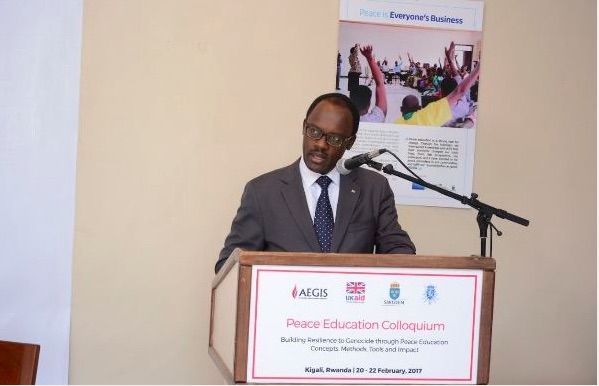
Fidele Ndayisaba, the Executive Secretary of the National Unity and Reconciliation Commission
Click on photo to enlarge

ESPR program was launched today by the Ministry of Education during a three day Peace Education conference that is taking place in Kigali from February 20-22.

Over 100 local and international peace building experts, researchers, are holding panel discussions exchanging through existing tools , methodology and content contributing to a stronger base for peace education.

Based on the genocide history, Rwanda is taken as a good example that peace education can have a great impact.

“Rwanda has a lot to share on peace education but also in other areas of progress,” said Johan Debar, in charge of Affairs of the Kingdom of Belgium Embassy to Rwanda, also one of speakers.

(continued in right column)

Question for this article:

Peace Studies in School Curricula, What would it take to make it happen around the world?

(continued from left column)

Kenny Osborne, Deputy Head of Department For International Development in Rwanda and also one speakers said that Rwanda continues to invest in basic education to take these lessons to regional level.

Isaac Munyakazi, the Minister of State in charge of primary and secondary education told participants that he was confident the program would achieve its aim – by catalysing pluralistic and constructive exchange.

“We need to equip our teachers to make sure the program will be implemented,” Munyakazi said.

The Rwanda Peace Education Program(RPEP) was launched through collaborative efforts between Aegis, Institute of Research and Dialogue for Peace, Radio La Benevolencia and USC Shoah Foundation.

Under RPEP, 7500 students and 300 teachers were across the country trained.

“Through this program we saw successful integration of peace and values. Lessons from RPEP will be taught to students in a every class in the country,” Munyakazi told participants.

Fidele Ndayisaba, the Executive Secretary of the National Unity and Reconciliation Commission told participants, “intergeneration transmission and trauma are still issues to deal with; however reconciliation is a continuous process.”

The Peace Education Conference was for the first time organised by Aegis Trust – that campaigns to prevent genocide worldwide; with the support of the UK, Sweden and US governments.

(Thank you to the Newsletter of the Global Campaign for Peace Education for bringing this article to our attention.)

CSW at UN: Supporting People’s Actions to Empower Women at the Margins

. WOMEN’S EQUALITY .

An announcement by the International Institute for Peace Education

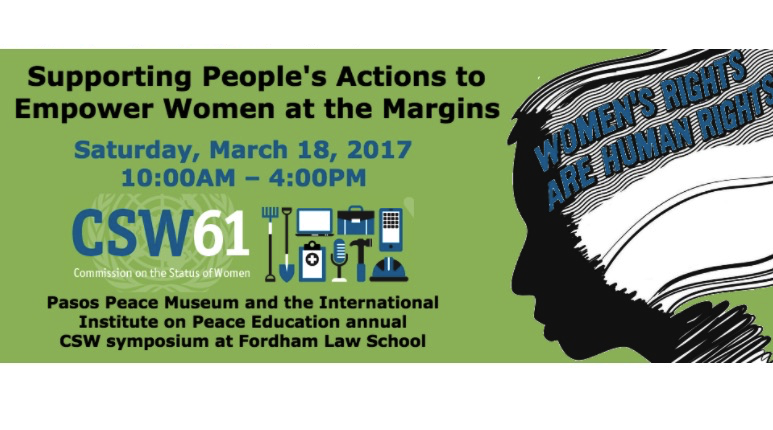
Pasos Peace Museum and the International Institute on Peace Education invite you to join in a participatory, action-planning program to build solidarity with women’s movements to claim rights proclaimed by the world community in international human rights instruments, yet denied or ignored by national governments. Among the relevant rights instruments are: UNSCR 1325 on Women, Peace and Security; the Convention on the Elimination of All Forms of Racial Discrimination; and the Declaration on the Rights of Indigenous Peoples, all of which have the potential to empower citizens to advance their full participation in striving toward a just and peaceful world. Within the context of the potential of law and international standards the symposium will comprise action-planning discussions based on women’s experience with self-empowerment campaigns.


Click on the image to enlarge

Women’s international efforts toward the implementation of UNSCR 1325 through civil society initiatives at the local and regional levels in Africa and Asia will be introduced by Mavic Cabrera-Balleza of the Global Network of Women Peacebuilders and Asha Hans of Sanristi, India. National campaigns to assert the civil and political rights of Native Americans and African Americans will be introduced by Betty Lyons of the American Indian Law Alliance and Farah Tanisof Black Women’s Blue Print.

As the conclusion of our action planning discussions law students will reflect on how their future professional endeavors might enhance gender justice, social equity and political equality using law and international standards as practical and strategic instruments of justice.

(continued in right column)

Question for this article

Does the UN advance equality for women?

(continued from left column)

Please consider reviewing these legal instruments and important background documents in preparation for your participation.

* UNSCR 1325 on Women, Peace and Security

* the Convention on the Elimination of All Forms of Racial Discrimination

* the Declaration on the Rights of Indigenous Peoples

Book Party

You are also cordially invited to a celebration of the publication of Openings for Peace: UNSCR 1325, Women and Security in India, Edited by Asha Hans and Swarna Rajagopalan. A presentation of the book will be made by Ambassador Anwarul K. Chowdhury and Asha Hans.

The book party will begin at approximately 4:15pm and conclude at 5:30pm.

RSVP Required: Please RSVP for the book party using the registration form below.

Register / RSVP
Registration for this year’s event is $20. Registration fee covers lunch and the post-event book celebration and reception.

A two-step registration is required.

1) Please complete the registration form for each individual who will attend.

2) After registering please submit your registration fee using the PayPal button below. (Your registration fee will be paid to Pasos Peace Museum)

English bulletin March 1, 2017

MASS MOBILIZATIONS FOR PEACE AND JUSTICE

It is evident that national elections are not sufficient to guarantee democracy. As we have seen many times over the past year, the people have had to take to the streets in order to resist government corruption and/or oppressive measures.

Most recently, hundreds of thousands of people took to the streets of Barcelona to demand that the Spanish government accept more refugees. The demonstration was supported by the new progressive mayor of Barcelona, Ada Colau.

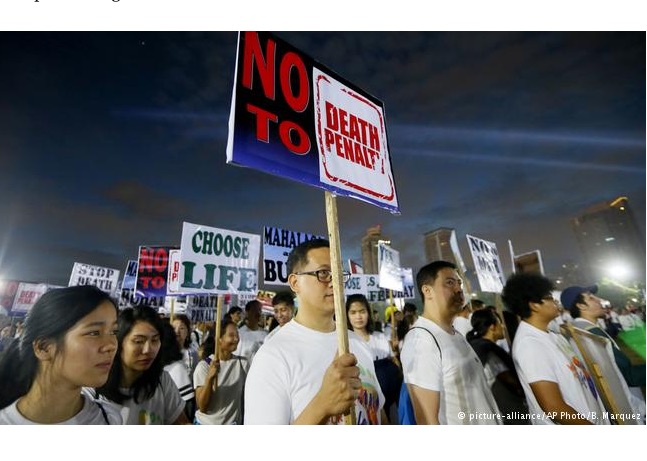
And in the Philippines capital of Manila, at least 10,000 people joined the “Walk for Life” march on February 18, to protest against President Duterte’s brutal crackdown against drug dealers and users. It marked the largest show of opposition from the Roman Catholic Church against the brutality of the government’s anti-drugs campaign, which has seen more than 7,600 mostly poor people killed in the past seven months without any judicial procedure.

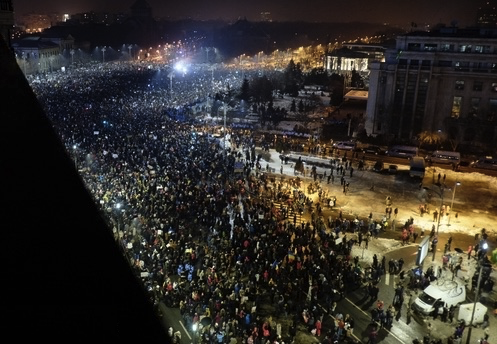
In the major cities of Romania last month hundreds of thousands of people took to the streets against a decree that would have decriminalised abuses of public office. The demonstrations forced the government to withdraw the controversial law, but the protests are continuing with the demand that the government resign.

Following the inauguration of President Donald Trump in January, millions of people joined in the Women’s Marches in the major cities of the United States, to fight for a new era of civil rights. As CPNN has documented, this is part of the ample evidence that the post-election fightback to defend peace and human rights is underway.

Over 40,000 people participated in October in human chains throughout Honduras, including in the capital, Tegucigalpa and about 300 other cities, protesting against violence and homicide rates. High-ranking politicians and business tycoons have been implicated in a wave of violence against environmental activists, with at least 123 land and environmental activists murdered since a military coup d’état forced out the populist president Manuel Zelaya.

An estimated 20,000 women and men marched in Jerusalem for the final rally of the Women Wage Peace “March of Hope” in October. The March of Hope culminated in a historic rally outside the Prime Minister’s Residence, demanding a political solution to the conflict. Unfortunately, at this point, the conflict seems to be getting worse rather than better.

Tens of thousands of people marched on October 5 in at least 16 cities in Colombia demanding the government and the opposition to reach a peace agreement with the FARC, after the rejection of the agreement with the guerrillas in a plebiscite. In November the Congress of Colombia approved the agreement, but congressional opponents of the deal had walked out of the chamber in protest before the vote took place.

Also in October, massive mobilizations by women in Poland forced the government to reject a proposed amendment that would have added more restrictions to their already restrictive abortion laws.

Other massive mobilizations against government corruption took place last year in South Korea, Brazil and Malaysia. In South Korea, the President was ultimately impeached, although observers consider that the problem of government corruption persists. In Brazil, the problems continue with less than 15% of Brazilians approving the present government. And in Malaysia, despite the accusations of corruption, prime minister, Najib Razak remains “untouchable.”

So far some government changes can be seen in Romania, Poland and South Korea and the Colombian peace accord was officially endorsed, while time will tell if public pressure can lead to changes in the other situations described above.


TOLERANCE AND SOLIDARITY


Barcelona demonstration calls for the reception of refugees

WOMEN’S EQUALITY


UN Commission on the Status of Women – 2017

DEMOCRATIC PARTICIPATION


Live long and protest: the power of mass action is alive in Romania

SUSTAINABLE DEVELOPMENT


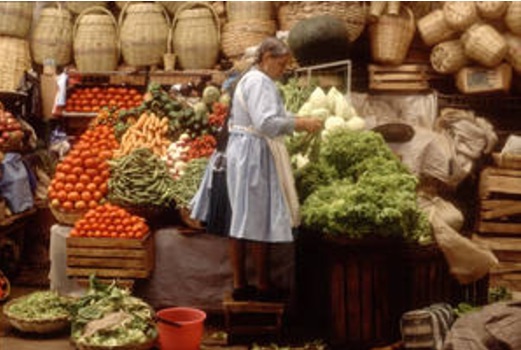
Latin America and the Caribbean could be first developing region to eradicate hunger

FREE FLOW OF INFORMATION


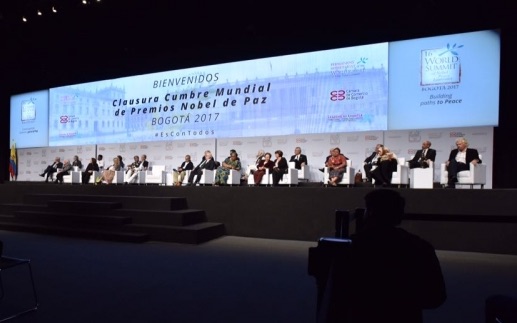
16th World Summit of Nobel Peace Laureates

HUMAN RIGHTS


Philippine Catholics march against Duterte’s deadly war on drugs

DISARMAMENT AND SECURITY


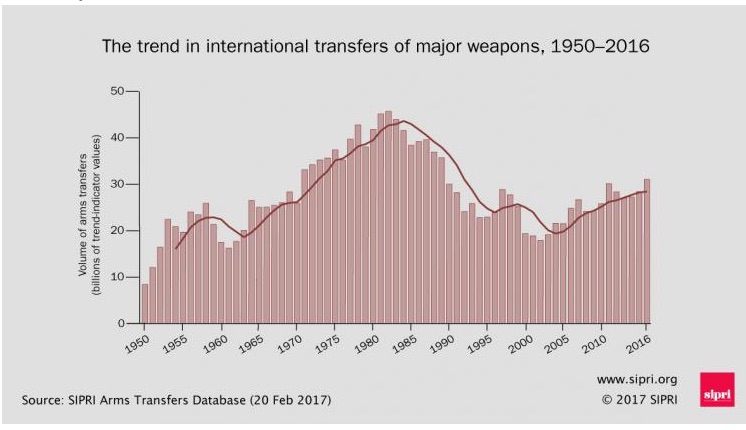
Increase in arms transfers driven by demand in the Middle East and Asia, says SIPRI

EDUCATION FOR PEACE


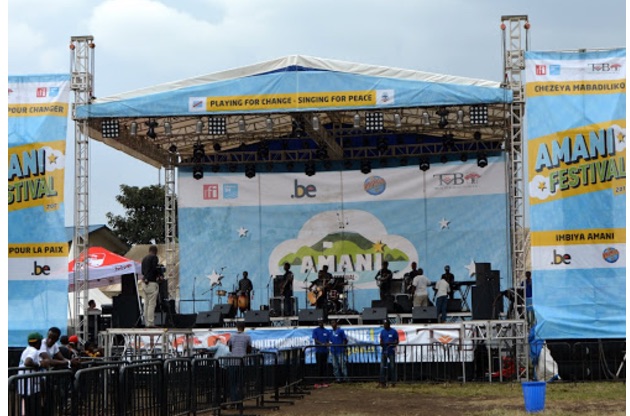
Africa: The Festival of Amani strengthens our ability to live together

UN Commission on the Status of Women – 2017

. WOMEN’S EQUALITY .

A press release from UN Women (abbreviated)

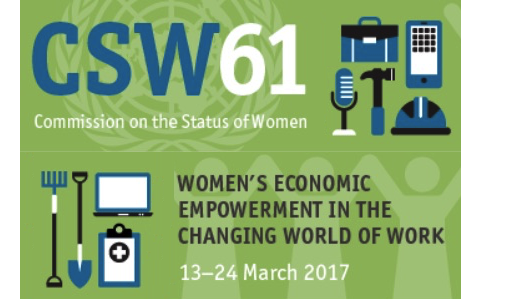
The sixty-first session of the Commission on the Status of Women will take place at the United Nations Headquarters in New York from 13 to 24 March 2017. Representatives of Member States, UN entities, and ECOSOC-accredited non-governmental organizations (NGOs) from all regions of the world are invited to attend the session.


Click on the image to enlarge

Download the CSW61 Brochure for more information:
Arabic | English | French | Spanish

Themes

Priority theme: Women’s economic empowerment in the changing world of work

Review theme: Challenges and achievements in the implementation of the Millennium Development Goals for women and girls (agreed conclusions of the fifty-eighth session)

Emerging issue/Focus area:The empowerment of indigenous women

Preparations

Regional CSW61 Preparatory and Consultative Meetings

Multi-Stakeholder Forum On 30 January 2017, UN Women convened a forum to engage a range of stakeholders in the preparations for CSW61 at UN Headquarters in New York.

(continued in right column)

(Click here for a Spanish version of this article or here for a French version)

Question for this article

Does the UN advance equality for women?

(continued from left column)

Expert Group Meeting: In preparation for the sixty-first session of the Commission on the Status of Women, UN Women convened an Expert Group Meeting on the priority theme: “Women’s economic empowerment in the changing world of work.” The Expert Group Meeting was held with the technical contribution and support of the International Labour Organization (ILO) at ILO Headquarters in Geneva, Switzerland, from 26 to 28 September 2016.

Organization of the session

The Commission’s two-week session includes the following activities: Organization of work

Agreed conclusions

The outcome of the Commission’s consideration of the priority theme takes the form of agreed conclusions, negotiated by all States: Draft agreed conclusions

Official Documents

Official documents for the session

NGO Participation

Modalities of NGO participation

Eligibility

Registration

Opportunities for NGOs to address the Commission

Side events

Information about side events and activities organized outside the formal programme of the session

More information regarding the 61st session (2017) of the Commission on the Status of Women to be uploaded as it becomes available.

Youth initiatives for a culture of peace, How can we ensure they get the attention and funding they deserve?


Tolerance & Solidarity .

From its beginning, CPNN has devoted special attention to youth initiatives and their support (See CPNN bulletins beginning in 2005, as listed at the bottom of this page).

A proposal to provide funding to youth peace initiatives, The Youth for Culture of Peace Report was mentioned in the high-level report of the Alliance of Civilizations that was presented to the United Nations on 13 November 2006, as its first recommendation for its activities in relation to youth. The report was researched and written by two members of the CPNN corporation, Josephina Lofgren McAuley and David Adams when Federico Mayor was the director of the Alliance.

The Global Youth Solidarity Fund formulated by the report is proposed in the form of a Global Youth Alliance:

“A Global Youth Alliance should be established as a mechanism through which youth can contribute to the implementation of all of the recommendations set forth in this report (not just those under the ‘youth’ theme).”

“Supported by a Global Youth Solidarity Fund, this initiative could begin with the convening and mobilization of various youth networks and associations to promote dialogue, alliance and a culture of peace. These organizations have already begun working together to organize meetings that would provide the opportunity for young people of diverse backgrounds to set an agenda for action which they can then present to global leaders to win their support and assistance. In addition, a survey has been conducted a survey has been conducted identifying 468 youth organizations from 125 countries that could be engaged as implementing partners.”

The high-level report of the Alliance of Civilizations is available on the Internet at http://www.unaoc.org/repository/HLG_Report.pdf.

The proposal was accepted and became the basis for the Youth Solidarity Fund which is still functioning as of this writing. The February 2021 newsletter of the UNAOC announces that “The call for applications for the ninth edition of UNAOC’s Youth Solidarity Fund recorded its highest submission rate with 1,508 applications from youth-led organizations representing 76 countries! UNAOC is now in the process of selecting a group of organizations that will have a chance to participate in capacity-building workshops provided by its project partner, Search for Common Ground. This new interactive component is introduced to strengthen the project proposals and widen the support provided to the youth organizations that invested their time and efforts in the application process.”

Many of the following CPNN articles have followed its development over the 15 years from 2006 to 2024.

CPNN articles concerning youth peace initiatives

Burkina Faso: An inter-institutional cultural day to celebrate social cohesion

Essaouira, Morocco: Launch of the Prize for “Youth Voices for Peace”

Algeria Hosts the Arab Forum for Youth, Peace and Security

Sinaloa, Mexico: State Congress Holds Youth Meeting “Culture of Peace for Sustainable Development: 2030 Agenda in Action”

Diffa, Niger: The COSNA/CNSP regional coordination organizes a cultural evening to support youth for peace and social cohesion

2nd International Youth Forum on the Culture of Peace: Religion, Mediation and Climate Change in the Sahel

Niger: Amid social challenges, youth advance culture of peace

Cameroon: young African scholars rally to cultivate culture of peace

Ontario youth advance a culture of peace

The Peace Vibe Fest brings youth from 20 communities in Bosnia and Herzegovina

Youth Summit on Peace and Sustainable Future Wraps Up Successful Week in Montpellier, France

Transforming Youth from Violence to Champions of Peace in Uganda

UNAOC Hosts Capacity-Building Workshop for the 7th edition of its Young Peacebuilders programme in Cáceres, Spain

Dialogue Remains Best Key To End Conflicts In Africa – Obasanjo, Ex-President of Nigeria

The United Nations Alliance of Civilizations Selects Seven Youth-Led Organizations as Recipients of its Youth Solidarity Fund

Nikolai Firjubin, Founder of UNOY Youth Peace Network

PAYNCOP Gabon Trained Youth and Women in Political Leadership in the City of Oyem

Payncop Participates in the Training of Young Weavers of Peace in Gabon, Cameroon And Chad

Sri Lanka: iDove Hybrid Intl Youth Conference promotes inter-religious coexistence and harmony

Colombia: Government plans to provide 100,000 young peace managers with economic benefits

Policy dialogue: PaynCoP Gabon for youth participation

UN Alliance of Civilizations Application Guidelines: Young Peacebuilders in Latin America and the Caribbean (LAC) – 6th Edition

Basel Peace Office announces the nine finalists for the 2023 PACEY Youth Award

The Gambia: WANEP stages youth leaders ‘bantaba’ on peace-building

UNAOC Announces Call for Applications for the 2022 Edition of its Fellowship Programme

Youth at the Luanda Biennale – Pan-African Forum for the Culture of Peace

Exchange between students in France and Mali : An interview

Burkina Faso: Great nights of the communities of Dédougou: Young people sensitized on the culture of peace

Chad: Ouaddai Youth Debate on Culture of Peace and Civic Engagement

Congo and UNESCO to Cultivate Peace in Youth

The arrival of the first peace fellows at the new peace center in Kampala, Uganda, heralds the beginning of a new era for Rotary and the continent

Council of Europe: Youth, peace and security today: successes and challenges

Gabon: Youth for the Culture of Peace

Involving the African Youth in the Biennale of Luanda!

Conference on the culture of peace in young people hosted by HEC-CHAD

UNESCO supports 5 Youth-led Early Warning and Response Mechanisms for peacebuilding within 5 councils in Cameroon

Pan-African Youth Network for the Culture of Peace: General Assembly

Pan-African Youth Network for the Culture of Peace

United Nations Alliance of Civilizations : Applications now open for the Youth Solidarity Fund

Kalemie, DRC: 200 young Twa and Bantu trained as actors of peace

Culture of peace: Oyem, Gabon, to host the cross-border project “young weavers of peace in Central Africa”

France: Youth in Normandy Mobilize for Human Rights and the Freedom Prize

Yamoussoukro, Côte d’Ivoire : Young Christian and Muslim leaders take action for peace

Culture of peace: UN calls on Gabon’s youth

Young Liberian Off to Turkey for Global Peace Chain Summit

For colleges in the United States: First Year Connect

United Nations: Nothing less than equality and a seat at the table for youth

United Nations Alliance of Civilizations: Five Youth-Led Organizations Selected as Recipients of the Youth Solidarity Fund for 2019

UNESCO supports young people for reflections on emerging forms of expression in order to consolidate peace, democracy and development in Africa

PAYNCoP Gabon advocates for the participation and support of youth initiatives at the United Nations

UN committee adopts youth resolution on disarmament and non-proliferation

Chad: Women’s Ministry salutes community peace initiatives

Call for applications: Youth Solidarity Fund

Youth and Peacebuilding: Executive Summary

‘Young people care about peace’: UN Youth Envoy delivers key message to Security Council

Youth, Peace, Security Agenda Starting to Make Difference for Young People in Conflict Zones, But Much Work Remains, Advocates Tell Security Council

IPB Youth Network Conference – Transform! Towards a Culture of Peace – Sept 20-22

PAYNCoP Gabon Identifies Youth Organizations on Culture of Peace

2019 SVNP Annual Conference: Youth and Peacebuilding in Africa

“Youth, Peace and Security: Perspectives for Dialogues in Northeast Asia” Regional Workshop

PAYNCoP Gabon learns about the culture of peace

PAYNCoP Gabon Advocates for Youth Involvement in Peace and Security Issues

Europe: Call for participants – International Youth Camp “Dialogue”

PAYNCOP Gabon Presents its Roadmap to the President of the National Assembly

Panafrican Youth Network for the Culture of Peace Gabon : The work begins

United Nations: Young People Discuss Change at CSW62 Youth Dialogue

United Nations: ‘Global clarion call’ for youth to shape efforts to forge peace in the most dangerous combat zones

Forum of the United Nations Alliance of Civilizations: “# Commit2Dialogue: Partnerships for Prevention and Sustaining Peace”

March For Our Lives wins International Children’s Peace Prize 2018

Sustainable Peace in West Africa: International Youth Conference Opens on November 15

Mauritania: Creation of the Youth Movement for Employment

Adopting Resolution 2419 (2018), Security Council Calls for Increasing Role of Youth in Negotiating, Implementing Peace Agreements

Young people: actors for peace and national reconciliation in Mali

Youth Dialogue at CSW62 presents policy recommendations for inclusion of young women and girls living in rural areas

Youth Solidarity Fund 2017 Edition: Project Outcomes and Capacity Building Workshop

Government of Italy and UNICEF join efforts to promote positive peace for Libyan youth

Caritas Jordan hosts Youth World Peace Forum

Dominican Republic: Mayor praises successful congress for peace in Southern region

The Gambia: African youth calls for intergenerational bridges

Gambia: La jeunesse africaine appelle à la construction de ponts intergénérationnels

Côte d’Ivoire: Preservation of the peace in Port-Bouët: Communal youth give their recipes

Côte d’Ivoire: Préservation de la paix à Port-Bouët : La jeunesse communale donne ses recettes

Mexico: Colima will host the Meeting of Youth Peace Leaders

2015-16 Recipients of UN Youth Solidarity Fund, Africa and Middle-East

Innovative program for leadership, ethics and culture of peace helps to transform young Brazilians

Costello students take part in UK Peace Jam

– – – – Links for the following articles published prior to 2015 do not work because they were made by a version of PERL programming that is no longer supported. With three easy steps, you can find the article by its number. First, click on it before returning to this page. Your browser will say that the article is not available but in the address listed you can see that it was located at ViewArticle=xxxx where xxxx is the number of the article. Returning to this page, then click here for the listing of all years. Then click on the year that contains the number for the article you seek. It will send you to the page where you can easily search for the article by its title. – – – –

Call for Proposals: Grant for Innovation in Conflict Transformation 2013

Call for projects by United Nations Alliance of Civilizations

Dialogue of Civilizations: ‘It’s time for action,’ say the Youth

Dialogue des civilisations : le temps de passer à l’action, selon les jeunes

International Youth Meeting for the Culture of Peace

Rencontre Internationale de Jeune pour la Culture de Paix

Important Peace Iniatives of Alliance of Civilizations

International Youth Forum in Sharm El Sheikh, Egypt

In the City of Santos, Young People from Nine Countries Talk about Peace

Advocating for UPEACE at the UN

Youth for Culture of Peace Report 2006

CPNN bulletins concerning youth peace initiatives

A Global Youth Movement?

Youth Take the Lead for the International Day of Peace, October 2017

Youth training in Budapest, November 2012

Youth Team at Santiago de Compostela, January 2011

Youth Team for Final Decade Report on Culture of Peace Decade, January 2010

Second edition of Youth Solidarity Fund, July 2009

First awards of Youth Solidarity Fund, July 2008

Application process for Youth Solidarity Fund, April 2008

Establishment of Global Youth Solidarity Fund, January 2008

Youth Teams in Arab Region, February 2007

Youth Advocacy Team, November 2006

Completion of youth organization survey, September 2006

Launch of survey of youth organizations, July 2006

Continuing work of the Youth Advocacy Team, February 2006

UN General Assembly debate recognizes Youth Advocacy Team, October 2005