UN General Assembly celebrates 20 years of promoting a culture of peace

FREE FLOW OF INFORMATION

An article from UN News

Just as the greatest global challenges cannot be solved by a single country, peace cannot be pursued in isolation, outgoing UN General Assembly President María Fernanda Espinosa said on Friday [September 13].

Ms. Espinosa was speaking at a high-level forum to mark the 20th anniversary of the General Assembly’s adoption of a Declaration and Programme of Action on a Culture of Peace.

“Because peace is more than the absence of war, it needs constant nurturing through the pursuit of dignity and equality, of human rights and justice, of respect and understanding, and of cooperation and multilateralism”, she said.

As UN Chef de Cabinet Maria Luiza Ribeiro Viotti pointed out, although peace is at the heart of the work of the United Nations, it is something that must be addressed daily.

“A culture of peace is inseparable from human rights, respect for diversity, and fairer societies,” she said.

“One main challenge as we strive to achieve the Sustainable Development Goals is to build more preventive and inclusive approaches that ensure the participation of women, young people and vulnerable, marginalized and non-represented groups.”

The Chef de Cabinet said working to achieve peace not only covers traditional notions of security but also challenges such as social injustice, the normalization of hate speech, terrorism, violence against women, and conflict.

(continued in right column)

Question(s) related to this article:

What is the United Nations doing for a culture of peace?

(continued from left column)

Leymah Gbowee from Liberia knows many of these issues first-hand. She won the 2011 Nobel Peace Prize for her role in uniting Christian and Muslim women to help end her country’s 14-year civil war.

She said peace is seen as the absence of bad, rather than the presence of good. However, instead of being “a fairytale of bland happiness”, she views it as quite radical.

“If we dig a little deeper into what a culture of peace actually looks like, it pushes us beyond understanding peace as the absence of conflict and being a positive state itself”, Ms. Gbowee told the gathering.

“A culture of peace creates an environment where people thrive and have their needs met. It looks like a population of satisfied people: healthy children, educated children, a functional health system, responsive justice structure, an empowered, recognized, appreciated and fully compensated community of women; food on the table of every home, and a lot more. It is the full expression of human dignity.”

The high-level commemorative event marked Ms. Espinosa’s final session presiding over the General Assembly, where all 193 Member States have equal representation.

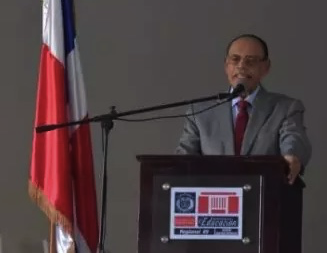
In her goal to bring the UN’s main deliberative and policy-making organ closer to everyday people, she chose the traditional ruler of the Ashanti people of Ghana to deliver the keynote address: a historic first.

Representing a kingdom that has existed since the 17th century, Otumfuo Osei Tutu II ascended the podium wearing kente cloth and accompanied by two praise-singers.

He highlighted some of the UN’s accomplishments in preserving global security: for example, staving off nuclear war and preventing conflict between nations. However, as he observed, the landscape today is different.

“Warfare is no longer the threat we face from states; it is now a danger we face on a daily basis from our citizens and from all quarters. This new threat comes on the heels of an unprecedented trust deficit in political leadership at the national level. The effect of this trust deficit is to erode the capacity of political leaders to rally their people to coalesce around national interests. The consequence for peace and security cannot be overstated”, he said.

The Ashanti leader called for a new partnership between elected authorities and traditional governance, in the spirit of authentic collaboration.

Colombia: University students demand implementation of the peace agreement

FREE FLOW OF INFORMATION

An article from Caracol (translation by CPNN)

Margarita Villota, a graduatee of the Universidad del Rosario, says that the resolution of any conflict should not be through the use of weapons, but through legality and political means. “Although it is unfortunate,” the formation of a group of dissidents that have once again threatened to take up arms was to be expected in Colombia, since it has occurred historically in other conflicts, such as in Northern Ireland, Guatemala or South Africa.

Villota points out that it is necessary to build a culture of peace in which citizens can raise their voice and express themselves freely. At the same time, she explains that,their collective rejects the retaking of arms by ex-leaders, as well as all actions outside the framework of legality.

(Continued in right column)

(Click here for the original Spanish version of this article.)

Question related to this article:

What is happening in Colombia, Is peace possible?

(Continued from left column)

David Gómez, who belongs to the group, explains that, in view of the dissidents, the agreement is not yet secured, and that is why it is necessary to defend everything agreed in the peace accords if we are to protect the victims and ensure the non-repetition of the war.

The group of the Universidad del Rosario, together with other universities such as Andes, Externado, Nacional and Tadeo, demands that the government guarantee and commit to the right to peace.

“The plan is to seek and support people who were part of the guerrillas, who believe in peace and who are in productive processes or pursuing programs in universities. These people show the country that the majority of the former guerrillas, those were previously in armed conflict, want peace today like the rest of Colombia,” explains Villota.

According to Iván Márquez and Jesús Santrich, Rosaristas Por la Paz considers it necessary for the citizens to appropriate the Peace Process and demand their constitutional right to peace.

David Gómez clarifies that, in recent days, students and graduates of different universities have hael actions, such as last Friday where they papered Bogotá asking for the war to stop, just as they are planning actions for the coming weeks.

The group was started by students and graduates of the Universidad del Rosario to promote the “Yes” in the campaign for the Plebiscite and, subsequently, with the loss of those votes, to develop actions so that an agreement will be reached.

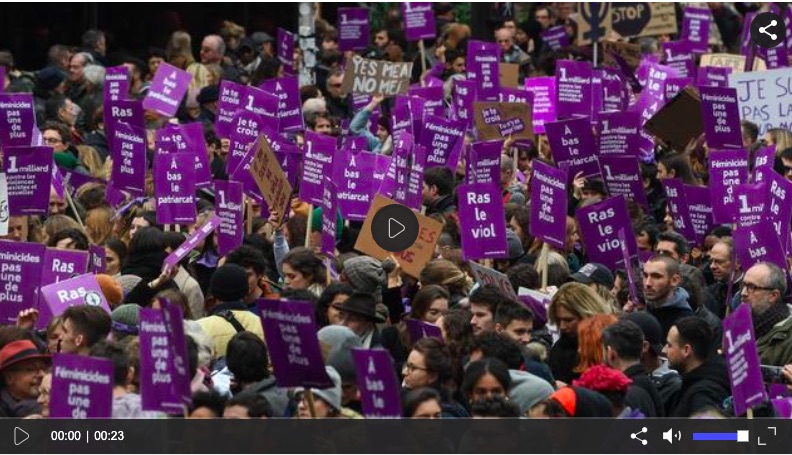
Nicaragua: Peace Commissions contribute to the prevention of violence against women

. . WOMEN’S EQUALITY . .

An article by Iliana Vásquez for TN8 (translation by CPNN)

The Reconciliation, Justice and Peace Commissions have assumed as part of the peace culture agenda to collaborate in the development of government policies and programs aimed at the prevention of violence against women, at any of its levels, as reported this Thursday by deputy Carlos Emilio López.


TN8 photo

“They are concerned with the prevention of femicides and other crimes against women, prevention of violence towards children, prevention of computer aggressions such as porno-revenge; as well as opposing other things that manipulate, deceive or destroy the dignity of women,” he said the FSLN deputy.

López said that 7,171 Reconciliation, Justice and Peace Commissions have been established and are operating throughout the country.

(article continued in right column)

(Click here for the original article in Spanish)

Questions related to this article:

Protecting women and girls against violence, Is progress being made?

(article continued from left column)

The deputy member of the Commission of Women, Youth, Children and Family of the National Assembly indicated that the commissions are integrating young people from different sectors to consolidate the culture of peace.

“Broken down by departments; we have in Nueva Segovia 450, in Madriz 192, in Estelí 331, in Chinandega 609, in León 542, in Managua 977, in Masaya 346, in Carazo 225, in Granada 279, in Rivas 286, in Chontales 287 , in Boaco 375,” he reported.

Organization

According to report number 12 detailing the qualitative and quantitative progress of the commission facilities; in Rio San Juan, 355 have been created, in Central Zelaya 324, in Jinotega 246, in Matagalpa 896, in the Autonomous Region of the North Caribbean 52, in the Autonomous Region of the South Caribbean 73 and in the Mining Triangle 320.

Among other concerns, the commission is calling on countries to take urgent action to stop the thousands of forest fires that have broken out in the Amazon.

“We must stop the thousands of fires that are burning the lung of the Earth. Not only to save the Plurinational State of Bolivia and its president Evo Morales; but to act in a coordinated way to protect one of the origins of life, of the planet”, emphasized the deputy.

In this way, the Reconciliation, Justice and Peace Commissions fulfill the commitment assumed with Nicaragua and the international community to raise their voices in situations that affect the world population, while fulfilling the commitments assumed for the good of Nicaraguans.

2nd Walk for the Culture of Peace in Cotia, Brazil, receives support from the World March for Peace and Nonviolence

. .DISARMAMENT & SECURITY. .

An article from Pressenza (available under a Creative Commons License 4.0.)

On Sunday 09/18/2019, people from the city of Cotia and neighboring municipalities attended the program of the 2nd edition of the Walk for a Culture of Peace, which took place on Sunday (18), in Cotia. The event had the participation of the World March for Peace and Nonviolence, several cultural, ethnic, religious and popular movements.


The Walk is carried out by the City of Cotia, through the Secretariat of Sports, Culture and Leisure, and by the Peace Commission, composed of the Department of Culture and representatives of civil society: Casa de Airá – Tradition and Culture; Instituto Gira-Sol; Casa Olê Orixá Obá Ayrá; Lazaro de Aruanda Flight Temple and The Message from Silo – Parque de Estudos e Reflexão Caucaia.

(continued in right column)

(Click here for the Portuguese version.)

Question for this article:

The World March for Peace and Nonviolence: What is its history and its effects?

How can we be sure to get news about peace demonstrations?

(continued from left column)

The walk, the universal color of Peace, the white, was predominant and the atmosphere of fraternity hovered over the participants. “This event is the celebration of our Movement of the Culture of Peace, of resistance and defense of the rights of people, of cultural and religious diversity. Several fronts and ideologies join hands against prejudice, violence and intolerance.

We are different, we think different, we have different histories, we have different religions, but we are equal in rights. The Commission proposes this dialogue with society, a dialogue for peace through peace”, the Commission notes. For the Secretary of Sports, Culture and Leisure, Givaldo, “The Walk for a Culture of Peace is the biggest mobilization of an event that happens all year round, that holds several meetings and debates with the population”.

According to Gilmar de Almeida, Culture Manager of the city, the event is taking shape and, from now on, Cotia will act in the sense of regionalizing the Path for the Culture of Peace. “Such an important event as this cannot be limited to Cotia. We will seek to expand it, regionalize it, because the fight for peace can have no border,” he said.

In this context the 2nd World March for Peace and Nonviolence that will “march” from 02/10/2019 to 08/03/2019, traveling around the globe passing through Cotia around 12/12/19, considers very important to support and participate in local events like this held in the city of Cotia.

The Message of Silo, one of the promoters since the last edition of the journey, was also present on this journey. In addition to taking part in the organizational meetings, Silo also disseminated the values of peace and non-violence through its meetings and ceremonies that facilitate the approach to the theme. And the Park of Studies and Reflection Caucaia, through the different people applied in the investigation and promotion of Peace and Nonviolence was also present

Essonne, France: From Grigny to Hiroshima, the path of a high school girl for Peace

. . DEMOCRATIC PARTICIPATION . .

An article from Actu

Inès Lakehal, a 17-year-old Grigny high school student, has been sent by her commune to Japan for a week to raise her voice in favor of peace.

She is only 17 years old, and yet Inès Lakehal can now claim to have attended one of the most important diplomatic and solidarity gatherings of youth. During the summer, the high school girl was sent by her commune to the land of the rising sun for a week, as part of a program of actions led by the non-governmental organization Mayors for Peace.

Objectives: to represent Grigny during the Japanese commemoration ceremonies of August 6 in Hiroshima and then attend the International Youth Conference for Peace in the Future with about forty other adolescents of different nationalities. “This experience has been very rewarding,” says Inès Lakehal. It was the first time that I traveled alone, as far outside France, and that I had to use English continuously. Fortunately I had prepared well, “she continues with a laugh of relief.

Enthusiastic about peace since she was 11 years old, Inès has been very involved in her city. Being fluent in Shakespeare’s language, she had the right profile as well as motivations to be accepted for participation by Mayors for Peace.

(article continued in right column)

(Click here for the French version of this article)

Question related to this article:

How can culture of peace be developed at the municipal level?

(article continued from left column)

Workshops and cultural visits

Divided in two stages, the typical Japanese day for Inès during the week was divided between thematic workshops on peace in the morning and cultural visits of the country in the afternoon (city of Uwajima, walks with the traditional Yukata summer kimono …). The high school student told us she met during this trip people who were “really incredible, engated, all of them eager to make peace”.

“I had many exciting and constructive peace conversations. I realized that many clichés we have about certain nationalities are completely false. I am thinking in particular of this young Iranian girl who was in my group. One of the most adorable people in the world, so open and advocating peace between states, even though in Europe we have such a bad image of Iran.”

A future career in politics or diplomacy?

Now rich in her various commitments and always keen on peace, Inès does not rule out directing her future and career towards politics or diplomacy. “Since the end of my studies at the municipal council of college students in Grigny, I have worked with its students to enable them to adapt to new roles and find new ideas and projects.”

The young lady recognizes that the participation in high spheres of political decision can sometimes lead to disenchantment. “Having the chance to participate at these levels has given me a passion and desire to continue in this direction. But it is a complicated environment. I didn’t realize this before because in Grigny the setting is like a cocoon, a big family where everyone knows each other,” she says.

150 French communes within the NGO

Mayors for peace was created in 1948 by the mayors of Japanese cities bombed during the Second World War Hiroshima and Nagasaki. It is a non-governmental organization with special consultancy status with the Economic and Social Council of the United Nations.

Its main lines of action concern the promotion and education of a culture of peace, support for the UN Charter and the development of multilateral security organizations, stopping wars and peaceful settlement conflicts, as well as disarmament and elimination of nuclear weapons. Involving more than 6,000 municipalities in 160 countries, Mayors for peace includes 150 communes in France. The president of the hexagonal branch turns out to be … Philippe Rio, the mayor of Grigny.

Marianne Williamson: U.S. needs Department of Peace

. . DEMOCRATIC PARTICIPATION . .

A speech by Marianne Williamson, Democratic candidate for president

Another day, another mass shooting. We grieve for Odessa, Texas, and we grieve for America.

The aftermath of every mass shooting follows a now-routine pattern: Feverish coverage will be followed by politicians and pundits engaging in a predictable conversation about gun-safety legislation. All of which we know by now. Of course, we need universal background checks; we need to close all loopholes; we need to outlaw bump stocks; and we need to outlaw assault weapons and the bullets needed to shoot them. But politicians trotting out various forms of I-will-do-this-or-that neither gets to the heart of the matter nor breaks the logjam that has made this horrific and uniquely American problem so intractable.

It is not just our gun policy but our politics that fails to free us of this insanity. Until we override the nefarious influence of money on our politics, it will not be possible to break the National Rifle Association’s chokehold on our society. It is not the will nor safety of the people but the profits of gun manufacturers that is given primacy in our gun policies. Legislation that establishes public funding for federal campaigns should be the battle cry of our generation.

But even then, Americans will have to look deeper for the causal layers of our epidemic of violence. We will have to look beyond politics. We will have to look at ourselves.

As individuals, Americans are not a violent people, but it is undeniable that we’re a violent culture. Regular mass shootings are not societally normal. And until we face this, the situation will not fundamentally improve.

Most politicians stick to a discussion of symptoms only. Politics should be the conduit for our most expanded conversation about societal issues, not the most superficial one. Conventional politics does not lend itself to a discussion of the deeper issues that plague us. Yet go deeper we must.

America does not just have a gun crisis; it has a cultural crisis. America will not stop experiencing the effects of gun violence until we’re ready to face the many ways that our culture is riddled with violence.

(Continued in right column)

Question related to this article:

Is a U.S. Department of Peace a realistic political goal?

(Continued from left column)

Our environmental policies are violent toward the Earth. Our criminal justice system is violent toward people of color. Our economic system is violent toward the poor. Our entertainment media is violent toward women. Our video games are violent in their effect on the minds of children. Our military is violent in ways and places where it doesn’t have to be. Our media is violent in its knee-jerk shaming and blaming for the sake of a better click rate. Our hearts are violent as we abandon each other constantly, breeding desperation and insanity. And our government is indirectly and directly violent in the countless ways it uses its power to help those who do not need help and to withhold support from those who do.

The darker truth that Americans must face now is this: Our society is not just steeped in violence; we are hooked on violence. And in area after area, there are those who make billions of dollars on deepening the hook. Until we see that, we will just have more violence. Our minds must awaken so we can see all this. Our hearts must awaken so we can change all this. And our politics must change so we can discuss all this.

Though gun-safety legislation should be fervently pursued, a political establishment so steeped in the ways of brute force is hardly equipped to be the purveyor of a solution to the problem of violence in this country. With a nearly $740 billion military budget but only $40 billion proposed for the State Department budget, our outsize commitment to brute force and ever-withering commitment to soul force is obvious. With the Air Force seeking 100 stealth B-21 Raiders, each with a price tag of $550 million and each equipped to carry both nuclear and conventional weapons, while 12.5 million children in the United States live in food-insecure homes – the idea of politicians who allow this to happen being the ones who are going to save us from the epidemic of violence in America is almost laughable.

We will not break free of dysfunctional realities until we are willing to embrace more functional ones. I propose a U.S. Department of Peace to coordinate and harness the powers of conflict resolution; restorative justice; violence prevention; trauma-informed education; mindfulness in the schools; child and family wrap-around services; social and emotional learning; and a world-class peace academy to train and to deploy thousands of peace-builders, plus national conferences and a presidential task force for peace creation. We will make every effort to promote a culture of peace both at home and abroad. We will address the root causes, not just the symptoms of violence in America. And in time, we will transform our culture from one of conflict to one of peace.

Nothing is going to fundamentally change until enough of us are willing to take a stand for fundamental change. And no change could be more fundamental than for the United States to transform from a culture of violence to a culture of peace. From the frequency of attack to the frequency of forgiveness. From a land of fear to a land of love.

English bulletin September 1, 2019

FOR PEACE IN THE HOLY LAND

If we look at the news and consider only the short-term, peace seems very distant between Israelis and Palestinians. But if we take a long-term historical view, there is reason to hope.

We begin with the short-term news.

The first two Muslim-American women in Congress, Reps. Ilhan Omar and Rashida Tlaib were barred from visiting Israel and the Occupied Territories, presumably because they support the non-violent Boycott, Divestment, and Sanctions (BDS) Movement. Commenting on this, Richard Falk, former United Nations Special Rapporteur on the situation of human rights in the Palestinian occupied territories, remarks that this was due to the “unhealthy relationship” that has evolved between the US and Israeli Presidents Trump and Netanyahu. For example, Trump had tweeted that Ilhan Omar and Rashid Tlaib, hate Israel and all Jews.

Also in recent news, Democracy Now featured an interview with a Palestinian girl, Janna Jihad, who, at the age of 13 years, continues to expose the Israeli occupation of Gaza. She started telling stories about her home of Nabi Saleh when she was only 7, after her cousin and her uncle were killed in the village. Since then, Janna has shared countless videos about Palestinian resistance with viewers around the world, on Twitter, on YouTube, on Facebook, garnering tens of thousands of followers. Asked by Amy what she thought could be the solution, Janna replied “For me, the one-state solution is the solution that would work. It can be that all of us could live together, same rights, under one government, getting exactly the same rights, me like the same as any other person. And all the refugees could come back to Palestine. All the people could live in peace, just in equality. ”

There is more hope if we look at the long-term.

Dr. Bahan Bastani traces the history of cultural interactions between Islam and Judaism, Muslims and Jews. He reminds us that during the Golden Age of Islamic Civilization, 9th-12th centuries, both the Muslim and the Jewish civilizations flourished in the Islamic centers of higher learning in Baghdad and al-Andalusia-Spain, and the Muslim territories was safe heaven for the Jewry of the world. In the fertile multicultural environment of al-Andulus, the Jewish and Muslim scholars made significant strides in astronomy, astrology, optics, geometry, medicine, philosophy, and literary works. Also, when Spain fell under the Spanish Catholic rule in 1492 and the Jews were being persecuted, it was the Ottoman Empire that send ships to rescue the Jews from Spain into the Muslim territories. For the following three centuries, the Jews in the Turkish Muslim Ottoman Empire ascended to high positions as court physicians and as foreign diplomats.

An even longer term view is taken by the Palestinian Dr. Mazin Qumsiyeh who traces the history of the Land of Canaan. He begins with the dawn of civilization which took place in this region when people went from hunter-gatherers to agricultural communities. For the first 12,000 years there was very little conflict. “Palestine was multiethnic, multireligious, multicultural and multilingual society.

If you go back before the present conflict, you would go to the Crusaders, 1190 AD. Like the present conflict, that, too, came from outside.” But, as Qumsiyeh says, “the patient is not hopeless . . . in biology when I look at the forest and I see one species dominate I don’t say this is a healthy forest. I say this is unhealthy, it’s going to decline. The strength comes from diversity, so we say that’s what will happen here and that’s another reason why I’m optimistic – we fight for equality and to maintain the country the way it was supposed to be: multi-ethnic multi-cultural and multi-religious.


Looking at the present times, Rabbi Michael Lerner says it compounds the problem to say simply that “Israel is a racist society and most Israelis are racists.” Instead of dismissing those who disagree, leftist activists need to understand the historical origins of Zionist attitudes, coming not only from the Holocaust, but also the experience of Jews from former Communist countries and those coming from Arab countries who were disrespected by Jews of European origin. He concludes “The outrageous actions of the Jewish majority in becoming oppressors of the Palestinians will remain, for thousands of years into the future, one of the most disgraceful moments in Jewish history. But it won’t be overturned until we can develop a new politics of compassion for both sides, and a renewed belief that people can be reached if we start from a perspective of respect and caring for them, even when we disagree with their current political proclivities”

As long-time peace activists Len and Libby Traubman have put it: “An enemy is one whose story we have not heard. ”

Can Zionism be redeemed?“. The question is explored by Tikkun writer Yehezkel Landau. He sees hope in the mutual struggle of Israelis and Palestinians against the degradation of the environment as exemplified in the annual climate march. “When it was first organized five years ago, some 200 people took part. This year over 5,000 people marched, Palestinian and Jewish citizens from all over Israel. They carried banners proclaiming mutual solidarity in the face of environmental threats and the need to work together to ensure a common future. . . We need more signs of hope like these to boost our spirits and motivate action, within our respective communities and across boundaries.”

Meanwhile, the struggle for justice goes on. Omar Barghouti, a founding member of the Palestinian Campaign for the Academic and Cultural Boycott of Israel and a co-founder of the Boycott, Divestment and Sanctions (BDS) movement, urges support for the BDS in the face of attempts by the US Congress to suppress it. He reminds us that “BDS calls for Palestinian liberation on terms of full equality with Israelis and categorically opposes all forms of racism, including anti-Semitism.” And he concludes that “Our hope remains alive as we witness an inspiring shift in public opinion in favor of Palestinian human rights.”


TOLERANCE AND SOLIDARITY


Manifesto on diversity: the Land of Canaan

SUSTAINABLE DEVELOPMENT


Kazakh capital to host 2019 UNWTO Urban Tourism Global Summit on SDGs

WOMEN’S EQUALITY


Voices of Afghan women ‘must be heard at the table in the peace process and beyond’

EDUCATION FOR PEACE


Colombia: Barranquilla will host the first Ibero-American Education Congress

DISARMAMENT AND SECURITY


The Americas are preparing for the second World March for Peace and Nonviolence

HUMAN RIGHTS

PAYNCoP Gabon and AFRICTIVITIES inform civil society organizations about the African Commission on Human and Peoples’ Rights

FREE FLOW OF INFORMATION


Colombia: Rigoberta Menchú asks the Government to strengthen the peace agreement

DEMOCRATIC PARTICIPATION


Building infrastructures for peace

Kazakh capital to host 2019 UNWTO Urban Tourism Global Summit on SDGs

. . SUSTAINABLE DEVELOPMENT . .

An article from The Astana Times

The United Nations World Tourism Organisation (UNWTO) and the Nur-Sultan Akimat (city administration) will organise the eighth UNWTO Global Summit on Urban Tourism under the Smart Cities, Smart Destinations theme in the Kazakh capital Oct. 9-12. The summit will contribute to the UN New Urban Agenda and Sustainable Development Goals (SDGs).

The summit will bring together representatives from national tourism administrations, city authorities and related stakeholders to exchange expertise and set a shared vision to advance urban tourism. Participants will discuss sustainability, accessibility, innovations and inclusion of tourism in the urban agenda contributing to the progress of the 17 UN Sustainable Development Goals. The gathering will focus specifically on Goal 11, which is to make cities and human settlements inclusive, safe, resilient and sustainable.

“According to the UN, in 2015, 54 percent of the world’s population lived in urban areas and, by 2030, this share is expected to reach 60 percent. Along with other key pillars, tourism constitutes a central component in the economy, social life and the geography of many cities in the world and is, thus, a key element in urban development policies… Tourism is intrinsically linked to how a city develops itself and provides more and better living conditions to its residents and visitors,” reported the summit’s website emphasising the importance of the chosen topic.

(continued in right column)

Question related to this article:

How can tourism promote a culture of peace?

(continued from left column)

The summit will focus on how developing smart cities can address urban challenges. The participants will discuss sustainability, accessibility, urban management, innovation and technology, stressing the importance of including tourism in the wider city agenda as a contributor to inclusive, resilient and sustainable urban development.

During the summit’s first day, the International Congress and Convention Association (ICCA) will give a masterclass on trends in the convention industry, focusing on topics such as how to be a successful destination for meetings and organise sustainable meetings.

The second day will start with an opening ceremony including Nur-Sultan Akim (Mayor) Altai Kulginov, Kazakh Prime Minister Askar Mamin, UNWTO Secretary-General Zurab Pololikashvili and other higher officials. The participants will adopt the Smart Cities, Smart Destinations Declaration. This will be followed by the mayors’ meeting, where “mayors from around the world will share insights on how to translate a smart city into a smart destination,” and other panel sessions and on the topic.

The summit’s last day will be dedicated to innovative and technological solutions in tourism, the role of public and private partnerships in technologies to develop the sphere and urban destinations’ accessibility through “increased awareness of the opportunities it brings and the emergence of new innovative solutions.”

The decision to have the event in Nur-Sultan was made at the seventh UNWTO Global Summit in Seoul last year. UNWTO Secretary-General Zurab Pololikashvili and the then Nur-Sultan Akim (Mayor) Bakhyt Sultanov signed April 5 an agreement at the UNWTO Mayors Forum for Sustainable Urban Tourism in Lisbon, where the akim presented information about Nur-Sultan’s infrastructure.

The UNWTO is responsible for the promotion of responsible, sustainable and universally accessible tourism around the world. It promotes tourism as a driver of economic growth, inclusive development and environmental sustainability and offers leadership and support to advance knowledge and tourism policies worldwide. The organisation has 158 member countries, six associate members and more than 500 affiliate members.

The UNWTO Global Summit is designed to encourage new approaches to tourism and its impact on urban destinations. Previously, the event took place in Seoul (2018), Kuala Lumpur (2017), Luxor (2016), Marrakesh (2015), Barcelona (2014), Moscow (2013) and Istanbul (2012).

The AU’s role in brokering Sudan deal offers lessons for the future

. . SUSTAINABLE DEVELOPMENT . . .

The Chairman of Sudan’s transitional council, Lt. Gen. Abdel Fattah Abdelrahman Burhan, speaks during the power sharing agreement ceremony.
Morwan Ali/EPA

Femi Amao, University of Sussex

The African Union (AU) came into existence after a restructuring of its predecessor – the Organisation of African Unity (OAU). It was created to build an integrated, prosperous and peaceful continent.

While the AU has a clear mandate to deepen the process of economic and political integration on the continent, its predecessor was run on the principle of non-interference in the internal affairs of member states. This lessened its ability to resolve member states’ internal disputes.

However, the OAU did originate some of the standards that are at the foundation of the AU’s conflict resolution approach. One such standard is contained in the Lome Declaration which criminalises unconstitutional changes of government.

The AU now has a wider legal mandate for internal conflict resolution than its predecessor. This mandate is set out in its Constitutive Act and in its Peace and Security Council Protocol. But, the implementation of this mandate is still a work in progress.

But the AU has in recent days been rightly praised for using its regional laws to broker an agreement between the Sudanese military and the country’s civilian movement. The agreement comes after months of conflict that followed the ouster of Sudan’s despotic ruler Omar al-Bashir.

After al-Bashir was deposed, the military attempted to assume leadership of the country. It attacked protesters who were demanding that authority be transferred to a civilian administration. The attacks led to deaths and injuries.

The agreement, which was brokered with the help of Abiy Ahmed, the Ethiopian Prime minister, set out key conditions, including the following:

The establishment of a joint military and civilian sovereign council, which will govern the country for three years before elections are held.

Shared leadership of the council. A military leader will lead for 21 months followed by a civilian leader for 18 months.

A bill of rights and freedoms for all Sudanese citizens.

The AU’s involvement has proven the usefulness of its regional laws in resolving internal disputes in member States. So how did it reach this point, and what lessons have been learned from its work in Sudan?

AU intervention

The military takeover that followed al-Bashir’s removal from power amounted to an “unconstitutional change of government” which is prohibited by Article 4 of the AU’s Constitutive Act.

This breach of regional law empowered Moussa Faki Mahamat, the chairperson of the AU Commission, to denounce the military’s actions.

(Article continued in the right column)

Question for this article

Can the African Union help bring a culture of peace to Africa?

(Article continued from the left column)

Following the official denouncement, the AU’s Peace and Security Council adopted a decision stating that the actions of the Sudanese military amounted to an unconstitutional change of government. The Council is central to the AU’s legal framework. It was set up to prevent, manage and resolve conflicts. Its April 2019 decision also reiterated the need for a civilian-led and consensual transition and demanded that the military hand over power within 15 days.

Failure to hand over power should have led to the automatic suspension of Sudan from the activities of the AU as provided by the Council’s protocol. However, an extension of three months was subsequently agreed to allow for further negotiations.

In my view, the decision to grant the extension was problematic because it undermined the “automatic” nature of the suspension and allowed the military to continue attacks on civilians without repercussions. Due to lack of progress and escalating violence, the Council eventually suspended Sudan in June.

During the three-month notice period, the AU continued to engage with the key parties in the conflict. This happened even as the military continued attacks on protesters. Finally in July, the AU/Ethiopia mediation team convinced both parties to resume talks. This led to the signing of a constitutional declaration.

In the end, the AU’s mediation was successful. But during the drawn out negotiations over a hundred people were killed and hundreds more injured. This begs the question: what could the AU have done differently?

Lessons learned

While it is laudable that the AU’s intervention in the Sudanese political crisis resulted in an agreement, there are lessons that should be learnt.

The most important lesson is regarding the implementation of the provision for suspension. The 15-day ultimatum that was originally given for the restoration of civilian rule is consistent with previous practice by the AU’s Peace and Security Council.

The threat of imminent suspension could have incentivised the military to act more speedily towards a resolution within a shorter time frame. It could have prevented or reduced the violence that ensued in the following months.

In addition, the AU and its Council need to develop a concrete strategy for dealing with continuing violence in the course of negotiations. The Constitutive Act gives these bodies the power to directly intervene in member states where there is serious threat to legitimate order and a need to restore peace and stability. The means and method of implementation of this power is left to the AU under the law, but could include the deployment of peacekeeping forces.

I would argue that the Sudan crisis warranted direct intervention.

This is not to downplay the crucial role that the AU and the Council played in helping to resolve the Sudan political crisis. Indeed, the role played by the regional body underscores the importance of its legal order and institutions in conflict resolution in Africa.

Its success in this respect will instil confidence among member states. It will also bolster the AU’s image as an effective and efficient organisation on the international stage.The Conversation

Femi Amao, Senior Lecturer, University of Sussex

This article is republished from The Conversation under a Creative Commons license. Read the original article.

Libby and Len Traubman on Jewish-Palestinian Dialogue

TOLERANCE AND SOLIDARITY .

Excerpted from an article in Elders Action

. . . The compelling year-long meal sharing and earlier Soviet-American successes prepared Libby and Len to begin facilitating dialogue between Jews and Palestinians, thus catapulting the couple into another of the world’s serious communal conflicts. Libby explains, ‘By the late ’80s and early ’90s we were meeting some Israeli and Palestinian citizen-leaders who aspired coming to the United Sates for talking with each other—illegal where they lived. We, with others in the Beyond War community and Stanford University said “yes.” ’


See video of “Twenty years of the Palestinian Jewish Living Room Dialogue”

The Israeli and Palestinian women and men were brought to the California redwoods for a powerful week-long conference resulting in writing and signing the historic 1991 Framework for a Public Peace Process. Len cancelled his patients and the Traubmans travelled to Jerusalem to help gel the new team. They assisted participants circulating their Framework document to their individual governments and peoples.

Back in the USA, the couple promptly applied the new strategies. Len recalls: ‘Libby said, “You know we’ve done this globally, now we have got to figure out how it works where we live.”‘ The year of interracial dialogue in their home had laid the groundwork for the Jewish-Palestinian Living Room Dialogue beginning in July 1992 in their home.

Len recalls early difficulties: ‘Libby spent a year looking for brave local Jews and Palestinians—Muslims and Christians—willing to sit together. It was not a popular thing to do.’ Libby agrees about their biggest hurdle. ‘We searched tirelessly for people willing to face one another. It was almost unheard of. They’d say, “This is the enemy, are you kidding?” The Arabs and Jews were taking a risk by just sitting together, a taboo for many.’

Len explains that the Living Room Dialogues revealed that ‘the real fear is often not of the other side, but of one’s own people’s rejection as naive, sympathizer, unfaithful. That’s where the terror is: “What will people say?”‘

Libby adds, ‘So some feared their own people. Some feared the Other. And many questioned what good dialogue would do. Some said, “I’ve moved to America, and I don’t want to think about it anymore.” Palestinians’ and Israelis’ lives had become so comfortable in America.’

At first participants came to vent and then left. Later arrivals exhibited more dedication to deep listening and empathy. After 18 months a reliable core of respectful yet passionate women and men were dedicated to quality communication. ‘That was twenty-two years ago,’ says Libby. ‘Now eager would-be participants must be asked to wait until a rare opening occurs and the group needs a new member to restore balance.’

(Article continued in the right column)

Question for this article

How can a culture of peace be established in the Middle East?

(Article continued from the left column)

Len remembers key ingredients for Living Room Dialogue success: ‘We were dedicated and didn’t give up. Always there for the people, we kept respecting that at first most people dearly want to be heard. So the participant with the will and skill to listen is really the one with the power to transform the relationship. Listening dignifies both listener and the person whose story is being heard. Again, “An enemy is one whose story we have not heard.” We experience story as the shortest distance between two people. It is story and not information that goes to the heart and is best remembered. With this connection of hearts then brains, people experience each other’s equal humanity and begin wanting the best, not only for self but for the other person equally. Magic results from being together and connecting at the heart that then messages the brain that it is safe and the relationship is working properly. This face-to-face connection is simple yet the most effective human experience to redirect relationships.’

Libby continues, ‘At first we didn’t appreciate story as an entry point to Dialogue. We’d begin with political issues and hot topics, provoking ranting, blaming and battles over versions of history. Yet we failed to discover the personal and family stories of the human beings in the room with us. Slowly we discovered the primacy of personal intimacy and spending generous time with people telling their own narratives – sometimes bottled up inside a whole lifetime until then. That is really what we did that first year together of going round and round telling our own histories, ever more deeply learning more about each other. Familiarity, trust, and friendship grew. In time we could begin to approach more difficult issues.’

If listening ensures dialogue, then what makes someone a good listener? How can you make someone into a good listener? Len says simply, ‘You first listen to them.‘

‘You provide them that experience,’ explains Libby ‘And when they come into the dialogue circle, you have to be clear about the rule – what dialogue is and is not.‘

With skills from the Jewish-Palestinian Living Room Dialogue, Len and Libby then facilitated and filmed Dialogue at Washington High in which Miriam Zimmerman, a Holocaust Jew, and Elias Botto, an original 1947 Palestinian refugee from Jerusalem, shared their poignant stories. Used for instructional purposes ‘…that film then touched hearts and passed on skills to citizens in Africa and worldwide, helping people to relate differently’ explains Len. ‘It reminded us not only to enact the dialogues but to also tell the story of it. The power today is in story and the choice of stories. Today people are fed mostly human failure stories that we see on the five o’ clock news. Elie Wiesel, the Holocaust survivor and teacher, says: “People become the stories they hear and the stories they tell.” We have to decide what is for life and what is for death, what is for relationships and the health of the planet, then tell the stories of people who live exemplary lives.’

[Note: Long-time readers of CPNN will recognize Len and Libby Traubman from their articles reprinted in CPNN:

Jewish-Palestinian Dialogue: Turning enemies into partners


Planting Peace Seeds on the Road to Jerusalem


Two Free Videos for Relationship-Building Worldwide