The Sarajevo Declaration of the Gaza Tribunal (28 May 2025)

DISARMAMENT AND SECURITY .

An article by Richard Falk from the Transcend Media Service

The Sarajevo Declaration of the Gaza Tribunal, a consensus document prepared in conjunction with participants in the first of two Public Sessions of the Gaza Tribunal, was released on 28 May 2025. The second session of the tribunal is scheduled for late October. The proceedings in Sarajevo consisted of survivor testimony from Gaza, invited expert speakers, a round-table on media complicity, and the reports of three chambers tasked with documenting evidence and consequences of alleged genocide and crimes associated with forcible application of the Settler Colonial Project to Gaza following 7 Oct, as well as the failure of the UN, growing public protests, and of leading governments to bring the genocide to an end in accordance with international law and hold the perpetrators accountable.

The Sarajevo Declaration is a comprehensive text intended to convey the orientation, broad scope of the goals of civil society solidarity activation and reflecting the diversity of concerns among members of the Gaza Tribunal community. Sarajevo was our chosen site to express symbolic solidarity with an earlier genocide at Srebrenica that occurred 30 years ago. Encourage wide sharing of the Sarajevo Declaration. It is my honor to serve as president of the GTP in concert with dedicated scholars, witnesses, and activists from around the world, including the inspiring participation of our Palestinian sisters and brothers.

The Sarajevo Declaration of the Gaza Tribunal

28 May We, the members of the Gaza Tribunal, having gathered in Sarajevo from 25 to 29 May 2025, declare our collective moral outrage at the continuing genocide in Palestine, our solidarity with the people of Palestine, and our commitment to working with partners across global civil society to end the genocide and to ensure accountability for perpetrators and enablers, redress for victims and survivors, the building of a more just international order, and a free Palestine.

We condemn the Israeli regime, its perpetration of genocide, and its decades-long policies and practices of settler colonialism, ethno-supremacism, apartheid, racial segregation, persecution, unlawful settlements, the denial of the right to return, collective punishment, mass detention, torture and cruel and inhuman treatment and punishment, extrajudicial executions, systematic sexual violence, demolitions, forced displacement and expulsions, ethnic purges and forced demographic change, forced starvation, the systematic denial of all economic and social rights, and extermination.

We are horrified by the Israeli regime’s systematic devastation of Palestinian lives, lands, and livelihoods, including its intentional destruction of all sources and systems for food, water, healthcare, education, housing, culture, as well as mosques, churches, aid facilities, and refugee shelters, and its targeting of medical personnel, journalists, aid workers, and United Nations staff, and its direct targeting of civilians, including children and older persons, women and men,  girls and boys, persons with disabilities and those with medical conditions.

We demand an immediate withdrawal of Israeli forces and an end to the genocide, to all Israeli military action, to forced displacement and expulsions, to settlement activities, to the siege of Gaza and restrictions on movement in the West Bank. We call for the immediate and unconditional release of all prisoners, including the thousands of Palestinian women, men and children held in abusive Israeli detention facilities. We insist on the immediate resumption of massive humanitarian aid to all of Gaza without restriction or interference, including food, water, shelter, medical supplies and equipment, sanitary equipment, rescue equipment, and construction materials and equipment. We call as well for a complete withdrawal of all Israeli forces from all Lebanese and Syrian territory.

We call for an end of the smearing of UNRWA and other humanitarian workers, for the free and unhindered access of UNRWA and all other United Nations and humanitarian organizations in all areas of Gaza and the West Bank, for full compensation by the Israeli regime for damage caused to UN and humanitarian facilities, alongside full compensation and reparations to the Palestinian people, and for full accountability for the harassment, abduction, torture, and murder of UNRWA and other humanitarian workers and their families.

We call on all governments and on regional and international organizations to end the historic scandal of inaction that has characterized the past nineteen months, to urgently respond with all means at their disposal to end the Israeli assault and siege, to uphold international law, to hold perpetrators to account, and to provide immediate relief and protection to the people of Palestine.

We denounce the continued complicity of governments in the perpetration of Israeli war crimes, crimes against humanity, and genocide in Palestine, and the shameful role of many media corporations in covering up the genocide, dehumanizing Palestinians, and in the dissemination of propaganda fueling anti-Palestinian racism, war crimes, and genocide.

We equally denounce the wave of persecution and crackdowns on human rights defenders, peace activists, students, academics, workers, professionals, and others, perpetrated by Western governments, police agencies, the private sector, and educational institutions. We honor those who, despite this persecution, have had the courage and moral convictions to stand up and speak out against these historic horrors, and we insist on the full protection of the human rights of free expression, opinion, assembly, and association, as well as the right to defend human rights without harassment, retaliation, or persecution.

We reject the unjust tactic of smearing as “antisemites” or “supporters of terrorism” all those who dare to speak up and act to defend the rights of the Palestinian people and to condemn the injustices and atrocities of the Israeli regime and its perpetration of apartheid and genocide, or those who criticize the ideology of political Zionism. We stand in solidarity with all those who have been smeared or punished in this way.

We are convinced that the struggle against all forms of racism, bigotry, and discrimination necessarily includes the equal rejection of Islamophobia, anti-Arab and anti-Palestinian racism, and antisemitism. It also includes an acknowledgment of the horrific effects that Zionism, apartheid, and settler-colonialism have had and continue to have on the Palestinian people. We commit to fighting all such scourges.

We also reject the destructive ideology of political Zionism, as the official state ideology of the Israeli regime, of the forces that colonized Palestine and established the Israeli state on its ruins, and of pro-Israel organizations and proxies today. We insist, in the words of the Universal Declaration of Human Rights, that all human beings are born free and equal in dignity and rights, and that there are no exceptions to this rule. We call for decolonization across the land, an end to the ethno-supremacist order, and the replacement of political Zionism with a dispensation founded on equal human rights for Christians, Muslims, Jews, and others.

(article continued in right column)

Question related to this article:

How can war crimes be documented, stopped, punished and prevented?

How can a culture of peace be established in the Middle East?

(article continued from left column)

We are inspired by the courageous resistance and resilience of the Palestinian people in the face of over a century of persecution, and by the growing movement of millions standing in solidarity with them around the world, including the principled advocacy and nonviolent action of thousands of Jewish activists who have rejected the Israeli regime and its ethnonationalist ideology, and have declared that the Israeli regime neither represents them nor acts in their name.

We recognize the right of the Palestinian people to resist foreign occupation, colonial domination, apartheid, subjugation by a racist regime, and aggression, including through the use of armed struggle, in accordance with and as recognized in international law and as affirmed by the United Nations General Assembly.

We recall that the Palestinian right to self-determination is jus cogens and erga omnes (a universal rule not subject to exception and binding on all states) and is non-negotiable and axiomatic. We recognize that this right includes political, economic, social, and cultural self-determination, the right to return and full compensation for all harms suffered in a century of persecution, to permanent sovereignty over natural resources, and to non-aggression and non-intervention. We respect Palestinian aspirations and full Palestinian agency and leadership over all decisions affecting their lives, and we stand in solidarity with them.

We are gravely concerned at the direction of international relations, international politics, and international institutions, and by attacks on those international institutions that have challenged genocide and apartheid in Palestine. We believe that the normative foundations of the global order, grounded in human rights, the self-determination of peoples, peace, and the international rule of law, are being sacrificed at the altar of ruthless political realism and obsequious deference to power, with the people of Palestine left undefended and vulnerable on the front lines. We insist that another world is possible and intend to fight to bring it about.

We fear that the nascent and flawed international normative order, built up since the Second World War, with human rights at its center, is at risk of collapse as a result of the sustained attack waged on the system by the Israeli regime’s Western allies in their quest to buttress Israeli impunity. We pledge to oppose this attack and to work to protect and advance the project of building a world in which human rights are governed by the rule of law, beginning with the struggle for Palestinian freedom. And we believe that the weaknesses and inequities hard-wired into the international system from the start, including the geopolitical right of exception codified in the United Nations Security Council veto, the disempowerment of the General Assembly, and the structural obstacles that mitigate against the enforceability of International Court of Justice (ICJ) decisions, must be reformed and rectified.

We demand immediate action to isolate, contain, and hold accountable the Israeli regime through universal boycott, divestment, sanctions, a military embargo, suspension from International organizations, and the prosecution of its perpetrators, and we commit ourselves to this cause. We equally demand individual criminal accountability for all Israeli political and military leaders, soldiers, and settlers implicated in war crimes, crimes against humanity, genocide, or gross violations of human rights, as well as accountability for all persons and organizational actors guilty of complicity in the regime’s crimes, including external proxies of the Israeli regime, government officials, corporations, arms manufacturers, energy companies, technology firms, and financial institutions.

We applaud the International Court of Justice (ICJ) for its ongoing historic genocide case against the Israeli regime and for its landmark advisory opinion findings on the illegality of the Israeli occupation, of the apartheid wall, and of the Israeli practice of apartheid and racial segregation, and its findings that the rights of the Palestinian people are not dependent upon or subject to negotiation with their oppressor and that all states are obliged to abstain from treaty, economic, trade, investment, or diplomatic relations with Israel’s occupation regime. We celebrate the principled action of South Africa in bringing to the ICJ the historic genocide case against the Israeli regime.

We call on all states to ensure the implementation of all provisional measures adopted by the ICJ in the genocide case against Israel, to fully respect the findings of the ICJ in its advisory opinion of July 2024, to comply with all elements of the United Nations General Assembly resolution of 13 September 2024 (A/ES-10/L.31/Rev.1), ending all arms trade with and implementing sanctions on the Israeli regime, and to support accountability for all Israeli perpetrators.  We urge civil society organizations and social movements around the world to initiate and strengthen campaigns to support the ICJ’s decisions and opinions on Palestine, and to press their own governments to abide by them.

We similarly applaud the International Criminal Court for (albeit belatedly) issuing arrest warrants for two senior Israeli regime leaders and call on the ICC to both expedite action on these cases and to issue further warrants for other Israeli perpetrators, both civilian and military.  We call on all ICC State Parties to urgently act on their obligations to arrest these perpetrators and hand them over for trial, and we demand that the United States lift all ICC sanctions and cease all obstruction of justice.

We express our gratitude and admiration to the independent special procedures of the United Nations Human Rights Council for their expert contributions and for their strong and principled voices in holding the Israeli regime to account and defending the human rights of the Palestinian people. They have shown themselves to be the conscience of the organization, and we call on the United Nations and all member states to defend and support these mandate holders without fail. We applaud, as well, the principled action of those United Nations agencies that have acted to defend the rights of the Palestinian people and to provide aid and relief to the survivors of genocide in Palestine in the face of unprecedented risks and obstacles, foremost among them, UNRWA.

We believe that the world is approaching a dangerous precipice, the front edge of which is in Palestine. Dangerous forces in both the public and private spheres are pushing us toward the abyss. The events of the past nineteen months, and our own deliberations, have convinced us that both key international organizations and most countries of the world, whether acting individually or collectively, have failed in defending the human rights of the Palestinian people and in responding to the Israeli regime’s genocide in Palestine.

We are convinced that the challenge of justice now falls to people of conscience everywhere, to civil society and to social movements, to all of us. As such, our work in the coming months will be dedicated to meeting this challenge. Palestinian lives are at stake. The international moral and legal order is at stake. We must not fail. We will not relent.

– – – – – –

If you wish to make a comment on this article, you may write to coordinator@cpnn-world.org with the title “Comment on (name of article)” and we will put your comment on line. Because of the flood of spam, we have discontinued the direct application of comments.
Fasting for Gaza’s Children

. . HUMAN RIGHTS . .

An article by Mairead Maguire, Nobel Peace Laureate, in the Transcend Media Service

Salam


I have recently finished a 40-day fast and prayer for the children of
Gaza and

Other parts of the world where children

Are being massacred by gov polices of cruelty militarism and war.


The Israeli gov and its criminal Israeli

Defence force carry out genocidal mass

Murder of Palestinian unarmed civilians

In their Zionist policies of ethnic

Cleansing of Palestinian land.  This

Is aided by their friends in USA uk  and

Europe with money arms weapons and

Political support.   Starvation of little

Children and denying them water food

Medical care and their very lives is evil and war crimes and against international laws.
It was in deep sorrow for the suffering of

People of Palestine that I undertook this fast.

Question related to this article:

How can war crimes be documented, stopped, punished and prevented?

How can a culture of peace be established in the Middle East?


I also prayed that I would not allow

Seeing such Israeli cruelty ’harden my

Heart’ and I would not be bitter against

The perpetrators of such violence but

Would deepen my love for all and

Increase my acts of forgiveness nonviolent resistance and justice and peace.

I took liquids, no solids for 40 days.

I was tired and thought of Palestinians

In Gaza trying to protect their children

From bombs and famine.

To the people of Gaza and occupied West Bank I am very sorry for this

Death and destruction perpetrated on

Your people.
thank you for your example of Sahmoud.

Thank you for your resilience against

Evil and your courage in proclaiming

Human dignity and decency for

Palestinians and the human family.

Salam aleikum.

Mairead Corrigan Maguire

Nobel peace laureate

Your Irish friend who loves you

‘Stay gentle’
27 May 2025

– – – – – –

If you wish to make a comment on this article, you may write to coordinator@cpnn-world.org with the title “Comment on (name of article)” and we will put your comment on line. Because of the flood of spam, we have discontinued the direct application of comments.
300 Participants from 60 Countries Attend Annual Forum of China and Globalization

. . SUSTAINABLE DEVELOPMENT . .

Excerpts from an article from the Center for China and Globalization

The 11th Annual China and Globalization Forum, jointly convened by the Center for China and Globalization (CCG) and the Chinese People’s Association for Friendship with Foreign Countries (CPAFFC), and co-organised by the Academy of Contemporary China and World Studies (ACCWS) and the China-United States Exchange Foundation (CUSEF), concluded successfully in Beijing after a three-day agenda from May 22 to 24.


Video of conference

The forum brought together over 300 participants from nearly 60 countries across five continents, including former policy-makers, ambassadors, policy experts, scholars, international organisation representatives, and media professionals.

The opening session took place on the morning of May 22 at the Grand Millennium Beijing and was moderated by Mabel Lu Miao, Co-founder and Secretary General of CCG. . . .

Following the opening, the first roundtable session titled “Renewing Global Governance and Multilateralism in Uncertain Times” was co-chaired by Henry Huiyao Wang and Mabel Lu Miao. . . .

In the afternoon, the forum continued with three thematic roundtables. The first, titled “US-China Trade War Narratives in an Era of Great Power Competition,” was held in partnership with the Asia Society. The session was co-chaired by:

– Henry Huiyao Wang

– Jing QIAN, Co-founder and Managing Director, Center for China Analysis (CCA) at Asia Society Policy Institute . . .

The second roundtable in the afternoon, themed “Reshaping Frameworks for Global Governance: The Role of China and the Global South,” was held in partnership with the Doha Forum. The session was chaired by Mabel Lu Miao and featured special remarks from Henry Huiyao Wang and Maha Al Kuwari, General Manager, Doha Forum. . . .

(article continued in right column)

Question for this article:

Does China promote a culture of peace?

(Article continued from the left column)

The last roundtable of the day was themed “Maintaining International Regulatory Cooperation in A Multipolar World.” Held in partnership with the Centre on Regulation in Europe (CERRE), the session was chaired by Zach Meyers, CERRE Director of Research. . . .

On May 23, the Ambassadors’ Roundtable focused on the theme “Multilateralism in a Multipolar World” and was co-chaired by Henry Huiyao Wang, James Chau, and Tammy Tam, Editor-in-Chief, South China Morning Post. . . .

This was followed by a policy dialogue roundtable themed “EU-China at 50: The State of the Bilateral Relationship in a Changing World.” It was co-organised with the European Policy Centre (EPC) and chaired by Henry Huiyao Wang and Declan Kelleher. . . .

The afternoon was dedicated to the Middle East Forum, held in partnership with the Amersi Foundation, which comprised two sessions:

Panel 1: The Emerging New Middle East Order – moderated by Henry Huiyao Wang and Mohamed Amersi, Founder and Chairman, The Amersi Foundation

Panel 2: Key Challenges – covering three topics: Iran nuclear talks, the Israel-Palestine conflict, and state fragility.

The sessions were moderated by Henry Huiyao Wang, Mabel Lu Miao, Zoon Ahmed, Research Fellow, CCG, and Mohamed Amersi, Founder and Chairman, The Amersi Foundation. . . .

In parallel, a closed-door roundtable under the EU-China Think Tank Exchanges project was held, moderated by SHEN Wei, Qiushi Distinguished Chair Professor at Zhejiang University and Nonresident Senior Fellow at CCG, and Victor de Decker, Research Fellow for the Europe Program at the Egmont Institute. . . .

On May 24, CCG and the Alliance of Global Talent Organizations (AGTO) arranged a field visit for over 30 international participants from nearly 20 countries.

Participants visited the CCG Beijing Academy, Beijing’s sub-centre in Tongzhou, including the “Two Zones” [National Integrated Demonstration Zone for Greater Openness in the Services Sector and the China (Beijing) Pilot Free Trade Zone] exhibition hall, and AGTO Beijing Office.

The group also visited historical landmarks in the Grand Canal Cultural Tourism Zone and the Han Meilin Art Museum. These activities provided international guests with insights into Beijing’s cultural heritage and openness, while also exploring opportunities for future cooperation.

– – – – – –

If you wish to make a comment on this article, you may write to coordinator@cpnn-world.org with the title “Comment on (name of article)” and we will put your comment on line. Because of the flood of spam, we have discontinued the direct application of comments.
English bulletin June 1, 2025

. THE PEACE MANIFESTO RE-LAUNCHED .

It has become increasingly difficult to find good news to report this year.

The most terrible war crimes in recent memory continue to be committed by Israel against the Palestinian people including their genocide of Gaza. And this continues to receive the support of the United States. Meanwhile Europe is rearming as if in preparation for their Third World War, failing to consider that nuclear weapons have changed the nature of war. And the United States continues to lead the world in armaments, announcing their largest military budget of history. Wars continue in the Ukraine and Sudan and India and Pakistan started what could have become nuclear war.

As The Elders declare, “The risk of nuclear catastrophe is higher than at any time since the Cold War. Leaders are failing to uphold international law, and eroding basic norms. We are regressing into a world in which the rule of law is being replaced by rule by power, with a destabilising new nuclear arms race.”

The few good news stories below consist mostly of protests against these wars and rearmaments.

As we said in last month’s bulletin, CPNN cannot be content to report the news for a culture of peace.

WE MUST CREATE IT.

Last month the launch of the Peace Manifesto 2025 did not achieve the results we hoped for. Perhaps you are one of the hundreds of people who went to our website but failed to publish the Manifesto on social media. And perhaps you found, as we were told by some readers, that the instructions were too complicated to follow.

So we are relaunching the initiative this month, with a revised website that provides a simple procedure to post the Manifesto on social media.

Please go to our website, https://activatingpeace.org and click on facebook, instagram or linkedin to share the Manifesto.

To become successful, there needs to be enough posts that the Manifesto “goes viral” and continues to do so “until we win” a culture of peace.

It is not enough to report. We must create the good news!

Here is the new frontpage of our website

THE PEACE MANIFESTO

I’m sick and tired of the culture of war, so I give my support to the culture of peace, and I will keep spreading the word on social media until we win. I live in City, Country .

LIKE IT! SHARE IT! MAKE IT VIRAL! CREATE A GLOBAL MOVEMENT!

To share the Peace Manifesto using Facebook, click here.

To share the Peace Manifesto using Instagram, click here.

To share the Peace Manifesto using Linkedin, click here.

To share the Peace Manifesto using Twitter-X, click here.

For educators who wish to promote the Peace Manifesto in a school class or a youth group, click here.

DISARMAMENT & SECURITY


The People’s Peace Summit in Jerusalem, final day. Israelis and Palestinians together to say ‘Peace now’

SUSTAINABLE DEVELOPMENT


78% of Russian students consider climate change to be a problem

FREE FLOW OF INFORMATION


Joint Statement on Palestine by Seven European Countries

WOMEN’S EQUALITY


Urgent Call for Peace Launched by Indian and Pakistani Feminists


TOLERANCE & SOLIDARITY


Pope Leo XIV appeals for ‘no more war’ in first Sunday message

EDUCATION FOR PEACE


Kurdish language at the forefront of Turkey’s peace process: Recognition demands intensify

DEMOCRATIC PARTICIPATION


Uruguay: The 5th World Forum of Cities and Territories of Peace

HUMAN RIGHTS


Tens of thousands protest in The Hague against Gaza war

Tens of thousands protest in The Hague against Gaza war

. . HUMAN RIGHTS . .

An article from Reuters (reprinted by permission)

Video on Instagram

Tens of thousands of protesters marched through The Hague on Sunday (May 18) demanding a tougher stance from the Dutch government against Israel’s war in Gaza.

Organiser Oxfam Novib said around 100,000 protesters had joined the march, most dressed in red expressing their desire for a “red line” against Israel’s siege on Gaza, where it has cut off medical, food and fuel supplies.


Video on Instagram

The march also passed the seat of the International Court of Justice, which is hearing a case brought by South Africa accusing Israel of genocide and last year ordered Israel to halt a military assault on the southern Gaza city of Rafah.

(continued in right column)

Question related to this article:

How can war crimes be documented, stopped, punished and prevented?

How can a culture of peace be established in the Middle East?

(continued from left column)

Israel dismisses accusations of genocide as baseless and has argued in court that its operations in Gaza are self defence and targeted at Hamas militants who attacked Israel on Oct. 7.

Oxfam Novib said the Dutch government had ignored what it said were war crimes committed by Israel in Gaza, and urged protesters to demand a tougher line.
Dutch Foreign Affairs minister Caspar Veldkamp earlier this month said he wanted the EU to reconsider cooperation agreements it has with Israel.

But the Dutch government has so far refrained from harsher criticism, and the leader of the largest party in the government coalition, anti-Muslim populist Geert Wilders, has repeatedly voiced unwavering support for Israel.

Wilders called Sunday’s protesters “confused” and accused them in a post on X of supporting Hamas.

– – – – – –

If you wish to make a comment on this article, you may write to coordinator@cpnn-world.org with the title “Comment on (name of article)” and we will put your comment on line. Because of the flood of spam, we have discontinued the direct application of comments.
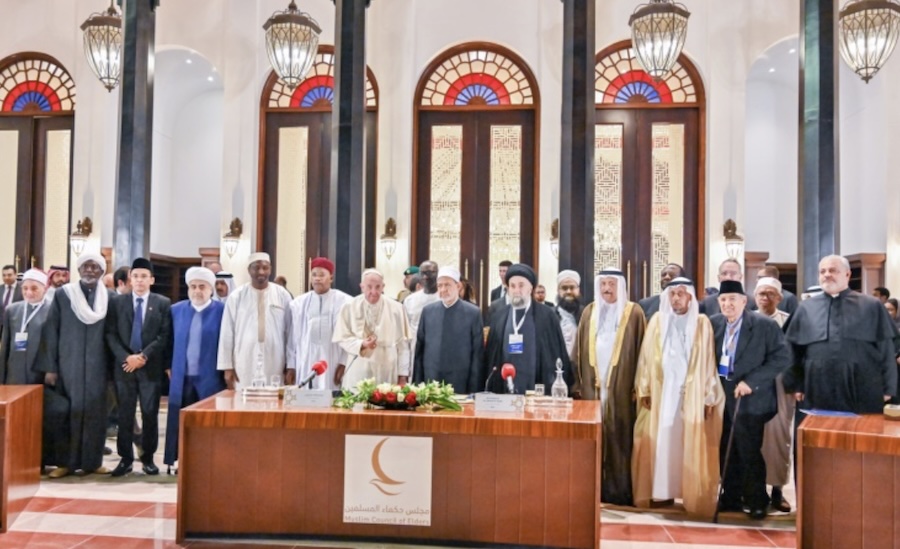
Urgent Call for Peace Launched by Indian and Pakistani Feminists

. . WOMEN’S EQUALITY . .

An article from Presse Gauche (translation by CPNN)

We, feminists of India and Pakistan, unequivocally welcome the ceasefire declared by our two nations today. The tension and escalation of the past two weeks remind us how fragile peace is. The ceasefire also vindicates the calls for de-escalation and peace made by thousands of ordinary people on both sides of the border. While we hope for an absolute cessation of hostilities, we are mindful of recent events.

From Between the lines and the words

The ceasefire is only the first step in the long march towards justice and peace.

We condemn the Pahalgam terrorist attack that killed 25 tourists from different parts of India and one from Nepal who came to visit Kashmir. A local person also lost their life in the Pahalgam attack. These targeted attacks have widened the communal divide between Muslims and Hindus in India and have been exploited to incite hatred, fear, and collective punishment.

In the aftermath of the Pahalgam attack, it is women—including mothers, daughters, sisters, and wives—who bear the unbearable burden of grief. Instead of respecting and sharing it, it has been weaponized and subjected to police surveillance—especially when people refuse to follow the script of hate.

Himanshi Narwal, the young widow of one of the slain victims, is among the survivors who, despite unimaginable pain, found the strength to call for peace. She asked people not to direct their rage at Kashmiris and Muslims who, like her, are trapped in a cycle of violence they did not create. For this simple act of humanity, she was trolled, vilified, and attacked by lurking nationalists more devoted to bloodlust than truth.

Linking the terrorist attack to Pakistan, India immediately suspended the Indus Waters Treaty and resumed hydroelectric projects and dam construction previously restricted by the treaty. Both sides canceled short-term visas for visitors. We witnessed heartbreaking scenes at the Attari-Wagah border, where Indian and Pakistani women with the “wrong” passports were forced to hand over their children to their husbands before crossing into “their countries,” causing unfathomable distress for the women themselves, their children, and their families. Fourteen days later, India carried out airstrikes and Pakistan retaliated, followed by drone strikes from both sides.

Disinformation campaigns on both sides made the truth difficult to ascertain. One thing is certain: the loss of life, widespread fear, and escalating violence add to the potential terror of the grave and irreversible consequences that tensions between the two nuclear powers could have for populations throughout South Asia.

As feminists, we are fundamentally against war and militarism. We denounce the war economy that thrives on violence and destruction, as well as the deeply patriarchal structures that fuel and sustain it. The fact that the Indian operation was dubbed Sindoor, a deeply patriarchal gesture, is a stark reminder of the misogynistic propaganda employed by both sides. Between loved ones, there are also many other private and specific symbols, of which Sindoor, for some women, could be one. But when Sindoor becomes a battle cry, it erases and weaponizes pain, and reduces women to bodies upon which masculinist nationalist fantasies of conquest, violence, and rape are constructed.

(Article continued in right column)

(Click here for the original article in French).

Questions related to this article:

Do women have a special role to play in the peace movement?

(Article continued from left column)

The past year has been marked by a surge in violence around the world, with devastating images from Gaza and other conflict zones becoming a daily occurrence, tragically desensitizing many to the true horrors of armed conflict. The Indian and Pakistani governments and opinion makers appear oblivious to the catastrophic consequences of war and the immense devastation it would cause. Only those who manufacture and sell weapons systems to our governments will profit from war. War reinforces, exacerbates, and perpetuates existing inequalities, disproportionately affecting women, sexual and religious minorities, and children. These hostilities distract from what people really need: education, health, employment, social protection, security, and well-being.

We, feminists from India and Pakistan, firmly believe that war is never a solution. We call for the dismantling of power structures that fuel violence. The logic of war—rooted in nationalism, toxic masculinity, and colonial-era borders—must be rejected. In both countries, women activists, journalists, and peacebuilders have long advocated for dialogue, de-escalation, and diplomacy. Yet our voices are consistently sidelined and overwhelmed by the inflammatory rhetoric and assertive militarism that dominate the public sphere.

We call on the governments of India and Pakistan to:

* Consolidate the May 10 ceasefire, renounce cross-border violations, and defuse rising tensions by keeping channels of communication open;

* Jointly launch an investigation, with international representatives, into the Pahalgam attack to bring the perpetrators to justice.

* Refrain from unilateral actions such as the termination of the Indus Waters Treaty;

* Prioritize and engage in dialogue and diplomacy to resolve differences;

* Work towards resolving the central political issue of Kashmir, which is at the heart of the conflict.

We urge feminists around the world to raise their voices in solidarity and join us in resisting war and building peace. There is no time or space for complacency.

Saheli Women’s Resource Centre, New Delhi, India; Women’s Action Forum (WAF), All Chapters, Pakistan; Aurat March, Lahore, Pakistan; All India Democratic Women’s Association, India.

Individual endorsements (in alphabetical order): Abha Bhaiyya, Aisha Gazdar, Amar Sindhu, Amrita Chhachi, Anita Pinjani, Anuradha Banerji, Arfana Mallah, Avantika Tewari, Ayesha Kidwai, Beena Sarwar, Chayanika Shah, Devangana Kalita, Elaine Alam, Farrah Taufiq, Farida Shaheed, Gulbadan Javed, Haseen Musarat, Huma Ahmed-Ghosh, Humaira Rahman, Iram Hashmi, Kalyani Menon Sen, Kavita Krishnan, Kausar Khan, Khawar Mumtaz, Lalita Ramdas, Madhu Bhushan, Maimoona Mollah, Malka Khan, Maria Rasheed, Mariam Dhawale, Meera Sanghamitra, Nageen Hyat, Naheed Aziz, Najam Panhwar, Natasha Narwal, Naseem Jalbani, Nasim Jalbani, Nasreen Azhar, Neelam Hussain, Nighat Said Khan, Nivedita Menon, Nuscie Jamil, Nuzhat Shirin, Pamela Philipose, Pratiksha Baxi, Raheema Panhwar, Rashida Dohad, Riffat Aziz, Rita Manchanda, Ritu Menon, Roshmi Goswami, Rozina Junejo, Rukhsana Rashid, Saba Gul Khattak, Safia Noor, Salima Hashmi, Samina Jabbar, Samina Omar Asghar Khan, Shabnam Hashmi, Shad Begum, Sheeba Chhachi, Shahnaz Rouse, Simi Kamal, Smita Gupta, Soonha Abro, Sumaira Ishfaq, Syeda Hamid, Tahira Abdullah, Tasneem Ahmar, Uma Chakravarti, Urvashi Butalia, Uzma Noorani, Vani Subramanian, Vanita Mukherjee.
– – – – – –

If you wish to make a comment on this article, you may write to coordinator@cpnn-world.org with the title “Comment on (name of article)” and we will put your comment on line. Because of the flood of spam, we have discontinued the direct application of comments.
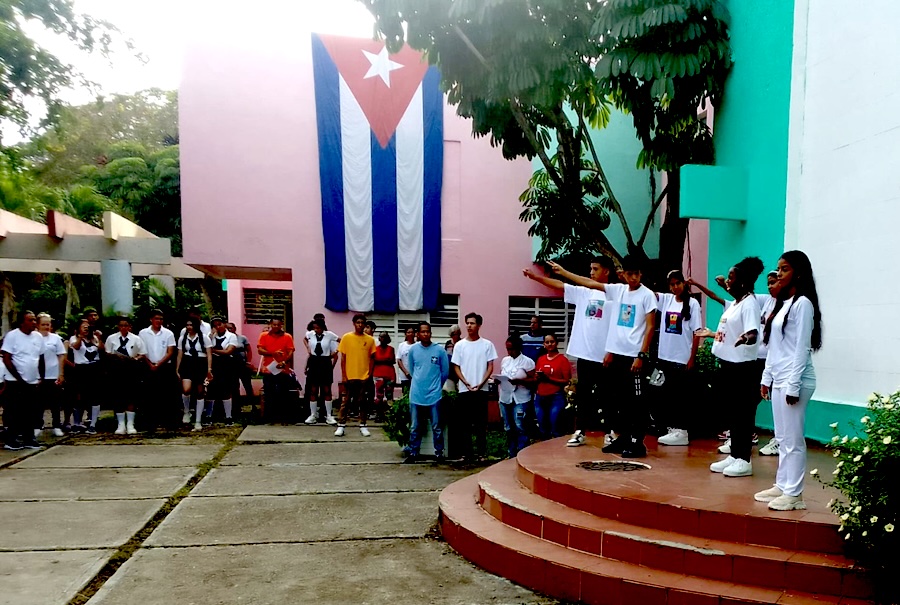
100,000 Documented Deserters from Ukraine and Russia — and the Invisible Army for Peace

. DISARMAMENT & SECURITY.

An article received at CPNN from Olga Karatch* published on the no-to-nato riseup list.

Dear friends,

Yesterday, an important update came from the European Bureau for Conscientious Objection. They shared a striking article from Belgian national radio RTBF:

Guerre en Ukraine: près de 50.000 personnes arrêtées pour avoir tenté de fuir le pays depuis 2022

This means that 50,000 Ukrainian men have been arrested for trying to flee the country — in other words, 50,000 Ukrainian deserters.

When we add the 49,000 documented deserters from the Russian army (as reported earlier), we arrive at a staggering total: 100,000 named and documented individuals who have refused to fight in this war from both sides (+including Belarusian men).


Frame from video of soldiers who refused to fight for Russia – See article from 2023 here.

As someone who has spent years building databases of victims of political repression, I can tell you: compiling verified lists of names is no easy task. The fact that 100,000 names are now on record means the real number is much higher — possibly five, eight, or even ten times more.

That would mean up to a million Belarusian, Russian, and Ukrainian men who are actively trying to avoid participating in war, who do not want to take up arms, who are looking for a different path. That is, quite literally, a massive army for peace — and yet, no one is paying attention.

(Continued in the right column)

Question related to this article:

“Put down the gun and take up the pen”, What are some other examples?

(Continued from the left column)

Worse: many of these men are being systematically criminalized. Across the region — including in EU countries like Lithuania — conscientious objectors and deserters are often labeled as “national security threats” and sent back to the countries they fled. Even men who have refused to commit war crimes and openly rejected violence are treated as criminals.

This is not just a tragedy. It is Orwellian. Everything is reversed.

Those who choose peace are punished — those who choose violence are armed.

We are talking about an enormous, invisible force of men across three countries who are resisting this war — not by force, but through refusal. And yet they are completely ignored.

There is hope in these numbers. But it will mean nothing unless we recognize, protect, and support this invisible army of conscience.
 
Our coalition and our work together — small but dedicated — is doing what we can. But we are few, compared to the scale of this humanitarian and moral crisis.

We need recognition. We need protection. And above all, we need to make these people visible again.

Warmly and with determination,

Olga
– – – – – –

* Olga Karatch is one of the most active Belarusian dissidents and is the founder and director of the civil rights movement “Nash Dom”, or “ Our House.

– – – – – –

If you wish to make a comment on this article, you may write to coordinator@cpnn-world.org with the title “Comment on (name of article)” and we will put your comment on line. Because of the flood of spam, we have discontinued the direct application of comments.
Turkey: Peace Mothers to mothers of soldiers and police officers: “Let there be no tears on either side”

. . WOMEN’S EQUALITY . .

An article from Bianet

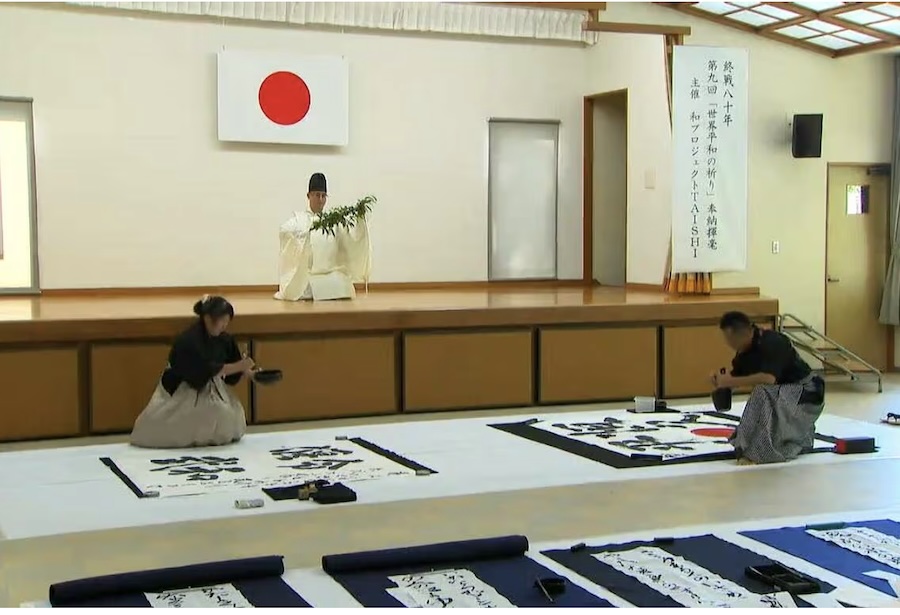
Following the PKK’s decision to disband and lay down arms, the Mothers for Peace Assembly issued a statement regarding the “Peace and Democratic Society Process.”

The announcement, made at the Diyarbakır branch of the Human Rights Association (İHD), was attended by numerous lawyers and human rights defenders alongside the Peace Mothers.


Photo: Diyarbakır İHD / X

Who are the Peace Mothers?

The Peace Mothers are a women’s civil rights group in Turkey, mainly Kurdish women, who advocate for peace between Turkey’s different ethnic groups, especially regarding the conflict between the Turkish state and the Kurdistan Workers’ Party (PKK). Many of these mothers have lost children or other relatives in the conflict, or have children in prison, and they use non-violent means like protests and vigils to call for an end to the fighting.

(Article continued in right column)

Questions related to this article:

Do women have a special role to play in the peace movement?

(Article continued from left column)

“No more dead bodies”

Havva Kıran, spokesperson for the Mothers for Peace Assembly, called for a bilateral ceasefire: “A ceasefire cannot be one-sided – it must involve both parties. As mothers, we appeal to the state, the president, and leaders – everyone must act. This process has given hope to both Kurds and Turks. Let their planes stop bombing Kurdish lands. No more dead bodies. Let the tears of Turkish and Kurdish mothers cease.”

“Let there be no tears on either side”

Kıran noted that “the state has yet to take a promising step” and addressed mothers of soldiers and police, urging them to join hands for peace:

“Only the Kurdish side has taken steps. They’ve laid down their arms, held their congresses. They’re ready for peace. As Peace Mothers, we call on the mothers of soldiers and police – hold hands with us. Let no more mothers’ hearts ache. Let us hold hands and bring peace.  Let there be no tears on either side. Let us bring peace to Turkey and live together. Let us strengthen those who are willing to shoulder the responsibility for peace.”

“You too must take a step”

“The end of war is now peace. War leads nowhere. There’s no alternative – peace must prevail. A grieving mother doesn’t say, ‘I’ve given one child, I’ll give another.’ Let us live freely and in peace in this country. Everyone has the right to live and speak their own language – but Kurds are denied this right. We opened the path for this process – now you must take a step. We want not war, but calm and peace.”

– – – – – –

If you wish to make a comment on this article, you may write to coordinator@cpnn-world.org with the title “Comment on (name of article)” and we will put your comment on line. Because of the flood of spam, we have discontinued the direct application of comments.
Uruguay: The 5th World Forum of Cities and Territories of Peace

. . DEMOCRATIC PARTICIPATION . .

An article from City of Montevideo (translated by CPNN)

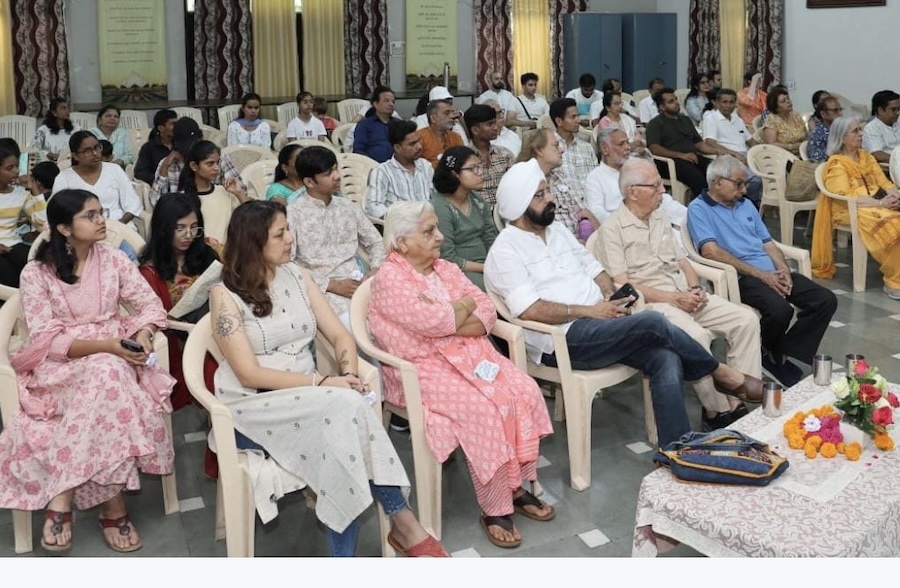
The 5th World Forum of Cities and Territories of Peace: the opening plenary session, which took place at 5:00 p.m. in the West Room of the Antel Arena, featured the participation of the Mayor of Montevideo, Mauricio Zunino, along with the Director of the International Relations Division, Fabiana Goyeneche; the President of UCLG and Mayor of The Hague, Jan Van Zanen; as well as the Undersecretary of the Ministry of Foreign Affairs, Valeria Csukasi; and the Vice President of the Republic, Carolina Cosse, as representatives of the national government. Zunino highlighted the importance of cities and their governance in helping to resolve different types of conflict and urban coexistence, and emphasized inequality as one of the most important factors that generate violence in the world.

The mayor of Montevideo emphasized that these types of broad-based participation events contribute to reflecting on how conflicts are resolved and “other types of violence such as xenophobia, discrimination, gender-based violence, and other ills that exist in cities.”

In the face of these types of situations, city governments can implement a set of actions that integrate processes of reflection, cooperation, and the exchange of good practices. The awarding of the Peace Prize to those cities that have worked and provide adequate solutions to these needs helps to encourage societal transformations.

(article continued in right column)

(Click here for the original Spanish version of this article.)

Question related to this article:
 
How can culture of peace be developed at the municipal level?

(article continued from left column)

Zunino also highlighted the participation of 180 foreign representatives from all continents, which provides an important framework due to the quality and experience of the presentations, in addition to the local contribution. She also highlighted the opportunity to interact with multilateral agencies that take advantage of the meeting to network and coordinate with governments, as well as with civil society organizations that are also participating in the event.

The opening session concluded with a speech by the Vice President of the Eastern Republic of Uruguay, who especially thanked those participating and highlighted the importance of the forum for Montevideo and the country.

In her address, Cosse referred to uncertainty as a fact of current reality but, based on her scientific training, reflected that in scientific work, “uncertainty is the cornerstone of the problem; it’s not a bad thing. You don’t know the solution and you don’t know what it’s about, so uncertainty is normal.” She recalled that uncertainty can “respond to an innovative surge, to an urgent need,” and becomes complex when it doesn’t respond to those needs. In this sense, Cosse asserted that in the face of uncertainty, there are also agreements, such as democracy, “that great social agreement” that provides a framework for resolving conflicts and is “one of the minimum certainties that human beings need.”

Cosse concluded by stating that, just as the truth lies locally, on street corners, in neighborhoods, “there too are the problems, but there too is hope, always, always, no matter how big the problem, if there is hope, it will emerge from there.” She expressed her pride in being part of a government that publicly recognizes the importance of multilateralism and the importance of cities.

The World Forum of Cities and Territories of Peace is one of the two activities taking place within the framework of Montevideo, Destination for Peace: an event that brings together training, exchange, and exhibition, cultural and entertainment opportunities.

Access the thematic axes and activities of the 5th World Forum of Cities and Territories of Peace.

– – – –

If you wish to make a comment on this article, you may write to coordinator@cpnn-world.org with the title “Comment on (name of article)” and we will put your comment on line. Because of the flood of spam, we have discontinued the direct application of comments.
Kurdish language at the forefront of Turkey’s peace process: Recognition demands intensify

… EDUCATION FOR PEACE …

An article from Medyanews

Kurdish Language Day, observed annually on 15 May, was commemorated throughout Turkey with an array of political, cultural and grassroots events calling for formal recognition of Kurdish in education and public life. The occasion mobilised political parties, human rights organisations and community groups across a wide range of cities, from metropolitan centres to Kurdish-majority regions.

The central message was clear: Kurdish must be granted official status and incorporated into Turkey’s education system and administrative institutions as part of the broader democratic transformation that is now under discussion  following the dissolution of the Kurdistan Workers’ Party (PKK).


Click here for video

Statements released by the Democratic Regions Party (DBP), the Peoples’ Equality and Democracy (DEM) Party, the Human Rights Association (İHD), and the Kurdistan National Congress (KNK) collectively framed the absence of Kurdish in public policy as a legacy of cultural repression. These groups underscored that constitutional reforms should guarantee linguistic rights and reflect the multicultural reality of Turkey.

The DBP characterised state policy as institutionally exclusionary:

“The refusal of education in the mother tongue is the clearest manifestation of this century-long hostility,” the party stated, asserting that linguistic justice is fundamental to democratic life.

Similarly, the DEM Party’s Commission on Language, Culture and Arts cited the imprisoned Kurdish leader Abdullah Öcalan’s writings, which conceptualise language as central to both personal and collective identity.

“Language is not merely a vehicle for expression—it is foundational to the continuity and evolution of a people’s political and cultural existence,” the Commission declared.

From the parliamentary floor, DEM Party Group Deputy Chair Gülistan Kılıç Koçyiğit reinforced this position, pointing to past and present restrictions on the public use of Kurdish. She remarked: “A people’s language is the embodiment of their dignity. Repression of linguistic diversity obstructs democratic development and perpetuates inequality.”

Public commemorations were held in cities including Adana, Diyarbakır (Amed), Iğdır (Idîr), Urfa (Riha), Mersin, Ankara and Istanbul. These events featured speeches, music, community statements and visual displays, with participants carrying banners that read “No life without language” and “Our language is our identity”.

In Diyarbakır (Amed), a notable cultural initiative was unveiled: classical Kurdish poetry by figures such as Melayê Cizîrî and Feqiyê Teyran was inscribed on paving stones along a major thoroughfare. The project, coordinated by the municipality’s Department for Language Protection, was intended to bring Kurdish literature into public view and assert its place in the collective urban landscape.

(Continued in right column)

Question for this article:

What is the relation between peace and education?

(Continued from left column)

The Human Rights Association (İHD) marked the day by referencing international human rights standards, asserting that linguistic repression constitutes a violation of cultural rights. In their statement, they recalled the case of Vedat Aydın, a leading Kurdish politician who was assassinated after publicly using his native language, highlighting the risks historically faced by defenders of linguistic freedom.

Kurdish Language Day commemorates the publication of Hawar magazine on 15 May 1932, edited by the Kurdish intellectual Celadet Alî Bedirxan. The magazine marked a pivotal moment in the codification and standardisation of the Kurdish language and helped promote Kurdish as a literary and educational medium.

Hawar was the first publication to use a Latin-based alphabet for Kurdish, a decision that played a key role in modernising the language and expanding its use in both cultural and political spheres. The date has since become a symbolic occasion for asserting the linguistic and cultural rights of the Kurdish people. The magazine played a formative role in the standardisation of the Kurdish language, building upon earlier efforts such as the 1898 newspaper Kurdistan. These publications laid the groundwork for a modern Kurdish literary and political consciousness.

The 2025 observances took place within a newly developing political context. The PKK declared on 12 May that it would dissolve its armed structures and transition towards non-violent democratic engagement. This historic decision has effectively dismantled one of the Turkish state’s main justifications for restricting Kurdish cultural rights—namely, the association between Kurdish identity and insurgency.

With this pretext removed, Kurdish political actors argue that the continued ban on Kurdish in public education and administration is no longer tenable and must now be seen for what it is: a form of cultural exclusion. Legal recognition of the Kurdish language has since emerged as a central demand within the redefined peace framework, alongside broader calls for structural reform.

Following the PKK’s declaration that it would dissolve its armed structures and seek a democratic resolution, the peace process has become a renewed focus for Kurdish political and civic initiatives. Legal recognition of the Kurdish language has since emerged as one of the central demands accompanying calls for structural reform.

Cities in Turkey’s Kurdish-majority southeast—commonly referred to by Kurds as North Kurdistan (Bakur)—continue to be hubs of cultural production and mobilisation. Local institutions and activists have played a pivotal role in preserving Kurdish heritage and resisting assimilationist policies.

Despite these efforts, Kurdish remains effectively excluded from the formal education system and is not employed in state institutions. While limited elective courses and symbolic acknowledgements exist, the absence of structural guarantees has sustained what many describe as a regime of cultural erasure.

Linguists, educators, and community leaders have argued that this undermines linguistic vitality, intergenerational transmission, and collective memory.

Kurdish political actors and civil society organisations are now placing increased pressure on the Turkish government to abandon restrictive policies and embrace a model of inclusive governance.

Within the scope of the peace process launched in October 2024, they assert that cultural recognition must be prioritised. For them, recognising Kurdish as a constituent part of the country’s national identity is not only a question of justice but a prerequisite for sustainable peace and coexistence.

– – – – – –

If you wish to make a comment on this article, you may write to coordinator@cpnn-world.org with the title “Comment on (name of article)” and we will put your comment on line. Because of the flood of spam, we have discontinued the direct application of comments.