World Bank Group Announcement at One Planet Summit

. . SUSTAINABLE DEVELOPMENT . .

A press release from The World Bank (bold face added by CPNN)

At the One Planet Summit [Paris, 12 December, 2017] convened by President Emmanuel Macron of France, United Nations Secretary General Antonio Guterres, and World Bank Group President Jim Yong Kim, the World Bank Group made a number of new announcements in line with its ongoing support to developing countries for the effective implementation of the Paris Agreement’s goals.

1. WBG and upstream oil and gas

As a global multilateral development institution, the World Bank Group is continuing to transform its own operations in recognition of a rapidly changing world.  To align its support to countries to meet their Paris goals:

The World Bank Group will no longer finance upstream oil and gas, after 2019. 
(In exceptional circumstances, consideration will be given to financing upstream gas in the poorest countries where there is a clear benefit in terms of energy access for the poor and the project fits within the countries’ Paris Agreement commitments.)

2. Ramping up WBG climate ambition through its Climate Change Action Plan

The WBG is on track to meet its target of 28% of its lending going to climate action by 2020 and to meeting the goals of its Climate Change Action Plan – developed following the Paris Agreement. 

In line with countries submitting updated and potentially more ambitious Nationally Determined Contributions (NDCs), the World Bank Group will present a stock-take of its Climate Change Action Plan and announce new commitments and targets beyond 2020 at COP24 in Poland in 2018.

3. Transparency and disclosure to drive our own decarbonization

The World Bank Group is working hard to ensure that climate accountability is mainstreamed throughout its operations. In addition to measures already in place:

I) Starting next year, the World Bank Group will report greenhouse gas emissions from the investment projects it finances in key emissions-producing sectors, such as energy. The results will be published in late 2018, and annually thereafter.

II) The World Bank will be applying a shadow price on carbon in the economic analysis of all IBRD/IDA projects in key high-emitting sectors where design has begun since July 2017.  IFC started using carbon pricing in key sectors in January 2017 and will mainstream the same starting January 2018″

4. Mobilizing Finance for transformation in mitigation and climate resilience

To accelerate the mobilization of finance:

I) IFC will invest up to $325 million in the Green Cornerstone Bond Fund, a partnership with Amundi, to create the largest ever green-bond fund dedicated to emerging markets. This is a $2 billion initiative aiming to deepen local capital markets, and expand and unlock private funding for climate-related projects.  The fund is already subscribed at over $1 billion.

II) Last week, the World Bank and the Government of Egypt signed a $1.15 billion development policy loan aimed at reducing fossil fuel subsidies and creating the environment for low-carbon energy development.

(continued in right column)

Question for this article:

Divestment: is it an effective tool to promote sustainable development?

(continued from left column)

III) The World Bank Group will continue to support investments highlighted at the One Planet Summit which demonstrate opportunities to crowd in different kinds of finance in transformational areas. This includes accelerating energy efficiency in India; scaling up solar energy in Ethiopia, Pakistan and Senegal among other countries; establishing a West Africa Coastal Areas investment platform to build resilience for coastlines of West African countries (partnering with WAEMU, NDF, GEF, GFDRR, AFD, AfDB); and introducing the City Resilience Platform (partnering with the Global Covenant of Mayors) so that up to 500 cities will have access to finance for resilience to climate change.

IV) The World Bank Group will continue to work with the United Nations and other partners on the implementation of the Invest4Climate platform, which will systematically crowd in multiple sources of finance, with a major event showcasing investment opportunities planned for May 2018 at the Innovate4Climate conference in Frankfurt.

V) IFC will work to set a single unifying global standard on green bonds, similar to the Equator Principles, as a means to facilitate the development of the green bond market to crowd in private finance into climate business. And to stimulate the greening of the financial sector, the World Bank Group will partner with the Sustainable Banking Network (SBN) to provide technical support to develop and implement national Roadmaps for Sustainable Finance in six countries. These roadmaps are based on a framework developed jointly with UN Environment.

VI)   AXA Managed Co-Lending Portfolio Program (MCPP) will allocate a substantial portion of projects to climate-smart infrastructure investments.  IFC and Finland launched the Finland-IFC Climate Change Program, a €114 million returnable capital contribution to spur private sector financing for climate-change solutions,targeting low-income countries focused on investments in renewable energy, energy efficiency, green buildings, climate-smart agriculture, and forestry.

5. Working in partnership

To further accelerate climate action, the World Bank Group will be working with various partners to deepen climate action:

I) For the first time, all the Multilateral Development Banks and all International Development Finance Club Members issued a joint statement aligning their finance with the Paris Agreement and identifying areas where they will work together to advance climate-smart development.

II) Canada and the World Bank will work together to accelerate the energy transition in developing countries and, together with the International Trade Union Confederation, will provide analysis to support efforts towards a just transition away from coal.

III) Working with France’s AFD and the Kingdom of Morocco, the World Bank will work to accelerate adaptation in agriculture for Africa.

IV) The World Bank will support a unique partnership between Caribbean leaders and people, multilateral organizations, and local and international private sector to define a vision for the world’s first climate-smart zone. The key priority areas for action include renewable energy, resilient infrastructure, innovative financing, and capacity building.

V) The World Bank Group will support, through the Carbon Pricing Leadership Coalition, the proposed Carbon Markets of the Americas initiative.

VI) Together with Ethiopia, Fiji, Germany, the United Kingdom and other government, NGO and private sector partners so far, the World Bank will support the new InsuResilience Global Partnership with the goal  of significantly scaling up climate risk finance and insurance solutions in developing countries, with a focus on poor and vulnerable people. It will stimulate the creation of effective climate risk insurance markets and the smart use of insurance-related schemes to protect lives and livelihoods from the impacts of disasters. More than $125million has been committed to the initiative so far. It is built on strong G20 and V20 support and has 40 members so far.

VII) The Principles on Blended Concessional Finance, first published in 2013, have been recently enhanced with more detailed guidelines developed by a working group (chaired by IFC) representing Development Finance Initiatives (DFIs) that annually invest more than $35 billion a year in private sector solutions. These principles include promoting commercially sustainable solutions so that the use of scarce public concessional finance is minimized; and state the need for high social, environmental, and governance standards.

Canadian Jewish Group Organizes Hanukkah Event to Raise Money for Solar Panels for Palestinians in Gaza

TOLERANCE AND SOLIDARITY .

An article from Canada Talks Israel Palestine

A Jewish group in Vancouver is fundraising Saturday night to provide small, practical, hand-held solar lamps to families trapped in the dark in Gaza. Read more….Roughly 2 million people in Gaza have electricity on average only 3~4 hours per day. Independent Jewish Voices Vancouver is partnering with Rebuilding Alliance, a California-based NGO with 15 years experience on the ground in Gaza to help the people of Gaza face their Israeli induced and PA assisted power shortage.  So far, they’ve shipped 27,000 solar lamps and need funds for more.

On Saturday, December 16th, they are using the Jewish celebration of Hanukkah to raise money for this humanitarian cause.

Event details.

See a video.        

About the lights.

At the event, five candles will be lit and dedicated by five different people engaged in five different ways of bringing light into this world.  It is the fifth night of the eight-night Hanukkah holiday celebrated for more than 2,000 years by Jews around the world.  Candles will be lit beginning 7:30 pm by:

▪  Omar Mansour, a young man from Gaza living in Vancouver who has worked with a number of NGOs in Gaza and whose own family is in the dark every night. 

(Article continued in right column)

Question for this article

Presenting the Palestinian side of the Middle East; Is it important for a culture of peace?

(Article continued from left column)

▪  Hereditary Chief Phil Lane Jr. of the Ihanktowan Sioux and Chickasaw Nations, who will give the territorial acknowledgement on behalf of the Coastal Salish people.  He will dedicate his candle to indigenous people everywhere who are struggling against foreign domination.

▪  Hilla Kerner of Vancouver Rape Relief and former executive director of the Association of Rape Crisis Centers in Israel.  She will dedicate her candle to the struggle to end sexual violence against women.

▪  Jack Gates, a tenant organizer in the Regent Hotel in Vancouver’s Downtown Eastside supporting struggles to end homelessness and addiction.

▪ Valery and Yvon Raoul, long-time Vancouver activists in the struggle for
environmental and social justice.

“We welcome reporters and camera crews to our fundraising party, December 16, at the Peretz Centre, 6184 Ash Street, in Vancouver,” said organizer Rabbi David Mivisair. 

The visually and aurally rich candle-lighting ceremony will be 7:30 – 8 pm. “After the candle-lighting, at about 8 pm, we’ll sing traditional songs and enjoy traditional Hanukkah foods.  The event is open to everyone,” he said.

More info.

A video of the lights in Gaza.

Donations online

Independent Jewish Voices Vancouver is a chapter of a national human rights organization whose mandate is to promote a just resolution to the conflict in Israel and Palestine through the application of international law and respect for human rights.  More info.

For more information or interview, call Rabbi David Mivasair, at (604) 781-7839.

(Thank you to Janet Hudgins, the CPNN reporter for this article.)

Where in the world can we find good leadership today?

As we look back over the past few years of CPNN articles, we find many good leaders in the world today. The photo above comes from The Elders, the group of leaders organized under the sponsorship of Nelson Mandela before his death. Below we find articles from the Group of 77 Non-aligned Nations and UNASUR, as well as many leading individuals, some of which we only come to recognize when they have died, such as Father Berrigan, Julian Bond, not to mention Nelson Mandela. Others are still alive and we need to learn from their wisdom, such as Federico Mayor and the Nobel Women.

See also the discussion How can we carry forward the work of the great peace and justice activists who went before us?

Here are the CPNN articles on this subject:

IPU Statement on the International Day of Peaceful Coexistence

Appeal by Nobel Peace Prize winner Adolfo Pérez Esquivel. For Peace and Unity. “Listen to the Voice of the People”

The World Intellectual Wisdom Forum Meeting on 30 August

Lula opens BRICS Summit with call for investment in peace and security

‘This Is Not Trump’s Country’: 255,000 Have Rallied With Sanders and AOC on Nationwide Tour

For Nobel Peace Prize: Professor Mazin Qumsiyeh, Bethlehem, Palestine

Speech of Gustavo Petro, President of Colombia, to the G20 Summit

Brazil: President Lula’s Speech At The Closing Session Of The G20 Summit And Handover Of The Presidency To South Africa

World Future Policy Award 2024: Peace & Future Generations

President Claudia Sheinbaum at the G20: Mexico’s Role on the Global Stage

The Elders: World leaders must reject the path of chaos

‘Keep Your Eye On Calendar, Palestine Will Be Free’: Arundhati Roy’s PEN Pinter Prize Speech

Restore the Olympic peace: Over 50 Nobel laureates have written an open letter calling for a global ceasefire for the duration of the Paris Olympics

USA: Libertarians nominate anti-war candidate for Presidential ballot

First message to the nation from President Bassirou Diomaye Faye – on the eve of Senegal’s independence day

France: Speech by Jean-Luc Melanchon on the force of action for peace

Dialogue Remains Best Key To End Conflicts In Africa – Obasanjo, Ex-President of Nigeria

In memoriam: Betty Reardon (1929-2023)

Daniel Ellsberg Has Passed Away. He Left Us a Message.

In memoriam: Walid Slaïby, co-founder Academic University College for Non-Violence & Human Rights (Lebanon)

Brazil President Lula’s speech to the G7

Cuba urges to make culture a Development Goal

Nobel Peace Prize 2023: PRIO Director’s Shortlist Announced

Interview with Helen Caldicott: “We’ve never been closer to nuclear catastrophe”

Let’s “work together for peace”, Nuns, Clergy Appeal after South Sudan Peace Pilgrimage

UK National Demonstration: Peace Talks Now – Stop the War in Ukraine

Letter To President Biden: Sign The Nuclear Ban Treaty!

Pope Francis: “Hands off the Democratic Republic of the Congo, hands off Africa”

Lula’s address to CELAC “Nothing should separate us, since everything brings us together”

Havana Declaration Outlines Vision for Building Just World Economy

What Steps Can the US Take to Foster Peace Talks in Ukraine?

The Elders warn urgent action on climate, pandemics, nuclear weapons needed to turn back hands of the Doomsday Clock

Rachna Sharma: thought leader for world peace

Martha Ines Romero appointed new Secretary General of Pax Christi

International Peace Bureau: 2022 MacBride Peace Prize recipients

Mikhail Gorbachev: The Last Statesman

Mikhail S. Gorbachev (1931 – 2022) / Imaginative and Unexpected Proposals

War Abolisher Awards 2022

United States: Statement by the National Council Of Elders

The Expert Dialogue on NATO-Russia Risk Reduction: Seven recommendations

The Elders mourn the loss of Archbishop Desmond Tutu

World Peace Congress concludes in Barcelona with successful participation

President of Cuba’s National Assembly rejects efforts to restore unipolar world order

India: Nagaland’s Rebecca Changkija Sema conferred with ‘Mahatma Gandhi National Award’

USA: Democratic Rep. Alexandria Ocasio-Cortez’s remarks to the 2020 Democratic National Convention

US: Remembering Congressman John Lewis with gratitude

“Listening as governance”, by Amartya Sen

2020 Peace Prize of German Book Trade to Amaryta Sen

Transatlantic Dialogue wins Luxembourg Peace Prize

Trailblazing Nobel Peace Laureate Betty Williams Dies in Belfast

The Peace Brigades International, Guernica Peace Prize

Javier Pérez de Cuéllar praised as ‘accomplished statesman’ who had ‘profound impact’ on the world

Uruguay: Pépé Mujica, the ex-President of the Republic voluntarily the poorest in the world.

Lebanon: Interview with Ogarit Younan (prize for conflict prevention and peace)

USA: Sanders and Khanna Introduce New Bill to ‘Stop Donald Trump From Illegally Taking Us to War Against Iran’

The Nobel Lecture Given by the 2019 Nobel Peace Prize Laureate Abiy Ahmed Ali

USA: We Are Each a Precious Entity: The Activist Life of Caroline Bridgman-Rees

2019 Tomorrow’s Peacebuilders Award winners announced

Honouring the Me Too Movement with the 2019 Sydney Peace Prize

Nipun Mehta and ServiceSpace to Receive the 2019 Goi Peace Award

Desmond Tutu Announces the Winners of the International Children’s Peace Prize 2019

Seán MacBride Peace Prize Ceremony for Bruce Kent

Ajamu Baraka Awarded 2019 US Peace Prize

Ashland, Oregon: Peace conference attracts UN ambassador

Colombia: Rigoberta Menchú asks the Government to strengthen the peace agreement

SADC and United Nations honor Nelson Mandela

Richard Falk: On Taking Controversial Public Positions: A Reflection

The Elders welcome Ethiopia’s commitment to primary health care and digital innovation

21 Nobel Peace Laureates Have Confirmed Attendance at the 17th World Summit of Nobel Peace Laureates Titled: “Leave Your Mark for Peace”

Abiy Ahmed Ali, Prime Minister of the Federal Democratic Republic of Ethiopia laureate of the 2019 edition of the Félix Houphouët-Boigny – UNESCO Peace Prize

Michael True – Peacemaker

Nobel Peace Laureate Maguire Requests UK Home Office for Permission to Visit Her Friend Nobel Peace Nominee Julian Assange ln Prison in London

The resurrection of Dr. King

CJP co-founder and first director John Paul Lederach awarded Niwano Foundation Peace Prize

Mohamed Sahnoun, 1931-2018: Advisor for Culture of Peace

UNESCO Awards Jose Marti Prize to Roberto Fernandez Retamar

Dublin: Global Campaign Against US/NATO Military Bases

Rigoberta Menchú speaks at the UN about obstacles to the culture of peace

David Swanson Awarded 2018 Peace Prize of the US Peace Memorial Foundation

Uri Avnery, leader of the Israeli peace movement Gush Shalom, 1923-2018

As UN Secretary-General, Kofi Annan Stressed Need For Culture Of Peace

The Elders mourn the loss of Kofi Annan

INTERVIEW: ‘Defend the people, not the States’, says outgoing UN human rights chief

South Africa: Sisulu – UN Security Council Tenure Will Be Dedicated to Mandela’s Legacy

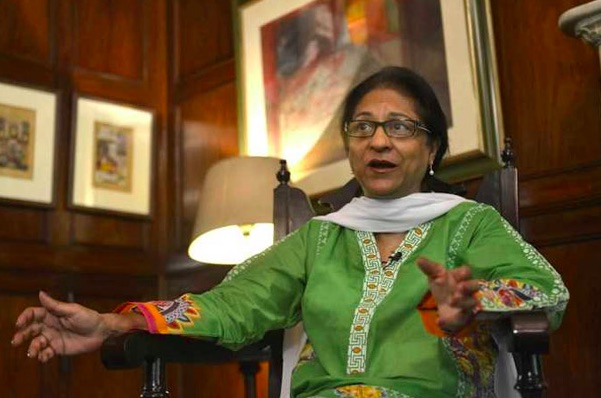
Pakistan: Asma Jahangir, Champion Of Human Rights, Critic Of Pak Army, Dies At 66

Ecuador calls upon the G77 to address the problems of the planet

Pope Francis meets ‘The Elders’ to discuss global concerns

The Spiritual Sources of Legal Creativity: The Legacy of Father Miguel d’Escoto

Gandhi Peace Award to Omar Barghouti and Ralph Nader

16th World Summit of Nobel Peace Laureates

XVI Cumbre Mundial de Premios Nobel de la Paz

Developing Nations Seek Tax Body to Curb Illicit Financial Flows

Annual Report of The Elders

USA: Father Daniel Berrigan, z’l dead at 94

Landmark Vatican conference rejects just war theory, asks for encyclical on nonviolence

Africa’s Contribution to the Global Movement for a Culture of Peace

Africa: How to Achieve the Freedom Promised

Healing Memories: An Exchange With Peacemaker Mohamed Sahnoun

USA: Julian Bond (1940-2015): Remembering Civil Rights Freedom Fighter Who Chaired NAACP, Co-founded SNCC

– – – – Links for the following articles published prior to 2015 do not work because they were made by a version of PERL programming that is no longer supported. With three easy steps, you can find the article by its number. First, click on it before returning to this page. Your browser will say that the article is not available but in the address listed you can see that it was located at ViewArticle=xxxx where xxxx is the number of the article. Returning to this page, then click here for the listing of all years. Then click on the year that contains the number for the article you seek. It will send you to the page where you can easily search for the article by its title. – – – –

Support Richard Branson’s Ukraine dialogue initiative

Federico Mayor once again at UNESCO

Y Federico Mayor volvió a la UNESCO

Search for Common Ground announces leadership transition

“Human Rights and 23rd Century Movement” Interview with Marta Benavides

Mandela is the new Africa

Nobel Women’s inspirational women activists from around the globe

Minister Nkoana-Mashabane pays tribute to former President Nelson Mandela (South Africa)

16 Days of Activism: Meet Marjorie Lafontant, Haiti

16 Days of Activism: Julienne Lusenge, Democratic Republic of Congo

16 Days of Activism: Meet Visaka Dharmadasa, Sri Lanka

16 Days of Activism: Meet Hania Moheeb, Egypt

The Elders debate ethical leadership (South Africa)

Dominican friar Frei Betto to receive 2013 UNESCO/José Martí Prize

El dominico brasileño Frei Betto gana el premio UNESCO/José Martí 2013

Le frère dominicain « Frei Betto » lauréat du Prix UNESCO/José Martí 2013

Journée Internationale Nelson Mandela pour la liberté, la justice et la démocratie

Nelson Mandela Día Internacional por la paz, la democracia y la libertad

On International Day, UN honours Nelson Mandela’s work for peace, justice, equality

President Morales Stresses Historic Nature of Unasur

Latin Leaders Plan for Union Based on Culture of Peace

What do we tell our children about war?

The Nobel Peace Prize to Mohamed Yunus and the people of Bangladesh

Peace Walkers – Peaceful Voices of Dissent

Summit Conferences in Havana and New York

President of Senegal Recognized as a Leader in Human Rights

Ecuador calls upon the G77 to address the problems of the planet

FREE FLOW OF INFORMATION

An article from Hispan TV (translated by CPNN)

Ecuador, in its capacity as president of the Group of 77 developing countries and China (G77 + China), opened on Monday [11 December] in Quito, the Ecuadorian capital, a High Level meeting with eminent personalities of the South, with the objective to reflect on the main problems of the planet.


María Fernanda Espinosa, in video of the conference

(Click on photo to see video)

“We will reflect on geopolitical conflicts and the importance of dialogue to promote a culture of peace,” said Ecuadorian Foreign Minister María Fernanda Espinosa at the opening of the event, adding that we must address the impacts of climate change, fiscal justice and human mobility, which “are central and necessary axes to advance in a global order”.

(Article continued in the column on the right)

(Click here for the original Spanish version of the article)

Questions related to this article:

Where in the world can we find good leadership today?

(Article continued from the column on the left)

The Foreign Minister emphasized that these problems must be analyzed “from a southern perspective”, because “they are key for the countries that make up our group, the largest and most important within the United Nations, which this year we have the privilege of preside.”

The meeting was also attended by the Deputy Secretary General of the United Nations, Amina Mohammed, and the High Commissioner for Operations of the United Nations High Commissioner for Refugees (UNHCR), George Okoth-Obbo.

The head of Ecuadorian diplomacy also called on the countries of the South to “strengthen our ties based on the values ​​of equality, brotherhood and social justice”, just when the planet is confronted with situations of extreme complexity, such as change climate and enormous inequality.”

For the Ecuadorian official, this meeting aims to send a message about the need to strengthen multilateralism and global integration.

“Continuous economic growth should promote social inclusion, but we can not do it alone, it requires the integration of the global south, where speeches and actions in favor of a multipolar world are increasing,” added the Ecuadorian minister.

Education unions join in the global call to end school-related gender-based violence

. . WOMEN’S EQUALITY . .

An article from Education International

On the occasion of the 16 Days of Activism to End Violence 2017, the Global Working Group to End School-Related Gender-Based Violence, which Education International is part of, called to action for development actors, donors and governments, outlining necessary key steps towards ending this scourge.


Teachers are central to any effective response to school-related gender-based violence

The call to action is available here. Excerpts follow.

School-Related Gender-Based Violence (SRGBV) is a phenomenon that affects millions of children, teachers and education personnel, as well as their families and communities. It occurs in all countries of the world. Young people have different experiences of SRGBV depending on their sex, their gender identity, their country and context. SRGBV occurs as a result of gender norms and stereotypes, and is enforced by unequal power dynamics. Inequitable gendered practices are “performed” in schools through policies, pedagogies and curriculum, and through everyday relationships between and among students and teachers that establish a ‘gender regime’.

Schools are places of learning and growth, but can also often become unsafe spaces, where students, both girls and boys, can be victims and perpetrators of violence. Too often, teachers are viewed as part of the problem with regard to violence be it for administering corporal punishment or demanding sex in exchange for grades, for example. At the same time, schools are also places of work in which teachers and education support personnel can be both victims and perpetrators of violence.

Several studies have found that teacher training establishments do not necessarily equip teachers to challenge abusive behaviour and attitudes about violence against women and children. While there is limited data on the impact of SRGBV on teachers and education personnel, anecdotal evidence indicates that female teachers are particularly vulnerable to GBV, experiencing harassment and abuse at the hands of students, fellow teachers, school management, in teacher training institutions and systems of administration.

(article continued in right column)

Click here for the version in Spanish of this article, or click here for the version in French)

Question related to this article:

Protecting women and girls against violence, Is progress being made?

What is the contribution of trade unions to the culture of peace?

(article continued from left column)

Educators also witness discrimination, violence and abuse, which reinforces their vulnerability at school and at home. This poses a challenge, because violence is never excusable and teachers must uphold the highest standards of ethics and care. However, knowing that teachers too may be victims and understanding how this manifests can enable educational systems to provide informed support to teachers, so that they in turn can provide the best possible support and help for students and act as agents for positive change.

Globally, teachers must be valued as the most important education resource globally, who have a crucial role to play in ending SRGBV. Initiatives addressing SRGBV necessarily must involve teachers – not only in terms of enabling them to perform their duties of providing quality education to their students and promoting values of gender equality, non- violence, child rights and equity, but also by creating safe spaces for them to work in. It is imperative, therefore, to take a broader perspective on the role of teachers – as change agents and as professionals within the education system. Skills and capacity development must be combined with efforts to create an enabling environment where teachers can fulfill their duties and exercise their rights.

In recognition of the critical role teachers play in ending School-Related Gender-Based Violence, the Global Working group to end SRGBV calls on DEVELOPMENT ACTORS, EDUCATION UNIONS, DONORS and GOVERNMENTS to:

Recognise teachers as key influencer’s in the lives of children and in preventing school-related gender-based violence.

. . . . . . .

Adopt a systems wide approach in addressing SRGBVacross the education sector, so that teachers have a supportive enabling environment.

. . . . . . .

Work with education unions and Ministries of Education to shape policies and plans to address SRGBV.

. . . . . . .

Strengthen professionalism and accountability for SRGBV in the teaching profession.

. . . . . . .

Provide teachers with the skills and tools to address SRGBV.

. . . . . . .

(Thank you to Janet Hudgins, the CPNN reporter for this article)

Indigenous peoples, Are they the true guardians of nature?

Here are the CPNN articles on this subject:

Ecuador: culture of peace and democracy through the strengthening of Indigenous Justice

Indigenous trade unionists from around the world call for more inclusion and solidarity: “We are not just there to sing the songs and do the opening prayer”

Lula demarcates six indigenous territories in Brazil, the first in five years

Greenpeace on COP15: A bandage for biodiversity protection

United States: Flathead Indian Reservation Expanded to Include National Bison Range

Brazil’s indigenous tribes protest Bolsonaro assimilation plan

Meet the Trailblazing Maasai Women Protecting Amboseli’s Wildlife

Canadian police block journalists from covering indigenous pipeline protest

First Indigenous woman is elected Federal Deputy in Brazil

Indigenous Peoples Link Their Development to Clean Energies

16 Days of Activism: Meet Bertha Zúñiga Cáceres, Honduras

16 Days of Activism: Meet Anne Marie Sam, Canada

Colombia: When indigenous knowledge heals and prevents the wounds of war

USA: Update from Standing Rock

IUCN Congress boosts support for Indigenous peoples’ rights

El Congreso de la UICN refuerza el apoyo a los derechos de los pueblos indígenas

Le Congrès de l’UICN stimule les droits des peuples autochtones

USA: Standoff at Standing Rock: Even Attack Dogs Can’t Stop the Native American Resistance

On remote Philippine island, female forest rangers are a force to be reckoned with

15 Indigenous Rights Victories That You Didn’t Hear About in 2015

Indigenous Elders Send Stern Message to UN Paris Delegates: Preventing 2°C Is Not Nearly Enough

Terrace Farming – an Ancient Indigenous Model for Food Security

Mayan People’s Movement Defeats Monsanto Law in Guatemala

– – – – Links for the following articles do not work because they were made by a version of PERL programming that is no longer supported. With three easy steps, you can find the article by its number. First, click on it before returning to this page. Your browser will say that the article is not available but in the address listed you can see that it was located at ViewArticle=xxxx where xxxx is the number of the article. Returning to this page, then click here for the listing of all years. Then click on the year that contains the number for the article you seek. It will send you to the page where you can easily search for the article by its title. – – – –

Mining interests in Guatemala challenged by indigenous direct democracy

Brazilian Indians secure nationwide land victory

Los indígenas de Brasil consiguen una victoria territorial a escala nacional

Canada: Kinder Morgan leaves Burnaby Mountain in win for pipeline protesters

People’s Summit in Peru: “The Earth is burning, let´s change the system!”

Confederación Campesina del Perú presente en marcha de Cumbre de Pueblos

United, We Will Never Be Defeated: Guatemala’s Victory Over Monsanto

Unidos, Jamas Seremos Vencidos: La Victoria de de Guatemala En Contra de Monsanto

Colombia: The Indigenous of Cauca: “We are a people with a culture of peace”

Indígenas del Cauca: “Somos pueblos de cultura de paz”

Nobel Peace Prize Lecture – 2017 – Setsuko Thurlow

DISARMAMENT & SECURITY .

From the website of the Nobel Prize (reprinted by permission)

Your Majesties, Distinguished members of the Norwegian Nobel Committee, My fellow campaigners, here and throughout the world, Ladies and gentlemen,

It is a great privilege to accept this award, together with Beatrice, on behalf of all the remarkable human beings who form the ICAN movement. You each give me such tremendous hope that we can – and will – bring the era of nuclear weapons to an end.


Frame from video of Nobel Peace Prize lecture

(Click on image to enlarge)

I speak as a member of the family of hibakusha – those of us who, by some miraculous chance, survived the atomic bombings of Hiroshima and Nagasaki.

For more than seven decades, we have worked for the total abolition of nuclear weapons.

We have stood in solidarity with those harmed by the production and testing of these horrific weapons around the world. People from places with long-forgotten names, like Moruroa, Ekker, Semipalatinsk, Maralinga, Bikini. People whose lands and seas were irradiated, whose bodies were experimented upon, whose cultures were forever disrupted.

We were not content to be victims. We refused to wait for an immediate fiery end or the slow poisoning of our world. We refused to sit idly in terror as the so-called great powers took us past nuclear dusk and brought us recklessly close to nuclear midnight. We rose up. We shared our stories of survival. We said: humanity and nuclear weapons cannot coexist.

Today, I want you to feel in this hall the presence of all those who perished in Hiroshima and Nagasaki. I want you to feel, above and around us, a great cloud of a quarter million souls. Each person had a name. Each person was loved by someone. Let us ensure that their deaths were not in vain.

I was just 13 years old when the United States dropped the first atomic bomb, on my city Hiroshima. I still vividly remember that morning. At 8:15, I saw a blinding bluish-white flash from the window. I remember having the sensation of floating in the air.

As I regained consciousness in the silence and darkness, I found myself pinned by the collapsed building. I began to hear my classmates’ faint cries: “Mother, help me. God, help me.”

Then, suddenly, I felt hands touching my left shoulder, and heard a man saying:
“Don’t give up! Keep pushing! I am trying to free you. See the light coming through that opening? Crawl towards it as quickly as you can.” As I crawled out, the ruins were on fire. Most of my classmates in that building were burned to death alive. I saw all around me utter, unimaginable devastation.

Processions of ghostly figures shuffled by. Grotesquely wounded people, they were bleeding, burnt, blackened and swollen. Parts of their bodies were missing.

Flesh and skin hung from their bones. Some with their eyeballs hanging in their hands. Some with their bellies burst open, their intestines hanging out. The foul stench of burnt human flesh filled the air.

(Continued in right column)

Question related to this article:

Can we abolish all nuclear weapons?

(Continued from left column)

Thus, with one bomb my beloved city was obliterated. Most of its residents were civilians who were incinerated, vaporized, carbonized – among them, members of my own family and 351 of my schoolmates.

In the weeks, months and years that followed, many thousands more would die, often in random and mysterious ways, from the delayed effects of radiation. Still to this day, radiation is killing survivors.

Whenever I remember Hiroshima, the first image that comes to mind is of my four-year-old nephew, Eiji – his little body transformed into an unrecognizable melted chunk of flesh. He kept begging for water in a faint voice until his death released him from agony.

To me, he came to represent all the innocent children of the world, threatened as they are at this very moment by nuclear weapons. Every second of every day, nuclear weapons endanger everyone we love and everything we hold dear. We must not tolerate this insanity any longer.

Through our agony and the sheer struggle to survive – and to rebuild our lives from the ashes – we hibakusha became convinced that we must warn the world about these apocalyptic weapons. Time and again, we shared our testimonies.

But still some refused to see Hiroshima and Nagasaki as atrocities – as war crimes. They accepted the propaganda that these were “good bombs” that had ended a “just war”. It was this myth that led to the disastrous nuclear arms race – a race that continues to this day.

Nine nations still threaten to incinerate entire cities, to destroy life on earth, to make our beautiful world uninhabitable for future generations. The development of nuclear weapons signifies not a country’s elevation to greatness, but its descent to the darkest depths of depravity. These weapons are not a necessary evil; they are the ultimate evil.

On the seventh of July this year, I was overwhelmed with joy when a great majority of the world’s nations voted to adopt the Treaty on the Prohibition of Nuclear Weapons. Having witnessed humanity at its worst, I witnessed, that day, humanity at its best. We hibakusha had been waiting for the ban for seventy-two years. Let this be the beginning of the end of nuclear weapons.

All responsible leaders will sign this treaty. And history will judge harshly those who reject it. No longer shall their abstract theories mask the genocidal reality of their practices. No longer shall “deterrence” be viewed as anything but a deterrent to disarmament. No longer shall we live under a mushroom cloud of fear.

To the officials of nuclear-armed nations – and to their accomplices under the so-called “nuclear umbrella” – I say this: Listen to our testimony. Heed our warning.

And know that your actions are consequential. You are each an integral part of a system of violence that is endangering humankind. Let us all be alert to the banality of evil.

To every president and prime minister of every nation of the world, I beseech you: Join this treaty; forever eradicate the threat of nuclear annihilation.

When I was a 13-year-old girl, trapped in the smouldering rubble, I kept pushing.

I kept moving toward the light. And I survived. Our light now is the ban treaty. To all in this hall and all listening around the world, I repeat those words that I heard called to me in the ruins of Hiroshima: “Don’t give up! Keep pushing! See the light? Crawl towards it.”

Tonight, as we march through the streets of Oslo with torches aflame, let us follow each other out of the dark night of nuclear terror. No matter what obstacles we face, we will keep moving and keep pushing and keep sharing this light with others. This is our passion and commitment for our one precious world to survive.

Nobel Peace Prize Lecture – 2017 – Beatrice Fihn

DISARMAMENT & SECURITY .

From the website of the Nobel Prize (reprinted by permission)

Your Majesties, Members of the Norwegian Nobel Committee, Esteemed guests,

Today, it is a great honour to accept the 2017 Nobel Peace Prize on behalf of thousands of inspirational people who make up the International Campaign to Abolish Nuclear Weapons.


Frame from video of Nobel Peace Prize lecture

(Click on image to enlarge)

Together we have brought democracy to disarmament and are reshaping international law.

We most humbly thank the Norwegian Nobel Committee for recognizing our work and giving momentum to our crucial cause.

We want to recognize those who have so generously donated their time and energy to this campaign.

We thank the courageous foreign ministers, diplomats, Red Cross and Red Crescent staff, UN officials, academics and experts with whom we have worked in partnership to advance our common goal.

And we thank all who are committed to ridding the world of this terrible threat.

At dozens of locations around the world – in missile silos buried in our earth, on submarines navigating through our oceans, and aboard planes flying high in our sky – lie 15,000 objects of humankind’s destruction.

Perhaps it is the enormity of this fact, perhaps it is the unimaginable scale of the consequences, that leads many to simply accept this grim reality. To go about our daily lives with no thought to the instruments of insanity all around us.

For it is insanity to allow ourselves to be ruled by these weapons. Many critics of this movement suggest that we are the irrational ones, the idealists with no grounding in reality. That nuclear-armed states will never give up their weapons.
But we represent the only rational choice. We represent those who refuse to accept nuclear weapons as a fixture in our world, those who refuse to have their fates bound up in a few lines of launch code.

Ours is the only reality that is possible. The alternative is unthinkable.

The story of nuclear weapons will have an ending, and it is up to us what that ending will be.

Will it be the end of nuclear weapons, or will it be the end of us?

One of these things will happen.

The only rational course of action is to cease living under the conditions where our mutual destruction is only one impulsive tantrum away.

Today I want to talk of three things: fear, freedom, and the future.

By the very admission of those who possess them, the real utility of nuclear weapons is in their ability to provoke fear. When they refer to their “deterrent” effect, proponents of nuclear weapons are celebrating fear as a weapon of war.
They are puffing their chests by declaring their preparedness to exterminate, in a flash, countless thousands of human lives.

Nobel Laureate William Faulkner said when accepting his prize in 1950, that “There is only the question of ‘when will I be blown up?'” But since then, this universal fear has given way to something even more dangerous: denial.

Gone is the fear of Armageddon in an instant, gone is the equilibrium between two blocs that was used as the justification for deterrence, gone are the fallout shelters.

But one thing remains: the thousands upon thousands of nuclear warheads that filled us up with that fear.

The risk for nuclear weapons use is even greater today than at the end of the Cold War. But unlike the Cold War, today we face many more nuclear armed states, terrorists, and cyber warfare. All of this makes us less safe.

Learning to live with these weapons in blind acceptance has been our next great mistake.

Fear is rational. The threat is real. We have avoided nuclear war not through prudent leadership but good fortune. Sooner or later, if we fail to act, our luck will run out.

A moment of panic or carelessness, a misconstrued comment or bruised ego, could easily lead us unavoidably to the destruction of entire cities. A calculated military escalation could lead to the indiscriminate mass murder of civilians.

If only a small fraction of today’s nuclear weapons were used, soot and smoke from the firestorms would loft high into the atmosphere – cooling, darkening and drying the Earth’s surface for more than a decade.

It would obliterate food crops, putting billions at risk of starvation.

Yet we continue to live in denial of this existential threat.

But Faulkner in his Nobel speech also issued a challenge to those who came after him. Only by being the voice of humanity, he said, can we defeat fear; can we help humanity endure.

ICAN’s duty is to be that voice. The voice of humanity and humanitarian law; to speak up on behalf of civilians. Giving voice to that humanitarian perspective is how we will create the end of fear, the end of denial. And ultimately, the end of nuclear weapons.

That brings me to my second point: freedom.

As the International Physicians for the Prevention of Nuclear War, the first ever anti-nuclear weapons organisation to win this prize, said on this stage in 1985:

“We physicians protest the outrage of holding the entire world hostage. We protest the moral obscenity that each of us is being continuously targeted for extinction.”

Those words still ring true in 2017.

We must reclaim the freedom to not live our lives as hostages to imminent annihilation.

Man – not woman! – made nuclear weapons to control others, but instead we are controlled by them.

(Continued in right column)

Question related to this article:

Can we abolish all nuclear weapons?

(Continued from left column)

They made us false promises. That by making the consequences of using these weapons so unthinkable it would make any conflict unpalatable. That it would keep us free from war.

But far from preventing war, these weapons brought us to the brink multiple times throughout the Cold War. And in this century, these weapons continue to escalate us towards war and conflict.

In Iraq, in Iran, in Kashmir, in North Korea. Their existence propels others to join the nuclear race. They don’t keep us safe, they cause conflict.

As fellow Nobel Peace Laureate, Martin Luther King Jr, called them from this very stage in 1964, these weapons are “both genocidal and suicidal”.

They are the madman’s gun held permanently to our temple. These weapons were supposed to keep us free, but they deny us our freedoms.

It’s an affront to democracy to be ruled by these weapons. But they are just weapons. They are just tools. And just as they were created by geopolitical context, they can just as easily be destroyed by placing them in a humanitarian context.

That is the task ICAN has set itself – and my third point I wish to talk about, the future.

I have the honour of sharing this stage today with Setsuko Thurlow, who has made it her life’s purpose to bear witness to the horror of nuclear war.

She and the hibakusha were at the beginning of the story, and it is our collective challenge to ensure they will also witness the end of it.

They relive the painful past, over and over again, so that we may create a better future.

There are hundreds of organisations that together as ICAN are making great strides towards that future.

There are thousands of tireless campaigners around the world who work each day to rise to that challenge.

There are millions of people across the globe who have stood shoulder to shoulder with those campaigners to show hundreds of millions more that a different future is truly possible.

Those who say that future is not possible need to get out of the way of those making it a reality.

As the culmination of this grassroots effort, through the action of ordinary people, this year the hypothetical marched forward towards the actual as 122 nations negotiated and concluded a UN treaty to outlaw these weapons of mass destruction.

The Treaty on the Prohibition of Nuclear Weapons provides the pathway forward at a moment of great global crisis. It is a light in a dark time.

And more than that, it provides a choice.

A choice between the two endings: the end of nuclear weapons or the end of us.
It is not naive to believe in the first choice. It is not irrational to think nuclear states can disarm. It is not idealistic to believe in life over fear and destruction; it is a necessity.

All of us face that choice. And I call on every nation to join the Treaty on the Prohibition of Nuclear Weapons.

The United States, choose freedom over fear.

Russia, choose disarmament over destruction.

Britain, choose the rule of law over oppression.

France, choose human rights over terror.

China, choose reason over irrationality.

India, choose sense over senselessness.

Pakistan, choose logic over Armageddon.

Israel, choose common sense over obliteration.

North Korea, choose wisdom over ruin.

To the nations who believe they are sheltered under the umbrella of nuclear weapons, will you be complicit in your own destruction and the destruction of others in your name?

To all nations: choose the end of nuclear weapons over the end of us!

This is the choice that the Treaty on the Prohibition of Nuclear Weapons represents. Join this Treaty.

We citizens are living under the umbrella of falsehoods. These weapons are not keeping us safe, they are contaminating our land and water, poisoning our bodies and holding hostage our right to life.

To all citizens of the world: Stand with us and demand your government side with humanity and sign this treaty. We will not rest until all States have joined, on the side of reason.

No nation today boasts of being a chemical weapon state.

No nation argues that it is acceptable, in extreme circumstances, to use sarin nerve agent.

No nation proclaims the right to unleash on its enemy the plague or polio.

That is because international norms have been set, perceptions have been changed.

And now, at last, we have an unequivocal norm against nuclear weapons.

Monumental strides forward never begin with universal agreement.

With every new signatory and every passing year, this new reality will take hold.

This is the way forward. There is only one way to prevent the use of nuclear weapons: prohibit and eliminate them.

Nuclear weapons, like chemical weapons, biological weapons, cluster munitions and land mines before them, are now illegal. Their existence is immoral. Their abolishment is in our hands.

The end is inevitable. But will that end be the end of nuclear weapons or the end of us? We must choose one.

We are a movement for rationality. For democracy. For freedom from fear.

We are campaigners from 468 organisations who are working to safeguard the future, and we are representative of the moral majority: the billions of people who choose life over death, who together will see the end of nuclear weapons.

Thank you.
 

16 Days of Activism: Meet Felicity Ruby, Australia

. . WOMEN’S EQUALITY . .

An article from the Nobel Women’s Initiative

Nuclear disarmament activist. Australian activist Felicity Ruby was the first staff member and coordinator of the International Campaign to Abolish Nuclear weapons (ICAN). ICAN was awarded the 2017 Nobel Peace Prize for “for its work to draw attention to the catastrophic humanitarian consequences of any use of nuclear weapons and for its ground-breaking efforts to achieve a treaty-based prohibition of such weapons.” Felicity is now pursuing her Ph.D. at Sydney University.


Photo courtesy of Felicity Ruby

What did you feel when you heard ICAN had won the Nobel?

Joy and surprise. Coincidentally, I was dining with Dave Sweeney, an ICAN board member, and we were quickly joined by Dimity Hawkins, the driving force behind getting ICAN off the ground. We made so much noise! And called rooms of people in other countries to make even more noise!

How did ICAN begin?

The Medical Association for the Prevention of War, the Australian chapter of the International Physicians for the Prevention of Nuclear Warfare (IPPNW) drove ICAN’s beginnings. The idea was to reinvigorate the anti-nuclear movement, which had decades of incredible work behind it, but needed a new umbrella to unite efforts and a new approach to bring younger generations into the debate.

We secured IPPNW’s support and funding from the Poola Foundation, and began a global effort to agitate for nuclear disarmament, with new slogans, visuals, demands, alliances, audiences and strategies.

How was this new approach to disarmament different? Was it influenced by the International Campaign to Ban Landmines, which won the Nobel Peace Prize in 1997?

We were in many respects saying ‘lets do a landmines effort on nuclear weapons.’ How? By building a new, enduring, intelligent and strategic NGO coalition united around a simple demand: a Nuclear Weapons Convention – that is, a proposed multilateral treaty to outlaw nuclear weapons. Spearheaded by the medical professionals, who emphasized the very real impact of radiation and nuclear militarism on human health, we brought in networks, constituencies and professionals from around the globe.

How did you help build ICAN into a mass movement?

Understandably, the anti-nuclear movement had a fairly chronic humour deficiency. For me the real magic sauce was our determination to stigmatise nuclear weapons using humour, hope and horror in fairly equal quantities. We also organized global days of action, held awareness-raising events, shared the testimonies of survivors from Hiroshima and Nagasaki and engaged in advocacy at the United Nations and in national parliaments.

(Article continued in right column)

Question for this article

Do women have a special role to play in the peace movement?

(Article continued from left column)

It was important that ICAN was an invitation to an exciting new project, not an instruction. There was freedom for groups to use the disarmament education materials we created in their own ways. The message that change is possible was carried in the very name of the campaign, which projects the distinct and very likely possibility that human beings can eliminate nuclear war and evolve past the social behaviour, economic habit and political practice of nuclear violence.​

​You’ve spent a great deal of your professional life in a variety of disarmament efforts. What specifically drew you to this issue?

It’s a no brainer. The arms industry absorbs the very resources we need to address all of the world’s environmental, social and economic problems. The choice is between weapons that kill and mutilate and a decent, just society.

You’ve long advocated a specifically feminist view of disarmament.

Gender analysis provides some important tools that explain why weapons are valued, why states seek and keep them, and why leaders resort to the use of force to obtain policy objectives. Possessing and brandishing an extraordinarily destructive capacity is a form of dominance associated with masculine warriors (nuclear states are sometimes referred to as the “big boys”) and is more highly valued than feminine-associated disarmament, cooperation, and diplomacy.

The association of weapons with masculinity, power, prestige, and technical prowess has a direct effect on policy decisions. It remains a hurdle on the road to disarmament and nonproliferation – even though the idea that security can be achieved through weaponized strength clearly has not worked.

Last July, declaring that “nuclear weapons pose a constant threat to humanity and to life on Earth,” 122 nations – though not nuclear states — adopted the UN Treaty on the Prohibition of Nuclear Weapons. Does this mean that the debate is shifting?

The UN Treaty was a real moment of triumph. A large group of countries stood up and defied the nuclear weapons states. This is especially important at a time when escalating tensions around North Korea’s nuclear weapons make the danger even more apparent. We need to turn nuclear weapons to rust before they turn the earth to dust.

When you look to the future, what gives you hope?

The enduring courage of whistleblowers and activists, the enduring courage of activists standing up and organizing keeps my hope alive. So does spending time in nature. I now work in the field of technology and I’m inspired by those creating tools to put technology in the hands of people, not vice versa. I’m also working on my PhD dissertation, which focuses on social movements and am constantly inspired by these efforts to resist injustice.

I would tell activists keep going – but look after yourself, too. Activism should be joyful, and if you’re burnt out, you’re not helping any movement grow.

I truly believe that humanity can drag itself from the pit of war, racism and discrimination. Violence is not inevitable; it is a learned behaviour, from which we can and will – and must – evolve.

(Thank you to Janet Hudgins, the CPNN reporter for this article.)

16 Days of Activism: Meet Rasha Jarhum, Yemen

. . WOMEN’S EQUALITY . .

An article from Nobel Women’s Initiative

Human rights activist. Rasha Jarhum is a Yemeni activist currently based in Geneva. She is a founder of the Peace Track Initiative, established to create a space for the contributions of women, youth and civil society organizations to peace processes.

Your mother, Hooria Mashhour, is a longtime activist; after the 2011 uprising in Yemen, she became the country’s first Human Rights Minister. Is it fair to say that you were raised in the struggle?

My mother was a fierce advocate for women’s rights. She served in the Women National Committee for almost a decade, and after the uprising began was the first government official to quit her position in protest of the vicious force used against peaceful protesters. Later, she was selected as spokesperson of the revolution forces council – the first time in Yemeni history that a woman spoke for a political movement. I was privileged to have her as my mentor. Since I was a child, I joined her in workshops and campaigns – she is the reason I became an activist. We have our political disagreements, and I love that she has never tried to pressure me to change my position.

You also learned from your mother that activism can be costly.

That’s something my whole family understands. My husband’s father, who was the first to sue Yemen’s former president Ali Abdullah Saleh for embezzling state money, was assassinated. In the current war, which began in 2014, we lost family members and property and were threatened and followed. My mother’s name was put on a list of wanted infidels, and armed men appeared at her office. She left to seek political asylum in Germany.

Why did you also leave Yemen?

After the 2011 uprising, when President Saleh stepped down, I believed that we would be able to build a modern civil state in Yemen. As part of the UN, I worked on a programme to mobilize people, including women, to vote. I wanted to make Yemenis taste the future of democracy.

But I’d lived through two devastating earlier wars, in 1986 in South Yemen and the 1994 war between North and South, and I had two young sons. During the uprising, we witnessed armed conflict in Sana’a, and out of fear for our children that the conflict would escalate, my husband and I began seeking opportunities outside the country. In 2012, he got a job offer in Lebanon, and we went to Beirut for five years. From there, I continued to support civil society organizations remotely, and worked with Oxfam on the Syrian Refugee Crisis and Gender Justice Programme. When the 2014 war in Yemen began, I knew it would be long and ugly.

(Article continued in right column)

Question for this article

Do women have a special role to play in the peace movement?

(Article continued from left column)

What’s the purpose of the Peace Track Initiative?

The Initiative works towards localizing peace processes and insuring inclusiveness, with an underlying premise that those directly affected by war are those with the greatest stake in peacebuilding. It has two components: one that focuses on Yemen, and the other on the whole Middle East and North Africa region. In Yemen, I support women-led organizations at the community level and women’s groups in peacebuilding activities. So much of what these women do is invisible to the world.

What are local women doing in promote peace in Yemen? Why doesn’t the international community hear more about it?

Historically, the situation for women in Yemen was bad. Women had no freedom to go to work, travel, even get married. Legislative, institutional and societal norms all hindered women. But women led the revolution in 2011, and today, Yemeni women are again on the frontlines. In besieged areas, women walk for miles to bring lifesaving items to their families, mobilize relief convoys, smuggle medicine to hospitals. It is estimated that one-third of fighters in Yemen are children, and women are addressing the issue of child recruitment. Women are working on complicated issues such as releasing detainees, combating terrorism through social cohesion work and the de-radicalization of youth. Women are working to revive the economy through collective saving groups, farming and social entrepreneurship.

When women are involved in peace processes, we focus on responsibility-sharing rather than power-sharing. The participation of women in national dialogue in 2011 led to the creation of one of the strongest rights and freedom’s packages in Yemeni history.

But the humanitarian agencies working in Yemen portray women only as passive victims. The stories of their resilience and their leadership do not get reported. Part of the problem is that local women may be working as individuals or in coalitions that are not formally registered, and thus deprived of funding opportunities. In addition, many Yemeni women do not speak English.

On December 4, former president Saleh was killed, and the situation in Yemen seems to have grown even worse.

For years, Yemen was the worst country for women to live in. With this war, our humanitarian crisis increased. We now have a million pregnant women at risk of malnutrition and around two million women and girls at risk of gender-based violence, including rape.

But when you hit rock bottom, there is only one way to move: up. I believe that a real, sustainable and inclusive peace can be achieved in Yemen. And I think the solution is really in the hands of women.

(Thank you to Janet Hudgins, the CPNN reporter for this article)