‘This Is a Fight for Humanity’: Meet the 2026 Winners of the Goldman Environmental Prize

. . SUSTAINABLE DEVELOPMENT . .

An article by Olivia Rosane from Common Dreams (reprinted according to  Creative Commons CC BY-NC-ND 3.0)

The Goldman Environmental Foundation announced  the six winners of the 2026 Goldman Environmental Prize on Monday, honoring an all-female slate of advocates who protected wildlife, took on extractive industries, and won important legal victories in the movement to halt the climate crisis.
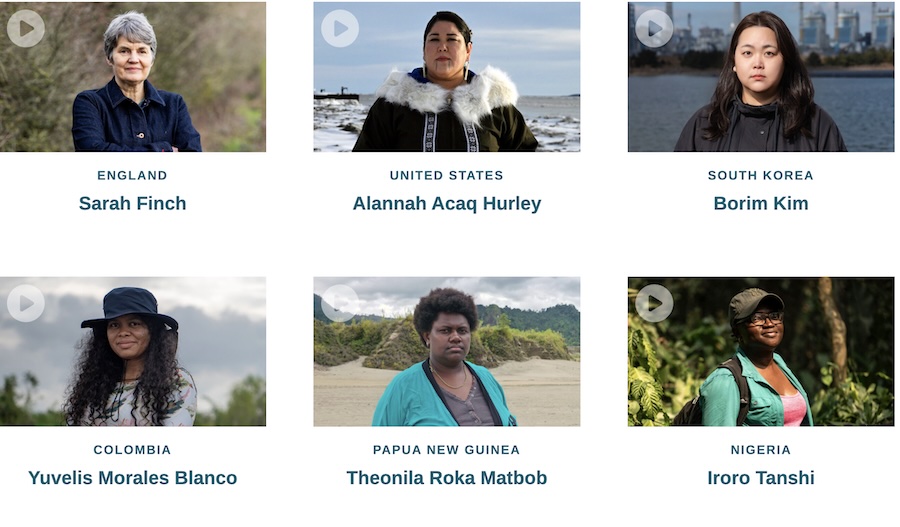
Videos available on Goldman Prize website

The announcement comes as world leaders have failed  to make progress in addressing environmental challenges, and President Donald Trump, leader of the world’s largest historical climate polluter, has withdrawn  the US from the Paris Agreement, rolled back  climate and environmental regulations domestically, and made efforts to supercharge  the extraction and use of fossil fuels.

“While we continue to fight uphill to protect the environment and implement lifesaving climate policies—in the US and globally—it is clear that true leaders can be found all around us,” John Goldman, vice president of the Goldman Environmental Foundation, said in a statement. “The 2026 prize winners are proof positive that courage, hard work, and hope go a long way toward creating meaningful progress.”

The 2026 prize is notable because it marks the first time that all of the winners—Iroro Tanshi of Nigeria, Borim Kim of South Korea, Sarah Finch of the United Kingdom, Theonila Roka Matbob of Papau New Guinea, Alannah Acaq Hurley of the US, and Yuvelis Morales Blanco of Colombia—are women.

‘There’s lots of people doing really good things and, together, we are going to make the world a better place than it would otherwise have been.’

“I am especially thrilled to honor our first-ever cohort of six women, as this is a powerful reflection of the absolutely central role that women play in the environmental community globally,” Goldman said.

The winners also exemplify the prize’s 2026 theme “Change Starts Where You Stand,” as each of them began with a fight to protect a local community or ecosystem that has global implications for the climate, biodiversity, and environmental justice.

As US-based winner Alannah Acaq Hurley said, “At the end of the day, this is a fight for humanity, and, honestly, our ability to continue as humans on this planet.”

Here is how six remarkable women waged this fight and won.

Iroro Tanshi

Iroro Tanshi is a Nigerian conservation ecologist who has worked successfully with local communities to protect endangered bats and their rainforest habitat from wildfires.

Tanshi was elated in 2016 when she discovered the short-tailed roundleaf bat, previously believed to be extinct in the area, living in Nigeria’s Afi Mountain Wildlife Sanctuary. However, two weeks later, a devastating wildfire ignited, forcing Tanshi to evacuate and ultimately impacting around half of the park.

Tanshi then turned her attention to preventing wildfires, which are sparked by traditional farming practices rubbing against the climate crisis.

“The way people manage these farms is they use fire to clean the farms every year, but climate change has completely toppled the pattern of rainfall and people can no longer predict when to burn safely,” she explained in a video.

Tanshi and her team worked with local communities on a Zero Wildfire Campaign, which includes educating farmers on when it is safe to burn and forming a team of “forest guardians” to patrol and fight fires on high-risk days. Due to her efforts, these guardians put out 74 fires between 2022 and 2025, preventing any of them from becoming major blazes.

“My hope for the future is that people would take these small-scale projects as signals for what the future should look like,” she said. “Let’s stay nimble. Let’s try to work in our small communities and solve those problems there on the ground.”

Borim Kim

Borim Kim helped win Asia’s first successful youth climate lawsuit, inspiring people across the region to demand government action on climate.

Kim was first motivated to take collective action when a heatwave baked Seoul in 2018, killing 48 people including a woman near her mother’s age, who died in her home.

“I realized that even home wasn’t safe from the climate crisis,” she said in a video. “I started looking for what I could do.”

Inspired by the international youth climate movement, she founded Youth 4 Climate Action (Y4CA) and helped organize school strikes and walkouts. After her activism led to meetings with policymakers, she realized that national leaders had no real plans to address the climate crisis. In 2020, she and Y4CA mobilized 19 young people to sue  the South Korean government for violating  the constitutional rights of future generations. Once the case was launched, she also continued to build a social movement for climate action.

In August 2024, the country’s Constitutional Court ruled in favor of the young people, mandating that South Korea reduce its emissions in line with the scientific consensus, a decision the environmental minister accepted. The ruling is projected to prevent between 1.6-2.1 billion tons of carbon dioxide from reaching the atmosphere.

“Youth may be seen as having a lower position in society, but now this decision has affirmed our right to live safely and the state’s duty to protect us,” Kim said.

Sara Finch

On the other side of the world, Sarah Finch also secured a precedent-setting legal climate victory.

Finch lives in a part of southeastern England called the Weald. While it is currently a rural area, it hosts oil and gas reserves that were eyed for exploitation during the fracking boom of the 2010s. Finch helped form the Weald Action Group to push back against many potential wells, but they were not able to stop the Surrey County Council from approving the operation and expansion of a drilling site called Horse Hill in 2018.

In gearing up to challenge the decision, Finch discovered that the council’s environmental impact statement had only considered emissions from direct drilling at the site, but not the emissions generated from the burning of the fuel once it was extracted, also known as Scope 3 emissions, which make up around 90% of oil and gas’ contribution to the climate emergency.

(article continued in right column)

Question for this article:

Local resistance actions: can they save sustainable development?

(Article continued from the left column)

“It became apparent that it was actually the norm that Scope 3 emissions were being emitted from these kinds of decisions, and we realized that actually it was happening everywhere and in much bigger developments than Horse Hill,” Finch said in a video.

She and her team challenged the environmental impact statement over its failure to consider Scope 3 emissions, losing multiple times before finally securing  a groundbreaking victory from the UK Supreme Court in 2024, which has come to be known as “the Finch ruling.”

The UK government cited the “Finch ruling” when it revoked  ts backing of two North Sea oil developments. Overall, the projects canceled or delayed in 2024 due to the ruling would have generated enough Scope 3 emissions to equal the UK’s domestic greenhouse gas emissions that year.

“It wasn’t just a win on Horse Hill,” Finch said. “It wasn’t even just a win on a handful of sites. It was a win on the whole future of the UK oil and gas industry. And I feel like, there’s lots of people doing really good things and, together, we are going to make the world a better place than it would otherwise have been.”

Theonila Roka Matbob

Theonila Roka Matbob was born into an environmental disaster. Rio Tinto’s Panguna Mine had devastated the ecosystem of Bougainville in Papua New Guinea’s (PNG) Autonomous Region of Bougainville (ARB), destabilized its society, and led to a civil war that killed 15,000-20,000 Bougainvilleans, including her father.

“Our environment was tortured, and then the land was tortured, and the third party that was tortured were my people,” Roka Matbob said in a video.

Rio Tinto closed its copper, silver, and gold mine in 1989 due to the war, but had done nothing to clean up the 150,000 tons of tailings it had dumped into local rivers or take responsibility for the havoc the mine had caused. As an adult, Roka Matbob began to wonder why justice had not been done and to gather testimony from people impacted by the mine.

This led to a successful campaign that persuaded Rio Tinto first to fund an assessment of the mine’s impacts and then to sign a memorandum of understanding in 2024 to act on the assessment’s findings and develop a plan with local communities to remediate the area.

“It doesn’t mean we will restore everything as it was, but at least the story that my grandchildren and my great-grandchildren can remember [is] that our grandparents fought,” she said.

Alannah Acaq Hurley

As Theonila Roka Matbob secured justice for the impacts of one major mine, Alannah Acaq Hurley helped prevent another one from being dug in the first place.

Hurley grew up as a member of the Yup’ik Indigenous group in Alaska’s Bristol Bay, a haven of biodiversity that also hosts the world’s largest wild sockeye salmon run. But in 2001 a new danger emerged: Canadian company Northern Dynasty Minerals announced plans to construct the Pebble Mine, the largest open-pit mine in North America.

“The pit would be so big, you could literally see it from the moon,” Hurley said in a video. “It didn’t take long for us to understand the level of threat that this mine posed—acid mine drainage, toxic tailings left in perpetuity. It was not a matter of if something goes wrong, it was a matter of when.”

Chosen to lead the United Tribes of Bristol Bay in 2013, Hurley built a coalition to oppose the mine, uniting tribes, commercial fishers, and environmentalists to make their cause to the US Environmental Protection Agency and push back against the company’s multiple attempts to move forward with the copper-and-gold mining project. Finally, in 2023, the EPA canceled  the project via its rarely used veto power.

“It’s just really a testament to the power of the people,” she said. “We just never stopped until we were heard.”

Yuvelis Morales Blanco

Yuvelis Morales Blanco also defended her community from an extractive industry.

Blanco was born to subsistence fishers on Colombia’s Magdalena River in the Afro-Colombian community of Puerto Wilches.

“We had nothing but the river—she was like a mother who took care of me,” she said in a statement.

However, even as a child she saw the river was threatened by oil spills from Ecopetrol, Colombia’s leading oil company headquartered nearby. The potential threat level was raised even further when she learned while attending college in 2019 that Ecopetrol planned to build two pilot fracking projects near Puerto Wilches.

“Man, I’m like, ‘They’re going to do that in Wilches?’ No sir!’” she recalled in a video.

Blanco joined the Colombia Free from Fracking Alliance and began to raise awareness in her community about the plans. As the campaign’s momentum grew, so did her reputation as a spokesperson. This ultimately led to threats of violence against her that forced her to seek asylum in France in 2022, yet she continued to mobilize against the fracking plans from abroad.

She and the alliance saw success in 2022, as a local court halted the permitting process, newly elected President Gustavo Petro pledged there would be no fracking during his administration, and Ecopetrol suspended its contracts. In 2024, the Colombian Constitutional Court further ruled that the fracking projects had violated the Afro-Colombian community of Puerto Wilches’ right to free, prior, and informed consent.

Blanco continues to fight for a ban on fracking and for legal protections for environmental defenders—over 140 of whom were reported missing or killed in 2024, the most recent year for which Global Witness has a full tally. Colombia was also the most dangerous countries for defenders that year, with 48 deaths.

“I am very hopeful because I have a river that always accompanies me, and I know we’re going to win,” she said.

The Goldman Environmental Prize was founded in 1989 by Rhoda and Richard Goldman, and has since honored 239 winners in 37 years. The 2026 awards will be presented live in San Francisco on Monday evening at 8:30 pm ET. Watch it on YouTube here.

– – – – – –

If you wish to make a comment on this article, you may write to coordinator@cpnn-world.org with the title “Comment on (name of article)” and we will put your comment on line. Because of the flood of spam, we have discontinued the direct application of comments.
Sánchez, Lula Lead ‘Work for Peace’ and Equality at Gathering of Global Progressive Leaders in Spain

FREE FLOW OF INFORMATION .

An article by Julia Conley from Common Dreams (reprinted according to Creative Commons CC BY-NC-ND 3.0)

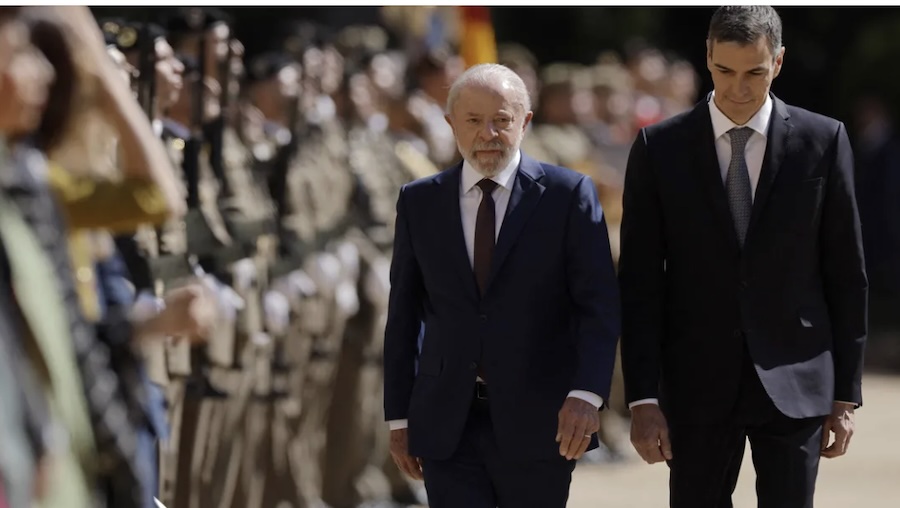
Arriving in Spain on Friday for a two-day visit that will center on a gathering of progressive leaders from more than 100 political parties across five continents, Brazilian President Luiz Inácio Lula da Silva emphasized that the summit was not “an anti-Trump meeting.”

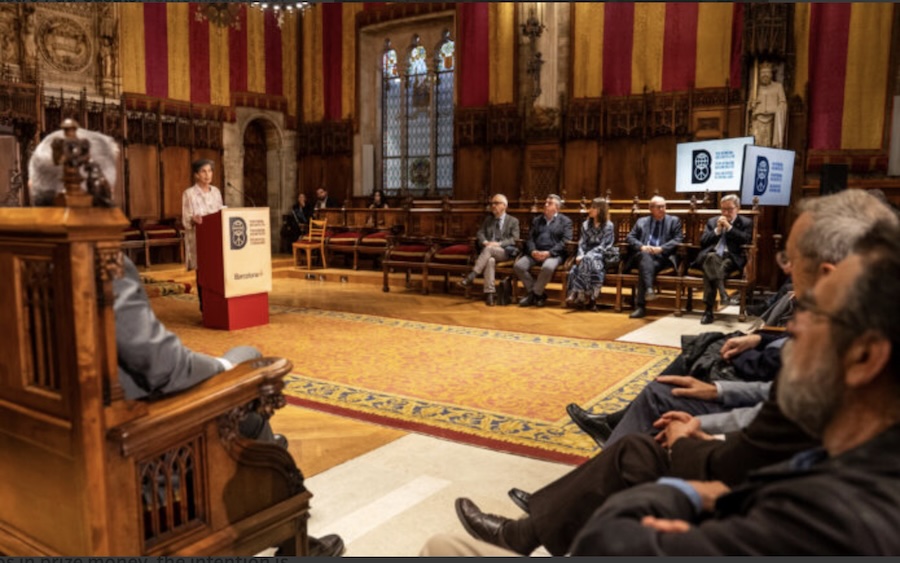
But the contrast between US President Donald Trump’s violent foreign and domestic policies and the international meeting, which will focus on wage inequality and electoral strategy for progressives, was unmistakable as Spanish President Pedro Sánchez opened  the gathering at a press conference in Barcelona on Friday.

“We want to double our efforts to work for peace and for a reinforced multilateral order. While others open wounds, we want to mend them and cure them,” said Sánchez.

Da Silva—who is commonly called Lula—and Sánchez, as well as other leaders who will be attending the weekend event, have spoken out forcefully against Trump’s policies and the rise of the far right in the US, Germany, Italy, and other European countries.

Sánchez has refused  to allow US fighter planes to use Spanish military bases for missions in the US-Israeli war on Iran and  closed  the country’s airspace to American military aircraft—plus doubled down on his condemnation of Trump and Israeli Prime Minister Benjamin Netanyahu’s war even after the US president threatened  Spain with a trade embargo.

Lula expressed solidarity with Pope Leo this week after the pontiff denounced  the Iran war, and Mexican President Claudia Sheinbaum, who will also attend the meeting, took aim  last month at Trump’s claim that her country is the “epicenter of cartel violence”—blaming the US for the flow of illegal weapons into Mexico.

Lula emphasized that the 3,000 attendees of the summit, which will include the IV Meeting in Defense of Democracy as well as a gathering called the Global Progressive Mobilization on Saturday, will “discuss the state of democracy, to see what went wrong and what we have to do to repair it.”

The Brazilian president added that “Brazil and Spain are side by side in the trenches together.”

“We are an example that it is possible to find solutions to problems without giving into the empty promises of extremism,” said Lula. “Democracy must go beyond just voting and bring real benefits to people’s lives.”

Sánchez added that “in a world that doubts and fragments, Spain and Brazil open a new chapter convinced that our countries have something the world needs: the strength to build bridges where others raise walls.”

The Global Progressive Mobilization meeting will include roundtables dedicated to discussing economic inequality and other issues at a time when, as one report showed  earlier this month, the richest 0.1% of people on the planet are stashing more than $2.8 trillion in tax havens—more than the wealth owned by the entire bottom 50% of humanity.

The economic hardships of working people have only been exacerbated by the war on Iran, which has sent global energy prices soaring.

US Sen. Chris Murphy (D-Conn.) is the only federal US official planning to attend the gathering, while New York City Mayor Zohran Mamdani—who has swiftly taken steps toward enacting  a universal childcare program and announced  a plan to tax second homes valued at over $5 million since taking office in January, is scheduled to participate virtually.

Also on Saturday, Lula and Sánchez will host the IV Meeting in Defense of Democracy, a summit first held in 2024 with the aim of combating “extremism, polarization, and misinformation.”

Question related to this article:

Where in the world can we find good leadership today?

(article continued from left column)

European Council President António Costa, South African President Cyril Ramaphosa, Colombian President Gustavo Petro, and leaders from Albania, Ghana, and Lithuania are among those attending the meeting on democracy.

Lula said the large number of attendees is evidence that progressive governments are winning more influence around the world despite the rise of authoritarian political parties.

“Our flock is growing. We must give hope to the world,” said Lula. “Otherwise, what happened with [Nazi leader Adolf] Hitler is going to happen.”

Economist Gabriel Zucman, who joined  Mamdani this week in publishing an op-ed calling for an end to regressive tax systems and highlighting a proposal for a 2% tax on the wealth of those with more than €100 million, or $117 million, expressed hope that the global left is amassing power by building a cooperative international movement.

“The good news is that, from Zohran Mamdani and [Congresswoman] Alexandria Ocasio-Cortez in New York to Pedro Sánchez in Spain, from Lula in Brazil to [Green Party Leader] Zack Polanski in the UK, we may be seeing the early signs of a new cross-border alliance taking shape against global oligarchy,” said Zucman. “And I have no doubt that in this fight—the defining battle of the 21st century—democracy will prevail. See you in Barcelona this weekend to press ahead!”

. . . .

(Editor’s note: It seems that there was no official press release with the results of the meetings in Barcelona on April 17 and 28, but here is some additional information about the meetings, drawn from other sources:

The summit is intended to become a regular event, aiming to “unite progressive forces from around the world.” 

The presence of Mexican President Claudia Sheinbaum at the meeting has a symbolic character, just a few weeks after King Felipe VI acknowledged, for the first time, “numerous abuses” during the Spanish conquest of America in the 16th century, a subject of tension between Madrid and Mexico for many months. Sheinbaum declared at the opening of the meeting, “”I come from a people who recognize their origin in the great indigenous cultures, those that were silenced, enslaved and plundered, but that were never defeated, because there are memories that cannot be conquered and roots that can never be uprooted,”

Colombian President Gustavo Petro told the press on Friday that “by firmly opposing the war waged by the United States and Israel against Iran , “it seems to me that Spain’s position is at the forefront in Europe.”

Minnesota Governor Tim Walz, who campaigned alongside Kamala Harris in her aborted presidential bid against Donald Trump, addressed a large crowd Saturday at the first Global Progressive Mobilization, describing Trump as a “warmonger” with no real plan. Walz denounced an apparent authoritarian drift under Trump, stating that “it has to be called by its name. It’s fascism. Or at least, it’s becoming fascist, as they would say.”

 Giacomo Filibeck , Secretary-General of the Party of European Socialists (PES)., said Left-wing parties needed to show voters there was an alternative to what organisers called the “right-wing international”. No sitting prime minister of a large western European country took the stage.

A Eouropean delegation included German Vice-Chancellor Lars Klingbeil, British Foreign Secretary David Lammy, Italian opposition leader Elly Schlein, and Belgian politician Paul Magnette. The President of the European Council, António Costa, cancelled his visit at the last minute.

Alexander Soros, son of financier George Soros and now chair of the Open Society Foundations (OSF) acted in practice as a third host alongside Sánchez and Lula. Writing on X at the close of the meeting, he said it had been “an honor to welcome so many incredible leaders” to Barcelona, and posted photographs of himself with the Spanish Prime Minister. Pedro Abramovay, a senior OSF programme official, appeared on the speaker list, and the Bill and Melinda Gates Foundation also took part.

– – – – – –

If you wish to make a comment on this article, you may write to coordinator@cpnn-world.org with the title “Comment on (name of article)” and we will put your comment on line. Because of the flood of spam, we have discontinued the direct application of comments.
New Barcelona for Peace International Award

. . DEMOCRATIC PARTICIPATION . .

An article from the Ajuntimiento de Barcelona

The Barcelona for Peace International Award recognises the trajectory, action or project of a person, organisation or institution at an international level which has helped, in a relevant, transformational and verifiable way, to promote peace, coexistence, human rights and the peaceful resolution of conflicts.

Launched by Barcelona City Council, Barcelona Provincial Council and the Fundació Pau Casals as part of the 150th anniversary of the artist’s birth, the biennial award carries 300,000 euros in prize money and is geared towards strengthening the media impact and transformational characters of the winning project or organisation. The first award will be held at L’Auditori de Barcelona in February 2027 and comes with a parallel cycle of dialogues for peace in other cities such as New York, Tangiers and Medellín.

The award is inspired by the universal values that define Barcelona as an open, diverse and inclusive city, committed to the defence of human rights, as well as the legacy of the maestro Pau Casals, remembered for his extraordinary musical talent and for his firm commitment to the values of freedom, democracy and peace.

The intention is for the award to be a catalyst for change, inspiring and recognising the work of people and institutions committed to the culture of peace at local and global levels. In this respect, the goals of the Barcelona for Peace International Award are to:

° Identify and recognise real and specific solutions for the main global goals, with peace and coexistence as the central threads.

° Increase visibility and support for transformational initiatives in fostering the culture of peace and coexistence.

° Foster institutional collaboration and the exchange of knowledge.

° Generate an inspirational and multiplying effect.

° International projection of the validity of the great legacy of the maestro Pau Casals.

Money to generate an impact

The Barcelona for Peace Award aspires to be one of the most important in the field of peace. With 300,000 euros in prize money, the intention is to reinforce the symbolic, mediatic and transformational impact of the project or organisation that receives the recognition.

The money should be devoted to guaranteeing the continuity, scaling up and consolidation of the winning project. Its execution will be assessed by the organising institutions through a social impact report, to be presented during the award ceremony.

(Article continued in right column)

(Click here for a version of the article in Spanish.)

Question related to this article:

How can we develop the institutional framework for a culture of peace?

(Article continued from left column)

Candidacies

The Barcelona for Peace International Award is open to natural and legal persons of any nationality, international organisations, foundations, NGOs, public institutions or collective initiatives propose by them, specialist organisations, international networks and members of the award’s advisory council.

For this first edition, the call will be opened through a public announcement in April. The directing committee will adopt their decision by majority in November, in accordance with the terms and conditions established by promoting organisations and in consultation with the advisory committee, to ensure the award reflects excellence, commitment and a real impact in the construction of peace.

Directing committee and advisory council

The directing committee will be tasked with deciding who receives the award according to the following criteria:

° Significant contribution to peace and coexistence.

° Sustainability and continuity of the project.

° Innovative, creative and exemplary character of the initiative in addressing conflicts.

° Social, political, cultural and humanitarian impact. Community roots and citizen participation.

° Inspirational capacity and multiplying effect.

° Cross-cutting nature in terms of gender, diversity, interculturality and/or community perspective.

° Ethical coherence and commitment to human rights, equity and inclusion.
International projection and relevance.

The advisory council, an independent and plural body, will be made up of figures with recognised trajectories in fields such a peace, human rights, diplomacy, culture, journalism, social innovation and activism. The advisory council will be coordinated by the Fundació Pau Casals.

This body is under construction and new members will be added. The first recognised figures on the advisory council are the Chilean senator Isabel Allende, daughter of the former president of Chile, Salvador Allende, plus princess Rym Ali of Jordan.

International cycle of dialogues for peace

A cycle of dialogues for peace will be promoted with the goal of giving global visibility to the award as an initiative that promotes the culture of peace around the world, at the same time consolidating Barcelona’s international projection as a leading city in the construction of peace from the urban sphere.

The idea is for these dialogues to take place as part of the next Global Congress by United Cities and Local Governments (UCLG), which is being held in Tangiers from 22 to 25 June. During the High Level Political Forum, from 6 to 15 July, there will be a debate at the Instituto Cervantes in New York about the role of cities in the construction of global peace. In addition, there will be a dialogue with European experts in peace, democracy and human rights in Brussels on municipal cooperation for peace, within the context of the District 11 initiative, and on policies for global justice in Medellín and Hiroshima.

– – – – – –

If you wish to make a comment on this article, you may write to coordinator@cpnn-world.org with the title “Comment on (name of article)” and we will put your comment on line. Because of the flood of spam, we have discontinued the direct application of comments.
Zaid El-Kheir: Pope Leo XIV’s Visit to Algeria is Distinguished and Serves as a Positive Message for a More Harmonious and Stable World

. TOLERANCE & SOLIDARITY .

An article from Radio Algerie

The President of the High Islamic Council, Mr. Mabrouk Zaid El-Kheir, emphasized that the visit of His Holiness Pope Leo XIV to Algeria is of utmost importance, describing it as “highly significant,” especially as it comes in response to an official invitation from the President of the Republic, Mr. Abdelmadjid Tebboune. He expressed his hope that this visit would contribute to fostering a culture of peace and love, serving as a positive message to the entire world toward a more stable and harmonious future.

During his appearance this Monday [April 13] on the “L’invité du jour” on Algerian Radio’s Channel 1, Zaid El-Kheir explained that the high-level meeting between Algeria and the Vatican pursues noble goals worthy of this distinguished visit. He highlighted the religious and diplomatic dimensions of the visit, noting the significant influence of His Holiness the Pope as a major symbol for Christians worldwide. He further emphasized the Pope’s prestigious standing, earned through his efforts in promoting peace, advocating for harmony, and his initiatives regarding various complex international issues.

He further stated: “Algeria is a land of peace, tolerance, and respect for all religions. Therefore, I anticipate that this visit will be a significant milestone, given its ancient history and civilizational value. It will undoubtedly highlight this standing and strengthen the rapprochement between both parties”. He also pointed to its “prominent diplomatic dimension, which is poised to achieve harmony between two states of great religious and historical weight, establishing Algeria as a beacon of radiance for global peace”.

(continued in right column)

(Click here for a French article on this subject.)

Question related to this article:
 
How can different faiths work together for understanding and harmony?

(continued from left column)

A visit in a sensitive international context to renew relations

Speaking on the timing of the visit, Zaid El-Kheir considered it to be taking place in a precise international context marked by increasing unrest. He emphasized that Algeria and the Vatican are capable of contributing to de-escalating the situation and opening avenues for dialogue between religions, cultures, and cultures, thereby enhancing global security and stability.

He further explained that among the goals of the visit is the strengthening of bilateral relations, whose roots date back to the 1970s, and renewing them in a way that enshrines the values of mutual respect and affection. He emphasized the hope that this visit would result in outcomes that unify visions and send a message to the world that Algeria is a land of security and stability.

The President of the High Islamic Council emphasized that Algeria occupies a significant strategic position, serving as a gateway to Africa and being in close proximity to Europe. This grants it a pivotal role in fostering dialogue and communication among peoples.

Religion is a common denominator for rapprochement and coexistence between cultures

In a related context, the same speaker emphasized that this visit represents an opportunity to highlight the true role of religion as a common factor calling for coexistence and tolerance. He recalled that divine messages brought sublime values to foster harmony among humanity, noting that history bears witness to successful models of coexistence between Muslims and others in various regions, as was the case in ancient Egypt, Andalusia, and parts of Asia.

He also addressed the importance of contemporary religious discourse, which must be rational and derived from original texts, contributing to the achievement of harmony as well as spiritual and human stability.

Zaid El-Kheir pointed to the shared historical heritage, invoking the figure of Saint Augustine, one of the most prominent symbols of Christian thought. He emphasized that this visit also carries a symbolic dimension to revive this spiritual legacy spanning centuries, noting that Algeria has been and will remain a center for interfaith dialogue.

He concluded by saying: “Throughout its history, Algeria has remained a land of tolerance and coexistence, and has been keen on enshrining these values in its institutions, laws, and practices”.

– – – – – –

If you wish to make a comment on this article, you may write to coordinator@cpnn-world.org with the title “Comment on (name of article)” and we will put your comment on line. Because of the flood of spam, we have discontinued the direct application of comments.
70+ Boats Launch Historic Global Sumud Flotilla to Gaza in Bold Solidarity Stand

. HUMAN RIGHTS .

An article from Telesur English

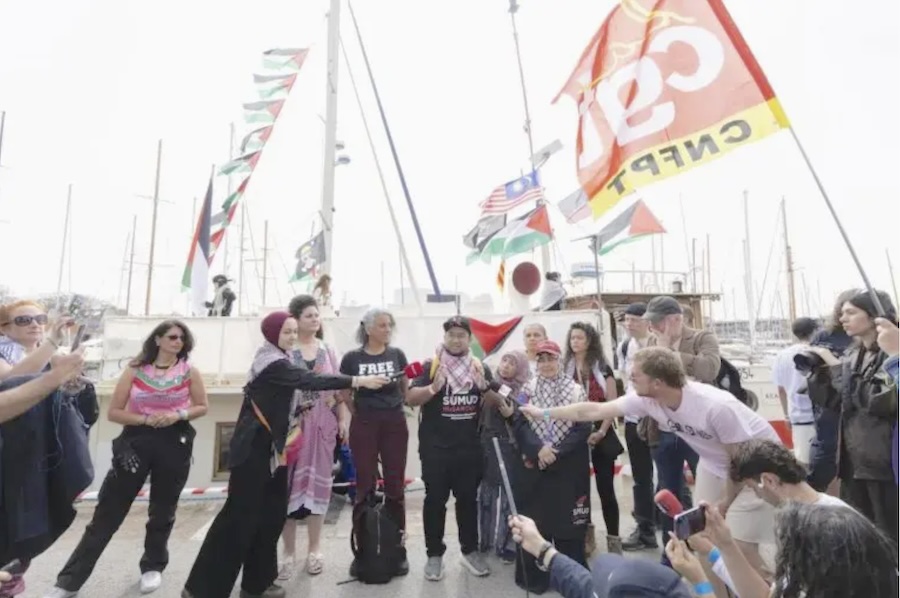
The Global Sumud Flotilla is departing today [April 14] from the Port of Barcelona in what organizers describe as the largest civilian-led maritime initiative in history aimed at breaking Israel’s long-standing blockade of the Gaza Strip.

Comprising more than 70 boats and over 3,000 participants from more than 100 countries, the fleet includes a dedicated medical contingent of 1,000 healthcare professionals carrying essential supplies for Gaza’s devastated health system.

Saif Abukeshek, the Palestinian activist based in Barcelona and spokesperson for the Global Sumud Flotilla, has emphasized that this is a peaceful civilian action responding to ongoing aggressions against Palestinian and Lebanese populations.

Over 70 vessels and thousands of international volunteers are sailing to pressure governments worldwide.

The mission combines sea and land components, including solidarity convoys from Asia and North Africa.

Greenpeace’s Arctic Sunrise and Open Arms vessels are joining the effort from Barcelona.

This Spring 2026 mission builds directly on previous attempts, including the 2025 Global Sumud Flotilla that was intercepted by Israeli forces.

The Global Sumud Flotilla Mission: Scale and Objectives

The Global Sumud Flotilla represents a coordinated alliance of four major coalitions: the Global Sumud Flotilla itself, the Global Freedom and Sumud Flotilla, Thousand Madleens to Gaza, and the Freedom Flotilla Coalition.

Organizers state the goal is to deliver humanitarian aid, assert the right of navigation in international waters, and highlight the dire conditions in Gaza more than six months after a fragile ceasefire took effect in October 2025.

Saif Abukeshek has described the flotilla as “civilian boats” in response to what he calls systematic human rights violations in the Middle East, including continued strikes in Lebanon and restrictions in Gaza despite the truce.

The fleet carries medical supplies, food, and reconstruction materials while featuring doctors, engineers, legal experts, and activists ready to establish an unarmed protective presence if permitted.

Medical fleet of 1,000 professionals targets Gaza’s collapsed healthcare infrastructure.

Participants include parliamentarians, journalists, and civil society leaders from every continent.

The mission seeks to open a humanitarian sea corridor and challenge the 19-year blockade.

→ External link: Amnesty International: States must ensure safe passage for Global Sumud Flotilla

→ External link: Freedom Flotilla Coalition joint statement on largest flotilla yet

Historical Context of Efforts to Break the Gaza Blockade

Maritime activism to challenge Israel’s blockade of Gaza dates back to 2008 with the Free Gaza Movement, which successfully delivered aid in several voyages before 2010.

The 2010 Freedom Flotilla, including the MV Mavi Marmara, ended in tragedy when Israeli forces raided the vessels in international waters, resulting in nine activist deaths and widespread international condemnation.

Subsequent attempts — Freedom Flotilla II in 2011, III in 2015, the Women’s Boat in 2016, and multiple missions through 2018 — were all intercepted, with activists detained and deported.

In 2025, smaller missions like the Madleen and Handala faced drone attacks and boarding in international waters. The first large-scale Global Sumud Flotilla in September-October 2025 involved over 40 vessels and 500 participants but was fully intercepted, with hundreds detained.

(continued in right column)

Question related to this article:
 
How can we best express solidarity with the people of Gaza?

(continued from left column)

No flotilla has reached Gaza since 2010 despite repeated non-violent efforts.

The 2025 Global Sumud Flotilla marked the largest attempt until this 2026 spring mission.
Patterns show consistent Israeli interceptions, even in international waters, drawing UN and human rights criticism.

These actions have consistently raised global awareness about the blockade’s humanitarian impact, even when physically prevented from docking.

Current Situation in Gaza Six Months into the Fragile Ceasefire

The October 10, 2025 ceasefire, brokered with international involvement, promised a halt to major hostilities, hostage-prisoner exchanges, and increased aid flows. Yet Gaza remains in a state of “neither war nor peace.”

Official Palestinian sources report more than 2,073 Israeli violations between October 2025 and March 2026, including airstrikes and incursions, resulting in over 700 Palestinian deaths — the majority civilians.

Aid deliveries have fallen far short of commitments, with only about 21% of planned trucks entering. Reconstruction has barely begun, and restrictions on “dual-use” materials continue to hinder recovery.

Over 60% of children under two face food poverty amid persistent malnutrition.

Nearly 60% of the Gaza Strip remains a no-go zone under Israeli military control.

Thousands of pregnant women and breastfeeding mothers suffer from acute malnutrition.

The health system lies in ruins, with limited medical evacuations and ongoing shortages of medicine and equipment.

Geopolitical Context and Broader Regional Implications

The launch of the Global Sumud Flotilla occurs against a backdrop of fragile truces across the Middle East. A short-lived US-Iran ceasefire announced in early April 2026 followed intense strikes that disrupted regional stability, affecting aid routes and energy supplies.

Continued Israeli operations in Lebanon, even during truce periods, and tensions involving Iran have compounded the crisis. These dynamics underscore how the Gaza blockade fits into wider patterns of conflict and external intervention.

Civilian initiatives like the flotilla highlight growing frustration with governmental inaction.

By asserting rights under international law, participants aim to pressure states to fulfill obligations regarding humanitarian access and accountability.

The blockade, now in its 19th year, is widely viewed as unlawful by human rights organizations.

International Court of Justice provisional measures remain unheeded.

Grassroots movements fill the vacuum left by stalled diplomacy.

This mission tests the commitment of the international community to protect non-violent activists and enforce humanitarian principles amid shifting alliances.

Challenges Ahead and Potential Impact of the Global Sumud Flotilla

Organizers have prepared for possible interceptions, framing the effort as a legal and moral challenge rather than confrontation. Past experiences show risks of detention, equipment seizure, and physical harm.

Yet the unprecedented scale — uniting diverse coalitions and drawing support from figures across civil society — amplifies its potential to influence public opinion and policy debates in Europe, the Americas, and beyond.

Success or high-visibility failure could bolster calls for lifting the blockade entirely.

Medical and reconstruction teams signal a focus on long-term solidarity.

The flotilla exposes the gap between international rhetoric and action on Palestine.
Amnesty International has urged states to guarantee safe passage, warning against repeats of 2025 abuses.

In a region marked by unresolved conflicts, the Global Sumud Flotilla keeps the humanitarian cost of the blockade in sharp focus. It demands justice, dignity, and an end to collective punishment for Gaza’s two million residents.

As vessels leave Barcelona today, the world watches whether this bold civilian stand will mark a turning point or another chapter in the long struggle for Palestinian rights.

– – – – – –

If you wish to make a comment on this article, you may write to coordinator@cpnn-world.org with the title “Comment on (name of article)” and we will put your comment on line. Because of the flood of spam, we have discontinued the direct application of comments.
National Autonomous University of Mexico: Encounters and Networks for Peace. Why Talk About a Culture of Peace?

… EDUCATION FOR PEACE …

An article from Gaceta UNAM

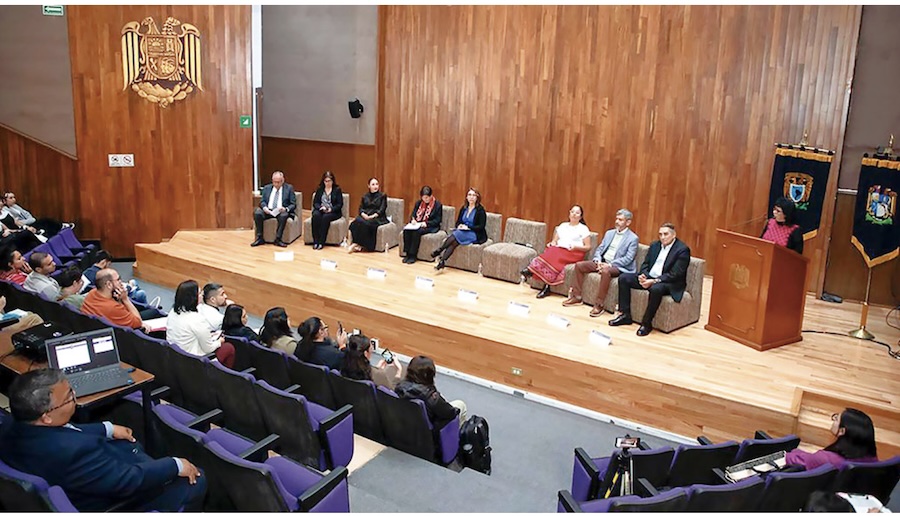
On March 25, the National School of Social Work (ENTS) at UNAM hosted the inauguration of the comprehensive project between Civil Society, Academia, and Government: Encounters and Networks for Peace. Why Talk About a Culture of Peace?


Photo: PUCPAZ

The event was organized by the University Program on Culture of Peace and Eradication of Violence (PUCPAZ), in coordination with ENTS; the University Program on Human Rights (PUDH); the Metropolitan Autonomous University (UAM) Iztapalapa Campus; the Rosario Castellanos National University (UNRC); and the Undersecretariat for Peacebuilding, Social Participation, and Religious Affairs of the Ministry of the Interior. Services and Consulting for Peace AC (Serapaz) and the Don Bosco Foundation.

This university initiative seeks to build a shared, analytical, forward-looking, and critical action agenda, aimed at fostering dialogue, identifying best practices, and contributing proposals that inclusively promote progress toward an active society that weaves together knowledge and participates in building a culture of peace.

An Act of Resistance

At the opening ceremony, Leticia Cano, director of PUCPAZ, noted that this gathering is an act of living, everyday resistance, accompanied by dialogues and conversations about experiences, best practices, interventions, and significant contributions, stemming from the challenges faced daily.

“We neither start nor arrive from a vacuum; we reconnect with others in their own territories where the struggle for peace takes place every day, from within the communities, not to talk about them, but with them and from within them, because they are the ones who experience firsthand the contradictions of our time.” Carmen Casas Ratia, director of the ENTS (National School of Social Work), emphasized that it was no coincidence that the meetings began at this academic institution, given the close relationship between social work and a culture of peace.

She also underscored the importance of promoting a positive peace, based on justice, equity, and the satisfaction of needs, as well as addressing the structural causes of violence.

(Continued in right column)

(Click here for the Spanish original of this article)

Question for this article:

Where is peace education taking place?

Is there progress towards a culture of peace in Mexico?

(Continued from left column)

For his part, Alfredo Sánchez Castañeda, coordinator of the PUDH (Program for the Development of Human Rights), warned that violence has surpassed the limits of imagination and disproportionately affects the most vulnerable sectors. “It is linked to multiple crises: economic, social, health, migration, and security, which poses the challenge of rethinking the role of educational institutions in peacebuilding.”

Carlos C. Contreras Ibáñez, from the Social Psychology for Peace Project at the UAM (Autonomous Metropolitan University), Iztapalapa Campus, emphasized the need to maintain a constant dialogue between academia, government, and civil society. The latter, in particular, has direct contact with communities and their problems, and maintained that peace must be understood as a collective process.

In turn, Diana Lepe Sánchez, director of Serapaz, shared a community experience that sparked reflection on the type of peace that is being sought. Peace, she said, does not imply silence, but rather the possibility of expressing and addressing the problems of individuals and communities.

José Antonio Sandoval, general director of the Don Bosco Foundation, agreed on the importance of strengthening ties with civil society organizations, whose experiences on the ground allow for a rethinking of peacebuilding strategies. He also highlighted the role of academia in deepening the analysis of community work.

Laura Angélica Cordero, general director of Social Prevention and the Reconstruction of the Social Fabric, representing Rocío Bárcena Molina, Undersecretary of Peacebuilding, Social Participation, and Religious Affairs of the Ministry of the Interior, celebrated the inter-institutional collaboration and noted that peacebuilding is not a recent trend, but a sustained effort. In that regard, she quoted Eleanor Roosevelt: “It is not enough to talk about peace; one must believe in it and work to achieve it.”

Ana María Rosas, general counsel of the UNRC, representing its rector, Alma Herrera Márquez, noted that education plays an essential role in peacebuilding, as it is a means to transform both those who receive it and those who provide it.

Human Rights and Violence

María Dolores González Saravia Calderón, president of the Mexico City Human Rights Commission, gave the opening address, in which she spoke about the challenges to peacebuilding and the guarantee of human rights. She distinguished between positive peace, which is lasting and based on justice, and negative peace, which is imposed and focused on security.

She also defined violence as the use of force to dominate or impose, and emphasized the need to build solutions.

– – – – – –

If you wish to make a comment on this article, you may write to coordinator@cpnn-world.org with the title “Comment on (name of article)” and we will put your comment on line. Because of the flood of spam, we have discontinued the direct application of comments.
Ouagadougou, Burkina Faso: Muslims and Christians United in a Collective Iftar for Peace

. TOLERANCE & SOLIDARITY .

An article from Burkina24 (translation by CPNN)

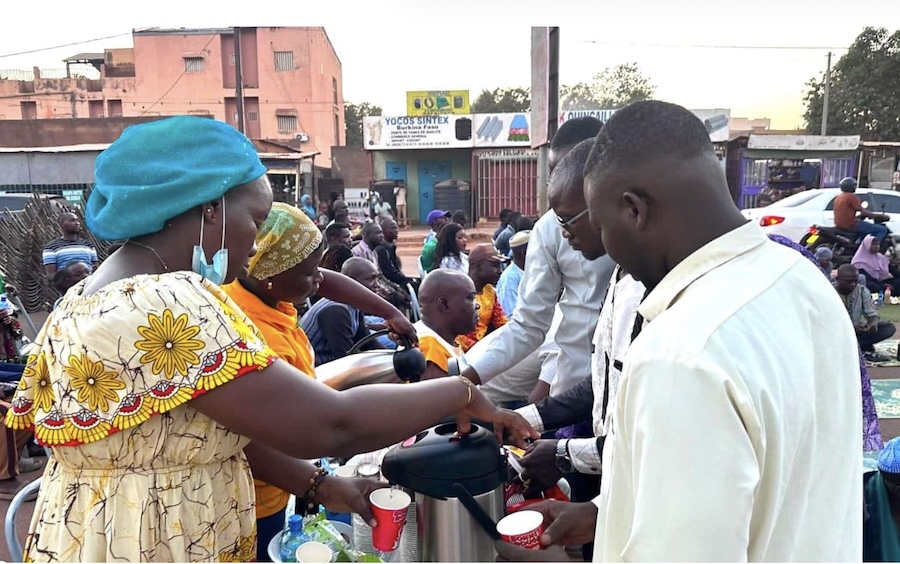
In Ouagadougou, interfaith fraternity was expressed around a shared table. On Friday, March 13, 2026, the Movement for a Culture of Peace and Love of the Homeland (MPAP), in collaboration with the Cheick Moaze Foundation for Social Cohesion, Peace, and Charity, organized a collective iftar bringing together Muslims, Christians, and members of other faiths.

This collective breaking of the fast of Ramadan is part of the “Stop Xtrem” project, a civic initiative aimed at preventing religious extremism and the violence that stems from it. Through this initiative, the organizers also hope to encourage dialogue between different faiths and promote a culture of tolerance and mutual respect.

According to them, fostering such opportunities for interaction helps to strengthen social cohesion and reinforce bonds of solidarity among the various segments of Burkinabè society.

The president of the Movement for a Culture of Peace and Love of the Homeland (MPAP), Paul Marie Zoma, expressed his satisfaction with the turnout during this spiritual period marked by both Ramadan for Muslims and Lent for Christians.

He stated that these two periods remind us of shared values ​​such as self-control, humility, forgiveness, generosity, and love of one’s neighbor.

(continued in right column)

(Click here for a French version of this article.)

Question related to this article:
 
How can different faiths work together for understanding and harmony?

(continued from left column)

“Our country has always been recognized for the quality of its interfaith coexistence.” This wealth must be preserved and strengthened. By sharing this moment, we send a message of hope, that of a united Burkina Faso, in solidarity and resolutely committed to the path of peace,” he affirmed.

Present at the ceremony, religious leader Cheikh Moaze also praised the initiative, which he considers a powerful symbol of fraternity. According to him, every believer must learn to accept others with respect and fairness. He reminded everyone that the Quran teaches Muslims to be just and benevolent towards all, including non-Muslims.

“We must learn to accept one another and respect our differences. We must break down the barriers between the children of Adam and Eve, for only God can judge His children,” he declared. From the Catholic Church, Paul Tiendrébeogo, president of the parish committee for interreligious dialogue, also welcomed this initiative, which promotes fraternity among believers. According to him, Ramadan and Lent are periods of purification and drawing closer to God.

“By sharing this moment of breaking the fast, we affirm together that peace begins with simple gestures: meeting, talking, sharing, and respecting one another. This is how we build a society founded on solidarity, fraternity, and love of country,” he declared.
Representing the Presidency of Burkina Faso, Dr. Samuel Kalkumdo, Minister-Advisor to the President, emphasized the fundamental unity of the Burkinabè people. According to him, beyond religious or ethnic affiliations, all must consider themselves members of the same nation.

“We are all sons and daughters of Burkina Faso,” he affirmed, praising the foresight of Captain Ibrahim Traoré and calling on the Burkinabè people to remain united behind him to build a strong and cohesive nation in the face of current challenges. The meeting was also attended by several traditional and religious leaders as well as civil authorities.

– – – – – –

If you wish to make a comment on this article, you may write to coordinator@cpnn-world.org with the title “Comment on (name of article)” and we will put your comment on line. Because of the flood of spam, we have discontinued the direct application of comments.
Essaouira, Morocco: Launch of the Prize for “Youth Voices for Peace”

. TOLERANCE & SOLIDARITY .

An article by Maghreb Arab Press Agency (translation by CPNN)

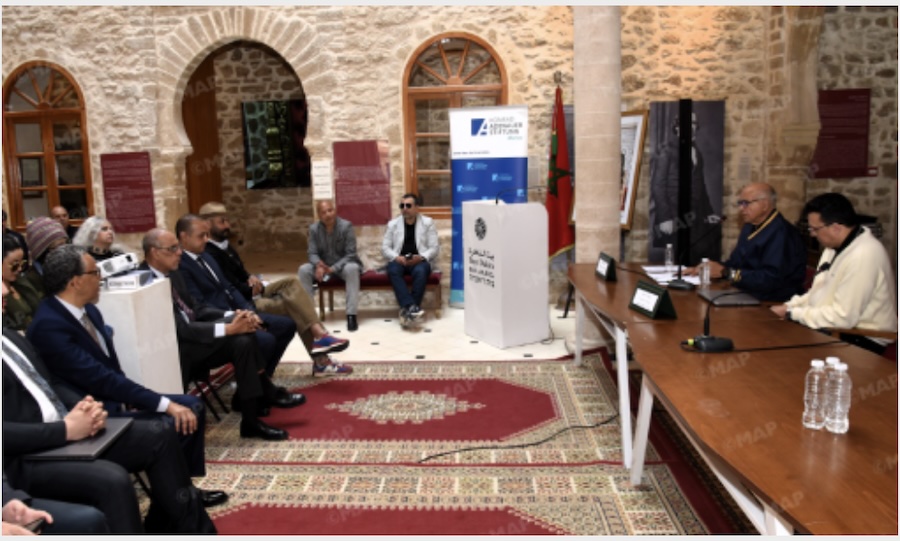
The announcement, on Sunday [March 29] at Bayt Dakira in Essaouira, of the launch of the “Nawal Ouzitane – Youth Voices for Peace” Prize was one of the highlights of an international meeting dedicated to peace and tolerance. It is meant to encourage youth engagement in promoting the values ​​of coexistence and living together.

This national prize aims to promote the creative expression of young people in various fields, reflecting their awareness of the values ​​of peace and their responsibility in strengthening them, with a particular emphasis on raising awareness among younger generations about the importance of dialogue, openness, and cultural diversity.

This initiative is also part of a national movement to make young people central actors in peace-related issues, through the provision of spaces for expression and participation, as well as the strengthening of educational and cultural roles in the fight against violence and extremism.

In a statement to MAP, Farid El Bacha, the founding president of the Moroccan House for Peace and Tolerance, indicated that this meeting was marked by two key moments. The first focused on the foundations of peace as defined by the Royal Directives, particularly regarding the role of religion as a value based on Light and Reason, the importance of dialogue between generations and continents, and the central role of education.

(Click here for the original article in French.)

(continued in right column)

Question related to this article:
 
Youth initiatives for a culture of peace, How can we ensure they get the attention and funding they deserve?

(continued from left column)

The second highlight was the announcement of the launch of the “Youth Voices for Peace” Prize, aimed at encouraging young people, from an early age, to embrace the values ​​of peaceful coexistence. This initiative, unique at the national level, reflects the conviction that young people play a crucial role in promoting a culture of peace through various forms of artistic expression.

Professor Anas Al Yemlahi of Abdelmalek Essaâdi University in Tetouan stated that Morocco’s selection within international bodies reflects several strategic advantages, notably its geographical position as a crossroads of continents and a gateway to Africa, the Atlantic, and the Mediterranean.

He praised the vision of His Majesty King Mohammed VI, as well as the roles assumed by the Kingdom in strengthening international stability and contributing to conflict resolution, consolidate Morocco’s position as an international actor in promoting peace, adding that this dynamic places the Kingdom among the world’s influential nations.

This meeting was part of the first session of the Board of Directors of the University of Cultural Sciences and Heritage of Tetouan-Essaouira, providing an opportunity for discussion on issues of peace, development, and international academic cooperation.

The meeting’s program included several themes, notably the Atlantic Partnership and multilateral cooperation, the international system and the dynamics of conflict, the challenges of building inclusive peace, and the role of the dialogue of civilizations in royal speeches.

– – – – – –

If you wish to make a comment on this article, you may write to coordinator@cpnn-world.org with the title “Comment on United Nations Alliance of Civilizations” and we will put your comment on line. Because of the flood of spam, we have discontinued the direct application of comments.
Algeria Hosts the Arab Forum for Youth, Peace and Security

. TOLERANCE & SOLIDARITY .

An article from the United Nations Development Programme, translated by CPNN

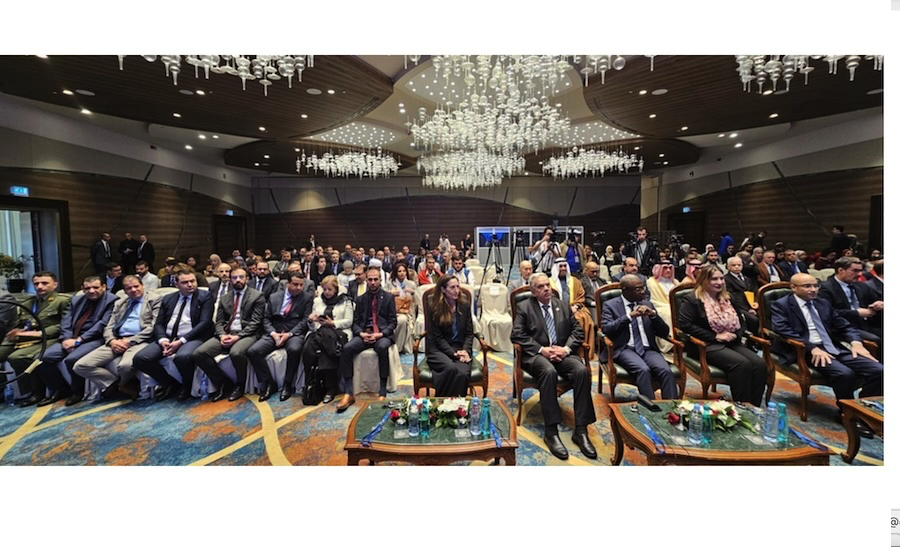
On March 28 and 29, 2026, the Sheraton Hotel in Algiers hosted a unique Arab dialogue bringing together young people, experts, and policymakers to discuss peace, security, and sustainable development.

This forum was organized by the Ministry of Youth in collaboration with the United Nations Development Programme (UNDP) in Algeria, under the auspices of the Arab League and with the support of Japan, within the framework of the Arab Strategy for Youth, Peace and Security.

(Click here for the original article in French.)

(continued in right column)

Question related to this article:
 
Youth initiatives for a culture of peace, How can we ensure they get the attention and funding they deserve?

(continued from left column)

At the opening ceremony, the Minister of Youth emphasized the central role of young people in regional transformations and Algeria’s commitment to placing youth at the heart of national public policies. The UNDP Resident Representative in Algeria, Natasha Van Rijn, highlighted the essential role of young people in consolidating peace, while stressing the importance of expanding partnerships at the Arab and African levels.

The Tunisian Minister of Youth and Sports reiterated the strategic importance of investing in youth to build stable and secure societies, commending the cooperation between Algeria and Tunisia in this area. The Yemeni Minister of Youth and Sports, for his part, underscored the crucial role of young people in spreading a culture of peace and building a more stable future.

Under the slogan “Partners for the people: a youth who construct the future,” the forum organized workshops to identify the main challenges to youth participation and formulate concrete recommendations to strengthen their role in decision-making and peacebuilding.

The forum concluded on March 29, 2026, reaffirming the importance of valuing the contributions of young people and translating recommendations into concrete actions at the national and regional levels.
– – – – – –

If you wish to make a comment on this article, you may write to coordinator@cpnn-world.org with the title “Comment on United Nations Alliance of Civilizations” and we will put your comment on line. Because of the flood of spam, we have discontinued the direct application of comments.

Possible Pathways to Nuclear Abolition

DISARMAMENT & SECURITY .

Special to CPNN from Timmon Wallis

How the world can achieve verifiable, irreversible global nuclear disarmament before it’s too late.

We are at the moment facing a very backwards trend in pretty much everything to do with international relations. The last remaining treaty in nuclear arms control has recently expired. And the response from Trump was, “if it expires, it expires” . . .

Trump is surrounded by people who have a vested interest in keeping the nuclear weapons business going for as long as they can.

So this is where the Treaty on the Prohibition of Nuclear Weapons (TPNW) comes in. But what is the use of this treaty if the US and the other nuclear powers have not joined it? In fact, all the countries that are in the TPNW are already in the NPT, where they promised not to develop nuclear weapons. So what is the point of another treaty that just makes that same commitment?

Article 1e of the TPNW bans assisting, encouraging, or inducing anyone, in any way, to engage in any of the activities prohibited to a States Party of the treaty.

Treaties, as you know, are agreements between governments. The governments must not develop, manufacture or stockpile nuclear weapons. But this clause refers to anyone, not just governments. In other words, people, corporations, banks, insurance companies – the parties to the treaty must not assist anyone involved in the development, manufacture or stockpiling of nuclear weapons. And the people and corporations that are involved do not just have to be in or based in that country. The TPNW says “anyone.”

So, theoretically at least, the 74 countries that have so far joined the TPNW are forbidden under this treaty from having anything to do with the corporations that develop, manufacture or stockpile nuclear weapons.

Now here’s the thing. The two dozen major nuclear weapons companies don’t just operate in the US or the UK or France. These are multinational corporations. They have operations all over the world, including in many of the countries that have already joined the TPNW.

They also have offices in other countries, they have contracts and projects, they sell their products and services to those countries. They also have suppliers – a whole supply chain – involving many other countries, to obtain the resources and the parts they need. And crucially, they have investors in those countries.

So far, only Ireland has fully divested its sovereign funds and major banks from the nuclear weapons companies (along with Switzerland, which is not even in the treaty) but others should follow – including countries like Austria, South Africa, New Zealand, Philippines, Indonesia, Mexico… These are not insignificant countries and the impact on these companies could be huge.

Another clause in the TPNW that is crucially important for putting pressure on these companies is Article 5, which obliges all parties to the treaty to adopt national legislation that applies the prohibitions of the treaty to persons, including “legal” persons in the country, and defines legal penalties for violations of those prohibitions. As I pointed out, treaties apply to countries, but by passing laws in each country which make it illegal for anyone in that country to have anything to do with nuclear weapons, the TPNW is once again tightening the noose on these companies and the people who work for them – especially CEOs, members of the board of directors and other high level vice presidents and so on.

In Ireland, once again our test case for this, the Prohibition of Nuclear Weapons Act was passed in 2019, making it offense, punishable by up to life in prison, for anybody in Ireland having anything to do with nuclear weapons, including assisting anybody else having anything to do with nuclear weapons. So now it’s not just the sovereign fund that belongs to the state and is therefore required to divest from these companies, but also the banks and anybody else with investments in Ireland.

(Continued in right column)

Question related to this article:
 
Can we abolish all nuclear weapons?

(Continued from left column)

Clearly if more and more countries take on these responsibilities of the TPNW, the companies will find themselves under more and more pressure from governments as well as from investors, suppliers, customers and even workers working for those companies.

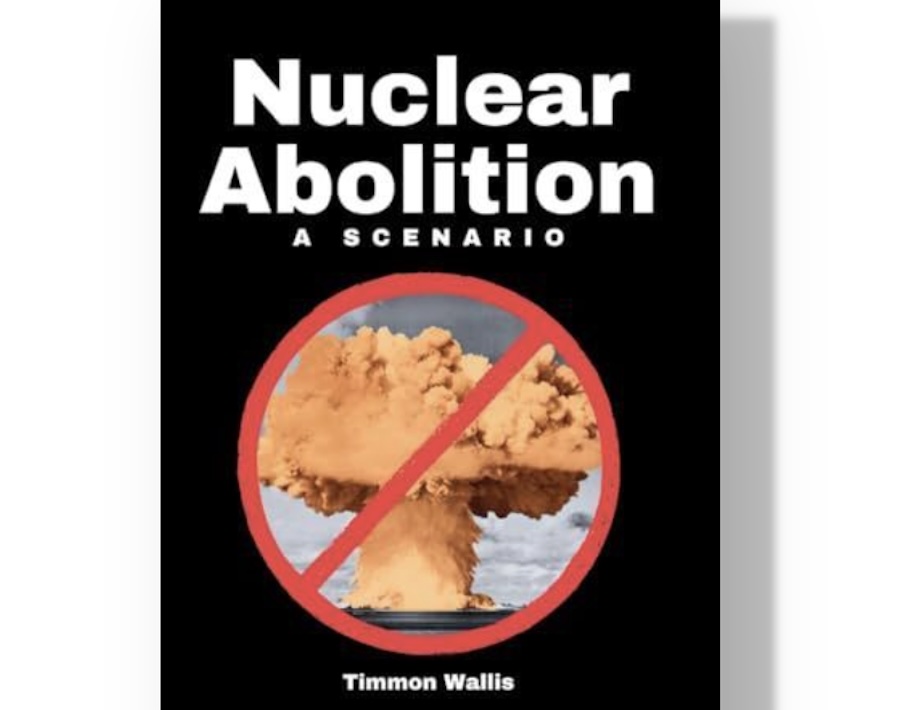
My book, Nuclear Abolition: A Scenariois imagines a scenario where more and more of the states parties to the TPNW are moving on to these next steps, as more countries are also signing and ratifying the treaty.

Currently we have 74 countries who have ratified the TPNW.

We have another 25 countries who have signed the treaty but not yet ratified it. That makes 99 so far, a majority of the 197 countries in the world able to sign international treaties.

We then have another 40 countries who have been consistently voting for the treaty but have not yet signed it themselves.

We have another 12 countries who have been abstaining…
Including, for instance, Switzerland, where campaigners just succeeded in collecting over 100,000 signatures to put it on the ballot; including Australia, whose Prime Minister is personally committed to the TPNW, whose party has voted to join the TPNW, and just won a re-election with a strong mandate.

Then we have at least 20 countries who are under enormous pressure to join the treaty, including countries in NATO that have government ministers committed to joining the treaty, including the former Prime Minister of Iceland, as well as opinion polls showing overwhelming support from the general public…

I already mentioned the ruling party in Australia is committed to signing the TPNW. So is the ruling party in Norway, and the coalition government in Spain. The previous coalition in Germany was also committed to joining the TPNW, although clearly the current government is not.

Who knows what it will take for one of these countries to join the TPNW, and then another, and another and another. Sooner or later, it will happen. I offer some possible scenarios that could lead to this in my book . . .

Sooner or later, we’re either going to get these countries on board for the elimination of nuclear weapons or we’re going to have a nuclear war. I certainly hope it’s the former.

But it’s also not just these European countries that ultimately have to get on board with this. My book then looks at the situation within the US. The peace and anti-nuclear movement in the US is certainly much weaker than it is or has been in Europe. But there are important steps being taken, and I will highlight just a few:

I hope you all heard a few years ago that the city council of New York voted to divest from the nuclear weapons companies? A few other large cities have already done so, including Oakland, CA. Most recently Philadelphia also voted to divest from nuclear weapons.

My own small city of Northampton, MA has not only divested from these companies, but announced that it will not do business with any of these companies. It has notified these companies that they are not eligible to bid for city contracts.

And there is currently legislation pending in the MA state legislature to do both of these things. It is unlikely to pass in this current session, but there is a growing movement in support of this…

Altogether, these steps being taken across the US and around the world may or may not be enough to pressure the nuclear weapons corporations into seeking other ways to make a profit. After all, these corporations don’t exist in order to make nuclear weapons. They exist in order to make a profit for their shareholders.

Once it starts to become unprofitable for them to be involved in the nuclear weapons business, they will move on to other things – as many of them did in the 1980s when faced with divestment, boycotts and public opprobrium. And while there were many factors at play which led to the fall of the Berlin Wall and the end of the Cold War, the pressure on nuclear weapons corporations at that time was certainly one of them.

Those corporations, like General Electric and Ford Motor Company, not only pulled out of their involvement with nuclear weapons. They demanded that Congress and the Reagan Administration take steps to restore public confidence in those corporations, by cutting back on the nuclear arms race and signing agreements with the Soviet Union.

Pressure on the corporations “worked” then, and it can work again! And with Trump and Putin at the helm, we can only hope it works before it’s too late.

– – – – – –

If you wish to make a comment on this article, you may write to coordinator@cpnn-world.org with the title “Comment on (name of article)” and we will put your comment on line. Because of the flood of spam, we have discontinued the direct application of comments.