Universal Peace: A Cosmic Coincidence?

. EDUCATION FOR PEACE .

An article sent to CPNN from J.S. Sadin

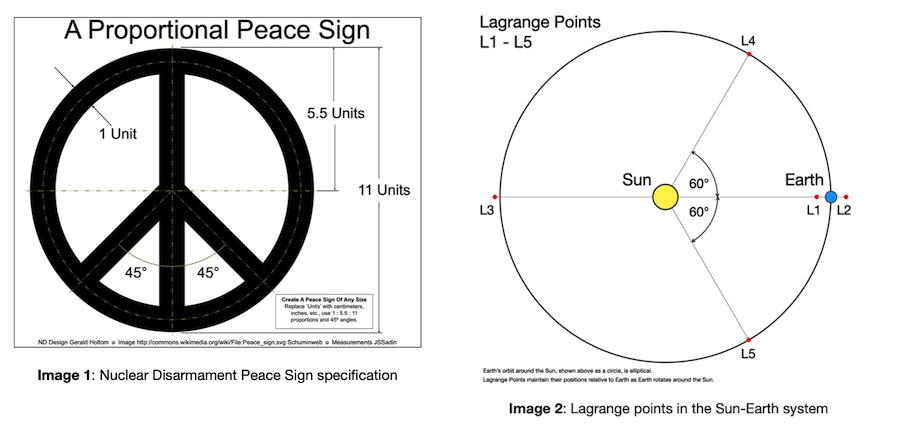
In 2015 I needed to accurately reproduce a peace sign for a project. Searching the Internet for imagery I selected a thick lined peace sign posted on Wikimedia Commons representing the iconic image from the 1960s anti-war movement. A few measurements led to A Proportional Peace Sign specification enabling anyone to create a peace sign of any size. (image 1 below)

Later I learned the peace sign was originally created in 1958 by an English graphic designer, Gerald Holtom. It was adopted as the British Campaign for Nuclear Disarmament logo. Holtom based his design on a composite of the semaphore flag positions for the letters ’N’ (a downward facing ‘V’) and ‘D’ (a vertical line) for Nuclear Disarmament, all within a circle.


(click on image to enlarge)

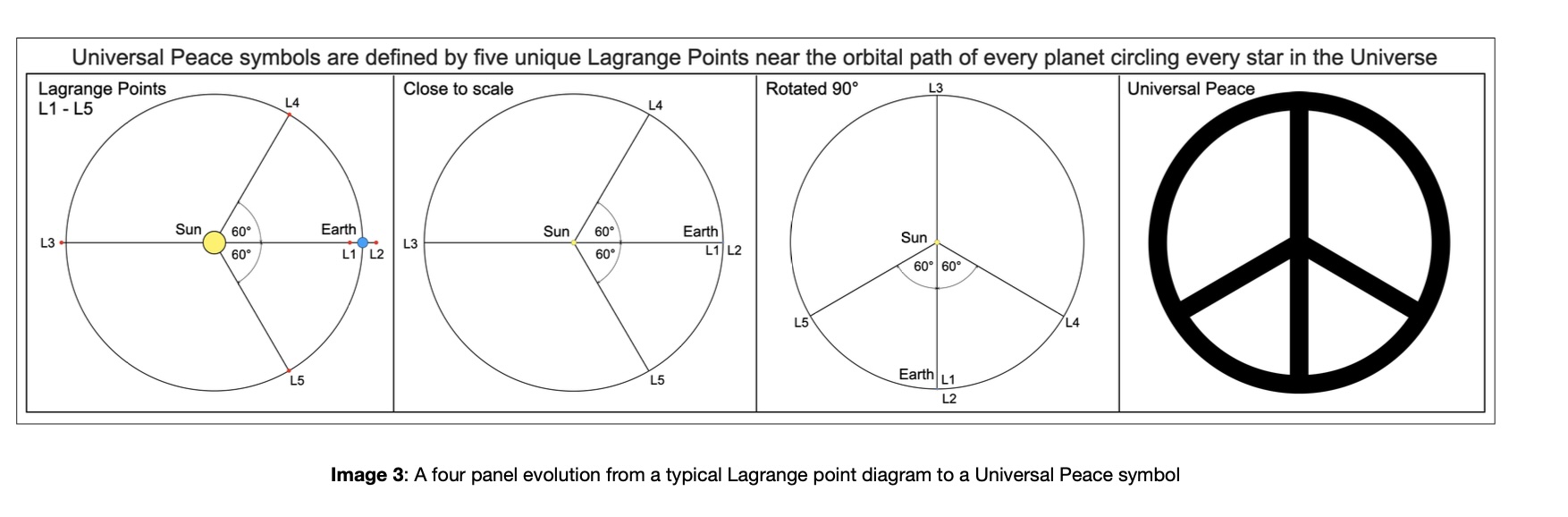
In 2024 I heard NASA positioned the James Web Space Telescope on the opposite side of Earth from the Sun, at a location in space called Lagrange point 2 (L2), because L2 is a gravitationally stable point in space, which means it takes minimal fuel to keep the Web telescope (or any satellite) correctly positioned.

There are five Lagrange points on or near the orbit of Earth around the Sun. It turns out there are also five unique Lagrange points like this on and near the orbit of each planet in our solar system, and the orbit of every planet orbiting every star in the Universe, because the laws of physics defining Lagrange points are universal. (image 2 above)

Lagrange point history began around 1750, when Lagrange points L1, 2 and 3 were discovered by Leonhard Euler, a Swiss mathematician. The remaining Lagrange points, L4 and 5, were then discovered a decade later by Joseph-Louis Lagrange, the Italian mathematician, physicist and astronomer, who later worked out the details in his “three-body problem” essay, published in 1772.

Question related to this article:
 
Can popular art help us in the quest for truth and justice?

Nearly two centuries later, in the late 1950’s, the post-war nuclear arms race was well underway. Average people began pushing back against the existential danger posed by the proliferation of nuclear weapons. Gerald Holtom’s Campaign for Nuclear Disarmament logo could have been based on any number of things, but his creative decision to combine elements of the semaphore system used for nautical and emergency communication led to what eventually became the iconic peace sign.

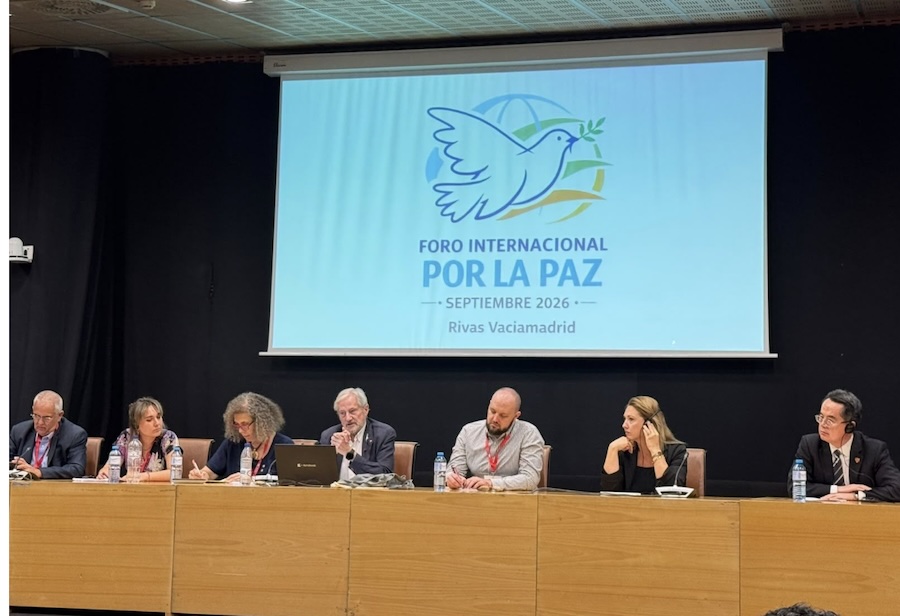
It’s notable that these unrelated histories, separated by hundreds of years, produced remarkably similar symbols: one intentionally, the other inherently. Many of us might not even notice the differences; a coincidence that nearly defies explanation: What are the odds that a peace sign, a symbol representing the absence of war, would exist in every two-body system in the Universe?

Today, the changes we’re witnessing on the world stage are jarring and disruptive. The international rules- based order established eighty years ago by the U.S. after WWII is faltering, and mid-power nations are reconsidering security alliances thought to be iron clad. They know historically chaos can breed chaos, forcing some to begin rearming while Russia, China and America eye regional opportunities created by events, increasing the odds of conflict.

Life is the animate of the inanimate of the infinite, existing only on Earth. By any measure life is the most precious thing in the Universe. The next war this world is capable of delivering upon itself would be devastating to civilization and higher forms of life. And while the world will turn with or without us, we have a stake in humanity’s future for our children and their children’s children. All of us living today owe our descendants a peaceful clean planet, and peace is the precondition to equitably share the only world we may ever know.

A coincidental symbol resembling Holtom’s original may simply be a sign more peace is our only hope. (image 3 below)

– – – – –

If you wish to make a comment on this article, you may write to coordinator@cpnn-world.org with the title “Comment on (name of article)” and we will put your comment on line. Because of the flood of spam, we have discontinued the direct application of comments.

The Rivas International Peace Forum Approves a Roadmap to Fight Escalating Militarism and Defend Peace, Multilateralism, and Peaceful Coexistence

FREE FLOW OF INFORMATION .

An article from the International Peace Bureau

Against an international backdrop marked by growing instability and global rearmament, the International Peace Forum concluded this Friday (September 25), in Rivas-Vaciamadrid. It brought together 63 organizations from 32 countries with the aim of mapping out diplomatic alternatives to what they describe as one of the most dangerous periods since World War II.

Video of Forum on facebook

The forum’s panels centered the debate on the need to transition away from a unipolar international order—sustained by record increases in global military spending, which reached $2.718 trillion in 2024—toward a multilateral framework of peaceful coexistence.

Speakers at the forum denounced the financial priorities of global powers, noting that they continue to divert essential funds that should instead go toward healthcare, housing, and the fight against hunger. Similarly, during the working sessions and five thematic panels held at the gathering, delegations analyzed key conflict hotspots:

° Middle East and North Africa: The forum condemns the crisis in Palestine and Lebanon, as well as the recent aggression against Iran that threatens energy security in the Strait of Hormuz.

° Latin America: It demands the immediate removal of the economic blockade and energy siege imposed by the United States on Cuba, while also rejecting coercive measures and aggression against Venezuela.

° Eastern Europe and Sub-Saharan Africa: The forum urged negotiated solutions to end the war in Ukraine and the dynamics of conflict in Sudan, the Democratic Republic of the Congo, and Western Sahara.

The forum also made an urgent appeal for the signing of an international treaty guaranteeing the prohibition and ecologically safe dismantlement of nuclear arsenals, which currently exceed 12,000 warheads globally. Furthermore, peace was linked to climate justice following the commitments of COP30 in Belém, and special focus was placed on protecting women and migrants affected by wars and human trafficking networks.

Unlike other international gatherings, the Rivas Forum aims not to end merely with a statement of principles and intentions. To ensure the continuity of its work and follow up on agreements, the participating organizations have established a roadmap with commitments to create:

° International Coordination Mechanism: Concrete proposals to formalize a permanent communication and cooperation network will be presented before the end of 2026, operating continuously through 2027.

° New Monitoring Institutions: Approval was granted to propose an International Observatory on Conflict Resolution and Militarism to prepare periodic reports, alongside the structure of a Parliamentary Network connecting lawmakers from Latin America, the Caribbean, and Europe.

° Mobilization Calendar: Endorsing the Stop Rearm Europe campaign and actively joining the days of pacifist mobilization scheduled for November 20 and 21, 2026, was also agreed upon.

Finally, the forum proposed promoting the submission of peace resolutions to the UN, UNESCO, WHO, and IMO, as well as seeking strategic diplomatic alliances with global integration platforms such as BRICS+, CELAC, the African Union, and ASEAN.

Question related to this article:

Where in the world can we find good leadership today?

(article continued from left column)

Political and social organizations and embassies

1- Partido Comunista de España 
2- Izquierda Unida
3- Ayuntamiento de Rivas Vaciamadrid 
4- Partido Comunista de Cuba
5- Partido Comunista de Portugal
6- Partido Comunista de Francia
7- Foro Europeo 
8- Partido Comunista de Uruguay
9- Frente Amplio de Uruguay:
10- PTB
11- Refundación Comunista 
12- Stop Rearm Europe
13- Intal Bélgica / RedFox
14- FPLP
15- Revolución Ciudadana de Ecuador
16- Unión de Juventudes Comunistas de España (UJCE) 
17- Asociación Patrice Lumumba
18- Transform Europe 
19- Foro de São Paulo
20- Celac Social 
21- Partido Comunista Colombiano y Pacto Histórico
22- International Peace Bureau (IPB)
23- Socialistas Democráticos de América (DSA) 
24- Federaciob Democrática Internacional de Mujeres 
25- Moviniento Democratico de Mujeres
26- Pax Christi 
27- Justicia y Paz España 
28- Morena
29- Partido de la Izquierda Europea (PIE) 
30- World Beyond War
31- Alianza Negra por la Paz
32- Al -Haq 
33- Partido Comunista de Chile
35- CCOO
36- UGT
37- Mundubat
38- Unadikum
39- Movimiento Pacifista de Castilla-La Mancha Mujeres de Negro
40- Bloque de Resistencia y Rebeldía Popular de El Salvador, Madrid:
41- Argentina Soberana, Madrid
42- Solidaridad con Cuba, Madrid
43- Asociación Guinea Bissau Amilcal Cabral
44- Asociación Mujeres Africanas en España
45- AKEL Chipre
46- Gabon
47- Senegal:
48- Embajada China
49- Embajada Cuba 
50- Embajada Polisario
51- Movimiento Pan-africano 
52- Embajada Palestina
53- Embajada Vietnam
54- Partido Comunista de China
55- Centro Estudios y Trabajos Nueva Ruta de la Seda
56- Fundacion Mwhana Glenn
57- Guinea Ecuatorial
58- Iniciativa por el Retorno a Palestina 
59- Asociación Violeta Parra Chile
60- Partido Comunista Peru
61- Partido Comunista Bolivia 
62- Catedra China 
63- Asociación Embajadores/as por la Paz 

– – – – – –

If you wish to make a comment on this article, you may write to coordinator@cpnn-world.org with the title “Comment on (name of article)” and we will put your comment on line. Because of the flood of spam, we have discontinued the direct application of comments.

Southeast Europe: Final conference ”Innovators lab: GenZs Game-Based Peacebuilding”

… EDUCATION FOR PEACE …

An article from SALTO-youth

Conference – Symposium – Forum

2-4 November 2026 | Penik, Bulgaria

This event is designed as a comprehensive platform for the consortium to widely disseminate the results of their innovative work in game-based peace-building methodologies

InnovatorsLab: Gen Z’s Game-Based Peace Building is a transformative initiative empowering Generation Z to lead peacebuilding efforts through creativity, technology, and play. Backed by the Erasmus+ Programme, our cross-border project unites organizations from Bulgaria, Romania, Turkey, Georgia, and Armenia to co-develop groundbreaking methods in conflict transformation. We believe that Gen Z learns differently—they are digital natives, collaborative thinkers, and value-driven. Our mission is to create interactive, gamified, and impactful educational tools that resonate with their needs while building a culture of peace.

(Continued in right column)

Question for this article:

Where can we find games for peace?

(Continued from left column)

KEY ELEMENTS: 

Opening Session and Project Results – Presentation of the project journey, key milestones, activities, and achievements. Participants will be introduced to the main outputs, including the educational modules, toolkit, and resources developed throughout the project.

2. Peace Escape Room Demonstration – A live demonstration of the Peace Escape Room created during the project. Young people will participate in the activity while facilitators explain its educational objectives, methodology, and learning outcomes.

3. Panel Discussion: Innovation in Peacebuilding – Interactive discussion with youth workers, educators, and stakeholders on the role of game-based learning and innovative approaches in promoting peace, dialogue, and social cohesion.

4. Working Groups and Future Recommendations – Participants will work in small groups to explore how the project’s methodologies, share tools and best practices that can be applied in local communities and organisations. Key recommendations and ideas for future cooperation will be collected and presented.

5. Networking Reception – The conference will conclude with a networking session and cocktail reception, providing opportunities for participants to exchange experiences, build partnerships, and discuss future initiatives.
 
More information can be found here. 

– – – – – –

If you wish to make a comment on this article, you may write to coordinator@cpnn-world.org with the title “Comment on (name of article)” and we will put your comment on line. Because of the flood of spam, we have discontinued the direct application of comments.

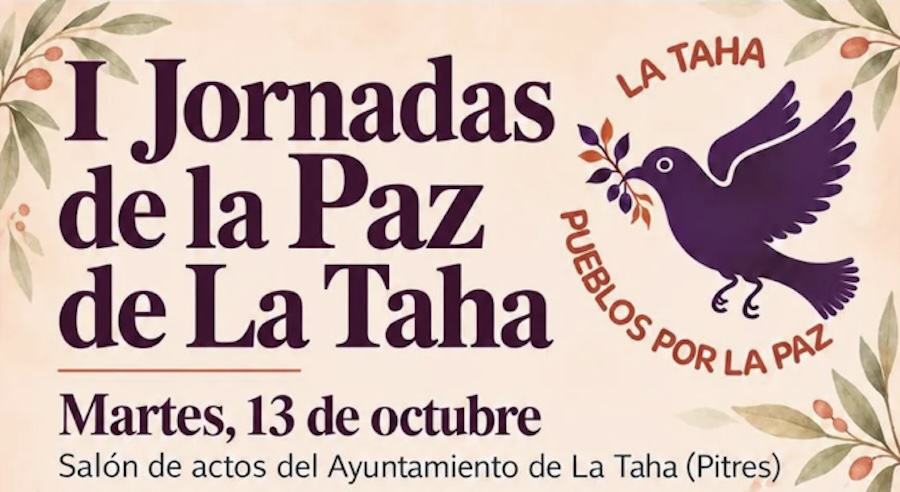
Spain: First Peace Conference of La Taha

.. DEMOCRATIC PARTICIPATION ..

An article from Universidad de Granada

The municipality of La Taha hosts the 1st Peace Conference, an initiative dedicated to reflection and dialogue on peacebuilding, rights and the role of rural communities.


The day will begin at 5:00 p.m. with the presentation of the project “La Taha: Villages for Peace”, by José Antonio García Salguero , mayor of La Taha.

Next, at 5:30 p.m., the conference “Peace through rights” will take place, given by Pedro Mercado , rector of the University of Granada.

The program will conclude with the round table “Peace in the rural world”, scheduled for 6:15 p.m., in which Purificación Ubic , deputy director of the Institute of Peace and Conflicts of the University of Granada; Alena Kárpava , coordinator of the Master’s Program in Culture of Peace, Conflicts, Education and Human Rights at IPAZ; Antonio Ortega , academic secretary of IPAZ; and Federico Velázquez , environment representative of UNESCO Andalusia.

Questions for this article:

How can culture of peace be developed at the municipal level?

(continued from left column)

The conference is organized by the Andalusian Association for UNESCO, the Institute for Peace and Conflict Studies (IPAZ), the University of Granada and the La Taha City Council.

The initiative seeks to bring reflection on peace to the rural sphere, relating rights, territories and communities as spaces from which to promote peacebuilding processes.

Date: Tuesday, October 13, 2026
Location: Assembly Hall of the Tahá Town Hall (Pitres)
Time: 5:00 PM
Organized by: Andalusian Association for UNESCO, Institute for Peace and Conflict Studies (IPAZ), University of Granada and La Taha Town Hall
More information: Institute for Peace and Conflict Studies (IPAZ) | eirene@ugr.es

(See also Manifesto de la Paz de Taha.)

– – – – – –

If you wish to make a comment on this article, you may write to coordinator@cpnn-world.org with the title “Comment on (name of article)” and we will put your comment on line. Because of the flood of spam, we have discontinued the direct application of comments.

(Click here for the Spanish original of this article)

Peru: Second Conference “Peace Mediators: Containment, Dialogue and Conflict Resolution”

… EDUCATION FOR PEACE …

An article from the Government of Peru

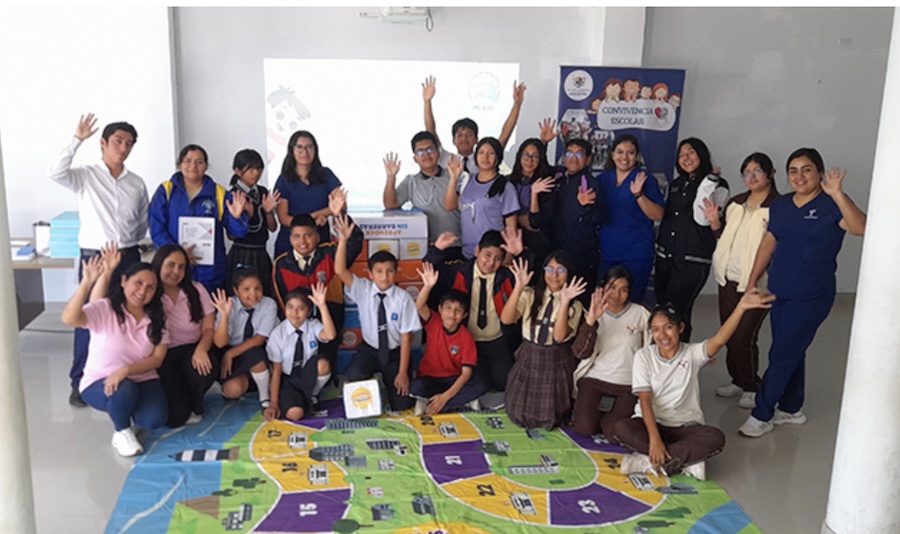
From September 15 to 17, the II Strengthening Workshop “Peace Mediators: Tools to Contain, Dialogue and Resolve Conflicts” was aimed at strengthening students’ abilities to deal with these situations peacefully and contribute to a school environment based on respect, empathy and dialogue.

During the sessions, students and teachers from public and private educational institutions in the jurisdiction participated in games, group dynamics, reflection and awareness activities, designed to promote socio-emotional skills and provide tools for the prevention and initial attention to situations of tension in the school environment.

(Continued in right column)

(Click here for the Spanish original of this article)

Question for this article:

Mediation as a tool for nonviolence and culture of peace

(Continued from left column)

In addition, knowledge was strengthened on the application of initial Psychological First Aid (PFA) tools , as well as strategies for assertive communication, active listening and peaceful conflict resolution, which are fundamental to building healthy relationships and safe and inclusive educational spaces.

On the last day of the event, the valuable collaboration of Aprender Sin Barreras (Learning Without Barriers) was secured. This organization was in charge of a presentation and the development of group dynamics that enriched the participants’ training experience, promoting reflection and commitment to a culture of peace from educational institutions.

This initiative reaffirms the commitment of UGEL 02 La Esperanza to strengthening school coexistence, promoting the active participation of students as agents of change capable of mediating, dialoguing and contributing to the resolution of minor conflicts in their educational communities.

– – – – – –

If you wish to make a comment on this article, you may write to coordinator@cpnn-world.org with the title “Comment on (name of article)” and we will put your comment on line. Because of the flood of spam, we have discontinued the direct application of comments.

Mexico: The 19th International Poster Biennial brings together creators from 80 countries around the culture of peace

EDUCATION FOR PEACE .

An article from The Government of Mexico (translation by CPNN)

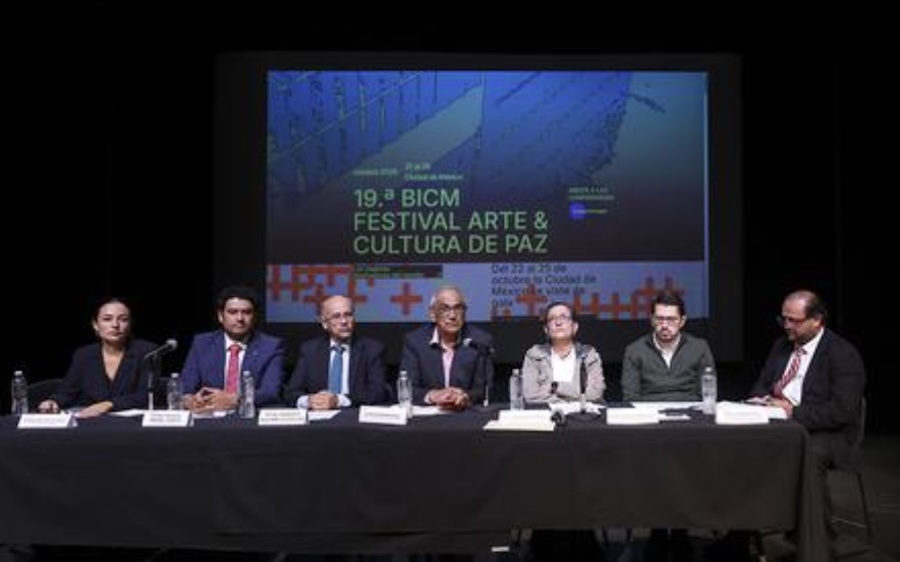
With representation from 80 countries, the 19th International Poster Biennial in Mexico (BICM) will hold its central days from October 22 to 25, 2026, within the framework of the 19th Art & Culture of Peace Festival, which will bring together exhibitions, conferences, workshops, music and film in different spaces in Mexico City.

The Ministry of Culture of the Government of Mexico supports this edition through the Support for Cultural and Artistic Festivals (Profest) program, and it is part of the National Circuit of Festivals for Peace. Its venues include the Library of Mexico, the Vasconcelos Library, and the Digital Culture Center (CCD).

During the program’s presentation at the Multipurpose Forum of the Library of Mexico, the director of the BICM, Javier Bermúdez, pointed out that the culture of peace, the central theme of this edition, continues the reflection that the Biennial has maintained since 1990: ecology, justice, inclusion, tolerance, and respect. “For us, this theme of a culture of peace is not just a slogan,” he stated.

The awards ceremony and opening of the 19th BICM will take place on October 22nd at the Library of Mexico, featuring an exhibition of the finalist works. The proposals employ diverse graphic languages and present the poster as a space for dialogue and collective reflection.

The Vasconcelos Library is hosting nine keynote lectures and ten workshops, selected through a portfolio review process, from over 200 students across Mexico. The program will feature prominent figures in design and illustration, including Isidro Ferrer, Craig Frazier, Byoung-Il Sun, Annik Troxler, Karine Savard, Alejandro Magallanes, Eduardo Terrazas, and Yuko Shimizu.

(continued in right column)

(Click here for the original Spanish version of this article.)

Question for this article:

Do the arts create a basis for a culture of peace?

Is there progress towards a culture of peace in Mexico?

(continued from left column)

From October 24 to November 9, the Digital Culture Center will present Drawing Peace: 100 Latin American and Caribbean posters, with graphic proposals focused on coexistence, rights, justice, solidarity, and social transformation.

Poland, a historical benchmark for poster biennials, will be present with the exhibition Mazovia, Poland–Mexico City, Mexico: Ties of Friendship. The program also includes collaborations with Japan, South Korea, and Taiwan. 

As part of the commemoration of 200 years of diplomatic relations between Mexico and France, the Museum of Foreign Affairs will present, from October 16 to November 27, “Mexico and France, 200 Years of Friendship: Visual Letters Sent from One Shore to the Other,” an exhibition in which artists from both countries reinterpret cultural references from the other.

Veracruz, guest of honor 

Veracruz will participate as guest of honor with music, film, puppetry, visual arts, and design. The event includes a showcase from the Veracruz Film Archive, activities for children, and graphic design projects by national and international artists.

On October 22, the Esperanza Iris City Theater will host Jarocho Son, featuring Son de Madera, Son Ellas and guest artists, in a dialogue between Veracruz musical tradition and contemporary languages.

Flamenco dancer and choreographer Ericka Suárez, representative of Jarocho SON, explained that the project combines son jarocho and traditions from the Sotavento and Huasteca regions with jazz, flamenco, and other contemporary expressions. “An exploration of our past to design the future of our music,” she said.

On October 25, the Xalapa Symphony Orchestra of the Veracruzana University, under the direction of Martin Lebel, will close the Festival at the Esperanza Iris City Theater. The program will include Mexico City, by Mexican composer Diana Syrse, and Symphony No. 5 by Gustav Mahler.

Founded in 1990, the International Poster Biennial in Mexico is a platform for exchange around graphic design and visual culture, and a space to reflect on social issues through posters.

– – – – – –

If you wish to make a comment on this article, you may write to coordinator@cpnn-world.org with the title “Comment on (name of article)” and we will put your comment on line. Because of the flood of spam, we have discontinued the direct application of comments.

Nobel Peace Prize 2026

. . HUMAN RIGHTS . .

A press release from the Nobel Prize

The Nobel Peace Prize for 2026 goes to a person who with exceptional courage and integrity has led the way towards a more comprehensive global legal order. This year’s laureate has been instrumental in ensuring that war crimes, crimes against humanity and genocide are prosecuted.

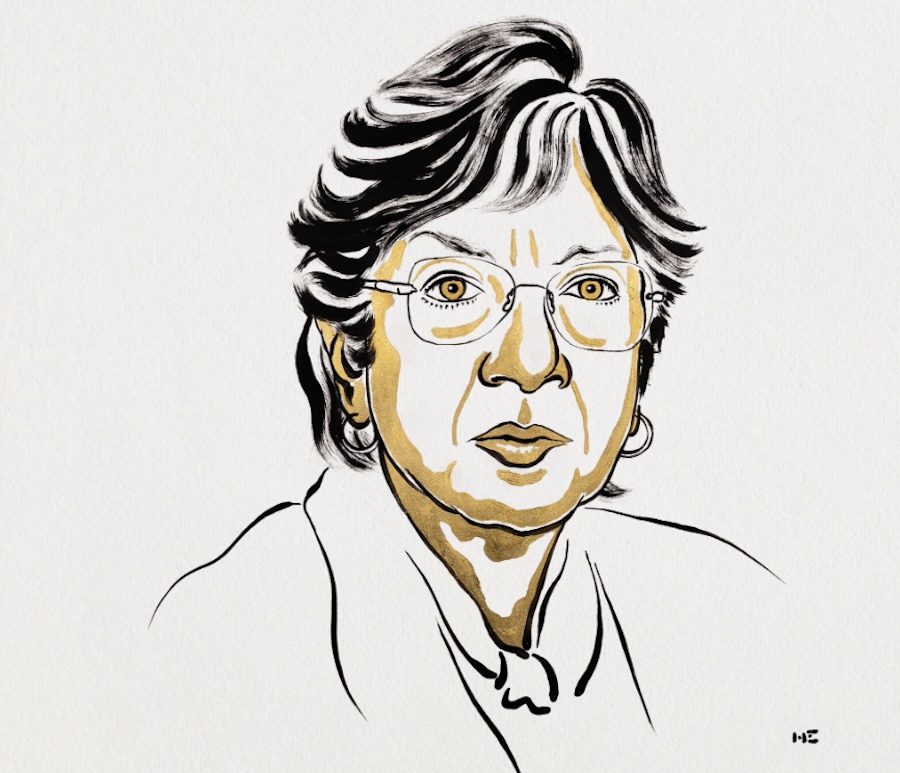
The Norwegian Nobel Committee has decided to award the Nobel Peace Prize for 2026 to Navanethem “Navi” Pillay for her efforts to promote peace and international law.


Ill. Niklas Elmehed © Nobel Prize Outreach

Navi Pillay’s commitment to universal legal principles and her firm moral compass are constants in a long career. Born into a family of Indian Tamil origin under apartheid in Durban, South Africa, Pillay became a lawyer and legal pioneer, confronting deep structural discrimination, segregation and exclusion. A common thread runs from her early work defending Nelson Mandela and others who stood up against apartheid to her service as a judge in some of the key international court cases of our time.

This year’s laureate has significantly enlarged the scope and impact of international law. She has served as a judge on the High Court in South Africa, the International Criminal Tribunal for Rwanda and the International Criminal Court. She was the United Nations High Commissioner for Human Rights and, until recently, she chaired the UN Independent International Commission of Inquiry on the Occupied Palestinian Territory. Today Navi Pillay is a judge on the International Court of Justice in the case where Myanmar stands accused of genocide.

In historic international court cases, she has shown that legal measures can help prevent acts of war and violence. Navi Pillay has also contributed to strengthen the institutions of international law. Her independence, expertise and steadfastness have made her one of the most respected international jurists of our time.

The first Nobel Peace Prize was awarded 125 years ago. Already then, the Norwegian Nobel Committee underscored the importance of resolving conflicts through international law – a theme that has remained prominent throughout the history of the peace prize. The reach of international law expanded after the Second World War, in particular with the creation of the UN institutions. The key insight was that lasting peace must be built on legal principles, not on the will of the strong or a fragile balance of power. Additional legal mechanisms were introduced in the post-war decades, and momentum picked up further after the end of the Cold War.

However, the rules-based international order has never been perfect. The greatest powers have often evaded responsibility. In practice, cases brought under international law have produced different results depending on who is the perpetrator and who is the victim.

(Continued in right column)

Question related to this article:
 
How can war crimes be documented, stopped, punished and prevented?

The Nobel Peace Prize: Does it go to the right people?

(Continued from left column)

Nonetheless, we have seen that more and more conflicts are being addressed through diplomacy, treaties and legal mechanisms, rather than threats, violence and warfare. Leaders and populations alike have come to the same conclusion: international law is a foundation for a more peaceful world.

At a time of existential challenges – including more wars and conflicts than the world has seen in a long time – international law is no longer just a supplement to peace and security. It is an absolute necessity.

And yet, the system of international law is under tremendous pressure, and its institutions are under attack. We see a shift towards power politics at the expense of legal frameworks and global respect for law and justice. Whenever might overtakes right, it undermines stability, trust and peaceful co-existence.

In awarding this year’s Nobel Peace Prize, the Norwegian Nobel Committee wants to remind the world that the rule of law – national and international – underpins the system we have set up to ensure peace and resolve conflicts non-violently. Peace requires justice.

History has shown that a world operating without the rule of law is unjust, unwise and inhumane. The judges – those who guard the thin red line between order and chaos – are therefore highly deserving of our praise. But today, as these same judges are sanctioned, and their institutions are attacked, we need people of courage, vision and determination – qualities that Navi Pillay demonstrates in her work on the bench.

Navi Pillay has held states and national leaders accountable and brought hope to victims of violence and conflict. In all the positions she has held, she has stressed the responsibility of individuals and states to comply with the rule of law. She has also helped define the relevant norms and legal principles. When the International Criminal Tribunal for Rwanda established that rape and sexual violence could constitute a crime against humanity – as well as genocide – her influence was a significant factor. In the same case, Ms Pillay was instrumental in a separate legal breakthrough: for the first time, a defendant faced charges of incitement to commit genocide purely on the basis of spreading propaganda.

The Nobel Peace Prize for 2026 springs directly from Alfred Nobel’s will. Navi Pillay strengthens fraternity between nations and – by systematically advancing the use of tribunals for peace and justice – she provides substance, direction and motivation for peace conferences in their modern form.

Navi Pillay is one of the great defenders of international legal principles in our time. Her distinguished career reminds us of the need to support, fortify and expand the global rule of law. Navi Pillay’s commitment to justice and human dignity is a source of hope and inspiration to all who seek to bring about a more peaceful world.

(Click here for the French reaction to this announcment.)

– – – – – –

If you wish to make a comment on this article, you may write to coordinator@cpnn-world.org with the title “Comment on (name of article)” and we will put your comment on line. Because of the flood of spam, we have discontinued the direct application of comments.

Professor Ada Aharoni: A Unique Vision of Peace

. . WOMEN’S EQUALITY . .

An article by Pressenza (translation by CPNN)

INTERVIEW WITH PROFESSOR ADA AHARONI, Founder and President of IFLAC World Peace – Haifa, Israel

Interview conducted by Ariel Français, Pierrick Hamon, Jean-Claude Mairal, and Stefania Scarponi. I-Dialogos: Professor Ada Aharoni, you were born in Cairo into a Jewish family that left Egypt for France before you arrived in Israel. How has this personal history—spanning multiple countries, languages, and cultures—shaped your commitment to peace?

Ada Aharoni: I was born in Cairo and grew up in a multicultural world. When the Jews of Egypt were expelled by the country following the creation of the State of Israel in 1948, we arrived in France, but I wanted to help Israel, which was then only two years old. From my earliest years, I lived among diverse languages, religions, and cultures. Later, the experience of leaving Egypt, living in France, and finally coming to Israel taught me something very important: identity does not necessarily have to erect walls between human beings. On the contrary, our diverse identities can enrich us.

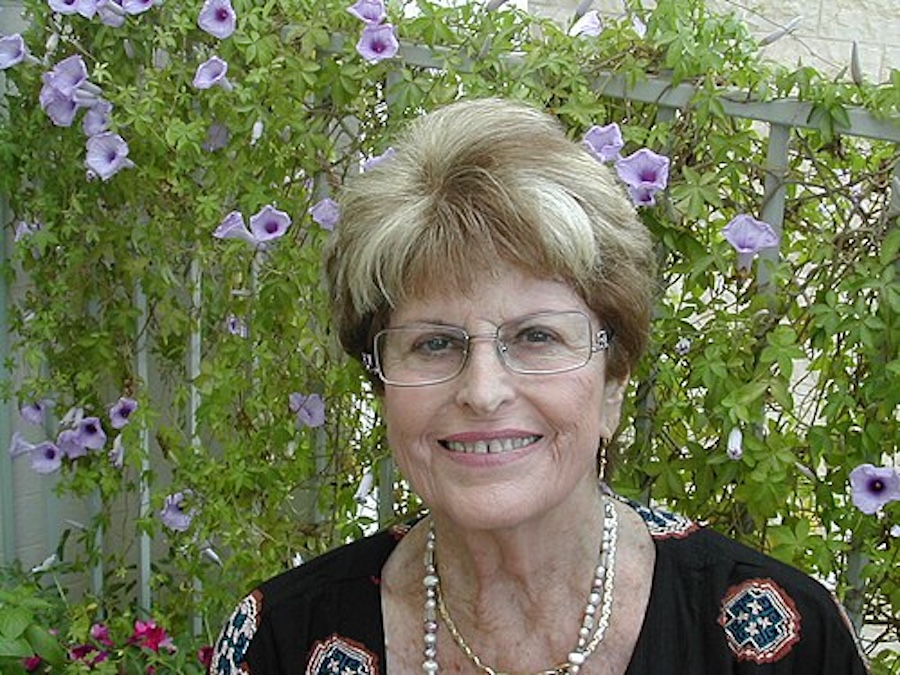
Photo from Wikipedia

I also learned firsthand what it means to lose a homeland and start life over. This experience made me deeply sensitive to the displacement, fear, and rejection—as well as the longing for security and belonging—felt by Jews, Palestinians, and all peoples alike. It convinced me that peace cannot be built by denying history or the suffering of the other. We must learn about one another’s narratives, even when they are painful and contradictory. This understanding has guided my work as a writer, researcher, and peace activist throughout my life.

I-Dialogos: You founded IFLAC and, as an academic, you have given literature, culture, and music an essential role in peacebuilding. What can they make possible when political dialogue has deliberately broken down?

Ada Aharoni: I founded IFLAC—the International Forum for the Literature and Culture of Peace—in 2000 because I believe that political agreements alone cannot create lasting peace. We must also create a culture of peace. Literature, poetry, music, and the arts can reach places that political discourse often fails to reach. A poem can make us feel the suffering of someone we have been taught to view as an enemy. Music can bring people together without first asking about their nationality, religion, or political views.

The 11th IFLAC World Congress for Peace, held on September 22, 2026, was dedicated to peace through music and to the memory of Yehudi Menuhin, who understood the extraordinary universal power of music. When official dialogue breaks down, human dialogue must continue. Writers, musicians, educators, women, young people, and peace organizations can keep bridges standing until political leaders are ready to cross them.

I-Dialogos: Faced with the suffering of both peoples—and today, particularly that of the Palestinians—how can the pain of each be heard without erasing that of the other? Where do you see concrete possibilities for dialogue today?

The first rule of peace is very simple: the suffering of one people must never erase that of another. Palestinian suffering must be heard fully and humanely. Israeli suffering must also be heard fully and humanely. We cannot build peace by asking either people to forget its dead, its fears, its traumas, or its history.

The situation remains extremely difficult. In September 2026, the United Nations reported that, despite the ceasefire in Gaza that began in October 2025, violence and serious humanitarian and political problems persist, while conditions in the West Bank have also deteriorated. At the same time, the UN continues to advocate for the creation of two sovereign states—Israel and Palestine—living side by side in peace and security.

For me, a peaceful Palestinian state alongside Israel must be part of the vision for the future, ensuring genuine security for both Israelis and Palestinians, as well as a political framework in which neither side seeks the destruction of the other. Dialogue should begin wherever it is still possible: among educators, women, young people, writers, artists, researchers, municipalities, civil society organizations, and peace movements. We cannot wait for governments to reach an agreement before human beings start talking to one another again.

I-Dialogos: Your commitment extends beyond the Middle East. How do you respond to the wars and tensions in Ukraine and Russia, Sudan, and the Democratic Republic of the Congo? Why does dialogue now seem impossible? How can the United Nations regain its true role?

Ada Aharoni: Every war has its own history and circumstances, and we must be careful not to claim that a single formula can solve them all. Yet there is a common danger: once societies become convinced that force is the only language the other side understands, dialogue becomes nearly impossible. Fear, grief, propaganda, and hatred deepen the divide.

Dialogue does not mean capitulation. Nor does it mean abandoning international law or justice. It means keeping open a path through which violence can ultimately come to an end. The United Nations therefore remains indispensable, yet it needs to be strengthened and reformed. Discussions regarding Security Council reform are ongoing, particularly concerning calls for a system that is more representative, transparent, accountable, and responsive to the entire UN membership. I would like to see the United Nations become far more effective at prevention by acting before wars break out, rather than primarily after thousands of lives have been lost. We devote immense resources to preparing for war; humanity must learn to invest seriously in preparing for peace.

I-Dialogos: The 11th IFLAC World Congress is proposing a global law against war. This may seem utopian, or even naive. How could this idea evolve into something more than just a statement of principle? What would be a realistic first step?

Ada Aharoni: Almost all of humanity’s great strides forward were dismissed as utopian before they became reality. Slavery was once considered inevitable. Colonialism was considered inevitable. In many societies, women’s suffrage was viewed as unrealistic. Why should war be the only institution humanity is not even permitted to imagine moving beyond?

And we are not starting from scratch. Article 2 of the UN Charter already requires states to settle their international disputes by peaceful means and prohibits the threat or use of force inconsistent with the Charter. Article 9 of the Japanese Constitution famously renounces war as a means of settling international disputes.

(Article continued in the column on the right)

(Click here for the original version in French)

Questions related to this article:

Do women have a special role to play in the peace movement?

(Article continued from the column on the left)

IFLAC proposes going much further in the international application of this principle. The first practical step could be the creation of an international group—comprising jurists, diplomats, peace researchers, and civil society representatives—tasked with drafting a genuine Global Convention Against War, then seeking government support and submitting it to the United Nations. A law without institutions is insufficient.

That is why our IFLAC Global Peace Plan also proposes the creation of powerful Ministries of Peace in every country, properly resourced and funded to prevent conflict, promote mediation, and foster peace education. Peace requires institutions, budgets, and professional expertise, just as defense does.

I-Dialogos: In Metz, Pope Leo XIV called for rejecting the current arms race and making dialogue a path to peace. How can citizens of all convictions unite around this goal, and how can we convince deeply opposed governments to talk to one another?

Ada Aharoni: I was deeply interested in the message delivered by Pope Leo XIV in Metz on September 28, 2026. He called for patient dialogue, courage in negotiation, and a willingness to relinquish certain positions for the greater good of peace, while warning against the illusion that rearmament is a solution in itself. This aligns closely with what we advocate at IFLAC.

Peace should not belong to any single religion, political party, or ideology. A Christian, a Muslim, a Jew, a Buddhist, an atheist, or an agnostic can all agree on one very simple thing: our children deserve to live. That is our common starting point.

Governments will not suddenly agree on everything. Dialogue should therefore begin with specific issues where agreement is possible: civilian protection, humanitarian access, exchanges, environmental cooperation, education, trade, water, health, and other shared interests. Small agreements can build trust. Trust can make larger agreements possible. The alternative—refusing to talk until everything is resolved—guarantees that nothing ever will be.

I-Dialogos: I-Dialogos is building a network of correspondents across more than 60 countries. Why not involve Israeli, Palestinian, and regional voices in this? What do you think of this initiative? Could there be a partnership with IFLAC?

Ada Aharoni: Yes, I believe there is natural common ground for cooperation between I-Dialogos and IFLAC. A genuine international dialogue network needs Israeli and Palestinian voices, but these voices must not simply parrot political slogans. People need to listen to one another. For such a network to succeed, I would suggest a few simple principles: no incitement to hatred, no dehumanization, respect for facts, respect for disagreement, equal human dignity, and a genuine willingness to hear things one might not want to hear. Women and young people should also play a major role in these dialogues.

For 26 years, IFLAC has been working to forge connections among writers, researchers, educators, artists, and peace ambassadors across many countries who cherish peace. I would be delighted to explore how this network and I-Dialogos might collaborate. Perhaps I-Dialogos and IFLAC can help demonstrate something our divided world urgently needs to rediscover: Dialogue is not a sign of weakness. Dialogue is an act of courage.

I-Dialogos: Could you help us identify I-Dialogos contacts in Israel, as well as potential Palestinian counterparts or members of the IFLAC network? What initial joint initiative would you propose? What are your thoughts on movements such as “A Land for All”?

Ada Aharoni: Yes. I would be happy to help I-Dialogos connect with the right people in Israel and within IFLAC’s international network, and I would strongly encourage the participation of Palestinian peacebuilders as equal partners in dialogue. I would prefer not to select names hastily. The priority is to identify individuals who genuinely embrace dialogue, non-violence, and the dignity of both peoples.

As a first joint initiative, I propose an IFLAC–I-Dialogos Israeli-Palestinian peace dialogue—perhaps held online—bringing together a small group of Israelis, Palestinians, and international voices committed to peace. Instead of starting by asking, “Who is to blame?”, we could begin with a different question: “What must we do now so that our children do not inherit this war?” »

There are already Israeli-Palestinian initiatives worth examining within the framework of such a dialogue. For instance, “A Land for All” presents itself as a joint Israeli-Palestinian movement proposing two sovereign states within a single shared homeland, featuring cooperation, freedom of movement, and shared institutions. Various peace movements propose different political structures. Rather than declaring in advance that a specific formula is *the* solution, I believe the dialogue should examine which concrete elements can foster mutual recognition, security, freedom, equality, and peaceful coexistence.

I-Dialogos: Are there any other points you consider important and would like to address in conclusion?

Ada Aharoni: Yes. I would like to conclude with the central message of our 11th IFLAC World Congress for Peace: war must be outlawed. World peace is possible. But peace will not come about on its own. That is why, at IFLAC, we have developed a concrete Global Peace Plan based on four core ideas:

1. A global law against war: developing international law so that war is increasingly delegitimized and replaced by mandatory, peaceful dispute-resolution mechanisms.

2. Ministries of Peace in every country: strong, professional, and adequately funded government institutions dedicated to war prevention and peacebuilding.

3. A Global Peace Alliance: uniting peace organizations and the International Peace-Loving Community (IPLC) so that the many separate voices advocating for peace become a powerful global force.

4. When men and women lead together, women should enjoy equal representation—specifically, 50% participation—in the arenas where the most critical political and peace-related decisions are made. For too long, humanity has glorified the waging of war while treating the pursuit of peace with woefully inadequate attention. We know how to build armies, military alliances, and weapons systems; now, we must become just as serious about building peace. That is why I commend I-Dialogos and any sincere initiative that builds bridges between peoples. The great task before us is not merely to end a war; it is to create a world where humanity finally learns to resolve its conflicts without war. This is the challenge to which I have dedicated my life, and I remain convinced that we can meet it.

– – – – – –

If you wish to make a comment on this article, you may write to coordinator@cpnn-world.org with the title “Comment on (name of article)” and we will put your comment on line. Because of the flood of spam, we have discontinued the direct application of comments.
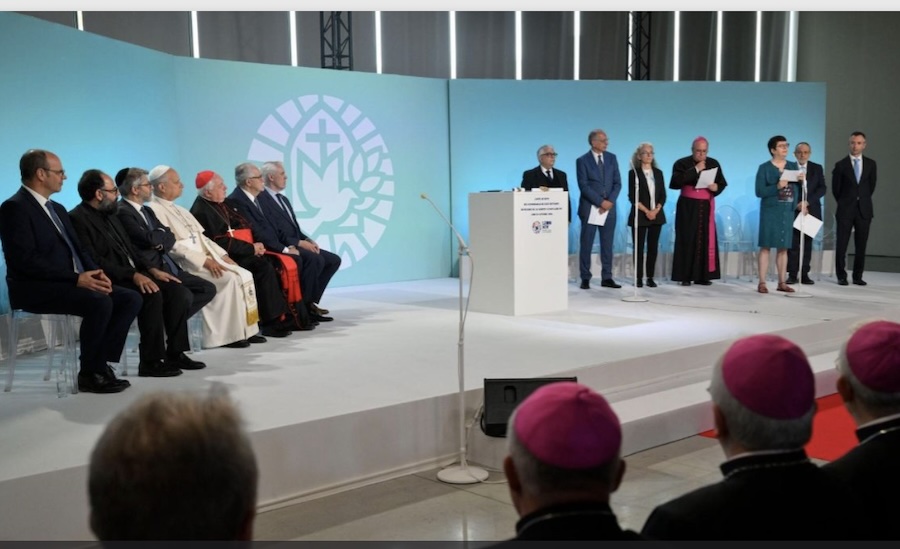
France’s religious leaders appeal for peace and sustained dialogue

. TOLERANCE & SOLIDARITY .

An article by Vatican News

As Pope Leo XIV meets with French religious leaders in Metz, representatives of various religions release an appeal for sustained dialogue and efforts for peace in the world.

Religious leaders in France have affirmed their determination to serve “the whole human family together,” issuing an appeal for dialogue, fraternity, reconciliation, and peace in the presence of Pope Leo XIV.

The Metz Appeal looks back to the Assisi appeal forty years ago, warning that humanity faces a new turning point amid war, inequality, ecological instability, and technological transformations.

These upheavals, the leaders say, call religious communities to act together by protecting human dignity and caring for others.

Pope in Metz: God never inspires anything that disfigures human dignity 


The appeal stresses that peace means more than the absence of war. It requires justice, respect for human dignity, solidarity between peoples and generations, and shared care for “our common home.”

The leaders condemn discrimination and hate speech, expressing particular indignation at the resurgence in France of attacks against people and places of worship because of their origins or faith.

(continued in right column)

(Click here for an article in Spanish)

Question related to this article:
 
How can different faiths work together for understanding and harmony?

(continued from left column)

They also reject “the poison of totalitarianism,” recalling the suffering it inflicted on Lorraine.

“We affirm together that neither the name of God nor any religious truth or spiritual tradition may ever be invoked to justify violence and hatred,” they declare.

Dialogue, prayer, meditation and spiritual practice can open paths towards peace, the appeal says, noting that work for peace begins within each person, by recognizing and disarming whatever fuels fear and rejection of others.

Education and reconciliation

Acknowledging the wounds left by violence and misunderstanding, the religious leaders reject vengeance and humiliation, and commit themselves to becoming agents of reconciliation.

They describe religions as a privileged path towards the “unarmed and disarming peace” called for by Pope Leo XIV.

Building a culture of peace, they insist, requires both personal courage and collective commitment, involving families, schools, sports and leisure organizations, and religious communities.

The appeal concludes with three commitments: to pursue sustained and rigorous dialogue; to teach younger generations about one another’s traditions; and to stand together, even in adversity, to promote justice and peace.

Peace is built daily through respect and friendship, the leaders say, expressing hope that their gathering will awaken consciences and bear lasting fruit.

They ask that the Metz Appeal become “a compass of hope,” reminding everyone that “no lasting peace can be built without others or against them.”

– – – – – –

If you wish to make a comment on this article, you may write to coordinator@cpnn-world.org with the title “Comment on (name of article)” and we will put your comment on line. Because of the flood of spam, we have discontinued the direct application of comments.
Niger: Ingall Cure Salée 2026 – Cultural and musical performances centered on the culture of peace and social cohesion

. . DEMOCRATIC PARTICIPATION . .

An article by the Nigerien Press Agency (ANP) (translation by CPNN)

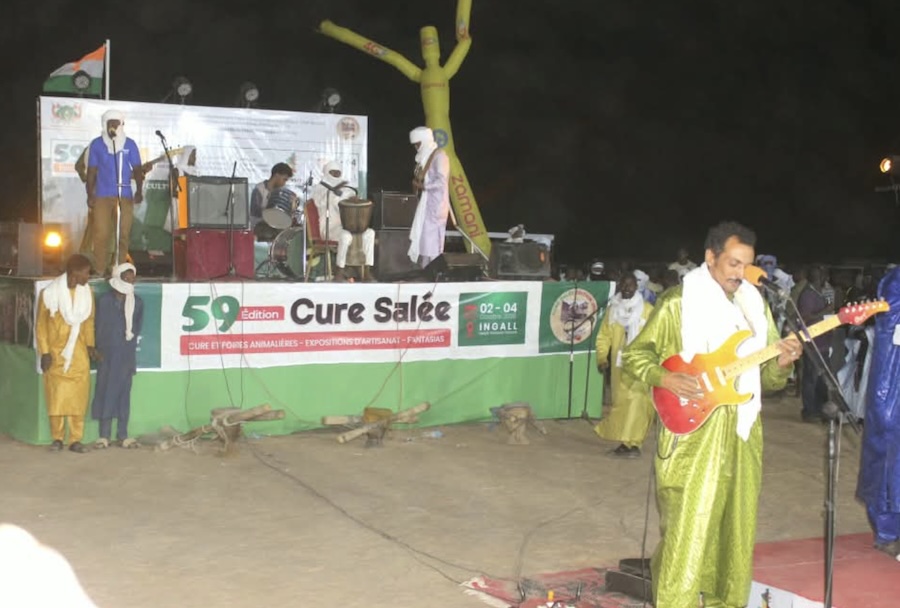
Following the horse and camel races held earlier in the day, festivities for the 59th edition of the Cure Salée continued on the evening of Saturday, October 3, 2026, with cultural and musical performances.

The cultural evening was attended by the Minister of Tourism and Handicrafts; the Governor of the Agadez Region, Major General Ibra Boulama Issa; the Governor of the Tahoua Region, Colonel-Major Souleymane Amadou Moussa; and several guests from AES member countries.

Question related to this article:


Can festivals help create peace at the community level?

The new military governments in Africa: Are they promoting a culture of peace?

The Cure Salée is a major traditional festival in Niger that brings together nomadic communities—notably the Tuareg and the Fulani—around ancestral rites linked to transhumance, livestock, and pastoral life. Cultural and musical performances play a central role in this celebration, serving as the primary vehicle for transmitting values, stories, and cultural identities.

Thus, the cultural and musical performances at the 2026 Cure Salée are not merely entertainment; they are essential elements that foster social cohesion, cultural transmission, and local development.

The ceremony featured performances by artists from various regions as well as local artists. Songs, dances, guitars, music, and other traditional artistic forms enable communities to affirm their cultural identity.

(Click here for the French version of this article)

– – – – – –

If you wish to make a comment on this article, you may write to coordinator@cpnn-world.org with the title “Comment on (name of article)” and we will put your comment on line. Because of the flood of spam, we have discontinued the direct application of comments.