. TOLERANCE & SOLIDARITY .
An article by Vatican News
As Pope Leo XIV meets with French religious leaders in Metz, representatives of various religions release an appeal for sustained dialogue and efforts for peace in the world.
Religious leaders in France have affirmed their determination to serve “the whole human family together,” issuing an appeal for dialogue, fraternity, reconciliation, and peace in the presence of Pope Leo XIV.
The Metz Appeal looks back to the Assisi appeal forty years ago, warning that humanity faces a new turning point amid war, inequality, ecological instability, and technological transformations.
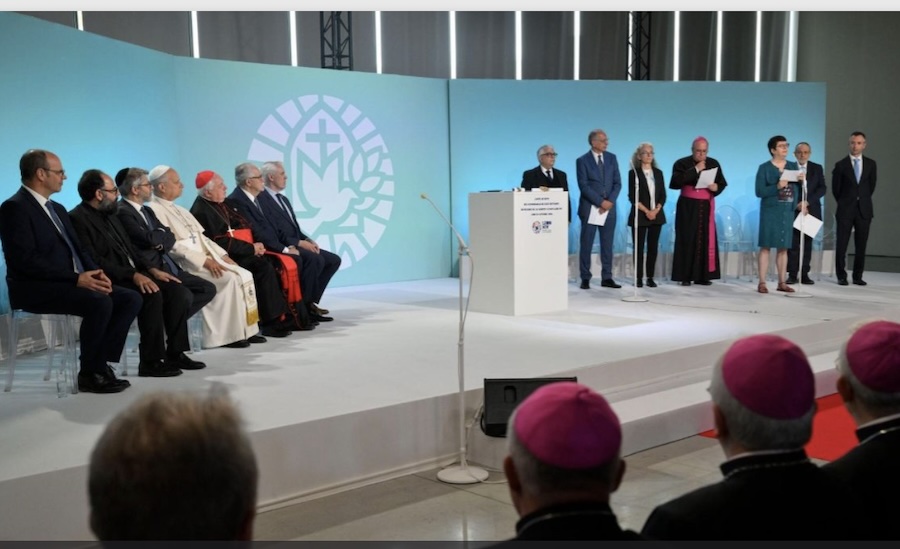
These upheavals, the leaders say, call religious communities to act together by protecting human dignity and caring for others.
Pope in Metz: God never inspires anything that disfigures human dignity
The appeal stresses that peace means more than the absence of war. It requires justice, respect for human dignity, solidarity between peoples and generations, and shared care for “our common home.”
The leaders condemn discrimination and hate speech, expressing particular indignation at the resurgence in France of attacks against people and places of worship because of their origins or faith.
(continued in right column)
(Click here for a French article on this subject. and click here for an article in Spanish))
How can different faiths work together for understanding and harmony?
(continued from left column)
They also reject “the poison of totalitarianism,” recalling the suffering it inflicted on Lorraine.
“We affirm together that neither the name of God nor any religious truth or spiritual tradition may ever be invoked to justify violence and hatred,” they declare.
Dialogue, prayer, meditation and spiritual practice can open paths towards peace, the appeal says, noting that work for peace begins within each person, by recognizing and disarming whatever fuels fear and rejection of others.
Education and reconciliation
Acknowledging the wounds left by violence and misunderstanding, the religious leaders reject vengeance and humiliation, and commit themselves to becoming agents of reconciliation.
They describe religions as a privileged path towards the “unarmed and disarming peace” called for by Pope Leo XIV.
Building a culture of peace, they insist, requires both personal courage and collective commitment, involving families, schools, sports and leisure organizations, and religious communities.
The appeal concludes with three commitments: to pursue sustained and rigorous dialogue; to teach younger generations about one another’s traditions; and to stand together, even in adversity, to promote justice and peace.
Peace is built daily through respect and friendship, the leaders say, expressing hope that their gathering will awaken consciences and bear lasting fruit.
They ask that the Metz Appeal become “a compass of hope,” reminding everyone that “no lasting peace can be built without others or against them.”
– – – – – –
If you wish to make a comment on this article, you may write to coordinator@cpnn-world.org with the title “Comment on (name of article)” and we will put your comment on line. Because of the flood of spam, we have discontinued the direct application of comments.