. . WOMEN’S EQUALITY . .
An article by Pressenza (translation by CPNN)
INTERVIEW WITH PROFESSOR ADA AHARONI, Founder and President of IFLAC World Peace – Haifa, Israel
Interview conducted by Ariel Français, Pierrick Hamon, Jean-Claude Mairal, and Stefania Scarponi. I-Dialogos: Professor Ada Aharoni, you were born in Cairo into a Jewish family that left Egypt for France before you arrived in Israel. How has this personal history—spanning multiple countries, languages, and cultures—shaped your commitment to peace?
Ada Aharoni: I was born in Cairo and grew up in a multicultural world. When the Jews of Egypt were expelled by the country following the creation of the State of Israel in 1948, we arrived in France, but I wanted to help Israel, which was then only two years old. From my earliest years, I lived among diverse languages, religions, and cultures. Later, the experience of leaving Egypt, living in France, and finally coming to Israel taught me something very important: identity does not necessarily have to erect walls between human beings. On the contrary, our diverse identities can enrich us.
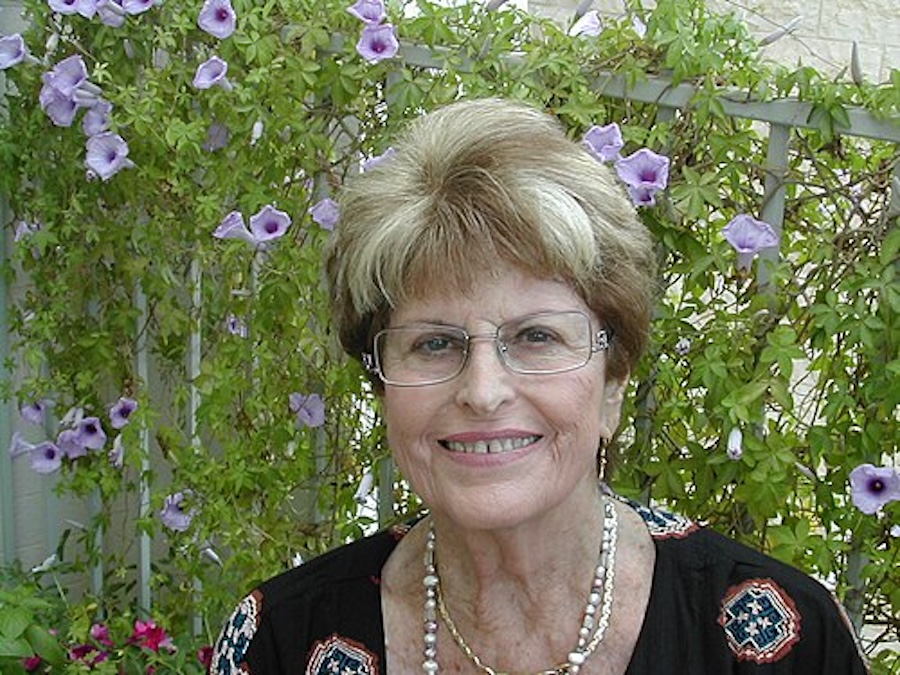
Photo from Wikipedia
I also learned firsthand what it means to lose a homeland and start life over. This experience made me deeply sensitive to the displacement, fear, and rejection—as well as the longing for security and belonging—felt by Jews, Palestinians, and all peoples alike. It convinced me that peace cannot be built by denying history or the suffering of the other. We must learn about one another’s narratives, even when they are painful and contradictory. This understanding has guided my work as a writer, researcher, and peace activist throughout my life.
I-Dialogos: You founded IFLAC and, as an academic, you have given literature, culture, and music an essential role in peacebuilding. What can they make possible when political dialogue has deliberately broken down?
Ada Aharoni: I founded IFLAC—the International Forum for the Literature and Culture of Peace—in 2000 because I believe that political agreements alone cannot create lasting peace. We must also create a culture of peace. Literature, poetry, music, and the arts can reach places that political discourse often fails to reach. A poem can make us feel the suffering of someone we have been taught to view as an enemy. Music can bring people together without first asking about their nationality, religion, or political views.
The 11th IFLAC World Congress for Peace, held on September 22, 2026, was dedicated to peace through music and to the memory of Yehudi Menuhin, who understood the extraordinary universal power of music. When official dialogue breaks down, human dialogue must continue. Writers, musicians, educators, women, young people, and peace organizations can keep bridges standing until political leaders are ready to cross them.
I-Dialogos: Faced with the suffering of both peoples—and today, particularly that of the Palestinians—how can the pain of each be heard without erasing that of the other? Where do you see concrete possibilities for dialogue today?
The first rule of peace is very simple: the suffering of one people must never erase that of another. Palestinian suffering must be heard fully and humanely. Israeli suffering must also be heard fully and humanely. We cannot build peace by asking either people to forget its dead, its fears, its traumas, or its history.
The situation remains extremely difficult. In September 2026, the United Nations reported that, despite the ceasefire in Gaza that began in October 2025, violence and serious humanitarian and political problems persist, while conditions in the West Bank have also deteriorated. At the same time, the UN continues to advocate for the creation of two sovereign states—Israel and Palestine—living side by side in peace and security.
For me, a peaceful Palestinian state alongside Israel must be part of the vision for the future, ensuring genuine security for both Israelis and Palestinians, as well as a political framework in which neither side seeks the destruction of the other. Dialogue should begin wherever it is still possible: among educators, women, young people, writers, artists, researchers, municipalities, civil society organizations, and peace movements. We cannot wait for governments to reach an agreement before human beings start talking to one another again.
I-Dialogos: Your commitment extends beyond the Middle East. How do you respond to the wars and tensions in Ukraine and Russia, Sudan, and the Democratic Republic of the Congo? Why does dialogue now seem impossible? How can the United Nations regain its true role?
Ada Aharoni: Every war has its own history and circumstances, and we must be careful not to claim that a single formula can solve them all. Yet there is a common danger: once societies become convinced that force is the only language the other side understands, dialogue becomes nearly impossible. Fear, grief, propaganda, and hatred deepen the divide.
Dialogue does not mean capitulation. Nor does it mean abandoning international law or justice. It means keeping open a path through which violence can ultimately come to an end. The United Nations therefore remains indispensable, yet it needs to be strengthened and reformed. Discussions regarding Security Council reform are ongoing, particularly concerning calls for a system that is more representative, transparent, accountable, and responsive to the entire UN membership. I would like to see the United Nations become far more effective at prevention by acting before wars break out, rather than primarily after thousands of lives have been lost. We devote immense resources to preparing for war; humanity must learn to invest seriously in preparing for peace.
I-Dialogos: The 11th IFLAC World Congress is proposing a global law against war. This may seem utopian, or even naive. How could this idea evolve into something more than just a statement of principle? What would be a realistic first step?
Ada Aharoni: Almost all of humanity’s great strides forward were dismissed as utopian before they became reality. Slavery was once considered inevitable. Colonialism was considered inevitable. In many societies, women’s suffrage was viewed as unrealistic. Why should war be the only institution humanity is not even permitted to imagine moving beyond?
And we are not starting from scratch. Article 2 of the UN Charter already requires states to settle their international disputes by peaceful means and prohibits the threat or use of force inconsistent with the Charter. Article 9 of the Japanese Constitution famously renounces war as a means of settling international disputes.
(Article continued in the column on the right)
Do women have a special role to play in the peace movement?
(Article continued from the column on the left)
IFLAC proposes going much further in the international application of this principle. The first practical step could be the creation of an international group—comprising jurists, diplomats, peace researchers, and civil society representatives—tasked with drafting a genuine Global Convention Against War, then seeking government support and submitting it to the United Nations. A law without institutions is insufficient.
That is why our IFLAC Global Peace Plan also proposes the creation of powerful Ministries of Peace in every country, properly resourced and funded to prevent conflict, promote mediation, and foster peace education. Peace requires institutions, budgets, and professional expertise, just as defense does.
I-Dialogos: In Metz, Pope Leo XIV called for rejecting the current arms race and making dialogue a path to peace. How can citizens of all convictions unite around this goal, and how can we convince deeply opposed governments to talk to one another?
Ada Aharoni: I was deeply interested in the message delivered by Pope Leo XIV in Metz on September 28, 2026. He called for patient dialogue, courage in negotiation, and a willingness to relinquish certain positions for the greater good of peace, while warning against the illusion that rearmament is a solution in itself. This aligns closely with what we advocate at IFLAC.
Peace should not belong to any single religion, political party, or ideology. A Christian, a Muslim, a Jew, a Buddhist, an atheist, or an agnostic can all agree on one very simple thing: our children deserve to live. That is our common starting point.
Governments will not suddenly agree on everything. Dialogue should therefore begin with specific issues where agreement is possible: civilian protection, humanitarian access, exchanges, environmental cooperation, education, trade, water, health, and other shared interests. Small agreements can build trust. Trust can make larger agreements possible. The alternative—refusing to talk until everything is resolved—guarantees that nothing ever will be.
I-Dialogos: I-Dialogos is building a network of correspondents across more than 60 countries. Why not involve Israeli, Palestinian, and regional voices in this? What do you think of this initiative? Could there be a partnership with IFLAC?
Ada Aharoni: Yes, I believe there is natural common ground for cooperation between I-Dialogos and IFLAC. A genuine international dialogue network needs Israeli and Palestinian voices, but these voices must not simply parrot political slogans. People need to listen to one another. For such a network to succeed, I would suggest a few simple principles: no incitement to hatred, no dehumanization, respect for facts, respect for disagreement, equal human dignity, and a genuine willingness to hear things one might not want to hear. Women and young people should also play a major role in these dialogues.
For 26 years, IFLAC has been working to forge connections among writers, researchers, educators, artists, and peace ambassadors across many countries who cherish peace. I would be delighted to explore how this network and I-Dialogos might collaborate. Perhaps I-Dialogos and IFLAC can help demonstrate something our divided world urgently needs to rediscover: Dialogue is not a sign of weakness. Dialogue is an act of courage.
I-Dialogos: Could you help us identify I-Dialogos contacts in Israel, as well as potential Palestinian counterparts or members of the IFLAC network? What initial joint initiative would you propose? What are your thoughts on movements such as “A Land for All”?
Ada Aharoni: Yes. I would be happy to help I-Dialogos connect with the right people in Israel and within IFLAC’s international network, and I would strongly encourage the participation of Palestinian peacebuilders as equal partners in dialogue. I would prefer not to select names hastily. The priority is to identify individuals who genuinely embrace dialogue, non-violence, and the dignity of both peoples.
As a first joint initiative, I propose an IFLAC–I-Dialogos Israeli-Palestinian peace dialogue—perhaps held online—bringing together a small group of Israelis, Palestinians, and international voices committed to peace. Instead of starting by asking, “Who is to blame?”, we could begin with a different question: “What must we do now so that our children do not inherit this war?” »
There are already Israeli-Palestinian initiatives worth examining within the framework of such a dialogue. For instance, “A Land for All” presents itself as a joint Israeli-Palestinian movement proposing two sovereign states within a single shared homeland, featuring cooperation, freedom of movement, and shared institutions. Various peace movements propose different political structures. Rather than declaring in advance that a specific formula is *the* solution, I believe the dialogue should examine which concrete elements can foster mutual recognition, security, freedom, equality, and peaceful coexistence.
I-Dialogos: Are there any other points you consider important and would like to address in conclusion?
Ada Aharoni: Yes. I would like to conclude with the central message of our 11th IFLAC World Congress for Peace: war must be outlawed. World peace is possible. But peace will not come about on its own. That is why, at IFLAC, we have developed a concrete Global Peace Plan based on four core ideas:
1. A global law against war: developing international law so that war is increasingly delegitimized and replaced by mandatory, peaceful dispute-resolution mechanisms.
2. Ministries of Peace in every country: strong, professional, and adequately funded government institutions dedicated to war prevention and peacebuilding.
3. A Global Peace Alliance: uniting peace organizations and the International Peace-Loving Community (IPLC) so that the many separate voices advocating for peace become a powerful global force.
4. When men and women lead together, women should enjoy equal representation—specifically, 50% participation—in the arenas where the most critical political and peace-related decisions are made. For too long, humanity has glorified the waging of war while treating the pursuit of peace with woefully inadequate attention. We know how to build armies, military alliances, and weapons systems; now, we must become just as serious about building peace. That is why I commend I-Dialogos and any sincere initiative that builds bridges between peoples. The great task before us is not merely to end a war; it is to create a world where humanity finally learns to resolve its conflicts without war. This is the challenge to which I have dedicated my life, and I remain convinced that we can meet it.
– – – – – –
If you wish to make a comment on this article, you may write to coordinator@cpnn-world.org with the title “Comment on (name of article)” and we will put your comment on line. Because of the flood of spam, we have discontinued the direct application of comments.