FREE FLOW OF INFORMATION
Excerpt from an article of United Nations News Service
The Assembly adopted by consensus [on May 20] the draft resolution titled “Promotion of interreligious and intercultural dialogue, understanding and cooperation for peace” (document A/80/L.43) aimed at advancing interreligious and intercultural dialogue as a practical tool for peace, inclusion and sustainable development, supported by education, policy, partnerships and global cooperation.
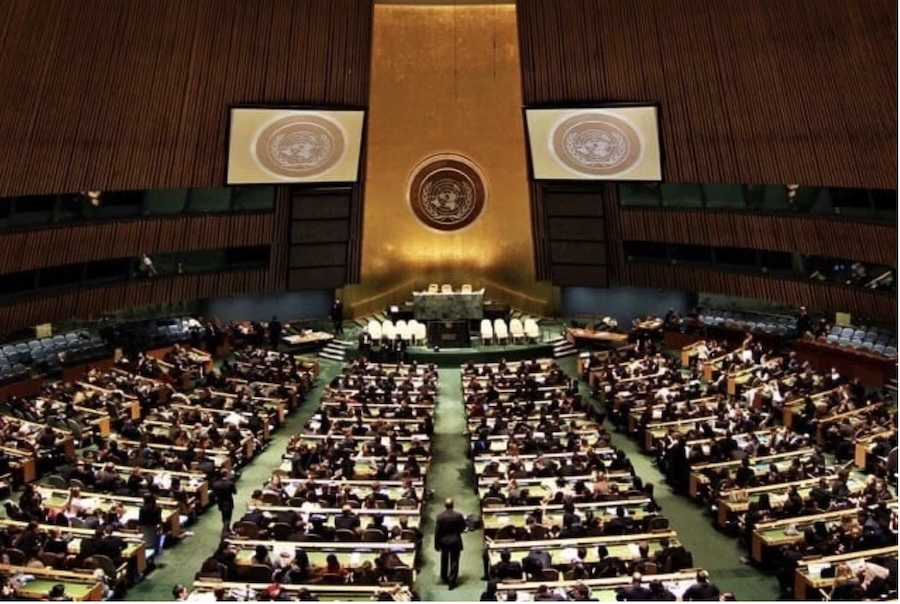
Introducing the biennial text, the representative of Pakistan, also speaking on behalf of the Philippines and all co-sponsors, stressed that it is essential to promote a culture of peace — one that embraces diversity and inclusivity, safeguards fundamental rights and freedoms and rejects social structures and stereotypes that create divisions among individuals, societies, communities and nation States.
What is the United Nations doing for a culture of peace?
Despite progress achieved over the years, he noted, much more remains to be done to fully realize these shared ideals. In this regard, he recalled the Constitution of United Nations Educational, Scientific and Cultural Organization (UNESCO), which affirms that “since wars begin in the minds of men, it is in the minds of men that the defences of peace must be constructed”. He explained that “a technical rollover” would retain the key messages reaffirmed through the consensus adoption of the resolution during the seventy‑eighth session.
Despite the unanimous adoption, several delegations raised some concerns. Among them was the representative of the United States, who said that the Assembly “spends countless hours negotiating symbolic, repetitive text with little to show in tangible results for the common citizen”. Washington, D.C., she added, “is finished with performative exercises and bloated ideological multilateralism that fails to advance the core mission of the United Nations”.
(Editor’s note: The resolution was proposed by Indonesia, Pakistan, Philippines and Turkmenistan. Its operative paragraphs include the following:)
Calls upon Member States, which have the primary responsibility to counter discrimination and hate speech, and all relevant actors, including political and religious leaders, to promote inclusion and unity to combat racism, xenophobia, hate speech, violence and discrimination.
– – – – – –
If you wish to make a comment on this article, you may write to coordinator@cpnn-world.org with the title “Comment on (name of article)” and we will put your comment on line. Because of the flood of spam, we have discontinued the direct application of comments.