All posts by CPNN Coordinator

About CPNN Coordinator

Dr David Adams is the coordinator of the Culture of Peace News Network. He retired in 2001 from UNESCO where he was the Director of the Unit for the International Year for the Culture of Peace, proclaimed for the Year 2000 by the United Nations General Assembly.

UNESCO brochure: Africa, Culture of Peace, 2017

FREE FLOW OF INFORMATION

A brochure of UNESCO (translation by CPNN)

UNESCO has just published a new brochure on its activities for a culture of peace in Africa, with an impressive list of activities. Here is the table of contents of the brochure with links, where available, to the CPNN or UNESCO article.

4-5 June, 2012 – Abidjan – Forum of Reflection “Culture of Peace in West Africa: an imperative for economic development and a requirement for social cohesion”

26-28 March 2013 – Luanda – Pan-African Forum: “Sources and resources for a culture of peace

20-21 September 2013 – Addis Abeba – Network of foundations and research institutions to promote the culture of peace in Africa

19-22 March 2014 – Brussels – Women’s Network for a Culture of Peace in Africa

December 11-13, 2014 – Libreville – Youth Network for a Culture of Peace in Africa

16-28 March 2013 – Luanda – Launch of the campaign “Make Peace” Luanda , Angola

July 9, 2016 – Libreville – Launch of the Youth Campaign for a Culture of Peace in Central Africa” ​​Different Words, Same Language: Peace, Libreville, Gabon

(Contents continued in right column)

(Click here for the original in French)


Question related to this article.

Will UNESCO once again play a role in the culture of peace?

(Contents continued from left column)

March 31, 2017 – Launch of the Youth Mobilization Campaign for Culture of peace, Burundi

September 21-23, 2014 – Celebrating 25 years of the birth of the concept of a culture of peace : “Peace in the minds of men and women”, Yamoussoukro, Côte d’Ivoire

20 Sept 2017 – Celebrating the International Day of Peace, Cameroon

Sept 2017 Celebrating the International Day of Peace, Burundi

January 2015 – Decisions of the African Union

2015 – Biennial of Luanda

2017 – Yamoussoukro Project to create a “School of Peace”

2012-2017 – Culture of Peace and Reconciliation: A Case Study of Mali

May 26, 2015 – Benin – International Symposium for the Launch of the African Initiative for Education for Peace and Development through Interreligious and Intercultural Dialogue

14 March 2017 – Dakar –
2017 Triennial of the Association for the Development of Education in Africa (ADEA)

6 April 2017 – Regional Global Education Network Meeting in Sub-Saharan Africa, Johannesburg

9-11 Sep 2017 Benin Regional Consultations in West and Central Africa on youth, peace and security

Editor’s Note: It is very commendable that UNESCO’s Africa Department continues to support the culture of peace. The purpose of the brochure, according to Firmin Edouard Matoko, UNESCO Assistant Director-General for Africa, “is to draw on the sources of inspiration and the potential of the cultural, natural and human resources of the continent in order to identify concrete lines of action to build a lasting peace, the cornerstone of endogenous development and Pan-Africanism.” On the other hand, one hopes it is not a bad sign for the future that the foreward to the brochure by the new Directrice-Generale of UNESCO fails to mention culture of peace.

Is peace possible in Afghanistan?


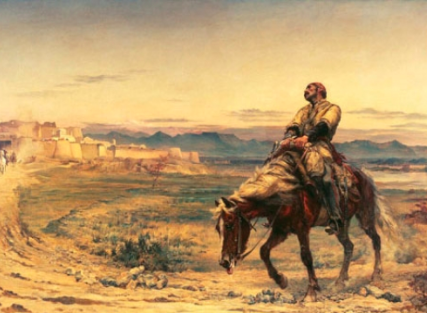
Only one soldier survived the British retreat

The history of invasions of Afghanistan is not a happy one. We know what happened to the Russians a few decades ago, and what is happening to the Americans now. But the pattern was already set by the British invasions in the 19th Century as told in the introduction to a New York Times book review of William Dalrymple,“Return of a King.”

“The story of the British invasion of Afghanistan in 1839-42 (what was later called the First Afghan War) can be briefly told. A British Army entered the country in April 1839, captured Kabul and ejected the ruler Dost Mohammad Khan. He was replaced by Shah Shuja, who had been living in exile since his overthrow by Dost Mohammad and his brother some 30 years earlier. The British expected Shah Shuja to be a more pliable king, a client of their Indian Raj, and a more reliable ally against the intrigues of the Russians. But they underestimated the resentment that their presence would arouse, and inflamed Afghan hostility by their overbearing behavior. After they failed to quell an uprising in Kabul and their envoy was murdered, they agreed to withdraw. But the retreating army of British officers, Indian soldiers and a multitude of camp followers was slaughtered almost to a man as it struggled back through the Khyber Pass in January 1842. Some months later, the British returned with an “army of retribution.” After a short stay in Kabul, and some indiscriminate killing, they withdrew once more. Dost Mohammad returned (with their blessing) to resume his place on the throne. Ever since this fiasco, an entire phalanx of writers has denounced the arrogance, folly and incompetence of the British aggressors (of which there was plenty) and has drawn a predictable lesson: those who invade Afghanistan pay a high price in treasure and blood — and also inflict one on its unlucky peoples.”

Here are the CPNN articles on this subject:

DRC: Meeting on the School Day of Non Violence and Peace

DISARMAMENT & SECURITY .

An article by John Mukhuta Muhiana, for the World Peace Foundation / DRC (Democratic Republic of the Congo)

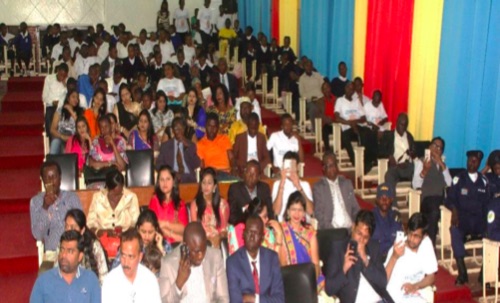
The World Peace Foundation, DRC, has organized an event for the school day of non-violence and peace, commemorating the death of his excellence Mahatma Gandhi. The event took place on January 30, 2018 in the Provincial Assembly of Lualaba, with the participation of the political authorities, representatiives from the mining companies, the school project Living Peace, people from India and the Representative of the Indian Ambassador.

The event began at 14:00 in the plenary room mentioned above with the slogan “peace, love and unity “. This day was initially celebrated since 1964 by the Spanish poet, educator and pacifist, Llorenc Vidal, and the day was recognized by UNESCO in 1993.

(Continued in the right column)

Question related to this article:

Can you add to this analysis of the Democratic Republic of the Congo?

(Continued from the left column)

The event was dedicated to politicians, public officials, parents, educators and teachers, to promote lifelong education for non-violence and peace. It is essential to educate for solidarity and respect for others, because wars start in the minds of men and it is in the minds of men that the defenses of peace must be raised. In this event, the World Peace Foundation has celebrated its 15th anniversary, the commemoration of the death of His Excellency Mahatma Gandhi and the world day of non-violence and peace.
 
At 19:00, the guests were accompanied to the Moon Palas Hotel for a cocktail and meal until 1 am. The holiday gave joy to peace supporters and participants. This event was sponsored by the Governor of the Province His Excellency Mr. Muyej Mangeze Mans who is our Universal Circle of Peace Ambassador. He contributed $ 3000 for the organization of this event. We thank also the President of the Provincial Assembly the Honorable Kamwenyi Thumbo Louis who allowed us to hold the event in the plenary hall of the Assembly.

(Click here for the French version of this article.)

Urging Peace Talks, Open Letter From Taliban Asks American People to Recognize Total Failure of 16-Year War

DISARMAMENT & SECURITY .

An article by Andrea Germanos, staff writer, in Common Dreams (reprinted under terms of a Creative Commons Attribution-Share Alike 3.0 License)

Two and half weeks after President Donald Trump rejected  the idea of peace talks with Taliban, the militant group published an open letter to the American people urging them to pressure their government to end the occupation of Afghanistan, now in its 17th year, and engage in peace talks.


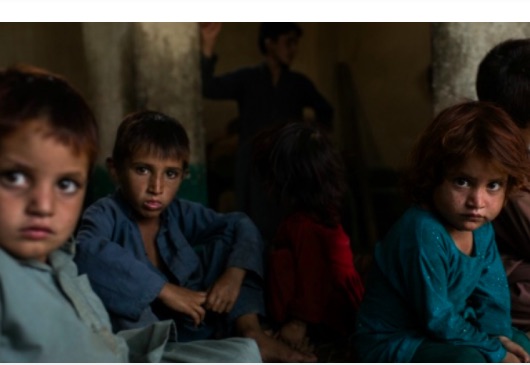
Children play inside the remains of an old Soviet hotel where they have been living for the past two years, on July 15, 2017 in Rodat District, Afghanistan. (Photo: Andrew Renneisen/Getty Images)

The letter, published on the group’s website, denounces the Bush administration’s justification for launching the invasion, as well as the Trump administration, which “again ordered the perpetuation of the same illegitimate occupation and war against the Afghan people.”

“No matter what title or justification is presented by your undiscerning authorities for the war in Afghanistan, the reality is that tens of thousands of helpless Afghans including women and children were martyred by your forces, hundreds of thousands were injured and thousands more were incarcerated in Guantanamo, Bagram, and various other secret jails and treated in such a humiliating way that has not only brought shame upon humanity but is also a violation of all claims of American culture and civilization,” the letter states.

(article continued in right column)

Question related to this article:

Is peace possible in Afghanistan?

(article continued from left column)

It goes on to illustrate in numerous ways how the occupation has failed. For example, “3546 American and foreign soldiers have been killed,” it states, and “this war has cost you trillions of dollars thus making it one of the bloodiest, longest and costliest war in the contemporary history of your country.”

It also references United Nations statistics finding that there was an 87 percent increase in drug production in Afghanistan in 2017 and, despite the uptick in airstrikes, the U.S. watchdog the Special Inspector General for Afghanistan Reconstruction (SIGAR) acknowledged that the Taliban is gaining, not losing territory.

Further, “tens of billions of dollars” in taxpayer money have been spent on various reconstruction projects, but the money “has been distributed among thieves and murderers,” the letter states. Through the occupation, “the Americans have merely paved the way for anarchy in the country,” referring to the rise in other militant groups.

“If you want peaceful dialogue with the Afghans specifically, and with the world generally, then make your president and the war-mongering congressmen and Pentagon officials understand this reality and compel them to adopt a rational policy towards Afghanistan,” the letter states.

Ongoing failure for U.S. troops is ensured, the group argues. “If the policy of using force is exercised for a hundred more years and a hundred new strategies are adopted, the outcome of all of these will be the same as you have observed over the last six months following the initiation of Trump’s new strategy.”

“Our preference is to solve the Afghan issue through peaceful dialogues. America must end her occupation and must accept all our legitimate rights including the right to form a government consistent with the beliefs of our people,” the group says.

The thrust of the message echoes what many peace groups have said—Trump is continuing  the failed strategies of his predecessors, and there is no military solution to the conflict in Afghanistan. 

The letter comes a day after U.S. intelligence agencies predicted  (pdf) that the “overall situation in Afghanistan probably will deteriorate modestly this year in the face of persistent political instability, sustained attacks by the Taliban-led insurgency, unsteady Afghan Nationa l Security Forces (ANSF) performance, and chronic financial shortfalls.”

China Reassigns 60,000 Soldiers to Plant Trees

. . SUSTAINABLE DEVELOPMENT . .

An article by Lorraine Chow for Ecowatch

Earlier this year, the Chinese government announced plans for a major reforestation project—growing 6.66 million hectares of new forests this year, an area roughly the size of Ireland.


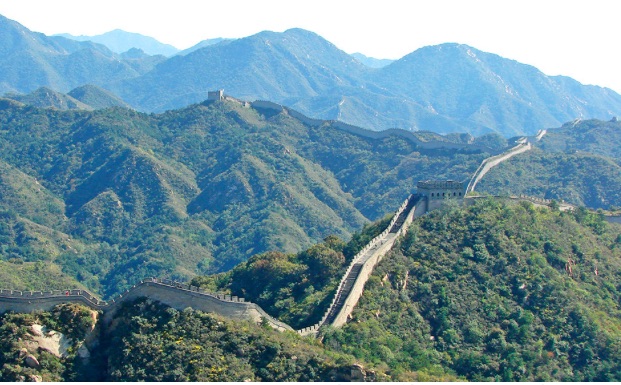
The Great Wall of China, Badaling. Hrvoje Sasek / Flickr

(continued in right column)

Question for this article:

When you cultivate plants, do you cultivate peace?

(continued from left column)

To achieve this goal, China has reassigned more than 60,000 soldiers to plant the trees. According to the Asia Times, a large regiment from the People’s Liberation Army, along with some of the nation’s armed police force, have been withdrawn from their posts near the northern border to work on the task.

The majority of the troops will be dispatched in the heavily polluted industrial province of Hebei, which has pledged to raise total forest coverage to 35 percent by the end of 2020.

China’s State Forestry Administration aims to increase the whole country’s forest coverage rate to 23 percent from 21.7 percent by the end of the decade. Then from 2020 to 2035, China plans to further boost the percentage of forest coverage to 26 percent.

China is the world’s largest emitter and remains heavily dependent on coal, but has been cleaning up its act in recent years due to concerns over the impacts of air pollution and climate change. The country is investing heavily in renewable energy, energy efficiency and electric cars.

France / Refugees. Resumption of Trial of Martine Landry, Member of Amnesty International France and Anafé Unfairly Pursued for “Crime of Solidarity”

TOLERANCE AND SOLIDARITY .

A press release from Amnesty International France (translated by CPNN)

This Wednesday, February 14, Martine Landry, activist of Amnesty International France (AIF) and Anafé (National Border Assistance Association for Foreigners), will appear in the Nice Criminal Court. She is accused of having “facilitated the entry of two illegal foreign minors”. She faces up to five years in prison and a fine of € 30,000.

AIF and Anafé denounce the persecution of people whose only motivation is to assist migrants and refugees, with no other consideration than to have their rights respected.


Photo of Martine Landry from France3

These people are not traffickers or delinquents; they are worried, intimidated, pursued, defending human rights first and foremost. They act to protect the rights of migrants and refugees against the infringement by the French authorities.

It is urgent and essential that the French government’s policy be reoriented in order to respond to the imperative respect for the rights of migrant and refugee people crossing the Franco-Italian border and the necessary protection of those who help them. .

Amnesty International France and Anafé reiterate their support for Martine Landry and will be present at the trial.

Further information

Martine Landry has been a member of Amnesty International since 2002. She is also the Provence-Alpes-Côte d’Azur regional referee on the issue of refugees and migrants since 2011 and is in charge of an observation mission in a waiting area for AIF. . At the same time, she takes part in the militant missions of counseling to the asylum seekers and accompaniment to give them access to their rights. For these missions she benefited from several formations.

Moreover, apart from her activities for AIF, Martine Landry is involved in various local and national associations for the defense of migrants and refugees including Anafé.

(Article continued in right column)

(Click here for the original French version of this article)

Question for this article

The refugee crisis, Who is responsible?

(Article continued from left column)

Working with Anafé for many years as part of her observation mission in the waiting area for AIF, Martine Landry has been a member of Anafé since 2017. She is actively involved in the observation mission of the Anafé at the French-Italian border.

She is accused of having “facilitated the entry of two illegal foreign minors”. She faces up to five years in prison and a fine of € 30,000.

Summary of facts

On 28 July 2017, Italian police sent two unaccompanied foreign minors to France on foot. Martine Landry picked them up at the Menton / Ventimiglia border crossing on the French side to accompany them to the Border Police (PAF), with documents attesting to their request for support by the child welfare service (ASE). The two minors, both 15 years old and of Guinean origin, were subsequently taken over by the ASE.

On July 31, Martine Landry went to the PAF Menton following the arrest and transfer of eleven migrants. On that day, she received a convocation for an audition on August 2nd. The next day, Martine Landry receives a summons from the Nice Criminal Court. She was to be tried on January 8 for “facilitating the entry of two illegal foreign minors […], having taken care of and escorted these two minors from the Italian border crossing to the border crossing on the French side”. His hearing was postponed until February 14, 2018.

Applicable international law

On 29 October 2002, France ratified the Protocol against the Smuggling of Migrants by Land, Sea and Air, additional to the United Nations Convention against Transnational Organized Crime. This text defines the smuggling of migrants as “the act of securing, directly or indirectly, a financial or other material benefit, unlawful entry into a State …”. a person who is neither a national nor a permanent resident of that State “.

By making the provision of a financial or other material benefit, the authors of this text clearly intended to exclude the activities of persons providing assistance to migrants on humanitarian grounds or because of close family ties. The intent of the Protocol was not to criminalize the activities of family members or support groups such as religious or non-governmental organizations. This intention is confirmed by the preparatory work for the negotiations for the elaboration of the United Nations Convention against Transnational Organized Crime and the Protocols thereto (2008), p. 514 – (United Nations Office on Drugs and Crime, Preparatory Work).

Amnesty International’s investigation at the French-Italian border “Border controls of the law”: .

Anafé note on “Restoring Internal Border Controls and State of Emergency – Consequences in Waiting Areas.”

Defending Hope against Fear and Repression in Honduras

. HUMAN RIGHTS .

An article by David A. Sylvester for Tikkun

 You may have seen the photographs of the violent protests here in the capital of Honduras when the right-wing candidate Juan Orlando Hernández installed himself as president two weeks ago after manipulating the November election in his favor.  For hours, the opposition demonstrators appeared like dark forms in the grey haze of tear gas as they faced off against three types of police and soldier.

But you probably never saw a more important event the next night: an interfaith vigil and demonstration calling for national dialogue and a peaceful return to a constitutional government. In spite of the confrontations of previous day, more than 500 Hondurans streamed onto the Avenida La Paz directly in front of the bunker of a U.S. Embassy and freely shouted in defiance to those in the building, with an appeal to the lines of police and soldiers guarding it and, perhaps equally important, to strengthen hope in each other.
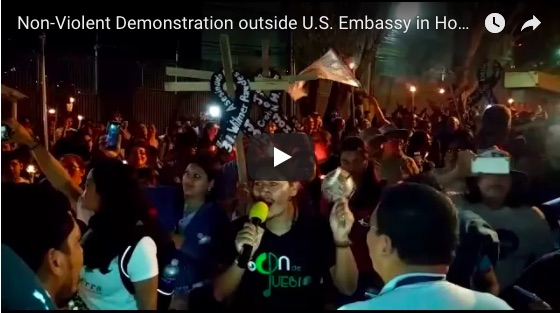

Video of Non-Violent Demonstration Outside the U.S. Embassy in Honduras

Speaker after speaker railed against the stolen presidential election, the crisis of militarization in Honduras, and the disaster of this slow social strangulation supported by the United States. In the street, Hondurans sang and danced and cried with grief for the wounded and dead at the hands of the military.  For a moment, even surrounded by the machinery of repression, the gathering became a cathartic fiesta of freedom.

By all accounts, this moment of free speech and assembly was possible because of the presence of a delegation of some 50 interfaith and peace activists, largely from the United States. We stood between phalanx of police and army soldiers in front of the U.S. embassy and the crowds of Hondurans on the street.

The police and military did not attack with tear gas and long wooden clubs called garrotes as they had attacked the demonstrations the day before. Apparently, the newly installed government, dependent on the U.S. government aid, decided it was unwise, or at least bad public relations, to attack the peaceful presence of U.S. citizens.

Most remarkable of all, we witnessed what is really possible in Honduras, the kind of dialogue, in embryo, that could heal this wounded, battered and traumatized country; a national dialogue that includes all segments of the society and searches for solutions to the endemic poverty, violence and social inequality so prevalent in Honduras.

Instead of being silenced by fear, many chanted the demand to end the repressive government of Hernández, known by his initials, JOH, and pronounced “Hoh.”

“Fuera JOH! Fuera JOH!”

(“Out, Hernández! Out!)

At times, the speakers appealed to the soldiers standing in the shadows between the shrubs on the sidewalks and the concrete facade of the embassy.

“You are our brothers!” shouted one speaker from the street.

“You have children and families! You have hearts like ours!”

The crowd roared in response:

“No matarás! No matarás”

(“Thou Shalt Not Kill! Thou Shalt Not Kill!”)
Occasionally, a few of the police responded to comments of the crowd with smiles and nods of heads of some of the demonstrators, and for a moment, it held the promise of reconciliation.

For most of the vigil, however, they stood stiff and impersonal behind face shields and helmets glistening in the street lights.

Underlying the joy and anger, there was ever-present grief. A white sheet was draped across the street with the names of those murdered and assassinated during the repression in protests since the November election.

Candles were lit in the street and on the barrier in front of the police lines. One woman held up the photo of her son, trying to shout his name when I asked above the noise, but only was able to say, “My son, my son…” before breaking down in tears. I could only listen, share her grief and give her my presence with the implicit message: “No está sola!”

Our delegation was unusual in that we were responding to an emergency appeal put out by Father Ismael Moreno, known as Padre Melo, one of the best known progressive leaders in Honduras, for international support during the week of national protests before the installation of Hernández. Melo is a Jesuit priest and director of radio station Radio Progreso, Honduras’ version of Democracy Now!, and located in historically progressive region about 320 kilometers northwest of the capital.

Since last December, Melo and the station staff has been receiving serious death threats. First, the station was knocked off the air for almost a week in the capital after the destruction of its transmitting antenna there during a night-time act of sabotage.

Two weeks later, just before New Year’s Eve, posters appeared one morning on the walls of the town of El Progreso naming Melo and others “El eje del mal en la perla del Ulúa.” –The ‘axis of evil’ in the “Pearl” of the River Ulúa, using a previous name for the town based on the nearby river.

(Article continued in right column)

Questions related to this article:

How effective are mass protest marches?

(Article continued from left column)

Then an equally serious death threat came on Jan. 20, within a week of the inauguration and just before our arrival. At night, pamphlets were thrown out of vehicles and left in public areas of the town claiming to identify  El circulo del terror de la Alianza – “the circle of terror of the Alliance” in Progreso. It showed the faces of 12 leading members of the opposition Alianza arranged like a clock, with Melo’s face the largest and at the twelve o’clock position on top.

This campaign of vilification evoked deeply painful memories from the decades of repression, death squads and assassinations in Honduras and throughout Central America.

Last year, Berta Caceres, an internationally known environmental activist in Honduras, was murdered in her home at 1 a.m. by intruders suspected to be linked to an elite U.S.-trained military intelligence unit. This murder, in spite of security guards assigned to her by the government, sent shock waves through progressive community in Honduras and internationally. (See 16 Days of Activism: Meet Bertha Zúñiga Cáceres, Honduras.)

There are numerous reports of a military plot or links to U.S.-trained soldiers.

Recognizing the imminent danger for all in the opposition coalition, the Alianza, Melo issued his urgent appeal for international support. Though the last-minute organizing of two Berkeley-based nonprofits, SHARE and the Interfaith Movement for Human Integrity,  a delegation was organized  and the 50 faith and peace activists — five times larger than expected — arrived at the airport in San Pedro Sula on Wednesday, Jan. 24, four days after the last death threat.

Jose Artiga, director of SHARE and a good friend of both Caceres and Melo, remembers that they used to joke, in a macabre way, wondering who would be killed first. ”It turned out to be Berta,” says Artiga. ”Now my single goal is this: Can we keep Padre Melo alive?”

At first, we didn’t know what to expect as we arrived at the San Pedro airport and went through two check-points of questioning by customs officials.  But we emerged into the main airport lobby to the cheers of a small crowd of supporters who opened their signs of protest and stretched out a black cloth bearing the faces of two dozen recent victims of the murder campaign targeting activists since the Nov. 26 “electoral coup,” as it’s been called.

Melo, a small bear of a man, came forward, beaming, and shaking hands and hugging us. He is shorter than many of us norteamericanos, and his relief was visible. To hug me, he laid his head on my chest like a son, a gesture of humility and gratitude for our presence here.

Certainly, a week of my time in the town of El Progreso is nothing compared to living under the threat of beatings or death, as Melo, the radio station and much of the population must live with day and night. Over 15 members of the station have received death threats, some repeatedly.

During a time of repression, death came come quickly, at night, as it did for Caceres and also, in 2014, for Carlos Mejia Orellana, the marketing manager for Radio Progresso. Or it came come slowly, as it did for some of the victims whose beaten faces stare out at us from the photographs at the airport.

During our week, we stayed close to Melo, the staff at Radio Progreso and attended some of the opposition protests as witnesses. We accompanied human rights observers between the two sides in some of the many road blockades, called a toma, or a taking of the street. Sometimes, we witnessed negotiations and other times, we witnessed the charge of police against the demonstrators.

Over the years, I have traveled to Central America for different reasons, but this was the first time that I was with a U.S.-based delegation directly intervening in a power conflict with whatever authority, or privilege, we could muster when the lives of the people who became our friends depend on the conflict’s resolution.

I returned home with a troubled conscience, knowing how little we could actually do in the face of the disastrous policies of our government toward these countries. As we all know, the United States has aided, defended and profited from the horrific civil wars in Central America for 40 years — bloodbaths that have stained the American conscience with shame and dishonor.  The U.S. is now adding to this disgraceful legacy with its anti-immigration policies for those fleeing exactly those countries where U.S. policies have weighed heaviest.

Even though the American public discourse seems curiously silent on these realities, especially for the often overlooked Honduras, the reality of U.S. influence is a well-known international scandal. In 2005, British playwright Harold Pinter minced no words about the U.S. support for the right-wing dictatorships in Central America and elsewhere. In his address for the Nobel Prize for Literature.  Pinter said:

”Hundreds of thousands of deaths took place throughout these countries. Did they take place? And are they in all cases attributable to US foreign policy? The answer is yes they did take place and they are attributable to American foreign policy. But you wouldn’t know it.

”It never happened. Nothing ever happened. Even while it was happening it wasn’t happening. It didn’t matter. It was of no interest. The crimes of the United States have been systematic, constant, vicious, remorseless, but very few people have actually talked about them. You have to hand it to America. It has exercised a quite clinical manipulation of power worldwide while masquerading as a force for universal good. It’s a brilliant, even witty, highly successful act of hypnosis.”

Our delegation intends to provide eyes and ears to witness and remember. To Padre Melo and the journalists at Radio Progreso, our brief presence tells them: “No están solos.” You are not alone.

SEGIB Launches Laboratory of Innovation for Peace in Colombia

FREE FLOW OF INFORMATION

An article from Iberoeconomia (translated by CPNN)

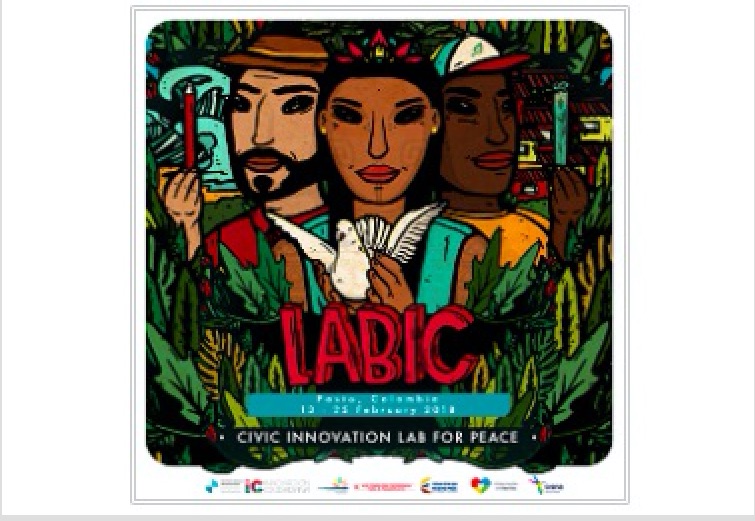
The Ibero-American General Secretariat is organizing the Laboratory of Civic Innovation for Peace between February 13 and 24 with the support of the High Council for the Postconflict of the Presidency of Colombia, the Governorate of Nariño, and Nansen Center for Peace and Dialogue with the support of the Spanish Agency for International Cooperation for Development.


(click on image to enlarge)

The Laboratories for Citizen Innovation, which will be held annually in Ibero-America, make it possible for hundreds of citizens from all the countries of the region to work together to develop innovative projects to improve society. The Laboratory of Civic Innovation for Peace in Colombia will be the first time that citizen innovation and solutions that citizens of all Latin America propose will be part of the construction of peace.

(Continued in right column)

Question related to this article:

What is happening in Colombia, Is peace possible?

(Continued from left column)

As of February 13 and for 12 days, 100 citizens from Colombia, Argentina, Brazil, Chile, Ecuador, Spain, Honduras, Italy, Mexico, Norway, Panama, Peru, Portugal, Uruguay and Venezuela will work together on 10 projects of innovation that will provide solutions to key post-conflict challenges in Colombia in the field of human rights, coexistence, alternative local development, culture of peace and reconciliation.

The Innovation for Citizens Peace Laboratory will work on innovation and technology solutions for problems that arise in Colombia in this post-conflict stage, for example: 3D prosthesis manufacturing for victims of conflict, sustainable systems for water use in rural areas, digital platforms to organize citizen activism and documentation of the experience of an indigenous people that resisted drug trafficking.

During the Laboratory 15 conferences, meetings and free courses will be held with experts in peace and innovation processes from around the world that will be open to the public and can be followed through Facebook Live.

On February 24, the participants will present to the public all the projects completed at the Imperial Theater of Pasto in the presence of Minister Rafael Pardo and the Ibero-American General Secretary, Rebeca Grynspan, together with the governor of Nariño, Camilo Romero.

(Click here for the original Spanish version of this article)

UN chief in Pyeongchang; Olympic message of peace is universal, beacon for human solidarity, culture of peace

.. DEMOCRATIC PARTICIPATION ..

News story and press release from the United Nations News Centre

Following is the text of UN Secretary‑General António Guterres’ video message for the pre‑ceremony at the PyeongChang Olympic Winter Games, in the Republic of Korea today [February 9]:


Secretary-General António Guterres (left) and Thomas Bach, President of the IOC, hold a joint press encounter at the IOC office in Pyeongchang, Republic of Korea. UN Photo/Mark Garten

안녕하십니까 Ahn-nyoung Ha-shim-nikka, PyeongChang.

The world gathers on the Korean Peninsula today, united by the Olympic spirit:  in solidarity, mutual respect and friendly competition.  The Olympics and Paralympics showcase the best of the world’s athletic achievements.

 And the best of humanity.

Let the Olympic flame shine as a beacon to human solidarity.  Let the Olympic Truce help spread a culture of peace.  Let the Olympic spirit guide our actions today and every day.

Thank you.  Gahm-sah Hahm-ni-da 감사합니다.

. . . United Nations Secretary-General António Guterres called on everyone to recognize and promote the Games’ universal message of peace and tolerance.

“The Olympic spirit allows people to be together, from all over the world, to respect each other, to assert the values of tolerance, of mutual understanding that are the basic elements for peace to be possible,” Mr. Guterres told journalists in Pyeongchang.

(Articles continued in right column)

Questions for this article:

Can Korea be reunified in peace?

(Articles continued from left column)

Obviously, in the present context, he said, there is a lot of attention for this message of peace in relation to the Korean Peninsula, but the Olympic message of peace is not local.

“It is universal. It’s for the world. It is valued in Korea as it is valued everywhere where we struggle to try to address the many complex conflicts that we are facing,” he said.

The UN chief also extended his appreciation and pride to be at the Winter Olympics and highlighted the cooperation between UN and the International Olympic Committee (IOC), as well as the values for which the IOC and its sister organization, the International Paralympic Committee, stand.

The Winter Olympics opened earlier today (local time) with cultural and artistic performances as well as the customary parade of athletes, which was the delegations from the Democratic People’s Republic of Korea and the Republic of Korea under one flag, carried together by a sportsperson from each team.

Also today, the opening ceremony saw the conclusion of the long journey of the Olympic Torch that started in November 2017.

In the last leg of its journey, the flame was carried, among others, by Miroslav Lajčák, the President of the UN General Assembly and Thomas Bach, the President of the IOC.

Outlining the commonalities between sport and diplomacy – both about peace and bringing people together – Mr. Lajčák highlighted that the Olympic torch is “probably the best symbol in our times in our world.”

“[It] is a symbol of peace, a symbol of youth, a symbol of sport, communication, a symbol of tradition, a symbol of hope.” he said.

(Thank you to Phyllis Kotite, the CPNN reporter for these articles.)

Pakistan: Asma Jahangir, Champion Of Human Rights, Critic Of Pak Army, Dies At 66

. HUMAN RIGHTS .

An article from New Delhi Television Limited

Leading Pakistani human rights advocate Asma Jahangir has died, her family said Sunday, in a major blow to the country’s embattled rights community. She was 66.

The lawyer and former UN special rapporteur died of cardiac arrest, according to her sister. “Unfortunately we have lost her,” Hina Jilani, also a prominent rights activist and lawyer, told AFP.


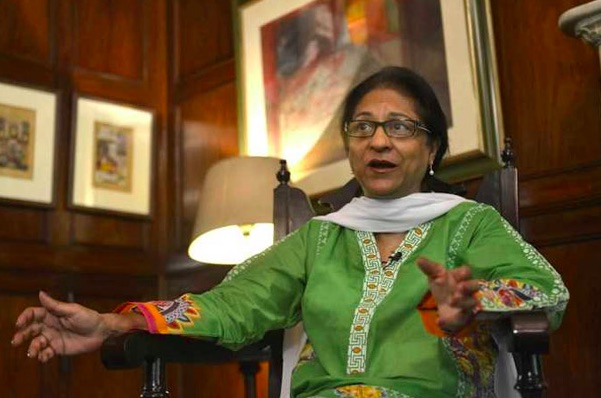
Pakistan’s top rights advocate Asma Jahangir braved death threats in her long career (AFP)

The lawyer and former UN special rapporteur died of cardiac arrest, according to her sister. “Unfortunately we have lost her,” Hina Jilani, also a prominent rights activist and lawyer, told AFP.

Funeral arrangements have yet to be announced, according to a statement by her daughter Munizae Jahangir, as the family waited for relatives to return to their hometown of Lahore.

Prime Minister Shahid Khaqan Abbasi expressed grief at Asma Jahangir’s death, praising her contribution to upholding the rule of law and safeguarding human rights.

Ms Jahangir’s supporters and former opponents alike took to social media to offer their condolences and express shock at news of her death.

“Asma Jahangir was the bravest human being I ever knew. Without her the world is less,” wrote prominent Pakistani lawyer Salman Akram Raja.

“I and many others didn’t agree with some of her views. But she was a titan. And one of the brightest and bravest ever produced by this country,” wrote journalist Wajahat Khan on Twitter.

(Article continued in the right side of the page)

Question for this article:

Where in the world can we find good leadership today?

(Article continued from the left side of the page)

In 2014 Asma Jahangir received France’s highest civilian award and Sweden’s Right Livelihood Award, for her decades of rights work.

Few Pakistani rights activists have achieved the credibility of Ms Jahangir.She braved death threats, beatings and imprisonment to win landmark human rights cases while standing up to dictators.

Ms Jahangir also helped establish the Human Rights Commission of Pakistan.

The organisation made its name defending religious minorities and taking on highly charged blasphemy accusations along with “honour” killings — in which the victims, normally women, are murdered by a relative for bringing shame on the family.
 
There is still terrible violence against women, discrimination against minorities and near-slavery for bonded labourers, Ms Jahangir told AFP during an interview in 2014, but human rights have made greater strides in Pakistan than may be apparent.

“There was a time that human rights was not even an issue in this country. Then prisoners’ rights became an issue,” she said.

“Women’s rights was thought of as a Western concept. Now people do talk about women’s rights — political parties talk about it, even religious parties talk about it.”

Asma Jahangir secured a number of victories during her life, from winning freedom for bonded labourers from their “owners” through pioneering litigation, to a landmark court case that allowed women to marry of their own volition.

She was also an outspoken critic of the powerful military establishment, including during her stint as the first-ever female leader of Pakistan’s top bar association.

Ms Jahangir was arrested in 2007 by the government of then-military ruler Pervez Musharraf. In 2012 she claimed her life was in danger  from the feared Inter Services Intelligence spy agency.