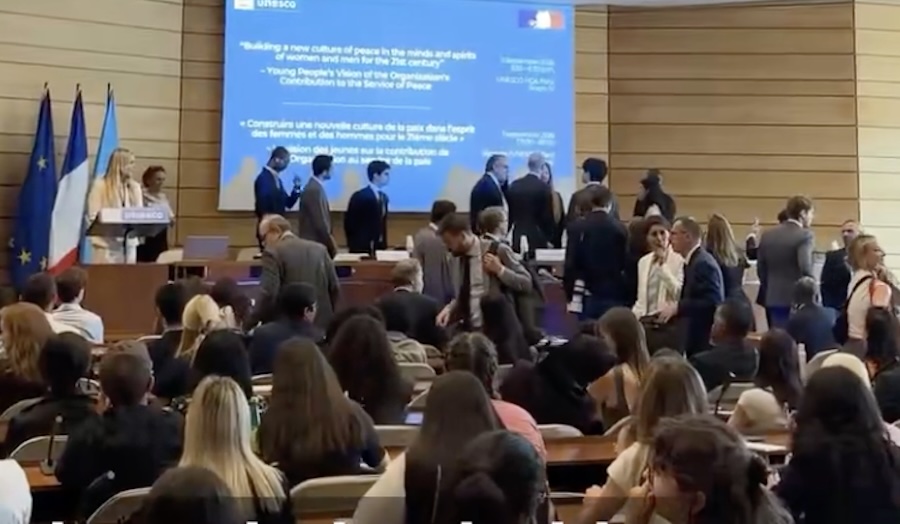
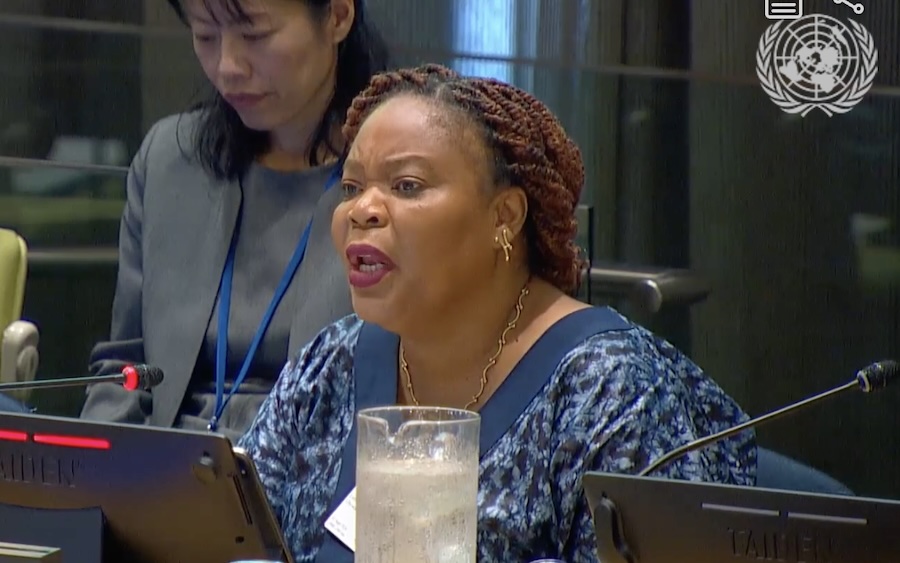
Mexico: Al Sharpton and Rigoberta Menchú to Join Mérida Peace Conference

DISARMAMENT & SECURITY .

An article by Carlos Rosado van der Gracht from Yucatan Magazine

The International Peace Conference in Mérida will feature prominent voices such as Nobel Peace Prize laureate Rigoberta Menchú Tum and civil rights leader Alfred Charles Sharpton Jr., better known as Al Sharpton, the firebrand TV pundit and activist.

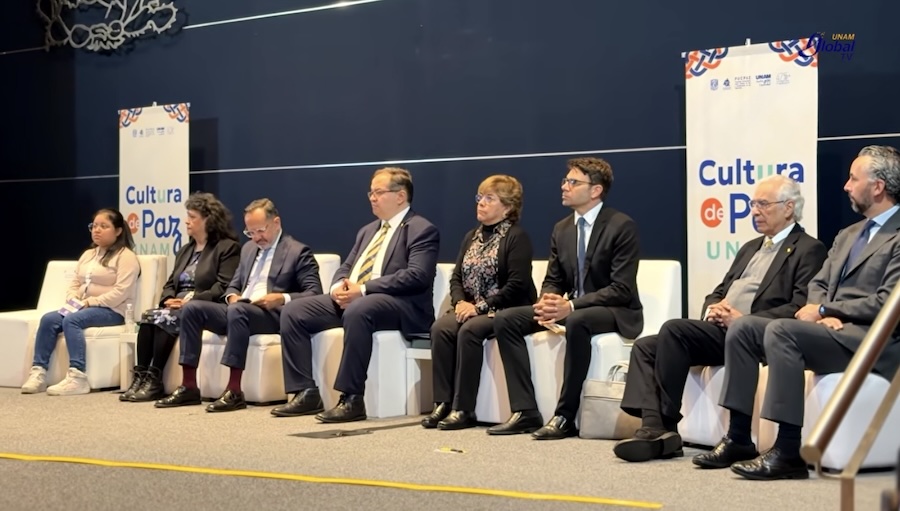
This regional gathering, organized by UADY, The World House Project Inc., and the Yucatán state government, will take place at the Siglo XXI convention center.

Over three days starting Feb. 4, civic, business, academic, government, and student leaders, as well as activists, will discuss actions to address today’s challenges in peace and justice through dialogue, education, and strategic action.


The conference aims to build a global network for civic awareness and create social infrastructure focused on promoting peace and justice. It will also invite analysis of significant challenges and opportunities for international peace.

Rigoberta Menchú will share her vision for building peace through human rights and social justice. Johnny J. Mack, founder of The World House Project, will present a talk on the World House vision and the metalogic of nonviolence.

Additionally, Rosa Wolpert Kuri, a UNESCO representative, will give the presentation “Without Education, There Is No Peace.” Other experts, including Francisco Javier Gorjón Gómez, Roberto José Beltrán Zambrano, Alberto Manuel Athié Gallo, and Fernando de la Mora Salcedo, will address key topics such as a culture of peace, nonviolent action in the 21st century, and current global scenarios.

The sessions aim to identify three main focus areas: Direct Action, which uses peaceful tactics to mobilize people, challenge injustice, and create pressure for change; Cultural Transformation, which shifts mindsets and social norms through art, storytelling, education, and spiritual leadership; and Structural Change, which reforms policies, systems, and institutions to build equity, justice, and peace.

The conference will also feature a Youth for Peace Agenda. This includes keynote speeches, panel discussions, workshops, intergenerational dialogues, and cultural activities with performances by the UADY Ballet, the University Regional Orchestra, and other musical groups.

Members of the general public may attend the conference by completing the online registration and paying the participation fee of MX$2,800 via bank deposit or transfer, or MX$2,910 via PayPal. Deadline is Feb. 2. Visit https://conferenciadepaz.uady.mx/.

About Rigoberta Menchú

Rigoberta Menchú grew up in a small Mayan village in Guatemala. As a young woman, she experienced injustice and violence during her country’s long civil war, in which family members were killed. Her courageous work for social justice and peace was recognized globally when she received the Nobel Peace Prize in 1992. She used this honor to bring even more attention to the struggles of Indigenous communities everywhere. Today, she continues to travel and teach, emphasizing that lasting peace must be built on a foundation of human rights, dignity, and fairness for all people.

Menchú remains one of the Maya world’s loudest voices on social justice, enduring peace and cultural preservation.

(Continued in right column)

Question related to this article:
 
The Nobel Peace Prize: Does it go to the right people?

(Continued from left column)

The Program

World House Project 2026 International Peace Conference

The World House Project 2026 International Peace Conference takes place over three days at the Centro de Convenciones Siglo XXI, bringing together global thought leaders, activists, and students to explore pathways toward peace and justice. The conference halls were renamed for the occasion.

Wednesday, February 4

The conference opens with a special youth-focused morning session, the JuventudES Paz Agenda, exclusively for high school students from 7:30 a.m. to 2:30 p.m. in the Mahatma Gandhi Hall (Chichén Itzá 6).

General registration begins at 3 p.m. at the Rigoberta Menchú Tum Passage, followed by the Opening Ceremony at 4 p.m. in the Martin Luther King Jr. Hall (Chichén Itzá 4 and 5).

The inaugural keynote at 5 p.m. features Master Joaquín Díaz Mena, Governor of the State of Yucatán, presenting the “Allies for Life Program.” This is followed at 6 p.m. by Reverend Al Sharpton, who delivers the day’s second keynote address.

Concurrent with the opening sessions, the Mandalas Peace Hub hosts a Human Rights Journey from 4 p.m. to 6 p.m. in the Malala Yousafzai Hall (Uxmal 4) and Nelson Mandela Hall (Chichén Itzá 2 and 3).

The first day concludes with a cultural performance at 7 p.m. featuring the UADY Ballet and University Folk Orchestra in Nelson Mandela Hall.

Thursday, February 5

The day begins at 9 a.m. with a keynote address by Dr. Rigoberta Menchú Tum in Martin Luther King Jr. Hall, followed by three consecutive morning sessions: Dr. Francisco Javier Gorjón Gómez speaks on “Peace from Peace: Foundation for Building Peace” at 10 a.m., and Dr. Roberto José Beltrán Zambrano presents “The Right Time for Peace: Culture of Peace and Nonviolent Action in the 21st Century” at 11 a.m.

After a midday break from noon to 1 p.m., Dr. Johnny J. Mack delivers his keynote “Vision of the World House and the Metalogic of Nonviolence” at 1 p.m.

The afternoon shifts to interactive formats with panel discussions, presentations, and workshops running from 2 p.m. to 7 p.m. in Mahatma Gandhi Hall. Simultaneously, an Intergenerational Dialogue for the Next Generation takes place from 3 p.m. to 6 p.m., also in Mahatma Gandhi Hall, while the Mandalas Peace Hub continues its Human Rights Journey programming in both Malala Yousafzai and Nelson Mandela Halls.

The evening features a cultural performance by the musical group Polifonía and collaborating artists at 7 p.m. in Nelson Mandela Hall.

Friday, February 6

The final day opens at 9:30 a.m. with Master Rosa Wolpert Kuri from UNESCO presenting “Without Education There Is No Peace” in Martin Luther King Jr. Hall.

At 10:30 a.m., Master Alberto Manuel Athié Gallo addresses “Where Are We Going? Between Uncertainty, Surprise, Emerging Doubts, and the New World Order,” followed at 11:30 a.m. by Master Fernando de la Mora Salcedo speaking on “Mexico, the World, and the Culture of Peace.”

The conference concludes with a panel discussion at 12:30 p.m. titled “Where Are We Going in Building Peace and Justice in Latin America? Next Collective Steps,” featuring Master Rosa Wolpert Kuri, Master Héctor Dada Sánchez, and Dr. José Luis Espinoza Navarrete, moderated by Dr. Celia Rosado Avilés.

The closing ceremony takes place at 1 p.m., bringing the three-day international gathering to its conclusion.

– – – – – –

If you wish to make a comment on this article, you may write to coordinator@cpnn-world.org with the title “Comment on (name of article)” and we will put your comment on line. Because of the flood of spam, we have discontinued the direct application of comments.
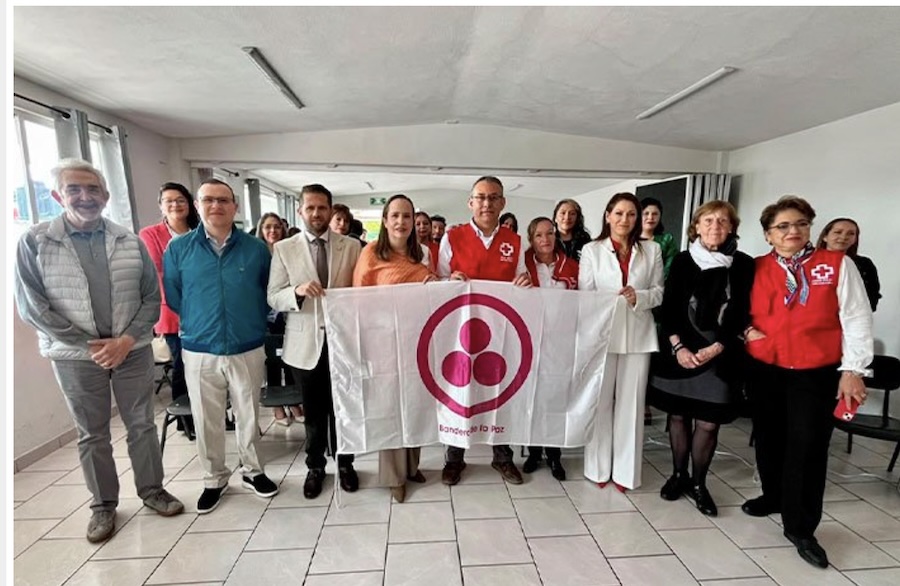
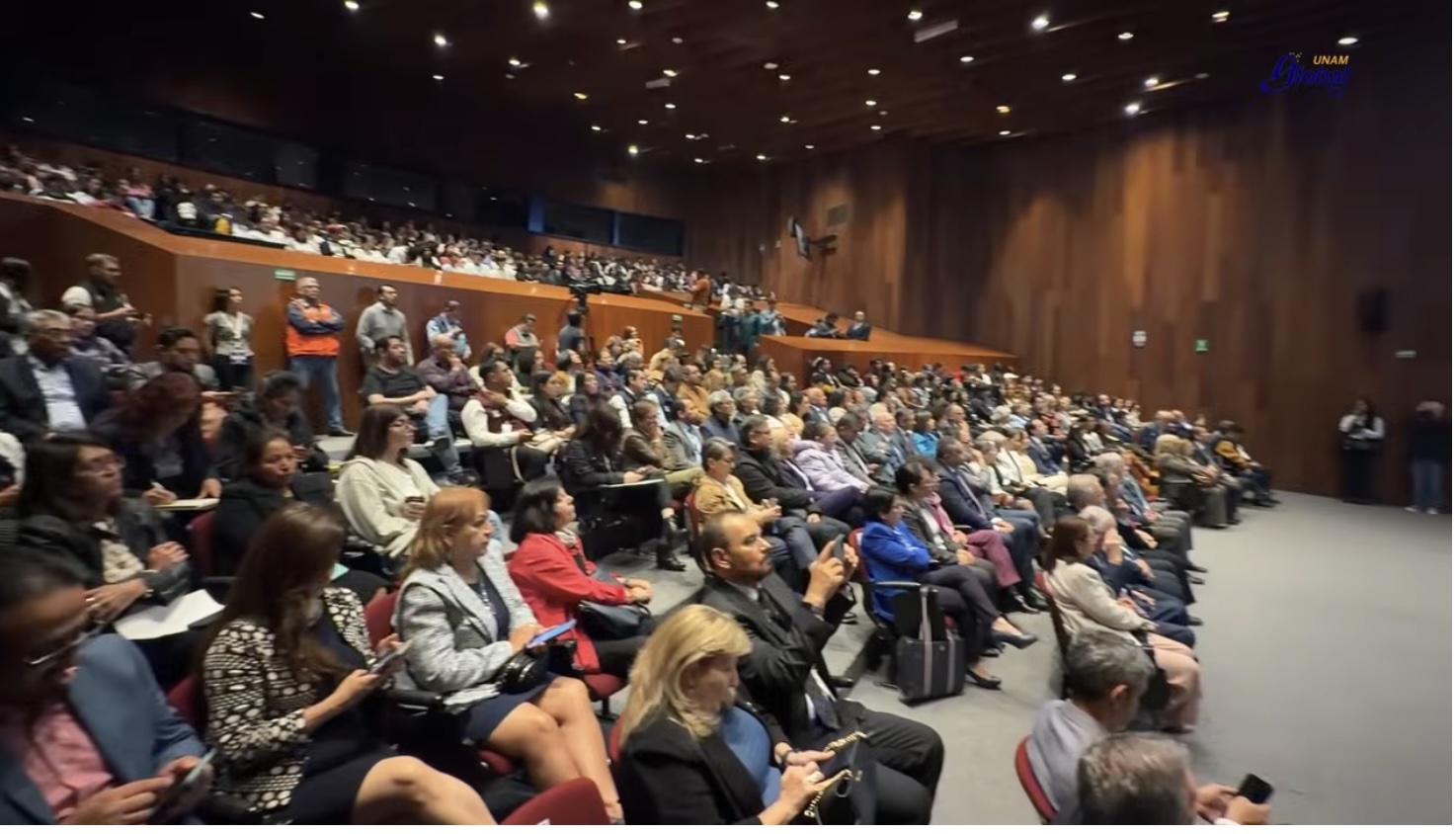
Federico Mayor: A Culture of Peace, Now More Than Ever

EDUCATION FOR PEACE .

A book review by Ángel Aguas from Noticias Obreras (translation by CPNN)

The Hour of Citizenship: Dignity, Human Rights, and a Culture of Peace
Federico Mayor Zaragoza and Emilio José Gómez Ciriano
HOAC Editions (2026)
84 pages

The recent statement by Pope Leo XIV, addressed to the Diplomatic Corps accredited to the Holy See, that “war is back in fashion and the enthusiasm for war is spreading,” confirms the growing global trend of recent years. In this context, the new publication from HOAC Editions of the Catholic Workers’ Brotherhood (Hermandad Obrera de Acción Católica) champions peace as the only alternative for building a future of hope for all humanity.


(Review continued in right column)

( Click here for the original version in Spanish.)

Question for this article:

What are the most important books about the culture of peace?

(Review continued from left column)

This book recapitulates, in his own words, the extensive pacifist legacy of Federico Mayor Zaragoza, professor and former president of UNESCO, among many other things. When Emilio José Gómez Ciriano, university professor and co-author of the book, invited him to participate, no one knew it would be Mayor Zaragoza’s posthumous work, as he passed away on December 19, 2024.

“This work emerges as an urgent manifesto and an ethical and prophetic compass. It is not only an analysis, but a call to civic action in the face of what its authors perceive as a dangerous global drift toward militarization and the abandonment of humanist foundations…”

Culture of Peace, Now More Than Ever

– – – – – –

If you wish to make a comment on this article, you may write to coordinator@cpnn-world.org with the title “Comment on (name of article)” and we will put your comment on line. Because of the flood of spam, we have discontinued the direct application of comments.
Mexico: Pablo Lemus and Rigoberta Menchú Agree on Actions to Build a New Culture of Peace in Jalisco

FREE FLOW OF INFORMATION .

An article by Samantha Lamas in Cronica (translation by CPNN)

With the aim of strengthening the construction of a new culture of peace in Jalisco, the Governor of the State, Pablo Lemus Navarro, and Rigoberta Menchú Tum, Nobel Peace Prize laureate, have signed a agreement to collaborate actions focused on priority sectors of the state.

The agreement, signed between the Government of Jalisco and the Rigoberta Menchú Tum Foundation, outlines the development of a proactive and forward-thinking strategy that will prioritize the needs of Indigenous communities—primarily in the northern region of the state—as well as women and children.


Rigoberta Menchú and Pablo Lemus (Courtesy)

(article continued in right column)

(Click here for the original Spanish version of this article.)

Question related to this article:

Is there progress towards a culture of peace in Mexico?

(article continued from left column)

During the meeting, the state governor expressed his appreciation for Rigoberta Menchú’s career and emphasized the importance of initiating a collaborative effort with her foundation. “It is an honor for me to welcome you to Jalisco and to begin working together with you and your foundation; it is something that excites me and that we had dreamed of for our state,” he stated.

Lemus Navarro stressed that this agreement will allow progress in addressing the needs of Indigenous communities and in promoting a culture of peace with a social and inclusive focus. “We are going to begin working together for Indigenous communities, for the women of our state, and for a new culture of peace, for which you and your foundation are a global leader,” he added.

Rigoberta Menchú Tum, winner of the 1992 Nobel Peace Prize, is internationally recognized for her work in defending human rights, promoting reconciliation, and fostering intergenerational respect. During her remarks, she thanked the Mexican people and the Government of Jalisco for demonstrating the political will to promote peace as a path to dialogue and the vindication of rights, especially for women and indigenous communities.

“I believe in peace as a culture, as education, and as dialogue. I believe in peace as the transmission of experiences and knowledge to our youth, to our communities who must become the next generation of our society,” she stated.

Finally, Menchú Tum emphasized that the value of the agreement will lie in the implementation of a simple and productive agenda, with clear actions, aimed at generating concrete results for the benefit of the people of Jalisco.
– – – – – –

If you wish to make a comment on this article, you may write to coordinator@cpnn-world.org with the title “Comment on (name of article)” and we will put your comment on line. Because of the flood of spam, we have discontinued the direct application of comments.

UN General Assembly Calls Upon Warring Parties of Current Armed Conflicts to Boldly Agree to ‘True Mutual Ceasefires’ during Upcoming Olympic Winter Games

.. DEMOCRATIC PARTICIPATION ..

An article from the United Nations

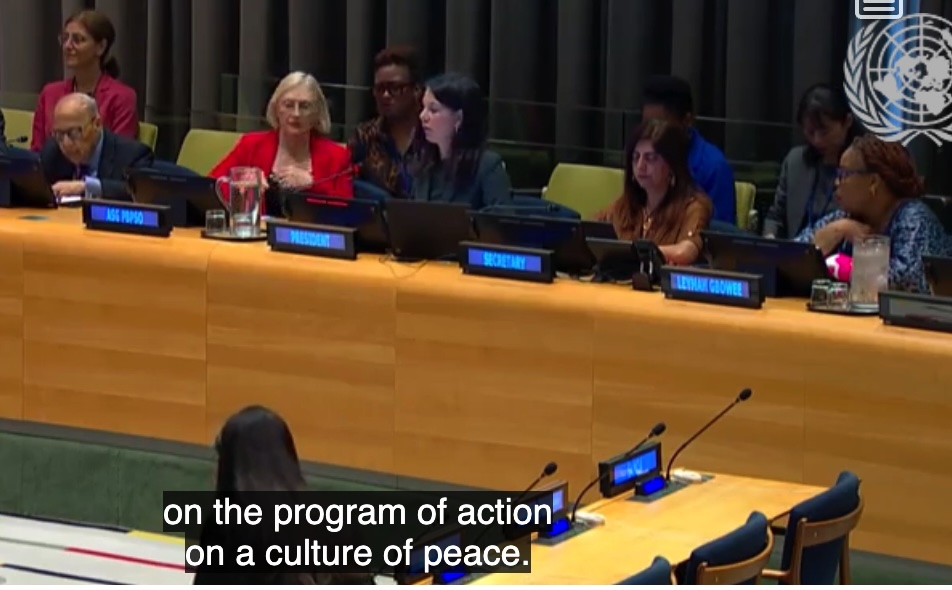
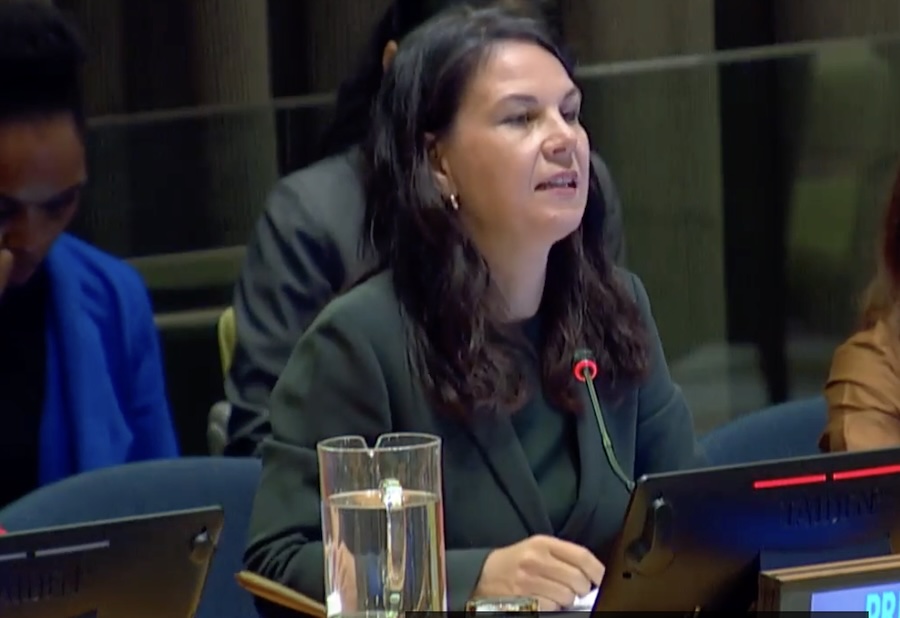
Ahead of the upcoming 2026 Olympic Winter Games, the General Assembly today took note of a Solemn Appeal by the President of its eightieth session, who urged all warring parties to agree to “true mutual ceasefires” during the Games in line with the ancient principle of the Olympic Truce.

“The Olympic Truce proves that, even in times of division, humanity can still find common ground through sport,” said Annalena Baerbach (Germany), reading her Appeal (document A/80/598) into the Assembly’s official record.  “I call upon all warring parties of current armed conflicts around the world to boldly agree to true mutual ceasefires for the duration of the Olympic Truce, thus providing an opportunity to settle disputes peacefully.”

(click on image to enlarge)

Today’s Appeal recalls the ancient Greek tradition of the ekecheiria, translated as “Olympic Truce”, which serves as a hallowed principle of the Olympic Games, she said.  In modern times, the Assembly has taken up the related agenda item “Building a peaceful and better world through sport and the Olympic ideal” every two years, in advance of each summer and winter Olympic Games, adopting a resolution by the same name.

(Article continued in right column)

Question for this article:

How can sports promote peace?

(Article continued from left column) 

Noting that the XXV Olympic Winter Games will begin shortly in Milano-Cortina, Italy, Ms. Baerbach cited the Assembly’s most recent resolution, which urged Member States to observe the truce individually and collectively from the seventh day before the Games’ start until the seventh day following the end of the XIV Paralympic Winter Games.  (See Press Release GA/13732  of 19 November 2025.)

“Through friendly competition, we can rise above our divisions and reaffirm our common humanity,” she said.  “The Games will bring together athletes from all parts of the world in the greatest of international sports events as a means to promote peace, mutual understanding, the rule of law and goodwill among nations and peoples — goals that are also part of the founding values of the United Nations.”

Pointing out that the Milano-Cortina 2026 Winter Games are on track to be the most gender-balanced in history, she added that the International Olympic Committee has decided to fly the UN flag in the Olympic stadium and the Olympic villages as a symbol of peace. 

“I welcome the leadership of Olympic and Paralympic athletes in promoting peace and human understanding through sport and the Olympic ideal,” she said, urging all Member States to demonstrate their commitment to the Olympic Truce and take concrete actions to promote and strengthen a culture of peace and harmony.

“May the implementation [of the Olympic Truce] reaffirm our shared conviction that, even in a divided world, unity remains possible and respect for our common rules means that we all win,” she said.

– – – – – –

If you wish to make a comment on this article, you may write to coordinator@cpnn-world.org with the title “Comment on (name of article)” and we will put your comment on line. Because of the flood of spam, we have discontinued the direct application of comments.
USA: Judge orders 5-year-old Liam Conejo Ramos and his dad released from ICE detention

. HUMAN RIGHTS .

An article from CNBC

A 5-year-old boy and his father must be released by Tuesday from the Texas center where they’ve been held after being detained by immigration officers in Minnesota, a federal judge ordered Saturday in a ruling that harshly criticized the Trump administration’s approach to enforcement.

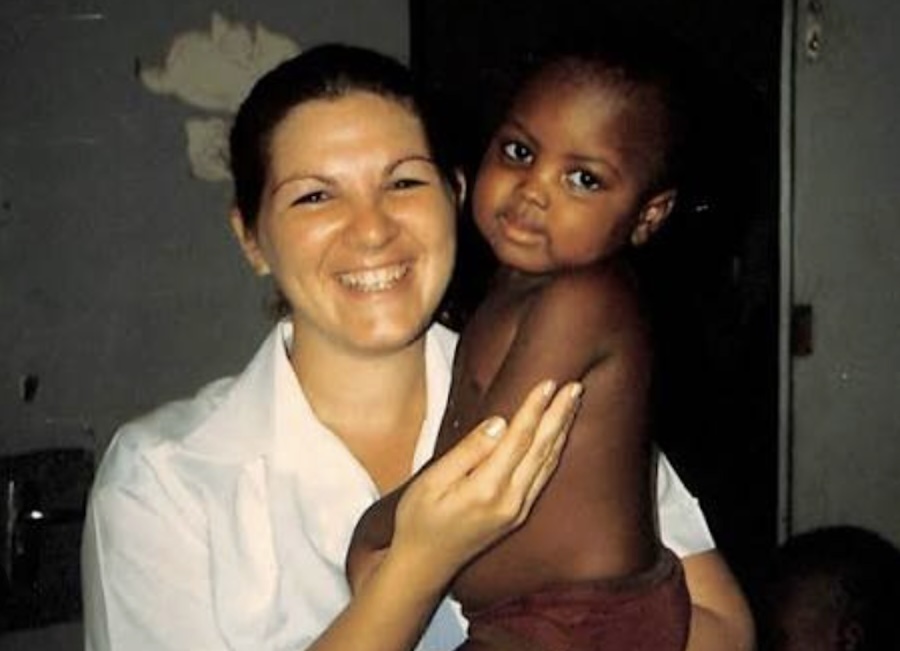
Images of Liam Conejo Ramos, wearing a bunny hat and Spider-Man backpack, being surrounded by Immigration and Customs Enforcement officers sparked even more outcry about the administration’s immigration crackdown in Minnesota.


U.S. District Judge Fred Biery, who sits in San Antonio and was appointed by former Democratic President Bill Clinton, said in his ruling that “the case has its genesis in the ill-conceived and incompetently-implemented government pursuit of daily deportation quotas, apparently even if it requires traumatizing children.”

Biery had previously ruled that the boy and his father could not be removed from the U.S., at least for now.

Liam and his father, Adrian Conejo Arias, who is originally from Ecuador, were detained in the Minneapolis suburb of Columbia Heights on Jan. 20. They were taken to a detention facility in Dilley, Texas.

Neighbors and school officials say that federal immigration officers used the preschooler as “bait” by telling him to knock on the door to his house so that his mother would answer. The Department of Homeland Security has called that description of events an “abject lie.” It said the father fled on foot and left the boy in a running vehicle in their driveway.

The government says Arias entered the U.S. illegally from Ecuador in December 2024. The family’s lawyer says he has a pending asylum claim that allows him to remain in the country.

(Article continued in the right column)

Questions related to this article:

The struggle for human rights, is it gathering force in the USA?

(Article continued from the left column)

Their detention led to a protest at the Texas family detention center and a visit by two Texas Democratic members of Congress.

In his order Saturday, Biery said: “apparent also is the government’s ignorance of an American historical document called the Declaration of Independence,” suggesting the Trump administration’s actions echo those that then-author and future President Thomas Jefferson enumerated as grievances against England’s King George.

Among them: “He has sent hither Swarms of Officers to harass our People” and “He has excited domestic Insurrection among us.”

Biery included in his ruling a photo of Liam and references to two lines in the Bible: “Jesus said, ’Let the little children come to me, and do not hinder them, for the kingdom of heaven belongs to such as these,” and “Jesus wept.”

He’s not the only federal judge who has been tough on ICE recently. A Minnesota-based judge with a conservative pedigree described the agency as a serial violator of court orders related to the crackdown.

Stephen Miller, the White House chief of staff for policy, has said there’s a target of 3,000 immigration arrests a day. It’s that figure which the judge seemed to refer to as a “quota.”

Spokespersons from the U.S. Department of Justice and U.S. Department of Homeland Security did not immediately reply to requests for comment.

The Law Firm of Jennifer Scarborough, which is representing the boy and his family, said in a statement that it was working “to ensure a safe and timely reunion.”

“We are pleased that the family will now be able to focus on being together and finding some peace after this traumatic ordeal,” they said.

During Wednesday’s visit by Texas Reps. Joaquin Castro and Jasmine Crockett, the boy slept in the arms of his father, who said Liam was frequently tired and not eating well at the detention facility that houses about 1,100 people, according to Castro.

Detained families report poor conditions like worms in food, fighting for clean water and poor medical care at the detention center since its reopening last year. In December, a report filed by ICE acknowledged they held about 400 children longer than the recommended limit of 20 days.

– – – – – –

If you wish to make a comment on this article, you may write to coordinator@cpnn-world.org with the title “Comment on (name of article)” and we will put your comment on line. Because of the flood of spam, we have discontinued the direct application of comments.
Spirit of Vasudhaiva Kutumbakam leads Interfaith Harmony Week

. TOLERANCE & SOLIDARITY .

An article from AWAZ The Voice

World Interfaith Harmony Week will be observed globally from February 1 to 7, 2026, continuing a tradition that inspires unity across faiths and nations. First proposed by King Abdullah II of Jordan at the United Nations General Assembly in September 2010, it was adopted through a UN Resolution on October 20.

The resolution affirmed that mutual understanding and interfaith dialogue are essential for a culture of peace and invited all people, regardless of belief, to celebrate through the inclusive principle of “Love of God and Love of the Neighbour,” or “Love of the Good and Love of the Neighbour.” Since the first observance in 2011, the movement has become a worldwide call for coexistence and compassion.

The 2025 observance in Delhi was a luminous reflection of India’s pluralistic spirit. Organised by the Global Peace Foundation (GPF) India, the three-day Interfaith Conclave 2025 combined India’s ancient wisdom of Vasudhaiva Kutumbakam—the world is one family—with contemporary peacebuilding frameworks. Leaders from Hindu, Buddhist, Muslim, Christian, Jain, Sikh, and Parsi traditions gathered to reaffirm faith’s unifying role in a divided world.

The conclave opened with Dr Markandey Rai, Chairman of GPF India, invoking India’s civilizational ethos of unity beyond boundaries. Goswami Sushil Ji Maharaj, convener of the Bhartiya Sarv Dharm Sansad, recalled Swami Vivekananda’s 1893 address at the Chicago Parliament of Religions as a timeless message of harmony. Speakers such as Bhikkhu Sanghasena, Fr. Rajakumar Joseph, Imam Faizan Muneer, and Swami Sarvalokananda highlighted shared moral values—truth, service, and compassion—that transcend religious identity.

What distinguished the Delhi observance was the participation of youth and creative engagement. A pre-event poster competition, Art for Harmony, invited young artists to visualise peace, while workshops on “Skills for Interfaith Dialogue” trained students in empathy and respectful communication. Youth-led roundtables on peacebuilding showed how dialogue, when combined with action, can transform communities. These initiatives align with global best practices that link interfaith learning to arts, service, and civic participation.

Across the world, interfaith dialogue has evolved into a vital tool for peace. The United Nations promotes it through the Alliance of Civilisations and UNESCO’s intercultural programs. Regional examples abound: Indonesia’s grassroots Forum Kerukunan Umat Beragama promotes local religious cooperation;

(continued in right column)

Question related to this article:
 
How can different faiths work together for understanding and harmony?

(continued from left column)

Europe’s institutional frameworks like the UK Inter Faith Network support structured engagement; and Nigeria’s Interfaith Mediation Centre unites pastors and imams to rebuild communities torn by conflict.

 Such models demonstrate that spiritual traditions can strengthen reconciliation and social trust.

India’s role in this global movement remains distinctive. Its history is shaped by inclusion—Ashoka’s tolerance, Akbar’s Din-i-Ilahi, Guru Nanak’s universalism, and Gandhi’s interfaith prayers. In an era of polarisation, India’s constitutional promise of fraternity remains its guiding light. The 2025 conclave reaffirmed that harmony means not passive tolerance but active collaboration—religious leaders and citizens working together for education, the environment, and women’s empowerment.

Globally, youth have become key agents of peace. Studies show that interfaith exposure in early years nurtures empathy and reduces prejudice. GPF India’s initiatives—Youth Peace Clubs and Indo-Pacific Peace Forums—reflect this belief that harmony must grow from communities, not be imposed from above.

As the world prepares for Interfaith Harmony Week 2026, the Delhi conclave stands as a reminder that dialogue rooted in shared values can heal divisions. It also showed that interfaith cooperation is not an idealistic aspiration but a practical necessity in a world confronting identity conflicts, environmental degradation, and social fragmentation. The Indian vision of Vasudhaiva Kutumbakam, echoed in the G20 theme “One Earth, One Family, One Future,” gives fresh meaning to this universal movement for peace.

When Interfaith Harmony Week 2026 unfolds from February 1 to 7, temples, mosques, churches, gurdwaras, and monasteries around the world will again open their doors in friendship. In classrooms and communities, art, music, and service will reaffirm that peace begins with the heart that listens.

The lamps of faith that light Delhi and distant cities alike will remind humanity that beyond every difference lies the same yearning for goodness.

In a time when the world struggles to rediscover empathy, India’s example offers a moral compass—showing that harmony is not a dream but a daily practice. As people of every faith join hands to celebrate this week, they affirm the simple truth that when love of the good guides our actions, humanity indeed becomes one family—a message of hope for a world learning again to live as one.

The author, Pallab Bhattacharyya, is the former Police Chief of Assam.

(Editor’s note: Interfaith Harmony Week is formally supported by the Arab League.)

– – – – – –

If you wish to make a comment on this article, you may write to coordinator@cpnn-world.org with the title “Comment on (name of article)” and we will put your comment on line. Because of the flood of spam, we have discontinued the direct application of comments.
Mexico: Ethics as a Path to a Culture of Peace at the University of Colima

… EDUCATION FOR PEACE …

An article from Comentario

The Ethics and Conflict of Interest Prevention Committee of the University of Colima conducted a series of training sessions for staff from High School 1 and the Faculty of Accounting and Administration in Colima. These sessions focused on the practical application of principles, values, and rules of integrity in university workplaces.

(Continued in right column)

(Click here for the Spanish original of this article)

Question for this article:

Where is peace education taking place?

Is there progress towards a culture of peace in Mexico?

(Continued from left column)

The activities were led by Rosa Elizabeth García Uribe, the institution’s Comptroller General, and Brenda Lizeth Aguilar García, Director of Administrative Obligations Research. They emphasized the importance of strengthening ethical conduct in daily work as the foundation for respectful and harmonious coexistence.

These actions were supported by the General Directorate for Integral Development, the area responsible for promoting the cross-cutting theme of a culture of peace at the University of Colima. This support helped consolidate a comprehensive vision focused on respect, dignified treatment, and the promotion of human rights within the university community.

During the sessions, participating staff demonstrated openness and dynamism, and recognized the importance of the institution creating training opportunities that strengthen an organizational culture based on integrity, ethics, and peace.
– – – – – –

If you wish to make a comment on this article, you may write to coordinator@cpnn-world.org with the title “Comment on (name of article)” and we will put your comment on line. Because of the flood of spam, we have discontinued the direct application of comments.
School Day of Non-violence and Peace

FREE FLOW OF INFORMATION

by CPNN

The School Day of Non-Violence and Peace is celebrated on January 30.

This year the day was celebrated in Spain, Mexico and Cuba.


March by the students in Teror.

According to Wikipedia, this day was proposed by the Spanish poet Llorenç Vidal Vidal in Majorca in 1964 as a “starting point and support for a pacifying and non-violent education of a permanent character.”

Vidal chose the date of January 30 to commemorate the great prophet of non-violence and peace, Mahatma Gandhi, who was assassinated on this day in 1948.

It was popularized in France in the 1970’s by the Gandhian disciple Lanza del Vasto in his utopian  Communauté de l’Arche.

The day is recognized by UNICEF in Spain.

In Palma, on the Island of Mallorca in Spain, 3,500 primary and secondary school students took part in the School Day of Non-Violence and Peace event. The celebration included the reading of a peace manifesto by student representatives, followed by a concert by the musical group Pèl de Gall. Afterwards, doves were released, a universal symbol of peace and of the commitment to promoting coexistence and the peaceful resolution of conflicts.

In the Mediterráneo secondary schools in Spain,  representatives from each secondary school group read their manifestos on behalf of their classes, linking their pledges to the chain of commitments from the previous group. This gesture symbolized the unity of all students in a shared commitment to positive and respectful coexistence. The grand finale was a reading of the poem “White Souls” by the high school students.

In schools of Zaragoza, Spain, there were artistic creations and exhibitions, fundraisers and charity runs, speeches and poems, music, games, and gatherings in the playground between students of different grades… all promoting peace, non-violence, and kindness.

In the Huerto Escolar Ecológico school in the Canary Islands of Spain, students made presentations for peace and non-violence on their school radio station.

In the Tafira – Nelson Mandela secondary school of the Canary Islands, students listened to “Poetry Committed to Peace” played over the school’s public address system during the first few minutes of each class and the 7th-grade students prepared an “Images for Peace” exhibition.

In the Teror secondary school , also in the Canary Islands, the event began with a march by the students, carrying a banner with the slogan ‘The first condition for peace is the will to achieve it’, and chanting in unison, “Who are we? IES de Teror. What do we want? Peace.” In the Manifesto for Peace read by the students, they also emphasized this message: “Peace is not just the absence of war. Peace is respect, dialogue, equality, and justice.”

The secondary school of La Aldea de San Nicolás in the Canary Islands presented the official video clip of the song “Let us live in peace”.  This audiovisual project is the result of intensive collaborative work aimed at raising awareness among the school community and the general public about the importance of coexistence, mutual respect, and the peaceful resolution of conflicts.

In Salamanca, Spain, the event included the reading of a manifesto, accompanied by a musical performance by a teacher from the Divino Maestro school, followed by the formation of a large circle for peace. Afterwards, the Mayor of Salamanca received a delegation from the school in the Reception Hall.

Continued in right column)

(Click here for the article in Spanish)

Questions related to this article:
 
How can we be sure to get news about peace demonstrations?

(Continued from left column)

In Villacañas, Spain, a large globe, the work of local artist Manuel García Mochales,was installed in the Plaza de España. Throughout the day, the various participating schools added their artwork and messages to this piece, transforming it into a collective symbol of Villacañas’ commitment to peace. The celebration also included musical accompaniment and the performance of a song that was sung together by all attendees, highlighting the importance of education as a fundamental pillar for building a culture of peace.

In Barcelona, Children from Turó Blau School, Elisenda de Montcada School Institute, Bosc de Montjuïc Institute, Pedralbes Institute, and Caterina Albert Institute shared a series of learning experiences and reflections on “Invisible Violence”. The event was facilitated by the Escola de Cultura de Pau.

Ecologistas en Acción. based in Madrid, took part in the planting of olive trees on the occasion of the School Day of Non-Violence and Peace on January 30. This is part of the campaign entitled “There is no peace without justice.” of the Palestinian Tide platform, comprised of more than 60 educational organizations.

In Lleida, Catalonia, Spain, A total of 1,500 children participated in the commemoration of the School Day of Non-Violence and Peace. The boys and girls left messages of peace on maps installed in the squares of Pau Casals, Magnolias and Sant Jordi. The schools Sant Jordi, Minerva, Sant Josep de Calassanç, Països Catalans, Enric Farreny, Màrius Torres, Parc de l’Aigua, El Carme, Frederic Godàs, Esperança, Maria Rúbies, Joan Oró, Santa Anna, Sant Jaume Les Heures, Santa Maria de Gardeny and FEDAC participated.

In Cieza, Spain, the San José Obrero School in Cieza once again transformed its commemorative day for the School Day of Non-Violence and Peace into a pedagogical and artistic experience. This time, students and teachers climbed onto the deck of a ship to present the play “Pirates of the Sea of ​​Peace”. With the theme that “peace is not conquered, it is built,” students and teachers explored diverse cultures to understand how each people live in harmony, learning the values of each place and performaing a traditional dance from each region.. During the performance, they docked at various ports to receive lessons from each community they visited, including China, Hawaii, Africa, India and Mexico.

The Football Club of Seville, Spain celebrated the day by a series of actions with the Entre Amigos Association in the Polígono Sur neighborhood to combat school absenteeism and bullying.

In Santander, Spain, to celebrate the School Day of Non-Violence and Peace, the mayor placed a plaque to rename the park next to La Anunciación Scholl as “La Paz Park” and a group of children from the school sang a song for peace..

In Peñaranda, Spain,  the school community of La Encarnación celebrated Peace Day in the school auditorium. The students carried symbols related to this commemoration, and a manifesto in favor of peace and against violence was read..

In Vitoria-Gasteiz , in the Basque region of Spain,  a total of 1315 students from all the Church schools in the capital of Alavesa – shared a central event in the New Cathedral for the School Day of Non-violence and Peace. The program included testimonies from several students, music, a prayer, and a manifesto for peace.

In Léon, in the Northwest of Spain, the educational community of the Divina Pastora School commemorated the School Day of Non-Violence and Peace. Students from each grade level created a peace pledge.

In Zocalo Monclova, Mexico, an event was held at the Ignacio Zaragoza Secondary School with educational and municipal authorities. The municipal government reiterated its commitment to promoting initiatives that strengthen a culture of peace in schools.

In the Yucatan, Mexico, the State Center for Social Crime Prevention held a soccer tournament to commemorate the School Day of Non-Violence and Peace.

In Holguín, Cuba, the group Friends of Cuba, based in Victoria, Canada, held a solidarity meeting at the “Ronald Andalia Nieves” school, coinciding with the School Day of Non-Violence and Peace. Accompanied by representatives from the Party, the Government, and the Cuban Institute of Friendship with the Peoples, as well as neighbors and local students, the visitors participated in political and cultural activities and planted a tree as a symbol of brotherhood and commitment to a fairer world.

– – – – – –

If you wish to make a comment on this article, you may write to coordinator@cpnn-world.org with the title “Comment on (name of article)” and we will put your comment on line. Because of the flood of spam, we have discontinued the direct application of comments.
English bulletin February 1, 2026

. THE PEOPLE KEEP RESISTING .

Again this month, as the menace of the culture of war continues to grow, the people’s resistance continues to grow as well, as they take to the streets in massive numbers.

The culture of war axis is led by Trump in the United States and Netanyahou in Israel.

The culture of peace is led this month by mass demonstrations in the United State, Colombia, Cuba, Venezuela and Turkey.

In a city with a population of 500,000, more than 50,000 took to the streets in Minneapolis, despite sub-zero temperatures, to protest the war launched by Trump against their city.

Other protest demonstrations against Trump’s war on the cities took place in all 50 states of the United States.

In Colombia, in Venezuela and in Cuba, people took to the streets to protest Trump’s kidnapping of the President of Venezuela by an attack that killed perhaps 100 people, including many Cubans.

There were many other demonstrations against the American intervention around the world, such as this one in France.

And in Turkey, people took to streets in massive numbers to protest Netanyahou’s continued genocide against Palestine.

Mention must also be made of the mass demonstrations in Iran. While they were directed against the policies of the state of Iran, they were also infiltrated and manipulated by the United States and Israel as part of their menace of war against Iran.

As we are more than ever threatened with a World War III that could destroy our world, we must hope that the people’s resistance will not only continue but will eventually prevail.

A people united can never be defeated.

The culture of war is not invincible. Empires do crash.

The same species that invented war is capable of inventing peace.

HUMAN RIGHTS


USA: Undeterred by Freezing Temps, Statewide Minnesota Strikes Demand ‘ICE Out Now’

SUSTAINABLE DEVELOPMENT


African Union: Our Aspirations for the Africa We Want

DEMOCRATIC PARTICIPATION


IPU Statement on the International Day of Peaceful Coexistence

WOMEN’S EQUALITY


International Women’s Day 2026: Rights. Justice. Action. For ALL Women and Girls.


TOLERANCE & SOLIDARITY


Mass rally in Istanbul on New Year’s Day shows solidarity with Gaza

EDUCATION FOR PEACE


Mexico: USEBEQ Trains 5,000 Teachers to Foster a Culture of Peace

FREE FLOW OF INFORMATION


Iran protests 2026: our surveys show Iranians agree more on regime change than what might come next

DISARMAMENT & SECURITY


Protests in France agains US attack on Venezuela

IPU Statement on the International Day of Peaceful Coexistence

. DEMOCRATIC PARTICIPATION .

An article from the International Parliamentary Union

The Inter-Parliamentary Union (IPU) joins the international community in marking the first International Day of Peaceful Coexistence on 28 January 2026.

This new international day was adopted by the United Nations General Assembly in March 2025 through resolution A/RES/79/269, proposed by the Kingdom of Bahrain with support from the King Hamad Global Center for Coexistence and Tolerance.

At a time of toxic polarization, growing distrust and division, parliaments have a unique responsibility to promote peaceful coexistence and inclusive societies, and to fight intolerance through their legislative, oversight and representative roles.

(Article continued in the column on the right)

(Click here for the original version in French)

Questions related to this article:

Where in the world can we find good leadership today?

How can parliamentarians promote a culture of peace?

(Article continued from the column on the left)

By celebrating diversity, promoting peace education, and holding governments to account for human rights commitments, parliaments can and must create an environment in which every person is treated with dignity and respect.

The IPU’s agenda is firmly anchored in building more cohesive and just societies through parliamentary diplomacy, interfaith dialogue, and supporting parliaments to be inclusive and respectful spaces, representative of society in all its diversity.

At the 146th IPU Assembly in Bahrain in March 2023, hundreds of parliamentarians representing some 140 countries endorsed the Manama Declaration, Promoting peaceful coexistence and inclusive societies: Fighting intolerance, delivering a message of hope.

Across all its work, the IPU encourages parliamentarians to counter hate speech and divisive rhetoric, to protect freedom of expression while combating incitement to hatred, and to use their platforms to counter prejudice and misinformation.

The IPU calls on all parliaments and parliamentarians to redouble their efforts to foster dialogue, bridge divides, embrace diversity and champion a culture of peace in their constituencies, countries and beyond. 

– – – – – –

If you wish to make a comment on this article, you may write to coordinator@cpnn-world.org with the title “Comment on (name of article)” and we will put your comment on line. Because of the flood of spam, we have discontinued the direct application of comments.