Haiti: Artist profiles: Boukman Eksperyans

… EDUCATION FOR PEACE …

An article from World Music Central

The revolutionary music of Boukman Eksperyans is a unique blend of roots, Vodou jazz, Zairian soukous and reggae, built on a foundation of traditional African rhythms and Caribbean melodies.


Video of Boukman Eksperyans

The band also promotes a spiritual message of freedom, unity, and faith, taking its name from a Haitian revolutionary named Boukman Dutty, a slave and Vodou priest who helped unify the Haitian slaves in a revolution against the French colonists in 1791.

Boukman’s first CD, Voudou Adjae, introduced traditional Vodou to a worldwide audiencetheir second, Kalfou Danjere (Dangerous Crossroads), was a direct response to the military overthrow of then Haitian president Jean-Bertrand Aristide. The group’s third release, Liberte (Pran pou Pran’l!) was recorded while the group was in exile in Kingston, Jamaica.

On July 29th, 2002, lead singers Theodore “Lolo” Beaubrun, Jr. and his wife, Mimerose “Manze” Pierre Beaubrun of Boukman Eksperyans were named official United Nations Ambassadors for Peace and Goodwill by the World Association of Former United Nations Interns and Fellows (WAFUNIF).

This distinguished title of United Nations Goodwill Ambassador was bestowed on Lolo and Manze in recognition of their tireless efforts to promote Love, Peace, Respect and Unity through their music, which has transcended all cultural barriers. They were also been asked to spearhead the creation of WAFUNIF’s Culture of Peace Learning Center in Haiti, which will be a school designed to introduce modern technology to poor countries around the world.

The school will provide poor, underprivileged children with computers, books, music and dance programs, and other digitally enhanced approaches to learning. The schools are created as part of a mandate for a Culture of Peace established in the UN General Assembly resolution 53/25 on the International Decade for a Culture of Peace and Non-Violence for the Children of the World 2001-2010.

While the members of Boukman Eksperyans survived the devastating Earthquake to their homeland of Haiti, each has been personally affected as all Haitians have been.


Question related to this article:

2016 WFUNA Young Leader is Zimbabwean

TOLERANCE AND SOLIDARITY .

An article from the Herald

Zimbabwean youth Bernard Bebe has been selected as the World Federation of United Nations Associations Young Leader of 2016 following his outstanding contribution towards the United Nations Sustainable Development Goal 16.

Bernard, of the Zimbabwe United Nations Association ZUNA, was selected after a rigorous process supported by an evaluating committee composed of three members of the WFUNA Youth Advisory Council in addition to WFUNA secretariat staff.

The top three nominees were interviewed based on their contribution to the development of the UNA Leadership qualities, overall work on peace and security issues and their strong understanding of elements contained in UN Sustainable Development Goal 16.

Bernard had been actively involved in the field of peace for a year In 2013 he joined UNA-Zimbabwe whilst he was a second-year student at Bindura University of Science Education.

He is in the national team responsible for organising Peace Day in Zimbabwe through a coalition of peace activists from both civil society and the Government.

Currently, he is working to proactively counter religious conflicts through a programme called Religious Tolerance in which he is working mostly with different religious groups in Zimbabwe to cultivate a culture of peace.

(Article continued in right column)

Question for this article

Is there a renewed movement of solidarity by the new generation?

(Article continued from left column)

Bernard works mostly with youths from high schools and universities. He has also been actively involved in ending gender based violence against women and girls.

He is also a trained human rights activist who has a keen interest in promoting women rights.

Speaking after the nomination Bernard said he was humbled by the recognition from such a renowned world body.

“This shows that the world is now appreciating the efforts of youths and at the same time taping into their potential,” he said.

“UN Security Council Resolution 2250 on Youth, Peace and Security has empowered us youths to step up our efforts in bringing about peace in our community therefore I will continue towards the attainment of Sustainable Development Goal number 16 which focus on promoting peace, justice and strong institutions.

“My message to other youths out there is that lets use our time to volunteer and bring positive change to our community especially in as far as these sustainable development goals are concerned because we are the SDG Generation,” said Bebe.

WFUNA supports and encourages youth engagement and participation in the United Nations Associations and United Nations Youth Associations around the world through the WFUNA Youth Network.

Every year, WFUNA sets a theme and calls for nominations for young people from the WFUNA Youth Network working within that theme.

From the nominations, the WFUNA secretary-general and WFUNA youth advisory council select three young leaders to be interviewed.

After each nominee is interviewed, a final candidate will be selected as the WFUNA young leader of the year. A WFUNA young leader of the year has to be able to inspire other youth to be involved in global issues

Finland Becomes First Country to Provide Citizens Basic Income

…. HUMAN RIGHTS ….

An article from Telesur TV

Finland kicked off its basic income program Monday, giving US$587 per month to 2,000 of its citizens, an amount that — if extended to the entire adult population — will be guaranteed regardless of income, wealth or employment status.


Prime Minister Juha Sipila (Getty Images)

The trial program will run for a period of two years. Participants were randomly selected, but had to be receiving unemployment benefits or an income subsidy to be eligible.

The government said it had chosen the figure for an unconditional basic income in line with a manifesto pledge by centrist Prime Minister Juha Sipila, who took office late 2015. If the idea proves to be successful it will be expanded to all adults in Finland.

The idea of a universal basic income has been gaining traction around the world, as introducing such a system has been discussed in Canada, Iceland, Uganda and Brazil.

Advocates of the program point to the success of a basic income program currently in the Italian city of Livorno, where its 200 poorest families are currently receiving some US$500 per month.

The government hopes that the program will reduce unemployment, as people will be more inclined to take on odd or low-paying jobs with less worry about losing benefits.

“Incidental earnings do not reduce the basic income,” said Marjukka Turunen, the head of the legal unit at Kela, Finland’s social insurance agency. “So working and … self-employment are worthwhile no matter what.”

In June, voters in Switzerland decisively rejected a far more generous proposal to pay a monthly US$2,500 to each adult.

(Click here for a translation of this article into French)

Madrid: World Forum Against Violence and for Peace Education

. . DEMOCRATIC PARTICIPATION . .

Excerpts from the websites of United Cities and Local Governments and Madrid – Capital de Paz

The World Forum Against Violence and for Peace Education will take place in Madrid on 19-21 April 2017. The World Forum in Madrid, will gather mayors and international leaders to a meeting point that will enable an exchange of experiences, strategies, campaigns and policies. The World Forum will also strive to issue an effective peace agenda from a local perspective.

OBJECTIVES

– Analysis of the causes of violence

– Identification and and exchange of experiences.

– Proposal of specific actions in the fields of mediation and conflict resolution

– Suggestion of peace building policies, programmes and projects.

– Approval of the “Commitment to peace against urban violence”

FORUM OFFICE

Address: Ayuntamiento de Madrid – Palacio de Cibeles – c/ Montalbán nº 1 – 28014
Email: r.institucionales@madrid.es
Phone number: 0034-915881488

(Article continued in right column)

(Click here for a Spanish version of this article)

Question related to this article:


How can culture of peace be developed at the municipal level?

(Article continued from left column)

ORGANISING COMMITTEE

Madrid City Council –coordinator-

Paris City Council

Barcelona City Council

United Cities and Local Governments ‐CGLU

UCCI (Union of IberoAmerican Capitals)

United Nations Agencies

AIPAZ ( Spanish Association of Investigation for Peace)

COMMISSION OF CONTRIBUTING ENTITIES

Ministry of Foreign Affairs and Cooperation

Mayors for Peace

Educating Cities

FEMP (Spanish Federation of Municipalities and Provinces)

ICLEI (International Council for Local Environmental Initiatives)

SEGIB (Secretaría General Iberoamericana)

House of America

House of Asia

House of Africa

(Thanks to the Global Campaign for Peace Education for making us aware of this article).

Women Unite for Global Action on Peacebuilding: The Women’s International “Peace Meet” (Jalgaon, India)

. . WOMEN’S EQUALITY . .

An article by Anne M Pearson published in December 2016 Newsletter of Women’s Peace Brigade International (Mahila Shanti Sena)

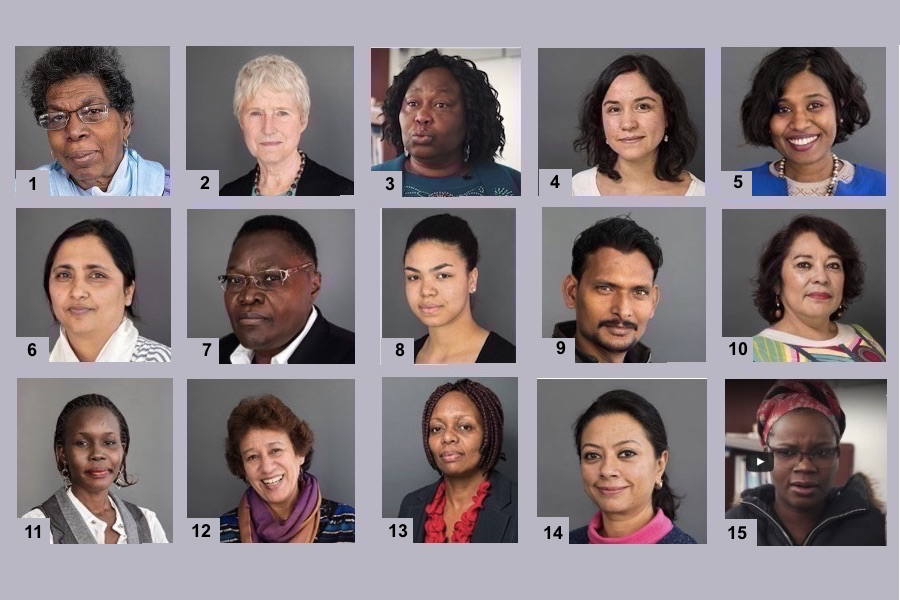
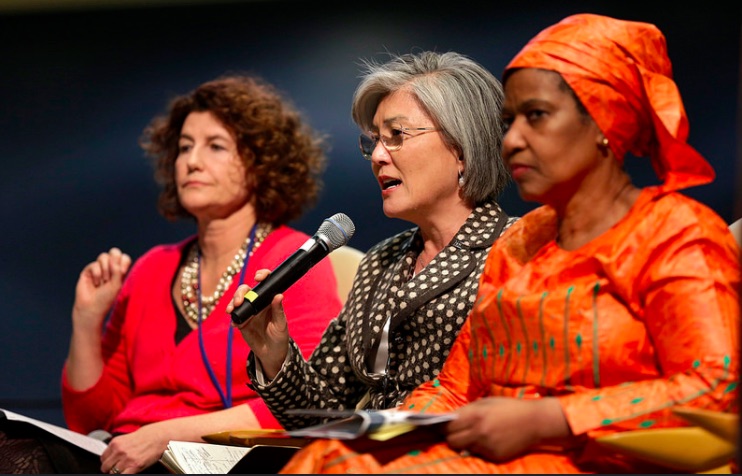
From October 2 to October 13 2016, I had the privilege of participating in a gathering of 41 women from 24 countries, along with over 150 Indian women at the impressive location of the recently built Gandhi Peace Research Centre in the Jain Hills, near Jalgaon, Maharashtra. We were invited by the organization Ekta Parishad, a Gandhian-inspired NGO who have worked with India’s landless and poorest of the poor for almost three decades. Toronto-raised but long-standing Indian resident and Hindi-speaking Jill Carr-Harris was the chief organizer who welcomed us and set the theme for the meeting.


(Click on photo to enlarge)

It was an extraordinary opportunity to meet and learn from women of diverse ages, education and cultural backgrounds, each dedicated to promoting peace and social justice in her own home country. At the gathering, fifty “peace champions” from localities throughout India were honoured for their courageous and tireless work for their communities. Key questions addressed throughout the four days of plenary sessions and workshops were: How do women cope with the deep injustices and violence they encounter in their everyday lives? And, what nonviolent strategies have worked to address those injustices?

There was a remarkable consistency in the stories we heard from such disparate countries as Nigeria, Kenya, Brazil, Kampuchea, Philippines, and Nepal and of course India. But even from the so-called “North”, women from Spain, Sweden, the US, Canada, Germany, and Azerbaijan confirmed the prevalence of (systemic and reactionary) violence, mistrust, and fear being allowed to flourish through forces of division and disintegration. At the same time, we also heard positive stories, from all the women, of the forces of integration and community building, and specific forms of nonviolent activism that is taking place. Thus, what we heard and learned evoked both feelings of deep sadness and outrage on the one hand, and admiration and hope on the other.

Following the Jalgaon meeting, most of the international women and a group of Indian women and men, pre-divided into five subgroups, left Maharashtra by train and went to different areas of Madhya Pradesh to begin four days of visits to Dalit and Adivasi villages whose populace had been working with Ekta Parishad. My group went to Gwalior to begin with, and after an overnight stay and meetings with journalists, Gandhian activists and academics, we proceeded to visit villages in the Chambal and Shivpuri Districts. While this short article cannot begin to capture all that I learned, I share a few highlights, including these facts: 50 million people in India have no land
title and can be evicted at any time for any reason; there are many “pro-poor” policies and pieces of legislation in India, but they don’t tend to be implemented—not without sustained pressure from the people. “Pro-rich” policies are implemented.

(Article continued in the right column)

Question for this article

Do women have a special role to play in the peace movement?

(Article continued from the left column)

In each village we met with women (who warmly greeted us with hand-made malas), and heard their concerns, challenges and successes in overcoming barriers. All of the villages were composed of Sahariya Adivasis, considered by many Indians, we were told, as the “lowest of the low”. In Chambal district the main problems identified were conflicts with the National Forestry Department over land use, food and water security, conflict over resources, and violence against women, including the kidnapping of girls (for ransom or sometimes as wives for boys, due to big gender gap in this region).

In India, we were told, women are not recognized as farmers; men are farmers because they are the recognized “owners” of the land, even while women work the land at least as much as men do. This practice is starting to change as land is being registered in both the names of the wife and the husband as villagers begin to receive, after years of agitation, their certificates of land ownership.

In one village, we heard that 15-20 years ago the villagers collected firewood from the forest and took it to Gwalior to sell. Prior to 30 years ago families had occupied the “forest land”. They had cleared some of the land of shrubs to plant seasonal food crops, but forestry officials would come and destroy their crops or otherwise harass them, for example, by spreading seeds of the large thorn bushes called “bulbul’ (the removal of which was dangerous). Then, some 20 years ago, they met Ekta Parishad workers and were inspired to form a grameen bank to pool their resources and they filed claims for rights to forest land. Three or four times their claims were rejected at the sub-divisional and district levels. Villages were united and had the funds for collective action—to engage in marches and regular follow-up with the officials. They filed claims for 72 families; now 35 have received certificates of land ownership for a total of 132 acres of land. Nowthey can grow enough food to feed their families.

Lee McKenna, from Toronto, who was in another group, shared a description from talking with a woman leader in the village of Tulgat (Budelkhand district): The villagers had been having conflict with Forest Department and the women were fed up and gathered in a large group in front of the Forest Department office. The police came. They asked the women: Who is your leader? They replied: “We are
500 leaders. Bring 50 trucks and be ready to take us all, including the mice of the fields!” The police asked the women: “Who gave you permission (to gather like this)?” They replied: “We took the permission of our hunger!” The police tried to take the men away, loading them up in trucks from the back. The women yanked the men out from the front. “We made chapatis and brought them to the men.” The police said “these women are so troublesome!”

Clearly, women (and social-justice-seeking men) need to be “troublesome” if we are
to advance towards a culture of peace that so many of us yearn for. Gandhi’s voice was ever in the background of our conversations: “Nonviolence must express itself through the acts of selfless service of the masses”, and “If nonviolence is the law of our being, the future is with women.”
Plans are underway for future gatherings of international women in 2017 and beyond.

Opportunities of Peace and Scenarios of Risk for 2017

FREE FLOW OF INFORMATION

Executive summary of Oportunidades de paz y escenarios de riesgo para 2017, published by the Escola de Cultura de Pau (translated by CPNN)

Opportunities of peace:

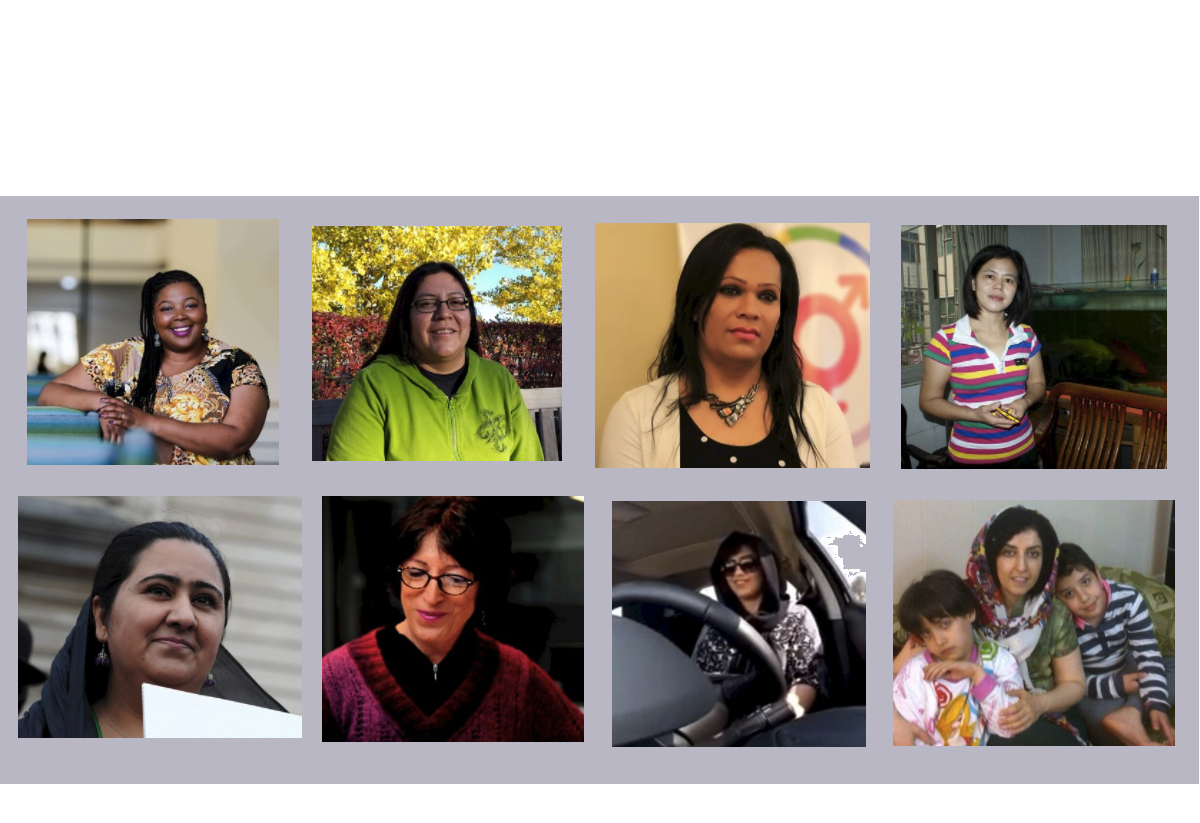
Colombia: The inclusion of a gender perspective in the peace agreement between the Government and the FARC represents a unique opportunity to advance the construction of a sustainable and inclusive peace in Colombia, with the participation of women and the LGTBI population as key actors in the implementation of the agreement.


click on the photo to enlarge

Philippines (NDF): The resumption of peace talks between the government and the National Democratic Front (NDF), a political movement representing the communist guerrilla New People’s Army (NPA) in 2016, and the willingness of both sides to sign a peace agreement for mid-2017 is a historic opportunity to end one of the longest-running conflicts in the world.

Myanmar: The Burmese government is facing the best opportunity in recent decades to negotiate a peace agreement that will end a conflict that has lasted almost 70 years. The popular and democratic legitimacy of the new Government is the main asset, since it has a wide national and international support. However, many obstacles must be overcome to make the process truly inclusive.

Georgia: Resumption, after four years of paralysis of one of the mechanisms of the peace process, the Incident Prevention and Response Mechanism for Abkhazia and, on the other hand, the institutionalization of consultations between Georgian representatives involved in the process and local women’s organizations, are making progress towards building multilevel confidence, despite the political obstacles of formal negotiations.

Nuclear weapons: Endorsement by more than 100 states of holding negotiations in 2017 to achieve a nuclear arms ban treaty, coupled with the growing humanitarian approach to the issue and the pressure of international civil society, opens up a historic opportunity for stigmatizing the use and possession of nuclear weapons and moving towards a binding legal instrument, despite the rejection by nuclear states and their allies.

Scenarios of risk:

Ethiopia: The country is suffering the worst political and social crisis of recent years, with a wave of anti-regime protests that have been suppressed with extreme harshness and which have caused hundreds of fatalities over the past year. The serious protests reveal the fragility of the social contract between the elites and the population of the country, dissatisfied with years of corruption, with an authoritarian political system, for the exclusion of much of the population from the supposed Ethiopian economic miracle. The decree of a state of emergency provides for a worsening of the situation.

( Click here for the Spanish original.)

(Article continued in right column)

(Article continued from left column)

Libya: During 2016 difficulties in implementing the Skhirat agreement confirmed the fragility of the pact and highlighted the multiple challenges of Libya, which could lead to a worsening situation in 2017. Among them, a persistent political polarization, an active range of armed actors, an international approach conditioned by often dissonant priorities, and a deteriorating economic, humanitarian and chronic human rights violations.

Nigeria: The proliferation of political tensions, armed movements and intercommunal violence in various regions of the country (north, center and south) is creating a situation of serious deterioration of security in Nigeria that threatens its stability. The role of security forces in the repression of opposing and dissident groups and communities has been a significant factor in triggering the outbreak of violence in various parts of the country, contributing to the radicalization of different movements.

South Sudan:
One year after the signing of the Peace Agreement, the future of the peace process is more uncertain and precarious than ever. Failure to implement the clauses of the agreement, systematic violations of the ceasefire, increased violence against the civilian population and the de facto collapse of the Transitional Government highlight the major challenges facing the immediate future of the Transitional Government..

Afghanistan: Armed conflict remains strongly entrenched in the country fifteen years after the invasion of the United States and causing very serious impacts on the Afghan civilian population. New dynamics in the conflict, the incipient presence of ISIS and the worsening of the crisis of forced displacement make it difficult to achieve a negotiated solution in the short or medium term. The political crisis that the Government is experiencing further hinders the situation in the country from improving.

Philippines (Abu Sayyaf): The proliferation and greater coordination of various Islamist groups in Mindanao; the possibility that ISIS may be expanding and consolidating its presence on the island as the epicenter of its activities and project in Southeast Asia; and the increase in armed actions by groups declaring their alignment and even membership in ISIS, such as Abu Sayyaf or Lanao Islamic State, could lead to increased insecurity in the region and affect the peace process with the MILF.

Turkey: The failure of the peace process and the intensification of conflict at the military, political-social and regional levels, as well as a more complex overall scenario in Turkey, marked by the challenges and consequences of the failed coup attempt of 2016, point to a deterioration in the situation of the Kurdish issue, of greater violence and militarization and of the gap between the State and the Kurdish movement.

Israel-Palestine: The 50th anniversary of the Israeli occupation of Gaza and the West Bank could become the basis for new tensions and violence, given the ultra-right orientation of the Israeli Government and signs of growing frustration in the Palestinian population with occupation. The weakness of Palestinian political leadership, and the low expectations that international initiatives will revive the peace process, contribute to a climate of skepticism about the viability of the two-state formula.

International Criminal Court: The International Criminal Court, which faces many challenges, pressures and criticism, has been accused of placing too much emphasis on African cases and, by the end of 2016, has been facing one of the main challenges since its inception : Three African countries, South Africa, Burundi and Gambia, have announced their withdrawal from the Court. The culmination of this decision and its domino effect may lead to a weakening of the institution and a setback in terms of human rights protection.

Syria: The Syrian war has been characterized by brutal levels of violence against civilians and systematic violations of human rights and international humanitarian law, in a context of total impunity and the lack of action by the international community. Although it is not the only case, Syria is also setting a symbolic and dangerous precedent that exposes the weaknesses of the international framework for the protection of civilians in armed conflict.

Do the arts create a basis for a culture of peace?

A classic response to this question comes from Karroum, an artist working at Azueï on the border between Dominican Republic and Haiti to unite people through art.

When asked about the complexity that uniting citizens of both nations can entail, due to the cultural differences of each one, Karroum highlights artistry and trust.

“The keys to how to generate trust do not lie in the discourse, but in how to work in the arts; to find, first, a common language to be able to build whatever. For that, you have to identify the other as someone with whom I can share, I can work, and this is built through practice and the dynamics of creation… ”, he says.

The following CPNN articles refer to this discussion question:

Michael Moore: From the Rubble Rises 22 Powerful Voices

Drawing Contest of SNTE and CNDH promotes the Culture of Peace in Mexican schools

Colombia: The first meeting is held in Cali to weave a network of peace initiatives in the territories

Art for peace in Mexico City

Declaration of Cuban Culture institutions in support of artists from Argentina in the face of Javier Milei’s measures

Colombia: Artists who were victims of the conflict unite their voices for peace in their regions

The artists Mira Awad and Noa: voices for peace in the Palestinian-Israeli conflict

United States: The Black Choreographers Dancing Toward Justice

Artists in Turkey: Let us be a voice for peace

Burkina Faso: Peace and social cohesion at the heart of the book “The problem tree and other news” by Lacina Téguéra

Azueï: the union of Dominicans and Haitians through art

Havana Book Fair urges a culture of peace for the development of peoples

Peace Pals International Art Exhibition and Awards

Mexico: Invitation to register for an online diploma in the Culture of Peace through the Arts

Ecuador: Hip-hop and urban art are reaffirmed as a ‘culture of peace’ at a festival in Garza Roja

Brazil: The culture of peace and non-violence is the theme of the III Graffiti Festival

Colombia: ‘5th with 5th Crew’, rhymes and colors for peace in Norte de Santander

United Nations from the field: Desert artisans in Mali foster dialogue and tolerance

Childrens Message for Peace

Germany: Collateral Crucifixion – Pressuring for Julian Assange’s Release!

Drawing on Earth: The Global Creative Challenge 2021

Colombia: Cultural spaces for the construction of peace

Call For Registration: Action For Peace Forum In Ethiopia

International Folklore Festival of Brazil – Virtual – 22 and 23 August

Alfred Fried Photography Award’: world-best picture on the theme of peace

Iraqi group spreads tolerance and peace through art

France: Culture for Peace Award to The Artists in Exile Workshop

India: Cultures from around world converge at folk dance fest

AUNOHR University unveils the “Knotted Gun” Sculpture in Beirut

Dominican Republic: Integrating art subjects in centers helps create a culture of peace

South Korea: Artists, activists to promote peace in Cheongju

Mexico: Tlalnepantla initiates program of Youth for a Culture of Peace

Theme of 2017 SIGNIS World Congress: Media for a Culture of Peace: Promoting Stories of Hope.

Morocco: The International Festival of Amazigh Culture from 14 to 16 July in Fez

Maroc: Le festival international de la culture Amazighe du 14 au 16 juillet à Fès

Africa: In a World of Turbulence, Writers Reaffirm Their Role for Enlightenment and Information

Afrique: Dans une Monde de Turbulences, des Écrivains Réaffirment leur Rôle d’Éveil et d’Information”

Peru: Art in the streets to promote the culture of peace

Peru: Con arte en las calles buscan promover la cultura de paz

Third Annual Africa Arts4Peace Forum to be held January 25-29

Philippines: Fostering a culture of peace through art

AAPI Convenes 2nd Arts4Peace Forum in Addis Ababa

US: The First Mural Museum in the World is a Culture of Peace Museum

– – – – Links for the following articles do not work because they were made by a version of PERL programming that is no longer supported. With three easy steps, you can find the article by its number. First, click on it before returning to this page. Your browser will say that the article is not available but in the address listed you can see that it was located at ViewArticle=xxxx where xxxx is the number of the article. Returning to this page, then click here for the listing of all years. Then click on the year that contains the number for the article you seek. It will send you to the page where you can easily search for the article by its title. – – – –

Morocco: Children from around the world come together for peace; The 8th edition of the International Festival of Children's Folklore

Maroc: Les enfants du monde se rassemblent pour la paix; 8ème édition du Festival international du folklore de l’enfant

Frédéric Back, Director of “The Man Who Planted Trees”

Peace Mechanisms at Santorini Biennale 2014

Painting for peace: project Kids Gernica

Pintando por la paz: proyecto Kids Gernika

Marionnettes for Peace: An initiative for the International Day of Peace

L'initiative des marionnettes de la paix pour la journée internationale de la paix

2013 Peace and Cooperation School Award

Creation of a prize for peace photography (Ecuador)

Se crea premio de fotografía por la paz (Ecuador)

Marionettes for Peace

Les Marionnettes de la Paix

Oceanside woman promotes peace through murals (US)

Project for an International Festival of Marionettes

Projet de festival international de marionnettes

SNC 2012 – spectacle d'ouverture: Que la paix soit sur le monde

Art for Peace – Multimedia Edition / 2008

UNA-USA San Diego 2006 Eleonor Roosevelt Human Rights Award

BAM in a Box

Peace through Art

Seeing Peace: Artists Collaborate with the United Nations

The Art Miles Mural Project

Activist Art

New York Poets for Peace Ready to Take Their Show on the Road

For discussion in 2003-2005, click here

Third Annual Africa Arts4Peace Forum to be held January 25-29

… EDUCATION FOR PEACE …

A document from the Africa Arts4Peace Forum

Building on the success of the first and second Africa Arts4Peace Forums in 2015 and 2016; as part of pre-events of the AU January Summits. The third Africa Arts4Peace Forum will be held from the 25 to 29 January 2017 in Addis Ababa, Ethiopia on the theme: ‘’Silencing the Guns by 2020; Role of Youth, Artists and Media’’. The meeting will discuss, strategize and co-create ways to strengthen youth, artistic and media leadership skills for the promotion of culture of peace; good governance, democracy and human rights in the realization of AU’s strategy on ‘Silencing the Guns’ by 2020 in Africa.

AAPI believes that the only viable and sustainable way to promote long lasting peace is to inculcate the culture of peace and non-violence in the minds of the citizenry and most especially the young (who are not only the future leaders, but the leaders of today). The forum and related activities will create a platform in which youth, artists, media and various stakeholders can co-create an ‘’action factory for peace’’, retool and advocate creatively for peace education, social justice, conflict prevention and non-violent conflict resolution strategies in Africa, using the AU and UN peace mechanisms as a prefix.

(Article continued in right column)

Question for this article:

Do the arts create a basis for a culture of peace?

(Article continued from left column)

The African Artists Peace Initiative (AAPI) www.aapiafrica.org is a Pan-African movement of artists and peace-makers, championing a culture of peace and non-violence in Africa. The overarching objective is to use ”ARTS” as a weapon and tool for nurturing a culture of peace based on values, attitude, and ways of life conducive to the promotion of peace among individuals, groups and society. The movement is inspired by the AU Constitutive Act, AU Make Peace Happen Campaign, AU 2063 Agenda and the UNESCO Culture of Peace and Non-Violence Campaign.

AAPI currently has 43 country coordinating teams , 80 celebrity ambassadors, and over 10,000 members across Africa and Diaspora.

NOTE: AAPI does NOT have funding to cover the travels and accommodation for applicants/participants. We are available to support you in booking affordable accommodation in Addis-Ababa and obtaining an Ethiopian Visa Upon Arrival for countries without Ethiopian Embassies.

Email: arts4peaceforum@gmail.com for all inquiries and further information

DEADLINE FOR REGISTRATION: 8TH JANUARY 2017

For the registration form, click here and scroll to the bottom of the page.

Civil Society and the UN High Level Conference on Nuclear Disarmament

DISARMAMENT & SECURITY .

December 2016 Newsletter of UNFOLD ZERO

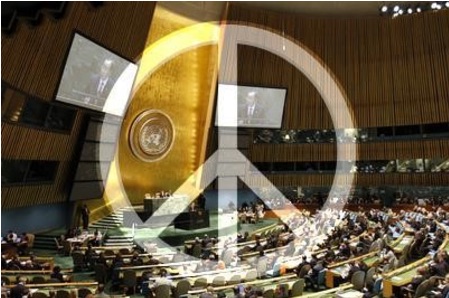
On December 3, 2016, the UN General Assembly adopted ground-breaking Resolution 71/71, supported by over 140 countries, calling for the start of negotiations on an international treaty to prohibit and eliminate nuclear weapons, and affirming its earlier decision to hold a High Level Conference on Nuclear Disarmament no later than 2018 to review progress on such a treaty.

The UN has previously held high level meetings on nuclear disarmament, but these were not much more than talk-shops.

In contrast, the 2018 event will be the first time the UN General Assembly has held a high level conference on nuclear disarmament. Such an event carries with it the expectation of deliberations to reach an agreement or agreements on concrete nuclear disarmament measures.

The 2018 UN Conference, and its preparatory process, provide a unique opportunity for civil society and like-minded governments to elevate the issue of nuclear disarmament globally and build political pressure on the nuclear-reliant States to agree to specific nuclear disarmament proposals at the conference.

(Continued in right column)

Question related to this article:

Can we abolish all nuclear weapons?

A UN High-Level Conference on Nuclear Disarmament: Distraction or progress?

(Continued from left column)

Similar UN high level conferences on other difficult global issues – such as sustainable development, climate change and refugees – have had considerable success engaging all relevant States and civil society to achieve concrete results.

The UN conference on nuclear disarmament could, for example, aim for:

• Non-nuclear States (and maybe others) to announce at the conference their ratification of the nuclear prohibition treaty which will most likely be negotiated by 2018 (see UN agrees to nuclear prohibition negotiations);

• Agreement by the nuclear armed and allied States that their sole purpose for nuclear weapons is to deter other nuclear weapons and that they would never use nuclear weapons first;

• A decision to convene a conference for the establishment of a Middle East Zone free from nuclear weapons and other WMD;

• A framework agreement (or political declaration) to achieve the prohibition of any use of nuclear weapons and the phased elimination of nuclear weapons.
 
UNFOLD ZERO is organising a number of private meetings on the UN High Level Conference with governments, as well as open consultation meetings with non-governmental organisations in Geneva, London, New York, Vienna, Washington and other locations in early 2017.

At these meetings we will discuss strategy and campaign activities to build success for the UN High Level Conference.

For more information see UN to hold High Level Conference on nuclear disarmament.

English bulletin January 1, 2017

. . . REVIEWING 2016 . . .

Despite the deterioration of national politics as we leave the year 2016, we continue to see progress towards a culture of peace in the areas we have featured each month in our bulletins.

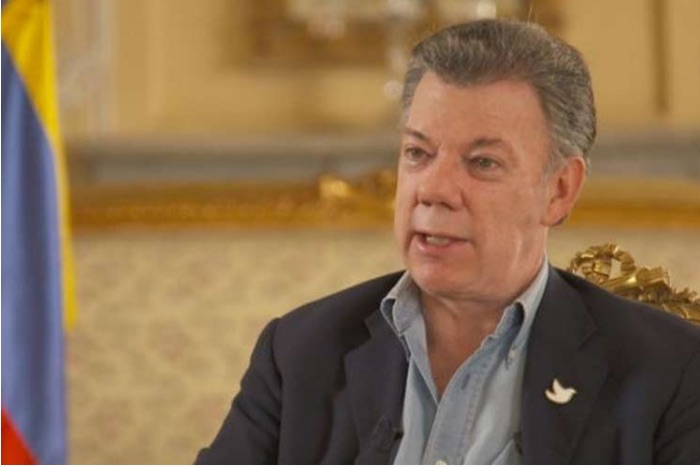
The biggest news in 2016 was the peace agreement in Colombia that ended half a century of civil war. This was featured in our JULY BULLETIN. Last month we featured words from the lecture by Colombian President Santos on receiving the Nobel Peace Prize: “With this agreement, we can say that the American continent – from Alaska to Patagonia – is a land in peace. And we can now ask the bold question: if war can come to an end in one hemisphere, why not one day in both hemispheres? Perhaps more than ever before, we can now dare to imagine a world without war. . . . We must replace the culture of violence with a culture of peace and coexistence; we must change the culture of exclusion into a culture of inclusion and tolerance.”

Of course, the development of a culture of peace requires much more than the end of the civil war. What is required in Colombia is “territorial peace” such as that beginning in the Colombian departments of Magdalena Centro, Cesar, Valle de Cauca and Antioquia, feaured in the DECEMBER BULLETIN. According to the most recent article on territorial peace in Colombia, “what is at issue is to build and / or strengthen a Social and Democratic State at all levels of national life and in all corners of the country. This requires a strong civil society, with high levels of organization and public involvement, that is to say, an active citizenship.”

Despite the fact that the countries that took part in the UN conference on the environment failed to address the continued reliance on fossil fuels, as we discussed in the JANUARY BULLETIN, there continues to be progress on other fronts. Increasingly we find that civil society institutions are divesting from the business of fossil fuel, with the last news indicating $5 trillion of divestment. In this regard, Nobel laureates and scientists have called on the Nobel Prize Foundation to set a good example by divesting from fossil fuels. And we found in the NOVEMBER BULLETIN that renewable energy is beginning to overtake fossil fuels, beginning with the generation of electricity. The most recent news in this regard indicates that 47 of the world’s poorest nations have pledged to skip fossil fuels altogether and jump straight to using 100 percent renewable energy instead.

The second international conference on the culture of peace in Africa was hosted in December by Angola. This continues the work for a culture of peace in Africa that we remarked in the BULLETIN OF MARCH, with articles from the African Union as well as Senegal, Tunisia, Cameroon, Morocco, Malia, Ethiopia, Congo, Sierra Leone, the Gambia, South Africa and Chad.

Recently we reported on a meeting between representatives of the Peace Commissions of New Haven (USA) and Santos (Brazil). This continues the progress of cities towards a culture of peace that we covered in the BULLETINS of APRIL and SEPTEMBER, including news from Mayors for Peace, International Cities of Peace and a new network of Nonviolent Cities.

In the OCTOBER BULLETIN, we surveyed activities around the world for the International Day of Peace. We found 182 events in 85 countries from every region: USA/Canada, Latin America/Caribbean, Western Europe, Africa, Arab States, Russia/Ukraine, and Asia/Pacific. The largest number of events involved children, especially schoolchildren. The celebration was especially intense in some of most conflictual regions of the world, such as the Ukraine, Kashmir/India/Pakistan, and Colombia/Venezuela. And to this list we added the United States.

In the JUNE BULLETIN, we considered proposals to reform the United Nations. One of the proposals was reform of the process to choose the Secretary-General and to increase the leadership of women. Recently, the new Secretary-General, António Guterres, was elected by a process with increased transparency, and he is appointing a number of women to high posts.

Nonviolence, as considered in our MAY BULLETIN, is one of the key methods of a culture of peace. Highlights of nonviolent movements from 2016 include photos from South Korea, Brazil, Malaysia and the United States. And most recently, Pope Francis issued his annual peace message on the theme, Nonviolence: A style of politics for peace. He urges people everywhere to practice active nonviolence and notes that the “decisive and consistent practice of nonviolence has produced impressive results.”

Another key method is peace education. El Salvador is now in discussions to include culture of peace in national educational curriculum. In the AUGUST BULLETIN, we covered peace education articles reprinted by the Global Campaign for Peace Education from Myanmar, Bosnia, United Kingdom, Rwanda, Georgia, United States and the Seychelles.

Finally, we arrive at the fightback folowing the election of President Trump in the United States. The movements for sanctuary cities and sanctuary campuses were featured in the DECEMBER BULLETIN. Since then, we add the specific resolution of the city of San Francisco, as well as sanctuary churches in New York and Minnesota.

La lucha continua! The fight continues!


HUMAN RIGHTS


San Francisco’s Official Response to the Election of Trump

WOMEN’S EQUALITY


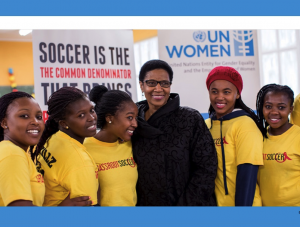
UN Women: 16 days of activism against gender violence

DEMOCRATIC PARTICIPATION


Colombia: The Challenge of Territorial Peace

SUSTAINABLE DEVELOPMENT


REPORT: Fossil Fuel Divestment Doubles in Size as Institutions Representing $5 Trillion Commit to Divest

TOLERANCE AND SOLIDARITY


Morocco: Madagh hosts eleventh World Meeting of Sufism

FREE FLOW OF INFORMATION


Nobel Lecture by Juan Manuel Santos:”Peace in Colombia: From the Impossible to the Possible”

DISARMAMENT AND SECURITY


Building on gender promise, Guterres names three women to top UN posts

EDUCATION FOR PEACE


El Salvador: Discussions to include culture of peace in national educational curriculum