USA: Bea Lumpkin and How an Antifascist Rests in Power

. HUMAN RIGHTS .

An article by Stacy Davis Gates in In These Times

When people ask me what it means to be a woman in power, I think about Bea Lumpkin, because power means you don’t wait for permission.

Not power as in proximity to the powerful, or having a seat at a table someone else built. I mean power as in knowing early which side you were on, then spending every day of your life standing on the business of that side.

Bea passed away June 14 at 107 years old. A lifelong communist and the Jewish daughter of Russian immigrants, she married a Black man during the height of the Red Scare in 1949 and raised a family under the restrictive conventions of Jim Crow fascism.
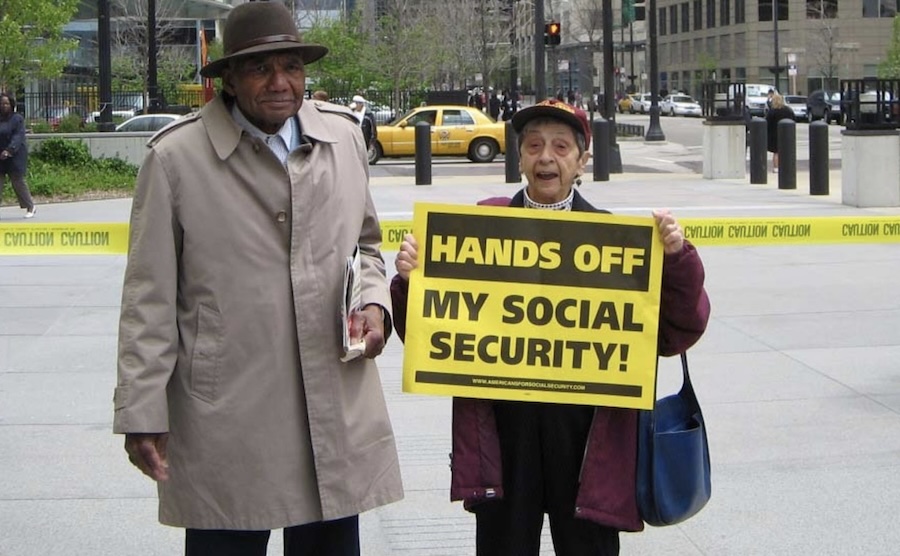

Bea Lumpkin with her husband Frank

The United States in the mid-20th century was a country where inter-racial marriage was still illegal in 30 states, and where the Supreme Court would not strike down those laws until 1967. A federal agent might show up at your door simply because of who you loved and what you believed.

It was the McCarthy era, and the openly Communist Lumpkins were already a target for their activism. But their politics were the least of it. They were an interracial couple in America in 1949. That alone was enough to make them a threat.

In a 2019 article for People’s World, Bea Lumpkin wrote: “In addition to fighting back against school closures and the firing of teachers, it is important to keep the struggle for an anti-racist, multicultural curriculum front and center.”

Bea and her husband, Frank — steel-worker, son of sharecroppers — were undeterred.

To understand what Bea brought to her marriage, and to everything else in her life, you have to understand what she had already lived by the time she married.

Her parents were Russian revolutionaries. Her father was arrested after returning fire on the Czar’s Cossacks when they attacked the synagogue where the Jewish Labor Bund was meeting. Her mother helped engineer his escape.

Bea was born knowing which side she was on, telling the Chicago Teachers’ Pension Fund in 2025, “I always knew, even when I was 6 years old, how much injustice there was.”

By age 9, she was making solidarity trips in support of striking textile workers. At 14, she lied about her age to get a factory job assembling radio tubes and joined the Metal Workers Industrial Union. At Hunter College, when the school threatened to raise the price of a half pint of milk from five to six cents, she organized a boycott and won. She was later suspended for organizing a conference against war and fascism on campus.

At 19, Bea was one of the organizers hired by the newly formed Congress of Industrial Organizations to organize more than 30,000 laundry workers in New York City. She was a radio technician with the United Electrical Workers and a defense worker during World War II.

In 1948, she stood alongside Paul Robeson at a labor rally in New York. She marched with the Rev. Dr. Martin Luther King Jr. in Marquette Park. She stood alongside the Black Panthers on Chicago’s West Side. Legend in our movement holds that she once babysat a young Fred Hampton.

She bore witness to the state killing striking workers during the 1937 Memorial Day Massacre in Chicago, where 10 were killed and 90 injured when police shot into the crowd. She knowingly took risks to win justice and to marry the love of her life.

(Article continued in the column on the right)

Questions related to this article:

How can we carry forward the work of the great peace and justice activists who went before us?

(Article continued from the column on the left)

Bea was many things that our politics too often tries to reduce and sort into separate boxes. She was a mother, and she was an educator who started her classroom career at age 47. She was a mathematician who published groundbreaking scholarship on the multicultural roots of math and science because her students demanded to see themselves in what they were learning. She was a feminist who co-founded the Coalition of Labor Union Women in 1974. She was a fierce advocate for climate justice in her 100s.

Bea’s existence resisted reduction because it undersells the enormous impact of her life. She wasn’t an “-ism.” She was a force of nature. The labor movement Bea entered as a teenager in the 1930s was fighting for things we now take as bedrock: the right to organize, the minimum wage and the eight-hour workday. She was raised to believe that her existence was to make the world a more just place for everyone. For Bea, the struggle was never a sacrifice. It was a joy.

As a Black woman leading a labor union in this particular moment in America, when the rights Bea’s generation bled for are being dismantled in real time, when public education is under assault, when the multiracial coalitions she built her life around are being deliberately fractured,
I find myself asking what Bea would do.

She would be at the rally, on the picket line and knocking doors. She would be organizing young people and old people in the same room. She would be furious and unrelenting, yet jubilant and optimistic. She didn’t slow down by choice. Her body made that decision for her.

Bea taught us the discipline of showing up, and the refusal to leave a struggle to someone else.

She embodied the understanding that justice is not something you wait for, but something you build, generation by generation, in union halls and church basements, and on picket lines, no matter the weather. Well into her 100s she attended every monthly delegate meeting and protest and caucus meeting for the Chicago Teachers Union (CTU) and oftentimes got there without any support or assistance. I can close my eyes and see that black fanny pack, red CTU cap, and fist held high in proud defiance.

She was our friend, and we are going to miss her.

Roberta Wilson, a longtime organizer with the Chicago Teachers Union (CTU), gave 80 years of her life to educating students.

Our union also lost in these same days of grief one of our longtime members, Roberta Wilson.

Roberta came north from Thomson, Georgia, as part of the Second Great Migration that helped build Chicago. She gave 80 years of her life to her faith, to educating her students, to organizing her block club, coat drives, and food pantry, and to creating a scholarship fund that sent Black children from Chicago’s West Side to college.

Black history.

Where Bea showed us how to fight, Roberta showed us how to hold, and how to be the root system of a community that allowed everything above ground to grow.

They are the women on whom this movement is built.

Excerpt from her book, Joy in the Struggle: My Life and Love by Beatrice Lumpkin, International Publishers, 2018. Free for any DSA or Union member

‘So how do I feel about fighting for the same issues again and again? My reply is, “Yes, I am tired of the system that puts profits first. But I am not tired of fighting capitalism. Each fight brings us in touch with wonderful fellow-fighters. Each fight hastens the day when organized workers and their allies will be strong enough to get rid of capitalism and begin to build socialism. Yes, there is joy in the struggle.’ —

– – – – –

The author, Stacy Davis Gates, is president of the Chicago Teachers Union and the Illinois Federation of Teachers.

– – – – – –

If you wish to make a comment on this article, you may write to coordinator@cpnn-world.org with the title “Comment on (name of article)” and we will put your comment on line. Because of the flood of spam, we have discontinued the direct application of comments.


Thousands march in Washington as leaders warn of voting and civil rights rollbacks

. HUMAN RIGHTS .

An article from Reuters (reproduced by permission)

More than six decades after Martin Luther King Jr. stood on the steps ‌of the Lincoln Memorial and declared his dream for a more just America, thousands gathered in Washington on Friday to warn that voting rights and other freedoms he fought and died for are once again under threat.

Civil rights leaders invoked the same demands he made from the steps of the Lincoln Memorial two and a half generations ago: that the fight for equality remains unfinished.

The event, called “March on Washington 2026: Defend the Vote,” drew several thousand people to the National Mall, including union members, students, members of Black Greek-letter organizations, and attendees of all ages who traveled from across the country.


Photo from video accompanying the article

The march comes after the Supreme Court weakened a key provision of the Voting Rights Act this year, setting off a string of redistricting battles across the South, with Republican-led statehouses moving quickly, in some cases within days, to redraw congressional maps in time for midterm elections in November.

“We know in this fight we’re fighting powerful forces, but this is why we rally today,” said Marc Morial, president and CEO of the civil rights organization National Urban League. “This is why we seek to bring Americans together of goodwill from all races, from all sections of the country to push back as forcefully as we can.”

(Article continued in the right column)

Questions related to this article:

The struggle for human rights, is it gathering force in the USA?

How can we be sure to get news about peace demonstrations?

(Article continued from the left column)

The gathering was organized by Al Sharpton’s National Action Network and Martin Luther King III ‌and Arndrea Waters King’s Drum Major Institute, alongside more than 90 community partner organizations, including the NAACP and National Urban League.

“Defending the vote means defending the foundation of our democracy,” said King III in a statement. “Sixty-three years after my father stood at the Lincoln Memorial, we are called to march again, not only in remembrance, but in action.”

According to the organizers, the march aims to “confront the systemic rollback of civil rights at this critical moment,” referring to President Donald Trump’s efforts to curb mail-in voting, weaken anti-discrimination protections across the federal government and fundamentally shift what civil rights are.

“We stand on the same ground because the work is not finished,” Sharpton wrote in a letter to supporters. “The right to vote, the very foundation of our power, is being chipped away in statehouse after statehouse. When the vote is weakened, every other right grows fragile with it.”

The program began at 9 a.m. ET with confirmed speakers U.S. Senator Bernie Sanders, an independent from Vermont, Democratic Representative Alexandria Ocasio-Cortez of New York and House Minority Leader Hakeem Jeffries.

“Black unemployment is up, Black homeownership is down and Black political representation is under assault with Jim Crow-like tactics all throughout the South — challenging times,” Jeffries said, referring to the system of state and local laws that enforced racial segregation in the American South until the 1960s.

– – – – – –

If you wish to make a comment on this article, you may write to coordinator@cpnn-world.org with the title “Comment on (name of article)” and we will put your comment on line. Because of the flood of spam, we have discontinued the direct application of comments.
Senegal: Red Cross youth mobilize against violence in Vélingara

. DEMOCRATIC PARTICIPATION .

An article in Le Quotidien

On August 17, nearly a hundred young volunteers from Senegal, The Gambia, and Guinea-Bissau gathered for the 19th edition of the Red Cross International Twinning Camp. Under the theme “United Youth, Violence Banished,” these first responders are engaging in training sessions, civic actions, and cultural exchange to promote peace in a sub-region facing rising levels of antisocial behavior.

Vélingara served as the capital of peace and solidarity for the day. Faced with a resurgence of brawls involving bladed weapons, tensions surrounding distorted traditions like the *Kankourang*, and political incivility, the Red Cross chose to respond through civic engagement. The Departmental Prefect presided over the official opening ceremony on August 17, joined by patrons, numerous guests, and around a hundred young volunteers aged 2 to 35.

Coming from Dakar, Ziguinchor, Sédhiou, and Kolda—as well as neighboring countries like The Gambia and Guinea-Bissau—these young people transformed Vélingara into a hub of integration.

In his address, the Prefect highlighted the significance of the event: “Vélingara is a living symbol of grassroots sub-regional integration. Through this twinning initiative, the town reaffirms its vocation as a land of refuge, peace, and solidarity.” “Our states share administrative borders, but our peoples share a common history, shared cultures, and identical challenges—such as managing migration flows or climate crises.”

(article continued in right column)

(Click here for the original article in French.)

Question for this article:

Can a culture of peace be achieved in Africa through local indigenous training and participation?

(article continued from left column)

A mix of first aid, environmental action, and leadership training

On the ground, the volunteers were kept busy. The packed program combined health awareness, civic engagement, and personal development: HIV/AIDS screening sessions and a community cleanup day (*set-setal*) at the Sinthiang Houlata neighborhood market; courtesy visits to families living near the camp to promote a culture of peace; the construction of eco-friendly benches for the host school; and public first-aid simulations accompanied by leadership workshops designed to hone young people’s public speaking skills. The event also featured an integration day—complete with the playing of national and Red Cross anthems—as well as sports competitions and cultural evenings showcasing regional diversity.

Civic engagement versus the disengagement of elected officials

While the event was a resounding success in human terms, the organizers had to overcome significant logistical hurdles. Crossing the Gambian border proved complicated due to the lack of parental consent forms for several minors.

However, the local Red Cross leaders’ deepest regret concerns the lack of support from policymakers. Not a single mayor in the area responded favorably to requests for financial or material assistance. The supervisors lamented this lack of gratitude—albeit diplomatically—noting that these same local authorities frequently rely on volunteer first responders for their own events without ever providing funding.

Despite these obstacles, the camp stands out as an essential strategic tool. By standardizing intervention methods and establishing cross-border relief networks, these young people demonstrate that solidarity remains the best defense against the slide into violence.

– – – – – –

If you wish to make a comment on this article, you may write to coordinator@cpnn-world.org with the title “Comment on (name of article)” and we will put your comment on line. Because of the flood of spam, we have discontinued the direct application of comments.

Koulikoro, Mali: 80 educators trained to strengthen peace in schools

EDUCATION FOR PEACE .

An article by Studio Tamani

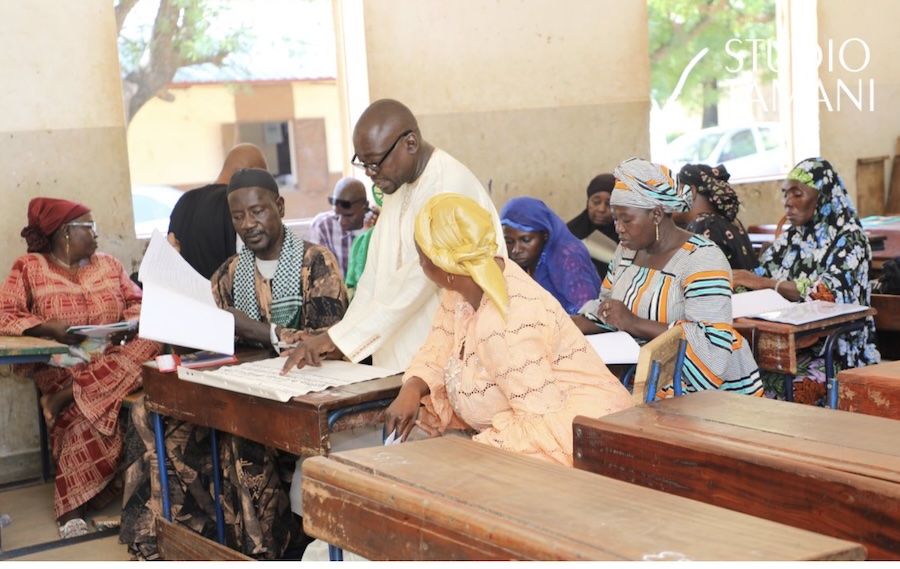
A workshop focused on the culture of peace, social cohesion, and the integration of internally displaced children opened this Monday, August 24, in Koulikoro.


Training of educators in Koulikoro on strengthening peace in schools, August 24, 2026. Photo credit: Studio Tamani

(continued in right column)

Question for this article:

Where is peace education taking place?

(continued from left column)

Over the course of five days, 80 educators—including school principals and parents—will build their capacity regarding school safety, the integration of displaced children, and the improvement of learning outcomes.

The event is organized by the Koulikoro Education Academy with support from JCA [Japanese Agency for International Cooperation], through UNICEF.

(Click here for the original version of this article in French)

– – – – – –

If you wish to make a comment on this article, you may write to coordinator@cpnn-world.org with the title “Comment on (name of article)” and we will put your comment on line. Because of the flood of spam, we have discontinued the direct application of comments.
Tabling of the Ocean of Peace Alliance and Australia-Fiji Vuvale Union

FREE FLOW OF INFORMATION

An article from the Foreign Ministry of Australia

Ministerial statement 11 August 2026

At a time of great uncertainty, risk and contestation, the Albanese Government recognises that Australia cannot afford to be a passive observer of the profound changes occurring around us.

Photo from Instagram

The Ocean of Peace: Vision to Treaty  weighs the benefits and risks of turning the Ocean of Peace Declaration, endorsed by Pacific leaders in 2025, into a legally binding agreement.

The paper proposes negotiating a new regional peace and security treaty as a Protocol to the Treaty of Rarotonga.

Peace is never a given.

And we are not here to just occupy the space.

For the past four years, we have been building Australia’s future in our
region.

A future built through partnerships, not coercion.

A future built by the countries and peoples of our region.

And that is why, from the outset, the Albanese Government has listened to our region, engaged with respect and humility, and acted on our shared priorities.

We are investing in being the partner of choice for our immediate region, including the Pacific.

We are using all tools of statecraft to invest in Pacific relationships, trust and regionalism.

Embracing Pacific leadership and backing initiatives that make our region safer, more prosperous and more resilient.

And we could not have had a better partner in this than Fiji.

Under Prime Minister Rabuka, Fiji has crafted and tirelessly championed a vision of our Blue Pacific as an ‘Ocean of Peace’ that the Pacific family has embraced.

As Prime Minister Rabuka described it:

“a region in which strategic competition is managed; where stability is the touchstone of regional relationships; and where coercion is eschewed.

A region where differences are resolved peacefully’.

Fiji is a leader in our region, and one of only three Pacific island countries with a military.

Australian and Fijian service men and women have stood shoulder to shoulder in two world wars, in deployments to support our region’s security, and in peacekeeping missions across the world.

And it is in the shared pursuit of peace, stability and prosperity, that we deepen our partnership.

I know Prime Minister Albanese was deeply moved to receive Fiji’s highest honour – the Companion of the Order of Fiji – on the same day as signing these landmark treaties.

As the name of our treaty suggests, Australia and Fiji are one family, one Vuvale.

Australia was honoured to accept Prime Minister Rabuka’s proposal for the Ocean of Peace Alliance.

An Alliance is the highest act of trust between two nations.

This is Fiji’s first Alliance and only Australia’s fourth.

It will build ever deeper levels of interoperability.

We will, plan, train, exercise and deploy together, strengthening our combined capability, to enhance our respective sovereignty and to ensure our nations’ and our region’s security at a time of fracture and of disruption.

The Vuvale Union Treaty is equally important.

It will be a multi-generational endeavour to integrate our economies, our security and our peoples.

(Article continued in right column)

Question for this article:

Where in the world are zones of peace?

(Article continued from left column)

It is backed by more than a billion dollars of investment over a decade, including grants and loans.

On Security: together, we will elevate our fight against the scourge of transnational crime and illicit drugs.

With an investment of $181 million, the AFP will work hand in hand with the Fiji Police Force to disrupt criminal networks and strengthen intelligence to interdict drugs before they reach Fijian or Australian shores.

We will support Australian doctors and nurses to enhance specialist training for Fiji’s health workers, boosting Fiji’s response to fastest-growing HIV outbreak in the world.

Under our economic pillar, we will finance nation-building infrastructure – ports, and major climate adaptation projects – strengthening Fiji’s role as a regional hub.

And we will back Fiji’s economic diversification agenda, supporting secure digital infrastructure, enhancing critical infrastructure investment screening, and increasing supply chain resilience.

Our final pillar is our People.

Australia and Fiji are linked by deep personal connections, including more than 100,000 people in Australia with Fijian heritage.

Our multifaith, multicultural communities and First Nations peoples share a strong bond.

For thousands of years, Australia’s First Nations peoples have maintained connections across our region.

During World War II, Fijian missionaries, skilled farmers, builders and sailors, worked alongside the Yolŋu people and elders still recall the esteem with which they were held.

The theme of this year’s Garma festival was ‘Bukmak’ – a local Yolŋu word meaning “everyone”.

The same name was gifted to the Bukmak Forum established through the Vuvale Union.

The Forum will bring together government, traditional, faith and business leaders as our two nations build a shared future.

Yolŋu elder Djapirri Mununggirritj travelled forty hours from Yirrkala to stand with our Prime Ministers at the Treaty’s signing.

And a Fijian delegation, including Fiji’s Minister for Women, Sashi Kiran, and traditional leaders, joined this year’s Garma festival.

This reflects the spirit of shared history, purpose and vision that drive the partnership between Australia and Fiji.

And the foundations upon which we have now chosen to elevate our bilateral relationship.

Colleagues, these two treaties tabled in Parliament today will transform our relationship, far beyond what was contemplated when we started this journey together.

They will form a durable structure for generations of the future.

I have just returned from Fiji where Pacific Islands Forum Foreign Ministers reaffirmed our Leaders’ call to give practical effect to the Blue Pacific Ocean of Peace Declaration.

And these are the first two treaties to answer that call.

As Prime Minister Rabuka has said, these treaties reaffirm Fiji and Australia as trusted partners working together not only to benefit each other, but as contributors to a more stable, peaceful and resilient Blue Pacific continent.

We know that in these unprecedented and dangerous times, we are stronger together.

And everything we do will also be aimed at supporting our Pacific region.

Investments in Fiji will flow on to the Pacific family, which relies on Fiji as a regional hub for transport, logistics, education and healthcare.

Mr Deputy President, these two treaties send an unequivocal signal of our commitment to each other and to the Pacific family.

They will help realise the vision of an Ocean of Peace to make us all more secure, prosperous and resilient.

I commend the Ocean of Peace Alliance and Vuvale Union treaties to the Senate for consideration.

Media enquiries

Minister’s office: (02) 6277 7500
DFAT Media Liaison: (02) 6261 1555

[Editor’s note: Click here for a copy of the Blue Pacific Ocean of Peace Declaration. Note that it commits to cultivating a culture of peace grounded in the Pacific Way. As described here, it is supported by Australia, Cook Islands, the Federated States of Micronesia, the Republic of Fiji, French Polynesia, the Republic of Kiribati, the Republic of the Marshall Islands, New Caledonia, the Republic of Nauru, New Zealand, Niue, the Republic of Palau, the Independent State of Papua New Guinea, Samoa, Solomon Islands, the Kingdom of Tonga, Tuvalu and the Republic of Vanuatu]

– – – – – –

If you wish to make a comment on this article, you may write to coordinator@cpnn-world.org with the title “Comment on (name of article)” and we will put your comment on line. Because of the flood of spam, we have discontinued the direct application of comments.
Indonesia: Building peace from the slopes of Mount Muria

TOLERANCE AND SOLIDARITY .

An article by Teguh Karyanto from Anabaptist World

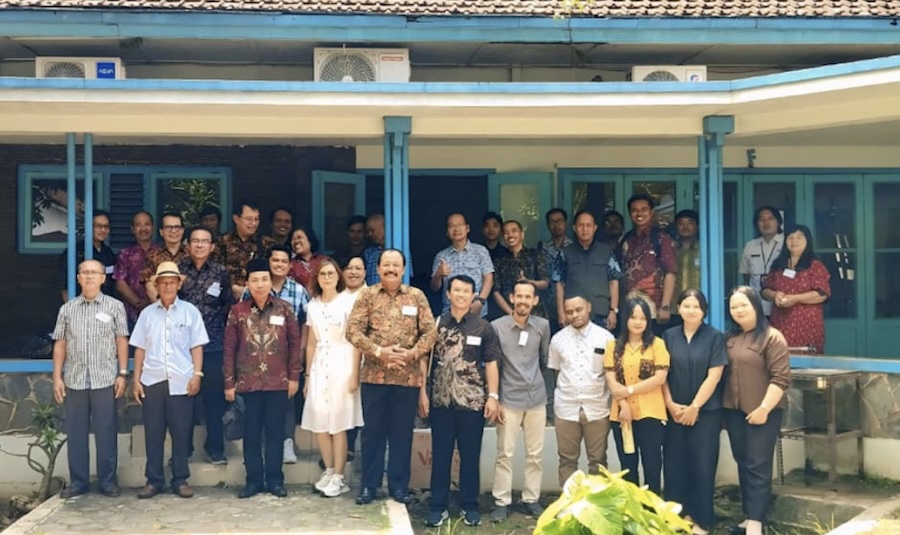
Wiyata Wacana Christian Religious College (STAKWW), in collaboration with the Mennonite Central Committee (MCC), held a peace curriculum development discussion with Christians and Muslims on the slopes of Mount Muria, Central Java, on May 6, 2026. — Ellia Christin Wardhani

The demonstration that led to the Aug. 13, 2025, demonstration  in Pati, Central Java, is a reminder that the need for education that builds a culture of peace is becoming increasingly urgent. Differences in interests and views can easily develop into violence if not managed through dialogue and peaceful conflict resolution. This condition shows that peace is not just an ideal, but a skill and value that needs to be built in social life.

Building on this awareness, the Wiyata Wacana Christian Religious College (STAKWW), in collaboration with Mennonite Central Committee, held a peace curriculum development discussion on the slopes of Mount Muria, Central Java, on May 6. This activity brought together academics, church leaders, peace practitioners and international partners to formulate a curriculum that is able to instill the values of peace, reconciliation, justice and conflict transformation in theology education in Indonesia.

Through the development of this curriculum, STAKWW and MCC hope to prepare church and community leaders who not only have a strong theological understanding, but are also able to become agents of peace who bring dialogue, strengthen reconciliation and build a more just and harmonious coexistence in a pluralistic society. Here are five things about peace service.

1. STAKWW Pati initiates peace curriculum development

This discussion is a strategic step for STAKWW in developing a curriculum that is relevant to the challenges of the pluralistic life of the Indonesian people. The participants had a dialogue about concepts, learning materials, teaching methods and the implementation of peace education in the context of the church and society. This activity is expected to produce a curriculum that is not only academic, but also shapes the character of students as peacemakers. Through collaboration between academics, practitioners and church leaders, this curriculum is designed to be able to respond to the needs of community service and empowerment in a contextual manner. This discussion found topics of nonviolent learning and conflict transformation.

2. The slopes of Mount Muria become a space for peace reflection

The choice of location on the slopes of Mount Muria, which is on the north coast of Java, has its own meaning. The region, which is known as a place for a tradition of dialogue, tolerance and harmonious community life, was the right space for reflection to discuss the values of peace. The calm atmosphere encouraged participants to hold deep conversations about the importance of education as a means of social transformation. In addition to being a place for discussion, the beautiful natural environment also invited participants to reflect on the relationship between spirituality, concern for others and responsibility for creation. This learning experience that is integrated with the local context strengthens the participants’ commitment to bring the values of peace into their daily lives and ministry.

(Article continued in right column.)

Question for this article

Religion: a barrier or a way to peace?, What makes it one or the other?

(Article continued from left column.)

3. MCC shows commitment to peace education

This activity received support from Mennonite Central Committee, which is strongly committed to promoting peace, reconciliation and community development. MCC’s support for the development of a peace curriculum in Indonesia, as well as strengthening cooperation between theological educational institutions and international networks, are building a culture of peace. Through this partnership, STAKWW Pati has the opportunity to enrich a global perspective while developing an educational approach that remains rooted in the local Indonesian context. Continued collaboration is expected to encourage the birth of various educational, research and community service initiatives oriented towards peaceful transformation.

4. Cross-generational and cross-institutional collaboration

The discussion brought together lecturers, researchers, church leaders, students and international partners in an open-dialogue atmosphere. Various experiences and perspectives were shared to enrich the preparation of the peace curriculum, so as to be able to respond to the challenges of social conflict, cultural diversity and the needs of the church in building a peaceful coexistence. Such cross-background interactions create mutually enriching learning spaces, where each participant can contribute based on their experience and expertise. Through collaborative dialogue, participants also identified various learning strategies that encourage students to become agents of peace who are able to bring reconciliation in society.

5. Building a generation of peacemakers

Through this activity, STAKWW affirmed its commitment to produce graduates who not only have theological competence, but also become agents of peace in society. The peace curriculum is expected to be the foundation for the birth of church and community leaders who are able to build dialogue, strengthen reconciliation, and present the values of love, justice, and peace in the life of the nation and state. Through an integrative learning process, students will be equipped with the knowledge, skills, and character needed to respond to various social problems wisely and constructively. Thus, STAKWW hopes that its graduates can make a real contribution to the realization of an inclusive, harmonious, and empowered community in facing various challenges in the future.

The discussion on the development of the Peace Curriculum at STAKWW is an important milestone in strengthening the role of theological education as a means of social transformation. With the support of MCC and the collaboration of various parties, this initiative is expected to give birth to a contextual peace education model, rooted in Christian values, and able to make a real contribution to the realization of a peaceful, inclusive and civilized Indonesian society.

More than just curriculum development, this initiative is a long-term investment to shape a generation of church leaders, educators, and agents of change who are able to build dialogue, manage conflicts constructively, and bring about reconciliation in a pluralistic society. From the slopes of Mount Muria, STAKWW and MCC affirmed their commitment to continue to knit a web of peace through education, so that the values of love, justice and respect for the dignity of every human being can be realized in the life of society, nation and state.

– – – – –

Teguh Karyanto is a pastor at Javanese Mennonite Church (GITJ) Pesantenan Pati, lecturer of Wiyata Wacana Seminary Indonesia, secretary of GITJ Synod, member of Global Anabaptist Higher Education Network (GAHEN) and specialist of Mission Commission under Mennonite World Conference (MWC).

– – – – – –

If you wish to make a comment on this article, you may write to coordinator@cpnn-world.org with the title “Comment on (name of article)” and we will put your comment on line. Because of the flood of spam, we have discontinued the direct application of comments.
Building an Afghanistan I may never see

. WOMEN’S EQUALITY . .

An article from Search for Common Ground

This series highlights voices of peace from around the world, to help you find yours.

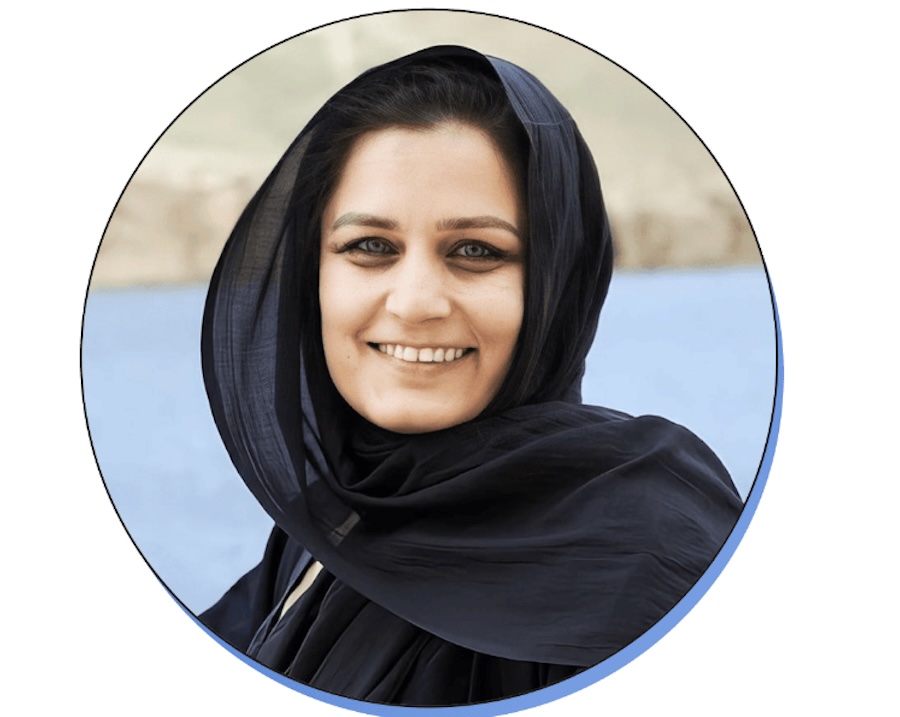
This month’s Voice of Peace is Zuhra Bahman, Search’s country director for Afghanistan.

I am 43 years old. In my lifetime, I have seen many shifts in the governance of my country. Clashes between traditionalists and modernists have always been present. But as I reflect on the last five years since the Taliban took control of Afghanistan, and on my country’s history as a whole, two clear truths emerge.


TFirst, Afghans are resilient. There is no denying the current realities our people must navigate. Schools and universities are closed to girls and women. Rules regulate day-to-day behavior—a challenge especially for women and those living in urban areas. Foreign aid continues to dwindle, which is devastating for a country as dependent on aid as ours has been. Important trade routes have closed, even as the population has surged by 10% due to forced returns. We exist geographically between Iran, who is engaged in a major global conflict, and Pakistan, with whom Afghanistan is in active conflict. Each of these realities brings enormous challenges.

But conflicts and crises also can generate tremendous innovation and creativity. 10,000 women have registered businesses in Afghanistan—10x the number in 2021 before the Taliban came into power. According to the World Bank, small businesses are the single largest employer of women in the country. Organizations have shifted to provide free vocational and on-the-job training to girls and women, enabling continued economic and societal growth. Just a few days ago, I met a woman whose company manages the cargo systems for 400 newly established online businesses in one city—all led by women. These innovations are displays of tremendous resilience. They are also acts of resistance.

(continued in right column)

Question related to this article:
 
Prospects for progress in women’s equality, what are the short and long term prospects?

(continued from left column)

Second, collaboration is possible—and essential. In three years, Kabul will be the world’s first modern capital city without access to clean water. Our underground reserves are nearly depleted. Critical issues like these affect all Afghans, whether or not your values align with the Taliban’s. I recently spent several days training a group of men and women on climate justice. One fellow facilitator was a highly educated woman who served as an advisor on climate issues to the previous Republic government. Her beliefs, values, and lifestyle are far from how the Taliban wants society to function, yet here she was, working alongside the head of the Taliban-run National Environmental Protection Agency. Their discussions produced a policy document that will inform climate decisions for the entire nation.

These people are supposed to be in violent conflict with one another. But when they come together with a focus not on winning but on solving a shared problem, they’re able to create positive change that endures. Change can come through sudden shocks to a system, but it never lasts. These sorts of shocks—which often come from external sources, use violent means, and destabilize a society through increased polarization—have been part of Afghanistan’s history from the beginning. But true, sustainable change must be collaborative. It must be generational.

I do not expect that Afghanistan will become an equitable society in my lifetime. Staying here means I will likely never reach my full potential as a woman who aspires to lead. This is a very hard thing to accept. A sudden shock might help me achieve my professional potential, my political ambitions, my personal freedoms, but it would not last. It would be reversed through another shock, another change of government, another round of violence. So instead of repeating this cycle, instead of playing by those win-lose terms where in fact everyone loses, it is far better to invest in something sustainable.

I choose to take small steps each day towards collaboration, towards sustainable development. That’s a foundation the next generation can build upon.

– – – – – –

If you wish to make a comment on this article, you may write to coordinator@cpnn-world.org with the title “Comment on (name of article)” and we will put your comment on line. Because of the flood of spam, we have discontinued the direct application of comments.
World Council of Churches Peace treatise: “If you want peace, go and talk to your enemy”

EDUCATION FOR PEACE .

An aticle from the World Council of Churches

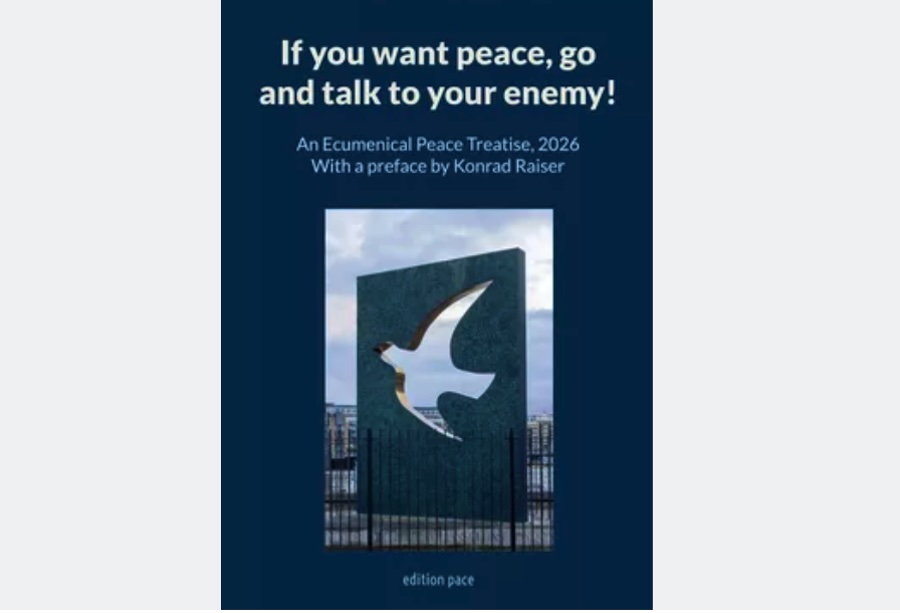
The editorial team of Ralf Becker, Rev. Karen Hinrichs, Prof. Dr Heinrich Schäfer, and Dr Theodor Ziegler are presenting “If you want peace, go and talk to your enemy: An Ecumenical Peace Treatise–2026.”

Published as a special volume in the “edition pace” series, the publication is being presented in cooperation with the Ecumenical Peace Network and enhanced by a preface by Dr. Konrad Raiser.

Through the concept of “peace logic,” the book points to ways in which conflicts could be resolved through diplomacy and civil conflict resolution, and wars may be prevented. 


The document aims to provide Christians and humanists with a clear, ethical orientation toward peace. It calls for an unequivocal commitment to military disarmament and for all states to join the UN Treaty on the Prohibition of Nuclear Weapons in times of massive rearmament. It notes that churches, in particular, can be a strong, clear voice for peace and contribute to building a culture of peace.

Coeditor Schäfer said that the treatise attempts to offer the perspective of grassroots organizations. “Within the team, we first decided to orient ourselves closely to the prophetic-Jesus tradition, following the example of the prophet Micah and the Sermon on the Mount,” he said. When viewed in the light of their original context, the teachings of the Sermon on the Mount contain clear, practical recommendations even for policymakers on how to prevent violence. “This theology is most in line with grassroots Christian movements, but of course aiming at the entire church. These theological reflections were complemented by a critique of the “myth of redemptive violence” by the American theologian Walter Wink. Finally, we incorporated a political science perspective through Hanne-Margret Birckenbach’s ‘Peace Logic.’ ”

(Article continued in right column)

Question for this article:

What are the most important books about the culture of peace?

(Article continued from left column)

Schäfer described how all of this was repeatedly discussed and expanded upon over the course of about half a year in online plenary sessions as well as among individual plenary members. “In this way, more ideas came to light during the editorial process than initially anticipated, such as the perspective of the churches in East Germany, documents from the World Council of Churches (WCC) and the Vatican, and theological input provided by historic peace churches,” he said.

Schäfer also noted that, when it comes to secular ethics, there are various points of connection.

“The program of strengthening grassroots initiatives, cooperating with secular peace actors, and fostering a culture of nonviolence—these strategies are entirely in line with our approach,” he said.

Spiritually speaking, the Sermon on the Mount contains more than just practical recommendations, he noted. “It also establishes prayer as a source of courage and points to the coming Kingdom of God,” he said. “Furthermore, the prophet Micah offers us a magnificent vision of the success of our commitment to peace: the beating of swords into plowshares.”

Schäfer noted that, first, the prophets’ call for justice and peace—as such, but not in its theological rationale—can be directly linked to the demands of secular ethics. “Nuclear armament has been an issue for the peace movement in Germany since the mid-1950s.”

The problem has been exacerbated today by the fact that the chancellor has decreed the purchase of nuclear-capable Tomahawk missiles for Germany, Schäfer notes. “This violates important international treaties, most notably the Two-Plus-Four Treaty, which is fundamental to the right of a united Germany to exist,” he said. “ The peace movement, however, is always at a disadvantage when faced with such decisions made without public or even parliamentary debate.”

“Despite everything, the challenge set forth by the prophets and Jesus—to speak to the enemy rather than threaten him—remains the best guide for those who seek peace,” concluded Schäfer.

Download a free copy of the book

– – – – – –

If you wish to make a comment on this article, you may write to coordinator@cpnn-world.org with the title “Comment on (name of article)” and we will put your comment on line. Because of the flood of spam, we have discontinued the direct application of comments.

Brazil: Restorative Justice program trains educators to foster a culture of peace in municipal schools

. . DEMOCRATIC PARTICIPATION . .

An article by the Court of Justice of the State of Roraima

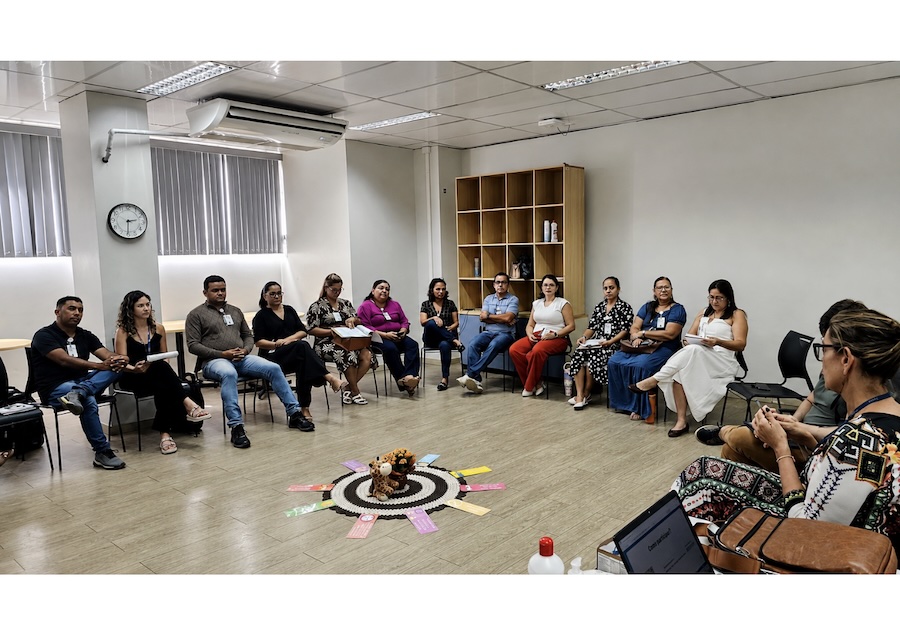
Teachers and administrators from the municipal school system completed a Restorative Justice training course on Friday, August 7. The program focused on implementing practices that encourage dialogue, active listening, and a culture of peace within schools.

The methodology employed by Restorative Justice aims to create spaces for dialogue, strengthen bonds, and contribute to conflict prevention and resolution. Valeska Carvalho, head of the Restorative Justice Unit—coordinated by Judge Marcelo de Oliveira of the Court of Justice of Roraima (TJRR)—explained that the goal is to prepare school professionals themselves to share the knowledge gained during the training with others.

“The intention is for them to be prepared to transfer this knowledge to their own environments—their schools. It was a 40-hour course where they learned about the ‘peace-building circles’ methodology, which is the approach we use in schools. This gives schools the autonomy to manage their own projects.”

(article continued in right column)

(Click here for the original article in Portuguese)

Discussion question

Restorative justice, What does it look like in practice?

(article continued from left column)

For those who have participated in previous sessions, the impact of the training is directly visible in daily school life. Teacher Conceição Rebouças, from the José David Feitosa Neto Municipal School, participated in a Restorative Justice training program for the third time; she notes that the practices she has learned have contributed to the children’s development.

“We have achieved good results at the school because the children are developing a culture of peace. Whenever we bring the experiences shared here and the guidelines we’ve worked on into the classroom, we notice the school making progress and seeing significant benefits—especially for the children,” she stated. According to the educator, student participation also demonstrates their interest in the activities developed based on the techniques they learned.

“The results are visible. Parents come to praise the work we do, and the children actually ask when we’ll be back in the classroom to apply the techniques learned in the course. So, that is rewarding for us,” she said.

The training also covered topics such as assertive communication, listening, mediation, and conflict resolution. For Adélio Gomes, a teacher at the Senador Darcy Ribeiro Municipal School, the knowledge gained expands the educators’ options for handling common situations in the school environment.

“This is a very comprehensive course that teaches us how to communicate and listen correctly. Often, we listen but interrupt, without waiting for our colleague to finish speaking. We worked on assertive communication, conflict resolution, and how to act as mediators,” he explained.

Spanning 40 hours, the course took place over two weeks and introduced participants to the peace-building circles methodology.

Armed with this new knowledge, teachers and administrators return to their schools with tools they can apply in their daily routines—especially in conflict situations and in building relationships grounded in dialogue and listening.

– – – – – –

If you wish to make a comment on this article, you may write to coordinator@cpnn-world.org with the title “Comment on (name of article)” and we will put your comment on line. Because of the flood of spam, we have discontinued the direct application of comments.

California was mostly solar-powered in May — a global first

.. SUSTAINABLE DEVELOPMENT ..

An article from Canary Media

While the Trump administration is busy pointing out that the sun doesn’t shine at night, solar is breaking records around the world, including in sunny California.

Solar panels produced 51% of California’s electricity in May, the first time the clean energy source surpassed the halfway mark for an entire month. The data counts both large-scale installations and the state’s bounty of rooftop arrays.

(click on image to enlarge it.)

This isn’t just a milestone moment for California; it’s a milestone for the entire world. Think tank Ember says the state is the globe’s first major economy to cross the 50% threshold. (Hungary, at 47% in June 2025, is knocking at the door, though it has a far smaller GDP.)

(Continued in right column)

Question for this article:

Are we making progress in renewable energy?

(Continued from left column)

Solar’s rise has helped California cut polluting energy sources out of its power mix. Natural gas is the only fossil fuel that California power plants burn at appreciable levels, and solar is steadily squeezing it out of the system. Case in point: Solar outproduced gas not only during its record month of May but throughout every month in 2026 leading up to it, too.

Solar could not have reached these heights alone. It needed batteries to get here — and California has that crucial energy storage in spades. The California Independent System Operator, which manages most of the state’s grid, now boasts 16 gigawatts of batteries that can shift abundant midday solar production to later in the evening. It’s not uncommon for batteries to meet over one-quarter of the state’s electricity demand for a portion of the night.

All this solar and storage would have been hard to imagine a decade ago. Back then, in its best month — also sunny, mild May — solar accounted for just 17% of electricity. That number is well above the current national average for solar, but a far cry from 51%. CAISO’s battery fleet, meanwhile, was a measly 61 megawatts. So, storage has grown by, uh … 26,129% over the last decade, a number so cartoonishly large that I’m almost hesitant to print it.

Expect California to see more months break the 50% threshold soon. And in the coming years, expect more states and countries to cross the halfway mark, too.

– – – – – –

If you wish to make a comment on this article, you may write to coordinator@cpnn-world.org with the title “Comment on (name of article)” and we will put your comment on line. Because of the flood of spam, we have discontinued the direct application of comments.