. WOMEN’S EQUALITY . .
An article from Search for Common Ground
This series highlights voices of peace from around the world, to help you find yours.
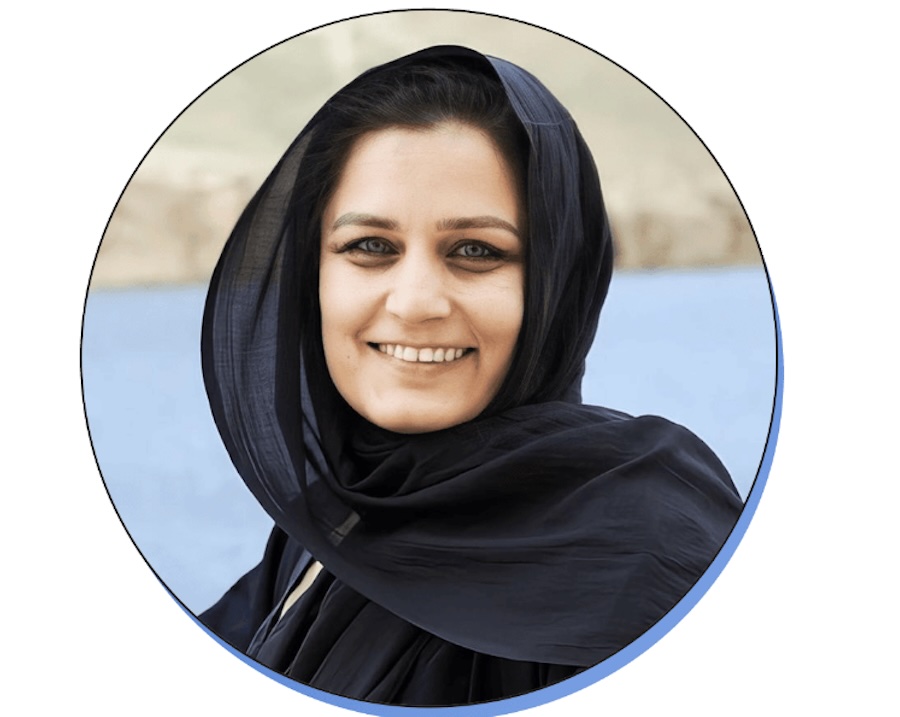
This month’s Voice of Peace is Zuhra Bahman, Search’s country director for Afghanistan.
I am 43 years old. In my lifetime, I have seen many shifts in the governance of my country. Clashes between traditionalists and modernists have always been present. But as I reflect on the last five years since the Taliban took control of Afghanistan, and on my country’s history as a whole, two clear truths emerge.
TFirst, Afghans are resilient. There is no denying the current realities our people must navigate. Schools and universities are closed to girls and women. Rules regulate day-to-day behavior—a challenge especially for women and those living in urban areas. Foreign aid continues to dwindle, which is devastating for a country as dependent on aid as ours has been. Important trade routes have closed, even as the population has surged by 10% due to forced returns. We exist geographically between Iran, who is engaged in a major global conflict, and Pakistan, with whom Afghanistan is in active conflict. Each of these realities brings enormous challenges.
But conflicts and crises also can generate tremendous innovation and creativity. 10,000 women have registered businesses in Afghanistan—10x the number in 2021 before the Taliban came into power. According to the World Bank, small businesses are the single largest employer of women in the country. Organizations have shifted to provide free vocational and on-the-job training to girls and women, enabling continued economic and societal growth. Just a few days ago, I met a woman whose company manages the cargo systems for 400 newly established online businesses in one city—all led by women. These innovations are displays of tremendous resilience. They are also acts of resistance.
(continued in right column)
Prospects for progress in women’s equality, what are the short and long term prospects?
(continued from left column)
Second, collaboration is possible—and essential. In three years, Kabul will be the world’s first modern capital city without access to clean water. Our underground reserves are nearly depleted. Critical issues like these affect all Afghans, whether or not your values align with the Taliban’s. I recently spent several days training a group of men and women on climate justice. One fellow facilitator was a highly educated woman who served as an advisor on climate issues to the previous Republic government. Her beliefs, values, and lifestyle are far from how the Taliban wants society to function, yet here she was, working alongside the head of the Taliban-run National Environmental Protection Agency. Their discussions produced a policy document that will inform climate decisions for the entire nation.
These people are supposed to be in violent conflict with one another. But when they come together with a focus not on winning but on solving a shared problem, they’re able to create positive change that endures. Change can come through sudden shocks to a system, but it never lasts. These sorts of shocks—which often come from external sources, use violent means, and destabilize a society through increased polarization—have been part of Afghanistan’s history from the beginning. But true, sustainable change must be collaborative. It must be generational.
I do not expect that Afghanistan will become an equitable society in my lifetime. Staying here means I will likely never reach my full potential as a woman who aspires to lead. This is a very hard thing to accept. A sudden shock might help me achieve my professional potential, my political ambitions, my personal freedoms, but it would not last. It would be reversed through another shock, another change of government, another round of violence. So instead of repeating this cycle, instead of playing by those win-lose terms where in fact everyone loses, it is far better to invest in something sustainable.
I choose to take small steps each day towards collaboration, towards sustainable development. That’s a foundation the next generation can build upon.
– – – – – –
If you wish to make a comment on this article, you may write to coordinator@cpnn-world.org with the title “Comment on (name of article)” and we will put your comment on line. Because of the flood of spam, we have discontinued the direct application of comments.