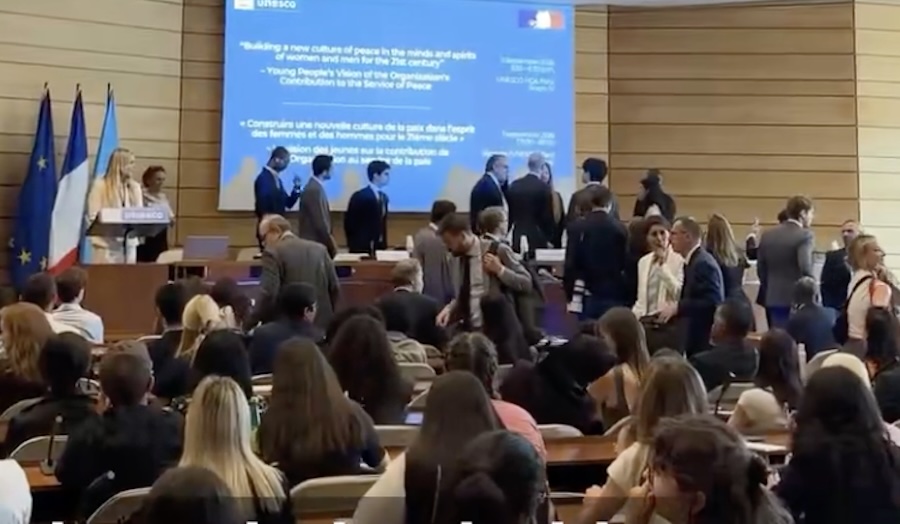
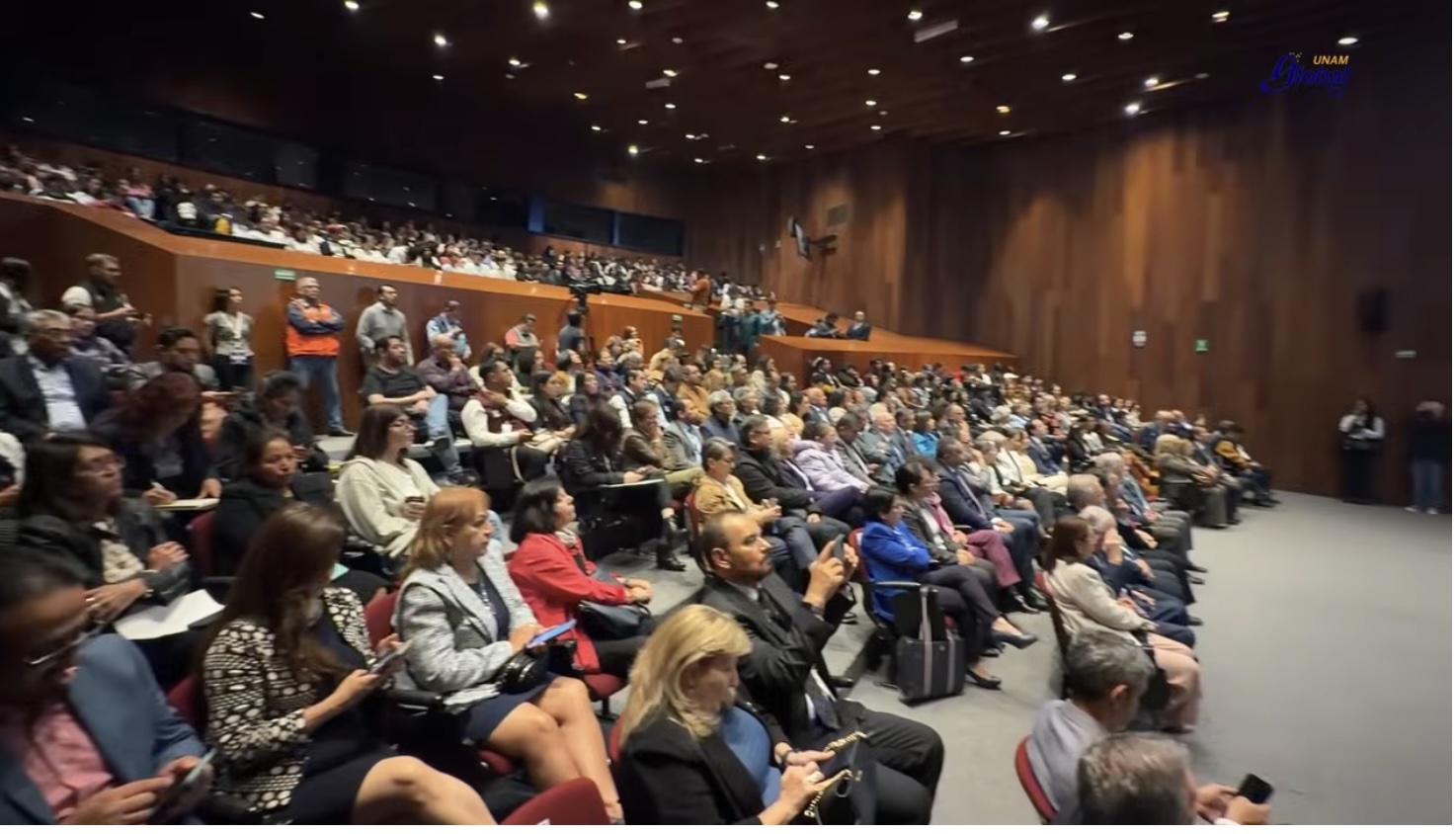
UNAM, Mexico: Establishment of Commission to Develop Content on a Culture of Peace

FREE FLOW OF INFORMATION

An article from Gaceta UNAM

An Academic Working Commission has been established at the National Autonomous University of Mexico (UNAM) with the aim of contributing to and supporting high school education through the development of educational courses on a culture of peace for students and faculty,

This commission is comprised of the University Program on a Culture of Peace and the Eradication of Violence (PUCPAZ), the general directorates of the National Preparatory School and the National School of Sciences and Humanities, the High School Academic Council, the General Directorate of Incorporation and Revalidation of Studies (DGIRE), and the Institute of Legal Research.

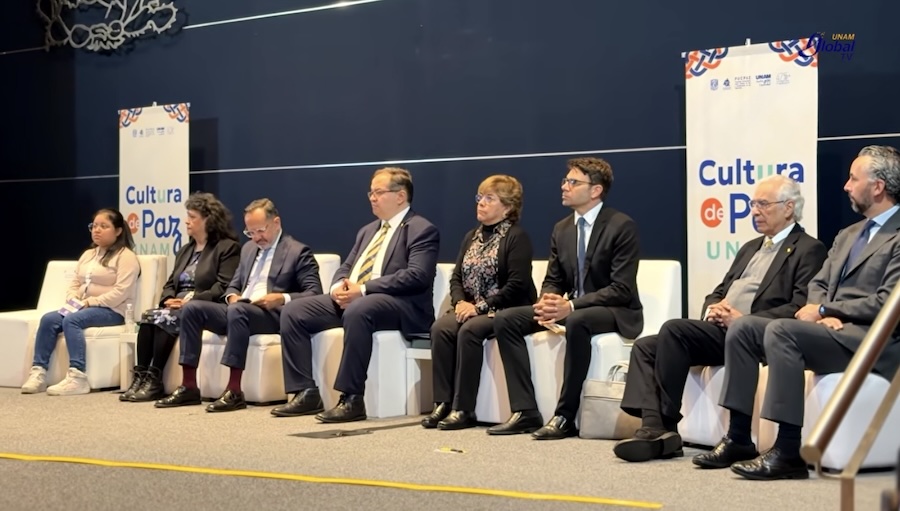
Leticia Cano Soriano, head of PUCPAZ, led a ceremony held at the Program’s offices in the Engineering Tower. She explained that the design, development, and integration of an elective course and a training course are part of the University’s strategy to disseminate a culture of peace across all levels of education, beginning in secondary school and later being integrated into higher education.

The Master of Social Work commented that it is important to develop this elective course and training program to offer students and faculty tools that allow them to incorporate a culture of peace and violence prevention into academic activities, with an emphasis on human rights, interculturality, and community social fabric. She also emphasized integrating these themes with other subjects in the high school curriculum.

Sergio Abraham Reyes Pantoja, Academic Secretary of PUCPAZ, explained that, based on the University Program’s Founding Agreement, one of the program’s objectives is the development of its own educational content on a culture of peace. In addition to advising institutions on mainstreaming these topics into their curricula, the commission also promotes the development of human resources for teaching. The aim is to establish plans and strategies at the high school level for disseminating a culture of peace and implementing specific actions to eradicate violence in university environments.

(Continued in right column)

(Click here for a Spanish version of this article)

Question related to this article:

How can we develop the institutional framework for a culture of peace?

Is there progress towards a culture of peace in Mexico?

(Continued from left column)

During the meeting, Consuelo Arce Ortiz, secretary of the Academic Council of the UNAM High School, stated that it is essential to begin with an understanding of the regulations, specifically the General Regulations for the Presentation and Approval of Study Plans and Programs. This will provide greater academic validation, and the need to address a culture of peace has already been raised, calling the University to action.

Arce Ortiz added that the commission’s intention is to place the dignity of individuals at the center of education, fostering positive attitudes and positively impacting the lives of the school and teaching community.

Restorative Approach

Mara Hernández Estrada, from the Institute of Legal Research, mentioned that collaborative work is crucial to ensure the classroom becomes a suitable pedagogical environment for fostering a culture of peace, especially in conflict management, and with a restorative approach.

She emphasized the importance of addressing students’ needs to prevent negative impacts in the classroom, aligning with the ethics of care, and raising awareness about violence.

Speaking next, Alejandro Benítez Jiménez, Continuing Education Coordinator at the DGIRE (General Directorate of Educational Research), shared that the affiliated system serves more than 17,000 students in 28 states across Mexico, who follow 263 different curricula, and that they will now be able to incorporate these courses to promote a culture of peace.

In developing new courses, she noted, it is essential to consider the needs of affiliated schools both in Mexico City and throughout the country. She added that the new courses for students and faculty will be an important opportunity to convey not only the message of fostering a culture of peace, but also the teaching strategies to achieve it.

Finally, Jacqueline Leyva Chávez, coordinator of the Institutional Tutoring Program at the General Directorate of the College of Sciences and Humanities, emphasized that the course topics are particularly relevant because students face diverse challenges, and the training must include specific strategies to effectively support and guide them.

– – – – – –

If you wish to make a comment on this article, you may write to coordinator@cpnn-world.org with the title “Comment on (name of article)” and we will put your comment on line. Because of the flood of spam, we have discontinued the direct application of comments.
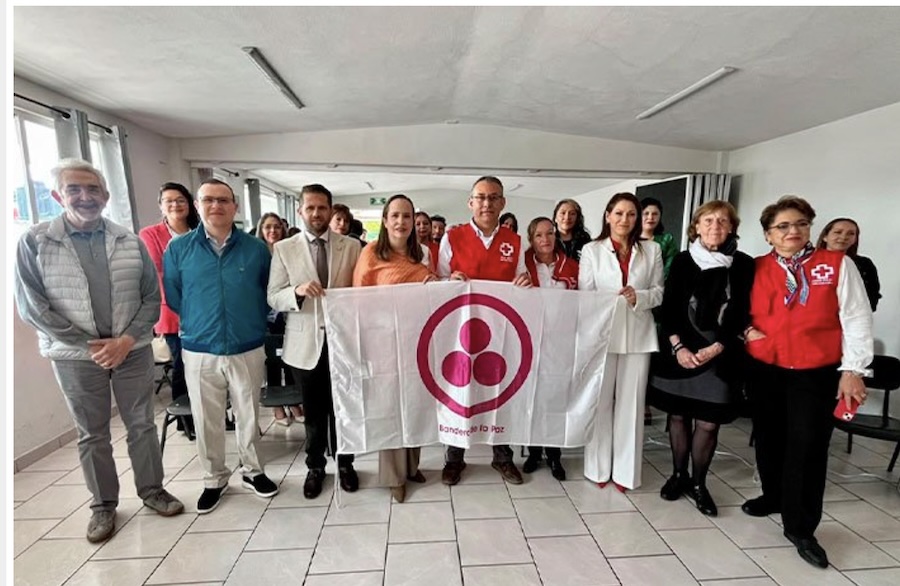
Dominican Republic: Violence Reduction and Peace Culture Promotion Program in Schools

… EDUCATION FOR PEACE …

An article by Erasmo Lara Peña in Acento

Promoting a culture of peace in schools is a strategic priority for the Dominican education system. Within this framework, schools are recognized as a privileged space for the formation of citizens capable of living together respectfully, valuing diversity, and managing conflicts constructively.

After retiring from the United Nations in 2005 and subsequently serving as the Dominican Republic’s ambassador to the United Nations in 2009, I have dedicated myself to projects related to promoting a culture of peace, community mediation, conflict resolution, and international negotiations, primarily within public institutions and civil society organizations in our country.

I have carried out much of this work through the Dominican Center for Peace, a private, public-service institution that I founded in 2006. One of the most significant projects has been the establishment of peace clubs in schools throughout the Dominican Republic through the Violence Reduction and Peace Culture Promotion Program in Schools.

I would like to document the process of creating, developing, consolidating, and institutionalizing the Peace Clubs program in the Dominican Republic, highlighting the main achievements, the partnerships forged, and the impact generated within the educational community during the years of implementation.

The program originally emerged in 2017 as a pilot initiative. Subsequently, during the 2022-2023 school year, it became part of the activities of the Vice Ministry of Preventive Security in Provincial Governments of the Ministry of the Interior and Police, in collaboration with the Directorate of Guidance and Psychology (DOP) of the Ministry of Education.

By the end of the 2025-2026 school year, the main achievements included the implementation of the program in 500 schools, the training of more than 12,000 student peace promoters, the training of 700 counselors and psychologists, as well as 48 regional and district technicians. The program also has a presence in seven regional education offices and forty-one school districts.

It is important to mention that the standardization of teaching practices was also achieved through the production of printed, audiovisual, and digital materials to support the various training activities. Starting in the 2025-2026 school year, the program became an integral part of Presidential Goal 21 on a Culture of Peace, incorporated into the action plan of the Directorate of Guidance and Psychology until 2028. The objective is to incorporate approximately 800 new schools.

Among the main challenges faced during the program’s implementation were inter-institutional coordination, territorial expansion, and the sustainability of the training activities. However, the commitment of the regional and district technical teams, counselors, psychologists, and students allowed for the consolidation of a high-impact experience for school coexistence.

The Peace Clubs operate in schools identified by the Ministry of Education and located in priority areas within the Comprehensive Citizen Security Strategy, “My Safe Country.” Currently, the program operates in all school districts of San Cristóbal, Santo Domingo Este, the National District, Santiago, La Vega, San Francisco de Macorís, Moca, Bonao, and Piedra Blanca.

Promoting a culture of peace in schools is a strategic priority for the Dominican education system. Within this framework, schools are recognized as a privileged space for developing citizens capable of living together respectfully, valuing diversity, and managing conflicts constructively. Presidential Goal 21 on a Culture of Peace reinforces this commitment by promoting safe, participatory, and violence-free school environments.

(Continued in right column)

(Click here for the Spanish original of this article)

Question for this article:

Where is peace education taking place?

(Continued from left column)

Peace Clubs are organized spaces within schools, led by and for students, with the support of counselors and school psychologists.

Their main objectives are:

• To contribute to the development of a culture of peace in schools.

• To prevent and reduce violence in schools.

• To empower students to act as peace promoters.

To strengthen students’ civic education.

Through these clubs, students develop key social-emotional skills, such as empathy, assertive communication, conflict resolution, and teamwork.

The program is implemented through three fundamental actions:

1. Training of counselors, psychologists, and students.

2. Organization of the club within the school.

3. Awareness-raising activities aimed at the entire school community.

These actions ensure that a culture of peace is not just content, but a daily practice.

To support the program, a series of printed and audiovisual materials have been designed that frame the facilitation of standardized educational content and practices on topics such as conflict, youth violence, coexistence, communication and active listening, peer mediation, and restorative practices, among others.

The Peace Club is a space run by and for students. In it, young people become agents of positive change, learning and promoting social skills such as empathy, assertive communication, peaceful conflict resolution, and teamwork.

We seek to improve the school climate and develop students committed to social peace, fostering a sense of responsibility toward their environment and contributing to the strengthening of peaceful coexistence and safety in schools.

One of the program’s main focuses has been empowering students with strategies for promoting peace and the constructive resolution of conflicts. Likewise, spaces have been created for them to construct their own knowledge and actively contribute to promoting peaceful coexistence from their own perspectives.

The enthusiastic work of counselors and psychologists involved in the program, along with the commitment and empowerment of the students, has significantly contributed to the acceptance and legitimacy it enjoys today. This 2025-2026 school year has marked a transition for the program, transferring it from the Ministry of the Interior and Police to the Ministry of Education, for implementation by the Directorate of Guidance and Psychology (DOP), which is taking the necessary steps to ensure its consolidation as a national program. These include its integration into Presidential Goal 21 on a Culture of Peace, the appointment of a national specialist to oversee it, its incorporation into the Annual Operating Plan (AOP), and the necessary budget allocation.

I feel that my seven years of work have yielded the expected results, as this effort has become a national program under the responsibility of the Ministry of Education.

I wish to express my gratitude to Engineer Ángela Jáquez, Vice Minister of the Interior and Police; to Dr. Ancell Scheker, Vice Minister of Education; to Mario Frías and Esther Custodio, two extraordinary facilitators of the hundreds of workshops given to counselors, psychologists, and thousands of student members of the club network; and, in a very special way, to Divina García, Director of Guidance and Psychology, on whose shoulders now rests the continuity and strengthening of this initiative.

Beyond the figures and the results achieved, the greatest achievement of the Peace Clubs Program has been to demonstrate that students can become active agents of social transformation when they are given the right tools to promote coexistence, dialogue and the peaceful resolution of conflicts.

– – – – – –

If you wish to make a comment on this article, you may write to coordinator@cpnn-world.org with the title “Comment on (name of article)” and we will put your comment on line. Because of the flood of spam, we have discontinued the direct application of comments.
London: International Conference Against War

DISARMAMENT & SECURITY .

An article from Counterfire

As activists from across Europe and beyond met to oppose war, Jamal Elaheebocus and Lauren Simmonds report on the determination of delegates to build a massive international movement for peace.

Over 3,000 delegates from across Europe gathered in Central Hall, Westminster for the second International Conference Against War on Saturday 20 June. Following the initial conference in Paris last year, this year’s conference organised by the Stop the War Coalition and supported by hundreds of trade unions and campaign groups marks a step forward for the international movement.


Video of Conference (starts at minute 12)

The day before, there was an excited buzz as around 200 delegates from Europe and beyond filed in to the NEU Headquarters at Hamilton House in London, for the pre-conference Action Planning Meeting. There was a short introduction to the meeting from a panel of speakers which included Daniel Kebede, NEU General Secretary, who welcomed us to the venue, and STW’s Lindsey German, who made the important point that the answer to the US imperial project does not lie with European rearmament and that the enemy for us all, is the one at home.

There was plenty of time for the duration of the meeting to hear from a wide range of speakers who had put their slips in for an opportunity to address the meeting. We heard from activists from both Ukraine and Russia, who made the case for solidarity with dissenters in both countries. Students from France and Germany, organising against conscription and Trade Unionists and organisations from multiple counties making the case for welfare not warfare, and mobilising opposition within the labour movement to the reoccurring issues of social cuts in favour of ever increasing military spending.

High on the agenda was of course the condemnation of the ongoing genocide in Palestine and the need for continued solidarity. We also heard from the chair of the Cuba Solidarity Campaign, Kevin Courtney, who highlighted the escalating crisis happening there as a result of the US blockade and the growing threat of US military intervention. The important issue of the situation in Sudan was also raised, and how it relates to Western imperialism.

It was a day of connection, conversation and vital networking, where people could share the important work and organising they were involved in, and where the anti-war message transcended language barriers. With the groundwork laid, the Anti-War Conference on Saturday was shaping up to be a truly historic occasion.

The main event

The Saturday morning session of the conference at Central Hall Westminster began with an assembly of trade unionists and activists from across Europe discussing the increasing militarism across their countries and how they are responding. Workers from Spain, France, Germany, Greece, Italy, Bahrain and more spoke and there was a consistent theme throughout the session: their governments were preparing for war and were doing so by decimating the living standards of working-class people.

(Article continued in right column)

Question related to this article:

How can the peace movement become stronger and more effective?

(Article continued from left column)

However, there were also stories of resistance, of huge protests in solidarity with Palestine, school students in Germany striking against conscription and the Global Sumud Flotilla which has sailed numerous times to break the siege of Gaza and attempted to deliver desperately needed humanitarian aid.

Sukana Rhawani, the mother of Filton political prisoner Fatema Zainab Rajwani, who was sentenced as a terrorist by a judge the previous week, spoke movingly about the increasing authoritarianism being unleashed against an effective and powerful Palestine solidarity movement in the UK.

Anti-conscription campaigns

Students and young people met to discuss the launch of a mass campaign against conscription, with German school striker Felix Kreklow Rojas addressing the meeting and relaying his experiences in organising school strikes against conscription in Germany. Students from France, Spain, Britain and the US spoke of their campaigns. There was a consensus that a coordinated international response is needed and that days of action against conscription will be held on 21-22 November.

The first of two main sessions in the impressive main hall discussed the global drive to war. Parliamentarians from across Europe spoke of their governments’ hikes in warfare spending. Numerous British MPs, including former Labour leader Jeremy Corbyn, spoke of the need to build opposition to welfare cuts and defence spending regardless of who replaces Keir Starmer as prime minister.
Lower your guns and raise our wages

The rally also heard from trade union leaders, including the BFAWU’s Ian Hodson, UCU’s Jo Grady and Fran Heathcote of PCS. All spoke of the effect of stagnant wages and falling living standards on their members and the need to oppose further declines to fund the ruling class’s wars. Jo Grady, who moved the successful ‘Wages not Weapons’ motion at TUC Congress spoke of the need for trade unions to up their campaigning against hikes in defence spending to reflect the current policy. She also reflected on the fact that this change in policy was a big win for the anti-war movement, considering the previous policy of unconditional support for increases in defence spending.

The highlight of the session was a powerful speech by Mustafa Barghouti, Palestinian physician and leader of the Palestinian National Initiative, which received a rapturous reception.

The second session discussed the drive to war in Europe. Among the speakers was La France Insoumise MP Jérôme Legavre, who had an instrumental role in organising the Paris peace conference, and spoke of the LFI’s opposition to Macron’s hikes in defence spending. French delegates, and others called for Macron to resign, chanting ‘Macron démission’. John Rees, national officer of Stop the War, gave a rousing speech calling on the working class of Europe to unite and fight back against our rulers’ class warfare.

The conference spilled out onto the roads outside Central Hall with an atmosphere of excitement and determination. Most importantly, coordinated action was agreed upon meaning that the powerful words spoken in the hall will become action in the autumn. An international day of Palestine protests will be held on 10 October in addition to a day of action in solidarity with the Genoa dockers in October (date to be confirmed), who refused to load arms bound for Israel, and the days of action – 21-22 November – against conscription.

– – – – – –

If you wish to make a comment on this article, you may write to coordinator@cpnn-world.org with the title “Comment on (name of article)” and we will put your comment on line. Because of the flood of spam, we have discontinued the direct application of comments.

World Peace Congress: An International Network Uniting Cultures, Committed to Dialogue

. . DEMOCRATIC PARTICIPATION . .

An article by Patricia Ynestroza in Vatican News

“Building Networks Between Cultures, Generations, and Nations” From Latin America to the World. Since 2020, an international movement has been created that promotes peace through education, art, and intercultural dialogue, with the participation of leaders, young people, and international institutions. In a global context marked by social, cultural, and humanitarian challenges, the World Peace Congress is consolidating itself as an international initiative that promotes the active construction of a culture of peace, based on unity in diversity and collective commitment. The sixth edition will take place in August.


Honduras to Host the Next Congress

A delegation participated in the Holy Father’s general audience in St. Peter’s Square on June 17, reaffirming its commitment to promoting universal fraternity and strengthening ties between peoples of different continents.

A movement born in times of pandemic

The World Congress for Peace emerged in 2020, during the COVID-19 pandemic, when restrictions forced meetings to move online. What began as a series of Zoom meetings grew into an international platform with a presence in various countries. Following the health emergency, the movement began an in-person phase that has taken place in several Latin American countries: Costa Rica in 2023, Mexico in 2024, Argentina in 2025, and soon Honduras, which will host the sixth edition of the Congress in August 2026.

The initiative brings together educators, academics, scientists, business leaders, writers, artists, social leaders, universities, and institutions committed to building more inclusive and compassionate societies.

Peace as a Response to Poverty, Hunger, and Pain

Vatican News interviewed Elena Vargas, the international president of the World Peace Congress, who explained that the movement’s main objective is to transform human suffering into hope. “Our greatest responsibility is to transform the pain brought on by war, poverty, hunger, and suffering into hope. All of this contributes to the lack of peace. What we bring to each country is a message of peace that begins in the heart of every human being,” she stated.

Vargas highlighted that the Congress has carried out activities in various countries in the Americas and Europe, including Spain and Italy, strengthening an international network of people committed to reconciliation and dialogue. She also expressed the delegation’s emotion at participating in the papal audience.

Meeting with the Pope to discuss their work for peace

During the general audience, the delegation presented the Holy Father with various gifts as an expression of fraternity among peoples.

From Costa Rica, a work by the painter and poet Franklin Mata was presented, inspired by symbols of peace, featuring doves, birds in flight, and female figures representing the search for harmony.

A brochure summarizing the history and main milestones of the World Peace Congress was also distributed.

From Peru, Dr. Manuel Barba, International Ambassador of Peace, offered a traditional vessel used for sharing chicha, an ancestral symbol of friendship and brotherhood. The object also holds deep significance for the Pope, who carried out much of his pastoral work in Peru.

(Article continued in right column)

(Click here for a version of the article in Spanish.)

Question related to this article:

How can we develop the institutional framework for a culture of peace?

(Article continued from left column)

From Honduras, the city of Siguatepeque presented an artwork by the painter Geraldina Aguilar, depicting Honduran women amidst the region’s characteristic natural landscape. The piece incorporates cultural, gastronomic, and heritage elements of the city, such as the Central Park and the San Pablo Parish.

From Specialists to an Intergenerational Movement

The director of Living Peace International, Carlos Palma, recalled that the first meetings were primarily composed of specialists and professionals involved in peace-related issues. However, over the years, the movement recognized the need to involve new generations.

“We felt the imperative for the Congress to become a starting point where the human heart is the root of peace. That is why the presence of young people and children is fundamental today,” he explained.

According to Palma, recent editions have included young people from various countries who share experiences and concrete projects to build peace within their communities. The initiative seeks to ensure that peace is understood not only as the absence of war, but as a daily attitude that begins in the family, the school, and the community.

“We often think that war is far away, but it can be within ourselves, in our families, or in our neighborhoods. First, we must achieve our own peace so that we can then share it with others,” he reflected.

Youth as Agents of Change

The Deputy Director of the World Peace Congress, Eduardo Sánchez, highlighted that one of the main achievements over the years has been precisely cultivating a culture of peace among the new generations. One of the central aspects of the Congress is the active participation of young people organized in networks and collectives, he stated, who develop initiatives related to peaceful coexistence, education, and human rights.

Sánchez emphasized that the work with children, adolescents, and university students is carried out through educational activities, workshops, and projects promoted in conjunction with organizations such as Living Peace.

Honduras to Host the Next World Congress

The sixth edition of the World Peace Congress will be held from August 18 to 23, 2026, in Honduras, under the theme: “Weaving Networks, Building Peace.” The official venues will be: Siguatepeque, Comayagua, and Lake Yojoa.

The event’s co-coordinator, Dania Mayorquín, explained that this edition will focus on strengthening youth participation through workshops, artistic activities, and educational opportunities.

“We want peace to be built from the earliest ages. Not only through conferences, but also through workshops where young people are protagonists and promoters of peace,” she stated. Universities, educational centers, schools, and colleges in the region are already being invited to actively participate in the program.

One of the highlights will be a large-scale event organized by Living Peace in the central plaza of Siguatepeque, featuring prayer, music, art, and community reflection.

A Peace Built Every Day

More than just an annual gathering, the World Peace Congress defines itself as an international movement aimed at creating permanent networks of cooperation among individuals, institutions, and communities. Inspired by a holistic vision of peace—encompassing education, culture, human values, and respect for diversity—the Congress, according to those interviewed, promotes the conviction that social transformation begins with each individual and is strengthened through collective commitment.

With their sights set on Honduras 2026, its organizers are confident that the message of fraternity will continue to spread. “Yes, peace can be built,” those interviewed agreed. A task that, they assert, requires dialogue, education, and the active participation of new generations to keep alive the hope for a more humane, compassionate, and reconciled world.

– – – – – –

If you wish to make a comment on this article, you may write to coordinator@cpnn-world.org with the title “Comment on (name of article)” and we will put your comment on line. Because of the flood of spam, we have discontinued the direct application of comments.
Catholic Institute for Nonviolence: new developments

. . DEMOCRATIC PARTICIPATION . .

Email received from Pace é Bene (see authors below)

We are happy to announce that Ken Butigan, a long-time Pace e Bene trainer and organizer, has been selected to be the co-director of the Catholic Institute for Nonviolence. He will continue to serve as Strategy Consultant at Pace e Bene, where he has worked for many years.

With Pope Francis’ blessing, the institute was launched in 2024 with the aim of making nonviolence research, resources, and lived experience more accessible to Catholic Church leaders, communities, and institutions worldwide. It is a project of Pax Christi International’s Catholic Nonviolence Initiative, with which Pace e Bene has been actively involved since CNI was established after a landmark conference ten years ago this spring. [The institute is based in Rome.]


Ken Butigan and Marie Dennis in St. Peter’s Square, October 2024. Photo: Pax Christi International.

The “Nonviolence and Just Peace” conference was held at the Vatican and cosponsored by the Pontifical Council for Justice and Peace and Pax Christi International in April 2016. It brought scores of theologians, scholars, Church leaders and, most significantly, practitioners from war zones and other hot spots around the world together to gather in hope of seeing this 2,000 year-old institution actively re-embrace the nonviolence proclaimed and lived by Jesus.

(Article continued in right column)

Question related to this article:


How can we develop the institutional framework for a culture of peace?

(Article continued from left column)

After a year of planning (which Ken Butigan and John Dear, representing Pace e Bene, were part of with so many others, including Marie Dennis of Pax Christi), the conference was a dazzling, multi-layered conversation that culminated in an assembly-wide, consensus-based document entitled, An Appeal to the Catholic Church to Re-Commit to the Centrality of Gospel Nonviolence.

CNI was formed as a project of Pax Christi not long after the conference, with leadership from around the world, including Pace e Bene. CNI has been at it ever since, building relationships at the Vatican and with partners worldwide, holding two other conferences in Rome, publishing books, papers and articles; sponsoring many webinars and seminars, and organizing countless meetings. All of this has been focused on inviting the Church to come to a richer and deeper understanding of a nonviolence that combines the power of rejecting violence, the power of refusing to harm others, and the power of love in action. We have been heartened by the prophetic call to nonviolence Pope Francis made repeatedly and that Pope Leo has continued.

The spirit of nonviolence is present in the pope’s recent encyclical, Magnifica Humanitas, including its call to “disarm AI” and its declaration that “the ‘just war’ theory, which has all too often been used to justify any kind of war, is now outdated. Humanity possesses far more effective and capable tools for promoting human life and resolving conflicts.”

Ken is grateful for all the ways Pace e Bene has supported CNI and the Catholic Institute for Nonviolence. We look forward to deepening and broadening our ongoing partnership in working to advance nonviolence in the Church and the world.

Peace and all good,
Erin, Ken, Rivera, Stacie, Layal, Rosie, Mili, and the Pace e Bene Team

– – – – – –

If you wish to make a comment on this article, you may write to coordinator@cpnn-world.org with the title “Comment on (name of article)” and we will put your comment on line. Because of the flood of spam, we have discontinued the direct application of comments.
World Peace Foundation: who is asking what’s next for peace? Part 2

. . DEMOCRATIC PARTICIPATION . .

An article by Michelle E. Anderson from the World Peace Foundation

This April, WPF launched its newest research program on the future of peace. In part one this essay begins with a preliminary global mapping of contemporary peace-focused work and some of the different approaches and patterns that emerged across contexts. Part two turns to futures-oriented thinking and explores how WPF’s approach seeks to bring these conversations into dialogue.

Current ways of engaging the future

In order to think beyond stakeholders who identify with peace-related work, this mapping also explored who was engaging with questions of the future more broadly, and in what ways. This included the field of futures studies, which encompasses methods such as forecasting, foresight, and scenario-building, as well as other domains that work in the business of long-term change but in less explicit ways. These preliminary observations reveal a range of ways of understanding the future itself, and the different assumptions that shape how it is approached.

There is a group of actors that look at the future as something to anticipate and plan for- these are often multilateral institutions or governments, or groups that support them. In these contexts, foresight is integrated into governance processes, often through scenario-building and risk analysis. For example, the United Nations Futures Lab  is a strategic foresight unit that describes itself as “dedicated to future-proofing the UN and multilateral system.” The OECD Strategic Foresight Unit  is more outward looking, partnering with governments in member states on the basis that strategic foresight “helps policy makers improve the effectiveness of governments by identifying opportunities, challenges, risks and disruptions that may arise over the coming years.”

Other work focuses less on anticipating the future and more on reshaping the systems that will produce it. Institutions such as the Stockholm Resilience Centre  or the New Economics Foundation, for example, engage with the future with “transformation” in mind, pursued through collaborative efforts between local changemakers, researchers, and policy advocates to redesign economic, ecological, and governance structures. While not typically framed in terms of peace, their work is among a set of future-oriented efforts that address many of the underlying challenges– such as climate and economics– that shape its possibility.

A smaller and more diffuse but informative strand of work approaches the future as something to be reimagined and contested. Drawing on speculative, decolonial, feminist, and abolitionist traditions, among others, these types of efforts emphasize imagination, narrative, and the role of alternative epistemologies in shaping what futures become thinkable. Within this, the future is not simply something to be predicted or designed, but something that is actively constructed through political and cultural processes. Recent work on reproductive justice futures  and futurisms  offers a useful example of this orientation. Emerging from a black feminist tradition that links bodily autonomy (the goal) to social, economic, and environmental justice (the conditions through which that goal can be realized), it treats the future as something to be collectively defined through questions of care, experimentation, governance, and access to resources. Abolitionist approaches similarly emphasize that transformative futures are not simply distant ideals, but are built through present-day practices and experimentation, including community care networks, participatory defense initiatives, mutual aid, and other efforts that attempt to prefigure alternative social arrangements. Within these approaches, the future is both expansive and immediate: not something deferred until ideal conditions emerge, but something actively constructed through political, social, and cultural practice.

Another area of work that helps to expand this picture is that related to climate futures. In contrast to more clearly defined and explicitly-named “futures” strands such as reproductive justice futures, “climate futures” spans a wide range of modes of working, from forecasting and risk management  to frameworks that rely on justice and imaginaries. Some efforts, such as the Climate Futures Initiative  at Princeton, attempt to bridge scientific, normative, and policy-oriented approaches by examining questions related to climate justice, international equity, environmental values, and the political mechanisms through which scientific knowledge shapes decision-making.  Others, such as the Undisciplined Environments  platform for scholars and activists, approach climate futures through more critical and experimental lenses that foreground environmental humanities, alternative imaginaries, and the cultural dimensions of ecological crisis. Still others have written about using climate imaginaries  as tools for justice-centered policy evaluation, highlighting another possibility for combining deep theoretical work with practical outcomes. Work under the umbrella of “climate futures” illustrates how different orientations toward the future can coexist within a single domain, and possibly in support of one another.

Many transformative futures-oriented approaches can be traced to concepts of political imagination and imaginaries. While a wide range of understandings of “political imagination” exist, broadly speaking, it is concerned with how visions of the future take shape, whose perspectives gain traction, and how dominant ways of organizing social and political life are reproduced or contested. Much of this literature still also emphasizes the limits of imagination, which is not neutral and can be constrained, co-opted, or detached from the institutional and material conditions that shape what can be realized in practice. Increasingly, however, these ideas are not only the subject of analysis but are being taken up as part of practice. One strand of this includes participatory, artistic, or narrative-based approaches that treat imagination as part of processes of social and political change. Initiatives such as University of Southern California’s Civic Imagination Project, which uses workshops, storytelling, and collaborative worldbuilding exercises to help communities imagine and identify actions toward alternative social and political futures, or Adelaide University’s future-focused interactive museum exhibit  on practicing alternative futures, illustrate how imagination can function as both a method and a site of intervention, offering space not only for new futures to be envisioned, but also for collective reflection on how they might be pursued in practice.

Across these different orientations toward the future, peace is rarely the central organizing concept, yet the domains of focus are precisely those that shape how peace is constituted in practice. As a result, many of the most consequential questions about the future of peace are being taken up indirectly, across fields that do not name them as such. This points to a more diffuse landscape of work that does not sit neatly within either “peace” or “futures” as defined fields, but nonetheless grapples with many of the same underlying questions. Rather than forming a clearly bounded field, these efforts are dispersed across domains, practices, and vocabularies, often without being recognized as part of a shared conversation.

Bringing peace and futures into conversation

This initial mapping points not to a simple divide between or within peace work, futures work, and adjacent approaches, but to a complex landscape shaped by different assumptions about the future and how it can be engaged. These assumptions, in turn, shape how questions of peace are framed, where they are located, whether they are made explicit or remain implicit, and what becomes visible or obscured when it is not named as such.

(Article continued in right column)

Question related to this article:


How can we develop the institutional framework for a culture of peace?

(Article continued from left column)

One pattern that this mapping endeavor made clear is that institutions explicitly identifying with peace or peacebuilding tend to work in present- or near-term timelines, and most often through governance, security, or post-conflict recovery frameworks. While this does not mean that questions of the future are entirely absent, they are not often treated as a sustained or central area of inquiry. Some policy and multilateral institutions have held dialogues or produced reports that incorporate elements of foresight such as scenario-building, risk analysis, or the identification of emerging trends. These modes inherently attend to how existing systems might be strengthened, adapted, or made more resilient in the face of shifting geopolitical, technological, or environmental conditions, but without fundamentally challenging the underlying assumptions or institutional logics in which they operate. For example, a 2025 report from the Stimson Center on the Future of International Cooperation  argues for the need to strengthen global governance through measures such as expanding the jurisdiction of international courts, reinforcing human rights compliance mechanisms, establishing new coordinating bodies such as a United Nations Climate Change Council, and improving regional capacity and financing structures. These recommendations reflect a focus on reforming and strengthening existing institutions rather than rethinking the systems within which they operate.

Other efforts have gone somewhat further in attempting to rethink the assumptions, relationships, and practices through which peacebuilding is carried out. For example, Humanity United’s 2025 report, A Pathway to Peace, grounds its rationale in the many challenges facing peacebuilding today, including the limited adaptability of multilateral institutions and shrinking financial support for peace and humanitarian efforts. Drawing on input from peacebuilders around the world, it proposes an “engagement framework” centered on more inclusive, locally grounded, and adaptive approaches. However, this framework- perhaps necessarily in its effort to provide practical guidance for the current moment- remains largely oriented toward improving how peace efforts are carried out in relation to existing funding structures and institutional arrangements. Interestingly, the report acknowledges that their proposals may still challenge established assumptions about expertise, neutrality, and power, and may be met with resistance, highlighting a tension between efforts to rethink practice and the institutional contexts in which they are situated. It may also be a nod to Humanity United’s listed topical focus on “innovative pathways for peace,” suggesting that these efforts are part of an emerging area of work oriented toward linking imagination, innovation, and action.

There have been some efforts by explicitly peace-focused actors to take up questions of the future that argue for a more transformative approach, though these also mostly remain episodic. For example, the Re-thinking Peace and Conflict Studies in a Postcolonial World  conference held in Tunis in 2025 brought together scholars from multiple regions and disciplinary backgrounds to reflect on how the field itself might be reoriented. Discussions emphasized the need to move beyond dominant frameworks and rethink how knowledge is produced and whose perspectives are centered. This was reflected not only in the themes of the conference but in how it was organized, with one participant describing it as “a plurivocal ecology of knowledge,” a collaborative way of working that privileges neither centre nor periphery. While such efforts suggest a growing recognition of the need to think beyond existing models, they do not yet cohere into a sustained area of work across organizations.

Beyond individual reports or convenings, there are some early attempts to build more sustained platforms for this kind of exchange.  For example, the Alliance for Peacebuilding’s “Future of Peace and Security” project seeks to bring together practitioners, policymakers, and researchers to examine how emerging trends, including shifts in technology, geopolitics, and governance, may shape the conditions for peace and conflict. In doing so, it creates space for forward-looking reflection within established networks.

Even so, what emerges from this mapping is a fundamental disjunction between those engaged in more imaginative or visioning work and those operating within policy and institutional frameworks. At a moment when dominant systems are fracturing, this divide is not just analytical but consequential. This suggests that the broader imperative is not simply to introduce future-oriented thinking into peace work, but to create spaces where different ways of engaging the future– whether anticipatory, structural, or imaginative– can be brought into conversation with different understandings of peace, and where long-term connections between them can and should take shape.

Implications for the Future of Peace

This dispersed landscape of conceptualizations and approaches relevant to the future of peace presents both opportunity and challenge. How can these different modes of thinking be brought into conversation without collapsing one into the other? How can they be used as building blocks for something new, rather than being forced into existing frames or reduced only to familiar forms such as policy forecasting or abstract scenario-building?

The Future of Peace program is an effort to explore synergies between approaches that are often kept entirely separate. It takes seriously the need for grounded analysis while also creating space for more expansive and exploratory thinking about what peace could be, and how those possibilities take shape in practice. The aim is not only to bridge existing efforts, but to open up novel ways of working across them.

Rather than centering a single framework, we aim to bring into conversation a range of people, modes of working, and schools of thought that are rethinking peace in different ways. This includes perspectives that have long challenged dominant assumptions about order, governance, and coexistence, alongside work grounded in policy and practice, without being limited to either.

In these early stages, the program is being shaped through a set of evolving guiding questions. Among them are the following: How is peace being reimagined in the current moment, and by whom, particularly in ways that look to longer-term futures or alternative possibilities? What would it mean to take these reimaginings seriously as starting points for inquiry and even guidance, rather than treating them as peripheral to policy or practice?

As the Future of Peace program develops, this work will continue through further mapping, engagement with different bodies of work and practice, and the cultivation of conversations that bring these perspectives into closer relation. The aim is not only to identify what exists, but to better understand how different approaches to peace and the future can inform one another, and where new connections or directions may be needed, helping to build a foundation for the program’s ongoing work.

At a moment marked by uncertainty, polarization, and rapid transformation, revisiting the question of peace is both necessary and fraught. The aim of the Future of Peace program is not to resolve these tensions, but to work within them, opening space for new ways of thinking about what peace is, how it is shaped, and what it might yet become.

We see this as an ongoing conversation, and an invitation to think together about the future of peace. This mapping is necessarily partial, and this essay even more so. We welcome hearing from those whose work is represented here, as well as those we may not have captured but who are engaging related questions and challenges. We look forward to connections, reflections, and suggestions as this work continues to take shape.

– – – – – –

If you wish to make a comment on this article, you may write to coordinator@cpnn-world.org with the title “Comment on (name of article)” and we will put your comment on line. Because of the flood of spam, we have discontinued the direct application of comments.
World Peace Foundation: who is asking what’s next for peace? Part 1

. . DEMOCRATIC PARTICIPATION . .

An article by Michelle E. Anderson from the World Peace Foundation

This April, WPF launched its newest research program on the future of peace. This two-part essay begins with a preliminary global mapping of contemporary peace-focused work and some of the different approaches and patterns that emerged across contexts. Part two turns to futures-oriented thinking and explores how WPF’s approach seeks to bring these conversations into dialogue.

Across policy, research, and practice, peace is often approached as something to be built, stabilized, or measured. Whether framed through the language of peacebuilding, security, or even strategic foresight, much of this work is concerned with how existing systems can be made more responsive to emerging challenges. Meanwhile, today’s immediate crises– including wars in Iran, Lebanon, Sudan, and Ukraine– alongside the erosion of multilateralism and the limits of liberal peace frameworks, underscore the difficulty of translating existing models for peace into durable outcomes.

Alongside this, a different set of conversations is unfolding across various movements, intellectual traditions, and future-oriented fields of inquiry. Here, the language is less about mitigation and stability and instead about transformation, alternative futures, imagination, and the reorganization of social and political life. Much of this work is deeply grounded in lived realities and ongoing struggles over justice, governance, care, and survival, even as it often remains fragmented across organizations, movements, and institutional settings. These efforts are also not often framed explicitly in terms of peace, despite engaging many of the underlying conditions that shape its possibility.

It is clear that a wide range of people and institutions are grappling with how societies might move toward less violent, more just, and more sustainable futures. However, the disconnect between these conversations, ways of thinking, and practical action raises broader questions not only about how peace is pursued, but about how it is understood and imagined. What does it mean to bring imagination into conversations about the future of peace while remaining grounded in political and practical realities? More fundamentally, who gets to imagine the future of peace, and under what conditions do certain futures become thinkable and actionable?

WPF’s new Future of Peace program emerges from a long lineage of peace studies and movements, from pragmatic and policy-oriented traditions to more critical and speculative lines of thought. We are not the first to ask what peace might look like beyond current frameworks, nor the first to question whether existing models and practices are adequate for the challenges we face. What matters, then, is not simply posing the question again, but considering what it means to ask it in the current moment. What can be learned from past efforts, and where do they fall short in addressing contemporary forms of violence, power, and uncertainty?

Approach & limits

As a first step in developing the program, we conducted an initial landscape mapping to better understand how different actors, including research and policy centers, think tanks, and related organizations, are currently engaging with the concept of the future of peace, whether explicitly or implicitly. First, though, it is important to note that the concept of ‘peace’ itself is not defined or resolved in this essay. Even within peace studies, there is no single agreed-upon meaning, with divergent and sometimes competing understandings. These range from conceptual distinctions such as negative and positive peace, to frameworks such as liberal peace and its critiques, to lenses such as everyday peace, among many others. This essay therefore treats peace as an open and contested term, which will be taken up more directly in future work within the program. This also shapes how work is identified and categorized in the mapping that follows.

This mapping focused in part on identifiable institutions and organizations as entry points, while recognizing that this offers only a partial view of a broader and more diffuse set of practices and ways of engaging these questions, particularly those not organized through formal institutional structures. This included actors who identify with peacebuilding or conflict-related work, those utilizing futures-oriented thinking, as well as those working in adjacent areas who do not use either label but are asking related questions. This initial mapping surfaces a wide range of work across policy, practice, research, and more exploratory or imaginative spaces. It points to a field that is active and evolving, but also uneven in how these conversations connect, or in the underlying assumptions of what ‘peace’ or ‘the future’ entails.

This preliminary mapping is unavoidably partial and shaped by the terms and methods used. These limitations include the use of English-language search terms, and the choices made about which terms to prioritize. For example, in looking just at peace related work, after some testing, we searched for “academic peace institutes” paired with different regional groupings. These choices helped make the landscape more legible, but also shaped what was made visible through this process. As a result, this approach risks overlooking work communicated through different vocabularies, in other languages, outside of formal institutional structures, or without a strong digital footprint. However, while the mapping initially sought to focus on academic and adjacent institutions, many results were for NGOs, think tanks, and practitioner networks, which is in itself revealing, and therefore included below. The regional groupings presented here are also provisional, reflecting just one possible way of describing an uneven landscape based on early patterns that surfaced in these searches.

Even with these limitations, this mapping points to several distinct areas of work that are relevant to the questions at hand. The sections that follow move across three of these. First, we look at actors who explicitly identify with peace or peacebuilding as their primary area of work, and the ways this field is currently structured across contexts. In part 2 of this essay, we turn to forms of futures-oriented thinking, examining how different actors approach the future itself, and what this might reveal about the conditions shaping peace. Finally, we consider efforts to bring these strands into conversation, looking at where questions of peace and the future begin to intersect and what this might suggest for future directions of the field.

The current landscape of peace work

An exploration of peace-focused institutions across the globe suggests important regional variation in how peace is framed, organized, and pursued, though these observations remain preliminary. These differences are not only conceptual, but institutional. That said, the regional distinctions outlined below should be understood as broad tendencies rather than fixed categories, with significant overlap, variation, and exceptions across contexts. While this phase of the mapping effort was not specific to the future of peace but rather peace related institutions more broadly, these initial findings offer insight into where and how more transformative or future-oriented conversations may already be taking shape. The regional groupings presented here are not based on a single predefined framework, but instead reflect patterns that surfaced through the mapping process, as well as an effort to attend to contexts where the organization and institutionalization of peace-related work appeared to differ in meaningful ways. Irrespective of region, explicit conceptual engagement with “peace” was uneven. While some institutions and initiatives treat peace itself as an object of critical inquiry, in many cases it functions more as an assumed or loosely defined outcome of ending or managing conflict.

(Article continued in right column)

Question related to this article:


How can we develop the institutional framework for a culture of peace?

(Article continued from left column)

In North America and Europe, peace-related scholarship is often embedded in dense networks of academic, policy, and practitioner institutions, and tends to focus on governance and institutional responses to conflict. However, these regions are not internally uniform; separating the United States and Canada would likely reveal further variation (particularly in how questions of reconciliation, indigenous sovereignty, and settler colonial histories are incorporated), as would looking more closely at subregions within Europe, given that many of the institutions that surfaced through this mapping are concentrated in the United Kingdom and Nordic countries. Alongside university-based peace and conflict studies centers and academic networks such as the UK’s Oxford Network of Peace Studies, independent Nordic research institutes such as the Stockholm International Peace Research Institute (SIPRI) or the Peace Research Institute Oslo (PRIO) are looked to as thought leaders, producing data-driven analysis on conflict, arms transfers, and security. Accordingly, dominant narratives from both North America and Europe reflect an orientation toward analyzing, managing, and responding to conflict through institutional and policy frameworks, with “peace” positioned as an outcome of effective governance and security arrangements.

In Latin America and Africa, institutionalized peace work is more frequently connected to questions of social transformation, inequality, and justice. In both regions, peace is often treated not only as a matter of governance or conflict management, but as part of broader struggles over social and political order. In Latin America, there is a recurring emphasis on peace not simply as the absence of conflict, but as a lived, relational process shaped by social and political transformation. This is reflected in initiatives such as FLACSO Ecuador’s Acción No Violenta program, which situates peace as nonviolence within historically and politically specific contexts, and the CALAS Visions of Peace research program, which explicitly examines the ambiguities and “gray zones” between violence and peace rather than treating transitions as linear or complete. At the same time, institutions such as the United Nations-mandated University for Peace in Costa Rica reflect a more internationally oriented institutionalization of peace studies, connecting peace and conflict education to sustainable development, environmental issues, and human rights.

In Africa, similar themes around justice, inequality, and social transformation are present, though the landscape appears more institutionally networked and practice-oriented than conceptually unified. Considerable regional variation likely exists, including across linguistic, political, and conflict contexts, but the search surfaced a particularly dense ecosystem of university programs, mediation institutes, training centers, and regionally embedded peacebuilding organizations operating within a broadly recognizable peacebuilding sphere.  Organizations such as the West Africa Network for Peacebuilding (WANEP) work across mediation, early warning, governance  and community-based peacebuilding, while institutions such as the African Centre for the Constructive Resolution of Disputes  (ACCORD) combine conflict analysis, mediation support, policy engagement, and practitioner training through partnerships with regional and continental actors, including the African Union.These efforts reflect a field that includes- and sometimes bridges- institutional, regional, and locally embedded forms of peace practice.

In Oceania, the mapping suggests that there is a mix of globally oriented academic and policy approaches alongside initiatives more explicitly grounded in local and cultural understandings of conflict and coexistence. Academic institutions such as the University of Otago’s National Centre for Peace and Conflict Studies  in New Zealand and similar programs at Australian universities tend to align with traditional peace studies approaches, often focusing on governance, security, and policy-relevant analysis, though there is some incorporation of critical and Indigenous-informed perspectives. In contrast, network-based and practitioner-oriented initiatives place greater emphasis on relational, nonviolent, and dialogue-based conflict transformation, and peace is understood through context-specific and relational understandings of social, ecological, and political life. For example, Transcend Oceania  describes its work as “building on local knowledge systems, skills and approaches of Oceania.” While not necessarily framed as a critique of dominant models of peace, these initiatives certainly reflect different assumptions about social order, responsibility, and coexistence, particularly where they draw on Indigenous knowledge systems and locally embedded practices.

In the Middle East, relatively few academic institutions explicitly identifying as peace-focused were identified. Instead, relevant work appears to be more often embedded within NGOs, policy organizations, or broader governance and security agendas.  For example, the Arab Forum for Alternatives  in Lebanon does not claim to do peace work, but hosts regional network building, research, training, and activism with the aim of advancing justice and equality through political transformation. Palestinian professor and peace activist Mohammed Dajani Daoudi points out  that, “Despite the state of crisis that evolved in a violent conflict which the Middle East has been undergoing, not a single university in the Arab region offers a Ph.D. program on peace, moderation, interfaith dialogue, and reconciliation studies to promote a culture of peace, tolerance, and coexistence.” While Professor Daoudi puts forth a compelling argument for why such a program is needed and how it would support critical thinking, dialogue, and innovation toward addressing the complexities of social transformation, the gap may reflect differences in how the field is institutionalized, what is seen as valuable or relevant, or the political conditions under which such work can take place.

Asia presents one of the most internally uneven and institutionally diverse landscapes identified through this mapping, with significant variation across subregions in how peace is framed, institutionalized, and practiced. In some places, these efforts rely on philosophical traditions (e.g., Gandhian, humanistic), while others use governance and security frameworks, and still others can be better characterized by applied peacebuilding ecosystems. In East and Northeast Asia, ‘peace’ is often institutionalized within universities and research centers, such as the Toda Peace Institute in Japan, frequently with an emphasis on topics such as security, diplomacy, and historical reconciliation. In Southeast Asia, mapping surfaced a developed ecosystem of training institutes, regional networks, and hybrid academic-practitioner initiatives centered on  capacity-building for applied peacebuilding. For example, the Mindanao Peacebuilding Institute  in the Philippines describes itself as “a resource for peacebuilders: providing skills, conducting research and building solidarity within the Asia-Pacific Region.” In South Asia, by contrast, the landscape appears more fragmented, spanning policy-oriented think tanks, smaller institutes, and advocacy networks focused on security, diplomacy, and cross-border cooperation. Across these contexts, peace is framed through multiple and sometimes competing lenses.

Regional differences are evident not only in how peace is framed, but by the variation in the institutional forms and mandates across these examples. These divergences likely reflect not only political, economic, historical, and cultural contexts, but underlying conditions including funding structures and opportunities, institutional mandates, and political constraints. While these patterns do not explicitly or immediately point us toward who is similarly engaging with the ideas or ‘big rethinking’ efforts underlying the Future of Peace project, they might still suggest where alternative ways of conceptualizing and pursuing peace are already underway.

– – – – – –

If you wish to make a comment on this article, you may write to coordinator@cpnn-world.org with the title “Comment on (name of article)” and we will put your comment on line. Because of the flood of spam, we have discontinued the direct application of comments.
UAB School for a Culture of Peace annual report: highest number of armed conflicts in the world in the past decade

FREE FLOW OF INFORMATION

A report from the Universitat Autònoma de Barcelona

The UAB School for a Culture of Peace publishes today its annual report—one of the main yearbooks in Spain on conflictivity, human rights and peacebuilding. The report identifies 40 wars currently existing in the world, the highest figure in the past decade, and warns about the increase of international conflicts and humanitarian consequences.

(click on map to enlarge)

The world is experiencing a new upsurge in global armed violence. In 2025, 40 active armed conflicts were registered (37 in 2024), the highest number since 2011 and one of the highest since the School for a Culture of Peace (ECP) of the Universitat Autònoma de Barcelona has been producing its annual reports on international conflict. This is one of the main conclusions of the report Alert 2026! Report on conflicts, human rights and peacebuilding, published on 3 June. The report is mainly based on qualitative analysis of studies and information provided by the United Nations, international organisations, research centres, media and NGOs, among others, as well as the experience acquired in field research.

According to the study, there were 40 armed conflicts and 113 scenarios of socio-political tension around the world in 2025. Africa continues to concentrate the highest number of wars (17), followed by Asia and the Pacific (12), and the Middle East (7), while Europe and America register two armed conflicts each.

Rise in international conflicts

The report particularly warns of the increase in international conflicts. In 2025, nine clearly internationalised wars were recorded, the highest number since the ECP uses its current classification methodology. Among the new armed conflicts identified are the confrontation between India and Pakistan, the serious escalation between Thailand and Cambodia, and the war between Israel, the United States and Iran, known in 2025 as the “12-day war” and which was reopened in 2026. The ECP research team warns that this evolution reflects a deterioration in global security and is a reflection of an international system in which many powerful actors do not prioritise prevention, addressing the root causes of disputes and supporting dialogue.

Sudan, Gaza, Haiti and Ukraine: worsening of the humanitarian situation

The report concludes that almost half of the world’s armed conflicts worsened during 2025. Among the most serious cases are the Western Sahel region, Sudan, Haiti, Somalia, Gaza, Myanmar and the war between Russia and Ukraine. The ECP warns of the increase in civilian casualties, the bombing of populated areas, the destruction of infrastructure and the violations of international humanitarian law.

(Continued in right column)

Question related to this article:

Where in the world are zones of peace?

(Continued from left column)

Setbacks in women’s rights

Coinciding with the 25th anniversary of UN Resolution 1325 on Women, Peace and Security, the report warns of a global backsliding in women’s rights. According to the study, 70% of the highest-intensity armed conflicts take place in countries with low or medium-low levels of gender equality. Twenty-three of the 40 armed conflicts that took place in 2025 took place in countries with low or medium-low levels of gender equality, and 16 of the 20 high-intensity armed conflicts in 2025 (80%) took place in countries where the International Lesbian, Gay, Bisexual, Trans and Intersex Association had documented legislation or policies that criminalise LGBTIQ+ people.

Moreover, women’s participation in UN-led peace processes continues to decline. The UN verified more than 4,600 cases of conflict-related sexual violence in 2024, a 25% increase over the previous year. A total of 93% of the victims were women and girls.

Over 117 million forcibly displaced people

The report notes that forced displacement remains at historically high levels. In mid-2025, there were 117.3 million forcibly displaced people worldwide, including refugees and internally displaced persons. Although the figure represents a slight decrease from the previous year, partly attributed to the return of people to countries such as Syria, Afghanistan and Sudan, the ECP highlights that the overall volume remains extraordinarily high. Afghanistan, Syria, Sudan, Ukraine and Venezuela account for 65% of the world’s refugee population.

An internationally renowned report

Alert 2026!, which this year reaches its 25th edition, is one of the main yearbooks produced in Spain on conflict, human rights and peacebuilding. The study combines data from the United Nations, international organisations, research centres and specialised fieldwork. The objective of the report is to offer tools for analysis and preventive warnings to political leaders, international organisations, the media and actors involved in the peaceful resolution of conflicts.

UAB School for a Culture of Peace report: Alert 2026! Report on conflicts, human rights and peacebuilding

– – – – – –

If you wish to make a comment on this article, you may write to coordinator@cpnn-world.org with the title “Comment on (name of article)” and we will put your comment on line. Because of the flood of spam, we have discontinued the direct application of comments.
– – – – – –

(Click here for a Spanish version of this article)

Around the World, Global Solidarity and Cooperation Are Remarkably Popular

. . DEMOCRATIC PARTICIPATION . .

An essay by Lawrence Wittner in Foreign Policy in Focus

One of the curious ironies of our time is that, although many politicians spout heated nationalist rhetoric, rail against foreign nations, and belittle international cooperation, this approach to international affairs is not at all what most people want.

The climate of aggressive nationalism is clear enough. In nations around the globe, demagogues (usually of a rightwing variety) whip up xenophobia, preach superpatriotism, demand vast military buildups, and―if holding public office―often launch invasions of other nations under the banner of restoring an allegedly glorious national past.

But what is often overlooked is that, across the planet, most people favor a very different way of engaging with the world.

In late 2025, Focaldata, a major research company commissioned by the Rockefeller Foundation, conducted a landmark survey of 36,405 people across 34 countries. The resulting report, Demanding Results: Global Views on International Cooperation, revealed that 55 percent of people worldwide “believe their country should cooperate on global challenges even if it means compromising on national interests.” If international cooperation was proven to solve global problems, public support jumped to 75 percent. Respondents viewed such cooperation as essential for food and water security, jobs, health, trade, and climate.

Other opinion surveys confirm the widespread nature of internationalist sentiment. An Ipsos poll conducted between February and April 2026 found a substantial increase over the previous year in support for global solidarity and cooperation, with net disagreement shifting to net agreement. Among the more than 22,000 adults in the 31 countries surveyed, nearly two-thirds now supported the claim that, “for certain problems, like environmental pollution, international bodies should have the right to enforce solutions.” Some 42 percent (a plurality) agreed with the idea that “my taxes should go towards solving global problems.” And nearly four out of 10 respondents (a plurality) endorsed the statement: “I consider myself more a world citizen than a citizen of the country I live in.”

Another measure of the worldwide support for international cooperation is provided by polling on public attitudes toward international organizations. The Rockefeller Foundation-Focaldata study reported that public trust was strong for the United Nations (58 percent) and the World Health Organization (60 percent), although weaker for international financial institutions. The global popularity of the United Nations was also attested to by a Pew Research Center survey that appeared in September 2025. Covering 31,938 adults in 25 countries, it found that a median of 61 percent of adults had a favorable view of the world organization, while only 32 percent had an unfavorable one.

Even proposals for new, avant-garde global institutions have attracted more public support than opposition. Commissioned by Democracy Without Borders, Nira Data conducted a global survey in September 2025 of public attitudes toward the election of a citizen-elected world parliament to handle global issues. The survey, released in January 2026, drew upon 117,000 people in 101 countries that held 90 percent of the world’s population. The finding was that 40 percent of respondents approved of the world parliament idea, while only 27 percent opposed it.

(Article continued in right column)

Question related to this article:


How can we develop the institutional framework for a culture of peace?

(Article continued from left column)

But what about the United States? Surely in this flag-waving nation, engulfed in the rabid “America First” rhetoric of the Trump administration and its MAGA acolytes, no more than a small minority would support the ideals of global solidarity and cooperation.

But that’s not the case at all.

One of the most striking findings of the Rockefeller Foundation-Focaldata survey is that 61 percent of U.S. respondents believed that the United States should cooperate on global challenges even it meant compromising on some national interests.

When it came to the United Nations, the Pew Research Center report revealed that 57 percent of Americans held a positive view of the world organization, as compared to 41 percent with a negative one. Moreover, it found that positive views of the United Nations had increased by 5 percent over the preceding year.

A study by the Chicago Council on Global Affairs, issued in September 2025, reported an even more favorable public attitude toward the United Nations. Two-thirds of the Americans surveyed, it noted, said that the United States should be more willing to make decisions within the framework of the United Nations, even if this meant that the country would sometimes have to go along with a policy that was not its first choice.

Admittedly, opinion surveys found that the level of support for international cooperation varied significantly from country to country. Thus, for example, the backing for international cooperation when that meant compromising on some national interests was greater in India (81 percent) and South Korea (73 percent), the countries highest on the scale, than in Argentina (41 percent) and Japan (34 percent), the countries at the bottom of the scale.

Furthermore, there was often a political dimension to worldwide public attitudes toward foreign affairs. According to the Pew Research Center, “people who place themselves on the left of the ideological spectrum are more likely than those on the right to have a positive view of the UN.”

This political division was particularly wide in the United States, where, as the Pew report maintained, “81 percent of liberals―versus 34 percent of conservatives―have a favorable opinion” of the United Nations. When it came to the issue of support for cooperation with other nations, the surveys by Rockefeller-Focaldata and the Chicago Council on Global Affairs both found substantial differences between the attitudes of Democrats (quite positive) and Republicans (far more negative).

Even so, in most countries, including the United States, support for international solidarity and cooperation is very substantial, and growing. Consequently, political activists and politicians shouldn’t be reluctant to speak out for them. Indeed, given the popularity of this internationalist approach to global affairs, it might even prove a winning political issue.

– – – – – –

If you wish to make a comment on this article, you may write to coordinator@cpnn-world.org with the title “Comment on (name of article)” and we will put your comment on line. Because of the flood of spam, we have discontinued the direct application of comments.
Abu Sayyaf Threat And The Culture Of Peace In Basilan, Philippines: The Legacy Of Life And Martyrdom Fr. Rhoel Gallardo – OpEd

. EDUCATION FOR PEACE .

An article by Rommel C. Banlaoi in Eurasia Review

Fr. Rhoel Gallardo. Photo Credit: Toshiroo, Wikipedia Commons
Director Rommel Galapia Ruiz’s  film, Seeds of Peace: The Life Story of Fr. Rhoel Gallardo,  is more than a cinematic tribute; it is a stern reminder of the enduring struggle to defend faith and promote peace in the face of violent extremism.  Director Ruiz deserves the accolade for capturing the human dimension of Gallardo’s great sacrifice and situating it within the broader narrative of Basilan’s transformation from a safe haven for terrorists to a zone of peace. His work contributes not only to the preservation of memories of Fr. Gallardo but also to the rethinking of Philippine counterterrorism strategies.

My research on the Abu Sayyaf Group (ASG) has consistently emphasized that while the group cloaks its actions in religious rhetoric, its motivations are largely opportunistic—driven by ransom, criminality, and exploitation of local grievances. The abduction and killing of Fr. Gallardo in 2000 exemplified the nexus of crime, terrorism and violence exhibited by the ASG. Yet, his mission in Tumahubong was not simply about teaching Christian children; it was about nurturing a fragile culture of peace where Christians and Muslims could coexist despite the shadow of violent extremism from the ASG. His school became a sanctuary of dialogue, a seedbed of hope amidst fear and terror.

Gallardo’s contribution to promoting peace in Basilan resonates with the broader lesson that counterterrorism cannot be reduced to military operations alone. His life demonstrated that education, interfaith solidarity, and community empowerment are indispensable in resisting extremist narratives. This insight aligns with the Philippine government’s Preventing and Countering Violent Extremism (PCVE) framework, which emphasizes community-based approaches, interfaith dialogue, and livelihood programs as complements to security operations. Gallardo’s legacy anticipated this holistic strategy, showing that the culture of peace is itself a counterterrorism tool.

(continued in right column)

Question(s) related to this article:

What are some good films and videos that promote a culture of peace?

Islamic extremism, how should it be opposed?

(continued in right column)

The transformation of Basilan from a stronghold of the ASG into one of the most peaceful provinces in the Bangsamoro Autonomous Region is a testament to this integrated approach. Sustained military pressure and governance reforms were crucial, but equally vital were grassroots initiatives that fostered trust and resilience—initiatives that Gallardo embodied. Today, Basilan stands as a symbol of progress, with enormous declines in terrorist incidents reflecting the success of combining security with peacebuilding.

Yet, this achievement must not lead to complacency. Extremist threats persist, and the possibility of resurgence remains real. Vigilance is required to sustain the gains, and the state must continue to invest in education, livelihood, and interfaith dialogue as part of a comprehensive counterterrorism framework. Programs under the PCVE strategy must be strengthened, ensuring that communities remain resilient against extremist recruitment and propaganda.

Fr. Gallardo’s martyrdom reminds us that peace is fragile but achievable. His legacy challenges policymakers to rethink counterterrorism as a project of human security, where the culture of peace is the most enduring antidote to the culture of terror. The film Seeds of Hope ensures that his story continues to inspire, reminding us that the seeds he planted must be nurtured with vigilance, dialogue, and collective commitment. 

The film by Director Ruiz is profoundly timely as it coincides with two significant commemorations: the 26th year of Fr. Gallardo’s martyrdom and the 25th anniversary of the tragic events of 9/11. Both moments remind us of the enduring struggle against violence and the call to uphold peace, courage, and faith in the face of adversity. By reflecting on Fr. Gallardo’s sacrifice alongside the global memory of 9/11, the film becomes not only a tribute to his life but also a powerful reminder of the universal need for reconciliation, resilience, and hope in pursuit of peace.

– – – – – –

If you wish to make a comment on this article, you may write to coordinator@cpnn-world.org with the title “Comment on (name of article)” and we will put your comment on line. Because of the flood of spam, we have discontinued the direct application of comments.