Category Archives: Latin America

Colombia: At Hague Group Emergency Summit, 30+ Nations Seek to ‘Halt the Genocide in Gaza’

. . HUMAN RIGHTS . .

An article by Brett Wilkins in Common Dreams (reprinted according to Creative Commons CC BY-NC-ND 3.0)

Ministerial delegates from more than 30 nations gathered in the Colombian capital Bogotá Tuesday [July 15] for an emergency summit focused on “concrete measures” to end Israel’s U.S.-backed genocide in Gaza and other crimes against occupied Palestine.

(Editor’s note: According to a followup article, “On the second and final day of an emergency summit in Bogotá, Colombia—which co-chairs the Hague Group with South Africa—the coalition announced a six-point plan for “coordinated diplomatic, legal, and economic measures to restrain Israel’s assault on the occupied Palestinian territories and defend international law at large.”)


Francesca Albanese, United Nations Special Rapporteur on the situation of human rights in the Palestinian territories, speaks during the emergency conference of The Hague Group at the San Carlos Palace in Bogotá on July 15, 2025. (Photo: Luis Acosta/AFP via Getty Images)

The two-day Hague Group summit ultimately aims to “halt the genocide in Gaza” and sois led by co-chairs Colombia—which last year severed diplomatic relations with Israel—and South Africa, which filed the ongoing genocide case against Israel at the International Court of Justice (ICJ) joined by around two dozen countries. Progressive International first convened the Hague Group in January in the eponymous Dutch city, which is home to both the ICJ and International Criminal Court (ICC), whose rulings the coalition is dedicated to upholding.

“This summit marks a turning point in the global response to the erosion and violation of international law,” South African Minister of International Relations and Cooperation Ronald Lamola said ahead of the gathering. “No country is above the law, and no crime will go unanswered.”

Colombian Deputy Foreign Minister Mauricio Jaramillo Jassir said before the summit: “The Palestinian genocide threatens the entire international system. Colombia cannot remain indifferent in the face of apartheid and ethnic cleansing. The participating states will not only reaffirm their commitment to opposing genocide, but also formulate concrete steps to move from words to collective action.

That action includes enforcement of ICC arrest warrants issued last year for Israeli Prime Minister Benjamin Netanyahu and Yoav Gallant, his former defense minister, for alleged crimes against humanity and war crimes in Gaza including murder and forced starvation in a war that has left more than 211,000 Palestinians dead, maimed, or missing since October 2023, according to the Gaza Health Ministry.

Hague Group members Bolivia, Cuba, Honduras, Malaysia, Namibia, and Senegal will attend the summit. Algeria, Bangladesh, Botswana, Brazil, Chile, China, Djibouti, Indonesia, Iraq, Ireland, Lebanon, Libya, Mexico, Nicaragua, Oman, Pakistan, Palestine, Qatar, Saint Vincent and the Grenadines, Uruguay, and Venezuela will also take part.

Notably, so will NATO members and U.S. allies Norway, Portugal, Slovenia, Spain, and Turkey. Like Israel, the United States denies there is a genocide in Gaza, despite growing international consensus among human rights defenders, jurists, and genocide experts including some of the leading Holocaust scholars in Israel and the United States.

(continued in right column)

Question related to this article:

How can war crimes be documented, stopped, punished and prevented?

How can a culture of peace be established in the Middle East?

(continued from left column)

A spokesperson for the U.S. State Department—which has sanctioned ICC judges and United Nations Special Rapporteur on the Occupied Palestinian Territories Francesca Albanese for seeking accountability for Israeli crimes—told Jewish News Syndicate Monday that the United States “strongly opposes efforts by so-called ‘multilateral blocs’ to weaponize international law as a tool to advance radical anti-Western agendas.”

The spokesperson added that the Trump administration “will aggressively defend our interests, our military, and our allies, including Israel, from such coordinated legal and diplomatic warfare,” even as U.S. allies take part in the summit.

Undaunted by U.S. sanctions, Albanese is among several U.N. experts who spoke at the summit, which she hailed as “the most significant political development in the past 20 months.

In prepared remarks, Albanese—who earlier this month said that “Israel is responsible for one of the cruelest genocides in modern history”—told attendees that “for too long, international law has been treated as optional—applied selectively to those perceived as weak, ignored by those acting as the powerful.”

“This double standard has eroded the very foundations of the legal order,” she argued. “That era must end.”

According to Albanese:

The world will remember what we, states and individuals, did in this moment—whether we recoiled in fear or rose in defense of human dignity. Here in Bogotá, a growing number of states have the opportunity to break the silence and revert to a path of legality by finally saying: Enough. Enough impunity. Enough empty rhetoric. Enough exceptionalism. Enough complicity. The time has come to act in pursuit of justice and peace—grounded in rights and freedoms for all, and not mere privileges for some, at the expense of the annihilation of others.

The Israeli Mission to the United Nations told Jewish News Syndicate that “what the event organizers, and perhaps some of the countries attending, forget is what triggered this conflict—namely, the butchering of 1,200 innocent souls on October 7, and how 50 Israelis remain in brutal captivity to this day by Hamas in Gaza.”

“Attempting to exert pressure on Israel—and not Hamas, who initiated and are prolonging this conflict—is a moral travesty,” the mission added. “The war will not end while hostages remain in Gaza.”

In addition to the ICC warrants for Netanyahu and Gallant, the ICJ—whose ruling in the genocide case is not expected for years—has ordered Israel to prevent genocidal acts in Gaza, to stop blocking lifesaving humanitarian aid from entering the strip, and to halt its assault on Rafah. Israel has ignored all three orders.

“The choice before us is stark and unforgiving,” Colombian President Gustavo Petro wrote in The Guardian last week. “We can either stand firm in defense of the legal principles that seek to prevent war and conflict, or watch helplessly as the international system collapses under the weight of unchecked power politics.”

“While we may face threats of retaliation when we stand up for international law—as South Africa discovered when the United States retaliated for its case at the International Court of Justice—the consequences of abdicating our responsibilities will be dire,” Petro continued. “If we fail to act now, we not only betray the Palestinian people, we become complicit in the atrocities committed by Netanyahu’s government.”

“For the billions of people in the Global South who rely on international law for protection, the stakes could not be higher,” he added. “The Palestinian people deserve justice. The moment demands courage.”

– – – – – –

If you wish to make a comment on this article, you may write to coordinator@cpnn-world.org with the title “Comment on (name of article)” and we will put your comment on line. Because of the flood of spam, we have discontinued the direct application of comments.
Mexico: Civil Society in Juárez Promotes Law on a Culture of Peace and Reconciliation in the Country

… EDUCATION FOR PEACE …

An article by Jonathan Álvarez in Yo Ciudadano (translation by CPNN)

Organized civil society in Ciudad Juárez is promoting the national consolidation of the General Law on a Culture of Peace and Reconciliation, which will be presented to the Senate of the Republic in the next legislative session in September.

This Wednesday (July 9), a series of dialogues and working groups began at the State Commission on Human Rights (CEDH), with the participation of nearly 25 civil society organizations that contributed their proposals to enrich the law’s content.

The working groups included the topics of disability, gender violence, childhood, youth, and security and justice.

The initiative for the law was promoted by organized civil society in Ciudad Juárez and aims to “inject a culture of peace into the country,” said one of its main promoters, Silvia Aguirre Lomelí, director of the Family Center for Integration and Growth (CFIC).

“With this law, we will educate from preschool to postdoctoral levels in peace strategies such as mediation, restorative justice, rebuilding the social fabric, and emotional literacy,” she explained.

(Article continued in right column)

(click here for the original version in Spanish).

Questions for this article:

Is there progress towards a culture of peace in Mexico?

(Article continued from left column)

Aguirre Lomelí recalled that the idea and need for the creation of the General Law for a Culture of Peace and Reconciliation initiative arose from the effects of one of the most violent periods in Juárez, 2008-2009.

She added that, since the formation of the CFIC association 15 years ago, the need to promote this law was identified after meeting people affected by violence and the pain it generates.

After knocking on several doors with federal public servants, this year the bill was revived by Senator Juan Carlos Loera de la Rosa (Morena), who organized discussions to strengthen the bill.

“This law aims to reach the deepest reaches of society and institutions to foster, from the roots, the establishment of a culture of peace and reconciliation in our country in schools and other institutions,” he stated in an interview.

Loera de la Rosa said the law would be introduced in the next legislative session, which runs from September to December of this year.

For her part, Sandra Ramírez, director of the civil association Colectiva Arte, Comunidad y Equidad, believed the new law should articulate other laws that have justice as a cross-cutting theme.

“Justice must come first to put victims at the center, and with this comes a state of peace (…) it must reflect a state of peace, but not understood as the absence of conflict, but rather as the administration of justice,” she emphasized. She added that the expectation is that the dialogue and promotion of this law will bring the issue of peace and justice back into the public eye.

On the other hand, Leslie Molina, director of the Somos Autistas Juárez association, which serves children with neurodivergences, considered it essential that the law consider the eradication of all forms of discrimination as an important attribute for peace.

– – – – – –

If you wish to make a comment on this article, you may write to coordinator@cpnn-world.org with the title “Comment on (name of article)” and we will put your comment on line. Because of the flood of spam, we have discontinued the direct application of comments.

BRICS Summit signs historic commitment in Rio for more inclusive and sustainable governance

. . SUSTAINABLE DEVELOPMENT . .

An article by Maiva D’Auria from BRICS Brasil

 Foto: Alexandre Brum/BRICS Brasil

On Saturday, 6 July, the leaders of the 11 largest emerging economies signed the Joint Declaration of the 17th BRICS Summit  in Rio de Janeiro.

Entitled “Strengthening Global South Cooperation for More Inclusive and Sustainable Governance”, the document seals the group’s commitment to strengthening multilateralism, defending international law, and striving for a more equitable global order.

It reflects months of intense coordination, with over 200 meetings held and 200 new cooperation mechanisms created or reinforced in areas such as eradicating hunger, tackling climate change, and developing emerging technologies.

“We want to reaffirm our commitment to the BRICS spirit of mutual respect and understanding, sovereign equality, solidarity, democracy, openness, inclusion, collaboration and consensus. Building upon the past 17 BRICS Summits, we are now extending our commitment to strengthening cooperation within the expanded BRICS, based on three pillars of cooperation: politics and security, economy and finance, and cultural and people-to-people cooperation. We are also enhancing our strategic partnership to benefit our peoples by promoting peace, a fairer and more representative international order, a revitalized and reformed multilateral system, sustainable development, and inclusive growth,” states one of the 126 commitments made by the leaders.

At the Summit, BRICS member countries reaffirmed their commitment to multilateralism and to defending international law, including the purposes and principles enshrined in the UN Charter. The document also calls for the increased participation of developing countries, particularly those in Africa, Latin America and the Caribbean, in global decision-making processes and structures.

In light of today’s multipolar realities, the countries agreed that it is essential for developing countries to strengthen their efforts to promote dialogue and consultations in pursuit of more just and equitable global governance, and of mutually beneficial relations among nations. “We recognize that multipolarity can create opportunities for developing countries and emerging markets (DCEMs) to realize their constructive potential and benefit from inclusive and equitable economic globalization and cooperation that is universally advantageous. We want to emphasize the importance of the Global South as a driver of positive change, especially amid significant international challenges—including escalating geopolitical tensions, economic slowdown, accelerated technological transformation, protectionist measures and migration challenges.”

Finance

In the financial realm, the 11 countries emphasized the need to increase IMF quotas and World Bank shareholding of emerging and developing countries.

“We want to reiterate that IMF quota realignment should not come at the expense of developing countries, but rather reflect the relative positions of countries in the global economy and increase DCEM quotas”

(Article continued in the right column)

(Click here for the article in Portuguese).

Question for this article:

What is the contribution of BRICS to sustainable development?

(Article continued from the left column)

Health

When it comes to health, the countries acknowledged the interconnected nature of global health challenges and their cross-border implications. They reaffirmed their commitment to strengthening global health governance by enhancing international cooperation and solidarity.

“We are committed to actively supporting efforts to strengthen the global health architecture by promoting equality, inclusion, transparency, and responsiveness. This ensures that no country is left behind in achieving the health-related Sustainable Development Goals,” BRICS’ joint understanding argues.

Another milestone is the launch of the Partnership for the Elimination of Socially Determined Diseases, which promotes health equity and demonstrates the BRICS’ commitment to addressing the root causes of health disparities, such as poverty and social exclusion.

Artificial Intelligence

For the first time, artificial intelligence (AI) governance plays a prominent role in the BRICS agenda, offering a shared Global South perspective on this innovative technology and bringing economic and developmental aspects to the forefront of the discussion. In their joint declaration, the countries recognize that AI presents a unique opportunity to drive progress toward a more prosperous future. However, to achieve this, global AI governance must mitigate potential risks and meet the needs of all countries, including those in the Global South. “A collective global effort is needed to establish AI governance that upholds our shared values, addresses risks, builds trust, and ensures broad and inclusive international collaboration and access.”

Climate change

In preparation for COP30—also under Brazilian leadership in November—the countries recognized the Tropical Forest Forever Fund (TFFF) as an innovative mechanism to mobilize long-term financing for tropical forest conservation, encouraging ambitious donations from potential partners.

“Our Climate Framework Declaration charts a roadmap for the next five years to transform our capacity to raise resources for fighting climate change. With the collective scale of the BRICS, we will combat the climate crisis while make our economies stronger and fairer,” the document states.

Promoting Peace, Security, and International Stability

One of the pillars of the declaration is its commitment to addressing ongoing conflicts in various parts of the world, and the current polarization and fragmentation of the international order. The leaders express concern over the current trend of sharply rising global military expenditures at the expense of adequate financing for the development of emerging countries. They advocate for a multilateral approach that respects diverse national perspectives and positions on crucial global issues, including sustainable development, hunger and poverty eradication, and global climate action. They also express deep concern over attempts to link security with the climate agenda.

In addition to the traditional leaders’ declaration, three other documents reflecting the priorities of the Brazilian presidency were approved: the BRICS Leaders’ Framework Declaration on Climate Finance, the BRICS Leaders’ Declaration on Global Governance of Artificial Intelligence, and the BRICS Partnership for the Elimination of Socially Determined Diseases. “These initiatives reflect our joint efforts to promote inclusive and sustainable solutions to pressing global issues.”

– – – – – –

If you wish to make a comment on this article, you may write to coordinator@cpnn-world.org with the title “Comment on (name of article)” and we will put your comment on line. Because of the flood of spam, we have discontinued the direct application of comments.
Mexico: UNAM cannot remain neutral in the face of escalating violence and the resurgence of authoritarian views: Rector Lomelí Vanegas

… EDUCATION FOR PEACE …

An article from UNAM: National Autonomous University of Mexico

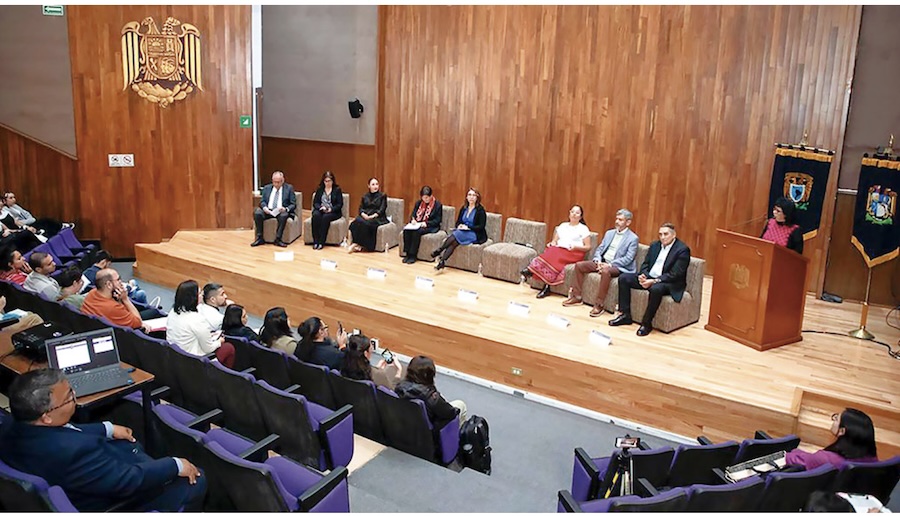
In presenting the “Culture of Peace: A University Seedbed” strategy, UNAM Rector Leonardo Lomelí Vanegas affirmed that this institution cannot remain neutral in the face of the growing escalation of violence, the resurgence of authoritarian views, religious extremism, nationalism, and xenophobia.

“Our mission is to foster critical thinking, generate alternatives, and sow hope. Peace must emerge both in the classroom and in families and communities, fostered in all daily practices and manifested in words that engage in dialogue rather than confrontation,” he asserted after signing the Agreement creating the University Program for a Culture of Peace and the Eradication of Violence.


Video of the conference

Accompanied by the Secretary of Public Education of the Government of Mexico, Mario Delgado Carrillo, and the 1992 Nobel Peace Prize winner, Rigoberta Menchú Tum, Lomelí Vanegas stated that today the University is taking a firm step with this strategy that aims to fundamentally change the frameworks of interaction and the processes through which we make decisions and promote a culture of peace, understood as justice, inclusion, mutual respect, sustainability, and cooperation.

“Violence is a culturally learned behavior, and as such, it can be eradicated. Peace is not its passive opposite, but part of the same process: it is chosen and practiced with awareness and commitment.” It also demands far-reaching cultural changes, political will, and the active involvement of public and private institutions and civil society,” he stated.

The rector explained that the University Program is structured around strategic axes such as training and teaching, applied research, university advocacy, strengthening protocols and encouraging community mediation in situations of violence; the promotion of peace through words, art, and cooperation; and the creation of networks with national and international actors working to build lasting peace.

The actions will be concrete, measurable, and have a direct impact: courses for new students, a specific assessment by campus, and a cross-cutting subject on Culture of Peace and Mediation starting next year, he added in the Auditorium on the ground floor of the Rector’s Building.

He also emphasized that peace in the future depends on what we are capable of imagining, building, and defending collectively today. UNAM has the strength, the capabilities, and the duty to become a hotbed of peace within and outside our borders. “Let us make it a space where justice, equality, solidarity, and plurality flourish even more. May this university initiative inspire us to make peace a concrete experience: not an unattainable horizon, but a way of educating through care and inhabiting, together, a dignified present.”

The rector expressed his concern about the situation prevailing in cities across the United States, particularly in Los Angeles, California, where migrant detentions have sparked protests. He indicated that it is very important that the actions taken by nations to regulate migratory flows be respectful of human rights and adhere to the international legal framework and that of each country.

He emphasized UNAM’s solidarity with migrants who are going through difficult times, condemned violence, regardless of its source, and indicated that the National University joins the President of the Republic’s call for peace and against any provocation.

(Continued in right column)

(Click here for the original version in Spanish.)

Question for this article:

Where is peace education taking place?

(Continued from left column)

Promoting values


​​In his speech, Mario Delgado celebrated the National University’s promotion of a culture of peace, which will necessarily be present in education. The new Mexican school project promotes respect for life, human dignity, equality, non-violence, the promotion of dialogue, and the pursuit of peaceful agreements in the classroom, the school environment, and the community.

In addition, it disseminates values ​​such as tolerance, respect for others, gender equality, non-discrimination, respect for diversity, the environment, and women.

In a video message, the Secretary of the Interior, Rosa Icela Rodríguez Velázquez, congratulated UNAM for the program, which will provide its community with the values ​​necessary to foster a culture of peace and proper conflict mediation.

“If we all contribute our grain of sand to the transformation of our beloved nation, we will achieve a better Mexico for our children, youth, and our next generations. Mexico is not condemned to war, but to peace,” she stated.

Likewise, the Secretary of Foreign Affairs, Juan Ramón de la Fuente, also in a video message, considered UNAM’s great success in promoting the program at this time, given that we are experiencing a critical global situation with 120 armed conflicts affecting more than 300 million people.

The global challenge, he noted, is enormous, and women’s participation in building and maintaining peace is fundamental, as there is compelling evidence that women are more effective at building and maintaining peace over time.

Nobel Prize winner Rigoberta Menchú Tum commented that education is the only alternative for building and guaranteeing a culture of peace. Therefore, she praised UNAM’s strategy to promote this culture, which includes the scientific community and the talent of our youth, so that they can grow in a plural, diverse world that is also challenging for human dignity.

“In UNAM’s history, education is fundamental to contributing to a humanity that yearns for peace as a common good, and above all, that emphasizes the need to create a leadership perspective capable of facilitating dialogue, mediation, and support,” she emphasized.

The director of the Norwegian Center for Conflict Resolution, Dag Nylander, emphasized his pride in participating in the National University’s initiative, which will serve to strengthen ties between his country and Mexico in the areas of peaceful conflict and dispute resolution and the facilitation of peace agreements.

He referred to the relevance of the strategy at a time when the world is experiencing one of the most conflict-ridden periods since the Cold War, and when it is necessary to strengthen the United Nations system and reinforce multilateralism. “We are fully committed to supporting initiatives that increase the chances of success of conflict resolution efforts and believe that interregional collaboration is key.”

UNAM’s Special Projects Coordinator, Néstor Martínez Cristo, presented the project: “Culture of Peace, a University Seedbed” which seeks to institutionalize the culture of peace and turn it into a cross-cutting axis in the university’s development policies.

It aspires to sow the seeds of a culture of peace among younger university students. The challenge is to build critical and empathetic citizenship. It also seeks to redefine the enormous work carried out daily at UNAM to prevent and address various forms of violence.

Also present at the presentation were the current president of the UNAM Governing Board, Elena Centeno García; the president of the Board of Trustees, Mario Luis Fuentes Alcalá; the former rectors of UNAM, José Sarukhán Kermez, José Narro Robles, and Enrique Graue Wiechers; as well as the head of the Office of the Secretary of Foreign Affairs, Roberto de León Huerta; and the UNESCO representative in Mexico, Andrés Morales. among other personalities from civil society organizations, universities and institutions working to promote a culture of peace.

– – – – – –

If you wish to make a comment on this article, you may write to coordinator@cpnn-world.org with the title “Comment on (name of article)” and we will put your comment on line. Because of the flood of spam, we have discontinued the direct application of comments.
Uruguay: The 5th World Forum of Cities and Territories of Peace

. . DEMOCRATIC PARTICIPATION . .

An article from City of Montevideo (translated by CPNN)

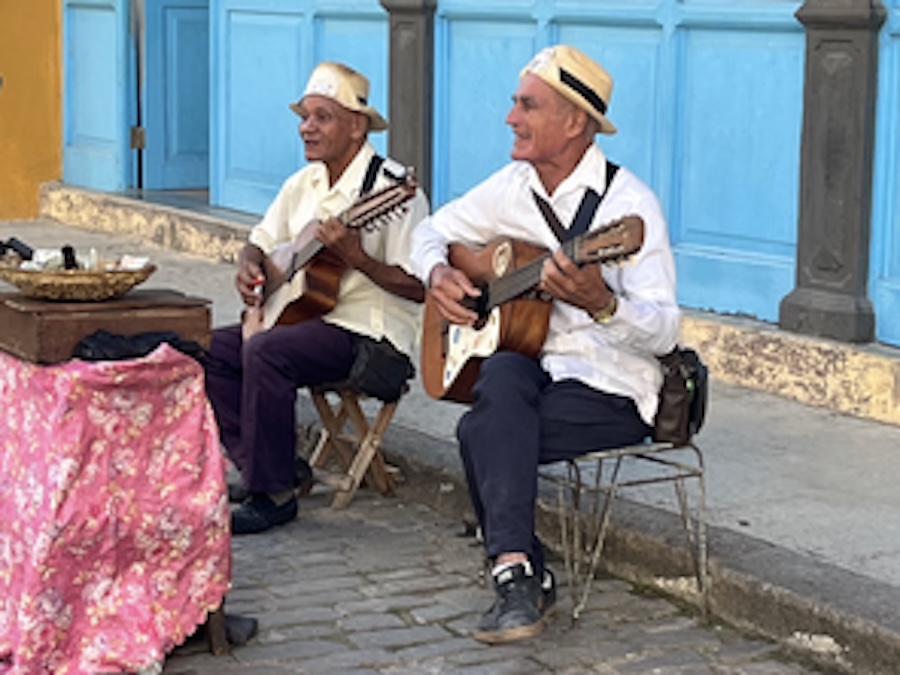
The 5th World Forum of Cities and Territories of Peace: the opening plenary session, which took place at 5:00 p.m. in the West Room of the Antel Arena, featured the participation of the Mayor of Montevideo, Mauricio Zunino, along with the Director of the International Relations Division, Fabiana Goyeneche; the President of UCLG and Mayor of The Hague, Jan Van Zanen; as well as the Undersecretary of the Ministry of Foreign Affairs, Valeria Csukasi; and the Vice President of the Republic, Carolina Cosse, as representatives of the national government. Zunino highlighted the importance of cities and their governance in helping to resolve different types of conflict and urban coexistence, and emphasized inequality as one of the most important factors that generate violence in the world.

The mayor of Montevideo emphasized that these types of broad-based participation events contribute to reflecting on how conflicts are resolved and “other types of violence such as xenophobia, discrimination, gender-based violence, and other ills that exist in cities.”

In the face of these types of situations, city governments can implement a set of actions that integrate processes of reflection, cooperation, and the exchange of good practices. The awarding of the Peace Prize to those cities that have worked and provide adequate solutions to these needs helps to encourage societal transformations.

(article continued in right column)

(Click here for the original Spanish version of this article.)

Question related to this article:
 
How can culture of peace be developed at the municipal level?

(article continued from left column)

Zunino also highlighted the participation of 180 foreign representatives from all continents, which provides an important framework due to the quality and experience of the presentations, in addition to the local contribution. She also highlighted the opportunity to interact with multilateral agencies that take advantage of the meeting to network and coordinate with governments, as well as with civil society organizations that are also participating in the event.

The opening session concluded with a speech by the Vice President of the Eastern Republic of Uruguay, who especially thanked those participating and highlighted the importance of the forum for Montevideo and the country.

In her address, Cosse referred to uncertainty as a fact of current reality but, based on her scientific training, reflected that in scientific work, “uncertainty is the cornerstone of the problem; it’s not a bad thing. You don’t know the solution and you don’t know what it’s about, so uncertainty is normal.” She recalled that uncertainty can “respond to an innovative surge, to an urgent need,” and becomes complex when it doesn’t respond to those needs. In this sense, Cosse asserted that in the face of uncertainty, there are also agreements, such as democracy, “that great social agreement” that provides a framework for resolving conflicts and is “one of the minimum certainties that human beings need.”

Cosse concluded by stating that, just as the truth lies locally, on street corners, in neighborhoods, “there too are the problems, but there too is hope, always, always, no matter how big the problem, if there is hope, it will emerge from there.” She expressed her pride in being part of a government that publicly recognizes the importance of multilateralism and the importance of cities.

The World Forum of Cities and Territories of Peace is one of the two activities taking place within the framework of Montevideo, Destination for Peace: an event that brings together training, exchange, and exhibition, cultural and entertainment opportunities.

Access the thematic axes and activities of the 5th World Forum of Cities and Territories of Peace.

– – – –

If you wish to make a comment on this article, you may write to coordinator@cpnn-world.org with the title “Comment on (name of article)” and we will put your comment on line. Because of the flood of spam, we have discontinued the direct application of comments.
Brazil hosts first BRICS Sherpas meeting with expanded membership

. . SUSTAINABLE DEVELOPMENT . .

An article from bne Intellinews

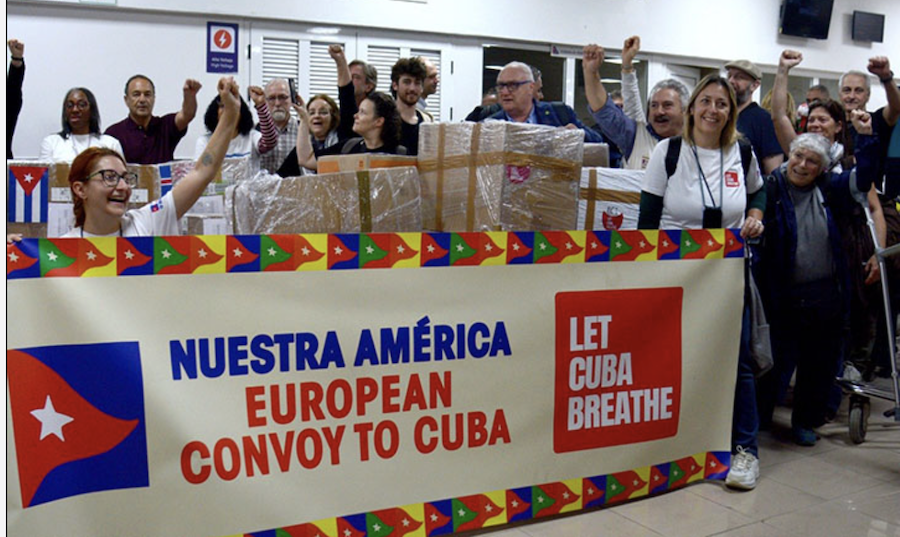
Brasilia hosted the first BRICS Sherpas meeting under the Brazilian Presidency on February 24-25, bringing together representatives from all 11 member countries at the Itamaraty Palace, the Foreign Ministry headquarters.

The event, which laid the groundwork for the bloc’s summit taking place in Rio de Janeiro on July 6-7, marked the beginning of an ambitious agenda focused on strengthening multilateralism, promoting cooperation among Global South countries, and reforming international governance structures to better reflect the needs and aspirations of developing nations.


(click on image to enlarge)

Brazil’s Foreign Affairs Minister Mauro Vieira delivered an opening speech underscoring the bloc’s relevance during a period of profound global transformations.

“It is a great honour to welcome you to this inaugural meeting of the Brazilian BRICS Presidency. We are gathered in a crucial moment — of profound transformations, in which the principles of multilateralism and cooperation are being tested by crises that demand urgent and collective action,” Vieira stated.

In his address, Vieira affirmed that the response to the crisis of multilateralism “is more multilateralism, stronger and more inclusive in all spheres” and noted that the international order is undergoing radical changes while existing institutions struggle to adapt, even as emerging economies demand greater participation in global decisions.

“In this evolving scenario, BRICS plays a fundamental role in promoting a more just, inclusive and sustainable world order. A multipolar world is not only an emerging reality, but a shared objective,” he said.

(Article continued in the right column)

Question for this article:

What is the contribution of BRICS to sustainable development?

(Article continued from the left column)

This is the first meeting since last year’s major BRICS expansion to include Saudi Arabia, Egypt, the UAE, Ethiopia, Iran, and Indonesia, alongside original members Brazil, Russia, India, China and South Africa.

The Brazilian presidency will prioritise cooperation with the Global South and an agenda focusing on social, economic and environmental development, with emphasis on six key areas: health, trade, climate change, artificial intelligence, reform of the multilateral security system, and institutional strengthening of the bloc.

Ambassador Celso Amorim, serving as Head Adviser to President Luiz Inácio Lula da Silva, outlined his perspective on the bloc’s significance during a recent interview with BRICS Brasil’s press team. The veteran diplomat, drawing on his extensive experience as foreign minister across multiple administrations, presented BRICS as a platform for developing nations to coordinate their efforts “on energy, on the monetary field, and even on the field of peace and security.”

Countering claims of anti-Western bias, Amorim was forthright: “How can anyone say that Brazil is against the West when we have just concluded an agreement with the European Union [Mercosur-EU deal]? There is no point. Being subordinated to a particular leading country, we don’t want that.”

The Sherpas meeting’s second day included a special session with President Lula, who delivered an upbeat speech about the bloc’s outlook.

“I am convinced that BRICS will continue to be a driver of positive change for our nations and the world. Acting in a coordinated manner for the success of the South African presidency of the G20 and the Brazilian presidency of COP30 is defending the shared future of this planet,” said Lula.

The Brazilian leader also called for collective efforts to promote peace and a multilateral security system, warning that “unilateralism undermines the international order” and that negotiating “on the basis of power” leads to instability and conflict.

“We will have an intense presidency, which will lead us to a beautiful Summit of Heads of State and Government, in Rio. We must live up to the chosen motto: strengthening Global South cooperation and reforming international governance structures.”

Touching on an issue that resonates with many members, Lula has welcomed BRICS nations’ efforts to expand local currency payment options to reduce economic vulnerabilities. In this regard, he argued that rising protectionism necessitates greater economic integration. The renewed push comes amid threats from US President Donald Trump of 100% tariffs on the bloc’s nations “if they want to play with the mighty dollar.”

While Lula previously floated plans for a full-fledged common BRICS currency, he now advocates for expanding existing bilateral payment mechanisms, shelving the idea of ditching the dollar entirely – as confirmed by various diplomats who said a shared currency is not currently on the agenda. This puts Brazil at odds with other members such as Iran and Russia, which feel a bigger pressure to dedollarise their economy due to wide-reaching sanctions imposed on them by Western countries.

– – – – – –

If you wish to make a comment on this article, you may write to coordinator@cpnn-world.org with the title “Comment on (name of article)” and we will put your comment on line. Because of the flood of spam, we have discontinued the direct application of comments.
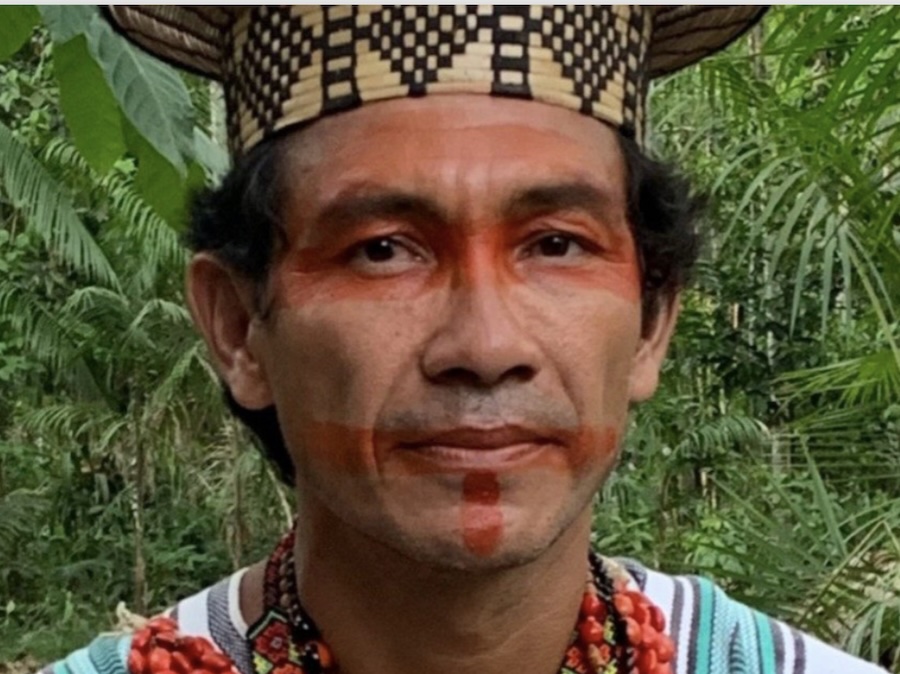
International Women’s Day: Latin America

. WOMEN’S EQUALITY . .

A press survey by CPNN

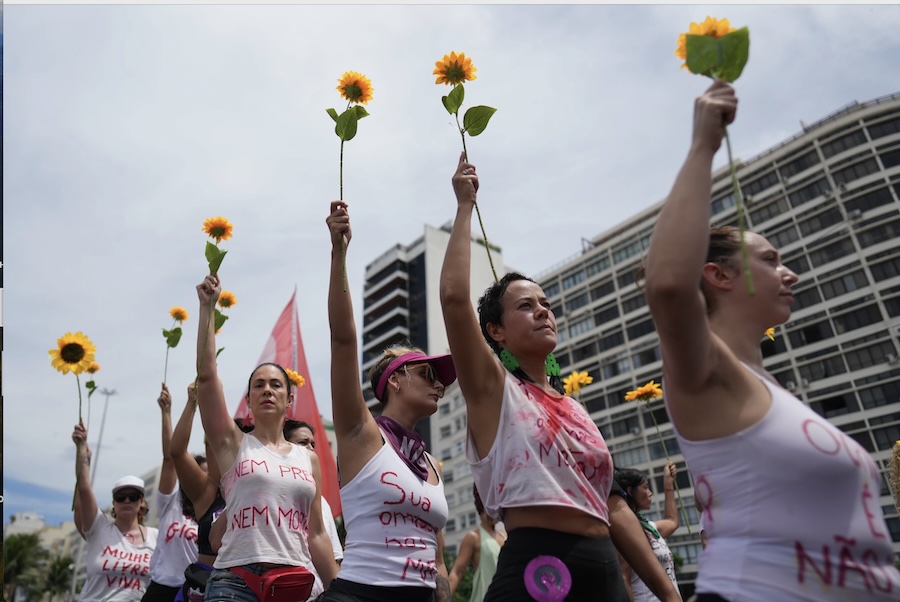
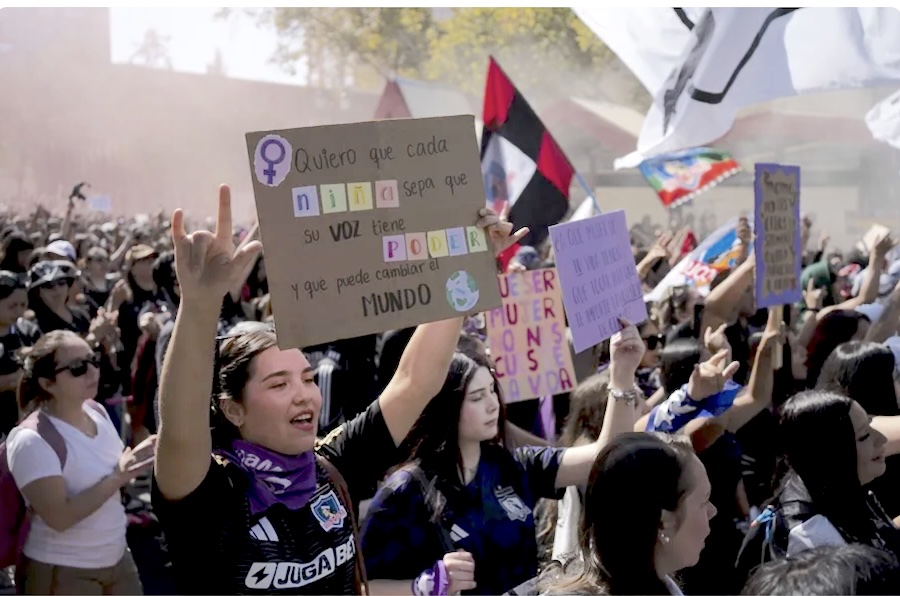
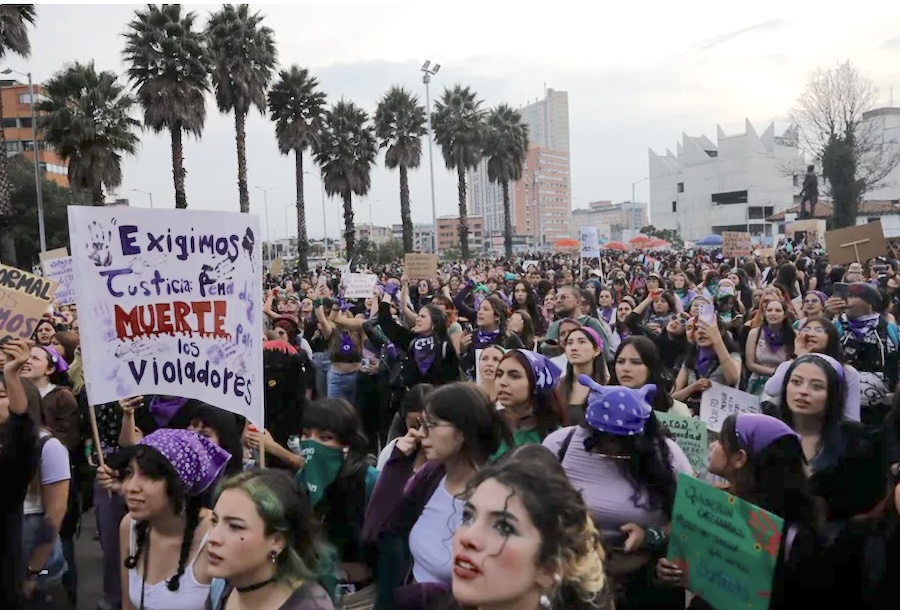
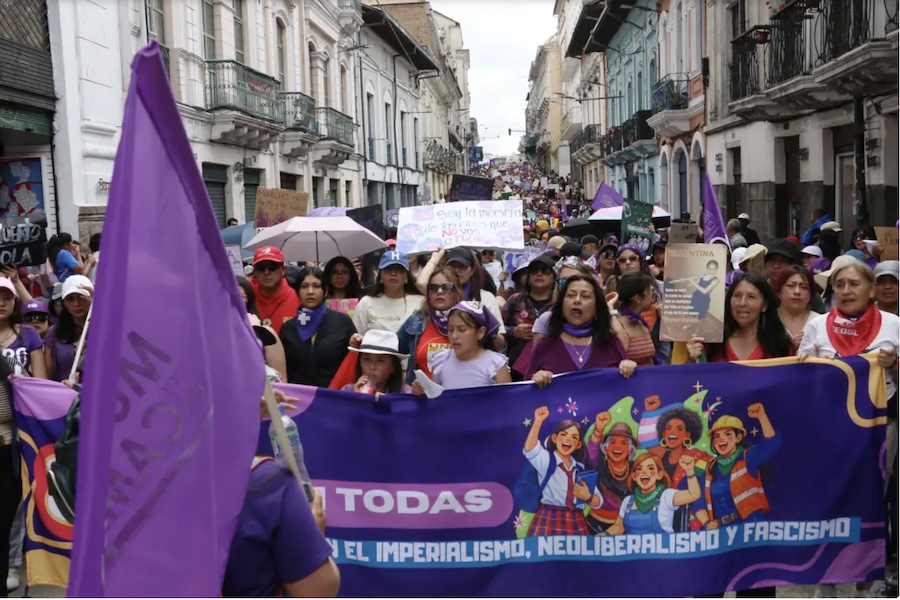
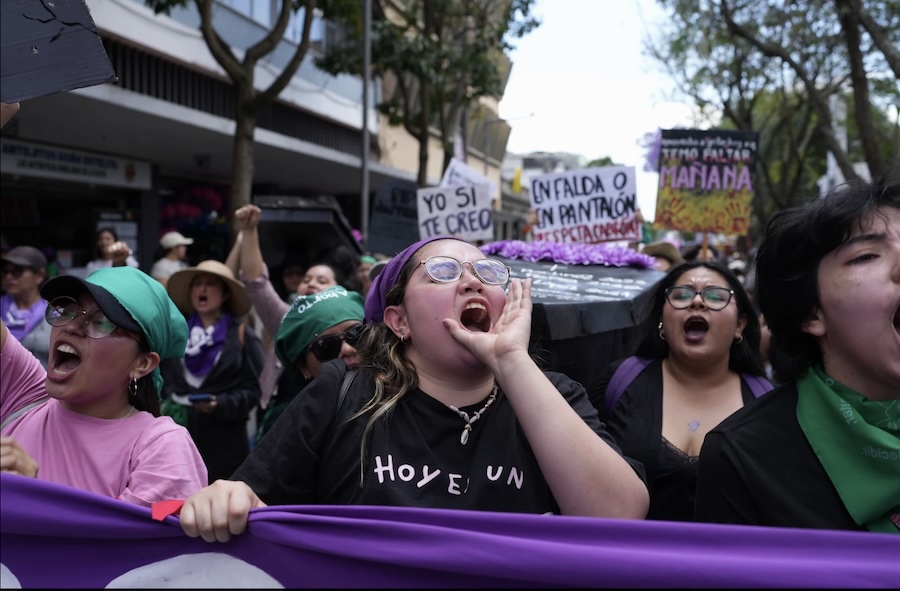
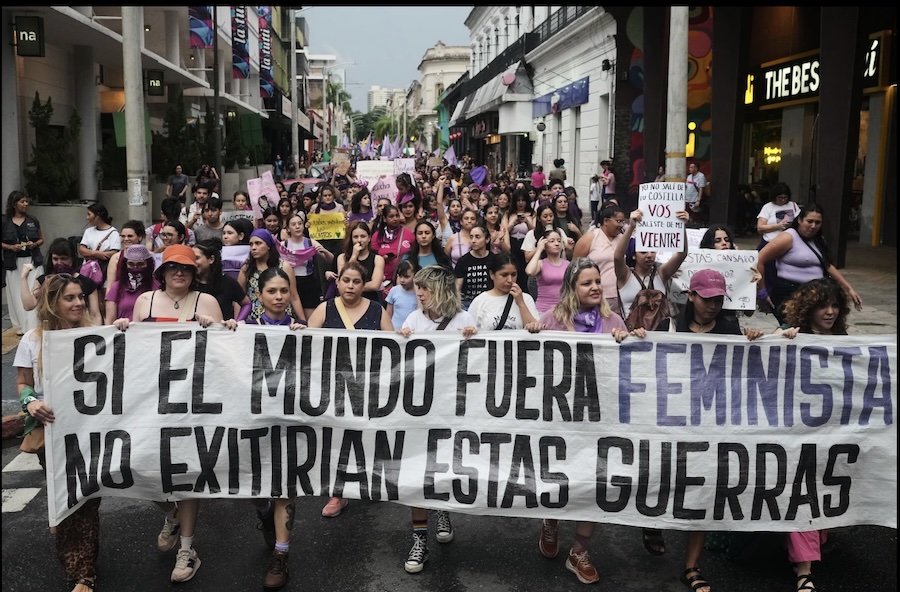
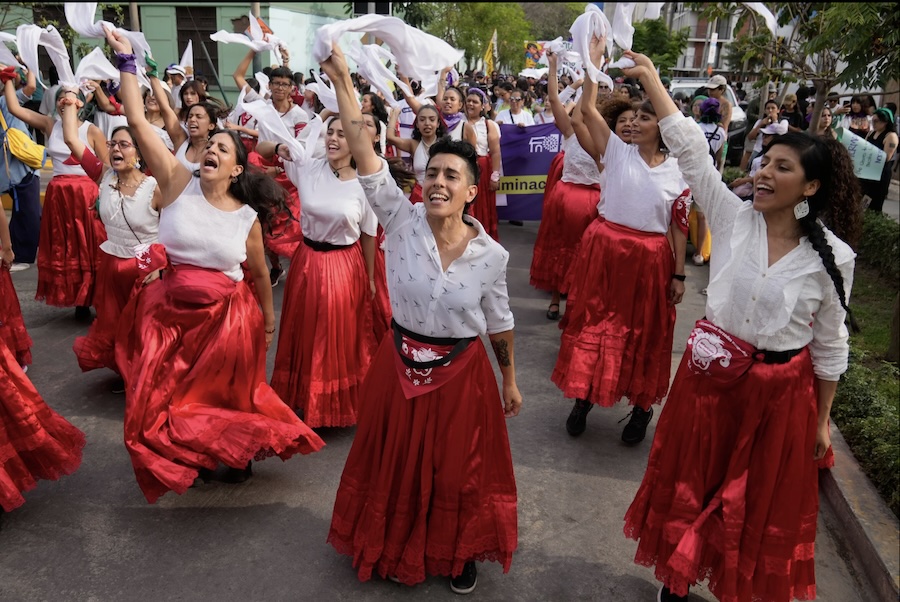
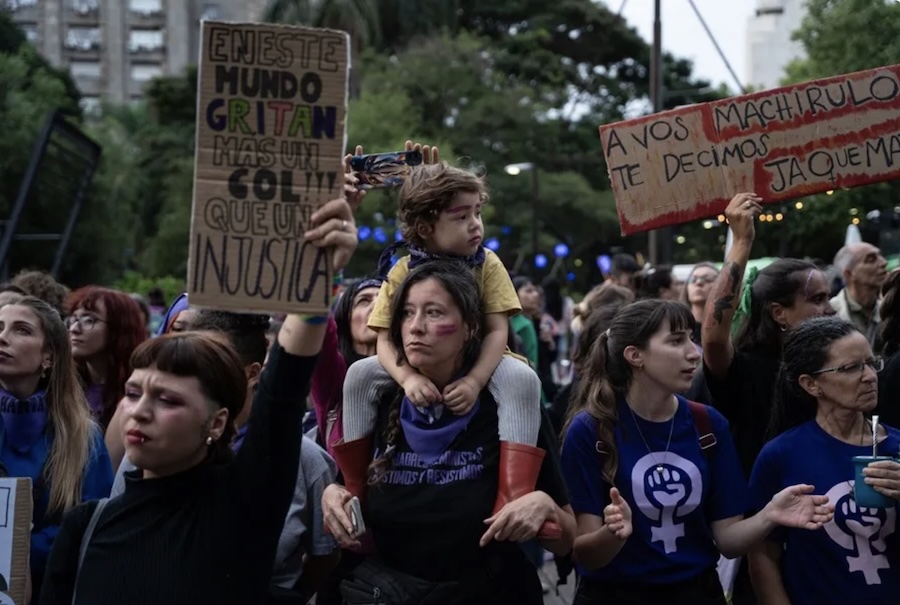
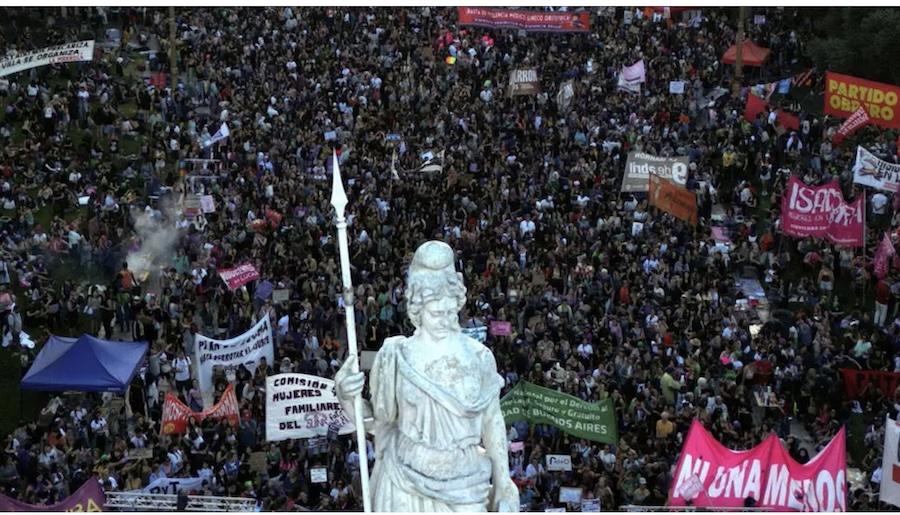
Here are the photos from Latin America, March 8, 2025.

ARGENTINA, BUENOS AIRES

“Contra el fascismo, el racismo, el patriarcado y el capitalismo”, en repudio a las políticas del Gobierno de Javier Milei. After 6 p.m., the mobilization reached its peak, a dense crowd filled Avenida de Mayo up to the Casa Rosada. Photo: Francisco Loureiro
(Clarín)

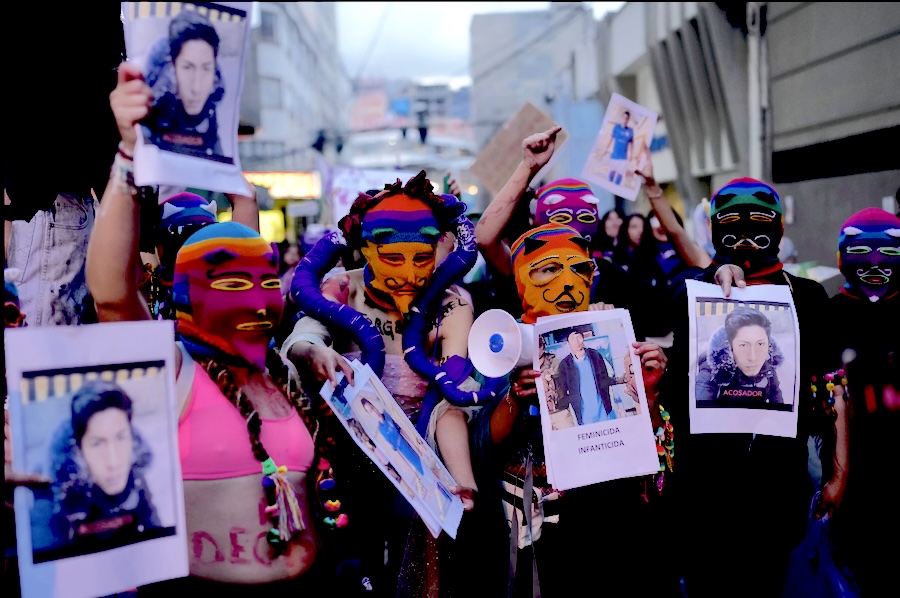
BOLIVIA, LA PAZ

A women shouts slogans during a march to mark International Women’s Day, in La Paz, Bolivia, Friday, March 7, 2025. (AP Photo/Juan Karita)
One of the most chanted slogans was: “What’s the big deal? They kill us and rape us and the state does nothing,” which grew louder as the march passed by the headquarters of the courts and prosecutors in La Paz. (Agencia EFE)

BRAZIL, BRASILIA

March for International Women’s Day in Brasilia — The event highlights issues such as feminicide, racism, improving public policies for women, food insecurity and defending democracy. Foto: Gabriel Buosi/TV Globo
(O Globo)

BRAZIL, SAO PAULO

Indigenous woman Bekoy Tupinamba participates in a march to mark International Women’s Day in Sao Paulo, Brazil, March 8. REUTERS/Amanda Perobelli (Reuters)

CHILE, ARICA

“Health Without Violence”(Pudhuel)

CHILE, ATOFOGASTA

“I will be the lawyer who will defend them.”(Pudhuel)

CHILE, BÍO BÍO

(Pudhuel)

CHILE, SANTIAGO

A woman waves a flare during a march marking International Women’s Day in Santiago, Chile, Saturday, March 8I, 2025 (AP Photo/Estaban Felix)
(Associated Press News)

Question related to this article:
 
Prospects for progress in women’s equality, what are the short and long term prospects?

CHILE, VALPARAISO

“IN THE FACE OF SETBACKS, WE EXIST AND WE RESIST!”(Pudhuel)

COLOMBIA, BOGOTA

A demonstrator sits on the statue of Luis Carlos Galan during a protest to mark International Women’s Day in Bogota, Colombia. REUTERS/Luisa Gonzalez
(Reuters)

ECUADOR, QUITO

“The world needs women at every decision-making table.” International Women’s Day in Quito (Ecuador) EFE/ José Jácome
(RTVE – Radio y Televisión Española)

MEXICO, GUADALAJARA

in Bogota, Colombia. REUTERS/Luisa Gonzalez
(Reuters)

MEXICO, MEXICO CITY

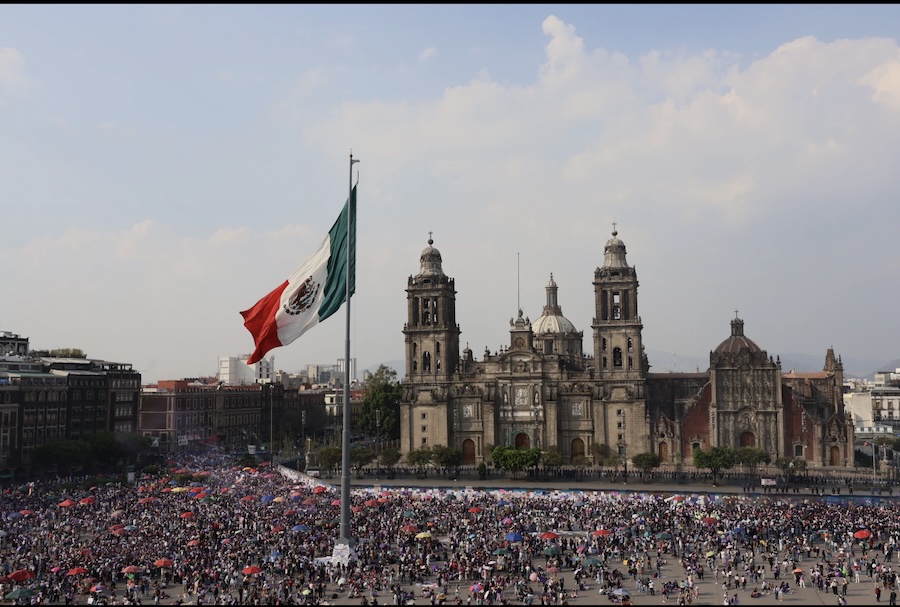
Once again, Mexico City turned purple . Its most iconic streets and monuments welcomed the International Women’s Day march on March 8. Feminist groups, collectives, mothers, daughters, girls, friends, and allies gathered once again to demand gender equality and justice for gender-based violence in our country . The government of Mexico City has reported the attendance of 200,000 protesters this year. (Vogue)

MEXICO, PACHUCA

Women from various feminist groups protest in the Mexican city of Pachuca (EFE/David Martínez Pelcastre)
(Infobae)

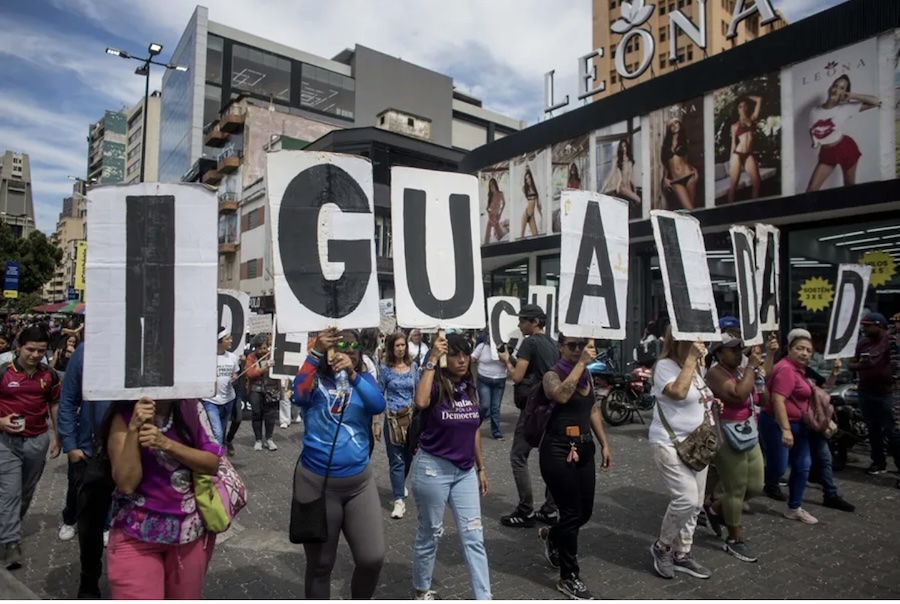
VENEZUELA


Venezuelan women marching to demand better wages and protection from violence (REUTERS). (Infobae)

Colombia: PazRock, an initiative of the Ministry of Cultures for the culture of peace through music

… EDUCATION FOR PEACE …

An article from the Ministry of Cultures of Colombia (translation by CPNN)

This year the Ministry of Cultures, Arts and Knowledge, through the Culture of Peace Strategy, has addressed the violence associated with conflict and inequality by promoting cultural rights.

One of the actions was the development of the PazRock initiative, traveling concerts that brought a message of reflection through music to Bogotá, Pereira and Duitama.


Photo: Lina Rozo.

“PazRock closes with a very positive balance. First was the one in Plaza de Bolívar, in Bogotá, which brought together more than 40 thousand people. The three concerts featured great artists, with great collective work around this space for reflection through the arts,” said Gina Jaimes, advisor to Minculturas.

(Article continued in right column)

(Click here for the Spanish version of this article)


Question related to this article:

What place does music have in the peace movement?

What is happening in Colombia, Is peace possible?

(Article continued from left column)

This year concerts were held in Bogotá, Pereira and Duitama. They featured the participation of artists such as Plu con Pla, La Muchacha, Gillman, Panteón Rococó, La Pestilencia, 1280 Almas, Aterciopelados, among others.

Following the first concert in Bogotá, the International Promotions Festival (FIP) of Buenos Aires, Argentina, awarded the PazRock concept the gold prize in the category ‘Best municipal event or government actions’.

This international competition rewards creativity in Promotions, Events, Marketing Innovation and New Communication Technologies worldwide. In this edition, PazRock competed with other success stories from Spain, Mexico, the United States and Brazil.

“It is very gratifying and satisfying “I am very grateful to know that projects like this one cross borders and achieve very important effects in Latin America and, especially, among young people in Colombia. I think it is very important for the country, very important for public shows,” added Gonzalo Villalón, director of Villalón Entertainment, the production company of PazRock.

More than a recognition of the event, this award highlights the importance of continuing to generate spaces for the exchange of arts to contribute to social transformation and as a contribution to the construction of a culture of peace in our country.

– – – – – –

If you wish to make a comment on this article, you may write to coordinator@cpnn-world.org with the title “Comment on (name of article)” and we will put your comment on line. Because of the flood of spam, we have discontinued the direct application of comments.
Mexico: Jalisco SPPC launches training in Culture of Peace for the reconstruction of the social fabric

… EDUCATION FOR PEACE …

An article from the Gobierno del Estado de Jalisco (translation by CPNN)

The Government of Jalisco through the Secretariat of Planning and Citizen Participation (SPPC), has began the training process in Culture of Peace for the reconstruction of the social fabric, in order to promote communities of care in the municipalities of the State.

The strategy “Reconstruction of the Social Fabric” is promoted in coordination with the Secretariat of the Social Assistance System. It involves the improvement of the immediate urban environments of people and their families.

The officials launching the project included the Secretary of Planning and Citizen Participation, Margarita Sierra Díaz de Rivera, and María del Carmen Bayardo Solórzano, Director of Strategic Projects, representing the Secretary of the Social Assistance System. They presented the program’s guidelines and its relevance to the State Government’s peace-building strategy. Alberto Esquer Gutiérrez also participated in this event.

(Article continued in right column)

(click here for the original version in Spanish).

Questions for this article:

Is there progress towards a culture of peace in Mexico?

(Article continued from left column)

The project is included, through various levels of intervention, to the cross-cutting theme indicated in the State Plan for Governance and Development (PEGD) and to the strategic themes of the State Program for a Culture of Peace.

The Secretariat for Planning and Citizen Participation is the governing body in charge of mainstreaming the Culture of Peace in the State of Jalisco and is responsible for coordinating the actions issued by the executive branch in matters of culture of peace, as well as mainstreaming, supervising, evaluating and proposing strategies to progressively integrate the peace approach in the different areas of government.

The head of the SPPC, Margarita Sierra, said that: “Everything we do is in terms of governance and with a focus on peace. We have to give meaning to government programs to respond to the need of citizens to live in peace in all their spaces.”

Among the institutional challenges that were raised are: training in the culture of peace; inter-institutional linkage and coordination, and the construction with citizens of an agenda to address territorial needs. To learn more about the culture of peace and governance, please access: participa.jalisco.gob.mx/participacion-ciudadana.

– – – – – –

If you wish to make a comment on this article, you may write to coordinator@cpnn-world.org with the title “Comment on (name of article)” and we will put your comment on line. Because of the flood of spam, we have discontinued the direct application of comments.
Colombia: Cúcuta Mayor’s Office Successfully Concludes Workshops on Historical Memory and Culture of Peace

.. DEMOCRATIC PARTICIPATION ..

An article from the Alcaldía de San José de Cúcuta (translation by CPNN)

The Secretariat for Post-Conflict and Culture of Peace has carried out workshops on historical memory, culture of peace and human rights. The project, carried out at the facilities of the Regional Center for Attention to Victims, concludes the measure “Action on historical memory, promotion of the culture of peace and promotion of human rights”, of the Return and Relocation Plans of the communities of Ciudad Rodeo and San Fernando del Rodeo, in the municipality of San José de Cúcuta.

(Article continued in right column)

(click here for the original version in Spanish).

Questions for this article:

What is happening in Colombia, Is peace possible?

(Article continued from left column)

During these meetings, the community became familiar with the basic concepts of historical memory and culture of peace, and deepened their knowledge of human rights. Through timelines, phrases and drawings, they described their surroundings, told their life stories, talked about their neighborhood and projected their aspirations for the future. Through various symbolic acts, they shared their experiences, promoting the recognition of the truth and contributing to their emotional and psychological repair, which helped heal the wounds of the past and strengthen the reconstruction of the social fabric.

The culture of peace workshops created spaces for young people from the municipality, promoting integration and the exchange of experiences. These activities facilitated the improvement of peace practices, using Hip Hop culture as an educational and transformative tool to face challenges, promote values ​​of peace and respect for human rights.

Through various dynamics, the youth sought to promote mutual respect, coexistence, understanding and social transformation through the arts.

Finally, it is important to highlight that all these workshops
contributed significantly to the process of reparation and reconciliation of the victims of the armed conflict, initiating a process of healing and rebuilding relationships based on respect, non-violence and peaceful coexistence; thus contributing to the construction of a more just, stable and harmonious society.
– – – – – –

If you wish to make a comment on this article, you may write to coordinator@cpnn-world.org with the title “Comment on (name of article)” and we will put your comment on line. Because of the flood of spam, we have discontinued the direct application of comments.