All posts by CPNN Coordinator

About CPNN Coordinator

Dr David Adams is the coordinator of the Culture of Peace News Network. He retired in 2001 from UNESCO where he was the Director of the Unit for the International Year for the Culture of Peace, proclaimed for the Year 2000 by the United Nations General Assembly.

Amnistía Internacional : Un año demoledor

. . . . . DERECHOS HUMANOS . . . . .

un articulo de Salil Shetty, secretario general de Amnistía Internacional (abreviado)

Como se refleja en nuestro informe anual, 2014 ha sido un año demoledor para quienes intentaron defender los derechos humanos y quienes quedaron atrapados en el sufrimiento de las zonas en guerra.
amnesty-spanish
Haga clic en la foto para ampliarla

A los gobiernos se les llena la boca hablando de la importancia de proteger a la población civil. Y, sin embargo, los políticos del mundo han fracasado lamentablemente a la hora de proteger a las personas que más lo necesitan. Amnistía Internacional considera que se puede y se debe cambiar esto de una vez por todas.

El derecho internacional humanitario, que regula la conducta de las partes en los conflictos armados, no puede ser más claro al respecto. Los ataques no deben dirigirse nunca contra civiles. El principio de distinción entre civiles y combatientes es una salvaguardia fundamental para las personas atrapadas en los horrores de la guerra.

Sin embargo, una vez más, la población civil volvió a llevarse la peor parte del conflicto. En el año en que se conmemora el vigésimo aniversario del genocidio de Ruanda, los políticos pisotearon reiteradamente las normas que protegen a los civiles o miraron hacia otro lado ante quienes infringían estas normas con consecuencias letales. . .

En 2014 se cumplieron 30 años de la adopción de la Convención de la ONU contra la Tortura, otra convención en favor de la cual Amnistía Internacional hizo campaña durante muchos años, y uno de los motivos por los que en 1977 la organización recibió el premio Nobel de la Paz.

Este aniversario fue, por un lado, algo que celebrar, pero fue también una ocasión para señalar que la tortura sigue estando muy extendida en todo el mundo, motivo por el cual Amnistía Internacional lanzó este año su campaña mundial Stop Tortura.

Este mensaje contra la tortura adquirió especial resonancia tras la publicación en diciembre de un informe del Senado de Estados Unidos que demostraba que, durante los años posteriores a los atentados del 11 de septiembre de 2001 contra el país, existió una disposición a justificar la tortura. Asombrosamente, algunas de las personas responsables de los actos criminales de tortura aún parecían seguir creyendo que no tenían nada de qué avergonzarse.

Desde Washington a Damasco y desde Abuja a Colombo, los líderes gubernamentales han justificado terribles violaciones de derechos humanos arguyendo la necesidad de mantener la “seguridad” en el país. En realidad, ocurre lo contrario. Esas violaciones de derechos humanos son un motivo importante por el que hoy en día vivimos en un mundo tan peligroso. Sin derechos humanos no puede haber seguridad.

Hemos visto una y otra vez que, aun en épocas que parecen funestas para los derechos humanos —y quizá especialmente en esas épocas—, es posible generar un cambio extraordinario.

Debemos esperar que, cuando en años venideros miremos hacia 2014, lo que hemos vivido este año se considere un nadir —el punto más bajo alcanzable— a partir del cual nos hayamos alzado y creado un futuro mejor.

( Clickear aquí para la version inglês y aquí para la version francês )

Pregunta(s) relacionada(s) al artículo

What is the state of human rights in the world today?

Comentario más reciente: :

Each year we get overviews of the state of human rights in the world from Amnesty International and Human Rights Watch.
Amnesty International: A Devastating Year

… HUMAN RIGHTS …

an article by Salil Shetty, Secretary General at Amnesty International (abridged)

Video: Amnesty: A devastating year for human rights

[As we have shown in our Annual Report,] this has been a devastating year for those seeking to stand up for human rights and for those caught up in the suffering of war zones.

Governments pay lip service to the importance of protecting civilians. And yet the world’s politicians have miserably failed to protect those in greatest need. Amnesty International believes that this can and must finally change.

International humanitarian law – the law that governs the conduct of armed conflict – could not be clearer. Attacks must never be directed against civilians. The principle of distinguishing between civilians and combatants is a fundamental safeguard for people caught up in the horrors of war.

And yet, time and again, civilians bore the brunt in conflict. In the year marking the 20th anniversary of the Rwandan genocide, politicians repeatedly trampled on the rules protecting civilians – or looked away from the deadly violations of these rules committed by others. . . .

2014 marked 30 years since the adoption of the UN Convention against Torture – another Convention for which Amnesty International campaigned for many years, and one reason why the organization was awarded the Nobel Peace Prize in 1977.

This anniversary was in one respect a moment to celebrate – but also a moment to note that torture remains rife around the world, a reason why Amnesty International launched its global Stop Torture campaign this year.

This anti-torture message gained special resonance following the publication of a US Senate report in December, which demonstrated a readiness to condone torture in the years after the 11 September 2001 attacks on the USA. It was striking that some of those responsible for the criminal acts of torture seemed still to believe that they had nothing to be ashamed of.

From Washington to Damascus, from Abuja to Colombo, government leaders have justified horrific human rights violations by talking of the need to keep the country “safe”. In reality, the opposite is the case. Such violations are one important reason why we live in such a dangerous world today. There can be no security without human rights.

We have repeatedly seen that, even at times that seem bleak for human rights – and perhaps especially at such times – it is possible to create remarkable change.

We must hope that, looking backward to 2014 in the years to come, what we lived through in 2014 will be seen as a nadir – an ultimate low point – from which we rose up and created a better future.

(Click here for a Spanish version of this article or here for a French version.)

Question(s) related to this article:


What is the state of human rights in the world today?,

Latest reader comment:

Each year we get overviews of the state of human rights in the world from Amnesty International and Human Rights Watch.

Boletín español, el 01 de marzo 2015

 LA PAZ POR EL TOURISMO  

En su discurso de apertura en el Simposio sobre la Paz a través del Turismo en Johannesburgo, Sudáfrica, el Secretario General de la Organización Mundial del Turismo (OMT) de las Naciones Unidas, Taleb Rifai, enumeró tres maneras en que el turismo puede promover la paz

“1. El turismo genera respeto y la comprensión mutua y promueve billones de encuentros que son pasos hacia la comprensión. Turismo promueve educación, puede ser sensible a la paz y hace viajeros ciudadanos del mundo.

‘2. Turismo crea muchos puestos de trabajo. Eso puede ayudar que las comunidades valoren su lugar en el mundo y lo que tienen que ofrecer. Puede ayudar a la gente valorar su música, el arte, la gastronomía, etc.

“3. Turismo lleva a la reconciliación entre las sociedades. Puede abrir las mentes de las personas a otros visitantes.”

En los tres días siguientes, del 17 al 19 de febrero, los oradores ilustran cómo estos temas se manifiestan en la práctica.

Encuentros que contribuyen a la comprensión son organizados por Tour2.0 en las ciudades de Sudáfrica de Soweto y Alexandra, según lo descrito por Daniel Adidwa. Como él dice, “Cada comunidad tiene una historia única para contar. Permitimos al visitante descubrir sus particularidades.”

La creación de empleo fue enfatizado por David Scowsill, director general del Consejo Mundial de Viajes y Turismo. Turismo “emplea a más de 12 millones de personas en Europa y 63 millones en Asia y 8 millones en África… Crece 1% más rápido que el resto de la economía mundial cada año.”

La reconciliación es promovida por parques de la paz transfronterizos en el sur de África, como se describió en la conferencia por Paul Bewsher. Aunque la atención se centra principalmente en la protección del patrimonio natural, también hay ejemplos de iniciativas culturales transfronterizas como Ae Hai Kalahari Heritage Park, que está gestionado en parte por representantes de la comunidad ‡ khomani san y Mier que fueron separados previamente por las fronteras coloniales.

El Instituto Internacional para la Paz a través del Turismo, y su presidente Lou D’Amore, han iniciado el simposio, como se informó anteriormente en CPNN. El Instituto ahora se está expandiendo, había una gran delegación, incluyendo 14 jóvenes de la nueva IIPT India. Ellos dijeron a CPNN que: “Para nosotros, en el pasado, el turismo era simplemente para descubrir nuevos lugares, pero ahora nos damos cuenta de que esto puede ser la oportunidad de conocer gente nueva y para promover la paz.”

Otra reunión de alto nivel se llevó a cabo en Camboya hace dos semanas con objetivos muy similares. La conferencia, dirigida por la Organización Mundial del Turismo (OMT) de las Naciones Unidas y la Organización de las Naciones Unidas para la Educación, la Ciencia y la Cultura (UNESCO), aborda la cuestión de cómo aprovechar el poder de turismo y cultura para reducir la pobreza, crear empleos, proteger el patrimonio natural y cultural y promover el entendimiento internacional.

      
DERECHOS HUMANOS

lgbt
La Caribbean Union of Teachers promueve los derechos LGBT

IGUALDAD ENTRE MUJERES Y HOMBRES


Esther Abimiku Ibanga to receive the Niwano Peace Prize

DESARME & SEGURIDAD


33 Latin American and Caribbean states call for negotiations on a nuclear ban treaty
355

DESARROLLO SOSTENIBLE


Peace Through Tourism by Taleb Rifai, Secretary General of UNWTO

LIBERTAD DE INFORMACIÓN


NetGain: Let’s Work Together to Improve the Internet

PARTICIPACIÓN DEMOCRATICA


México: Ley de Justicia Alternativa debe estar aprobada antes de agosto

TOLERANCIA & SOLIDARIDAD


República Dominicana: Procuraduría y Fundación Justicia y Transparencia coordinan promover cultura de paz

EDUCACIÓN PARA LA PAZ


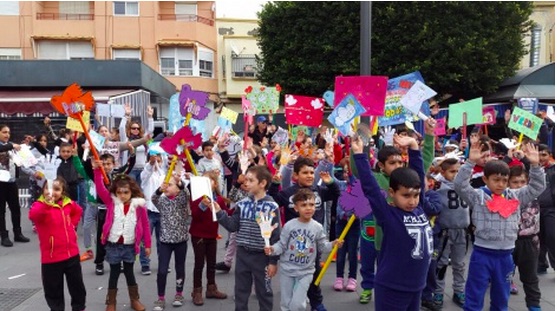
Más de 100.000 escolares participan en la red de centros ‘Escuela: Espacio de Paz’ en Almería, España

Bulletin français 1 mars 2015

LA PAIX A TRAVERS LE TOURISME

Dans son discours d’ouverture du Symposium sur le sujet de la paix à travers le tourisme, qui s’est déroulé à Johannesburg en Afrique du Sud, le Secrétaire général de l’Organisation mondiale du tourisme des Nations Unies, Taleb Rifai, a énuméré trois moyens par lesquels le tourisme peut promouvoir la paix

“1. Le tourisme favorise le respect et la compréhension mutuels. Il provoque des millards des rencontres ce qui constitue de réelles étapes vers une meilleure compréhension. Le tourisme construit notre éducation, il peut sensibiliser à la paix et rendre les voyageurs citoyens du monde.”

“2. Le tourisme améliore les moyens de subsistance et crée de nombreux emplois. Il peut aider les communautés en valorisant leur place dans le monde et ce qu’elles ont à offrir, en faisant découvrir leur musique, leur art, leur gastronomie, etc.”

“3. Le tourisme mène à la réconciliation au coeur des sociétés et entre elles. Il peut ouvrir l’esprit des gens à d’autres visiteurs.”

Sur les trois jours qui ont suivi l’ouverture du Symposium, du 17 au 19 février, les intervenants ont illustré comment ces thèmes s’appliquent dans la pratique.

Des rencontres qui contribuent à la compréhension sont organisées par l’organisation ‘Tour2.0’ dans les townships sud-africains de Soweto et Alexandra. Daniel Adidwa l’explique très bien : “Chaque communauté a une histoire unique à raconter. Nous permettons au visiteur de découvrir leurs particularités.”

La création d’emplois a été soulignée par David Scowsill, chef de la direction du Conseil Mondial du Voyage et du Tourisme. Le tourisme “emploie plus de 12 millions de personnes en Europe, 63 millions en Asie et 8 millions en Afrique… .. La vitesse de sa croissance est supérieure de 1% au reste de l’économie mondiale chaque année.”

La réconciliation est promue par les ‘Peace Parks transfrontaliers‘ en Afrique australe, comme le décrit Paul Bewsher lors de la conférence. Bien que l’accent soit mis principalement sur la protection du patrimoine naturel, il y a aussi des exemples d’initiatives culturelles transfrontalières telles que ‘l’Ae Hai Kalahari Park’ un Patrimoine qui est géré en partie par des représentants des communautés ‡Khomani San et Mier qui étaient auparavant séparées par des frontières coloniales.

L’Institut international pour la paix par le tourisme et son Président, Lou d’Amore, ont initié la conférence, comme nous l’avons indiqué précédemment dans CPNN. L’Institut est maintenant en expansion, car il y avait une importante délégation, dont 14 jeunes, de la nouvelle IIPT Inde. Ils ont dit à CPNN que «Pour nous dans le passé, le tourisme était simplement de découvrir de nouveaux endroits, mais maintenant nous nous rendons compte que cela peut être une chance de connaître de nouvelles personnes et de promouvoir la paix.”

Une autre réunion de haut niveau a eu lieu au Cambodge deux semaines plus tôt avec des objectifs très semblables. La Conférence, dirigé par “l’Organisation mondiale du tourisme des Nations Unies” (OMT) et “l’Organisation des Nations Unies pour l’éducation, la science et la culture” (UNESCO) a abordé la question de savoir comment exploiter la puissance du tourisme et de la culture pour réduire la pauvreté, pour créer des emplois, protéger le patrimoine naturel et culturel et promouvoir la compréhension internationale.

      
DROITS DE L’HOMME

lgbt
Le Caribbean Union of Teachers défend les droits des personnes LGBT

FEMMES, EGALITE ET PAIX


Esther Abimiku Ibanga to receive the Niwano Peace Prize

DÉSARMEMENT & SÉCURITÉ


Le Centre de la paix organise une séance de soutien psychologique pour les enfants de Gaza

DEVELOPPEMENT DURABLE


Peace Through Tourism by Taleb Rifai, Secretary General of UNWTO

LIBERTÉ DE L’INFORMATION


Lancement du réseau jeunesse et culture de la paix en Afrique

PARTICIPATION DÉMOCRATIQUE


Rethinking Post-Election Peacebuilding in Africa

TOLERANCE ET SOLIDARITÉ


Abu Dhabi: Muslims Plan Peace Emissaries to End Conflicts

ÉDUCATION POUR LA PAIX


Almería, Spain: Over 100,000 students participate in the network of centers “The school as a space of peace”

Bulletin English March 1, 2015

. . . PEACE THROUGH TOURISM . . .

In his opening remarks to the recent symposium on Peace through Tourism in Johannesburg, South Africa, the Secretary-General of the United Nations World Tourism Organization, Taleb Rifai, listed three ways that peace can promote tourism:

“1. Tourism builds respect and mutual understanding and sparks billions of encounters that are steps towards understanding. It builds our education and it can be peace sensitive and makes travelers global citizens.

“2. Tourism improves livelihoods and creates many jobs. It can help communities value their place in the world and what they have to offer. It can help people value their music, art, gastronomy, etc.

“3. Tourism leads to reconciliation within and between societies. It can open up peoples’ minds to other visitors.”

On the three succeeding days, Feb 17-19, speaker after speaker illustrated how these themes play out in practice.

Encounters that are steps towards understanding are organized by Tour2.0 in the South African townships of Alexandra and Soweto, as described by Daniel Adidwa. As he says, “Each community has a unique story to tell. We enable the visitor to experience this uniqueness.”

Job creation was emphasized by David Scowsill, CEO of the World Travel and Tourism Council. Tourism “employs over 12 million people in Europe and 63 million in Asia and 8 million in Africa. . . It grows 1% faster than the rest of the global economy annually.”

And reconciliation is promoted by the Transfrontier Peace Parks in Southern Africa, as described at the conference by Paul Bewsher. Although the emphasis is largely on natural preservation, there are also examples of transborder cultural initiatives such as the !Ae!Hai Kalahari Heritage Park which is managed in part by representatives from the ‡Khomani San and Mier communities which were previously separated by colonial borders.

The International Institute for Peace through Tourism and its President, Lou d’Amore initiated the symposium, as previously reported in CPNN. The Institute is now expanding, as there was a large delegation, including 14 youth from the new IIPT India. They told CPNN that “For us tourism used to mean just seeing new places, but now we realize that it can be a chance to know new people and to promote peace.”

Another high-level meeting took place in Cambodia two weeks earlier with very similar goals. The Conference, run by the UN World Tourism Organisation (UNWTO) and the UN Educational, Scientific and Cultural Organization (UNESCO) tackled the question of how to harness the power of tourism and culture to alleviate poverty, create jobs, protect natural and cultural heritage and promote international understanding.


SUSTAINABLE DEVELOPMENT

unwto
Peace Through Tourism by Taleb Rifai, Secretary General of UNWTO

HUMAN RIGHTS


The Caribbean Union of Teachers promotes LGBT Rights

DISARMAMENT AND SECURITY


33 Latin American and Caribbean states call for negotiations on a nuclear ban treaty

WOMEN’S EQUALITY


Esther Abimiku Ibanga to receive the Niwano Peace Prize

FREE FLOW OF INFORMATION


NetGain: Let’s Work Together to Improve the Internet
DEMOCRATIC PARTICIPATION


Rethinking Post-Election Peacebuilding in Africa

TOLERANCE AND SOLIDARITY


Abu Dhabi: Muslims Plan Peace Emissaries to End Conflicts

EDUCATION FOR PEACE

2045 jazz
Almería, Spain: Over 100,000 students participate in the network of centers “The school as a space of peace”

The Peace Letters Project

EDUCATION FOR PEACE . .

an article by The Peace Letters Project

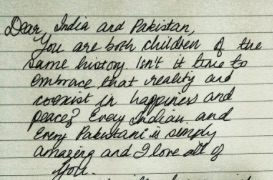
The PeaceLetters Campaign is a very simple way of showing your commitment to peace, and to build the value through bonds forged with unseen, unknown and unheard communities. It involves a very simple task that’s broken down into the following steps:

1. Choose a community / person / country that you want to send a message to.

2. Take a piece of paper and address the community / person / country and write your message of peace.

3. Take a photograph of the letter and submit it using the form below [click here]!

We will then put it up on this website! A few points to keep in mind, though, are:

1. We do not allow room for letters with content that is hurtful, offensive, discriminatory or defamatory.

2. We reserve the right to refuse to publish content that our team deems hurtful, offensive, discriminatory or defamatory.

3. We take your privacy very seriously, and undertake not to disclose any details you don’t want us to share.

Send us your Peace Letter Here!

Remember, just three simple steps:

1. Choose someone to send a message to.

2. Take a piece of paper and address the community / person / country and write your message of peace.

3. Take a photograph of the letter and upload it below [click here]!

[Thank you to Janet Hudgins, the CPNN reporter for this article.]

Question(s) related to this article:

Can children be involved in the peace process through literacy?,

Latest reader comment:

Students, especially children are easily moved when they hear about other children. Parents and teachers should take time to explain to students about world situations. Show them pictures or documentaries so that they will have a better understanding of how they can promote peace. Simple facts of life like living simply, recycling, protecting the environment can be shared with them so that they develop a different kind of maturity – be prepared to serve others than to be served. They will realise that peace is important if you want to improve the condition of the unfortunate. As they grow, they choose careers whereby they will be able to meet the needs of the unfortunate.

Esther Abimiku Ibanga, Founder of The Women Without Walls to receive the Niwano Peace Prize

.. WOMEN’S EQUALITY ..

an article by Niwano Peace Foundation

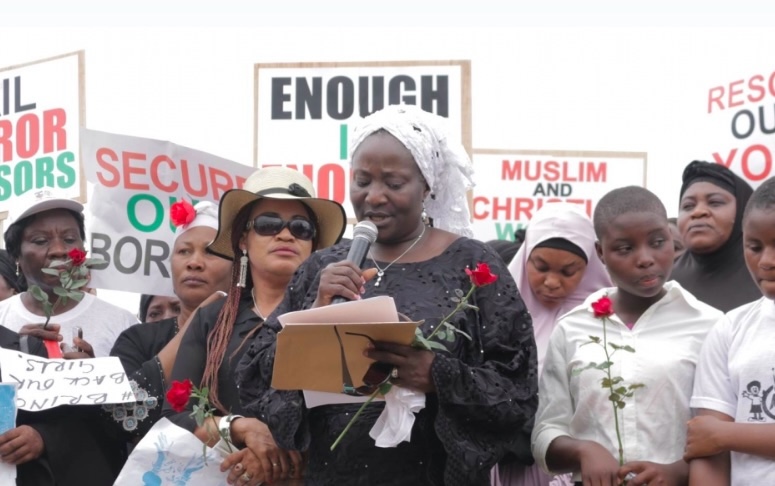
The 32nd Niwano Peace Prize is awarded to Mrs. Esther Abimiku Ibanga of Nigeria, a pastor and an activist. She founded “Women Without Walls Initiative” in March 2010, born out of the desperation to put an end to the violent and senseless killings of women and children in Plateau state Nigeria. Since inception, the organization has become a strong coalition of women groups across religious and ethnic divides. From this platform, women have been placed at an advantageous position of raising their voices in the calls for peace in the troubled regions of Nigeria.

Wowwi has brought to the fore the power of women’s voices and created an opportunity for an organised platform for women to play an active role in peace building. It is on record that Women Without Walls Initiative is the first organization to have on its membership all the tribal women leaders, including Christian and Muslim women leaders. These women act as entry points into the various communities in her city particularly in reaching the youths and all community stakeholders. A courageous and dedicated religious leader, Esther has worked extensively to foster and facilitate reconciliation between conflicting religious and tribal groups.

The presentation ceremony will take place in Tokyo, Japan, on Thursday, May 14th, at 10:30 a.m. In addition to an award certificate, Mrs. Ibanga will receive a medal and twenty million yen.

To avoid undue emphasis on any particular religion or region, every year the Peace Foundation solicits nominations from people of recognized intellectual and religious stature around the world. In the nomination process, some 600 people and organizations, representing 125 countries and many religions, are asked to propose candidates. Nominations are rigorously screened by the Niwano Peace Prize International Selection Committee, which was set up in May of 2003 on the occasion of the 20th Anniversary of the Niwano Peace Prize. The Committee presently consists of eleven religious leaders from various parts of the world, all of whom are involved in movements for peace and inter-religious cooperation.

Here are some comments by members of the committee on the selection of Esther Ibanga for this year’s award:

– A courageous and dedicated religious leader who has worked extensively on fostering co-operation and understanding amongst religious groups. Takes a firm and decisive stand regarding the empowerment of women and has been vocal on the Boko Haram kidnappings.(by N. Walaza)

A female pastor and activist, Esther Ibanga works tirelessly calling government and decision makers to address women issues. Like in most conflicts in Africa women and children are the ones who suffer most the consequences of conflict. Pastor Esther Iyaku Ibanga’s work focuses mainly on promoting and harnessing women’s potential as peace makers. As mothers, women are the first educators of human kind because education starts at home. Her recent strong stand against the kidnapping of school girls by Boko Haram is to be commended.(by S.Mbacke)

Question(s) related to this article:

Can the women of Africa lead the continent to peace?

This question pertains to the following articles:

South Sudanese women take the lead in local peace building
Women take ownership of Great Lakes peace efforts
Les Femmes de Mali S'engagent pour la Paix
The Women of Mali Engage for Peace
Meet the Tanzanian Woman Who Said No to a Forced Marriage
International Women´s Day: Interview With Leymah Gbowee (Liberia)
Announcing: Women of Congo Speak Out!
Samba-Panza’s election represents a bright future for African women in politics
Nobel Women wrap up delegation to eastern Congo
Towards the creation of a network of women for a culture of peace in Africa
Meet Carine Novi Safari, Democratic Republic of Congo
Esther Abimiku Ibanga, Founder and president of The Women Without Walls Initiative to receive the Niwano Peace Prize
African Women's Journal: African Women in Power/Politics

U.N. Climate Talks Advance Link Between Gender and Climate Change

. SUSTAINABLE DEVELOPMENT .

an article by Denise M. Fontanilla, Inter Press Service News Agency (reprinted by permission)

A week of climate negotiations in Geneva, Switzerland Feb. 8-13 are setting the stage for what promises to be a busy year. In order to reach an agreement in Paris by December, negotiators will have to climb a mountain of contentious issues which continue to overshadow the talks.

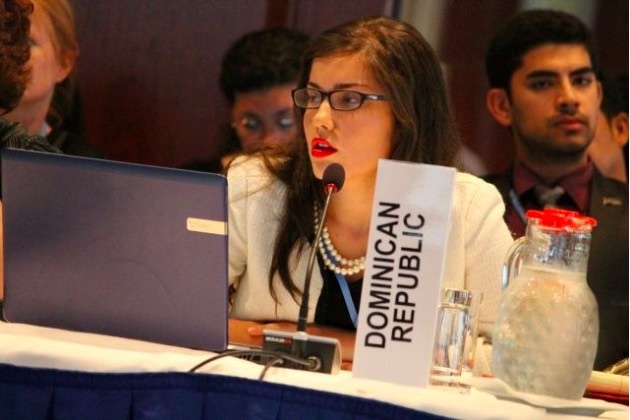
Anniete Cohn-Lois, head of gender affairs for the Dominican Republic government. Credit: Chris Wright (click on photo to enlarge)

One such issue is the relevance of gender in the climate change negotiations.

While gender mainstreaming has become a standard practice within development circles and was a critical aspect of the Millennium Development Goals, it still remains on the fringes of the U.N. climate discussions.

Recent developments have forced gender back into the spotlight thanks to concise action this week from the representatives of a number of countries, including the Dominican Republic, Ghana, Sudan, Mexico, Chile and the EU.

Anniete Cohn-Lois, head of gender affairs under the Dominican Republic’s vice presidency, has been one of the most vocal proponents of gender equality in the negotiations. According to the Germanwatch Long-Term Climate Risk Index, the Dominican Republic was the eighth most affected country in terms of the impacts of climate change over the past two decades.

However, as Cohn-Lois explained, her passion for Gender rights here in Geneva has been inspired by a particularly localised experience of marginalised women in Jimani, on the southern border with Haiti.

“The area that has been the most affected by climate change is actually the poorest. Of the people living there, the most heavily impacted by climate change are women, many of which are actually heads of their families,” she said.

Cohn-Lois added that many of the women in this area are single mothers, with some taking care of both elderly relatives and children. These women are some of the most vulnerable to climate change in the Dominican Republic and face several challenges, including gaining access to clean water.

“Since the southern side is such an arid part, access to water is still an issue. They can only afford to buy water weekly or even biweekly and find a way to [store] it,” she said.

She also noted that they have a wind farm in the area which provides electricity to most of the houses there.

Cohn-Lois is aware that women face similar challenges all over the world. Through her diplomatic post, she has markedly advanced the awareness of the importance of gender equality within the U.N. climate negotiations.

This week, she has called not only for gender equality in relation to climate change, but also gender-sensitivity, particularly and the value of community-based approaches to climate mitigation and adaptation programmes.

However, as Verona Collantes of UN Women argues, the task is not only to recognise that women are more affected by climate change, but to ensure they are a large part of the solution.

(This article is continued in the discussion board, above and right.)

Continuation of article

“Women and girls are differentially impacted by climate change. More importantly, they are agents, they have been contributing to climate solutions especially at the community level,” the Filipina said.

Climate change affects the poorest and most vulnerable people the most, and according to U.N. figures, women comprise 70 percent of the world’s poor.

Collantes also noted that women, especially indigenous women, make up the majority of those involved in agriculture and sustainable forest management, which is why it is critical they be represented in discussions on reducing forest-related emissions, here at the U.N. climate negotiations.

“When the man goes to earn a living, it’s the woman who becomes the chief of the household. It’s tied to the management of natural resources and livelihood, using fuel to warm their houses or cook their food, and fetching water – all of those have implications on climate change which, more and more, the parties to the UNFCCC [United Nations Framework Convention on Climate Change] are increasingly recognizing,” she added.

While the U.N climate convention itself did not originally have a reference to gender, it began to be integrated into the talks at the 2001 conference in Marrakech, Morocco. There, negotiators agreed to improve women’s participation in all decision-making processes under the talks.

Following this milestone, the issue became dormant. For the next 12 years, gender was barely mentioned within the negotiations. Then, at the 2012 conference in Doha, Qatar, it was finally revived, thanks largely to a new wave of gender-sensitive negotiators such as Anniete Cohn-Lois.

According to Collantes, the issue then became dormant for almost 10 years. It was not until 2010 in Cancun, Mexico that gender equality once again came under consideration. And it was in Doha that the agreement began to shift from merely a recognition of gender balance towards ensuring women’s capacities are enhanced and formally recognised within the U.N. climate negotiations.

In 2013, a further workshop was held on gender, climate change, and the negotiations in Warsaw, Poland. At that stage, countries and observer organisations submitted ideas on how to advance the gender balance goal.

Last December, a two-year work programme to further explore gender issues was established in Lima, Peru. UN Women is also continuing this work, and currently preparing for another workshop in June on gender-responsive mitigation, technology development and transfer.

“We look at it from the aspect of women’s participation in the development of technology, women’s access to those technologies. Are they part of the beneficiaries? Were they even thought of as beneficiaries in the beginning?” Collantes said.

However, in Warsaw, the U.N. reported that less than 30 per cent of negotiators representing their countries were women. Since then, there have been small representational improvements, but we are still very far from achieving gender equality within the U.N. representatives, let alone in their decisions.

[Thank you to Janet Hudgins, the CPNN reporter for this article.]

Edward Snowden Congratulates Laura Poitras for Winning Best Documentary Oscar for Citizenfour

.. EDUCATION  FOR PEACE ..

an article by American Civil Liberties Union

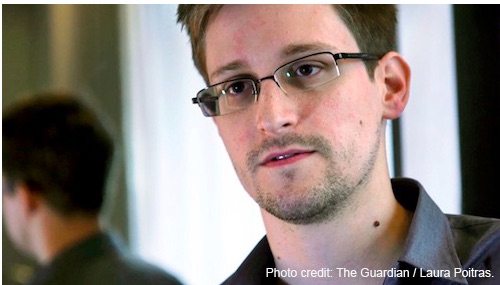
[Editor’s Note: The film “Citizen Four” by Laura Poitras, based on interviews with Edward Snowden, won this year’s Hollywood Oscar award for best documentary.]

Photo credit: The Guardian/Laura Poitras (click on photo to enlarge)

The following is a statement from Edward Snowden provided to the American Civil Liberties Union, which represents him:

“When Laura Poitras asked me if she could film our encounters, I was extremely reluctant. I’m grateful that I allowed her to persuade me. The result is a brave and brilliant film that deserves the honor and recognition it has received. My hope is that this award will encourage more people to see the film and be inspired by its message that ordinary citizens, working together, can change the world.”

Anthony D. Romero, executive director of the ACLU, had this reaction:

“Laura’s remarkable film has helped fuel a global debate on the dangers of mass surveillance and excessive government secrecy. The ACLU could not be more delighted that she has been recognized with an Academy Award.”

The ACLU’s petition asking President Obama to grant clemency to Snowden is at: https://www.aclu.org/secure/grant_snowden_immunity.

Question(s) related to this article:

India: New Institute for Peace through Tourism (IIPT)

. SUSTAINABLE DEVELOPMENT .

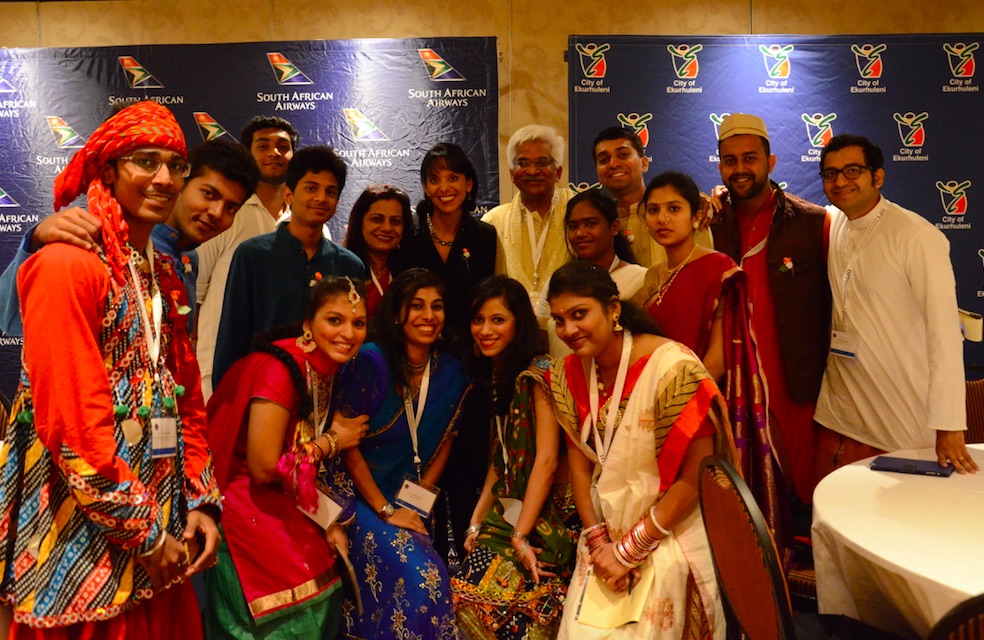
an article by Youth Delegates from IIPT India who came to IIPT Conference in South Africa

IIPT India is a new initiative which we need in India because our country has not realized in potential in tourism. We want people to come to India to experience its beauty.

india-2
click on photo to enlarge

We are students in management at SVIMS Mumbai University. Our professor Kiran Yadav together with one of his colleagues Ajay Prakash organized an initiative of IIPT (Institute for Peace through Tourism) in India earlier this year and told us about it. We had never before imagined how tourism could promote peace, so we like the concept.

We were pleased at the opportunity to come to this conference in Johannesburg (South Africa) on peace through tourism. We are 14 students, part of a youth leadership forum.

The new Prime Minister of India is now promoting tourism with an “incredible India” campaign. We spoke here with the head of the United Nations World Tourism Organization who told us that when he visited India in 2002 he found that the government was not very interested in tourism. Now that has changed.

Before coming here we mobilized about 500 students to sign the credo of the peaceful traveler developed by the international IIPT.

When we go back we will try to put into practice what we have learned here – especially community-based tourism.

For example, the Dharavi zone in the heart of Mumbai, traditionally considered as a slum, has thousands of small household industries. The entrepreneurs there want to invite tourists to visit them. So now we have guided tours of Dharavi where they show how small- scale industry can play an important part in the Indian economy.

We are inspired by the example we have heard here about climbing Mount Kilimanjaro in Tanzania, and we could do similar tours in the mountains in Maharashtra which is a popular site for trekking not too far from Mumbai.

We have made videos of speakers here at the conference, and we will show them to the students who couldn’t come with us, and to other whom we can interest in the future of IIPT India.

We are interested in internship possibilities for peace through tourism that we have heard about here. And then we can become ambassadors of peace.

Since Indians love the Bollywood cinema, maybe we can interest some actors and actresses to promote peace tourism.

For us tourism used to mean just seeing new places, but now we realize that it can be a chance to know new people and to promote peace.

Question related to this article:

How can tourism promote a culture of peace?

Comment by Liliana Mota, October 23, 2013

Why tourism?

Can tourism be seen as an instrument to achieve complicity between people’s minds?

“There is nothing better that connects two people’s mind than a good conversation” The above quote could be used to describe the effect which tourism has on people. Like a great conversation, tourism could be said to play a vital role amongst people all over the world. It fosters communication in all its senses, intercultural dialogue and mutual understanding.

In today’s world it is evident that there is a shortage of moral or ethical values amongst people across the different nations in this world, resulting in a globalised world lacking these morals and ethical values. Ignorance, the failure to consider the needs of others, and selfishness are a few of the ways which hinder us from embracing diversity and a common human perspective, which would result informal empathy, internal moral compassion, tolerance of differences, historical consciousness and interpretation. The above mentioned features are intrinsic, inherent and can be found in the practice of tourism.

Tourism has been emphasized as one of the most effective instruments which continue to tackle to tackle social and economical poverty, as well as encourage the culture of peace practice amongst people. In looking at the UN architecture, one is able to see the growing implications which the tourism sector has on the world and world policies. The touristic phenomenon has achieved a world record of 5% of world’s GDP contribution and is responsible for 235 millions jobs, according to the UNWTO’s data. Often the tourism sector counts more than 20% of the countries’ GDP.

On the negative side of this, it is evident that tourism focuses on economical matters, depriving any focus on the global implications of the constant interaction tourism encourages.

In the literal sense, tourism is nothing more or less than people meeting with the willingness to understand each other’s differences and point of view and simultaneously creating the opportunity for dialogue, mutual understanding and peace to take place.

Apart from tourism, various factors could be seen to play a role in encouraging integration and diversity amongst societies across the world. For example, the cultural segment has played an essential source of people’s integration and inclusiveness in developing countries.

Education has also played a significant role in encouraging integration, and incorporation amongst people all over the world. Education has been reconsidered and proposed to being the catalyst for exchange between countries, cultures and sectors, and most importantly for enhancing the lives of people by granting them the opportunity to leave their poverty stricken lives and societies in exchange a for better future which includes job and exchange opportunities.

In the tourism world, differences play the most essential role, differences among people represents the added-value. Being different is always a positive factor that usually motivates and encourages people to get to move and engage with each other and embrace the differences with the use of spiritual, religious and cultural meanings.

This notion of tourism needs to be addressed in multilateral governance discussions, where all the main actors, the international community, the ministerial and experts, private sector, local institutions and civil society engages are all present, and are all willing to work together in combined efforts and initiatives (from poverty alleviation to the promotion of awareness of sustainable development addressing special needs like regional development, urban planning and protection of natural and cultural landscapes). This combined approach of working at the local level within communities and at the national and international level, in order to reach and engage the poor, has been considered as potentially being the “one possible and effective answer” and effective approach towards the world’s poorest areas where it can make a difference.