All posts by CPNN Coordinator

About CPNN Coordinator

Dr David Adams is the coordinator of the Culture of Peace News Network. He retired in 2001 from UNESCO where he was the Director of the Unit for the International Year for the Culture of Peace, proclaimed for the Year 2000 by the United Nations General Assembly.

Government of Italy and UNICEF join efforts to promote positive peace for Libyan youth

FREE FLOW OF INFORMATION

An article from the United Nations Support Mission in Libya

180 Libyan youth are to take part in an initiative for promoting positive peace, through new funding totalling 545,000 USD provided by the Italian Government to UNICEF in the context of the Nicosia Initiative.

“Young people in Libya represent over half of the population and are key to rebuilding the peaceful future of the country” said Abdel-Rahman Ghandour, UNICEF Special Representative to Libya. “We are thankful to the Government of Italy for their generous donation enabling us to support them achieve just that,” he added.

“Young people in Libya represent over half of the population and are key to rebuilding the peaceful future of the country” said Abdel-Rahman Ghandour, UNICEF Special Representative to Libya. “We are thankful to the Government of Italy for their generous donation enabling us to support them achieve just that,” he added.

Taking place in March and April, the initiative will bring together Libyan young local community leaders from throughout the country, to foster a convergence of views and inspire a culture of peace and reconciliation at a time where conflict and violence have caused deep degradation of the environment in Libya.

Aged between 18 and 25, young people from across the country will participate in the initiative through an open and transparent selection process carried out by the Nicosia Initiative working with the Union of Libyan Youth, universities and active civil society networks. Female participation, in particular, are strongly encouraged with representation from all areas of the country actively promoted.

Based on the Institute of Economics and Peace’s [IEP] Positive Peace Framework, the initiative will encourage Libyan youth to look forward to the future instead of looking back at the differences of the past through learning about their rights. Local ownership and leadership have been shown to be a critical factor in building peace and as such, participants will be asked to think and develop innovative community development projects that reflect these ideas and values.

After attending a training, participants will be encouraged to start campaigning to raise awareness in their communities about positive peace. A joint UNICEF, IEP panel will also select the most innovative projects to be funded and implemented at a local level in Libya.

The initiative builds on the achievements made in a pilot conducted earlier in 2017 under the UNICEF programme” Towards Resilience and Social Inclusion of Adolescents and Young People in Libya” through funding from the European Union. Many of the 17 youth who participated in this workshop have gone onto much success, for example through setting local radio station in Sirte, developing local youth networks and campaigning within their communities for peace. By scaling up this initiative in 2018, UNICEF, the Government of Italy, IEP and the Nicosia Initiative hope to enable Libyan youth to build a better and more peaceful future for all.

(Article continued in right column)


Question related to this article.

Youth initiatives for a culture of peace, How can we ensure they get the attention and funding they deserve?

What is the United Nations doing for a culture of peace?

(Article continued from left column)

 Notes to Editors

About the Nicosia Initiative

In 2015, the European Committee of the Regions (CoR) began helping Libyan mayors to foster contacts with EU institutions and European mayors, including granting Libya observer status at the Euro-Mediterranean Regional and Local Assembly (ARLEM). This was in line with the central role of Ms. Federica Mogherini, the High Representative of the European Union for Foreign Affairs and Security Policy.

Following a letter to the CoR President in which Libyan mayors expressed the need for cooperation, a call for European and Mediterranean partners to share their know-how with Libyan authorities was launched at the ARLEM plenary session on 19 January 2016 in Nicosia, Cyprus, under the patronage of the Mayor of Nicosia. Consequently, CoR members began providing very practical support to Libyan cities through the Nicosia initiative – a platform run under the political umbrella of the CoR – with the aim of fostering territorial cohesion and cooperation among Libyan municipalities as well as supporting partnership building between Libyan and European peer institutions based on Libyan local strategic priorities and a set of common shared interests.

The requests for cooperation included in particular actions on services of general interest normally provided by local authorities to citizens and currently not fully performed due to the lack of budget and skills. The Libyan Mayors also pointed out a specific action on youth and mind-set change, as an urgent matter to be addressed

About Institute for Economics and Peace

The Institute for Economics and Peace (IEP) is an independent, non-partisan, non-profit think tank dedicated to shifting the world’s focus to peace as a positive, achievable, and tangible measure of human well being and progress.

IEP achieves its goals by developing new conceptual frameworks to define peacefulness; providing metrics for measuring peace; and uncovering the relationships between business, peace and prosperity as well as promoting a better understanding of the cultural, economic and political factors that create peace.

IEP has offices in Sydney, New York, Mexico City, Brussels and The Hague. It works with a wide range of partners internationally and collaborates with intergovernmental organisations on measuring and communicating the economic value of peace.
Search for Common Ground: Vision for 2018

. EDUCATION FOR PEACE .

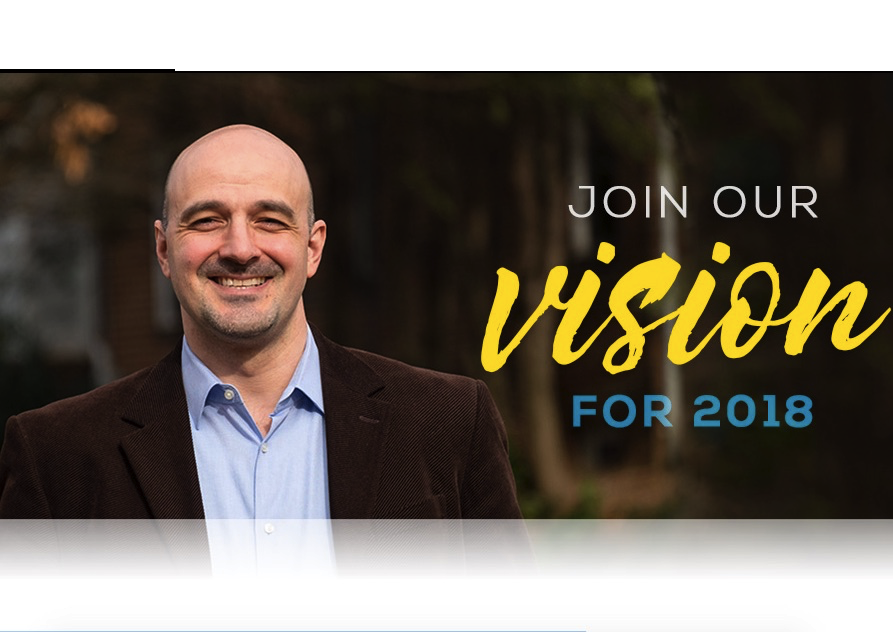
A letter from Shamil Idriss, President & CEO of Search for Common Ground

Thanks to your support, Search for Common Ground is off to a great start in 2018.

2017 was a year of profound transformation for Search. In our latest progress report, Conflict ReImagined, we present some of the changes that we have made with your help.

Thanks to you, we are poised to accomplish even greater results in 2018. Here are some of the things we’re planning for the year ahead:


Supporting Local Solutions In Urgent Crises

In 2017, armed conflicts brought Yemen, South Sudan, and parts of Nigeria to the brink of famine. This year, we are scaling up our efforts to help end these conflicts. In Yemen, our all-Yemeni team is supporting mediation between communities affected by the crisis and working with teachers to keep kids in school and out of armed groups. In Nigeria, we are launching a new partnership with humanitarian organizations to help communities rebuild their lives in the Lake Chad Basin. Our radio and theater productions in South Sudan continue to garner attention. In February, Media Coordinator Daniel Lokolong will travel to Brussels to receive the Austrian Government’s Intercultural Achievement Award in honor of our innovative work in South Sudan.

(continued in right column)

Question for this article:

Can peace be guaranteed through nonviolent means?

(continued from left column)

Fostering Innovation and Experimentation

Technology is quickly changing societies around the world. We’re adapting as well as experimenting with new techniques. In Nepal, we’ve built on the success of our TV drama Singha Durbar and just launched a smartphone e-governance app that gives citizens information on government institutions, along with guidance on how to access justice and legal services.

During the last elections in Sierra Leone, we partnered with researchers at Stanford University to rigorously test the effectiveness of electoral debates, work that was profiled in The New York Times. As Sierra Leoneans get ready to go to the polls this March, we’re working with hundreds of civil society groups, journalists, and researchers to strengthen citizen engagement. Our work has already attracted notice. This month, the Sierra Leone’s Council of Chief Executives named us the “Best NGO of 2017” in the peacebuilding category.

Taking Local Insight to International Policymakers

Our colleagues around the world have unique insight and understanding of conflict dynamics. We launched a new white paper series, where we highlighted local perspectives from Yemen, Nigeria, and South Sudan. As our work has become appreciated, we’ve been asked to give testimonies and briefings for the United States Congress, the United Nations Security Council, and the British Parliament. In 2018, we’ll increase our efforts to help global decision-makers to build a more peaceful world.

These goals are ambitious, but your continued support will make them a reality. Thank you for joining in our vision of a 2018 full of breakthroughs for a healthier, safer, and more just world.

International Boycott, Divestment and Sanctions Movement Nominated for Nobel Peace Prize

DISARMAMENT & SECURITY .

An article from Telesur TV

The International Boycott, Divestment and Sanctions Movement that seeks to end the Israeli occupation of Palestine and Israeli human rights violations through economic pressure has been nominated for the Nobel Peace Prize.

The nomination was made by Bjornar Moxnes, a member of the Norwegian Parliament and leader of the Red Party, on Friday. 


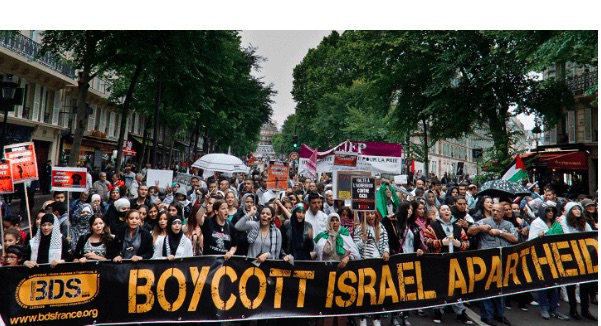
Pro-BDS march in France. | Photo: bdsmovement.net

A release issued by Moxnes stated: “as a member of the Norwegian parliament, I proudly use my authority as an elected official to nominate the Boycott, Divestment, and Sanctions (BDS) movement for Palestinian rights for the Nobel Peace Prize.”

Listing the goals of the BDS movement, among them securing the right to return of 50 percent of all Palestinians who are currently refugees, Moxes argued “the BDS movement’s aims and aspirations for basic human rights are irreproachable. They should be supported without reservation by all democratically-minded people and states.”

(article continued in right column)

Question related to this article:

Presenting the Palestinian side of the Middle East, Is it important for a culture of peace?

How can a culture of peace be established in the Middle East?

(article continued from left column)

Many organizations have celebrated BDS movement’s nomination. Jewish Voices for Peace welcomed the “wonderful news” via Twitter.

As BDS has grown in prominence and gain endorsements from figures such as Nobel Peace Prize winner Desmond Tutu, musician Roger Waters along with several unions and activists groups its organizers have faced intense backlash.

In early January the Israeli government published a “blacklist” prohibiting 20 pro-BDS groups from entering Israel, including activists from the U.S.-based organization Jewish Voices for Peace (See CPNN January 8).

Isreal has also lobbied for legislation, which punishes activists and organizations that endorse the movement, in the U.S. and France. However, these measures have done little to deter the movements supported.  

In his remarks, Moxes also stated: “awarding a Nobel Peace Prize to the BDS movement would be a powerful sign demonstrating that the international community is committed to supporting a just peace in the Middle East and using peaceful means to end military rule and broader violations of international law.”

(Thank you to Phyllis Kotite, the CPNN reporter for this article.)

Are we making progress against racism and hate speech?

Here is the opinion of Reverend Buddy Aaron Larrier received by CPNN February 3, 2018:

The derogatory statements made by President Donald Trump with reference to Haiti and African countries, should be offensive to ALL PEOPLE of goodwill who are aware of their own history and should be an awakening for dark skin people of African descent. Likewise, for Caucasians who are aware of Africa’s history prior to the 15th century (1492) and the formation of the United States of America (USA).

Therefore, as a contribution to Black History Month 2018 I am writing this open letter to address two points; firstly, as an appeal and secondly as a recommendation to the leaders of black people’s led countries of the world, particularly to the Heads of CARICOM Governments. My appeal is: please do not be reactive to the unfortunate statement made by Mr. Donald Trump, but be strategically proactive. I make this appeal because of my vision in 1977 for the 21st century. At the time I had a spiritual, consciousness awakening, which subsequently led me to becoming a student of Racism and a human rights and social justice advocate. In the vision I saw the end of Racism – yes, of White Supremacy. My mission is to assist in its eradication.

In this regard, I have noted with interest that Donald Trump’s statements were made as Haiti took the Chair of CARICOM. It was made also on the eve of the 1st anniversary of his Presidency and the 10th anniversary of the first black President of the United States. The successful presidency of Barack Obama haunts President Donald Trump and other Americans White Supremacists as their worst nightmare. However, the fact is; there has never been a President of the USA who did not subscribe to the institutional system of White Supremacy (Racism). Therefore, I am confident to say that it was necessary for “a Donald Trump” to be elected during this period of transition from lies to truth, so as to reveal to the world that “the Emperor is naked”. President Trump’s statements would be unbecoming of any President of any country; but being holder of the highest office of the world’s most powerful country, his remarks has illuminated the issue of Racism. Whereby, he has dishonoured and disgraced that high office. Nevertheless, he must be congratulated for awakening those persons who were still asleep or had their heads buried to the issue of white supremacy.

While processing the depth of President Trump’s remarks, I was motivated or inspired to pay special attention to the sentencing hearing of Mr. Larry Nassar, the former USA Gymnastics doctor who pleaded guilty to sexually abusing young girls who trusted him. His guilty plea came at a time when changes are taking place, as many influential men who manipulated and violated the rights of women are being publicly disgraced. Human rights advocates are very pleased about this development. I can therefore say with confidence that the timing of President Trump’s abusive remarks is not coincidental. His Racist remarks compare equally to the sexual abuses as stated by the over 150 victims who gave evidence against Mr. Nassar, in particular that of Ms. Rochael Denhollander who started his downfall. Her commanding statement should be studied as a text for exposing the complicity within the wicked system of inferiority and superiority. If we were to substitute the words ‘sexual abuse of children’ and replace them with Racism, we will appreciate the depth of Trump’s remarks. It is clear to see for those paying attention that all around the world African consciousness is being awakened, likewise so is the female consciousness as explained by the Hon. Justin Tuudeau, Prime Minister of Canada at the World Economic Forum annual meeting in January.

By sentencing Larry Nassar to 175 years for his evil deeds of abusing hundreds, a strong message is therefore sent, not only to the USA, but to ALL nations of the world that the woman, who is mother of humankind demands that her humanity and dignity be respected and guaranteed. The black woman who put a racial perspective into Mr. Nassar’s hearing has sent notice that the awakening of African consciousness will also be putting White Supremacy on trial for its evil deeds of abusing the human rights of millions. It is therefore not coincidental that the oldest person in the known world today is a black woman from the Caribbean, where the worst atrocities were committed against the black man and woman – parents of humankind.

Therefore, my recommendation is that an appropriate response to President Trump’s statements should be a resolution to the United Nations that would have an impact on the world and would address the issue of both Racism and Sexism at the core. The historic event which took place on October 12, 1492 started a chain of encounters with different ethnic groups that gave persons like President Trump the authority and confidence to make derogatory statements about blacks and other non-white people and women because of Slavery and Colonialism. It was the nation of Haiti that led the way forward towards ending Slavery and starting the process of repairing the damage. For more than two decades CARICOM has been lobbied to recognize October 12, as a day for truth, justice, peace, healing and reconciliation. It is good that the date has now been proclaimed as ‘Caribbean Holocaust Day’. Therefore, it is appropriate and timely that Haiti as Chair of CARICOM should lead the initiative for a Resolution to be submitted to the United Nations General Assembly on behalf of CARICOM for October 12 to be proclaimed/designated as the International Day for Reparations.

The reason for this recommendation is twofold. Firstly, it is predicated on the history following October 12, 1492 when Columbus made landfall in the Caribbean. Secondly, a proposal on October 12 has been before world leaders, the Governments of Barbados and CARICOM for many years. Barbados played a significant role during the British Empire building process, which makes Barbados the best nation to submit the resolution to the UN on behalf of CARICOM. Barbados is the only colony of colonial Briton where the colonizers and the colonized arrived together. It is the first English colony that went to war with its colonial masters after the execution of Charles 1 in 1649. The wording of the Barbados Peace Charter of 1652 influenced the wording of the constitution of the United States in 1787. Barbados was also a leading trans-shipment point for sending enslaved persons to other Caribbean and North America colonies of England. Barbados led the Caribbean delegation to the UN World Conference against Racism in Durban in 2001. It hosted the first Afrikan and Afrikan descendants World Conference against Racism in October 2002 as a follow-up to the Durban conference. In addition, Barbados has lead responsibility for the Caribbean Single Market and Economy (CSME).

Finally, in the hearing of Larry Nassar the question was asked, why did it took so long for him to be exposed when many in authority were aware of his deeds. That same question is relevant for racism and reparatory justice. There are many changes taking place worldwide that are lessons to be learnt by people of colour and the year 2018 is highlighting some of these changes necessary for repairing the damage of the past 500 plus years and the search for truth, justice, peace, healing and reconciliation.

I am firmly of the opinion that should the UN designate October 12 as International Day for Reparations as we advance into the UN declared International Decade for People of African Descent, it would usher in the spirit of genuine truth, justice, peace, healing and reconciliation, which would bring to an end a significant part of my vision and mission for which I have been lobbying since 1977. God’s promise might be slow, but it surely comes on time.

Here are the CPNN articles on this subject:

Brazil: Interfaith event held at the Federal Public Prosecutor’s Office celebrates a culture of peace in Paraíba.

Speech from Birmingham, UK, for Solidarity and against Racism

Mercosur without Racism: Brazil will propose a campaign at a meeting of ministers from the bloc

Brazil signs in Buenos Aires declaration to combat hate speech on the internet

International Statement of Solidarity with Decolonial Academics and Activists in France

Time for Australia to Say ‘Indigenous Lives Matter’

What is Juneteenth and how are people commemorating it this year?

USA: Historian Robin D.G. Kelley: Years of Racial Justice Organizing Laid Groundwork for Today’s Uprising

Protests worldwide embrace Black Lives Matter movement

‘A part of history’: Calm prevails over D.C.’s biggest George Floyd protest

Herstory of Black Lives Matter

South Africa Launches Plan to Combat Xenophobia and Racism

Hall’s poetry about more than ‘black history’

USA: Albuquerque March and Rally Against Hate! Sunday, Feb. 21 at 2pm at Albuquerque Civic Plaza

Hundreds join refugee solidarity rally in Madrid, slamming NATO invasions

2015 Black Solidarity Statement with Palestine

USA: Response to the Massacre in Charleston; Grieve, But then Teach and Organize Nonviolence

Closing of the World Social Forum: Citizens of the world versus terrorism and oppression

– – – – Links for the following articles published prior to 2015 do not work because they were made by a version of PERL programming that is no longer supported. With three easy steps, you can find the article by its number. First, click on it before returning to this page. Your browser will say that the article is not available but in the address listed you can see that it was located at ViewArticle=xxxx where xxxx is the number of the article. Returning to this page, then click here for the listing of all years. Then click on the year that contains the number for the article you seek. It will send you to the page where you can easily search for the article by its title. – – – –

Teens Making a Difference: Study Circles in Action

Tribute to Ancestors

Report on the Global African Diaspora Summit

English bulletin February 1, 2018

MASS MEDIA FOR CULTURE OF PEACE

It has been the dream at CPNN from the beginning that our website and others like us would be able to attract so much readership that the mass media would need to take up the theme of the culture of peace in order compete with us.

I don’t know if we have played a role in this, but indeed we see increasingly, at least in Latin America and Africa, that commercial media are taking up the theme of the culture of peace.

The latest example comes from Mexico as described in the CPNN article, “Zacatecan Radio and Television System to introduce ‘the culture of peace’ as a transversal theme.

The many decisions taken in their manifesto “Public radio as a force for peace in Mexico” include:

* Every news program should start and end with positive news and should include at least one story related to “peace initiatives”

* Each radio station should hold a marathon at least every quarter with readings, verses, songs and poems for peace and profiles of people who have contributed to peace

* A 30-episode radio program. 15 minutes of duration will be broadcast by all public broadcasters in Mexico with content derived from the manifesto
The manifesto was developed with input from journalists in Colombia who explained how the media are playing a positive role in the transition to peace that their country.

In Colombia, for example, the initiative “Community Radios for Peace and Coexistence”, launched in mid-2016 with support from the European Unon, supports 400 of the 627 community radio stations in the country to generate a culture of peace in the most remote rural areas, those most affected by the armed conflict. The initiative not only opens microphones to the people, but also includes workshops in which 200 community radio journalists have been trained in the elaboration of educational content on peacebuilding,

Last year in Colombia, the Office of the High Commissioner for Peace began training journalists and announcers working at hundreds of small community radio stations across the country including many remote regions where radio is the only medium to which people have access.

In Africa, there are now so many media initiatives for a culture of peace that we have started an entire section of CPNN dedicated to the question “African journalism and the culture of peace, A model for the rest of the world?” Links are provided to CPNN articles from Uganda, Tanzania, Senegal, Democratic Republic of Congo, Mali and Somalia.

In Uganda, since the end of the civil war with the LRA, local community radio stations have been reaching out to the public through peace reporting with a focus on development. International agencies have trained hundreds of local journalists in peace reporting. A number of community radios were set up with a commitment to peace journalism and are still active today.

UNESCO’s project “Empowering Local Radio with ICTs” is helping radio stations to inspire intolerance for gender-based violence and hold perpetrators and duty-bearers responsible in Tanzania, Democratic Republic of Congo, Uganda and Burundi.

In Senegal last year, journalists and experts from the countries of West Africa and the Sahel met together in a seminar on “The role of journalists and the media in preventing violence and violent extremism.”

“It is the responsibility of each person to spread positive content and useful experiences that participate in the construction of the world, and thus in a culture of peace. It is therefore up to us to make the media a positive tool for the construction of society,”
according to Patrick Busquet, the head of the Hirondelle Foundation (Democratic Republic of Congo). It is in pursuit of this ideal that as of 2014 the Hirondelle Foundation had installed several media in Africa: Radio Okapi in Kinshasa, Radio Ndeke Luka in Bangui, the Tamani studios in Mali, Mozaïk in Ivory Coast, and Hirondelle in Guinea.

Back in 2011, The Journalists’ Network for Peace and Security (NetPeace) was officially launched at the AU headquarters of the African Union under the theme “Promoting a Culture of Peace through the Media”. Regional coordinators were established in Mauritania, Mali, Liberia, Djibouti, Kenya, Burundi, Equatorial Guinea, Zimbabwe and South Africa.

In the United States last year CPNN took part in a panel at Southern Oregon University called “Cultivating a Culture of Peace in an Era of Trump: What’s the Media’s Role?” Among the panelists were Jeff Golden from Southern Oregon Public TV and Bert Etling, a member of the Ashland Culture of Peace Commission and editor of the newspaper Ashland Daily Tidings. Articles on the culture of peace from the Daily Tidings are frequently reprinted by CPNN.

Hopefully, we will see further development of media for a culture of peace in the North, but for the time being, it is Africa and Latin America in the lead.


FREE FLOW OF INFORMATION


Mexico: Zacatecan Radio and Television System to introduce “the culture of peace” as a transversal theme

TOLERANCE AND SOLIDARITY


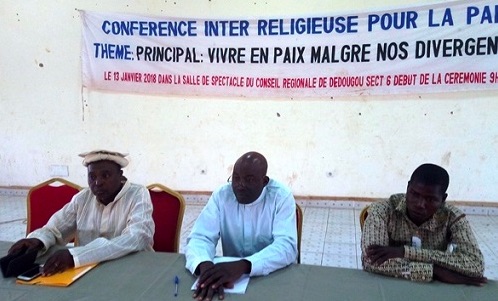
Burkina Faso: Inter-religious dialogue for peace: “It is the diversity of religions that gives meaning to religion”

DEMOCRATIC PARTICIPATION


Honduras: Culture of peace promoted in 200 young people from “hot” areas

SUSTAINABLE DEVELOPMENT


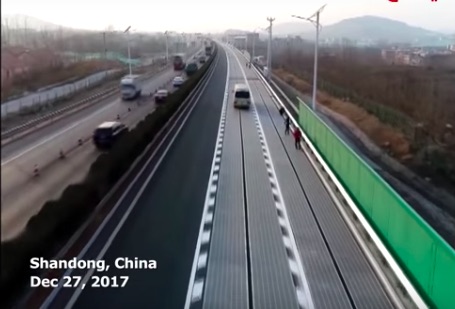
‘World’s First Solar Highway’ Opens in China for Testing

DISARMAMENT AND SECURITY


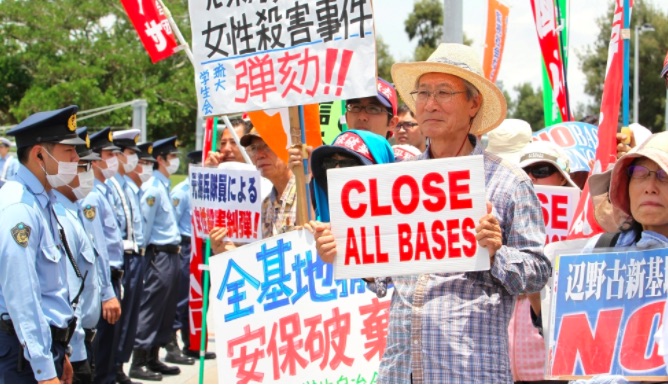
Baltimore, USA: Conference on US foreign military bases

HUMAN RIGHTS


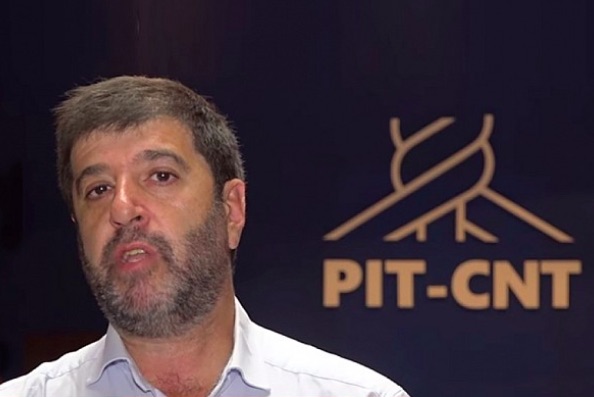
Uruguay’s main trade union center plans massive mobilization to construct a culture of peace

WOMEN’S EQUALITY


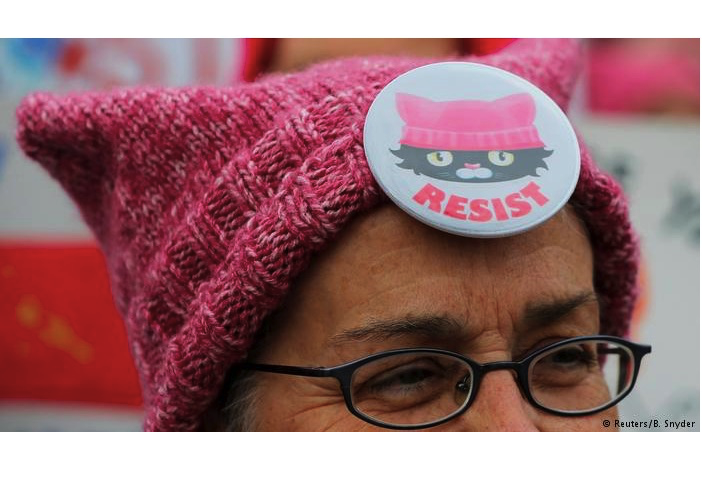
Women’s March protests across America against President Trump

EDUCATION FOR PEACE


El Salvador to prioritize culture of peace in its schools

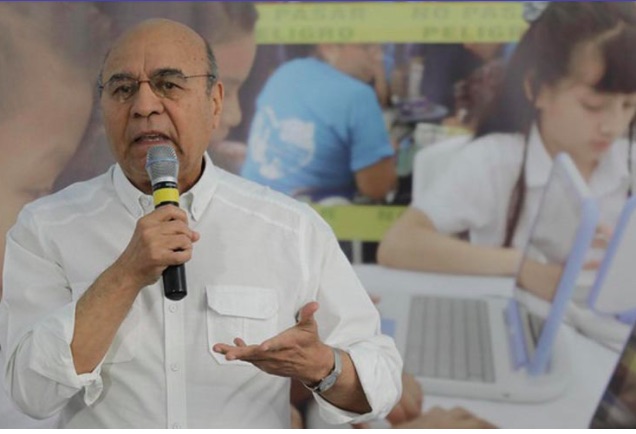
Venezuela: Educational sector plans to train teachers in culture of peace

… EDUCATION FOR PEACE …

An article from Correo del Orinoco (translated by CPNN)

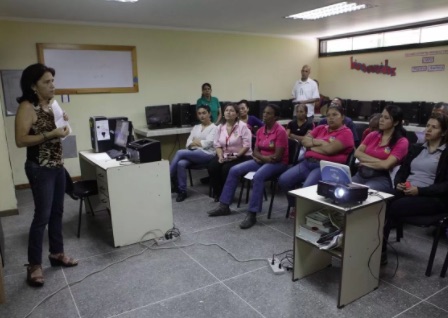
The training of teachers in values ​​linked to the thought and practice of peace will be developed in the debates that this weekend (20 January) are held throughout the country for the preparation of the National Plan for 2019-2025.


“Los espacios educativos queremos que se conviertan en espacios para la paz; unas instituciones educativas que funcionen como ejemplo de cultura para la paz y donde no sólo se piense, sino que se practique la paz”, explicó el profesor de Física José Azuaje, en un programa especial transmitido por VTV.

(Articles continued in right column)

(Click here for the original article in Spanish)

Questions for this article:

Where is peace education taking place?

(continued from left column)

Por su parte,la viceministra para le Educación, María Eugenia Piñero, en su intervención en el espacio televisivo, resaltó la unión que se ha afianzado en pro de una formación con conciencia de libertad en todo el gremio educativo que incluye al personal administrativo, docentes, consejos educativos y estudiantes.

“Ahora más que nunca tenemos un magisterio unido, que apuesta por una educación liberadora, por eso llamo a todos los docentes a seguir sumando propuestas en estas asambleas para consolidar un importante nivel de conciencia en la educación”, refirió Piñero.

El propósito de promover la cultura de paz es promover valores de aceptación y convivencia entre los estudiantes con miras a construir un futuro para la sociedad venezolana al margen de la violencia.

Este sábado el ministro para la Educación, Elías Jaua, se reunió con el sector educativo del país para debatir sus aportes al Plan de la Patria 2019-2025, desde la Unidad Educativa Bolivariana Pedro Fontes en la parroquia La Vega de Caracas, donde agradeció la atención de la comunidad educativa al debate que continuará este domingo en 3.500 espacios del país.

Honduras: Culture of peace promoted in 200 young people from “hot” areas

.. DEMOCRATIC PARTICIPATION ..

An article from La Tribuna (translated by CPNN)

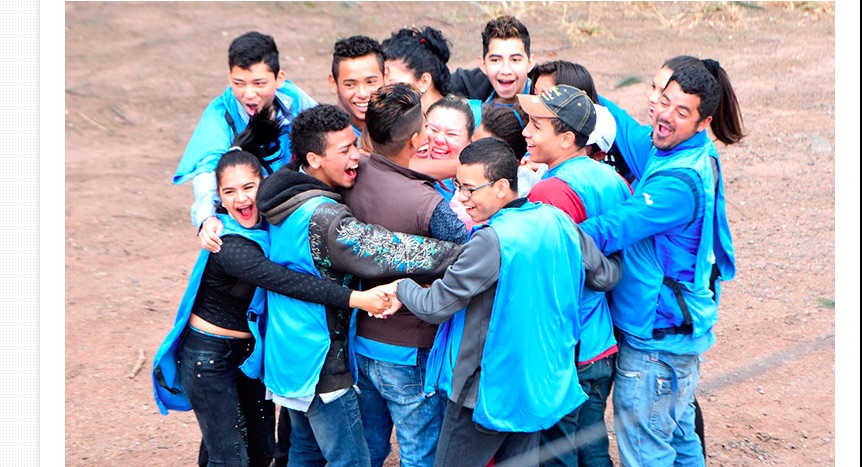
200 young people from different neighborhoods and colonies of the Central District came to the headquarters of the Scout Movement, to participate in the “Honduras Motivate” event, promoting kills for life and leadership, from outdoor play activities,.

The activity was developed within the framework of the comprehensive security strategy program of the government, through the Secretariat of Security in the Office of Prevention and the Cabinet of Prevention, Peace and Coexistence.

During the activities, from 9:00 in the morning until 12:00 noon, the youth practiced and developed different group activities to learn to participate and create shared objectives in the construction of a culture of peace, harmony and coexistence.

(continued in right column)

(Click here for the Spanish original of this article)

Questions for this article:

How can sports promote peace?

(continued from left column)

These activities are carried out in strategic neighborhoods to help young people and try to remove them from the risky situation that leads them to fall into the hands of organized criminal groups.

Deputy Minister of Security, Alejandra Hernández, said that “Honduras Motívate is a project promoted by the government of President Hernández, within the framework of the comprehensive security strategy.”

In different parks for a better life, this type of activity is carried out so that young people and children can keep themselves occupied and, above all, develop habits of coexistence.

Young people participate in traditional games to try to recover the culture that has been lost. These games are little known and rarely practiced by children, adolescents and young people, explained Hernández.

They also carry out competitions where they learn and understand that there is no superiority between men and women, by valuing and seeing that each one possesses abilities and strengths different from the others.

Hernandez added that “much remains to be done, the country must advance, and harmonize in the construction of a culture of peace, we are not going back because we are on the right track and we will continue the struggle.”

Journalism in Latin America: Is it turning towards a culture of peace?


It was the publishers and editors of Latin American newspapers meeting with the Director-General of UNESCO in Puebla, Mexico, on 27 May, 1997, that first called for an International Year for the Culture of Peace. Perhaps, it is in the same tradition that we see more and more in the past few years that the journalists of Latin America, in particular Colombia, Mexico and Ecuador are turning towards a culture of peace. They join their counterparts in Africa to lead the world in this direction.

Readers are encouraged to add their comments below.

ARTICLES IN ENGLISH

New book: Nonviolent Journalism, a humanist approach to communication

Mexico: Guanajuato as the epicenter of the culture of peace

Five new digital media platforms for uncensored news from Colombia

Punta del Este (Uruguay): Ismael Cala will present the America Business Forum, considered «the Davos of Latin America»

Colombia’s rural radio stations are a key to peace

Mexico: Zacatecan Radio and Television System to introduce “the culture of peace” as a transversal theme

Mexico: Journalism for a Culture of Peace

Ecuador: ‘Dedicated Lives’ at the Casa Carrión

Mexico: Cristina Ávila-Zesatti and peace journalism

The European Union gives voice to peace in Colombia

The European Union, the Colombian Government and the civil society work together in “Community Radios for Peace and Coexistence”

Why radio is proving the best medium to promote Colombia’s peace process

ARTICLES IN SPANISH

Mexico: Zacatecan Radio and Television System to introduce “the culture of peace” as a transversal theme

FREE FLOW OF INFORMATION

An article from La Jornada Zacatecas (translated by CPNN)

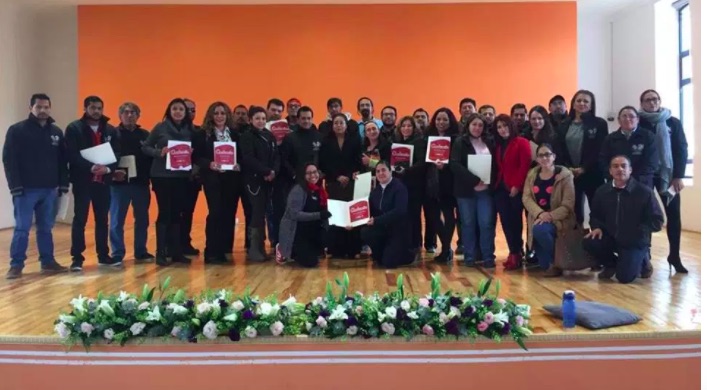
January 20: The Zacatecan Radio and Television System (Sizart) will modify its contents to introduce as a”the culture of peace” as a transversal theme. The workshop “Sounds for peace, the acoustic landscape of public media in Zacatecas” in which 50 radio and television producers participated, reviewed the programmatic grids “to know what we are doing”, said the director general of Sizart, Teresa Velázquez Navarrete.


(Click on photo to enlarge)

She added that two experts collaborated in this review, one of them from Colombia, who was asked to offer an advance of what is being done in that country in the context of the peace process in the media, “because here we already walk more or less in the same struggle.”

Tito Ballesteros López, a radio producer of the “free networks of Colombia”; was a participant in the recently held International Radio Biennial along with Graciela Martínez Matías, who is a research professor at the UNAM, a PhD in Political Science and an advocate for the Radio Education audiences. The “critical and self-critical review was made with all the producers of the -Sizart-, and then we realized that to remake the contents we would have to speak of a culture of peace “.

The workshop “Sounds for peace, the acoustic landscape of public media in Zacatecas” lasted 30 hours and was held from Monday to Friday of this week with discussions and contributions. Velázquez Navarrete and experts proposed the drafting of a Manifesto “Public radio as a force for peace in Mexico”, which was read yesterdayby the participants.

“We came up with the experience of Colombia with a manifesto to start making a navigation chart of the public media, which we would like everyone to share, but for the time being we assume it as something we can do. We can not speak for others.”

Tito Ballesteros, also a research professor at the Universidad Pontificia Bolivariana located in Bucaramanga, Colombia, mentioned in a short interview the projects he has participated in, referring to the peace process in his country. The 2016 Peace Agreement, a document of 297 pages, was diffused to the people through social networks and read over the radio, point by point.

In Colombia, there was a radio series in which about 20 professors from different cities participated: Cali, Medellín, Cartagena and Bogotá, who were asked to offer their opinion and discuss the points of the Peace Agreement. Also the European Union supported a training workshop for community radios, at the proposal of President Juan Manuel Santos.

“And that’s how training was done at a national level in the different regions reflecting on the agreements, and how to build stories for peace.”

Ballesteros Lopez mentioned another collaboration with the European Union, “in which the Colombians who were in the media accessed content that had to do with acts of peace.”

(Article continued in the column on the right)

(Click here for the original Spanish version of the article)

Questions related to this article:

Journalism in Latin America: Is it turning towards a culture of peace?

How can peace be promoted by radio?

(Article continued from the column on the left)

The manifesto read yesterday is divided into a series of sections, one aimed at professionals of public radio, which talks among other points, their training and training on issues related to “tolerance, reconciliation, inclusion and peace, so that they are reflected in the day to day of radio programming.”

The manifesto calls on the media to avoid “inappropriate practices in the use of discriminatory speech, verbal and visual language that appeals to violence”, and “urges those who communicate their ideas from the microphones of public media to speak calmly when reporting (…) to reassure the audience.”

Regarding the management of news, it is proposed to start and end programs with positive news, to include at least one story related to “peace events” and to avoid “headlines with half-truths and / or sensationalists” and to “focus the information in depth” , as well as to respect the privacy and dignity of persons.

The section dedicated to music suggests to diffuse sound montages that “invite serenity, calm and calm before moments of crisis”, to support the use of musical artistic expressions as a form of dialogue and healthy coexistence, and to avoid content that appeal to violence, as well as to highlight national productions “that exalt our values ​​and heritage”.

Regarding programming in general, the manifesto calls on each radio station to feature marathons at least every quarter, with “readings, verses, songs and poems related to acts of peace and healthy living”, open spaces to offer profiles of people who have contributed to the peaceful coexistence of the country and the world, and to expand the content to “generate moments of reflection on the culture of encounter”.

It also suggests that program makers should “use sound landscapes from spaces previously suffering from violence and now recovered as spaces of peace”, in order to show how change is possible. And they should strengthen the Mexican identity based on manifestations of popular culture, high culture and history.

With regard to culture, it is added that “radio actors” need to know the country’s past to understand its current context “and how violence has spread to the different corners of the nation”.

Finally, a section was added for the audiences, of whom it was said in yesterday’s event, that their participation is expected in this new communication paradigm.

The manifesto calls for a horizontal communication by the media with audiences to work together in actions for peace through audiovisual media, as well as the importance of the right of reply as a mechanism to make Mexico a tolerant country, and the consolidation of public spaces of citizen participation where the audiences can produce content in order to end the “unidirectional” media.

Finally, it is stated that audiences from social networks “also have the responsibility to share information inspired by values ​​such as truth, respect, and responsibility.”

Yesterday, Tito Ballesteros also announced that there will be “a 30-episode radio program. 15 minutes of duration, which will be broadcast by all public broadcasters in the country. That is, Zacatecas and the Sizart will present a sound program for all radios derived from the manifesto released yesterday.

The students of communication, producers and conductors of Sizart radio and television, communicators, and the Attorney General of the State of Zacatecas, the Deputy Prosecutor for Prevention, the Municipal President of the State Capital, and the General Secretary of the UAZ, all participated and contributed elements to enrich the aforementioned document.

El Salvador to prioritize culture of peace in its schools

… EDUCATION FOR PEACE …

An article from Prensa Latina (translated by CPNN)

El Salvador will give prioritiy in all its teaching systems to the culture of peace, the education minister, Carlos Canjura announced today [22 January]..

In this way, memory, identity, values ​​and civic competence will be promoted so that the Salvadoran nation can continue its development process without forgetting where it comes from, the official stressed.


(Articles continued in right column)

(Click here for the original article in Spanish)

Questions for this article:

What is the relation between peace and education?

Where is peace education taking place?

(continued from left column)

In a text published on Monday at the official site of the presidency of this country, he gave as an example the so-called Open House program, which seeks to train children, and highly responsible youth, not only for their own development, but also for their family, their community, and the country.

He recalled that on the initiative of Salvadoran President Salvador Sánchez Cerén, in the culture of peace platform, teachers and specialists should participate actively in preparing pedagogical content at all levels of education beginning from early childhood.

Canjura said that the contents prepared by his ministry together with the secretary of culture are tools that equip students to reflect on themselves and their daily life.

He added that the priority is needed because the country has experienced a painful history which, in many cases, young people do not know and which adults tend to forget.