All posts by CPNN Coordinator

About CPNN Coordinator

Dr David Adams is the coordinator of the Culture of Peace News Network. He retired in 2001 from UNESCO where he was the Director of the Unit for the International Year for the Culture of Peace, proclaimed for the Year 2000 by the United Nations General Assembly.

14th Annual Israeli Apartheid Weeks of actions

DISARMAMENT & SECURITY .

Information from Apartheid Week website and twitter page

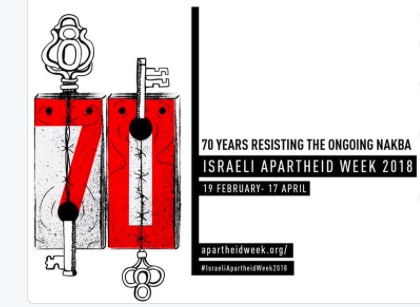
The 14th Annual Israeli Apartheid Weeks of actions will take place all around the world in March and April. Israeli Apartheid Week (IAW) is an international series of events that seek to raise awareness of Israel’s apartheid system over the Palestinian people and to build support for the growing Boycott, Divestment and Sanctions (BDS) movement.
A report released earlier this year by the United Nations Economic and Social Commission for Western Asia (ESCWA) proves beyond doubt that Israel has imposed a system of apartheid on the entire Palestinian people and calls for BDS measures to end Israel’s apartheid regime.

Inspired by the popular resistance across historic Palestine and struggles worldwide, IAW 2017 included a wide range of events from lectures, film screenings, cultural performances, and BDS actions, to postering in metro stations, setting up apartheid walls on campuses, and many more. These actions took place in more than 200 cities across the world.

The coming year (2018) will mark 70 years of Palestinian popular resistance against the ongoing process of dispossession and ethnic cleansing, since the 1948 Nakba.The Palestinian people’s resistance against colonization has in fact been longer than that. From the Balfour Declaration of 1917 to the present moment- Palestinians have fought for their dignity, their rights, and their lands. IAW is an opportunity to reflect on this resistance and further advance BDS campaigns for the continued growth and impact of the movement. Despite Israel’s legal and propaganda war on BDS internationally, IAW and the BDS movement continue to build linkages and solidarity with other struggles to achieve freedom, justice, and equality.

(continued in right column)

Question related to this article:

Presenting the Palestinian side of the Middle East, Is it important for a culture of peace?

Israel/Palestine, is the situation like South Africa?

(continued from left column)

If you would like to organize and be part of Israeli Apartheid Week on your campus or in your city, check out what events are already planned at apartheidweek.org, find us on Facebook and Twitter, register online http://apartheidweek.org/organise/ and get in touch with IAW coordinators in your region. For more information and support, please contact iawinfo@apartheidweek.org.

Ireland Palestine Solidarity Campaign (IPSC) 

To close #IsraeliApartheidWeek 2018, the IPSC held actions highlighting Helwett-Packard’s (HP) profiteering from Israel’s occupation and illegal colonisation of #Palestine.

In #Omagh and #Ennis we hosted information and petition collecting stalls, in #Dublin we staged a ‘mock checkpoint’ on Dublin’s busiest shopping street to give people an insight into the daily fear and humiliation faced by Palestinians living under Israel’s occupation, and in #Derry we brought the noise to the city’s famous walls.

Now we’re asking YOU to sign the pledge to boycott HP products, to refuse to buy their good in the future until they stop helping Israel oppress and colonise Palestine. Sign the #BoycottHP Pledge here: http://www.ipsc.ie/hp

Kenya na Palestine

#IsraeliApartheidWeek kicks off next Monday, March 12th with a great line-up of Palestinian films & discussions taking place across Nairobi, over the entire month. First stop Mathare!

Israeli Apartheid Week – Kingston, Ontario

Events beginning today [March 12] hosted by @SPHRQU in Kingston #Ontario, including a poetry night exploring parallels between Turtle Island and Palestine with @EricaVioletLee #IsraeliApartheidWeek

(Thank you to Janet Hudgins, the CPNN reporter for this article.)
What Is CSW and Why Are We in New York to Be Part of It?

. WOMEN’S EQUALITY .

An article from the Intenational Women’s Development Agency

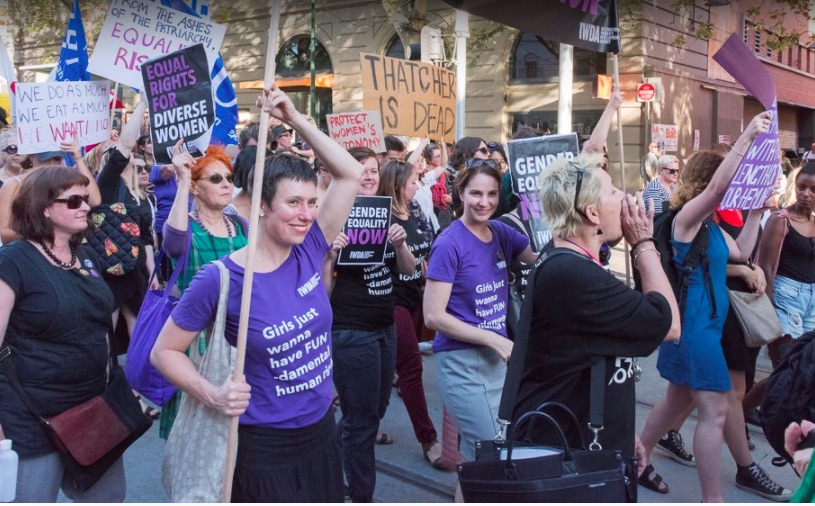
CSW is the largest gathering of the 193 UN Member States and other stakeholders that’s focused on the promotion of gender equality and the empowerment of women. This annual forum can have huge real-world applications to the lives of millions of women around the world. It’s a place where those with power come together to make decisions that affect real women’s lives. 

A BIT OF HISTORICAL CONTEXT

In its 61 years, CSW has contributed to huge progress for women. CSW is where conventions and guidelines that are still used today to protect the political, social and economic rights of women were passed, like the United Nations Convention on the Elimination of all forms of Discrimination of Women (otherwise known as CEDAW). Before CSW, ‘men’ was still used as a synonym for all of humanity. It was also the place where, in 1975, the 8th of March was formally recognised as International Women’s Day. Over the years, CSW has also been critical in recognising rape as a weapon of war, a view that was then formalised at the International Criminal Court.

WHAT ACTUALLY HAPPENS AT THE COMMISSION ON THE STATUS OF WOMEN?

The first week is a time for UN Member States, Civil Society Organisations (this just means organisations like us and other not-for-profits) and other stakeholders to deliver large plenary presentations on the year that was in gender equality, discuss innovations in this space and share recommendations for the coming year.

Week one of CSW is jam-packed full of debate, strategising and planning. Governments of the world come together in high level meetings to discuss the myriad of issues affecting women. Everything is up for discussion, but this year’s focus is on women’s economic empowerment. Ministers and Heads of State will gather and discuss how they will further the full and equal participation of women in their economies.

Leaders will share ideas and strategies about how to improve women’s economic participation through clearer policy and formal governmental commitments to gender equality. Civil Society Organisations will attend meetings, lobby Governments, liaise with decision makers and ensure the voices of diverse women are represented.

After the first week of meetings, discussions and debate among delegates, the week two of CSW is all about negotiating the “agreed conclusions”, which sets out Governments’ commitments to advance women’s rights post-CSW. It sounds simple enough, but the policy agenda that comes out of CSW requires feedback from many different people – and just about every word is hotly contested.

The “agreed conclusions” is a huge document, but an important one to get right – it’s designed to inform policy on women’s human rights across the world. If a government signs up, they’re obligated to deliver on it, which is why so much time is spent in discussions, negotiations and debate to reach an outcome that can be agreed on.

(continued in right column)

Question for this article

Does the UN advance equality for women?

(continued from left column)

WHY DO WE GO?

Women’s rights organisations and networks, both at home and abroad, have a key role to play in ensuring that the priorities of women on the ground are taken into account. But despite the importance of reflecting real women’s circumstances in the decisions that come out of CSW, women’s rights organisations and other Civil Society Organisations aren’t allowed to be involved in the formal negotiations of the “agreed conclusions”. This is reserved for governments. That’s why we need to show up and be as vocal as we can about the key issues that affect women’s lives and where women’s rights remain at risk.

We’ve seen true progress come out of CSW. But it’s always been a fight to get things passed, and over the past five to six years, we’ve seen a group of states coming together to push back against the gains we’ve made in gender equality and women’s human rights. Sexual health and reproductive rights are being impinged, comprehensive sex education to halt HIV isn’t always happening, and interested parties with fundamentalist ideas about women’s role in society are advocating for abstinence. Action to address these issues has already been agreed upon in the past, but these issues are still being contested and pushed back on.

If women’s rights advocates are not there to speak up, CSW gives states, lobbyists and those who wish to maintain the status quo of gender inequality a chance to push us backwards. We need to be there to hold the line and keep the discussion moving forward.

WHAT DOES A DAY AT A BIG GLOBAL CONFERENCE LOOK LIKE?

It starts early. It ends late. We don’t stop.

Days start at 7am with teams touching base and sharing information about what’s happening in the negotiating rooms. We check in to see how everyone is travelling, what we need to achieve for the day, and figure out conversations to pursue with decision makers.

Over the course of day we meet with Government delegations; catch up with fellow activists and make plans for the future; work with our colleagues to find ways to contribute to debate around the “agreed conclusions”; and meet with funders to share results and attempt to secure more funding for the women’s rights movement.

Our colleagues have told us that CSW can be personally challenging. They say it’s confronting to see the denial of women’s humanity and rights, particularly by legitimised groups like UN Nation States. As an organisation that works in research, policy, advocacy and programs, we know the impacts these decisions can have on the lives of women. We can see ahead. At the moment, we’re seeing the disturbing rise of rhetoric around women’s primary role being motherhood and caregivers. This is something that needs to change. We’re seeing countries decriminalising violence. We’re seeing women’s rights at risk.

WHAT DOES IT MEAN FOR THE PEOPLE INVOLVED?

When the UN can’t back criminalisation of domestic violence, it lets national governments decriminalise domestic violence. If the UN can’t back comprehensive sexuality education, it allows National Governments and conservative groups to withhold education and resources around pregnancy and protection against STIs. When the UN can’t back the human rights of people with diverse sexualities and gender identities, it creates environments in which states can create laws which make homosexuality punishable by death.

We go to CSW because we want to change the laws and policies around the world to achieve gender equality, and CSW is the preeminent global policy space in which to do this. We go to get in front of Governments and funders of the world to ensure their political and financial commitment to women’s rights. We also go to build the global alliances between women’s activists, organisations, and feminists. We go because it isn’t just a lofty political event – it effects real women’s lives. We go to create change.

UN Commission on the Status of Women (CSW62)

. WOMEN’S EQUALITY .

An article from UN Women

The Issue: Empowerment of rural women and girls

She works from daybreak until sundown, and often beyond. She tills the land and grows the food that feeds families and nations, but often without land rights, or equal access to finances and technology that can improve her livelihood. She is working as hard, or more, as the man next to her, but have less income. She has much to contribute, but will her rights, voice and experience shape the policies that affect her life?

Without rural women and girls, rural communities and urban societies would not function. Yet, on almost every measure of development, because of gender inequalities and discrimination, they fare worse than rural men or urban women.

(continued in right column)

Question for this article

Does the UN advance equality for women?

(continued from left column)

Less than 13 per cent  of landholders worldwide are women, and while the global pay gap between men and women stand at 23 per cent, in rural areas, it can be as high as 40 per cent.

For far too long, rural women’s and girls’ rights, livelihoods and wellbeing have been overlooked or insufficiently addressed in laws, policies, budgets and investments. They lack infrastructure and services, decent work and social protection, and are left more vulnerable to the effects of climate change. Gender-based violence and harmful practices continue to limit their lives and opportunities.

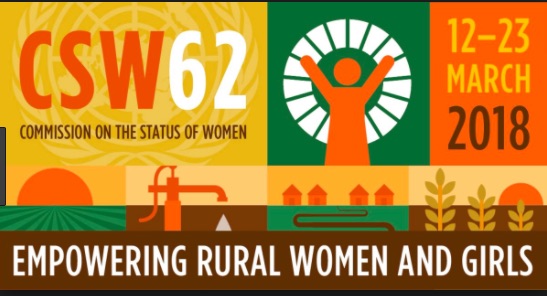
The 62nd session of the United Nations Commission on the Status of Women (CSW62), the UN’s largest gathering on gender equality, is taking place at the United Nations Headquarters in New York from 12 – 23 March 2018. It will focus on the theme, “Challenges and opportunities in achieving gender equality and the empowerment of rural women and girls”.

The Commission is one of the largest annual gathering of global leaders, NGOs, private sector actors, United Nations partners and activists from around the world focusing on the status of rights and empowerment of all women and girls, everywhere. Check out CSW62 events.

Join us to learn more about rural women’s lives, their priorities and accomplishments. Follow the unfolding conversation at the United Nations and in rural communities worldwide.

International Women’s Day Celebration and Launching Ceremony of the “Libya for Peace” Campaign, 8 March 2018

. WOMEN’S EQUALITY .

Announcements from CNBC Africa and UNSMIL twitter

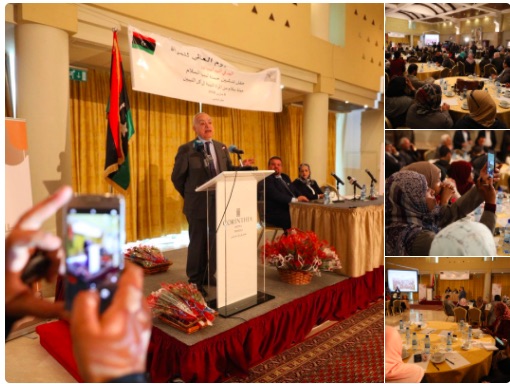
The “Libya for Peace” Campaign was launched on International Women’s Day held in cooperation with the General Authority for Culture and the support of the United Nations.


GhassanSalame addressing the launch of ‘#Libya for #Peace Campaign (photo from UNSMIL twitter)
.

(Article continued in the right column)

Question for this article

Do women have a special role to play in the peace movement?

(Article continued from the left column)

“Libya for Peace” Campaign aims at promoting a culture of peace and peaceful coexistence and highlighting the role of women in peacemaking.

This Campaign was initiated by a group of Libyan women after a series of meetings and conferences that resulted in the nomination of seven women from different regions of Libya as coordinators of the campaign.

This inaugural ceremony is the first of several activities to highlight the general plan of the “Libya for Peace” Campaign and the Women’s Peace Document that emerged from the Libyan Women’s Peace Conference held in Montreux, Switzerland, in September 2015.

Opening Remarks:

•       Coordinators of the “Libya for Peace” Campaign

•       Dr. Hassan Ewneis, Director of the General Authority for Culture

•       Dr. Asma Alosta, Minister of State for Women Affairs and Social Development

•       Dr. Ghassan Salamé, Special Representative of the Secretary-General in Libya.
Distributed by APO Group on behalf of United Nations Support Mission in Libya (UNSMIL).

What Women Bring to the Constitution-Writing Table

. WOMEN’S EQUALITY .

A blog by Marie O’Reilly* for Ms Magazine Blog

When social norms are upended by violence—including relations between women and men—constitution reform presents an opportunity to transform power dynamics in a society. Rewriting a country’s constitution is a frequent step on the path toward peace, and is a particularly important entry point for women to address their historic marginalization and have a say in the future of their societies.


UN Women / Creative Commons
.

Yet among the 75 countries that undertook constitution reform in the wake of conflict or unrest between 1990 and 2015, women made up only one in five constitution drafters.

As individuals, women play myriad roles in peace and conflict—victims and perpetrators, peace activists and politicians—and they often embody many of these identities at once. But a new study from the nonprofit Inclusive Security, where I serve as research director, shows that when women do participate in constitution making, they consistently advocate for constitutional provisions that advance gender equality.

In Kenya, this meant equal rights and non-discrimination in marriage, divorce, property and citizenship—as well as a commitment that no more than two-thirds of any elected body could be of the same gender. In Rwanda, it meant a guarantee that women would occupy at least 30 percent of seats in parliament.

These kinds of gender equality provisions help to ensure that women can continue to influence public policy after the constitution-making process ends.

They also help lay a foundation for peace.

(Article continued in the right column)

Question for this article

Do women have a special role to play in the peace movement?

(Article continued from the left column)

There are many drivers of conflict, but scholarly research suggests a strong relationship between gender equality and peace. This is particularly true for women’s participation in politics and the durability of peace after war. A study of 58 conflict-affected states between 1980 and 2003 found that when no women were represented in the legislature, the risk that a country would relapse into war increased over time. But when 35 percent of lawmakers are women, the risk of relapse is near zero. The causal direction is not always clear, but working for both equality and peace at once appears to be in everyone’s interest.

Beyond advocating for their own rights in the constitutional text, our research showed that women tended to advance peace-building as part of the constitutional process. Across eight case studies, women frequently bridged acute political and religious divides to advance their gender equality agenda, modeling for other policymakers how communities affected by conflict can collaborate and develop consensus on priority issues.

Women’s civil society groups also consistently led outreach initiatives to broaden societal participation and help cement the social contract as it was being created.

In the Philippines, women’s organizations engaged former combatants, students, academics and religious, tribal and business leaders to develop draft provisions on topics such as indigenous peoples’ rights, the justice system and policing.

Of course, it takes much more work to turn constitutional provisions into tangible change. In Rwanda, women now have the highest rates of parliamentary representation in the world. In Kenya, on the other hand, the parliament has failed to enforce the two-thirds principle. But as a foundational legal text, a constitution provides a framework for advocacy and further legislation. Kenyan women took the streets last January to protest their president’s failure to name women to at least one-third of his new cabinet, and their banners referenced the constitutional provisions that he was violating. Two Kenyan rights groups have taken the issue to the High Court.

If done right, constitution-making lays the groundwork for civil contestation, rather than violent confrontation. But its potential to transform conflict into democratic deliberation depends, in part, on who gets to participate.

* Marie O’Reilly is director of research and analysis at Inclusive Security.

Women take to the streets as the world marks International Women’s Day

. WOMEN’S EQUALITY .

An article from PBS (Pubic Broadcasting Service)

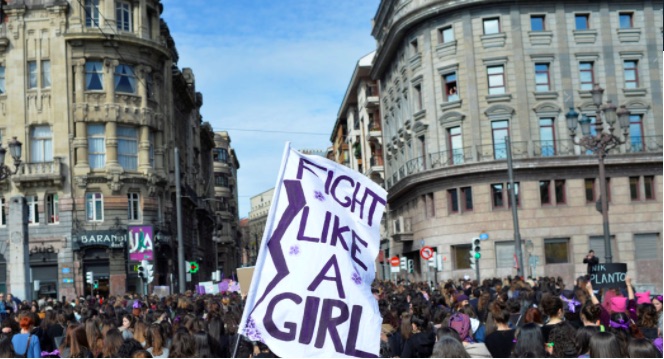
Women across Europe and Asia shouted their demands for equality, respect and empowerment Thursday to mark International Women’s Day, with protesters in Spain launching a 24-hour strike and crowds of demonstrators filling the streets of Manila, Seoul and New Delhi.


A protester holds a banner reading “Fight Like A Girl” during a demonstration for women’s rights on International Women’s Day in Bilbao, Spain. Photo by Vincent West/Reuters
.

Spanish women were staging dozens of protests across the country against the wage gap and gender violence. In Madrid, a massive demonstration was planned for the evening. In Barcelona, protesters who disrupted traffic into the city center were pushed back by riot police.

In some countries, protests were more muted, however.
International Women’s Day is a public holiday in Russia, but opposition presidential candidate Ksenia Sobchak was one of the few demonstrators in Moscow.

In a protest reminiscent of the #MeToo movement, which aims to hold those involved in sexual misconduct, and those who cover it up, accountable, Sobchak staged a solo picket outside the lower house of the Russian parliament to demand the resignation of a prominent lawmaker whom several female journalists accuse of sexual harassment.


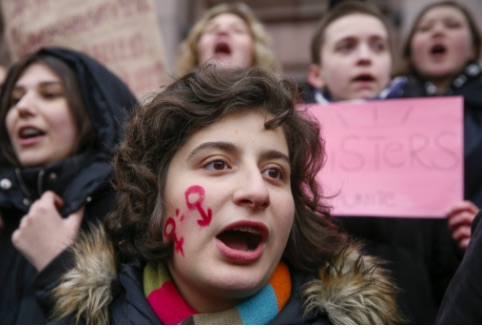
Participants shout slogans during a rally for gender equality and against violence towards women on the International Women’s Day in Kiev, Ukraine. Photo by Valentyn Ogirenko/Reuters

On a lighter note, a leading French newspaper found a witty way of making its point about discrimination and the gender pay gap — by upping its price for men. The left-leaning daily Liberation said that for one day only, men would pay 50 euro cents more than women, in a reflection of the 25 percent less that women in France are paid, on average.

Across Asia, women came out to mark the day. In China, students at Tsinghua University used the day to make light of a proposed constitutional amendment to scrap term limits for the country’s president. One banner joked that a boyfriend’s term should also have no limits, while another said, “A country cannot exist without a constitution, as we cannot exist without you!”

But photos of the students’ banners, like other content about the proposed amendment, were quickly censored on social media.


A woman takes pictures of men standing behind booths during an International Women’s Day event inside a shopping mall, where customers can rent a “boyfriend” for 30 minutes with one yuan ($0.16), in Binzhou, Shandong province, China. Photo by Reuters


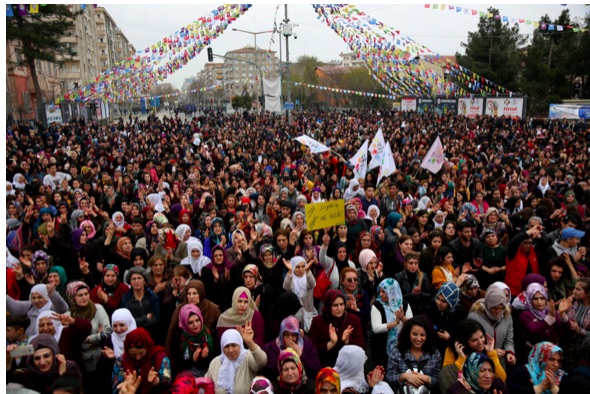
Women gather during a rally on the International Womens Day in Diyarbakir, Turkey. Photo by Sertac Kayar/Reuters

Hundreds of activists in pink and purple shirts protested in downtown Manila against Philippine President Rodrigo Duterte, calling him among the worst violators of women’s rights in Asia. Protest leaders sang and danced in a boisterous rally in Plaza Miranda, handing red and white roses to mothers, sisters and widows of drug suspects slain under Duterte’s crackdown on illegal drugs.

(Article continued in the right column)

Question for this article

Do women have a special role to play in the peace movement?

(Article continued from the left column)

Human rights groups have condemned Duterte’s sexist remarks, including one in which he asked troops to shoot female communist rebels in the genitals. Protest leader Jean Enriquez also railed against Duterte’s anti-women remarks, saying: “We’re so alarmed. We have seen his direct attacks on women under his iron-hand rule and it’s now time to heighten our resistance.”

In Afghanistan, hundreds of women, who would have been afraid to leave their homes during Taliban rule, gathered in the capital to commemorate the day— and to remind their leaders that plenty of work remains to be done to give Afghan woman a voice, ensure their education and protect them from increasing violence.

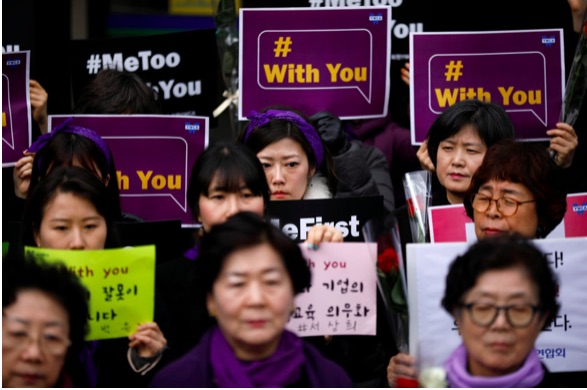
Hundreds of South Koreans, many wearing black and holding black #MeToo signs, rallied in central Seoul. South Korea’s #MeToo movement has gained significant traction since January, when a female prosecutor began speaking openly about workplace mistreatment and sexual misconduct. The list of women who speak out is growing day by day.

Several high-profile South Korean men have resigned from positions of power, including a governor who was a leading presidential contender before he was accused of repeatedly raping his female secretary.

Women attend a protest as a part of the #MeToo movement on International Women’s Day in Seoul, South Korea. Photo by Kim Hong-Ji/Reuters


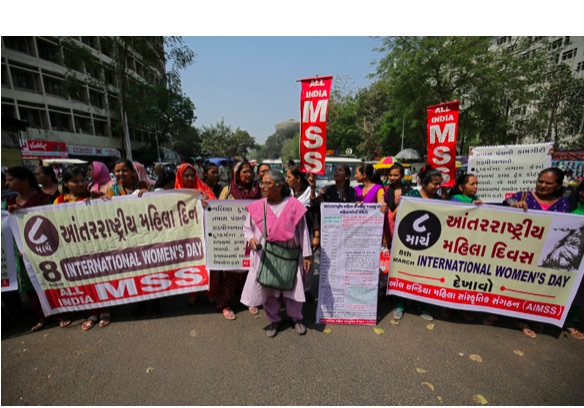
Demonstrators hold banners during a protest demanding equal rights for women on the occasion of International Women’s Day, in Ahmedabad, India. Photo by Amit Dave/Reuters

In India, hundreds of women, including students, teachers and sex workers, marched through the capital to bring attention to domestic violence, sexual attacks and discrimination in jobs and wages.

“Unite against violence against women,” one placard urged. “Man enough to say no to domestic abuse,” said another. “My body, My choice.”

India had its first female leader in 1966 when Indira Gandhi became prime minister, but Indian women are still often relegated to second-class citizenship.

In Africa, Ugandan President Yoweri Museveni urged men to stop physically abusing their wives. Domestic violence is common in Uganda, although victims rarely report perpetrators to the police for fear of being stigmatized or thrown out of their homes.
“If you want to fight, why don’t you look for a fellow man and fight?” Museveni said, calling domestic abusers cowards.

Back in Europe, the European Commission said in a statement published on Twitter that the continent “is one of the safest and most equal places for women in the world.” On the other hand, it noted that “the path to full equality in practice is still a long one.”
“The issue of gender equality is high on the agenda,” Frans Timmermans, the European Commission’s first vice-president, said, “but progress is still slow on the ground.”

German Chancellor Angela Merkel, considered by many to be one of the world’s most powerful women, echoed those sentiments, saying in a video message the struggle for greater equality in Germany and worldwide must continue. She said “many women before us have made sacrifices and fought persistently so that women would have more rights … but there’s still a lot to do.”

As if to prove that point, Belgian women’s groups spoke out angrily as the world of sport provided an immediate and visible target for their struggle.

The Belgian football federation, saying it did not want to be taken “hostage” by women’s groups, refused Thursday to back down from its decision to choose a rapper known for lacing his songs with misogynistic lyrics to produce its official World Cup song.
The Women’s Forum, a coalition of Belgian women’s groups, said it was unacceptable that an artist using degrading lyrics could be picked to produce what should be a unifying song.

Tim Sullivan in Delhi, Barry Hatton in Lisbon, Portugal, and AP correspondents around the world contributed to this report.

‘Back to Learning’ education campaign to benefit half a million children in South Sudan

EDUCATION FOR PEACE .

An article from Africa News

The fourth phase of the ‘Back to Learning’ initiative launched Tuesday by the Ministry of General Education and Instruction, at Freedom Square in Kapoeta in the presence of more than 2,000 children and their parents, representatives of UNICEF, the Education Donor Group, Save the Children, Girls Education South Sudan, and members of the National Education Forum and Civil Society.


Photo from Children of South Sudan

The Back to Learning 2018 initiative will target the most under-represented communities throughout South Sudan, providing learning opportunities for children currently not attending school, either due to conflict, cultural barriers or obstacles such as distance or family finances. Building on the success of the first two years of the initiative, which provided more than 680,000 children with access to education, the next phase of Back to Learning will put an emphasis on children in conflict affected states, girls and other vulnerable children.

This year’s theme ‘Inclusive and Equitable Access to Quality Education for Peace and Sustainable Development’ aims to highlight the crucial role of education in fostering peace. Education has the potential to build the capacities of children, parents, teachers and community members to prevent, reduce and cope with conflict and to promote equality and peace. Education can also help address the inequalities that generate conflict. Inequalities can fuel conflict, just as conflict can worsen inequalities.

“Education transforms lives, creates the preconditions for peace and promotes sustainable development,” said Mr. Deng Deng Hoc Yai, Minister of General Education and Instruction. “The Government is committed to providing equitable access to quality education to all children for achieving the national goal of peace and sustainable development. I want to urge all parents and guardians to take all their children to school. I, once again, direct all public schools to admit all children free of charge in accordance with the law.”

(article continued in right column)

Question related to this article:

What is the United Nations doing for a culture of peace?

(article continued from left column)

National and state-level Back to Learning committees are already in place coordinating activities for this school year, including social mobilization activities across the country to kick start the yearlong campaign. We encourage as many citizens as possible to get involved in this initiative.

“Ensuring children are able to access quality education not only provides them with a brighter future, it also benefits their community and South Sudan as a whole,” said Mahimbo Mdoe, UNICEF’s Representative in South Sudan. “There is no greater investment for a country to make.”

UNICEF continues to work with partners to set up temporary learning spaces and provide supplies and psychosocial support to protect children from the worst consequences of the conflict whilst continuing with their education.
In 2018, the Back to Learning initiative aims to:

• Provide 500,000 children and adolescents with access to age-appropriate learning opportunities; which will include 300,000 children retained from 2017 and 200,000 children currently out of school.

• Establish 405 learning spaces providing a safe and protective learning environment;

• Train 4,000 teachers, including 1,750 Early Childhood Development caregivers on pedagogy and teaching methods, psychosocial support and conflict-sensitive education;

• Train 1,200 Parent Teacher Association and School Management Committee members on social mobilization, conflict sensitive education, basic school management and school development.

To provide access to learning opportunities for the more than half a million vulnerable children and adolescents aged 3 to 18, UNICEF and partners require US$47.5 million.

The funds will be used to provide learning facilities and education materials to newly enrolled children in schools; to continue education services to children in conflict-affected areas; and to enrol new students out of school for other reasons.

Distributed by APO Group on behalf of United Nations Children’s Fund (UNICEF).

(Thank you to the Global Campaign for Peace Education for calling this article to our attention.)

UNESCO supports the government of Mali to build a culture of sustainable peace

FREE FLOW OF INFORMATION

An article from UNESCO (translation by CPNN)

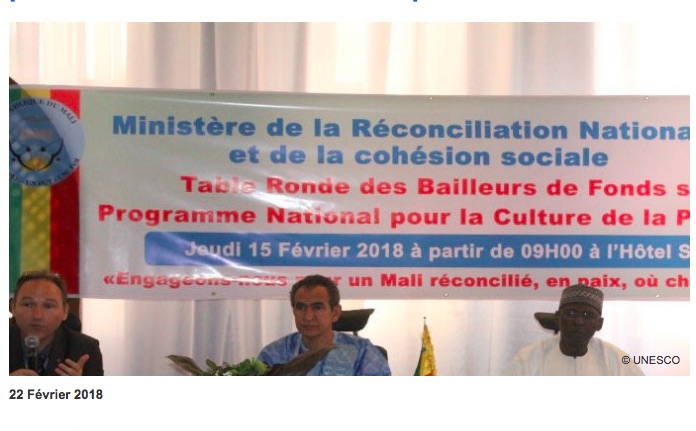
The donors’ round table on the National Program for the Culture of Peace in Mali was held on February 15, 2018 in Bamako. It was organized by the Ministry of National Reconciliation and Social Cohesion (MRNCS), in collaboration with UNESCO, under the chairmanship of Mr. Attaher AG Iknane, Secretary General of the MRNCS, and Mr. Hervé Huot-Marchand, UNESCO Representative in Mali.

This round table was a moment of dialogue and advocacy around the National Program for the Culture of Peace in Mali (PNCP), which is now a reference framework for the interventions of the Ministry. The presence of technical and financial partners (European Union, USAID, AfDB, UNDP, UNFEMMES), regional institutions (ECOWAS), international NGOs (Plan International), national financial institutions (BOA, BSIC, BIM , etc.) and civil society organizations, has made it possible to present the PNCP in its broad contribution to sustainably establishing a culture of peace in Mali and reconnecting with Malian socio-cultural values.

(Article continued in right column)

(Click here for the original in French)


Question related to this article.

Will UNESCO once again play a role in the culture of peace?

(Article continued from left column)

Hervé Huot-Marchand congratulated the government of Mali for its efforts in promoting the culture of peace and in developing the PNCP. He then recalled that this program is consistent with the genesis of UNESCO’s Constitution which states: “Since war begins in the minds of men, it is in the minds of men that we must erect the barriers of defense of peace. He continued his speech highlighting the impact of the program in achieving the objectives defined in the Strategic Framework for Economic Recovery and Sustainable Development (CREDD) and the United Nations Development Assistance Framework (UNDAF). In addition, the Representative welcomed the alignment of the program to the 2030 Agenda with the 17 Sustainable Development Goals (SDGs) especially the 16 th which recommends: “peace assurance, stability, human rights and effective governance based on the rule of law as important vectors for sustainable development “.

Mr. Huot-Marchand called on all partners to support the implementation of the activities of the action plan and informed the Ministry of the mobilization of 2,626,790 USD or more than 1,300,000,000 FCFA for the culture of peace, this by UNESCO, IOM and UNICEF through the Peace Building Fund (PBF). The project will be implemented for 18 months from March 2018.

On behalf of the Minister, Mr. Attaher Iknane, Secretary General of the MRNCS, welcomed everyone, while expressing thanks to participants, including UNESCO, for their technical and financial support in the implementation of this program. He also recalled the objectives of the PNCP as well as the participatory approach that underpinned its development and that will contribute to establishing peace and offering tools to prevent violent extremism. He ended his speech with words of thanks and renewed Mali’s recognition of donors: “Investing in the culture of peace is never too much”.

After the presentation of the project, the floor was given to the participants for reactions. These focused on questions of clarification on (the overall budget and the duration of the program), suggestions around an action plan of activities that could facilitate TFPs to better direct their investments according to the areas mentioned.

At the end of this round table, the Ministry commits itself to continue the steps for a concretization of the activities retained in the PNCP over the period 2017-2020.

Nobel Women Peace Laureates Call for an End to Rohingya Genocide

. WOMEN’S EQUALITY .

A press release from the Nobel Women’s Initiative

As three Nobel peace laureates—Tawakkol Karman of Yemen, Shirin Ebadi of Iran, and Mairead Maguire of Northern Ireland – conclude their visit to Bangladesh on the six-month anniversary of the current Rohingya crisis, the three women are calling for an immediate end to the “genocide” of the Rohingya people.


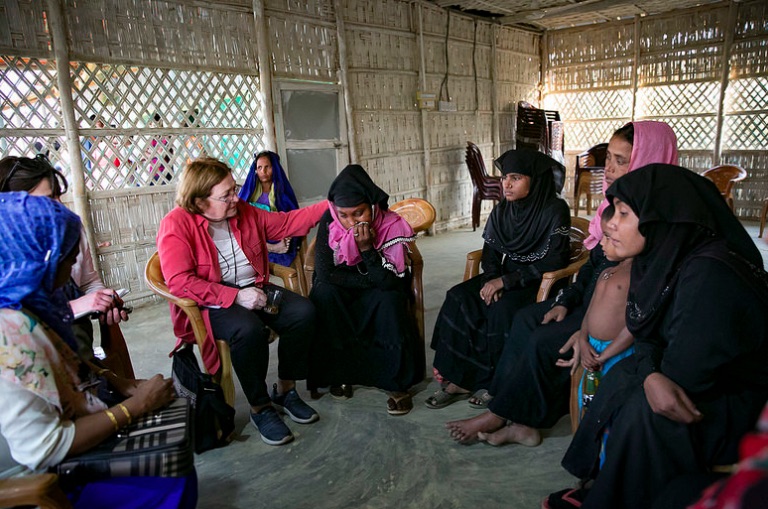
Mairead Maguire meets with Rohingya survivors of gender based violence in Kutupalong Rohingya refugee camp February 25, 2018 in Cox’s Bazar, Bangladesh. Photo by Allison Joyce

This week, the three women Laureates ­––in partnership with Bangladesh women’s organization Naripokkho­­––spent time listening to stories, meeting over 100 women refugees in the Cox’s Bazar area, and travelling to “no man’s land”, where thousands of Rohingya have been stranded between Myanmar and Bangladesh.

After hearing testimonies describing how security forces burned villages, tortured, killed and systematically raped women and girls—as well as reports from humanitarian organizations and UN officials—the Laureates concluded that the on-going attacks on the Rohingya of Rakhine State amount to crimes against humanity and genocide.

The Laureates are calling on Laureate Aung San Suu Kyi and the Myanmar military to put an end to the killings and the persecution of the Rohingya people.

“She must stop turning a deaf ear to the persecution of the Rohingya or risk being complicit in the crimes,” said Tawakkol Karman. “Wake up or face prosecution.”

As women committed to peace, the Laureates are urging Aung San Suu Kyi to exercise her personal and moral responsibility stop the genocide. “If she fails to do so, her choice is clear: resign or be held accountable, along with the army commanders, for the crimes committed” added Karman.

The Laureates heard how Rohingya women have been twice victimized: for being Rohingyas and for being women. They described stories of horrific violence and systematic mass rape.

“My 18-year old daughter had her breasts cut off and she died,” a Rohingya woman in the Thyankhali camp told the Nobel peace laureates.

“My baby was only 1-year and 6-months old. The military tore her from my arms and slaughtered her in front of me,” said a Rohingya survivor of rape. She then passed around a photo she had of her child. She wanted everyone to see her little girl.

The laureates heard stories of children being thrown into fires and drowned in rivers. They heard stories of houses and complete villages being burned to the ground and children being shot while running to the forest to seek shelter and safety.

“The torture, rape and killing of any one member of our human family must be challenged, as in the case of the Rohingya genocide,” said Mairead Maguire. “Silence is complicity.”

(article continued in right column)

Questions for this article

Do women have a special role to play in the peace movement?

(article continued from left column)

The Nobel peace laureates were impressed by the strength and resilience of the women who had survived such horrific crimes. One woman at the Thyankhali camp told them, “Why should we feel shame? We were tortured. We don’t need to feel shame about that.”

Another woman at Camp Kutupalong said, “We are not afraid of anything. We want our stories to be told.”

The Laureates are calling for the perpetrators of these heinous crimes to be brought to justice before the International Criminal Court.

“With over a million Rohingya displaced, countless dead or missing, and rape and sexual violence being used as a weapon of war, it is well past the time for the international community to act,” said Shirin Ebadi.

The Laureates met with Prime Minister Sheikh Hasina, government officials, human rights organizations and humanitarian agencies. They extended their thanks to Prime Minister Hasina and to both the Government and the people of Bangladesh for their exemplary acts of compassion for the Rohingya refugees.

The Laureates also expressed deep appreciation to the Bangladeshi government and to the various humanitarian agencies that have met the extraordinary challenge of setting up the Refugee and Relocation Camps for over one million Rohingya refugees.

As a result of their visit to Bangladesh, the Nobel Laureates are calling for:

* An immediate end to the genocide against the Rohingya in Rakhine, and an order to the Myanmar military to immediately stop all acts of sexual violence.

* Justice for Rohingya victims: perpetrators of crimes must be brought to justice through the International Criminal Court (ICC).

* Bangladesh, as the only country in South Asia to have ratified the Rome Statute, should, along with other states parties, the UN Security Council and the Human Rights Council, refer the case to the ICC.

* Alternatively, the ICC Prosecutor should open an independent investigation into crimes against humanity and genocide perpetrated in Rakhine State.

* A voluntary, safe and dignified return. There should be no forced repatriation. When Rohingya do return to Rakhine State, they should be offered security and be granted full citizenship.

* The government of Myanmar to take immediate action to address the systematic discrimination of the Rohingya in Rakhine State, and ensure the Rohyinga’s right to nationality, land ownership, freedom of movement and other fundamental rights.

* A comprehensive arms embargo on Myanmar to ensure that there are no sales of weapons or other military equipment.

* The international community to increase its support to Bangladesh’s humanitarian response.

* Bangladesh to ratify the 1951 Geneva Refugee Convention, as a major step to give protection to refugees and set an example in South Asia.

For more information, please contact:
Ketty Nivyabandi, Media Associate: knivyabandi@nobelwomensinitiative.org + 1 613 691 1419
Katia Gianneschi, Media Outreach: Katia.Gianneschi@gmail.com +1 613 614 9740

(Thank you to Janet Hudgins, the CPNN reporter for this article.)
English bulletin March 1, 2018

SOLIDARITY INSTEAD OF MILITARY THREAT .

The theme this month is solidarity instead of military threat.

We begin with the words of UN Secretary-General Antonio Guterres.

Speaking at the PyeongChang Olympic Winter Games, in the Republic of Korea, he said, “Let the Olympic flame shine as a beacon to human solidarity.  Let the Olympic Truce help spread a culture of peace.”

And speaking to the meeting on combating the transnational threat of terrorism in Africa held by Peace and Security Council of the African Union, he concluded that “we face a serious challenge — but I believe it is one that we can meet with solidarity, common action and a shared resolve.”

In Korea the Olympic Games have inspired the first peaceful contact between North and South in many years. This flies in the face of the threat of military action by the United States.

As athletes from North and South Korea marched together, the head of the PyeongChang Organizing Committee, Lee Hee-beom, addressed the closing ceremony, saying “the presence of both Koreas at these Olympic Games has laid a solid foundation for the future of the two Koreas. The seed of peace you have planted here in PyeongChang will grow as a big tree in the not-distant future. The hope and aspirations of South and North Korean athletes together with cheerleaders will definitely serve as a cornerstone of the unification of the Korean Peninsula.”

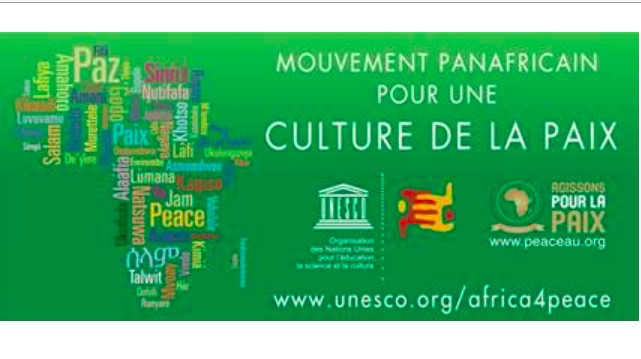
In Africa, the call by Guterres for solidarity echoes the actions for a culture of peace by UNESCO, designed to “draw on the sources of inspiration and the potential of the cultural, natural and human resources of the continent in order to identify concrete lines of action to build a lasting peace, the cornerstone of endogenous development and Pan-Africanism.” These can be seen as an alternative not only to the threat of terrorism, but also to the threat posed by American military expansion on that continent.

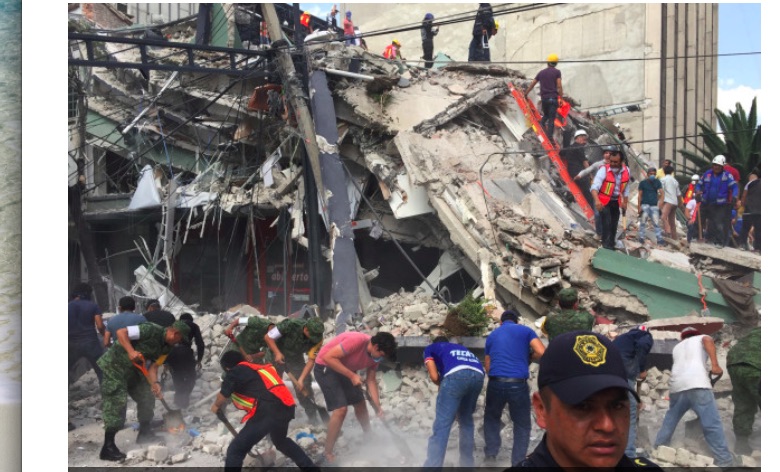
In Latin America, there are two good examples of solidarity this month. Writing from Mexico, Leonardo Boff, the Brazilian theologian and writer, recalls the remarkable spirit of solidarity and cooperation of the Mexican people in response to the earthquake last year. And writing from the organization Tikkun in the United States, David Sylvester, recalls how the presence of a delegation of some 50 interfaith and peace activists prevented violence against the peaceful protests of the people of Honduras.

In Europe, activists of Amnesty International and Anafé (the National Border Assistance Association for Foreigners) continue to give aid to refugees at the border despite prosecution by the French authorities.

In the Middle East, despite pressure by the government of Israel, the International Boycott, Divestment and Sanctions Movement that seeks to end the Israeli occupation of Palestine and human rights violations, continues its activity and has been nominated for the Nobel Peace Prize.

In the United States, the movement of solidarity and resistance to protect immigrants from the threat of deportation by the government of Donald Trump, continues to gain support, as exemplified by the”state of the city” address by New Haven mayor Toni Harp.

Finally, on a global scale, we publish the latest news from the Youth Solidarity Fund of the United Nations Alliance of Civilizations, which we have followed since its beginnings over a decade ago. And a former director of the Alliance, Shamil Idriss gives us his vision for the actions of Search for Common Ground in 2018, based on their actions of solidarity during 2017.


TOLERANCE AND SOLIDARITY


The People of Mexico Give the World an Example of Solidarity

FREE FLOW OF INFORMATION


UNESCO brochure: Africa, Culture of Peace, 2017

DEMOCRATIC PARTICIPATION


UN chief in Pyeongchang; Olympic message of peace is universal, beacon for human solidarity, culture of peace

SUSTAINABLE DEVELOPMENT


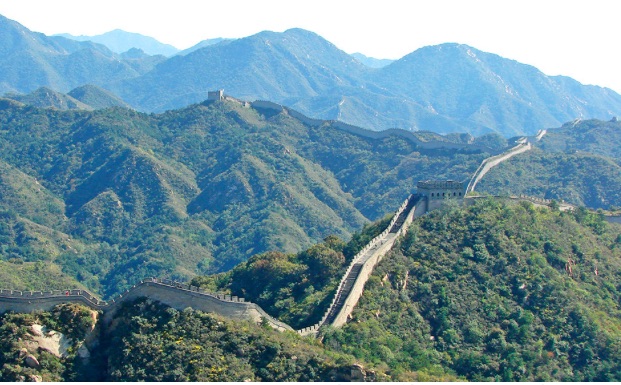
China Reassigns 60,000 Soldiers to Plant Trees

DISARMAMENT AND SECURITY


First National Bank dumps NRA, will no longer issue NRA Visa card

HUMAN RIGHTS


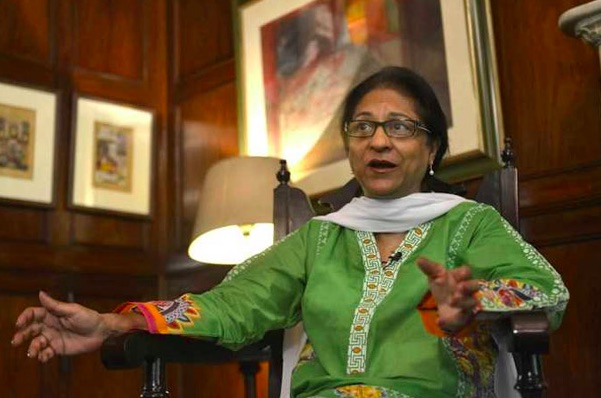
Pakistan: Asma Jahangir, Champion Of Human Rights, Critic Of Pak Army, Dies At 66

WOMEN’S EQUALITY


India: ’Life: A Mystical Journey’- A Gathering of 500 Women Leaders To Explore Spirituality as Tool For Peace And Empowerment

EDUCATION FOR PEACE


Search for Common Ground: Vision for 2018