Massive Protest in Cuba Condemns US Military Operation in Venezuela

DISARMAMENT & SECURITY .

Photos from a Youtube video by Dawn News

Here are some frames from the Youtube video by Dawn News of the rally in Havana to protest the attack and kidnapping of President Maduro by the Trump government of the United States. The frames presented here are in the order in which they occur in the video.


° ° ° ° °

(Continued in right column)

Question related to this article:
 
Can Trump force regime change in Venezuela, Cuba and Colombia?

(Continued from left column)

° ° ° ° °


– – – – – –

If you wish to make a comment on this article, you may write to coordinator@cpnn-world.org with the title “Comment on (name of article)” and we will put your comment on line. Because of the flood of spam, we have discontinued the direct application of comments.
Maduro Supporters Gather in Caracas

DISARMAMENT & SECURITY .

Photos from a Youtube video by Reuters

Here are some frames from the nine-hour Youtube video by Reuters of the rally in Caracas to protest the attack and kidnapping of President Maduro by the Trump government of the United States. The frames presented here are in the order in which they occur in the video.


° ° ° ° °

° ° ° ° °

° ° ° ° °


(Continued in right column)

Question related to this article:
 
Can Trump force regime change in Venezuela, Cuba and Colombia?

(Continued from left column)


° ° ° ° °

° ° ° ° °

° ° ° ° °


– – – – – –

If you wish to make a comment on this article, you may write to coordinator@cpnn-world.org with the title “Comment on (name of article)” and we will put your comment on line. Because of the flood of spam, we have discontinued the direct application of comments.
Thousands Protest in Colombia

DISARMAMENT & SECURITY .

An article from CCTV facebook

Thousands of protesters took to the streets of Bogota, the capital of Colombia, on Wednesday to decry threats from the United States to expand its military campaign into their territory in the name of combating drug trafficking, after last weekend’s deadly raid on Venezuela.

Wednesday’s rally took place at Bolivar Square in the heart of downtown Bogota at the call of Colombian President Gustavo Petro after U.S. President Donald Trump said a U.S. military operation against Colombia “sounds good”. Such demonstrations were also held in other cities across Colombia.

U.S. military forces carried out a series of attacks and bombings in Caracas and other parts of Venezuela in the early hours of Saturday, and forcibly seized Venezuelan President Nicolas Maduro and his wife Cilia Flores, before putting them in custody in New York.

(Continued in right column)

Question related to this article:
 
Can Trump force regime change in Venezuela, Cuba and Colombia?

(Continued from left column)

“We are now witnessing the resurgence of American imperialism throughout Latin America and many parts of the world. The United States is not only reshaping its imperialism, but also disregarding the fundamental principles of international law,” said Cristian Zuluaga, a protester.

“They always consider us Latin American countries inhuman or more precisely, they see us as their backyard. They believe our wealth belongs to them. They believe we will always be subservient, yielding, never rebellious. But we have courageous people here,” said Claudia Bejarano, another protester.

U.S. attack on Venezuela, which Trump has admitted is to secure “total access” to Venezuela’s massive oil reserves and subsequent threats to Colombia, has sent shock waves through Latin America. Demonstrators this week hit the streets of Europe and the Middle East to condemn the U.S. aggression.

“We are not slaves to anyone, nor are we above anyone. We share the same land, the same territory. All we can do is to unite, engage in dialogue, and reach a necessary peace agreement,” said Maria Mayorga, a demonstrator.

“The whole world has responded. Protests have also taken place in Europe. Protests have also occurred in countries that were once invaded by the United States, such as Syria, Libya, Afghanistan, and Baghdad,” said Jhon Fredy Sanchez, another demonstrator.
– – – – – –

If you wish to make a comment on this article, you may write to coordinator@cpnn-world.org with the title “Comment on (name of article)” and we will put your comment on line. Because of the flood of spam, we have discontinued the direct application of comments.
African Union: Our Aspirations for the Africa We Want

. . SUSTAINABLE DEVELOPMENT . .

An article from the African Union

Agenda 2063 seeks to deliver on a set of Seven Aspirations each with its own set of goals which if achieved will move Africa closer to achieving its vision for the year 2063. These 7 Aspirations reflect our desire for shared prosperity and well-being, for unity and integration, for a continent of free citizens and expanded horizons, where the full potential of women and youth are realised, and with freedom from fear, disease and want.

Aspiration 1: A prosperous Africa based on inclusive growth and sustainable development

We are determined to eradicate poverty in one generation and build shared prosperity through social and economic transformation of the continent.

Goals:

1. A high standard of living, quality of life and well-being for all

°ending poverty, inequalities of income and opportunity; job creation, especially addressing youth unemployment; facing up to the challenges of rapid population growth and urbanization, improvement of habitats and access to basic necessities of life – water, sanitation, electricity; providing social security and protection;

2. Well educated citizens and skills revolutions underpinned by science, technology and innovation

° developing Africa’s human and social capital (through an education and skills revolution emphasizing science and technology)

3. Healthy and well-nourished citizens

° expanding access to quality health care services, particularly for women and girls;

4. Transformed economies and jobs

° transforming Africa’s economies through beneficiation from Africa’s natural resources, manufacturing, industrialization and value addition, as well as raising productivity and competitiveness

5. Modern agriculture for increased proactivity and production

° radically transforming African agriculture to enable the continent to feed itself and be a major player as a net food exporter;

6. Blue/Ocean Economy for accelerated economic growth

° exploiting the vast potential of Africa’s blue/ocean economy;

7. Environmentally sustainable climate and resilient economies and communities

°putting in place measures to sustainably manage the continent’s rich biodiversity, forests, land and waters and using mainly adaptive measures to address climate change risks

Aspiration 2: An integrated continent, politically united and based on the ideals of Pan-Africanism and the vision of Africa’s Renaissance

Since 1963, the quest for African Unity has been inspired by the spirit of Pan Africanism, focusing on liberation, and political and economic independence. It is motivated by development based on self-reliance and self-determination of African people, with democratic and people-centred governance.

Goals:

1. United Africa (Federal/Confederate)

accelerating progress towards continental unity and ° integration for sustained growth, trade, exchanges of goods, services, free movement of people and capital through establishing a United Africa and fast tracking economic integration through the of the CFTA

2. World class infrastructure criss-crosses Africa

° improving connectivity through newer and bolder initiatives to link the continent by rail, road, sea and air; and developing regional and continental power pools, as well as ICT

3. Decolonisation

° remnants of colonialism will have ended and all African territories under occupation fully liberated. We shall take measures to expeditiously end the unlawful occupation of the Chagos Archipelago, the Comorian Island of Mayotte and affirming the right to self-determination of the people of Western Sahara.

Aspiration 3: An Africa of good governance, democracy, respect for human rights, justice and the rule of law

An Africa of good governance, democracy, respect for human rights, justice and the rule of law.

(article continued in right column)

(Click here for an article on this subject in French.)

Question for this article:

Can the African Union help bring a culture of peace to Africa?

(article continued from left column)

Africa shall have a universal culture of good governance, democratic values, gender equality, and respect for human rights, justice and the rule of law.

Goals:

1. Democratic values, practices, universal principles for human rights, justice and rule of law entrenched

° consolidating democratic gains and improving the quality of governance, respect for human rights and the rule of law;

2. Capable institutions and transformed leadership in place at all levels

° building strong institutions for a development state; and facilitating the emergence of development-oriented and visionary leadership in all spheres and at all levels.

Aspiration 4: A peaceful and secure Africa

Mechanisms for peaceful prevention and resolution of conflicts will be functional at all levels. As a first step, dialogue-centred conflict prevention and resolution will be actively promoted in such a way that by 2020 all guns will be silent. A culture of peace and tolerance shall be nurtured in Africa’s children and youth through peace education.

Goals:

1. Peace security and stability is preserved

° strengthening governance, accountability and transparency as a foundation for a peaceful Africa;

2. A stable and peaceful Africa

° strengthening mechanisms for securing peace and reconciliation at all levels, as well as addressing emerging threats to Africa’s peace and security

3. A fully functional and operational APSA

° putting in place strategies for the continent to finance her security needs.

Aspiration 5: An Africa with a strong cultural identity, common heritage, shared values and ethics

Pan-Africanism and the common history, destiny, identity, heritage, respect for religious diversity and consciousness of African people’s and her diaspora’s will be entrenched.

Goal:

1. Africa cultural renaissance is pre-eminent

° inculcating the spirit of Pan Africanism; tapping Africa’s rich heritage and culture to ensure that the creative arts are major contributors to Africa’s growth and transformation; and restoring and preserving Africa’s cultural heritage, including its languages.

Aspiration 6: An Africa, whose development is people-driven, relying on the potential of African people, especially its women and youth, and caring for children.

All the citizens of Africa will be actively involved in decision making in all aspects. Africa shall be an inclusive continent where no child, woman or man will be left behind or excluded, on the basis of gender, political affiliation, religion, ethnic affiliation, locality, age or other factors.

Goals:

1. Full gender equality in all spheres of life

° strengthening the role of Africa’s women through ensuring gender equality and parity in all spheres of life (political, economic and social); eliminating all forms of discrimination and violence against women and girls;

2. Engaged and empowered youth and children

° creating opportunities for Africa’s youth for self-realisation, access to health, education and jobs; ensuring safety and security for Africa’s children, and providing for early childhood development.

Aspiration 7: Africa as a strong, united, resilient and influential global player and partner. 

Africa shall be a strong, united, resilient, peaceful and influential global player and partner with a significant role in world affairs. We affirm the importance of African unity and solidarity in the face of continued external interference including, attempts to divide the continent and undue pressures and sanctions on some countries.

Goals:

1. Africa as a major partner in global affairs and peaceful co-existence

° improving Africa’s place in the global governance system (UN Security Council, financial institutions, global commons such as outer space);

2. Africa takes full responsibility for financing her development 

° improving Africa’s partnerships and refocusing them more strategically to respond to African priorities for growth and transformation; and ensuring that the continent has the right strategies to finance its own development and reducing aid dependency.

– – – – – –

If you wish to make a comment on this article, you may write to coordinator@cpnn-world.org with the title “Comment on (name of article)” and we will put your comment on line. Because of the flood of spam, we have discontinued the direct application of comments.
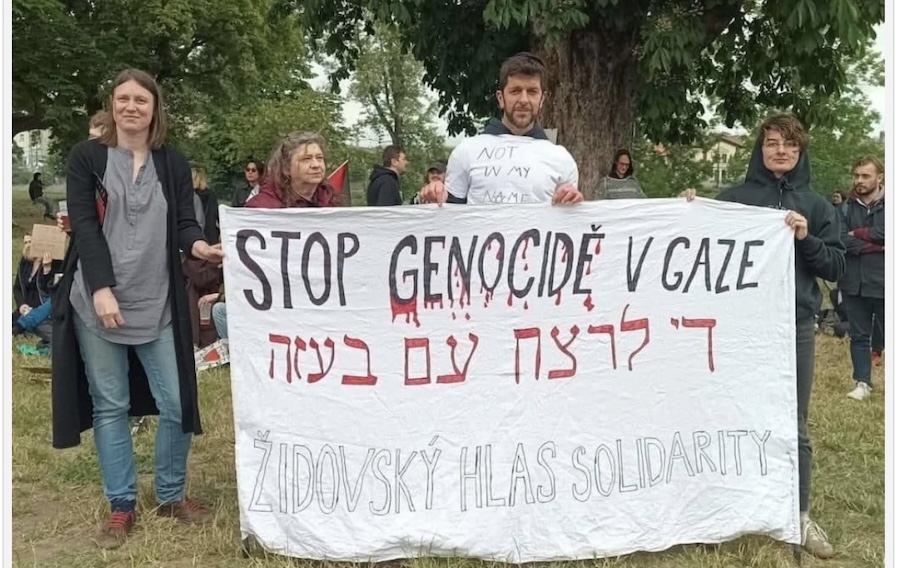
Mass rally in Istanbul on New Year’s Day shows solidarity with Gaza

. TOLERANCE & SOLIDARITY .

An article from Xinhua

More than half a million people rallied in Türkiye’s largest city Istanbul on New Year’s Day to show solidarity with Gaza.

The demonstration was organized by the Humanity Alliance and the National Will Platform, a coalition of civil society groups, under the slogan “We will not retreat, we will not remain silent, we will not forget Palestine.” Around 400 civil society organizations took part in the rally. According to police, the number of participants was estimated at about 520,000.


Photos from Facebook

Bilal Erdogan, chair of the Board of Trustees of the Ilim Yayma Foundation, an educational and cultural foundation, told reporters that demonstrators welcomed the New Year with prayers for Palestine.

(continued in right column)

Question related to this article:
 
How can we best express solidarity with the people of Gaza?

(continued from left column)

Participants initially gathered at several of the city’s most historic mosques, including the Hagia Sophia Grand Mosque and the Sultanahmet Mosque, before marching through the streets and converging on the Galata Bridge spanning the Golden Horn.

A giant banner reading “Justice for Gaza” in both Turkish and English was displayed at the center of the bridge, alongside Turkish and Palestinian flags.

Some demonstrators also joined the rally from the sea, arriving by boats on the Bosphorus, where they lit flares and waved Palestinian flags.

The event also featured performances by internationally known artists and musicians.

Despite a ceasefire taking effect on Oct. 10 after two years of war, Israel has continued attacks in Gaza, where health authorities say more than 400 Palestinians have been killed.

– – – – – –

If you wish to make a comment on this article, you may write to coordinator@cpnn-world.org with the title “Comment on (name of article)” and we will put your comment on line. Because of the flood of spam, we have discontinued the direct application of comments.
Appeal by Nobel Peace Prize winner Adolfo Pérez Esquivel. For Peace and Unity. “Listen to the Voice of the People”

FREE FLOW OF INFORMATION .

An appeal from SERPAJ, Servicio Paz y Justicia

We, the signatories of this Appeal, are protagonists of our own lives and walk alongside our peoples in their fights and hopes for a more just and fraternal world.

We express our deep concern and our strongest rejection of the attempts by the government of Donald Trump, President of the United States, to invade Venezuela. Such actions would violate international treaties, agreements, protocols, and UN declarations, flagrantly disregarding the sovereignty and self-determination of the peoples.

We likewise bear in mind the bombings of Iran by the United States and Israel, which also threaten its sovereignty.

DECISIONS ENDANGERING WORLD PEACE

Latin America is a Zone of Peace. An attack on Venezuela is an attack on the entire continent.

WE EXIGE THE IMMEDIATE WITHDRAWAL of the United States armed forces from the Caribbean, whose actions have provoked attacks and deaths of innocent fishermen, sinking their boats under the false pretext that the Venezuelan government is responsible for drug trafficking in the United States.

WE EXIGE President Trump to cease his threats against the governments of Mexico, Colombia, Cuba, Brazil, Venezuela, and Nicaragua, countries that defend their sovereignty and their freedom and do not submit to the colonialism of the United States.

(appeal continued in right column)

(Click here for the version in Spanish or here for the version in French or click here here for the version in Spanish .)

Question related to this article:

Where in the world can we find good leadership today?

(appeal continued from left column)

The world is experiencing a profound uncertainty due to wars, conflicts, and hunger in various regions, factors that endanger World Peace. We are facing an unpredictable escalation: we know how wars begin, but no one knows how they end.

Israel’s genocide against the Palestinian people has caused an extermination that hurts all of humanity. Despite the ceasefire, Israel continues to provoke deaths and hunger in the Gaza Strip, with the support and complicity of the United States and several European countries.

We likewise bear in mind the bombings of Iran by the United States and Israel, which also threaten its sovereignty.

DECISIONS ENDANGERING WORLD PEACE

Latin America is a Zone of Peace. An attack on Venezuela is an attack on the entire continent.

WE EXIGE THE IMMEDIATE WITHDRAWAL of the United States armed forces from the Caribbean, whose actions have provoked attacks and deaths of innocent fishermen, sinking their boats under the false pretext that the Venezuelan government is responsible for drug trafficking in the United States.

WE EXIGE President Trump to cease his threats against the governments of Mexico, Colombia, Cuba, Brazil, Venezuela, and Nicaragua, countries that defend their sovereignty and their freedom and do not submit to the colonialism of the United States.

The world is experiencing a profound uncertainty due to wars, conflicts, and hunger in various regions, factors that endanger World Peace. We are facing an unpredictable escalation: we know how wars begin, but no one knows how they end.

Israel’s genocide against the Palestinian people has caused an extermination that hurts all of humanity. Despite the ceasefire, Israel continues to provoke deaths and hunger in the Gaza Strip, with the support and complicity of the United States and several European countries.

You can sign the Appeal here.

(Editor’s note: Thank you to Alicia Cabezudo for having sent this to CPNN.)

– – – – – –

If you wish to make a comment on this article, you may write to coordinator@cpnn-world.org with the title “Comment on (name of article)” and we will put your comment on line. Because of the flood of spam, we have discontinued the direct application of comments.
“We’re Going to Run the Country:” Preparing an Illegal Occupation in Venezuela

. . HUMAN RIGHTS . .

An article by Michelle Ellner in Countercurrents

I listened to the January 3 press conference with a knot in my stomach. As a Venezuelan American with family, memories, and a living connection to the country being spoken about as if it were a possession, what I heard was very clear. And that clarity was chilling.

The president said, plainly, that the United States would “run the country” until a transition it deems “safe” and “judicious.” He spoke about capturing Venezuela’s head of state, about transporting him on a U.S. military vessel, about administering Venezuela temporarily, and about bringing in U.S. oil companies to rebuild the industry. He dismissed concerns about international reaction with a phrase that should alarm everyone: “They understand this is our hemisphere.”

For Venezuelans, those words echo a long, painful history.

Let’s be clear about the claims made. The president is asserting that the U.S. can detain a sitting foreign president and his spouse under U.S. criminal law. That the U.S. can administer another sovereign country without an international mandate. That Venezuela’s political future can be decided from Washington. That control over oil and “rebuilding” is a legitimate byproduct of intervention. That all of this can happen without congressional authorization and without evidence of imminent threat.

We have heard this language before. In Iraq, the United States promised a limited intervention and a temporary administration, only to impose years of occupation, seize control of critical infrastructure, and leave behind devastation and instability. What was framed as stewardship became domination. Venezuela is now being spoken about in disturbingly similar terms. “Temporary Administration” ended up being a permanent disaster.

Under international law, nothing described in that press conference is legal. The UN Charter prohibits the threat or use of force against another state and bars interference in a nation’s political independence. Sanctions designed to coerce political outcomes and cause civilian suffering amount to collective punishment. Declaring the right to “run” another country is the language of occupation, regardless of how many times the word is avoided.

Under U.S. law, the claims are just as disturbing. War powers belong to Congress. There has been no authorization, no declaration, no lawful process that allows an executive to seize a foreign head of state or administer a country. Calling this “law enforcement” does not make it so. Venezuela poses no threat to the United States. It has not attacked the U.S. and has issued no threat that could justify the use of force under U.S. or international law. There is no lawful basis, domestic or international, for what is being asserted.

But beyond law and precedent lies the most important reality: the cost of this aggression is paid by ordinary people in Venezuela. War, sanctions, and military escalation do not fall evenly. They fall hardest on women, children, the elderly, and the poor. They mean shortages of medicine and food, disrupted healthcare systems, rising maternal and infant mortality, and the daily stress of survival in a country forced to live under siege. They also mean preventable deaths,  people who die not because of natural disaster or inevitability, but because access to care, electricity, transport, or medicine has been deliberately obstructed. Every escalation compounds existing harm and increases the likelihood of loss of life, civilian deaths that will be written off as collateral, even though they were foreseeable and avoidable.

What makes this even more dangerous is the assumption underlying it all: that Venezuelans will remain passive, compliant, and submissive in the face of humiliation and force. That assumption is wrong. And when it collapses, as it inevitably will, the cost will be measured in unnecessary bloodshed.  This is what is erased when a country is discussed as a “transition” or an “administration problem.” Human beings disappear. Lives are reduced to acceptable losses. And the violence that follows is framed as unfortunate rather than the predictable outcome of arrogance and coercion.

(continued in right column)

Question related to this article:

Can Trump control Venezuela?

What is really happening in Venezuela?

(continued from left column)

To hear a U.S. president talk about a country as something to be managed, stabilized, and handed over once it behaves properly, it hurts. It humiliates. And it enrages.

And yes, Venezuela is not politically unified. It isn’t. It never has been. There are deep divisions, about the government, about the economy, about leadership, about the future. There are people who identify as Chavista, people who are fiercely anti-Chavista, people who are exhausted and disengaged, and yes, there are some who are celebrating what they believe might finally bring change.

But political division does not invite invasion. 

Latin America has seen this logic before. In Chile, internal political division was used to justify U.S. intervention, framed as a response to “ungovernability,” instability, and threats to regional order, ending not in democracy, but in dictatorship, repression, and decades of trauma.

In fact, many Venezuelans who oppose the government still reject this moment outright. They understand that bombs, sanctions, and “transitions” imposed from abroad do not bring democracy, they destroy the conditions that make it possible. 

This moment demands political maturity, not purity tests. You can oppose Maduro and still oppose U.S. aggression. You can want change and still reject foreign control. You can be angry, desperate, or hopeful, and still say no to being governed by another country.

Venezuela is a country where communal councils, worker organizations, neighborhood collectives, and social movements have been forged under pressure. Political education didn’t come from think tanks; it came from survival. Right now, Venezuelans are not hiding. They are closing ranks because they recognize the pattern. They know what it means when foreign leaders start talking about “transitions” and “temporary control.” They know what usually follows. And they are responding the way they always have: by turning fear into collective action.

This press conference wasn’t just about Venezuela. It was about whether empire can say the quiet part out loud again, whether it can openly claim the right to govern other nations and expect the world to shrug.

If this stands, the lesson is brutal and undeniable: sovereignty is conditional, resources are there to be taken by the U.S., and democracy exists only by imperial consent.

As a Venezuelan American, I refuse that lesson.

I refuse the idea that my tax dollars fund the humiliation of my homeland. I refuse the lie that war and coercion are acts of “care” for the Venezuelan people. And I refuse to stay silent while a country I love is spoken about as raw material for U.S. interests, not a society of human beings deserving respect.

Venezuela’s future is not for U.S. officials, corporate boards, or any president who believes the hemisphere is his to command. It belongs to Venezuelans.

– – – – – –

If you wish to make a comment on this article, you may write to coordinator@cpnn-world.org with the title “Comment on (name of article)” and we will put your comment on line. Because of the flood of spam, we have discontinued the direct application of comments.
English bulletin January 1, 2026

. MOVING FROM 2025 T0 2026 .

Looking back over the past year, here are the themes of the CPNN bulletins in 2025 and their updates

The people take to the streets in protest against the support of their governments for the Israeli genocide in Gaza and in protest against the growing authoritarianism of the government of Trump in the United States. This was the theme in February, March, July, September and November including major manifestations for peace and human rights in the United States, United Kingdom, Australia, Iran, Israel, Netherlands, Spain, Italy and Belgium.

This month we publish an update of the movement against Trump, an interview with three of the major organizers of the demonstrations in the United States who see a growing unity between the anti-Trump forces and traditional socialist organizations.

The latest article about the protests of Israeli genocide highlights the >arrest of Greta Thunberg in London for having shown in public a placard that supports the banned organization Palestine Action. Over 2,000 people have been arrested by the UK government for such actions, an extraordinary attack on freedom of speech and support by the government for the Israeli genocide.

While the countries of Europe and North America continue their move towards authoritarianism and their support for Israeli genocide, more progressive actions took place in Africa and Latin America. This was the theme in January, August and December with articles from South Africa, Brazil, Colombia, Mexico, Burkina Faso, Cameroon, Ecuador, Chile, Cote D’Ivoire and Niger.

This month we carried articles from Mexico, Tunisia and Burkina Faso.

In Mexico, the Sinaloa State Congress held an event entitled “Culture of Peace for Sustainable Development: 2030 Agenda in Action,” with young people from different parts of the state.

In Tunisia, the African Union successfully convened the 6th High-Level Africa Forum on Women, Peace and Security. Mahmoud Ali Youssouf, Chairperson of the African Union Commission, paid tribute to the women of Sudan, standing firm amid conflict; the women of the Great Lakes region, persevering in protracted crises; and the women of the Sahel, who sustain communities despite insecurity and displacement. He concluded by asserting: “Their resilience reminds us that women are central pillars of peace and stability.”

In Burkina Faso, the government headed by Ibrahim Traore has increased food sovereignty by providing credit and distributing agricultural machinery to small farmers. This can provide a model for other countries in Africa who import their food.

Continuing a CPNN tradition, the bulletins of April and October were devoted to the global mobilizations for International Women’s Day and the International Day of Peace.

Finally, a new theme was added in the CPNN bulletins of May and June, 2025. They announced the Peace Manifesto 2025, saying that CPNN cannot be content to report the news for a culture of peace. We must create it. This month we publish an update on the Manifesto with a new strategy based on the development of Activating Teams.

Let us hope that more and more people will take to the streets in 2026 for peace and human rights, that Africa and Latin America will continue to provide leadership, and that the Peace Manifesto can become viral on social media.

FREE FLOW OF INFORMATION


Julian Assange says peace prize has become “instrument of war” and sues Nobel

SUSTAINABLE DEVELOPMENT


Agricultural offensive: how Burkina Faso is moving towards self-sufficiency in food production

DEMOCRATIC PARTICIPATION


Spain: Documentary “International Zone of Culture of Peace” in Manzanares El Real

WOMEN’S EQUALITY


Tunis, Birth Place of the Name, ‘Africa’ hosts 6th Forum of Women, Peace and Security (WPS)


TOLERANCE & SOLIDARITY


Greta Thunberg Arrested in UK for Supporting Palestine Action and Opposing Gaza Genocide

EDUCATION FOR PEACE


International Institute for Peace Education 2026 Spain

HUMAN RIGHTS


United States: The Resistance Moves Left

DISARMAMENT & SECURITY


International stability, human security and the nuclear challenge: Yearbook of the Stockholm International Peace Research Institute

Peace Manifesto Update

FREE FLOW OF INFORMATION

In the CPNN bulletins of May and June, 2025, we announced the following Peace Manifesto 2025, saying that CPNN cannot be content to report the news for a culture of peace. We must create it.

Here is an update on the Peace Manifesto as we enter 2026.

Strategy

The overall goal is to establish a popular movement for the culture of peace linked by social media around the world that is ready to transform global governance when the present system of governance controlled by the billionaires collapses in a global economic crash

The strategy is to make the Peace Manifesto 2025 viral in all social media (Facebook, Instagram, Twitter, Linkedin, WhatsApp, Telegram, Bluesky, Vkontakte, Tencent Qq, Weibo) to the point that millions of people are engaged around the world

(Article continued in the column on the right)

Question related to this article:
 
Can you help spread the Peace Manifesto on social media?

(Article continued from the column on the left)

Tactics

1. establish Activating Teams of 3 or 4 youth and students who support each other in regular contact to continue pumping out Peace Manifesto posts by social media to their media friends and networks on a regular basis for a long-term, urging them to repost in order to make the Manifesto viral.  Activating Teams should be established in all regions of the world.  

2. establish a communication system (by WhatsApp and email) linking the all of the Activating Teams to each other and to The Peace Manifesto Team in order to exchange news of what works and what does not work, and suggestions of how to improve the tactics and strategy. 

At The Peace Manifesto Team, we have finalized a Volunteer Action Agreement to be signed by us and the Activating Team Members.  This provides the guidelines for action.  We have also finalized a Certificate of Achievement to be signed by The Peace Manifesto Team and sent to each Activating Team once it has begun work. 

We would appreciate your involvement in this process as an Activating Team, and we look forward to working with you on this important initiative.  More than ever, the world needs a popular movement for the culture of peace.

You may contact us at info@activatingpeace.org

Greta Thunberg Arrested in UK for Supporting Palestine Action and Opposing Gaza Genocide

. TOLERANCE & SOLIDARITY .

An article by Julia Conley from Common Dreams (republished according to Creative Commons license CC BY-NC-ND 3.0)

Because in the world we live in, Western leaders can arm a genocide and walk free—while Greta Thunberg is arrested as a dangerous terrorist supporter."

That was the assessment of journalist Owen Jones on Tuesday after the Swedish climate justice leader was arrested in London outside the offices of Aspen Insurance, a company that provides services to an Israeli weapons maker, where she had been seated on the ground with a sign stating, "I support Palestine Action prisoners, I oppose genocide."

The protest was in solidarity with demonstrators who have been imprisoned for taking part in nonviolent direct actions with the UK-based group Palestine Action. The government banned Palestine Action in July as a terrorist group, making it the first group to be declared as such under part of the UK Terrorism Act that defines "serious damage to property" as an act of terror—rather than violence against people.

Under the law, anyone who displays items or clothing that "arouse reasonable suspicion" of support for Palestine Action can be punished with up to six months in prison.

Thunberg is one of thousands of people who have taken to the streets in support since the group's proscription, and one of about 2,000 people who have been arrested for doing so. Two other activists were also arrested on suspicion of criminal damage.

(continued in right column)

Question related to this article:
 
How can we best express solidarity with the people of Gaza?

(continued from left column)

In Thunberg's case, a spokesperson for City of London police said "she has been arrested for displaying an item (in this case a placard) in support of a proscribed organization (in this case Palestine Action) contrary to section 13 of the Terrorism Act 2000.”

The protest was specifically in support of eight people who have been on a hunger strike to protest their imprisonment and Israel's continued attacks and blocking of essential aid in Gaza.

At least two of the prisoners are in their 52nd day of the hunger strike, and medical professionals have raised grave concerns about their health. Advocates in the UK have also demanded that the Labour government meet with lawyers for the detainees. On Monday, attorneys for the activists said in a letter that the government's refusal to meet with them violates the Ministry of Justice's policy for handling cases of hunger strikes.

“It is up to the state to intervene and put an end to this by meeting these reasonable demands that pave the way for the freedom of all those who choose to use their rights trying to stop a genocide, something the British state has failed to do themselves," said Thunberg.

Member of Parliament Zarah Sultana, co-founder of the socialist Your Party, said that government leaders in the UK, who have continued to back Israel's attacks on Gaza, should be imprisoned, rather than those protesting.

"Greta Thunberg has just been arrested for opposing genocide," said Sultana. "Meanwhile, [Prime Minister] Keir Starmer—complicit in the genocide of the Palestinian people—walks free. He should be arrested and sent to The Hague."

Journalist Matt Kennard said images of police confiscating Thunberg's sign and arresting her "will be studied in history books."

"Fascism is already here," he added.
– – – – – –

If you wish to make a comment on this article, you may write to coordinator@cpnn-world.org with the title “Comment on (name of article)” and we will put your comment on line. Because of the flood of spam, we have discontinued the direct application of comments.