Kashmir: KPN to celebrate International Day of Peace at Nageen today

DISARMAMENT & SECURITY .

An article by Reyaz Rashid, Kashmir Images

In bid to give peace a chance to prevail in Kashmir and make people aware about benefits of using methods of non-violence to achieve peace with justice, Kashmir Peace Network (KPN) – which had made Srinagar city a member of International Cities of Peace with 120 members around the world – is celebrating International Day of Peace at ‘Samad’s Island of Peace’ in Nageen on Monday.

kashmir

As part of 4th annual celebration of UN mandated ‘Peace One Day’ on September 21 – the International Day of Peace — KPK like other 120 member cities around the world would gather people, particularly students from high schools, colleges and universities to participate in the event in which one billion people around the world will participate.

“We have seen enough violence and bloodshed, let us give peace a chance here. We want to make people aware of the benefits using non-violence to accomplish peace with dignity, prosperity and justice,” said Executive Director KPN, Bashir Ahmed Ghakhroo, grandson of Abdul Samad Ghakhroo.

During the ‘Peace One Day’ event, students will speak on peace-related topics and peace-building measures in conflict zones like Kashmir. The students would also deliberate upon topics like ‘The Right of People to Peace’, ‘Our Individual Responsibility Towards Peace in Kashmir ‘, ‘Towards Peace and Prosperity in Kashmir’, the organizers said.

“Our organization endeavours to involve people in seminars, workshops on peace leadership training so that people can become ambassadors of peace,” added Ghakhroo.

“KPN wants to put forth real image of people of Kashmir who basically believe in peaceful and non-violent means of resolving issues and problems. The organization wants to develop Samad Peace Academy,” informed the organizers.

“We want to sow the seeds of peace in Kashmir by our small peace-building efforts and we hope our efforts would bear fruit of peace in future,” added Ghakhroo.

The organization has appealed the people to join in the Peace One Day celebrations to give peace a chance.

Question for this article:

Greenpeace honouring courage and compassion: Peace Day 2015

TOLERANCE AND SOLIDARITY .

An article by Dr Kumi Naidoo, Executive Director of Greenpeace International

I was 22 years old when I had to leave my homeland, South Africa. I had no choice. I was living underground for a year by then, to avoid being arrested. This was 1987, in the midst of one of the most bloody and violent periods in the history of Apartheid South Africa. The green peaceful streets of Oxford, where I was lucky enough to end up, seemed like a cartoon to me. They seemed unreal, while the violence I left behind felt very real and near. I stayed awake at night thinking of friends and relatives left behind.

greenpeace

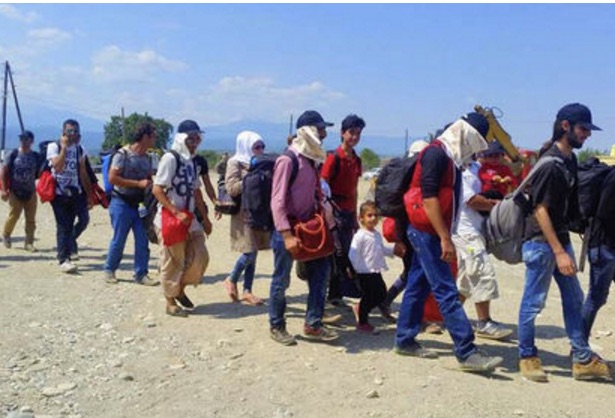
I remember these feelings now every time I look at the heartbreaking images of people fleeing devastation – whether floods in Bangladesh or war in Syria. The images of desperate parents holding on to their children, trying to get them through barbed wired fences, or off small inflatable boats. I see them and I think about my own daughter. How would I feel if I was one of these parents? When I fled, I had only myself to care for.

‘No one leaves home’ writes Kenyan born Somali poet Warsan Shire, ‘unless home is the mouth of a shark’. ‘No one puts their children in a boat unless the water is safer than the land’.

21st September marks the International Day of Peace. And this year, again, there is not much peace around to celebrate.

In Syria alone – according to some estimates one of two Syrians has died or fled home since the war began. According to the UN 7.6 million are internally displaced. 4.1 million refugees are abroad. Most of them in countries surrounding Syria. Some are turning to Europe as a safe haven.

(article continued on the right side of the page)

Question for this article

The refugee crisis, Who is responsible?

Readers’ comments are invited on this question and article. See below for comments box.

(article continued from the left side of the page)

There are times when drawing borders between countries, people, between politics and the environment must stop. There comes a time when all that matters is humanity and solidarity. This is such a time. The acts of courage and compassion shown by so many individuals and communities across Europe I find deeply inspiring.

Many of my colleagues in Greenpeace are also trying to reach out and support refugees. In Hungary and Croatia, volunteers have joined the humanitarian effort, including practical things like setting up a solar charging station in hot spots so that people can recharge their phones and access WiFi. In Greece, our office is in close contact with international relief NGOs ​to support their efforts ​and is working with local groups to collect and send relief packages to the Islands where many refugees are stranded.

I want to personally thank all who are reaching out to help. In this moving ocean of solidarity, every drop matters. We must all join together and say loud and clear: #Refugeeswelcome!

Tomorrow I travel to New York to attend the UN Summit on Sustainable Development Goals. My trip will be an easy one, but I will remember those times when my journeys, too, were journeys of fear. I will think of those facing days, months and years of relentless, life threatening journeys, with no guaranteed safety at the end of the road.

As fellow human beings we owe it to them to raise our voices, to stand in solidarity and to address the root causes of global insecurity. We need to insist on finding real solutions – including getting off fossil fuels. Conflicts are always complex. But looking at current conflicts from Iraq, Ukraine, Sudan, the South China Sea to Nigeria it is clear that the access, the transport and thus the dependence on fossil fuels do play a role.

“Resource wars” are not new. But today we can overcome them. In New York, I will argue for a world powered by 100% renewables for all by 2050. This world is in our grasp, our latest Energy Revolution scenario shows that without doubt. It is also the world we must choose if we want peace. Wind turbines, photovoltaic systems, insulation materials or double glazed windows are the “weapons” we must deploy to help create a safer world.

I was lucky enough to see Apartheid ended by people power and international solidarity a few years after I was forced to leave South Africa. Apartheid was abolished, and I am now free to return. Will those displaced now ever have that privilege? I do not know. But we must work for the peaceful, safe world for all, that would make this possible.

2015 MacBride Prize to Lampedusa (Italy) and Gangjeon Village, Jeju Island (S. Korea)

TOLERANCE AND SOLIDARITY .

A press release by The International Peace Bureau

The International Peace Bureau is delighted to announce its decision to award the annual Sean MacBride Peace Prize to two island communities who, in different circumstances, show proof of a profound commitment to peace and social justice.

ipb prize

LAMPEDUSA is a small island in the Mediterranean and is the southernmost part of Italy. Being the closest part of the territory to the African coastline, it has been since the early 2000s a primary European entry point for migrants and refugees. The numbers of persons arriving has been rapidly increasing, with hundreds of thousands at risk while travelling, and over 1900 deaths in 2015 alone.

The people of the island of Lampedusa have given the world an extraordinary example of human solidarity, offering clothing, shelter and food to those who have arrived, in distress, on their shores. The response of the Lampedusans stands out in stark contrast to the behaviour and official policies of the European Union, apparently intent only on reinforcing their borders in the attempt to keep these migrants out. This ‘Fortress Europe’ policy is becoming more and more militarised.

Aware of its multi‐layered culture, which epitomizes the evolution of the Mediterranean region where over the centuries different civilizations have blended and built on each others’ developments, with mutual enrichment, the island of Lampedusa also shows the world that a culture of hospitality and respect for human dignity are the most effective antidotes to nationalism and religious fundamentalism.

To give but one example of the heroic actions of the people of Lampedusa, let us recall the events of the night of 7‐8 May 2011. A boat full of migrants crashed into a rocky outcrop, not far from the shore. Although it was in the middle of the night, the inhabitants of Lampedusa turned out in their hundreds to form a human chain between the shipwreck and the coast. That night alone more than 500 people, including many children, were carried to safety.

At the same time the people of the island are very clear that the problem is a European one, not theirs alone. In November 2012, Mayor Nicolini sent an urgent appeal to Europe’s leaders. She expressed her outrage that the European Union, which had just received the Nobel Peace Prize, was ignoring the tragedies occurring on its Mediterranean borders.

The IPB believes that the dramatic situation in the Mediterranean – constantly visible in the mass media ‐ must be at the top of Europe’s urgent priorities. Much of the problem springs from social injustices and inequalities resulting in conflicts in which the West has – over centuries ‐‐ played an aggressive role. We recognise that there are no easy solutions, but as a guiding principle, Europe should be honouring the ideals of human solidarity, over and above the cynical considerations of governments and profit/power/resource‐seeking entities. When Europe contributes to the ruining of the livelihoods of people, as for instance in Iraq and Libya, Europe will have to find ways to help rebuild those livelihoods. It should be below the dignity of Europe to spend billions on military interventions, and yet not to have the resources available to meet the basic needs. The most vital question is how to develop cooperation between people of goodwill on both sides of the Mediterranean in a long‐term, constructive, gender‐sensitive and sustainable process.

(article continued on the right side of the page)

Question for this article

The refugee crisis, Who is responsible?

Readers’ comments are invited on this question and article. See below for comments box.

(article continued from the left side of the page)

GANGJEON VILLAGE is the site of the controversial 50‐hectare Jeju Naval Base being constructed by the South Korean government on the southern coast of Jeju Island, at a projected cost of nearly $1 billion. The waters around the island are protected by international law as they are within a UNESCO Biosphere Reserve (in October 2010, nine geological sites on on the island were recognised as Global Geoparks by the UNESCO Global Geoparks Network). Even so, the construction of the base continues, although building work has been halted many times by mass protests of people concerned about the base’s environmental impact. These people see the base as a US‐driven project aimed at containing China, rather than enhancing South Korean security In July 2012, the South Korean Supreme Court upheld the base’s construction. It is expected to host up to 24 US and allied military vessels, including 2 Aegis destroyers and 6 nuclear submarines, plus occasional civilian cruise ships on completion (now scheduled for 2016).

Jeju Island has been dedicated to peace ever since around 30,000 were massacred there from 1948‐54, following a peasant uprising against US occupation. The South Korean government apologized for the massacre in 2006 and the late President Roh Moo Hyun officially named Jeju an “Island of World Peace”. This violent history helps to explain why the people of Gangjeon Village (population 2000) have been protesting non‐violently for around 8 years against the naval base project. According to Medea Benjamin of Code Pink, “About 700 people have been arrested and charged with hefty fines that amount to over $400,000, fines that they cannot or will not pay. Many have spent days or weeks or months in jail, including a well‐known film critic Yoon Mo Yong who spent 550 days in prison after committing multiple acts of civil disobedience.” The energy and commitment shown by the villagers has attracted the support (and participation) of activists from around the world. We endorse the construction of a permanent Peace Center on the site which can act as a focus for activities reflecting alternative views to those represented by the militarists.

IPB makes the award in order to increase the visibility of this exemplary non‐violent
struggle at a crucial time. It takes great courage to physically oppose the government’s growing aggressive and militaristic policies, especially as they are backed by, and at the service of, the Pentagon. It takes even more courage to maintain that struggle over a period of many years.

CONCLUSION
There is an important connection between the two situations. Not only do we recognise the common humanity of those who resist without weapons the forces of domination in their own island. We make the argument that public resources should not be spent on massive military installations that only increase the tension between nations in the region; rather they should be devoted to meeting human need. If we continue devoting the world’s resources to military rather than humanistic purposes, it is inevitable that we will continue to witness these inhuman situations with desperate people, refugees and migrants, at risk while crossing the seas and at the prey of unscrupulous gangs. Thus we repeat also in this context the basic message of IPB’s Global Campaign on Military Spending: Move the Money!

Angola: Executivo defende cultura de paz

. PARTICIPACIÓN DEMOCRATICA .

Um artigo de Jaquelino Figueiredo e Fernando Neto, Jornal de Angola

A cultura de paz constitui uma necessidade premente para a convivência harmoniosa entre os homens em África, afirmou sábado, no Soyo, o secretário de Estado das Relações Exteriores.

angola
Fotografia: Jaquelino Figueiredo

Manuel Augusto, que discursava no acto de encerramento da Conferência Internacional sobre a Cultura de Paz, organizada pela Fundação Eduardo dos Santos (FESA), disse que os participantes analisaram as causas dos conflitos e as suas trágicas consequências.

O secretário de Estado enfatizou a necessidade de acções tendentes não só a instituir, mas também a contribuir para a assumpção colectiva da importância da cultura de paz. “É neste contexto de pragmatismo e de consciência colectiva da cultura de paz que se enquadram os seis níveis de dimensão enunciados por Sua Excelência o Presidente da República de Angola, José Eduardo dos Santos e Patrono da FESA, por ocasião da Conferência Internacional sobre a Cultura de Paz, realizada em Luanda, em Março de 2013, numa iniciativa conjunta entre o Governo angolano, a UNESCO e a União Africana”, referiu.

Manuel Augusto disse que o facto da cultura de paz não ser uma acção pontual, mas sim um processo permanente e dinâmico, que o Governo angolano assumiu a responsabilidade de realizar no próximo ano o Fórum para a Cultura de Paz em África, com o apoio da UNESCO e da União Africana. “Esta proposta foi aceite e endossada pelos chefes de Estados africanos na sua cimeira ordinária de Julho de 2014. Quiseram assim, Angola e o seu líder, partilhar com o resto do Mundo a sua própria experiência e, deste modo, contribuir de forma concreta para divulgação, sensibilização e adopção da cultura de paz”, sustentou.

O membro do Executivo considerou que a participação de prelectores e especialistas de diferentes partes do Mundo e de instituições internacionais de reputada competência acrescentaram, não só prestígio e visibilidade à iniciativa da FESA, mas também a garantia de que a compilação das comunicações apresentadas constitui matéria de estudo e pesquisa para dirigentes, académicos, estudantes e a sociedade civil em geral. Os participantes da Conferência Internacional sobre a Cultura de Paz recomendaram às instituições de pesquisa académica uma reflexão sobre a cidadania em África, na sua perspectiva histórica, sociológica e cultural. A valorização e o fortalecimento da tradição oral como veículo de transmissão dos valores culturais é, também, uma recomendação da conferência.

Os participantes à Conferência Internacional sobre Cultura de Paz, realizada sexta-feira e sábado na cidade do Soyo, província do Zaire, reconheceram o papel interventivo de Angola na resolução de conflitos a nível do continente africano, constatou o presidente da FESA.

Ismael Diogo da Silva, que considerou amplamente positivo o encontro, que reuniu cerca de 500 participantes, dos quais 90 estrangeiros provenientes de vários países de África, disse que todos os intervenientes foram unânimes de que Angola é um exemplo na resolução de conflitos, tendo em consideração os esforços da liderança do Presidente José Eduardo dos Santos em manter a paz. Para os angolanos, disse, isso deve ser motivo de orgulho e de incentivo ao diálogo permanente.

O presidente da FESA considerou que a declaração final recomenda a continuidade da discussão do tema sobre a cultura de paz, no sentido de persuadir os líderes a não enveredarem pelo caminho de conflitos, mas sim identificarem as grandes razões com vista à promoção do diálogo e do entendimento. A conferência permitou a interacção com os prelectores africanos e a FESA conseguiu trazer políticos, pesquisadores e professores catedráticos trazer à discussão sobre a cultura de paz.

“Conseguimos ouvir políticos, pesquisadores e professores catedráticos e muitos deles membros de academias internacionais sobre cultura de paz, sobre democracia, cidadania, especialistas da UNESCO e deixaram-nos uma nítida mensagem de encorajamento que Angola está no caminho certo”, disse.

(Clique aqui para uma tradução em Inglês deste artigo)

(Question for this article:)

Angola: Executive defends culture of peace

. DEMOCRATIC PARTICIPATION .

An article by Jaquelino Figueiredo and Fernando Neto, Jornal de Angola (translation by CPNN)

“The culture of peace is an urgent need for the harmonious coexistence among the people of Africa”, according to the remarks of the Secretary of State for Foreign Affairs on Saturday in Soyo,.

angola
Photography: Jaquelino Figueiredo

Manuel Augusto, who was speaking at the closing ceremony of the International Conference on the Culture of Peace, organized by the Eduardo dos Santos Foundation (FESA), said the participants analyzed the causes of conflicts and their tragic consequences.

The Secretary of State emphasized the need for actions aimed not only to establish, but also to contribute to the collective understanding of the importance of a culture of peace. He said, “It is in this context of pragmatism and collective awareness of the culture of peace that fall under the six dimensional levels set out by His Excellency the President of Angola, José Eduardo dos Santos and Patron of FESA, at the International Conference on Culture Peace, held in Luanda in March 2013, a joint initiative between the Angolan Government, UNESCO and the African Union.”

Manuel Augusto said that the culture of peace just one specific action, but rather an ongoing and dynamic process. For this, the Angolan Government has taken the responsibility to carry out next year the Forum for the Culture of Peace in Africa, with the support of UNESCO and the African Union. “This proposal was accepted and endorsed by African Heads of States in their Summit of July 2014. Angola and its leader will share with the rest of the world their own experience and thus contribute concretely to the dissemination, awareness and adoption of a culture of peace “, he said.

The Executive considered that the participation of lecturers and experts from different parts of the world and international institutions of recognized competence will add not only prestige and visibility to the initiative of FESA, but also the assurance that the compilation of the papers presented will become a matter of study and research for leaders, academics, students and civil society in general. The participants of the International Conference on Culture of Peace recommended to academic research institutions a reflection on citizenship in Africa, its historical, sociological and cultural perspective. The enhancement and strengthening of oral tradition as a vehicle of transmission of cultural values ​​is also a recommendation of the conference.

The participants to the International Conference on Culture of Peace, held Friday and Saturday in Soyo, northern Zaire province, acknowledged the active role of Angola in resolving conflicts in the African continent, according to the chairman of FESA. Ismael Diogo da Silva, considering the meeting which brought together about 500 participants, including 90 foreigners from various countries in Africa, said all participants were unanimous that Angola is an example in conflict resolution, taking into consideration the efforts of the leadership of President José Eduardo dos Santos to keep the peace. For Angolans, he said, it should be cause for pride and to encourage the ongoing dialogue.

The chairman of FESA noted that the final declaration recommends the continuation of the theme of the discussion of the culture of peace, to persuade leaders not to take the path of conflict, but rather identify the major reasons for the promotion of dialogue and understanding.

The conference allowed interaction with African lecturers and FESA and managed to bring politicians, researchers and professors to the discussion of the culture of peace.

“We have heard politicians, researchers and professors, many of them members of international academies of culture of peace, of democracy, citizenship and UNESCO. They have left us with a clear message of encouragement that Angola is on track,” he said.

(click here for the original Portuguese version of this article)

(Question for this article:)

Music Builds Peace One Day at a Time

EDUCATION FOR PEACE .

An article by Jeremy Gilley in Huffington Post (reprinted according to principles of “fair use”)

Music has always played a vital role championing social causes; whether through bringing musicians together to challenge injustice, raise funds for the disadvantaged or, in fact, to demonstrate to the world a rich and vibrant culture that is under threat. Music speaks to everyone; irrespective of background, age, religion, political opinions or wealth, everyone can find something that connects them with another through music.

Gilley
Video of Peace Day Anthem

Peace One Day has been campaigning for over 17 years, making the case for Peace Day, an annual day of global ceasefire and non-violence, 21 September. On this journey we have worked with every sector of society and music has been a powerful vehicle to bring people together on the day. We have held concerts around the world including Derry-Londonderry, the Peace Palace in The Hague (the home of the ICJ), and last year in Goma, eastern Democratic Republic of Congo. Artists such as Annie Lennox, Akon, Elton John, Youssou N’Dour, Lexxus Legal and many more have performed in celebration of the only day of peace the world as one has.

This year, music for Peace Day takes on a new and inspiring dimension with ‘ONE’, the Peace Day anthem by Coke Studio in Nairobi. Bringing musicians together from five African countries this song celebrates the power of peace to unite people and champion our common humanity. Musicians include Zwai Bala (South Africa), Ice Prince (Nigeria) Maurice Kirya (Uganda), Alikiba (Tanzania), Wangechi (Kenya) and Dama Do Bling (Mozambique) have come together in this unique track, offering the world’s peacemakers and champions an anthem to unite behind and celebrate.

The anthem will be premiered at the Peace One Day Youth Celebration held on Peace Day in the Petit Stade Amahoro in Kigali, Rwanda which features performances from artists from across the Great Lakes region of Africa including Congolese musician, Innoss’B, Rwandan performers including Knowless, Urban Boyz, dance crews, Jabba Junior & Krest Crew and the pan-African choir, the African Children’s Choir. Using music, dance, film and more, Peace Day will empower the peacemakers of the future to become to driving force behind a more peaceful and sustainable world. What better way to amplify this message than an anthem bringing together music fans from around the world?

On Peace Day, ‘ONE’ will be available for download on a number of download sites including iTunes, Google Play and Amazon, so everyone will have the chance to own this part of Peace Day history and share it with their friends and family, spreading the message of Peace Day further around the world. This anthem is supporting our work to raise awareness of Peace Day, 21 September in the Great Lakes region of Africa and across the world. We are grateful to the Howard G. Buffett Foundation for making this possible.

Peace Day, 21 September is about building peace one day at a time and through music we can unite people behind this message, celebrating hope, our common humanity and lasting peace.

Question for this article:

Ahead of International Day of Peace, UN chief appeals for cease-fire on 21 September

DISARMAMENT & SECURITY .

An article from the United Nations News Centre

Secretary-General Ban Ki-moon is calling for the laying down of arms and a 24-hour cease-fire on 21 September, which is observed around the world each year as the International Day of Peace.

un-idp

The United Nations General Assembly established the International Day of Peace in 1981 as an opportunity for people around the world to promote the resolution of conflict and to observe a cessation of hostilities.

“On this day, in the lead-up to the Day of Peace, I am asking all partners to lend their voices to this call for a laying down of arms, and to work non-stop in the days to come to bring about a 24-hour cease-fire on September 21st,” Mr. Ban said in a statement issued on Thursday.

“Let’s make this International Day of Peace a day without violence, and a day of forgiveness. If, for one day, we can live in a world without aggression and hostility, we can imagine how much more is possible,” he added.

The theme of this year’s commemoration is “Partnerships for Peace – Dignity for All,” which aims to highlight the importance of all segments of society to work together to strive for peace.

The work of the UN would not be possible without the thousands of partnerships each year between governments, civil society, the private sector, faith-based groups and other non-governmental organizations that are needed to support the Organization in achieving its goals.

Celebrations for the International Day of Peace will include a Peace Bell Ceremony at UN Headquarters in New York, featuring senior UN officials and Messengers of Peace, as well as a student videoconference. UN offices worldwide, including peacekeeping operations, will also be holding events with local communities.

(Click here for a version of this article in French or here for a version in Spanish.)

Question for this article:

Nations Unies: Ban Ki-moon pide a todos los beligerantes que depongan las armas

. . DESARME Y SEGURIDAD . .

Un artículo del Centro de Noticias ONU

El Secretario General de la ONU manifestó que es responsabilidad de todos exigir que cesen la brutalidad y la impunidad y exhortó a las partes que participan en conflictos violentos a silenciar las armas.

un-idp

El Secretario General de la ONU manifestó que es responsabilidad de todos exigir que cesen la brutalidad y la impunidad y exhortó a las partes que participan en conflictos violentos a silenciar las armas.

“Exhorto a todas las partes beligerantes a que dejen de matar, a que silencien las armas y respeten un alto el fuego a nivel mundial y creen los espacios necesarios para una paz duradera. Gente en todo el mundo sueñan con la paz”, manifestó Ban Ki-moon con ocasión del Día Internacional de la Paz.

La ONU conmemorará el lunes, 21 de septiembre, ese Día en favor de la paz en todo el mundo. Los Mensajeros de la Paz Jane Goodall y Michael Douglas, así como el Embajador de Buena Voluntad Herbie Hancock, entre otras personalidades, participarán en una ceremonia durante la que se hará sonar la Campana de la Paz.

El Titular de la ONU enfatizó en su mensaje que no hay grupo más dispuesto a ayudar a materializar el sueño de la paz que los jóvenes de hoy. Por ello, instó a los gobiernos a invertir más en ellos para que se haga realidad el potencial ingente que tienen para lograr la paz.

También alentó a movilizar a todos los grupos, organizaciones y entidades que persiguen a paz y recordó al respecto que el lema de este año es precisamente “Alianzas para la paz, dignidad para todos”.

Ban señaló además que “vivimos en tiempos de peligro, pero también es una época de grandes promesas”, y recordó que en una semana los dirigentes mundiales acudirán a las Naciones Unidas para aprobar la agenda de objetivos para un desarrollo sostenible en los próximos quince años.

( Clickear aquí para la version inglês o aquí para la version francês)

Question for this article:

Journée de la paix : Ban Ki-moon appelle à un cessez-le-feu de 24 heures le 21 septembre

. . DESARMAMENT ET SECURITE . .

Un article du Centre d’Actualités de l’ONU

A quelques jours de la Journée internationale de la paix, le Secrétaire général des Nations Unies, Ban Ki-moon, a appelé à un cessez-le-feu de 24 heures ce jour-là, qui est célébré chaque année le 21 septembre.

un-idp

Dans une déclaration à la presse publiée jeudi soir, Ban Ki-moon a rappelé que « que l’Assemblée générale des Nations Unies a déclaré que cette journée était consacrée au renforcement des idéaux de paix, à l’intérieur des pays et entre les nations et entre les peuples ».

« Elle a aussi été établie pour être une journée de non-violence et de cessez-le-feu. Le thème de la célébration de cette année est ‘Partenariats pour la Paix – la dignité pour tous’ qui vise à souligner combien il est important que tous les segments de la société travaillent ensemble pour la paix », a ajouté le Secrétaire général.

« Dans le cadre des préparatifs de la Journée de la Paix, je demande à tous les partenaires à s’exprimer en faveur de cet appel à déposer les armes, et à travailler sans relâche dans les jours à venir pour parvenir à un cessez-le-feu de 24 heures le 21 septembre », a-t-il encore dit.

( Cliquez ici pour la version anglaise ou ici pour la version espagnole. )

Question for this article:

Palestine: Breaking the Silence Tour in Hebron

DISARMAMENT & SECURITY .

An article by Jamie Stall, Holy Land Trust

Earlier this month, we had the chance to visit Hebron and participate in a city tour with Breaking the Silence, an organization founded by former Israeli combatants who served in the Occupied Territories. The aim of the organization is to raise awareness about the daily realities of those living under occupation and stimulate public discussion of these issues among Israelis.

hebron

We started off the tour near Shuhada Street, where we gathered in a hidden room behind a souvenir shop. Our tour guide, Shai, began by giving us a view into his personal experience as an IDF combatant in the West Bank. He recounted several of his experiences for the group, including being ordered to chase a young child while holding a loaded firearm because the kid was playing near a security fence, and searching Palestinian households at random for the purpose of “making the IDF’s presence felt” within the community.

After the introduction, we began walking through an almost entirely deserted “ghost town.” As it turns out, this abandoned street is called Al-Shuhada Street and was the bustling commercial center of Hebron until about 20 years ago. Shay explained that in 1994 all its businesses were closed by the army “for security purposes” following the murder of 29 Muslim worshipers at the Cave of the Patriarchs by the Israeli settler Baruch Goldstein. As we walked down the street, we encountered several placards that told a very different story about the street’s closure. According to the signs, “these stores were closed by the IDF for security reasons after the Arabs began the ‘Oslo War’ [aka The Second Intifada] in September 2000, attacking, wounding and murdering Jews on this road.” A quick fact check proves this to be false as the reason for the street’s closure, not to mention that The Second Intifada began six years after the stores were closed. There is no doubt that the Jewish settler community in Hebron did experience many detestable acts of violence, including several murders, but that does not change the fact that the sign’s claims are nonfactual propaganda meant to mislead its readers and evoke a negative opinion of the city’s Palestinians.

As we continued up Al-Shuhada Street, passing a military base and several settlements, we encountered a pedestrian checkpoint separating the settler communities and a Palestinian commercial area. As we were finishing our tour near the checkpoint, a young Palestinian man began to walk through the checkpoint while singing a song to himself. One of the Israeli soldiers on duty told him “shtok!” (“shut up!”), but he continued walking, singing to himself as before. At this point he was stopped, searched, questioned and prevented from leaving for about ten minutes, all because he was singing.

Seeing and listening to the history and present-day reality of this small slice of Hebron was not easy. Frankly, nothing in Palestine has been easy. There is so much suffering and resentment on both sides of the separation wall that it can put a damper on your hopes for a better future. But hearing courageous testimonies and messages of hope from people like Shai and Breaking the Silence bring some of that hope and optimism back. I’m so appreciative of what they are doing. May there be more people and communities like them, willing to speak out against the occupation and work for truth, peace and reconciliation.

Questions for this article: