Despite the vested interests of companies and governments, Can we make progress toward sustainable development?


Despite the fact that the climate accord negotiated by the Member States of the UN in Paris does not promise to solve the problem of global warming, the growing progress in renewable energy may ultimately solve much of the problem.

Below are articles in CPNN on this question:

Colombia: Conference on the Transition Beyond Fossil Fuels concludes with five key outcomes

Week of Action for Peace and Climate Justice

Global Campaign to Demand Climate Justice (DCJ)

78% of Russian students consider climate change to be a problem

The heat is on: We must rise to the challenge of rising temperatures, urges UN chief

The Summit of the Future

Earth Day founder Denis Hayes says young climate activists carry the spirit of his generation

Greta Thunberg, 40+ Other Climate Activists Block Entrance to Swedish Parliament

Greenpeace: Here are the REAL culprits of the agricultural crisis in France

‘End Fossil Fuels’ Protests Kick Off Worldwide Ahead of UN Climate Ambition Summit

France: “You are, we are, Earth Uprisings”

The Elders welcome historic breakthrough on loss and damage at COP27, but call on G20 leaders to phase out fossil fuels faster

UN General Assembly declares access to clean and healthy environment a universal human right

Australia: On our “frightening” future: how this election shows young people are taking back their voice

Berta Cáceres has been declared a national heroine by the National Congress of Honduras

From LA to Bogotá to London, global mayors unite to deliver critical city momentum to world leaders tasked with keeping 1.5 degree hopes alive at Glasgow’s COP26

Amid rain and wind, Catholics join 100,000 demonstrators at COP26 climate march

COP26: Thousands of young people take over Glasgow streets demanding climate action

Our future, our decisions: young activists call for seat at climate table

Netherlands: Court orders Shell to cut carbon emissions 45% by 2030

France: March for the Climate: Thousands Demonstrate in Paris

Emails Reveal: U.S. Officials Sided With Agrochemical Giant Bayer to Overturn Mexico’s Glyphosate Ban

New UNEP synthesis provides blueprint to urgently solve planetary emergencies and secure humanity’s future

13 Years Is Too Long for Victims of Shell’s Oil Spills in Nigeria to Wait for Justice

France: The Affair of the Century and the March of the Century: Historic Victory for the Climate!

Broken societies put people and planet on collision course, says UNDP

Montreal: Demonstration for “climate justice”

‘Incredible Green Wave’ in French Elections Celebrated as ‘Mandate to Act for Climate and Social Justice’

Work: Democratize, Decommodify, Remediate

Could COVID-19 give rise to a greener global future?

Greta Thunberg Addresses Global Elite at Davos: Our House Is Still on Fire

International Peace Bureau: the ‘carbon boot-print’

At Major March in Madrid, Indigenous & Youth Activists Slam Global Leaders for Climate Inaction

The U.S. is trying to get out of paying climate damages to poor countries

Nepal urges concrete plans to tackle climate emergency

December Climate Strikes: Getting Started

A Worldwide Revolution Is Underway

International Day of Peace: PAYNCoP Gabon helps protect the environment

Global climate strike: When, where and how you can join and take action

Youth for climate: 130 scientists support the youth climate strike

New UN Decade on Ecosystem Restoration offers unparalleled opportunity for job creation, food security and addressing climate change

Students are striking around the world to protest against the lack of action to stop global warming

United Nations: Guterres underlines climate action urgency, as UN weather agency confirms record global warming

Greta Thunberg: My Message to Davos Elites: Act As If Our House Is on Fire. Because It Is.

‘Morally Unacceptable’: Final Deal Out of COP24 Sorely Lacking in Urgency and Action, Climate Campaigners Say

‘We Have Not Come Here to Beg World Leaders to Care,’ 15-Year-Old Greta Thunberg Tells COP24. ‘We Have Come to Let Them Know Change Is Coming’

Inter-Parliamentary Union: 139 parliaments demand immediate action on climate change

France: Marches for the climate, we repeat !

France: Several thousand students have signed a manifesto in which they pledge not to work for companies that disagree with their values

Peoples Climate Movement Launches Rise for Climate, Jobs, and Justice September 8th

Greentrees Sequesters Another 1 Million+ Tons of Carbon via Reforestation; Wins Award

What’s the G7’s ‘Charlevoix Blueprint’ all about?

Earth Day 2018 Events Popping Up Worldwide

Snapshots of March for Science Signs Across the Globe

Washington activists launch ‘Climate Countdown’ to push lawmakers for urgent action

Greenpeace: Great news for the Arctic AND the Antarctic!

World’s Largest Tropical Reforestation to Plant 73 Million Trees in Brazilian Amazon

The Climate Movement Charges On, Even without the USA

Peoples Climate March Draws ‘One Hell of A Lot of People’ [in USA]

Climate Change and Nepal

REPORT: Fossil Fuel Divestment Doubles in Size as Institutions Representing $5 Trillion Commit to Divest

Laureates and scientists call on Nobel Prize Foundation to divest fossil fuels

Countries Adopt Kigali Amendment to Phase Down HFCs

Tens of Thousands Take Part in Global Actions Targeting World’s Most Dangerous Fossil Fuel Projects

James Hansen, father of climate change awareness, calls Paris talks ‘a fraud’

Kumi Naidoo: let the youth be our climate leaders!

Naomi Klein: We are going backwards, COP21 is the opposite of progress

COP21 vue par Naomi Klein : « Le changement climatique génère des conflits »

– – – – Links for the following articles published prior to 2015 do not work because they were made by a version of PERL programming that is no longer supported. With three easy steps, you can find the article by its number. First, click on it before returning to this page. Your browser will say that the article is not available but in the address listed you can see that it was located at ViewArticle=xxxx where xxxx is the number of the article. Returning to this page, then click here for the listing of all years. Then click on the year that contains the number for the article you seek. It will send you to the page where you can easily search for the article by its title. – – – –

Preparing for the UN summit on sustainable development
The Earth’s Bright Future
EU Sets Example for Slowing Climate Change
International Renewable Energy Agency founded in Germany
Tar Sands Keystone XL Pipeline –
The World Social Forum prepares for Rio + 20
Construyendo la Cumbre de los Pueblos RÍo+20
En chemin vers le Sommet des Peuples Rio+20
Building the Peoples Summit Rio+20
Ecology: African Voice in Rio +20
More Ecology, Less Economy for Rio+20
A la veille de Rio+20, un Forum scientifique pour tirer la sonnette d’alarme sur l’état de la planète
On the eve of Rio+20, a scientific forum sounds the alarm on the state of the planet
Les associations environnementales prêtes à un rapport de force
French Environmental Associations Prepare for Confrontation
Cities High on the Agenda at Major Conservation Gathering
Talks fail to meet pace of climate change – Greenpeace
China’s ambitious aim: a windy future
Historic Tar-Sands Action at Obama’s Door
Lancement du site Web de la Conférence mondiale sur l’éducation au développement durable (2014)
Website launch for 2014 World Conference on Education for Sustainable Development
Presentación del sitio web de la Conferencia Mundial sobre Educación para el Desarrollo Sostenible de 2014
Pacific leaders endorse climate-action declaration
Breaking Ground: New Report from the Nobel Women’s Initiative (Canada)
Fund invests in Kenya forest project, boosts UN scheme
Harvard Joins Principles for Responsible Investment
Legislators from 80 Countries Meet in Mexico City to Push for UN Climate Deal in 2015
Hundreds Of Thousands Turn Out For People’s Climate March In New York City
Statement about UN Climate Summit by World Wildlife Fund
Conferencia Mundial de la UNESCO sobre Educación para el Desarrollo Sostenible 2014
Conférence mondiale de l’UNESCO sur l’éducation en vue du développement durable – 2014
UNESCO World Conference on Education for Sustainable Development 2014

El Salvador: Discussions to include culture of peace in national educational curriculum

EDUCATION FOR PEACE .

An article from La Prensa Grafica (translated by CPNN)

The Culture of Peace forum, held by the Ministry of Education (MINED), brought together teachers and representatives from various organizations.


Photo: Cortesía.
Click on photo to enlarge

For MINED, Carlos Canjura, considers that it is the task of teachers to evaluate “how we are building citizens”. Likewise, he affirmed that “citizenship and productive capacities are indispensable for the construction of a culture of peace”.

Carlos Rodríguez, of the National Center for Research in Social Sciences and Humanities (CENICSH) of the Central American University José Simeón Cañas (UCA), said that the forum has proposed six working groups such as society and violence, curriculum, teacher training, and school environments, among others.

The working groups of this forum will work in 2017 and are related to moral, urban and civic matters.

“For us it is fundamental to put good practices on the agenda for building a culture of peace,” he said.

(Click here for the original version of this article in Spanish)

Question for this article:

Guatemala: Transforming justice for women in Latin America

. . WOMEN’S EQUALITY . .

An article by Claudia Paz y Paz Bailey and Melanne Verveer in openDemocracy (Claudia Paz y Paz Bailey was attorney general of Guatemala from 2010 until 2014)

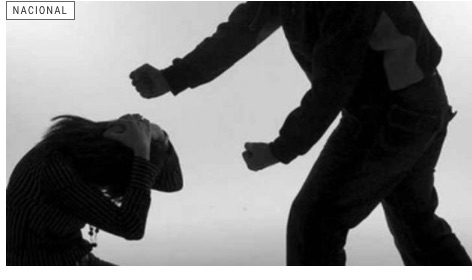
In order to effectively reduce female murders, Latin American nations must combat one of the leading causes of death for women—gender-based violence—whereby perpetrators target victims because of their gender and act in the context of unequal power relations between men and women.

Guatemala presents a case study of how innovative 24-hour courts and revised trainings for law enforcement can increase convictions related to gender-based violence and ultimately reduce the number of female murders.


Claudia Paz y Paz Bailey
(Click on photo to enlarge)

Guatemala’s high female murder rate—9.1 murders for every 100,000 women between 2007 and 2012—is impacted by regional crime, drug trafficking, and gang violence. But at least half of female murders in Guatemala are femicides.

Guatemala was the first country to officially recognize femicide—the murder of a woman because of her gender—as a crime in 2008. Four years later, the country created a national database to record basic data on all cases of violent deaths of women. This database allowed the Attorney General’s office to identify weaknesses in the investigation of femicides and the gender-based violence that often precedes them, and subsequently to develop pilot programs to address crimes associated with violence against women before they escalated to murder.

Most notably, the Attorney General’s office and the Supreme Court of Justice collaborated in 2012 to establish a 24-hour court to handle urgent investigative measures required in gender violence crimes immediately. The court operated inside the Comprehensive Care Model (Modelo de Atención Integral) created in 2009, and offered a model of comprehensive services: forensic experts, police, psychologists, clinical physicians, and prosecutors were all brought together in a single space in Guatemala City to serve the survivors of gender-based violence.

In the Comprehensive Care Model, it was the institutions that revolved around women, rather than women having to travel to each institution or worse, having to choose between medical care and access to justice. The 24-hour court, one of the first in Latin America, immediately increased the number of protection measures and arrest warrants authorized, and led to an increase in the number of people sent to prison for violence against women and sexual exploitation.

(article continued in right column)

(Click here for the original Spanish version of this article.)

Question related to this article:

Protecting women and girls against violence, Is progress being made?

(article continued from left column)

At the same time, Guatemala also took efforts to address prejudicial or inadequate investigations, which limited women’s access to justice. The Attorney General’s office had found that officers in charge of gender-based violence investigations tended to blame the victim because of her way of dressing, her prior conduct, or her prior or family relationship with the perpetrator. It was common to hear “algo haría” (she must have done something) or “ella se lo buscó” (she was looking for it).

Investigators also failed to take account of the context of crime: they frequently neglected to inquire whether there had been prior acts or reports of violence against women or sexual violence concurrent with the murder, or whether the victim resided in an area where any criminal organization operated.

Further, violence against women was treated with little importance by judges. This translated into delays before evidence could be collected or an arrest warrant or a search warrant was issued; these cases were the last in line on the agenda of court hearings.

In response, Guatemala began to offer specialized training for prosecutorial officers investigating cases of sexual violence, violence against women, and femicides. Once a victim approached the Attorney General’s office, she was made to feel protected. New instructions guided the investigations of intimate femicide, sexual femicide, and femicide in the context of a criminal group or organization, especially gangs or organizations associated with drug trafficking.

In the year following these innovations, the convictions for female murders in Guatemala rose from 55 to 91. This increase in convictions translated into far fewer cases, from 393 (178 resulting in death) in 2010 to 193 (103 resulting in death) in 2013 in Guatemala City.

The trend in convictions and cases was not observed at the national level, where the model has yet to be fully implemented. This must be done: Guatemala must expand 24-hour courts and trainings for law enforcement around the nation, and throughout the region. This deployment should be accompanied by non-criminal measures for preventing violence against women, such as educational policies and those aimed at greater gender equality in economic and political matters.

Many survivors of gender-based violence in Guatemala have told us that, today, they know justice is possible in Guatemala. While Guatemala is still struggling to effectively combat violence against women, these localized interventions present a promising model for expanding women’s access to justice in the region.

(Thank you to Janet Hudgins, the CPNN reporter for this article)

REPORT: Fossil Fuel Divestment Doubles in Size as Institutions Representing $5 Trillion Commit to Divest

. . SUSTAINABLE DEVELOPMENT . .

A press release from 350.org

The global movement to divest from fossil fuels has doubled in size since September 2015, according to the third annual Global Fossil Fuel Divestment and Clean Energy Investment Movement report from Arabella Advisors. The report, released today by the Divest-Invest network, comes exactly one year after world governments reached the Paris agreement on climate change.


(click on image to enlarge)

Global commitments to divest have reached 688 institutions across 76 countries, representing $5 trillion in assets under management.1 Notable announcements include Dublin’s Trinity College, 16 universities in the UK, the Islamic Society of North America, the American Public Health Association, and more.

“As we enter the final weeks of 2016, the hottest year in history, the success of the divestment movement is undeniable,” said May Boeve, 350.org Executive Director. “In the face of intensifying climate impacts, and regressive and anti-climate governments like the Trump administration, it’s more critical than ever that our institutions — especially at the local level — step up to break free from fossil fuel companies.”

What started as a campaign on university campuses in the United States has now become a mainstream, global movement permeating every sector of society. Divestment commitments and campaigns stem from all types of institutions: from universities and pension funds, to faith-based groups and health organizations, to the insurance sector and cultural institutions, and more.

Around the world, cultural institutions are taking leadership in the transition away from fossil fuels. The New York-based American Museum of Natural History responded to a campaign driven by scientists and activists calling for it to cut ties with fossil fuels, revealing it has reduced exposure of its $650 million endowment to coal, oil and gas, and is seeking portfolio managers who incorporate climate risk and prioritize renewables.

Five days ahead of the release of this report, campaigners with Divest Nobel released a letter signed by 17 Nobel laureates around the world, including Archbishop Desmond Tutu, calling on the Nobel Foundation to act in Alfred Nobel’s will and divest from fossil fuels.  

Question for this article:

Despite the vested interests of companies and governments, Can we make progress toward sustainable development?

Divestment: is it an effective tool to promote sustainable development?

Speakers at today’s press conference stressed the importance of divestment and climate action at the city and state level. Boeve announced that in just three days, on December 15, organizers with Divest New York will take action at a New York City pension board meeting calling on decision-makers to divest fully from fossil fuels and reinvest in a sustainable, local economy.

In October, the Diocese of Umuarama, which encompasses 45 parishes and about 490,000 inhabitants in Brazil, became the first Diocese, and the first institution in Latin America, to divest from fossil fuels.

“We cannot accommodate and continue allowing economic interests that seek exorbitant profits before the well being of people, to destroy biodiversity and ecosystems, nor continue dictating our energy model based on fossil fuels when we have so many other possibilities for clean, renewable energies,” said Dom Frei João Mamede Filho, Bishop of the Diocese of Umuarama, Brazil.

Today, several press events took place across the globe to showcase  this major milestone for the divestment movement. Notable speakers, such as former Executive VP of Mobil Lou Allstadt, Aine O’Gorman, a student representing recently-divested Trinity College of Dublin, and Mark Campanale of Carbon Tracker Initiative were featured at a video-press conference between New York City and London.

Campaigners in Cape Town held a press conference featuring, among others, the Anglican Church of South Africa who recently committed to divest. Coordinated events also took place in Tokyo, where organizers worked with Arabella Advisors to hold a media study session of the report. In Australia, faith groups hosted a webinar highlighting the moral imperative of fossil fuel divestment.

As the movement celebrates this tremendous milestone, it recognizes the increasingly urgent need for bold and swift action on the climate crisis.

“Fossil fuel divestment has become a mainstream $5 trillion movement because our institutions and society know that we need a rapid and just shift away from the fossil fuel economy,” said Yossi Cadan, 350.org Global Senior Divestment Campaigner. “But many institutions are moving far too slowly. That’s why we will take action around the world in May 2017 through global mobilisations to shine a spotlight on the impacts of the fossil fuel industry, and escalate the call for governments and institutions to divest.”

The Global Divestment Mobilisation for a fossil free world will take place between 5-13 of May, 2017

(Thank you to Janet Hudgins, the CPNN reporter for this article)

What is the state of human rights in the world today?


Articles published by CPNN indicate that the state of human rights has gone backwards in recent years. In the face of this retreat, the United Nations High Commissioner for Human Rights, Zeid Ra’ad Al Hussein, has urged all people to “push back the violence and hatred which threaten our world.”

Speaking ahead of International Human Rights Day, Zeid warned that “if the growing erosion of the carefully constructed system of human rights and rule of law continues to gather momentum, ultimately everyone will suffer.”

The failure of global leaders to deal with complex social issues like the massive wealth gap, discrimination, and climate change have led to growing numbers of people to turn to “the siren voices exploiting fears, sowing disinformation and division, and making alluring promises they cannot fulfill,” he said, in a nod to U.S. President-elect Donald Trump.

“Discrimination, yawning economic disparities, and the ruthless desire to gain or maintain power at any cost are the principal drivers of current political and human rights crises,” he said.

One set of articles indicates that the fightback has already begun in the United States.

Here are some recent articles in CPNN on the question “What is the state of human rights in the world today?”:

US: UN High Commissioner for Human Rights alarmed at deaths in ICE custody, calls for urgent preventive action

“Right to Dream” project by Myrian Castello, from Brazil

The State of the World’s Human Rights: Amnesty International’s Annual Report 2022/23

Amnesty International: Human Rights wins in 2022

Nobel Peace Prize 2023: PRIO Director’s Shortlist Announced

Leftist President of Honduras Blocks Indigenous Community’s Eviction

Amnesty International : 33 human rights wins to celebrate this year

Annual Report of Amnesty International : COVID-19 hits those shackled by oppression hardest thanks to decades of inequalities, neglect and abuse

Amnesty International: New generation of young activists lead fight against worsening repression in Asia

Global Human Rights Movement Issues Travel Warning for the U.S. due to Rampant Gun Violence

South Africa Launches Plan to Combat Xenophobia and Racism

Amnesty International: After Christchurch, how to beat Islamophobia and hate

Amnesty International: Oppressive, sexist policies galvanize bold fight for women’s rights in 2018

After escaping 35 years of slavery, this black Mauritanian woman is running for office

9th International Conference on Human Rights Education

‘Fascist Rhetoric’ Becoming Commonplace in US and Europe: UN

UN: National Human Rights Institutions will play a more strategic role in education

2015: When Global Governments Trampled Human Rights in Name of National Security

15 Indigenous Rights Victories That You Didn’t Hear About in 2015

UN: Worldwide displacement hits all-time high as war and persecution increase

Amnesty International: A Devastating Year

– – – – Links for the following articles published prior to 2015 do not work because they were made by a version of PERL programming that is no longer supported. With three easy steps, you can find the article by its number. First, click on it before returning to this page. Your browser will say that the article is not available but in the address listed you can see that it was located at ViewArticle=xxxx where xxxx is the number of the article. Returning to this page, then click here for the listing of all years. Then click on the year that contains the number for the article you seek. It will send you to the page where you can easily search for the article by its title. – – – –

Amnesty International Report: 2011 Was a Watershed Year for Activism
Rapport de Amnesty International: 2011, une année charnière pour la mobilisation
Amnesty International Report: 2011 Was a Watershed Year for Activism
Human Rights and Peace Resolution Conference in Africa
Changes and Challenges in Children and Women’s Rights in Africa
Aung San Suu Kyi: speech to the Nobel Prize Comittee
Family Planning, Human Rights and Development
Indicators to promote and monitor the implementation of human rights
Rally for Healthcare as a Human Right (USA)
Human Rights Watch Reporte mundial 2013: Desafíos para los derechos humanos después de la Primavera Árabe
Human Rights Watch Rapport mondial 2013: Les défis en matière de droits humains au lendemain du Printemps arabe
Human Rights Watch World Report 2013: Challenges for Rights After Arab Spring
Uruguay : l’adoption de la loi sur l’égalité du mariage constitue un pas en avant vers la pleine égalité dans les Amériques
Uruguay: La Ley de Matrimonio Igualitario, un paso hacia la plena igualdad en las Américas
Uruguay’s Equal Marriage Act a step towards full equality in the Americas
JCYCN Campaign against Human Rights Violations in Nepal
Informe de Amnistía Internacional 2013: El mundo es un lugar cada vez más peligroso para personas refugiadas y migrantes
Rapport d’Amnesty International 2013 : un monde de plus en plus dangereux pour les réfugiés et les migrants
Amnesty International Report 2013: world increasingly dangerous for refugees and migrants
Refugees International Statement on New U.S. Initiative, “Safe From the Start”
United Nations launches global plan of action against human trafficking
Protection of human rights at heart of United Nations, says UN Geneva on 25th year
Human Rights Watch: La lutte pour les droits humains en 2013
Human Rights Watch: Las pugnas por los derechos en 2013
Human Rights Watch Annual Report: Rights Struggles of 2013
La Colombie ratifie la convention sur les travailleuses et travailleurs domestiques
Colombia ratifica el Convenio sobre las trabajadoras y trabajadores domésticos
Colombia ratifies the Domestic Workers Convention
2015: When Global Governments Trampled Human Rights in Name of National Security

‘Fascist Rhetoric’ Becoming Commonplace in US and Europe: UN

…. HUMAN RIGHTS ….

An article by Nadia Prupis for Common Dreams (reprinted according to provisions of Creative Commons)

The “rhetoric of fascism” is on the rise in the U.S. and Europe, a United Nations official warned on Thursday, a disturbing trend that puts “unprecedented pressure” on human rights standards around the world.

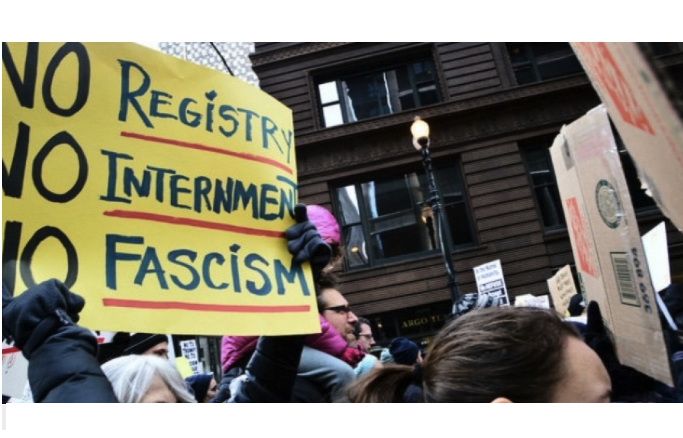
“Anti-foreigner rhetoric full of unbridled vitriol and hatred is proliferating to a frightening degree, and is increasingly unchallenged,” said Zeid Ra’ad Al Hussein, the U.N. human rights chief. “The rhetoric of fascism is no longer confined to a secret underworld of fascists, meeting in ill-lit clubs or on the ‘Deep Net.’ It is becoming part of normal daily discourse.”


People protest in the wake of Donald Trump’s election. (Photo: Ben Alexander/flickr/cc)
(click on photo to enlarge>

Speaking ahead of International Human Rights Day on December 10, Zeid warned that “if the growing erosion of the carefully constructed system of human rights and rule of law continues to gather momentum, ultimately everyone will suffer.”

The failure of global leaders to deal with complex social issues like the massive wealth gap, discrimination, and climate change have led to growing numbers of people to turn to “the siren voices exploiting fears, sowing disinformation and division, and making alluring promises they cannot fulfill,” he said, in a nod to U.S. President-elect Donald Trump.

“Discrimination, yawning economic disparities, and the ruthless desire to gain or maintain power at any cost are the principal drivers of current political and human rights crises,” he said.

(Article continued in the right column)

Question related to this article:

What is the state of human rights in the world today?

(Article continued from the left column)

Zeid’s warning came just before far-right Dutch politician Geert Wilders—who is widely expected to win the upcoming March election for Prime Minister—was convicted of inciting discrimination for saying the Netherlands would be better off with fewer Moroccans.

During a municipal election campaign in the Hague in March 2014, Wilders, leader of the Party for Freedom, asked a crowd of people attending a rally if they wanted “more or fewer Moroccans in this city and in the Netherlands.” The crowd chanted back, “Fewer! Fewer!” Wilders, smiling at the reaction, responded, “We’re going to take care of that.”

Friday’s verdict indicated that Wilders had planned the comments as a stunt, with the judges finding evidence that his team had coached the crowd how to respond, and saying that it was intended to be insulting to Moroccans.

Although Wilders was convicted of inciting discrimination, he was acquitted of hate speech charges, and the panel rejected prosecutors’ requests to fine or jail him. As the BBC reports, the verdict will have little impact on Wilders’ political aspirations.

Zeid has previously named Wilders, among other high-profile politicians such as Trump and the U.K.’s Nigel Farage, as demagogues whose rhetoric is poised to bring about “colossal violence” against minorities. He has also said Trump was “dangerous” for the international community. Under Zeid’s leadership, the U.N. human rights office is readying to condemn Trump if he puts any of his xenophobic or discriminatory policies into effect.

On Thursday, Zeid urged all people to “push back the violence and hatred which threaten our world.”

“Human rights are for everyone, and everyone will be affected if we do not fight to preserve them,” he said. “They took decades of tireless effort by countless committed individuals to establish, but—as we have seen all too clearly in recent months—they are fragile. If we do not defend them, we will lose them.”

Nicaragua: Culture of Peace Proposed to Eradicate Violence

. . WOMEN’S EQUALITY . .

An article in El Nuevo Diario (translated by CPNN)

Karla Miranda, a third year psychology student, speaking about violence against women, said that aggressors should be evaluated by psychologists to understand the cause of their attitude. “Violent behavior often originates from childhood, so it is important that we know the history of these people in order to assess the origins of violence,” she said.

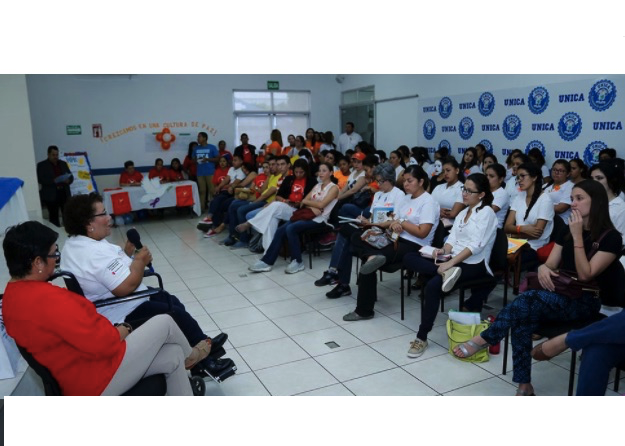
This was said yesterday at the fair called Growing a Culture of Peace, held at the University Cátolica (Unica), in the framework of the International Day for the Elimination of Violence Against Women, with the aim of promoting values ​​in society and raising awareness on this topic.


Rosa Salgado, with microphone, speaks before students of the Catholic University. (Photo: Melvin Vargas)
(Click on photo to enlarge)

Johnny Hodgson, career coordinator for the campus, explained that the fair was developed with different talks, information stands and cultural events so that students and experts could address the issues of violence.

“We did not just want to be part of the International Day for the Elimination of Violence Against Women, but rather to do something more integral, where everyone is involved. In addition, we promote spaces to come and share how to face, understand and avoid violence, “said Hodgson.

Karla Miranda added that “another important aspect is that in raising children, it is necessary to educate in values, so that the children grow up with the value to not violate either girls or children. That is why this topic must be addressed at the level of the family. ”

Miranda recalled that in 2013 the World Health Organization (WHO) declared violence against women as a public health problem and in that sense added that psychological violence is the one that most affects and causes the most damage.

(article continued in right column)

(Click here for the original Spanish version of this article.)

Question related to this article:

Protecting women and girls against violence, Is progress being made?

(article continued from left column)

Ana Hidalgo Mendoza, Miranda’s colleague, commented that violence is a cycle that comes from the home. “The child who sees that his father violates his mother will grow up with that profile, believing that it is normal behavior, and in the case of the girls, they will believe that they must be submissive and when they are raped, they will believe that it is ok” “He added.

VALUE FORMATION

Rosa Salgado, representative of the disabled with the Office of the Attorney General for Human Rights (PDDH), addressed violence against women with disabilities.

Salgado said that a solution is the formation in values ​​that must be started from the home and the different spaces of society and education, “so that in this way we appropriate the understanding of human rights for ourselves. and that we make use of the legal instruments “.

“To the extent that we recognize how we can help and improve the quality of life of a person with a disability, conditions will be improved by preventing violence,” she said.

SCHOOL HARASSMENT

Eliuth Martínez, a teacher at the Unica and a pedagogical advisor at the Directorate of Special Education at the Ministry of Education (Mined), commented that throughout the school year they continued to develop a non-bullying campaign, as this problem began to emerge in classrooms.

According to Martinez, since last year the campaign has trained 6,000 to 8,000 teachers.

“It was enough to have 1 to 3 cases for the Government to act immediately. Today we can say that we have good results from the center and the delegates and even a free telephone line was set up to report these types of violence,” added the teacher.

About 35% of all women will experience violence, either in or out of the couple, at some point in their lives, according to WHO data published in 2013.

Martinez recently attended a case of a visually impaired girl who was believed to experience bullying on the part of her colleagues, to which the Mined immediately acted in conjunction with the educational councils, investigated the case and began work not only with the teachers but also with the students and the school in general.

Mexico: Need to promote a culture of peace, to end violence against women: CEAMEG

. . WOMEN’S EQUALITY . .

An article from Sistema Michoacan for Radio and Television (translation by CPNN)

Mexico City.- The director general of the Center for Studies on the Advancement of Women and Gender Equality (CEAMEG) of the Chamber of Deputies, Adriana Ceballos Hernández, said that violence against women harms society every day, and, although there are important advances, there is still much to be done.

In inaugurating the forum “For a culture of peace”, she emphasized that violence should be eliminated in the relations of women and men, inculcating in people the knowledge of rights from childhood, respecting political rights of gender and understanding that abuse affects everyone around, especially children.

She considers it necessary to promote a culture of harmony in all fields of action.

The director of Social Studies of the Position and Condition of Women and Gender Equality of CEAMEG, Judith Díaz Delgado, explained that their organization works mainly for the prevention of violence.

She said that “we live in a violent Mexico with an absence of peace, in which seven out of ten suffer some type of abuse, so we can not say that there is a culture of peace.”

Guadalupe Salas y Villagómez, director of Promotion and Training of Women and Equality, of the National Human Rights Commission (CNDH), said that the CNDH is dedicated to raising awareness of human rights, equality between women and men, as well as awareness about gender-based abuse.

Finally, Ana Paula Hernández Romano, founder of Proyecto Paz A.C, pointed out that Mexico is far down the list in the 140th place of nations for providing a state of well-being. Meanwhile, the National Survey of Victimization and Perception on Public Safety (ENVIPE) for 2016, indicates that most Mexicans perceive that the problem of violence and insecurity is even greater than the problem of poverty and unemployment.

(Click here for the original Spanish version of this article.)

Question related to this article:

Laureates and scientists call on Nobel Prize Foundation to divest fossil fuels

. . SUSTAINABLE DEVELOPMENT . .

An article from gofossilfree.org

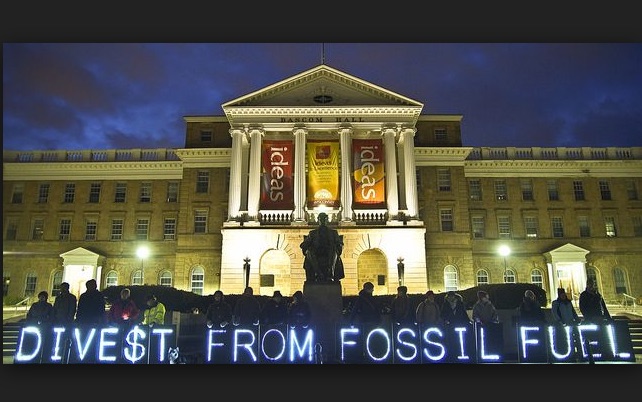
Citing the urgency of climate change, Nobel Prize winners and scientists have issued a letter calling on the Nobel Foundation to divest its $420 million endowment from fossil fuels. The letter coincides with the celebration of Nobel Days and the annual prize ceremonies.


Divest Nobel serve up oil and coal to Nobel nominees in Stockholm, November 2016
(click on image to enlarge)

The call from laureates and climate scientists cites the original intent of the Foundation – an organisational mission to recognize all that is good and innovative about humankind – to make the argument that the foundation cut ties with destructive fossil fuel companies.

Among the 14 laureates that signed the letter are atmospheric chemist Paul Josef Crutzen, physicist David Wineland and biologist Sir John Sulston, and several winners of the prestigious Nobel Peace Prize including Iranian human rights activist Shirin Ebadi, Yemeni women’s rights campaigner Tawakkol Karman and Argentinian human rights and peace activist Adolfo Pérez Esquivel. The letter has also been signed by eminent scientific contributors to the Nobel-winning Intergovernmental Panel on Climate Change (IPCC).

It’s hard to argue with Nobel Laureates who have made such incredible scientific discoveries, advanced human rights and helped foster peace and ends to major regional conflicts.

The laureates and scientists called on the Foundation to lead and set an example for the world, writing: “The Nobel Foundation has played a historic role in the struggle against climate change by recognising people who have highlighted and studied humankind’s impact on the climate. Today, in this time of urgent need, as we face a warming planet and strive to implement the Paris Agreement, we ask you to do more. Our educational and cultural institutions must do more than educate, they must be an example of a new pathway forward, free from the industries that have caused the most damage to our climate.”

Activists in Sweden, part of the Divest Nobel campaign, have already taken action by highlighting the links between the foundation’s investments and fossil fuel companies. Now with laureates and scientists joining the call, they hope the Foundation will be forced to listen – and act.

More than 600 institutions, foundations, universities and pension funds are already leading by committing to divest from destructive fossil fuel companies. Tell Nobel to join them and act on the message from laureates and scientists by adding your own name.

Sign the petition calling on Nobel Foundation to divest

(Thank you to Janet Hudgins, the CPNN reporter for this article)

Question for this article:

Winners of Youth Innovation Challenge to Engage in Peacebuilding in South Sudan

FREE FLOW OF INFORMATION

An article from PC Tech Magazine

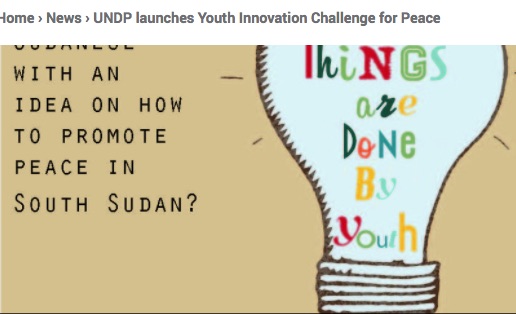
The Youth Innovation Challenge for Peace was organized by United Nations Development Programme (UNDP) Community Security and Arms Control Project to specifically recognize the strength of youth-led initiatives and the impact of home-grown ideas on societies emerging from conflict. 132 youth attended the original introduction workshop when the competition launched in August 2016.


UNDP call for proposals

From there, 150 ideas were submitted and 26 semi-finalists were selected by an evaluation committee to participate in this week’s “ideation workshop”.

In a press statement, Eugene Owusu; Deputy Special Representative of the Secretary General, UN Resident Coordinator and UNDP Resident Representative, said; “The purpose of the challenge is not to reward ideas with dollars but to inspire and nurture creativity that would transform South Sudan.”

“ The challenge is about building a culture of peace and thrusting the youth at the forefront of creativity and social change, amplifying their ambition and smart use of new technology to engage and transform their society,” Owusu adds.

The participants received guidance and support for refining their ideas, structuring their proposals, and delivering effective presentations from UNDP’s Regional Innovation Advisor for Africa Mr. Mark Lepage and local open technology experts from Juba Hub (jHub).

Lightning-round sessions were held on Tuesday, where each project had seven minutes to present their idea in whatever format they chose.

Semi-finalists were judged based on a common set of criteria: clarity and presentation of their idea; creativity and originality of their idea; addresses the issue of engaging youth in peace; viability in the long term and financial sustainability; number of youth and general population who could benefit; implementable and realistic; scalable and replicable; and gender and social inclusion.

Winners

The overall winning proposal, taking home the top prize of US$10,000 was an individual submission from Mr. Kwaje called 64 Hands SACCO (savings and credit co-operative society), which combines social entrepreneurship with peace-building by providing South Sudanese small and medium enterprises access to a community-based source of financing.
64 Hands SACCO is designed to be propelled by youth drawn from all 64 tribes in South Sudan.

Kilkilu ana Comedy Extra placed second, with seed funding of US$6,000 to execute their vision of developing multi-lingual comedy performances to promote healing, understanding, and reconciliation. Their proposal focused on a pilot program to take place in IDP camps in and around Juba.

GOGIRLS-ICT Initiative won third place and will receive US$4,000 awarded to implement their proposed #TTOS-ICT project. The aim of the project is to engage, educate and empower women and girls in Science, Technology, Engineering and Mathematics (STEM) based fields through a philosophy of chain-based trainings. GOGIRLS-ICT Initiative focuses on mentoring and making meaningful social impact to address development challenges women and girls face in South Sudan which contribute to insecurity, like early and forced marriage, illiteracy, and unemployment.

The winning submissions will work closely with UNDP moving forward, with the ultimate aim of implementing their ideas on the ground in pilot programs.

Question related to this article: