Colombia: Unesco recognizes schools in Norte de Santander for their work towards peace

EDUCATION FOR PEACE .

An article from Compartir Palabra Maestra. (Reprinted according to the rules of Creative Commons Recognition-NoComercial-ShareIgual 4.0 International License)

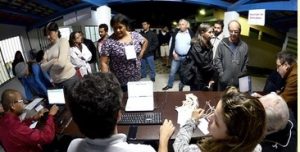
During the National Educational Forum 2017 held in the capital of the country and encouraged by Unesco and the Ministry of Education, Norte de Santander was present this year with two proposals which were among the 12 best being recognized by the two organizing entities.

One of the proposals presented was that of the Cristo Obrero Educational Institution, located in the neighborhood of La Ermita de Cúcuta, who undertook a project called ‘School reconciliation, commitment of all for a culture of peace’ by which they promote healthy coexistence in the institution.

In total, 600 strategies were presented throughout Colombia, with initiatives focused on the search for a Colombia without conflicts. The presentations included topics such as reconciliation, democracy, reconstruction of historical memory, society, violence and human rights.

(continued in right column)

(Click here for the original version of this article in Spanish)

Questions for this article:

Peace Studies in School Curricula, What would it take to make it happen around the world?

What is happening in Colombia, Is peace possible?

(continued from left column)

Ángel Ramiro Peñaranda, a teacher at the Cristo Obrero School who leads the Cucuteño project, indicated that this curriculum for peace “did not exist before.” It contains subject plans, parcelers and class preparers.

“I never thought that this could be an experience for the Ministry, but with the support of the rector of the school, it was presented in the forum,” the teacher told a media outlet in the city of Cúcuta.

The other educational center that represented the northern department of Santander was the La Salle School in Ocaña, with the demonstration of a pedagogical strategy to promote peace within the campus. The institution participated with the ‘Project of democracy, culture, peaceful experience and youth’.

“The project includes three lines of work. The student representative is responsible for raising awareness of the fulfillment of duties and promotion of rights by all students, leading to the adoption of a school peace manifesto,” he added.

He added, “this new achievement of the institution is a pride for Norte de Santander, because we can make it known not only to Colombia, but to the whole world, because teachers strengthen the construction of peace in our country through what we do pedagogically “.

 The two institutions are part of the 40 that make up the Nortesantandereana Network for a School without Violence that works day by day for better coexistence and relationships among citizens.

Gwangju, South Korea: The 1st Asian Literature Festival

EDUCATION FOR PEACE .

An article by Brother Anthony from the Korea Times

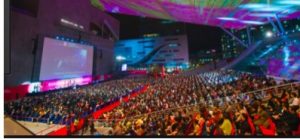
The vast, recently completed Asia Culture Center in the heart of Gwangju, South Jeolla Province, was the scene of Korea's first Asian Literature Festival last week, Nov. 1 to 4. It brought together writers from Asia and beyond, together with a number of Korean writers, for a time of sharing and encounters designed to establish stronger bonds between writers across the globe.


Nobel Prize laureate Wole Soyinka from Nigeria speaks at Asian Literature Festival in Gwangju, Nov. 4. / Yonhap

In his opening remarks, the senior Korean poet, Ko Un, stressed until now the sheer size of the region known as "Asia," together with its linguistic diversity, have been a great obstacle to free communications between the writers of the region. Korean poets have remained unaware of and unable to read the poetry written in other countries and on other continents, and vice versa. Ko Un recalled how the Korean poet Oh Sang-sun wrote a poem titled "Asia's Night" in 1920, in the aftermath of Japan's suppression of the Korean March 1 Independence Movement. He proposed poets coming together now in friendship might be able to produce, nearly a century later, a response he called "Asia's Morning."

In his opening address, the 1986 Nobel Prize laureate Wole Soyinka from Nigeria stressed that humanity today faces a vital choice between freedom and stagnation. Creativity, he said, is only possible in freedom and today, in parts of Africa, the Middle East and Southeast Asia, fundamentalist religious intolerance is resulting not only in the destruction of many nations' artistic heritage but in the uprooting and scattering of whole populations. In response, he called for the festival's participants to work together to develop a new "Culture of Peace," binding "all peoples together from Africa to Korea and around the globe."

The Asia Culture Center was built around and under the former Jeolla Provincial Office and other buildings on Geumnam-ro Street, which today form a memorial complex to the victims of the 5.18 Democratic Uprising. It was the site of the final massacre of the civilian militia when the army retook control of the town in the early morning of May 27, 1980. President Roh Moo-hyun first suggested turning the site into a cultural center for the whole of Asia. It was only natural that the festival participants should begin by making a solemn visit to the May 18th National Cemetery, led by Ko Un, and together pay their respects to all who lived and died for Korea's democratization, in 1980 and also both before and since then. Ko Un paid special tribute to poets Kim Nam-ju and Jo Tae-il and activist Yun Han-bong. In the Memorial Hall at the cemetery the visitors saw a special display of poems selected from Ko Un's great "Maninbo" cycle, commemorating some of those who died in the Uprising.

A number of poets from across the world spoke during the festival. The great Spanish poet Antonio Colinas said, in particular, "The poems and prose of the East possess literary and vital roots, about which we still need to learn, of which we must perform a radical reading to escape the chaos toward which we are heading." He concluded, "The poetry of the past has lasted and must endure today in the face of the uniformity and chaos that foments global dehumanization. This was possible because the poetry of the past has been faithful to its primary mission, to go beyond words."

(continued in right column)

Question for this article:

How can poetry promote a culture of peace?

(continued from left column)

French poet Claude Mouchard evoked his encounter with a homeless Sudanese refugee in France; finally that man lived for eight years in his home and they struggled to communicate despite the language barriers. Mouchard took scraps of their shared conversations and turned them into poetry. The man one day died of a heart attack in the poet's arms, but his words remain, noted by the poet as "perhaps poems." American poet Zack Rogow traced the influence of Asian poetry and art, especially that of Japan, to the writers and artists of France and Russia.

That evening, Ko Un and singer Na Yoon-sun joined forces in a concert, Ko Un's dramatic readings of his poems alternating with the vibrant voice of the immensely popular singer before a packed theater. Ko Un's manner of reading his poems has long made him a celebrity in literary festivals across the globe and at 84 he continues to impress and deeply move audiences.

At the heart of the festival were poets and novelists from a number of Asian countries: Ayu Utami from Indonesia, Damdinsuren Uriankhai from Mongolia, Duo Duo from China, Sagawa Aki from Japan and Shams Langeroodi from Iran, as well as a dozen writers, mostly poets, from Korea. Each of the overseas guests was accompanied by a personal interpreter to facilitate communication. During visits to the top of Mount Mudeung, to the bamboo groves and a traditional garden in Damyang, freewheeling exchanges formed the essence of the festival, as poet met poet across the barriers of distance and language. One literary translator spoke on the last day to stress the essential role of the translator in enabling multiple local literatures written in so many mutually incomprehensible languages to cross all frontiers and become truly "Asian literature" and "world literature."

A jury had screened in advance the work of the foreign participants and the first Asian Literary Award was given to Damdinsuren Uriankhai from Mongolia, whose work combines traditional nomadic poetry with modern, more universal features in a remarkable way. Always dressed in traditional Mongolian robes, his calm smile and warm presence were especially impressive throughout the festival. He received his award from the hands of the poet Do Jong-hwan, who is the current minister of Culture, Sports and Tourism.

The climax of the festival came with the keynote speech by Nobel laureate Wole Soyinka on Saturday afternoon. In it he said, "We know that when we set out into the realms of imagination, we experience liberation at its most unsullied. We are not only free, we see humanity as the very repository and expression of freedom, beyond doctrine and politics." He evoked the many ways in which power has always felt threatened by the freedom of creativity, and striven to crush it, whether in the Chinese Cultural Revolution or the Spanish Inquisition or in the Stalinist USSR, and especially pointed at the current wave of Islamic violence, including in his own land of Nigeria. He paid tribute to the young Kenyan poet Kofi Awoonor who was killed in a terrorist attack on a Nairobi shopping mall. "Poetry is the antithesis of power, and negation of boundaries, not merely physical boundaries but frontiers of thought and imagination that run contrary to our human avocation. Border crossing is the very condition of true explorers." He quoted lines by an ancient Japanese poet, by British, American poets, Sylvia Plath and Swedish poet Tomas Transtromer, before widening his references to ask, "Do you know Tierno Bokar, the Sage of Bandiagara? Do you know the Ozidi Epic? Do you even know the Legend of Shaka Zulu or indeed the narratives of Fagumwa? Do you know of the compendium of Ifa oracular poetry? The lamp of the voyager, however luminous, must submit to the sunrise of universal Enlightenment. The ecumenical spirit of poetry urges on the explorer in all creatures endowed with the power of imagination."

To conclude, the participants issued a Declaration "The Morning of Asia: For the Furtherance of Democracy, Human Rights, and Peace" affirming the vital role of literature in the construction of a world of peace, free of discrimination and violence.

The writer is a professor emeritus at Sogang University.

Qatar: DICID chief highlights role in spreading peace

. TOLERANCE & SOLIDARITY .

An article from The Peninsula, Qatar’s Daily Newspaper

Chairman of the Doha International Center for Interfaith Dialogue (DICID) Dr Ibrahim bin Saleh Al Nuaimi highlighted the role of the centre in spreading the culture of peace and coexistence among diverse segments of society, in cooperation with leaders of various religions, during a meeting with a delegation of youth leaders from Europe and America yesterday.

Al Nuaimi noted that the DICID is the institution concerned with interreligious and intercultural dialogue and capacity building in the field of dialogue and culture of peace in Qatar, stressing the center’s great interest in the youth sector and its keenness on involving them in its various activities, both in its annual conferences and in roundtables. Al Nuaimi gave a brief presentation of the center’s various activities, notably its annual Interfaith Dialogue Conference, which brings together people interested in interfaith dialogue, as well as local community roundtables, publications and other activities.

(continued in right column)

Question related to this article:
 

How can different faiths work together for understanding and harmony?

(continued from left column)

For their part, the members of the youth delegation praised the center’s efforts in consolidating the values of coexistence and dialogue between religions and cultures.

The visit of the young leaders to the DICID comes as part of its activities and interactive programmes, which seek to establish communication and interaction with all cultures, religions and communities, especially with the youth.

The visit also comes as part of the activities of the United Nations Alliance of Civilizations (UNAOC) Fellowship programme aimed at deepening the mutual understanding between the countries of Europe, America, Arab and Islamic countries.

USA: Sign The People’s Peace Treaty with North Korea

. .DISARMAMENT & SECURITY. .

An article from United for Peace and Justice

Alarmed by the threat of a nuclear war between the U.S. and North Korea, UFPJ and other concerned U.S. peace groups have come together to send an open message to Washington and Pyongyang that we are strongly opposed to any resumption of the horrific Korean War. What we want is a peace treaty to finally end the lingering Korean War!


Inspired by the Vietnam-era People’s Peace Treaty, we have initiated a People’s Peace Treaty with North Korea, to raise awareness about the past U.S. policy toward North Korea, and to send a clear message that we, the people of the U.S., do not want another war with North Korea. This is not an actual treaty, but rather a declaration of peace from the people of the United States.

Our goal is to collect many thousands of signatures by the end of 2017, and to publicize the People’s Peace Treaty in conjunction with nationally coordinated peace actions on Armistice Day (aka Veterans Day), November 11. The People’s Peace Treaty will be sent to the governments and peoples of Korea, as well as to the U.S. Government. Please add your voice for peace by signing the People’s Peace Treaty with North Korea. Add your name today.

CLICK HERE TO SIGN!

TO: WASHINGTON & PYONGYANGFROM: YOU

PEOPLE’S PEACE TREATY WITH NORTH KOREA

A MESSAGE OF PEACE FROM THE PEOPLE OF THE UNITED STATES

Deeply concerned with the increasing danger of the current military tensions and threats between the Governments of the United States and the Democratic People’s Republic of Korea (the DPRK, North Korea), which may re-ignite the horrendous fighting in the Korean War by design, mistake or accident;

Recalling that the United States currently possesses about 6,800 nuclear weapons, and has threatened the use of nuclear weapons against North Korea in the past, including the most recent threat made by the U.S. President in his terrifying speech to the United Nations (“totally destroy North Korea”);

(Article continued in right column)

Question for this article:

The peace movement in the United States, What are its strengths and weaknesses?

Are economic sanctions a violation of human rights?

(Article continued from left column)

Regretting that the U.S. Government has so far refused to negotiate a peace treaty to replace the temporary Korean War Armistice Agreement of 1953, although such a peace treaty has been proposed by the DPRK many times from 1974 on;

Convinced that ending the Korean War officially is an urgent, essential step for the establishment of enduring peace and mutual respect between the U.S. and the DPRK, as well as for the North Korean people’s full enjoyment of their basic human rights to life, peace and development – ending their long sufferings from the harsh economic sanctions imposed on them by the U.S. Government since 1950.

NOW, THEREFORE, as a Concerned Person of the United States of America (or on behalf of a civil society organization), I hereby sign this People’s Peace Treaty with North Korea, dated November 11, 2017, Armistice Day (also Veterans Day in the U.S.), and

1) Declare to the world that the Korean War is over as far as I am concerned, and that I will live in “permanent peace and friendship” with the North Korean people (as promised in the 1882 U.S.-Korea Treaty of Peace, Amity, Commerce and Navigation that opened the diplomatic relations between the U.S. and Korea for the first time);

2) Express my deep apology to the North Korean people for the U.S. Government’s long, cruel and unjust hostility against them, including the near total destruction of North Korea due to the heavy U.S. bombings during the Korean War;

3) Urge Washington and Pyongyang to immediately stop their preemptive (or preventive) conventional/nuclear attack threats against each other and to sign the new UN Treaty on the Prohibition of Nuclear Weapons;

4) Call upon the U.S. Government to stop its large-scale, joint war drills with the armed forces of the Republic of Korea (South Korea) and Japan, and commence a gradual withdrawal of the U.S. troops and weapons from South Korea;

5) Call upon the U.S. Government to officially end the lingering and costly Korean War by concluding a peace treaty with the DPRK without further delay, to lift all sanctions against the country, and to join the 164 nations that have normal diplomatic relations with the DPRK;

6) Pledge that I will do my best to end the Korean War, and to reach out to the North Korean people – in order to foster greater understanding, reconciliation and friendship.

Malta: Launching The Global Council For Tolerance And Peace (GCTP)

. . DEMOCRATIC PARTICIPATION . .

An article from the GCTP News

The Global Council for Tolerance and Peace was launched today at a major official ceremony held at the Mediterranean Conference Center in Malta at the joint invitation of the United Nations Population Fund (UNFPA), the Government of Malta and GCTP.

Malta’s Prime Minister Joseph Muscat announced his support for the council, calling for fighting poverty, injustice, ignorance and discrimination in order to build lasting peace. He affirmed that he believes in the goals of the GCTP, its mission and its ability to make the required change at the global level and that he will not only support it but will work with it, noting the importance of establishing the International Parliament for Tolerance and Peace, stressing the neutrality of Malta and its commitment to human rights, tolerance and peace.

Ahmed bin Mohammed al-Jarwan,
president of the Global Council for Tolerance and Peace

The ceremony was attended by the Prime Minister of Malta, a number of ministers of foreign affairs, education, youth and culture from several countries, representatives of the United Nations and a host of ambassadors, heads of international organizations, universities and media. It began with a documentary film that included a speech by UN Secretary-General Antonio Guterres, warning that “our world faces many great challenges, conflicts, inequality, deadly intolerance and security threats, including nuclear weapons. We have the tools and the will to overcome these challenges.

Guterres said: How can we help millions of people suffering from large-scale wars and prospects, almost never-ending? There is no winner in these wars, everyone loses especially that the new global terrorist threat affects us all and destabilizes the stability. Let us put peace first, let peace always be our goal and guide.

The master of ceremony Joseph Deeb started the day. In addition to the Maltese Prime Minister’s speech, Deputy Prime Minister, and Minister of Foreign Affairs of the Republic of Kosovo Behgjet Pacolli and Foreign Affairs Minister of Malta, Carmelo Abela, who both stressed the importance of launching the Global Council for Tolerance and Peace at this particular time in the face of terrorism, extremism, hatred, racism etc. and the urgent need for joint global action based on the right education of the youth and the empowerment of women to build a better tomorrow for future generations.

(Article continued in right column)

Question related to this article:

How can we develop the institutional framework for a culture of peace?

(Article continued from left column)

Address by the President of the Council

“The danger of terrorism, fanaticism, hatred, racism, ethnic cleansing, sectarian and racial extremism is increasing and growing like cancer … These phenomena go beyond the limits of reason and the borders of nations and threaten the lives of people, citizens of different countries and civilizations, threaten development and security and jeopardize world peace.” Said Ahmed bin Mohammed al-Jarwan, president of the Global Council for Tolerance and Peace. “Convictions are no longer sufficient. It is no longer possible for armies and police alone to combat these terrible phenomena. No country or institution can rely solely on its own capacities to address the problem of terrorism, racism, extremism, violence, and discrimination.

We are here today for this reason, we are here to launch this global endeavor, the Global Council for Tolerance and Peace.”

“This newly created Council is an international organization based on democratic principles and derives from international law and agreements its own system of work.” Added H.E. al-Jarwan. “The Council signed a memorandum of understanding with the United Nations Population Fund (UNFPA) for cooperation and the building of international partnerships. The Council is composed of eminent international figures who maintain a sound reputation and experience in areas related to peace and tolerance.”

“Among the roadmap in the strategic planning of the Council are the following:

• Establish an international parliament for tolerance and peace, raise tolerance values, promote preventive diplomacy, support regional and global youth initiatives, launch a global prize for those who contribute to the protection of world peace, and develop and implement joint programs, events, and conferences to promote tolerance and peace.”

Al-Jarwan added: “I am honored at the launch of the Global Council for Tolerance and Peace to invite parliaments and think tanks of young people, intellectuals, economists, sociologists and scholars to join this Council in order to spread a culture of tolerance and peace and to be the force of change on the world stage.”

He concluded by saying: “Together, we can build a more tolerant and secure world.

Together we can build a future in which love triumphs over hatred, tolerance over revenge, openness over intolerance, and knowledge over ignorance.”

Dr. Louay Shabaneh, UNFPA Director for the Arab Region, confirmed the commitment of the international community to the initiative of the Global Council for Tolerance and Peace, and the partnership with the Council to achieve the goals of development, tolerance and human rights.

Nigeria: Kaduna Conflicts: El-Rufai Inaugurates Peace Commission

.. DEMOCRATIC PARTICIPATION ..

An article by Chimezie Enyiocha for Channels TV of Nigeria

The Kaduna State government has set up a peace commission saddled with the responsibility of addressing the various ethnic and religious conflicts in the state. The commission is headed by the General Secretary of Anglican Church Worldwide, Bishop Idowu Fearon.

At the inauguration of the commission on Saturday, November 4, at the Council Chambers, Government House Kaduna, the state governor, Nasir El-Rufai said the people should reject the legacy of violent conflict that has engulfed the state for almost four decades, and embrace the culture of peace and tolerance for the socioeconomic development of the state.


Click on photo to enlarge

Since 1981, Kaduna State has witnessed several conflicts that led to the loss of lives and property worth millions of naira. The farmers/ herdsmen conflict in the southern part of the state is the most recent incident where many families were displaced as a result of the destruction of their houses.

The state governor said the peace commission was inaugurated based on the recommendations of past commissions of inquiry and committees established to study each instance of conflict.

Members of the commission are assigned to reduce violence and advocate ideas and programmes that affirm diversity, promote peaceful coexistence even in the face of religious or ethnic diversities in the state.

The Chairman of the commission, Bishop Idowu Fearon during the inauguration assured the governor that the members will live up to expectations.

Governor El-Rufai said the ultimate goal of the people and communities is to live in harmony, hence the need to set up the Kaduna State Peace Commission.

Questions for this article:

UNIFA, the University of the Aristide Foundation in Haiti

. . DEMOCRATIC PARTICIPATION . .

An article by Haiti Action Committee member Marilyn Langlois for Transcend Media Service

“Right now, in the moment that Haiti is living, the university is essential. Haiti vitally needs a safe space where young people can come together, think country, and contract a future under very difficult circumstances. A place where they can learn from and interact with national and international professionals. An institution that will address national issues and seek viable solutions to national problems. Dreams of working, prospering, and changing Haiti….”
— Mildred Aristide, Former First Lady of Haiti.


Based in Tabarre, Haiti, the University of the Aristide Foundation (UNIFA) is a high quality, multidiscipline, accredited university taught by Haitian and international professors prominent in their fields. UNIFA is a member of the Institute of International Education.

As of academic year 2016-2017, UNIFA has seven disciplines: Schools of Medicine, Law, Nursing, Physical Therapy, Dentistry, Engineering, and Continuing Education.

UNIFA’s Physical Therapy degree program is the first of its kind in Haiti. This school answers the acute need for physical therapists in Haiti, a need that became particularly clear after the 2010 earthquake when many people suffered devastating injuries that require intensive rehabilitative treatment.

UNIFA is building its own teaching hospital/medical center to enable its numerous health-related students to gain necessary practical experience as well as to provide meaningful health care to the surrounding communities who are unable to access medical care. Planning and fundraising for construction are now underway. The teaching hospital will provide dozens of much needed slots for clinical training for UNIFA’s students.

(article continued in right column)

Question related to this article:

 
Are the people of Haiti making progress toward a culture of peace?

(article continued from left column)

What makes UNIFA unique and important to the future of Haiti, setting it apart from other universities in Haiti, is its determination to teach with an emphasis on the value of human rights and dignity, in order to build a new and just Haiti.

UNIFA’s core issues and focuses include quality education, global health, human rights and citizen engagement, gender and income equality, women and girls empowerment, youth development, and disaster response and recovery.

UNIFA’s Mission and Guiding Principles

– Emphasize human rights and dignity through use of human rights-based education and practices to build a new and just Haiti.

– Break down long tradition in Haiti of exclusion of the poor majority from access to higher education.

– Increase number of doctors practicing in rural areas. Recruit students from all ten departments of Haiti.

– Commit to equal gender representation.

– Open medical and legal professions to all. Prepare doctors and lawyers to serve the poorest of the poor.

– Provide a university for critical thinking about Haiti.

– Provide space for students to return as teachers, giving back to same system that nurtured and trained them.

– Please consider donating to UNIFA

* * * * * * *

The Haiti Action Committee is a Bay-Area based network of activists who have supported the Haitian struggle for democracy since 1991.Our members travel frequently to Haiti and are in close touch with Haitian grassroots activists, legal and human rights workers, and victims of repression. Through demonstrations and civil disobedience, Congressional lobbying and educational events, publications and community organizing, we are working to build a strong Haiti solidarity movement.

Pope Francis meets ‘The Elders’ to discuss global concerns

FREE FLOW OF INFORMATION

An article from the Vatican Radio

Pope Francis had a private meeting at Santa Marta on Monday afternoon [November 5] with members of The Elders, an independent group of global leaders working for peace and human rights around the world. The Elders was established 10 years ago by former South African President Nelson Mandela and is currently marking the group’s 10th anniversary with a campaign called “Walk Together” – continuing Mandela’s long walk to freedom.


Left to right: Elders Lakhdar Brahimi and Kofi Annan, Pope Francis with an assistant, Elders Ricardo Lagos and Mary Robinson, and an unidentified participant.

Just after the audience, Philippa Hitchen spoke to two of the founding members of The Elders, former UN Secretary General Kofi Annan and Mary Robinson, former Irish President, former UN high commissioner for human rights and, more recently, UN envoy on climate change. Philippa began by asking Kofi Annan about the issues they were able to discuss during their papal audience…

Listen here.

The former UN leader says it was important for four representatives of the group to come to the Vatican because they share many common interests and values. He says they wanted to engage with Pope Francis and “discuss how we can work together, how we can pool our efforts on some of these issues”.

(Article continued in the column on the right)

Question related to this article:
 
Where in the world can we find good leadership today?

(Article continued from the column on the left)

Peace, migration, climate change, gender equality

Among the areas of discussion, he continues, were the questions of migration, nuclear weapons peace, mediation and conflicts, as well as climate change and gender equality, that is “the importance of giving women a voice and respecting their role”. He adds “I hope this will be the first of many meetings”.

Shared efforts to be a voice for marginalised

Former Irish President Mary Robinson says the group came to express “an appreciation for the role he is playing and the fact that he, like The Elders, is trying to be a voice for the voiceless and the marginalized, trying to deal with the most difficult areas of conflict.

She says they also spoke about countries including Venezuela and Congo, as well as focusing on climate change, all issues, she notes, where “the pope has given leadership”.

Common values, common sense of purpose

Robinson says she was also struck by the “warmth and affection and humour” in their meeting. “I was very struck by how relaxed the pope was with us, how much he joked”, she says, adding that Pope Francis seemed to “feel at home” as they discussed “common values, a common moral purpose, common problems”

I think he could be a future ‘Elder’, Annan says and Robinson quips, “I think he’s a Super Elder”.

[Editor’s note: Additional comments will be posted in the coming days on the website of the Elders]

(Thank you to Janet Hudgins, the CPNN reporter for this article.).

Gainesville, Florida, USA: Nancy Hardt: Reducing abuse, improving health go hand in hand

. . DEMOCRATIC PARTICIPATION . .

An article by Nancy Hardt for the Gainesville Sun (reprinted according to terms of Creative Commons)

Our local peace-building efforts were highlighted at the United Nations in September. After using data and maps to identify neighborhoods with health inequities, we brought services that within four years resulted in a reduction in unintended pregnancies, a reduction in premature births, and a stunning 45 percent reduction in cases of child abuse and neglect.


caption: A patient gets looked over by a physician assistant and University of Florida medical student in the UF Mobile Outreach Clinic in 2016. [Alan Youngblood/Staff photographer)

We did this by reducing stress. Stressed people have bad, sad or scary things happening in their lives.

Three interventions included health care; provision of concrete family supports such as food, clothing and shelter; and links to services for victims of domestic violence.

Health professionals staffed a free clinic on wheels that visited identified neighborhoods on a regular schedule. Many women requested pregnancy testing. If their tests were negative, our nurse asked each woman whether she was happy or sad with that result.

We learned that vulnerable women did not always have the luxury of choosing the day or time for sex, or even the partner for sex, so they were relieved to hear they were not pregnant. We offered them long-acting reversible contraception free of charge.

(article continued in right column)

Question related to this article:

 
How can culture of peace be developed at the municipal level?

(article continued from left column)

When the sheriff looked at our map for health, she noticed that her hot spot for service requests overlapped with ours. Review of call data showed that the most common call was for domestic violence.

New training for sheriff’s deputies included asking questions such as, “Has your partner ever threatened to kill you? Do you think your partner is capable of killing you? Does your partner have a gun? Has your partner ever threatened to commit suicide? Has your partner ever choked you? Has your partner ever harmed your pet?”

Victims who answered yes to three or more of the questions learned they were at risk of being murdered by their partner. Victims were offered a phone to speak to Peaceful Paths, our domestic violence service provider. Further, a team of law enforcement, victim’s advocates and child advocates reviewed the high risk cases, providing well-being checks and looking out for victims should they wind up in court.

The third intervention was Partnership for Strong Families’ neighborhood resource centers, providing concrete family supports. The bad, sad or scary things that stress families may include not having enough food, having the electricity turned off, being evicted by a landlord, or needing clothing for a job interview or cold weather.

Peace4Gainesville and the River Phoenix Center for Peacebuilding are collaborating. Brain research tells us that resilience to stress can be developed at any stage of life, and these efforts pay big dividends when children and their young parents benefit. No expensive equipment is needed to learn breathing techniques, mindfulness skills and other ways to control our internal emotional state — which, when uncontrolled, leads to violent behavior.

In order to make peace, we must start here, at home. We all have a part to play in sowing seeds of peace.

Dr. Nancy Hardt is a professor emerita in the University of Florida College of Medicine who lives in Gainesville. She was invited to address the United Nations High Level Forum on the Culture of Peace on Sept. 7 to describe practical steps taken to reduce inter-generational violence in Alachua County.

The Spiritual Sources of Legal Creativity: The Legacy of Father Miguel d’Escoto

FREE FLOW OF INFORMATION

A blog by Richard Falk (abbreviated)

[Preliminary Remarks: What follows is the modified transcript of a talk given at Fordham University School of Law honoring the memory of the recently deceased Maryknoll priest, Father Miguel d’Escoto, who had been both the Foreign Minister of Sandinista Nicaragua and President of the UN General Assembly, as well as pastor to the poor in the spirit of Pope Francis, an extraordinary person who fused a practical engagement in the world with a deeply spiritual nature that affected all who were privileged to know and work with him.] . . .


Father Miguel d’Escoto

He was motivated by a belief, undoubtedly reflecting his religious faith, in the potency of right reason, and on this basis conceived of international law as a crucial vehicle for realizing such a vision, embracing with moral enthusiasm a kind of ‘politics of impossibility’ in which considerations of justice outweighed calculations of feasibility or the obstacles associated with geopolitics. It is with an awareness of the trials and tribulation of Nicaragua and its long suffering population that Father Miguel turned to law as an imaginative means of empowerment.

Let me illustrate by reference to the historic case that Nicaragua brought against the United States in the early 1980s at the International Court of Justice in The Hague. It was a daring legal flight of moral fancy to suppose that tiny and beleaguered Nicaragua could shift its struggle from the bloody battlefields of U.S. armed intervention and a mercenary insurgency against the Sandinista Government of which he was then Foreign Minister to the lofty legal terrain that itself had been originally crafted to reflect the values and interests of dominant states, the geopolitical players on the global stage. But more than this it was a brilliant leap of political imagination to envision the soft power of law neutralizing the hard power of high tech weaponry in a high stakes ideological struggle being waged in the midst of the Cold War.

Such an attempt to shift the balance of forces in an ongoing conflict by recourse to international law and the World Court had never before been made in any serious way. It was a David and Goliath challenge that the World Court as the highest judicial institution in the UN System had yet to face in a war/peace context, and it turned out to be a test of the integrity of the institution.

Let me recall the situation in Nicaragua briefly. The United States was supporting a right-wing insurgency, the counterrevolutionary remnant of the Somoza dictatorship, a single family that had cruelly and corruptly ruled Nicaragua between 1936 and 1974 on behalf of corporate America (the era of ‘banana republics’), leaving the country in impoverished ruins when the Somoza dynasty finally collapsed. The Somoza-oriented insurgents were known as the Contras, and were called ‘freedom fighters’ by their American sponsors and paymaster because they were opposing the Sandinista Government that had won a war of national liberation in 1979, but was accused by its detractors of leftist tendencies and Soviet sympathies, which was the right-wing ideological way of obscuring the true affinity of the Sandinista leadership with the teachings of Liberation Theology rather than with the secular dogmatics of Marxism. It was a way of depriving the people of Nicaragua of their inalienable right of self-determination. The United States Government via the CIA was training and equipping the Contras, and quite overtly committing acts of war by mining and blockading Managua, Nicaragua’s main harbor and its lifeline to the world. . . .

It was these interventionary undertakings that flouted the authority of international law and the UN Charter. Father Miguel’s addressed the UN General Assembly in his capacity as Nicaragua’s acting Foreign Minister, vividly describing the conflict with some well-chosen provocative words: “It is obvious that the war to which Nicaragua is being subjected is a U.S. war, and the so-called Contras are merely hired hands serving the diabolical objectives of the Reagan Administration.” Later in the same speech he condemned the U.S. Government for recently appropriating an additional $100 million “to finance genocide against our people.” [Address to UNGA, Nov. 3, 1986] . . .

It may not seem so unusual for a small country to take advantage of a potential judicial remedy, but in fact it had never happened—no small state had ever gone to the World Court to protect itself against such military intervention, and to do so on behalf of a progressive government in the Third World in the midst of the Cold War seemed to many at the time like a waste of time and money that Nicaragua could ill afford.

It is here where one begins to grasp this potentially revolutionary idea of relying upon the spiritual sources of legal creativity. Father Miguel was convinced that what the United States Government was doing was legally and morally wrong, and that it was an opportune time for the mice to fight back against the predator tiger. It was an apt occasion to act by reference to horizons of spirituality. . . .

The outcome of the Nicaragua narrative is too complicated to describe properly, but in short—counsel for Nicaragua persuaded the Court that it had jurisdictional authority, at which point the United States petulantly, yet not unexpectedly, withdrew from the proceedings correctly realizing that if it could not prevail at this jurisdictional phase it had virtually no chance to have its legal arguments accepted at the merits phase of the case. . . .

What was rather intriguing from a jurisprudential point of view was that despite its much hyped boycott of the proceedings and accompanying denunciation of the jurisdictional finding, the U.S. in the end quietly complied with the principal finding in The Hague, namely, that the naval blockade of Nicaragua’s harbors was unlawful. As would be expected, the USG never acknowledged that it was complying, nor did Nicaragua dance in the streets of Managua, but the cause/effect relationship between the judicial decision and compliant behavior was clear to any close observer. . . .

(Article continued in the column on the right)

Question related to this article:
 
Where in the world can we find good leadership today?

(Article continued from the column on the left)

For me this Nicaragua experience was a compelling example of Father Miguel’s achievements that followed directly from his deep commitment to the horizons of spirituality and decency. It was far from the only instance. Let me mention two others very quickly. One of my other connections with Father Miguel was to serve as one of his Special Advisors during his year as President of the UN General Assembly thoughout its 63rd session, 2008-09. As continues to be the case, life could become difficult for any leading UN official who openly opposed Israel. Father Miguel was deeply aware of the Palestinian ordeal and unabashedly supportive of my contested role as Special Rapporteur for Occupied Palestine on behalf of the Human Rights Council in Geneva. When I was detained in an Israeli prison and then expelled from Israel at the end of 2008, Father Miguel wanted to organize a press conference in NYC to give me an opportunity to explain what had happened and defend my position. I declined his initiative, perhaps unadvisedly, as I didn’t want to place Miguel in the line of fire sure to follow.

At the end of 2008 Israel launched a massive attack against Gaza, known as Cast Lead, and Father Miguel sought to have the General Assembly condemn the attack and call for an immediate ceasefire and Israeli withdrawal. It was a difficult moment for Father Miguel, feeling certain that this was the legally and morally the right thing to do. Yet as events proceeded and diplomatic positions were disclosed, Miguel was forced to recognize that the logic of geopolitics worked differently, in fact so starkly differently that even the diplomat representing the Palestinian Authority at the UN intervened to support a milder reaction than what Miguel deemed appropriate. Unlike his Nicaraguan experience, here the backers of feasibility prevailed, but in a manner that Father Miguel could never reconcile himself to accept.

I met many diplomats at UN Headquarters here in NY who said that no one had ever occupied a high position at the UN with Father Miguel’s manifest quality as someone so passionately dedicated to righteous principle. Pondering this, it occurred to me that one possible exception was Dag Hammarskjöld, an early outstanding UN Secretary General, who died in a plane crash, apparently assassinated in 1961 for his principled, yet geopolitically inconvenient, dedication to peace and justice. From his private writings we know that Hammarskjöld’s UN efforts also sprung from wellsprings of spirituality. . . .

Miguel took full advantage of his term as president of the General Assembly to provide venues within the Organization that offered humane alternatives to neoliberal economic globalization. He sponsored and organized meetings at the UN designed to overcome current patterns of economic and ecological injustice, making use of the presence in New York City of such non-mainstream economists as Jeffrey Sachs and Joseph Stiglitz, and the prominent Canadian activist author, Maude Barlow. Here again Father Miguel demonstrated his grounded spirituality by once more combining the visionary with the practical.

I had the opportunity to work with Father Miguel on several proposals to raise the profile and role of the General Assembly as the most representative and democratic organ of the UN. This initiative was rather strategic and partly meant to counter the US-led campaign to concentrate UN authority in Security Council so that Third World aspirations and demands could be effectively thwarted, and the primacy of geopolitics reestablished after the assault mounted in the 1970s by the then ascendant Nonaligned Movement.

What I have tried to describe is this deep bond in the life and work of Father Miguel between the spirituality of his character and motivations and the practicality of his involvement in what the German philosopher, Habermas, calls ‘the lifeworld.’ I find it indicative of Father Miguel’s deep spiritual identity that he suffered a punitive response to his life’s work from the institution he loved and dedicated his life to serving, being suspended in 1985 by Pope John Paul II from the priesthood because of his involvement in the Nicaraguan Revolution. Miguel was reinstated 29 years later by Pope Francis, who many view as a kindred spirit to Miguel.

There is an object lesson here for all of us: in a political crisis the moral imperative of service to people and ideals deserves precedence over blind obedience to even a cherished and hallowed institution. This would undoubtedly almost always pose a difficult and painful choice, but it was one that defined Father Miguel d’Escoto at the core of his being, which he expressed over and over by doing the right thing in a spirit of love and humility, but also in a manner that left no one doubting his firmness, his affinities and commitments, as well as his unwavering and abiding convictions.

As I suggested at the outset, the daring and creativity that Father Miguel brought to the law and to his work at the UN sprung from spiritual roots that were deeply grounded in both religious tradition and in an unshakable solidarity with those among us who are poor, vulnerable, oppressed, and victimized. For Miguel spirituality did not primarily equate with peace, but rather with justice and an accompanying uncompromising and lifelong struggle on behalf of what was right and righteous in every social context, whether personal or global.

There is no assurance that this way of believing and acting will control every development in the world or even control the ultimate destiny of the human species. Humanity retains the freedom to fail, which could mean extinction in the foreseeable future.The happy ending of the Nicaragua case needs to be balanced against the prolonged and tragic ordeal of the Palestinian people for which there is still no end in sight. Beyond wins and losses, what I think should be clear is that unless many more of us become attentive to the horizons of spirituality and necessity the outlook for the human future is presently bleak. Father Miguel d’Escoto’s disavowal of the domain of the feasible is assuredly not the only way to serve humanity, but it is a most inspiring way, and points us all in a direction that is underrepresented in the operations of governments and other public institutions, not to mention during the speculative frenzies on Wall Street and the backrooms of hedge fund offices.

In my language, Father Miguel d’Escoto was one of the great citizen pilgrims of our time. His life was a continuous journey toward what St. Paul called ‘a better city, a heavenly city’ to manage and shape the totality of life on Planet Earth.