Cuba Declares Itself to be in Favor of a Culture for Peace

FREE FLOW OF INFORMATION

An article from Prensa Latina

Cuba defended at the United Nations Educational, Scientific and Cultural Organization (Unesco) a culture for peace in a world hit by terrible wars and terrorist actions.

cuba
click on the photo to enlarge
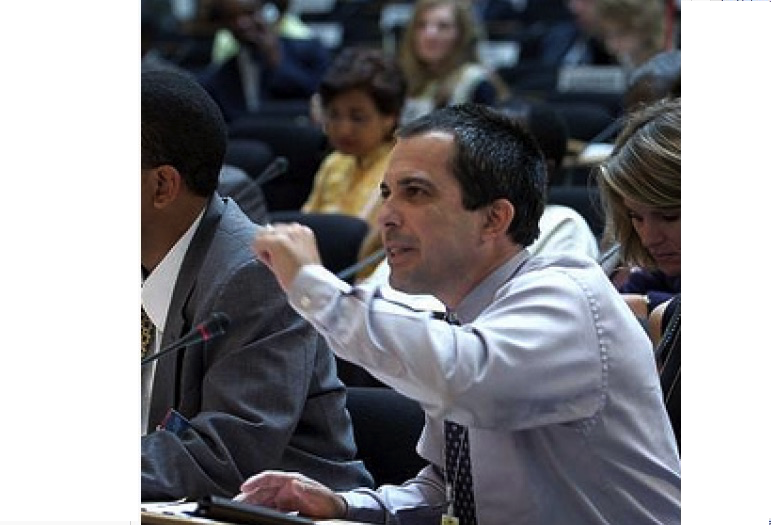
Juan Antonio Fernandez speaking at UNESCO

Our rich diversity is being undermined by the fanatical extremism of those who consider that their options are unique, said Juan Antonio Fernandez, representative of the Caribbean nation to the Executive Council of that institution.

They pretends to impose a monotonous and unacceptable uniformity, including through the deliberate destruction of the World Heritage sites, he said.

Fernandez stressed that the accelerating climate change, a consequence among other factors, of irrational patterns of production and consumption of the first world, threaten the survival of the human species.

He stated that Unesco makes an even greater contribution to the search for peace and the promotion of sustainable development, while reiterated the need of carrying out a holistic and comprehensive reform of that organization and its governance.

The Proclamation of Latin America and the Caribbean as a Peace Zone in the Second Summit of the Community of Latin American and Caribbean States held in Havana, establishes the respect for the principles and norms of the International Law and a peace culture in this effort, he said.

The official said education is essential to overcome ignorance. Science is the best antidote against obscurantism and the fight of viruses and pandemics.

Culture is the key to understanding the richness of diversity and appreciate the irreplaceable wonders of world universal heritage. The information and communication facilitate the mutual understanding and debate of ideas, he stressed. According to Cuba, there is no more urgent and necessary task that to concentrate all our energies and efforts in the implementation of the Post 2015 Development Agenda, which our Heads of State and Government recently adopted at the UN General Assembly, he added.

( Click here for the Spanish version.)


Question related to this article.

Aboga Cuba en la Unesco por cultura de paz

. LIBERTAD DE INFORMACIÓN .

Un artículo de La Agencia Cubana de Noticias

Cuba se pronunció hoy [13 oct] ante la Organización de las Naciones Unidas para la Educación, la Ciencia y la Cultura (Unesco) por una cultura de paz en un mundo golpeado por guerras atroces y actos terroristas.

cuba
click on the photo to enlarge
Juan Antonio Fernández habla ante la UNESCO

Informa la agencia Prensa Latina, que en su intervención el representante de la nación caribeña ante el Consejo Ejecutivo de esa institución, Juan Antonio Fernández, consideró que “nuestra rica diversidad está siendo socavada por el extremismo fanático de quienes consideran que sus opciones son las únicas”.

“Pretenden imponer una monótona e inaceptable uniformidad, incluso mediante la destrucción deliberada de sitios del Patrimonio Mundial”, apuntó Fernández.

Remarcó que el acelerado cambio climático, consecuencia entre otros factores, de los irracionales modelos de producción y consumo del primer mundo, pone en peligro la supervivencia misma de la especie humana.

Llamó a que la Unesco realice una contribución aún mayor en la búsqueda de la paz y la promoción del desarrollo sostenible, al tiempo que reiteró la necesidad de efectuar una reforma holística e integral de ese organismo y su gobernanza.

La Proclama de América Latina y el Caribe como Zona de Paz en la II Cumbre de la Comunidad de Estados Latinoamericanos y Caribeños en La Habana, consagra el respeto de los principios y normas del Derecho Internacional y una cultura de paz en este empeño, enfatizó.

El funcionario apuntó que la educación es esencial para vencer la ignorancia. La ciencia resulta el mejor antídoto frente al oscurantismo y el combate de los virus y las pandemias, dijo.

La cultura constituye la clave para comprender la riqueza de la diversidad y apreciar las insustituibles maravillas del patrimonio universal de la humanidad. La información y las comunicaciones facilitan el conocimiento mutuo y el debate de las ideas, resaltó.

Asimismo, llamó a dejar a un lado los egoísmos e intereses estrechos, a escoger el camino de la inclusión y el diálogo participativo, y a que se reafirme el compromiso de una Organización al servicio de todos y con todos.

A juicio de Cuba, no hay tarea más urgente y necesaria que concentrar todas nuestras energías y esfuerzos en la implementación de la Agenda para el Desarrollo Post 2015, que recién acaban de adoptar nuestros Jefes de Estado y de Gobierno en la Asamblea General de las Naciones Unidas, añadió.

En tal sentido, agregó, necesitamos una Organización fuerte y dotada de los recursos humanos y financieros imprescindibles con el fin de desempeñar su labor con mayor eficacia y eficiencia, para contribuir desde su mandato y sin descanso al cumplimiento de los objetivos del desarrollo.

Fernández reiteró el compromiso de la nación caribeña con la Unesco y los valores que ésta representa.

Cuba, que ha sembrado tanta solidaridad, espera el próximo 27 de octubre, un apoyo abrumador de la comunidad internacional en ocasión de la votación en la Asamblea General de las Naciones Unidas que demandará, una vez más, poner fin a la larga e injusta política de bloqueo que le impone Estados Unidos, concluyó.

( Clickear aquí para la version inglês.)


Question related to this article.

Preventing conflict – Transforming justice – Securing the Peace

. . WOMEN’S EQUALITY . .

From a study by UN Women

Foreward by Phumzile Mlambo-Ngcuka, UN Under-Secretary-General and Executive Director of UN Women

Resolution 1325 was one of the crowning achievements of the global women’s movement and one of the most inspired decisions of the United Nations Security Council. The recognition that peace is inextricably linked with gender equality and women’s leadership was a radical step for the highest body tasked with the maintenance of international peace and security. Turning the Security Council’s words into actions and real change has been a central pillar of UN Women’s work since the entity was created, and the driving passion of many other actors since the resolution was adopted as a global norm in 2000.

unwomen

And yet there remains a crippling gap between the ambition of our commitments and actual political and financial support. We struggle to bridge the declared intent of international policymaking and the reality of domestic action in the many corners of the world where resolution 1325 is most needed.

UN Women was privileged to be tasked by the Secretary- General with helping to prepare this Global Study. We are grateful to its independent lead author, Ms. Radhika Coomaraswamy, her advisory board, and all the member States, academics, non-governmental organizations, and UN bodies that supported this effort. The preparation process involved consultations all over the world, the provision of ideas as well as technical inputs and information, and commentary on and review of drafts. We hope that this Study will stimulate discussion and be followed by concrete commitments, resources, political will, policy shifts, and accountability at all levels.

This Study reinforces the Security Council’s original crucial recognition of the power of engaging women in peace with compelling proof. It shows that women’s participation and inclusion makes humanitarian assistance more effective, strengthens the protection efforts of our peacekeepers, contributes to the conclusion of peace talks and the achievement of sustainable peace, accelerates economic recovery, and helps counter violent extremism. This Study, and a growing evidence base, make the implementation of resolution 1325 even more urgent and needed.

(Article continued in right column)

Question related to this article:

UN Resolution 1325, does it make a difference?

(Article continued from left column)

The Study adds two more important elements that will help us push this agenda forward. It compiles multiple examples of good practice that should become the standard requirement for all. In addition, it takes a hard look at implementation and enforcement, and the missing incentives and accountability measures that should nudge all actors into complying with these norms and living up to their promises. What emerges from these ideas is an explicit and ambitious roadmap for the way forward on women, peace and security. We have an enormous responsibility to ensure that the normative framework spurred by resolution 1325 is not just given periodic visibility and attention, but that it lies at the heart of the UN’s work on peace and security.

This year, we celebrate 15 years of resolution 1325 and 20 years since the Fourth World Conference on Women in Beijing. We have a new momentum towards the recognition of gender equality and women’s empowerment at the heart of sustainable progress for all, with the adoption of the 2030 Agenda for Sustainable Development. Many actors are coming to the table with new energy, new ideas, and new commitments, and we have seen other policy reviews, from our development goals to our peace operations and our peacebuilding architecture, emphasize the centrality of gender equality. This is an important opportunity to shape the way in which we address our global challenges in the next decades. Let us make the most of it.

(Thank you to Janet Hudgins, the CPNN reporter for this article.)

UNHCR names Afghan refugee teacher Aqeela Asifi its 2015 Nansen Refugee Award winner

. . WOMEN’S EQUALITY . .

An article by UNHCR. The UN Refugee Agency

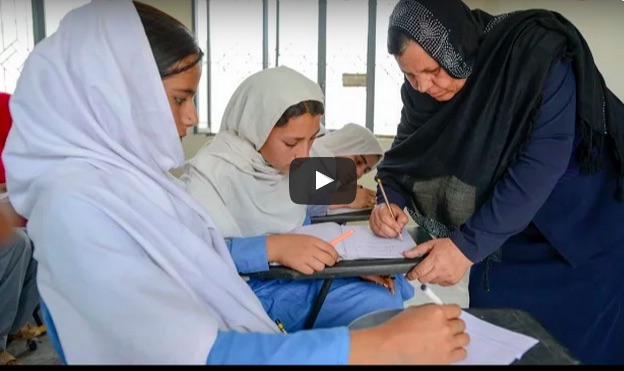
Afghan refugee teacher Aqeela Asifi, who has dedicated her life to bringing education to refugee girls in Pakistan, has won the 2015 UNHCR Nansen Refugee Award. Aqeela Asifi, 49, is being recognised for her brave and tireless dedication to education for Afghan refugee girls in the Kot Chandana refugee village in Mianwali, Pakistan – while herself overcoming the struggles of life in exile. Despite minimal resources and significant cultural challenges, Asifi has guided a thousand refugee girls through their primary education.

Nansen
Profile of Aqeela Asifi, 2015 Nansen Refugee Award winner

Afghanistan is the largest, most protracted refugee crisis in the world. Over 2.6 million Afghans currently live in exile and over half of them are children. Access to education is vital for successful repatriation, resettlement or local integration for refugees. Yet globally it’s estimated that only one in every two refugee children are able to go to primary school and only one in four attend secondary school. And for Afghan refugees in Pakistan this falls further, with approximately 80 per cent of children currently out of school.

UN High Commissioner for Refugees, António Guterres paid tribute to the efforts of the winner of the global humanitarian award: “Access to quality and safe education helps children grow into adults who go on to secure jobs, start businesses and help build their communities – and it makes them less vulnerable to exploitation and abuse. Investing in refugee education will allow children to play a part in breaking the cycle of instability and conflict. People like Aqeela Asifi understand that today’s refugee children will determine the future of their countries, and the future of our world.”

UNHCR has released a contextual report Breaking the cycle: Education and the future for Afghan refugees, to coincide with today’s announcement. The report outlines the challenges that children, especially refugee girls, face in accessing education in Pakistan.

Asifi is a former teacher who fled from Kabul with her family in 1992, finding safety in the remote refugee settlement of Kot Chandana. Asifi was dismayed by the lack of schooling for girls there. Before she arrived, strict cultural traditions kept most girls at home. But she was determined to give these girls a chance to learn. Slowly but surely she convinced the community, and began teaching just a handful of pupils in a makeshift school tent. She copied out worksheets for the students by hand on sheets of paper. Today the tent school is a distant memory and over a thousand children are attending permanent schools in the village thanks to her early example.

(Article continued in right column)

Questions related to this article:

Gender equality in education, Is it advancing?

Is peace possible in Afghanistan?

(Article continued from left column)

She believes that instilling a belief in the power of education for girls in this generation will transform the opportunities of the next. “When you have mothers who are educated, you will almost certainly have future generations who are educated,” she said. “So if you educate girls, you educate generations. I wish for the day when people will remember Afghanistan, not for war, but for its standard of education.”

“Access to education is a basic human right. Yet for millions of refugee children it is a lifeline to a better future which they have been heartbreakingly denied,” said UNHCR Goodwill Ambassador, Khaled Hosseini.

“I have met many young refugees who have been torn from everything that makes them feel safe: their homes, their families, their friends and their schools. Investing in their education is an investment in their future, giving them hope and the chance to one day be a part of rebuilding their broken home countries.

“UNHCR is working to give all refugee children the chance to go to school. Aqeela Asifi has shown us all that with courage change can happen. We must continue her fight.”

Since the fall of the Taliban in 2001 5.7 million Afghans have returned home, yet insecurity still remains. UNHCR has embarked on a strategy to assist remaining Afghan refugees to return home and a key element of this is ensuring they can access quality education. A ministerial level meeting in early October in Geneva will seek to advance this strategy with key regional partners.

UNHCR’s Nansen Refugee Award honours extraordinary service to the forcibly displaced, and names Eleanor Roosevelt, Graça Machel and Luciano Pavarotti among its laureates. The 2015 ceremony will be held on 5 October in Geneva, Switzerland. Speakers and performers at the event will include UNHCR Honorary Lifetime Goodwill Ambassador Barbara Hendricks, UNHCR Goodwill Ambassador Ger Duany, Unicef Goodwill Ambassador and singer Angelique Kidjo and visual artist Cedric Cassimo.

(Thank you to the Good News Agency for bring this to our attention.)

Mozambique: Landmine Clearance Success Shows a Mine-Free World is Possible

DISARMAMENT & SECURITY .

An article by The International Campaign to Ban Landmines

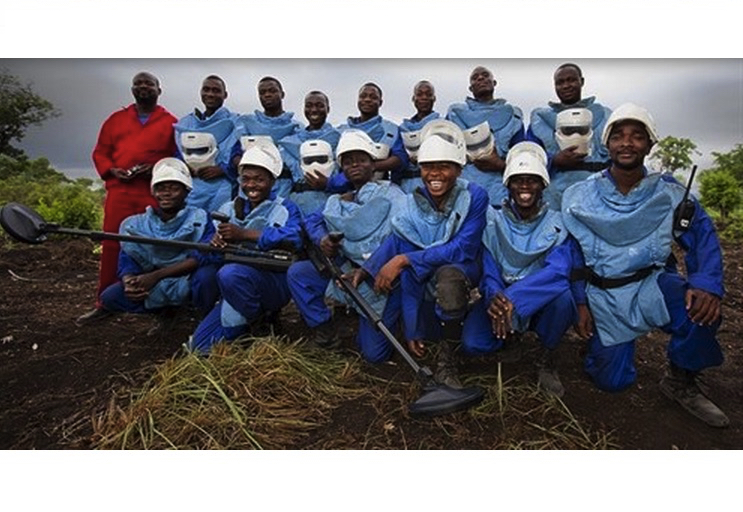
Mozambique’s completion of antipersonnel landmine clearance shows that a mine-free world is possible. The International Campaign to Ban Landmines hails this major accomplishment that will allow hundreds of thousands of Mozambicans to cultivate their land, walk to school, and access water safely.

mozambique

“What might have been considered an insurmountable task just 20 years ago has been done in Mozambique, thanks to political will and the use of adequate methodology,” said Megan Burke, Director of the International Campaign to Ban Landmines. “This is an impressive achievement. It also shows that if the right resources are employed in the right way, the majority of contaminated states can complete mine clearance within the next ten years.”

During a public event on 17 September 2015, the Instituto Nacional de Desminagem (National Demining Institute) announced the completion of antipersonnel landmine clearance throughout the country. Mozambique is still contaminated by other unexploded ordnance.

The number of landmine casualties in Mozambique is unknown, but the government estimated recently that as many as 10,900 persons throughout the country had been killed or injured by the weapon over time. While donor states have been very supportive of mine clearance in Mozambique, the country struggles to raise funds for assistance to landmine victims and for disability-inclusive development activities.

“After demining is finished, survivors continue to feel the pernicious impact of these weapons for their entire lives,” said Luis Silvestre Wamusse, head of the Rede para Assistência às Vítimas de Minas (Network for Assistance to Mine Victims).

Other sub-Saharan African states with antipersonnel landmine contamination include Angola, Chad, Democratic Republic of Congo, Eritrea, Ethiopia, Mauritania, Niger, Senegal, Somalia, South Sudan, Sudan and Zimbabwe. Mine clearance programmes in all of these countries — except DR Congo, Mauritania and Zimbabwe — have been rated as performing “poorly” or “very poorly” by Landmine Monitor, the research arm of the International Campaign to Ban Landmines.

“We hope Mozambique’s success might provide an example and impetus for these countries to dedicate the necessary political support, improve their programmes, and release safe land to communities more efficiently,” said Megan Burke.

The International Campaign to Ban Landmines is a network of non-governmental organizations in some 100 countries, working to end the suffering caused by antipersonnel mines, through the universalization and full implementation of the 1997 Mine Ban Treaty. The Campaign received the 1997 Nobel Peace Prize.

(Thank you to the Good News Agency for calling this to our attention.)

Question for this article:

Distrust over EU GM crop approvals grows as 17 countries move towards national bans

. SUSTAINABLE DEVELOPMENT .

An article by Greenpeace

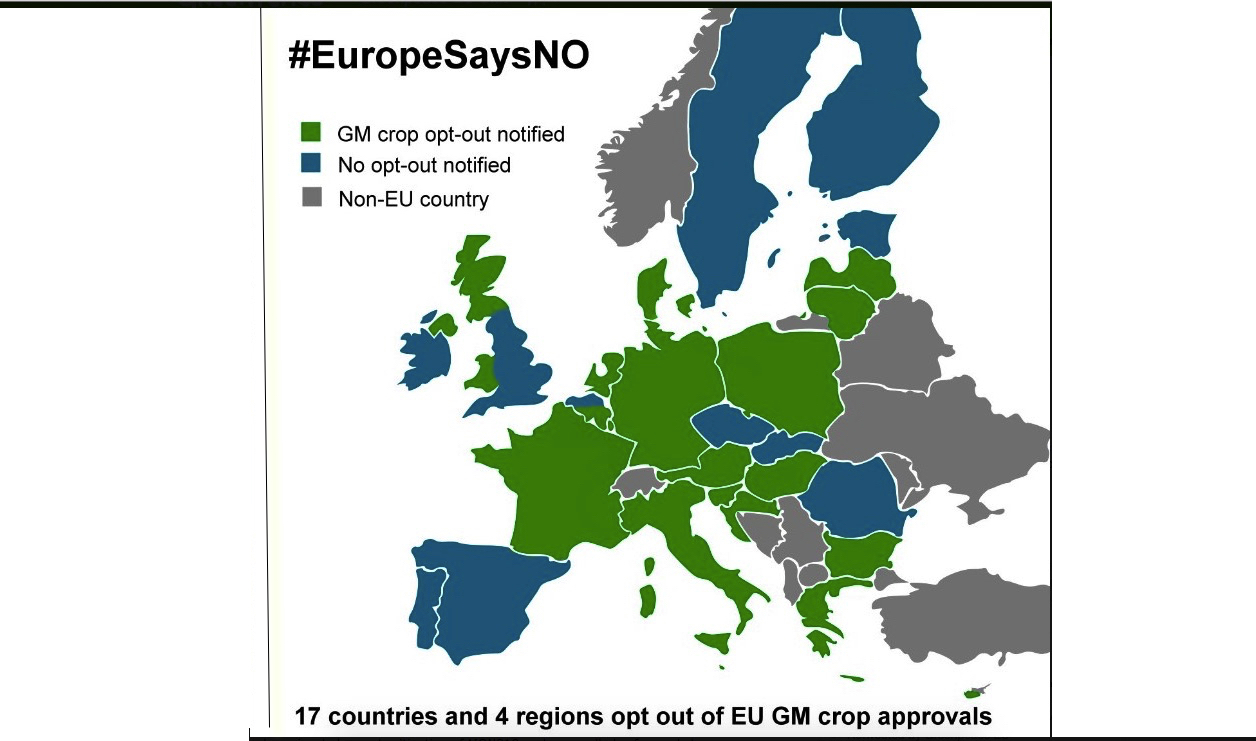
In the latest blow to the European Commission’s laissez-faire approach to GM crops, 17 EU countries and four regions (in two other countries) are in the process of banning the cultivation of GM crops on their territories. On 5 October, 17 EU countries (Austria, Bulgaria, Croatia, Cyprus, Denmark, France, Germany, Greece, Hungary, Italy, Latvia, Lithuania, Luxembourg, Malta, the Netherlands, Poland and Slovenia) and four regional administrations (Scotland, Wales and Northern Ireland in the UK, and Wallonia in Belgium) had notified the Commission of their intention to ban GM crop cultivation under new EU rules [1].


greenpeace
Click on photo to enlarge

This brings the total number of countries who have already declared their intention to put in place GM crop bans to 17 – plus four regions – representing over 65 per cent of the EU’s population and 65 per cent of its arable land (for detailed figures please see this table: bit.ly/1OhTApm).

The bans currently notified apply to the only GM crop currently approved for cultivation in Europe – Monsanto’s pesticide-producing GM maize, known as MON810 – but also to the seven GM crops awaiting approval by the Commission [2]. These are all GM maizes [3].

Nine EU countries (Austria, Bulgaria, France, Germany, Greece, Hungary, Italy, Luxembourg and Poland) had previously banned cultivation of MON810 under so-called safeguard clauses.

Greenpeace EU food policy director Franziska Achterberg said: “A clear majority of the EU’s governments are rejecting the Commission’s drive for GM crop approvals. They don’t trust EU safety assessments and are rightly taking action to protect their agriculture and food. The only way to restore trust in the EU system now is for the Commission to hit the pause button on GM crop approvals and to urgently reform safety testing and the approval system.”

In July 2014, Commission president Jean-Claude Juncker said that the Commission should not be able to force through GM crops against a majority of EU countries [4]. The Commission is yet to deliver a legislative proposal that can achieve this. A revised EU risk assessment scheme, called for by EU environment ministers in 2008, has similarly not been implemented. Current risk assessments by the EU’s food safety authority also ignore EU rules in place since 2001 (Directive 2001/18) for more in-depth and independent testing of GM crops.

(Continued on right side of page)

Question for this article:

What is the relation between the environment and peace?

(Article continued from left side of page)

Notes:

[1] Under EU Directive 2015/412, governments can ask biotech companies whose GM crops have already been authorised for cultivation in the EU, or are pending approval, not to market their crops on their territory. The companies – Dow, Monsanto, Syngenta and Pioneer – can then accept or refuse these opt-outs, without having to justify their response. Governments can also legislate to ban individual or groups of GM crops approved in the EU. The Commission list of notifications for national bans: http://ec.europa.eu/food/plant/gmo/new/authorisation/cultivation/geographical_scope_en.htm.

[2] Denmark and Luxembourg are so far requesting bans for MON810 and only three other GM crops pending approval.

[3] The pending authorisations include Pioneer’s pesticide-producing GM maize, known as 1507, whose EU approval was opposed by 19 out of 28 EU countries in February 2014: http://www.greenpeace.org/eu-unit/en/News/2014/Record-number-of-EU-countries-opposes-Commission-plan-to-allow-pesticide-producing-GM-maize.

[4] Juncker said: “[I] would not want the Commission to be able to take a decision when a majority of Member States has not encouraged it to do so”: Political Guidelines for the next European Commission (July 2014): http://ec.europa.eu/priorities/docs/pg_en.pdf

U.N. Highlights Importance of Public Spaces, Safety for Women

. . WOMEN’S EQUALITY . .

An article by Tharanga Yakupitiyage, Inter Press Service (reprinted by permission)

Improving access to public spaces, and making them safe for women and girls, increases equity, combats discrimination and promotes inclusion, said Secretary-General Ban Ki-moon during a High-Level Discussion on “Public Spaces for All.”

safety

The meeting coincided with World Habitat Day, which is observed annually on the first Monday of October.

It brought together top UN officials, private sector representatives, academics, and civil society members to discuss the state of the world’s towns and cities, the right to adequate shelter, and the importance of public spaces.

In Ban’s address, he remarked: “High-quality public spaces encourage people to communicate and collaborate with each other, and to participate in public life.”

“Public spaces can also provide basic services, enhance connectivity, spawn economic activity and raise property values while generating municipal revenue,” he continued.

The Executive Director of the UN Human Settlements Programme (UN-Habitat) Joan Clos echoed the UN Chief’s comments.

“These spaces shape the cultural identity of an area, are part of its unique character and provide a sense of place for local communities,” Clos stated.

Clos also warned that when public spaces are inadequate, poorly designed or privatized, a polarized city with high social tensions, crime and violence will result.

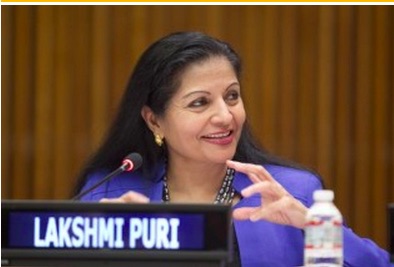
Deputy Executive Director of UN Women Lakshmi Puri particularly pointed to violence against women and girls in public spaces as a major challenge.

“If violence in the private domain is now widely recognized as a human rights violation, violence against women and girls, especially sexual harassment and other forms of sexual violence, in public spaces remains a largely neglected issue, with few laws or policies in place to prevent and address it,” Puri said.

(Article continued in right column)

Question related to this article:

Protecting women and girls against violence, Is progress being made?

(Article continued from left column)

UN Women has found that women in urban areas are twice as likely as men to experience violence, especially in developing countries. Moreover, 25-100 percent of women and girls around the world have experienced some form of sexual violence in public spaces in their lifetime.

Similarly, according to Gallup data from surveys in 143 countries in 2011, men are more likely than women to say they feel safe walking alone at night in their communities.

In Australia, research conducted by the Australia Institute in 2015 found that 87% of women were verbally or physically attacked while walking down the street.

In Ecuador, a study by UN Women in 2011 found that 68% of women had experience some form of sexual harassment and sexual violence in public spaces.

Puri noted how such violence limits women and girls’ movement, participation in education, access to essential services, and negatively impacts their health and well-being.

She highlighted the role of public spaces in promoting and achieving gender equality.

“Urban spaces are the most important theaters for the working out of the gender equality and women’s empowerment project,” Puri remarked.

Ban also noted the importance of deliberate and careful collaboration with local authorities, residents, and other actors to create successful public spaces.

World leaders are set to meet and define a new housing and urban agenda under the post-2015 development framework at Third UN Conference on Housing and Sustainable Urban Development, or Habitat III.

The conference will address the challenges of urbanization and opportunities it offers to implement the sustainable development goals (SDGs) and its targets.

One such target is 11.7 which aims to provide universal access to safe, inclusive and accessible, green and public spaces, particularly for women and children, older persons and persons with disabilities.

However, Puri noted that no target exists to measure safety in public spaces for women and girls in the SDGs.

(Thank you to Janet Hudgins, the CPNN reporter for this article.)

Mayan People’s Movement Defeats Monsanto Law in Guatemala

. SUSTAINABLE DEVELOPMENT .

An article by Christin Sandberg in Upside Down World

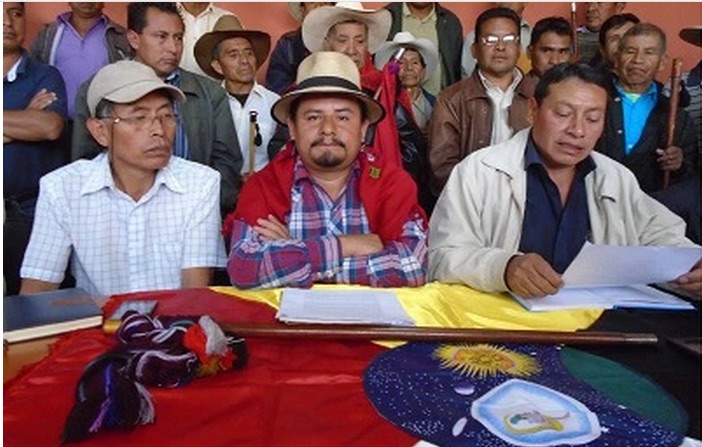
On September 4th, after ten days of widespread street protests against the biotech giant Monsanto’s expansion into Guatemalan territory, groups of indigenous people joined by social movements, trade unions and farmer and women’s organizations won a victory when congress finally repealed the legislation that had been approved in June.

monsanto
Nim Sanik, Maya Kaqchikel giving a press conference in Chimaltenango
Photo by Josue Navarro
Click on photo to enlarge

The demonstrations were concentrated outside the Congress and Constitutional Court in Guatemala City during more than a week, and coincided with several Mayan communities and organizations defending food sovereignty through court injunctions in order to stop the Congress and the President, Otto Perez Molina, from letting the new law on protection of plant varieties, known as the “Monsanto Law”, take effect.

On September 2, the Mayan communities of Sololá, a mountainous region 125 kilometers west from the capital, took to the streets and blocked several main roads. At this time a list of how individual congressmen had voted on the approval of the legislation in June was circulating.

When Congress convened on September 4, Mayan people were waiting outside for a response in favor of their movement, demanding a complete cancellation of the law –something very rarely seen in Guatemala. But this time they proved not to have marched in vain. After some battles between the presidential Patriotic Party (PP) and the Renewed Democratic Liberty Party (LIDER), the Congress finally decided not to review the legislation, but cancel it.

protests as follows: “Corn taught us Mayan people about community life and its diversity, because when one cultivates corn one realizes that there is a variety of crops such as herbs and medical plants depending on the corn plant as well. We see that in this coexistence the corn is not selfish, the corn shows us how to resist and how to relate with the surrounding world.”

Controversies surrounded law

The Monsanto Law would have given exclusivity on patented seeds to a handful of transnational companies. Mayan people and social organizations claimed that the new law violated the Constitution and the Mayan people’s right to traditional cultivation of their land in their ancestral territories.

Antonio González from the National Network in Defense of Food Sovereignty and Biodiversity commented in a press conference August 21: “This law is an attack on a traditional Mayan cultivation system which is based on the corn plant but which also includes black beans and herbs; these foods are a substantial part of the staple diet of rural people.”

The new legislation would have opened up the market for genetically modified seeds which would have threatened to displace natural seeds and end their diversity. It would have created an imbalance between transnational companies and local producers in Guatemala where about 70 per cent of the population dedicate their life to small-scale agricultural activities. That is a serious threat in a country where many people live below the poverty line and in extreme poverty and where children suffer from chronic malnutrition and often starve to death.

The law was approved in June without prior discussion, information and participation from the most affected. It was a direct consequence of the free trade agreement with the US, ratified in 2005. However, recently the protests started to grow and peaked a couple of weeks ago with a lot of discussions, statements and demonstrations.

At first the government ignored the protests and appeared to be more interested in engaging in superficial forms of charity like provision of food aid while ignoring the wider and structural factors that cause and perpetuate poverty in Guatemala such as unequal land distribution, deep rooted inequalities, racism, to name but a few.

(Article continued in right column)

Question for this article

Indigenous peoples, Are they the true guardians of nature?

(Article continued from left column)

But soon enough they decided to act. Even though politicians claimed not to act on social demands, it is without doubt a decision taken after enormous pressure from different social groups in society.

Criminalizing the Mayan people – again

There was a great risk that the Monsanto Law would have made criminals of already repressed small farmers who are just trying to make ends meet and doing what they have done for generations – cultivating corn and black beans for their own consumption. The Monsanto Law meant that they would not have been able to grow and harvest anything that originates from natural seeds. Farmers would be breaking the laws if these natural seeds had been mixed with patented seeds from other crops as a result of pollination or wind, unless they had had a license for the patented seed from a transnational corporation like Monsanto.

Another risk expressed by ecologists was the fear that the costs for the patented seeds would have caused an increase in prices and as consequence caused a worsened food crisis for those families who could not afford to buy a license to sow.

Academics, together with the Mayan people, also feared that the law would have intensified already existing fierce social conflicts between local Mayan communities and transnational companies in a country historically and violently torn apart.

Mayan people and Mother Earth

Currently international companies are very interested in gaining control of the abundant and rich natural assets that Guatemala possesses. There is just one problem: the Mayan people – or actually most people – in Guatemala do not agree with a policy of treating nature like a commodity to be sold off piece by piece, especially when they receive nothing in return. It is very difficult to argue that it is a rentable business for Guatemalan society as a whole, and less the local communities, when it is a rather small but powerful economic elite which benefits on behalf of the environment, nature and society.

So what happens when the people organize in defense of their territory? The international companies call the government and have them use whatever means necessary to remove those standing in their way so they can construct megaprojects like mines or hydroelectric dams or extend monocultures in any region they see fit without much concern for those who might be affected.

Last month three men were killed when police used violent force to evict a community whose population had organized itself to protest against a hydroelectric megaproject in their community in Alta Verapaz. Hundreds of police officers were sent to the area on orders from the Ministry of Home Affairs, Mauricio López Bonilla. It was not an exceptional case by any means.

Ongoing conflict

As for the Monsanto Law, for a chilling reminder of where this was most likely headed, one need look no further than the USA: according to information from Food Democracy Now, a grassroots community for sustainable food system, Monsanto’s GMO Roundup Ready soybeans, the world’s leading chemical and biotech seed company, admits to filing 150 lawsuits against America’s family farmers, while settling another 700 out of court for undisclosed amounts. This has caused fear and resentment in rural America and driven dozens of farmers into bankruptcy.

It is impossible to predict how this controversy might unfold, but the reality in Guatemala today is one marked by an ongoing conflict between the government and the Mayan people, who constitute over half of the population.

Nim Sanik, Maya Kaqchikel from Chimaltenango comments on the victory over the Monsanto Law: “The fight to preserve collective property of Mayan communities such as vegetable seeds, which historically have served as a source of development and survival for the Mayan civilization, is a way to confront the open doors that the neoliberal governments have widely open in favor of national and transnational corporations that genetically modify and commercialize the feeding of mankind. We have just taken the first step on a long journey in our struggle to conquer the sovereignty of the people in Guatemala.”

Nobel Peace Prize 2015: Lesson in Hope from Tunisia . . .

. DEMOCRATIC PARTICIPATION .

An article by Mounira El Bouti, Liberte Algerie

I take a step back and with a sweep of the left hand, I push aside my hair and start to write this article. With every gesture, every thought, every breath I am inspired to think of the Tunisian blood flowing in my veins, mixed with Algerian blood, but I’ve told you that before …

nobel
Video of Nobel Prize award

This blood makes me proud to belong to two countries whose great history and peoples can only make you proud.

It was just an hour ago that I heard the big news: the Nobel Peace Prize was awarded to the quartet sponsoring the national dialogue in Tunisia. And, like a cherry on the cake, there was a woman among them, the President of the Tunisian patronnât, Mrs Ouided Bouchemaoui. You don’t have to be a feminist to focus on this; it is enough just to be a woman . .

I have long written that women’s leadership is strong because of its value of consensus and its leadership by thoughtful dialogue which allows organizations to overcome the most difficult crises. Now here is the proof: evidence from Tunisia that confirms my research and responds to my detractors

So back to the events marking this day, not a week, not the century …

It’s an historic first: the 2015 Nobel Prize for Peace is awarded to Tunisia! What an amazing year! We’ve seen everything: promulgation of the first qualified democratic constitution in the Arab-Muslim world, election of a president by democratic and transparent means, the terrorist attacks on the Bardo museum aimed against Tunisia’s culture and history, and the bombing of the tourist center at Sousse aimed at the main sources of revenue of the country. Despite the attacks, neither history nor culture nor tourism have been affected.

Tunisia in crisis, shows us the way forward ..

In Chinese calligraphy, the word “crisis” has two ideograms. The first character means “danger,” and the second “opportunity.” This is right, because a crisis brings with it not only risks but also opportunities. When an organization is in crisis, the way it overcomes it, or even seizes opportunities, depends on the intelligence and competence of its management.

The crisis weighs heavily on Tunisia, but at the same time they show the world that their resistance is still there. They still have hope and creativity. Even in times of crisis, they can be awarded prizes. It all depends on our level of consciousness and our way of seeing things. If we believe in change, it will come ..

So.it’s a good example, praised by François Hollande, the French president, David Cameron, the British Prime Minister and hailed by millions of participants in social media.

(Article continued on right side of this page)

(Click here for the original article in French.)

Latest Discussion

The Arab Spring, Can Tunisia continue the momentum they started?

(Article continued from left side of this page)

But what does this prize really mean?

For me, this award is a strong and profound message of hope and a reminder of the poem by Abu Al Kasseem Echebi: ‘When the people one day want life, the force of fate is in their favor …”

Sometimes the force of fate responds very strongly, like today. After an attempted assassination of a known personality in Tunisia namely Charfeddine Ridha, chairman of the Etoile Sportive du Sahel, as well as the deputy from the ruling party, Nidaa Tounes, who narrowly escape from his car riddled with 30 bullets 30, is this not the force of fate?

This is a fate that protects, promises and reassures. I do not know what star it is that watches over Tunisia, but it is a good star. We have avoided the worst and we are all as excited as children on the eve of the school year to watch the news, the reactions of celebrities and the updates our news from FB and Twitter ..

Let me tell you the story of the dialogue that led to the prize. .

The Tunisian National Dialogue is a quartet which includes four groups: the Tunisian General Labor Union; the Tunisian Confederation of Industry, Trade and Handicrafts; the Tunisian Order of Lawyers; and the Tunisian Human Rights League.

Formed in the summer of 2013, at a time when the democratization process was in danger because of political killings and widespread social unrest, the quartet organized a long and difficult national dialogue between the Islamists and their opponents, getting them to agree to escape from an institutional paralysis.

This dialogue managed to avoid the worst in Tunisia which bordered on civil war, especially after the assassination of Chokri Belaid, Mohamed Brahmi, and the ambush of young soldiers at Mount Chaambi.

Here is one more reason to continue believing and dreaming and never lose hope. To love a person is to believe in her or him, even in the most difficult times and it’s the same thing to love a country. As I wrote you in my last note, the joy of life bursts forth, the desire for love is always there, as long as we believe ..

For me, this is not the Nobel Prize of peace but of hope and of love, lots of love in the heart and in the hands, the hands that have constructed liberty and that continue to work for change in the face of the opposing winds and tides …

I thank all of you who have come to support us, who have kept your promise to visit Tunisia. Thank you from my heart. Today I ask you to congratulate us, to be happy for us, to share our enthusiasm and to cultivate our growing hope.

Someday the prize should be awarded to all the peoples who aspire to freedom, to Palestine divided and bruised, to Syria agonizing, to Algeria lost between two shores, to the Gulf countries, anesthetized by money and the making of war, to Libya stolen, to Egypt sold out. These peoples also, despite appearances and despite oppression, should also have the right to feel joy, to be honored and to be thanked.

Before taking the last sip of my coffee that burns my mouth but has no effect, as I bubble with joy and pride, I ask you to congratulate us, praise us, envy us! This is not the world cup of football. This is not a scientific discovery. This is not winning the lottery, It’s even better: it’s the Nobel Prize …

One last thing, as always in times of crisis, we must prepare for a rain of criticism and comments from the kill-joys and the envious. The consequences will be heavy because this prize is indeed a great slap in the face to all the dictators in the Arab world.

Prix Nobel de la paix 2015, belle leçon d’espoir à la tunisienne…

. PARTICIPATION DEMOCRATIQUE .

Un article de Mounira El Bouti, Liberte-Algerie

En redressant mon siège, je recule d’un pas, relève le torse et d’un coup de la main gauche, je balaye la mèche qui me gêne pour commencer à écrire ce billet et à chaque geste, à chaque pensée, à chaque bouffée d’oxygène inspirée je me rappelle que j’ai du sang tunisien qui coule dans mes veines, mélangé à un sang algérien mais ça, vous le savez déjà…
nobel
Video de l’annonce de la Prix Nobel de la Paix

Ce sang, ne peut que me rendre fière, appartenir à deux pays aussi grands de par leur histoire et de par leurs peuples ne peut que vous rendre fière.

Il y a donc, une heure que je viens d’apprendre la grande nouvelle, le prix Nobel de la Paix a été décerné au quartet parrainant le dialogue national en Tunisie et cerise sur le gâteau, il y avait une femme parmi eux, la présidente du patronnât tunisien, Madame Ouided Bouchemaoui. Ce n’est pas la ‘féministe’ qui est en moi qui met l’accent sur ce point, c’est juste la femme que je suis..

J’ai longtemps écrit que le leadership féminin est fort par sa valeur consensuelle, ce leadership transactionnel et réfléchi donne au dialogue tout son sens et permet aux organisations de sortir des crises les plus difficiles, en voici la preuve, une preuve tunisienne pour répondre définitivement à mes détracteurs, c’est juste la chercheuse que je suis.

Revenons donc à l’event marquant de la journée, non de la semaine, non du siècle…

Une première historique : le prix Nobel de la paix de 2015 est attribué à la Tunisie ! Quelle étonnante année ! on aura tout vu :promulgation d’une constitution qualifiée de première constitution démocratique dans le monde arabo-musulman , élection d’un président de la République par voie démocratique et transparente, attentats terroristes dont celui du musée du Bardo pour frapper la culture et l’histoire, et l’attentat de Sousse pour frapper l’une des principales sources de survie du pays , le tourisme mais ni l’histoire, ni la culture ni le tourisme n’ont été touchés.

La Tunisie en crise, donne l’exemple..

Dans la calligraphie chinoise, le mot «crise» se com­pose de deux idéogrammes. Le premier caractère signifie «danger», le deuxième «opportunité». À raison, puisque la crise porte en elle non seulement des risques, mais aussi des chances. La façon dont une organisation agit en situation de crise, comment elle la sur­monte, voire en saisit les opportunités, dépend de son intelligence et de la compétence de son manager.

La crise pèse lourd sur la Tunisie, mais en même temps elle prouve au monde que la résistance est là, qu’il y a encore de l’espoir et de la créativité, que même en temps de crise on peut se voir décerner des prix, que tout dépend de notre degré de conscience et de notre façon de voir les choses, si nous croyons au changement, il arrivera..

Bel exemple donc, flatté d’ailleurs par Monsieur François Hollande, président français, par David Cameron, premier ministre britannique et salué par des millions d’utilisateurs sur les social medias.

(Voir suite sur colonne de droite. . . )

(Clickez ici pour une traduction anglaise. )

Question related to this article:

The Arab Spring, Can Tunisia continue the momentum they started?

(. . . suite)

Mais que représente réellement ce prix ?

Pour moi, ce prix est un message fort et profond d’espoir, et un rappel du poème d’Abu Al Kasseem Echebi ‘Lorsque le peuple un jour veut la vie, Force est au destin de répondre’…

Le destin répond très fort parfois, comme aujourd’hui. Après une tentative d’assassinat d’une personnalité connue en Tunisie à savoir Ridha Charfeddine, président de l’Etoile Sportive du Sahel et député du parti au pouvoir, Nidaa Tounes, qui a l’a échappée belle avec sa voiture criblée de 30 balles, n’est-ce pas le destin qui réagit ?

Un destin protecteur, prometteur et rassurant. J’ignore quelle étoile veille sur la Tunisie, mais elle le fait bien, nous avons évité le pire et nous voilà tous aussi excités que des enfants à la veille de la rentrée scolaire à guetter les news, les réactions des célébrités et à actualiser nos fils d’actu Fb et Twitter..

Je vais vous raconter l’histoire du dialogue à l’origine du prix..

Le Dialogue national tunisien est un quartet qui regroupe l’UGTT (premier syndicat), l’Utica (patronat), l’Ordre des avocats et la Ligue tunisienne des droits de l’Homme.

Formé à l’été 2013, à un moment où le processus de démocratisation était en danger en raison d’assassinats politiques et de vastes troubles sociaux, le quartet a organisé un long et difficile dialogue national entre les islamistes et leurs opposants, les obligeant à s’entendre pour sortir d’une paralysie institutionnelle.

Ce dialogue a évité le pire à la Tunisie qui frôlait la guerre civile notamment après l’assassinat de Chokri Belaid , Mohamed Brahmi et le guet-apens qui a eu raison de jeunes soldats au mont Chaambi.

Voilà une raison de plus de continuer à croire et rêver et à ne jamais perdre espoir, aimer une personne c’est croire en elle, même dans les moments les plus difficiles et c’est valable pour sa patrie, je vous écrivais dans mon dernier billet que la joie de vivre rejaillira, le goût d’aimer pointera le bout de son nez, seulement , il faut y croire..

Pour moi, ce n’est pas le prix Nobel de la paix mais de l’espoir et de l’amour, beaucoup d’amour dans le cœur et dans les mains, des mains qui ont construit la liberté et qui continuent contre vents et marées à construire le changement…

Merci à vous tous qui êtes venus nous soutenir, qui avez tenu vos promesses de vous rendre en Tunisie, je vous remercie du fond du cœur et vous demande aujourd’hui, de nous féliciter, d’être heureux pour nous et de partager notre enthousiasme et de cultiver notre espoir grandissant.

Ce prix doit être décerné un jour à tous les peuples qui aspirent à la liberté, à la Palestine divisée et meurtrie, à une Syrie qui agonise, à une Algérie perdue entre deux rives, aux pays du Gollf anesthésiés par l’argent, nerf de la guerre, à une Libye volée, à une Egypte vendue, un jour ces peuples opprimés malgré l’apparence, auront le droit, eux aussi, de ressentir cette joie, d’être honorés et remerciés.

Avant de reprendre la dernière gorgée de mon café brulant mais qui ne me fait aucun effet, étant bouillonnante de joie et de fierté, je vous ordonne de nous féliciter, félicitez-nous, enviez-nous ! Ce n’est pas la coupe du monde de football, ce n’est pas une découverte scientifique, ce n’est pas un tirage au sort gagnant, c’est encore mieux, c’est le prix Nobel…

Une dernière chose, comme en temps de crise, il faut toujours se préparer, préparons nous à une pluie de critiques et de commentaires rabat-joies et envieux, les conséquences seront lourdes car ce prix et bel et bien une grande gifle à tous les dictateurs arabes.