Category Archives: global

Rigoberta Menchú speaks at the UN about obstacles to the culture of peace

FREE FLOW OF INFORMATION

An article from Prensa Latina

The goodwill ambassador of Unesco, Rigoberta Menchú, highlighted today [5 Sep] in the high level forum of the UN General Assembly the obstacles that prevent the development of a culture of peace.


(click on photo to enlarge)

29 years have passed since the concept of a culture of peace was proposed at a Unesco event, and on October 6 next year will be two decades after the adoption of the Declaration and Program of Action for a Culture of Peace, recalled the indigenous leader and Nobel Peace laureate.

Currently, the legitimacy and fairness of that declaration and of the action program – as international legal norms and instruments – are unquestionable decisions that have irrefutable validity, she said.

But the good wishes tthat the culture of peace should become positive law are opposed by the historical tendencies of a culture of violence and war, she added. The culture of peace is a utopia with great obstacles and enemies.

Instead of decreasing, threats increase and multiply, she warned.

Only a hundred rich individuals concentrate the world’s wealth, while malnutrition and extreme poverty directly affect 60 percent of the world population, lamented the goodwill ambassador of Unesco.

(Article continued in the column on the right)

(Click here for the original Spanish version of the article)

Questions related to this article:

Where in the world can we find good leadership today?

(Article continued from the column on the left)

According to this calculation, four billion 408 million people are direct victims of inequalities and global exclusions, she explained.

“The arms race is a manifestation of the nuclear, chemical and bacteriological war industry and who knows what other lethal methods are being tried to annihilate human life in a massive and rapid way.”

Menchú also warned about global warming, its irreversible damage to the planet and the little that has been achieved on this issue, despite the international agreements that have been adopted.

In the same way, she spoke about the tragedy that corruption and impunity represent in the world. They violate democracy, impede sustainable development, and put the peoples at risk.

‘Once again the most horrendous practices of racism and discrimination, xenophobia and homophobia offend conscience and annihilate human dignity’.

She also called for a halt to hate-filled speeches and ttitudes that are on the increase in different corners of the planet and she gave as an example the recent actions against migrants at the borders of the United States. Confining migrant children in concentration camps reminds us of the horrors of the holocaust of World War II, she said, and she criticized the dehumanization behind practices that are assumed as a normal fact.

Menchú regretted that the Declaration and Program of Action for a Culture of Peace has suffered the same fate as other international instruments and initiatives, due to the lack of political will, especially from States, economic and political sectors.

She also highlighted the peaceful worldview of the indigenous peoples of the world and how the culture of peace should be understood again as a transversal theme.

However, this is not possible when the economic, political and social machinery goes in the opposite direction and its effects disrupt any institutional mechanism, any individual and collective will to live in peace, she concluded.

United Nations: High-level Forum on the Culture of Peace, September 2018

FREE FLOW OF INFORMATION

Letter from Miroslav Lajčák, President of the UN General Assembly

Recognizing the need to further promote the Culture of Peace, particularly in the current global context, and responding to paragraph 15 of Resolution 72/137, the President of the General Assembly, H.E. Mr. Miroslav Lajčák, will convene a oneday High-level Forum on the Culture of Peace, on Wednesday, 5 September 2018, at UN Headquarters, New York.

Background and Objectives

On 13 September 1999, the General Assembly adopted, by consensus and without reservation, Resolution 53/243 on the Declaration and Programme of Action on a Culture of Peace. The Declaration on a Culture of Peace establishes fundamental principles and reiterates political commitment to promote a culture of peace in the millennium. The Programme of Action defines a set of actions to help Governments, civil society, and individuals to foster culture of peace at national, regional and international levels.

Further, the General Assembly by its resolution 52/15 of 20 November 1997 proclaimed the year 2000 as the “International Year for the Culture of Peace” and in its resolution 53/25 of 10 November 1998, the Assembly proclaimed the period of 2001-2010 as the “International Decade for a Culture of Peace and Non-violence for the Children of the World”.

The General Assembly resolution 72/137 of 11 December 2017, entitled “Followup to the Declaration and Programme of Action on a Culture of Peace”, requested the President of the General Assembly to consider convening a High-level Forum on the Culture of Peace.

Through annual substantive resolutions for the last 20 years as well as annual High-level Forums since 2012, the General Assembly has highlighted the priority it attaches to the full and effective implementation of these forward-looking objectives which are universally applicable and sought after by the vast majority of peoples in every nation.

In keeping with this approach, the 5th September High-level Forum aims to highlight emerging trends that have an impact on the realization of a culture of peace and to enable Member States and Observers and other stakeholders to exchange views on how to further promote a culture of peace. 2

The 2030 Agenda for Sustainable Development has put significant emphasis on the promotion of a culture of peace and non-violence. These are essential to pave the way for the international community to engage and march towards achieving the sustainable development goals. To meet this end, we need to sustain peace. Our efforts in sustaining peace should be built upon the three pillars of the United Nations, namely peace and security, human rights and development, in order to have a holistic outcome.

(continued in right column)

Question(s) related to this article:

What is the United Nations doing for a culture of peace?

(continued from left column)

At the High-level Meeting on Peacebuilding and Sustaining Peace convened by President of the General Assembly H.E. Mr. Miroslav Lajčák in April 2018, it was emphatically asserted that “peace is more than a ceasefire. It is more than a peace deal. And, it is more than the absence of war”. For that, there is a need to tackle conflict at its roots. There is a need to invest in achieving sustainable peace. To make peace last long for the benefit of humanity, it is essential to build a culture of peace. The High-level Meeting reiterated that “sustaining peace is not an easy task” and “making peace is harder than silencing the guns”. Therefore, a wideranging discussion on the interlinkages between these two concepts is required, to chart a credible pathway towards sustaining peace for a prosperous and more peaceful world for all.

Participation

Member States and Observers are invited to participate at the highest level possible. The meeting is also open to UN agencies, civil society organisations, including NGOs, the private sector and other stakeholders.

Format

The Forum will consist of an opening session, a plenary segment, an interactive panel discussion and a closing segment.

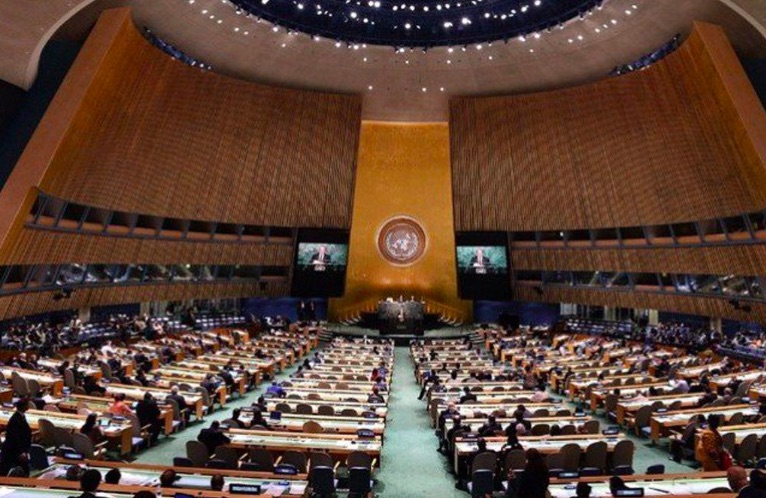
The opening session and plenary segment will be held in the General Assembly Hall from 10:00am-1:00pm. The panel discussion will take place in the Trusteeship Council Chamber from 3:00pm-5.30pm, followed by closing segment from 5:30pm6:00pm. The opening session and plenary segment will feature statements by the President of the General Assembly, the Secretary-General (TBC), and will hear a keynote address by a preeminent Nobel Peace Laureate.

The plenary segment will comprise of statements by Member States and observers of the General Assembly. A list of speakers will be established in accordance with the established practices of the Assembly. The list of speakers will be open for inscriptions via the e-Speakers module of the e-Delegate platform on 16 August at 12 noon. The time limit for the statements is three minutes.

The panel discussion in the afternoon will focus on the of the 2018 High-level Forum on the Culture of Peace: “The Culture of Peace: A Credible Pathway to Sustaining Peace 3

The panel discussion will feature remarks by distinguished panelists followed by an interactive discussion. The panel will be moderated by Ambassador Anwarul Karim Chowdhury, Founder of the Global Movement for the Culture of Peace and the former Under Secretary-General and High Representative for the Least Developed Countries, Landlocked Developing Countries and Small Island Developing States. There will be no established list of speakers for the panel discussion.

Registration of members of official delegations Official delegations and members of the parties of Heads of State or Government, Vice-Presidents and Crown Princes or Princesses will be registered by the Protocol and Liaison Service. Missions/offices are required to submit their registration requests by using the online system “e-Accreditation” available through the e-Delegate Portal at https://delegate.un.int.

Outcome

A Chair’s summary of the meeting will be circulated to Member States. Further information regarding this meeting will be available on the PGA’s website.

As UN Secretary-General, Kofi Annan Stressed Need For Culture Of Peace

… EDUCATION FOR PEACE …

An article by CPNN

As we mourn the death of Kofi Annan, we recall his inspiring leadership as the Secretary-General of the United Nations. The following is his message for the occasion of the International Day of Peace, 14 September, 1999:

“The principal mandate of the United Nations to save succeeding generations from the scourge of war remains as valid today as when those words were written into the Charter more than half a century ago. For millions upon millions of people throughout our world, the march of human progress continues to be plagued by conflict, violence, hatred and greed.

“Over the years we have come to realize that it is not enough to send peacekeeping forces to separate warring parties. It is not enough to engage in peace-building efforts after societies have been ravaged by conflict. It is not enough to conduct preventive diplomacy. All of this is essential work, but we must also act at a deeper level if we want enduring results. We need, in short, a culture of peace.

(Articles continued in right column)

Questions for this article:

Where in the world can we find good leadership today?

(continued from left column)

“It may seem sometimes as if a culture of peace does not stand a chance against the culture of war, the culture of violence and the cultures of impunity and intolerance. Peace may indeed be a complex challenge, dependent on action in many fields and even a bit of luck from time to time. It may be a painfully slow process, and fragile and imperfect when it is achieved. But peace is in our hands. We can do it.

“This year, the International Day of Peace coincides with the launch, at the initiative of the United Nations Educational, Scientific and Cultural Organization (UNESCO), of the International Year for the Culture of Peace. Since wars begin in the minds of men, says UNESCOs Constitution, it is in the minds of men that the defences of peace must be constructed. All of us must do our part in this project. The culture of peace is an idea whose time has come.”

The preceding press release from Kofi Annan on September 10, 1999, echoed the following remarks made by Ambassador Anwarul Chowdhury two weeks earlier upon the adoption by the UN General Assembly of the Declaration and Programme of Action on a Culture of Peace. That document, which remains to this day the key forumulation of a culture of peace, had been introduced a year before by Director-General Federico Mayor of UNESCO and guided through a difficult birth process by Ambassador Chowdhury:

“I believe that this document is unique in more than one way. It is a universal document in the real sense, transcending boundaries, cultures, societies and nations. Unlike many other General Assembly documents, this document is action-oriented and encourages actions at all levels, be they at the level of the individual, the community, the nation or the region, or at the global and international levels. The document also brings together the various actors who have a role in advancing a culture of peace. They include States, international organizations, civil society, community leaders, parents, teachers, artists, professors, journalists, humanitarian workers – in a way, all people from all walks of life and all sorts of backgrounds can contribute to its implementation.”

The Elders mourn the loss of Kofi Annan

… EDUCATION FOR PEACE …

A press release from The Elders

The Elders are shocked and deeply saddened at the passing of their dear friend and colleague Kofi Annan, who was the globally admired and respected Chair of The Elders.

A founding member of The Elders, Kofi Annan succeeded Archbishop Desmond Tutu as Chair in May 2013. He played a vital role in leading The Elders’ work, and was a voice of great authority and wisdom in public and private, most recently on visits to South Africa and Zimbabwe in July 2018.

As the seventh Secretary-General of the United Nations from 1997 to 2006, he was a constant advocate for human rights, development and the rule of law. The first Secretary-General to reach the post from within an organisation he served for over 40 years, Kofi Annan had a life-long commitment to the cause of peace and was known for his staunch opposition to military aggression, notably the US-led invasion of Iraq in 2003.

(Articles continued in right column)

Questions for this article:

Where in the world can we find good leadership today?

(continued from left column)

The great respect for him and his essential work was illustrated when he, together with the United Nations as a whole, was awarded the Nobel Peace Prize in 2001.

Gro Harlem Brundtland, Deputy Chair of The Elders, said:

“We are devastated at the loss of our dear friend and fellow Elder. Kofi was a strong and inspiring presence to us all, and The Elders would not be where it is today without his leadership. Throughout his life, Kofi worked unceasingly to improve the lives of millions of people around the world. While we mourn his passing today, we resolve as Elders to continue to uphold his values and legacy into the future”.

In retirement, Kofi Annan continued where he had left off at the United Nations, founding and leading the work of the Kofi Annan Foundation, based in Geneva, and maintaining a hectic international schedule. His quiet advice on how best to defuse impending crises was in constant demand from all corners of the globe, in particular from Africa.

All of the Elders and their Advisory Council and staff team members send their heartfelt condolences to Kofi’s family: his wife Nane, his children and grandchildren. They have lost a devoted husband, father and grandfather.
The world has lost an inspiring figure – but one whose achievements will never be forgotten, and whose commitment to peace and justice will endure to inspire future generations.

For media inquiries, please contact William French, Head of Communications at The Elders (+44 7795 693903) or email: media@theElders.org

INTERVIEW: ‘Defend the people, not the States’, says outgoing UN human rights chief

…. HUMAN RIGHTS ….

An article from the United Nations News Service

For four years, Zeid Ra’ad Al Hussein, the United Nations High Commissioner for Human Rights, has been taking governments across the world to task, exposing human rights violations and robustly advocating for the rights of victims.

His appointment by the Secretary-General back in 2014 was a landmark: he became the first Asian, Muslim and Arab ever to hold the post.


OHCHR: Zeid Ra’ad Al Hussein, UN High Commissioner for Human Rights meeting with indigenous community leaders in Guatemala. November 2017.

Before that, Zeid had already enjoyed a long and distinguished career, both at the UN and as a Jordanian diplomat. He served his country in several capacities, notably as Ambassador to the United States, and Permanent Representative to the United Nations in New York, with a stint as President of the Security Council in January 2014.

Throughout his career, Zeid has demonstrated a commitment to international law, playing a major role in the establishment of the International Criminal Court, as the first President of the Assembly of States Parties to the Rome Statute of the International Criminal Court – turning the court from an idea into a reality – and, eight years later, overseeing the legal definition of the crime of aggression and the court’s jurisdiction over it.

In his last major interview with UN News, the UN human rights chief tells us that the “real pressure on this job comes from the victims and those who suffer and expect a great deal from us.”

“Governments are more than capable of defending themselves. It’s not my job to defend them. I have to defend civil society, vulnerable groups, the marginalized, the oppressed. Those are the people that we, in our office, need to represent,” he adds, noting that “oppression is making a comeback”.

When asked about whether his view of the UN and what it can achieve has diminished during his time spent speaking out loudly in defence of the abused and defenceless over the past four years, he says:

“It’s very difficult to tolerate abuse of the UN when I keep thinking of the heroic things that people do in the field, whether the humanitarian actors or humanitarian personnel, my human rights people, the people who are monitoring or observing. And I take my hat off to them. I mean, they are the UN that I will cherish and remember.”

UN News: When you compare the human rights landscape today to when you took over the UN human rights office back in 2014, what are the key differences that you see?

Zeid Ra’ad Al Hussein: When I took over, it coincided with the terrible videos put online by Daesh, or ISIS, which stoked a great deal of fear and horror. And we began to see a sort of a deepening of the crisis in Syria and in Iraq. And this then folded into two things:

One, a great determination to embark on counter-terrorism strategies, which we felt were, in part, excessive in certain respects. Every country has an obligation to defend its people, and the work of terrorism is odious and appalling and needs to be condemned and faced. But whenever there is excessive action, you don’t just turn one person against the State, you turn the whole family against the State. Ten or maybe more members could end up moving in the direction of the extremists.

And then, the migration debates, and the strengthening of the demagogues and those who made hay out of what was happening in Europe for political profit. As each year passed, we began to see a more intense pressure on the human rights agenda.

UN News: You have been very outspoken and you’ve called out governments and individual leaders around the world who have abused human rights. Do you see that as the most important role for the UN human rights chief?

Zeid Ra’ad Al Hussein: Yes. At the Human Rights High Commission, you’re part of the UN, but also part of the human rights movement and both are equally important. As I said on earlier occasions, governments are more than capable of defending themselves. It’s not my job to defend them. I have to defend civil society, vulnerable groups, the marginalized, the oppressed. Those are the people that we, in our office, need to represent.

I always felt that that is the principle task: we provide technical assistance, we collect information, we go public on it. But in overall terms, the central duty for us is to defend the rights of those most marginalized and those that need it.

UN News: what if you come under pressure to stay silent?

Zeid Ra’ad Al Hussein: Well, the interesting thing is that the pressure on this particular job doesn’t really come very much from the governments. They all attack the office because we criticize all of them, but we also point to areas where there is improvement, and I sometimes will praise the government for doing the right thing.

The real pressure on this job comes from the victims and those who suffer and expect a great deal from us. That’s the pressure that I think matters most in terms of the need to do the right thing.

UN News: Have there been times, therefore, when you’ve had to compromise a bit too much and maybe even let rights campaigners down in some way?

Zeid Ra’ad Al Hussein: No, not in that sense because I think I’ve been outspoken enough and I think I broke new ground when it came to High Commissioners. I can tell you in almost every meeting I sit with governments and I say things that I know they would never have heard before from someone in the UN.

No, the enormity of the suffering of people creates a feeling of inadequacy that, no matter what I do —an interview like this, a press conference, a report — it’s not going to restore a disappeared son or daughter to his or her mother. I know it won’t end the practice of torture immediately. I know that the residents in an IDP [Internally Displaced Peoples] camp, are not going to next day be moved into something more improved.

And that feeling is the pressure that I’m speaking about. It’s this sort of feeling that no matter what I do, it’s unequal to the colossal challenge that stands before us.

UN News: Have there been times when you thought it best to use quiet diplomacy to work behind the scenes?

Zeid Ra’ad Al Hussein: We’re always trying. We’re always trying to use quiet diplomacy. I mean, we’re constantly meeting with governments, and I send letters, and we conduct phone calls.

But on occasion we make a determination that we’ve tried these tracks, it hasn’t worked, and that I’m going to go public. Sometimes, I asked my spokesperson to do it; sometimes, I ask my regional office to do it; and other times, I’ll do it myself. But it’s carefully thought through.

(Article continued in the right side of the page)

Question for this article:

Where in the world can we find good leadership today?

(Article continued from the left side of the page)

There was one foreign minister, for example, I needed to speak to. We were planning to send a technical mission to his country and, for almost a year, he avoided me. I saw him here in the GA [General Assembly] and he said, “Yes, yes, yes,” and then just avoided me. So then, we got a message to him that I’m going to go public tomorrow, and he was on the phone right away.

And the lesson learned was that if you don’t sometimes threaten to speak out, you don’t grab their attention. And I would rather err on the speaking out part than staying silent.

I first worked with the UN in 1994, 1995 in the former Yugoslavia. And I saw what catastrophes silence can bring. And I think from that point on, I was determined not to be silent when the evidence before us was presented.

UN News: What’s touched you most personally in the job? What have been those moments, the encounters with people that have meant the most to you?

Zeid Ra’ad Al Hussein: There have been many. I think it’s very hard to listen to the suffering of people. One of the times was when I went to the Ilopango detention centre in El Salvador. [Four young women] had been sentenced to 30 years in prison. They claimed these were obstetric emergencies: miscarriages. The State claimed that these were terminations of pregnancy.

When I sat with them – I had with me a full team, my office, assistants and interpreters – I think within the space of about 10 minutes we were all weeping; we were in tears because their suffering was so extreme. One of them was telling us how her foetus was on the ground and rather than take her to a hospital, they handcuffed her and took her to prison. And I thought the cruelty, the capacity for human cruelty is amazing.

I saw the president after that and I said, “Why is it that all these girls are poor? Every single one of them?” It’s as if it’s only the poor that face these sorts of conditions. This is the point that really strikes home that time and again: the poor suffer all the consequences. And that for me was a moment that will always remain with me. And there have been quite a few like that.

UN News: Is there a specific moment that stands out as being the most difficult or perhaps even the most consequential during your tenure?

Zeid Ra’ad Al Hussein: It’s all been difficult. When you’re defending the rights of people, and there’s so much pressure exerted upon you from this deep inner need or desire to help them, it’s all quite tough.

But I take inspiration from the amazing human rights defenders, journalists, lawyers, activists in so many countries who do amazing, brave things to highlight the plight of others; to defend the rights of others. Whatever I may want to complain about day in, day out, it’s nothing compared to the pressure that these people face, confront, overcome — often they have no fear.

These are the real leaders; these are the people that inspire. Not many of the politicians who claim to be leaders and are weak and self-serving, and are leaders in name only. The real leaders are the ones who, against all odds, will do the right thing and then often pay a price for it, and be detained for it.

And I think that’s what keeps us fuelled and working on their behalf.

Again, the point to be made is that, yes, we are part of the UN, but we’re also part of a human rights movement. The UN is creating order amongst States: with us, we look at the heart of the relationship between the governing and the governed and so, of course, it’s going to be sensitive.

People have their rights, the States have their obligations, their commitments. And we have to defend the people.

UN News: Where do you think you’ve made the biggest difference, personally? And have you made mistakes?

Zeid Ra’ad Al Hussein: I don’t know. The question ought to be addressed to civil society, victims’ groups, human rights defenders. And if they said, “Zeid has done a good job,” I’d be very content with that. If they said, “Zeid could have done better,” I’d have to learn to live with it and accept it. It’s really for them to quantify the extent to which I have achieved something or whether they think that I was able to undertake my responsibilities in the right manner.

UN News: you said that being High Commissioner for Human Rights is a unique job within the UN, and you seem to have followed a fairly similar path to your predecessors in making yourself unpopular with governments. Do you want to see your successor sticking to that path?

Zeid Ra’ad Al Hussein: The fundamental point that I mentioned earlier is that the States can defend themselves. Our job is not to defend the States, and the law is there for the protection of the weak, not in defence of the strong.

And so, we look at the law, we look at the obligations of States, and our job is to defend the individual victims, vulnerable communities, marginalized communities, or oppressed communities.

Oppression is making a comeback. Repression is fashionable again.

And so, I don’t believe anyone holding this position — even if they felt differently — can ultimately conduct business in a manner that departs too radically from the way that I, or my predecessors, have done it. If you try to depart, it will be extremely unpleasant for you because you’re going to hear it from the very people who are suffering. And there can be nothing that will tear at your conscience more, if you abandoned them. So, my belief is that the job defines the conduct.

UN News: Is there any other key advice you’d give?

Zeid Ra’ad Al Hussein: I would always say be in good health because it is a demanding job, and it is taxing. Whoever takes this job has to be ready for it. Some jobs in the UN system are viewed as sinecures, retirement posts for national officials. This is not one of them. This requires complete commitment.

UN News: For you, where to next? And as a seasoned ex-diplomat with so much UN experience, how has doing this job changed your view of the world?

Zeid Ra’ad Al Hussein: I don’t know, maybe I’ll be a journalist!

I’ve been away from my family; I need to spend time with them and then I’ll look and see what new direction I’d want to take myself. But I need a rest as well.

UN News: having walked this tightrope, do you feel perhaps a little more appreciative of what the UN does, or perhaps a little less?

Zeid Ra’ad Al Hussein: No, if I were to, in the future, think of the UN, I would think of the moments in the field where I see the UN doing amazing things.

It’s very difficult to tolerate abuse of the UN when I keep thinking of the heroic things that people do in the field, whether they be humanitarian personnel, my human rights people, the people who are monitoring, observing, with some threat to themselves: I take my hat off to them. They are the UN that I will cherish and remember.

To the outside world, the jargon, the terminology, seems inaccessible. I think that the work that UN personnel do in the field is much more understandable. That’s how I entered the UN, in the field, and that’s how I got to know it. And I think that’s where the UN has enormous impact and needs to continue to make the investment and do the right thing.
 
And you can also hear Zeid articulating his passion for international justice in a recent UN News podcast  in which he interviewed Ben Ferencz who, at 99 years of age, is the last surviving prosecutor of the post-war Nuremberg military tribunals and was one of the leading campaigners for an international court.

(Thank you to Phyllis Kotite, the CPNN reporter for this article.)

How Corporations ‘Bypassed the Politics’ to Lead on Clean Energy in 2017

.. SUSTAINABLE DEVELOPMENT ..

An article by Julia Pyper for Green Tech Media (reprinted as non-commercial use)

From mega wind purchases to rooftop solar arrays to electric truck orders, companies of all sizes are stepping up to act on climate.

When President Trump announced plans to withdraw from the Paris climate accord attention quickly turned to corporate America. Would business leaders forge ahead in the fight against climate change in the absence of federal backing?

In 2017, at least, the answer is yes. 


As of December 12, when heads of state joined to commemorate the second anniversary of the Paris Agreement, 327 major corporations, worth a cumulative $6.5 trillion, had committed to matching their emission reduction plans with the Paris goals through the Science Based Targets initiative. Another 864 companies have stated their intention to adopt a science-based target within two years. 

These companies hail from some 50 countries and 70 sectors, including finance, chemicals, food processing, technology hardware and more. Companies headquartered in the U.S. make up 20 percent of the group and have made the greatest number of climate commitments to date, despite uncertainty surrounding the American government’s participation in the Paris accord.

In addition, some 1,700 U.S. businesses from every state and of varying sizes — from Walmart to Wild Joe’s Coffee Spot in Bozeman, Montana — have signed the “We Are Still In” declaration. The initiative, which also includes cities, statehouses and college campuses, was intended to demonstrate America’s enduring commitment to delivering on the promise of the Paris Agreement.

Apple, for instance, issued a $1 billion green bond in June, shortly after Trump announced his exit from the climate deal, which CEO Tim Cook tried to convince the president not to quit. This is the tech giant’s second green bond, following a $1.5 billion offering that came in response to the Paris Agreement last year. Proceeds from the green bond sales will be used to finance renewable energy and energy efficiency projects at Apple facilities.

In another significant development this year, Walmart launched Project Gigaton, which asks its suppliers to reduce their greenhouse gas emissions by 1 gigaton by 2030. That amounts to the equivalent of taking more than 211 million passenger vehicles off of U.S. roads for an entire year.

Walmart is “bypassing the politics” to focus on driving down emissions internally and in its supply chain, said the company’s Chief Sustainability Officer Kathleen McLaughlin, speaking at the New York Times’ ClimateTECH conference in late November. There is a business case for supporting sustainable agriculture, combating deforestation, reducing waste and purchasing renewables, she said. Cost savings is one, but there’s also the potential for business-model innovation, improved product quality and increased sales revenue.

“In light of the withdrawal from the Paris accord…I wouldn’t say the political winds are favorable to the climate agenda right now,” McLaughlin said. “But we’re trying to make it practical and favorable just from a common-sense point of view.”

Walmart signed the We Are Still in pledge, she added, because “we think we need to show the rest of the world that there is still a critical mass of American companies of states and cities working on this, to drive [climate action] forward.” 

New recruits to the 100 percent group

As part of their climate action plans, 119 companies have committed to sourcing renewable energy for 100 percent of their operations through the RE100 initiative. That’s up from 56 members a year and a half ago.

Schneider Electric is the latest company to commit to 100 percent renewable electricity through RE100, with a 2030 target date. The European multinational also pledged to double its energy productivity by 2030, from a 2005 baseline, through an initiative called EP100

 “When it comes to the climate, I’m neither an optimist nor a pessimist — I’m an activist,” said Schneider Electric Chairman and CEO Jean-Pascal Tricoire, in a statement. “Prosperity and energy are intertwined.”

Other recent additions to the RE100 list include Estée Lauder, Kellogg, DBS Bank and Clif Bar. Citi Group also made the 100 percent renewables pledge in September, on top of the company’s vow to finance $100 billion in clean energy, infrastructure and technology projects. 

Meanwhile, French utility EDF Group recently committed to transitioning to electric vehicles by 2030 through EV100, a new initiative that seeks to make electric transport “the new normal.” All three initiatives — RE100, EP100 and EV100 — are led by the international nonprofit organization The Climate Group.

The increasing cost-competitiveness of lithium-ion batteries has made electric trucks, and shorter-haul vehicles in particular, an attractive investment for many companies. UPS, for instance, currently owns 120 electric trucks in the U.S. and more than 140 of them abroad. In New York City alone, UPS is planning to convert up to 1,500 tucks to EVs by 2022.

To support its electrification goals UPS recently placed advance orders for the newly introduced Tesla Semi. PepsiCo, Walmart and several others have also preordered the Tesla truck, which is scheduled for delivery in 2019.

It took Walmart a decade to double the fuel efficiency of its trucking fleet in an attempt to reduce fossil fuel use and cut costs, but the company still uses an enormous amount of fuel, said McLaughlin. The company is excited to pilot the Tesla Semi and other electrified platforms because “we envision a world where our fleet is run completely on renewable energy and we think this is an exciting step that allows us to experiment with that,” she said.

With electric trucks either on the market or expected from manufacturers such as BYD, Daimler, Volvo, Tevva Motors, Chanje and several others, corporate customers will soon have lots of options to buy electric. The rise of electric trucks coupled with exponential growth in the number of passenger EV models has made a campaign like EDF Group’s commitment to EV100 achievable.

The biggest corporate deals of 2017

EDF hasn’t only been active on cleantech internally. Like many other energy companies, EDF has also played a growing role in serving others in the corporate sector this year.

In late November, EDF Renewable Energy, a subsidiary of EDF Group, announced a deal to supply Google with 200 megawatts of wind energy generated from the new Glaciers Edge Wind Project  in Iowa. Glaciers Edge is the third deal EDF RE has done with Google, and it is expected to come on-line in December 2019. Once complete, the wind farm will help Google reach its goal of purchasing enough renewable energy to match its consumption for global operations.

Google also signed agreements in recent weeks for wind-generated electricity from Avangrid’s Coyote Ridge  and Tatanka Ridge wind farms in South Dakota, both of which are 98 megawatts, as well as 140 megawatts from the 300-megawatt Red Dirt site in Oklahoma. The cumulative 536 megawatts Google purchased from U.S. wind farms in November puts the company’s total renewable energy procurement to date above 3 gigawatts.

These wind deals are just the latest in a long list of corporate renewable energy procurements this year. While 2017 won’t be record-breaking, it will be the second-best year for corporate renewable deals, according to the Rocky Mountain Institute’s Business Renewables Center.

“Sustainable companies, led by tech giants and other leading Fortune 100s, are moving forward on their clean energy commitments,” Jacob Susman, head of origination for EDF RE, wrote in an email. This comes despite uncertainty around federal tax implications and the potential for new solar tariffs. According to Susman, “this is a testament to the value, risk mitigation, and societal and environmental benefits they perceive from adding renewables to their portfolios.”

Notable deals include Anheuser-Busch’s virtual power-purchase agreement with Enel Green Power for 152.5 megawatts of the 298-megawatt Thunder Ranch wind farm in Billings, Oklahoma. The renewable energy produced under the PPA is equivalent to meeting 50 percent of Anheuser-Busch’s total electricity needs in one year, which is enough renewable electricity to produce more than 20 billion 12-ounce servings of beer annually. The Anheuser-Busch agreement marks a significant step toward delivering on parent company AB InBev’s global commitment to secure 100 percent of purchased electricity from renewable sources by 2025.

JPMorgan Chase, which recently committed to facilitating at least $200 billion in clean financing over the next eight years, signed a 20-year PPA with NRG for a 100-megawatt wind project this year as part of the bank’s commitment to cover all of its power needs with renewables by 2020. While JPMorgan does not disclose how much power that amounts to, it will have to cover the real estate footprint of more 5,500 properties in 60 countries. To reach that goal, the company is also evaluating on-site solar options on up to 1,400 bank-owned retail buildings and 40 commercial buildings worldwide.

At the same time, America’s biggest bank is cutting energy use at its 4,500 U.S. branches through the use of new energy management and digital technologies. Chase is partnering with GE’s Current to install sensors, software and lighting controls that will help bank branches reduce electric and gas consumption by 15 percent. The company also continues to offset 100 percent of emissions generated by employee air travel on an annual basis. Collectively, these actions put JPMorgan Chase on track to reach its goal to reduce greenhouse gas emissions 50 percent below 2005 levels by 2020.

Kimberly-Clark also made some big commitments to clean energy in 2017, with the corporation’s first major renewables agreement to buy 245 megawatts and 1 million megawatt-hours of electricity from two new wind projects in Texas and Oklahoma. In October, Amazon made a splash with its largest wind farm announced to date.

The next frontier of corporate purchasing: Smaller buyers

Industry giants with household names are currently leading the way with renewable energy purchases, but the corporate clean energy market is starting to diversify and appeal to smaller players.

(Continued in right column)

Question for this article:

Are we making progress in renewable energy?

(Continued from left column)

“The next frontier of corporate purchasing is for corporate buyers with smaller appetites to increase their renewables contracting in a meaningful way,” said EDF’s Susman.
Expanding markets to these smaller players has proved to be a challenge, however.

In an interview earlier this year, Patrick Flynn, director of sustainability at Salesforce, pointed out that in the commercial renewables sector “growth is driven by a handful of large, experienced corporations” and the top priority should be to “lower barriers to entry” for other companies.

While many companies are choosing to bypass federal politics to act on their climate agenda, policy innovation at the state and local level continues to be critical for the commercial renewables sector. That’s true for companies of all sizes, but it’s especially so for smaller businesses that are more price-sensitive.

In regulated markets, utility green tariff programs are an emerging option for corporate customers. As of September, 17 green tariffs in 13 states have been proposed or approved since NV Energy put forward the first green tariff in 2013, according to the World Resources Institute.

Green tariffs come in different forms and flavors. Puget Sound Energy, for instance, launched the first subscriber-style green tariff to be used by retailers and small governments in April. While most existing green tariffs are designed to enable a single, new and very large customer to contract for an entire renewable energy project, PSE’s Green Direct program allows existing customers to contract for a more modest portion of a big clean energy project, which could enable smaller corporate players to participate.

In North Carolina, a July law reintroduced a Green Source Rider Program that allows corporations, the military, and the University of North Carolina to purchase renewables. The same law, HB 589, also legalized third-party leasing of renewable energy systems, which could be a viable option for the business community.

If companies don’t get the policy arrangement they want, regulated utilities risk losing corporate customers. Pressure from large corporate buyers is spurring utilities in the heart of coal country to find renewable energy solutions — despite President Trump’s calls for a coal renaissance. In Nevada, casinos such MGM and Wynn Resorts are leaving the grid to buy clean energy from outside suppliers, and now the state is considering deregulation.

Other parts of the country, a different set of policy solutions has cropped up. San Francisco Public Utility Commission’s CleanPowerSF program, for instance, helped Salesforce to source 100 percent renewable energy for its two office towers in San Francisco in August.

In deregulated markets, where most clean energy deals have been done to date, corporate buyers have more flexibility in their renewable energy purchasing options. But even here policy remains central. In all states, renewable energy targets, net metering policies, utility rate schedules, permitting processes, government incentives and other policy elements affect how easy or hard it is for companies of various sizes to purchase renewable energy.

Hospitals get active on renewable energy policy

In a testament to the role policy plays, healthcare providers in Ohio recently sent a letter to state lawmakers calling on them to stand behind the state’s clean energy standards and correct restrictive wind siting requirements. The letter asks for a “comprehensive approach to Ohio’s energy policy” that would “value innovative technologies that institute energy efficiency and demand response as a resource and expand the deployment of advanced energy technologies that curb energy costs to consumers.”

After several years of policy uncertainty, Ohio’s renewable energy and efficiency mandates were officially reinstated late last year. This year, the issue cropped up again. In March, the Ohio House of Representatives passed a bill to make the mandates voluntary. The legislation has since been taken up by the Senate, and Senate President Larry Obhof has said he’ll advance the bill in January. 

Meanwhile, there’s an ongoing debate in Ohio around the need to subsidize coal and nuclear plants.

“What both the advanced energy industry and healthcare providers would like to see from lawmakers is a move to put innovative technologies on a level playing field with some of the other incumbent technologies in the state, basically allowing competition to thrive,” said Ray Fakhoury, state policy associate at Advanced Energy Economy, which helped to facilitate the Ohio energy policy letter.

Large companies like Kaiser Permanente and Partners HealthCare have made sizable investments in renewables in recent years, but healthcare providers have generally taken a cautious approach to renewables. There’s hesitancy to make the upfront investment when healthcare needs are so high and some concern around disrupting hospital operations during installation. But the sector is starting to see a shift.
Because hospitals are the second most energy-intensive facility type in the U.S., renewables present a significant cost savings opportunity for the sector. Hospitals also need power around-the-clock and stand to benefit from clean energy microgrids in the event of an outage. Recent disasters such as the Boston bombing attack and Hurricane Harvey have underscored the need for uninterrupted electrical service at hospitals, according to a recent report sponsored by Ameresco.

“We’re now seeing hospitals get involved [in renewables] in a more active way, because pushing for access to a diverse portfolio of resources is something they’re interested in and Ohio is a state they’re looking to,” said Fakhoury.
Signers of the letter include the Cleveland Clinic, the Ohio Hospital Association Energy and Sustainability Program, and the CEOs of Mercy Health, Mount Carmel Health System, and Tri-Health. Energy business leaders signing the letter include executives from First Solar, Apex Clean Energy and Siemens.

Small commercial solar remains tricky

Of all companies, purchasing solar is the biggest challenge among the smallest players. Small and medium-sized businesses have traditionally been a “no man’s land” for solar installers.

Between 2012 and 2016, commercial solar installations were virtually flat due to project financing challenges, lengthy development timelines and heavy reliance on incentives.
According to GTM Research, commercial solar hit its highest year of installations in 2016 as the market experienced demand pull-in in response to two impending regulatory deadlines on solar-friendly rate structures came in California and the qualification period for obtaining the full SREC value in Massachusetts. These factors continued to drive deployments in 2017, but growth is expected to drop in 2018 and only grow incrementally over the next five years.

Legal fees and complex contract negotiations create substantial transaction costs for commercial project developers and owners. Customer acquisition is time-consuming and highly localized. And attractive financing is only available to a subset of the market. Small and medium-sized businesses don’t enjoy the investment-grade credit that the Fortune 100 companies do.

There’s still high interest in this market segment, however. Entities such as NextEra, NRG, AES and Duke’s REC Solar are active in the commercial solar space and competing to provide comprehensive low-carbon energy packages for customers.

Commercial solar asset owners are also taking more control of their projects from the outset, rather than acquiring projects at a later date. Taking more control can eliminate speed bumps like having to repeat due diligence on project financing, according to GTM Research solar analyst Michelle Davis, author of the Commercial Solar Asset Ownership  report. This trend could increase commercial solar installation volumes and concentrate the market beyond 2017.

Going global

While there’s still a huge opportunity to tap into the commercial renewables market in the U.S., most of the larger, mature buyers are now starting to direct their attention elsewhere.

According to the Business Renewables Center, North America accounted for more than 75 percent of global corporate PPAs through August 2017. But markets in South America, Europe and Asia have the potential for significant growth.

A recent report by the Rocky Mountain Institute found that new opportunities for companies to use cleaner power in China could increase the country’s wind and solar capacity by 40 percent over 2016 levels by 2020. China is already the global leader on renewable energy deployment, but it currently offers few scalable options for companies to use 100 percent renewables.

But things are starting to change.

China is undergoing its most significant electricity reform in a generation, according to the report. As a result, the number of options for corporate buyers is increasing. In March 2017, for instance, the government established ground rules for community solar, opening a new mechanism to procure local power for companies without sufficient rooftop access. RMI identified eight other new and existing pathways to expand corporate renewable energy procurements in China.

In some cases, policies and market dynamics in countries outside of the U.S. are better than those that exist within the U.S. 

Walmart, for instance, has a goal to reach 100 percent renewables across its global network, and currently sits around 25 percent renewable today. But in the U.S., that number is actually closer to 12 percent, due to “the regulatory environment, pricing environment, infrastructure, technology and so forth,” said McLaughlin.

Because large corporations have such large international footprints, they can’t afford not to lead on climate action or they could miss out on a business opportunity.

“We’re a global company, we operate all around the world, and so wherever we can, we like to have that certainty that there’s a level playing field wherever we operate,” said Todd Brady, director of global public affairs and sustainability at Intel, on a panel at ClimateTECH. “I think that makes a strong business case for staying in the Paris Agreement.”

The World Resources Institute identified three things company leaders can do push global climate action further in 2018: show up and speak up at high-level events, align their corporate climate goals with countries’ climate goals, and meet with ministers to help break down silos within and between governments, leading to a more cohesive policy framework.

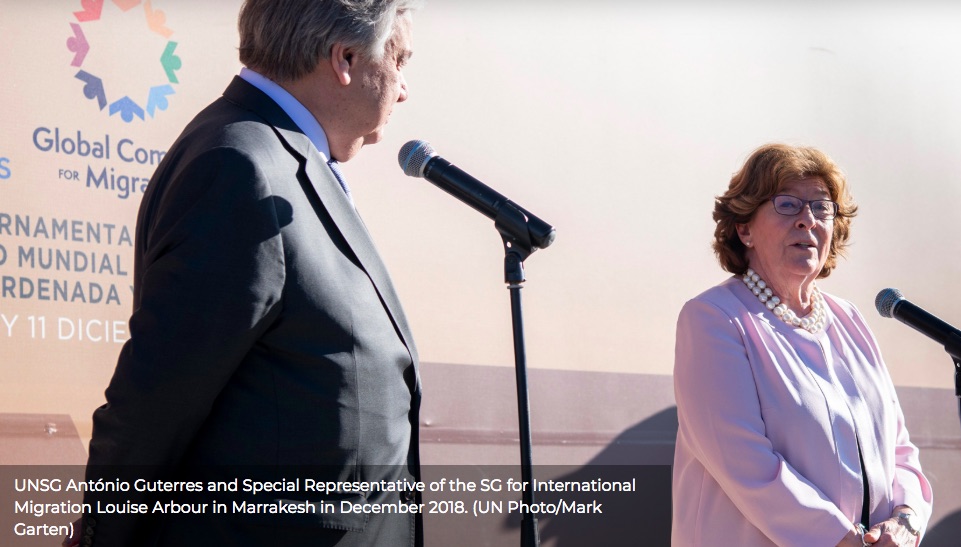
At the COP23 climate conference in November, U.N. Secretary-General António Guterres’ had a message for businesses: “I am asking you to misbehave.” He called for companies around the world to disrupt “business-as-usual” and urge governments to ramp up their climate action plans. Hundreds of businesses, in the U.S. and abroad, have accepted the secretary’s challenge. Now, the world will be watching for them to follow through.

European Parliament Calls for a United Nations Parliamentary Assembly and a UN Reform Summit in 2020

DISARMAMENT & SECURITY .

An article from the DWFed, Democratic World Federalists

In a resolution adopted today [July 27], the European Parliament called on the EU’s governments to advocate “the establishment of a United Nations Parliamentary Assembly” (UNPA) and to support a “UN 2020 summit” that will consider “comprehensive reform measures for a renewal and strengthening of the United Nations.”

TAccording to the European Parliament, a UNPA should be established “within the UN system in order to increase the democratic character, the democratic accountability and the transparency of global governance and to allow for better citizen participation in the activities of the UN and, in particular, to contribute to the successful implementation of the UN Agenda 2030 and the Sustainable Development Goals.”

The directly elected parliament of the EU’s citizens called on the EU’s 28 member states represented in the Council of the EU to advocate the creation of a UNPA at the upcoming 73rd session of the United Nations General Assembly which will start in September.

European parliamentarian Jo Leinen (S&D) who had initiated the call for a UNPA said that “the UN urgently requires more openness and stronger democratic foundations.” He added that “the European Parliament therefore calls for the establishment of a Parliamentary Assembly within the United Nations system” and that “the European Union and its member states should now play an active role in the implementation of this innovation.”

The European Parliament’s rapporteur on this year’s recommendations on the EU’s UN policy, Eugen Freund (S&D), said that since he first encountered UN reform forty years ago “unfortunately, not much has changed.” He added that “the General assembly has more members now, but it is still a body of unelected diplomats. Therefore, the idea of eventually complementing them with elected parliamentarians is a very appealing one. They would certainly be closer to the populace and thus would have to regularly answer to their constituency. Whether that would also streamline the decision-making processes remains to be seen.”

Other supporters of the call for a UNPA in the parliament’s committee on foreign affairs included Elmar Brok (EPP), Soraya Post (S&D), Juan Fernando López Aguilar (S&D), Helmut Scholz (GUE/NGL), and Andrey Kovatchev (EPP).

(continued in right column)

Question for this article:

Proposals for Reform of the United Nations: Are they sufficiently radical?

(continued from left column)

The European Parliament’s resolution was welcomed by Ivone Soares, a parliamentarian from Mozambique and a member of the African Union’s Pan-African Parliament. “With resolutions passed by the European Parliament, the Pan-African Parliament and the Latin-American Parliament, the time has come for progressive governments in these three major world regions to consider the creation of a United Nations Parliamentary Assembly,” Soares said.

Daniel Jositsch, a member of the Swiss Council of States commented that “the escalating crisis in international cooperation shows that new ways must be found to combat global problems. It is therefore very positive that the European Parliament is calling on the European states to speak out in favour of the creation of a UN Parliament. It is important that they will not simply pay lip service to this goal, but that concrete implementation measures are being taken.”

“From the many initiatives in favor of a more peaceful, fair and democratic world the creation of a UN Parliamentary Assembly is the decisive one. The recent support given by the European Parliament to this proposal shows that the members of the most important supranational parliamentary body are ready to work for its creation,” commented Fernando Iglesias, a member of the Chamber of Deputies of Argentina.

Jo Leinen, Ivone Soares, Daniel Jositsch and Fernando Iglesias are co-chairs of the parliamentary advisory group of the international Campaign for a UNPA which has been endorsed by over 1,500 elected representatives worldwide. The campaign’s secretary-general, Andreas Bummel, said that the European Parliament’s call for a UNPA was “a bold and important step at a time when multilateralism is under attack.” “Governments interested in defending and strengthening the UN and democracy worldwide should urgently work for the democratisation of global institutions and a UN Parliamentary Assembly is a key to achieve this,” he added. Recently, the Irish foreign minister Simon Coveney stated that Ireland was “open minded” relative to proposals for a UNPA.

The European Parliament’s resolution on the EU’s UN policy also recommended, among other things, the establishment of “an open and inclusive intergovernmental preparatory process under the auspices of the UN General Assembly for a UN 2020 summit, on the occasion of the UN’s 75th anniversary” that would consider “comprehensive reform measures for a renewal and strengthening of the United Nations.”

Earlier this year Jo Leinen and Andreas Bummel published a book on the history, today’s relevance and future implementation of the proposal of a world parliament and on improving democratic world governance.

The Emergence of Global Institutions for the 21st Century

FREE FLOW OF INFORMATION

Abstract of Global Governance and the Emergence of Global Institutions for the 21st Century by Augusto Lopez-Claros, Arthur Dahl, and Maja Groff

This proposal builds upon structures for international cooperation existing at least since the creation of the UN. The proposed institutions and processes aim to strike a balance between overly ambitious proposals with little chance of acceptance, and more politically feasible ones that fail to solve the multiple problems of today’s world. 

We propose revisions to the UN Charter that provide the legal basis for a new system of global governance, supplemented by other reforms not requiring Charter amendment. 

The powers, composition and voting method of the General Assembly (GA) are revised, giving it some powers to legislate with direct effect on member states, mainly in the areas of security, maintenance of peace and management of the global environment. These powers would be explicitly enumerated in the revised Charter, also specifying those which remain vested with member states. The system of representation in the GA is revised to enhance its democratic legitimacy. 

A Second Chamber is proposed, deriving its authority directly from the global citizenry; its representatives would serve as advocates of particular issues of global concern, rather than representing the interests of their respective states. At the outset, the chamber would have advisory powers, but would be gradually integrated into the international constitutional order, attached to the GA, thus creating a bicameral world legislature. 

An Executive Council, composed of 24 members, elected by the GA and operating under its jurisdiction, would replace the UN Security Council. Its focus would shift to implementation, management and effective operation of the UN. The veto power of the five permanent members of the current Security Council would be eliminated. An executive arm of the new UN, the Council would have broad authority to monitor, supervise and direct various aspects of its work in security, conflict prevention and management of the global environment, as well as other areas of priority identified by the GA. The Executive Council would provide general oversight and ensure good governance, transparency, efficiency and coherence of an effective, new UN system. The Secretary General would chair the Executive Council, facilitating continuity within the UN system and linking to the UN Secretariat. 

A UN International Security Force would be created, deriving its ultimate authority from the GA via the Executive Council. This two-part Force would consist of a Standing Force and a Security Force Reserve, both composed of volunteers. The Standing Force would be a full-time body of professionals, numbering from 500,000 to 1,000,000 as determined by the GA. The Force would provide for security and promote peace around the world, firmly anchored in the notion that force may at times be necessary to deliver justice and the rule of law. It would also address one of the main flaws of our current UN system: namely, the absence of a reliable, legitimate international mechanism to enforce decisions made by the Security Council. Subject to a number of safeguards, the International Security Force will be vital to enhancing the credibility of the UN, and to preventing conflicts and maintaining peace and security throughout the world. 

(continued in right column)

Question(s) related to this article:

What is the United Nations doing for a culture of peace?

(continued from left column)

The peaceful settlement of international disputes and enforcement of international law will become mandatory, giving the International Court of Justice (ICJ) compulsory jurisdiction over all substantive matters pertaining to the interpretation and/or enforcement of international law for all UN members, overturning the current requirement for states’ agreement to adjudicate. A revised Charter would also make acceptance of the statute of the International Criminal Court (ICC) mandatory. An International Human Rights Tribunal would be established for systematic, binding adjudication and review, significantly strengthening the existing weak and non-binding human rights oversight mechanisms. The substantive rights adjudicated by the international Tribunal will include key UN human rights treaties, many of which currently have non-binding individual complaint mechanisms. 

To reassure the people of the world that basic individual rights will not be violated in the exercise of the UN’s strengthened mandate, a new Bill of Rights prescribing parameters for UN action would include fundamental human rights protections to be applied and interpreted by a new, specialized chamber of the ICJ. 

Recognizing that a strengthened UN system with a broader set of responsibilities and institutions would need reliable funding, we propose a mechanism linking national contributions to the UN budget to a fixed proportion of indirect tax collection, similar to mechanisms currently operating in the EU. Additional funding mechanisms will be explored balancing universal participation and the ability to pay.

Implementation will require UN Charter reform, building on existing Charter amendment provisions, and mechanisms for built-in flexibility through future amendments. Most of the broader UN system of bodies, commissions, programmes and specialized agencies will be retained, evolving under the new system as necessary. A World Conference on Global Institutions in 2020 is proposed as a starting point for the reform process.

Beyond the above structural components, we address specific challenges to the global order as examples of implementation. Effective security requires general disarmament, and we propose a binding, staged approach to reduce armaments to only those needed for internal security. To address growing income inequality and begin global management of the world’s resources will require a new multilateral specialized agency. The corruption undermining effective governance requires a global response through new international implementation and enforcement tools for existing mechanisms. Education will be an important support to the reforms.

The model corrects the failures in the present UN Charter that prevent its security function from operating effectively, enabling the UN to implement the decisions taken in the global interest. It creates a legally-binding international legislative function, beginning with security, maintenance of peace, and management of the global environment, given significant current and emerging global challenges and risks, as climate change accelerates and population growth threatens planetary carrying capacity and boundaries. It places the core values necessary for a global community at the heart of international governance and action, builds on the existing positive accomplishments in global governance and international consensus, and opens the door to widespread civic participation and acceptance.

(Thank you to Transcend Media Service for bringing this to our attention.)

An unprecedented upsurge of movements for women’s rights: UN Women annual report 2017-2018

. WOMEN’S EQUALITY .

Foreward to Annual Report by UN Women Executive Director Phumzile Mlambo-Ngcuka

In 2017 we saw an unprecedented upsurge of movements for women’s rights, equality, safety and justice. The tireless work of activists has been central to this global drive, and women all over the world continue to demonstrate the power of many voices speaking as one. Together, we are calling for opportunity and accountability, drawing momentum from grass-roots networks and forging coalitions that stretch right up to the leaders of governments, businesses and civic institutions.


UN Women Executive Director Phumzile Mlambo-Ngcuka visited a camp for people displaced by conflict in the Democratic Republic of the Congo. Despite the terrors of war and sexual violence, women leaders are forging ahead to make new, better lives for themselves and other women in the camp.

There is a profound hunger for change in women’s lives, and a growing recognition that when women band together they can achieve it—whether online through social media or offline through more traditional mobilization. They are confronting, challenging and condemning the practices that have normalized gender inequality, poverty, sexual miscon- duct, exclusion and discrimination across every area of life.

As our Annual Report shows, UN Women is supporting women politicians, electoral officials, voters, lawmakers, civil society activists and many others to claim their equal right to lead and be heard. The report highlights the experiences of a multitude of formidable women, from individuals like Alice Wahome, Kenyan parliamentarian, to the combined success story of the 14,000 Nepalese women who won an unprecedented 41 per cent of local government seats in 2017.

We salute these women leaders in formal positions as well as all those who have bravely spoken out against sexual harassment and violence through the #MeToo movement, and others. We commend the women who spoke out in the International Criminal Court against those who used rape as a weapon of war. We celebrate activists who campaigned for equal rights for lesbian, gay, bisexual, transgender and intersex people.

We recognize those who advocated for legal reform in countries such as Tunisia, to end a provision that allowed rapists to escape persecution if they married their victims. We acknowledge those who have taken to the streets in India to condemn the murder and rape of young children, turning protests into broader-based movements that engage entire communities. We honour the indigenous leaders who have stood up for their custodial rights to land and traditional practices, and the human rights defenders who have even lost their lives for their cause.

(continued in right column)

Question for this article

Does the UN advance equality for women?

(continued from left column)

Through our report we celebrate individuals we have supported, whose life experiences represent hundreds of thousands of others like them, and whose achievements are accelerating progress towards gender equality. Small business owner Olga Macz of Guatemala told us about the increased income, independence and mobility that came with learning professional production and marketing skills.

Training also brought her increased understanding and assertion of her rights. In Egypt, more than 17,000 women from the poorest and most marginalized rural areas now have their first access to community-based village savings and loan associations, building not just savings and busi- ness opportunities but confidence and increased autonomy.

The time is now to end all forms of gender inequality. The culture of gender-based poverty, abuse and exploitation has to end with a new generation of equality that lasts for all women and girls, no matter where they live, or how they live. We must leave no one behind.

UN Women has a special relationship with the women’s movement; we arose from that activism. Civil society has had a historically crucial role in leading global action on gender equality by promoting reform, highlighting the complexities of the challenges facing women, influencing policies, participating in monitoring, and upholding ac- countability. We are working to create stronger support for women’s political activism and a broader space for women’s civil society voices so that our efforts combine to benefit those who truly need change most.

At the same time, we also need a movement of male feminists, and young men and boys who value and respect women and girls. Today’s activism needs to alter the way we listen to women and the way we look at them, recog- nizing the power of stereotypes to influence how we value people. Activists and leaders in the HeForShe movementin 2017 found tangible and scaleable solutions for inequal- ities, like the 3,500 child marriages annulled in Malawi by local chiefs, or the practical accountability actions taken in Iceland to make sure that companies put the equal pay law into practice.

At the 2018 UN Commission on the Status of Women, youth captured the urgency of the moment. They highlighted the importance of being present and participating fully in all the issues that affect their lives. They emphasized working in an intergenerational context so that they can learn from those who have been around for much longer and contrib- ute to giving us direction for the future.

The time is now to hold ourselves and our leaders accountable for progress, for all women.

Why unarmed civilian protection is the best path to sustainable peace

EDUCATION FOR PEACE .

An article by Annie Hewitt for Waging Nonviolence

The first image that often comes to mind when one thinks of peacekeeping, especially within the frame of the United Nations, is that of the blue helmets: armed soldiers gathered from member states who are then strategically deployed in conflict areas.

There are over 90,000 armed UN peacekeepers working around the world today — from Haiti to Lebanon to Kosovo to Darfur — who are generally isolated from the communities they are meant to protect. They engage from the outside, with soldiers often patrolling in vehicles and retreating at the end of the day to compounds of rarefied security.


Over 40 Women’s Peacekeeping Teams focusing on civilian protection and peacebuilding have formed throughout South Sudan. (Nonviolent Peaceforce)

This drastically reduces the ability of traditional peacekeepers to know and respect local people; without this understanding, trust is weakened and the kind of clear and open communication needed for sustained peace is undermined. A recent UN reportexploring ways to improve the safety of UN peacekeepers embodies this relationship model: its focus is on the protection of peacekeepers who come from outside countries and concludes that their safety depends on the proactive use of force.

There is, however, another model for peacekeeping called unarmed civilian protection, or UCP. It works from the inside and has been proven to save lives, empower communities and can secure strong and lasting peace in areas plagued by violent conflict.

“Unarmed civilian protection challenges the widespread assumption that ‘where there is violence we need soldiers,’ or that armed actors will only yield to violent threat,” said Rachel Julian, director of the Centre for Applied Social Research at Leeds-Beckett University, during a UN event in May. Hosted by the permanent missions of Uruguay and Australia to the UN, the event offered inspiring success stories and provided persuasive evidence that unarmed civilian protection works.

UCP, she began, is not a new-fangled and untested method of peacekeeping — in its current form, it has been around for over 35 years. Despite its long history, UCP is rarely recognized by international bodies as a viable tool for peacekeeping; armed strategies tend to dominate institutional efforts to combat threats of violence.

Julian’s research suggests that we have much to gain by expanding our conception of what peacekeeping is and by broadening our ideas of the methods it involves.
Julian explained that armed peacekeeping is limited in part due to the fact that the peace sought by armed peacekeepers is not grounded in the knowledge, practices and traditions of the people directly involved in the conflict. Armed peacekeeping imposes peace externally, introducing temporary resolutions from the outside. It is often implemented according to a fixed and prescribed model that is applied with relative uniformity in different regions and in all kinds of conflict.

As Youssef Mahmoud from the International Peace Institute said at the event, this kind of peacekeeping can yield “security, not safety.” And no doubt, security is important. But more important is a sustainable peace that finds its roots in the particular community itself. These local approaches to peace are always present, even amidst horrific violence.

Unarmed civilian protection draws on the peace infrastructure that exists within all communities by actively listening to everyone involved, by opening clear lines of communication, and by making a safe space for people to use and build on the knowledge and resources they already have. UCP is based on the recognition that each conflict and thus each peace is distinct and requires methods that are adapted to the particularities of the community and implemented by local people themselves.

Over the years, Julian has gathered a tremendous amount of data to prove the efficacy of UCP. Her research shows that unarmed civilian protection is scalable, that it is successful in preventing violence, that it works in all stages of conflict and that it is effective in preventing the displacement of civilians.

But the benefits that grow directly from the practices of unarmed civilian protection require time and funding, which they currently lack. Building trust and capacities, strengthening community ties, encouraging communication among “enemies” are not cheap and quick fixes. However, the investment pays off: the peace UCP ushers in tends to be strong and enduring. After all, its roots lie deep in the individual communities and in the hearts of its residents.

In the Kook community of South Sudan, strong local women came together to form the Women’s Peacekeeping Teams, which pooled their strength and knowledge to take action for peace. These teams were able to sustain peace among once hostile clans when it was threatened after a chief’s son was killed. Because the Women’s Peacekeeping Teams had laid the groundwork by taking the time to get to know and listen to people from all groups in the area, they were able to intervene on behalf of their community as a whole and ensured that no revenge killings would take place. And indeed, the peace remained.

Carmen Lauzon-Gatmaytan is the program development officer with Nonviolent Peaceforce, an unarmed, paid civilian protection force founded in 2002, which now has peacekeepers in the Philippines, Iraq, South Sudan, Bangladesh and Myanmar. An international NGO, Nonviolent Peaceforce is committed to “building peace side by side with local communities” in a way that saves lives and preserves human dignity. 

(Article continued in the right column)

Question for this article:

Can peace be guaranteed through nonviolent means?

(Article continued from the left column)

Lauzon-Gatmaytan works in Mindanao region of the Philippines, which has emerged as an epicenter of violence in the country. Unarmed civilian protection has been effective in countering this violence, creating reliable channels of communication among opposing groups and cultivating islands of peace where conflict seemed inevitable. Local actors have been empowered through trainings in the methods of unarmed civilian protection, and trust among ostensible enemies is gradually emerging and taking hold. This has come in part by identifying common interests which unite rival groups, despite disagreement on the issues that drive the conflict.

A few years ago, a high school graduation celebration was disrupted by armed militias. Parents and students contacted Nonviolent Peaceforce to come work with their community, providing protective accompaniment to vulnerable people and encouraging dialogue among all parties. The following year, the graduates took part in a ceremony free of tension and fear. Families — whatever their political, religious and ethnic ties — recognized and respected the desire to watch their loved ones receive diplomas.

Building bridges among opposing groups reveals only one axis of UCP’s impact, which cultivates trust and strengthens ties among civilians. Equally significant, Lauzon-Gatmaytan insisted, is how UCP facilitates the coming together of civilians, government officials and armed actors to work for peace. This was witnessed in Mindanao when both the government and the main rebel group, the Moro Islamic Liberation Front, requested that Nonviolent Peaceforce join in the official ceasefire and recognized unarmed civilian protection as a tool to be used to find resolution to the region’s problems.

Yasmin Maydhane, an international protection officer with Nonviolent Peaceforce, has direct experience using unarmed civilian protection in remote areas of South Sudan that are inaccessible to the UN mission there. Her work has introduced her to local people whose knowledge and resources have been channeled and directed so that they are now active unarmed peacekeepers themselves.

Herself a byproduct of UN peacekeeping missions in Somalia, Maydhane has firsthand knowledge of what works and what doesn’t, and UCP, she stated without equivocation, works. She spoke with pride and excitement about the fact that UCP methods have inspired local youth to be increasingly involved in peacekeeping efforts in South Sudan, forming youth groups of motivated peace activists. The Upper Nile region, long cut off from aid of all kinds, now has basic humanitarian services thanks to UCP.

Perhaps most significant, women are leading some of the most successful peacekeeping efforts in the area. In one instance, they managed to bring together representatives from different ethnic groups to ensure safe passage through a once perilous series of checkpoints: Maydhane described how before these brave women joined forces, going through checkpoints meant abuse and rape. They declared, “Our men rape you, yours rape us — let’s end this” and South Sudanese women did just that. The checkpoints are now safely crossed.

At the event, Mahmoud said the efficacy of unarmed civilian protection comes in part from its adaptability and flexibility. This gives it a unique capacity to contend successfully with decentralized violence, a characteristic of most active conflicts in the world today. Equally important, unarmed civilian protection makes room for local actors to realize capacities that have become latent, and any good peacekeeper, he said, must draw on this untapped potential.

Peacekeepers must be sure to “map not only what is not working, but also what is working” — that is, to understand that the solutions to any conflict lie with the local people. This means that the aim of unarmed civilian protectors is ultimately to become dispensable — somewhat paradoxically, they must strive to be unneeded. In this, unarmed civilian protection goes beyond mere protecting, but supports local actors to build peace themselves. Real peace, Mahmoud stressed, always grows from the bottom up and while external actors can help make the space for peace, they must leave room for others “to shape it as their own.”

The UN event made clear that unarmed civilian protection is not simply about keeping peace, it is inseparable from building peace, which necessarily involves unearthing and realizing the capacity, knowledge and power of the communities that are directly involved in conflict. The kind of local ownership UCP depends on is essential for a robust and sustained peace as opposed to a fleeting and fragile one. Much of traditional peacekeeping has been pried from its natural place within grassroots peacebuilding, reduced to an external force that strains to impose a frozen peace from the outside and is itself dependent on outsiders.

The practices central to UCP — inclusive dialogue, protective accompaniment, trust-building and open negotiation — grow directly out of the awareness that local capacity is never absent, only buried and rendered dormant under the weight of conflict and violence. These are all too often the direct result of external forces — colonialism, proxy wars, scarce resources, climate change — for which those stuck in conflict bear no responsibility.

Nonviolent peacekeeping allows people to see humanity visibly manifested; unarmed peacekeepers must be decent and kind, they must listen actively and make all parties to a conflict feel as though they matter. In doing so, humanity is revealed to be not the property of one side or another, nor something that must be imported from outside.

Unarmed civilian protection directly addresses the urgent need to ensure that even the most violent regions across the globe are on a road to becoming safe and peaceful. Given increased international recognition and adequate financial support, data suggests that such widespread peace is in fact possible and sustainable.

Equally significant, this peace does not require the constant presence of saviors from outside, whether UN blue helmets or others. “Outsiders have to be humble enough to recognize that people have capacity not just needs,” Mahmoud said. “Outsiders also have to build into their DNA that they are dispensable.”

(Thank you to the Transcend Media Service for calling this to our attention.)