Tag Archives: Europe

Tens of thousands protest in The Hague against Gaza war

. . HUMAN RIGHTS . .

An article from Reuters (reprinted by permission)

Video on Instagram

Tens of thousands of protesters marched through The Hague on Sunday (May 18) demanding a tougher stance from the Dutch government against Israel’s war in Gaza.

Organiser Oxfam Novib said around 100,000 protesters had joined the march, most dressed in red expressing their desire for a “red line” against Israel’s siege on Gaza, where it has cut off medical, food and fuel supplies.


Video on Instagram

The march also passed the seat of the International Court of Justice, which is hearing a case brought by South Africa accusing Israel of genocide and last year ordered Israel to halt a military assault on the southern Gaza city of Rafah.

(continued in right column)

Question related to this article:

How can war crimes be documented, stopped, punished and prevented?

How can a culture of peace be established in the Middle East?

(continued from left column)

Israel dismisses accusations of genocide as baseless and has argued in court that its operations in Gaza are self defence and targeted at Hamas militants who attacked Israel on Oct. 7.

Oxfam Novib said the Dutch government had ignored what it said were war crimes committed by Israel in Gaza, and urged protesters to demand a tougher line.
Dutch Foreign Affairs minister Caspar Veldkamp earlier this month said he wanted the EU to reconsider cooperation agreements it has with Israel.

But the Dutch government has so far refrained from harsher criticism, and the leader of the largest party in the government coalition, anti-Muslim populist Geert Wilders, has repeatedly voiced unwavering support for Israel.

Wilders called Sunday’s protesters “confused” and accused them in a post on X of supporting Hamas.

– – – – – –

If you wish to make a comment on this article, you may write to coordinator@cpnn-world.org with the title “Comment on (name of article)” and we will put your comment on line. Because of the flood of spam, we have discontinued the direct application of comments.
100,000 Documented Deserters from Ukraine and Russia — and the Invisible Army for Peace

. DISARMAMENT & SECURITY.

An article received at CPNN from Olga Karatch* published on the no-to-nato riseup list.

Dear friends,

Yesterday, an important update came from the European Bureau for Conscientious Objection. They shared a striking article from Belgian national radio RTBF:

Guerre en Ukraine: près de 50.000 personnes arrêtées pour avoir tenté de fuir le pays depuis 2022

This means that 50,000 Ukrainian men have been arrested for trying to flee the country — in other words, 50,000 Ukrainian deserters.

When we add the 49,000 documented deserters from the Russian army (as reported earlier), we arrive at a staggering total: 100,000 named and documented individuals who have refused to fight in this war from both sides (+including Belarusian men).


Frame from video of soldiers who refused to fight for Russia – See article from 2023 here.

As someone who has spent years building databases of victims of political repression, I can tell you: compiling verified lists of names is no easy task. The fact that 100,000 names are now on record means the real number is much higher — possibly five, eight, or even ten times more.

That would mean up to a million Belarusian, Russian, and Ukrainian men who are actively trying to avoid participating in war, who do not want to take up arms, who are looking for a different path. That is, quite literally, a massive army for peace — and yet, no one is paying attention.

(Continued in the right column)

Question related to this article:

“Put down the gun and take up the pen”, What are some other examples?

(Continued from the left column)

Worse: many of these men are being systematically criminalized. Across the region — including in EU countries like Lithuania — conscientious objectors and deserters are often labeled as “national security threats” and sent back to the countries they fled. Even men who have refused to commit war crimes and openly rejected violence are treated as criminals.

This is not just a tragedy. It is Orwellian. Everything is reversed.

Those who choose peace are punished — those who choose violence are armed.

We are talking about an enormous, invisible force of men across three countries who are resisting this war — not by force, but through refusal. And yet they are completely ignored.

There is hope in these numbers. But it will mean nothing unless we recognize, protect, and support this invisible army of conscience.
 
Our coalition and our work together — small but dedicated — is doing what we can. But we are few, compared to the scale of this humanitarian and moral crisis.

We need recognition. We need protection. And above all, we need to make these people visible again.

Warmly and with determination,

Olga
– – – – – –

* Olga Karatch is one of the most active Belarusian dissidents and is the founder and director of the civil rights movement “Nash Dom”, or “ Our House.

– – – – – –

If you wish to make a comment on this article, you may write to coordinator@cpnn-world.org with the title “Comment on (name of article)” and we will put your comment on line. Because of the flood of spam, we have discontinued the direct application of comments.
Turkey: Peace Mothers to mothers of soldiers and police officers: “Let there be no tears on either side”

. . WOMEN’S EQUALITY . .

An article from Bianet

Following the PKK’s decision to disband and lay down arms, the Mothers for Peace Assembly issued a statement regarding the “Peace and Democratic Society Process.”

The announcement, made at the Diyarbakır branch of the Human Rights Association (İHD), was attended by numerous lawyers and human rights defenders alongside the Peace Mothers.


Photo: Diyarbakır İHD / X

Who are the Peace Mothers?

The Peace Mothers are a women’s civil rights group in Turkey, mainly Kurdish women, who advocate for peace between Turkey’s different ethnic groups, especially regarding the conflict between the Turkish state and the Kurdistan Workers’ Party (PKK). Many of these mothers have lost children or other relatives in the conflict, or have children in prison, and they use non-violent means like protests and vigils to call for an end to the fighting.

(Article continued in right column)

Questions related to this article:

Do women have a special role to play in the peace movement?

(Article continued from left column)

“No more dead bodies”

Havva Kıran, spokesperson for the Mothers for Peace Assembly, called for a bilateral ceasefire: “A ceasefire cannot be one-sided – it must involve both parties. As mothers, we appeal to the state, the president, and leaders – everyone must act. This process has given hope to both Kurds and Turks. Let their planes stop bombing Kurdish lands. No more dead bodies. Let the tears of Turkish and Kurdish mothers cease.”

“Let there be no tears on either side”

Kıran noted that “the state has yet to take a promising step” and addressed mothers of soldiers and police, urging them to join hands for peace:

“Only the Kurdish side has taken steps. They’ve laid down their arms, held their congresses. They’re ready for peace. As Peace Mothers, we call on the mothers of soldiers and police – hold hands with us. Let no more mothers’ hearts ache. Let us hold hands and bring peace.  Let there be no tears on either side. Let us bring peace to Turkey and live together. Let us strengthen those who are willing to shoulder the responsibility for peace.”

“You too must take a step”

“The end of war is now peace. War leads nowhere. There’s no alternative – peace must prevail. A grieving mother doesn’t say, ‘I’ve given one child, I’ll give another.’ Let us live freely and in peace in this country. Everyone has the right to live and speak their own language – but Kurds are denied this right. We opened the path for this process – now you must take a step. We want not war, but calm and peace.”

– – – – – –

If you wish to make a comment on this article, you may write to coordinator@cpnn-world.org with the title “Comment on (name of article)” and we will put your comment on line. Because of the flood of spam, we have discontinued the direct application of comments.
Kurdish language at the forefront of Turkey’s peace process: Recognition demands intensify

… EDUCATION FOR PEACE …

An article from Medyanews

Kurdish Language Day, observed annually on 15 May, was commemorated throughout Turkey with an array of political, cultural and grassroots events calling for formal recognition of Kurdish in education and public life. The occasion mobilised political parties, human rights organisations and community groups across a wide range of cities, from metropolitan centres to Kurdish-majority regions.

The central message was clear: Kurdish must be granted official status and incorporated into Turkey’s education system and administrative institutions as part of the broader democratic transformation that is now under discussion  following the dissolution of the Kurdistan Workers’ Party (PKK).


Click here for video

Statements released by the Democratic Regions Party (DBP), the Peoples’ Equality and Democracy (DEM) Party, the Human Rights Association (İHD), and the Kurdistan National Congress (KNK) collectively framed the absence of Kurdish in public policy as a legacy of cultural repression. These groups underscored that constitutional reforms should guarantee linguistic rights and reflect the multicultural reality of Turkey.

The DBP characterised state policy as institutionally exclusionary:

“The refusal of education in the mother tongue is the clearest manifestation of this century-long hostility,” the party stated, asserting that linguistic justice is fundamental to democratic life.

Similarly, the DEM Party’s Commission on Language, Culture and Arts cited the imprisoned Kurdish leader Abdullah Öcalan’s writings, which conceptualise language as central to both personal and collective identity.

“Language is not merely a vehicle for expression—it is foundational to the continuity and evolution of a people’s political and cultural existence,” the Commission declared.

From the parliamentary floor, DEM Party Group Deputy Chair Gülistan Kılıç Koçyiğit reinforced this position, pointing to past and present restrictions on the public use of Kurdish. She remarked: “A people’s language is the embodiment of their dignity. Repression of linguistic diversity obstructs democratic development and perpetuates inequality.”

Public commemorations were held in cities including Adana, Diyarbakır (Amed), Iğdır (Idîr), Urfa (Riha), Mersin, Ankara and Istanbul. These events featured speeches, music, community statements and visual displays, with participants carrying banners that read “No life without language” and “Our language is our identity”.

In Diyarbakır (Amed), a notable cultural initiative was unveiled: classical Kurdish poetry by figures such as Melayê Cizîrî and Feqiyê Teyran was inscribed on paving stones along a major thoroughfare. The project, coordinated by the municipality’s Department for Language Protection, was intended to bring Kurdish literature into public view and assert its place in the collective urban landscape.

(Continued in right column)

Question for this article:

What is the relation between peace and education?

(Continued from left column)

The Human Rights Association (İHD) marked the day by referencing international human rights standards, asserting that linguistic repression constitutes a violation of cultural rights. In their statement, they recalled the case of Vedat Aydın, a leading Kurdish politician who was assassinated after publicly using his native language, highlighting the risks historically faced by defenders of linguistic freedom.

Kurdish Language Day commemorates the publication of Hawar magazine on 15 May 1932, edited by the Kurdish intellectual Celadet Alî Bedirxan. The magazine marked a pivotal moment in the codification and standardisation of the Kurdish language and helped promote Kurdish as a literary and educational medium.

Hawar was the first publication to use a Latin-based alphabet for Kurdish, a decision that played a key role in modernising the language and expanding its use in both cultural and political spheres. The date has since become a symbolic occasion for asserting the linguistic and cultural rights of the Kurdish people. The magazine played a formative role in the standardisation of the Kurdish language, building upon earlier efforts such as the 1898 newspaper Kurdistan. These publications laid the groundwork for a modern Kurdish literary and political consciousness.

The 2025 observances took place within a newly developing political context. The PKK declared on 12 May that it would dissolve its armed structures and transition towards non-violent democratic engagement. This historic decision has effectively dismantled one of the Turkish state’s main justifications for restricting Kurdish cultural rights—namely, the association between Kurdish identity and insurgency.

With this pretext removed, Kurdish political actors argue that the continued ban on Kurdish in public education and administration is no longer tenable and must now be seen for what it is: a form of cultural exclusion. Legal recognition of the Kurdish language has since emerged as a central demand within the redefined peace framework, alongside broader calls for structural reform.

Following the PKK’s declaration that it would dissolve its armed structures and seek a democratic resolution, the peace process has become a renewed focus for Kurdish political and civic initiatives. Legal recognition of the Kurdish language has since emerged as one of the central demands accompanying calls for structural reform.

Cities in Turkey’s Kurdish-majority southeast—commonly referred to by Kurds as North Kurdistan (Bakur)—continue to be hubs of cultural production and mobilisation. Local institutions and activists have played a pivotal role in preserving Kurdish heritage and resisting assimilationist policies.

Despite these efforts, Kurdish remains effectively excluded from the formal education system and is not employed in state institutions. While limited elective courses and symbolic acknowledgements exist, the absence of structural guarantees has sustained what many describe as a regime of cultural erasure.

Linguists, educators, and community leaders have argued that this undermines linguistic vitality, intergenerational transmission, and collective memory.

Kurdish political actors and civil society organisations are now placing increased pressure on the Turkish government to abandon restrictive policies and embrace a model of inclusive governance.

Within the scope of the peace process launched in October 2024, they assert that cultural recognition must be prioritised. For them, recognising Kurdish as a constituent part of the country’s national identity is not only a question of justice but a prerequisite for sustainable peace and coexistence.

– – – – – –

If you wish to make a comment on this article, you may write to coordinator@cpnn-world.org with the title “Comment on (name of article)” and we will put your comment on line. Because of the flood of spam, we have discontinued the direct application of comments.
Joint Statement on Palestine by Seven European Countries

FREE FLOW OF INFORMATION .

A press release from the Ireland central website for government services and information

May 16: We will not be silent in front of the man-made humanitarian catastrophe that is taking place before our eyes in Gaza. More than 50.000 men, women, and children have lost their lives. Many more could starve to death in the coming days and weeks unless immediate action is taken.

Photo by © Abood Abo Salama / SIPA

We call upon the government of Israel to immediately reverse its current policy, refrain from further military operations and fully lift the blockade, ensuring safe, rapid and unimpeded humanitarian aid to be distributed throughout the Gaza strip by international humanitarian actors and according to humanitarian principles. United Nations and humanitarian organizations, including UNRWA, must be supported and granted safe and unimpeded access.

We call upon all parties to immediately engage with renewed urgency and good faith in negotiations on a ceasefire and the release of all hostages, and acknowledge the important role played by the United States, Egypt and Qatar in this regard.

(article continued in right column)

Question related to this article:

Presenting the Palestinian side of the Middle East, Is it important for a culture of peace?

Where in the world can we find good leadership today?

(article continued from left column)

This is the basis upon which we can build a sustainable, just and comprehensive peace, based on the implementation of the two-State solution. We will continue to support the Palestinian people’s right to self-determination, and work in the framework of the United Nations and with other actors, like the Arab League and Arab and Islamic States, to move forward to achieve a peaceful and sustainable solution. Only peace can bring security for Palestinians, Israelis and the region, and only respect for international law can secure lasting peace.

We also condemn the further escalation in the West Bank, including East Jerusalem, with increased settler violence, the expansion of illegal settlements and intensified Israel military operations. Forced displacement or the expulsion of the Palestinian people, by any means, is unacceptable and would constitute a breach of international law. We reject any such plans or attempts at demographic change.

We must assume the responsibility to stop this devastation.

Kristrún Frostadóttir, Prime Minister of Iceland; Micheál Martin, Taoiseach, Ireland; Luc FRIEDEN, Prime Minister of the Grand Duchy of Luxembourg; Robert Abela, Prime Minister of the Republic of Malta; Jonas Gahr STØRE, Prime Minister of the Kingdom of Norway; Robert Golob, Prime Minister of the Republic of Slovenia; Pedro Sánchez, President of the Government of Spain

– – – – – –

If you wish to make a comment on this article, you may write to coordinator@cpnn-world.org with the title “Comment on (name of article)” and we will put your comment on line. Because of the flood of spam, we have discontinued the direct application of comments.

Spain: Signature Collection for Peace, “No to War and No to the Rearmament of Europe”

DISARMAMENT & SECURITY .

An article from Tribuna Avila

The Movimiento por la Paz has launched a signature collection to challenge the Spanish government on its European rearmament strategy.

At last Monday’s peace rally, held as usual in the San Roque Garden, next to the Statue dedicated to Human Rights, the Movimiento por la Paz announced a new initiative underway, collecting citizen signatures to request the Spanish government intervene with Europe in response to the rearmament strategy that has been implemented in recent weeks. The signature collection will be carried out using the traditional method of sheets distributed in different locations throughout the city, through digital means that will be shared on social media, using the following link or QR code: https://docs.google.com/forms/d/e/1FAIpQLSe-CNczPhyWm_Ad4FwVDEUPqNiK_hJxKJOWit5VKAr4Wyy5Uw/viewform

The intention of the Movimiento por la Paz of Ávila is to collect as many signatures as possible over the coming weeks, with the aim of raising awareness among the people of Ávila of the need to contribute with their signatures to changing the rearmament dynamic that Europe is embarking on and the risk this poses to living conditions and well-being, as well as the increased risk of further armed conflicts.
The manifesto justifying the signature collection, which is reported, is made public:
“For Peace, No to War, and No to the Rearmament of Europe.”

Peace is a universal human aspiration, and war is a tragedy that causes suffering, death, and destruction. Respect for the territorial integrity and sovereignty of states must be guaranteed through commitment to international law and the peaceful resolution of disputes through dialogue, negotiation, and mediation.

(Click here for a version in Spanish.)

(Continued in right column)

Question related to this article:
 
Is there resistance to the rearmament of Europe?

(Continued from left column)

Promoting a culture of peace based on respect, tolerance, justice, and cooperation means supporting the efforts of diplomacy, conflict prevention, and peacebuilding through international organizations and civil society.

Demanding peace and diplomatic alternatives is an exercise of responsibility for all individuals and democratic institutions to build a more just and secure world.

The rearmament strategy in Europe poses a danger to the political, social, and economic project of the European Union because it jeopardizes well-being and the fight against climate change. Increased military spending does not guarantee security and only fuels distrust and the escalation of conflicts. tensions, jeopardizing public and universal policies such as healthcare and education.

A cessation of hostilities in ongoing conflicts and a reduction in international tension are necessary. Democratic states must intervene in international institutions to promote disarmament at the regional and global levels and encourage investment in peace education, intercultural dialogue, and nonviolent conflict resolution.

The Movimiento por la Paz of Ávila invites citizens to sign this manifesto with the aim of demanding that the Government of Spain:

Guarantee the Welfare State and public policies in the face of Europe’s and Spain’s rearmament strategy.

2. Promote a diplomatic strategy within the European Union to achieve a definitive ceasefire in Ukraine and Palestine that guarantees a definitive peace process.

3. Develop a program of social, cultural, and educational initiatives aimed at promoting peace education and education in democratic values ​​and human rights, integrated into the education system and in collaboration with regional and local governments.

– – – – – –

If you wish to make a comment on this article, you may write to coordinator@cpnn-world.org with the title “Comment on (name of article)” and we will put your comment on line. Because of the flood of spam, we have discontinued the direct application of comments.
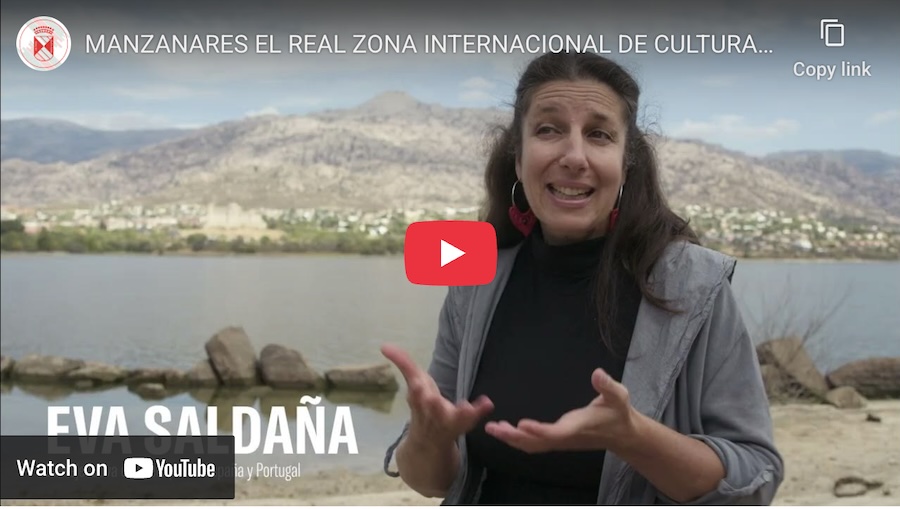
78% of Russian students consider climate change to be a problem

. . SUSTAINABLE DEVELOPMENT . .

Special to CPNN

In a study conducted as part of the annual international youth festival “VuzEkoFest”, 78% of students expressed concern about climate change and noted that global warming is a problem. The festival is organized by the Autonomous Non-Governmental Organization Territory of Sustainable Development with the information support of the Ministry of Science and Higher Education and the Ministry of Natural Resources and Ecology of the Russian Federation.

1,669 Russian university students took part in the survey. The study was conducted from March 12 to April 25. 40% of respondents noted that they are worried about climate change processes, however, 35% of respondents believe that everything is solvable and the right approach to risk management, mitigation and adaptation to climate change will allow future generations to get out of a difficult situation.

The respondents noted the following climate change adaptation measures that they have recently observed in their region. The most common of these is monitoring compliance with fire safety regulations (26.6%), in second place is clearing riverbeds and shorelines (12.4%) and in third place is the improvement of forest roads and reservoirs (11.6%). 

“As part of the “VuzEkoFest-2025″, it was important for us to address issues of adaptation to climate change, including at the level of the regions where universities operate. It is worthwhile not only to know the existing concepts of the triple planetary crisis (environmental pollution, climate change and loss of biodiversity), planetary borders and others, but also to understand what is happening in your country, in the regions and what the cost of damage may be in the event of extreme weather events, what solutions can be proposed the scientific community and business in the context of adaptation. The festival helped to increase the interest of young people in the topic and strengthen the desire to share their ideas and scientific developments,” said Anastasia Okorochkova, Director of the Autonomous Non–Profit Organization Territory of Sustainable Development.

“The study clearly highlights the measures to adapt to climate change that have been implemented in the regions. Their analysis shows that they are aimed at solving those problems to which it is already impossible not to react. But it is equally important to provide solutions to the problems that may arise on the horizon of 20-50 years, taking into account possible climate changes. This applies to industry, cities, transport and energy infrastructure, agriculture and forestry.

(article continued in right column)

Question for this article:

Despite the vested interests of companies and governments, Can we make progress toward sustainable development?

(Article continued from the left column)

And, of course, the scale of the problems arising from the increasing climate change raises the question of how to accumulate financial resources – public and private – to solve them,” noticed Sergey Sementsov, Scientific Director of the Center for Sustainable Development at the VEB Institute.

According to respondents, it is possible to solve problems related to climate change with the help of international organizations (21.3%), federal (17.9%) and regional (13.8%) authorities. Many also noted that responsibility lies with each individual (20.7%). At the same time, some of the respondents believe that business is responsible for eliminating the consequences of climate change, including for finding solutions (8.4%).

In order to reduce their carbon footprint, students monitor electricity consumption (19.6%), reduce plastic consumption (17.9%), use water efficiently (17.6%), use public transport, bike or carsharing (17.4%) and participate in tree planting campaigns (7.6%).

​​”The climate changes taking place on the planet are becoming more and more obvious, even at the household level, so it is not surprising that young people, on whose shoulders the main burden of the consequences of climate change will fall, see this as a problem. An important prerequisite for solving this problem is environmental education and scientific refutation of established myths,” commented Alexander Chernokulsky, PhD, Deputy Director of the Obukhov Institute of Atmospheric Physics of the Russian Academy of Sciences.

“Climate change is our reality and our future. Therefore, it is very valuable that the most important global topic is not perceived by students as something apocalyptic or abstract. In general, I believe that there is a big flaw in the wording “combating climate change”. It is necessary to deal not with climate change, but with negative decisions, processes and consequences of human activity that have a detrimental impact on the environment. And in this sense, a future specialist in any field can bring tangible benefits – to develop any product based on the principles of a closed-loop economy. I really believe in the generation of the “Territory of Sustainable Development” – young people already understand the scale of the problem today, and their inclusion and motivation will certainly benefit the climate, the region, the country, and humanity as a whole,” reported Svetlana Bik, author of the telegram channel 100% Green, head of the INFRAGRIN platform.

– – – – – –

If you wish to make a comment on this article, you may write to coordinator@cpnn-world.org with the title “Comment on (name of article)” and we will put your comment on line. Because of the flood of spam, we have discontinued the direct application of comments.
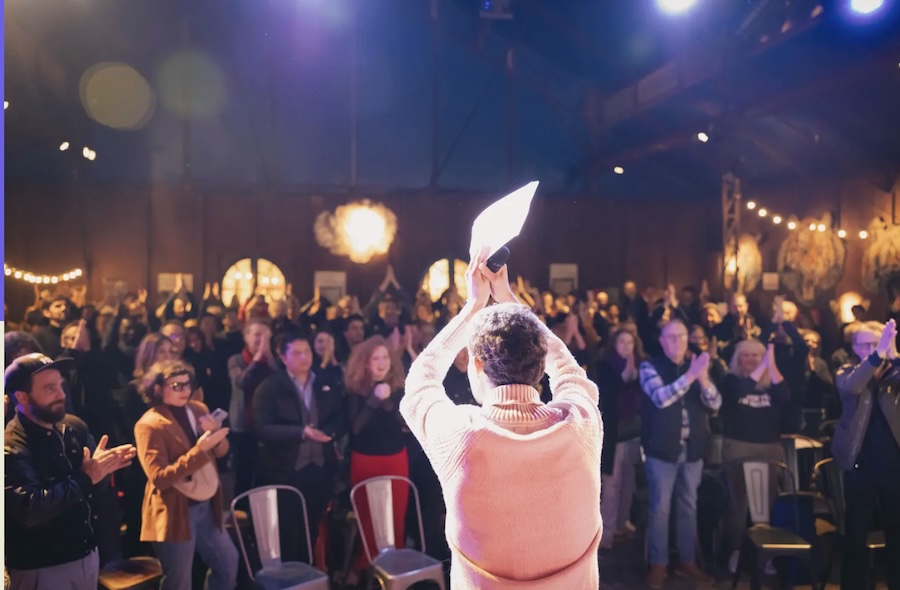
Mairead Corrigan Maguire: The moral imagination and Gaza

. TOLERANCE & SOLIDARITY .

Special to CPNN from Dianne Kirby

When Israel, without warning, unilaterally ended the Gaza ceasefire, the world once more became witness to genocide and ethnic cleansing perpetrated on an unarmed and defenceless civilian population by one of the world’s strongest military establishments, driven by an extreme Zionist influenced government supported by the world’s major powers, including the USA, Britain and the European Union. The unrelenting slaughter of a people already enduring unimaginable suffering moved Nobel Peace Laureate Mairead Corrigan Maguire to an act of imaginative solidarity, 40 days of fasting and prayer.


Mairead Maguire speaking to Democracy Now

A form of creative nonviolent resistance infused with love, a cry from the heart that children should never more suffer war, hers is a sacrificial act of prophetic moral witness. Maguire made her mind and body sites for a penetrating public yet profoundly personal statement that resonates with spiritual protest, civil disobedience and a deep concern for human dignity. It is an expression of compassion and camaraderie that embraces the sorrow and pain of Gaza’s most vulnerable, its children.

Undertaken quietly from the privacy of her home, Maguire’s action was known only to a small circle of friends who advised of her undertaking to previous beneficiaries of her antiwar activism and nonviolent campaigns. The response was overwhelming. Tremendous support came from the international Catholic peace movement Pax Christi. Many Pax Christi members elected to join a rolling fast alongside that of Maguire, with individuals committing to one or more days during Maguire’s forty days. Hunger for Justice Ireland volunteers elected to join Maguire for the final day.

Significant Christian individuals, such a CND vice president Paul Oestreicher, sent moving messages of support, as did Christian organisations such as the Association of Leaders of Missionaries and Religious of Ireland (AMRI), Kairos Ireland, and the Sabeel Ecumenical Liberation Theology Centre. Important endorsements came from Belfast’s Muslim community during Ramadan, empathetic to the spiritual significance of Maguire’s undertaking. Substantial support was forthcoming from individual trade unionists in Ireland, Britain, Holland and of course Palestine, conscious that the 1st May end date mattered to the world’s workers.

As the volume of messages exceeded the capacity of Maguire’s friends to record and respond, they shifted to an online system that made the process more manageable and the action better known (https://my.uplift.ie/petitions/support-mairead-corrigan-s-40-day-fast-for-palestinian-children-and-world-peace?share=dd9f24bf-0ad3-4ca2-8696-1a3341e4e593&source=email-share-button&utm_medium=myuplift&utm_source=email-share)

Maguire’s activism derives from a compassion and concern for others that was evident from an early age. A youthful volunteer with the Legion of Mary, she was inspired by Catholic peace and social activists such as Dorothy Day and the Berrigan brothers, Daniel and Philip. Her commitment to a life of activism was precipitated by the tragic 1976 deaths of her niece, Joanne, eight years old, and two nephews, John, two years old, and Andrew, six weeks old. Victims of Northern Ireland’s euphemistically termed ‘Troubles’, in reality a dirty, vicious war, their deaths led to the emergence of what came to be known as the ‘Peace People’.

With co-founders Betty Williams and Ciaran McKeown, the Peace People brought up to 35,000 persons onto the streets of Belfast demanding an end to the conflict. There were also massive rallies in London and Dublin demonstrating resounding opposition to the then escalating violence. Within six months there was a 70 per cent drop in the levels of death and destruction. Although more than two more decades of fighting between the warring parties continued, there was no return to the degree of murder and mayhem witnessed in 1976 when it appeared the country was headed toward civil war.

(continued in right column)

Question related to this article:
 
How can we best express solidarity with the people of Gaza?

(continued from left column)

In 1977, Maguire and Williams were awarded the 1976 Nobel Peace Prize. The youngest ever recipient at the time, it marked the beginning of a journey that would take Maguire to conflict zones the world over deploying her Nobel Peace Laureate status to address an array of social and political issues, conflict resolution above all. Influenced by Mahatma Gandhi, Maguire advocates nonviolence as an active way of life that is ‘daring, creative and courageous.’

A devout Catholic, she believes the forces of love and truth can resolve conflict. She advocates for dialogue and reconciliation, for replacing militarism with listening to opponents, and for allowing God’s spirit to transform man socially and politically. She is committed to human rights and International Law arguing their protection is a moral and legal responsibility for all governments and peoples. Silence is not an option ‘when injustice is being done to anyone, anywhere.’ Not simply speaking ‘truth to power’ but very often becoming involved in direct action against it, brought Maguire into confrontation with the forces of imperialism, colonialism, authoritarianism and oppression. A critic of US foreign policy, Maguire was twice arrested protesting the Iraq War in 2003, once in front of UN headquarters in New York and once in front of the White House in Washington.

Maguire’s inclinations and activism made confrontation with Israel inevitable. She regarded what Israel calls a ‘separation wall’ as a monument to fear and failed politics that made Palestinian life so precarious as to make simple survival an act of resistance. Protesting the construction of the so-called separation barrier in the vicinity of the Palestinian village of Bil’in in April 2007, Maguire came under attack from Israeli military forces using tear gas grenades and rubber-coated bullets. Shot in the leg and debilitated from inhaling tear gas, Maguire required hospitalization. In 2010 Maguire was refused entry to Israel despite being part of a delegation of the Nobel Women’s Initiative. She chose to fight the subsequent deportation order. During the hearing she criticized Israel’s apartheid policy and the siege of Gaza. She was deported the following morning.

In addition to visiting various war zones defending the rights of the oppressed, in 2018 she visited Rohingya camps, Maguire has long been outspoken against nuclear weapons. The recipient of numerous awards and honours, in 1992, Maguire was presented with the Distinguished Peace Leadership Award ‘for her moral leadership and steadfast commitment to social justice and nonviolence.’ Unafraid to adopt controversial causes, Maguire championed fellow speakers of truth to power, Chelsea Manning and Julian Assange. Fearless in her support of the downtrodden and dispossessed, Maguire has predictably been subjected to unwarranted smears and vilification. Yet she remains undeterred in pursuit of a better world for all, undaunted in promoting nonviolence as a concept that individuals must accept into their hearts and minds to bring forth new and imaginative life-enhancing structures.

Believing that change is possible, Maguire was cheered to learn that her example had inspired others to follow suit. Notably, the 81-year-old cautioned that fasting is not for everyone and advised:

People should do what they feel they can as not everyone can fast, but they can pray. I once asked Mother Theresa what to do and she said: ‘’Oh pray, pray, never cease to pray – say the Cardinal Newman prayer. That’s a good one!’

Many of those supporting the inspirational Maguire will be neither praying nor fasting. They do, however, share her vision of a better world that rejects endless war and instead promotes equality, justice, peace, prosperity and love for all its children. Responding to the outpouring of support, Maguire expressed gratitude on behalf of children to all that worked ‘to make their precious lives joyful and happy.’

– – – – – –

If you wish to make a comment on this article, you may write to coordinator@cpnn-world.org with the title “Comment on (name of article)” and we will put your comment on line. Because of the flood of spam, we have discontinued the direct application of comments.
Germany’s Easter peace marches lament war-filled world

DISARMAMENT & SECURITY .

An article edited by: Darko Janjevic from Deutsche Welle (translation by google, reprinted by permission)

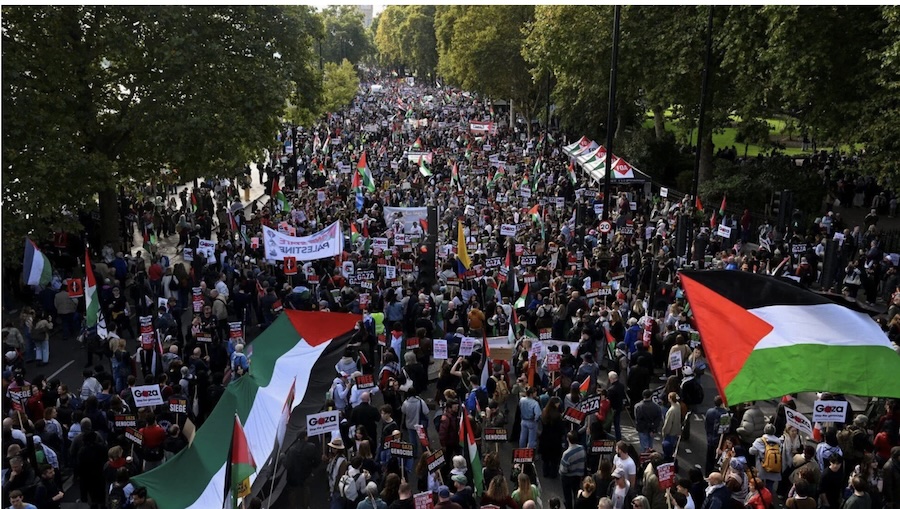
Thousands of people around Germany on Saturday joined in some 70 so-called Easter marches to demonstrate for peace, a tradition that dates back to the 1960s.

Some 100 events are planned up until Easter Monday, according to the Bonn-based activist group Netwerk Friedenskooperative (Peace Cooperative Network), which has coordinated the marches this year.

Easter marches are reportedly planned for cities including Cologne, Munich, Berlin, Leipzig, Bremen and Stuttgart.


‘Never again war’ is written on this 1924 banner by German artist Käthe Kollwitz, carried at an Easter march in Potsdam

Appeal to new German government

A spokesman for the group, Kristian Golla, said a focus of the demonstrations this year was an appeal to the incoming German coalition government  for Germany to “become capable of peace rather than war.”

(Continued in right column)

Question related to this article:
 
Is there resistance to the rearmament of Europe?

(Continued from left column)

“Instead of taking on new debt  and spending several billions of euros on arms, disarmament agreements and clever diplomacy are needed” to end Russia’s war on Ukraine  and establish a joint European security architecture guaranteeing peace, he said.

The marches started on Thursday and will continue until Monday, the last day of Easter holiday season in Germany.
Golla said that the attendance has been slightly higher than in previous years.

The demonstrations also include a three-day march that has started on Saturday in Duisburg and will continue until Monday through the Ruhr area via Essen, Gelsenkirchen, Herne and Bochum to Dortmund.

Gaza, US missiles

In addition to protesting against Russia’s invasion of Ukraine and the buildup of weaponry in Europe in response to it, demonstrators are also voicing their opposition to the war in the Gaza Strip and the planned stationing of US medium-range missiles in Germany.

The marches are taking place under different mottos in different cities. 

In Bonn, the motto is “Yes to peace — no to combat readiness,” in Kassel “Peace — disarmament — climate protection — come to the Easter march” and in Leipzig “Against rearmament and cuts to social services.”

The Easter peace marches in Germany had their heyday during the Cold War in the 1980s, when hundreds of thousands of people took part.

– – – – – –

If you wish to make a comment on this article, you may write to coordinator@cpnn-world.org with the title “Comment on (name of article)” and we will put your comment on line. Because of the flood of spam, we have discontinued the direct application of comments.
PLANETE: Scouts in Africa and Europe leading change in peace, gender, and sustainability

. TOLERANCE & SOLIDARITY .

An article from the website of World Scouting

The PLANETE project (Acting for Peace, Freedom, Learning, Nature, Equity, Tolerance, and Environment) is empowering over 7,000 Scouts and Guides across five countries and two continents to drive meaningful change in key areas like gender equality, education for peace and climate change education. 

Led by the Scouts and Guides of France, in partnership with the Scouts of Lebanon, the Association of Guides of Lebanon, the Rwanda Scouts Association, Rwanda Girl Guides Association, the Tunisian Scouts, and the Association of Catholic Scouts of Côte d’Ivoire, this initiative is aiming to reach more than 11,000 Scouts and Guides from 14 to 25. Together, they are leveraging the educational methods of Scouting and Guiding to promote peace, environmental sustainability, and gender equality.

Through workshops, camps, training sessions, advocacy campaigns, and other activities, participants are becoming powerful ambassadors for positive change within their communities. These Scouts and Guides are engaging in citizen mobilisation, partnering with local authorities to advance sustainable, equitable, and fair societies. Funded by l’Agence française de développement (French Development Agency), the project provides young people with the tools and skills necessary to create a brighter future.

(continued in right column)

Question related to this article:
 
Are we seeing the dawn of a global youth movement?

(continued from left column)

A key milestone of the PLANETE project occurred in August 2024, when Scouts and Guides from across the globe gathered in Rwanda for an international camp. Held from 25 to 31 August, the event focused on the pivotal role Scouting plays in fostering peace and tolerance. Drawing inspiration from Rwanda’s history of resilience and recovery, participants engaged in discussions and activities centred on intercultural understanding and reconciliation. These shared experiences reinforced the importance of dialogue and cooperation in the quest for a more peaceful world.

The PLANETE project also places a strong emphasis on environmental action. In France, Scouts participated in an ecological camp in Brittany in July 2024, focusing on biodiversity conservation and sustainable living. With no access to electricity and fully immersed in nature, Scouts participated in practical activities such as waste collection, vegetation maintenance, and raising awareness in local communities. 

Similar environmental initiatives are taking place in other participating countries, with Scouts leading efforts to protect natural environments and advocate for sustainability.

Looking ahead, the project will maintain its focus on environmental sustainability, peace, and gender equality through various initiatives. In 2025, several ecological camps will be organised across the five participating countries, where young participants will tackle critical issues such as climate change, conservation, and ecological transition. Additionally, from August 9 to 15, an international camp on interfaith dialogue will take place in Tunisia, bringing together seven delegations from partner organisations. This activity will empower participants to become ambassadors of peace and take initiative in their communities.

Creating a more inclusive, peaceful, and sustainable world begins with education, community engagement, and international collaboration. The PLANETE project is igniting a global movement of young leaders, with Scouts and Guides turning their ideals into tangible actions that inspire lasting change.

– – – – – –

If you wish to make a comment on this article, you may write to coordinator@cpnn-world.org with the title “Comment on (name of article)” and we will put your comment on line. Because of the flood of spam, we have discontinued the direct application of comments.