Guatemalan Women Healing Toward Justice: Speaking tour

TOLERANCE AND SOLIDARITY .

An announcement from the Network in Solidarity with the People of Guatemala

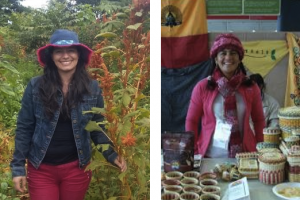
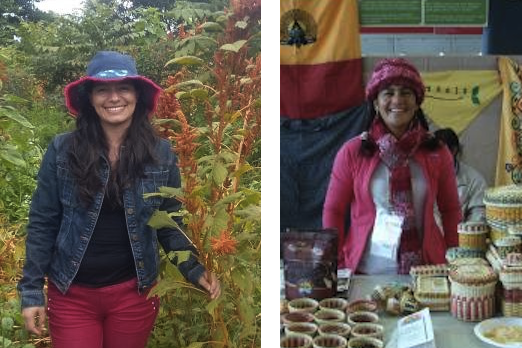
We are excited to announce our Fall 2016 speaking tour Guatemalan Women Healing Toward Justice, featuring Maudí Tzy of the Alliance to Break the Silence and End Impunity! Through her work as a psychologist and a member of the Community Studies and Psycho-social Action Team (ECAP), Maudí has played a crucial role in integrating healing practices into movements for social and environmental justice in Guatemala.

Guatemala

Most recently, Maudí has been working in a multidisciplinary team to support the women survivors of Sepur Zarco in their landmark case against former military personnel for sexual violence and slavery committed during Guatemala’s internal armed conflict. In February of this year, this case made history by successfully trying sexual slavery as a crime against humanity —a first in the Americas for a case carried out in a national court.

This October, the Network in Solidarity with the People of Guatemala (NISGUA) is honored to accompany Maudí Tzy on a tour of the Southwest and Western United States to celebrate this historic victory by building toward cross-border movements for gender justice and an end to violence against women!

Each year, NISGUA’s speaking tour gives local organizers an opportunity to connect their communities with an activist working on the front lines of social movements in Guatemala. This year, we look forward to connecting Maudí with students, youth, communities of faith, women, indigenous peoples, and communities of color to share strategies for resilience and struggle while exploring the international impact of the Sepur Zarco case. We are especially interested in creating opportunities for horizontal exchange with similarly impacted communities and those supporting survivors and struggling against patriarchal and state violence in their communities.

We can’t make this happen without your support!

This year’s tour is tentatively scheduled for October 7-21 and will focus primarily on the Southwest and West Coast regions. As I write this, we anticipate events in Austin, Tucson, Los Angeles, San Francisco, and the Pacific Northwest, but no matter where you live, we want to hear from you!

If you live in or near these cities, contact us today at david@nisgua.org to learn about how to bring the tour to your community! If you live outside the region, reach out to learn about organizing a listening party in your city so that your community can tune

(Thank you to Janet Hudgins, the CPNN reporter for this article)

Pan-African Parliament calls on African Union to support the creation of a UN Parliamentary Assembly

DISARMAMENT & SECURITY .

An article from the website of the Campaign for a United Nations Parliamentary Assembly

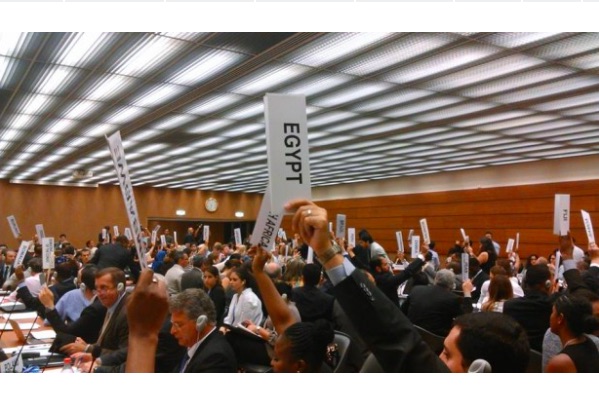
Yesterday [May 12], the Pan-African Parliament called on the African Union and Africa’s governments to support the creation of a United Nations Parliamentary Assembly, in short UNPA. In a resolution adopted by the plenary by consensus, the parliamentary body of the African Union states that “a UNPA is necessary to strengthen democratic participation and representation of the world’s citizens in the UN” and that the new assembly would “contribute to strengthening democratic oversight over UN operations, particularly in Africa.”

panafrican
Click on photo to enlarge

Noting its “concern that the creation of a UNPA is currently not part of the official UN reform agenda,” the document calls on “the African Union and its Member States to support the creation of a UNPA and to take necessary steps to advance this goal at the UN by triggering and initializing a preparatory intergovernmental process for the purpose of establishing a UNPA.”

The president of the Pan-African Parliament, Nkodo Dang from Cameroon, stated last week that “more than 70 years after the establishment of the United Nations, global interdependence has made us all world citizens. It is long overdue that ‘We, the Peoples,’ as the UN Charter begins, have more say in global affairs. For this purpose, a UNPA needs to be established.”

Yesterday’s resolution was introduced by Ivone Soares from Mozambique. “The resolution shows the aspiration of the Pan-African Parliament and the African citizens which it represents that the global order needs to become more democratic. It is time for governments to pay attention to this issue. They need to enter into serious deliberations on the establishment of a parliamentary body at the UN and African governments could take the lead,” she commented.

The global coordinator of the international campaign for a UNPA, Andreas Bummel, said that the resolution was an important step forward. “We hope that African governments will play a leading role and the Pan-African Parliament’s support is crucial to achieve this. The next step that we envisage in the international efforts is the creation of an informal group of open-minded governments at the UN in New York that looks into the proposal of a UNPA and how to proceed best,” he said.

In an opinion piece published by the South African newspaper Mail & Guardian last week, the South African parliamentarians Stevens Mokgalapa and Heinrich Volmink argued that “Africans, perhaps more than anyone, know how urgently we need more capable and more democratic tools of global governance” and that the creation of a UNPA “would represent a watershed moment in the democratic reform of the UN.”

According to a recent BBC World Service poll in 18 countries, “more than half of those asked (56%) in emerging economies saw themselves first and foremost as global citizens rather than national citizens.”

In 2007, the Pan-African Parliament adopted a first resolution in support of a UNPA.

Question for this article:

Calls for UN Security council reform at Istanbul summit

DISARMAMENT & SECURITY .

An article by Handan Kazanci & Ilgin Karlidag, Anadolou Agency, Turkey

World leaders in Istanbul have called for an urgent change to the United Nations Security Council, limiting the power of veto by its five permanent members, including Russia.

ArabLeague
Ahmed Ben Hali with UN Secretary-General Ban Ki-Moon
Click on photo to enlarge

Arab League Assistant Secretary-General Ahmed Ben Hali told the World Humanitarian Summit in Istanbul on Tuesday: “Reform of the UN Security Council is urgently needed. “The use of veto should be rationalized. There should be a departure from the approach of management of crisis … to depart from double standards in dealing with issues of peace and security and to prosecute those committing war crimes and crimes against humanity.”

The Arab League consists of 22 member states, including Algeria, Egypt, Iraq, Jordan, Qatar and Saudi Arabia.

Ben Hali’s comments echoed those of summit host and Turkey’s president, Recep Tayyip Erdogan, who on Monday said the UN Security Council must “urgently” change in order to fulfill its functions.

Each of the permanent members – Russia, China, France, the United Kingdom and the United States – have the power of veto, allowing them to block draft council resolutions – even when these have broad international support.

Erdogan called for the veto by the council’s five permanent members to be limited, a move which Russia – a permanent member of the UN Security Council – is against.

In 2012, Russia and China vetoed a UN Security Council resolution calling for Syrian President Bashar al-Assad to step down. The move sparked criticism worldwide and prevented substantial UN-backed action with regards to the Syrian civil war.

Russian President Vladimir Putin declined his invitation to the Istanbul summit, the humanitarian news agency IRIN reported on May 10. In his place, Putin sent a delegation, whose head, Russian Deputy Emergencies Minister Sergey Voronov, said on Tuesday that his country opposes any limitations to the power of veto by any permanent member of the Security Council.

According to James Nixey, the head of the Russia and Eurasia Programme at London-based Chatham House, Putin’s non-attendance at the summit is not surprising. “Vladimir Putin would be rather embarrassed at a world humanitarian summit considering the criticism his regime takes for its aggressive behavior abroad and its human rights record at home,” told Anadolu Agency on Tuesday. “Russia views its veto as pure power, and there is zero chance that it would endorse any move to give up wielding such power, which it has used so effectively in the past,” he added.

Criticized internationally for its role in backing the Assad regime, Russia said in a statement obtained by IRIN that it “refuses to be bound by the results of a process it says failed to include its views”.

Question for this article:

Côte d’Ivoire: clubs of peace and non-violence installed in Universities

… EDUCATION FOR PEACE …

An article from abidjan.net (translated by CPNN)

The Minister of Higher Education and Scientific Research, Prof. Ramata Bakayoko Ly, conducted on Thursday [19 May] in Yamoussoukro, the inauguration of clubs for peace and non-violence in the universities and grandes ecoles of Côte d’Ivoire with the aim of pacifying the academic space.

abidjan

The investiture ceremony, held at the National Polytechnic Institute in Yamoussoukro, launched the capacity building activities of the peace and non-violence clubs of the Universities of Ivory Coast in the presence of the Minister of Solidarity, Social Cohesion and the Compensation for Victims, Prof Mariatou Koné and the Representative of the UN Secretary General in Côte d’Ivoire, Aichatou Mindaoudou.

Click here for the original French version of this article

Question for this article:

University campus peace centers, What is happening on your campus?

There are now seven university clubs: Félix Houphouët-Boigny of Cocody, Nangui Abrogoua of Abidjan, Alassane Ouattara of Bouake, Péléforo Gon Coulibaly of Korhogo, Lorougnon Guede of Daloa and the public grandes ecoles ENS Abidjan and INP-HB, Yamoussoukro.

The Minister of Higher Education and Scientific Research praised the students for their massive support to the cause of peace before sending them on a mission as ambassadors of peace to address the barriers of violence, intolerance and fanaticism.

“I urge you to practice acts of non-violence on the campus. In this way you can ensure that the academic activity can take place in a peaceful climate and the Ivorian universities will reach the level of the best universities of the world and contribute to the emergence of the Ivory Coast”, advised Ms. Ramata Bakayoko Ly.

The awareness campaign on the culture of peace with students was launched jointly in 2015 by the Ministry of Higher Education and Scientific Research and the United Nations Office in Côte d’Ivoire. It provides a framework for exchange of experience and acquisition techniques that will enable members to better play their role in supporting the peace efforts of the academic space in the spirit of the Charter of nonviolence named after Alassane Salif N’Diaye professor emeritus.

Mediterranean meeting on mediation to be held in Tangier, Morocco

… EDUCATION FOR PEACE …

An article in Libération (translated by CPNN)

The city of Détroit de Gibralter [Morocco] is home on 2 and 3 June 2016 to the fifth meeting of Mediterranean mediation. A legal-social forum is expanding on the south side of the Mediterranean. Following the previous meetings, and considering the growing importance of mediation in the social reality around all of the Mediterranean as an alternative means of dispute resolution, this event is of great importance. It provides a good opportunity for debate and reflection for actors on both sides of the sea.

mediation

The city of Détroit de Gibralter [Morocco] is home on 2 and 3 June 2016 to the fifth meeting of Mediterranean mediation. A legal-social forum is expanding on the south side of the Mediterranean. Following the previous meetings, and considering the growing importance of mediation in the social reality around all of the Mediterranean as an alternative means of dispute resolution, this event is of great importance. It provides a good opportunity for debate and reflection for actors on both sides of the sea.

The event aims to promote the culture of mediation in the Mediterranean, creating a network of peace mediators and conflict resolution including the southern Mediterranean.

Indeed, mediation is playing an increasingly important role in resolving conflicts in the family, commercial, and intercultural business. It is a useful and necessary tool.

According to a statement from organizers, the event aims to promote the exchange of information on mediation, considered in its broadest sense and in the service of exchanging experiences between Mediterranean countries.

Bringing together many prominent scholars and experts belonging to several countries in the region, this forum is designed as a deductive approach, starting from the general to the specific, expanding from mediation in general to its different fields of application. The various interventions will address various topics of mediation relating to commercial, family, intercultural and business applications.

Organized by the University of Abdelmalek Essaadi of Tetouan, the National University for Distance Education (UNED), the University Pablo Olavide, the Research Group on Contemporary Arab Studies of the University of Granada, the Three Cultures Foundation of the Mediterranean and the national Association of Mediators (Paris), the meeting intends to spread the culture of conflict resolution through mediation and its consolidation in the Mediterranean to help promote the culture of peace.

(click here for the French version)

Question for this article:

IWPR Holds Landmark Afghan Peace Conference

DISARMAMENT & SECURITY .

An article by the Institute for War and Peace Reporting

A groundbreaking conference organised by IWPR in Kabul has produced new recommendations on how the Afghan government can move forward with the reconciliation process. The three-day event was convened in cooperation with the Afghan High Peace Council, the body created in 2010 to facilitate talks with the armed opposition. Government officials, religious leaders, civil society activists and journalists from across Afghanistan were among the 70 people who gathered at the Intercontinental Hotel on May 15-17. Religious scholars from Egypt’s famed Al-Azhar university were also invited.

Afghan
Click on the photo to enlarge and to read the legend.

The conference was part of a two-year IWPR initiative designed to draw Afghans into a nationwide discussion on peace building and reconciliation. Afghan Reconciliation: Promoting Peace and Building Trust by Engaging Civil Society, supported by the US State Department’s Bureau of Democracy, Human Rights, and Labour, has so far engaged more than 18,000 Afghans nationwide.

Participants in some 180 panel events have had the opportunity to discuss a range of issues related to peace and reconciliation. More than a dozen call-in radio forums have spread the message further.

“The conference allowed us to share with experts and representatives of the Afghan government our findings and efforts over the past 20 months,” explained Noorrahman Rahmani, IWPR Afghanistan country director.

The working committees used IWPR’s data and feedback to help formulate final proposals, announced at a press conference on the last day of the event. These recommendations stressed the importance of including women and young people in any peace talks and preventing the use of religion as a tool for justifying violence. To that end, the conference called for new controls over mosques and religious education centres as well as creating a central Islamic authority in Kabul to deal with such issues.

One innovative recommendation was the inclusion of a course devoted to peace in the educational curricula of schools and universities.

“Holding the three-day peace conference in Kabul was a major milestone towards the successful completion of IWPR’s 24-month project promoting peace and reconciliation,” Rahmani said. “It wasn’t easy given the recent security developments and unrest in Kabul. “Despite this, IWPR was able to successfully organise and hold the conference, which led to the development of a set of recommendations that will hopefully help the Afghan government and its international partners to approach the ongoing peace process more effectively.”

CYCLE OF CONFLICT

More than three decades of war have extracted a heavy price from the Afghan people, leaving millions dead, many more displaced, a country in ruins and a legacy of bitterness that will take years to overcome. The limited reach of central government, the volatile mix of political, regional and ethnic loyalties, and the heavily militarised social environment make it difficult to move beyond the continuous cycle of conflict. Continued suicide bombings and other attacks underline the enormity of the task ahead, as well as the religious aspect of both conflict and reconciliation. The armed opposition often justifies its actions through its call for jihad or holy war.

With that in mind, experts were brought over from the Al-Azhar university in Egypt, a key Islamic authority, to give their views on the religious aspect of the conflict.

(continued in right column)

Question for this article: Is peace possible in Afghanistan?

(continued from left column)

Mohamed Salem Mohamed Abouaasy, the dean of the Shariah faculty at Al-Azhar, said, “Those who consider jihad and martyrdom permissible in Afghanistan are wrong, because Afghanistan is an Islamic country and the call to prayer is heard here. Thus, this country cannot be regarded as a battlefield from an Islamic perspective.”

Keramatullah Sediqi, of the Afghan ministry of hajj and religious affairs, agreed. “War between two Muslims is unlawful in Islam,” he said.

Fazel Nagar, a civil society activist from Nangarhar province, said that the inclusion of experts from al-Azhar had been particularly wise. “The presence of the Egyptian religious scholars will be very effective in the outcome of the conference, because the people of Afghanistan respect Egyptian religious scholars deeply,” he said. “We understand better now that the war in Afghanistan is illegitimate, because the highest academic source called the war unlawful based on Shariah provisions.”

The conference also discussed the importance of securing the country’s borders. The Durand Line, a poorly defined boundary established by the British in 1893, has long been a source of friction with Pakistan. Kabul does not recognise the Durand Line, whereas Islamabad would like to see it formalised as the official frontier.

Abdul Ghafur Lewal, the deputy minister of borders and tribal affairs, noted that some people argued that recognising the Durand Line would solve all bilateral tensions. This was a mistake, he said. “Pakistan will not be silent simply if the Durand Line is recognised. If we recognise Durand, we should think about how we plan on defending Kabul [from attack].”

Lewal stressed that borders needed to be protected by well-trained security forces with up-to-date equipment. “Criminal groups involved in the smuggling of drugs, and [wasted resources] from our forests and mines… are problems that endanger the country’s security,” he added.

The conference also highlighted the importance of resolving Afghanistan’s water issues.

Sultan Mahmoud Mahmoudi of the ministry of energy and water, said that neighbouring countries had long exploited Afghanistan’s abundant natural resources. He said that 80 billion cubic metres of water flowed unchecked from Afghanistan into neighbouring countries each year, with most of this used by Pakistan and Iran. “One of the main reasons for the war is that Afghanistan’s neighbors interfere so as to prevent plans to control natural water resources in the country, because our neighbors have used our country’s waters for free for centuries,” he said. “They don’t want us to control our own waters so they try to inflame the war in Afghanistan.”

Conference participants were delighted with the outcome of the event.

“These efforts are effective in institutionalising a culture of peace,” said High Peace Council vice-chairman Ataurrahman Salim. “I hope such conferences will be held in the future as well.

“The last day of the conference coincided with the day on which the Afghan government reached a final agreement with the Gulbuddin Hekmatyar-led [jihadi party] Hizb-e Islami, an opponent of the government,” he continued. “This is good news for ensuring peace and security in the country.”

Mohammad Omar Satay, who heads the secretariat of the High Peace Council in Kandahar province, agreed. “This conference inspired us to further strengthen the spirit of coexistence among Afghans,” he said. “ Now the time has come for us to devote ourselves to peace.”

Others said that the summit had been a fitting end to an extensive programme of IWPR discussions on peace and reconciliation.

Shukria Neda, a civil society activist from Bamyan, said that over the last two years she had taken part in the debates IWPR had organised in her home province. “Now I participated in the peace conference following those programmes. We learned new strategies for peace at the conference. The issue should be a priority for every Afghan, because we all have a thirst for peace.”

Peace in Colombia Is Impossible Without Us, Women Declare

. . WOMEN’S EQUALITY . .

An article from Telesur TV

Colombian women, under the banner of “One Million Women for Peace,” are demanding a greater role in the peace talks between FARC insurgents and the government as negotiations wrap up.

Colombia women
Click on photo to enlarge and to read legend

The group has been growing its ranks in an effort to promote the signing of the peace deal and prepare for post-conflict stability, sociologist and human rights activist Gloria Florez told Prensa Latina on Wednesday.

According to the activist, the newly-formed bloc aimes to create a community movement to provide popular backing for the talks, which began in 2012, and promote implementation of the deal.

The movement brings together farmers, artists, journalists, youth and political representatives of indigenous and Afro-Colombian communities. On Tuesday, women at the U.N. Permanent Forum on Indigenous Issues insisted they be included in peace processes around the world because “women are pushing the culture of peace and not the culture of war.”

The decades-long conflict in Colombia has killed about 300,000 people, while six million remain displaced from their homes and another 45,000 remain missing. The “One Million Women for Peace” campaign argues that women are essential in building alternatives once the militarization is negotiated, said a former cabinet member of the Bogota municipality.

Question for this article

Do women have a special role to play in the peace movement?

The 40 articles in CPNN linked to this question make it clear that women indeed have a special role to play in the peace movement. See the following for an historical explanation of why this is true.

For the first time, a Peace Plan for Cali, Colombia

. . DEMOCRATIC PARTICIPATION . .

An article from El Pueblo (translated by CPNN)

Establishing policies and guidelines in Cali and Valle for strategic and educational activities that promote a culture of peace, peaceful coexistence and reconciliation in southwestern Colombia: that is the purpose of the “Plan for Peace and Peaceful Coexistence”, a city project led by the Peace Advisory Council of Cali, under the administration of mayor Maurice Armitage.

cali
Counselor Rocio Gutierrez Cely
Click on photo to enlarge

According to Counselor, Rocio Gutierrez Cely, the “Plan for Peace and Peaceful Coexistence” is a guide prepared by the Peace Advisory Council, in consultation with different social actors such as the High Council for Peace and Human Rights of the Government of Valle, the Archdiocese, universities along with staff of the mayor’s office in Cali and agencies such as the Post-Conflict Advisory Council. The purpose is to engage the competencies of each organization in order to strengthen support, alliances and joint proposals that may be pursued by and with the population of Cali and Valle. ”

Advances of the “Peace Plan Agenda”

Counselor Rocio Gutierrez Cely presented the “Plan for Peace and Peaceful Coexistence” to the Mayor of Cali and his cabinet, which is working on several components, one of which has been called “Cali , city of peace promoters”. In making the presentation, he said “we have already made progress to strengthen actions to train leaders and community organizations, as promoters of peace through justice and reconciliation.”

Other joint strategies will be developed to reinforce the actions of the Peace Advisory Council of Cali. They already have the support of the High Commissioner for Peace and Human Rights, Fabio Cardozo Montealegre, for community reintegration and restorative justice, which is conceived as a means of alternative dispute resolution.

In conclusion, the Peace Counselor said that “peace is an attitude, a lifestyle that leads us to forgive, reconcile and to realize that as we prevent conflict and empower people, especially those living in vulnerable circumstances, we are building peace. We can do this by workshops and conferences. We need everyone to be involved regardless of their socioeconomic status or whether they are in the public or private sector. ”

(Click here for a Spanish version of this article)

Questions related to this article:

IWPR’s Syria Coordinator Wins Landmark Freedom of Speech Prize

FREE FLOW OF INFORMATION

An article by the Institute for War and Peace Reporting

IWPR Syria project coordinator Zaina Erhaim has been awarded the 2016 Index on Censorship Freedom of Expression Award for journalism. Erhaim, 30, returned to the war-torn Syria in 2013. Based in Aleppo, she has since trained about 100 citizen reporters, around a third of them women, who are now among the very few able to provide eyewitness accounts of events on the ground.

Syria
Zaina Erhaim. (Photo: Hayyan Alyousouf)
Click on the image to enlarge

Accepting the award at a gala ceremony in London on April 13, she dedicated it to “the journalists and citizen journalists still taking this dangerous, difficult path, sacrificing everything, playing hide and seek with death to get the stories of the Syrian people out”.

In 2015 Erhaim filmed a ground-breaking documentary, Syria’s Rebellious Women, telling the stories of young activists helping their country in the midst of conflict.

At a screening the night before the awards ceremony at London’s Frontline Club, Erhaim told the audience that she wanted to ensure these women’s work was remembered.

“The main reason I made the films is because I am Syrian, and I’m a woman,” she said. “I tried to do some research six years ago about Syrian women who participated in Syrian history and I couldn’t find anything.

“So I felt like we had to capture this work that the women are doing because in the future the men are going to be writing the history and these heroines are going to be forgotten.”

Last year Erhaim won another landmark prize, the Peter Mackler Award for Courageous and Ethical Journalism.

Zaina also writes regularly for The Economist and has contributed to the Guardian and Arabic-language media like Orient TV, Al-Hayat and Al-Quds Al-Arabi.

Born in Idlib and educated in Damascus, Erhaim was finishing a degree in international journalism in London just as unrest began in Syria in 2011. She spent two years as a broadcast journalist with the BBC before joining IWPR and returning to northern Syria.

IWPR has worked in Syria since 2007, supporting journalists, civil society groups, and youth and female activists. Its Damascus Bureau platform is a space for news, comment and reportage written by Syrians. Since February 2015, the Women’s Blog has carried pieces by new writers with no background in professional journalism, talking about the hardship of daily life and the horrors of war. Erhaim has been instrumental in bringing these stories out.

Another IWPR contributor, Azerbaijani journalist Idrak Abbasov, won the 2012 Index On Censorship prize for journalism.

Abbasov was recognised for his investigative reports on corruption and violence in Azerbaijan.

Questions related to this article:

Colombia celebrates agreement to legally bind the peace accord

FREE FLOW OF INFORMATION

An article from Prensa Latina

Parliamentarians, political parties and platforms like the Patriotic March celebrated today [12 May] the agreement signed by the Colombian government and the FARC-EP to legally ensure the agreements that have been reached in the Havana.

colombia
Video about the agreement on HispanTV

Through his Twitter account, the legislator Iván Cepeda, co-chairman of the peace committee of the Senate, lauded the decision of the belligerents to “shield” or protect the agreements.

According to the attorney Humberto de la Calle, the chief government spokespersons in these discussions, the final document will have the category of Special Agreement under the terms of Article III common to the 1949 Geneva Conventions, the cornerstone of international humanitarian law. It will then be incorporated into national law following its approval in Congress, followed by presidential approval, he said.

Since 2012 representatives of the Colombia executive and the Revolutionary Armed People’s Forces (FARC-EP) in Cuba have engaged in a dialogue to find a political solution to the civil war, an initiative that is expected to be concluded soon.

The Patriotic Union party said in a statement that this is one of the best news the Colombian people could receive in the face of the media and political campaign promoted by the extreme right against the peace process. In their view, it will facilitate compliance with the principles of sustainability and the stability of the accords.

The agreement will be binding and no one can change it one iota, according to the platform Patriotic March, led by former congressman Piedad Cordoba.

Referring to the development of the meetings with the FARC-EP, Humberto de la Calle said that the two delegations are working hard to define the terms of the bilateral and definitive ceasefire, the surrender of weapons and disarmament of the insurgents, areas of temporary location for the guerrillas and guarantees for the future of the demobilized.

Question(s) related to this article: