Tucson students learn ‘non-violence’ way of life amidst anti-Trump protests

EDUCATION FOR PEACE .

An article by Monica Grimaldo for Tucson News

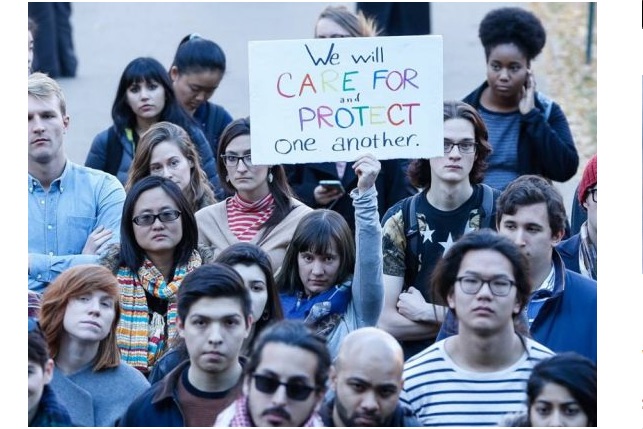
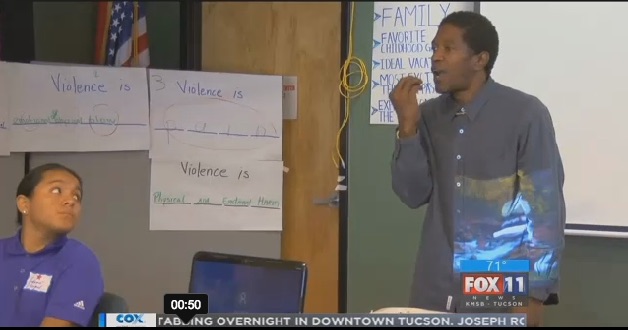
A rash of nationwide protests against president-elect Donald Trump have brought out thousands of demonstrators and now, Tucson students between the ages of 11 and 16 are learning how to better understand the ‘nonviolence way of life’ to apply when planning action to defend human rights. Students from several Tucson school districts are participating in a two-day introduction to the Kingian Nonviolence training program, which aims to “institutionalize and internationalize nonviolence.”

tucson
Clip from video on article website
Click on photo to enlarge

It’s being led by the Nonviolence Legacy Project, a youth leadership program affiliated with the Culture of Peace Alliance. “The workshop is particularly timely given that many people are taking to the streets and looking for ways to peacefully and powerfully indicate their concerns and fears about the upcoming administrative change,” said Ann Yellott with the Culture of Peace Alliance.

Participants are learning how to gain additional knowledge about how nonviolence was applied in several civil rights campaigns, including those seen in Montgomery, Nashville, Birmingham, and Selma.

“Helping our children be balanced and helping them to understand compassion for another, it’s not only a bullying issue, it’s a health issue,” said program manager Hassan Clement. “These kids are leaving a legacy for other kids.”

Sixteen-year-old Naomi Reyes, a student at Sunnyside High School, is one of the program’s participants and said she suffers from anger issues from time to time and hopes this program will help.

“There’s personal experience that involves violence and that’s another reason why I’m here,” said Reyes.

Caleb Bailey, 15, is a student at Cholla High School and says he wants to influence other students through this program. Though he wasn’t old enough to vote in this year’s election, it’s the lessons he’s learning that he hopes to keep forever.

“It can teach people how to get your word out without seeming like a thug or anti-Trump supporters or something,” he said. “It’s a way to articulate without seeming violent. Even though I’m young, I still think I can do something in the community. That’s what I really want to learn so when I get older, I know how to use nonviolence, and even now, so I can be a better person.”

For more information on the Culture of Peace Alliance’s Nonviolence Legacy Project, CLICK HERE.

Questions for this article:

The struggle for human rights, is it gathering force in the USA?


CPNN finds ample evidence that the fightback in the USA to defend peace and human rights is underway. It begins at the local level, as it must be if it is to be sustainable. And it is being led by young people and women, as it must be if it is to have the energy to succeed.

This question pertains to the following articles:

‘No Kings!’ 8 Million Rally Against Trump in Largest Single-Day Protest in US History

USA: More Than 250 Groups Oppose Additional Spending on Trump’s Illegal Iran War

USA: Judge orders 5-year-old Liam Conejo Ramos and his dad released from ICE detention

United States: The Resistance Moves Left

Bernie Sanders: We Must Fight Like Hell Against Trump’s Authoritarianism

As Trump Escalates Attacks on Dissent, Oct. 18 ‘No Kings’ Protests Set to Be Even Bigger Than June

What would a general strike in the US actually look like?

‘We Are All DC’: Tens of Thousands March to White House

Nearly 1,000 ‘Workers Over Billionaires’ Protests Planned Across US for Labor Day

United States: Hundreds of Organizations to Join Forces this Fall to Confront Trump & Billionaire Allies Nationwide, Marking Historic Collaboration of Movements

United States: Indivisible, the team that organized the No Kings demonstrations

United States: No Kings, No War, on Pride Day

US National Coalition: The Detention Watch Network

‘This Is Not Trump’s Country’: 255,000 Have Rallied With Sanders and AOC on Nationwide Tour

US: Millions March Against Trump-Musk in Nationwide ‘Hands Off’ Protests

Rev. Al Sharpton: Jesse Jackson Helped Reshape Democratic Party & Paved Way for Kamala Harris

USA: Women Rally for Abortion Justice Amid ‘Unprecedented Attack’ on Reproductive Rights

58 Years After Historic Rally, Thousands March on Washington for Voting Rights, DC Statehood

USA: Exoneration of Scott Warren is a triumph for humanity

Ocasio-Cortez Delivers Powerful Call for Justice as Third Women’s March Kicks Off in New York

October 31, 2018: USA: Planned Parenthood Strikes Back: Preparing for the Worst in the Wake of Kavanaugh’s Confirmation

August 4, 2018: Teachers, activists denounce U.S. immigration policies, attempt to deliver books, toys to detained children

July 25, 2018: USA: A call to resist immigrant concentration camps

February 6, 2018: State Of The City: We’re The Resistance (New Haven, CT, USA)

January 20, 2018: Women’s March protests across America against President Trump

July 20, 2017: USA: Labor Unions Are Stepping Up To Fight Deportations

July 20, 2017: USA: People’s Congress of Resistance

June 26, 2017: U.S. Conference of Mayors Opposes Military-Heavy Trump Budget

June 15, 2017: USA: A Call to Mobilize the Nation through 2018

April 3, 2017: Sanctuary city leaders vow to remain firm, despite threats from U.S. attorney general

February 16, 2017: Restaurants Will Test If The U.S. Can Stomach ‘A Day Without Immigrants’

February 16, 2017: USA: Army veterans forming human shield to protect NoDAPL protesters at Standing Rock

February 3, 2017: A Call to Address Identity-based Violence through Teach-ins at American Universities [and around the World]

January 30, 2017: Donald Trump Declared War On ‘Sanctuary Cities.’ They’re Already Fighting Back

January 22, 2017: USA: Women’s marches fight back against inauguration of Trump

January 20, 2017: USA: Immigrants Prepped For Raids

December 9, 2016: USA: 13 Minnesota churches eye ‘underground railroad’ for those facing deportation

December 9, 2016: USA: Inside the Churches That Are Leading New York’s Sanctuary Movement

November 24, 2016: Tabling for peace in the USA: A new sense of urgency

November 24, 2016: Tucson students learn ‘non-violence’ way of life amidst anti-Trump protests

November 21, 2016: US Election: The fightback for human rights is already underway

November 21, 2016: USA: ’Sanctuary city’ mayors pledge to fight Trump’s threats to immigrants

November 20, 2016: USA: ‘Sanctuary campus’ protests demand universities protect immigrants

November 20, 2016: USA: To Counter Trump, Women Are Mobilizing for Massive March on Washington

US Election: The fightback for human rights is already underway

…. HUMAN RIGHTS ….

A CPNN review

Americans (and the rest of the world as well) are deeply concerned for human rights in the wake of the election of Trump and his initial selection of cabinet officers and advisors. As expressed by the American Civil Liberties Union: Trump’s proposals “to amass a deportation force to remove 11 million undocumented immigrants; ban the entry of Muslims into our country and aggressively surveil them; punish women for accessing abortion; reauthorize waterboarding and other forms of torture; and change our nation’s libel laws and restrict freedom of expression . . . are not simply un-American and wrong-headed, they are unlawful and unconstitutional. They violate the First, Fourth, Fifth, Eighth, and Fourteenth Amendments.”

fightback
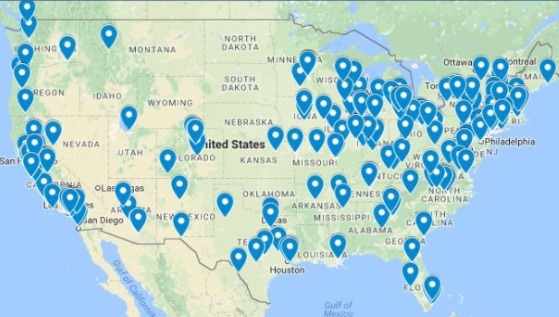
An unofficial map shows locations of schools that students want designated as sanctuary campuses – from CNN

Already, there are plans for a massive march of women to take place in Washington on the day after the inauguration: “This march is the first step towards unifying our communities, grounded in new relationships, to create change from the grassroots level up. We will not rest until women have parity and equity at all levels of leadership in society. We work peacefully while recognizing there is no true peace without justice and equity for all.”

The human rights of undocumented immigrants are being defended by universities, cities and states. On Wednesday November 16, thousands of students staged walk-outs on over 80 campuses nationwide, signalling their commitment to maintain “sanctuary campuses” to protect immigrant students. At the same time, the mayors of the largest American cities pledged to maintain their policy of refusing to work with federal deportations These include Boston, Chicago, Los Angeles and New York.

Entire states are part of the sanctuary movement: these include California and New York.

The movement is led by students and youth, something we have not seen in the United States since the 60’s.

In fact, it seems like Americans are reaching far back into their history in the struggle for human rights. For some, the leadership by youth reminds us of the revolutionary 60’s. For an older generation, it reminds them of the 30’s with its struggles between fascism, on the one hand, and the greatest movement for trade union and progressive organization, on the other hand. And there is even talk of “underground railways” to protect the persecuted, which hearkens back to the abolitiionists of the 19th century.

In these days, there are many wise counsels. Here is one of them, from Shamil Idriss, President of Search for Common Ground:

    “Breakthroughs usually only come out of crises, and we are in crisis. So there is no better time for We, the People, to build a new order: one based on mutual respect and care for our fellow citizens, a commitment to social justice, and a defense of the liberties that give us the power to build that order in the first place.

    So here are three steps that anyone can take and three insights from more than thirty years of peacebuilding that may help you build up the courage to take them.

    1. Whatever it is you are pursuing, think about who loses if you win.

    This may be pretty clear right now if you are a Trump voter – it is Clinton voters. But for an environmental advocate pursuing legal action against a polluting company, it may be the employees who will be out of work if the company goes out of business; for an opponent of the Affordable Care Act, it may be the 20+ million Americans who may end up without health insurance; for a supporter (or opponent) of affirmative action, it may be the people who won’t land the job or get the educational scholarship they might otherwise have gotten.

(Article continued in the right column)

Questions related to this article:

The post-election fightback for human rights, is it gathering force in the USA?

(Article continued from the left column)

    2. Decide you care what happens to them.

    This does not mean you need be any less principled or passionate in your beliefs, only that you are willing to consider whether there might be a place on the other side of those debates where your adversaries – your fellow citizens – can also have their basic needs met and dignity respected.

    3. Reach out across that divide to start a real conversation.

    A real conversation begins when you start by listening and asking questions so as to understand, and not only to convince. And it is when you discover what lies behind others’ positions – their aspirations, interests, and fears – that you not only find common ground, but establish a relationship that can create more of it.

    Insights from years of practical peacebuilding that can help you take these steps.

    Hate and bigotry almost always grow out of fear. Understanding this can reduce your own apprehension when you consider reaching out to people whose aggressive views offend or disturb you.

    Caring for those you disagree with is not the same as compromising your principles. In truly divided societies, there is a critical threshold through which people must pass in order to open up to dialogue: it is the experience of being heard and respected by those who disagree with them. You can still disagree with someone’s position, but if you reflect true care for the hopes and aspirations that have led them to it, transformative change becomes possible – not only in their outlook, but also in yours.

    Emotional connections change everything; rational arguments don’t. The experience of being respected – or its opposite: being ignored or humiliated – has a much more powerful influence on people’s opinions and behavior than do rational arguments. Indeed, if you present the same fact to two individuals with opposite worldviews, they will interpret it in ways that reinforce what they each already believe. Showering your adversaries with debate points may feel gratifying, but it almost certainly won’t change minds–and will in fact make them more obstinate if it comes at the expense of making them feel heard.

    So, please consider taking the first step with that police officer or community activist; with the Muslim, Jew, Evangelical or atheist who you don’t know, or think you know but don’t understand; with that political adversary whose views you can’t stand. Take it knowing you are not compromising your principles, but merely elevating the well-being and dignity of your fellow citizen to be as important as the causes that motivate you.

    If we Americans do this, we will come up with solutions to our problems that are more creative, sustainable, and healthier for us all. And we will set the example for our political leaders to follow, rather than waiting for them to do it for us.”

Shamil’s remarks remind us of Gandhi’s statement that we must have no enemies, but rather, opponents whom we have yet to convince. And as Gandhi said (as quoted by Martin Luther King): Nonviolent resistance is not a method for cowards: it does resist . . . Gandhi often said that if cowardice is the only alternative to violence, it is better to fight . . . while the nonviolent resister is passive in the sense that he is not physically aggressive toward his opponent, his mind and emotions are always active , constantly seeking to persuade the opponent that he is wrong.”

We are receiving many other similar wise counsels, for example those of John Dear of Pace e Bene, or Tiffany Easthom of Nonviolent Peaceforce.

As John Dear says, “Please take some new action.”

USA: ‘Sanctuary city’ mayors pledge to fight Trump’s threats to immigrants

…. HUMAN RIGHTS ….

An article from RT.com

In the wake of Donald Trump’s election to president and his threat to crackdown on illegal immigrants, Mayors in Boston, Chicago, Los Angeles and New York have re-affirmed their pledge to continue their policies to fight deportation efforts by the federal government under the description ‘sanctuary cities.’

sanctuary-cities
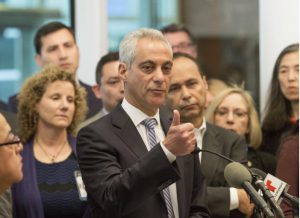
The mayor of Chicago says”Chicago always will be a sanctuary city.”

In a “60 Minutes” interview, his first as president-elect, Trump confirmed his campaign pledges to immediately deport 2-3 million illegal immigrants with a criminal record. “What we’re going to do is get the people that are criminal and have criminal records, gang members, drug dealers, where a lot of these people, probably 2 million, it could be even 3 million, we are getting them out of our country,” Trump told CBS.

Those remarks and threats made during his campaign to end “sanctuary cities” prompted city officials up and down the country to reiterate their roles to provide sanctuary for immigrants.

Los Angeles Mayor Eric Garcetti told the Los Angeles Times he avoids the phrase “sanctuary city” and argues it is “ill defined.” “We cooperate all the time with federal immigration officials when there are criminals that are in our midst and need to be deported,” Garcetti told the LA Times. “With that said, we’re a very welcoming city, where are law enforcement officers and LAPD don’t go around asking people for their papers, not should they.”

Los Angeles Police Chief Charlie Beck said on Monday his department had no plans to get involved in any deportation efforts and would continue its police against allowing officers to stop people solely to learn their immigration status.

Mayors in Chicago, Boston and New York have also reaffirmed their stance on federal immigration deportation.

“You are safe in Chicago. You are secure in Chicago. You are supported in Chicago,” Chicago’s Mayor Rahm Emanuel said on Monday, according to WGN News. “Now administrations may change but values and principles as it relates to inclusion do not.”

“Chicago always will be a sanctuary city,” he added.

(Article continued in the right column)

Questions related to this article:

The post-election fightback for human rights, is it gathering force in the USA?

(Article continued from the left column)

A city typically gains ‘sanctuary’ status upon passing an ordinance prohibiting city officials and police from inquiring about a person’s immigration status. Los Angeles became the first such sanctuary city in 1979.

Boston’s Mayor Marty Walsh said the day after the election he would work to protect the city’s illegal immigrants, and is “not letting anybody change the policies in the city of Boston” with regard to pathways to citizenship.

San Francisco went further and refused to cooperate with federal immigration officials. It declared itself a sanctuary city in 1989, and strengthened their stance in 2003 with its “Due Process for All” ordinance. The law declared local authorities could not hold immigrants for immigration officials if they had no violence felonies on their records and did not currently face charges.

According to the Center for Immigration Studies, a non-profit group that advocates for the strict enforcement of immigration laws, there are roughly 300 “sanctuary” jurisdictions around the country.

There are an estimated 11 million immigrants in the country without legal status.

Many took advantage of the Deferred Action for Childhood Arrivals (DACA) program which the Obama administration passed through executive action which provided a work permit and deportation reprieve to people who were brought to the US as children and stayed illegally.

Not everyone agrees with the stance taken by leading urban city mayors. “It’s no secret that these criminal illegal aliens and terrorists are looking for places to go where they are least likely to be caught,” Bristol County Sheriff Thomas Hodgson told CBS Boston. He says sanctuary cities are breaking federal law. “What’s really troubling about this is that any elected official in this country would suggest that there should be a certain class of people who do not have to abide by our laws,” Hodgson said.

On a federal level there were moves last year to penalize law enforcement and municipal governments for their stance on immigration. Democrats in the Senate blocked a bill by Senator David Vitter (R, Louisiana) which would have stopped law enforcement funding and community development grants to states and cities that didn’t hold immigrants for federal immigration officials.

USA: ‘Sanctuary campus’ protests demand universities protect immigrants

…. HUMAN RIGHTS ….

An article by Sarah Aziza for Waging Nonviolence

In wake of the Trump’s election and the president-elect’s renewed vows to deport 2 to 3 million immigrants, organizers across the country are mobilizing to create “sanctuary spaces” for those threatened by the proposed crackdowns. On Wednesday [November 16], thousands of students staged walk-outs on over 80 campuses nationwide, signalling their commitment to maintain “sanctuary campuses” to protect immigrant students. Demonstrators also presented their school administrations with specific demands, including commitments to refuse campus access to Immigration and Customs Enforcement officials, continued support of the Deferred Action for Childhood Arrivals, or DACA, program, and the protection of students regardless of documentation status.

sanctuary-campuses
(Facebook/Mazazikh)
(Click on photo to enlarge)

Cosecha organizer Carlos Saavedra was encouraged by the turnout on Wednesday, and says the coming weeks will be crucial for the movement. “The election of Trump has a lot of people angry and fearful, and many — both immigrant and non-immigrant — want to get involved,” he said. “The question for us now is how to channel that energy into an organization that doesn’t back down.”

Saavedra says that while many communities may be affected by the election of Donald Trump, many immigrants, particularly those in the undocumented community, feel “they may be first on the chopping block.” Saavedra worries about his own brother, a DACA “Dreamer,” who may be “one of the first to go” if Trump makes good on his promise to repeal the DACA program.

Cosecha’s long-term goal, says Saavedra, is to change the national narrative surrounding the immigrant community by combating xenophobia and promoting “permanent protection, dignity and respect” for all. The movement is structured horizontally as a network of “activist circles” that each consist of anywhere between 3 and 150 people across the country. Cosecha offers training and action plans for groups, schools and congregations wishing to join their movement, and encourages diversity and daring. “Our movement needs musicians, artists, dancers, creatives, mothers, daughters, workers, street-intellectuals, poets, academics, students,” reads their website. “We encourage risk-taking.”

(Article continued in the right column)

Questions related to this article:

The post-election fightback for human rights, is it gathering force in the USA?

(Article continued from the left column)

Cosecha has already overseen numerous direct actions to both combat anti-immigrant policies and to elevate the visibility of immigrants as a part of the American social fabric. Under the slogan #HechoPorInmigrantes, or “#BuiltByUs,” Cosecha launched a campaign to highlight the role of immigrant labor in the United States.

“We are the pillars of the economy,” Thaís Marques said in a statement released by the movement. “As immigrants, we feel a burning indignation when we listen to politicians, the media and Trump supporters give reasons why we should be deported; why our families should be separated; why our contributions to this country hold no value.”

Cosecha has taken particular aim against Donald Trump’s use of undocumented workers, including his employment of 200 unauthorized workers in the construction of Trump Tower for a wage of $5 a day.

In August, Cosecha members staged a direct action at Trump Tower in Manhattan in August by barricading themselves to the front door in nonviolent protest of Trump’s anti-immigrant rhetoric. The action resulted in several arrests, but the group was back a week later with another act of creative resistance, projecting images of undocumented workers on the gleaming walls of a building directly across the street. In the short film they produced of the action, the workers held signs reading “Sin manos, no hay obra,” or “Without hands, there is no work.”

More recently, Cosecha has worked to raise awareness about the “Buffalo 25,” a group of undocumented workers who — earlier this month — were abruptly rounded up and detained during a restaurant raid in Buffalo, New York. In early November, Members of Cosecha occupied Hillary Clinton’s campaign office in Pittsburgh to draw attention to the 25 detainees, calling on the then-presidential nominee to commit to protecting the rights of the detainees and their families.

Today, Cosecha is working to gather 100,000 signatures for its petition for a targeted boycott. Organizers hope that leveraging consumer power on a mass scale will “break the anti-immigrant consensus that has solidified after Trump’s victory.” Organizer Vera Parra told Hyperallergic “we trust that when the immigrant community uses its economic and labor power to show the broader public what this country would really look like without immigrants, legislation will follow.” Saavedra agreed, saying that while his community is shaken, “there’s also a real sense of resiliency. We’ve been through pain before, and if we can stay serious and organized, we will figure this out.” If done right, Saavedra said, “this could be an opportunity to redefine the country.

The defeat of Hillary Clinton: did it enable us to avoid a Third World War?

.DISARMAMENT & SECURITY. .

A CPNN review

The election of Trump in the United States is considered as a disaster by those concerned with human rights, and those concerned about the rise of fascism throughout the world, as detailed in other articles. However, for some observers, normally respected for their historical wisdom, it could have been even worse for the world if Clinton had been elected. Had she been elected we risked further confrontation with Russia and perhaps a nuclear war that would destroy the earth.

clinton
(Click on photo to enlarge and read the caption)

For example, this is the perspective of Johan Galtung, the peace researcher who, among other things, predicted the crash of the Soviet empire, and the impending crash of the American empire: “Moreover, any demonstrator who voted for Clinton voted for war; preferring a possible nuclear war with Russia to controversial Trump. Do people with that political profile merit being taken seriously?”

In the United States, the concerns were clearly expressed by the Green Party presidentail candidate Jill Stein, but she was frozen out of the media coverage of the elections:

(Article continued in right column)

Question for this article:

How close have we come to destroying the planet in a nuclear war?

(Article continued from left column)

“It is now Hillary Clinton that wants to start an air war with Russia over Syria by calling for a no fly zone. We have 2000 nuclear missiles on hairtrigger alert. They are saying we are closer to a nuclear war than we have ever been. Under Hillary Clinton, we could slide into nuclear war very quickly from her declared policy in Syria. I sure won’t sleep well at night if Donald Trump is elected, but I sure won’t sleep well at night if Hillary Clinton elected. We have another choice other than these two candidates who are both promoting lethal policies. On the issue of war and nuclear weapons, it is actually Hillary’s policies which are much scarier than Donald Trump who does not want to go to war with Russia.”

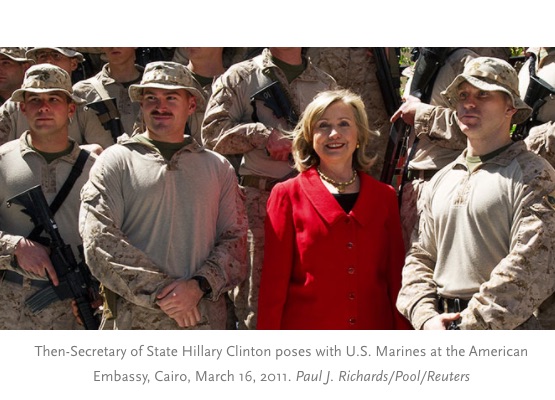
As Secretary of State in the first term of Obama, Hillary Clinton was personally responsible for the unprovoked attack and overthrow of the legitimate government of Libya in 2011, and the covert support for forces to overthrow the legitimate government of Syria. And perhaps most dangerous of all, it was the team that she left at the Department of State and the CIA that was ultimately responsible in 2014 for the support for a right-wing regime change in the Ukraine and the subsequent civil war with the pro-Russian region in eastern Ukraine, a direct provocation of Russia.

As described in a pre-election opinion piece in Truth Out: “During Clinton’s service as secretary of state, she promoted regime change in Syria, Libya and Honduras with disastrous results, and presided over the resurgence of the Cold War with Russia. A return to Bill Clinton’s warmongering foreign policies through a Hillary Clinton presidency will likely result in at the very least, increased tensions with Russia, and at the worst, the next World War.”

A long and detailed history of Hillary Clinton’s militaristic approach has been compiled by Stephen Zunes in The Cairo Review of Global Affairs.

USA: To Counter Trump, Women Are Mobilizing for Massive March on Washington

. . WOMEN’S EQUALITY . .

An article from Common Dreams (reprinted according to the Creative Commons Attribution-Share Alike 3.0 License)

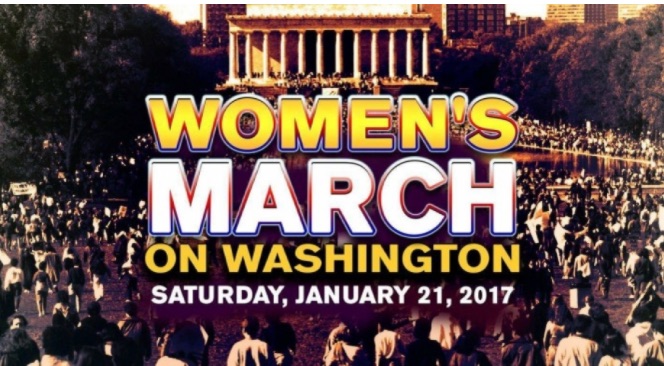
In response to the imminent Donald Trump presidency, women’s rights advocates nationwide are mobilizing. Men and women from around the country will descend on Washington, D.C., on January 21, 2017 for a “Women’s March on Washington” that organizers hope will see millions in the street, a day after President-elect Trump’s inauguration.

womens-march
(Photo: Women’s March on Washington/Facebook)
(Click on photo to enlarge)

The demonstrators repudiate the sexist, racist, and Islamophobic remarks that were a touchstone of Trump’s presidential campaign.

Various Facebook pages about the march—organizers in each state are creating their own delegation—have all gone viral, a testament to the powerful opposition to a Trump presidency and what that will mean for women, among other marginalized groups. So far, over 83,000 people have signed up to take part.

“We stand together in solidarity with our partners and children for the protection of our rights, our safety, our health, and our families—recognizing that our vibrant and diverse communities are the strength of our country,” the organizers write.

They continue:

The rhetoric of the past election cycle has insulted, demonized, and threatened many of us—women, immigrants of all statuses, those with diverse religious faiths particularly Muslim, people who identify as LGBTQIA, Native and Indigenous people, Black and Brown people, people with disabilities, the economically impoverished and survivors of sexual assault. We are confronted with the question of how to move forward in the face of national and international concern and fear.

In the spirit of democracy and honoring the champions of human rights, dignity, and justice who have come before us, we join in diversity to show our presence in numbers too great to ignore. The Women’s March on Washington will send a bold message to our new administration on their first day in office, and to the world that women’s rights are human rights. We stand together, recognizing that defending the most marginalized among us is defending all of us.

“The Jan. 21 protest takes its name from the 1963 March on Washington, a historic civil rights rally on the [National] Mall where the Rev. Martin Luther King Jr. delivered his ‘I Have a Dream’ speech,” reports the Washington Post. “The rally will also pay tribute to the 1997 Million Woman March in Philadelphia, in which hundreds of thousands of African American women are reported to have participated.”

Questions for this article

Do women have a special role to play in the peace movement?

The post-election fightback for human rights, is it gathering force in the USA?

[Editor’s note: Here is the official statement from the facebook page of the march:

On January 21, 2017 we will unite in Washington, DC for the Women’s March on Washington. We stand together in solidarity with our partners and children for the protection of our rights, our safety, our health, and our families — recognizing that our vibrant and diverse communities are the strength of our country.

The rhetoric of the past election cycle has insulted, demonized, and threatened many of us–women, immigrants of all statuses, those with diverse religious faiths particularly Muslim, people who identify as LGBTQIA, Native and Indigenous people, Black and Brown people, people with disabilities, the economically impoverished and survivors of sexual assault. We are confronted with the question of how to move forward in the face of national and international concern and fear.

In the spirit of democracy and honoring the champions of human rights, dignity, and justice who have come before us, we join in diversity to show our presence in numbers too great to ignore. The Women’s March on Washington will send a bold message to our new administration on their first day in office, and to the world that women’s rights are human rights. We stand together, recognizing that defending the most marginalized among us is defending all of us.

We support the advocacy and resistance movements that reflect our multiple and intersecting identities. We call on all defenders of human rights to join us. This march is the first step towards unifying our communities, grounded in new relationships, to create change from the grassroots level up. We will not rest until women have parity and equity at all levels of leadership in society. We work peacefully while recognizing there is no true peace without justice and equity for all. HEAR OUR VOICE.

And here are their Guiding Principles:

The Women’s March on Washington is guided by basic principles of human rights with a value on human dignity. We are committed to practicing the following:

➢ Women’s rights are human rights, regardless of a woman’s race, ethnicity, religion, immigration status, sexual identity, gender expression, economic status, age or disability.

➢ We practice empathy with the intent to learn about the intersecting identities of each other. We will suspend our first judgement and do our best to lead without ego.

We follow the principles of Kingian nonviolence, which are defined as follows:

Principle 1:

Nonviolence is a way of life for courageous people. It is a positive force confronting the forces of injustice and utilizes the righteous indignation and spiritual, emotional, and intellectual capabilities of people as the vital force for change and reconciliation.

Principle 2:

The Beloved Community is the framework for the future. The nonviolent concept is an overall effort to achieve a reconciled world by raising the level of relationships among people to a height where justice prevails and persons attain their full human potential.

Principle 3:

Attack forces of evil, not persons doing evil. The nonviolent approach helps one analyze the fundamental conditions, policies and practices of the conflict rather than reacting to one’s opponents or their personalities.

Principle 4:

Accept suffering without retaliation for the sake of the cause to achieve our goal. Self-chosen suffering is redemptive and helps the movement grow in a spiritual as well as a humanitarian dimension. The moral authority of voluntary suffering for a goal communicates the concern to one’s own friends and community as well as to the opponent.

Principle 5:

Avoid internal violence of the spirit as well as external physical violence. The nonviolent attitude permeates all aspects of the campaign. It provides a mirror type reflection of the reality of the condition to one’s opponent and the community at large. Specific activities must be designed to maintain a high level of spirit and morale during a nonviolent campaign.

Principle 6:

The Universe is on the side of justice. Truth is universal and human society and each human being is oriented to the just sense of order of the universe. The fundamental values in all of the world’s great religions include the concept that the moral arc of the universe is long but it bends towards justice. For the nonviolent practitioner, nonviolence introduces a new moral context in which nonviolence is both the means and the ends.

UN Adopts Cuban Resolutions on Peace and Rejection of Mercenaries

FREE FLOW OF INFORMATION

An article from Prensa Latina

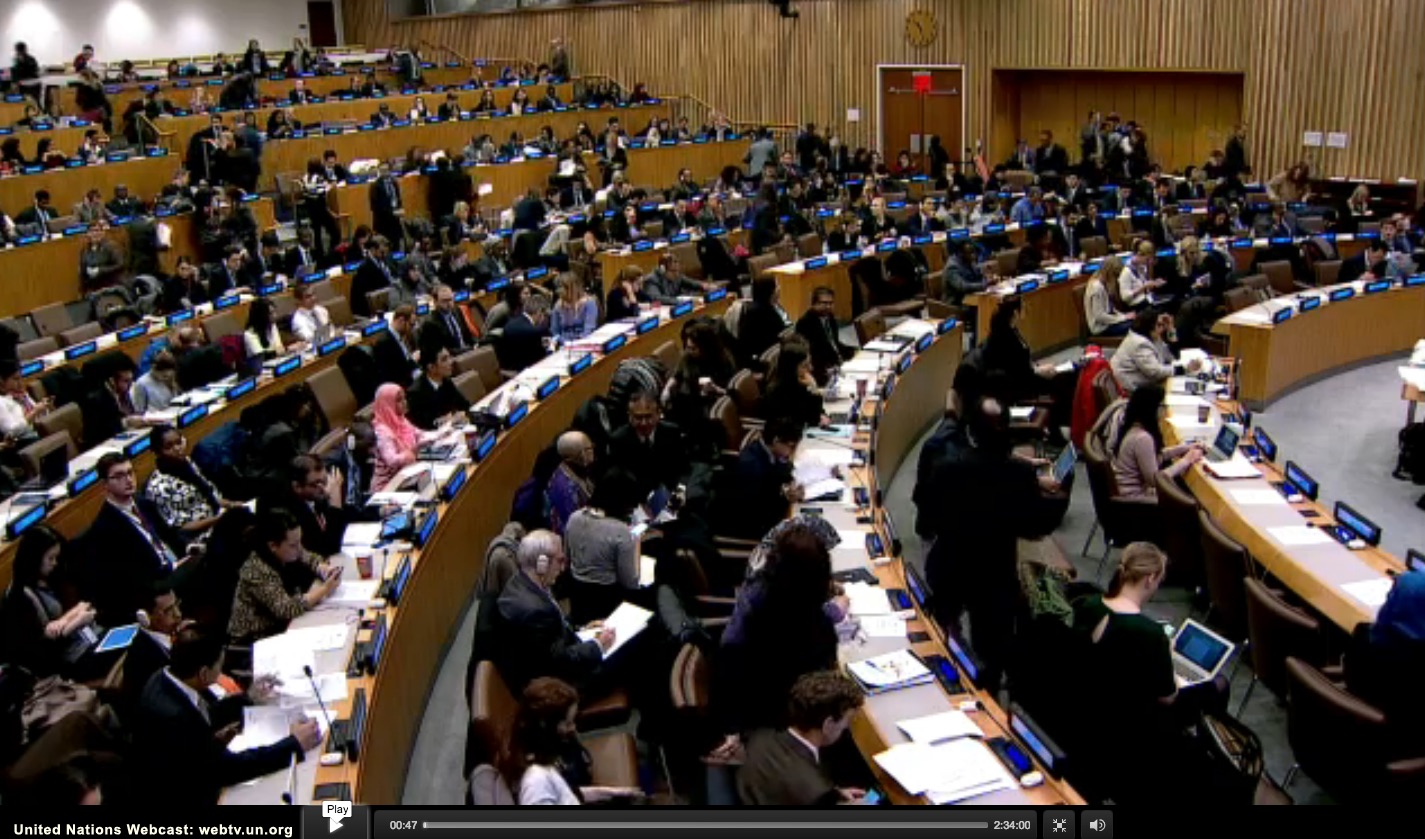
The Third Committee of the UN General Assembly has adopted today [November 18] by large majority two draft resolutions submitted by Cuba, which advocate for the right to peace and reject the use of mercenaries.

resolution

The text of the Declaration on the Right to Peace was supported by 116 countries, 34 rejected it and 19 abstained, following a vote requested by the United States, despite Cuba’s call to adopt it by consensus, considering the importance of the issue for humanity.

As usually occurs here, given the marked difference in positions between the North and the South, the document has been supported by the nations of Africa, Latin America and the Caribbean and Asia. Australia, Canada, the United States, Israel, Japan, New Zealand, South Korea and the members of the European Union were opposed.

The initiative states that all people should enjoy the right to peace, in order to guarantee human rights and development, without exclusion.

It also calls on the States to respect, implement and promote equality, justice and non-discrimination; and defend tolerance, dialogue, cooperation and solidarity.

Several countries co-sponsored the text submitted by Cuba, among them Belarus, Bolivia, China, Colombia, Egypt, Ghana, Indonesia, Nicaragua, Syria, South Africa, Venezuela and Vietnam.

Cuba’s project has been already adopted at the Human Rights Council in Geneva in July, when the international community was called for the first time to declare the existence of the right to peace on a planet scourged by wars, conflicts and crises, which cause suffering to tens of millions of human beings.

The Cuban delegation defended in the vote the right of all inhabitants of the planet to live without the impact of the scourge of war.

[The other] draft resolution introduced by Cuba, with the co-sponsorship of Angola, Belarus, Bolivia, China, Chile, Ecuador, India, Nicaragua, Nigeria, Syria, Uruguay, Venezuela and other States, obtained 117 votes for, 51 against and 5 abstentions.

Cuba has presented a similar initiative every year at the Third Committee.

Both projects will be submitted next month to the decision of the UN General Assembly, in the context of its 71st Session.

(Click here for an article in Spanish)

Question(s) related to this article:

What is the United Nations doing for a culture of peace?

[Editor’s note: Here is information about the anti-mercenary resolution, drawn from the UN website: In other action, the Committee approved a draft resolution on the use of mercenaries as a means of violating human rights and impeding the exercise of the right to self-determination, by 117 votes in favour to 50 against, with 6 abstentions. Among other things, it would have the General Assembly call upon States to take legislative measures to ensure that territories under their control were not used for — and their nationals did not take part in — the recruitment, assembly, financing, training, protection or transit of mercenaries. Slovakia’s representative, speaking for the European Union, explained that the bloc had voted against the draft because it would add private security firms to the mandate of the Human Rights Council’s Working Group on those issues.]

Congress of Colombia to discuss new peace pact

FREE FLOW OF INFORMATION

An article from El Tiempo (translated by CPNN)

[November 20]:The Colombian Congress will discuss the new peace agreement reached between the government and the FARC guerrillas on Wednesday, President Juan Manuel Santos said on Wednesday, but he said it was not yet clear whether it would be up to Parliament to endorse that pact. “Former President Álvaro Uribe said last Thursday that discussion towards an agreement should take place in the Congress of the Republic, I agree,” said the Head of State.

colombia
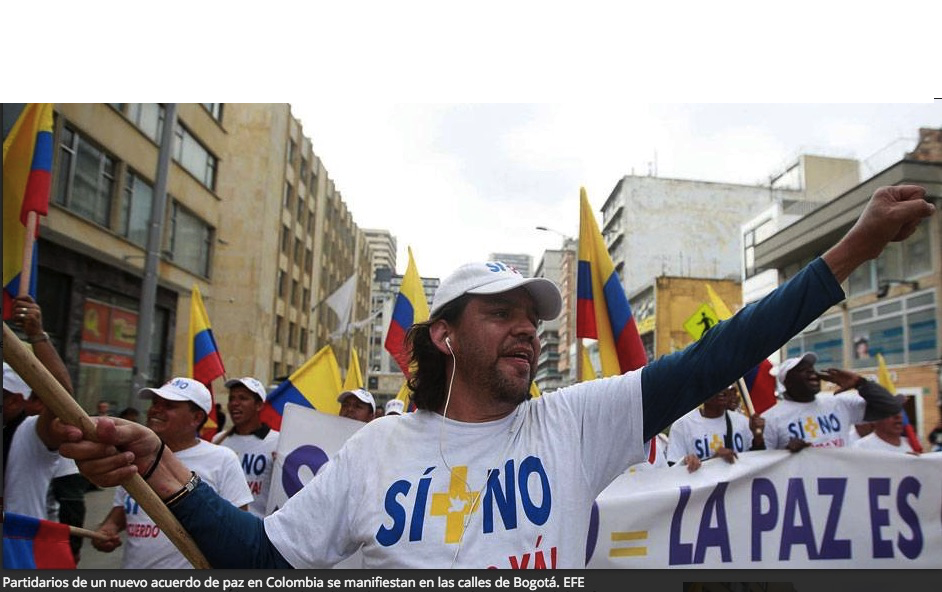
Supporters of a new peace agreement in Colombia demonstrate on the streets of Bogota. EFE

“We are going to take up the issue next week, on Wednesday … after discussion with the FARC because that is part of the agreement on how they will endorse,” said the President in a statement at the Casa de Nariño before departing to Lima, where he will participate at the XXIV Summit of the Asia Pacific Economic Cooperation (APEC) Forum.

The government of Santos and the FARC renegotiated a week ago in Cuba, where they meet for four years, the peace pact that incorporated points proposed by the opposition after the original was rejected in a plebiscite last October 2 .

The Government has not defined the mechanism to endorse the new peace agreement but it is considering three possibilities: to call a new plebiscite, to have it adopted by the Congress of the Republic, or to be adopted through open municipal councils with direct participation of citizens.

Nobel Peace Laureate, Santos said this week that he is “determined to maintain this peace and bring this agreement through Congress” so that it can be implemented quickly.

Also Santos highlighted the participation and contributions of all sectors to achieve the new agreement he said, including the “international support” from the United States through Secretary of State John Kerry, from the OAS and from the European Union.

“We have seen in different areas of the country that illegal armed groups are wanting to fill the spaces that the FARC have been leaving.” Therefore, he also insisted on the “urgency to move forward quickly” in the peace accords.

He reiterated that “the cease-fire is fragile” and recalled the incident in which two FARC guerrillas died in the north of the country and is being investigated by the Tripartite Monitoring and Verification Mechanism, made up of members of the UN, Government of Colombia and the FARC.

(Click here for a Spanish version of this article

Question related to this article:

A Visit to Russia for “Life Extension” of the Planet

FREE FLOW OF INFORMATION

An article by Brian Terrell in World Without War (abbreviated)

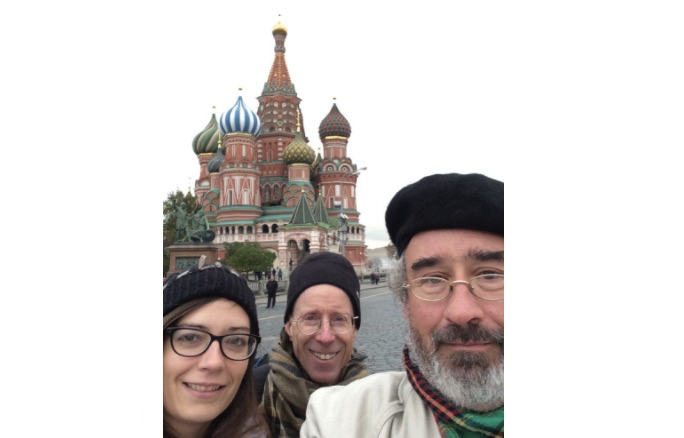
[In October] I was in Moscow, Russia, as part of a small delegation representing Voices for Creative Nonviolence from the United States and United Kingdom. Over the next 10 days in Moscow and St. Petersburg, we saw nothing of the massive preparations for war there that are being reported in the Western media. We saw no sign of and no one we spoke to knew anything about the widely reported evacuation of 40 million Russians in a civil defense drill. “Is Putin preparing for WW3?” asked one U.K. tabloid on October 14: “Following a breakdown in communication between the USA and Russia, the Kremlin organized the huge emergency practice drill – either as a show of force or something more sinister.” This drill turned out to be an annual review that firefighters, hospital workers and police routinely conduct to evaluate their capacities to manage potential natural and manmade disasters.

russia

Over the past years I have visited many of the world’s major cities and Moscow and St. Petersburg are the least militarized of any I’ve seen. Visiting the White House in Washington, DC, for example, one cannot miss seeing uniformed Secret Service agents with automatic weapons patrolling the fence line and the silhouettes of snipers on the roof. In contrast, even at Red Square and the Kremlin, the seat of the Russian government, only a few lightly armed police officers are visible. They seemed mainly occupied with giving directions to tourists.

Traveling on the cheap, lodging in hostels, eating in cafeterias and taking public transportation is a great way to visit any region and it gave us opportunities to meet people we would not otherwise have met. We followed up on contacts made by friends who had visited Russia earlier and we found ourselves in a number of Russian homes. We did take in some of the sights, museums, cathedrals, a boat ride on the Neva, etc., but we also visited a homeless shelter and offices of human rights groups and attended a Quaker meeting. On one occasion we were invited to address students in a language school in a formal setting, but most of our encounters were small and personal and we did more listening than talking.

I am not sure that the term “Citizen Diplomacy” can be accurately applied to what we did and experienced in Russia. Certainly the four of us, me from Iowa, Erica Brock from New York, David Smith-Ferri from California and Susan Clarkson from England, hoped that by meeting Russian citizens we could help foster better relations between our nations. On the other hand, as much as the term suggests that we were acting even informally to defend or explain our governments’ actions, interests and policies, we were not diplomats. We did not go to Russia with the intention of putting a human face on or in any way justifying our countries’ policies toward Russia. There is a sense, though, that the only genuine diplomatic efforts being made between the U.S. and NATO countries at this time are citizen initiatives like our own little delegation. What the U.S. State Department calls “diplomacy” is actually aggression by another name and it is questionable whether the U.S. is capable of true diplomacy while it surrounds Russia with military bases and “missile defense” systems and carries out massive military maneuvers near its borders.

(Article continued in the right column.)

Question(s) related to this article:

Solidarity across national borders, What are some good examples?

(Article continued from left column)

I am conscious of the need to be humble and not to overstate or claim any expertise. Our visit was less than two weeks long and we saw little of a vast country. Our hosts reminded us continually that the lifestyles and views of Russians outside their country’s largest cities might be different from theirs. Still, there is so little knowledge of what is going on in Russia today that we need to speak the little we have to offer.

While we heard a wide variety of views on many crucial issues, there seems to be a consensus among those we met about the impossibility of a war between Russia and U.S./NATO. The war that many of our politicians and pundits see clearly on the horizon as inevitable is not only unlikely, it is unthinkable, to the Russian people we talked with. None of them thinks that our countries’ leaders would be so crazy as to allow the tensions between them to bring us to a nuclear war.

In the United States, Presidents Bush and Obama are often credited for “fighting the war over there so we don’t have to fight it here.” In St. Petersburg we visited the Piskaya Memorial Park, where hundreds of thousands of the one million victims of the German’s siege of Leningrad are buried in mass graves. In World War II, more than 22 million Russians were killed, most of these civilians. Russians, more than Americans, know that the next world war will not be fought on a faraway battlefield.

Russian students laughed at the joke, “If the Russians are not trying to provoke a war, why did they put their country in the middle of all these U.S. military bases?” But I ruefully told them that due to our nation’s professed exceptionalism, many Americans would not see the humor in it. Rather, a double standard is considered normal. When Russia responds to military maneuvers by the U.S. and its NATO allies on its borders by increasing its defense readiness inside its borders, this is perceived as a dangerous sign of aggression. This summer in Poland, for example, thousands of U.S. troops participated in NATO military maneuvers, “Operation Anakonda” (even spelled with a “k,” an anaconda is a snake that kills its victim by surrounding and squeezing it to death) and when Russia responded by augmenting its own troops inside Russia, this response was regarded a threat. The hyped up proposition that Russia might be conducting civil defense drills raises suspicion that Russia is preparing to launch World War III. Yet, a practice run, dropping mock nuclear bombs in Nevada, is not viewed in the West “as a show of force or something more sinister,” but only as an indication of a “commitment to ensure all weapon systems are safe, secure, and effective.”

The life extension of our planet needs to be a universal goal. To speak of, let alone pour a nation’s wealth into a program of “life extension programs for weapon systems” is nothing short of madness. Our Russian friends’ confidence in our collective sanity and the steadiness of our leadership, especially in the wake of the recent election, is a great challenge. I am grateful to new friends for the warmth and generosity of their welcome and I hope to visit Russia again before long. As important and satisfying as these “citizen diplomatic” encounters are, however, we must honor these friendships through active resistance to the arrogance and exceptionalism that might lead the U.S. to a war that could destroy us all.