Carta de Colombia

. LIBERTAD DE INFORMACIÓN .

Un artículo por AMADA BENAVIDES DE PÉREZ, FUNDACIÓN ESCUELAS DE PAZ (FEP)

Estimado CPNN:

Recibe un cordial saludo.

Es un gusto contactar con usted de nuevo y recordar los gratos momentos que hemos compartido en nuestro recorrido conjunto por este apasionante tema de la educación para la paz.


benavides

Quiero mantenerse al tanto de eventos que han sucedido en este semestre en Colombia y que contextualizan la petición que le adjunto. Me imagino que usted es consciente de la mayoría de estas historias, pero en todo caso me sirven para poner el contexto general.

El proceso de negociación de un acuerdo de paz con las Farc ha movido muchos temas, entre ellos el de educación para la paz. Por primera vez en Colombia se está mencionando este tema con su nombre propio, y no con otros nombres, y en este sentido tenemos varias nuevas iniciativas.

1.      Cátedra de la Paz. El lanzamiento del Decreto Reglamentario de la Cátedra de la Paz es solo uno de los múltiples escenarios que se están moviendo en el país sobre el tema. Como entidad que viene trabajando hace más de 15 años en poner a rodar la idea de la necesidad en Colombia de la educación para la paz, es realmente un momento muy emocionante.

2.      La elaboración de un CONPES, documento máximo de dirección de política pública, sobre educación en derechos humanos y cultura de paz.

3.      Por otro lado se está empezando a desarrollar la creación de diversos colectivos,  que intentan agrupar los esfuerzos aislados Algunas de las cosas que habíamos detectado, cuando se hizo el documento sobre la educación para la paz en Colombia, eran justamente la desarticulación y la falta de un criterio general, con unos mínimos compartidos de lo que ello significa.

4.      La FEP está liderando concretamente la realización el Encuentro Nacional de Educación para la Paz, que se llevará a cabo el 1 y 2 de octubre. Ha sido un proceso muy interesante, pues está en el marco del Comité de Apoyo al Consejo Nacional de Paz, y hemos desarrollado el documento que adjunto con más de 29 organizaciones entre las que se cuenta el Ministerio de Educación, la secretaría de Educación de Bogotá, varias universidades y entidades de la sociedad  civil. En el marco de este Encuentro está prevista la visita de unos expertos internacionales.

( Clickear aquí para la traducción inglês.)

Question(s) related to this article:

What is happening in Colombia, Is peace possible?

This discussion question applies to the following articles:

Colombian villagers practice non-violent resistance
Legacy of a Nonviolent Political Leader: Governor Guillermo Gaviria of Colombia
Working for a Culture of Peace in the Valley of the Cauca, Colombia
Remise des Prix de la Fondation Chirac pour la prévention des conflits
Chirac Foundation Prize for Conflict Prevention
The University and the Peace Process in Colombia
La paz supera coyunturas y fronteras (Colombia y Venezuela)
Peace is not stopped by borders (Colombia and Venezuela)
Campesinos colombianos celebran primer acuerdo agrario de paz
Colombian Govt and FARC Reach Agreement on First Stage of Peace Talks
Colombia Campaña de la ONU “La Paz es mía”
UN Campaign in Colombia:
Presidente colombiano reactivará la Comisión Nacional de Paz
Colombian President to Reactivate National Peace Commission
FARC-EP y Gobierno colombiano avanzan en acuerdos para la paz
FARC-EP and Colombia Government advance in their peace accords
Colombia debe ser también la Nación más educada en derechos humanos: Presidente Santos
Colombia should also be the most educated nation in human rights : President Santos
Gabriel García Márquez and the peace process in Colombia
Colombia amanece con un presidente reelecto, esperanzada en la paz
Colombia awakens to hopes for peace with the re-election of their president
Mujer, ruralidad y memoria, entre los temas del congreso de paz (Bogotá, Colombia)
Women, rurality and historical memory among the themes of the Peace Congress (Bogotá, Colombia)
Sonia Ines Goéz Orrego on a speaking tour in the U.S. to share her experience building peace in Colombia
Pax Christi International Peace Award 2015: Women Collective for Reflection and Action (Colombia)
FARC-EP y Gobierno colombiano crearán Comisión de la Verdad
Planning for a Peace Assembly in the Colombian Caribbean
Inician construcción de Asamblea por la Paz en el caribe colombiano
Colombia: Ministerio del Trabajo acompañará, garantizará y facilitará Segunda Asamblea Nacional por la Paz
Colombia: The Labor Minister will provide full guarantees, facilitate and promote the Second National Assembly for Peace
San Agustín, Colombia: escenario de la Bienal internacional de educación y cultura de paz
San Agustin, Colombia to host International Biennial of Education and Culture of Peace
Carta de Colombia
Letter from Colombia

Boletín español el 1 de agosto 2015

¿HABRA UNA VOLUNTAD POLITICA?

Hace tres años, las naciones del mundo se reunieron en Río de Janeiro para resolver el desafío del cambio climático, y no pudieron llegar a un acuerdo. En ese momento, nos escribieron, “Los eventos del Río + 20 el mes pasado, la gran reunión del gobierno que fue convocada por las Naciones Unidas, puede ser visto como una ventana a la historia actual. Los Estados naciones están fallando y nuevos marcos institucionales están tomando su lugar.”

Una vez más, al final de este año, las naciones del mundo se reunirán para abordar el mismo problema, esta vez en París. Y ahora, otros marcos institucionales pondrán aún más presión en ellos.

Este mes 60 alcaldes de las ciudades más grandes del mundo, muchos de ellos del ICLEI, la organización mundial de Alcaldes para el Desarrollo Sostenible, se reunieron con el Papa. Exigieron “ un acuerdo climático audaz que limite el calentamiento global a un límite seguro para la humanidad.”

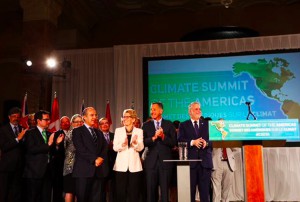
A principios de este mes, representantes de 22 estados y regiones de Norte y Sudamérica (con la notable ausencia de los representantes de los gobiernos nacionales) se reunieron en Canadá y firmaron un acuerdo para: Apoyar el precio del carbono; asegurar los informes públicos, tomar medidas en sectores clave y cumplir con los acuerdos existentes para reducir los gases de efecto invernadero. Un comentarista lo llamó “un nuevo sentido de empoderamiento y cooperación de las instituciones regionales en todo el continente”.

En mayo, el alcalde de París, Anne Hidalgo invitó a 18 alcaldes de África como parte de un esfuerzo buscando reunir la mayor cantidad posible de interesados por un consenso antes de la cumbre de la ONU en diciembre. Con Ignazio Marino, el alcalde de Roma, en Italia, también invitó a los alcaldes de las “capitales y grandes ciudades” de los 28 estados miembros de la Unión Europea para una reunión en marzo. Los alcaldes, lo que representa unos 60 millones de personas, ha destacado que “la lucha contra el cambio climático es una prioridad para nuestras ciudades y el bienestar de nuestros ciudadanos.”

La oficina de Hidalgo está trabajando actualmente en un proyecto para tener 1.000 alcaldes de todo el mundo presentes en la cumbre en diciembre. Hay mucho en juego porque el gobierno francés quiere que la cumbre sea un éxito, con un nuevo acuerdo global sobre la lucha contra el cambio climático.

En mayo, los votantes en la provincia de Alberta, Canadá, rica en petróleo, no reeligieron el partido que estaba en el poder. La elección fue marcada por la contrariedad al apoyo del gobierno a las empresas petroleras y destrucción del ambiente. La oposición ganó con la promesa de establecer políticas más estrictas contra el cambio climático.

En abril, defensores de la justicia climática, la gente de la comunidad y representantes de los movimientos de masas se reunieron en Maputo, Mozambique, para considerar las raíces, las manifestaciones y los impactos del cambio climático en África y considerar como dar respuestas a las crisis. Publicaron una declaración radical que llegó a la conclusión “los participantes de las conferencia decidieron trabajar con otros movimientos en África y en el mundo para el derrocamiento del sistema capitalista patriarcal que se formado y protegido por las instituciones financieras globales. Luchamos para asegurar la supervivencia del hombre y los derechos de la Madre Tierra para mantener sus ciclos naturales”.

Es cada vez más claro que una solución al problema del calentamiento global no es un problema técnico, sino un problema político. Los medios son disponibles. Es sólo la voluntad política que se necesita.

En mayo, el MITEI, la Iniciativa de Energía del Instituto de Tecnología de Massachusetts publicó un informe que indica que la energía solar puede satisfacer las futuras necesidades de energía a largo plazo de la humanidad, al tiempo que reduce las emisiones de gases invernadero – pero para darse cuenta de este potencial, se centrará más en el desarrollo de despliegue más barato y de las tecnologías políticas más eficiente.

Al mismo tiempo, el Earth Policy Institute lanzó “Siete sorprendentes realidades detrás de Gran transición a las energías renovables”, lo que indica que la transición global hacia una energía limpia y renovable y lejos de nuclear y fósil está en camino. Sus “Siete sorprendentes realidades:”

1. La energía solar es ahora tan barato que la adopción global parece imparable.

2. Aprobación de la energía eólica está cambiando rápidamente las carteras de energía en todo el mundo.

3. Las políticas energéticas alientan las energías renovables, y muchos países están considerando un precio al carbono.

4. El sector financiero está adoptando energías renovables – y empieza a volverse contra fósil y nuclear.

5. El uso del carbón está disminuyendo en los Estados Unidos y probablemente caerá a nivel mundial mucho antes de lo que se pensaba posible.

6. El transporte se alejará de petróleo como las flotas de vehículos eléctricos se expanden rápidamente y el compartiendo de bicicletas y coches se vuelve común.

7. La energía nuclear están estrellando contra las rocas debido a mayores costos y problemas de seguridad.

Es sólo voluntad política que está faltando ¿Habrá en París?


DESAROLLO SUSTENTABLE

climate

Landmark Climate Statement Signed in Ontario

IGUALDAD HOMBRES/MUJERES


Libro: “Voces contra la Violencia”

DESARME Y SEGURIDAD


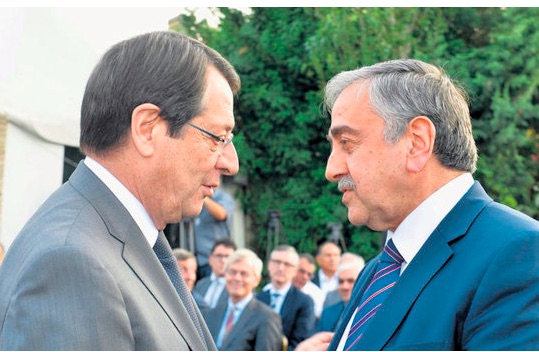
United Cypriot economy to focus on shipping, tourism, education

DERECHOS HUMANOS


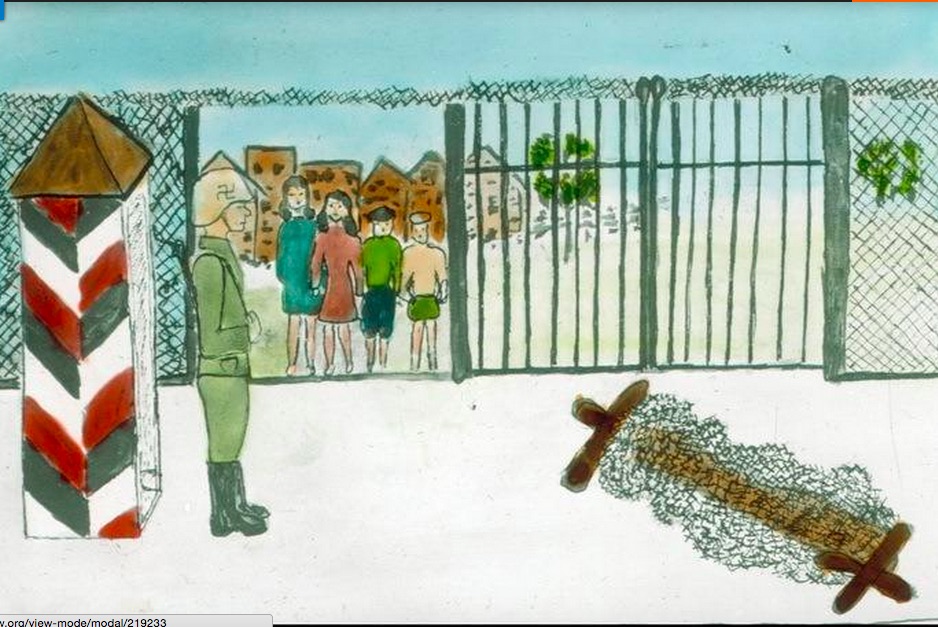
Protecting Schools 80 Years After Roerich

LIBERTAD DE INFORMACIÓN


Carta abierta de las ONG sobre el proceso de selección del Secretario General de la ONU
photo: 1for 7

PARTICIPACIÓN DEMOCRATICA


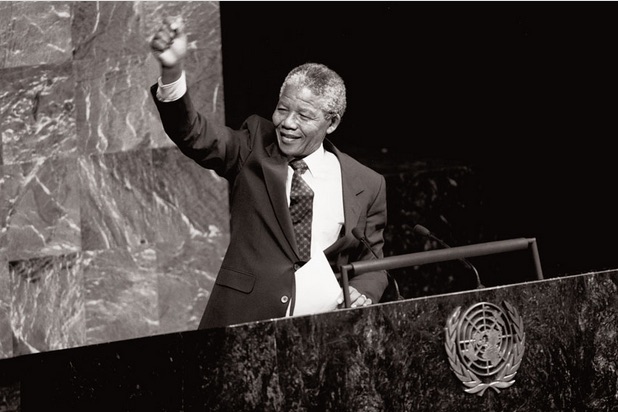
Día de Nelson Mandela

TOLERANCIA Y SOLIDARIDAD


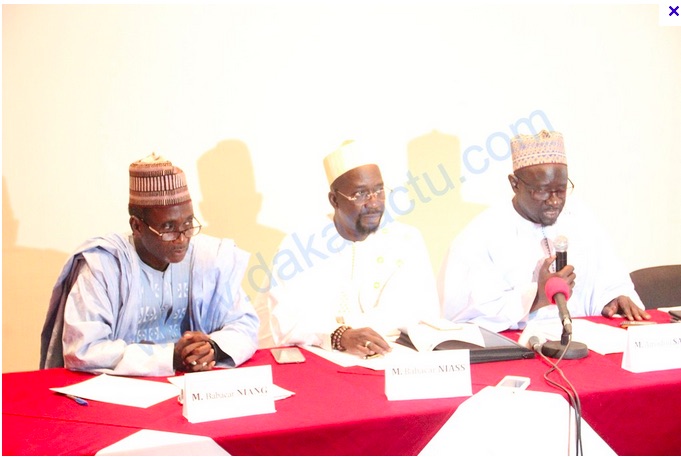
Dakar to host July conference on Islam, peace

EDUCACIÓN PARA PAZ


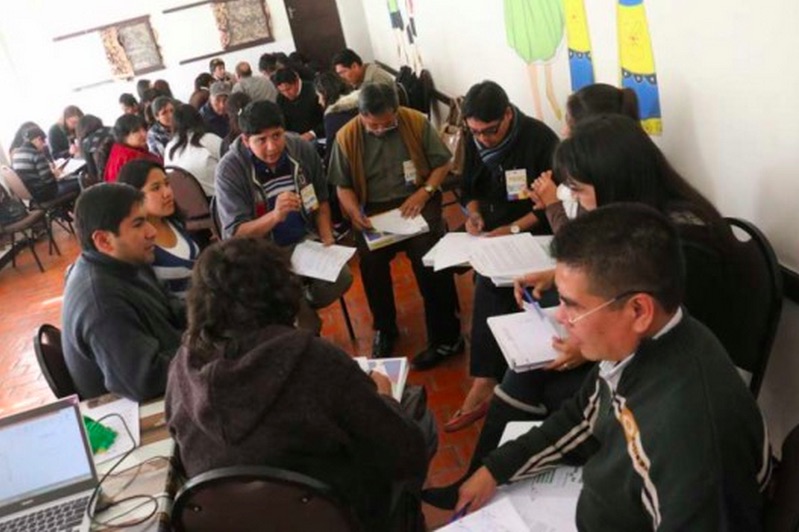
Bolivia: Los conciliadores se forman en cultura de paz

Bolivia: Los conciliadores se forman a contrarreloj en cultura de paz

Bulletin de CPNN, 1 août 2015

Y AURA-T-IL UNE VOLONTÉ POLITIQUE?

Il y a trois ans, les nations du monde se sont réunies à Rio pour relever le défi du changement climatique. Elles ont échoué, ne parvenant à un accord. A cette époque, nous avions écrit, “L’immense réunion des gouvernements convoqués par les Nations Unies, peut être considérée comme une fenêtre ouverte sur l’actualité de l’histoire en cours, montrant des États-nations défaillants remplacés progressivement par de nouveaux cadres constitutionnels.”

A la fin de cette année à Paris, les nations du monde se réuniront une fois de plus pour aborder le même défi. Et cette fois, il y aura encore plus de pression par les cadres institutionnels tels que les villes et leur gouvernance, par exemple.

Ce mois-ci, soixante maires parmi les plus grandes villes du monde, majoritairement de l’ICLEI, organisation mondiale des municipalités pour le développement durable, ont rencontré le pape. Ensemble, ils ont exigé un accord rigoureux définissant les limites du réchauffement de la planète, afin de ne pas mettre l’humanité en danger.

Plus tôt dans le mois, vingt deux représentants des Etats et des régions d’Amérique du Nord et du Sud (avec l’absence notable de représentants de gouvernements nationaux) se sont réunis au Canada. Ils ont signé un accord pour:

– Soutenir la tarification du carbone,

– Garantir des rapports publics (transparence),

– Prendre des mesures dans les secteurs clés,

– Respecter les accords existants de réduction de gaz à effet de serre.

Un commentateur a appelé cela “un nouveau sentiment de responsabilisation et de collaboration par les institutions régionales à travers le continent.”

Au mois de mai, Anne Hidalgo, maire de Paris, a invité dix huit maires africains afin de rassembler le plus possible de parties prenantes en faveur d’un consensus avant le sommet des Nations Unies. Avec Ignazio Marino, le maire de Rome, en Italie, elle avait également invité les maires des “capitales et les grandes villes” des vingt huit Etats membres de l’Union européenne à un rassemblement en Mars. Les maires, représentant quelque soixante millions d’habitants, ont souligné que la «lutte contre le changement climatique est une priorité pour nos villes et le bien-être de nos citoyens.”

Le bureau de Madame Hidalgo travaille actuellement sur le projet d’avoir 1.000 maires venant du monde entier présents à la COP 21. Les enjeux sont élevés parce que le gouvernement français veut que le sommet soit un succès, avec un nouvel accord mondial sur la lutte contre le changement climatique.

Toujours mai, les électeurs de la province riche en pétrole de l’Alberta, au Canada, ont renversé la parti au pouvoir lors d’une élection marquée. Ils se sont opposés au gouvernement qui appuyait les compagnies pétrolières, destructrices de l’environnement. Les challengers ont gagné avec une promesse d’établir des politiques plus sévères contre le changement climatique.

En avril, les défenseurs de la justice climatique, les populations locales et les représentants des mouvements de masse se sont réunis à Maputo, au Mozambique pour considérer les causes, les manifestations et les impacts du changement climatique sur l’Afrique afin d’envisager les réponses à apporter. Ils ont publié une déclaration radicale qui a conclu “les participants à la conférence ont décidé de travailler avec d’autres mouvements en Afrique et dans le monde renverser le système capitaliste patriarcal qui est encouragé et protégé par les institutions financières mondiales. Nous luttons pour assurer la survie de l’Homme et pour les droits de la Terre Mère afin qu’elle maintienne ses cycles naturels.”

Il est devenu de plus en plus clair qu’une solution au problème du réchauffement de la planète n’est pas un problème technique, mais plutôt un problème politique. Les moyens sont disponibles. C’est seulement une volonté politique qui est nécessaire.

En mai, la MITEI, l’Initiative pour l’énergie du Massachusetts Institute of Technology, a publié un rapport indiquant que l’énergie solaire pouvait répondre aux futurs besoins énergétiques à long terme de l’humanité, tout en réduisant les émissions de gaz à effet de serre. Mais pour réaliser ce potentiel, il faudra mettre davantage l’accent sur le développement de technologies moins chères et sur une politique de déploiement plus efficace.

En même temps, l’Earth Policy Institute a publié “Sept Réalités Surprenantes Derrière la Grande Transition vers les Energies Renouvelables”, indiquant que la transition mondiale vers une énergie propre, renouvelable et loin du nucléaire et des energies fossiles est en bonne voie. Voici leurs «sept réalités surprenantes:”

1. L’énergie solaire est maintenant si bon marché, que son adoption mondiale semble irresistible.

2. L’adoption de l’énergie éolienne est en train de modifier rapidement les portefeuilles énergétiques dans le monde entier.

3. Les politiques énergétiques encouragent les énergies renouvelables, et de nombreux pays envisagent un prix au carbone.

4. Le secteur financier s’intéresse aux énergies renouvelables – et commence à se retourner contre les énergies fossiles et le nucléaire.

5. L’utilisation du charbon est en déclin aux États-Unis et chutera probablement également au niveau mondial beaucoup plus tôt que que l’on ne le croyait possible.

6. Les moyens de transport “au pétrole” vont diminuer au profit des flottes de véhicules électriques qui se développent rapidement et le partage de bicyclettes et des voitures qui devient commun.

7. L’énergie nucléaire est en train d’échouer grâce à la hausse des coûts et des problèmes de sécurité à grande échelle.

Seule manque la volonté politique. Y aura-t-il une à Paris?

      
DÉVELOPPEMENT DURABLE

climate
Landmark Climate Statement Signed in Ontario

ÉQUALITÉ HOMMES/FEMMES


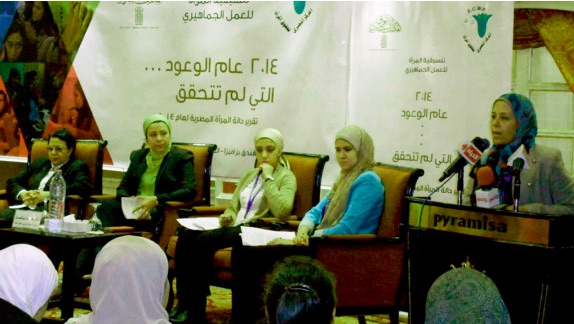
Egypt: Women’s Voices Initiative for the Local Councils

DISARMAMENT ET SECURITÉ


United Cypriot economy to focus on shipping, tourism, education

DROITS DE L’HOMME


Protecting Schools 80 Years After Roerich

LIBERTÉ DE L’INFORMATION


Lettre ouverte des ONG sur le processus de sélection du Secrétaire général de l’ONU

PARTICIPATION DÉMOCRATIQUE


Journée Nelson Mandela

TOLERANCE ET SOLIDARITÉ


Dakar: Conférence internationale sur la paix

ÉDUCATION POUR LA PAIX


Bolivie: Les médiateurs sont formées dans la culture de la paix

World unites to fight wildlife crime as UN adopts historic resolution

. SUSTAINABLE DEVELOPMENT .

An article by WWF (reprinted according to Creative Commons Attribution)

Faced with an unprecedented surge in wildlife crime, the UN today adopted a historic resolution committing all countries to ramp up their collective efforts to end the global poaching crisis and tackle the vast illegal wildlife trade. Initiated by Gabon and Germany and co-sponsored by 84 other nations, the UN General Assembly resolution, Tackling the Illicit Trafficking in Wildlife, is the result of three years of diplomatic efforts and is the first time that every nation has acknowledged the seriousness of wildlife crime and the urgent need to join forces to combat it.

wildlife
caption: © Sarah Goddard / WWF

“The UN resolution marks a new phase in the fight against wildlife crime, which is threatening countless species with extinction while jeopardizing national security and sustainable development,” said Marco Lambertini, Director General of WWF International. “This landmark resolution proves that ending wildlife crime is no longer just an ‘environmental’ issue and not just limited to a few countries: it has become a priority for every nation.”

With elephant populations collapsing in Mozambique and Tanzania and record numbers of rhinos being killed in South Africa, the poaching crisis is clearly undermining global conservation efforts. But the UN resolution also spells out the broader effects of wildlife crime, which undermines good governance, the rule of law and the well-being of local communities as well as financing criminal networks and funding armed conflict.

“Just weeks before the UN meets to finalize the Sustainable Development Goals, it is significant that every country has signed up to tackle the growing threat organized wildlife crime poses to sustainable development,” said Lambertini.

Recognizing that only a comprehensive approach can curb the current crisis, all 193 UN member states agreed to enhance regional and international cooperation along the entire illegal wildlife trade chain, including measures to stop the poaching, trafficking and buying.

Along with strengthening judicial processes and law enforcement, the resolution encourages countries to actively involve local communities in the fight against the illicit trade by enhancing their rights and capacity to manage and benefit from wildlife resources.

“Nepal has already proved that this comprehensive approach works, having achieved three years of zero poaching of rhinos since 2011 thanks to a combination of high-level political will, dedicated rangers, and genuine community participation – now it is up to other countries to follow Nepal’s lead and the measures outlined in this historic resolution,” said Elisabeth McLellan, Head of the Wildlife Crime Initiative, WWF International.

Attracted by the relatively low risks and high returns, organized crime networks have muscled their way into the illegal wildlife trade, bringing with them more sophisticated poaching and trafficking methods – and greater violence and corruption.

In response, the resolution highlights the transnational and organized nature of crimes that impact the environment and stresses the need for countries to counter corruption and address money laundering linked to wildlife crime.

(Continued on right side of page)

Question for this article:

What is the relation between the environment and peace?

(Article continued from left side of page)

“If countries fully implement the resolution, wildlife crime will become far riskier and far less rewarding,” said McLellan. ”The resolution’s strong reporting mechanism should ensure that real progress is made and that any critical gaps are effectively addressed.”

Starting in 2016, the UN secretary general is tasked with presenting an annual report on global wildlife crime and countries’ implementation of the resolution, together with recommendations for further action. Already lined up for debate next year is the possible appointment of a special envoy – a move that WWF believes would promote greater awareness and help hold countries to account.

“WWF has played a key role in shifting global attitudes towards wildlife crime over recent years, highlighting its impact on communities and on dwindling populations of elephants, rhinos, tigers and other species,” said Lambertini. “WWF will now focus on assisting countries in their crucial efforts to implement the resolution and help end the terrible global scourge that is wildlife crime, once and for all.”

Japanese expressing a clear and strong disapproval – No to their future with wars

DISARMAMENT AND SECURITY .

An article from Pressenza New York (reprinted according to Creative Commons Attribution)

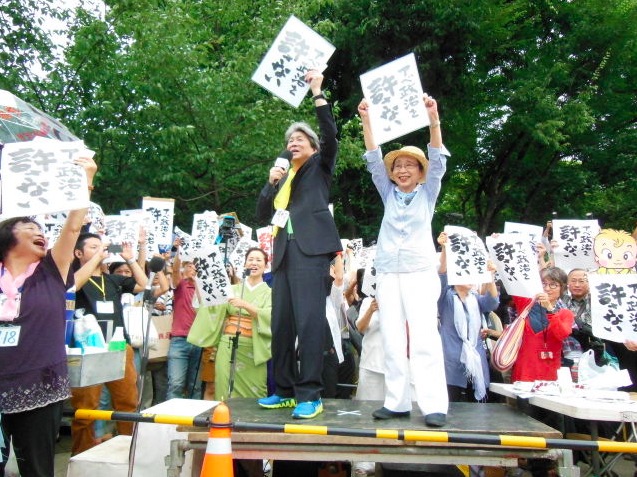
Many witnessed a rare historical event last weekend in Japan. Hundreds and thousands of the same posters were ubiquitous nationwide. The posters read, “We say NO to Abe,” a strong disapproval directed towards the prime minister Abe and his government after the lower house of parliament passed the controversial security bills earlier in the week, without securing the public support, and potentially changing the Japan’s ability to go in wars in the future.

japan
(Image by Tokyo Bureau of Pressenza)

It was a nationwide protest orchestrated by a non-fiction writer, Ms. Hisae Sawachi. The striking calligraphy on the poster was done by a haiku poet, Mr. Tota Kaneko who is 95 years old and a former Imperial Japanese Navy officer. It went viral when Ms. Sawachi made an announcement on her website asking the public to display the poster simultaneously and ambiguously on Saturday, July 18 at 1PM, calling for the nationwide public demonstration. Her statement read, “If you are not sure about being in a public rally, then you can display the poster in front of your house and on windows.” She asked for demonstrations in train stations, schools, and any public places in Tokyo and elsewhere. Her statement ended with, “Expressing one’s opinion may require a courage to do so, and our courage to “say NO (to the Abe government) ” is being challenged right now. It is our duty and our right to stop this political violence.”

Known for its virtue of not expressing one’s opinions or not becoming a nail that sticks out, the Japanese tend to shy away from public demonstrations. But this campaign brought uniquely remarkable outcomes because it allowed anyone, regardless of one’s location or viewpoint towards organized rallies, to participate. Anyone could print the poster and display it wherever they wished, and it allowed people to express their grave feelings towards the government while providing the safe environment where people could experience the solidarity. It was reported 29 prefectures and over 110 cities and towns responded to this campaign, and the poster went up over in 1000 sites nationwide. A plethora of responses with pictures of people holding the poster at home, in their cars, in stores, in public and in private places were sent to Ms. Sawachi’s site. In Tokyo, over 5000 demonstrators gathered and stood alongside Ms. Sawachi, with other public figures such as Mr. Shuntaro Kawagoe, a famous journalist, and Ms. Keiko Ochiai, an acclaimed political writer, and other critics of Abe administration in front of the parliament house. At 1PM, the crowd raised the posters towards the direction of the parliament house in sync, making their opinion clear, “We say NO to Abe.”

Ms. Sawachi spoke to the crowd, “The poster represents all our thoughts and feelings that we are outraged, and we will not tolerate what is happening. I’m sure there are current members of parliament who share the same sentiment. Let us all continue in this endeavor, each of us making wise decisions and choosing our own path.”

Question related to this article:

World Congress of Education International: Call for values and end to violence

EDUCATION FOR PEACE .

An article from Education International

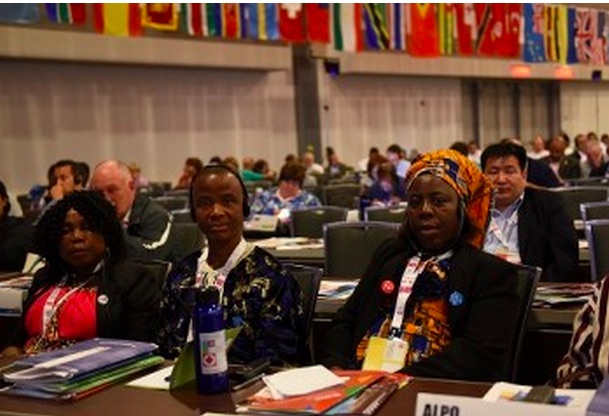
Several resolutions were passed at Education International’s 7th World Congress on the promotion of democracy, sustainable development, fair trade, basic social service and health and safety through solidarity and cooperation among member organisations, the international trade union movement and civil society.

edinternational
Photo Credit: Gabriel Castro – IEAL

Resolution 4.1: The Promotion and Protection of Standards and Values in the World “recognises four major interlinked challenges: the liberalisation of the economy, the lack of respect for agreed standards by governments, geopolitical shifts, particularly in Eastern Europe, and the rise of religious extremism,” said EI’s General Secretary, Fred van Leeuwen, who proposed the resolution on 25 July. The resolution calls on EI to work with its members and stay vigilant in response to these four global challenges, he said, adding that EI must continue to engage with the UN and other international organisations.

Speakers to the debate raised concerns about privatisation, standardised tests, violence against teachers and students, the environment, climate change, and urged unions to protect agreed standards and shared values.

Millions of children across the globe are involved in child labour, denied their right to education and health. So said James Tweheyo, Uganda National Teachers’ Union in proposing Resolution 4.2: Accelerated Action Against Child Labour in Connection with the Post-2015 Sustainable Development Goals on 25 July. “The damage to these children is too much to ignore.”

Speakers called for further actions of education trade unions in collaboration with other unions, civil society organisations, governments and international institutions to eliminate child labour. The Resolution echoed the keynote speech earlier on 25 July by Nobel Peace Prize winner Kailish Satyarthi, the founder of the Global March Against Child Labour, who said that EI, trade unions, and teachers played a key role in facilitating the building of the Global March Against Child Labour. “I refuse to think the world is so poor that it cannot bring all children to school,” he said.

Society should not have to witness the abduction and killing of students and teachers across the world, said Philipa Harvey of the National Union of Teachers (UK). She was proposing Resolution 4.3 Resolution on Education, Peace and Justice in Conflict Areas to Congress on 26 July.

The resolution instructs the Executive Board to encourage affiliates to promote peace, justice and conflict resolution. And it urges affiliates to press governments to adopt and endorse international guidelines for protecting schools and universities from military use during armed conflict.

Delegates raised concerns around extremism and school shootings and the education deficit caused by warfare and violence.

The need to promote values to combat extremism was a common theme in contributions to Resolution 4.4 Resolution on Education and Extremism. “Education is key to tackling extremism in all its forms,” said Arthur Frederick Brown, of the National Association of Schoolmasters Union of Women Teachers (NASUWT). “The role of teachers and trade unions is to promote the values of equity, solidarity, democracy, and respect for others.”

Amongst other elements, Congress resolved to ensure EI continues to demonstrate its commitment to equality and diversity and its opposition to exclusion and extremism in all its forms.

Question for this article:

At the UN: Women, Peace and Security Agenda Still Hitting Glass Ceiling

. WOMEN’S EQUALITY .

Nora Happel, Inter Press Service (reprinted by permission)

This October will mark the 15th anniversary of the adoption of U.N. Security Council Resolution 1325. The landmark resolution on Women, Peace and Security (WPS) recognises not only the disproportionate impact armed conflict has on women, but also the lack of women’s involvement in conflict resolution and peace-making.

1325
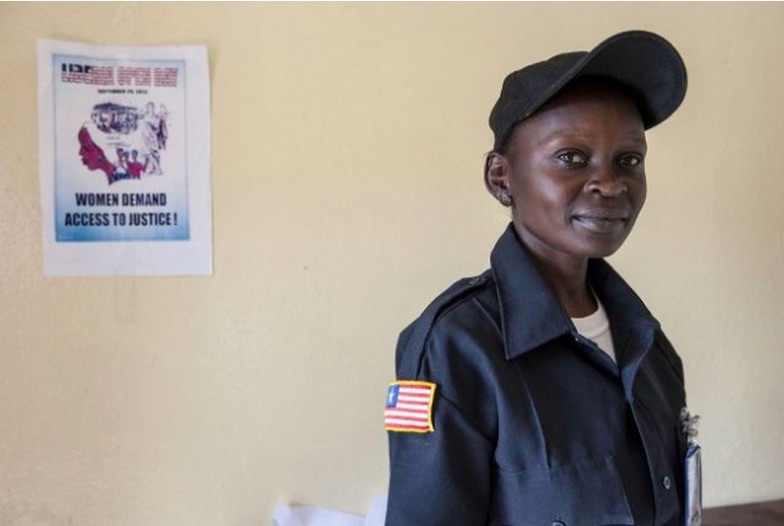
Liberian National Police Officer Lois Dolo provides security at the third annual commemoration of the Global Open Day on Women, Peace and Security in Liberia. Credit: UN Photo/Staton Winter

It calls for the full and equal participation of women in conflict prevention, peace negotiations, humanitarian response and post-conflict reconstruction and urges member states to incorporate a gender perspective in all areas of peace-building and to take measures to protect women from sexual violence in armed conflict.

Since its passage, 1325 has been followed by six additional resolutions (1820, 1888, 1889, 1960, 2106 and 2122).

But despite all these commitments on paper, actual implementation of the WPS agenda in the real world continues to lag, according to humanitarian workers and activists.

Data by the U.N. and NATO show that women and girls continue to be disproportionately affected by armed conflict.

Before the Second World War, combatants made up 90 percent of casualties in wars. Today most casualties are civilians, especially women and children. Hence, as formulated in a 2013 NATO review, whereas men wage the war, it is mostly women and children who suffer from it.

Kang Kyung-wha Assistant Secretary-General for Humanitarian Affairs and Deputy Emergency Relief Coordinator at the U.N. Office for the Coordination of Humanitarian Affairs (OCHA), who spoke at a recent lecture series on WPS, cited as example the situation of women and girls on the border between Nigeria and Niger, where the average girl is married by 14 and has two children by age 18.

Secondary education for girls is almost non-existent in this area and risks of violence, sexual abuse, exploitation and trafficking are particularly high, she said.

“Thus marginalised and disempowered, [these women and girls] are unlikely to play any part in building stable communities and participate in the socio-economic development of their societies and countries,” Kang said.

“Despite 1325 and the successor resolutions…women and girls continue to be routinely excluded from decision-making processes in humanitarian responses as well as in peace-negotiations and peace-building initiatives.”

High expectations are placed on the World Humanitarian Summit, scheduled to take place in May 2016 in Istanbul. Activists hope that the summit will help turn the numerous rhetorical commitments into concrete actions.

Marcy Hersh, Senior Advocacy Officer at Women’s Refugee Commission, who also spoke on the panel, told IPS: “Women and girls are gravely implicated in peace and security issues around the world, and therefore, they must be a part of the processes that will lead to their protection.”

(Article continued in right column)

Question for this article:

UN Resolution 1325, does it make a difference?

(Article continued from the left column.)

“The key challenges in protecting women and children in emergencies, and ensuring women are able to participate in these processes, is not related to knowing what needs to happen…We need a commitment to do it. We need to see leadership and accountability in the international community for these issues.”

“If humanitarian leadership, through whatever mechanisms, can finally collectively step up to the plate and provoke the behavioral change necessary to ensure humanitarian action works with and for women and girls, we will have undertaken bold, transformative work.”

Another challenge in making the women, peace and security agenda a reality is linked to psychological resistance and rigid adherence to the traditional status quo. Gender-related issues tend to be handled with kid gloves due to “cultural sensitivity”, according to Kang Kyung-wha.

“But you can’t hide behind culture,” Kang said.

Also, women activists continue to face misogyny and skepticism in their communities and at the national level. Christine Ahn, co-founder of the Korea Policy Institute and former Senior Policy Analyst at the Global Fund for Women, told IPS that often enough the involvement of women in peace-keeping processes seems inconceivable to some of the men in power who hold key positions in international relations and foreign policy.

“They are calling us naive, dupes, fatuitous. Criticism is very veiled of course, we are in the 21st century. But even if it is a very subtle way in which our efforts are discounted, it is, in fact, patriarchy in its fullest form.”

Christine Ahn spoke at the second event of the lecture series at the United Nations. She is one of the 30 women who, in May 2015, participated in the Crossing of the De-Militarised Zone (DMZ) between North and South Korea as part of a one-week long journey with North and South Korean women.

The project aimed at fostering civil society contacts between women in North and South Korea and promoting peace and reconciliation between the countries.

The symbolic act for peace at one of the world’s most militarised borders can be seen as a practical example of Security Council resolution 1325.

Ahn told IPS: “We will use resolution 1325 when we advocate that both of Korean women are able to meet because under each government’s national security laws they are not allowed to meet with the other – as it is considered meeting with the enemy.”

(Thank you to Janet Hudgins, the CPNN reporter for this article.)

Bulletin English August 1, 2015

NEEDED: POLITICAL WILL IN PARIS .

Three years ago, the nations of the world met at Rio to address the challenge of climate change, and they failed to come to an agreement. At that time we wrote “The events surrounding Rio+20 last month, the huge meeting of governments that was called together by the United Nations, can be seen as a window into history as it is occurring. The nation-states are failing and new institutional frameworks are growing up to take their place.”

Once again, at the end of this year, the nations of the world will meet to address the same problem, this time in Paris. And this time there will be even more pressure on them from other institutional frameworks.

This month 60 mayors from the world’s largest cities, many of them from ICLEI, the global organization of mayors for sustainability, met with the Pope. They demanded “a bold climate agreement that confines global warming to a limit safe for humanity.”

Earlier in the month, 22 representatives from states and regions in North and South America (with the notable absence of national government representatives) met in Canada and signed an agreement to: support carbon pricing; ensure public reporting, take action in key sectors and meet existing greenhouse gas reduction agreements. One commentator called it “a new sense of empowerment & collaboration from sub-nationals across the continent.”

In May, the mayor of Paris, Anne Hidalgo invited 18 mayors from Africa as part of an approach to gather as many stakeholders as possible together to reach consensus before the U.N. summit. With Ignazio Marino, the mayor of Rome, Italy, she also invited mayors of the “capitals and big towns” of the 28 member states of the European Union to a gathering in March. The mayors, representing some 60 million inhabitants, stressed that the “fight against climate change is a priority for our towns and the well-being of our citizens.”

Hidalgo’s office is now working on a project to have 1,000 mayors from around the world present at COP 21, a spokesperson told IPS. The stakes are high because the French government wants the summit to be a success, with a new global agreement on combating climate change.

In May, voters in the oil-rich province of Alberta, Canada overturned the incumbent party in an election marked by opposition to the government’s support of oil companies and their destruction of the environment. The challengers won with a promise to establish tougher policies against climate change.

In April, climate justice advocates, community peoples and mass movements’ representatives met in Maputo, Mozambique to consider the roots, manifestations and impacts of climate change on Africa and to consider needed responses to the crises. They issued a radical declaration that concluded “Conference participants resolved to work with other movements in Africa and globally for the overturning of the capitalist patriarchal system promoted and protected by the global financial institutions, corporations and the global elite to secure the survival of humans and the rights of Mother Earth to maintain her natural cycles.”

It has become increasingly clear that a solution to the problem of global warming is not a technical problem, but rather a political problem. The means are available. It is only the political will that is lacking.

In May, MITEI, the authoritative Energy Initiative of Massachusetts Institute of Technology issued a report stating that solar energy can meet humanity’s future long-term energy needs while cutting greenhouse gas emissions – but to realize this potential will require increased emphasis on developing lower-cost technologies and more effective deployment policy.

At the same time, the Earth Policy Institute published “Seven Surprising Realities Behind The Great Transition to Renewable Energy” showing that the global transition to clean, renewable energy and away from nuclear and fossils is well under way. Their “seven surprising realities:”

1. Solar is now so cheap that global adoption appears unstoppable.

2. Wind power adoption is rapidly altering energy portfolios around the world.

3. National and subnational energy policies are promoting renewables, and many geographies are considering a price on carbon.

4. The financial sector is embracing renewables – and starting to turn against fossils and nuclear.

5. Coal use is in decline in the United States and will likely fall at the global level far sooner than once thought possible.

6. Transportation will move away from oil as electric vehicle fleets expand rapidly and bike- and car-sharing spreads.

7. Nuclear is on the rocks thanks to rising costs and widespread safety concerns.

It is only the political will that is lacking. Will it be there in Paris?

      
SUSTAINABLE DEVELOPMENT

climate
Landmark Climate Statement Signed in Ontario

WOMEN’S EQUALITY


Egypt: Women’s Voices Initiative for the Local Councils

DISARMAMENT AND SECURITY


United Cypriot economy to focus on shipping, tourism, education

HUMAN RIGHTS


Protecting Schools 80 Years After Roerich

FREE FLOW OF INFORMATION


NGO Open letter on the Selection Process of the UN Secretary-General

DEMOCRATIC PARTICIPATION


On Mandela Day, UN joins call to promote community service

TOLERANCE AND SOLIDARITY


Dakar to host July conference on Islam, peace

EDUCATION FOR PEACE


Bolivia: Mediators are formed in culture of peace

To Hell and Back: How Rwanda’s Women Helped It Become a World Leader

. WOMEN’S EQUALITY .

An article by Shaya Tayefe Mohajer, Takepart (reprinted by permission)

The Swiss may be known for their mastery of clocks, perfecting fine chocolates, and running trains on time—but when it comes to running an efficient government, Rwanda has them beat. The small, landlocked Central African nation has topped the Swiss by two ranks to come in seventh in the world in government efficiency, according to the World Economic Forum. The U.S. doesn’t even make the top 10.

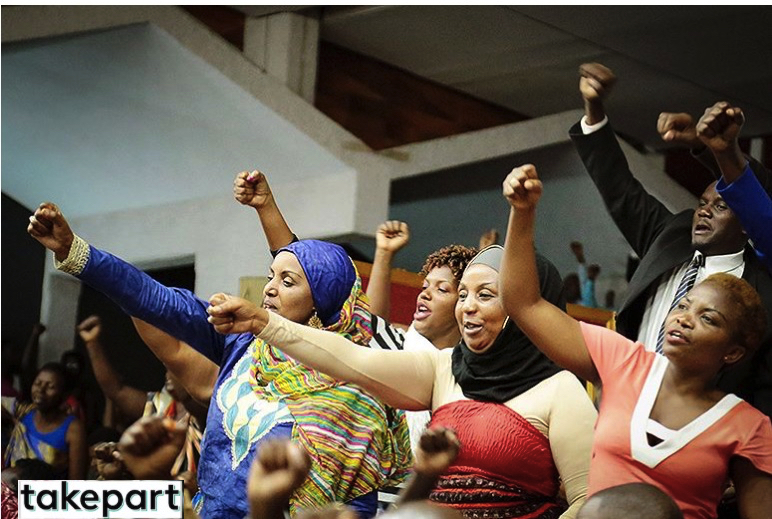
rwandaRwandan women react during the constitutional amendment debate in parliament in Kigali on July 14. (Photo: Cyril Ndegeya/Getty Images)

Through a rigorous look at dozens of factors, the nonprofit global organization credits Rwanda’s low level of waste in government spending and a factor called labor market efficiency for the country’s overall high ranking—noting that the nation of 10.6 million has seen dramatic improvements in economic life: A GDP that hovered at around $200 per capita in 2000 rose to nearly $700 in 2013. 

Something perhaps even more remarkable about Rwanda is buried in these stats: It ranks third out of the 144 countries scored for the ratio of women in the labor force. For every man working in Rwanda, 1.02 women are employed. To boot, Rwanda is also the only country on Earth where more women than men serve as elected officials. 

In part, that’s because the country created a constitutional quota in 2005 that women must make up at least 30 percent of leadership in decision-making organs. That means women compose about 64 percent of the nation’s lower parliament and 38 percent of its senate. By comparison, the U.S. has never elected a Congress that’s more than 20 percent women.

When President Barack Obama was in Kenya on a state visit last weekend, he gave a speech extolling the virtues of letting women lead.

“Any nation that fails to educate its girls or employ its women and allowing them to maximize their potential is doomed to fall behind in a global economy,” Obama told the audience.

Rwanda may be the best proof of just how right he is.

(Article continued in right column.)

Question for this article:

Can the women of Africa lead the continent to peace?

(Article continued from the left column.)

There’s a less uplifting reason, however, for the droves of women working and leading in Rwanda. They are a reflection of a de facto population—namely, those who survived the 1994 genocide. During several bloody months, Hutus laid waste to Tutsis, and nearly a million people were slaughtered, including the systematic and targeted killing of those who were educated, those who were leaders—those who were crucial parts of the social fabric. The bloodshed left behind a population that was 70 percent women and a country that was in desperate need of functional leadership at every level. 

By now, the male-female ratio has mostly evened out. Yet, the mark left by the genocide is as indelible as it is invisible, in many ways, according to Azeb Tadesse, the deputy director for the African Studies Center at the University of California, Los Angeles. Tadesse has visited Rwanda a number of times, spending most of her time in the capital city of Kigali—which she describes as a clean and modern place—as the U.S. director for the Women’s Leadership Project, a global effort to improve gender equality for women through advanced education and improved access.

The genocide doesn’t come up explicitly in conversation, but it’s an unspoken part of the national psyche. 

“I think when you go through such a traumatic experience as a society, you start questioning everything. And maybe one of the things is, ‘Has it really done us much good to keep women out of the leadership and the professional life of the nation?’ ” Tadesse said in an interview with TakePart. 

Rwanda’s rare moment of reckoning has, in some way, helped lead to a remarkable 20-year transformation since the genocide—something Tadesse attributes, in part, to the broad-minded conversation about how to move forward and shape a national identity that goes beyond inclusion for Hutus and Tutsis and also looks at men and women as equals. 

“Something that you would notice if you’re working in Rwanda is the number of female colleagues you will have at the different levels,” said Tadesse. “Not to say it has surprised me—but it is something to take note of.”

Rwanda’s authoritarian leadership, headed by President Paul Kagame, may also claim credit for the order and high efficiency ranking of the country. Though he counts among his fans globe-trotting philanthropists from Bill Clinton to Bill Gates, Kagame has been called a strongman. Still, he’s credited for rebuilding the broken country after the genocide. Perhaps it takes a very strong man to advocate for such a powerful female presence. 

Kagame isn’t alone in drawing criticism as far as human rights go. The countries that top the World Economic Forum’s list of most efficient nations are a mixed bag. Leaders in top-ranked Qatar have faced criticism for treatment of low-paid migrant workers since their successful bid to host the 2022 FIFA World Cup, and there is some domestic dissent over free expression. Singapore may rate highly for efficiency, but caning and corporal punishment are still common there.

Neither enjoys the stats that Rwanda does when it comes to the rights and inclusion of half the population—women.

(Thank you to Janet Hudgins, the CPNN reporter for this article.)

Morocco: World Summit for the promotion of peace

FREE FLOW OF INFORMATION

An article by Driss Lyakoubi, Le Matin (translation by CPNN)

No caption

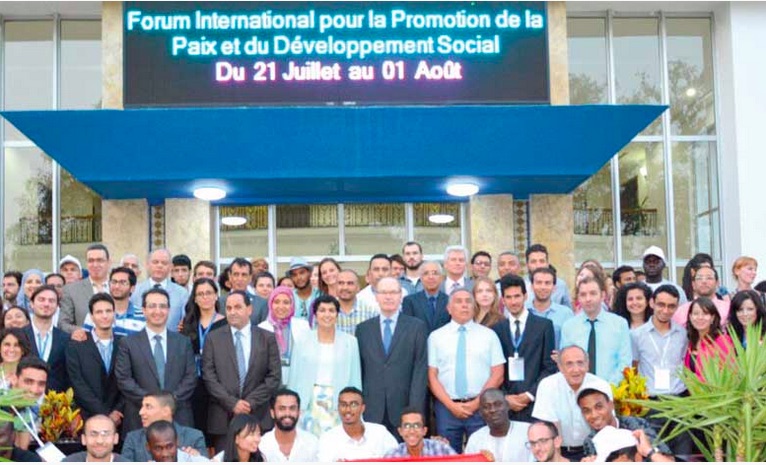
The youth of Kenitra are mobilizig to promote the values ​​of peace and solidarity between peoples, through the World Summit for the promotion of peace and social development, organized by the Ibn Tufail University in partnership with the wilaya of Gharb Chrarda Beni Hssen and the association “Dar Lakbira “.

maroc

This event brings together nearly 120 participants from 32 nationalities from around the world. It is an opportunity for reflection and exchange between young international leaders on topics related to the values ​​of humanism and solidarity. According to its initiators, the World Summit for the promotion of peace and social development is a unique event, designed to broaden the perspectives of international youth on the most pressing issues of the world through positive dialogue, cooperative and constructive.

This is a vision shared by Zineb El Adaoui, the Wali (governor) of the region of Gharb Chrarda Beni Hssen, who reminds us of the supreme interest granted by the Kingdom to the universal values ​​of peace, tolerance, dialogue and solidarité. Azzeddine Midaoui, president of the University Ibn Tofail, paid tribute to the young academic leaders of the association “Dar Lekbira” for the work that led to the organization of this unique gathering in the capital of Gharb. He commended, in this regard, the ties of cooperation that link the university Ibn Tofail and “Dar Lekbira” to promote the values ​​of social solidarity and openness. He highlighted the role of the University in anchoring the values ​​of peace and otherness among youth.

The president of the association “Dar Lekbira” Zinelabidine Taoussi, for his part, said that Moroccan youth had followed the footsteps of his ancestors, that of the consecration of peace and development for the benefit of all countries and peoples of the planet. It should be noted that the World Summit for the promotion of peace and social development, as has been announced by the various stakeholders, is the ideal opportunity for participants to explore cooperation opportunities for project initiation promoting innovative culture of peace, non-violence and social justice in their respective countries and around the world. A charter of principles will also be developed during this global youth forum to strengthen the ideals of peace and social justice within and among all nations and peoples of the world. This reflected the common vision of all summit participants from the world they hope for future generations.

The World Summit for the promotion of peace and social development has set as its main objectives the promotion of the culture of peace and nonviolence in international youth and strengthening youth culture of leadership in areas related to the building of peace and social development. There is also question of strengthening the role of youth in building inclusive societies, peaceful and resilient and the establishment of an international network of young leaders with the ability to serve their communities through innovative community projects.

(Click here for the original French version of this article) )

Question for this article: