The Elders hail Germany’s engagement on refugee and migration issues

TOLERANCE AND SOLIDARITY .

A press release from The Elders

The Elders today welcomed Germany’s engagement and efforts on refugee and migration issues, and called for greater European and global responsibility-sharing as part of a wider, comprehensive approach.

Kofi Annan, Martti Ahtisaari and Lakhdar Brahimi made their call following meetings with German Foreign Minister Frank-Walter Steinmeier, Federal President Joachim Gauck, business leaders, civil society groups and refugees themselves during the two-day visit to Berlin – the first official visit to Germany by The Elders.

germany

Kofi Annan, Chair of The Elders, said:

“We applaud Germany’s leadership on refugees and migration, and the bold decisions taken by Chancellor Merkel, Foreign Minister Steinmeier and the coalition government. These are complex, long-term issues that require far-sighted, compassionate leadership. The answer can never be to erect walls, or to claim that militarised borders or detention of migrants will stem the flow of desperate people.

We have been heartened by our meetings with political and business leaders, and especially with refugees themselves and the volunteers from all sections of German society who have made such selfless efforts to help people in need.”

The Elders also launched a new report on refugees and migration during their visit, setting out four key principles that should govern the world’s approach to these complex issues. They believe that:

1. Response mechanisms to large flows of people must be developed and properly coordinated, both regionally and internationally.

2. Assistance to major refugee-hosting countries must be enhanced.

3. Resettlement opportunities must be increased, along with additional pathways for admission.

4. Human rights and refugee protection must be upheld and strengthened.

The Elders will continue to advocate these positions at a global level, including at the United Nations General Assembly and Refugee Summit next week in New York, and seek to ensure that the voices of refugees and migrants themselves are heard and respected as part of a truly compassionate, comprehensive policy approach.

Question for this article

United Nations: World needs ‘Culture of Peace’

FREE FLOW OF INFORMATION

An article from Bangla News 24 (reprinted for non-commercial use)

A day-long High Level Forum on a Culture of Peace was held at the Trusteeship Council Chamber at the UN Headquarters on Thursday (September 1). The High Level Forum provides an opportunity for the member states and stakeholders to have an exchange of views on ways to build and promote the Culture of Peace which is very much called for in present world.

hlf

Mogens Lykketoft, President of the 70th Session of the General Assembly, chaired the opening segment while Ambassador Edmuond Mulet, Chef de Cabinet of the Executive Office of the UN Secretary General read out message on behalf of the Secretary General Ban Ki-moon.

Ouided Bouchamaoui, Founder of The Tunisian National Dialogue Quartet, Nobel Peace Prize 2015 Laureate, made the Key Note Address. The keynote speaker highlighted the role of civil society which can play and should play to make our world a better place ensuring peace and justice for all.

It was concluded by the outstanding musical performances by FJ Music Duo.

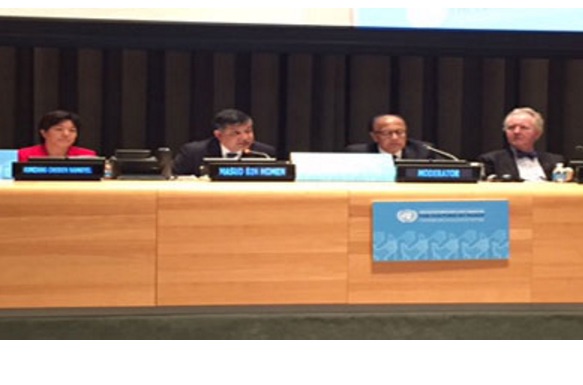
Forty country representatives made statement in the program among Permanent Representative and Ambassador of Bangladesh Masud Bin Momen on behalf of the Bangladesh Delegation.

The statements of the President General Assembly and of the UNSG re-asserted and re-affirmed the commitment of the totality of the Member States for building the culture of peace and the international community’s determination to work more diligently for its realization.

President General Assembly, as well as, most of the delegations acknowledged the role of Bangladesh in promoting the issue of cultural of peace at the United Nations and beyond.

The Bangladesh representative said a culture of peace is an aspiration of all humanity, the essence of the UN Charter, and also an imperative in the current global context. Promoting and inculcating a mindset of a culture of peace is at the core of peaceful and mutually respectful co-existence and dialogue among different civilizations, religions, faiths and beliefs around the globe.

The afternoon session was comprised of two Panel discussions.

The title of the Panel-1 “Enhancing synergy between Sustainable Development Goals (SDGs) and eight action areas of the UN Programme of Action on Culture of Peace” which was Chaired by Anwarul K. Chowdhury, Former Under-Secretary-General and High Representative of the United Nations. Masud Bin Momen, Permanent Representative of Bangladesh to the United Nations, intervened in the Panel-1 as a Panelist. He said, a critical linkage between peace and development has been underscored in sustainable development goals for promoting peaceful and inclusive societies for sustainable development provided access to justice for all and build effective accountable and inclusive institutions at all levels.

Panel-2 discussion was on “The Role of Youth in advancing the Culture of Peace in the context of the implementation of the UN Security Council Resolution on Youth, Peace and Security”. This Panel was chaired by Katalin Annamaria Bogyay, Permanent Representative of Hungary to the United Nations.

Question(s) related to this article:

600+ Campaign Nonviolence Events Across USA Next Week!

. .DISARMAMENT & SECURITY. .

A press advisory from Common Dreams (abridged)

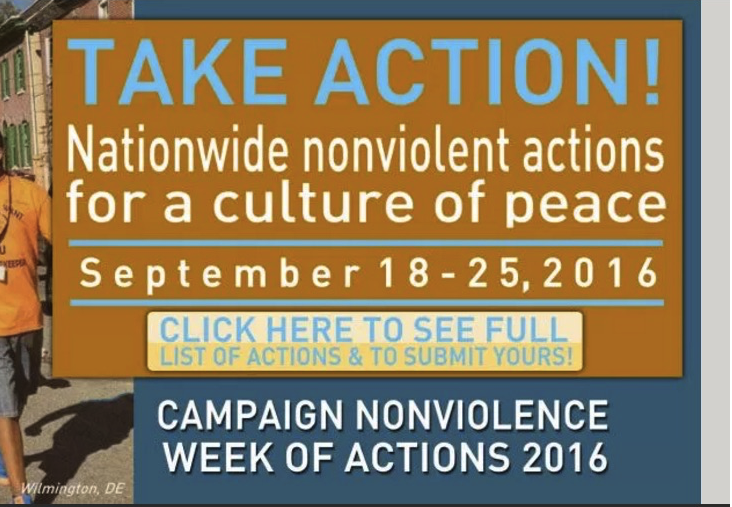
. . . As the American presidential election enters its final stretch, Campaign Nonviolence seeks to forge a culture of peace and nonviolence during a year of mounting violence in America and abroad through a multitude of grassroots activism during the week of Sept. 18-26, marking International Peace Day on Sept. 21. More than 600 actions, events, marches and demonstrations in a diverse array of cities and towns are planned in each of the 50 states as well as more than a dozen foreign countries. Campaign Nonviolence began in 2014 with 230 events; 371 were staged last year. . .

cnv

For a current listing of what now number 583 actions—including states and cities, descriptions, organizations and contact information—visit:
http://www.paceebene.org/programs/campaign-nonviolence/campaign-nonviolence-week-of-actions/ (scroll to bottom of page)

Here are highlights from a sampling of events:

—Catholic priest Father Mike Pfleger will lead thousands on a Friday night march targeting the carnage from firearms in the Southside of Chicago, starting at the famous Saint Sabina Church. Many relatives of those shot dead in recent months will join the march. (3000 people have been shot in Chicago since January 1st of this year.)

—June Eisley, a retired person in Wilmington, Delaware, organized a Campaign Nonviolence march two years ago, which unexpectedly drew 1000 people and addressed all the issues of violence. Now she and her friends have organized 37 events in five Delaware cities—from art exhibits, marches and walkabouts to meditation sessions, health screenings and film presentations. (see: www.peaceweekdelaware.org). “We started as a march for a culture of peace and nonviolence,” she said, “and became a state-wide movement for a culture of peace and nonviolence.”

—Raleigh, Durham, and Chapel Hill, North Carolina have declared a “week of nonviolence”—16 events thus far—to combat gun violence, racism, Islamophobia, poverty, environmental destruction and support for war. On Sept. 21, people of faith and conscience will come together for a 12-noon vigil in downtown Raleigh followed by a news conference to detail their week of events, including regional nonviolence trainings. They will put on a “Campaign Nonviolence Triangle Area Peace Festival” on Sept. 24 featuring an interfaith Walk for Peace to raise awareness about love, truth, peace and nonviolence for everyone in the Triangle area. Each of the cities has declared Sept. 18-24 “Campaign Nonviolence North Carolina Week.”

—Hundreds will gather on Sept. 23-25 at American University in Washington, D.C. for a sold out national conference entitled “World Beyond War” and featuring former U.S. Reps. Dennis Kucinich and Cynthia McKinney, film director Oliver Stone and Campaign Nonviolence organizer and co-founder Rev. John Dear. Participants will gather outside the Pentagon at 9 a.m. on Sept. 26 for a national anti-war protest, demanding that billions of dollars in military spending go instead to healthcare, jobs, education and food of the poor—not for more bombs and wars. (See: www.worldbeyondwar.org)

—The Utah Campaign to Abolish Nuclear Weapons will host its third annual “Beat the Bomb!” picnic and rally on Sept. 23 in Salt Lake City’s Liberty Park, bringing together people from all parts of the community

(Article continued in right column)

Question for this article:

The peace movement in the United States, What are its strengths and weaknesses?

(Article continued from left column)

—Residents will assemble in Boise, Idaho for a walk through town calling for an end to the death penalty in that state.

—In Coral Springs, Florida, young people will plant trees for peace and stage a silent peace walk calling for an end to war.

—Eureka, California will feature a candlelight vigil for peace and an end to racism, poverty and environmental degradation outside the Humboldt County Court House.

—Honolulu, Hawaii will hold an interfaith peace service featuring traditional Hawaiian music and prayers.

—Activists will walk through Los Angeles neighborhoods to campaign for the upcoming statewide vote on whether to abolish the death penalty.

—In Fremont, Michigan, people will march during a community harvest parade against war, poverty, racism, environmental destruction and all forms of violence, demanding a new culture and state of nonviolence.

—A weeklong effort in Wyckoff, New Jersey is being organized to welcome immigrants into the homes of neighbors for food and hospitality as a way to break down barriers and build a new inclusive culture of nonviolence.

—Taos, New Mexico will hold a daylong workshop and march for young people against climate change.

—People from Las Vegas, Nevada will gather in the desert at Creech Air Force Base, center for all U.S. drone warfare, to call for an end to drone bombings in Afghanistan, Pakistan, Yemen and Syria, and to demand nonviolent methods for conflict resolution.

—San Antonio, Texas will host a lecture and discussion on gun violence by a leading authority.

—Fond du Lac, Wisconsin will hold a daylong workshop on racism, how to confront it and creating a more welcoming, just and equal society.

—Memphis, Tennessee will host an evening in conjunction with the Black Lives Matter movement featuring Rev. William Barber, head of the NAACP of North Carolina and a national voice for racial justice.

“People are sick and tired of poverty, racism, police brutality, mass incarceration, hand gun violence, drone warfare, perpetual war, corporate greed, nuclear weapons, executions and environmental destruction,” said Catholic priest Rev. John Dear, a key organizer of the Sept. 18-26 movement for nonviolence and a nationally known peace activist, author of 35 books and Nobel Peace Prize nominee. “People everywhere want new leadership in the tradition of Dr. Martin Luther King, Jr. and Cesar Chavez, with a new vision for a culture of nonviolence, where we can all live in peace with justice, and be a force of good in the world—not a force of greed, war and environmental destruction. Dr. King and Cesar Chavez upheld a national and global vision of nonviolence. This month, people are taking to the streets by the thousands to demand that vision comes true. They are telling us that they are going to keep marching until this country shifts beyond its current state as presented by the media and the political candidates, and toward something new—a true nonviolent democracy where everyone lives in justice and peace” . . .

USA: World Beyond War conference

DISARMAMENT & SECURITY .

An article by Leah Bolger, WILPF (Women’s International League for Peace and Freedom)

World Beyond War is planning a big event in Washington, D.C., to be held at American University, September 23-25, just after the International Day of Peace. The conference, “No War 2016: Real Security, Without Terrorism,” is being co-sponsored by WILPF US and will be addressed by International WILPF President Kozue Akibayashi.

worldbeyondwar

The event will feature sessions on many topics, a few of which are:

Strategies to End War
Ending War and Patriarchy
Remaking the Mass Media for Peace
Capitalism and Transition to Peace Economy
The Racism of War
Abolishing Nuclear Weapons
Changing War Culture to Peace Culture

Question for this article:

The peace movement in the United States, What are its strengths and weaknesses?

(continued from left column)

In addition to Dr. Akibayashi, some of the featured speakers include:

Odile Hugonot Haber
Dennis Kucinich
Kathy Kelly
Alice Slater
David Swanson
David Hartsough
Medea Benjamin
Bill Fletcher Jr.
Peter Kuznick

Please watch the video of 1976 Nobel Peace Laureate Mairead Maguire encouraging people to join World Beyond War and to attend the conference. . .

The price for registration is on a sliding scale, starting at $25 (for students and those on low income). Registration includes meals and a copy of the second edition of the World Beyond War publication, “A Global Security System: An Alternative to War.” To register and for more information about the conference, including the agenda, a complete list of the sessions, speakers, and more, please go to the World Beyond War website and/or contact Leah Bolger, at leahbolger@comcast.net or 541-207-7761.

Indigenous, peasant and Afro-Colombian communities say YES to peace

FREE FLOW OF INFORMATION

An article by the Abya Yala Agricultural Collective in CONPI.org (translated by CPNN)

“We believe that the defense of life and territory cannot be an isolated task of our indigenous communities, and thus we propose bonds of unity, solidarity, fraternity and commitment with whom we share the land as small farmers: the communities of African descent and others, not only those in the agricultural and rural sectors but also those in cities who also want to change the history of this country,” – National Dialogue Declaration of Indigenous Women for Peace
indigenous

As noted by the historian Diana Uribe, we have come to a turning point in Colombia with the negotiated solution to the armed conflict between the Revolutionary Armed Forces of Colombia – People’s Army and the National Government. We are also encouraged by the announcement last March of negotiations with the ELN National Liberation Army to advance the construction of a diverse nation that is no longer marked by the history of war.

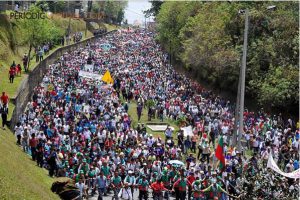
This article aims to make visible the voice of the indigenous, peasant and Afro-descendant ommunities. Its victims have been deeply affected by the unresolved armed conflict in the country, but nevertheless they are moving forward with proposals from their territories in the post-accord context, as stated in the following excerpt from the report of the Historical Commission of the conflict:

“The main players of today [in relation to the assertion of rights] are now urban dwellers, displaced by war, peasants and indigenous sectors, women, inmates of prisons, and ethnic and sexual minorities. Their demands include the desire for peace,

– the rejection of anti-democratic amendments to the Constitution and legislation,

– the denunciation of the tax reforms,

– the unveiling of the negative effects of NAFTA,

– land claims,

– opposition to programs that would eradicate illicit crops with aerial spraying with effects on environmental and living conditions,

– reform of the public hospital sector,

– changes in the educational system,

– the placement of demobilized and displaced persons,

– an end to actions that violate human rights by the armed forces “(page 67)

As a sign of support for the process of negotiation of Havana, the communities have presented their positions on complex issues such as the arrival of former combatants into their territories.

In Caldono last July the traditional authorities of the indigenous reserves of Pueblo Nuevo, San Lorenzo de Caldono, Pioyá from the Municipality of Caldono and Tumburao from the Municipality of Silvia published a letter offering their territories to install a ZVTN. (District Zone for Transition to Normalization):

“When we heard the news that Caldono is a ZVTN, it was no surprise because we have prepared for it, not so much for the large investments that we may receive as part of the implementation of the agreements, but rather to welcome our colleagues who with or without conviction joined the insurgency that brought so much disharmony and imbalance to different territories of the country. They will be welcomed, forgiven and asked to compensate for the damages with ideas that positively transform the social order. This will clarity the values of our community set out in our Law of Origins by returning to our community its members, both men and women, returning them to their spiritual home and harmonizing the relation between the community and Mother Earth.”

(Article continued in the right column)

(Click here for the original version of this article in Spanish or here for a translation into French.

Question related to this article:

What is happening in Colombia, Is peace possible?

(Article continued from the left column)

For their part, the rural communities of the Peasant Reserve Areas that are expected to be protagonists in the postconflict agreements have offered themselves as managers of the implementation process of the agreements through a critical look at laws like the ZIDRES [Zones of Rural, Economic, and Social Interest] which they consider to be in conflict with the process.

According to the Political Declaration of the General Assembly of the National Association of Peasant Reserve Zones (ANZORC): “As the 66 processes of the Peasant Reserve Zones ANZORC, at a general meeting in the village of San Isidro de Pradera (Valle), we see a great opportunity in the eventual signing of a final agreement with the FARC and the implementation of peace agreements. (…) ANZORC, in its first General Assembly of 2016, decided

– to initiate a process of territorial anchoring of the peace accords,

– to advance the special circumscriptions of the peace accords (i.e. the 16 zones of transition),

– to promote intercultural territories,

– to fight against the expropriation of 6,000 peasant families living in the alleged “vacant FARC” regions of El Pato Balsillas, El Yari, the Losada-Guayabero and La Macarena,

– to oppose the law of ZIDRES,

– to establish rural guards in their territories,

– to establish a dialogue with the Ministry of the Environment and Autonomous Regional Corporations concerning the law on the 2nd forest reserve zone and regional protected areas,

– to formulate a proposal for social control over the extent of coca crops,

– to extend the process of popular assemblies throughout the country,

– and to strengthen our involvement in the National Constituent Assembly.”

In Natagaima from 12 to 14 August this year under the theme “Indigenous Women weaving their thoughts to defend the territory and build peace with social justice” more than 170 indigenous women from different villages, after a festive march in the municipality publicly declared their “Yes” to the plebiscite with the understanding that peace becomes possible with the end of the armed conflict, but it will not be easy:

“We believe that indigenous peoples must not be indifferent to the historical moment facing the country with the end of the armed conflict. The process in which we have been involved includes an ethnic approach to each component of the agreements. We must prepare to ratify our YES in the referendum as the main tool to build territories for peace with social justice. This means balance and harmony in our relationship with Mother Nature and the guarantee of conditions for a dignified life in our territories and our communities. ”

It has been declared by the parties at the negotiation table in Havana that the implementation of the agreements requires a new approach in order to overcome the historical and structural conditions of the armed conflict in Colombia. In this approach it is necessary to include the proposals of communities from the territories. This approach must see beyond the rigid legal principles of the Anglo-Saxon tradition in the constitution and the law, and take into consideration the diverse cosmologies of the peoples. It must fight against practices such as racism and extinction of indigenous communities.

The Interethnic Dialogue Peace Proposal brought to the table in Havana last April 6 by indigenous organizations and Afro-Colombianos reads as follows: “The black communities of African descent, the palenqueras, raizales and indigenous peoples conceive the territory as a collective good, in the function of the needs of its inhabitants. The land is a source of material, cultural and ecological life. It is not a commercial product based on private profit. The land has to be seen as a geographical and free space where communities can fully develop, as the physical place and symbolic source of sovereign welfare and independence, under the principles of autonomy, solidarity, growth, indigenous development, balance and sustainability ” (…)

“Indigenous peoples, Blacks, Afro-Colombians, palenqueros and raizales have been historic victims of exclusionary structures of racist and discriminatory State practices that have prevented us from enjoying all the rights and guarantees that citizens should have in a nation . In that regard, the social and armed conflict that the country has experienced for 60 years has particularly affected these communities in all aspects.”

Finally, we say that the challenge of building a culture of peace in Colombia will take several generations but at each step forward, there is more hope in our territories that we can finally emerge from the long night of 500 years, the colonial and republican legacy of war.
USA: Standoff at Standing Rock: Even Attack Dogs Can’t Stop the Native American Resistance

. . SUSTAINABLE DEVELOPMENT . .

An article by Amy Goodman and Denis Moynihan from Democracy Now (reprinted under Creative Commons Attribution-Noncommercial-No Derivative Works)

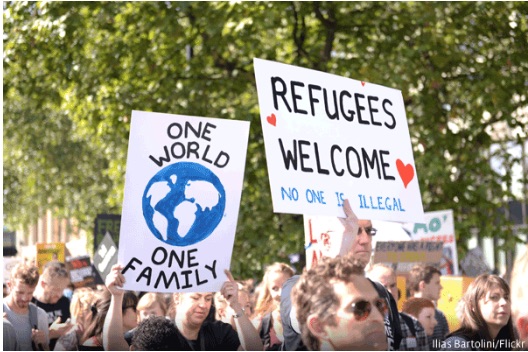
The Missouri River, the longest river in North America, has for thousands of years provided the water necessary for life to the region’s original inhabitants. To this day, millions of people rely on the Missouri for clean drinking water. Now, a petroleum pipeline, called the Dakota Access Pipeline, is being built, threatening the river. A movement has grown to block the pipeline, led by Native American tribes that have lived along the banks of the Missouri from time immemorial. Members of the Dakota and Lakota nations from the Standing Rock Sioux Reservation established a camp at the confluence of the Missouri and Cannonball rivers, about 50 miles south of Bismarck, North Dakota. They declare themselves “protectors, not protesters.” Last Saturday, as they attempted to face down massive bulldozers on their ancient burial sites, the pipeline security guards attacked the mostly Native American protectors with dogs and pepper spray as they resisted the $3.8 billion pipeline’s construction, fighting for clean water, protection of sacred ground and an end to our fossil-fuel economy.

democracynow
Video at Standing Rock

Standing Rock Sioux set up the first resistance encampment in April, calling it Sacred Stone. Now there are four camps with more than 1,000 people, mostly from Native American tribes in the U.S. and Canada. “Water is Life” is the mantra of this nonviolent struggle against the pipeline that is being built to carry crude oil from the Bakken oil fields of North Dakota to Illinois.

Saturday was a beautiful, sunny day. Together with Laura Gottesdiener and John Hamilton of “Democracy Now!,” we spent the morning filming interviews. That afternoon, delegations walked down the road to plant their tribal flags in the path of the proposed pipeline. Many were shocked to see large bulldozers actively carving up the land on Labor Day weekend.

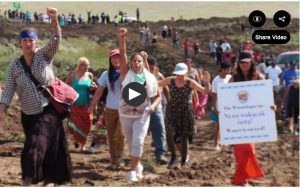
Hundreds of people, mostly Native Americans, lined the route, yelling for the destruction to stop. A group of women began shaking the ranch fencing, and without much effort it fell over. The land defenders began pouring through. Several young men from the camp arrived on horseback.

(Article continued in right column)

Questions for this article

Indigenous peoples, Are they the true guardians of nature?

(Article continued from left column)

The bulldozers retreated, but the security guards attempted to repel the land defenders, unleashing at least half a dozen vicious dogs, who bit both people and horses. One dog had blood dripping from its mouth and nose. Undeterred, the dog’s handler continued to push the dog into the crowd. The guards pepper-sprayed the protesters, punched and tackled them. Vicious dogs like mastiffs have been used to attack indigenous peoples in the Americas since the time of Christopher Columbus and the Spanish conquistadors who followed him. In the end, the violent Dakota Access guards were forced back.

This section of the pipeline path contained archeological sites, including Lakota/Dakota burial grounds. The tribe had supplied the locations of the sites in a court filing just the day before, seeking a temporary halt to construction to fully investigate them. With those locations in hand, the Dakota Access Pipeline crew literally plowed ahead. Standing Rock Sioux Tribal Chairman David Archambault told us on the “Democracy Now!” news hour: “They were using the dogs as a deadly weapon. … They knew something was going to happen when they leapfrogged over 15 miles of undisturbed land to destroy our sacred sites … they were prepared. They hired a company that had guard dogs, and then they came in, and then they waited. And it was —by the time we saw what was going on, it was too late. Everything was destroyed. They desecrated our ancestral gravesites. They just destroyed prayer sites.”

At the camp, we interviewed Winona LaDuke, an Ojibwe leader from the White Earth Nation in northern Minnesota. She recently led a campaign that succeeded in blocking another pipeline that threatened the White Earth’s territory. She commented on North Dakota Gov. Jack Dalrymple’s support of suppression of the Standing Rock protests: “You are not George Wallace, and this is not Alabama. This is 2016, and you don’t get to treat Indians like you have for those last hundred years. We’re done.”

The battle against the Dakota Access Pipeline is being waged as a renewed assertion of indigenous rights and sovereignty, as a fight to protect clean water, but, most importantly, as part of the global struggle to combat climate change and break from dependence on fossil fuels. At the Sacred Stone, Red Warrior and other camps at the confluence of the Missouri and Cannonball rivers, the protectors are there to stay, and their numbers are growing daily.

Snowden: Best Film of the Year

EDUCATION FOR PEACE .

A review by David Swanson

Snowden is the most entertaining, informing, and important film you are likely to see this year.

It’s the true story of an awakening. It traces the path of Edward Snowden’s career in the U.S. military, the CIA, the NSA, and at various contractors thereof. It also traces the path of Edward Snowden’s agonizingly slow awakening to the possibility that the U.S. government might sometimes be wrong, corrupt, or criminal. And of course the film takes us through Snowden’s courageous and principled act of whistleblowing.

Snowden
Trailer for film

We see in the film countless colleagues of Snowden’s who knew much of what he knew and did not blow the whistle. We see a few help him and others appreciate him. But they themselves do nothing. Snowden is one of the exceptions. Other exceptions who preceded him and show up in the film include William Binney, Ed Loomis, Kirk Wiebe, and Thomas Drake. Most people are not like these men. Most people obey illegal orders without ever making a peep.

And yet, what strikes me about Snowden and many other whistleblowers I’ve met or learned about, is how long it took them, and the fact that what brought them around was not an event they objected to but a change in their thinking. U.S. officials who’ve been part of dozens of wars and coups and outrages for decades will decide that the latest war is too much, and they’ll bail out, resign publicly, and become an activist. Why now? Why not then, or then, or then, or that other time?

These whistleblowers — and Snowden is no exception — are not passive or submissive early in their careers. They’re enthusiastic true believers. They want to spy and bomb and kill for the good of the world. When they find out that’s not what’s happening, they go public for the good of the world. There is that consistency to their actions. The question, then, is how smart, dedicated young people come to believe that militarism and secrecy and abusive power are noble pursuits.

Oliver Stone’s Ed Snowden begins as a “smart conservative.” But the only smart thing we see about him is his computer skills. We never hear him articulate some smart political point of view that happens to be “conservative.” His taste in books includes Ayn Rand, hardly an indication of intelligence. But on the computers, Snowden is a genius. And on that basis his career advances.

(review continued in right column)

Question(s) related to this article:

What are some good films and videos that promote a culture of peace?

(review continued from left column)

Snowden has doubts about the legality of warrantless spying, but believes his CIA instructor’s ludicrous defense. Later, Snowden has such concerns about CIA cruelty he witnesses that he resigns. Yet, at the same time, he believes that presidential candidate Barack Obama will undo the damage and set things right.

How does one explain such obtuseness in a genius? Obama’s statements making perfectly clear that the wars and outrages would roll on were publicly available. I found them with ordinary search engines, needing no assistance from the NSA.

Snowden resigned, but he didn’t leave. He started working for contractors. He came to learn that a program he’d created was being used to assist in lawless and reckless, not to mention murderous, drone murders. That wasn’t enough.

He came to learn that the U.S. government was lawlessly spying on the whole world and spying more on the United States than on Russia. (Why spying on Russia was OK we aren’t told.) But that, too, wasn’t enough.

He came to learn that the U.S. was spying on its allies and enemies alike, even inserting malware into allies’ infrastructure in order to be able to destroy things and kill people should some country cease to be an ally someday. That, too, was not enough.

Snowden went on believing that the United States was the greatest country on earth. He went on calling his work “counter cyber” and “counter spying” as if only non-Americans can do spying or cyber-warfare, while the United States just tries to gently counter such acts. In fact, Snowden risked his life, refraining from taking medication he needed, so that he could continue doing that work. He defended such recklessness as justified by the need to stop Chinese hackers from stealing billions of dollars from the U.S. government. Apart from the question of which Chinese hackers did that, what did Snowden imagine it was costing U.S. taxpayers to fund the military?

Snowden’s career rolled on. But Edward Snowden’s brilliant mind was catching up with reality and at some point overtook it. And then there was no question that he would do what needed to be done. Just as he designed computer programs nobody else could, and that nobody else even thought to try, now he designed a whistleblowing maneuver that would not be stopped as others had.

Consequently, we must be grateful that good and decent people sometimes start out believing Orwellian tales. Dull, cowardly, and servile people never blow whistles.

UN-supported ‘historic’ training to monitor ceasefire between Government and FARC-EP starts in Colombia

FREE FLOW OF INFORMATION

An article from the United Nations News Service

Following a recent agreement to end more than 50 years of conflict between the Government of Colombia and the Revolutionary Armed Forces of Colombia-People’s Army (FARC-EP), a seven-day training session on monitoring and verifying their bilateral ceasefire has begun in the country’s western city of Popayan, with United Nations support. Instructors from the Government, FARC-EP and the UN Mission in Colombia are training 80 men and women who will form part of the tripartite verification and monitoring mechanism at national and regional levels, according to a news release from the UN Mission

monitor

    Members of the FARC-EP take part in the traning with the Government of Colombia and the UN Mission. Photo: UN Mission in Colombia

“This first training session is an important step towards building a stable and lasting peace,” the UN Mission said. “Not only does it mark the beginning of the realization of the agreements reached in Havana but it also marks the full commitment of the parties with a robust and transparent monitoring and verification mechanism to give full guarantees to all Colombians.”

Sessions will cover the verification methodology, logistical aspects, security, gender issues and operational procedures for the transitional local zones and points for normalization, where the separation of forces and the laying down of arms is to take place. The sessions also include theoretical and practical aspects of the Final Agreement, especially related to the bilateral ceasefire and cessation of hostilities, and protocols covering the Monitoring and Verification Mechanism.

In June, UN Secretary-General Ban Ki-moon travelled to Havana, where he witnessed the signing of the agreement on the ceasefire and the laying down of arms. He noted that the “peace process validates the perseverance of all those around the world who work to end violent conflict not through the destruction of the adversary, but through the patient search for compromise.”

The UN Mission in Colombia’s international observers include representatives from eight countries from the Community of Latin American and Caribbean States (CELAC): Argentina, Bolivia, Chile, El Salvador, Guatemala, Mexico, Paraguay and Uruguay.

(Thank you to the Good News Agency for calling this story to our attention)

(Click here for a Spanish version of this article

Question related to this article:

Forging a peaceful future: four years of UNICEF’s Learning for Peace Programme

… EDUCATION FOR PEACE …

An article from UNICEF

UNICEF and partners are a step closer to building peace, Eran Nagan, of the Government of the Netherlands said at a high-level event on education and peacebuilding in New York.

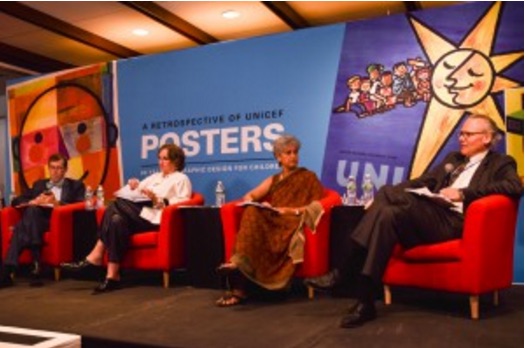
Mr. Nagan, First Secretary of Economic Affairs, Permanent Mission of the Kingdom of the Netherlands to the United Nations, joined some 80 UN staff, researchers, civil society, private sector representatives and members of the public to celebrate the final event of the Learning for Peace programme on Thursday, 30 June at UNICEF House. The UNICEF programme, launched in 2012 with the support of the Government of the Netherlands, helped promote peace through education in 14 conflict-affected countries: Burundi, Chad, Cote d’Ivoire, Democratic Republic of the Congo, Ethiopia, Liberia, Myanmar, Pakistan, Sierra Leone, Somalia, South Sudan, State of Palestine, Uganda, and Yemen.

UNICEF
Panelists (L-R) Patrick Fine, FHI 360 CEO; Angela Kearney UNICEF Pakistan Representative; Yasmin Haque, UNICEF Deputy Director of Emergency Programmes; Henk-Jan Brinkman UN Peacebuilding Support Office Chief of Policy Planning and Application.
Click on image to enlarge

“The teaching of tolerance, respect for the other, promoting social cohesion is a necessity of any society because it is by inserting these essential values in our youth that we forge peaceful societies for the future,” Mr. Nagan said in his key note address, praising the programme for its achievements over the last four and a half years. Learning for Peace worked with governments, education systems, and communities to design education interventions that addressed underlying causes and dynamics of conflict. The programme also included a significant research component to fill the gap in knowledge and evidence on social services for peacebuilding.

Research from UNICEF and FHI 360 found evidence that education inequities reinforce social divisions that lead to conflict – the likelihood of violent conflict doubles in countries with high education inequality between ethnic and religious groups. Conversely, conflict widens educational inequalities. Although less pronounced, the study also provides evidence that gender-based education inequality makes violent conflict more likely, and vice versa.

(Article continued in right column)

Question for this article:

Peace education at the United Nations, how does it work?

(Article continued from left column)

“I think it has direct implications for how we set priorities and what kinds of actions we take in humanitarian response, and it also has immediate implications for policies and programmes,” Patrick Fine, FHI 360 CEO, said of the research findings.

Mr. Fine, along with Angela Kearney, UNICEF Pakistan Representative; Yasmin Haque, Deputy Director, Office of Emergency Programmes, UNICEF; and Henk-Jan Brinkman, Chief of Policy, Planning and Application, UN Peacebuilding Support Office were part of a panel to share experiences, achievements and lessons learned of the Learning For Peace programme.

Ms. Kearney shared stories of innovation in education from Pakistan, where findings from the programme’s conflict analysis informed education sector plans in the provinces of Sindh and Balochistan. In South Sudan, where 70 per cent of children have never stepped inside a school, Ms. Haque said that Learning for Peace helped develop a new, inclusive education system and forged new partnerships amongst education stakeholders and development partner organizations with peacebuilding expertise.

Josephine Bourne, Associate Director of Education at UNICEF, moderated the event and stressed that the lessons-learned on conflict-sensitive and peacebuilding-oriented education programming that began through the Learning for Peace programme would continue in future projects.

“While the programme is finishing, the work does not. There’s a very strong commitment to conflict assessment and really understanding the situation of children and their access to resources and other inequalities.” Ms. Bourne said. The inequality piece is front and center, not just for education, but everything UNICEF is doing”.

At the event, UNICEF also discussed plans to employ conflict assessment, study gender-based violence, and have children participate in determining the issues that drive conflict and necessary interventions. FHI 360 is also leading an education equity research initiative in conjunction with UNICEF and other partners including USAID, Save the Children and World Vision.

For more information on the programme please visit: learningforpeace.unicef.org.

(Thank you to the Global Campaign for Peace Education for bringing this article to our attention.)

Hundreds of Thousands Join Saudi Women-Led Campaign to End Male Guardianship in the Kingdom

. . WOMEN’S EQUALITY . .

This article originally appeared on Global Voices on September 4 (reprinted here according to terms of Creative Commons)

As part of the efforts to end the draconian laws against women in the Gulf state, Saudi women launched a campaign demanding an end to male guardianship for basic practices such as work, property ownership and travel. Using the hashtag #TogetherToEndMaleGuardianship and its Arabic version #سعوديات_نطالب_باسقاط_الولاية (which translates to ‘Saudi women demand the end of guardianship’), hundreds of thousands of supporters worldwide took part in this campaign.

saudi
Video:”Trapped with abuse”

The campaign was sponsored by Human Rights Watch and follows the release of its lengthy report entitled “Boxed In: Women and Saudi Arabia’s Male Guardianship System”. In it, the international human rights organization explains that:

“In Saudi Arabia, a woman’s life is controlled by a man from birth until death. Every Saudi woman must have a male guardian, normally a father or husband, but in some cases a brother or even a son, who has the power to make a range of critical decisions on her behalf. As dozens of Saudi women told Human Rights Watch, the male guardianship system is the most significant impediment to realizing women’s rights in the country, effectively rendering adult women legal minors who cannot make key decisions for themselves.”

The report included three short videos illustrating the effects of the system on women’s lives, as well as statements from Saudi women’s rights activists and citizens who find the law to be socially and economically crippling.

Question related to this article:

Protecting women and girls against violence, Is progress being made?

As one Saudi activist and former school principal, 44-year-old Hayat, told Human Rights Watch on December 7, 2015:

“The guardianship system also impacts women’s ability to seek work inside Saudi Arabia and to pursue opportunities abroad that might advance their careers. Specifically, women may not apply for a passport without male guardian approval and require permission to travel outside the country. Women also cannot study abroad on a government scholarship without guardian approval and, while not always enforced, officially require a male relative to accompany them throughout the course of their studies.

It can mess with your head and the way you look at yourself. How do you respect yourself or how [can] your family respect you, if he is your legal guardian?”

Human Rights Watch also explained that the religious reasons supposedly justifying the male guardianship system have been repeatedly challenged:

“Saudi Arabia’s imposition of the guardianship system is grounded in the most restrictive interpretation of an ambiguous Quranic verse—an interpretation challenged by dozens of Saudi women, including professors and Islamic feminists, who spoke to Human Rights Watch. Religious scholars also challenge the interpretation, including a former Saudi judge who told Human Rights Watch that the country’s imposition of guardianship is not required by Sharia and the former head of the religious police, also a respected religious scholar, who said Saudi Arabia’s ban on women driving is not mandated by Islamic law in 2013.”

This is why, among many reasons, the guardianship system is being challenged — on Twitter and elsewhere — by Saudi women and their supporters. According to Vocativ, as of August 4, 2016, at least 170,000 tweets have been posted in both Arabic and English.

(Thank you to Janet Hudgins, the CPNN reporter for this article)