Category Archives: global

What Is CSW and Why Are We in New York to Be Part of It?

. WOMEN’S EQUALITY .

An article from the Intenational Women’s Development Agency

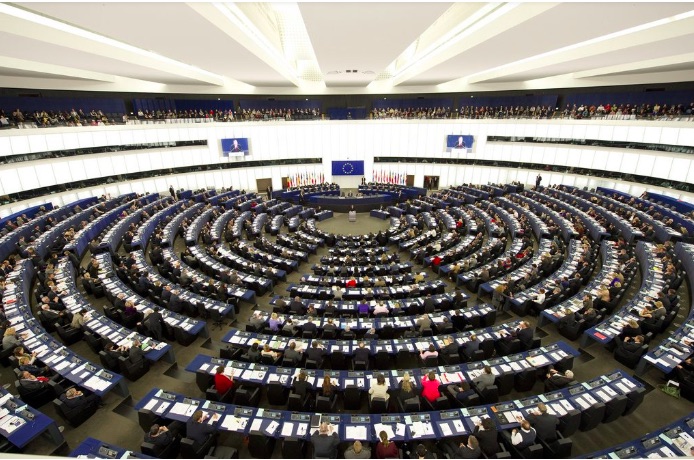
CSW is the largest gathering of the 193 UN Member States and other stakeholders that’s focused on the promotion of gender equality and the empowerment of women. This annual forum can have huge real-world applications to the lives of millions of women around the world. It’s a place where those with power come together to make decisions that affect real women’s lives. 

A BIT OF HISTORICAL CONTEXT

In its 61 years, CSW has contributed to huge progress for women. CSW is where conventions and guidelines that are still used today to protect the political, social and economic rights of women were passed, like the United Nations Convention on the Elimination of all forms of Discrimination of Women (otherwise known as CEDAW). Before CSW, ‘men’ was still used as a synonym for all of humanity. It was also the place where, in 1975, the 8th of March was formally recognised as International Women’s Day. Over the years, CSW has also been critical in recognising rape as a weapon of war, a view that was then formalised at the International Criminal Court.

WHAT ACTUALLY HAPPENS AT THE COMMISSION ON THE STATUS OF WOMEN?

The first week is a time for UN Member States, Civil Society Organisations (this just means organisations like us and other not-for-profits) and other stakeholders to deliver large plenary presentations on the year that was in gender equality, discuss innovations in this space and share recommendations for the coming year.

Week one of CSW is jam-packed full of debate, strategising and planning. Governments of the world come together in high level meetings to discuss the myriad of issues affecting women. Everything is up for discussion, but this year’s focus is on women’s economic empowerment. Ministers and Heads of State will gather and discuss how they will further the full and equal participation of women in their economies.

Leaders will share ideas and strategies about how to improve women’s economic participation through clearer policy and formal governmental commitments to gender equality. Civil Society Organisations will attend meetings, lobby Governments, liaise with decision makers and ensure the voices of diverse women are represented.

After the first week of meetings, discussions and debate among delegates, the week two of CSW is all about negotiating the “agreed conclusions”, which sets out Governments’ commitments to advance women’s rights post-CSW. It sounds simple enough, but the policy agenda that comes out of CSW requires feedback from many different people – and just about every word is hotly contested.

The “agreed conclusions” is a huge document, but an important one to get right – it’s designed to inform policy on women’s human rights across the world. If a government signs up, they’re obligated to deliver on it, which is why so much time is spent in discussions, negotiations and debate to reach an outcome that can be agreed on.

(continued in right column)

Question for this article

Does the UN advance equality for women?

(continued from left column)

WHY DO WE GO?

Women’s rights organisations and networks, both at home and abroad, have a key role to play in ensuring that the priorities of women on the ground are taken into account. But despite the importance of reflecting real women’s circumstances in the decisions that come out of CSW, women’s rights organisations and other Civil Society Organisations aren’t allowed to be involved in the formal negotiations of the “agreed conclusions”. This is reserved for governments. That’s why we need to show up and be as vocal as we can about the key issues that affect women’s lives and where women’s rights remain at risk.

We’ve seen true progress come out of CSW. But it’s always been a fight to get things passed, and over the past five to six years, we’ve seen a group of states coming together to push back against the gains we’ve made in gender equality and women’s human rights. Sexual health and reproductive rights are being impinged, comprehensive sex education to halt HIV isn’t always happening, and interested parties with fundamentalist ideas about women’s role in society are advocating for abstinence. Action to address these issues has already been agreed upon in the past, but these issues are still being contested and pushed back on.

If women’s rights advocates are not there to speak up, CSW gives states, lobbyists and those who wish to maintain the status quo of gender inequality a chance to push us backwards. We need to be there to hold the line and keep the discussion moving forward.

WHAT DOES A DAY AT A BIG GLOBAL CONFERENCE LOOK LIKE?

It starts early. It ends late. We don’t stop.

Days start at 7am with teams touching base and sharing information about what’s happening in the negotiating rooms. We check in to see how everyone is travelling, what we need to achieve for the day, and figure out conversations to pursue with decision makers.

Over the course of day we meet with Government delegations; catch up with fellow activists and make plans for the future; work with our colleagues to find ways to contribute to debate around the “agreed conclusions”; and meet with funders to share results and attempt to secure more funding for the women’s rights movement.

Our colleagues have told us that CSW can be personally challenging. They say it’s confronting to see the denial of women’s humanity and rights, particularly by legitimised groups like UN Nation States. As an organisation that works in research, policy, advocacy and programs, we know the impacts these decisions can have on the lives of women. We can see ahead. At the moment, we’re seeing the disturbing rise of rhetoric around women’s primary role being motherhood and caregivers. This is something that needs to change. We’re seeing countries decriminalising violence. We’re seeing women’s rights at risk.

WHAT DOES IT MEAN FOR THE PEOPLE INVOLVED?

When the UN can’t back criminalisation of domestic violence, it lets national governments decriminalise domestic violence. If the UN can’t back comprehensive sexuality education, it allows National Governments and conservative groups to withhold education and resources around pregnancy and protection against STIs. When the UN can’t back the human rights of people with diverse sexualities and gender identities, it creates environments in which states can create laws which make homosexuality punishable by death.

We go to CSW because we want to change the laws and policies around the world to achieve gender equality, and CSW is the preeminent global policy space in which to do this. We go to get in front of Governments and funders of the world to ensure their political and financial commitment to women’s rights. We also go to build the global alliances between women’s activists, organisations, and feminists. We go because it isn’t just a lofty political event – it effects real women’s lives. We go to create change.

UN Commission on the Status of Women (CSW62)

. WOMEN’S EQUALITY .

An article from UN Women

The Issue: Empowerment of rural women and girls

She works from daybreak until sundown, and often beyond. She tills the land and grows the food that feeds families and nations, but often without land rights, or equal access to finances and technology that can improve her livelihood. She is working as hard, or more, as the man next to her, but have less income. She has much to contribute, but will her rights, voice and experience shape the policies that affect her life?

Without rural women and girls, rural communities and urban societies would not function. Yet, on almost every measure of development, because of gender inequalities and discrimination, they fare worse than rural men or urban women.

(continued in right column)

Question for this article

Does the UN advance equality for women?

(continued from left column)

Less than 13 per cent  of landholders worldwide are women, and while the global pay gap between men and women stand at 23 per cent, in rural areas, it can be as high as 40 per cent.

For far too long, rural women’s and girls’ rights, livelihoods and wellbeing have been overlooked or insufficiently addressed in laws, policies, budgets and investments. They lack infrastructure and services, decent work and social protection, and are left more vulnerable to the effects of climate change. Gender-based violence and harmful practices continue to limit their lives and opportunities.

The 62nd session of the United Nations Commission on the Status of Women (CSW62), the UN’s largest gathering on gender equality, is taking place at the United Nations Headquarters in New York from 12 – 23 March 2018. It will focus on the theme, “Challenges and opportunities in achieving gender equality and the empowerment of rural women and girls”.

The Commission is one of the largest annual gathering of global leaders, NGOs, private sector actors, United Nations partners and activists from around the world focusing on the status of rights and empowerment of all women and girls, everywhere. Check out CSW62 events.

Join us to learn more about rural women’s lives, their priorities and accomplishments. Follow the unfolding conversation at the United Nations and in rural communities worldwide.

What Women Bring to the Constitution-Writing Table

. WOMEN’S EQUALITY .

A blog by Marie O’Reilly* for Ms Magazine Blog

When social norms are upended by violence—including relations between women and men—constitution reform presents an opportunity to transform power dynamics in a society. Rewriting a country’s constitution is a frequent step on the path toward peace, and is a particularly important entry point for women to address their historic marginalization and have a say in the future of their societies.


UN Women / Creative Commons
.

Yet among the 75 countries that undertook constitution reform in the wake of conflict or unrest between 1990 and 2015, women made up only one in five constitution drafters.

As individuals, women play myriad roles in peace and conflict—victims and perpetrators, peace activists and politicians—and they often embody many of these identities at once. But a new study from the nonprofit Inclusive Security, where I serve as research director, shows that when women do participate in constitution making, they consistently advocate for constitutional provisions that advance gender equality.

In Kenya, this meant equal rights and non-discrimination in marriage, divorce, property and citizenship—as well as a commitment that no more than two-thirds of any elected body could be of the same gender. In Rwanda, it meant a guarantee that women would occupy at least 30 percent of seats in parliament.

These kinds of gender equality provisions help to ensure that women can continue to influence public policy after the constitution-making process ends.

They also help lay a foundation for peace.

(Article continued in the right column)

Question for this article

Do women have a special role to play in the peace movement?

(Article continued from the left column)

There are many drivers of conflict, but scholarly research suggests a strong relationship between gender equality and peace. This is particularly true for women’s participation in politics and the durability of peace after war. A study of 58 conflict-affected states between 1980 and 2003 found that when no women were represented in the legislature, the risk that a country would relapse into war increased over time. But when 35 percent of lawmakers are women, the risk of relapse is near zero. The causal direction is not always clear, but working for both equality and peace at once appears to be in everyone’s interest.

Beyond advocating for their own rights in the constitutional text, our research showed that women tended to advance peace-building as part of the constitutional process. Across eight case studies, women frequently bridged acute political and religious divides to advance their gender equality agenda, modeling for other policymakers how communities affected by conflict can collaborate and develop consensus on priority issues.

Women’s civil society groups also consistently led outreach initiatives to broaden societal participation and help cement the social contract as it was being created.

In the Philippines, women’s organizations engaged former combatants, students, academics and religious, tribal and business leaders to develop draft provisions on topics such as indigenous peoples’ rights, the justice system and policing.

Of course, it takes much more work to turn constitutional provisions into tangible change. In Rwanda, women now have the highest rates of parliamentary representation in the world. In Kenya, on the other hand, the parliament has failed to enforce the two-thirds principle. But as a foundational legal text, a constitution provides a framework for advocacy and further legislation. Kenyan women took the streets last January to protest their president’s failure to name women to at least one-third of his new cabinet, and their banners referenced the constitutional provisions that he was violating. Two Kenyan rights groups have taken the issue to the High Court.

If done right, constitution-making lays the groundwork for civil contestation, rather than violent confrontation. But its potential to transform conflict into democratic deliberation depends, in part, on who gets to participate.

* Marie O’Reilly is director of research and analysis at Inclusive Security.

Women take to the streets as the world marks International Women’s Day

. WOMEN’S EQUALITY .

An article from PBS (Pubic Broadcasting Service)

Women across Europe and Asia shouted their demands for equality, respect and empowerment Thursday to mark International Women’s Day, with protesters in Spain launching a 24-hour strike and crowds of demonstrators filling the streets of Manila, Seoul and New Delhi.


A protester holds a banner reading “Fight Like A Girl” during a demonstration for women’s rights on International Women’s Day in Bilbao, Spain. Photo by Vincent West/Reuters
.

Spanish women were staging dozens of protests across the country against the wage gap and gender violence. In Madrid, a massive demonstration was planned for the evening. In Barcelona, protesters who disrupted traffic into the city center were pushed back by riot police.

In some countries, protests were more muted, however.
International Women’s Day is a public holiday in Russia, but opposition presidential candidate Ksenia Sobchak was one of the few demonstrators in Moscow.

In a protest reminiscent of the #MeToo movement, which aims to hold those involved in sexual misconduct, and those who cover it up, accountable, Sobchak staged a solo picket outside the lower house of the Russian parliament to demand the resignation of a prominent lawmaker whom several female journalists accuse of sexual harassment.


Participants shout slogans during a rally for gender equality and against violence towards women on the International Women’s Day in Kiev, Ukraine. Photo by Valentyn Ogirenko/Reuters

On a lighter note, a leading French newspaper found a witty way of making its point about discrimination and the gender pay gap — by upping its price for men. The left-leaning daily Liberation said that for one day only, men would pay 50 euro cents more than women, in a reflection of the 25 percent less that women in France are paid, on average.

Across Asia, women came out to mark the day. In China, students at Tsinghua University used the day to make light of a proposed constitutional amendment to scrap term limits for the country’s president. One banner joked that a boyfriend’s term should also have no limits, while another said, “A country cannot exist without a constitution, as we cannot exist without you!”

But photos of the students’ banners, like other content about the proposed amendment, were quickly censored on social media.


A woman takes pictures of men standing behind booths during an International Women’s Day event inside a shopping mall, where customers can rent a “boyfriend” for 30 minutes with one yuan ($0.16), in Binzhou, Shandong province, China. Photo by Reuters


Women gather during a rally on the International Womens Day in Diyarbakir, Turkey. Photo by Sertac Kayar/Reuters

Hundreds of activists in pink and purple shirts protested in downtown Manila against Philippine President Rodrigo Duterte, calling him among the worst violators of women’s rights in Asia. Protest leaders sang and danced in a boisterous rally in Plaza Miranda, handing red and white roses to mothers, sisters and widows of drug suspects slain under Duterte’s crackdown on illegal drugs.

(Article continued in the right column)

Question for this article

Do women have a special role to play in the peace movement?

(Article continued from the left column)

Human rights groups have condemned Duterte’s sexist remarks, including one in which he asked troops to shoot female communist rebels in the genitals. Protest leader Jean Enriquez also railed against Duterte’s anti-women remarks, saying: “We’re so alarmed. We have seen his direct attacks on women under his iron-hand rule and it’s now time to heighten our resistance.”

In Afghanistan, hundreds of women, who would have been afraid to leave their homes during Taliban rule, gathered in the capital to commemorate the day— and to remind their leaders that plenty of work remains to be done to give Afghan woman a voice, ensure their education and protect them from increasing violence.

Hundreds of South Koreans, many wearing black and holding black #MeToo signs, rallied in central Seoul. South Korea’s #MeToo movement has gained significant traction since January, when a female prosecutor began speaking openly about workplace mistreatment and sexual misconduct. The list of women who speak out is growing day by day.

Several high-profile South Korean men have resigned from positions of power, including a governor who was a leading presidential contender before he was accused of repeatedly raping his female secretary.

Women attend a protest as a part of the #MeToo movement on International Women’s Day in Seoul, South Korea. Photo by Kim Hong-Ji/Reuters


Demonstrators hold banners during a protest demanding equal rights for women on the occasion of International Women’s Day, in Ahmedabad, India. Photo by Amit Dave/Reuters

In India, hundreds of women, including students, teachers and sex workers, marched through the capital to bring attention to domestic violence, sexual attacks and discrimination in jobs and wages.

“Unite against violence against women,” one placard urged. “Man enough to say no to domestic abuse,” said another. “My body, My choice.”

India had its first female leader in 1966 when Indira Gandhi became prime minister, but Indian women are still often relegated to second-class citizenship.

In Africa, Ugandan President Yoweri Museveni urged men to stop physically abusing their wives. Domestic violence is common in Uganda, although victims rarely report perpetrators to the police for fear of being stigmatized or thrown out of their homes.
“If you want to fight, why don’t you look for a fellow man and fight?” Museveni said, calling domestic abusers cowards.

Back in Europe, the European Commission said in a statement published on Twitter that the continent “is one of the safest and most equal places for women in the world.” On the other hand, it noted that “the path to full equality in practice is still a long one.”
“The issue of gender equality is high on the agenda,” Frans Timmermans, the European Commission’s first vice-president, said, “but progress is still slow on the ground.”

German Chancellor Angela Merkel, considered by many to be one of the world’s most powerful women, echoed those sentiments, saying in a video message the struggle for greater equality in Germany and worldwide must continue. She said “many women before us have made sacrifices and fought persistently so that women would have more rights … but there’s still a lot to do.”

As if to prove that point, Belgian women’s groups spoke out angrily as the world of sport provided an immediate and visible target for their struggle.

The Belgian football federation, saying it did not want to be taken “hostage” by women’s groups, refused Thursday to back down from its decision to choose a rapper known for lacing his songs with misogynistic lyrics to produce its official World Cup song.
The Women’s Forum, a coalition of Belgian women’s groups, said it was unacceptable that an artist using degrading lyrics could be picked to produce what should be a unifying song.

Tim Sullivan in Delhi, Barry Hatton in Lisbon, Portugal, and AP correspondents around the world contributed to this report.

(Olympics) Top organizer says ‘world became one’ during PyeongChang Winter Olympics

.. DEMOCRATIC PARTICIPATION ..

An article from Yonhap News

The PyeongChang Winter Olympics brought the world together “in peace and harmony,” the event’s top organizer said during the closing ceremony on Sunday [Feb. 25].


Athletes from South and North Korea march together at the closing ceremony of the 23rd Winter Olympics at the Olympic Stadium in PyeongChang, Gangwon Province, on Feb. 25, 2018. (Yonhap)

“In PyeongChang, the world became one,” said Lee Hee-beom, head of the PyeongChang Organizing Committee for the 2018 Olympic Winter Games (POCOG), during the ceremony at PyeongChang Olympic Stadium. “Transcending the differences of race, religion, nation and gender, we smiled together, cried together, and shared friendship together. Even though we are now saying goodbye to each other, PyeongChang 2018 will be long remembered with beautiful and unforgettable memories.”

(Articles continued in right column)

Questions for this article:

Can Korea be reunified in peace?

(Articles continued from left column)

Lee pointed to athletes from South and North Korea in particular, as they marched in together behind the Korean Unification Flag during the opening ceremony and agreed to form a unified women’s hockey team. Lee said these acts “showcased much bigger possibilities beyond sport.”

“When marching together, and even competing together as a unified Korean team, it constituted a strong identity of one single nation,” Lee said. “The world paid its high tribute of admiration for the athletes of South and North Korea, who marched and competed together during the games.”

Lee had long pushed the vision of holding a “Peace Olympics” in PyeongChang, and he said the presence of both Koreas at these Olympic Games has laid a solid foundation for the future of the two Koreas.

“The seed of peace you have planted here in PyeongChang will grow as a big tree in the not-distant future,” he said. “The hope and aspirations of South and North Korean athletes together with cheerleaders will definitely serve as a cornerstone of the unification of the Korean Peninsula.”

Lee saluted all the athletes as “true winners,” and thanked PyeongChang residents, POCOG staff members, volunteers and other Olympic partners as “patriots and heroes.”

Report of the 2nd International Conference on “Peace Education for Peacebuilding” (Armenia)

… EDUCATION FOR PEACE …

An article from the Global Campaign for Peace Education

The international conference has passed, but the impressions gained during the event [Gyumri, Armenia, December 1-2, 2017] and the fruitful collaboration among the 130 participants from 25 countries remain. It was the second conference on peacebuilding, hosted by “Women for Development” NGO, follow-up of the one in 2007. While the first event intended to present mainly the work of WFD itself, this year’s conference also facilitated the intellectual exchange of others, offering platform, voice and translation and bringing together different field specialists. Among the keynote speakers were Werner Wintersteiner (Austria), Jennifer Batton (USA), Sanam Naraghi-Anderlini (UK), Isabella Sargsyan (Armenia), Gulnara Shahinian (Armenia).


Conference participants

Speakers from Austria to Australia, Ghana to Colombia and Netherlands to Japan, reflected on past experiences and proposed future goals on diverse topics such as domestic violence, violent extremism, global citizenship, Caucasian conflict resolution and many more. The participants and the speakers affirmed that all the challenges and problems faced worldwide in establishing peace and in the area of peacebuilding demand active participation of various representatives of the society.

Through the conference, they expressed the appeal to contribute to the expansion of peace education through formal and non-formal teaching and the creation of a culture of peace among schoolchildren and youth as an essential means to establishing peace and preventing violence and terrorism.

The conference and the following workshop-day enabled practitioners form different continents to introduce their best practices, success stories, to expand their professional network and to exchange opinions on the ongoing challenges, which accompany the implementation of peace education worldwide. Surprisingly, there were plenty of similarities in spite of the specific regional context.

(continued in right column)

Question for this article:

Where is peace education taking place?

(continued from left column)

The impact and the outreach of the event would not have been possible without the support, sponsorship and collaboration of GPPAC’s Peace Education Working Group taking part actively on the side of the speakers.

Jennifer Batton, keynote speaker and experienced professional, opened the conference and offered priceless input on peace education in the United States. Her GPPAC colleagues: Iryna Brunova-Kalisetska (Ukraine), Carlos José González Hernández (Colombia), Charlotte Divin (Netherlands), Tatjana Popovic (Serbia), Ahmed Bukli (Iraq), Kesia-Onam Bijou Birch (Ghana), Gary Shaw (Australia), Nina Bagdasarova (Kyrgyzstan), Kazuya Asakawa (Japan) and Isabelle Peter (Switzerland) all contributed both to the conference programme and later provided hands-on exercises during the post-conference workshop day in Gyumri Commercial Center on 03.12.

The official host of the conference itself was Gyumri Technology Center, the most modern equipped building in the city, which offered great opportunity for impeccable programme flow, parallel workshops and cozy time between the sessions during the coffee-break and the lunch on the spot.

The conference offered the participants the opportunity to get to know the Armenian culture, including the typical folks dance Khochari, performed together with a local dance group in the Youth Center Hayordac Tun. There they were also shown an exhibition of children’s painting – the result of the art contest “I am a Sower of Peace”, carried out annually by “Women for Development” NGO. Another evening highlight was the visit to Black Fortress – an old abandoned Russian fortress with spectacular architecture.

The closing of the conference was marked by classical live music, a lot of positive energy and mutual gratitude for the productive exchange and, last but not least, by the celebration of WFD NGO 20th anniversary since its foundation in December 1997 in Gyumri.

There was great interest in the work of the international speakers from the side of the local residents in Gyumri. Following the conference, GPPAC Peace Education Working Group members Kesia-Onam Bijou Birch, Carlos José González Hernández and Ahmed Baqir Bukli were welcomed by the rector and the professors of Shirak State University. The guests met with the rector Sahak Minasyan and vice-rector Anahit Farmanyan who asked for a possible collaboration with the GPPAC members via WFD NGO, for sharing the experience and lessons learnt in different countries with the purpose to integrate “Conflict management education” in the University in a non-formal education method.

“Women for Development” NGO as host of the international conference “Peace Education for Peacebuilding” and as an active player on the field for the past 15 years believes that the integration of peace education into the education system worldwide is one of the most important steps in the journey of achieving peace. That is at the same time the reason to dedicate its efforts towards the goal and the motivation for the future projects.

Youth Solidarity Fund 2017 Edition: Project Outcomes and Capacity Building Workshop

TOLERANCE AND SOLIDARITY .

Excerpts from the September-December 2017 Newsletter, Issue #10 of the Alliance of Civilizations

The implementation period for the seven projects supported under the Youth Solidarity Fund (YSF) 2017 edition came to an end on 31 October 2017. YSF recipients had five months from June 2017 to complete projects funded with a grant of up to USD 25,000 each.

Projects ranged from encouraging behavioral change for peaceful elections in Liberia, to promoting the social inclusion of migrants through arts-based public events in rural areas of Morocco, and engaging young women in peace clubs and sports to promote diversity in Afghanistan. Other projects focused on the role of the media to prevent violence in South Sudan, trained Pakistani youth to advocate for the localization of Security Council Resolution 2250, used flmmaking to share stories of youth in India, Nepal and Bhutan, and taught peace education to reduce instances of violence towards refugees in Uganda.

By the end of the implementation period, over 11,000 direct beneciaries have been impacted by YSF projects, with 83% of those beneficiaries being youth. Of those direct youth beneficiaries, 57% were women. In total, the seven projects of the Youth Solidarity Fund 2017 edition impacted almost 100,000 individuals, both directly and indirectly.

(Article continued in right column)

Question for this article

Youth initiatives for a culture of peace, How can we ensure they get the attention and funding they deserve?

What is the United Nations doing for a culture of peace?

(Article continued from left column)

During 11-15 December 2017 in Istanbul, Turkey, a closing capacity building workshop was organized for the recipients of the Youth Solidarity Fund (YSF) 2017 edition. The workshop focused on the issue of sustaining their projects following the end of the YSF project implementation period.

In addition to the current recipients, three YSF alumni were also invited to participate. They facilitated sessions for the recipients on solving challenges faced in implementing their projects, as well as best practices on organizational sustainability. Recipients then worked with professional trainers on topics including monitoring and evaluation, fundraising, social media strategies and advocacy.

Participants came from youth-led organizations located in countries such as India, Kenya, Liberia, Morocco, Nepal, Pakistan, South Sudan and Uganda.

On the first day of the workshop, the YSF recipients and alumni took part in a dialogue exchange with representatives of the Turkic Council youth network, in an event commemorating the second anniversary of the United Nations Security Council Resolution 2250.

The Youth Solidarity Fund call for applications is open from 22 January through to 16 February 2018. YSF supports youth-led organizations (led by young people aged 18-35 years) that foster peaceful and inclusive societies by providing seed funding to outstanding projects promoting intercultural and interfaith dialogue. More information on eligibility and selection criteria is available on www.unaoc.org.

Search for Common Ground: Vision for 2018

. EDUCATION FOR PEACE .

A letter from Shamil Idriss, President & CEO of Search for Common Ground

Thanks to your support, Search for Common Ground is off to a great start in 2018.

2017 was a year of profound transformation for Search. In our latest progress report, Conflict ReImagined, we present some of the changes that we have made with your help.

Thanks to you, we are poised to accomplish even greater results in 2018. Here are some of the things we’re planning for the year ahead:


Supporting Local Solutions In Urgent Crises

In 2017, armed conflicts brought Yemen, South Sudan, and parts of Nigeria to the brink of famine. This year, we are scaling up our efforts to help end these conflicts. In Yemen, our all-Yemeni team is supporting mediation between communities affected by the crisis and working with teachers to keep kids in school and out of armed groups. In Nigeria, we are launching a new partnership with humanitarian organizations to help communities rebuild their lives in the Lake Chad Basin. Our radio and theater productions in South Sudan continue to garner attention. In February, Media Coordinator Daniel Lokolong will travel to Brussels to receive the Austrian Government’s Intercultural Achievement Award in honor of our innovative work in South Sudan.

(continued in right column)

Question for this article:

Can peace be guaranteed through nonviolent means?

(continued from left column)

Fostering Innovation and Experimentation

Technology is quickly changing societies around the world. We’re adapting as well as experimenting with new techniques. In Nepal, we’ve built on the success of our TV drama Singha Durbar and just launched a smartphone e-governance app that gives citizens information on government institutions, along with guidance on how to access justice and legal services.

During the last elections in Sierra Leone, we partnered with researchers at Stanford University to rigorously test the effectiveness of electoral debates, work that was profiled in The New York Times. As Sierra Leoneans get ready to go to the polls this March, we’re working with hundreds of civil society groups, journalists, and researchers to strengthen citizen engagement. Our work has already attracted notice. This month, the Sierra Leone’s Council of Chief Executives named us the “Best NGO of 2017” in the peacebuilding category.

Taking Local Insight to International Policymakers

Our colleagues around the world have unique insight and understanding of conflict dynamics. We launched a new white paper series, where we highlighted local perspectives from Yemen, Nigeria, and South Sudan. As our work has become appreciated, we’ve been asked to give testimonies and briefings for the United States Congress, the United Nations Security Council, and the British Parliament. In 2018, we’ll increase our efforts to help global decision-makers to build a more peaceful world.

These goals are ambitious, but your continued support will make them a reality. Thank you for joining in our vision of a 2018 full of breakthroughs for a healthier, safer, and more just world.

Peace Museums flourish around the world

.. DEMOCRATIC PARTICIPATION ..

An article by CPNN based on the newsletter of the International Network of Museums for Peace

The December 2017 newsletter of the International Network of Museums for Peace describes initiatives around the world.

Ban the Bomb is the title given to the exhibition at the Nobel Peace Center in Oslo, Norway, celebrating the award of the 2017 Nobel Peace Prize to the International Campaign to Abolish Nuclear Weapons (ICAN). At the heart of the exhibition, which will be shown until 25th November 2018, are artefacts from Hiroshima, Nagasaki, and Kyoto that are being shown in Europe for the first time, thanks to cooperation with the Japanese Peace Museums.


Andrew Young with statue of M. L. King (Credit: Newcastle Chronicle)

The travelling exhibition, Everything You Treasure – For a World Free From Nuclear Weapons was shown in Mexico City in August 2017, at an event commemorating the 50th anniversary of the Treaty for the Prohibition of Nuclear Weapons in Latin America and the Caribbean (Treaty of Tlatelolco). The exhibition was jointly created by Soka Gakkai International (SGI) and the International Campaign to Abolish Nuclear Weapons (ICAN).

The Gandhi Museum at Aga Khan Palace in Pune, India, showcases the history of Gandhi’s strategies to wage his final struggle for freedom from foreign rule. The hall dedicated to Gandhi contains, his writing desk and spinning wheel, as well as a painting of his wife, resting her head on Gandhi’s lap. There is also the Sarojini Naidu library with over one thousand books and journals on Gandhian philosophy and practice.

The Anti-War Museum in Berlin is featuring an exhibition on Henry David Thoreau, American writer and opponent of war and slavery who was one of the key influences on the life and thought of Gandhi through his essay on the Duty of Civil Disobedience. The exhibition consists of 52 text-andillustration panels, and is in English and German. It includes comments on Thoreau by Gandhi, Tolstoy, M.L. King and Martin Buber.

(article continued in right column)

Question for this article:

Peace Museums, Are they giving peace a place in the community?

(article continued from left column)

In Newcastle, UK, an exhibition shown in the University Library, tells the inside story of King’s remarkable visit to the city in November 1967 to accept an honorary degree from the city’s university. On 6th September 2017, the university bestowed an honorary degree on Andrew Young, King’s close friend and colleague who had accompanied him on that memorable visit. Young, later US ambassador to the UN, unveiled a two metre tall bronze statue of King that the university had commissioned to mark the occasion.

A new Civil Rights Museum was inaugurated on 9th September in Jackson, the state capital of Mississippi. The Civil Rights Museum’s eight interactive galleries show the systematic, brutal oppression of black Mississippians and their struggles for equality and justice that transformed the state and nation. For a concise description of each gallery, and images, please consult this website.

Construction of the building for the Cambodia Peace Museum in Battambang began in September 2017 with a target to open already in 2018. The exhibit on weapons reduction will highlight how Cambodia addressed the high prevalence of guns following decades of war. A central piece of this initiative were the Flames for Peace ceremonies whereby communities would collectively turn in their guns to be destroyed in bonfires, symbolising a community’s decision to reject gun violence.

The Tehran Peace Museum (TPM) held a summer school on ‘Youth Dialogue and Peacebuilding’ from 19th to 23rd September in cooperation with the Berghof Foundation in Germany; in the same period, four student volunteers from TPM joined the 96th global voyage of the Peace Boat and participated in educational programmes and workshops. TPM held its first autumn school for young peacebuilders from 13th to 16th November with the participation of fourteen young students and civil society activists.

In Okinawa, from 1st December 2017 until 31st March 2019 the Himeyuri Peace Museum is showing a special exhibition entitled Passing on the Experience of War to the Future – Our Trip to Europe and the Himeyuri Future Generation Project. For more information please visit the museum’s website.

In Toronto, Canada, a press conference held on 25th September announced plans for the opening in 2019 of an Asia-Pacific Peace Museum and Education Centre in the city. It will promote historical awareness of the atrocities of World War II in Asia, while emphasizing peace, reconciliation, and global citizenship in the present

The Association of Japanese Museums for Peace (AJMP) organised its 24th annual meeting at Okinawa Prefectural Peace Memorial Museum on 7th & 8th December 2017. AJMP consists of ten relatively influential museums including Hiroshima Peace Memorial Museum and Nagasaki Abomb Museum. The annual meeting was attended by all member museums to exchange experiences and discuss matters for consultation.

NASA Study: First Direct Proof of Ozone Hole Recovery Due to Chemicals Ban

. . SUSTAINABLE DEVELOPMENT . .

An article by Samson Reiny, NASA’s Earth Science News Team

For the first time, scientists have shown through direct satellite observations of the ozone hole that levels of ozone-destroying chlorine are declining, resulting in less ozone depletion.

Measurements show that the decline in chlorine, resulting from an international ban on chlorine-containing manmade chemicals called chlorofluorocarbons (CFCs), has resulted in about 20 percent less ozone depletion during the Antarctic winter than there was in 2005 — the first year that measurements of chlorine and ozone during the Antarctic winter were made by NASA’s Aura satellite. 


Frame from video by atmospheric scientist Susan Strahan discussing the ozone study

“We see very clearly that chlorine from CFCs is going down in the ozone hole, and that less ozone depletion is occurring because of it,” said lead author Susan Strahan, an atmospheric scientist from NASA’s Goddard Space Flight Center in Greenbelt, Maryland.

CFCs are long-lived chemical compounds that eventually rise into the stratosphere, where they are broken apart by the Sun’s ultraviolet radiation, releasing chlorine atoms that go on to destroy ozone molecules. Stratospheric ozone protects life on the planet by absorbing potentially harmful ultraviolet radiation that can cause skin cancer and cataracts, suppress immune systems and damage plant life.

Two years after the discovery of the Antarctic ozone hole in 1985, nations of the world signed the Montreal Protocol on Substances that Deplete the Ozone Layer, which regulated ozone-depleting compounds. Later amendments to the Montreal Protocol completely phased out production of CFCs.

Past studies have used statistical analyses of changes in the ozone hole’s size to argue that ozone depletion is decreasing. This study is the first to use measurements of the chemical composition inside the ozone hole to confirm that not only is ozone depletion decreasing, but that the decrease is caused by the decline in CFCs.

The study was published Jan. 4 in the journal Geophysical Research Letters.

(Article continued in the right side of the page)

Question for this article:

If we can connect up the planet through Internet, can’t we agree to preserve the planet?

(Article continued from the left side of the page)

The Antarctic ozone hole forms during September in the Southern Hemisphere’s winter as the returning sun’s rays catalyze ozone destruction cycles involving chlorine and bromine that come primarily from CFCs. To determine how ozone and other chemicals have changed year to year, scientists used data from the Microwave Limb Sounder (MLS) aboard the Aura satellite, which has been making measurements continuously around the globe since mid-2004. While many satellite instruments require sunlight to measure atmospheric trace gases, MLS measures microwave emissions and, as a result, can measure trace gases over Antarctica during the key time of year: the dark southern winter, when the stratospheric weather is quiet and temperatures are low and stable.

The change in ozone levels above Antarctica from the beginning to the end of southern winter —  early July to mid-September — was computed daily from MLS measurements every year from 2005 to 2016. “During this period, Antarctic temperatures are always very low, so the rate of ozone destruction depends mostly on how much chlorine there is,” Strahan said. “This is when we want to measure ozone loss.”

They found that ozone loss is decreasing, but they needed to know whether a decrease in CFCs was responsible. When ozone destruction is ongoing, chlorine is found in many molecular forms, most of which are not measured. But after chlorine has destroyed nearly all the available ozone, it reacts instead with methane to form hydrochloric acid, a gas measured by MLS. “By around mid-October, all the chlorine compounds are conveniently converted into one gas, so by measuring hydrochloric acid we have a good measurement of the total chlorine,” Strahan said.
 
Nitrous oxide is a long-lived gas that behaves just like CFCs in much of the stratosphere. The CFCs are declining at the surface but nitrous oxide is not.  If CFCs in the stratosphere are decreasing, then over time, less chlorine should be measured for a given value of nitrous oxide. By comparing MLS measurements of hydrochloric acid and nitrous oxide each year, they determined that the total chlorine levels were declining on average by about 0.8 percent annually.

The 20 percent decrease in ozone depletion during the winter months from 2005 to 2016 as determined from MLS ozone measurements was expected. “This is very close to what our model predicts we should see for this amount of chlorine decline,” Strahan said. “This gives us confidence that the decrease in ozone depletion through mid-September shown by MLS data is due to declining levels of chlorine coming from CFCs. But we’re not yet seeing a clear decrease in the size of the ozone hole because that’s controlled mainly by temperature after mid-September, which varies a lot from year to year.”

Looking forward, the Antarctic ozone hole should continue to recover gradually as CFCs leave the atmosphere, but complete recovery will take decades. “CFCs have lifetimes from 50 to 100 years, so they linger in the atmosphere for a very long time,” said Anne Douglass, a fellow atmospheric scientist at Goddard and the study’s co-author. “As far as the ozone hole being gone, we’re looking at 2060 or 2080. And even then there might still be a small hole.”

To read the study, visit: http://onlinelibrary.wiley.com/doi/10.1002/2017GL074830/abstract