Category Archives: global

President Claudia Sheinbaum at the G20: Mexico’s Role on the Global Stage

FREE FLOW OF INFORMATION .

An article by Pablo Guillén & Emilio Dorantes Galeana for the Wilson Center (abridged)

The 2024 G20 Rio de Janeiro summit is the nineteenth meeting of the Group of Twenty (G20), a Heads of State and Government meeting taking place in Rio de Janeiro from 18–19 November 2024.  

Sheinbaum speaking to the G20

The G20 is an intergovernmental forum comprising 19 sovereign countries, the European Union (EU), and the African Union (AU). The group works to address major issues related to the global economy, such as international financial stability, climate change mitigation and sustainable development, through annual meetings of Heads of State and Heads of Government. 

The 19 official member countries are Argentina, Australia, Brazil, Canada, China, France, Germany, India, Indonesia, Italy, Japan, Mexico, Russia, Saudi Arabia, South Africa, South Korea, Türkiye, the United Kingdom, and United States. Although there are also guest countries in every meeting.   . . .

This is President Sheinbaum’s first international appearance since taking office in October. Her participation in the G20 summit represents Mexico’s reengagement with major international forums after years of withdrawal under former President López Obrador. Sheinbaum criticized the rise in global military spending and advocated for increased investment in reforestation programs. She argued that allocating just 1% of global military spending to reforestation programs could significantly impact poverty, migration, and climate change mitigation. 

“What is happening in our world when, in just two years, spending on weapons has grown almost three times as much as the world economy? How is it that the economy of destruction has reached an expenditure of more than $2.4 trillion? How is it that 700 million people in the world still live below the poverty line?” Sheinbaum began her participation with these questions, to give way to the general philosophy of her proposal: “I come on behalf of a generous, supportive and wise people to call on the great nations to build and not to destroy. To forge peace, fraternity and equality. Call us idealists, but I prefer that to being conformists.” 

“I belong to a generation that fought against repression, authoritarianism, for social justice and democracy, and I come from a great people who decided to establish, through peaceful means, a new history for my country,” she said. “Since our political project began in 2018, Mexico has been building a new course […]. The dogma of neoliberal faith, that the market resolves everything, has been left behind.”  

Sheinbaum repeated one of the major slogans of her predecessor López Obrador: “For the good of all, the poor first.” Furthermore, Sheinbaum highlighted the success of the Sembrando Vida program, which was presented by the Mexican government to the United States as a tool to mitigate migratory flows. “We allocate $1.7 billion each year to support 439,000 families in Mexico, and 40,000 in Guatemala, Honduras and El Salvador. In six years, more than one million hectares have been reforested, with the planting of 1.1 billion trees.”

(Article continued in the column on the right)

Questions related to this article:

Where in the world can we find good leadership today?

(Article continued from the column on the left)

The idea includes a global commitment to the summit’s goals. “With this, we would help mitigate global warming and restore the social fabric by helping communities get out of poverty. The proposal is to stop sowing wars and instead sow peace and sow life.” 

Key Highlights of Mexico´s Proposal: 

° Ambitious Scale: The initiative would reforest 15 million hectares an area four times the size of Denmark or equivalent to all of Guatemala, Belize, and El Salvador combined. 

° Job Creation: It aims to employ 6 million tree planters, offering livelihoods to vulnerable communities while combating environmental degradation. 

° Inspiration: Sheinbaum cited Mexico’s Sembrando Vida program as a proven model, which supports rural families with wages and technical training, resulting in the planting of over 1 billion trees and the capture of 30 million tons of CO₂ annually. 

Private dialogues and meetings 

President Sheinbaum held private dialogues with the representatives of France, Vietnam, Colombia, China, Canada and the United States. Likewise, she held a group meeting with representatives from Chile, Colombia and Brazil.  

° Emmanuel Macron (France): Both presidents agreed to cooperate on key issues, including water management, healthcare, and infrastructure development. They also committed to jointly promoting gender equality, emphasizing its importance as a global priority.  

° Pham Minh Chinh (Vietnam): Both leaders agreed to strengthen cultural ties between Mexico and Vietnam.  

° Gustavo Preto (Colombia): Both presidents highlighted the strength of the relationship between Mexico and Colombia, based on cooperation, trade and the deep cultural ties that unite both countries. 

° Xi Jinping (China): Both leaders discussed Mexico and China´s relationship and the investment space that the Asian country has, considering the trade agreement (USMCA) that Mexico has with North America. Moreover, Sheinbaum expressed gratitude for China’s support in aiding Acapulco’s recovery after the devastating hurricane it faced.  

° Justin Trudeau (Canada): Both leaderscelebrated the strong relationship between their peoples and governments. They also acknowledged the importance and positive impact of the United States-Mexico-Canada Agreement (USMCA) on the region.

° Joe Biden (United States): Both presidents discussed key bilateral issues. According to a statement from the White House, the two leaders emphasized the need to maintain cooperation on migration, security, and combating transnational criminal violence. They also addressed economic matters, stating the strength of the US-Mexico bilateral partnership as a key element for mutual progress. Also at the meeting, President Sheinbaum asked President Biden for information on the capture of drug-lord Jesus “El Mayo” Zambada.

° Lula da Silva (Brazil), Gustavo Petro (Colombia) and Gabriel Boric (Chile): In the joint meeting the four presidents agreed on the importance of working together as the Latin-American progressive governments and spoke of the importance of maintaining such relationships. 

– – – – – –

If you wish to make a comment on this article, you may write to coordinator@cpnn-world.org with the title “Comment on (name of article)” and we will put your comment on line. Because of the flood of spam, we have discontinued the direct application of comments.
Cuba: Announcement of the 6th International Conference for World Balance

FREE FLOW OF INFORMATION .

An announcment from the Cuban Diplomatic Repesentation (abbreviated)

With everyone and for the benefit of all
”
For dialogue between civilizations and for a culture of peace

January 28 – 31, 2025, Havana, Cuba

Following the high level of attendance at the preceding edition (2023) – over 1,100 delegates from 89 countries – the José Martí International Solidarity Project announces the planned holding of the 6th International Conference FOR WORLD BALANCE, in Havana on January 28-31, 2025.

The event is open to writers, historians, journalists, artists, politicians, economists, scientists and intellectuals in general; to representatives of social and solidarity movements, trade union and religious leaders; members of NGOs and scientific, feminist, youth, rural workers’ and ecological organizations and all people of good will who care about the defense of social justice, evenhanded development, dialogue and peace; who share the finer feelings of solidarity and the desire to build a better world.


This world forum of pluralistic and multidisciplinary thinking is supported and co-sponsored by UNESCO, the Organization of Ibero-American States for Education, Science & Culture, the Fundación Cultura de Paz (Spain), Soka Gakkai International, the Latin American Council of Social Sciences (CLACSO) and other international, regional and domestic institutions.


The conference will take place at a time when mankind is progressing towards new bases of organization of the world system, in the context of a transition in civilization which transcends the legacy of colonialism, hegemonism and unipolarity to make multilateralism and the sustainability of human development its basic aim.  

The International Conferences FOR WORLD BALANCE have become important academic/scientific platforms of various branches of knowledge – notably the social and human sciences – attended by hundreds of educators, researchers, social activists and intellectuals from every latitude who are invited, regardless of their origin, culture, political stance, or religious beliefs, to ponder the main problems of the times, pursue common aims conducive to unity of global action, and convince international public opinion that dialogue should prevail over war, love over hate, solidarity over egoism … in short, to disseminate ideas and awareness for building a better world – more just and at peace, so that we can look to the future with hope rather than apprehension.


(Article continued in the column on the right)

(Click here for a Spanish version of the announcement)

Questions related to this article:

Does Cuba promote a culture of peace?

(Article continued from the column on the left)

This world conference will take place in the year of the 130th anniversary of the death on the battlefield of José Martí, the master spirit of Cuban independence, a great philosopher whose profoundly humanist output of extraordinary longevity inspires efforts to bring about sustainable development; social justice; the elimination of poverty; access to public health, education and culture; the affirmation of international cooperation, of multilateralism, of respect for the rights of others, of dialogue and of peace.


The event will be the setting for the creation of meaningful relations between people of good will, for conferring greater visibility and substance to the struggle for the common ideal of making the world a better place and saving life on Earth; old and new friends will meet in the search for unity of global action to raise awareness within international public opinion; working experiences will be shared, views expressed with the utmost respect and in a setting entirely free of sectarianism. The gathering is also seen as a continuance of the International Conferences on the Dialogue of Civilizations and the debates at the World Humanities Conference held in Liège, Belgium, under the auspices of UNESCO and the International Council for Philosophy & Human Sciences. 


Fundamental questions will be addressed in committees, panels, workshops, meetings, symposiums, specialized sessions, keynote speeches, special addresses and other modes of reflection and debate, as expected of an event of this nature and scale; the results will be published as papers for distribution to universities, other seats of learning and research institutions and made available on the social networks.

(Editor’s note: According to an email received at CPNN from World Beyond War, one of the events at the conference will be an event called “Building a World Beyond War,” on January 30th co-organized by CODEPINK, International Peace Bureau, People’s Human Rights Observatory, GAMIP, Kavilando, Black Alliance for Peace, Veterans For Peace, Jose Martí Project, and World BEYOND War.

For details on the themes of the agenda, submission of papers and registration for the conference, see the conference website.)

– – – – – –

If you wish to make a comment on this article, you may write to coordinator@cpnn-world.org with the title “Comment on (name of article)” and we will put your comment on line. Because of the flood of spam, we have discontinued the direct application of comments.
The Real Nobel Peace Prize: Join the World, not the U.S. Empire

DISARMAMENT & SECURITY .

A speech published by War is a Crime (the version here is abbreviated. The original speech that you may read by following this link is more than twice as long, as it also contains the arguments used to justify war preparations and a detailed critique of NATO.)

Remarks by David Swanson upon acceptance of Real Nobel Peace Prize, Oslo, Norway, November 10, 2024.

It’s wonderful to be here with many of you whose work I’ve known but whom I’ve rarely if ever been with in person. I am very grateful to John Jones and Tomas Magnusson for arranging this event. I am thrilled to be here at the start of what I expect will be years of terrific work by the Lay Down Your Arms Foundation — an appropriate name here in the House of Literature. The great [Fredrik Heffermehl, who has been gone from us for nearly a year now, often stressed the influence on Alfred Nobel in the creation of the Nobel Peace Prize by Bertha von Suttner, the author of the 1889 novel Lay Down Your Arms.


The impact of that book was not, I think, due to the characters or the plot or any depiction of how horrific war can be, but rather to the way the book framed war abolition within a story of advancing civilization. . .
.
In 1889, war itself was being civilized. The Red Cross was seeking to tend the wounded. Atrocities were being banned. Disputes among royals were being mocked by republicans as proper grounds for wars. Arbitration was proving itself as an alternative to slaughter. With slavery and pillage being left behind, with religion beginning to fade, with the technology of weaponry rapidly advancing, war was losing its economic motive, its theocratic justification, and its suitability as a test of individual skill or courage. The ending of war was an idea that went from fringe craziness to mainstream popularity during Bertha von Suttner’s lifetime, and in great measure because of her.

And here we are, well over a century later, with many forms of violence fading fast. . . . And yet, war is on the rise, the risk of nuclear war is on the rise, and the weapons business through which a small number of countries fuel war around the world has lost all shame, replacing it with the pride of performing a laudable public service. Worst of all, the vision of successful war abolition has been set aside by a too easily discouraged public. In the words of Fredrik Heffermehl, “the main obstacle to global peace is the common belief that it is impossible.” . . .

In fact, nothing ever justifies war, and nothing ever justifies preparing for war. Even if we imagine a war that has never been, a necessary and noble war that does more good than harm, that protects against subhuman monsters, that does not slaughter the innocent for the gleam in a politician’s eye . . . even if we imagine such a war, the fact will remain that keeping around the bases, weapons, ships, and personnel that make war possible does more harm than war itself — and will until war goes nuclear. The institution of war wastes money that could save many more lives than are lost in wars. War preparation, like war, is a major destroyer of the environment, and the chief impediment to international cooperation on the environment, on disease, on poverty, on homelessness. War is, of course, the chief cause of homelessness. War preparation is the justification for government secrecy and surveillance. It is a major source of bigotry and hatred, and the biggest influence in our culture in favor of continued violence. It concentrates wealth, corrupts politicians, erodes liberties, and celebrates sadism.

Fredrik Heffermehl understood the need to abolish the entire institution of war. I think he would probably have cheered for this year’s Nobel Peace Prize recipients and considered them the first such recipients in at least six years to have merited the award based on the purpose for which it was created. Abolishing nuclear weapons is essential to our survival. But when some nations maintain nuclear weapons as a misguided response to the dominance of another nation in non-nuclear warmaking, we are faced with the need to abolish the entire war enterprise if we are going to abolish its worst weapons.

(Article continued in right column)

Question related to this article:

How can the peace movement become stronger and more effective?

The Nobel Peace Prize: Does it go to the right people?

(Article continued from left column)

Reforming war isn’t going to work. Taboos on certain weapons aren’t going to hold. Restrictions on war’s cruelty are not going to be honored. During each war in recent years, we have heard the cries of the outraged: “This is not a war, it’s a genocide!” “This is not a war, it’s an occupation!” “This is not a war, it’s terrorism!” “This is not a war, it’s a crime!” And so forth. All perpetuating the myth that there ever has been or can be a war that isn’t cruel, that doesn’t terrorize, that kills only the proper people for killing. The desire to reform war has always been a noble one, but survival requires that we End it, Not Mend It. . .

What can we do to move the world in that direction?

Some of us try, as Fredrik Heffermehl did so well, to nudge the world along through books, as well as articles and speeches. I work for two organizations — RootsAction.org and World BEYOND War that, like many others, have an impact through online actions, organizing, and webinars. At World BEYOND War we also create in-depth online courses that provide an education often missing in schools. And we work with universities and schools to change that.

Most importantly, we organize local chapters with volunteer organizers who get assistance from our paid staff. World BEYOND War chapters hold meetings, book clubs, rallies, demonstrations, protests. They pass resolutions through local governments. They persuade institutions to divest from weapons profits. They put peace messages into local media. They oppose new and existing military bases.

On the World BEYOND War website we’ve created a tool that lets you spin a globe and zoom in on any of 917 U.S. military bases outside of the United States. We need your help with making sure we’ve got all the new ones. But we’re also taking them off when they’re closed, and never adding them when they’re planned but those plans are stymied. We’ve helped people in Montenegro prevent a major new NATO base from being built. People in the Czech Republic have kept a U.S. base out of their country. In Colombia, activists have blocked base construction on one island and are now protecting another. In Italy, activism failed to prevent a new base but kept it to a smaller size than planned. People have gotten bases out of Puerto Rico, the Philippines, Ecuador. The president of Ecuador told the United States that it could keep a base in Ecuador if Ecuador could have a base in the United States. Now there’s a new president who wants to bring U.S. bases back, so the struggle never ends. But can you imagine the Norwegian government demanding a Norwegian military base in Wisconsin in exchange for the U.S. having bases here? I certainly cannot imagine the U.S. government allowing it.

The lesson I draw from having worked to oppose bases in several countries while based in the Washington, D.C., area or not too far from it, is that we are stronger when we have solidarity across borders, and in particular when we are working together both at the location of a base or a proposed base and at the location of the heart of the empire in Washington. A number of times now I have worked with opponents of U.S. bases in distant corners of the globe and watched as they were asked the inevitable question by U.S. Congress members or staffers, namely: “Well, if you don’t want the base there, then where do you want it?” And in each case, to their everlasting credit and praise, these good people have responded “We do not want it anywhere.”

That kind of principled opposition should be coordinated globally. We should have days of protest at U.S. bases across Scandinavia, together with protests delivering the same message in Washington, D.C. We should put our organizers, but also our writers and video producers and photographers, artists and song writers to work building a movement to get the bases out. But not because war will be better without a particular base, rather because closing a particular base can move us a bit closer to the total abolition of war.

That’s what we need to recover from the days of Bertha von Suttner, the vision of success ahead. That we’ve had more wars, that we’ve seen more years go by, is really not relevant. This is now a matter of survival. We desperately need to turn our attention to non-optional crises instead of these ginned up festivals of the lowest depravity that Russia calls special military operations and the U.S. calls overseas contingency operations or Israel’s right to defend itself, but the rest of us call war. No more now than in 1889 is there anything in our genes or the laws of physics requiring war. There is just something in our culture that says the most useful thing you can do, as done in virtually all Hollywood movies, is to pick up a weapon. We need a culture in which the most admirable and courageous thing you can do is to Lay Down Your Arms. Let’s work on getting there.

– – – – – –

If you wish to make a comment on this article, you may write to coordinator@cpnn-world.org with the title “Comment on (name of article)” and we will put your comment on line. Because of the flood of spam, we have discontinued the direct application of comments.
The Elders: World leaders must reject the path of chaos

FREE FLOW OF INFORMATION .

An article from The Elders

In our latest newsletter, Juan Manuel Santos reflects on his new role as Chair of The Elders, highlights discussions from the recent board meeting in London and calls on world leaders to act responsibly amid escalating global conflicts.
 
 Adapted from The Elders’ monthly newsletter. Sign up for regular email updates from The Elders.
 

Dear friends,

I am deeply honoured to be writing to you in my new role as Chair of The Elders. Assuming this position is an incredible privilege and I am truly grateful to follow in the footsteps of Archbishop Tutu, Kofi Annan and Mary Robinson.

As I assume this new role, the return of Donald Trump to the White House in January 2025 will have worldwide repercussions, not all of which we can yet predict. As the President of Colombia during President Trump’s first term, I have worked closely with him and I am certain that The Elders will work with his administration to uphold our core values of promoting peace, justice, human rights, and a sustainable planet, inspired by the mandate Nelson Mandela gave us at our founding in 2007.

I am particularly grateful to my predecessor as Chair, Mary Robinson, for her continued support. Mary was a founding member of our group and for the past six years has guided us with unwavering leadership and an enduring commitment to our mission. She has played a pivotal role in our organisation’s history and will be an active member of The Elders in the months and years ahead.

It is also a pleasure to be supported by Ban Ki-moon and Graça Machel, who will continue to serve as Deputy Chairs. With their partnership, and that of our fellow Elders, I am confident that we can drive meaningful change in today’s troubled world.

(Article continued in the column on the right)

Questions related to this article:

Where in the world can we find good leadership today?

(Article continued from the column on the left)

Last month, the Elders gathered for our bi-annual board meeting in London. Our discussions focused a lot on the ongoing conflicts in the Middle East and Ukraine. As we voiced in our statement, we are revolted by the scale of the killings, not only in Gaza and Lebanon, but also in Sudan and the Democratic Republic of the Congo, that stems from a growing disregard for international rule of law.

Our message to world leaders is clear: reject this path of chaos and act for the common good.

From my experience in negotiating peace in Colombia, I learnt that true peace demands a persistent commitment to dialogue and compromise. This same dedication is essential in addressing other global challenges, such as climate change, where collaboration and upholding the rule of law are vital for a sustainable and secure future.

As Elders, we are continuing to take proactive steps to translate this dedication into action. In London, we met the new UK Foreign Secretary David Lammy to discuss pressing issues such as the ongoing conflicts in the Middle East, de-escalation with Iran, arms sales to Israel, and climate finance ahead of COP29. My fellow Elders Ban Ki-moon, Helen Clark and Denis Mukwege also participated in a fruitful discussion with global health experts at Chatham House about the world’s preparedness for the next pandemic.

As we continue to confront these existential threats, I want to end with a message of hope. One of the most important lessons I learnt from Mandela is the vital role that hope plays in our lives. He believed that hope is humanity’s most precious commodity and our strongest weapon, even when all seems lost. In today’s world, with its many challenges, we need hope more than ever to drive bold, progressive changes toward a better, safer, and more just future.

With thanks for your ongoing support,

Juan Manuel Santos

Former President of Colombia; a Nobel Peace Laureate who led complex peace negotiations, ending over 50 years of intractable civil war; Chair of The Elders.

– – – – – –

If you wish to make a comment on this article, you may write to coordinator@cpnn-world.org with the title “Comment on (name of article)” and we will put your comment on line. Because of the flood of spam, we have discontinued the direct application of comments.
Videoconference November 14 for a Culture of Peace Revolution

. . DEMOCRATIC PARTICIPATION . .

A press release from Uniting for Peace

On 14th November 2024, Uniting for Peace is hosting a conference on Culture of Peace. A panel of distinguished speakers will be giving their contribution. When all the speakers have spoken then we open up the Q/A which goes on for an hour. Free Online Event, All Welcome to attend.

Title: Why We Fight Wars? Can a Culture of Peace Revolution Work Towards Its End?


Date: Thursday, 14 November 2024
Time: 18:00 – 20:00 (UK time)


To register: https://cultureofpeace2024.eventbrite.co.uk/


Direct link: https://us02web.zoom.us/j/3482765417?pwd=dXI1WXJRUS9TbHowWVhVNDVMRlR5QT09&omn=89125388863


Meeting ID: 348 276 5417


Passcode: 2022

(Press release continued in right column)

Question related to this article:

How can we develop the institutional framework for a culture of peace?

(Press release continued from left column)

Chair – Rita Payne, President Emeritus, Commonwealth Journalists Association


Speakers:


Federico Mayor Zaragoza, Former Director-General of UNESCO, Founder, Fundación Cultura de Paz and Author, The World Ahead: Our Future in the Making


Vijay Mehta, Chair, Uniting for Peace, Author, How Not To Go To War


David Adams, Former UNESCO Director, Unit for the International Year for the Culture of Peace, Coordinator, The Culture of Peace News Network


John Gittings, Former The Guardian Journalist Specialised on China and East Asia, Author, The Glorious Art of Peace


Rivera Sun, Editor, Nonviolence News, Program Coordinator for Campaign Nonviolence, Author, The Dandelion Insurrection


Ken Butigan, Senior Professional Lecturer in the Peace, Justice and Conflict Studies Program, DePaul University, Chicago USA

Blurb of the conference is below:

United Nations has declared the official theme for this year 2024 International Day of Peace as Cultivating a Culture of Peace. The pertinent question is: Is war a necessary evil or an organised crime to kill our own human species? Either way, war kills people bringing untold suffering and misery. Also, it’s a waste of vital resources which can be utilised for healthcare, education, jobs and boosting the growth of the economy. If the later argument is valid, then can we replace war by implementing Culture of Peace.

– – – – – –

If you wish to make a comment on this article, you may write to coordinator@cpnn-world.org with the title “Comment on (name of article)” and we will put your comment on line. Because of the flood of spam, we have discontinued the direct application of comments.
Announcement of Finalists World Future Policy Award 2024 on Peace and Future Generations

. . DEMOCRATIC PARTICIPATION . .

A press release from World Future Council (slightly abridged)

The World Future Council is delighted to announce 12 exceptional finalists for the 2024 World Future Policy Award on Peace and Future Generations.

From 47 nominations across 29 countries, our distinguished panel of international experts has selected these finalists for their outstanding contributions to sustainable peacebuilding and the well-being of both present and future generations.

The five winners will be revealed and honoured at our high-level award ceremony on 27 November 2024 at the Maison de la Paix in Geneva.

The World Future Policy Award celebrates top policy solutions for current and future generations. We raise global awareness of exemplary laws and policies, accelerating policy action towards a common future where every person lives in dignity on a healthy, sustainable planet. As the world’s premier policy prize, we showcase inspiring and effective policies, not individuals, on the international stage. Each year, we focus on one topic where progress is particularly urgent and receive nominations from across the globe. This year’s topic is Peace and Future Generations.

Enduring peace is perhaps the most critical component for the sustainable development of societies and the protection of both people and the planet. Our global community is in desperate need of creative and inclusive policy solutions at all levels to resolve conflict, prevent war, and foster a culture of peace. The good news is, these policies exist!

Finalists (in alphabetical order)

Canada’s Feminist International Assistance Policy (2017)

Canada’s Feminist International Assistance Policy (FIAP), focuses on promoting gender equality and empowering women and girls. Its feminist approach addresses systemic gender inequalities, engages men and boys, and fosters inclusive participation. The policy has been implemented in countries like Afghanistan (supporting women’s rights and economic empowerment), Iraq (establishing centres for survivors of sexual violence), Senegal (empowering women in agriculture), and Cambodia (improving food security through climate-resilient agriculture). The FIAP’s influence extends to international development policies, contributing to sustainable peace and security initiatives. .

Costa Rica’s Abolition of the Army (1948) and Affirmation of Active Neutrality (1983 and 2014)

Costa Rica abolished its army in 1948, embedding this in the Constitution (Article 12), followed by the Proclamation of Active, Unarmed, and Perpetual Neutrality in 1983 and the Proclamation of Peace as a Human Right and of Costa Rica as a Neutral Country in 2014. These milestones removed military influence from politics, promoted international peace, and directed resources to social and economic development.. .

Finland’s Women, Peace and Security National Action Plan (2018-2021)

Finland’s third National Action Plan (NAP) on Women, Peace, and Security builds on previous plans to enhance gender equality in conflict prevention and peacebuilding. It prioritises women’s participation in peace processes, mediation, gender mainstreaming in security sectors, and the protection of women and girls in conflict zones, while addressing new global security challenges. The plan exemplifies Finland’s leadership in the international WPS agenda, with strong civil society involvement ensuring an inclusive and adaptable approach. . . .

The Great Law of Peace of the Haudenosaunee Confederacy (Kaianere’ko:wa) (12th/13th Century- ongoing)

The Great Law of Peace, established in the 12th or 13th century, united the Haudenosaunee nations in what is now New York and Canada under a governance system prioritising peace, consensus decision-making, and sustainability. Key features include gender equity through the role of Clan Mothers and a commitment to long-term environmental stewardship. Its influence extended beyond its region, contributing to modern democratic principles and treaty law. . . .

Kauswagan – From Arms to Farms Program (Phillippines) (2010)

Launched in 2010 in Kauswagan, Philippines, the “From Arms to Farms” program reintegrates former combatants through sustainable agriculture, promoting peace between Christian and Muslim communities. By focusing on organic farming and community-led development, the program has transformed conflict zones into peaceful, productive areas. The program significantly reduced poverty from 80% in 2010 to 9.1 % in 2020, increasing food security, while enhancing social cohesion.

Mayor Rommel C. Arnado led consultations and dialogues to address concerns and build trust, encouraging all parties to embrace the program’s potential for positive change. This innovative, effective and holistic approach serves as an exemplary model for peacebuilding initiatives and sustainable development in conflict-affected areas.

(Article continued in right column)

Question related to this article:

How can we develop the institutional framework for a culture of peace?

(Article continued from left column)

The Moriori Peace Covenant (Nunuku’s Law) (16th Century – ongoing)

The Moriori Peace Covenant (Nunuku’s Law) is an extraordinary example of a long-standing commitment to peace, nonviolence, and future generations. Established in the 16th century, it prohibits violence among the indigenous Moriori of Rēkohu (Chatham Islands, New Zealand). Despite facing immense aggression and discrimination from Māori tribes Ngāti Mutunga and Ngāti Tama, and later European settlers, the Moriori upheld their commitment to non-violence.Though this led to tragic losses, the Covenant became a powerful symbol of resilience ad integrity. . .

The Nigerian National Action Plan on Youth, Peace and Security (NNAPYPS) (2021)

The Nigerian National Action Plan on Youth, Peace, and Security (NNAPYPS) was developed in response to UN Security Council Resolution 2250, making Nigeria the first African country and second globally to adopt such a policy. It seeks to engage youth in peacebuilding and conflict prevention, focusing on vulnerabilities like unemployment and empowering young people as peacebuilders. Despite contextual challenges, NNAPYPS shows great potential and has already improved youth engagement and representation, with incremental replication at the state level.
. . .

Peace Education – Executive Order No. 570: Institutionalising Peace Education in Basic Education and Teacher Education (2006)

Executive Order No. 570, implemented in the Philippines, institutionalises peace education in basic and teacher education. Its goal is to promote a culture of peace by equipping students and educators with conflict resolution and nonviolent skills. The policy integrates peace education into the formal curriculum and fosters collaboration among government agencies, NGOs, schools and universities. Key outcomes include reduced school violence and the empowerment of educators and students to address the root causes of conflict, contributing to national unity and social cohesion. . . .

Rwanda Peace Education Programme (2013)

Rwanda’s Peace Education Programme (RPEP) aims to promote peace, social cohesion, and reconciliation following the 1994 genocide. It integrates Peace and Values Education into the national curriculum, focusing on empathy, critical thinking, and conflict prevention. The programme uniquely employs a Competence-Based Curriculum (CBC) and narrativebased teaching, using survivor testimonies to deepen understanding of peacebuilding. Key outcomes include improved social cohesion and a stronger culture of reconciliation, positioning the programme as a strong model for peace education. . .

Supporting Bougainvillean-Owned Peace: The New Zealand-Led Pacific Partnership for Peace Monitoring and Mediation (1997-1998)

The Bougainville peace process is a uniquely successful example of regionally supported, locally led conflict resolution. The New Zealand-led Pacific Partnership for Peace (1997-1998) played a key role in this process after nearly a decade of civil war. The initiative’s main components, the Burnham Talks and the Truce Monitoring Group, used a ‘light intervention’ approach characterised by inclusivity, cultural sensitivity, unarmed truce monitoring, and diplomacy. This policy contributed to a sustainable, locally-led ceasefire and stabilisation of the conflict. . . .

Switzerland’s Active Neutrality Policy (1815/1848/1907)

Switzerland’s Active Neutrality Policy, declared in 1815 and embedded in the Swiss Constitution in 1848, was codified in international law through the Hague Conventions of 1907. Its aim is to safeguard Switzerland’s independence and security by avoiding military involvement in wars while actively promoting global peace through diplomacy and humanitarian aid. This blend of military neutrality with diplomatic engagement has led to Switzerland’s leadership in the International Committee of the Red Cross (ICRC), mediation in international conflicts, and providing humanitarian aid and refuge during crises. Over time, it has strengthened Switzerland’s stability, security, and role in global peacebuilding.

Well-being of Future Generations (Wales) Act 2015

The Well-being of Future Generations (Wales) Act 2015 is a landmark policy designed to promote sustainable development across all public bodies in Wales. Its core aim is to enhance the economic, social, environmental, and cultural well-being of Wales, ensuring that present decisions do not compromise future generations. The Act mandates legal accountability for public bodies and prioritises community engagement at all levels, fostering economic resilience, environmental preservation, and social cohesion.

“At a time when we are experiencing the highest number and intensity of armed conflicts this century, it is vital to find, analyse and learn from successful approaches in conflict resolution and peace-building. We are excited to have received a high number of nominations of successful policies from a wide variety of places around the world. We can be inspired by these to build a more peaceful world for current and future generations. “— Alyn Ware, Spokesperson for Peace and Disarmament, World Future Council & Jury Member, 2024 World Future Polic

– – – – – –

If you wish to make a comment on this article, you may write to coordinator@cpnn-world.org with the title “Comment on (name of article)” and we will put your comment on line. Because of the flood of spam, we have discontinued the direct application of comments.
16th BRICS Summit adopts Kazan Declaration

. . SUSTAINABLE DEVELOPMENT . .

An article from United News of India

The 16th BRICS Summit saw the leaders adopt the Kazan Declaration: “Strengthening Multilateralism For Just Global Development And Security” on Wednesday (October 23).

(Editor’s note: Click here for the full text of the Kazan Declaration as published by the Kremlin. In case this becomes unavailable, the full text may be found here as published by the government of India. See below for list of countries attending the Summit.)

The leaders reiterated the importance of further enhancing BRICS solidarity and cooperation based on their mutual interests and key priorities and further strengthening our strategic partnership.

Screenshot

They reaffirmed their commitment to the BRICS spirit of mutual respect and understanding, sovereign equality, solidarity, democracy, openness, inclusiveness, collaboration and consensus.

“As we build upon 16 years of BRICS Summits, we further commit ourselves to strengthening cooperation in the expanded BRICS under the three pillars of political and security, economic and financial, cultural and people-to-people cooperation and to enhancing our strategic partnership for the benefit of our people through the promotion of peace, a more representative, fairer international order, a reinvigorated and reformed multilateral system, sustainable development and inclusive growth.”

Under the head Need for reform of global institutions, it said:

The Bretton Woods international financial system’s institutions, including the World Trade Organization, should be reformed to better represent developing countries’ interests.

BRICS opposes “unilateral, prohibitive, discriminatory and protectionist” measures taken under the pretext of fighting global climate change, including carbon emissions adjustment mechanisms and taxes.

BRICS supports comprehensive reform of the United Nations, including the Security Council, to make it more representative, and notes its centrality in the system of relations between nations.

Under New initiatives, it said:

BRICS members recognize the potential of information and communication technologies in bridging the digital divide between nations to aid socio-economic development.

BRICS intends to transform the New Development bank to serve the needs of the 21st century.

BRICS supports the creation of a New Technology Platform to strengthen development cooperation, including by creating high-tech products using domestic technological potential to fuel ” sustainable and inclusive”growth.

The organization agrees to explore the creation of an independent cross-border settlement and depository infrastructure known as BRICS Clear.

BRICS is ready to strengthen cooperation to develop medicines, including vaccines and nuclear medicine projects.

BRICS welcomes the creation a united transport and logistics platform.

The declaration supports Russia’s proposal to create a Grain Exchange to “promote rules-based trade in agricultural products and fertilizers and minimize disruptions.”

(Article continued in the right column)

Question for this article:

What is the contribution of BRICS to sustainable development?

(Article continued from the left column)

Under Expanding cooperation:

The declaration welcomes the expanded use of national currencies for transactions between BRICS members and their trade partners.

The document highlights the importance of expanding cooperation based on common interests and further building up strategic partnerships among BRICS members, and continuing to implement the bloc’s Economic Partnership Strategy.

The bloc welcomes interest shown by countries of the Global South toward BRICS, and calls for greater participation of the least developed nations, especially in Africa, in global processes.

Under Opposing global crises:

The document “condemns”the illegal use of discriminatory and politically motivated sanctions and highlights their negative impact on the world economy.

BRICS is opposed to the deployment of weapons in outer space, and supports strengthening the global non-proliferation and disarmament regimes, and implementing a Security Council resolution on measures to prevent WMDs from falling into the hands of terrorists. It calls for strengthened ties between law enforcement to aid in the fight against narcotics.

Bloc members outlined their positions on the Ukrainian crisis, and took note of proposals for mediation to bring the conflict to a conclusion through negotiations.

BRICS expressed support for Palestine’s full-fledged membership in the UN.

The declaration condemns Israel’s attack on UN employees in Lebanon, and the pager terror attack of September 17.

BRICS welcomes the creation of a Haitian Transitional Presidential Council and electoral council to resolve the crisis plaguing the Caribbean nation.

BRICS expresses concern over the escalating violence and worsening humanitarian situation in Sudan, and called for a ceasefire.

The declaration criticizes the politicization of human rights, and double standards in this area.

It also expressed opposition to all forms of discrimination in sports.

– – –

Editor’s note: A press survey by CPNN found the following participation by countries in the Kazan conference.

Heads of state came from 27 countries representing almost half of the world’s economy. Chief among them were the heads of state from the five original BRICS countries, Brazil, Russia, India, China and South Africa. The President of Brazil spoke by videoconference and was represented in person by the foreign minister. Heads of state also came from all of the BRICS members added last year, Egypt, Ethiopia, Iran and United Arab Emirates.

The summit decided to invite an additional 13 countries as “partner states”. Algeria, Belarus, Bolivia, Uzbekistan, Kazakhstan, Turkey and Vietnam sent their head of state to Kazan. Cuba, Indonesia, Malaysia and Thailand were represented by their foreign minister, or in the case of Malaysia, the minister of the economy. Only Nigeria, and Uganda were not present.  

Eleven other countries sent their heads of state: Armenia, Azerbaijan, Congo, Kyrgyzstan, Laos, Mauritania, Mongolia, Palestine, Tajikistan, Turkmenistan and Venezuela.

To complete the list of the 37 countries at Kazan, four were represented at the ministerial level: Bangladesh, Nicaragua, Sri Lanka and Serbia.

And to complete the list of the 41 dignitaries in the group photograph, there was the Secretary-General of the United Nations, Antonio Guterres, the head of the New Development Bank, Dilma Rousseff, the Secretary-General of the Shanghai Cooperation Organization, and the Chair of the Board of the Eurasian Economic Commission.

– – – – – –

If you wish to make a comment on this article, you may write to coordinator@cpnn-world.org with the title “Comment on (name of article)” and we will put your comment on line. Because of the flood of spam, we have discontinued the direct application of comments.
UN Women Leaders Network to convene a diverse group of women leaders worldwide to advance women’s rights and leadership

. . WOMEN’S EQUALITY . .

An article from UN Women

The UN Women Leaders Network was launched this week on the sidelines of the 79th UN General Assembly. It is UN Women’s first permanent network of its kind, composed of intergenerational and intersectional women leaders, and its members represent the change needed in the traditional image of leadership today.

The network includes both emerging and more established leaders across ages, regions, and professions. The network will work together to promote the increase and advancement of women in leadership and decision-making spaces worldwide, and functions as a platform to a diverse group of women leaders to discuss and exchange ideas, solutions and experiences as leaders, community-builders and decision-makers.

Chaired by the Executive Director of UN Women, Sima Sami Bahous, and created in partnership with the Government of Iceland, the UN Foundation, and the Council of Women World Leaders, the network will operate in support of UN Women’s work on women’s leadership. As the 30th anniversary of the Beijing Declaration and Platform for Action approaches in 2025, and world leaders are being called on to recommit to gender equality and women’s rights and empowerment, the network will serve as champions for diversity in leadership.

(Article continues in right column.)

Questions related to this article:

Does the UN advance equality for women?

(Article continued from left column.)

The network includes leaders such as:

Amanda Nguyen, CEO and Founder, Rise;
Ameenah Gurib-Fakim, President of Mauritius (2015 – 2018);
Aya Chebbi, Former African Union Special Envoy on Youth and
      Founder of Nala Feminist Collective;
Christine Lagarde, President of the European Central Bank;
Hibaaq Osman, Founder and Chairperson, ThinkTank for Arab Women,
      the Dignity Fund, Karama and the Centre for the Strategic Initiatives of Women;
Janet Mbugua, Author, Advocate and Founder, Inua Dada Foundation;
Joyce Banda, President of Malawi (2012 – 2014);
Julia Gillard, Prime Minister of Australia (2010 – 2013);
Julieta Martinez, Climate Justice and Gender Equality Youth Activist;
Kathleen Hanna, Musician, Author and Feminist Activist;
Kimberlé Crenshaw, Civil Rights Advocate, Scholar and Co-Founder
      and Executive Director, African American Policy Forum;
Leymah Gbowee, Nobel Peace Prize Laureate, 2011;
Melanne Verveer, Executive Director, Georgetown Institute of
         Women, Peace and Security, GeorgetownUniversity;
Roxane Gay, Author, Professor and Advocate;
Tarja Halonen, President of Finland (2000 – 2012).

A full list of the current leaders can be found here.

Once fully mobilized, the network will consist of a group of 100 women leaders.

– – – – – –

If you wish to make a comment on this article, you may write to coordinator@cpnn-world.org with the title “Comment on (name of article)” and we will put your comment on line. Because of the flood of spam, we have discontinued the direct application of comments.
Nihon Hidankyo’s Nobel Peace Prize Win Could Not Have Come at a More Important Moment

DISARMAMENT & SECURITY .

An article by Joseph Gerson from Common Dreams

The Nobel Peace Prize awarded to Nihon Hidankyo is long overdue and could not come at a more important time.

The Hibakusha (A-bomb witness/survivors) of Nihon Hidankyo have been among the world’s most courageous and steadfast advocates of nuclear disarmament. The organization has focused on three core demands: Preventing nuclear war, eliminating nuclear weapons, and obtaining essential medical care for A-bomb victims.


Members of Nihon Hidankyo, a grassroots Japanese organization of atomic bomb survivors from Hiroshima and Nagasaki attend a press conference on October 12, 2024 in Tokyo, Japan. (Photo: Tomohiro Ohsumi/Getty Images)

Hidankyo was founded in 1956, in the wake of the Bravo H-Bomb test 1,000 times more powerful that the Hiroshima A-bomb, which poisoned Japanese fishermen and Marshall Islanders.

As Wilfred Burchett, the first Western journalist to witness the ruins and suffering in Hiroshima in 1945 later reported, despite their excruciating physical and emotional suffering, the Hibakusha became the world’s most powerful and influential force for the abolition. With the award of the Nobel Peace Prize, the voices of the Hibakusha, their tortured testimonies, and their truth that human beings and nuclear weapons cannot coexist will now ring out more powerfully around the world.

Nihon Hidankyo was repeatedly nominated for its now well-earned Peace Prize, and the Nobel Committee is now to be celebrated for finally making this year’s decision. With the world, our species, facing the greatest danger of nuclear apocalypse since the 1962 Cuban Missile Crisis, this year’s Peace Prize will refocus world attention on the urgency of renewing nuclear disarmament diplomacy. In addition to Russian nuclear threats related to the continuing Ukraine War, an accident, incident, or miscalculation growing out of provocative U.S., allied, and Chinese military operations in and around the Taiwan Strait and the South China/West could ignite escalation to a nuclear cataclysm.

With uncertainties about a possible Trump election victory, there are growing demands among Japanese and South Korean elites for their nations to become nuclear powers. The U.S. and Russia have lowered their official operational thresholds for launching their nuclear weapons. All of the nuclear weapons states are upgrading their nuclear arsenals and delivery systems, with the U.S. committing an estimated two trillion dollars to “modernize” its systems when that money could be spent to stanch and reverse the climate emergency and to address other urgent human needs.

Let us marvel and learn from the reality that Hibakusha, who were literally the last people on earth, once seen by U.S. leaders and media as “vermin” to be eliminated, have awakened the conscience of the world after suffering what was probably the world’s worst war crime. And contrary to the myth propagated by President Truman, the A-bombs were not necessary to defeat Japan. Senior U.S. military officials from Eisenhower to LeMay and Leahy advised the president that “it wasn’t necessary to hit Japan with that awful thing” Secretary of War Stimson had already advised that Japan’s surrender on terms acceptable to the U.S. could be negotiated.”

Hibakusha’s friends, families and neighbors were incinerated, irradiated, and physically ripped apart by the radiation’s heat and blast waves of the world’s first A-bombs. An entire city was destroyed and burned to the ground. Midst their own agonies, Many Hibakusha were unable to save their families in their shattered and burning homes. They witnessed ghostlike figures, no longer recognizable as human beings, some holding their eyeballs or intestines in their hands marching to their deaths, often in cisterns or the city’s rivers. In the months and years that followed, many died from radiation inflicted cancers and other diseases. Memories remain of the birthing of mutant babies and of other young children whose lives were cut short by radiation diseases.

(Continued in right column)

(Click here for an article in French on this subject.)

Question related to this article:
 
Can we abolish all nuclear weapons?

The Nobel Peace Prize: Does it go to the right people?

(Continued from left column)

With initial fears that the radiation diseases might be contagious and about genetic damages, Hibakusha’s suffering was compounded by marginalization and discrimination. As a result of the U.S. military occupation which continued until 1952 and subsequently with Japan functioning as the United States’ subservient ally, essential medical and other support services were long denied to Hibakusha.

Among the achievements of Nihon Hidankyo and its allies are the collaborations they have built with other “global hibakusha.” These included forced laborers who had brought from Japanese occupied Korea who also suffered the A-bombings. Compassionately and strategically they supported and joined with nuclear weapons test victims from the Marshall Islands, the United States, Russia, Kazakhstan, Tahiti, the Christmas Islands, and other Pacific Islands.

Together with their testimonies in communities across the world and in the United Nations they forged the powerful but still inadequate taboo against the use of nuclear weapons. With their testimonies at the U.N. and elsewhere they have won the majority of the world’s governments to the understanding that for the human species to survive, priority must be given to the humanitarian consequences of nuclear weapons, not so-called “state security” interests. Hibakusha’s testimonies were essential to the successful negotiation of the Treaty on Prohibition of Nuclear Weapons which seeks to hold the nuclear weapons states accountable to their Article VI Nuclear Nonproliferation Treaty obligation to engage in good faith negotiations for the complete abolition of nuclear weapons.

That nuclear weapons have not been used since the Nagasaki A-bombing was an unfortunate misstatement in the Nobel Peace Prize Committee’s award announcement. As Daniel Ellsberg, a principal author of the United States’ nuclear war planning in the Kennedy administration. taught during many international crises and wars, the U.S. has used its nuclear arsenal in the same way that an armed robber uses his gun when pointed at his victim’s head. Whether or not the trigger is pulled, the gun has been used. Tragically, this is playbook with which the Russian government has been working from with its Ukraine-war nuclear threats.

It is worth noting that in response to the announcement of the award, Hidankyo referenced the terrible assaults on the people of Gaza. The Hibakusha have identified with victims of other holocausts and massacres going back to Vietnam when they identified with the people under the bombs. They then warned of the danger that the U.S. might resort to nuclear attack (which the U.S. prepared and threatened in 1954, 1957 and with President Nixon’s 1969 “madman” nuclear mobilization.

Numerous popular initiatives are at work in the world which will be boosted by the Peace Prize award to Nihon Hibakusha. In the U.S., the Back from the Brink campaign, initiated by Physicians for Social Responsibility, has been at the cutting edge. It’s call for negotiation of a verifiable agreement to eliminate nuclear weapons, renunciation of first-use policies, ending the president’s sole authority to launch nuclear weapons, taking U.S. nuclear weapons off hair-trigger alert, and to cancel the plan to replace the entire U.S. nuclear arsenal with enhanced weapons has been endorsed by 43 members of congress and numerous U.S. cities and states.

The Campaign for Peace, Disarmament and Common Security works to prevent nuclear war and achieve a nuclear weapons-free world via its advocacy of Common Security. This is the ancient truth that no nation can achieve security at the expense of its rival. As with the INF Treaty that ended the Cold War before the fall of the Cold War, peaceful coexistence and security can be achieved only through mutual recognition, and respectful, if difficult, win-win negotiations between rivals.

In the face of the horrors on nuclear weapons and drawing on the courage of Hibakusha, this is the paradigm on which the Hibakusha’s vison of a nuclear weapons free world can be achieved.

– – – – – –

If you wish to make a comment on this article, you may write to coordinator@cpnn-world.org with the title “Comment on (name of article)” and we will put your comment on line. Because of the flood of spam, we have discontinued the direct application of comments.
English bulletin October 1, 2024

. INTERNATIONAL DAY OF PEACE-2024 .

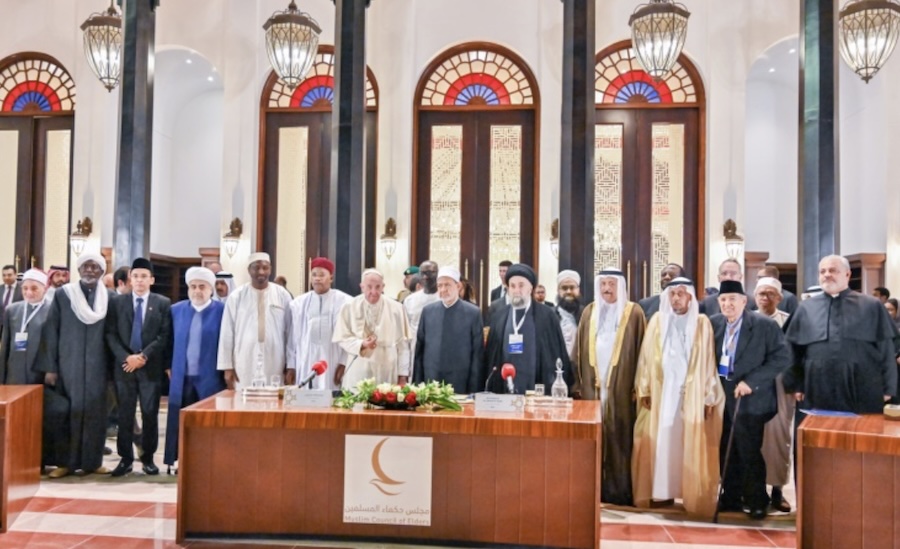
Expressed in Russian or Ukrainian, English or French, Japanese or Hindi, Arab or Spanish, Italian or Portuguese, the message is the same. The people of the world want peace! For the International day of Peace, more than 800 events in these languages may be found on the Internet, and we have published excerpts from them in the pages of CPNN last week. This year the official United Nations slogan is “Cultivating a Culture of Peace.”

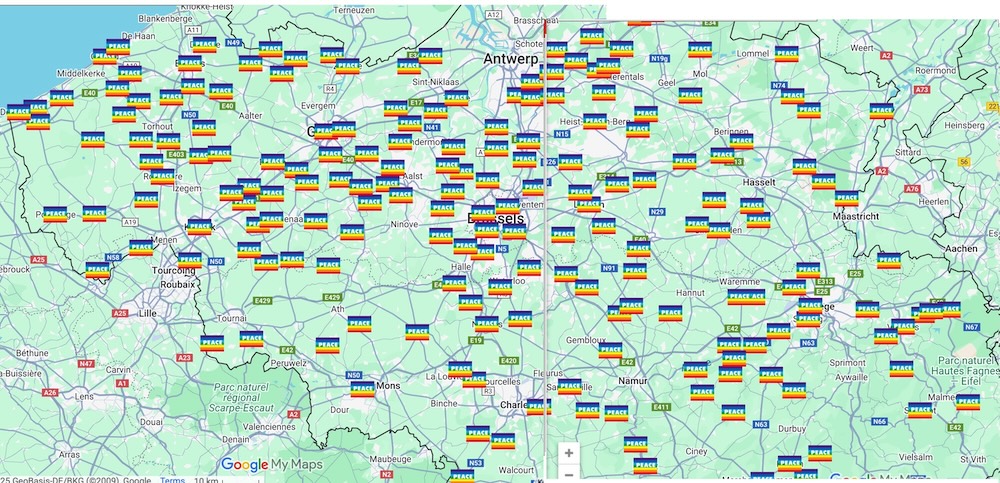
The greatest number, 391 or almost half of the actions, càme from Western Europe. Expressed mostly in French and organized for the most part by the Mouvement de la Paix and militant trade unions, there were rallies bearing the rainbow flag of peace in over half of the more than 100 departments of France. Expressed mostly in Italian, there were events for the International Day of Peace in 44 cities and towns of Italy, led by the annual peace march of Assisi that drew marchers from many other cities. In Belgium, 189 cities and towns hung the rainbow banner of peace from their public buildings. In Portugal, dozens of towns and schools hung white cloth in their windows to express their desire for peace. Spain and the United Kingdom also saw many actions. “If you want peace, prepare peace” was a frequent slogan.

In North America, there were 151 actions for the day of peace in 44 of the 50 states of the United States, with the most in California and Florida. City-wide celebrations took place in cities such as San Francisco, Chicago and Boston. In San Francisco the slogan was “You are a pathway to peace. Everyone is a pathway to peace.” School, universities and churches organized a great variety of actions to celebrate the day. While in Canada, there were events in 6 of the 10 provinces as well as an official declaration by the Prime Minister: “This week, as the UN General Assembly begins in New York City, let’s recommit ourselves to working together to build a better, safer, and more peaceful world.”

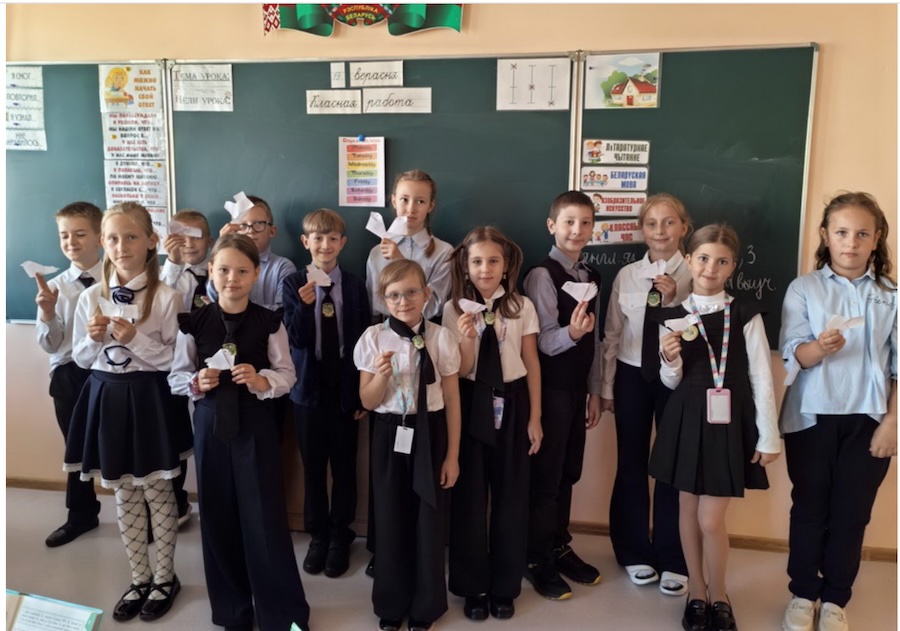
Despite the devastation of the war and the fact that it is illegal to mention it in Russia, there were 32 celebrations published on the Internet from Ukraine and 30 from Russia. While calling for peace, many of the actions emphasized support for their side of the war. In Moscow, where people have been sent to prison because they called for peace, many brought flowers and paper doves to put on the sculpture named “We demand peace!”. In the Ukraine, there were celebrations calling for peace that took place in air raid shelters during bombardments. As usual where it was possible, in many libraries and schools, children made paper doves and released colored balloons to mark the day. Perhaps most ironic was the article from Moldova where a school celebration was criticized for flying the rainbow flag of peace, because the rainbow flag can also be interpreted as support for homosexual rights.

There were 23 actions in 13 Arab and Middle Eastern countries, mostly reported in Arabic. Some of them emphasized the role of women for peace. The Syrian Women’s Council in Manbij Canton organized a dialogue seminar on the International Day of Peace, stressing the necessity of resolving the Syrian crisis and establishing peace there. In Aden, Yemen, An event was held with the participation of elite female cadres and members of the Women’s Solidarity Network, with discussions about the status of women and the importance of reflecting their priorities and needs in the Beijing Report.

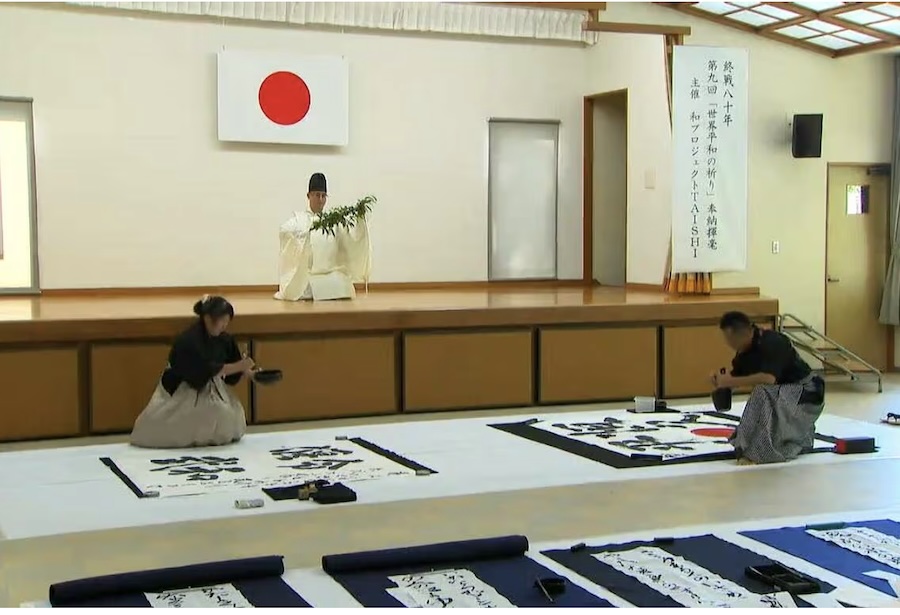
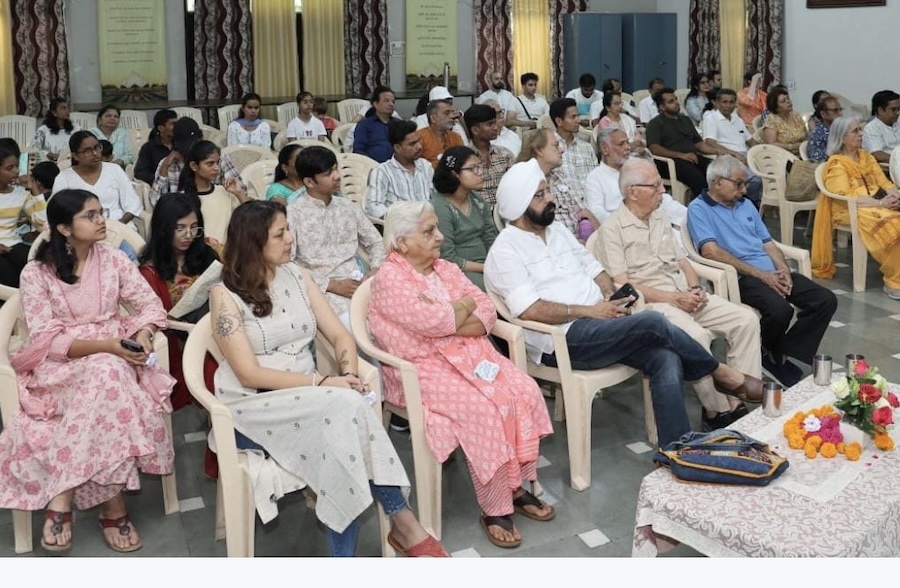
In Asia and Pacific, there were 64 events in 14 countries, with the most published in Japanese and Hindi. In Japan, The organization “Wa Project TAISHI,” mobilized calligraphy clubs and 27 calligraphers from 49 schools nationwide to dedicate calliography messages of peace to Gokoku shrines around the country. At a conference in Mumbai sponsored by the International Institute for Peace through Tourism, Ajay Prakash its new president, spoke eloquently on the power of Tourism to connect people across all boundaries of race, religion or nationality. In Nanjing, China, Chinese and foreign young people from 11 countries gathered to sing songs of peace and sow purple gold grass seeds which symbolize peace. One student said: “It is very meaningful to sow these seeds with my own hands. I hope that when the Purple Grass flowers bloom in March next year, people can see these flowers and remember the history behind them.”

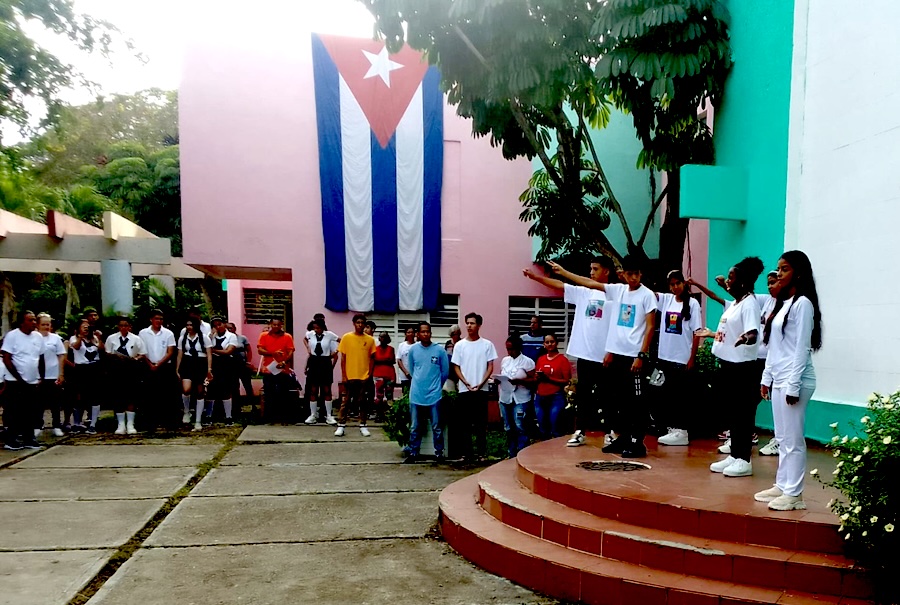
In Latin America and the Caribbean there were 59 actions in 19 countries, led by Argentina with 17 and Mexico with 16. In Nueva Leon, Mexico, The Nobel Peace Prize Laureates World Summit was timed to coincide with the International Day of Peace. 18 Nobel Peace Prize winners participated, as well as 1,200 young people from more than 70 universities across the country. vIn Mexico, the actions were especially emotions in the face of the violence that is tearing the country apart. The demonstration in Culiacán called on people not to normalize or accept the conditions of violence and fear that persist in the city, which have left more than 60 murders and more than 70 forced disappearances. In Colombia, events were dedicated to reconciliation and consolidation of the Peace Accords.

In Sub-Saharan Africa, there were 43 actions in 26 countries for the International Day of Peace. The official remarks of the African Union recognized the important role of the Biennale of Luanda. , the Pan-African Forum for the Culture of Peace. This year there was considerable participation by the military in African countries. In Nigeria, it was organized by the Security and Civil Defence Corps. In Ghana, it was organized by the Ghana Armed Forces at Airforce Base Takoradi. In Niger, it was organized by the by the High Authority for the Consolidation of Peace. In Gabon, the celebration took place in the stadium of the national gendarmerie. In Burkhina Faso the Ministry of Justice called for a return to endogenous values for the construction of peace and tolerance.

Among the many virtual events for the International Day of Peace, we may mention the following:
Dancing for Peace
Medicine for the Culture of War
Conference: Resisting the USA’s Military Empire
Songs for World Peace
Unite4Peace Worldwide Broadcast

The total number of actions this year was 834. This is greater than last year’s 942 if one adds the 153 new Montessori schools counted last year but no longer available on the Internet this year.

GLOBAL


What has happened this year: International Day of Peace

UNITED STATES AND CANADA


United States and Canada: International Day of Peace

EUROPE


Europe: International Day of Peace

ASIA AND PACIFIC


Asia and Pacific: International Day of Peace


EX-SOVIET COUNTRIES


Ex-Soviet Countries: International Day of Peace

ARAB STATES AND MIDDLE EAST


Arab States And Middle East: International Day of Peace

LATIN AMERICA AND CARIBBEAN


Latin America and Caribbean: International Day of Peace

AFRICA


Africa: International Day of Peace