FREE FLOW OF INFORMATION .
A survey by CPNN
We list here 391 events in 16 European countries that were listed this year in Google during the week of September 21-28 under the key words “International Day of Peace”, “Journée Internationale de la Paix”, “Dia Internacional de Paz”, “Dia Internacional da Paz”, “Internationaler Tag des Friedens”and “Giornata internazionale della pace” or were listed on the website of the Collectif de 21 septembre.
In France, there were events in 61 departments, well over half of all those in the country, and in Belgium there were events in 189 municipalities.
No doubt there were also many events listed on the Internet in the various national languages in Europe other than those for which we searched.
For events in European countries formerly part of the Soviet Union, click here.
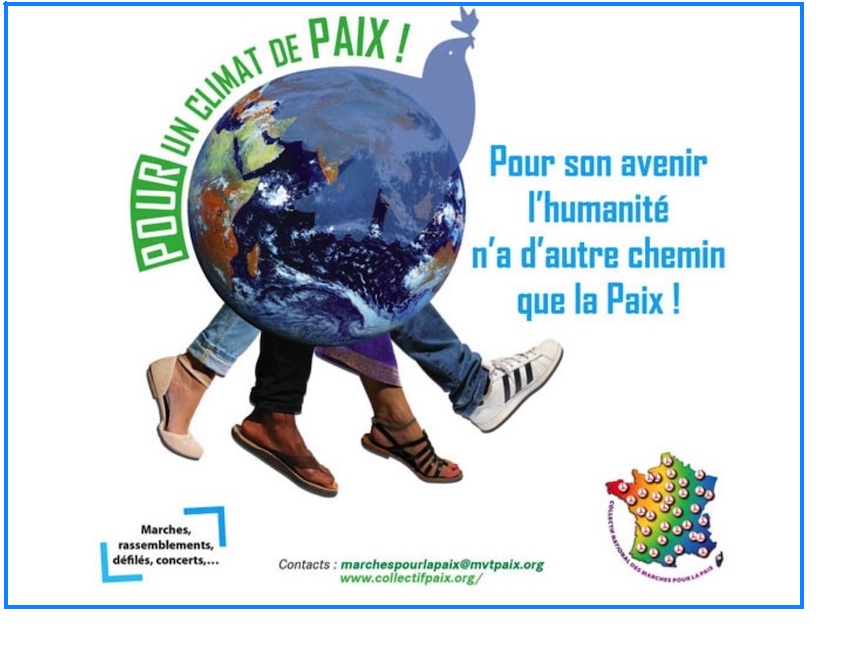 Poster for the events of Collectif de 21 septembre in France
Here are excerpts from the articles.
AUSTRIA
ST. PÖLTEN: On the International Day of Peace, September 21, students at the Eybnerstrasse School Center (SZE) are presenting an art project initiated by John Lennon’s widow Yoko Ono. Since 1996, the artist has erected so-called “Wish Trees” in numerous places around the world. There, people can express their idea of peace.
BELGIUM
Belgian Coalition Against Nuclear Weapons:
On the occasion of the International Day of Peace, we invite cities and municipalities in Belgium to participate in this UN appeal by hoisting the peace flag on their municipal building(s).
189 cities and towns that fly the flag of peace in 2024.
Amay – Andenne – Anderlues – Anhee – Antoing – Arendonk – Arlon – Auderghem – Avelgem – Awans – Balen – Bastogne – Beauvechain – Beernem – Begijnendijk – Beringen – Berlare – Bever – Bilzen – Boechout – Bonheiden – Borsbeek – Braine-l’Alleud – Bredene – Bruges – Buggenhoutv – Chapelle-lez-Herlaimont – Chaumont-Gistoux – Châtelet – Ciney – Comines-Warneton – Courcelles – Damme – Deerlijk – Deinze – Dessel – Destelbergen – Diksmuide – Dilsen-Stokkem – Doische – Donceel – Ecaussinnes – Eeklo – Engis – Esneux – Estaimpuis – Evere – Evergem – Ferrieres – Flobecq – Florennes – Florenville – Frameries – Frasnes-lez-Anvaing – Geetbets – Genappe – Genk – Ghent – Gistel – Grobbendonk – Haacht – Halle – Ham – Ham-sur-Heure – Nalinnes – Hamois – Hannut – Harelbeke – Hastiere – Hechtel-Eksel – Hensies – Herenthout – Herne – Heusden-Zolder – Hoeselt – Holsbeek – Hooglede – Hotton – Houthalen-Helchteren – Ichtegem – Ittre – Izegem – Jemeppe-sur-Sambre – Jodoigne – Juprelle – Kasterlee – Koekelare – Koksijde – Kontich – Kortemark – Kortessem – Laarne – Lanaken – Lede – Lendelede – Lennik – Lessines – Leuven – Libin – Lichtervelde – Lierde – Lierneux – Limbourg – Lo-Reninge – Lommel – Lummen – Léglise – Manage – Manhay – Marchin – Mechelen – Meerhout – Meise – Melle – Merchtem – Merelbeke – Merksplas – Mesen – Messancy – Mettet – Meulebeke – Momignies – Mons – Mont-de-l’Enclus – Mouscron – Nieuwpoort – Nivelles – Oud-Turnhout – Oudenaarde – Oudenburg – Ouffet – Peer – Pepinster – Peruwelz – Poperinge – Profondeville – Putte – Quaregnonx – Raeren – Ramillies – Rendeux – Riemst – Roeselare – Ronse – Roosdaal – Rouvroy – Ruiselede – Rumes – Saint-Hubert – Saint-Léger – Saint-Nicolas – Schelle – Sint-Jans-Molenbeek – Sint-Lievens-Houtem – Sint-Niklaas – Soignies – Spa – Steenokkerzeel – Stekene – Tenneville – Ternat — Tessenderlo – Thuin – Tielt – Tinlot – Tubize – Vielsalm – Vilvoorde – Viroinval – Virton – Waasmunster – Wachtebeke – Waimes – Walhain – Wanze – Wasseiges – Waterloo – Wavre – Wetteren – Wichelen – Willebroek – Wingene – Woluwe-Saint-Lambert – Wortegem-Petegem – Ypres – Zelzate – Zemst – Zonhoven – Zulte – Zutendaal – Zwijndrecht
BRUSSELS: An event organized by the Heartfulness Foundation. Join us to meditate on the occasion of the International Day of Peace. This day is a unique opportunity to experience inner peace in the heart of urban hustle and bustle. Whether you are a novice or an expert in meditation or yoga, this event is accessible to all. Come explore, meditate and let your creativity flow. Together we can create Peace!
Program of the day:
11 a.m. Public meditation for peace (30′)
1 p.m. Chair yoga followed by meditation (60′)
3 p.m. Concert (violin/guitar 45′)
4 p.m. Public meditation for peace (30′)
BOSNIA AND HERZEGOVINA
MOSTAR: United World College (UWC) Mostar, the Network for Building Peace, forumZFD in Bosnia and Herzegovina (Forum Civil Peace Service), and the Local Democracy Agency Mostar (LDA Mostar), with the support of the United States Agency for International Development (USAID) and the Rockefeller Brothers Fund, are organizing the celebration of the International Day of Peace on September 21, and UWC Day on September 21. During the event, the ‘Goran Bubalo Peace Award’ will be presented, and the ‘Global Campaign for Peace Education’ will be marked on September 20. Additionally, there will be educational activities, conferences, theatrical performances, and workshops attended by students from 72 different countries, including those from regions currently experiencing conflicts. We will conclude the event with a rock concert aimed at young people and anyone who feels young at heart.
CROATIA
ZAGREB: Join the celebration of the UN-proclaimed World Day of Peace and light your peace candle, cast your vote for peace! We cordially invite you and all your colleagues, friends, children and everyone who wants to clearly say their YES to peace to the commemoration on Saturday, September 21, at 10 a.m. by the Peace Tree in Vjekoslav Majer Park in Zagreb.
CYPRUS
NICOSIA: This year, on the International Day of Peace, join us to celebrate the joint efforts of civil society in #cultivatingpeace! On the 21st of September, the Home for Cooperation, the Association for Historical Dialogue and Research (AHDR), United Sports Cyprus (USC) and The Home Café are coming together for a day full of activities for all ages! Join us for an evening stroll around Nicosia across the divide to celebrate this year’s International Day of Peace! . . Concluding the activities and ending the night with full energy with DJ Claudio on the decks! Claudio’s freestyle DJ sets revolve around disco, house, funk, retro, RnB, hip hop, rock, electronic, soul, jazz, swing, afro-latin & more.
FRANCE
AIGONDIGNE (79): Sophie BOISSY, Creative Connection Coach and Constellator working in Aigondigné, will welcome you at her home in Montaillon on Saturday, September 21 from 10:00 a.m. to 11:00 p.m. for activities, exhibitions, meeting and discussion times, meditation, etc. on the occasion of the International Day of Peace. To view the full program CLICK HERE
ALBERT (89): International Day of Peace: Peace rally in Albert, Saturday, September 21, 2024. In Albert (Somme) we call to gather on Saturday, September 21 from 10:30 a.m., in front of the Town Hall, Place Emile Leturcq. At the call of: La Picarde maudissant la guerre (inter-organization pacifist collective), Mouvement de la Paix, the CGT (Albert local union and Somme departmental union), La France Insoumise (Somme), PRCF (Communist renaissance pole in France, Somme), Left Party (Somme). With the support of the Eco-socialist Left (Somme) and the Human Rights League (Amiens)
ALBI (81): Rally for Peace at the National Garden from 2 p.m. to 5:30 p.m. For its future, humanity has no other path than peace.
ALENÇON (71): The local committee of Mouvement de la Paix will hold a stand on the Alençon market on the occasion of the international day of peace, Saturday September 21, 2024. “The aim is to inform the entire population of Alençon and its surrounding area about the need to develop, everywhere and for everyone (children, young people, adults) a culture of peace everywhere on our Earth ,” explains the collective. Interested people will be able to express their support by signing petitions or joining the local committee.
ALÈS (30): Espace Cazot in Alès. And if there is only one unique victory, is it peace?
– Friday Sept 20 14:00-17:00 Words from scholars of Cevenne, Conference, Lecture, Debate.
– Saturday Sept 21 18:00-20:30 Conference debate: If you want peace, prepare for peace.
ANGERS (49): In Angers in Maine et Loire, 3 dance schools will accompany us for a parade on September 21, the International Day of Peace! . . In Angers, we have chosen to make HOPE germinate through Dance . . Dance has the power to rebuild our relationship with the world and with others, thus contributing to living together.
ANGOULÈME (16): The Charente Committee is organizing in Angoulême with other associations a demonstration on Friday, September 20. And on Saturday 21 an afternoon for the culture of Peace with exhibitions and a screening of “The Bomb and Us” followed by a debate on “the atomic bomb today”.
ANNECY (74): The rally – demonstration this Saturday 21 is at 2:30 p.m. at the Annecy Prefecture. First signatory organizations: Mouvement de la Paix, PCF, Ecologists, Palestine Solidarity Collective Annecy, Departmental Union CGT74, Human Chain against hatred.
APT (84): The Apt country committee is calling for a Peace Rally on the market square on September 21. The national appeal and some texts and songs by artists are planned to be read.
ARRAS (62): On the occasion of the International Day of Peace, Mélina Robert-Michon, seven-time participant in the Olympic Games, Olympic vice-champion in discus throwing in Rio in 2016, and flag bearer for the French team at the Paris Games, will give a conference at the Casino, Saturday, September 21 at 9:30 a.m. This highlight is part of the Grande Cause arrageoise 2024: “Sport and Peace”.
BELFORT (90): International Day of Peace, Maison de quartier, Belfort. Saturday 21 September from 14:30 to 16:30. Projection of video, “Peace begins with me”. Meditation in groups. Exchange of participants with refreshments.
BESANÇON (25): Rally for Peace in Besançon Saturday, September 21, 2024 as part of the International Day of Peace. 11:00 AM Place des Glacis in front of the war memorial. At the initiative of Mouvement de la Paix and the September 21 collective, supported by the CGT, the MRAP, the PCF, Peuples Solidaires, etc. Learn more
BRIVE, USSEL, MEYMAC, SAINT-MARTIN-LA-MÉANNE (19): As part of September 21, International Day of Peace, the Corrèze collective of marches for peace invites you to participate in two pacifist gatherings:
– Brive at 10:30 a.m., in front of the tree of Peace, Parc de la Guierle
– Ussel at 10:30 a.m., in front of the tree of Peace, Square de la Paix
Also, ceremonies of the trees of Peace, with schools and town halls:
– Meymac on Wednesday, September 25 at 11:00 a.m.
– Ussel: Thursday, September 26 at 2:30 p.m.,.
– Saint-Martin-la-Méanne on Friday, September 27 at 3:30 p.m.
CAEN (14): The 7th edition of the Normandy World Forum for Peace will take place on September 26 and 27, 2024 in Caen. More than a forum, it is a moment of exchange and reflection for the construction of a better world. The event allows us to reflect on the tensions, the construction and preservation of peace, in all its forms. . . For two days, interactive debates and workshops will bring together many speakers from around the world around major issues. Among them, heads of state, Nobel Peace Prize winners, diplomats, geopolitical experts, journalists and association leaders who come to share their experience and build tomorrow’s peace. The Village for Peace will be open to the general public continuously with many activities for young and old: street arts, concerts, treasure hunts, photo exhibitions, projections, related readings…
CAHORS (46): Rally for the International Day of Peace Saturday September 21, 11AM in front of City Hall. Initial signatories: Mouvement de la Paix, CGT, Solidaires, FSU, Confédération Paysanne, LDH Cahors, Amis de l’Huma 46, France Insoumise, PS du Lot, Ensemble 46, Assemblée Lotoise, PRG46, L’AFPS 46, Génération.S 46.
CARCASSONE (11): COME LET’S CULTIVATE PEACE as part of World Peace.
The GISC association (Groupe Intervenant Spectacle Concert) in partnership with the MJC (Maison des Jeunes et de la Culture) is organizing the 5th edition of the International Day of Peace, for the benefit of UNICEF in Aude. Maison des Jeunes et de la Culture, 3 p.m. – 4 p.m.: open stage poetry and slam
4 p.m. – 6 p.m.: concert with the BALBERGMAN troupe composed of 10 artists (French song – Daniel Balavoine, Michel Berger and Jean Jacques Goldman).
CASTRES (81): (81): Peace march and film screening
Date(s): 09/21/2024. At 11 a.m. in front of Jean Jaurès’ birthplace in Castres, 5 rue Sœur Richard. Walk from Place Soult to the Jean Jaurès Museum, passing through the city center. 2:30 p.m. at Café Jean Jaurès Screening of Xavier-Marie Bonnot’s documentary film, La Bombe et Nous (2017), on atomic weapons, followed by a debate on the current danger of a nuclear catastrophe.
CHAMBÉRY AND MONTMÉLIAN (73): Gathering and march for peace. Montmélian (Jardins d’Hötsch): March for Peace Friday, September 20 6:30 p.m.
Chambéry: Place de l’Hôtel de Ville, Gathering for Peace Saturday, September 21. 10:30 a.m. Mouvement de la Paix, Alternative and Self-management, France Palestine Solidarity Association, Palestinian Children Solidarity Association, Cap à Gauche, CGT, EELV, FSU, LFI, Greenpeace, Free Thought, Human Rights League, PCF, PS. The Montmélian committee will intervene on September 19 and 20 in six elementary and nursery schools; the municipal libraries of Montmélian and Myans will present a selection of books on Peace.
CHAPAREILLAN (38): Peace at the heart of workshops, this Saturday, September 21, Le Dauphiné Libéré – September 17, 2024 at 7:41 p.m. – For several years, on the occasion of the UN International Day of Peace, the Baha’is of Savoie and Chapareillan have organized a sharing meeting around workshops, in an orchard in Chapareillan. Saturday, September 21, the 3rd edition of this day under the sign of sharing, joy…
CHATEAUROUX (36): To relay the call of the National Collective of Peace Rallies and to promote the values of peace and universality, the Mouvement de la Paix will be present in Châteauroux, Saturday, September 21, from 9 a.m. to 1 p.m., in the grounds of a busy market. Flags in the colors of the movement and fluorescent vests will signal the presence of the members of the Committee who will invite discussion, exchanges, and membership. A batucada walk, songs and recitation of poems will ensure the festive side.
CHÂTELLERAULT (86): September 21 is the International Day of Peace. In Châtellerault, representatives of Christianity, Islam and Judaism are organizing a highly anticipated cultural event: “Art as an Instrument of Peace” . . . Four speakers, each representing one of the spiritual currents making up the association (Jews, Catholic and Protestant Christians, Muslims), will present their vision of “art as an instrument of peace” , the theme of the round table. . . This unique meeting will be followed by two other parts: concerts (Arab-Andalusian, Hispanic-Sephardic, Gregorian chants, etc.) then a friendly exchange (catering, tea, etc.) to end the evening.
CHEVILLY-LARUE (94): Labeled “Messenger City of Peace” since 2014, Chevilly-Larue could not fail to celebrate the International Day of Peace which, every September 21, has called for a ceasefire in combat zones since its creation in 1981. . . You are invited to participate in a walk that will take the form of a treasure hunt in autonomy, by answering a questionnaire, in order to recognize in a fun way the heritage of peace and fraternity. The winners will be rewarded before a big friendly snack concocted by the associations which will close the day of September 21 at Martorell Square.
CHOLET (49): The collective for peace organizes as every year an action for the international day of peace in Cholet, place Travot, on Saturday September 21 from 3 p.m. to 5 p.m. The theme of this year is: “Stop the wars, For freedom” From an exhibition of war photos, we invite all the people of Cholet to exchange and act for Peace. . For those who wish, simple actions will be presented. The Choletais collective for peace (Mouvement de la Paix, Diallo committee, Misolcho, AFPS-49, Amnesty, JOC)
CLUNY (71): A unique experience: the last sunset of the summer, by candlelight, on the Cluny Abbey accompanied by the piano of Frank Woeste, and the 100 choristers led by Gabriel Mattei, to celebrate the International Day of Peace.
DIEULEFIT (26): To celebrate the International Day of Peace and Nonviolence, the Unipaz association is organizing a Peace Festival on September 27, 28 and 29 in Dieulefit, near Montélimar (26).
This event invites you to experience, through meetings, films, discussions, games, creative workshops and other activities, a culture of peace for all (adults, adolescents, children and families).
It will be accompanied by the exhibition “Art in support of peace” at the Galerie Craft (50 rue du Bourg) from September 14 to 29 where two artists, Anke de Vries (collages) and Laurent Félix-Faure (watercolors), will sell their paintings to benefit Unipaz.
DIJON (21): This Saturday, September 21, the International Day of Peace will take place in Dijon with a gathering initiated by a collective of Côte-d’Or organizations: Association France-Palestine Solidarity 21, Al Rowwad, ATD Quart Monde Dijon, ATFM 21, Attac 21, CGT, Ensemble! 21, FSU 21, GES, LDH Dijon and agglomeration, LFI, LSR 21, Movement for a non-violent alternative, Mouvement de la Paix, Movement against racism and for friendship between peoples, PCF 21, Independent Workers’ Party, Solidaires 21…
DINAN (22): We, activists of the Mouvement de la Paix of the DINAN region, invite you to a gathering in front of the DINAN war memorial on Saturday, September 21 from 11:30 a.m. to 12:30 p.m.
EMBRUN (05): INTERNATIONAL DAY OF PEACE Saturday, September 21, 2024. Walk, exhibition, concert for peace in the large hall of the Manutention of EMBRUN
11:00 a.m.: Opening to the public and Walk for Peace from Delaroche car park.
12:00 p.m.: Peace Bell and two minutes of silence for Peace.
2:00 p.m.: Exhibitions
7:00 p.m.: From the top of the worlds music (harp, guitar and double bass)
8:00 p.m.: Jazz Club
10:00 p.m.: Open stage
EPINAL (88): The Vosges Committee of the Peace Movement responds to the call of many democratic organizations, associations, left-wing parties and unions, as well as various personalities, for the immediate release of Kanak political prisoners, for an immediate ceasefire, the condemnation of racist militias, the repeal of the law on the unfreezing of the electoral body, and the continuation of the process of decolonization of Kanaky, a guarantor of a just peace.
Sunday 09/22/2024, March for peace, gathering 10 am in front of the Vosges prefecture in Epinal;
Aperitif at 11:30 a.m., presentation of the book “Ecology and Peace” by PO POYARD;
Meeting of the Kanaky 67 collective at 2 p.m., at the Epinal Cultural Center
FOIX AND ESPIES (09) : This September 21, 2024, the Mouvement de la Paix will mobilize in Ariège for peace, climate, nuclear disarmament, social justice, friendship between peoples and solidarity. Two meetings are organized:
– Gathering at 10:30 a.m. in Foix, (prefecture city) at the initiative of the inter-union CGT, FSU, Solidaires and the Mouvement de la Paix
– Gathering at 4:30 p.m. in Espies, Boussenac town hall. We hope to be numerous to support and publicize the initiative of the town hall, which has decided to hang the peace flag and to commit itself alongside the Mouvement de la Paix. We also hope to create a local committee: several people are interested in the valley.
GRANVILLE (50): Tracing the UN acronym in the sand of Plat Gousset. 09/21/2024., 12:00 pm – 3:00 pm. At the initiative of Agir pour le Climat Granville – Terre et mer (as we had drawn it at Mont Saint Michel on 09:21:2022).
GRENOBLE (38): PEACE MARCH Saturday, September 21. Meet at 10:00 AM at Place St Bruno in GRENOBLE, in front of the wooden dragon. A musical conclusion is planned upon arrival (at the new Museum).
GUERET (23): On the occasion of the international day of peace, the association “Mouvement de la Paix Comité de la Creuse” is organizing several shows, concerts, and association stands in front of the town hall of Guéret on Saturday, September 21, 2024 from 2 p.m. to 6 p.m. This event promotes the active defense of peace and freedom, and the fight against war. During this afternoon, many actors will perform, such as the Théâtre d’Or, the Chorale Dissonante, the Caravane des Libertés, the Chorale des Résistances Sociales, and Musique Sociale.
HARFLEUR(76): Saturday, September 21, 2024 will be a day to remember in Harfleur. Indeed, two major events will take place today: Heritage Days and International Peace Day. . . The festivities will begin at 2 p.m. in the town hall park with vintage civilian and military vehicles from the specialist associations “Latitudevasion” and “Les voitures retro d’Harfleur Beaulieu”. . . At 5pm, the Harfleur Youth Municipal Council, along with those from Rouelles and Montivilliers, will begin a commemorative march celebrating Liberation and Peace . Join them for a departure from the Hôtel de Ville park! At 6 p.m., meet on the forecourt of the Town Hall, park side, for an official commemorative ceremony followed by the inauguration of the plaque naming the educational orchard on the La Forge plain. Finally, the evening will be dedicated to the “Grand Bal de la Libération” at the Forge from 7 p.m.
HENNEBONT (56): In Morbihan, PEACE MEETING in HENNEBONT at the initiative of Mouvement de la Paix with the support of: La Libre Pensée 56, Association France Palestine Solidarité Pays de Lorient, Attac, La Cimade, Loisirs et Solidarité des Retraités 56, FSU, CGT, Solidaires, PCF, UDB, Les Ecologistes Pays de Lorient, La France Insoumise Pays de Lorient.
KAYSERSBERG-VIGNOBLE (68): Come celebrate the International Day of Peace, as well as the first anniversary of the Schweitzer Center! Take part in a drawing competition, enjoy the activities, guided tours of the center, concerts and food on site. This place is based on the peace work of Albert Schweitzer, Nobel Peace Prize winner born in Kaysersberg, to show that peace is everyone’s business.
LA COURNEUVE (93): Co-constructed with associations and residents, the 2024 edition of Peace Day aims to celebrate cultural diversity, bring residents together, and reaffirm the values of openness, dialogue, and peace. Through the theme of “matrimony”, the associations will highlight the role of women in promoting living together. Festive and educational content will be offered, with a guided tour of the area from the perspective of matrimony in La Courneuve, stands held by the associations, the call for peace by the Mayor, and also a friendly meal.
LA RÉPARA-AURIPLES (26): The Rochecolombe Committee – Mouvement de la Paix in partnership with the town of La Répara-Auriples (26) will inaugurate the Place de la Paix next to the town hall of this town on Saturday, September 21 at 11:00 a.m.
LARAGNE (05): Peace rally. Two initiatives are planned for Saturday, September 21:
– 10 a.m. STOP WARS rally – Place de la Fontaine in Laragne
– 11 a.m. Celebration in front of the olive tree of peace in partnership with the municipality of Laragne, in the presence of a local choir.
LE CREUSOT (71): So that the citizens of Le Creusot can express their desire for peace, the Collectif pour la Paix invites you to participate at the rally on Saturday, 21 September at 11:30, Esplanade des Droits de l’Homme (in front of city hall) If the weather pemits,we will lanuch balloons together.
LE HAVRE (76): The Mouvement de la Paix of Le Havre invites you, citizens, associations, unions and organizations promoting a culture of peace, to participate
in the gathering for Peace on Saturday, September 21, International Day of Peace from 3 p.m. at Place Danton
LIBOURNE (33): Poetry evening and tree of peace at the initiative of the Libourne group of the Mouvement de la Paix-Committee. Maison des Associations (MDA), Bd de Quinault in Libourne from 6 p.m. The evening will be devoted to a tribute to the Palestinian poet MAHMOUD DARWICH, Reading of poems from the poet’s anthology published in bilingual French-Arabic (Palestinian) with musical interludes.
LYON AND VÉNISSIEUX (69): Gathering and events for peace.
– The Vénissieux (69) committee is organizing the following events with the city on September 25: 5 p.m. Anne Sylvestre Leisure Center: Planting of a tree and exhibition of the fresco painted by children on the course of the 39-45 war. 6:30 p.m. Gérard Philipe Cinema – Exhibition, film and debate with ICAN – Aperitif offered by the city
– The Rhône departmental committee is organizing a gathering on Saturday 09-21 from 1 p.m. to 3 p.m. at Place de la Comédie in Lyon
MÂCON (71): Saturday, September 21, is the International Day of Peace, initiated by the UN. The Mâcon collective supporting Palestine has therefore decided to initiate a gathering for PEACE in Mâcon, with the support of local organizations Attac, LDH, LFI, MAN (Movement for a Non-violent Alternative) and the PCF. This gathering will take place from 11 a.m. to 12:30 p.m. on the Lamartine esplanade on Saturday, September 21.
– To demand justice throughout the world, without which peace cannot be envisaged.
– To demand ceasefires in Palestine, Ukraine, Sudan, Congo, and in the 38 conflict zones listed by the UN.
– To say stop to colonialism in Kanaky, Palestine and elsewhere, and to demand respect for the people.
MALAKOFF (92): Reknit the peace as part of the Tréso festival from 11 a.m. to 6 p.m. (8 av. du Président Wilson- Malakoff) Participatory workshop with the Collectif des Artistes pour la Paix where everyone is invited to sew their message for peace.
Sunday, September 22 from 10:30 a.m. Animation on Place du 11 Novembre during the market
MARIGNAC (31): Samedi 21 septembre 2024, the International day of Peace in the Comminges will take place at Marignac, place des évadés. Day called for by the national collective of marches for peace, and locally by the CGT, FSU, Solidaires, COMICO, collective Palestine Comminges, Mouvement de la Paix, Ecologistes, PCF, collective QLAC, UJFP, FI.
MARSEILLE, ISTRES, PORT-DE-BOUC (13): Gatherings for peace. Multiple organizations in forum and artists who punctuate speeches and commitments:
– Istres: Friday, September 20, 2024 at 6:30 p.m. Esplanade Bernardin Laugier, Istres City Hall.
– Marseille: Saturday, September 21, 2024, at 4 p.m., Place Bargemon, Marseille Central Town Hall, Quai du Port.
– Port de bouc: gathering around the mayor of organizations. 10 a.m. pyramid of peace, sardinades esplanade.
MARTIGUES (13): Every year, the Martigues Youth and Peace Department organises a number of initiatives to mark 21 September, the International Day of Peace. The 2024 programme:
– Wednesday 18 September in the Ferrières garden. 3pm: Various creative, sporting and fun workshops. From 6pm: Vernissage of all the day’s creations. Intergenerational choir.
– Thursday 19 September at the Cascade cinema in Jonquières.
‘Let’s get together around a film’. From 7pm, exhibitions of works by young people from Martégaux followed by the screening of the film ‘L’histoire de Souleymane’ on the theme of modern slavery.
MITRY-MORY (77): On the occasion of the International Day of Peace, the municipality is organizing a festive event on Saturday, September 21 , on the Plaine Guy Môquet. The association of mayors for peace created the Live Peace event in which the city decided to participate for the first time. From 2pm, you can take part in an afternoon punctuated by numerous activities and organized around a friendly and solidarity football tournament. The development of a participatory fresco and the exhibition of drawings on the theme of peace, produced by the children of the leisure centers throughout the summer are also on the program.
MONTPELLIER (34): Peace Week.
– Tuesday, September 17: Exposition, Guided visit, Conference-debate, “Act for disarmament”
– Wednesday, September 18: Film, “My country manufactures armaments”.
– Thursday, September 19: Conference-debate, “How to conteract war propaganda”
– Friday, September 20: Film, “The bomb and us.”
– Saturday, September 21: March for peace
MOULINS (03): The Moulins committee is organizing an initiative for the international day of peace at the Moulins village hall, on Friday, September 20 from 6:30 p.m.: speeches by the organizations, followed by a friendly and musical evening. Shared buffet, everyone can bring drinks and food.
NANCY (54): The Vosges Committee of the Peace Movement responds to the call of many democratic organizations, associations, left-wing parties and unions, as well as various personalities, for the immediate release of Kanak political prisoners, for an immediate ceasefire, the condemnation of racist militias, the repeal of the law on the unfreezing of the electoral body, and the continuation of the process of decolonization of Kanaky, a guarantor of a just peace.
Saturday, September 21, in Nancy MANIF for Peace, 10:30 a.m., place Charles III.
NICE AND MOUANS-SARTOUX (06): The Mouvement de la Paix of the Alpes Maritimes is organizing 2 actions:
– Friday, September 20 at 6 p.m. in Nice: March for Peace throughout the world – Departure from Place Garibaldi then meditation in front of the Olivier de la Paix of the Lycée Masséna
– Saturday, September 21 at 8 p.m. in Mouans-Sartoux. Peace Ball “Let’s sing and dance for Peace” at the Léo Lagrange room
NIMES (30): NIMES COMMITTEE OF THE MOUVEMENT DE LA PAIX, SATURDAY, SEPTEMBER 21, 2024, WORLD DAY OF MOBILIZATION FOR PEACE, 10:30 a.m. CARRÉ D’ART, Support for Gaza and Palestine for peace and an end to the fighting
– 11:30 a.m. PARVIS DES ARÈNES, Speech by the Mouvement de la Paix; formation of a human chain around the arenas.
– 3 p.m. at PROLÉ: CULTURES OF PEACE. Welcome with our friends from Réfugiés Bienvenus, tea and pastries offered.
– 3:30 p.m.: The Lou Cantaïres choir will perform the Ode to Joy and 6 other songs
– 4:30 p.m.: Conference-debate “War and Peace”, by Simone Mazauric, philosopher, member of the Academy of Nîmes.
– In partnership with: Les Rencontres Diderot; Réfugiés Bienvenus; AFPS 30; IHS CGT 30; UD CGT 30; FSU 30; LSR 30; PCF; ARAC; ENSEMBLE; Amitié Algérie; Libre pensée, LFI Gard
NIORT (79): :
Thursday September 21st, International Day of PEACE:
gathering in front of the Niort courthouse at 5 p.m. AND Saturday September 23 united march, against police violence, against systemic racism, for public freedoms
March at 2:30 p.m. Place Auzanneau in Niort.
ORSAY-LES ULIS CHEVREUSE VALLEY (91):
– September 21 in Orsay 9:30 a.m. Raising of the peace flag on the pediment of the Town Hall in the presence of Mr. Rémi DARMON, the Mayor of Orsay
– September 21 in Les Ulis at 11 a.m. Speech as part of the Fête de la République.
– September 21 between Les Ulis and Orsay, 1 p.m. March for Peace ending with a participatory picnic.
– September 22, we will lay a wreath at the invitation of the Municipality of Orsay as part of the inauguration ceremony of the Borne du Serment de Koufra “route of the 2nd DB”. We will be present with our peace flags.
PARIS, 17TH ARRONDISEMENT (75): Friday, September 20, on the occasion of the International Day of Peace, Geoffroy.Boulard, Mayor of the 17th arrondissement and Michel TERRIOUX, Delegate Counsellor on Memorial Policy, Citizenship, Combat World and Funeral Affairs invite you to the inauguration of the Statue of Peace and the Brotherhood.
PARIS, PLACE DE LA RÉPUBLIQUE (75):Gathering on Saturday, September 21 at 3:30 p.m. at Place de la République in Paris. With the participation of members of the Collective “En Marche pour la Paix”
PARIS, UNESCO (75): On the occasion of the International Day of Peace, the collective of official partner NGOs of UNESCO is organizing a conference on the theme “Shared Dance and Peace” in co-production with the Association of Retirées of UNESCO and the support of the French National Commission for UNESCO.
PERPIGNAN (66): From September 16 to 22, the association Cultures de paix will organize for the second consecutive year a week of initiatives (conferences, mobilizations, etc.) in several municipalities in the department for world peace. In the wake of the Paris Olympic Games, the event will focus on the theme of sport. Highlight of the week will be the festive mobilization in the form of a human chain which will be deployed in Perpignan, between the train station and Place Catalogne on Saturday 21, International Day of Peace, between 5 p.m. and 8 p.m.
POISSY (78): On the occasion of the International Day of Peace on 21 September, a ceremony at 18:00 in the Olive Garden of Poissy.
QUIMPER (29): Demonstration for peace at the Médard bridge near the large Saturday market. Leaflet distribution, Speech by the Mouvement de la Paix, ICAN 29 (collective for the Banning of Nuclear Weapons), AFPS and free thought. Demonstration in the streets of the city towards the Peace Garden (banners, placards, slogans, etc.) Gathering of many organizations: Political parties (PCF, UDB, LFI, EELV, NPA), unions (CGT, FSU, Solidaires, CNT), associations (ARAC, 4ACG, AFPS, AE2D, free thought 29), collectives for a just peace in the Middle East, collective for the banning of nuclear weapons, collective “NO to the SNU”
REIMS (51): In Reims, an action for the International Day of Peace will take place SATURDAY, SEPTEMBER 21, 2024 at 11:00 AM in front of the Foujita Chapel, otherwise known as “Our Lady of Peace”. The address is: 33 rue du Champ de Mars.
RENNES (35): In Rennes, meet on Saturday, September 21 at 3:30 pm at Cours des Alliés at the Champs Libres and March for Peace to Place de la République. Then a meeting-debate at the Maison internationale de Rennes starting at 5:30 p.m.: “From the neighborhood to the Planet Cultivating Peace”.
SAINT-ETIENNE (42): A peace rally will take place on Saturday, September 21, at 10:30 a.m., at Place Jean Jaurès in Saint-Etienne, on the occasion of the International Day of Peace. “The toll in terms of crimes against humanity or war crimes continues to grow”, while we are witnessing “an unacceptable increase in global military spending which has reached 2,420 billion dollars in 2023”, denounces the collective.
SAINT JUNIEN (87): Peace Rally at 11:00 AM at Square Joliot Curie. Lottery at 8:00 PM at the Salle des Fêtes: “Leave us in peace!” organized by the association FOUTEZ-NOUS-LA PAIX.
SAINT-LÔ, EQUEURDREVILLE (50): Peace Rally. The UD CGT of Manche calls on employees, unemployed and retirees to participate in the rallies organized on Saturday, September 21, at 10:30 a.m. at the Olivier de la Paix, rue des Résistants in Equeurdreville and at 11:00 a.m. in front of the media library in Saint-Lô where the appeal initiated by the Mouvement de la Paix and supported by many political, union and associative organizations will be read.
SAINT-MALO (35): Rally for peace. In Saint-Malo, rally at Esplanade St-Vincent at 3:00 p.m., with the participation of AFPS, Femmes solidaires, CGT, FSU, Solidaires, LDH, ARAC, ATTC, PCF.
SAINT-SAVOURNIN (13): Peace Festival. Our local committee of Saint-Savournin will participate on Saturday, September 21 in the third edition of “Nature en fête, let’s cultivate Peace” organized by the city of La Bouilladisse (Bouches-du-Rhône). Complete program and details with this link. Sunday, September 22, Peace Festival in Saint-Savournin (Bouches-du-Rhône)
SAINTES (17): On the occasion of the International Day of Peace, the CGT and the Human Rights League are organizing a rally on Saturday, September 21, at 10:30 a.m., in front of the Saintes courthouse.
SARAN (45): As part of the International Day of Peace 2024 – “Cultivons la Paix”,
the Orléans company KRIZO THEATRE will present its show NOBEL ET BERTHA. This is the true story of the first woman Nobel Peace Prize winner. In a whirling and joyful duet, Aimée Leballeur and Christophe Thébault tell us about the improbable meeting between Alfred Nobel, a dynamite salesman, and Bertha Von Suttner, a writer and pioneer of pacifism. A powerful meeting in the service of peace.
Sunday, September 22, 2024
, Galerie du château de l’étang in Saran
at 4:00 pm.
STRASBOURG (67): UEPAL (Union of Protestant Churches of Alsace and Lorraine). The World Council of Churches (WCC) has just released new resources for the 2024 World Week for Peace in Palestine and Israel, which will take place from 16 to 22 September. This week will also mark the United Nations International Day of Peace on 21 September, now in its 25th year. . . This year’s message reflects the distress at the suffering and devastation caused by Israel’s war on Gaza . . and asks the question: Why, despite many efforts and resolutions, does peace continue to elude us?” . . During the World Week for Peace in Palestine and Israel, church organizations, congregations, and the faithful are encouraged to bear common witness through worship, educational events, and actions for peace and justice for the people of Palestine and Israel.
SUD-VIENNE (86): On the occasion of September 21, declared by the UN as the International Day of Peace, the Peace Committee Sud-Vienne 86 is organizing 2 film debates on Ken Loach’s documentary The Spirit of 45, in partnership with the cinemas of Gençay, Confolens and the Institute of Social History of the CGT
– Confolens (Charente): film debate Friday 20 at 8:30 pm.
– Gençay (Vienne): film debate Saturday 21 at 6:30 pm.
TARBES (65): The Hautes-Pyrénées (65) committee is organizing a meeting and debate for the International Day of Peace on Saturday 21 from 2 p.m. to 5 p.m. at the Tarbes labor exchange.
TOULOUSE RALLY FOR PEACE (31): Meet at 11 a.m. at Square Charles de Gaulle. At the call of unions: CGT 31, FSU 31, Associations: Mouvement de la Paix, ATTAC, AFPS, MRAP, MMF Occitanie, CDK Kurdish Community of Toulouse, Political parties or movements: Ensembles!, PCF, PCOF
TOULOUSE WORKSHOP (31): On the occasion of the International Day of Peace, Nouvelle Acropole
offers a practical workshop: moving from an external fight to an internal fight, to conquer inner peace. . . The workshop is based on practical exercises which will be debriefed as we go along. 52 BIS Rue Alfred de Musset, 31200 Toulouse.
TOURNON (07): TOURNON-TAIN PEACE COMMITTEE. Peaceful gathering on Saturday, September 21 at 10:30 a.m. at the music kiosk, Place Carnot in Tournon sur Rhône (07300), with speeches and the choir “Le chant des possibles” Elected officials from both municipalities, associations, unions, citizens, teachers and their students are invited, information by posters, leaflets from the Mouvement de la Paix and by email.
TOURS (37): Festival “Les Arts en Paix”. This first festival “Les Arts en Paix” is organized with many associations on September 28 and 29 in Tours in a third place of the city; a former barracks! A successful transformation! Expositions by local artists, Workshops for slam, design, origamis. Books about peace for children. Dances, songs, music from around the world.
UNIEUX (42): Concert by meg for International Day of Peace 2024, Friday, September 20, 2024 – 8 p.m. Sparkling, colorful, tangy: no, this is not an ad for candy. The candy is MEG. An atypical and committed singer, she enters the stage as one enters a friend’s house: with simplicity. Accompanied by Bertrand Salas on guitar and Julien Sarazin on double bass, Mégane Dumas will be present on the occasion of the International Day of Peace for an exceptional concert on the Quarto stage.
VAULX EN VELIN (69): Rally for Peace. Let’s make this September 21 at 10:30 a.m., Place de la Nation, a moment of joy and hope to build a world of Peace. Together, let’s strengthen the voice of Peace! International Day of Peace: Palestine, Ukraine, women’s rights, the environment, the fight against exclusion, everything is linked!
VICHY (03): The Vichy Thermal Basin Peace Movement Committee is organizing a rally on September 21, at the town hall square at 10:30 a.m. with a speech.
VIERZON (18): As part of the International Day of Peace, the group En roue libre will give a unique concert, specially prepared for the event, on Friday, September 20, at 7 p.m., at the Maurice-Rollinat space. Violin, accordion, guitar, hurdy-gurdy, flute, bagpipes, percussion and voice will constitute the instrumental arsenal of the two female and three male musicians of the group who will offer a repertoire of songs interspersed with a few traditional tunes and spoken texts.
VILLEJUIF (94): International Day of Peace Saturday.
Visible presence of the Villejuif Committee of the Mouvement de la Paix in the downtown market with flags and equipment, distribution of leaflets
Thursday, September 26, 2024 at 8 p.m. at the Théâtre Romain Rolland, the medal of honorary citizen of Villejuif will be awarded to Mrs. Tran To Nga. The City thus salutes her fight for the recognition of Vietnamese ecocide and works towards the duty of remembrance of the victims of the Vietnam War.
VILLENEUVETTE (34): Come celebrate the International Day of Peace on September 21 and 22 by exploring different facets of Peace through conferences, round tables, workshops, various activities for young and old. Festival website.
GERMANY
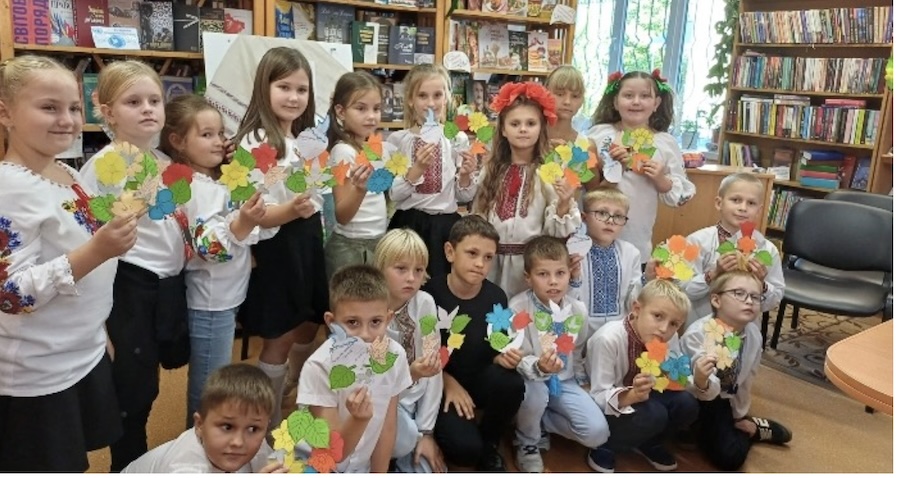
ROSTOCK : On the occasion of the International Day of Peace on Saturday, September 21, 2024, Rostock children from daycare centers and elementary schools will show their artistic works on the topic of peace. These will be presented in an exhibition in the town hall from September 23 to October 1, 2024. The girls and boys had been creatively dealing with the topic in recent months.
Question for this article
What has happened this year (2024) for the International Day of Peace?
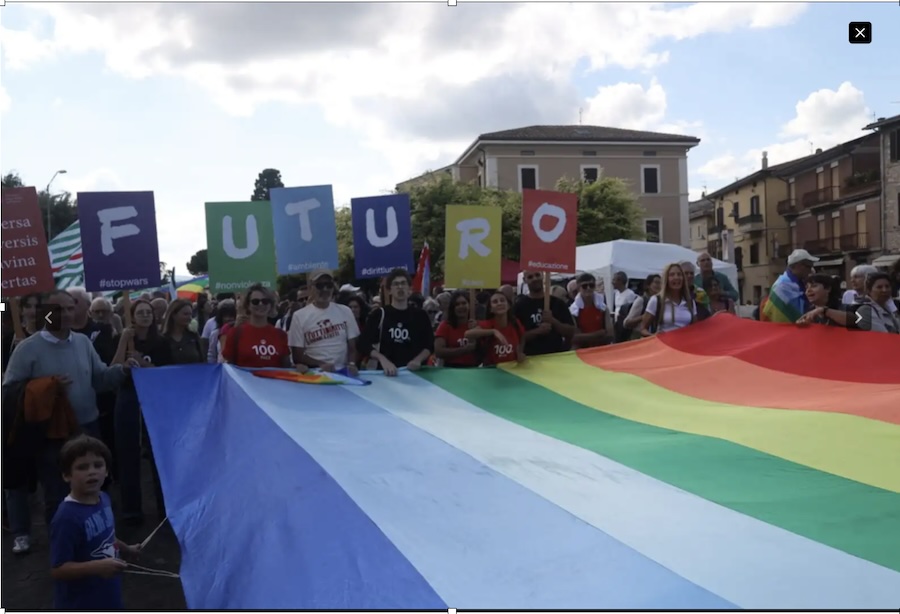 Sea of color from the peace march to ASSISI
(Survey continued from left column)
IRELAND
DUBLIN: Powerstown Educate Together National School. September 19, 2024 by Eoin Mernagh. We would like to remind our school community that our annual Peace Day performances will be taking place in the hall tomorrow from 9am. Doors will open at 8:50am with the first performance on stage at 9am.
ITALY
ASSISI: A March of almost 4 kilometers, with the slogan “Peace First”. Around 3,000 people from Santa Maria degli Angeli in Assisi set out to defend peace, “after 940 days of war in Ukraine and after 350 days of massacres in Gaza”, as recalled by the organizers of the March for Peace and Brotherhood opened by 300 children from schools all over Italy, who led the procession for the first time.
AUGUSTA: Today, September 21, is the International Day of Peace, established in 1981 by the United Nations General Assembly with the aim of strengthening the desire for peace between nations and peoples. For this reason, today the parents and children association “Unitevi a noi” will be in the square with its gazebo from 9.30 to 13 in the historic center, in Piazza Duomo and from 17 to 20 in Borgata in Piazza Fontana.
BARI: The Pugliese Academy of Sciences is pleased to invite you to participate next Wednesday 18 September 2024, at 5:30 pm in the Villa La Rocca Park, Via Celso Ulpiani, 27 – Bari, in the Celebration of the International Day of Peace established by the UN, as per the attached poster. For the occasion, Member Prof. Franca Tommasi will give a presentation entitled: “Ginkgo Biloba: a species of great biological interest that comes from distant times and places, bringing a message of peace”. Following this, the Bari Bar Association Choir will perform a Performance of Words in Chorus for Peace: interventions between music and words.
BERGAMO: On the occasion of the International Day of Peace on September 21, the Filandone di Martinengo organizes an afternoon dedicated to children aged 6 to 10. Through the reading of fairy tales, the little ones will be able to discover the value of peace, friendship and tolerance.
BIELLA: On September 21, 2024, on the occasion of the International Day of Peace, the “Mario Bosco” Comprehensive Institute of Lanciano participated in the conference “Education for Preventive Peace” held in Biella at the Pistoletto Cittadellarte Foundation. The event saw the participation of the Italian UNESCO ASPnet Associated Schools, including ISISS “M. Casagrande” of Pieve di Soligo. During the conference, the projects carried out by the institute in the field of education for peace, solidarity and friendship between peoples were presented.
BOVILLE ERNICA: The Municipal Administration of Boville Ernica, led by Mayor Enzo Perciballi, has enthusiastically granted patronage to the “March of Peace and Fraternity”, which will be held next Saturday 21 September 2024, on the occasion of the International Day of Peace promoted by the United Nations. The event is organized by the Boville Ernica Comprehensive Institute – “G. Armellini” Middle School, in collaboration with UNICEF, Amica and the Network of Schools of Peace. . . The day’s program includes the start of the march from the square in front of the “G. Armellini” Secondary School at 9:00, with a series of reflections and performances by the students that will be held in Piazza Sant’Angelo, and will end at 12:30 with the return of the participants to the school.
BRESCIA CITY HALL: Tomorrow (Saturday 21 September 2024) we celebrate the International Day of Peace. For the occasion, the rainbow flag, a universal symbol of peace, will be displayed under the portico of the Loggia.
BRESCIA PRISON: “In the face of the many conflicts spread in areas more or less close to our country, the celebration of the International Day of Peace appears particularly important” reads a note released by Associazione Casello 11, Cooperativa di Bessimo, Associazione Carcere e Territorio, Luisa Ravagnani guarantor of prisoners. “In this context of extreme suffering, which unfortunately mainly affects children, the elderly and the most fragile people, it seemed appropriate for the Human Rights group of the Nerio Fischione prison in Brescia and the group of women detained in Verziano to also make their voices heard to reiterate a strong “no” to war, to any war. To do so, it was decided to participate in the campaign launched by Save the Children ‘let’s cultivate peace’ . The detainees of the group and all those who wish to do so will prepare flowers for the children killed by the war and place them outside the institute, hanging from a large sheet. The detainees of Verziano will do the same and, outside Nerio Fischione and Verziano, a box will be placed from 10:00 to 18:00 so that anyone who wants to pass by can insert a message of peace inside” .
CALTANISSETTA: On the occasion of the International Day of Peace, the Rotary Club Caltanissetta displayed the flag symbol of Peace from the town hall.
CASTIGLIONE: Several initiatives are planned for the International Day of Peace in the Upper Mantua area. On September 20 and 21 at 9 pm, at Palazzo Pastore in Castiglione, there will be a charity concert against all wars and violence 1-3-6-9, a musical show conceived and composed by maestro Beppe Gioeta Comincini, in collaboration with the Santa Cecilia orchestra of Gambara, directed by Francesco Andreoli.
CATANIA: On the occasion of the International Day of Peace, which is celebrated every year on September 21, Catania will host the event “ColtiviAmo la pace”, promoted by Living Peace International. The event will take place at the “Galileo Galilei” Institute and will start at 9 am, involving students and adults in a day dedicated to promoting peace through dialogue, education and music.
CERTALDO: Everything is ready for a new edition of the Festa del Parco Inclusivo Libera Tutti in Certaldo . An occasion that this year coincides with the International Day of Peace , Saturday 21 September starting at 4pm and ending at 8pm . The proposal? An afternoon full of activities, games and workshops free and open to all, to celebrate, with joy, the principles of social inclusion and collaboration that have always distinguished the Park, but also to give, all together, a message of peace and cooperation.
CUNEO: On the occasion of the International Day of Peace, September 21st, the Municipal Administration has organized an event open to citizens at 11 am in Sala San Giovanni to reflect on the theme. The speaker will be Sister Giuliana Galli, of the Daughters of Saint Joseph Benedict Cottolengo. The theme of peace will be addressed from the perspective of the war-life binomial, from which, according to Sister Giuliana, we need to start again to identify new paths for building peace. In particular, we will investigate what the role of women could be in the context of the war-life antithesis.
FIUMICELLO: In Fiumicello Villa Vicentina on 21.09.2024, International Day of Peace, the Promoting Committee of the Third World March for Peace and Nonviolence, organized a Flash mob, reproducing the symbol of Peace in the town square. Representatives of the Municipal Administration and the Youth Government, Associations, private citizens, but above all many young people participated with enthusiasm and conviction in this beautiful and necessary initiative. . . Over a hundred people positioned themselves along the path of the Peace symbol, with colored balloons. . . Participants sang along to the music of Bob Marley and John Lennon and then observed a minute of silence for inner reflection on the meaning of this symbolic and collective action. The microphone was then left open for all those who wanted to express spontaneously and personally the meaning of the word Peace.
FLORENCE, PROTEST AGAINST NATO Next Saturday, September 21, International Day of Peace, protest initiatives will be held from the north to the south of the country, in response to the appeal of the Committee No NATO Command Neither in Florence Nor Elsewhere to give a strong and clear signal of protest against the intergovernmental military alliance established with the Atlantic Pact. In Florence , to counter the start of a new NATO command in the city, there will be a gathering in Piazza Gino Bartali starting at 4 pm with a procession along Viale Giannotti . . to end at the CPA in Via Villamagna with the final speeches. To date and continuously updated, there are more than 40 adhesions to the demonstration, including the movements A Foras and No Muos, Florence for Palestine, Young Palestinians, Railwaymen Against War, the No Camp Darby Committee, Fuori Binario, the CALP of Genoa and the GAP of Livorno and the No Base Movement of Coltano.
FLORENCE, CONCERT FOR PEACE: “Peace Through Arts. Peace through art”, this is the title of the concert promoted by the Rotary Action Group for Peace (Italy section), Saturday, September 21 at 6 pm in streaming (at the link: https://bit.ly/peacedayconcert), on the occasion of the International Day of Peace.
GALLIERA VENETA: On Saturday 21 September at 5:00 pm , in the garden of the “Domenico Pellegrini” secondary school in via Leopardi 10 – the municipal administration, the comprehensive institute, the Italian Catholic Action and the Galliera Veneta ecoclub, on the occasion of the international day of peace, invite all citizens to the planting ceremony of an olive tree sapling, a symbol of life and rebirth, always considered an emblem of peace.
GREVE IN CHIANTI: The Municipality of Greve in Chianti, together with the Network for Peace and Human Rights, chooses to join the March for Peace and Brotherhood and actively participate in the demonstration to defend the primary value of peace. . . The departure is scheduled at 9 am from Piazza Trento in Greve in Chianti and ends in Piazza del Comune in Assisi at 5 pm.
IVREA: Demonstration for peace and disarmament against all wars, for policies of peace and justice.
September 21, 2024 – International Day of Peace.
After the procession that passed through the streets of the center of Ivrea, Pierangelo Monti opened the speeches in Piazza Ferruccio Nazionale. “Today, International Day of Peace, we want, we must, reiterate the desire for peace and the rejection of war. . .”
LANCIANO: On September 21, some classes from the “Eroi Ottobrini” primary school and the “G. Mazzini” lower secondary school visited the headquarters of the European Parliament in Rome, taking part in the “David Sassoli European Experience” initiative and meeting ambassadors from the Republic of Congo and the United Arab Emirates. The students also participated in the lighting of the “Torch of Peace” at the Colosseum Archaeological Park, a symbol of peace between memory and future. On September 22, the Torch of Peace, after a 67-kilometer journey, arrived in Lanciano, welcomed by the students and their families.
LA SPEZIA: The La Spezia Peace and Disarmament Network invites all citizens to the 115th demonstration “If we want Peace, let’s prepare Peace”. As usual, it will be held on Monday 16 September at 6 pm in Piazza Mentana: in this week’s event, activists want to share and support the message of the day that in Assisi on 21 September includes the national meeting of the Peace Builders, and from 3 to 5 pm the March from Santa Maria degli Angeli to the town square of Assisi.
LERICI: To celebrate World Peace Day this year we start from Lerici with a light installation and exhibition “Lerici gives a dream” in which about 1000 children from nursery and primary schools were involved who expressed themselves with their drawings on the theme. . . The exhibition and the light installation will also have a global showcase. On Saturday 21 September, on the occasion of the International Day of Peace scheduled in the Italian capital, “Lerici gives a dream” will be presented through a video clip on a large screen located at the representative office of the European Parliament in Rome.
LOCATE DI TRIULZI: On the occasion of the International Day of Peace, the Municipality of Locate di Triulzi joins the local Peace Committee to reiterate its no to all wars and all forms of conflict. The flag of peace is suspended from the facade of the Town Hall as a message of Peace, a symbol of the commitment to promote peaceful coexistence and solidarity between peoples.
MILAN: The first weekend of events dedicated to the Municipio 4 initiative “Together for Peace” is approaching. Saturday 28 and Sunday 29 September 2024, appointment at Parco Serrati for two days of shows, workshops, historical walks, tournaments and many sports disciplines during the “Festa di Ponte Lambro”. All activities are free. There will be Music and Food & Drink.
MONFALCONE: The Dance Festival returns to Monfalcone for its 10th edition. . . Among the notable events is the show “ Peace one day ”, in which the students of the United World College of the Adriatic, in conjunction with the “ International Day of Peace ”, will perform folk dances typical of their countries of origin, celebrating the union between cultures through dance.
OSTIA: On the occasion of the International Day of Peace, the Ostia Committee for Peace, together with citizens, neighborhood committees, associations and CSAQs, is organizing an Olympic Relay for Peace for Saturday 21 September with a final flash mob in Piazza Anco Marzio. The relay, intergenerational and widespread, born from the common desire to unite all the territories of the Municipio X, will allow to connect 9 peripheral meeting points to the passage of a single flag, collecting on the three-wheeled Bibliolibrò, drawings and testimonies of children, which will be exhibited in Piazza Anco Marzio in Ostia activating a final flash mob of protest in favor of the Ceasefire in all war territories, of the Stop to the genocide in Palestine and of the Stop to all genocides.
PEDAL FOR PEACE FROM CASALE CORTE CERRO TO ROVERETO: Three hundred kilometers by bike, from Casale Corte Cerro to Rovereto , to bring to everyone a message of brotherhood between peoples on the occasion of the International Day of Peace. Promoters are the young people of the G team, an association from Loreglia, in the Strona valley, which plans projects especially for children in need of care.
PERUGIA: The official presentation of the Assisi March for Peace and Brotherhood on September 21st will be held tomorrow, Wednesday, September 18th, 2024, at 11:30 am, with a press conference in Perugia, at the Province (Piazza Italia, 11). The press conference will feature speeches by: Stefania Proietti (president of the Province of Perugia and Mayor of Assisi), Giuseppe Giulietti (founder of Articolo 21), Flavio Lotti (organizing committee of the March), Tancredi Marini, Francesco Fais, Ilaria Viceconte, Lorenzo Magnoni and Mattia Sconcerti (construction site of the “Youth for Peace”, students and teachers of the ITTS “A. Volta” of Perugia).
POZALLO: Tomorrow, the International Day of Peace, the Youth Association “Giorgio” La Pira has promoted, in Pozzallo, at 6:30 p.m., at the Madonna della Fiducia church, a moment of reflection and prayer on the theme “If you want peace, prepare peace”.
RADIOTELEVISIONE ITALIANA: To celebrate the International Day of Peace, on Saturday 21 September, Rai Cultura is offering a double appointment on Rai Storia: starting at 6:30 pm with the 1965 documentary entitled “Il giorno della Pace” . . At 8:30 pm, again on Rai Storia, Paolo Mieli and Professor Renato Moro retrace the history of pacifist movements in “Past and Present”.
RIMINI PEACE SAILING RACE: An idea born from the network of associations called Rete-Pace Rimini, welcomed by the Rimini Sailing Club, has allowed the creation of a PEACE SAILING RACE . . . On Sunday 22 September, a total of over 60 vessels took part, the majority from Rimini – but 10 departed from Riccione – while around fifteen catamarans and small vessels, technically known as “dinghies”, departed from the Bellariva area. . . The Rimini Peace Network is composed of: ACLI Rimini, AGESCI Rimini Area, ANPI Rimini Provincial, ANPI Rimini Section, ARCI Romagna Cesena Rimini APS, Pope John XXIII Association, AUSER Rimini, CGIL Rimini, Constitutional Democracy Coordination Rimini, Emergency Rimini Group, Federconsumatori Rimini, Il Borgo della Pace, Institute of Human Sciences Rimini, ITACA, Libera Rimini, Freedom and Justice Rimini, Manifesto Against Hatred and Ignorance, Members Rimini/San Marino Banca Etica, Pacha Mama, fair trade.
RIMINI MUSEUM: On Saturday 21 September 2024, on the occasion of the International Day of Peace, the Museum of the City of Rimini “L. Tonini” at 6 pm inaugurates a new Room dedicated to the artist Eron. Eron (Rimini 1973) is an Italian artist internationally considered “among the most gifted and virtuous interpreters of visual art and contemporary painting” (Enciclopedia Italiana Treccani), one of the most important exponents of graffiti and urban mural art between the 20th and 21st centuries. Eron’s works often touch on political and social themes through a pictorial research that combines power, delicacy, poetry and visual harmony.
ROME ARTISTIC EXHIBITION: On September 21, 2024, the “International Committee Bandiera della Pace” and Tryadæma will celebrate the “International Day of Peace” at the Mitreo Iside with an Event Exhibition that will feature works by 33 artists, international dances and institutional representatives from three continents . . . The 33 works of the artists recall Nicholas Roerich’s commitment to peace. At the end of the International Day for Peace we will have a collective performance directed by Monica Melani, director of the Mitreo Iside with “Imagine Peace” that will reflect the ways in which individuals will want to convey the Roerich Peace treaty.
ROME MONTESSORI SCHOOL: Video of Montessori School of Rome performing “Light a Candle for Peace” on the International Day of Peace.
ROME PROTEST AGAINST NATO: There will be two events in Rome. The first will be at 10 am in Piazza dei Consoli and will be held in solidarity with the demonstration later in the day in the Tuscan capital . The activists will hand out flyers in the Cinecittà neighborhood, near the Joint Command which, since 2021, has been an undercover NATO base already present and active in the middle of the metropolitan fabric. . . Then, at 3pm, in Piazza Vittorio Emanuele, the same activists will participate in the large city procession called in solidarity with the heroic resistance of the Palestinian people, making a section marked with NO NATO signs and banners.
SANREMO: September 20, 2024, 1:39 pm Sanremo at the Forte di Santa Tecla with the Rotary Clubs the ‘International Day of Peace’. During the event, there will be a succession of readings, reflections, artistic and musical performances
SASSOVIVO: A celebration of the International Day of Peace was held at the Abbey of Sassovivo on Saturday 21 September, an annual event organized by the UNESCO Club of Foligno and Valle del Clitunno. . . The day offered food for thought on how history, archaeology and culture can become instruments of peace and understanding between peoples.
SCIACCA: Peace Day in the municipal villa, an initiative by Paideia and the Municipality of Sciacca. . . During the meeting, activities were carried out and there were moments of reflection on the importance of the day in an international context characterized by bloody conflicts.
SOLFERINO: On the occasion of the International Day of Peace on September 21, the Solferino agorà della pace Association is organizing a Walk for Peace in which the Table for the Common Good of the Diocese of Mantua, AGESCI of Mantua, Mantua for Peace , the Nonviolent Movement of Castiglione delle Stiviere, Cavriana for Peace , A(r)miamoci per la pace of Monzambano will participate. . . At the end of the Walk, at the Memorial, Oriella Savoldi of the Women’s Network Walking for Peace will help participants reflect together on peace.
SOVIZZO: On the occasion of the International Day of Peace, the Municipal Administration of Sovizzo organizes an event of great cultural and social importance: the presentation of the book “Il grido di Andromaca. Voci di donne contro la guerra” (The cry of Andromache. Women’s voices against war) . The volume, which collects testimonies and reflections on the role of women in conflicts, will be presented on Friday 20 September 2024 at 8:30 pm in the Conference Room of the Municipality of Sovizzo.
TARANTO: Several dozen signatures from City and regional councilors, institutional representatives , former parliamentarians. Representatives of the world of culture, academics, members of associations, activists. Ordinary citizens have been collected in recent days in Taranto, to distance themselves, “firmly”, from the ” European Parliament resolution of 19 September which voted to consider legitimate the launch of Western long-range missiles from the territory of Ukraine against targets in Russian territory . This decision exposes us to the risk of a dangerous military escalation that could get out of control and bring us ever closer to the unacceptable risk of a thermonuclear war . A war” say the signatories, which would see Taranto as a primary objective in the context of an atomic clash with unimaginable consequences”. The signatures were collected in view of the International Day of Peace , celebrated yesterday, September 21.
TRIUGGIO: On the occasion of the International Day of Peace on September 21, the Municipal Administration, in collaboration with the Tregasio Alpine Group and the “Fratel Paolo” ACLI Club of Triuggio , is organizing the meeting “Peace, this unknown” . . The program includes, after the greeting of the mayor Pietro Giovanni Cicardi and the introduction of the councilor for Culture Betty Sala , the beginning of the presentation of the book “La meccanica della Pace” by Elena L. Pasquini. Immediately after the presentation, by the Koinè group, of the Catalogue “Paths of Peace between Memory and Liberation” . . Finally, an aperitif open to all participants.
VAIANO: Against all wars” is the meeting on peace and world conflicts organized on the occasion of the International Day of Peace on the sidelines of the exhibition “A sea ahead”, set up in the multipurpose room of Vaiano . . . part of “80 voglia di pace”, the peace festival of Vaiano. The festival program also offers tomorrow at the “Basaglia” library in Vaiano, at 10.30, the last reading and workshop for children from 4 to 8 years old entitled “Inseparables”, as part of the series of meetings entitled “Let’s make peace.”
VALENZA: The exhibition “Gioielli di pace – Faites des bijoux, pas la guerre” was inaugurated late Friday afternoon at the Centro Espositivo dell’Arte Orafa Valenzana, on the initiative of the Municipality of Valenza in collaboration with the Association of Friends of the Valenza Goldsmith Museum, in conjunction with the celebration of the International Day of Peace.
VASTO: The students and teachers of the Art High School of the “Pantini – Pudente” high school in Vasto have organized a creative workshop on the occasion of the International Day of Peace.
NETHERLANDS
THE HAGUE: Theatre programme Day of Peace. The Day of Peace is an international day on which we reflect on peace worldwide. And this year we have a special focus in The Hague, the city that has been our city of peace and justice for 125 years. In this theatre programme, Amare draws particular attention to the importance of a safe haven for children who grow up in war zones. Young people and women from The Hague have created the short performance “From Here On”. Roos Meijer & band will play a number of songs from her album “Stories of Change.”
NORTH MACEDONIA
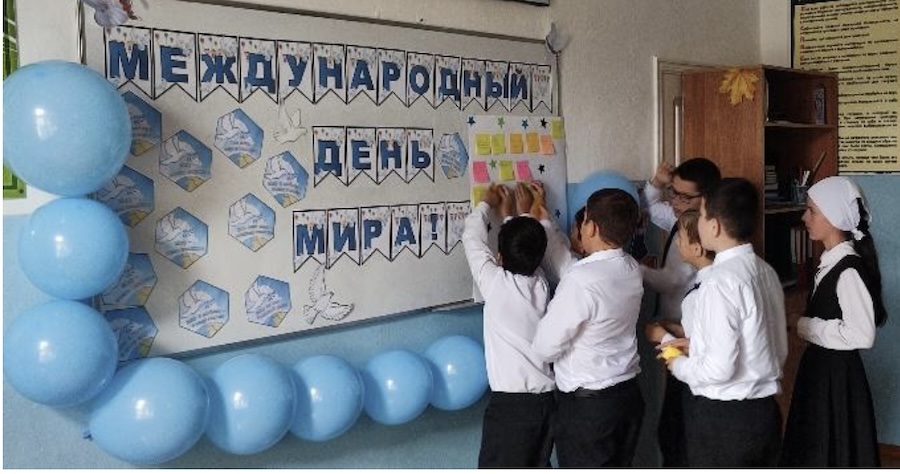
ASSOCIATION OZARENIE: September 21 was the International Day of Peace. The Association for Teaching Russian Language “Ozarenie” in the Republic of North Macedonia has been holding a peace campaign on this day for many years. During Russian language lessons, students talked about peace, read stories about peace, wrote a message about peace in Russian, and made crafts in the form of a white dove, a symbol of peace. The event took place at the D. Miladinov School. The songs “Fly, doves, fly”, “Hello, world!”, “Let there always be sunshine”, “Wider circle”, “How to sing of this land” and poems about peace were performed. At the end of the meeting, according to tradition, white balloons were released into the air – as a memory of the victims of the war.
PORTUGAL
BEJA: A human chain in Praça da República, in Beja, formed by children and young people, will mark the International Day of Peace this Friday, the 20th, from 10:30 am, to raise awareness of the humanitarian situation of populations living in war. The initiative, which also aims to raise awareness of the escalation of the war, is promoted by the Beja Delegation of the Bento de Jesus Caraça Professional School. The institution reveals that there will be “around 400 children and young people participating in the human chain” and that it has invited, in addition to the students from the delegation, the various early childhood education entities in the city that are its partners.
COIMBRA: On September 21st, International Peace Day, the Rotary Club of Coimbra – Saúde inaugurated its first “Peace Pole”, a universal monument to peace. This event marks the installation of the first “Peace Pole” in Coimbra and in the country. . . according to the Rotary Club of Coimbra – Saúde, this new pillar “serves as a continual reminder of the responsibility of each of us to promote peace and harmony, both in the world and in our daily actions.”
GAVIÃO: The Gavião Basic School, part of the D. Maria II School Group, celebrated the International Day of Peace this Saturday, joining the #JanelaBrancaPelaPaz movement (see “Janela” below). . . After this, outside the school grounds, they gathered together to form the word “Peace”, a moment that was recorded in a photograph to remember later.
JANELA BRANCA PELA PAZ – WHITE WINDOW FOR PEACE: International Peace Day is celebrated on September 21st and UNICEF Portugal, the United Nations Regional Information Centre for Western Europe (UNRIC) and many public figures, in solidarity with the victims of wars and conflicts, created the “White Window for Peace” initiative, which encourages people to hang a white cloth in their window. Hang a white cloth (flag, sheet, pillowcase, towel or any other white cloth) in your window and post a photo and/or video of your participation (in public mode), with the hashtag #JanelaBrancaPelaPaz and mention of the official page”, appeals the initiative on social media. Here is a list of the cities and schools that have published on the Internet that they are part of the campaign:
ALENQUER:
CABECEIRAS DE BASTO
CASCAIS SCHOOL
CHAVES
GAVIAO SCHOOL
GOÍS
GUIMARÃES
LOULÉ
MAÍA SCHOOL
MARINHA GRANDE
PROENÇA-A-NOVA
RIBADOURO SCHOOL
SÃO PEDRO DA COVA
VILA DE REI
LISBON: Hundreds of people, of different races, genders and ages, marched down Avenida da Liberdade, in Lisbon, in the first “Marxa Cabral” in Portugal organized by the Black Movement. This march takes place on the International Day of Peace and marks that September will, from now on, be the month of Marxas Cabral in Portugal. “Amílcar Cabral, unity and struggle. Against racism and xenophobia”, were the words with which the Marxa (march, in Creole) Cabral set off from the Praça do Marquês de Pombal, animated by batucadeiras, loud drum sounds, many shouts and cheers for Cabral, the African and anti-colonialist leader who would have turned 100 this year. An hour late, the protesters advanced slowly at 4:00 pm supported by a sea of flags with Amílcar Cabral’s face on them. The phrases that marked him are visible, as well as flags of the countries he helped liberate from colonialism: Cape Verde and Guinea-Bissau.
MONÇÃO: vAs part of the International Day of Peace, preschool children and primary school students from Vale do Mouro Elementary School, Tangil, formed a human chain, creatively creating the word Peace.
PORTIMÃO: Following its membership of the “Municipalities for Peace” Movement, Portimão will mark the International Day of Peace for the first time, which will be celebrated this Saturday, September 21, with several symbolic actions open to the public. In the 1st of December Garden there will be an installation of 700 white doves “For Peace”, made from white musgami and produced by users of the Portimão Senior Social Center, the Aldeia das Sobreiras Senior Social Center and partners of the Correio dos Afetos project . . The garden will be a meeting point for the formation of a human chain, scheduled for 10:00 am and organized by the community neighborhoods of Pontal, Cruz da Parteira, Coca Maravilhas and Mira Cabo. . . Participants will go to the bandstand at Praça Manuel Teixeira Gomes, where at 11:00 a.m. there will be a release of pigeons by the Portimão Pigeon Association, and bracelets alluding to Peace, made by residents of the community neighborhoods, will be distributed. From 4pm, Jardim 1º de Dezembro will host a concert with young talents from the “Portimão Suzuki Programme”. Also this Saturday, International Peace Day, the children’s workshop at Quinta Pedagógica de Portimão will have the theme “Celebrating Harmony” and will include the creation of souvenirs alluding to peace and harmony, with messages of reconciliation.
ROMANIA
BUCHAREST: The New Hope Orchestra and conductor Octavian Lup will hold the “Romania for Peace” concert on September 21 to celebrate the International Day of Peace. The event will feature special guests soprano Veronica Anușca and violinist Valentin Șerban and will take place outdoors in George Enescu Square in Bucharest. Admission is free.
SPAIN
CADIZ: On the International Day of Peace, to raise awareness among citizens regarding the 120 armed conflicts that exist in the world, the NGO Movimiento por la Paz-MPDL has scheduled an event for Saturday, September 21 at 12 noon in the Plaza de Spain. Among the activities scheduled for that day will be a refugee woman, a professional violinist, who will accompany the audience on her violin while the people attending the event form a human chain in the form of a dove. Afterwards, famous quotes about peace will be read and a group of children will read a short children’s story.
CANTABRIA: On this September 21, International Day of Peace , it is essential to continue working for a more peaceful world and a more just society. On Saturday, September 21, a meeting will be held in Santander with the social base of the Cantabria Movimento por la Paz, that is, members, volunteers, workers and participants in the different programs.
CASTELLO: The UNESCO Chair of Philosophy for Peace at Jaume I University celebrates the International Day of Peace with the launch of the Balder Project to raise awareness and train in “core skills”. . . Within the framework of this project, the celebration of the International Day of Peace consists of two activities. On the one hand, an awareness campaign has been launched consisting of 20 banners with 20 key competencies: love, kindness, non-violent communication, cooperation, creativity, care, dignity, empathy, active listening, equality, justice, loyalty, patience, peace, forgiveness, power, recognition, resilience, respect and responsibility. These banners will be located until the beginning of October in different points of the campus . . On the other hand, the book Proyecto Balder: Core Skills para Hacer las Paz , published by the Chair with the Octaedro publishing house, will be presented on September 23rd in the auditorium of the Doctoral School Building at 2:30 p.m.
CIUDAD REAL: On this September 21, International Day of Peace , it is essential to continue working for a more peaceful world and a more just society. Because a more peaceful world is possible , these are the activities and actions that we organize from the Movimento por la Paz. Peace Culture Workshop on Friday, September 20 with users of the International Protection and Humanitarian Reception programs.
GRAN CANARIA: ‘May injustice not be indifferent to me’. This phrase sung by the iconic Argentine singer Mercedes Sosa gives the title to the event organised by the Department of Institutional Cooperation and International Solidarity of the Cabildo de Gran Canaria, supervised by Carmelo Ramírez, to commemorate the International Day of Peace.
GRANADA: This year we celebrate the 15th anniversary of the Master’s Degree in Culture of Peace, Conflict, Education and Human Rights, as well as 25 years of the Declaration of the Culture of Peace, and for this purpose several activities of a scientific, cultural and artistic nature will be organized. The beginning of these activities will be linked to the celebration of the International Day of Peace with an exciting encounter between academic reflection, poetry and music, with the following program
MADRID CINEMA FOR PEACE: On this September 21, International Day of Peace , it is essential to continue working for a more peaceful world and a more just society. Because a more peaceful world is possible , these are the activities and actions that we organize from the Movimento por la Paz. As every year for the past 16 years, we return to the cinema screens to share a unique cinematic experience that focuses on the Culture of Peace, through four screenings and discussions at the Cine Estudio del Círculo de Bellas Artes. You can see the complete programme here.
MADRID SENIOR CENTRES: The Municipal Senior Citizens Centres (CMM) of Hortaleza – Bucaramanga, El Henar, Huerta de la Salud, Nuestra Señora de la Merced, Nuestra Señora del Carmen, Pinar del Rey and San Benito – have joined in an event marking the International Day of Peace with a special programme of activities that will take place during this week to raise awareness among users of the need to cultivate a culture of peace through education.
MAÓ: The Menorca Per la Pau platform has called for a rally this Saturday at 7pm in the Plaça Constitució in Maó . In this way, it joins the demonstrations that will take place in other Spanish cities on the occasion of the International Day of Peace under the slogans ‘No to war’ and ‘No to genocide’.
PAMPLONA AND TUDELA: The Government of Navarra will join the International Day of Peace next weekend with the recognition of the United Nations Agency for Palestine Refugees in the Near East (UNRWA), and with a commemorative concert. The Castel Ruiz centre in Tudela will host this Saturday, at 12 noon, an event in which the work of this UN agency with Palestinian refugees will be recognised, and the celebration will close on Sunday 22 with a concert in the Fernando Remacha Auditorium in Pamplona by In Tempore Abesbatza-Coro & Ensemble.
RIOJA: On this September 21, International Day of Peace , it is essential to continue working for a more peaceful world and a more just society. Because a more peaceful world is possible, these are the activities and actions that we organize from the Movimento por la Paz. In collaboration with the UNESCO Chair of the University of La Rioja, we have scheduled the exhibition “Shake Off Racism” in the Quintiliano Building of the University from September 9 to 30.
TERASSA: On the occasion of the International Day of Peace, an event will be held on September 21 at 6:00 p.m. at the BAHAI DE TERRASSA center. The program will include participation of Brahma Kumaris, Catholic church, Evangelical Church, Church of Jesus Christ of Latter-day Saints, Muslim Community and Bahá’í Community.
VALL D’UIXÓ: The Vall d’Uixó Town Council has presented the peace culture programme around the International Day of Peace, which is commemorated on 21 September. The activities are structured around three strategic lines: the care of heritage and culture with the restored tree of peace as a symbol, debate and critical reflection on peace days and the education of young people. . . On Friday 20 September at 7.30 pm the presentation of the tree of peace is planned, which has been restored and “is now a finished work just as the artist Pere Ribera conceived it more than 20 years ago”. If the weather permits, the event will include a concert by the Vivaldi Orchestra. In case of rain it will be relocated to another date in the near future. On Thursday 26 September, the Centre Delàs d’Estudis per la Pau will host a conference entitled ‘Understanding everyday violence to fight global war’.
ZARAGOZA: On September 24, the CIHEAM in Zaragoza will host an international conference on olive oil and sustainable development within the framework of the OLIB project, funded by the Provincial Council of Zaragoza. This event coincides with the 25th anniversary of the adoption by the United Nations General Assembly of the Declaration and Programme of Action on a Culture of Peace, and serves to commemorate the International Day of Peace, which is celebrated every year on September 21.
SWITZERLAND
GENEVA: Tthe Geneva Peace Talks will take place on 19 September 2024 for the International Day of Peace, from 3 to 5 p.m. in Room XVII at the Palais des Nations and online. Under the umbrella theme of The Future of Peace, this year’s Geneva Peace Talks would feature powerful personal stories from people on the frontlines of peace, linked to the past, present and future of peace. These would be short, eight-minute inspirational talks and there would be the possibility of interacting with the speakers.
GRAUBÜNDEN: Friendship Concert on the Occasion of International Day of Peace at City Hall. Two groups of Ukrainian singers from Grisons and Vaduz meet for a musical and culinary interaction.
LAUSANNE: Ernst Zürcher will hold a conference at Lausanne the 21st of September at 16:30 on the occasion of the International Day of Peace. The theme is “The trees to make peace with the earth.” At the present time, the majority of trees in our forests are young. It becomes crucial to preserve the trees that are the oldest, for their age brings benefits to the forest ecosystem.
UNITED KINGDOM
ABBOTS LANGLEY: In a world that longs for peace, Churches Together in Abbots Langley invites you to International Day of Peace. St Lawrence will be open for an afternoon of guided prayer. The event will culminate in a special service of evening prayer. All are welcome.
BELFAST, NORTHERN IRELAND: Two important events are taking place in Belfast on International Day of Peace, 21st September. The Multi-Faith Conference, “Faiths Together for Climate Justice and Peace” from 10.00-13.00 in the
Agape Centre and “A Celebration of Difference” at 19.30 in St. Anne’s Cathedral. Corrymeela and the Join the Dots Together network have invited internationally renowned environmentalist and expert in all Faiths, Martin Palmer to Northern Ireland for the occasion. . . Other speakers include Raja Harun, Xavier Benaze and Louise Taylor. . . Other events include the “Peace, Justice & Care of the Earth” Conference, 9.30am-5pm on 19th September in Corrymeela and in collaboration with Professor John Barry, the “Our Voices Matter” – Youth and Politicians Forum in Queens’ University.
BLACKPOOL: Blackpool Tower will be illuminated a bright white colour tonight to mark International Peace Day 2024. The iconic landmark is being lit up in support of the awareness day, with a host of activities taking place. These events, organised by the Youth Provision Partnership and various other organisations, are all part of the Peace Day celebrations. Blackpool Libraries have also participated in these activities, offering practical support on issues such as mental health advice, yoga, colouring-in sessions, and dedicated Bounce and rhyme sessions. A ‘Peace Walk’, organised by the Princes Trust, was another highlight of the day. A group walked from South Shore to the Blackpool Tower wearing International Peace Day t-shirts, with branding developed by local young people. A ‘Peace Garden’ was also created in the Talbot and Brunswick space where people can reflect and enjoy a quiet moment all year round.
FRIARGATE YORK: September 21st 2024 10.30 – 4.30
Friends Meeting house, Friargate York. This is a day to meet other Nonviolent Communication practitioners from the North of England.
There will be sessions offered by NVC Trainers on Empathy, Honest Expression and Self Empathy.
GEDLING: To celebrate the International Day of Peace, Gedling Borough Council is planning a ‘Peace in the Park’ event at Gedling Country Park.
The event will take place on Saturday, September 21 from 11am to 3pm and will be a day of celebrating environmental sustainability, wellbeing and global peace. There will be free activities for all ages, including arts and crafts, outdoor entertainment from Handmade Theatre, live music, community stalls, guided walks around the park and there will also be an unveiling of a willow sculpture, made by attendees of the event, that will be installed in the park to commemorate the International Day of Peace.
LONDON: West London College. Staff and students from across all three of our colleges joined together this week to mark the International Day of Peace, a global initiative dedicated to promoting peace and harmony across the world. In addition to tutorials thinking about peace, what it means, and what brings us individual peace, members of the WLC community were encouraged to actively participate by sharing messages on sticky notes and attaching them to symbolic ‘Peace Trees’. . . A diverse range of activities, such as speaking to friends, walking in the park, listening to music, practising Yoga, singing, watching football and prayer, were posted on the trees. In addition, students also reflected on global issues that affect peace, such as war, racism, and genocide.
OMAGH, NORHERN IRELAND: We were invited to take part in a football competition to celebrate International Day of Peace at Drumragh College.
RED HILL (SURREY): St. Bedes Surrey School. International Day of Peace non-uniform charity day – ‘wear something blue’
RICHMOND UPON THAMES: Celebrate International Peace Day on Saturday 21 September 2024 at our Festival of Peace in Richmond Upon Thames from 11am- 4pm.We are partnering with experienced wellness providers and local small businesses to bring you an uplifting day of peace as we raise the vibration of our hearts and minds as a collective on this special day. We will have on offer Wellness Workshops, Live Music, Food & Drinks, ethical artisan Stallholders and Therapists providing individual treatments on the day.
SOUTHPORT: Come and support Southport’s Ukrainian community at the historic arcade, on Lord Street, on International Peace Day: Saturday, 21st September between 11am and 4pm. Visitors can enjoy choirs, workshops, singing, theatre performances, a painting workshop, guitar playing, Ukrainian souvenirs and music. You can taste some delicious samples of Ukrainian food.
TRURO: Saturday, 21st September, High Cross, Truro Cathedral.vPaul Haines is organising a Gazebo on High Cross during the day, and Truro Rotary will have a presence in the Chapel of Unity and Peace during the afternoon.
VICTORIA: Abkhazi Garden, a garden of peace and healing, will feature some of Victoria’s best choirs on International Day of Peace, including the Ukrainian Children’s choir.
WOKING (SURREY): On the International Day of Peace, Woking People of Faith have organised a peace event to celebrate the peaceful relationships between the different faith groups in Woking.
WORCESTER: Worcester will mark The International Day of Peace. . . Taking place at Cathedral Square between 11.15am and 12.45pm, the free event is set to include songs, poems, speeches and the laying of candlelights and flowers. Participants will also join with a minute of silence across the globe at midday. This will be followed by the raising of a peace flag. The Mayor of Worcester, Councillor Mel Allcott, is one of the dignitaries speaking at the event.